Since 1677
A short history of East Greenwich
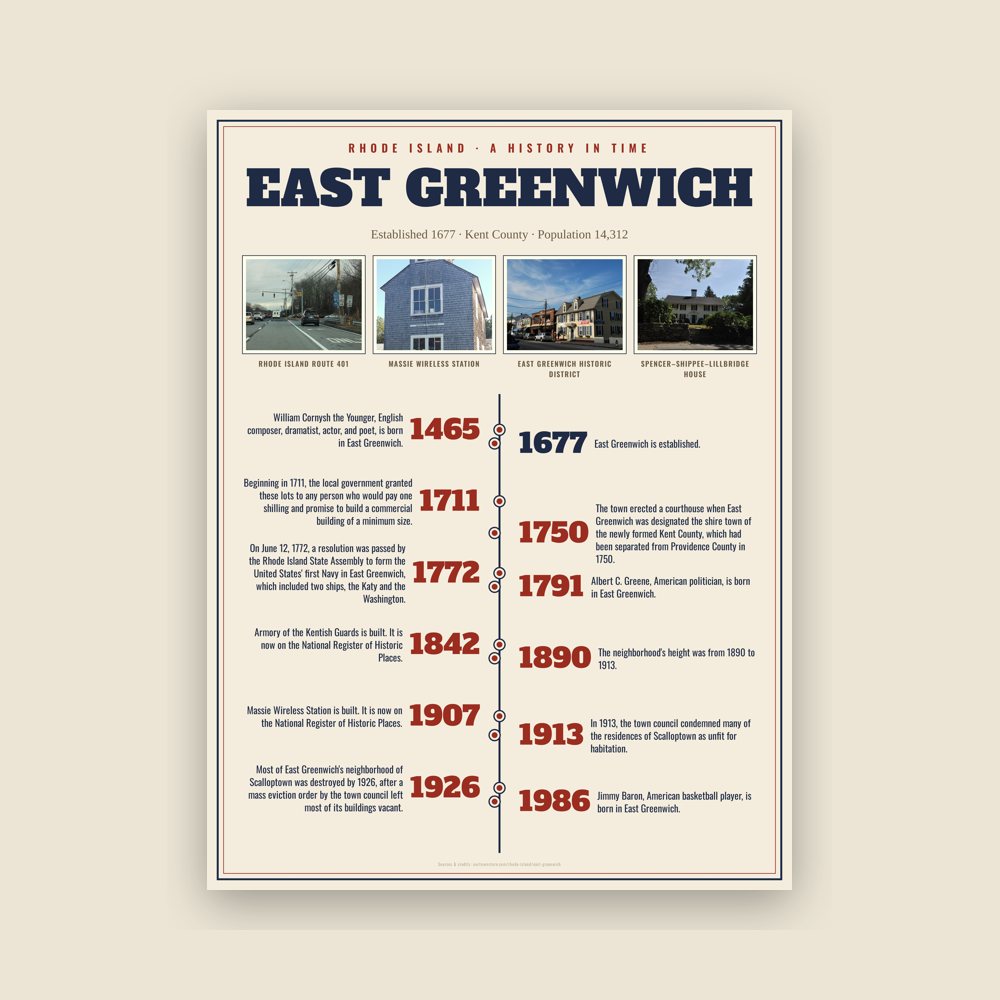
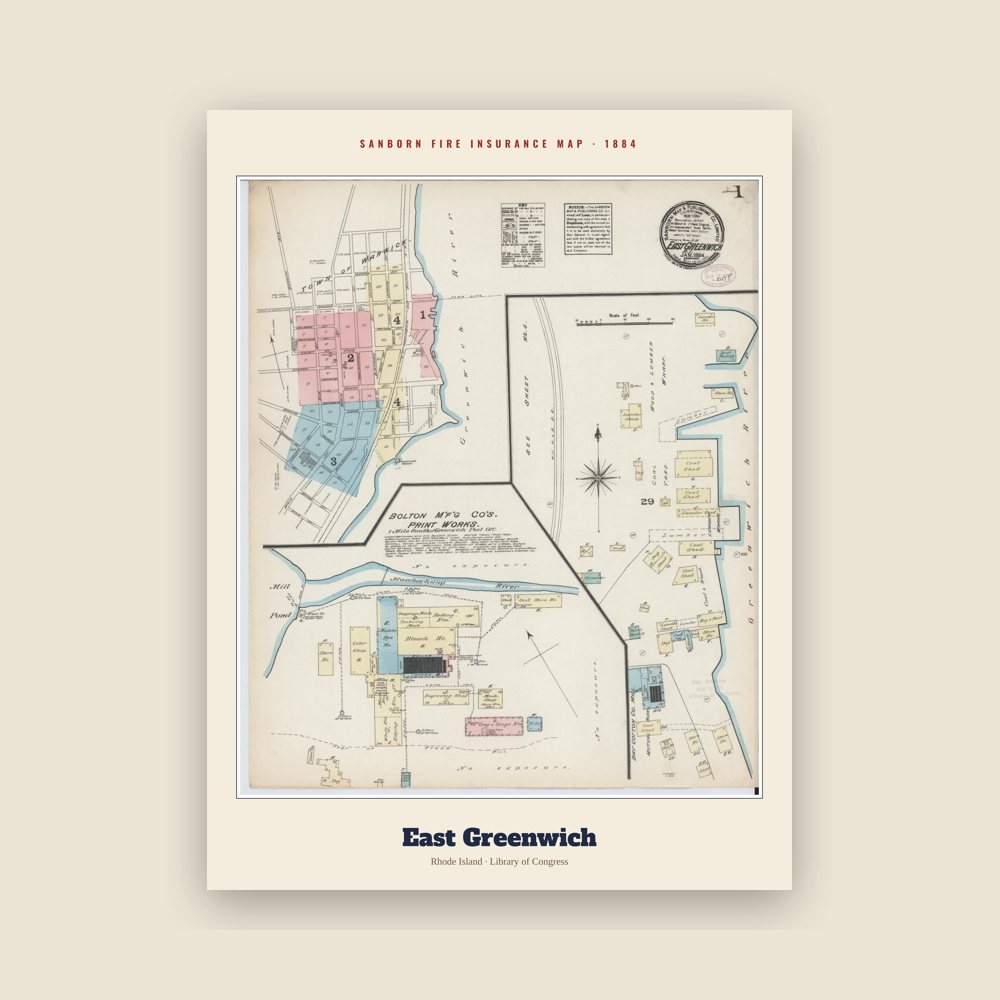
East Greenwich, the 8th oldest town in Rhode Island, was founded in October 1677 by the General Assembly in an attempt to solidify land claims against those of Connecticut and the Narragansett Proprietors. The Assembly designated 5,000 acres to the new town and provided lots to settlers who would agree to live there—land was deeded to 48 men who had fought in King Phillip's War against the Wampanoag. Locals quickly took the assembly up on this offer, and the quick establishment of the town helped hold back plans of Connecticut in pushing their border eastward. East Greenwich was therefore the only Rhode Island town established by an act of government, not commercial interests. In 1687, the Narragansett Proprietors attempted to settle land north of Wickford which overlapped with the land of East Greenwich; however, the Massachusetts governor Sir Edmund Andros, who had authority to settle the dispute, ruled in favor of the existing East Greenwich settlement.
In the 18th century, the government released previously reserved waterfront property in small lots. Beginning in 1711, the local government granted these lots to any person who would pay one shilling and promise to build a commercial building of a minimum size. By 1725, a community had developed, complete with a schoolhouse and a graveyard. However, citizens of the town complained that attending town meetings was too difficult due to the size of the town, which prompted the splitting of West Greenwich into its own town in 1741. The town erected a courthouse when East Greenwich was designated the shire town of the newly formed Kent County, which had been separated from Providence County in 1750. On June 12, 1772, a resolution was passed by the Rhode Island State Assembly to form the United States' first Navy in East Greenwich, which included two ships, the Katy and the Washington. The Assembly put Captain Abraham Whipple in charge of this new military branch and these ships, with the formal title commodore.
In its colonial days, the town was also home to followers of a former Quaker who, after a severe illness, claimed to have died and been resurrected as the "Public Universal Friend"; these followers financed a meeting house within the town.
Read the full history
Scalloptown
In the 19th Century, East Greenwich attracted a wave of immigrants from Ireland, Italy, Germany, and Scandinavian countries, as well as free Blacks. Many settled in a small community which came to be known as Scalloptown, as many residents made a living from fishing and selling scallops. As it grew, the neighborhood of immigrants and mixed ethnicities developed a reputation as a "shantytown" of "low and lawless nature" by white writers and community leaders. The neighborhood's height was from 1890 to 1913. In 1913, the town council condemned many of the residences of Scalloptown as unfit for habitation. Currently, only one shellfish processing business remains on the street.
Most of East Greenwich's neighborhood of Scalloptown was destroyed by 1926, after a mass eviction order by the town council left most of its buildings vacant. Scalloptown had been the attention of reformers in town for some time. Scalloptown was the site of "Neighborhood House", a settlement house run by Sarah Fernandis from 1908 on. But, historian Catherine Streich argues, the racial prejudices of white East Greenwich residents and their dwindling desire for social reform led to their destruction of Scalloptown.
Adapted (trimmed) from the Wikipedia article East Greenwich, Rhode Island, revision 1378774056 by its contributors, licensed CC BY-SA 4.0.
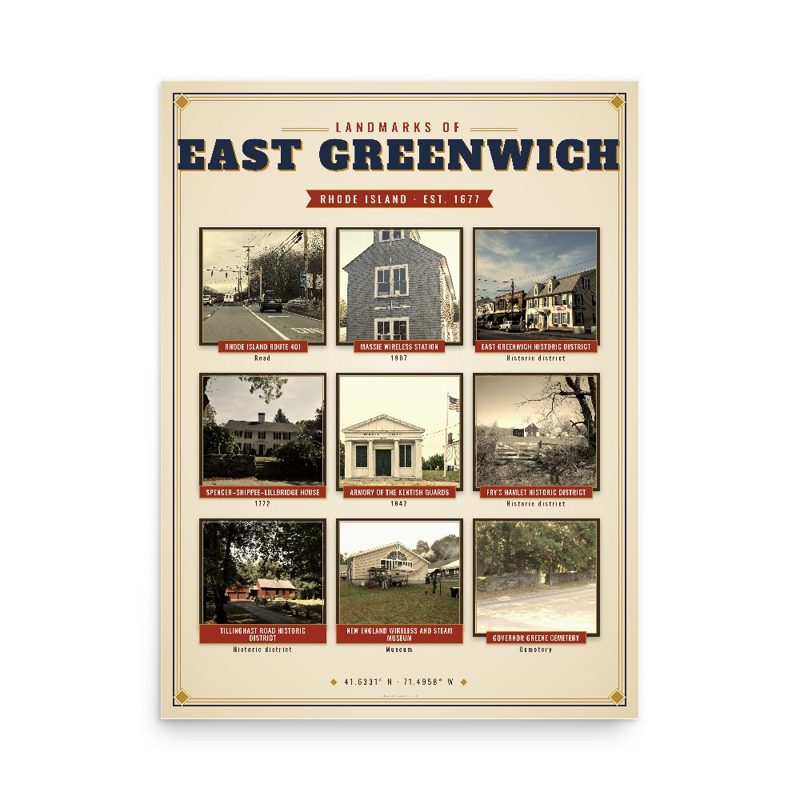
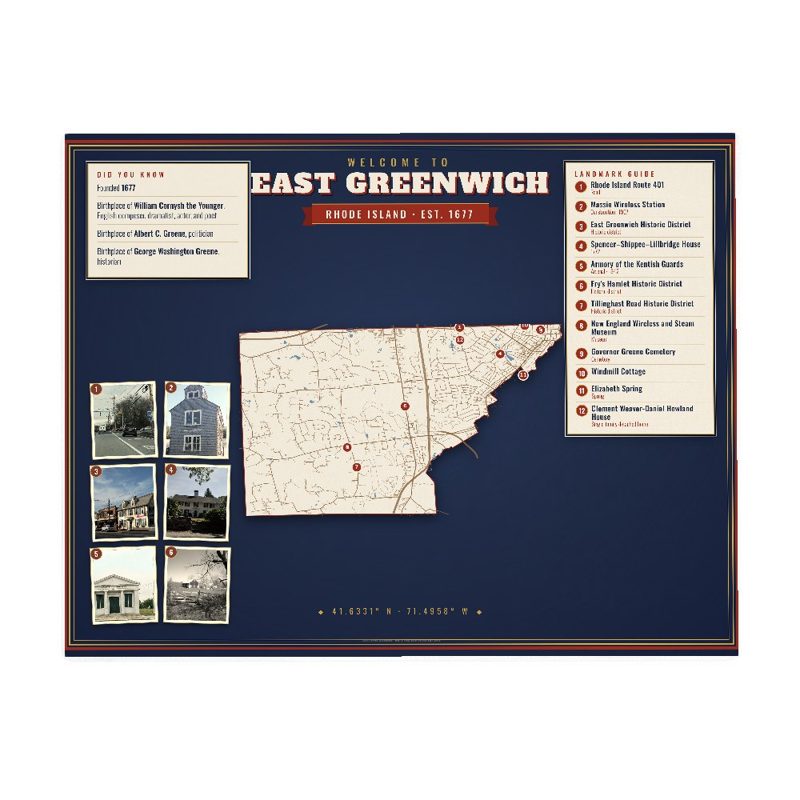





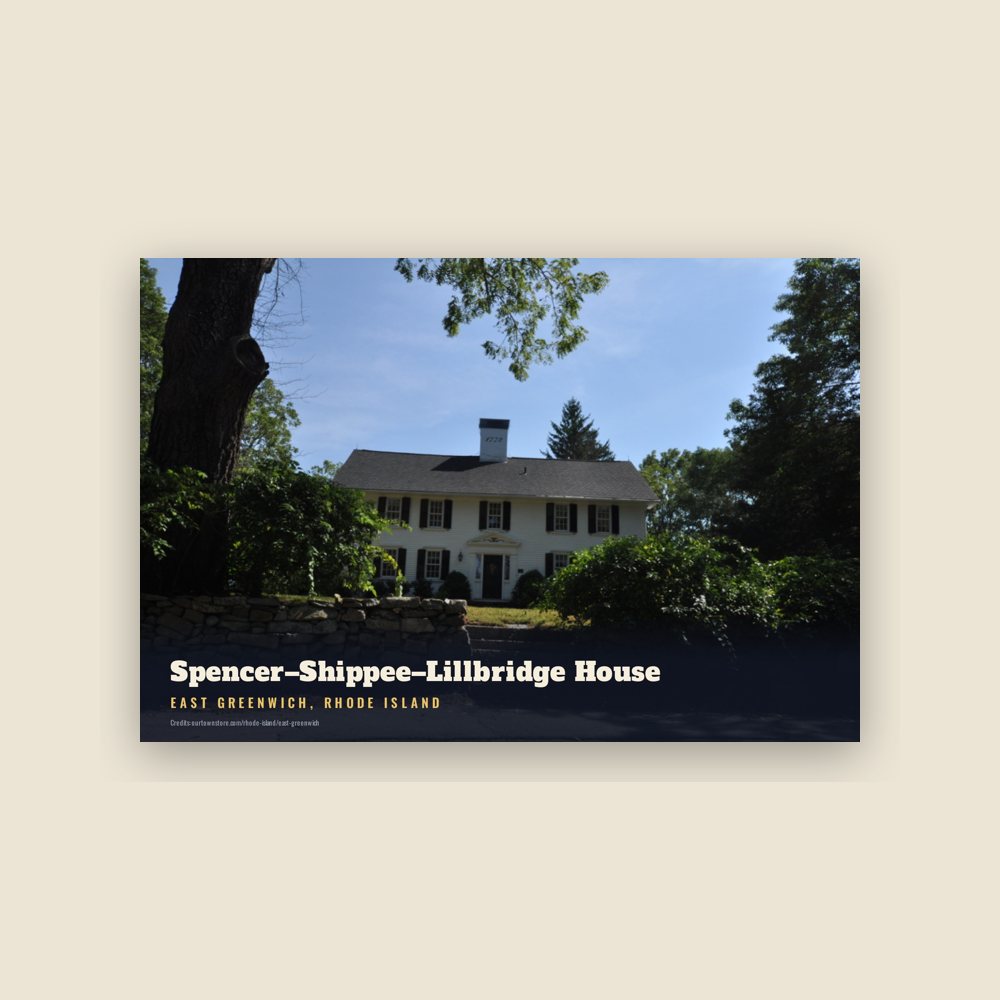
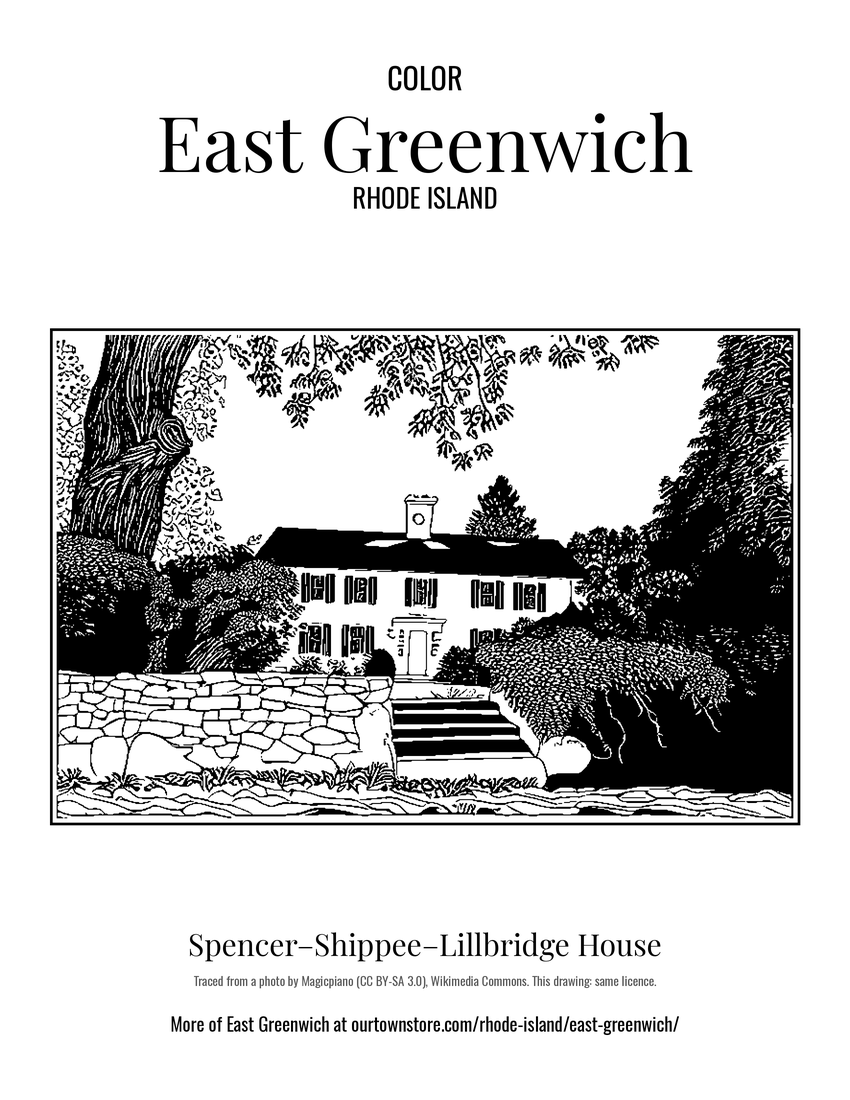 Spencer–Shippee–Lillbridge House
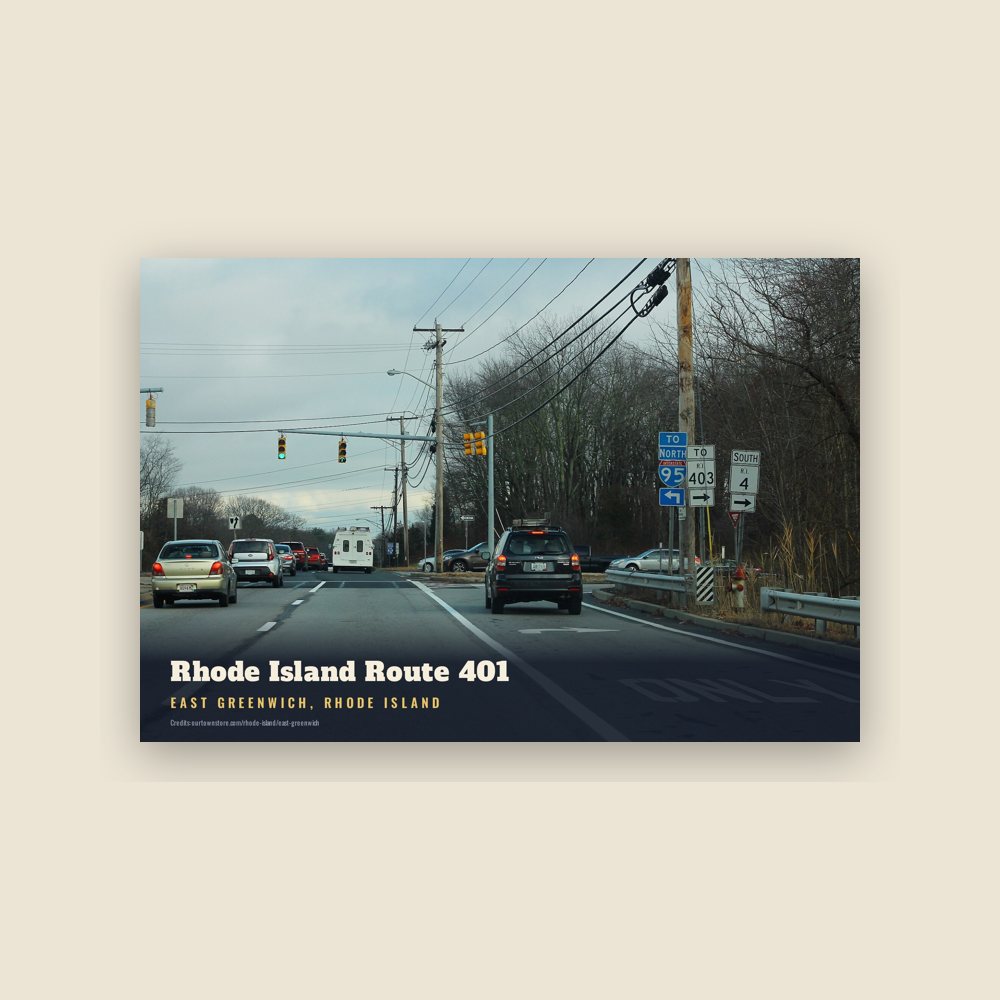
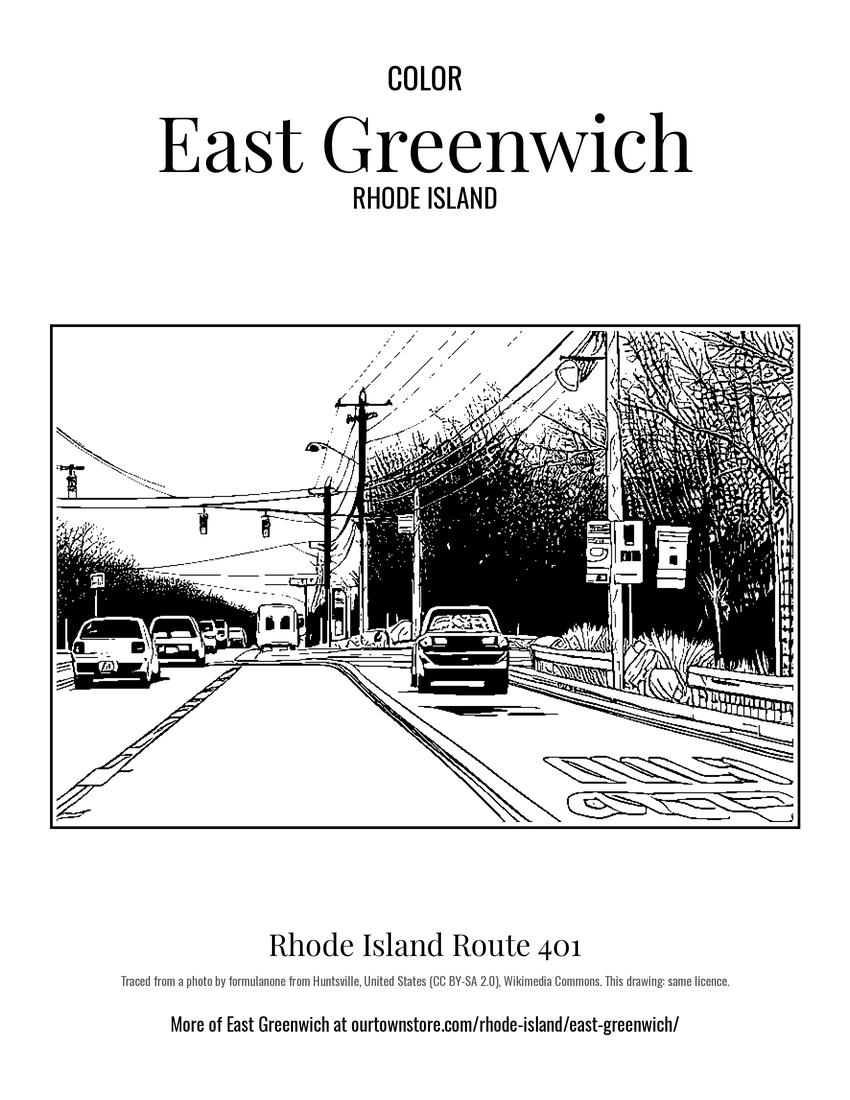 Rhode Island Route 401
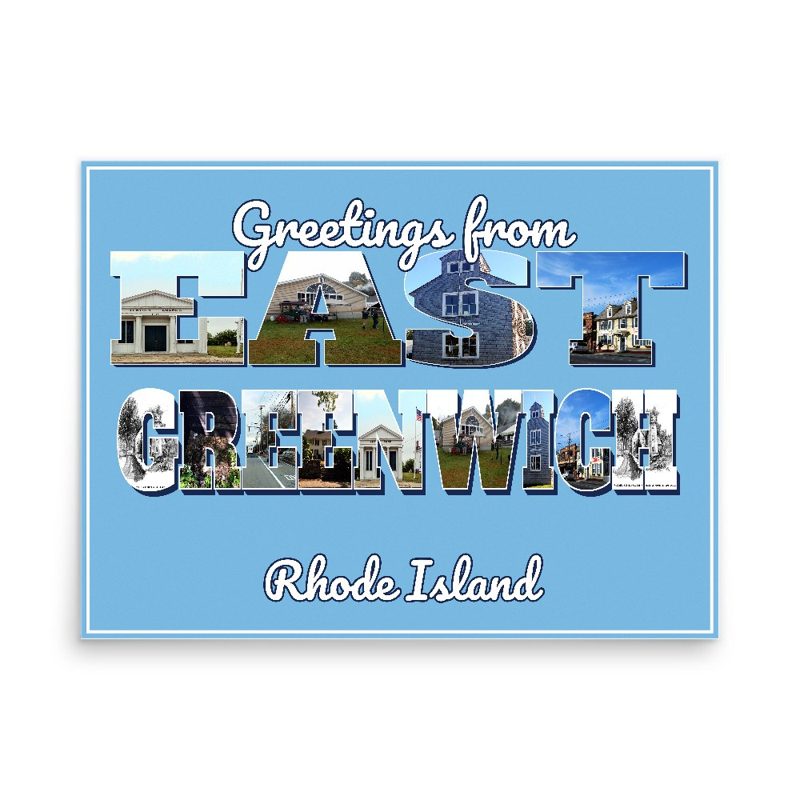
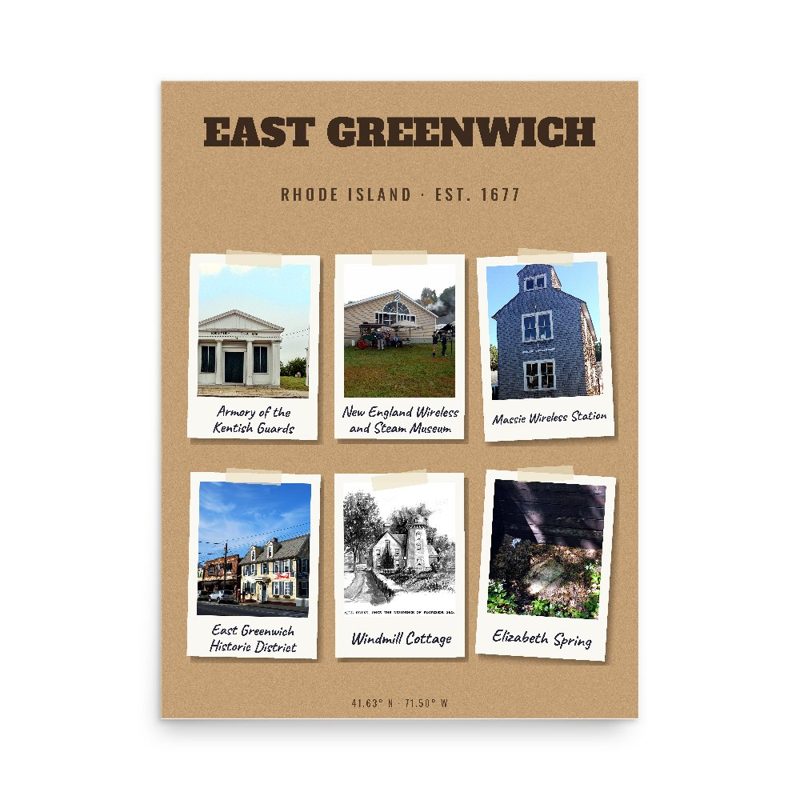
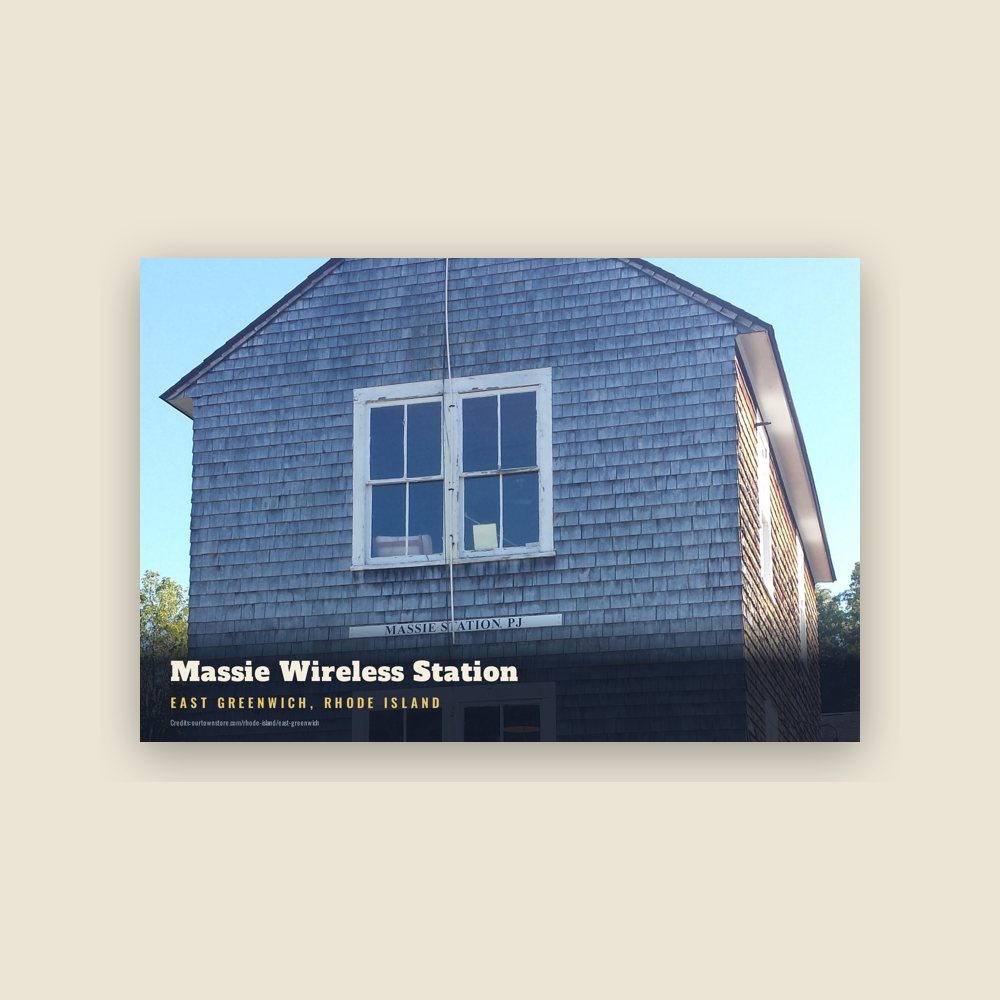
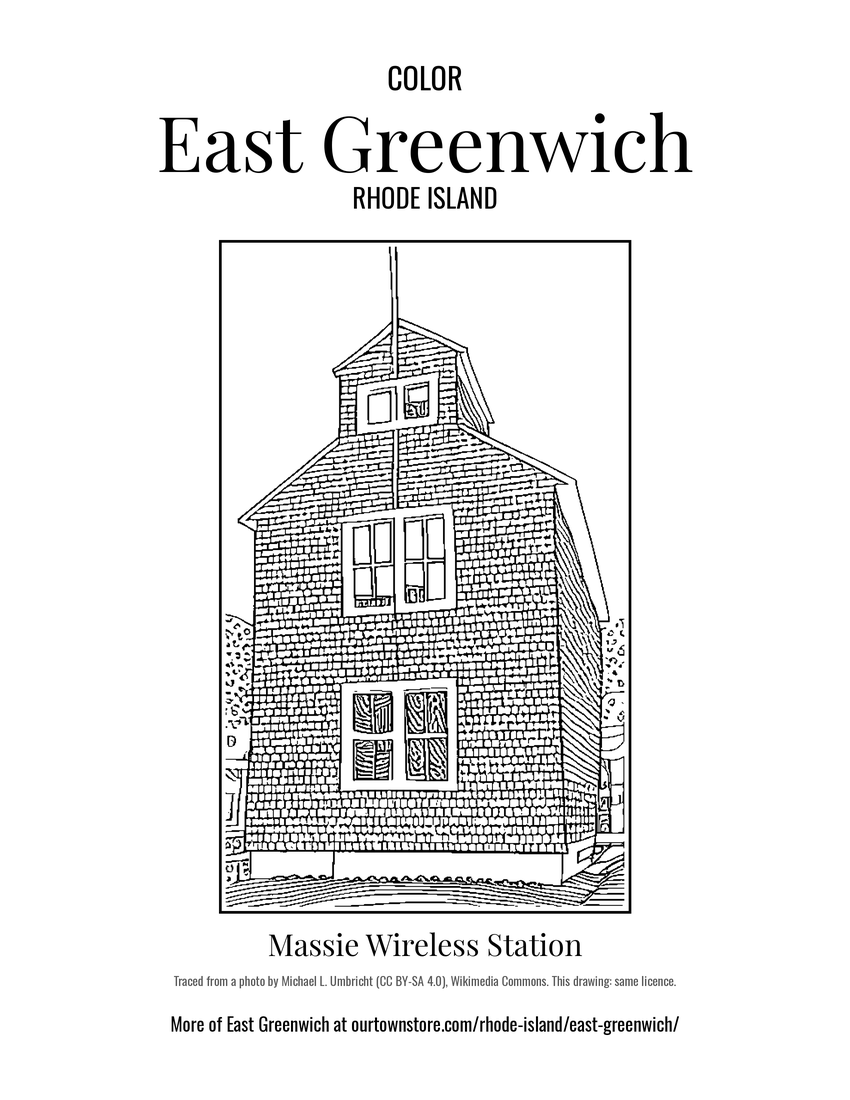 Massie Wireless Station
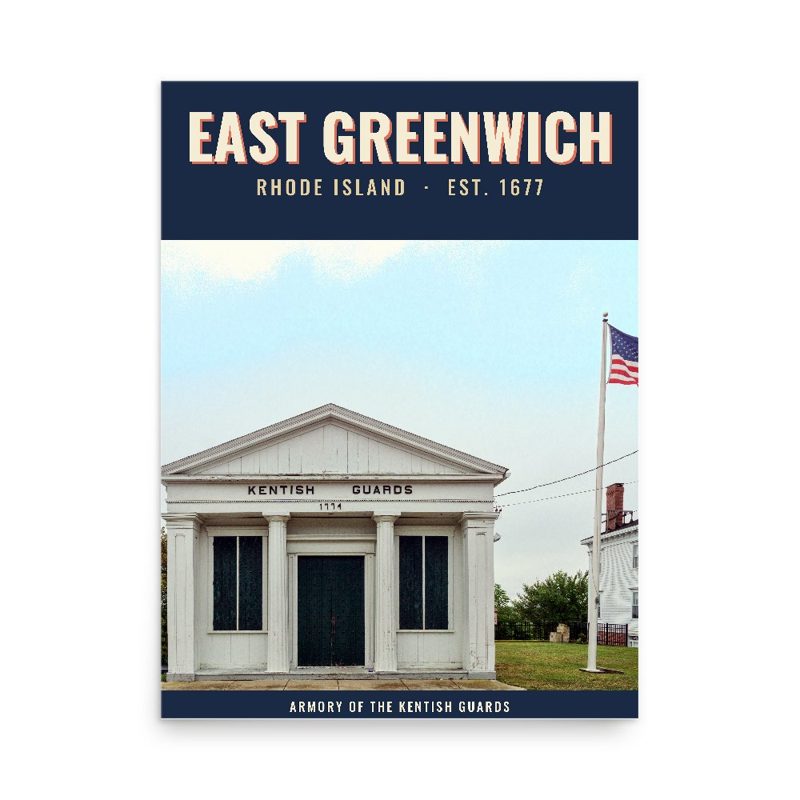
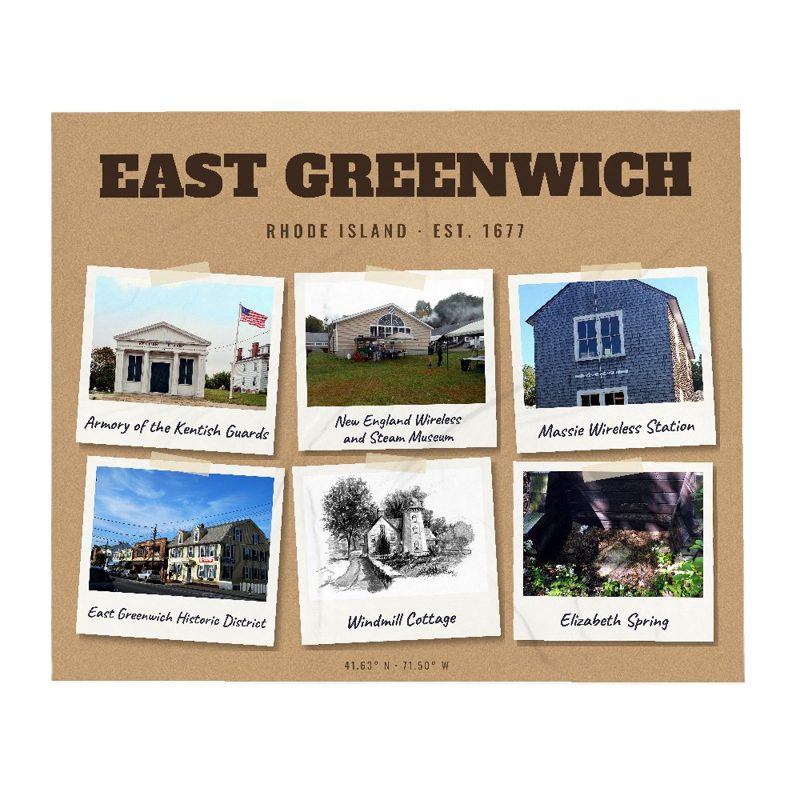
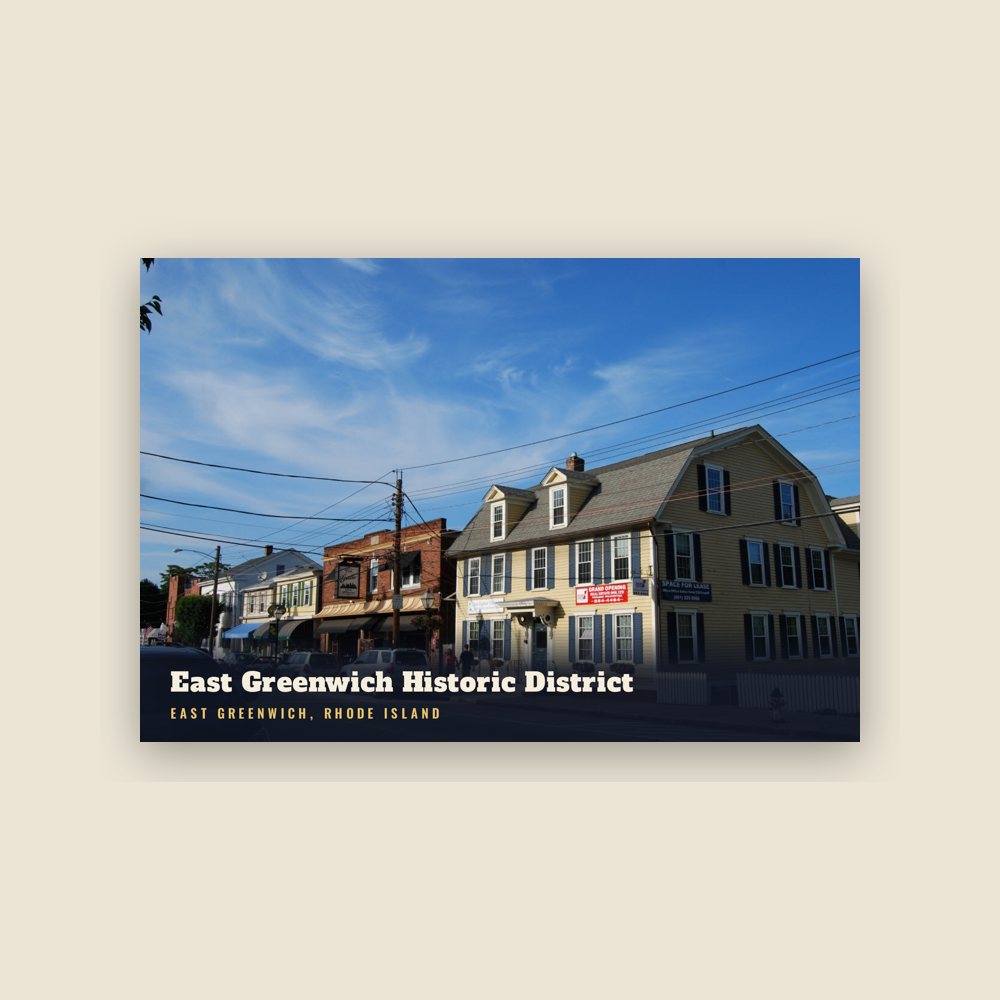
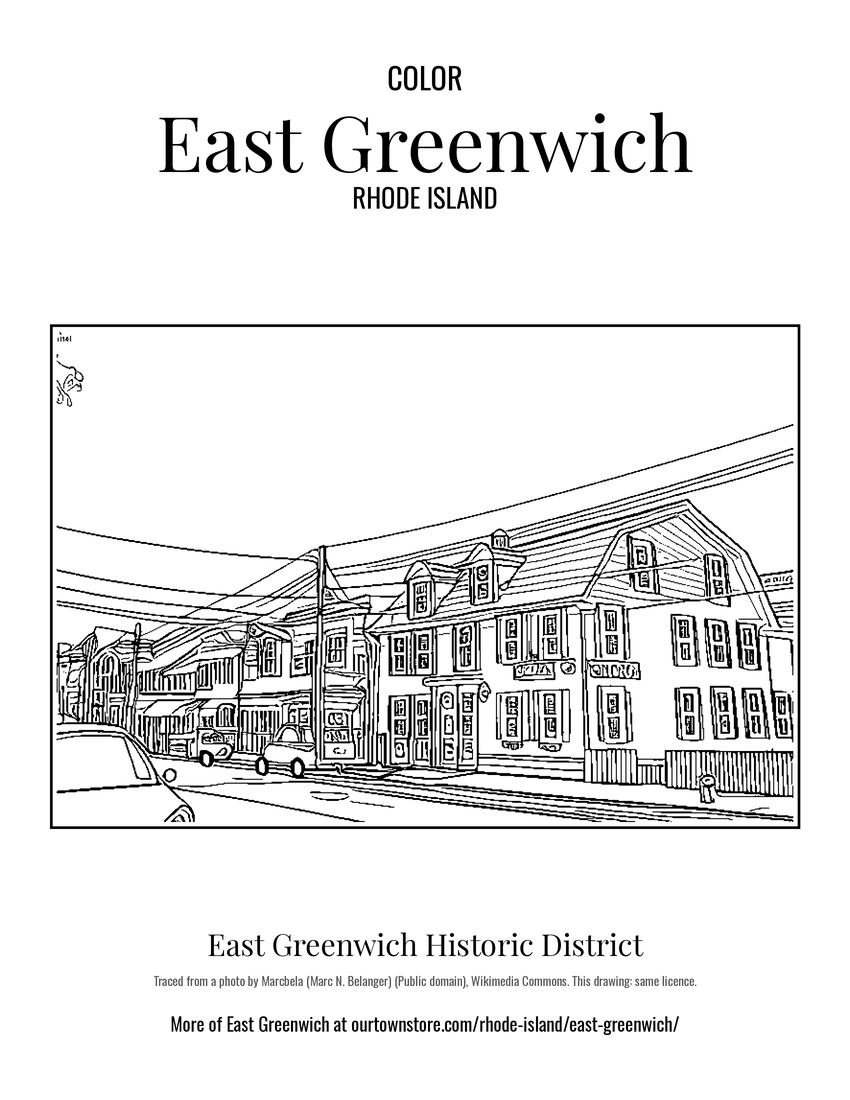 East Greenwich Historic District