A short history of Coventry
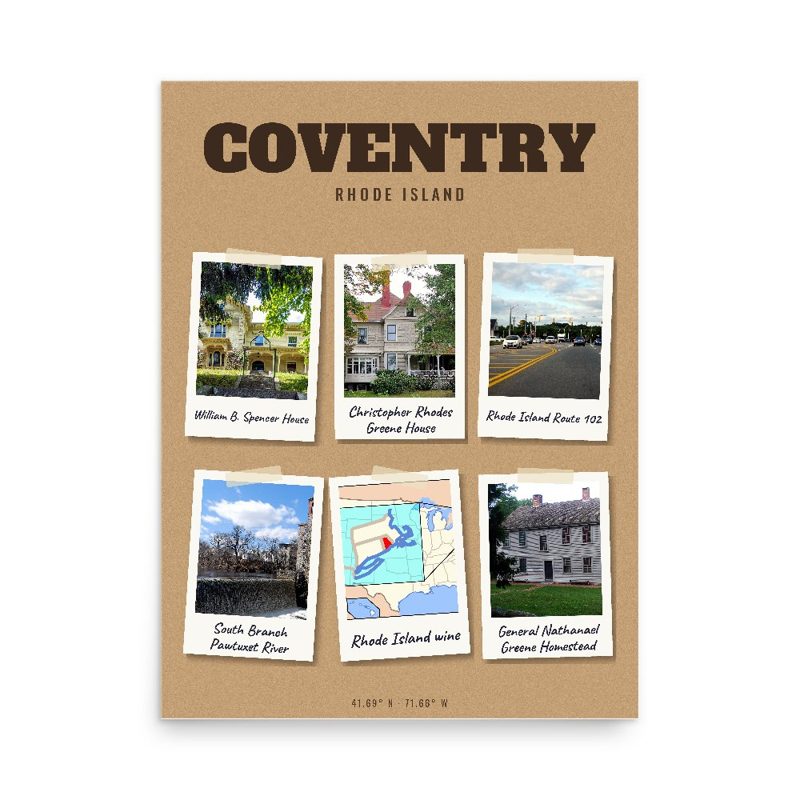
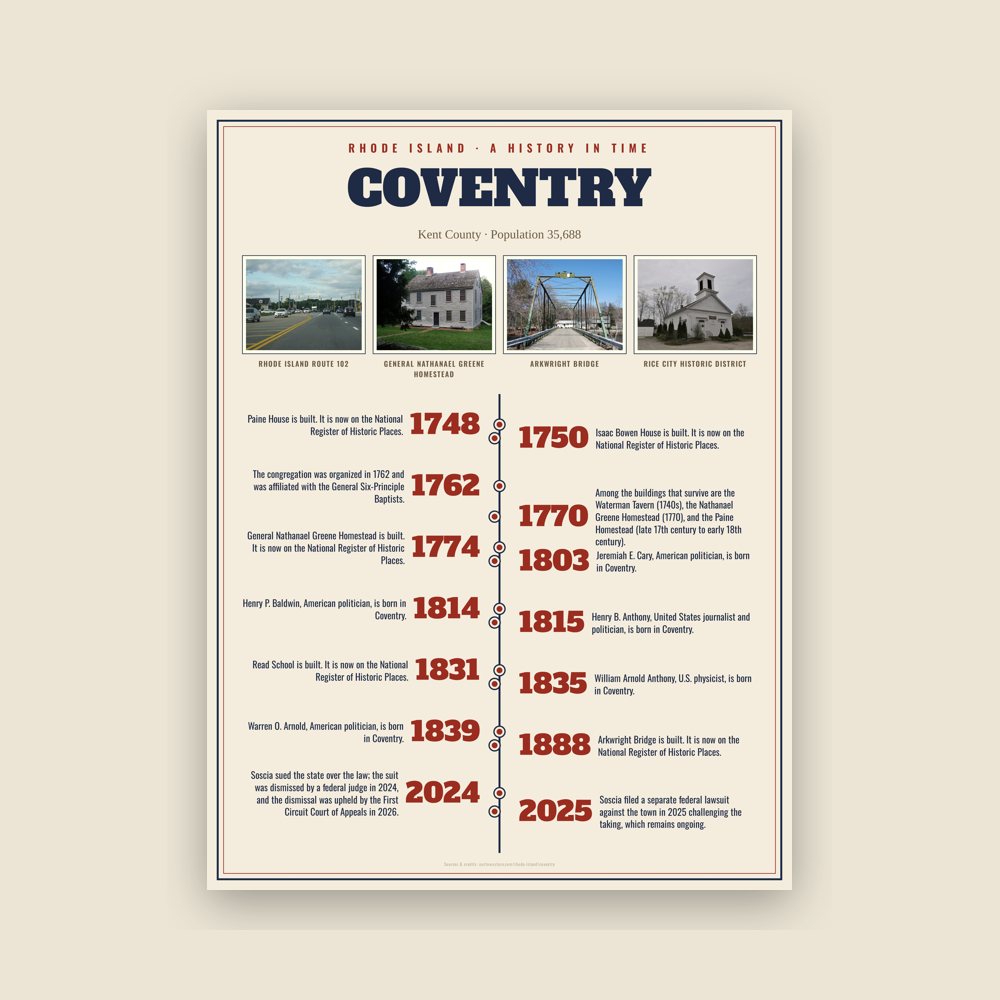
Coventry was settled by English colonists in the early 18th century, when it was part of Warwick. The area was far from the center of Warwick and grew very slowly. However, by 1741, enough farmers (about 100 families) had settled in the area that they petitioned the General Assembly of Rhode Island to create their own town. The petition was granted, and the new town was named Coventry after the English city. For the rest of the 18th century, Coventry remained a rural town populated by farmers. Among the buildings that survive are the Waterman Tavern (1740s), the Nathanael Greene Homestead (1770), and the Paine Homestead (late 17th century to early 18th century). The oldest church is Maple Root Baptist Church which dates from the end of the 18th century. The congregation was organized in 1762 and was affiliated with the General Six-Principle Baptists.
During the Revolutionary War, the people of Coventry were supporters of the patriot cause. Nathanael Greene, a resident of Coventry, rose through the ranks to become a leading general of the American army. By the end of the war, Greene was second in command in the US army after George Washington.
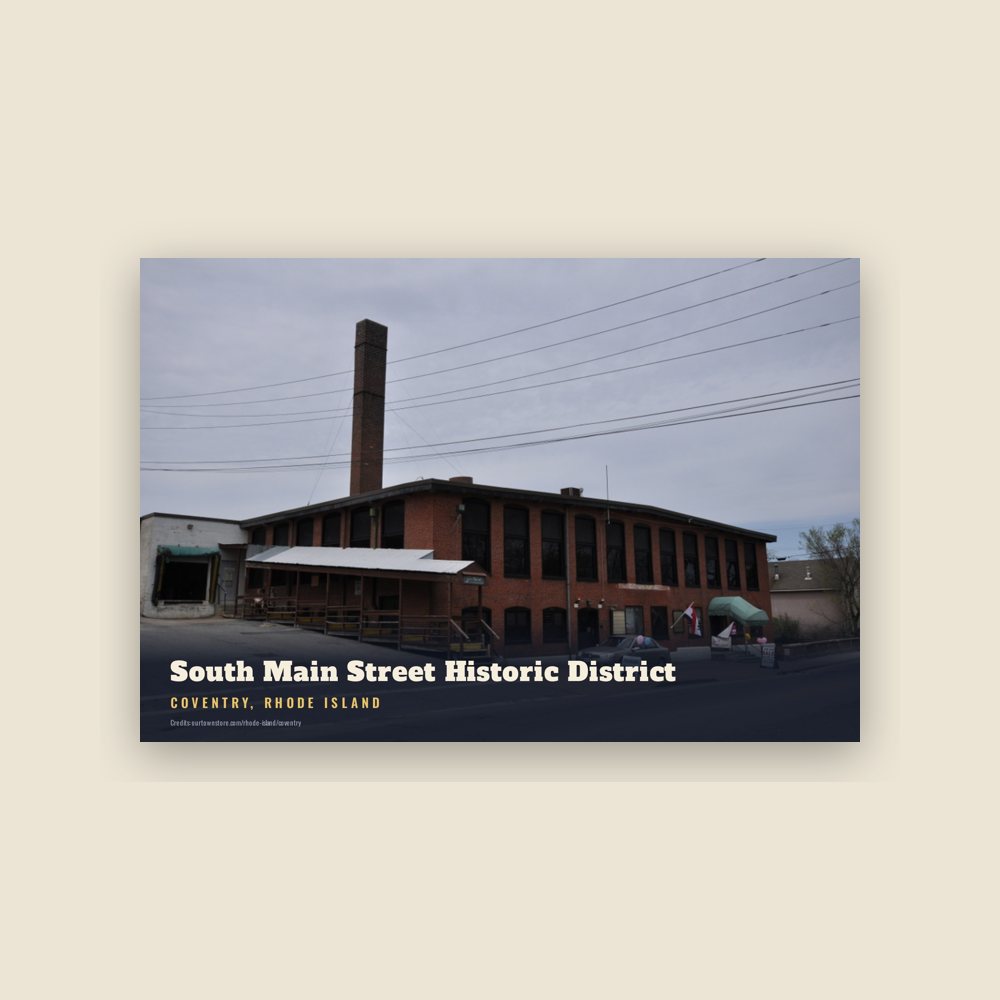
In the 19th century, the Industrial Revolution came to Coventry with the building of the first mill in Anthony. Over the next century, the eastern end of town became very industrialized, with manufacturing centers being located in Anthony, Washington, Quidnick, and Harris villages. Many of the old factories still stand in the town, and the village centers remain mostly intact. The demographics of the town changed, as industrial jobs at these new mill villages attracted French Canadian and Irish immigrants. By the end of the 19th century, almost one fourth of the population was born outside the US, and French was the primary language for many of the people in the eastern part of Coventry. Not all immigrants worked in the factories. Census records from the late 19th century show that some owned farms.
By comparison, the western end of the town remained very rural, with the only centers of population being located at Greene and Summit, both established as railroad stations on the New York, New Haven and Hartford Railroad.
In the 20th century, the town went through much change. The advent of the automobile brought an end of the railroad, and the track was dismantled in the 1970s. By the mid-20th century, industry had largely left the town and most of the factories closed.
In 2020, Soscia Holdings, a private company, purchased the dam and water flow rights to the Flat River Reservoir aka Johnson's Pond, [a man made reservoir, originally created to provide a backup water source for the towns mills in the event of a drought period]. for $1.7 million. Residents subsequently complained that Soscia was lowering water levels below historical norms, and in 2022 the Rhode Island General Assembly passed a law requiring the owners to obtain Department of Environmental Management approval before altering water levels. Soscia sued the state over the law; the suit was dismissed by a federal judge in 2024, and the dismissal was upheld by the First Circuit Court of Appeals in 2026. In June 2024, shortly after the initial dismissal, the Town of Coventry took the pond, dam, and associated land from Soscia Holdings by eminent domain, with a Superior Court judge approving the town's $157,000 valuation. Soscia filed a separate federal lawsuit against the town in 2025 challenging the taking, which remains ongoing.
Adapted (trimmed) from the Wikipedia article Coventry, Rhode Island, revision 1378547589 by its contributors, licensed CC BY-SA 4.0.

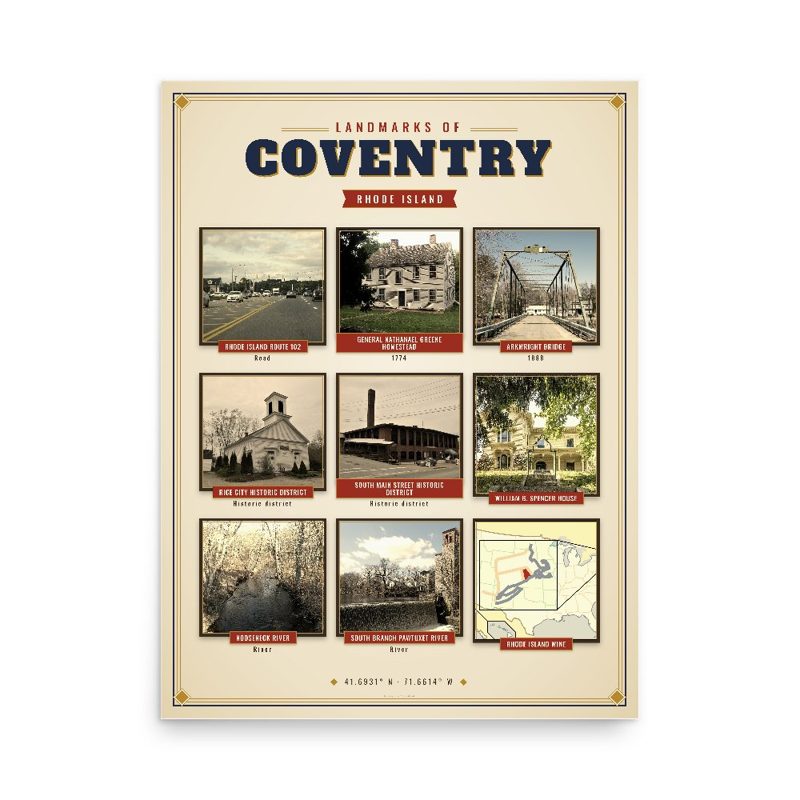
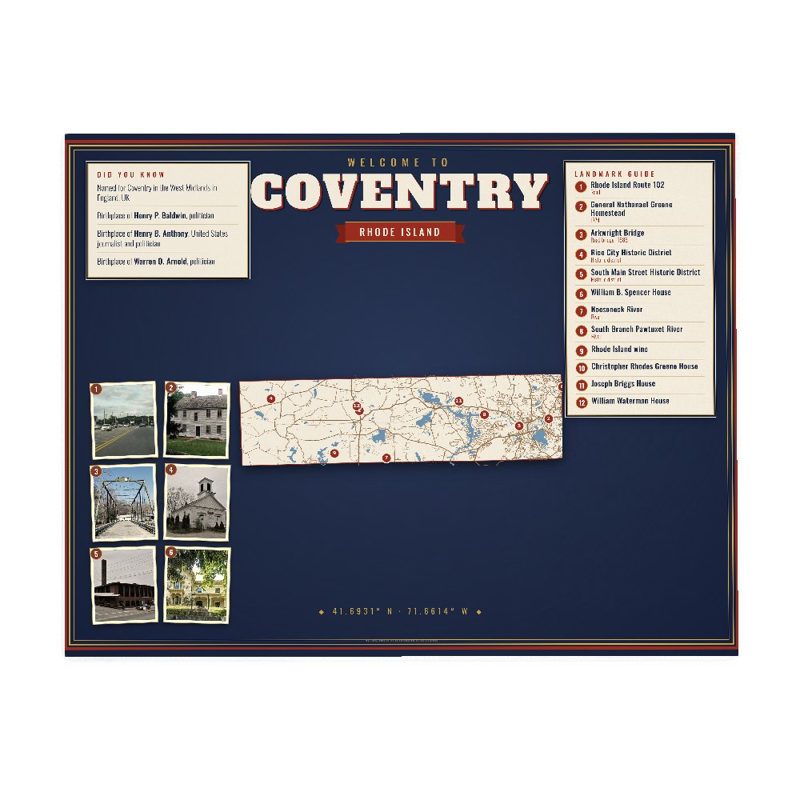













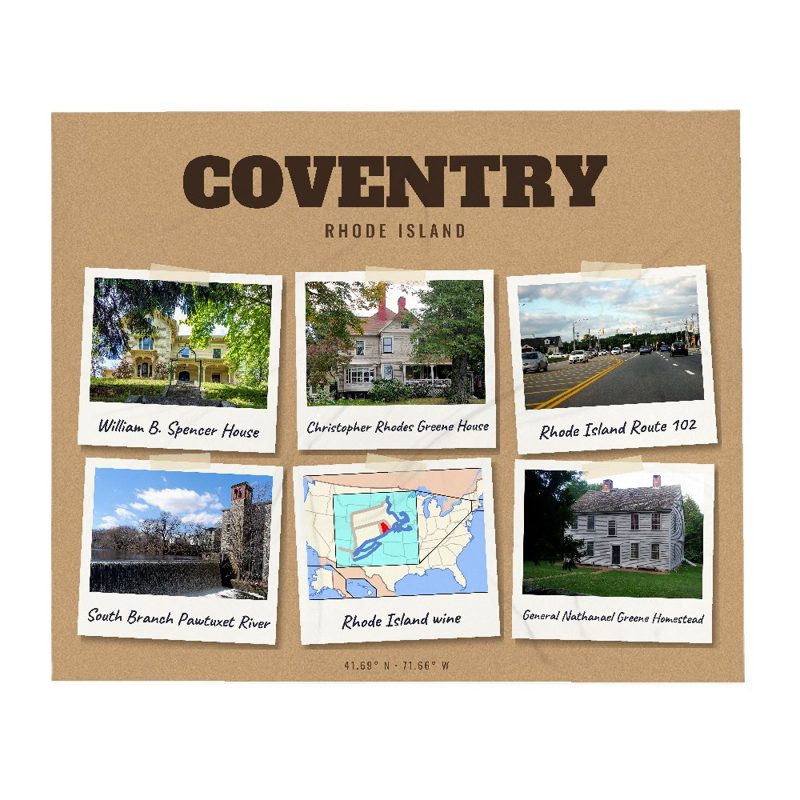
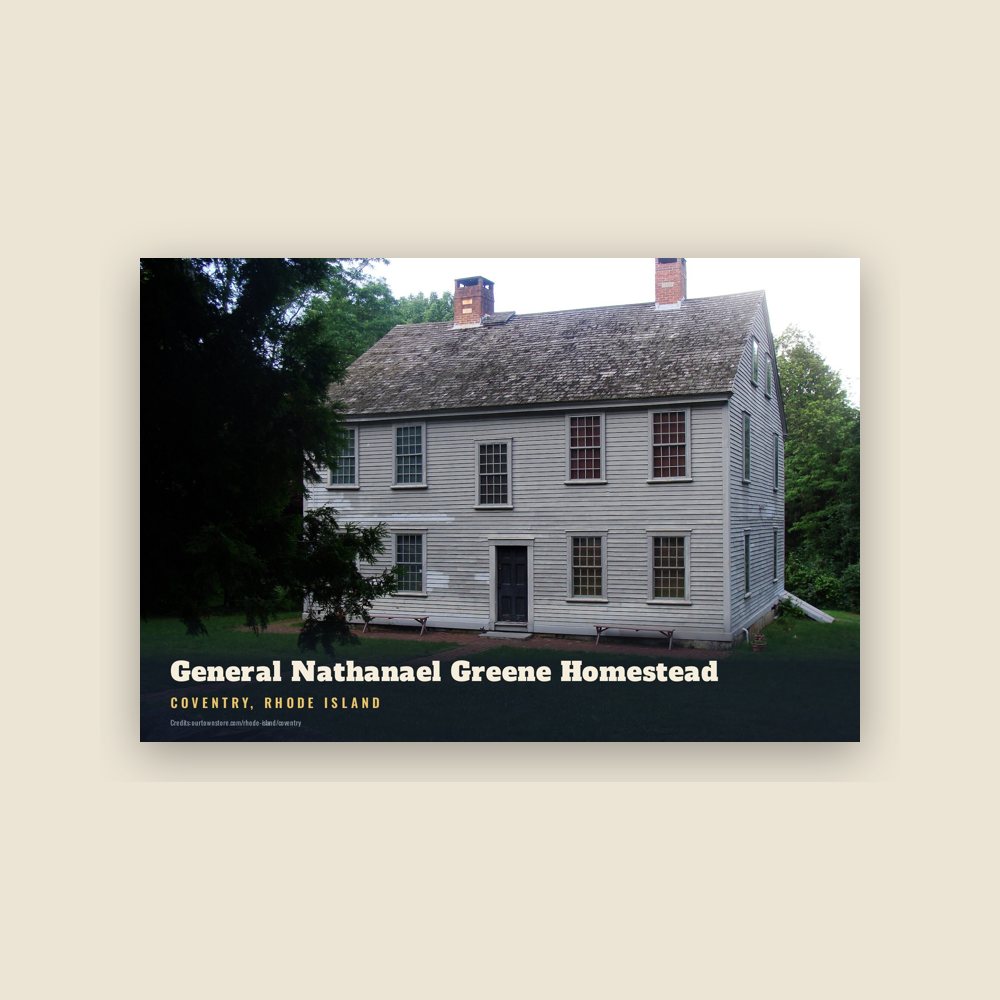
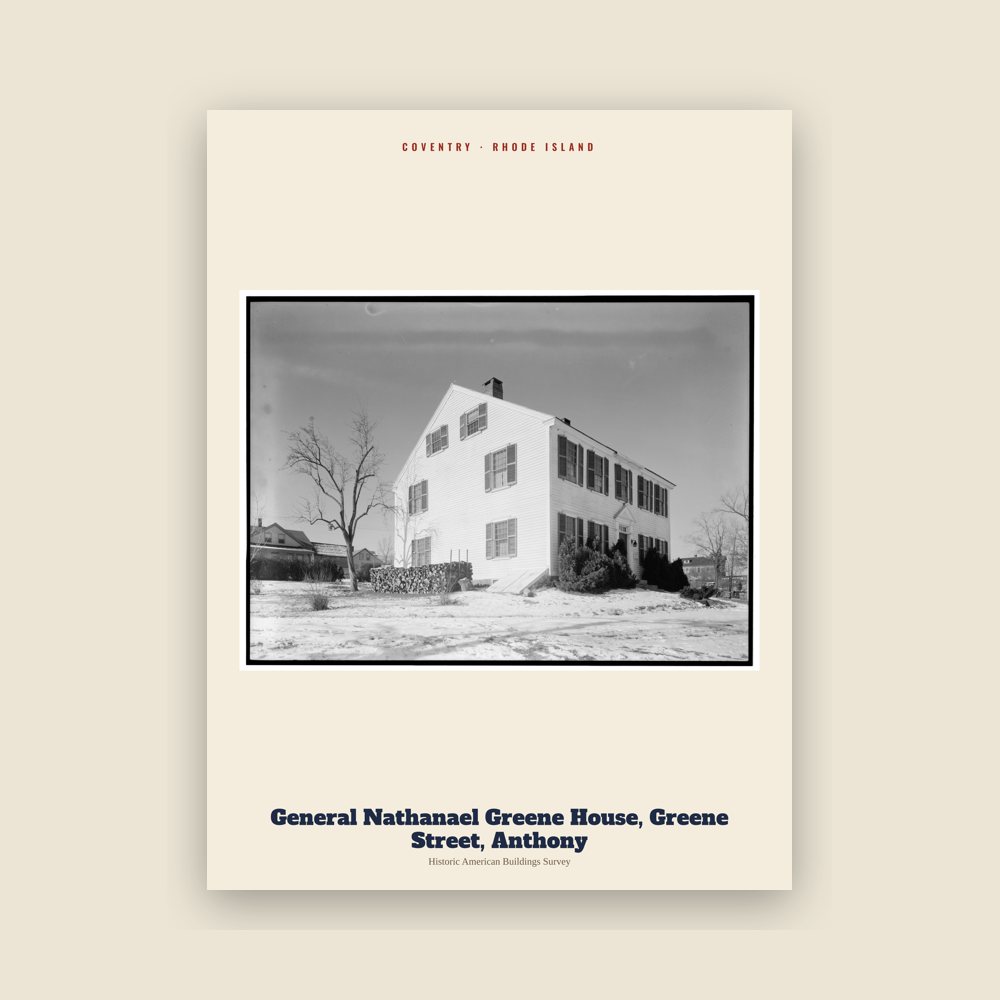
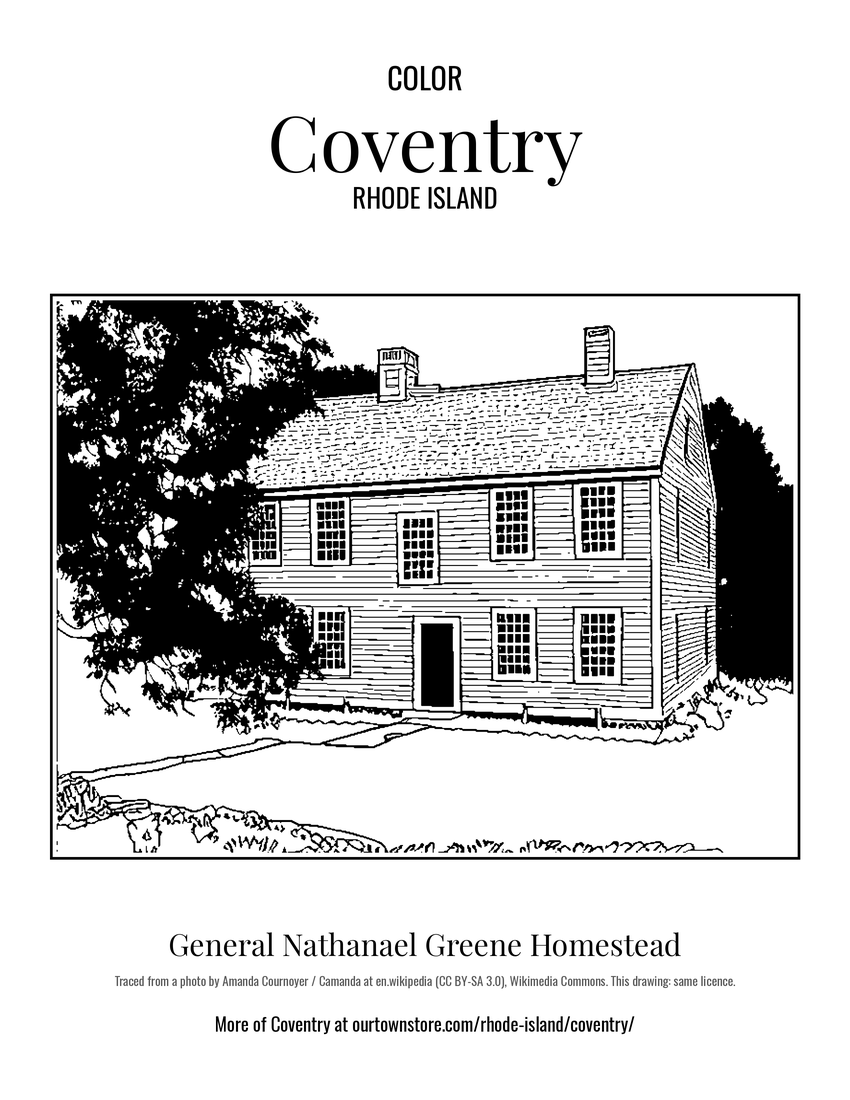 General Nathanael Greene Homestead
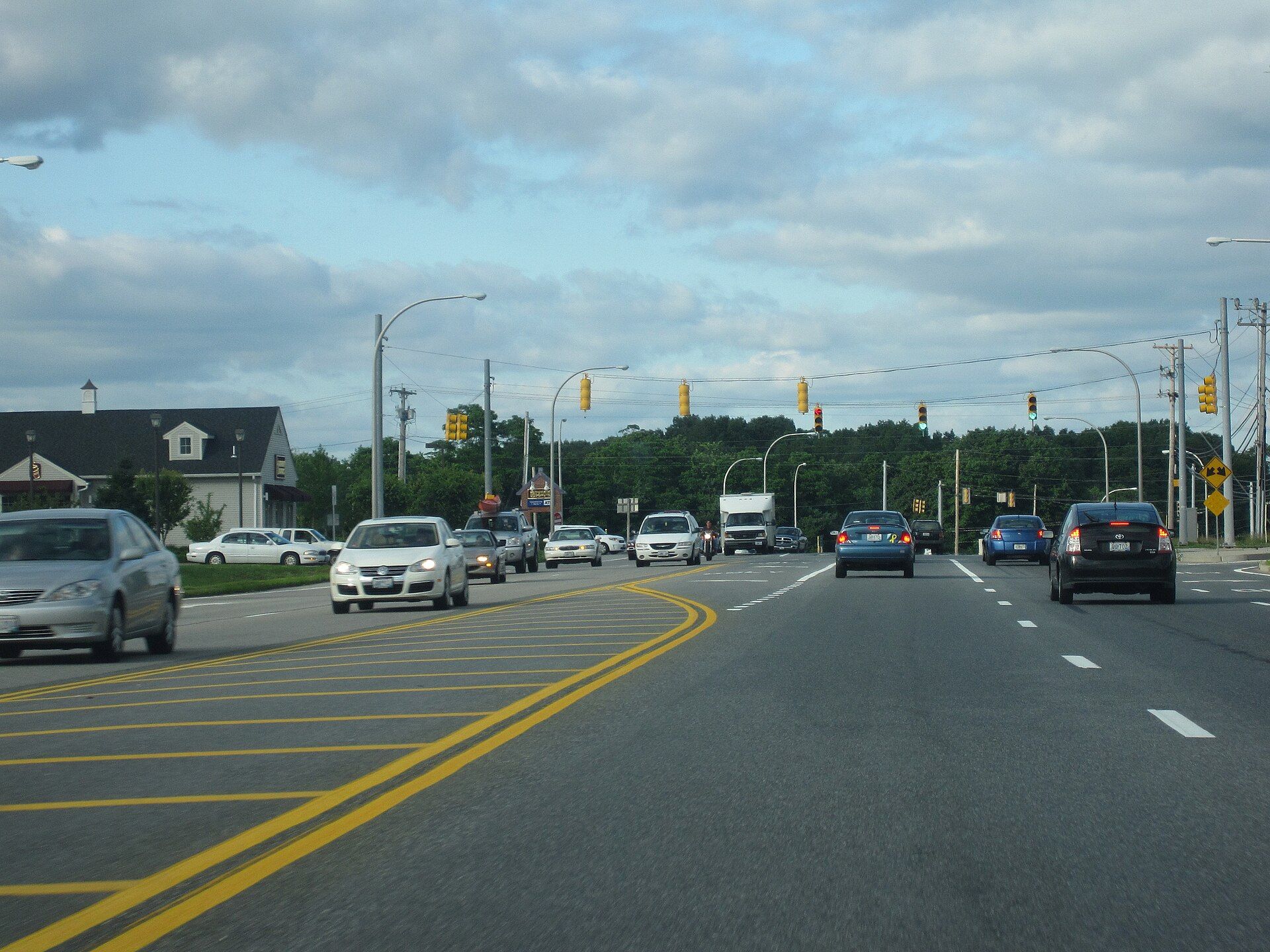
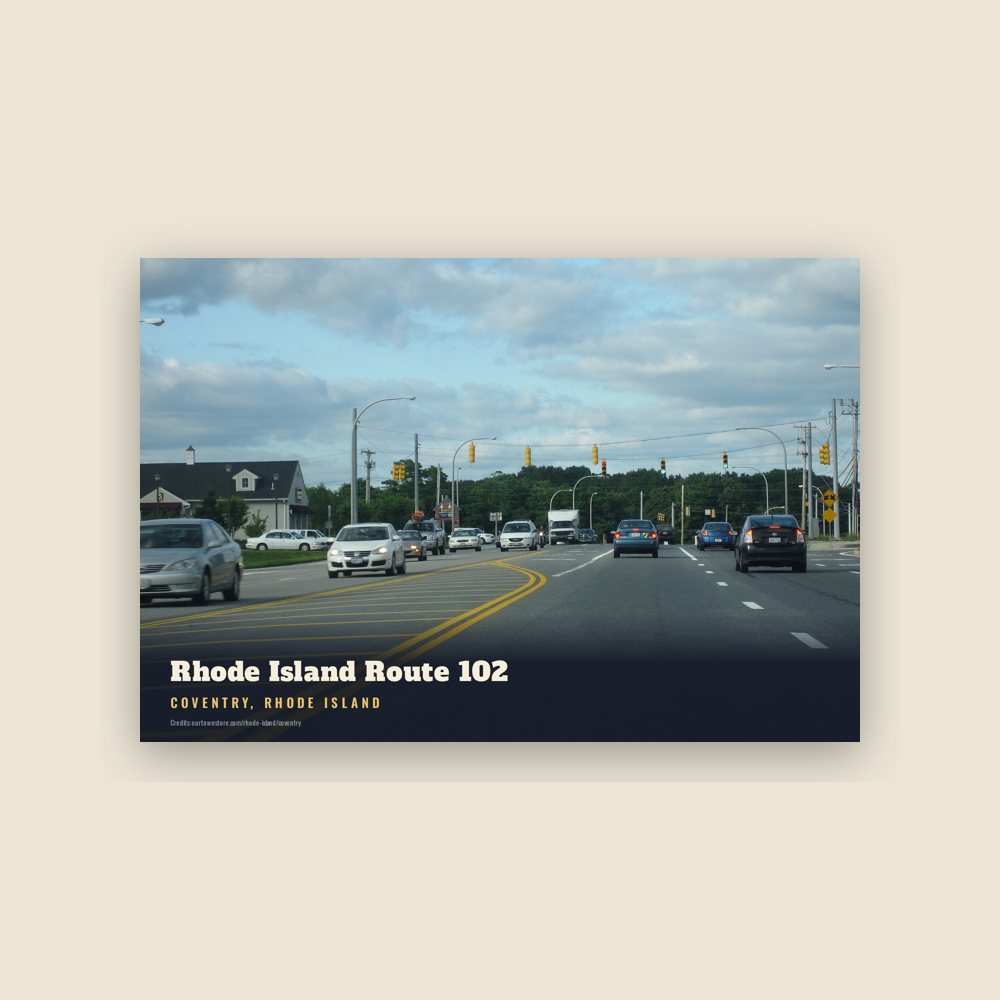
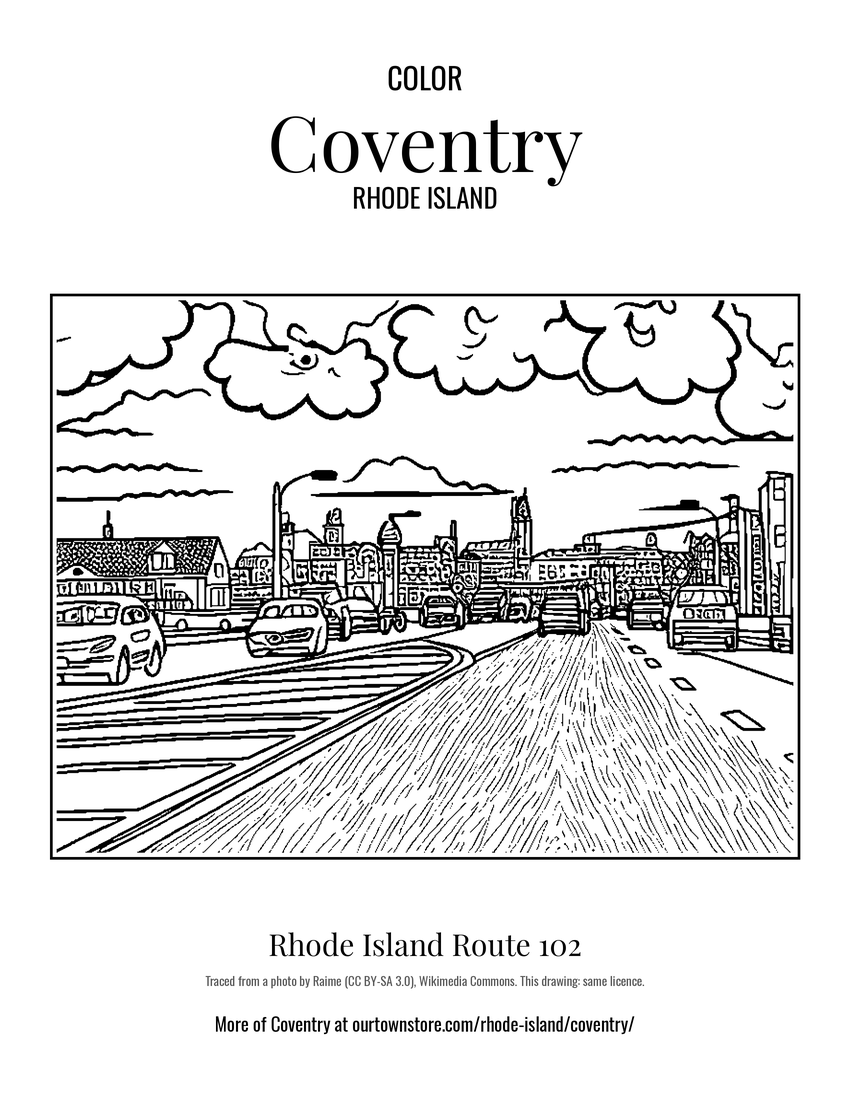 Rhode Island Route 102
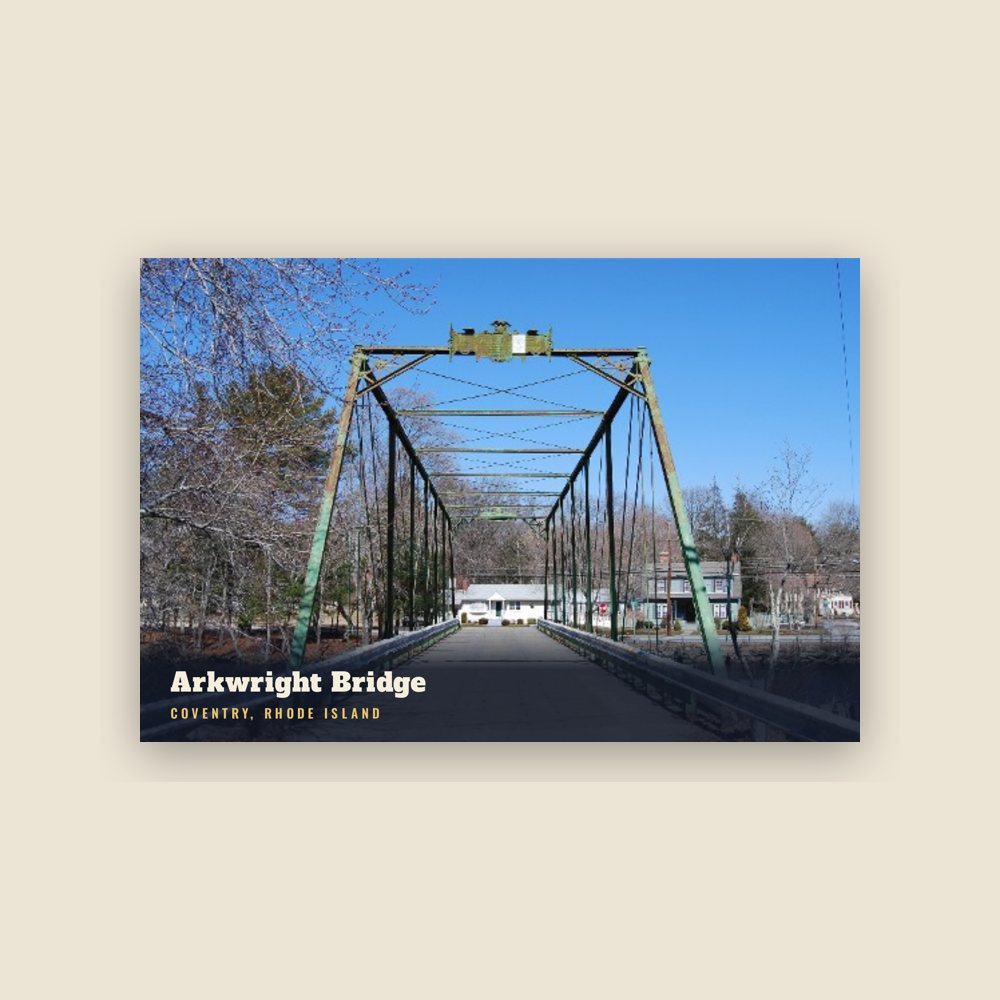
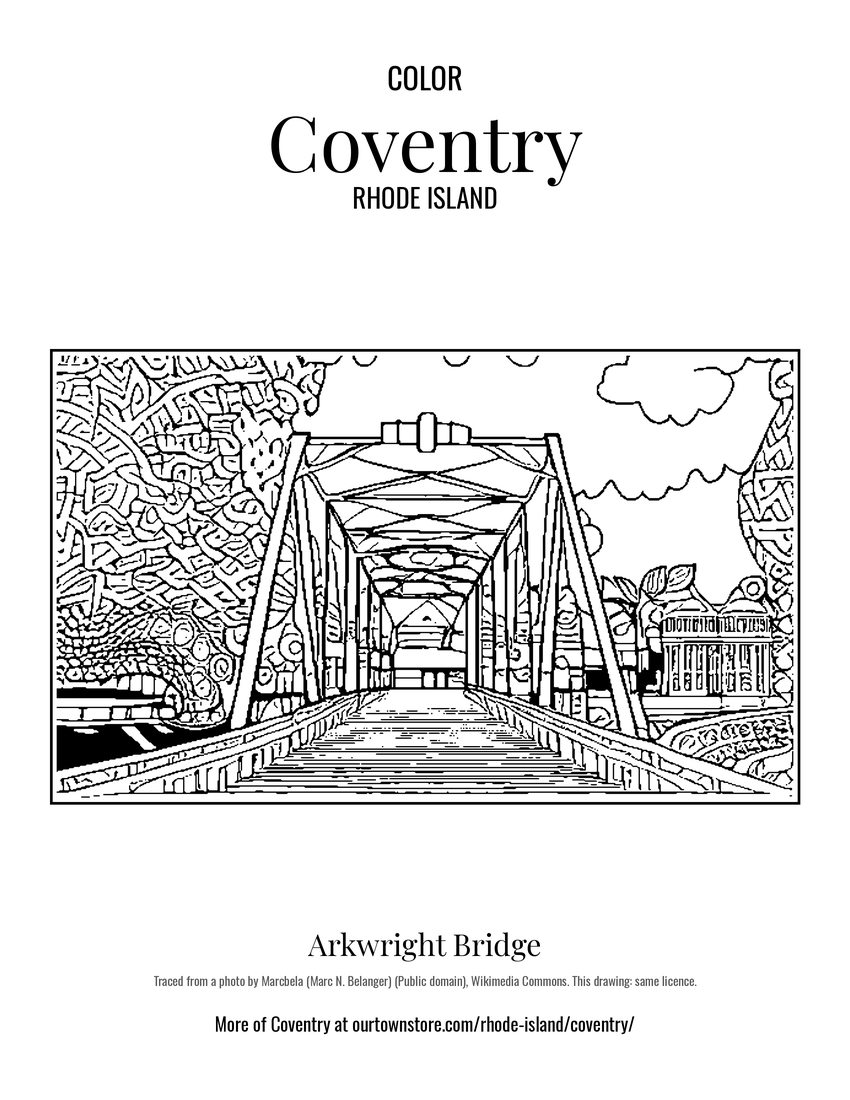 Arkwright Bridge
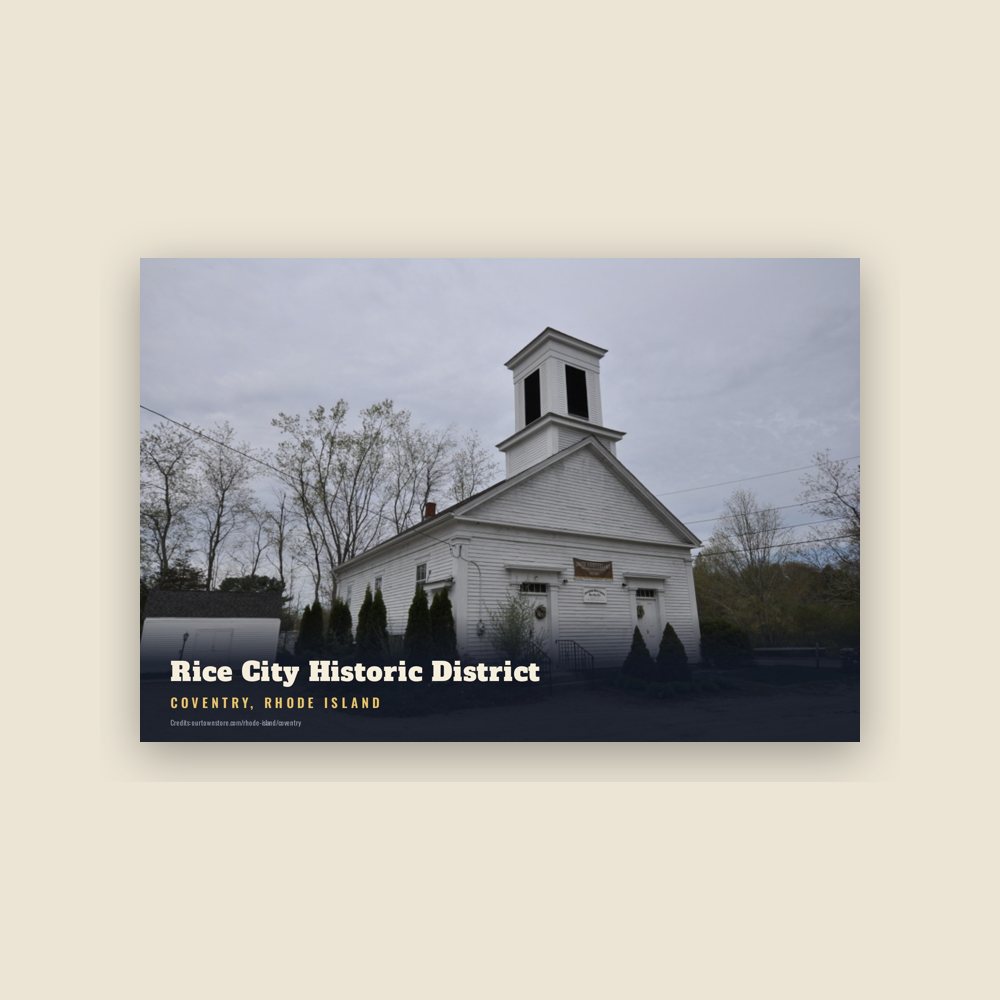
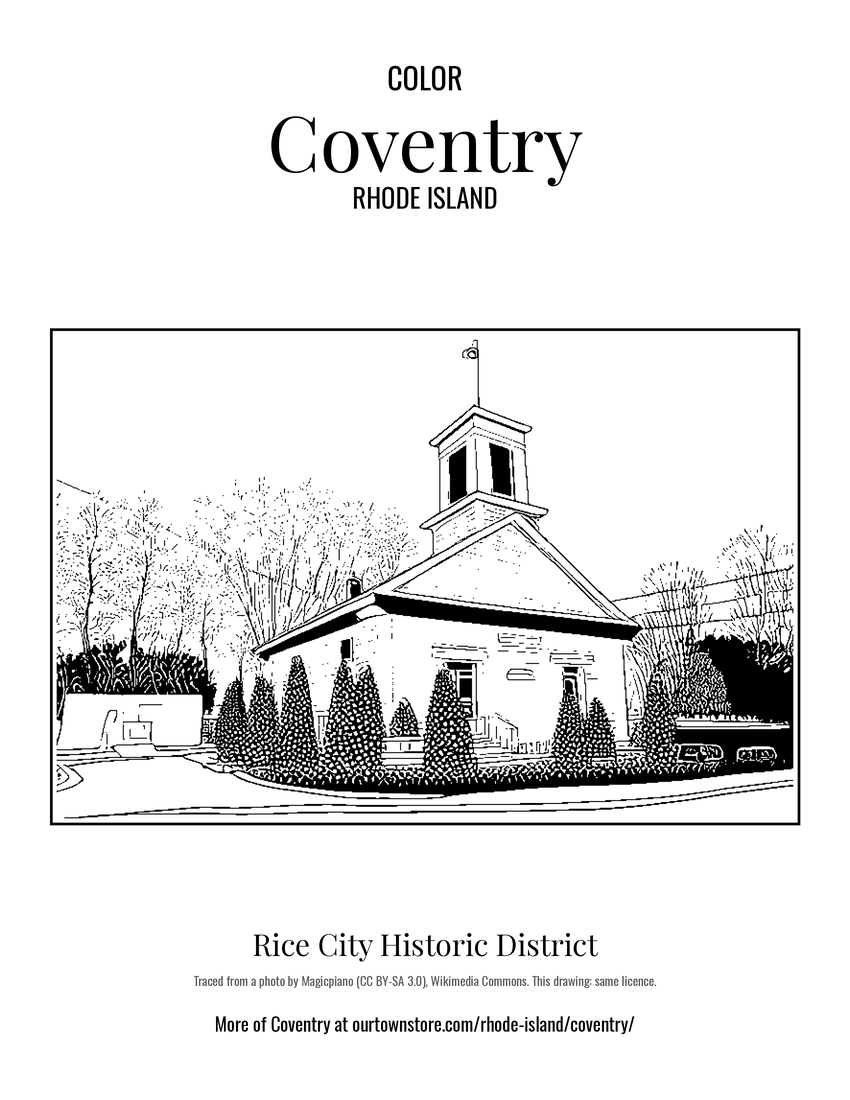 Rice City Historic District