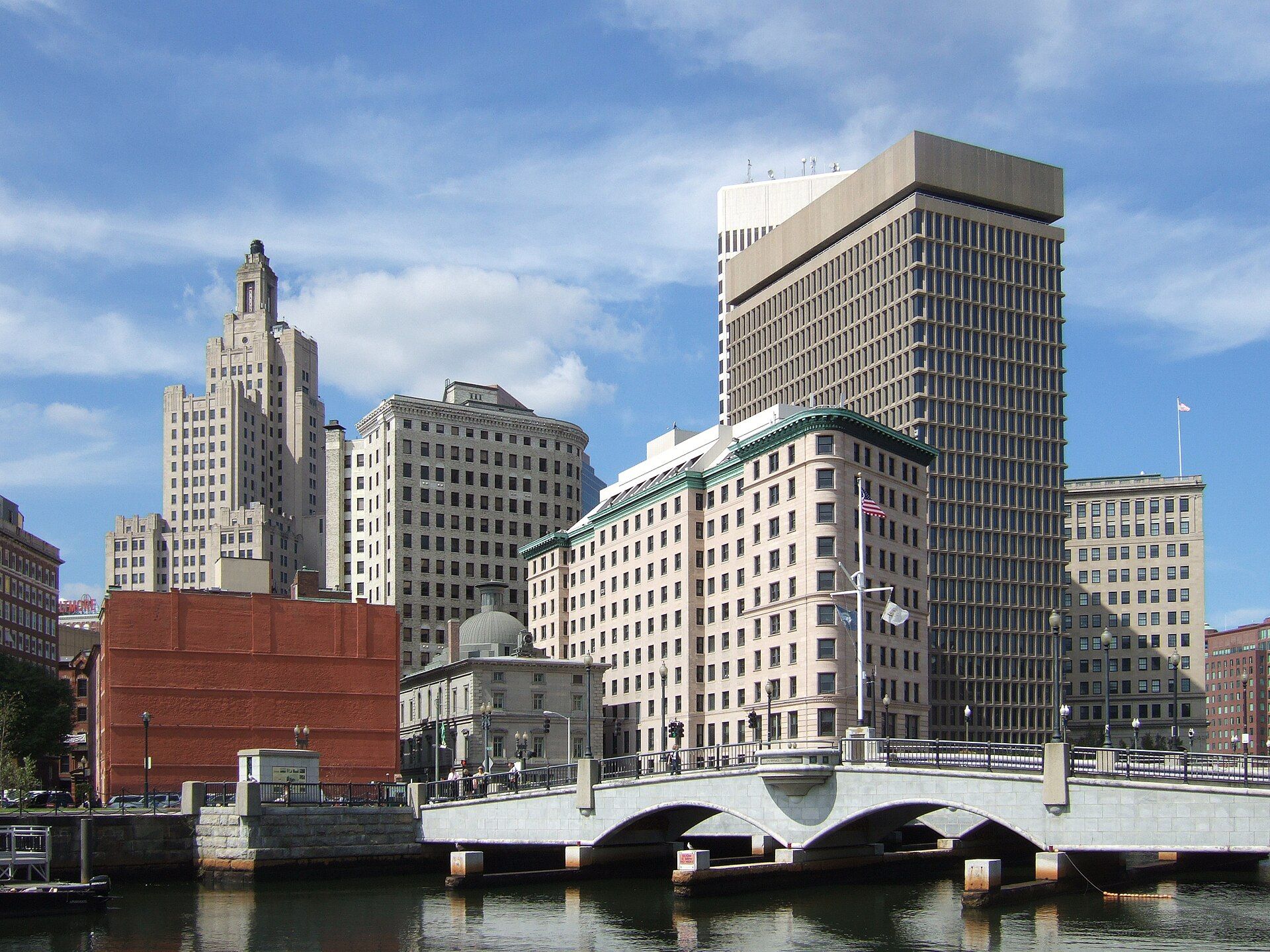
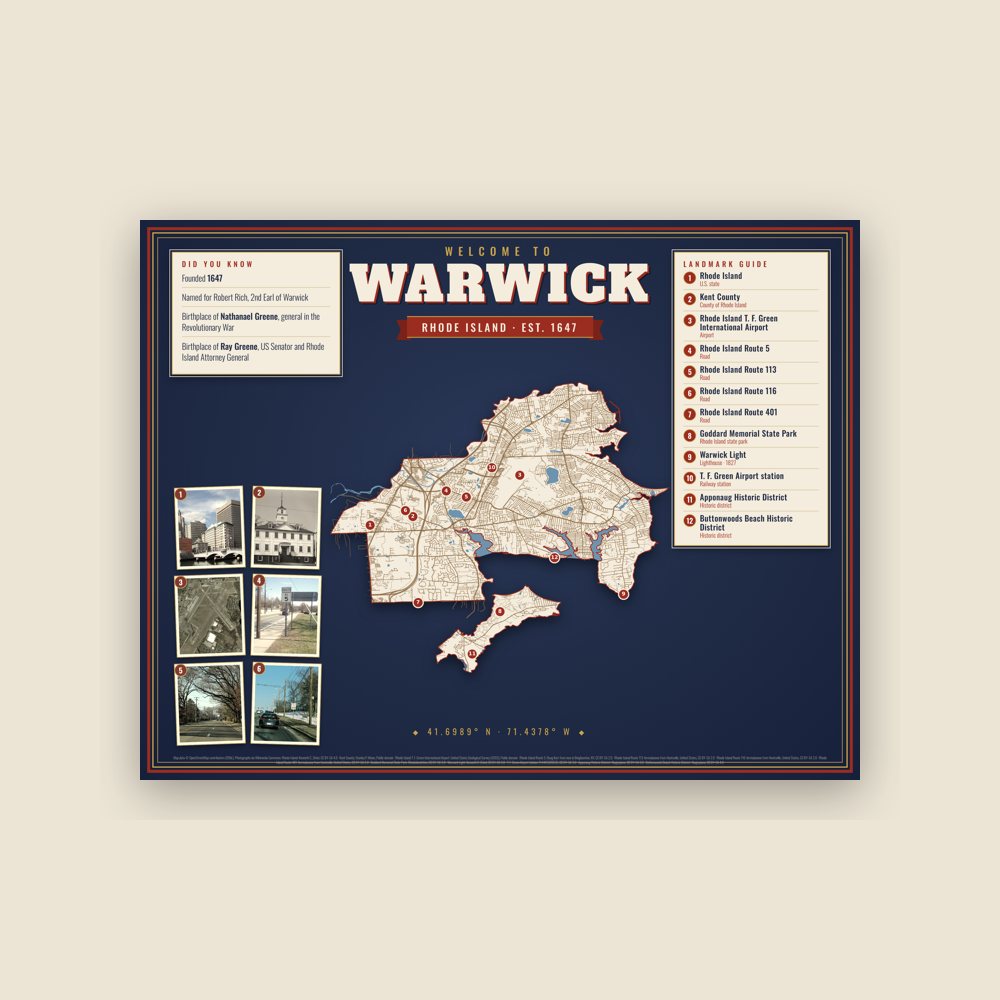
Warwick is located approximately 12 miles south of downtown Providence, Rhode Island, 63 miles southwest of Boston, Massachusetts, and 171 miles northeast of New York City. Landmarks include Kent County, Goddard Memorial State Park and Warwick Light. Warwick is the birthplace of Nathanael Greene, general in the Revolutionary War.
Every piece is drawn from Warwick's own map data and historic archives, then printed and shipped from the USA when you order. No two towns look alike.
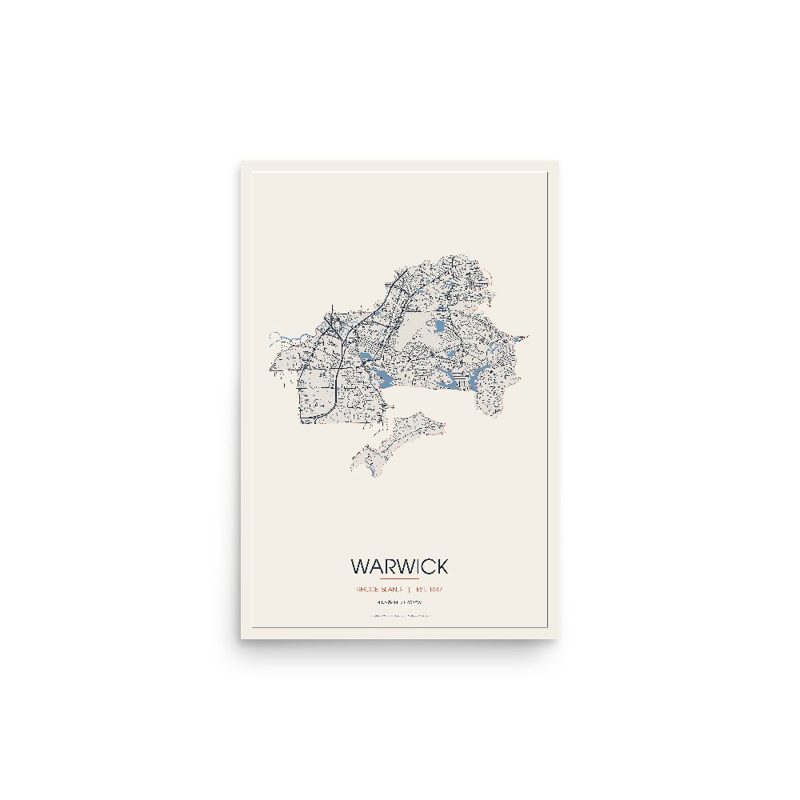
Every road in town, on archival matte paper
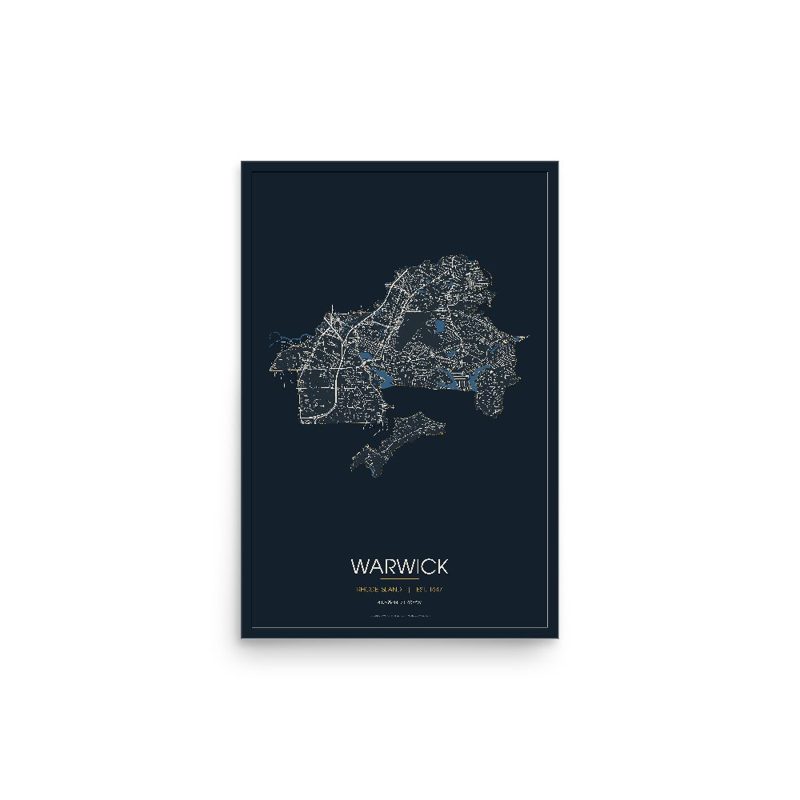
The same map, in navy and silver
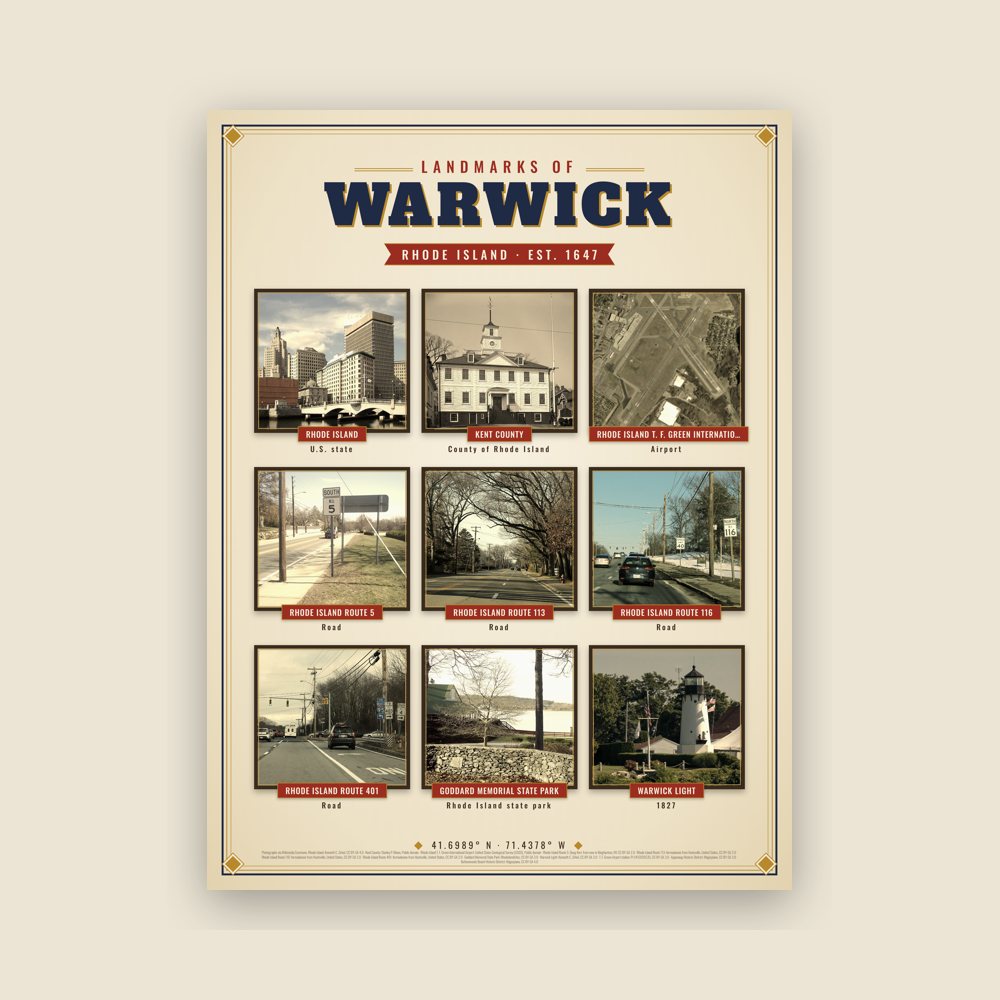
Nine local landmarks, archival matte
Map of local landmarks, washable fabric
Heavy-blend fleece, street map printed on the back
Soft Bella+Canvas jersey
Glossy ceramic, dishwasher safe
Ceramic keepsake, gold ribbon
Weatherproof, for the front walk
24″×16″, printed coir-look fibers, rubber back
12″×12″ printed wood, ready to hang
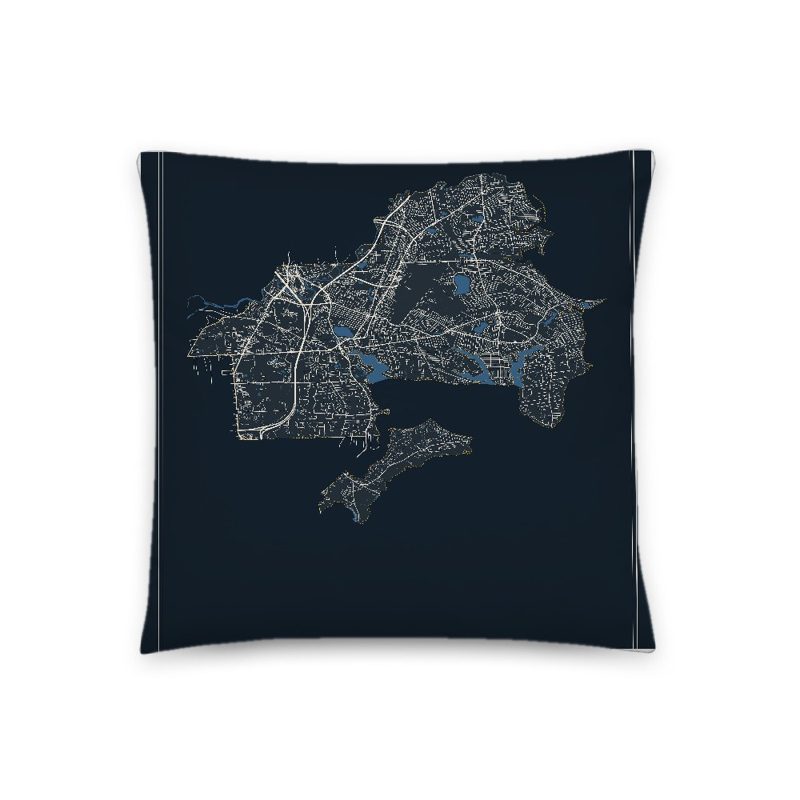
Soft-touch, zip cover
Sturdy all-over-print tote
Glossy top, cork back
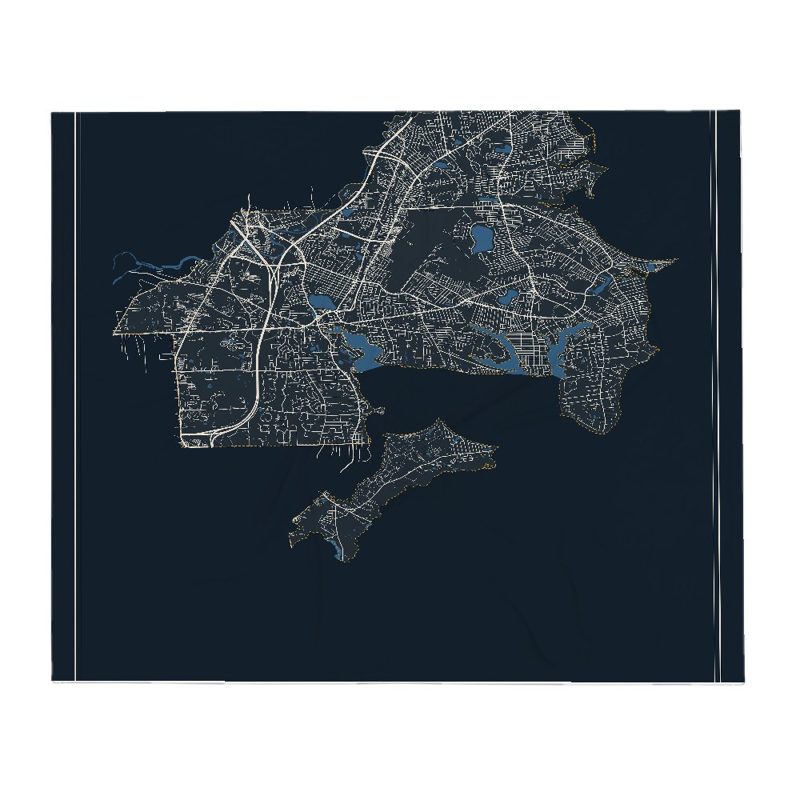
Soft fleece, 50″×60″
20 oz, double-wall stainless
Named for Robert Rich, 2nd Earl of Warwick (Royal Navy admiral (1587-1658)).
Population 2010: 82,672 → 2020: 82,823
From Wikidata (CC0).
Warwick was settled by Samuel Gorton in 1642. Narragansett Sachem Miantonomi sold him the Shawhomett Purchase for 144 fathoms of wampum. This included the towns of Coventry and West Warwick, Rhode Island. However, Sachems Sacononoco and Pumham claimed that Miantonomi had sold the land without asking for their approval. They took their case to Boston, where they placed their lands under Massachusetts rule. In 1643, Massachusetts Bay Colony sent a militia force to Shawomett to arrest Gorton and his followers. After a tense standoff, all but three of the Gortonists surrendered to the Massachusetts forces. Gorton then sailed back to England and sought a charter from the King. He was greatly assisted in gaining it by Robert Rich, 2nd Earl of Warwick, so Gorton and his fellow settlers changed the name of their colony from Shawumet to Warwick.
The ongoing harassment from Massachusetts Bay Colony, however, caused the other three colonies on Narragansett Bay (Providence Plantations, Portsmouth, and Newport) to unite with Warwick and get a British royal charter allowing them to form the Colony of Rhode Island and Providence Plantations.
In 1772, Warwick was the scene of the first violent act against the British Crown in the Gaspee Affair. Local patriots boarded the Gaspee, a revenue cutter that enforced the Stamp Act 1765 and Townshend Acts in Narragansett Bay. It was here that the first blood was spilled in the American Revolution when Gaspee's commanding officer Lt. Dudingston was shot and seriously wounded during the struggle for the ship. The Gaspee was stripped of all cannons and arms, then burned.
During the Revolution, Warwick militiamen participated in the battles of Montreal, Quebec, Saratoga, Monmouth, and Trenton, and they were present for the British surrender at Yorktown in 1781.
Adapted (trimmed) from the Wikipedia article Warwick, Rhode Island, revision 1375489018 by its contributors, licensed CC BY-SA 4.0.
We share a part of every Warwick sale with local partners, and we'd love to print from your collection. Old photographs, maps and postcards make the best keepsakes.
Partner with us