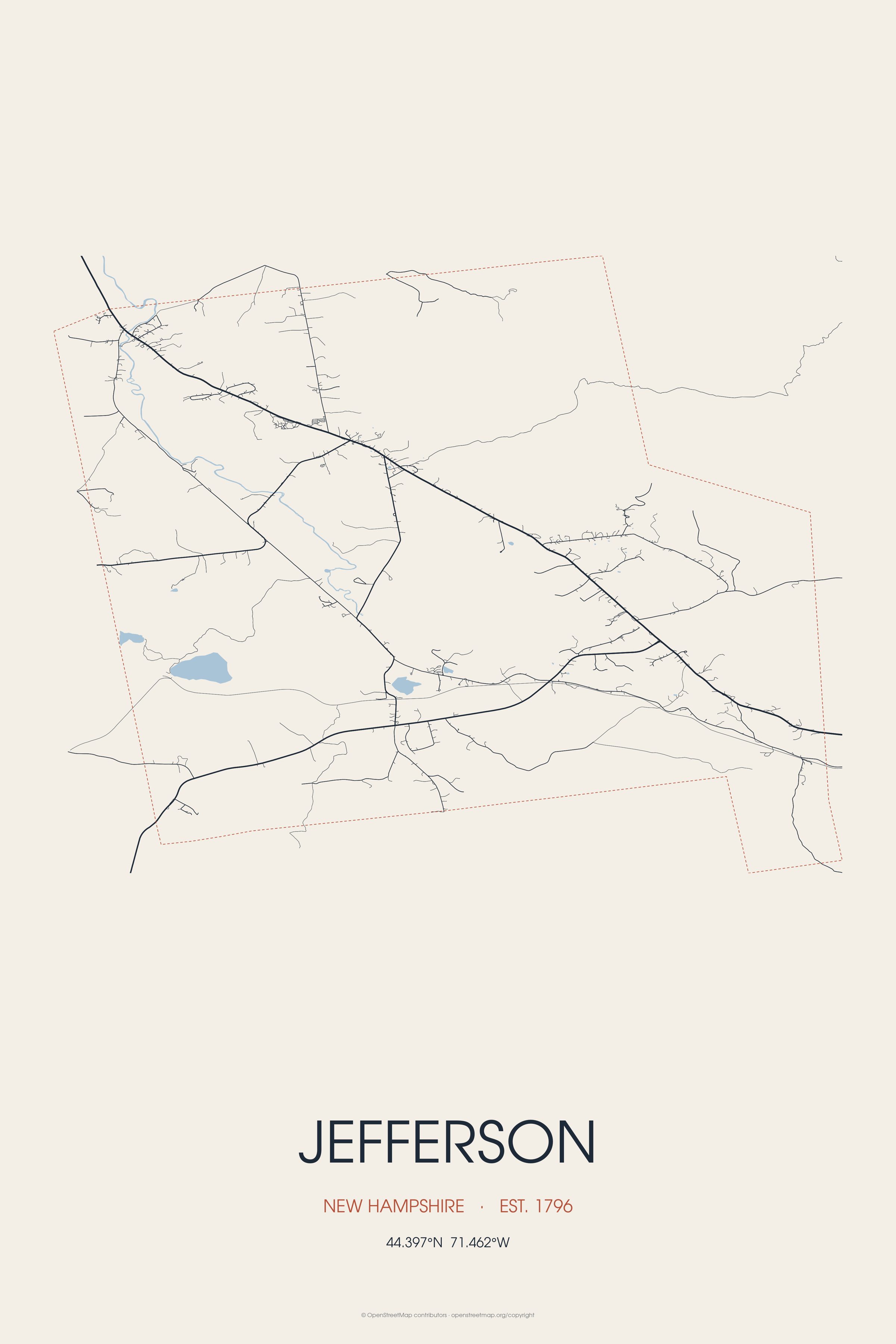
Jefferson is a town in Coos County, New Hampshire, United States. Landmarks include Santa's Village, Waumbek Cottages Historic District and Agnew State Forest. Jefferson is the birthplace of Thaddeus S. C. Lowe, chemist and inventor.
Every piece is drawn from Jefferson's own map data and historic archives, then printed and shipped from the USA when you order. No two towns look alike.
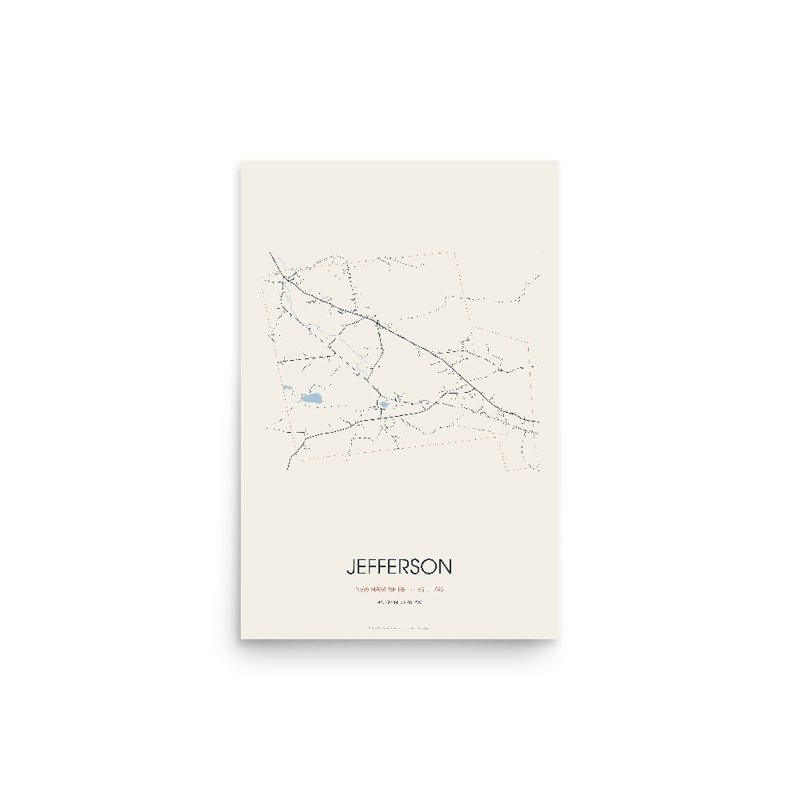
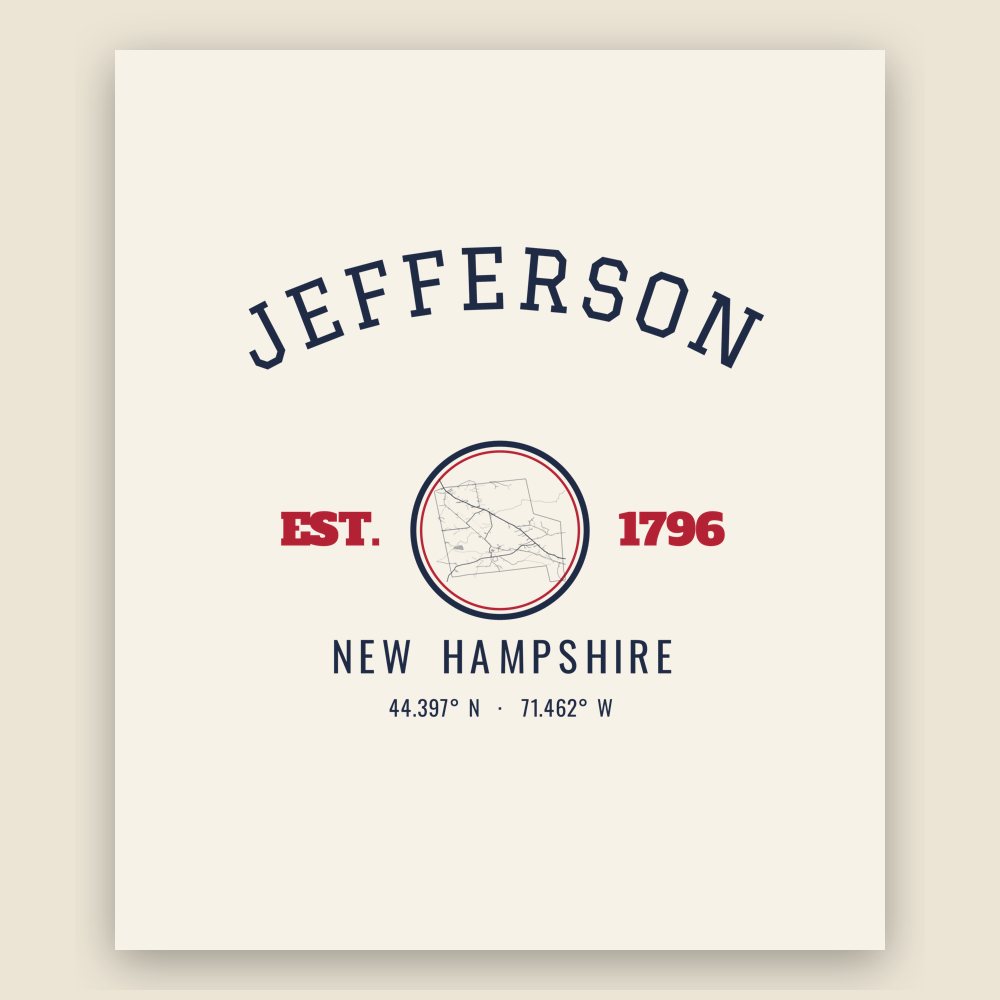
Every road in town, on archival matte paper
The same map, in navy and silver
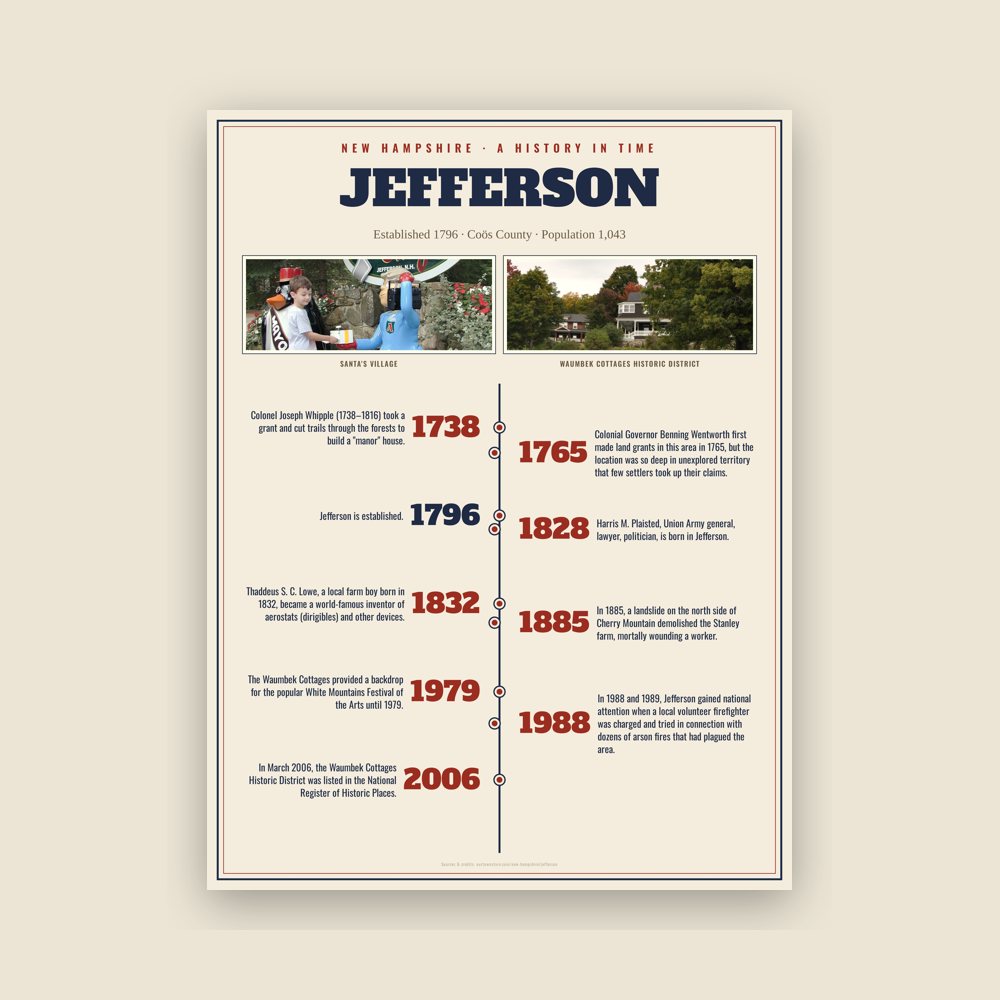
The town's story in dates, from its own records, for home or classroom
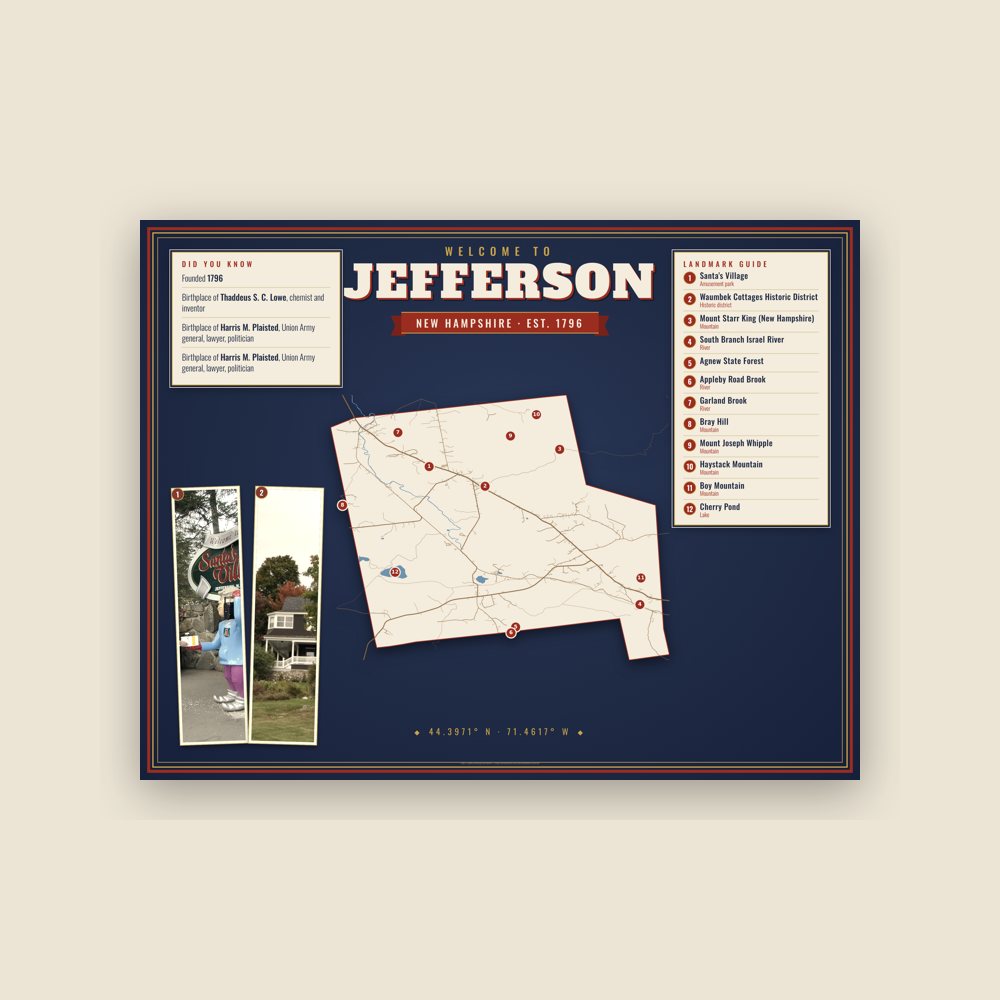
Map of local landmarks, washable fabric
Heavy-blend fleece, street map printed on the back
Soft Bella+Canvas jersey
Glossy ceramic, dishwasher safe
Ceramic keepsake, gold ribbon
Weatherproof, for the front walk
24″×16″, printed coir-look fibers, rubber back
12″×12″ printed wood, ready to hang
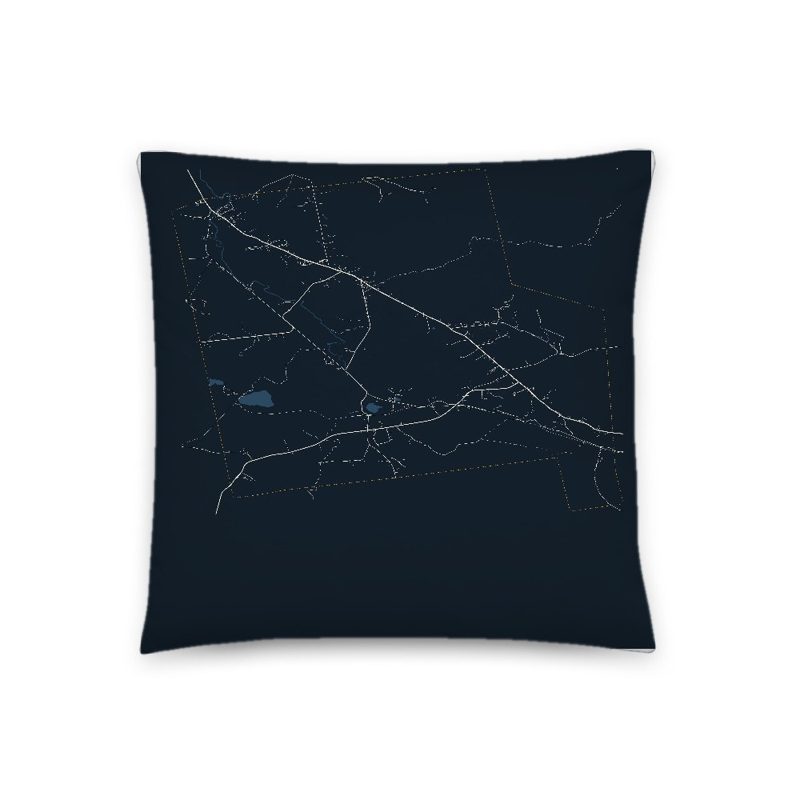
Soft-touch, zip cover
Sturdy all-over-print tote
Glossy top, cork back
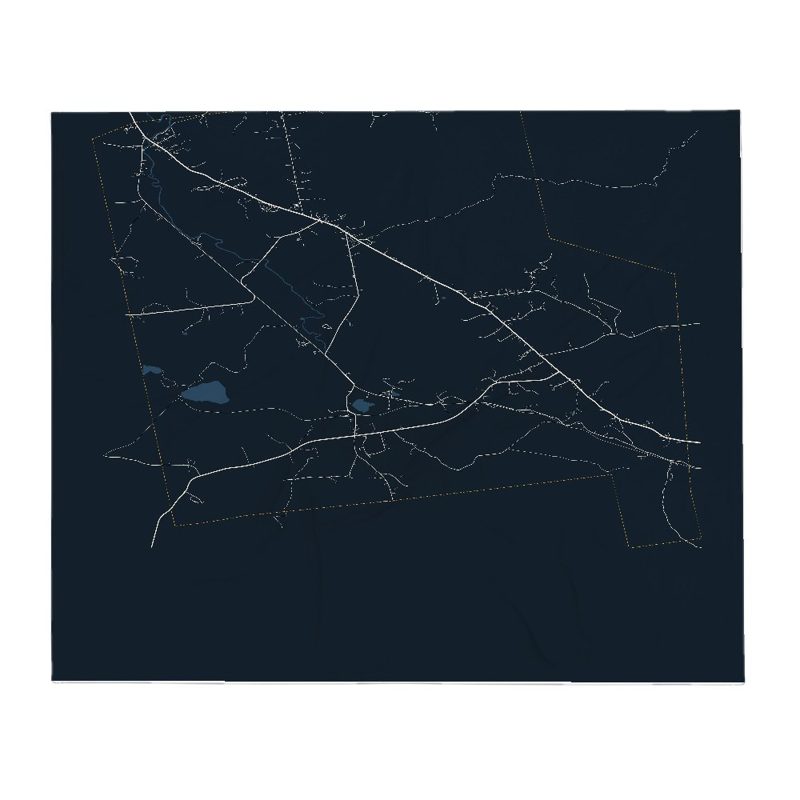
Soft fleece, 50″×60″
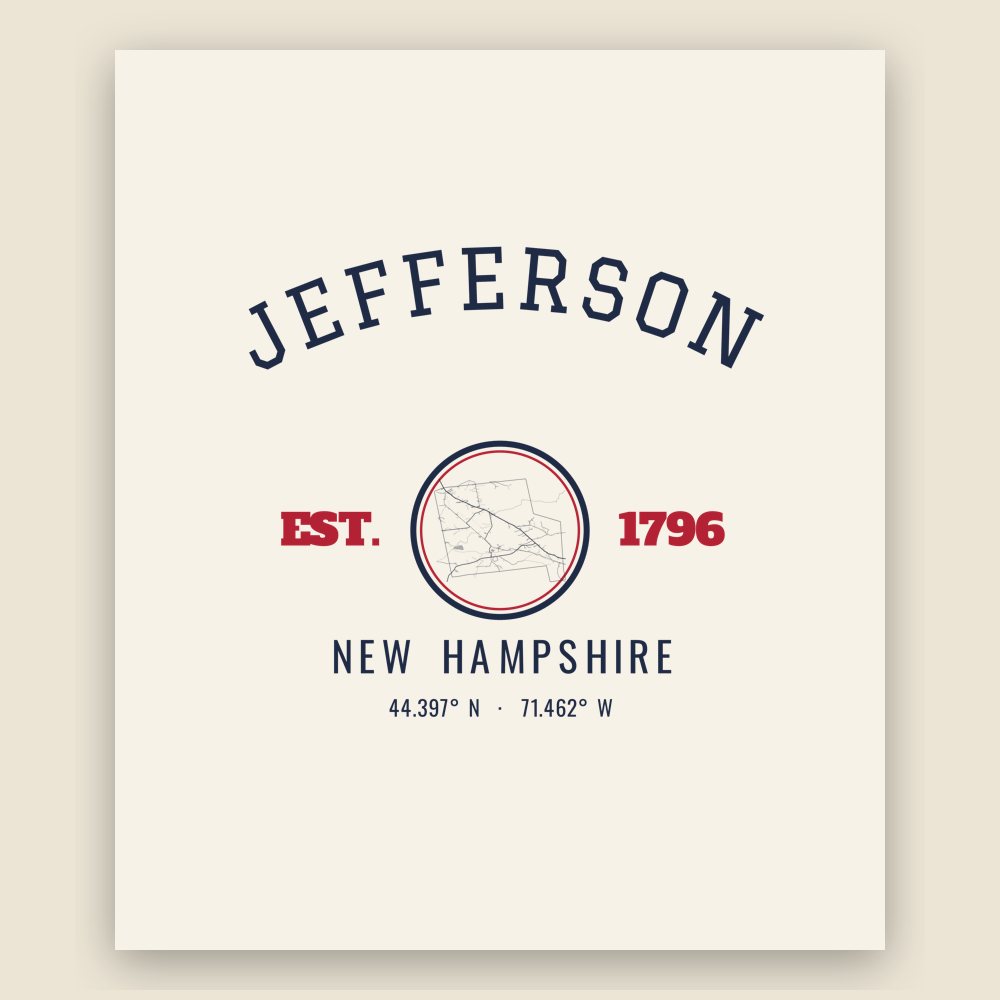
20 oz, double-wall stainless
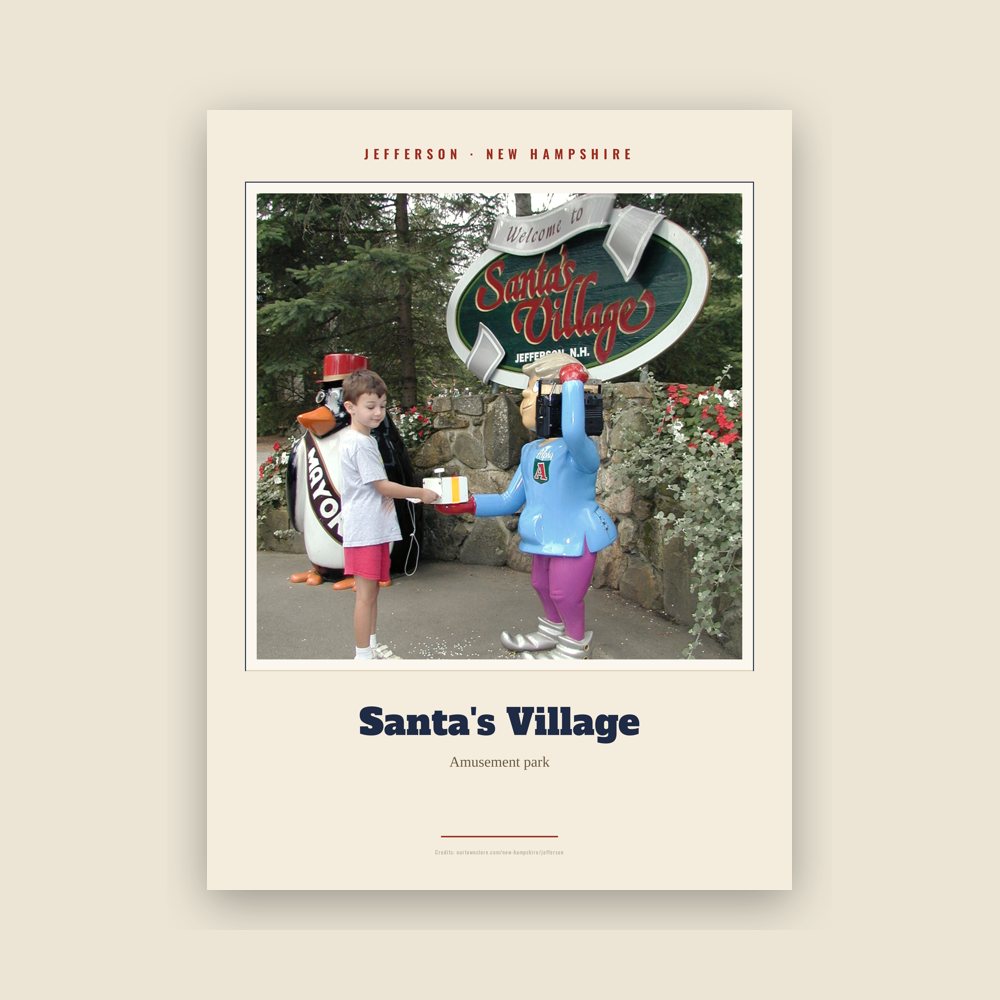
Archival matte print of a local landmark, credited to its photographer
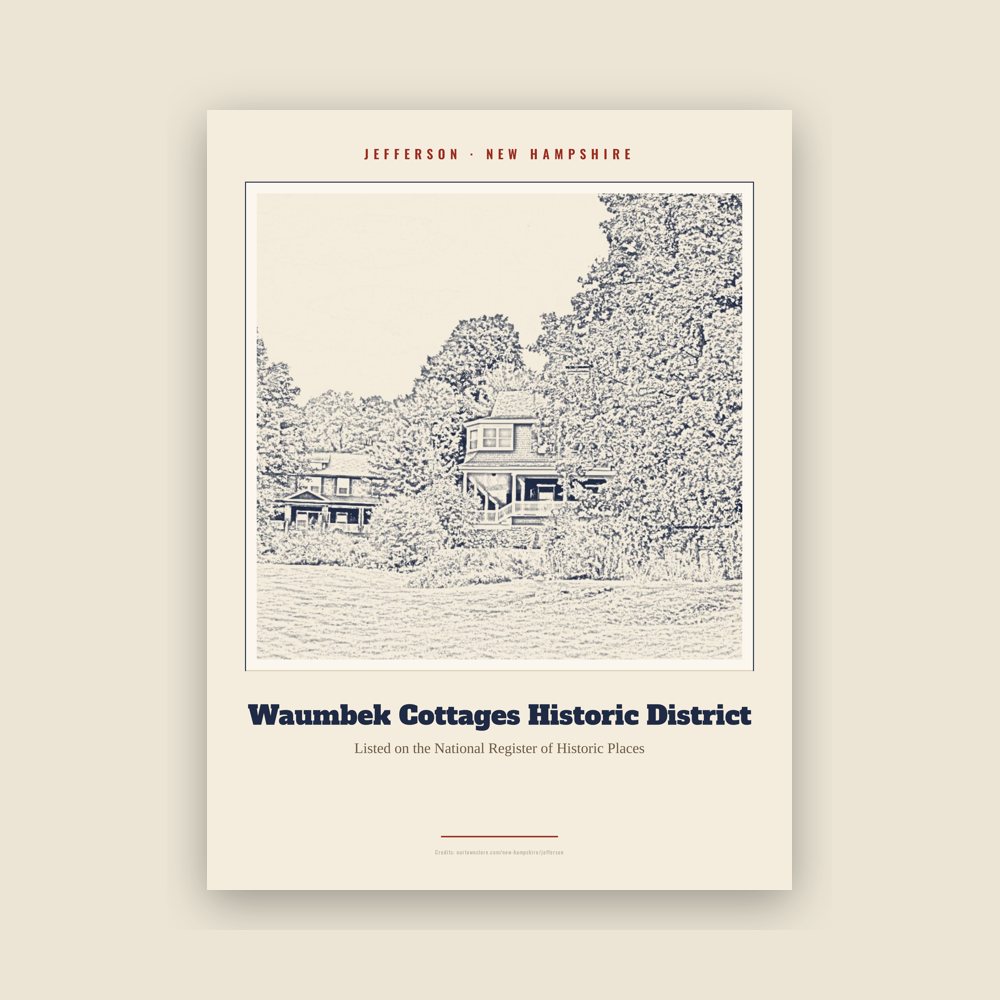
Archival matte print of a local landmark, credited to its photographer
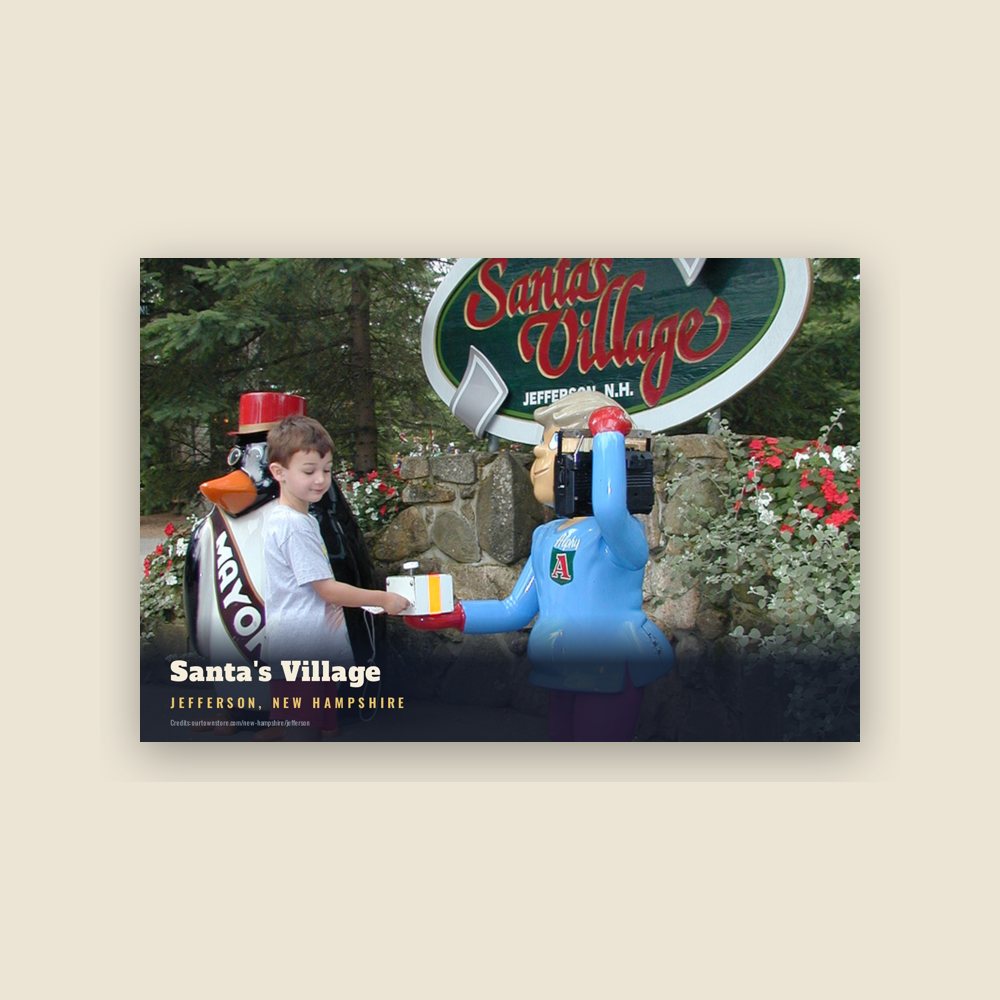
6″×4″ postcard, glossy front
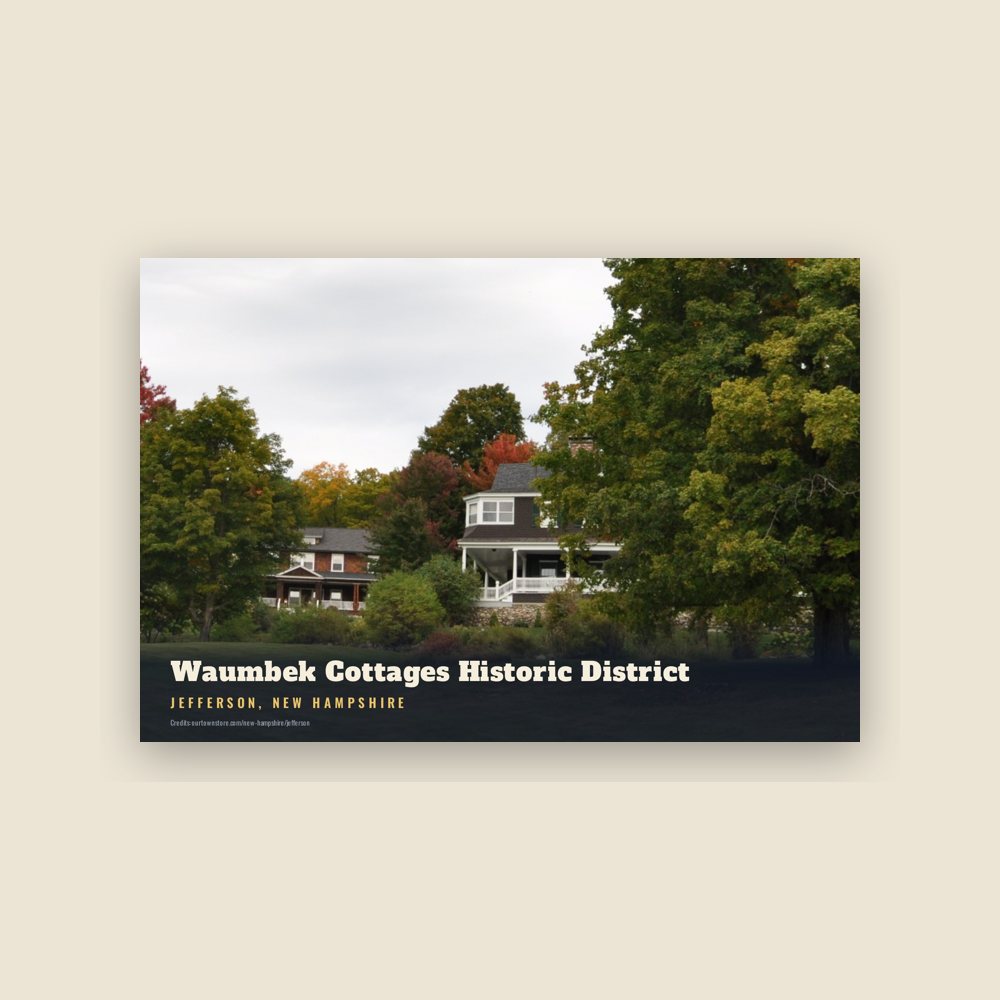
6″×4″ postcard, glossy front
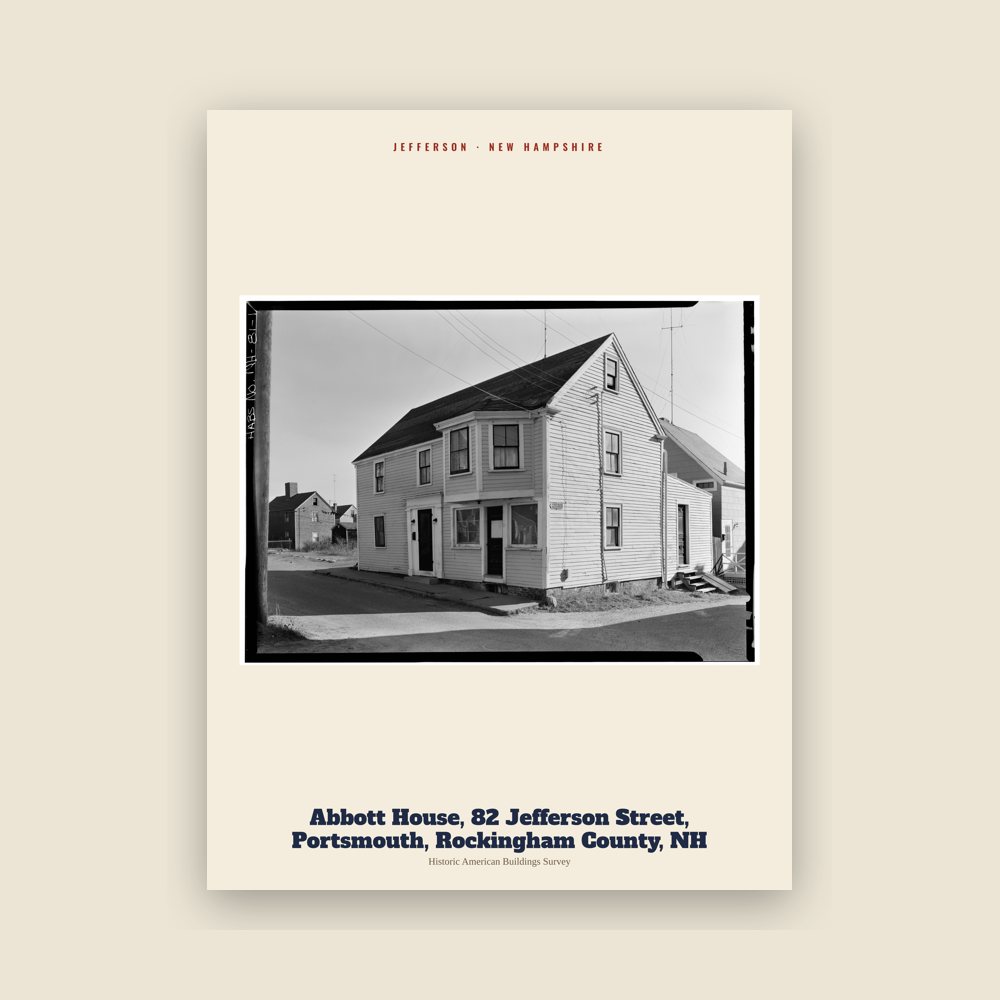
From the Library of Congress collections: a historic survey drawing or photograph of the town
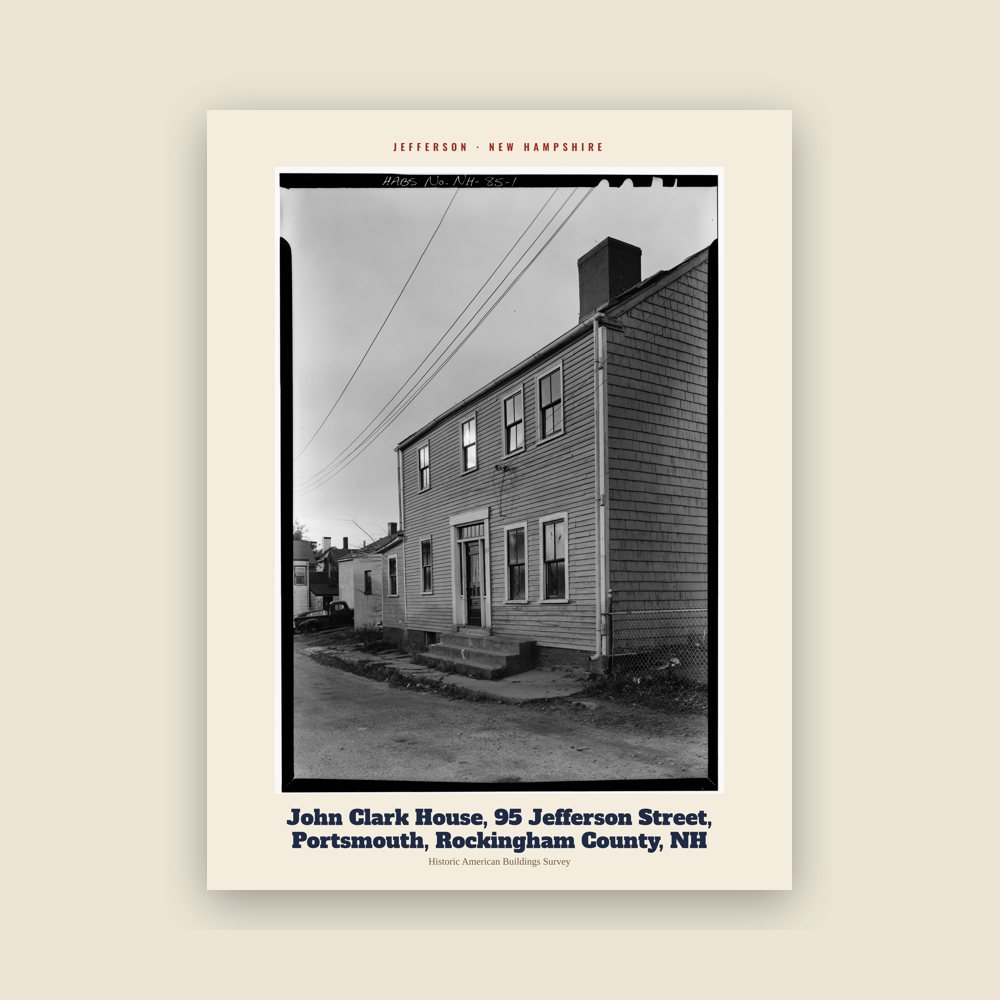
From the Library of Congress collections: a historic survey drawing or photograph of the town
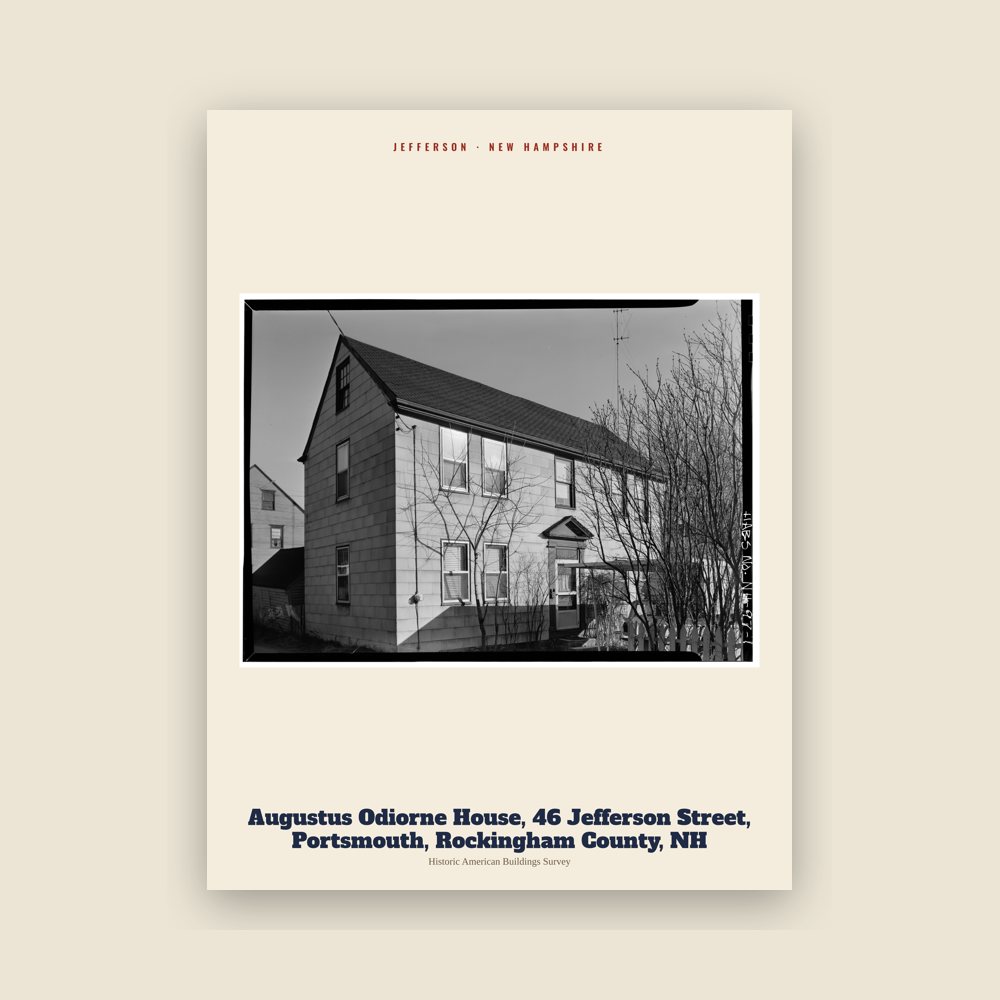
From the Library of Congress collections: a historic survey drawing or photograph of the town
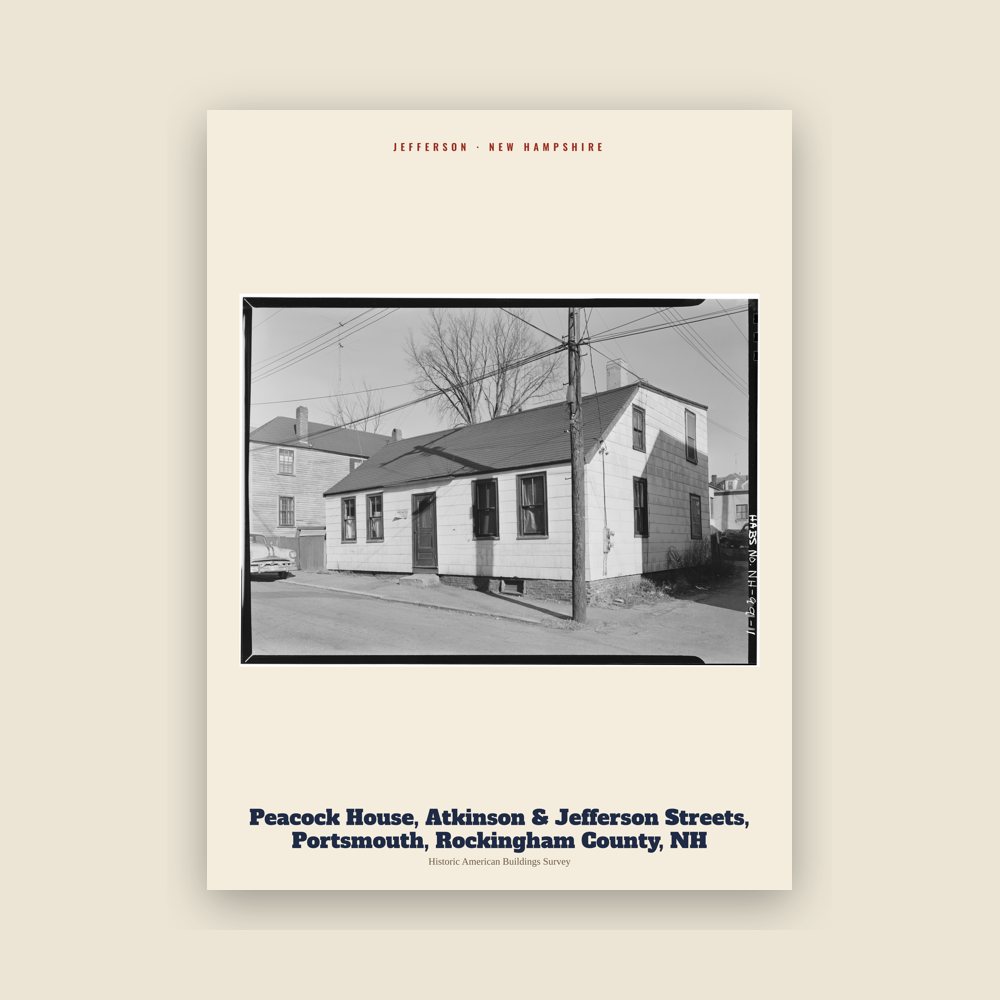
From the Library of Congress collections: a historic survey drawing or photograph of the town
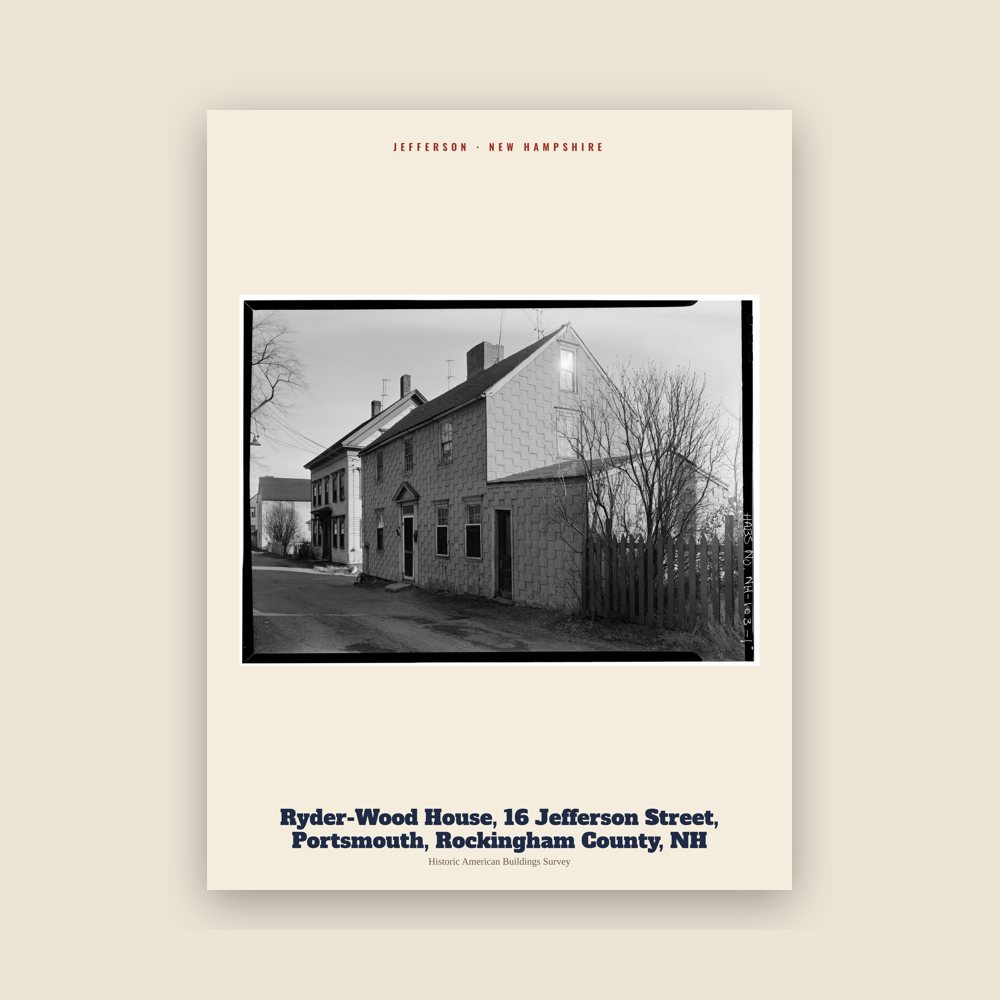
From the Library of Congress collections: a historic survey drawing or photograph of the town
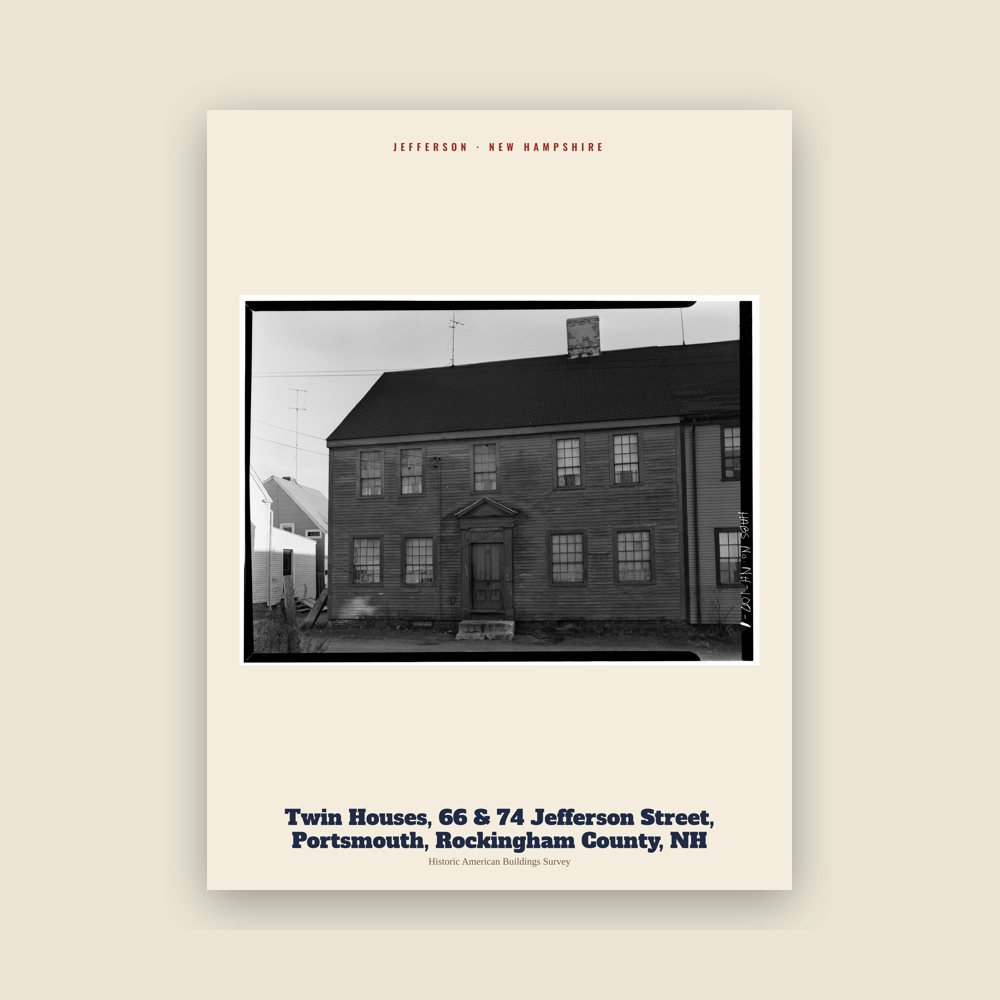
From the Library of Congress collections: a historic survey drawing or photograph of the town
Population 2010: 1,107 → 2020: 1,043
From Wikidata (CC0).
Colonial Governor Benning Wentworth first made land grants in this area in 1765, but the location was so deep in unexplored territory that few settlers took up their claims. So soon after the French and Indian War, in which certain Native American tribes in New England were allied with the French, English colonists did not want to be exposed on the frontier.
Colonel Joseph Whipple (1738–1816) took a grant and cut trails through the forests to build a "manor" house. He named the town "Dartmouth" after William Legge, 2nd Earl of Dartmouth, the patron of Dartmouth College. Brother to William Whipple, a signer of the Declaration of Independence, Colonel Whipple renamed the town "Jefferson" four years prior to Thomas Jefferson's election as president. The state legislature granted the town a new charter as "Jefferson" on December 8, 1796.
In the mid-19th century, the boundary with the adjacent township of Kilkenny was moved so as to include that township's few residents in Jefferson.
Thaddeus S. C. Lowe, a local farm boy born in 1832, became a world-famous inventor of aerostats (dirigibles) and other devices. Consulting President Abraham Lincoln, he organized a balloon corps during the Civil War, and went on to invent the ice-making machine, and later the water-gas process. For years, the latter was used to fuel gas lights in hundreds of cities. His father, Clovis Lowe, had been part owner in 1832 of nearby Low and Burbank's Grant, which contains much of Mount Adams and Mount Madison. Lowe is featured on a New Hampshire historical marker (number 19) in Jefferson.
In 1885, a landslide on the north side of Cherry Mountain demolished the Stanley farm, mortally wounding a worker. Local hotels immediately arranged daily excursions to view the scene, now marked by a New Hampshire historical marker (number 152) titled "Cherry Mountain Slide". Jefferson's third marker (number 229) honors Deborah Vicker, known as "Granny Stalbird", who is said to have brought the first bible to the north country.
During the early 1900s, Jefferson was a popular summer resort, boasting one of the largest "grand hotels" in the White Mountains—the Waumbek, with accommodations for nearly 300 guests. The hotel had its own rail branch, to deliver guests directly to the hotel from Boston and New York without changing trains. It was destroyed by fire on May 9, 1928.
At tourism's peak, Jefferson had over 30 inns and boarding houses, accessible by several mainline depots, including Riverton, Baileys, Meadows, and Highlands. Some of the original station buildings remain, although most have been moved to nearby locations. The tracks were removed in the 1920s. The wider ownership of automobiles gave people more choices for vacation destinations, and the Great Depression reduced vacations for years. By the end of this period, many people sought other venues than grand hotels.
A number of historic, architecturally interesting structures remain from the resort era. The Waumbek Cottages provided a backdrop for the popular White Mountains Festival of the Arts until 1979. In March 2006, the Waumbek Cottages Historic District was listed in the National Register of Historic Places.
In 1988 and 1989, Jefferson gained national attention when a local volunteer firefighter was charged and tried in connection with dozens of arson fires that had plagued the area. The defendant was acquitted at trial.
Adapted (trimmed) from the Wikipedia article Jefferson, New Hampshire, revision 1377394271 by its contributors, licensed CC BY-SA 4.0.
We share a part of every Jefferson sale with local partners, and we'd love to print from your collection. Old photographs, maps and postcards make the best keepsakes.
Partner with us