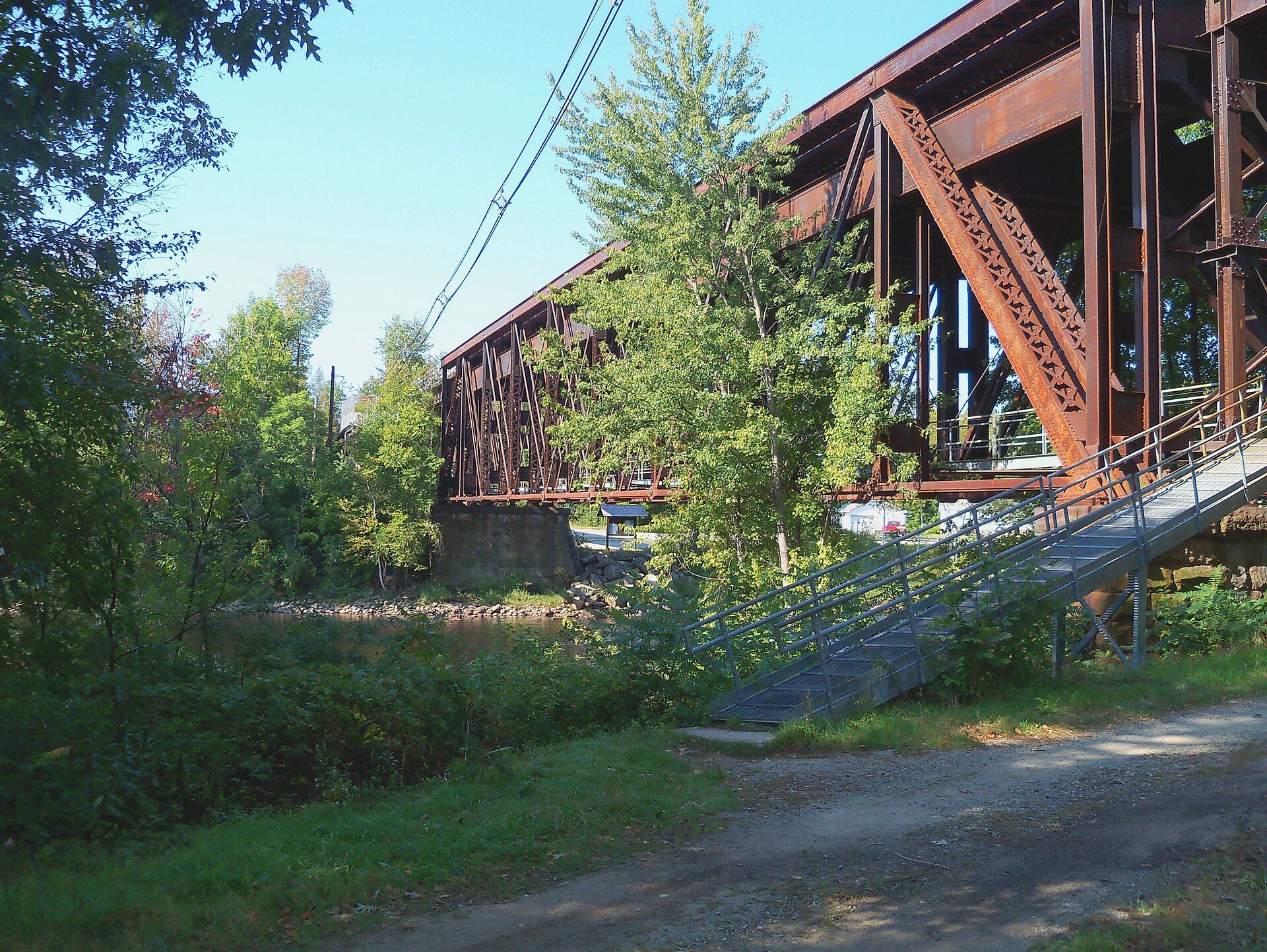
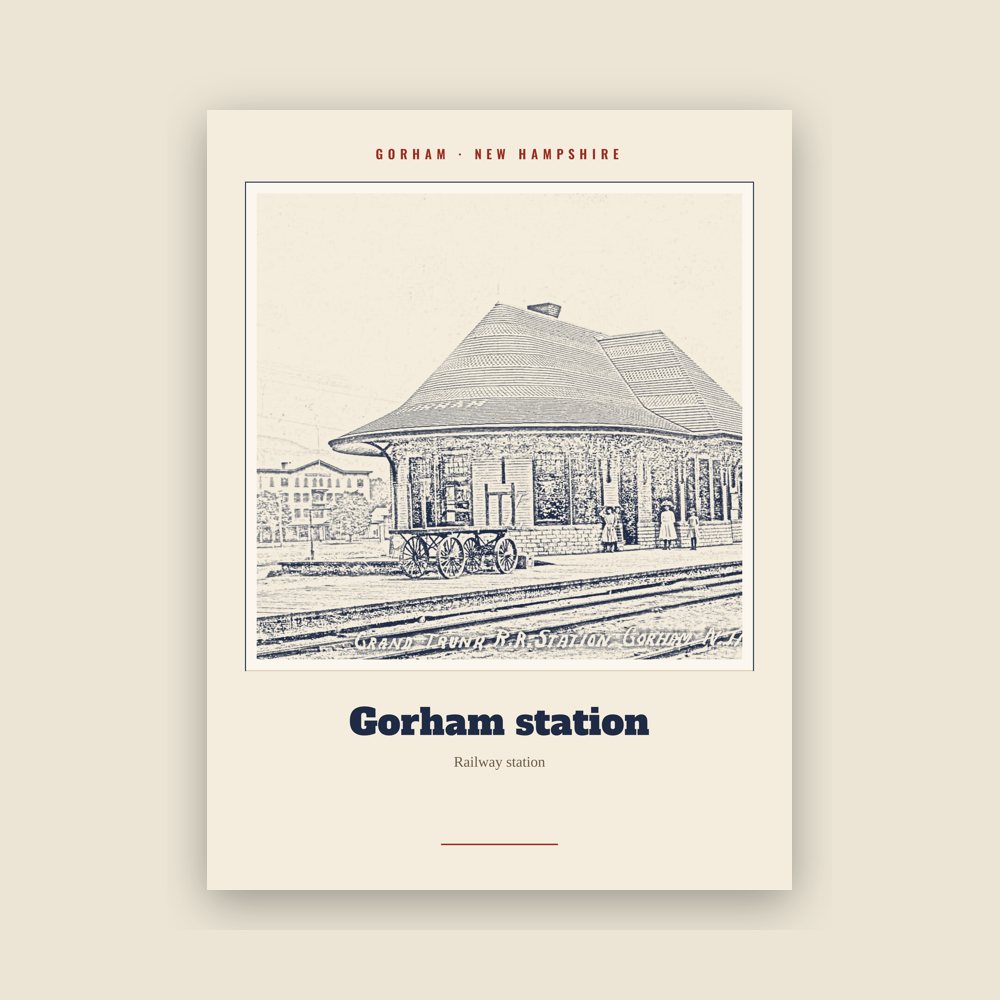
Gorham was first settled about 1802, by Robert Sargent and others, but for years it contained little more than rocky farms, small logging operations, and a few stores and stables. Landmarks include Gorham station, George Washington Noyes House and Gorham Airport.
Every piece is drawn from Gorham's own map data and historic archives, then printed and shipped from the USA when you order. No two towns look alike.
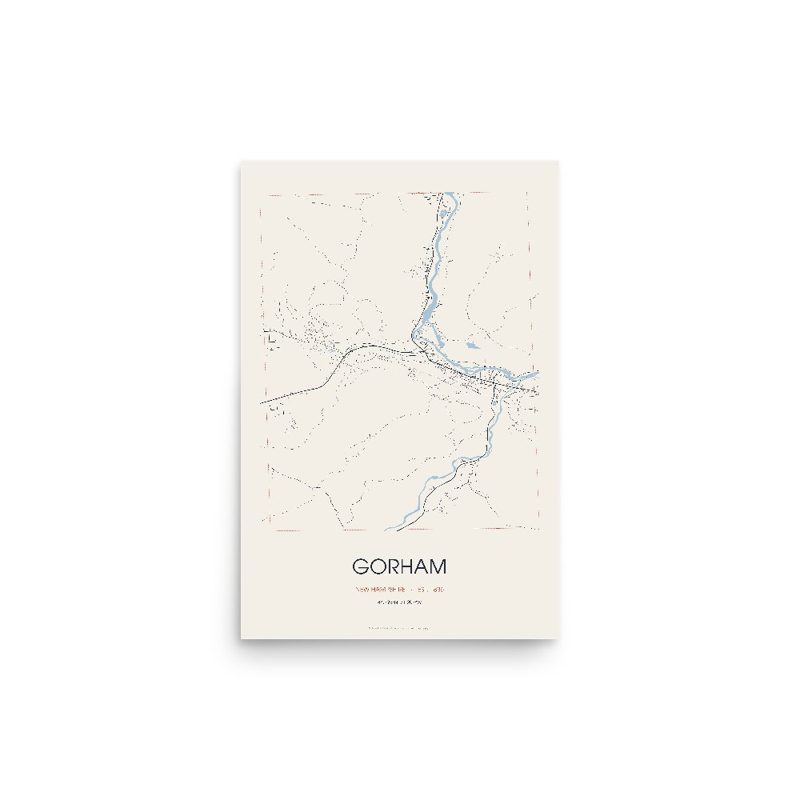
Every road in town, on archival matte paper
The same map, in navy and silver
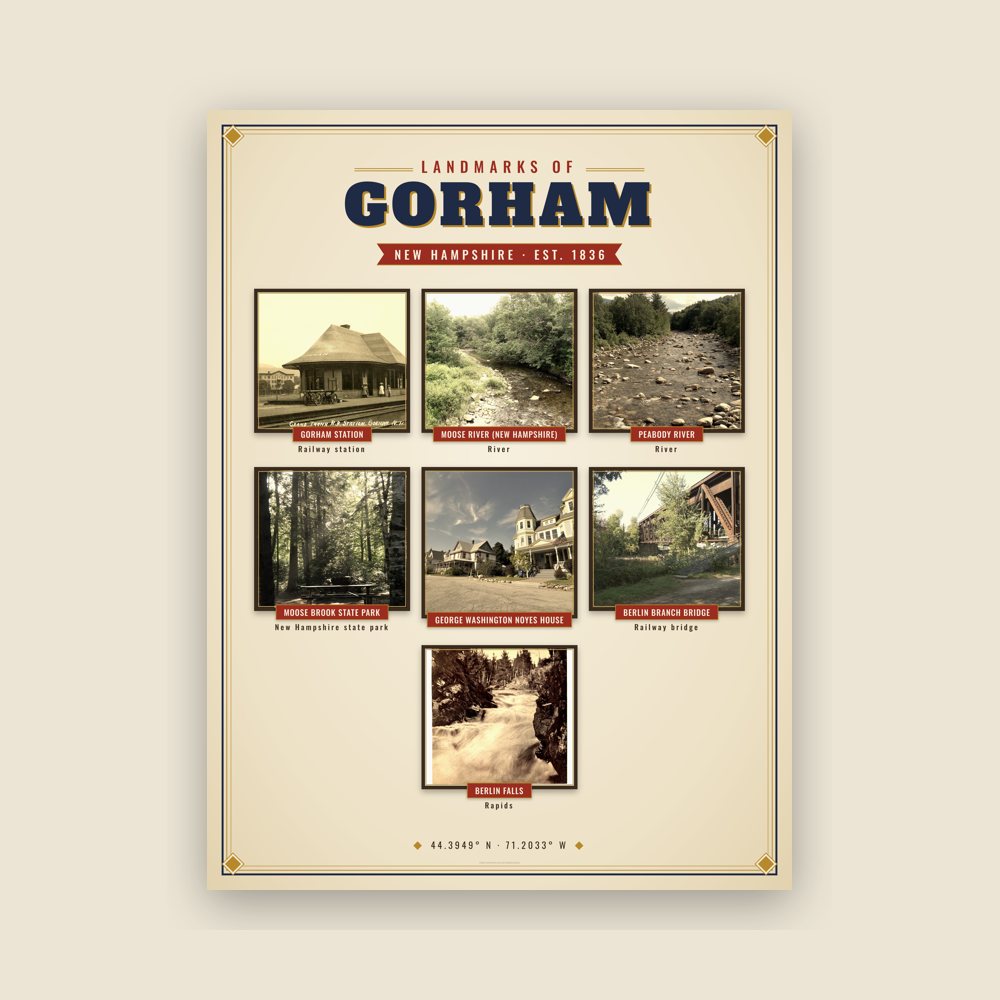
Nine local landmarks, archival matte
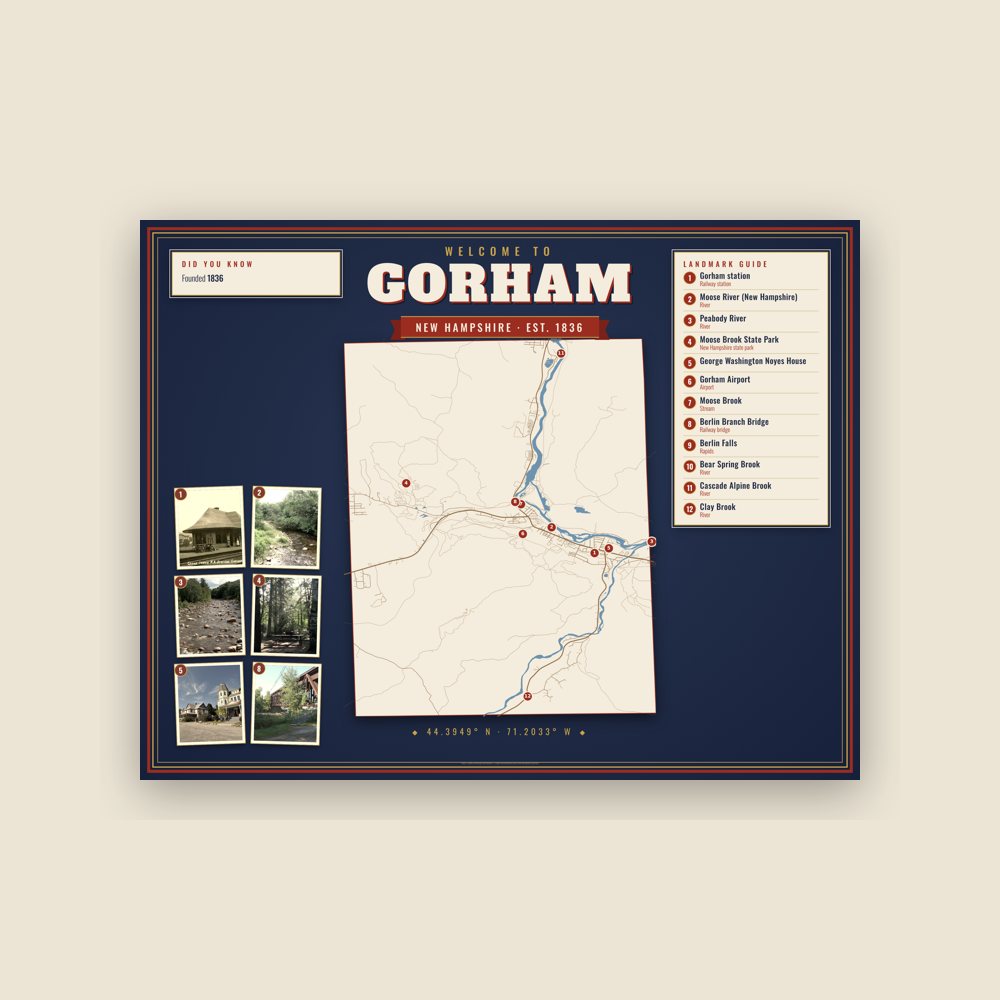
Map of local landmarks, washable fabric
Heavy-blend fleece, street map printed on the back
Soft Bella+Canvas jersey
Glossy ceramic, dishwasher safe
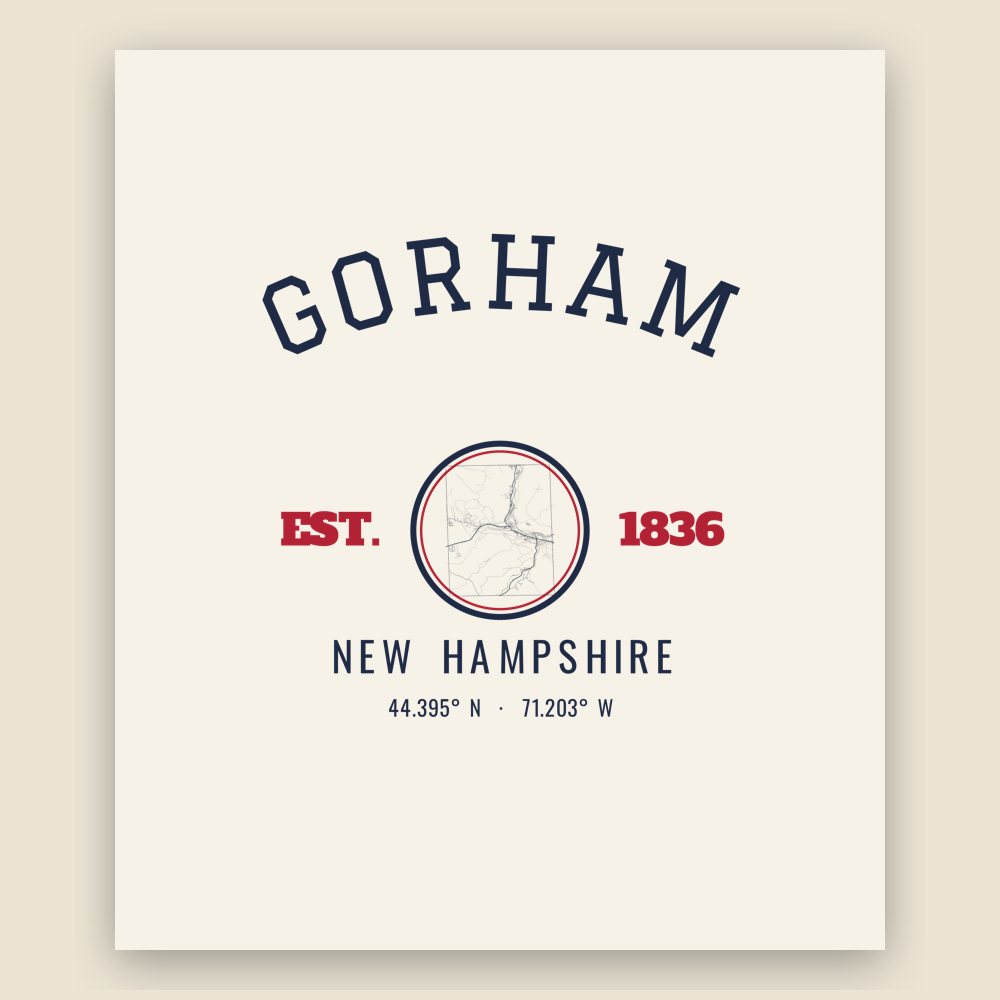
Ceramic keepsake, gold ribbon
Weatherproof, for the front walk
24″×16″, printed coir-look fibers, rubber back
12″×12″ printed wood, ready to hang
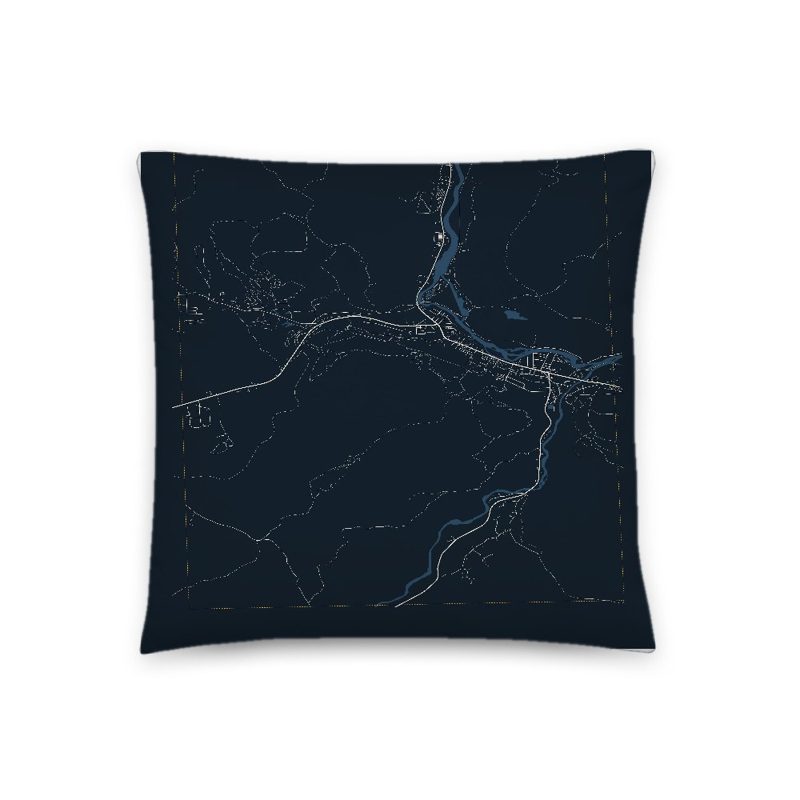
Soft-touch, zip cover
Sturdy all-over-print tote
Glossy top, cork back
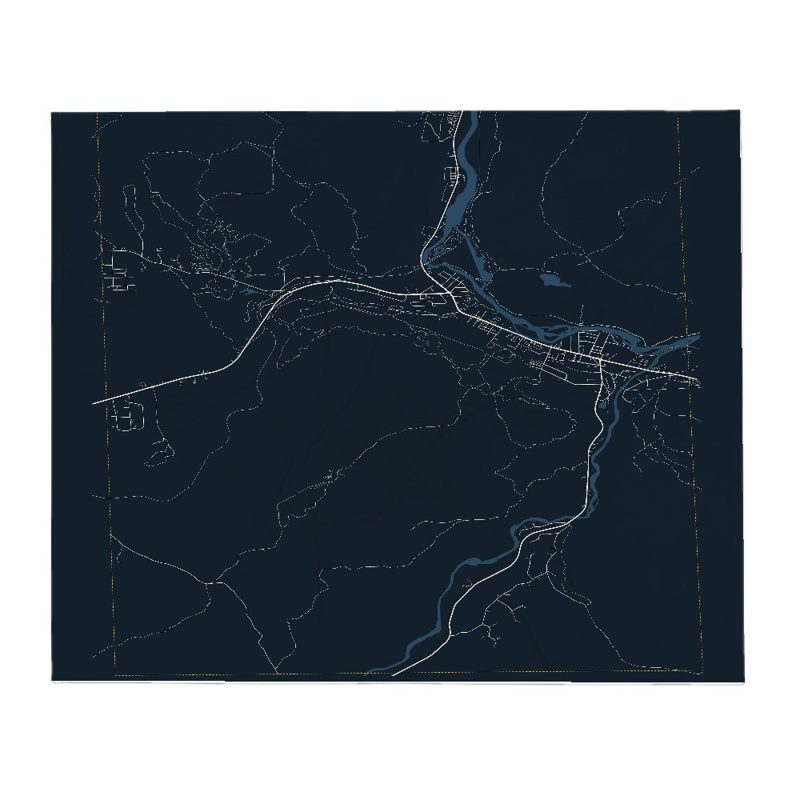
Soft fleece, 50″×60″
20 oz, double-wall stainless
Archival matte print of a local landmark, credited to its photographer
Archival matte print of a local landmark, credited to its photographer
Archival matte print of a local landmark, credited to its photographer
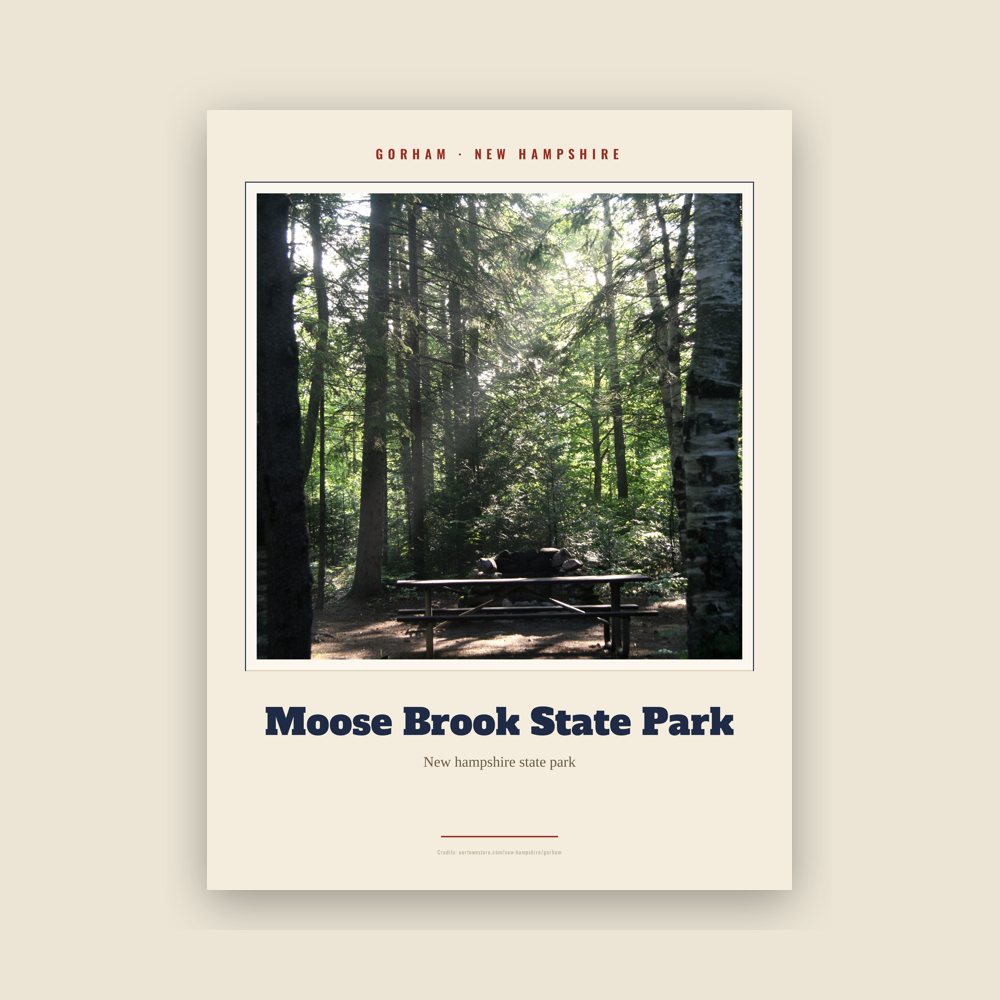
Archival matte print of a local landmark, credited to its photographer
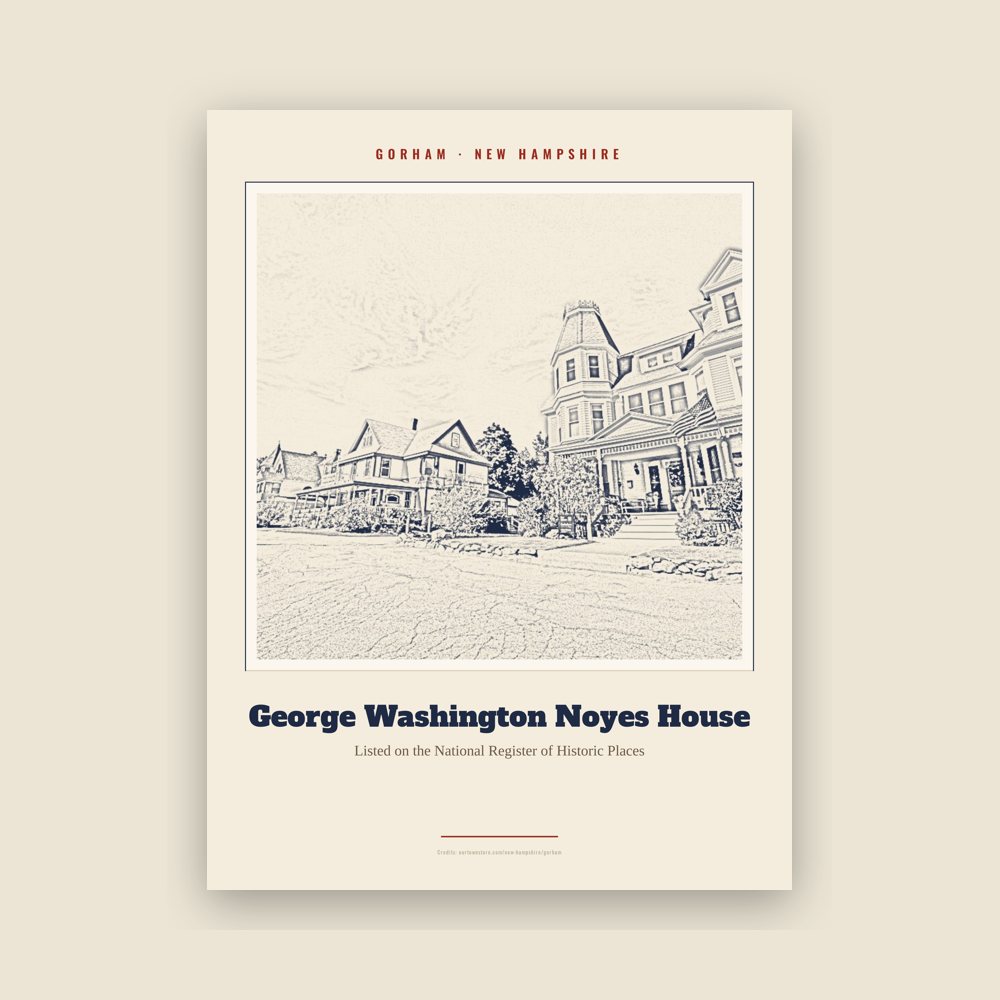
Archival matte print of a local landmark, credited to its photographer
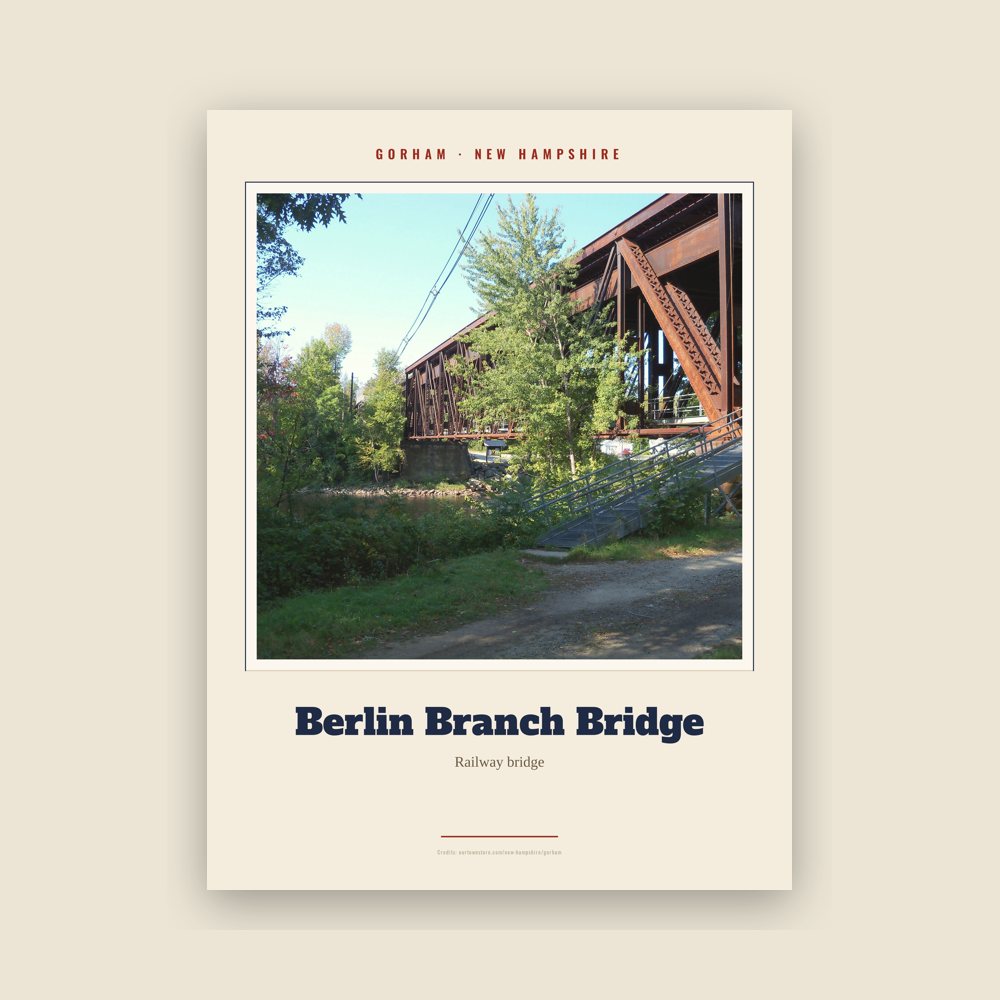
Archival matte print of a local landmark, credited to its photographer
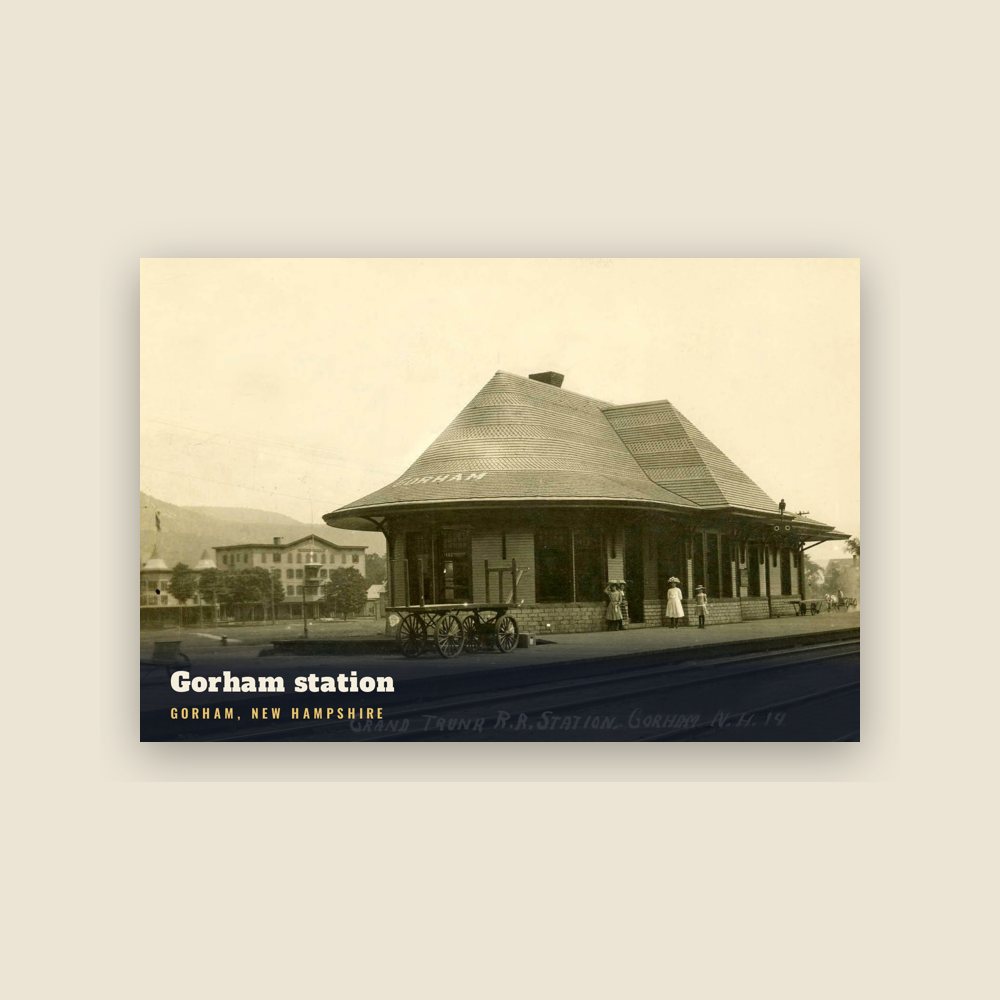
6″×4″ postcard, glossy front
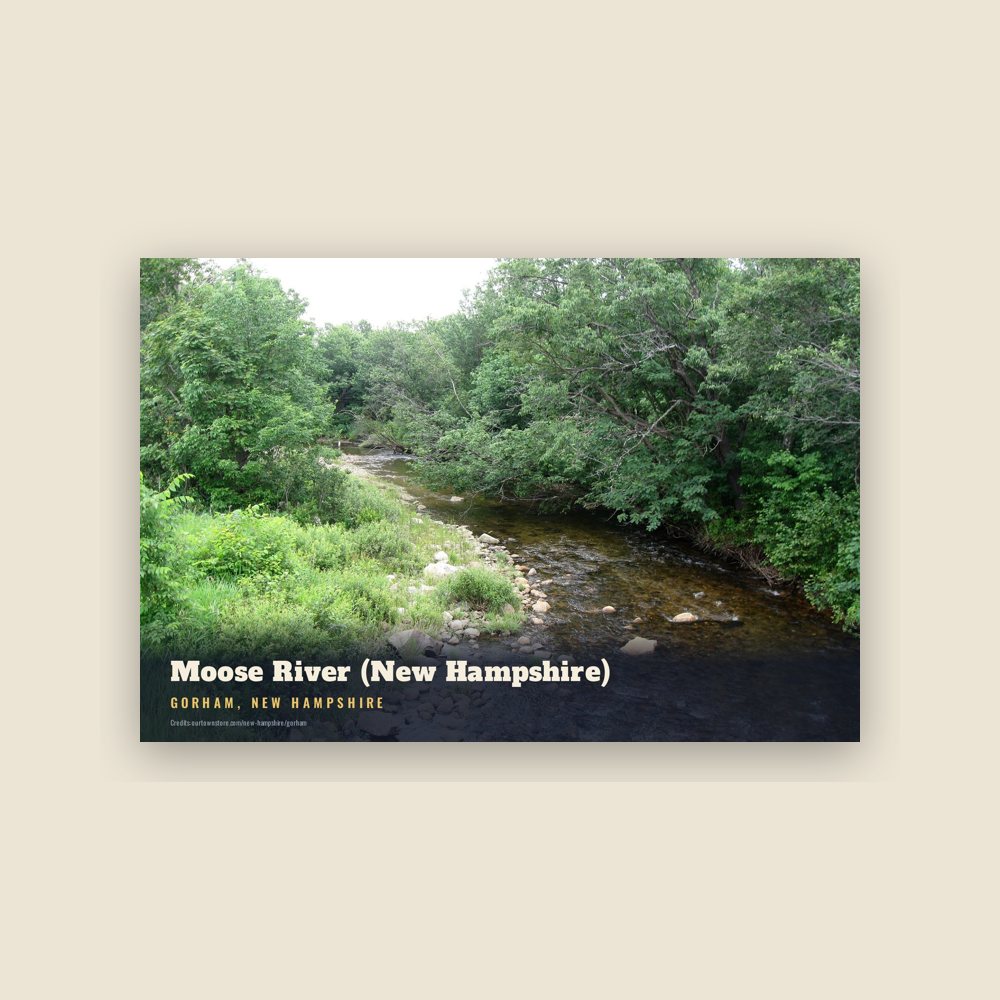
6″×4″ postcard, glossy front
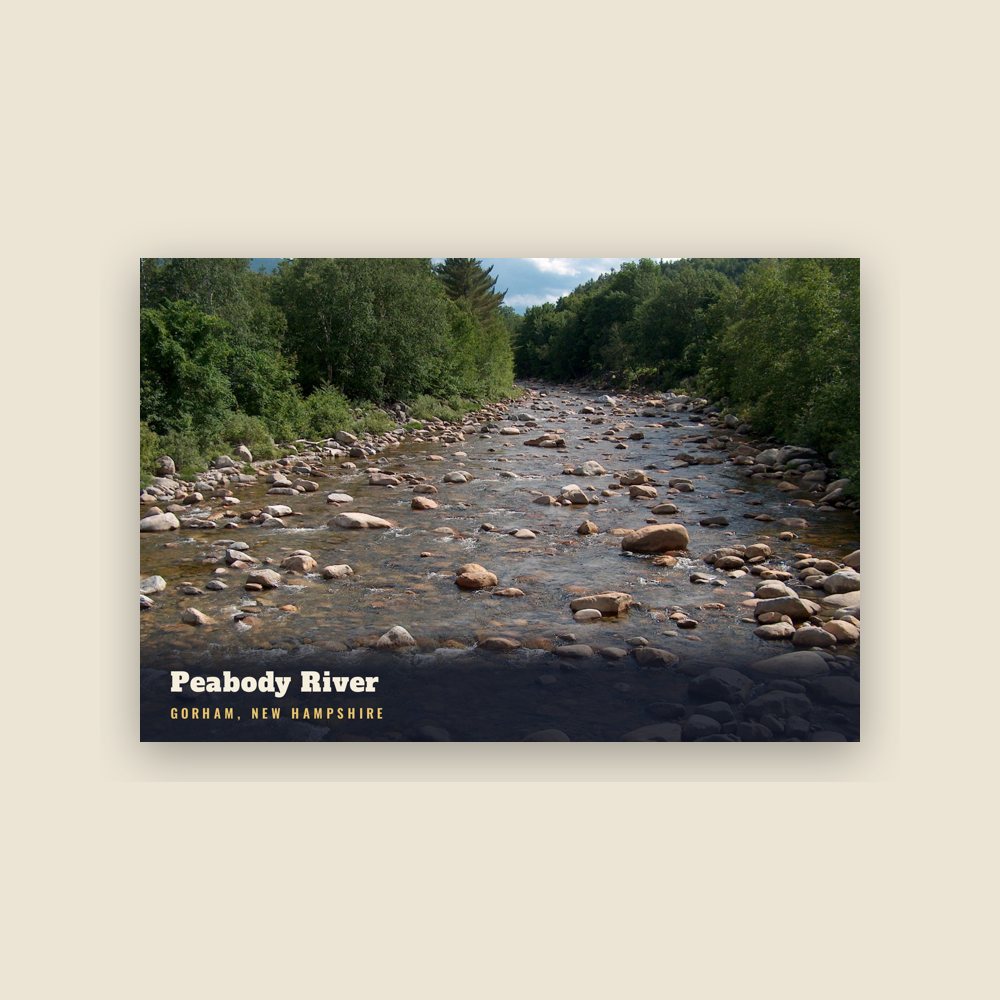
6″×4″ postcard, glossy front
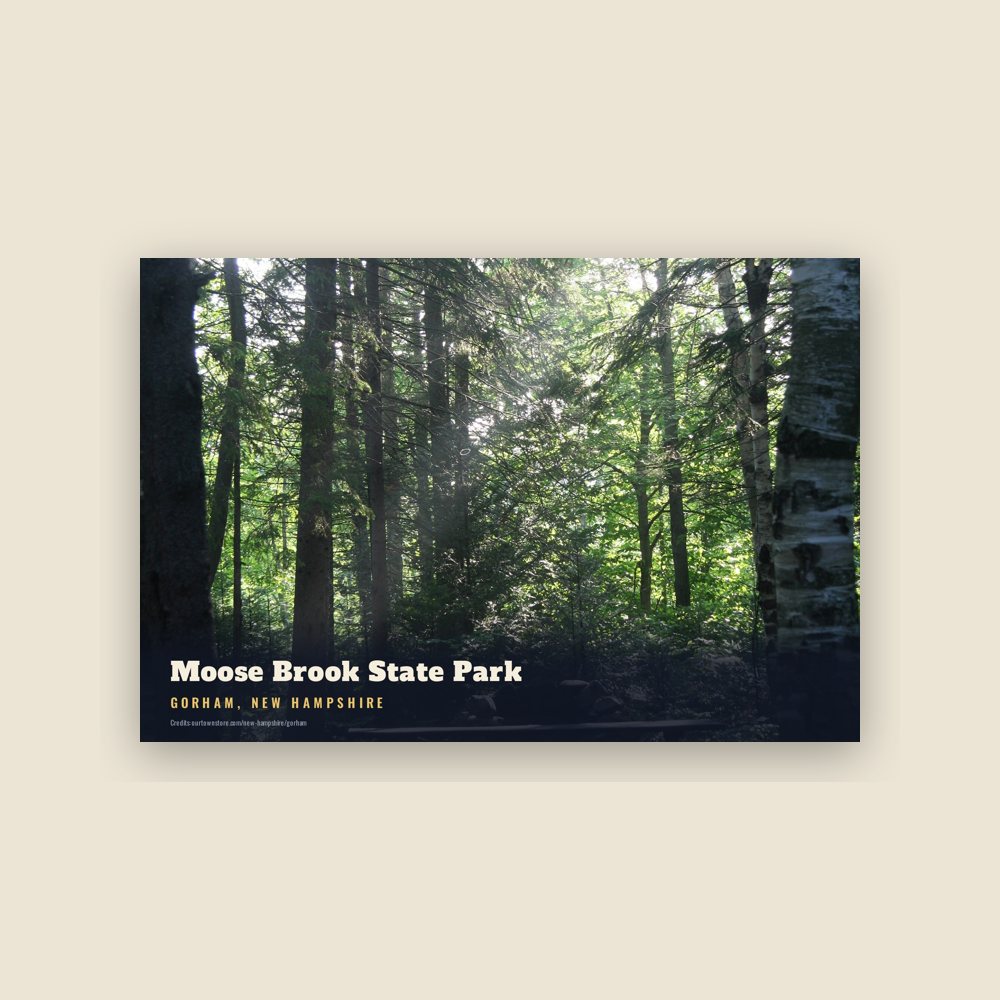
6″×4″ postcard, glossy front
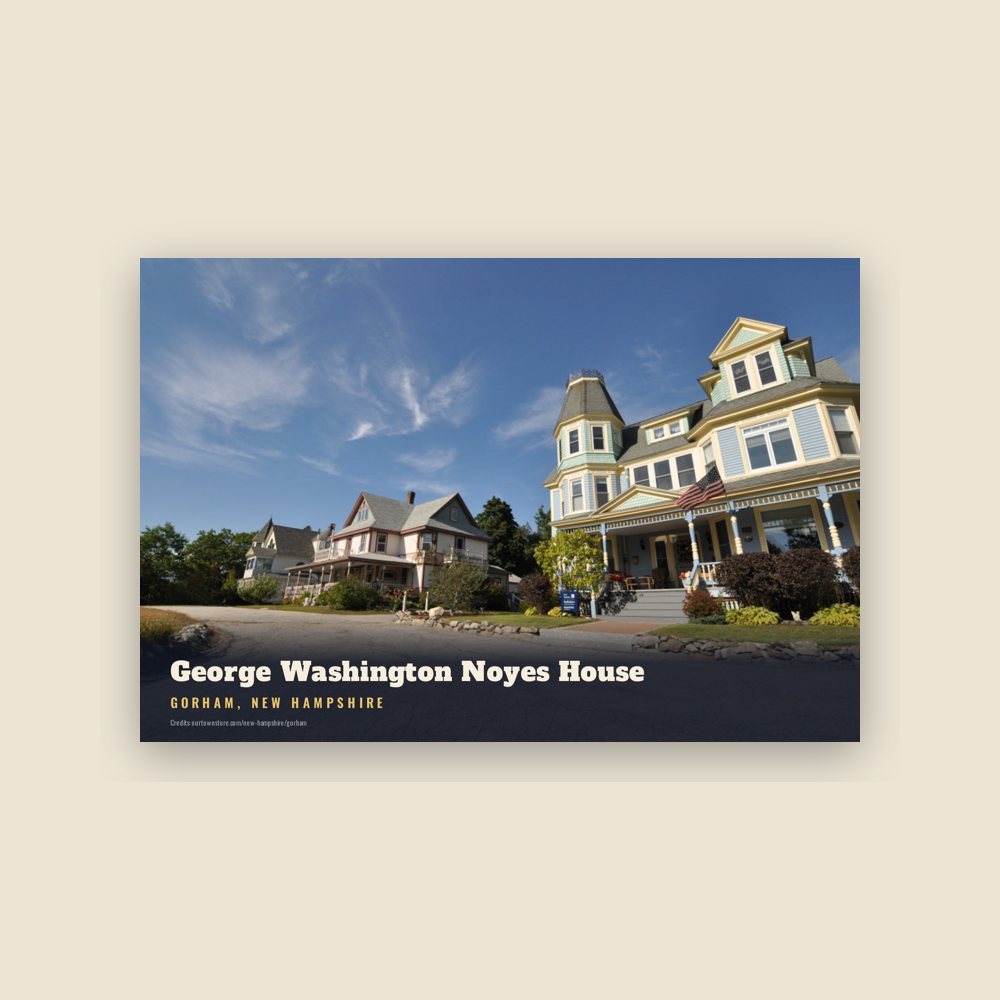
6″×4″ postcard, glossy front
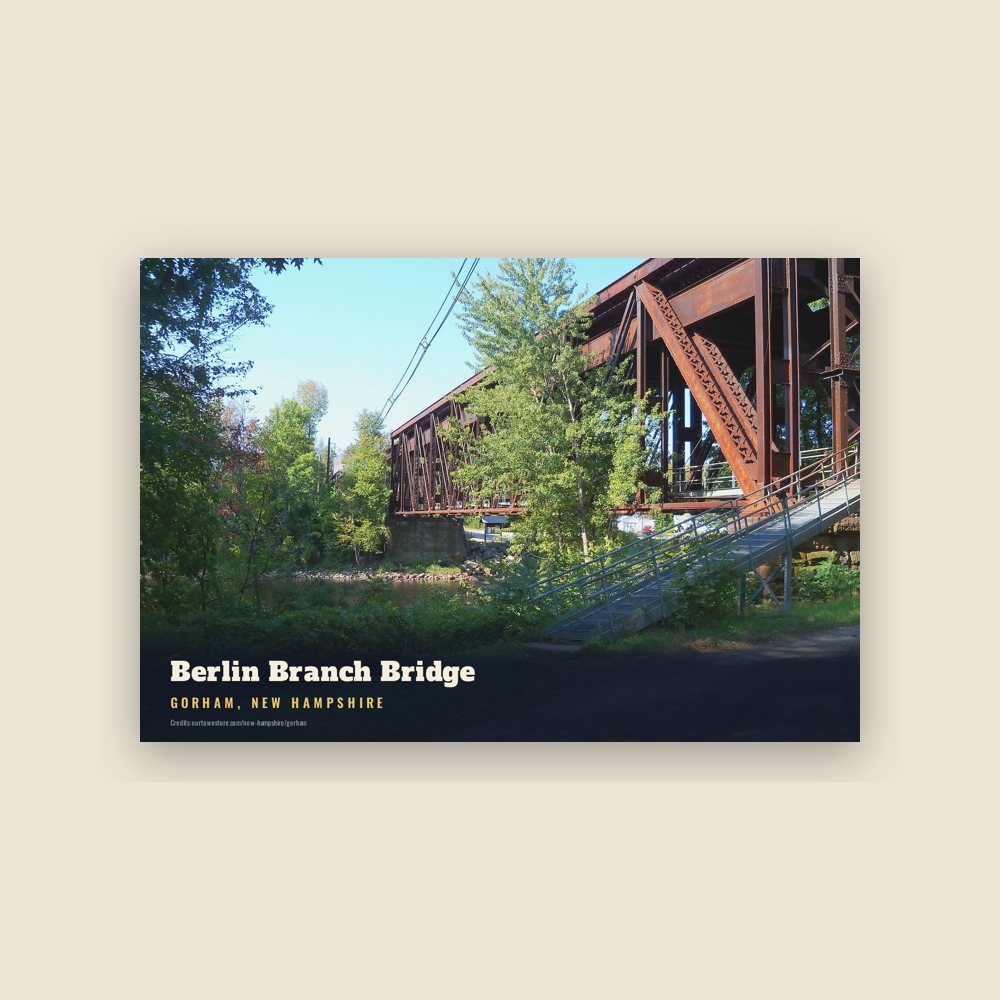
6″×4″ postcard, glossy front
Population 2010: 2,848 → 2020: 2,698
From Wikidata (CC0).
The community was first chartered in 1770 by colonial Governor John Wentworth as a part of Shelburne, called "Shelburne Addition". Gorham was first settled about 1802, by Robert Sargent and others, but for years it contained little more than rocky farms, small logging operations, and a few stores and stables. When incorporated in 1836, the town had only 150 inhabitants. It was named "Gorham" at the suggestion of Lot Davis, a resident from Gorham, Maine, and a relative of the Gorham family which incorporated that town in 1764.
The St. Lawrence and Atlantic Railroad (later the Grand Trunk Railway) arrived in 1851. Located halfway between Montreal and the New England seacoast, Gorham developed into a railroad town, with a major locomotive yard and repair facility. With trains came tourists, and the Mount Madison House, Alpine House, Gorham House and Willis House opened. Crowds went from Boston and the seacoast to White Mountain Station, and from there to the Glen House in Pinkham Notch and Mount Washington. In 1861, travelers made the first trek up the Mount Washington Carriage Road, winding 8 miles (13 km) to the summit of the 6,288-foot (1,917 m) mountain. "The Road to the Sky" was an engineering feat of its day, advertised as "the first man-made attraction in the United States". It would be renamed the Mount Washington Auto Road, and remains popular today.
Railroads benefited local industries as well, hauling freight for mills run by water power from the Androscoggin River. Logging flourished, with boards and building timber manufactured by the Libby and the Peabody lumber companies. That business would eventually decline, as would railroads. In 1973, the town's train depot, built in 1907, was scheduled for demolition. The Gorham Historical Society saved the building, which now serves as a headquarters and museum. It features displays on area history, with a collection including locomotives, boxcars and a caboose.
Adapted (trimmed) from the Wikipedia article Gorham, New Hampshire, revision 1378794552 by its contributors, licensed CC BY-SA 4.0.
We share a part of every Gorham sale with local partners, and we'd love to print from your collection. Old photographs, maps and postcards make the best keepsakes.
Partner with us