Strafford County, New Hampshire
Street maps, historic prints and keepsakes for 12 Strafford County towns.
The oldest is Somersworth, established 1754. The largest by population is Dover (32,741).
| Town | Established | Population |
|---|---|---|
| Barrington | – | 9,326 |
| Dover | 1855 | 32,741 |
| Durham | – | 15,490 |
| Lee | 1766 | 4,520 |
| Madbury | 1775 | 1,918 |
| Middleton | 1778 | 1,823 |
| Milton | 1802 | 4,482 |
| New Durham | 1762 | 2,693 |
| Rochester | – | 32,492 |
| Rollinsford | 1849 | 2,597 |
| Somersworth | 1754 | 11,855 |
| Strafford | 1820 | 4,230 |
About these towns
Barrington: The town was made up of two grants, the first containing all of Strafford and present-day Barrington except for a parcel two miles (3.2 km) wide called New Portsmouth, or the Two Mile Streak.
Dover: In 1623, brothers William and Edward Hilton settled at Pomeroy Cove on Dover Point, near the confluence of the Bellamy and Piscataqua rivers.
Durham: Durham sits beside Great Bay at the mouth of the Oyster River, an ideal location for people who lived close to the land, like the Western Abenaki and their ancestors who have lived in the region for an estimated 11,000 years.
Lee: Wheelwright Pond was the site of a noted early battle during King William's War. Indians, incited by the government of New France, attacked Exeter on July 4, 1690.
Madbury: Madbury was originally a part of Dover called "Barbadoes", after the West Indies island of Barbados with which settlers conducted trade, sending wood and lumber in exchange for sugar, molasses, slaves and other commodities.
Middleton: Granted by the Masonian Proprietors in 1749, the town was named after Sir Charles Middleton, 1st Baron Barham, who was in charge of convoy service between Barbados and the colonies.
Milton: Originally a part of Rochester variously called the "Northeast Parish", "Three Ponds" or "Milton Mills", the town was settled in 1760. It was set off and incorporated in 1802 as "Milton", the name either a contraction of "mill town", or else derived from a relative of the Wentworth colonial governors—William Fitzwilliam, Earl Fitzwilliam and Viscount Milton.
New Durham: Granted by the Masonian Proprietors in 1749 as "Cochecho Township", New Durham was first settled by Europeans in 1750, almost entirely by colonists from Durham.
Rochester: The town was one of four granted by colonial governor Samuel Shute of Massachusetts and New Hampshire during his brief term. The other three were Barrington, Nottingham, and Chester.
Rollinsford: The area was once within the domain of the Newichawannock people, an Abenaki sub-tribe which took its name from the Newichawannock River, meaning "river with many falls", now the Salmon Falls River.
Somersworth: Prior to European settlement, the area that is now Somersworth was central-south Abenaki land. These Algonquian speaking peoples of the Wabanaki Confederacy lived along what they called Newichwanook, now the Salmon Falls River.
Strafford: Once part of Barrington, Strafford was set off due to the lengthy travel required to attend town meetings. Settled prior to the Revolution, the town incorporated in 1820, taking its name from the county in which it is located.
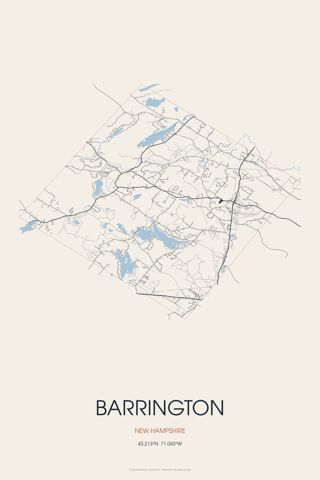 BarringtonNew Hampshire
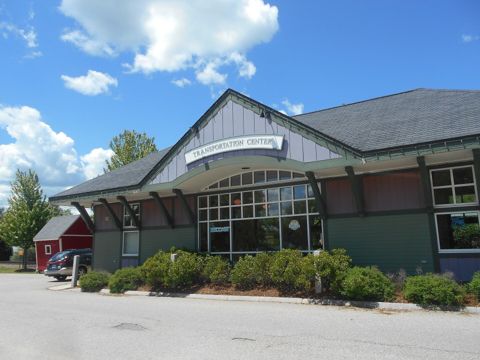 DoverNew Hampshire · Est. 1855
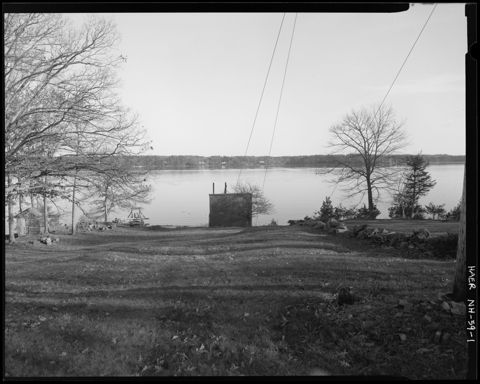 DurhamNew Hampshire
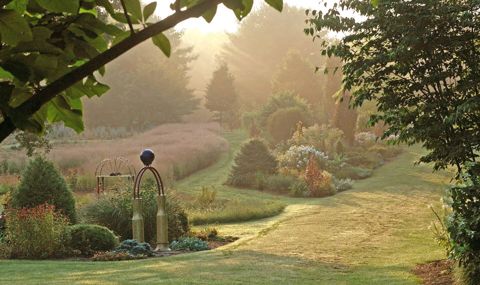 LeeNew Hampshire · Est. 1766
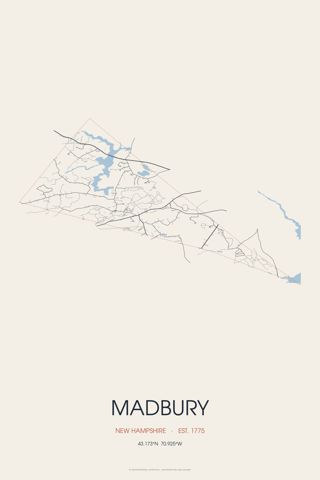 MadburyNew Hampshire · Est. 1775
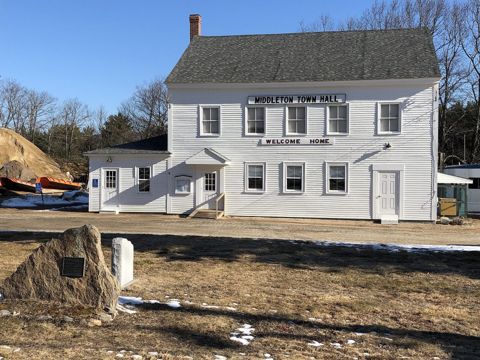 MiddletonNew Hampshire · Est. 1778
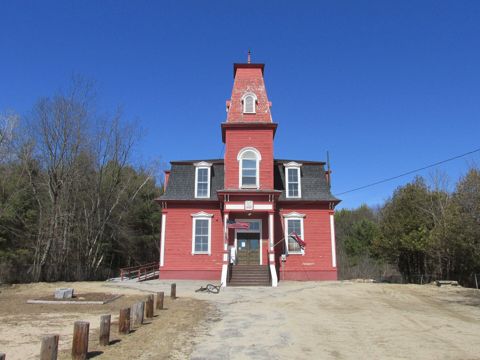 MiltonNew Hampshire · Est. 1802
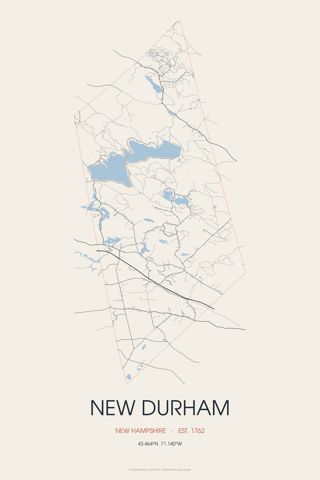 New DurhamNew Hampshire · Est. 1762
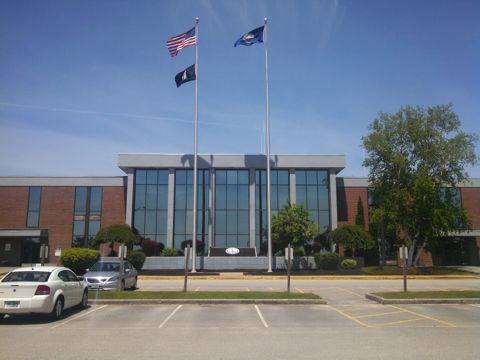 RochesterNew Hampshire
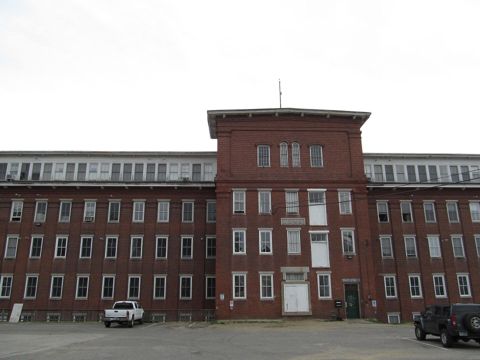 RollinsfordNew Hampshire · Est. 1849
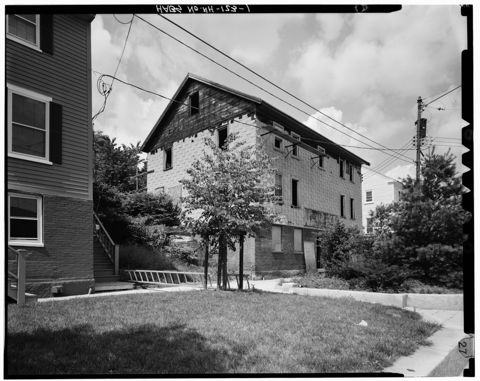 SomersworthNew Hampshire · Est. 1754
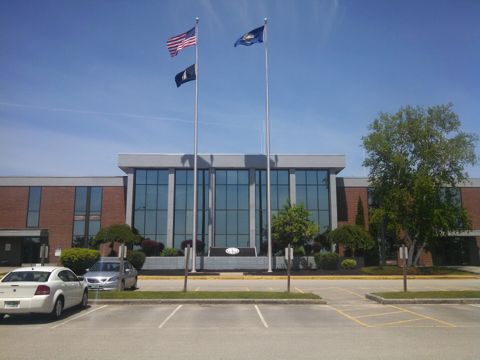 StraffordNew Hampshire · Est. 1820
Founding years, populations and town notes come from each town's Wikipedia and Wikidata entries. All New Hampshire towns.