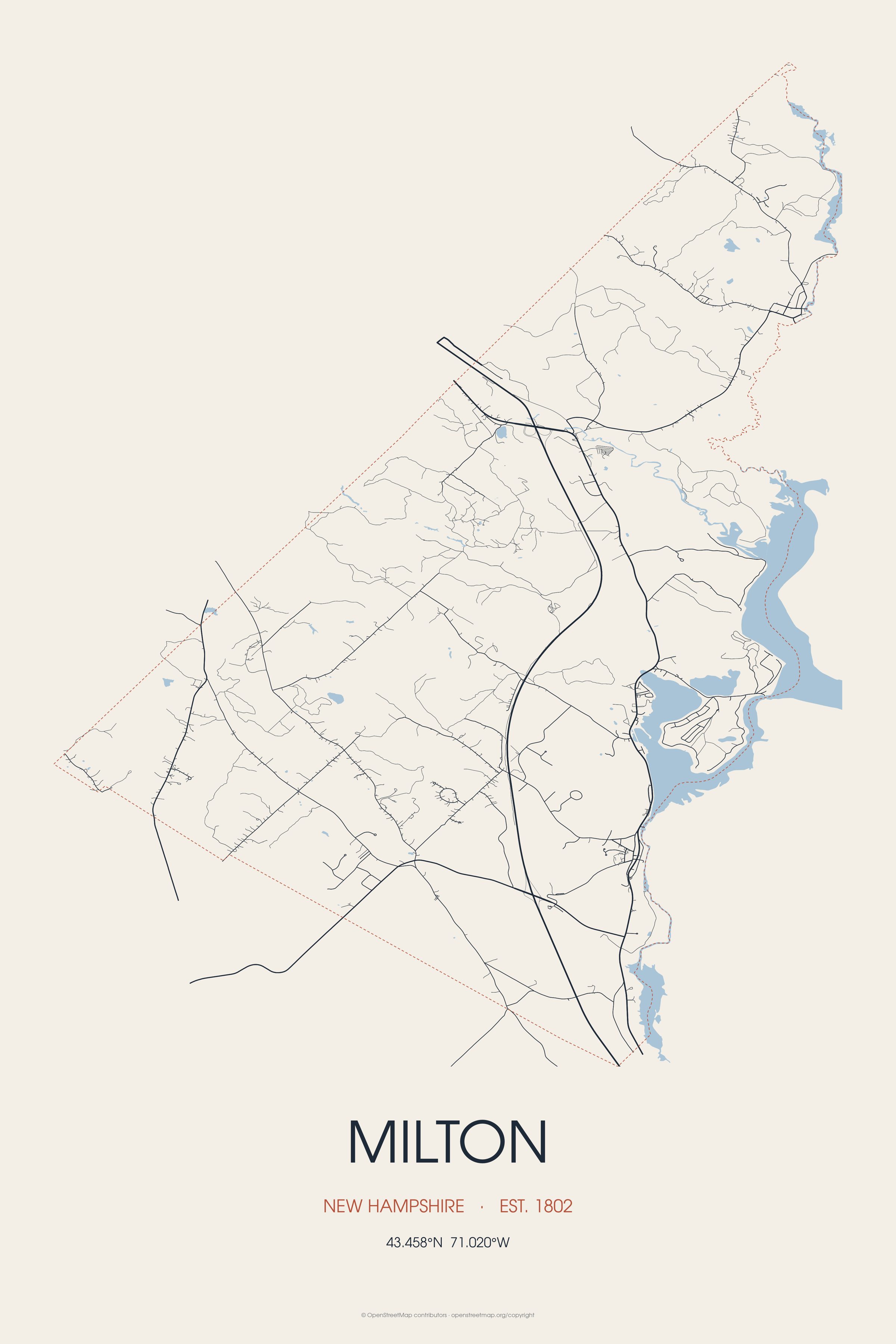
A manufacturing, resort and residential town, Milton includes the village of Milton Mills. Landmarks include New Hampshire Farm Museum, Plummer Homestead and Milton Town House. Milton is the birthplace of Michael Stonebraker, computer scientist.
Every piece is drawn from Milton's own map data and historic archives, then printed and shipped from the USA when you order. No two towns look alike.
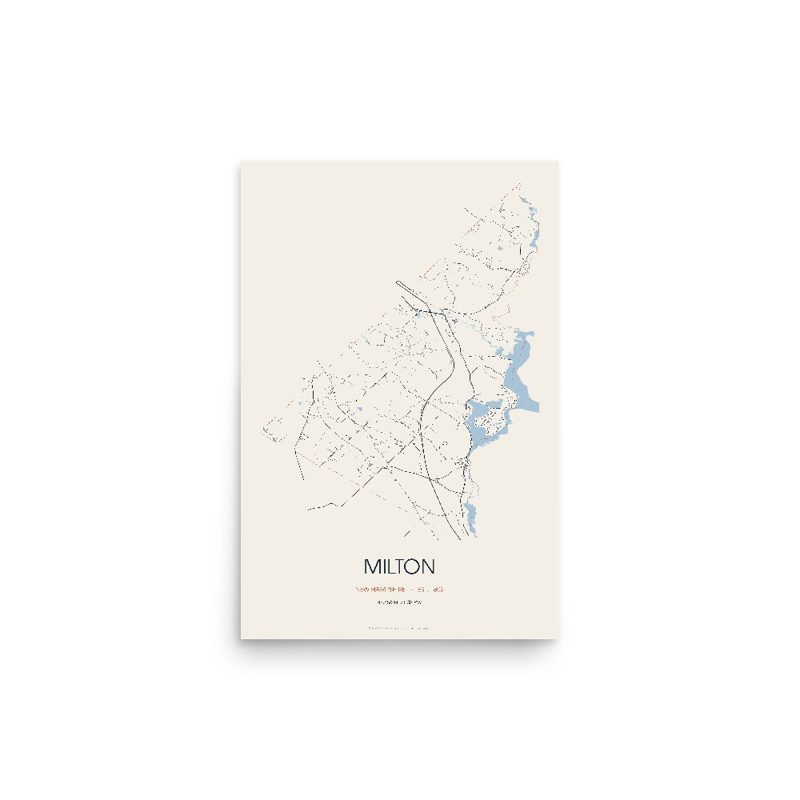
Every road in town, on archival matte paper
The same map, in navy and silver
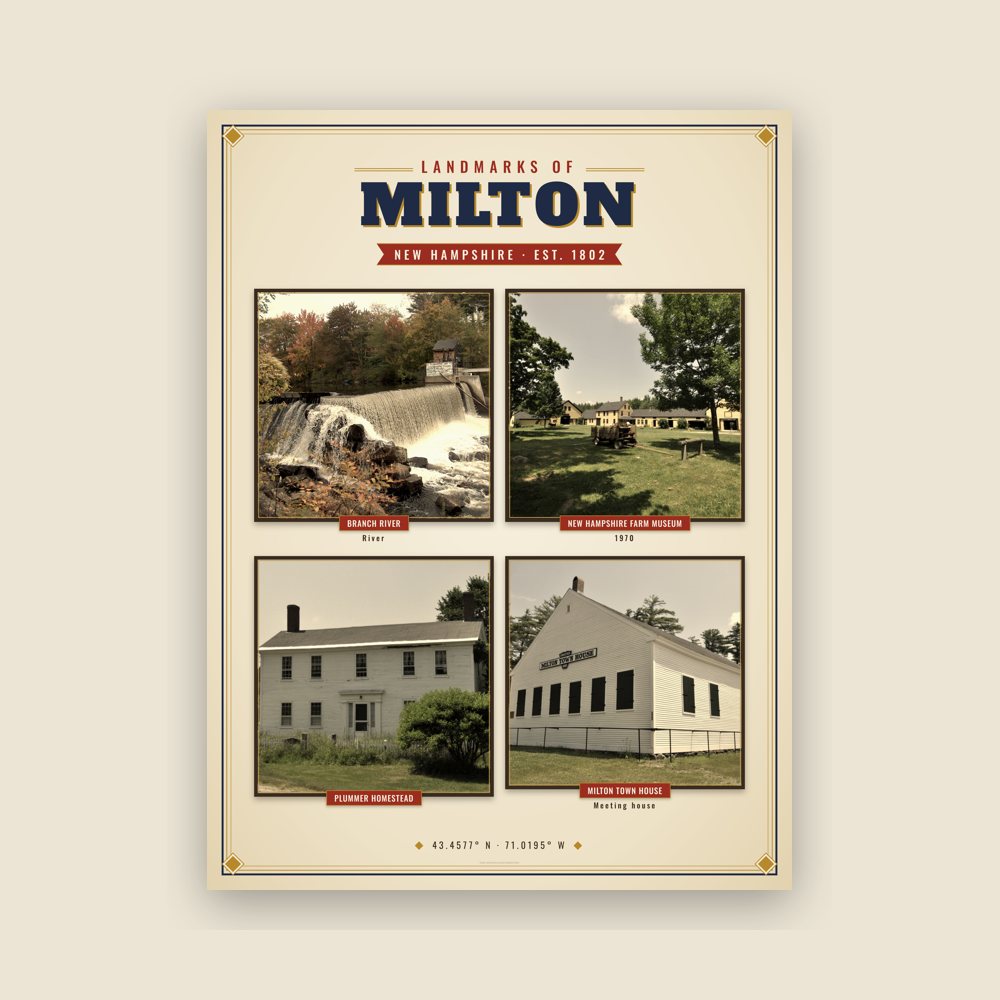
Nine local landmarks, archival matte
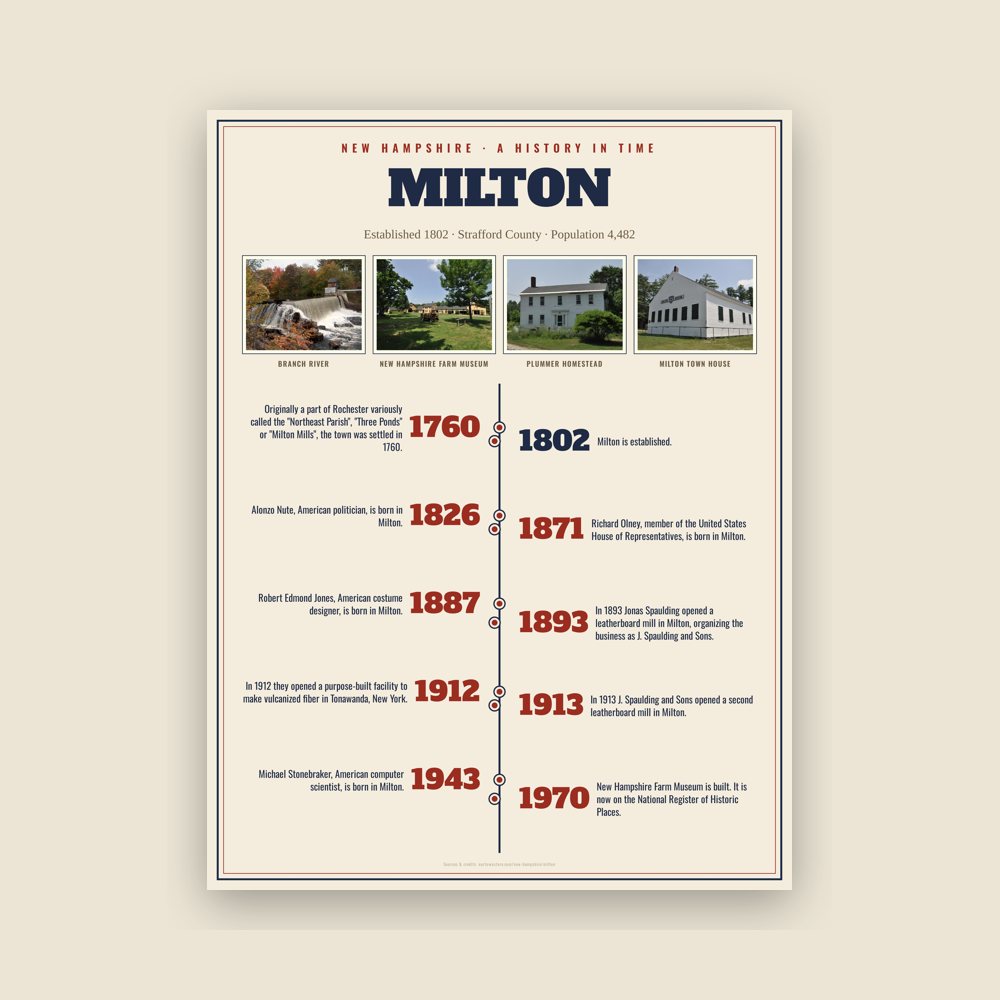
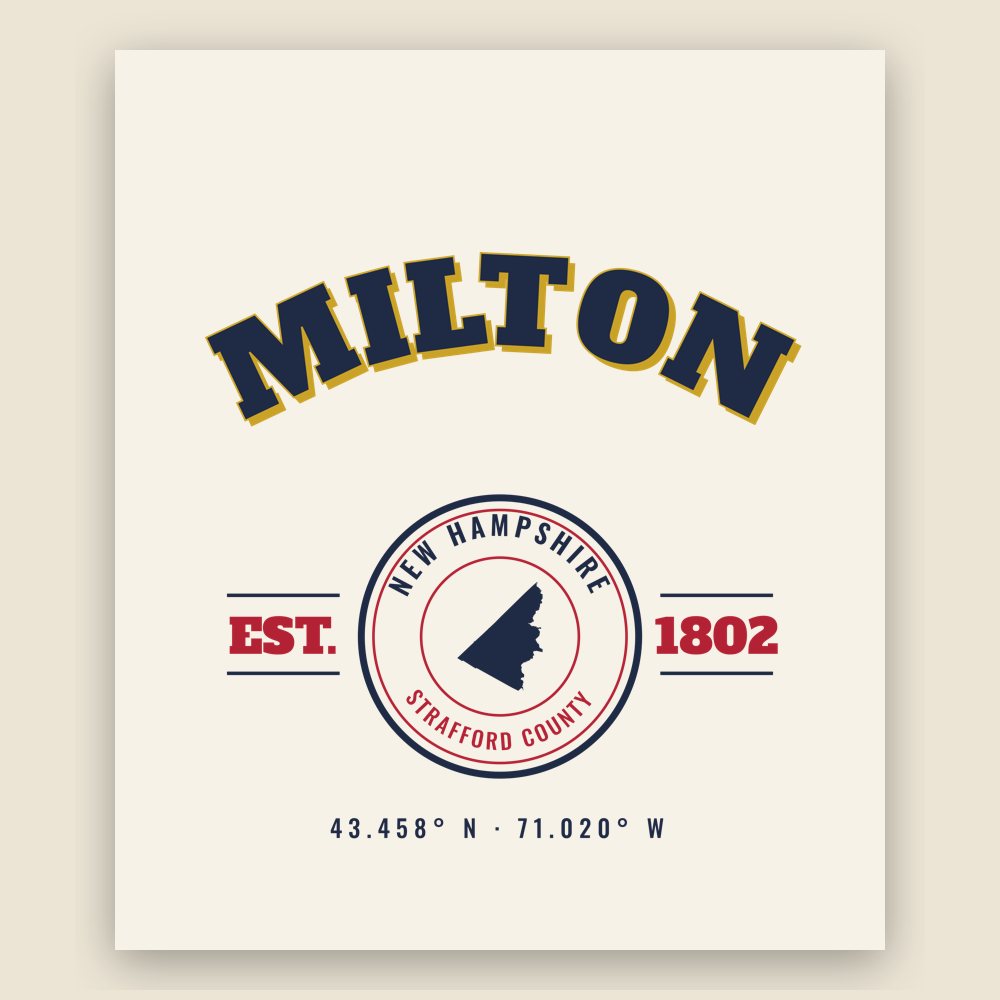
The town's story in dates, from its own records, for home or classroom
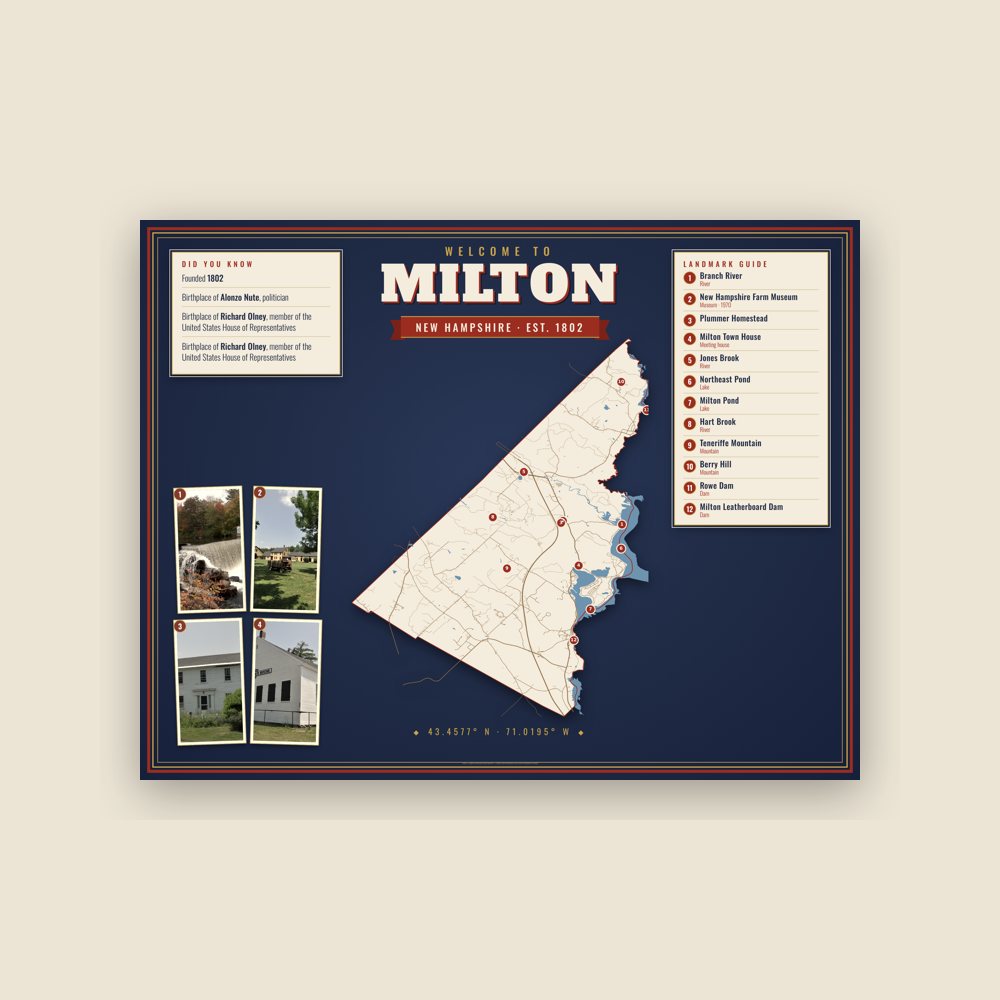
Map of local landmarks, washable fabric
Heavy-blend fleece, street map printed on the back
Soft Bella+Canvas jersey
Glossy ceramic, dishwasher safe
Ceramic keepsake, gold ribbon
Weatherproof, for the front walk
24″×16″, printed coir-look fibers, rubber back
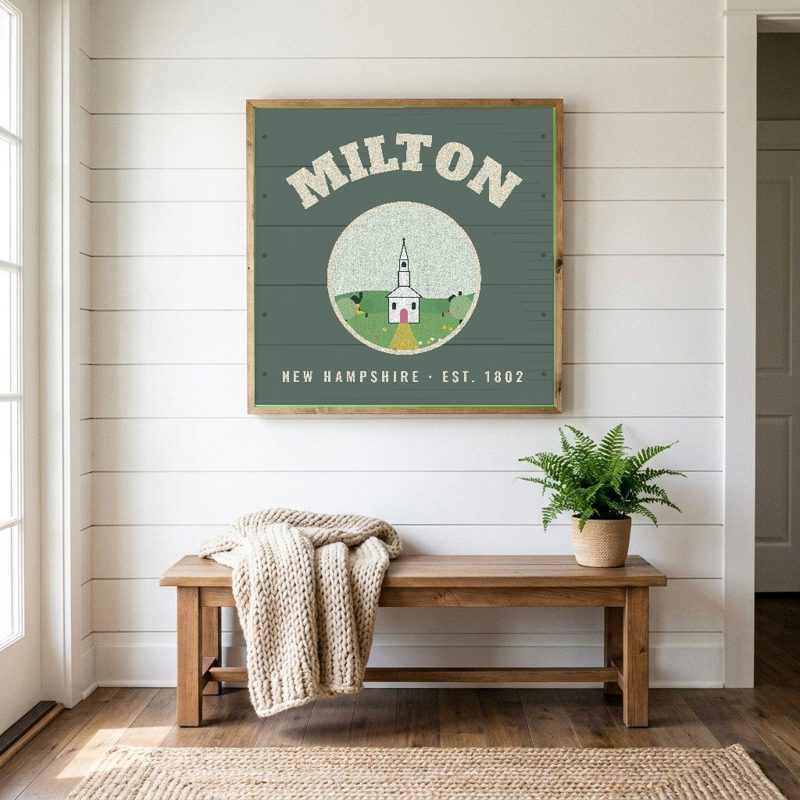
12″×12″ printed wood, ready to hang
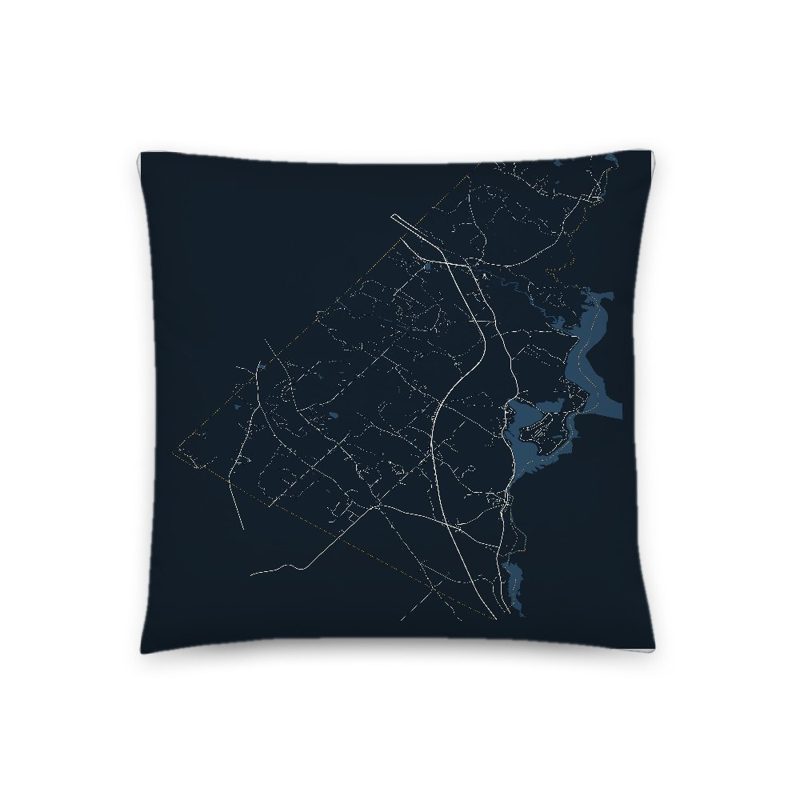
Soft-touch, zip cover
Sturdy all-over-print tote
Glossy top, cork back
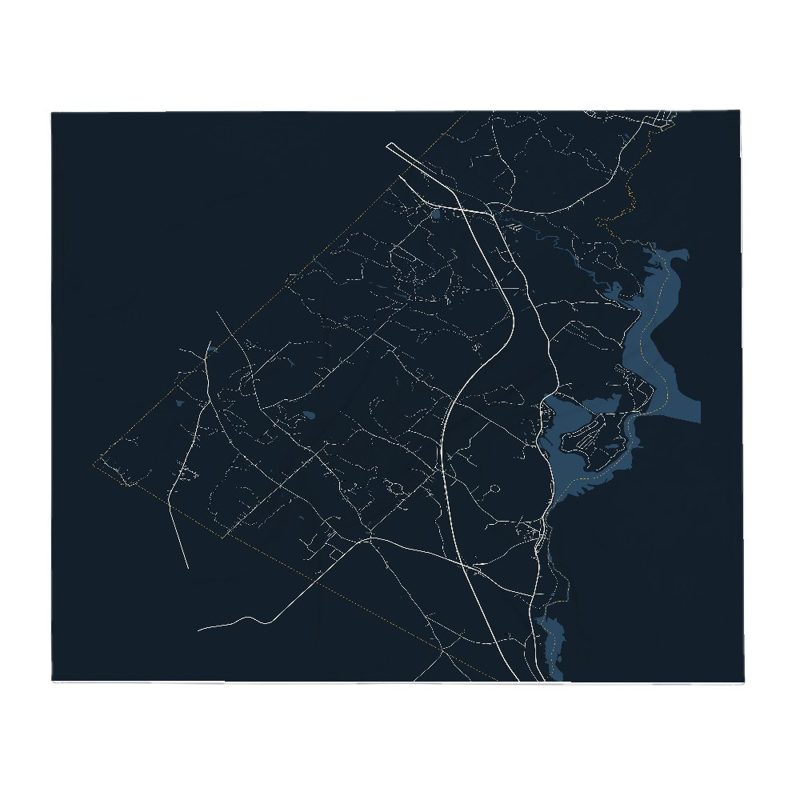
Soft fleece, 50″×60″
20 oz, double-wall stainless

Archival matte print of a local landmark, credited to its photographer
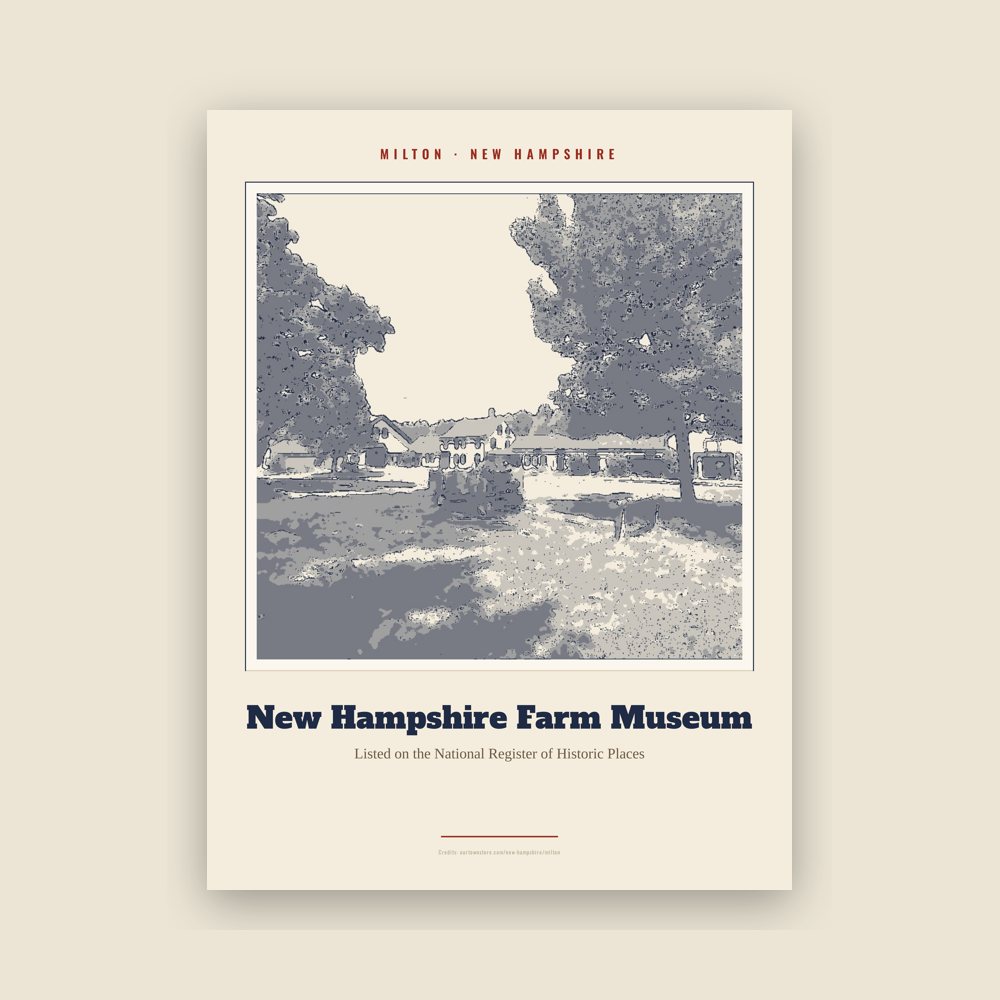
Archival matte print of a local landmark, credited to its photographer
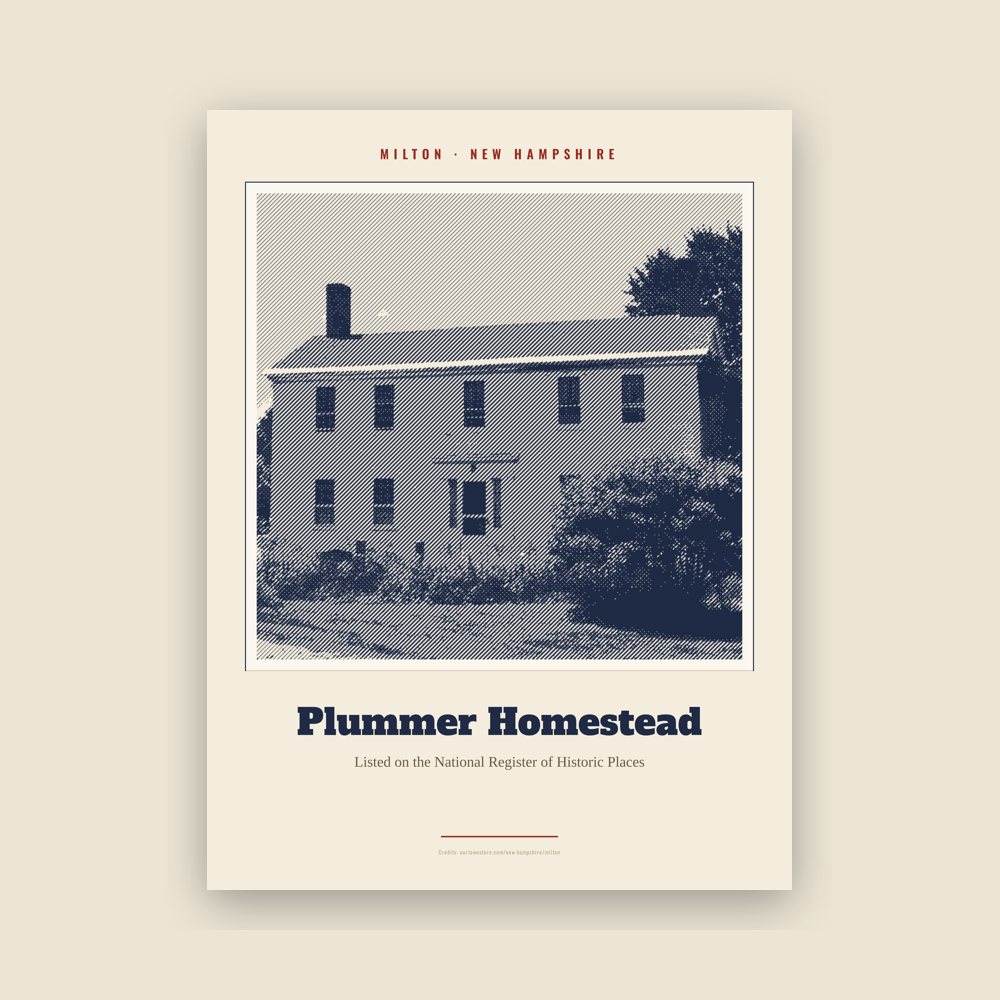
Archival matte print of a local landmark, credited to its photographer
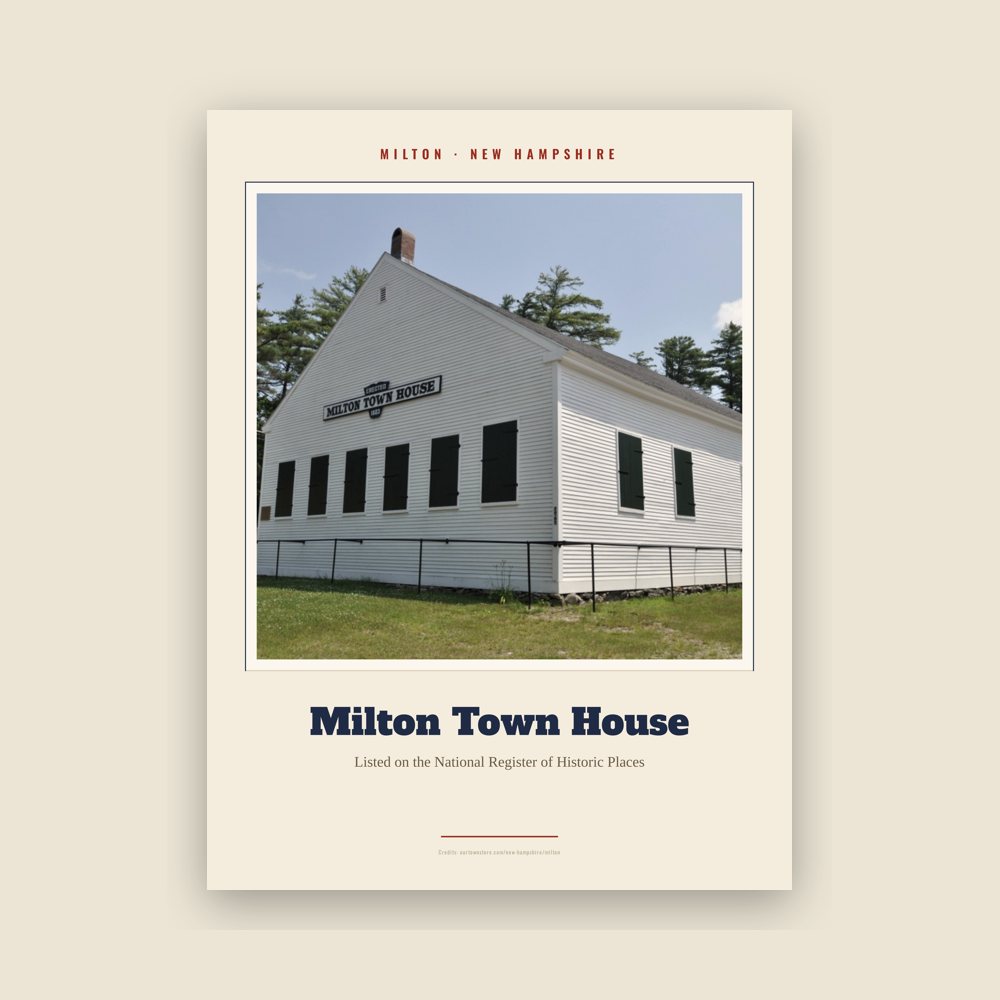
Archival matte print of a local landmark, credited to its photographer

6″×4″ postcard, glossy front
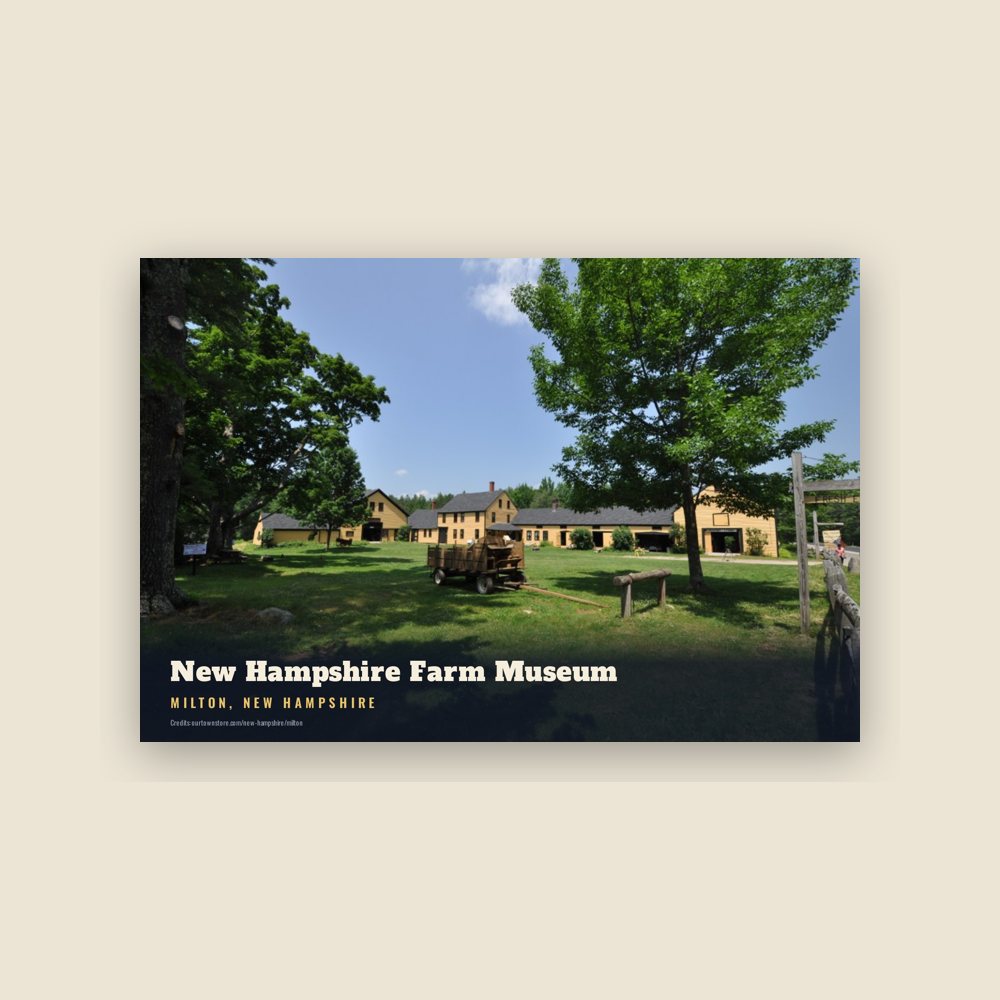
6″×4″ postcard, glossy front
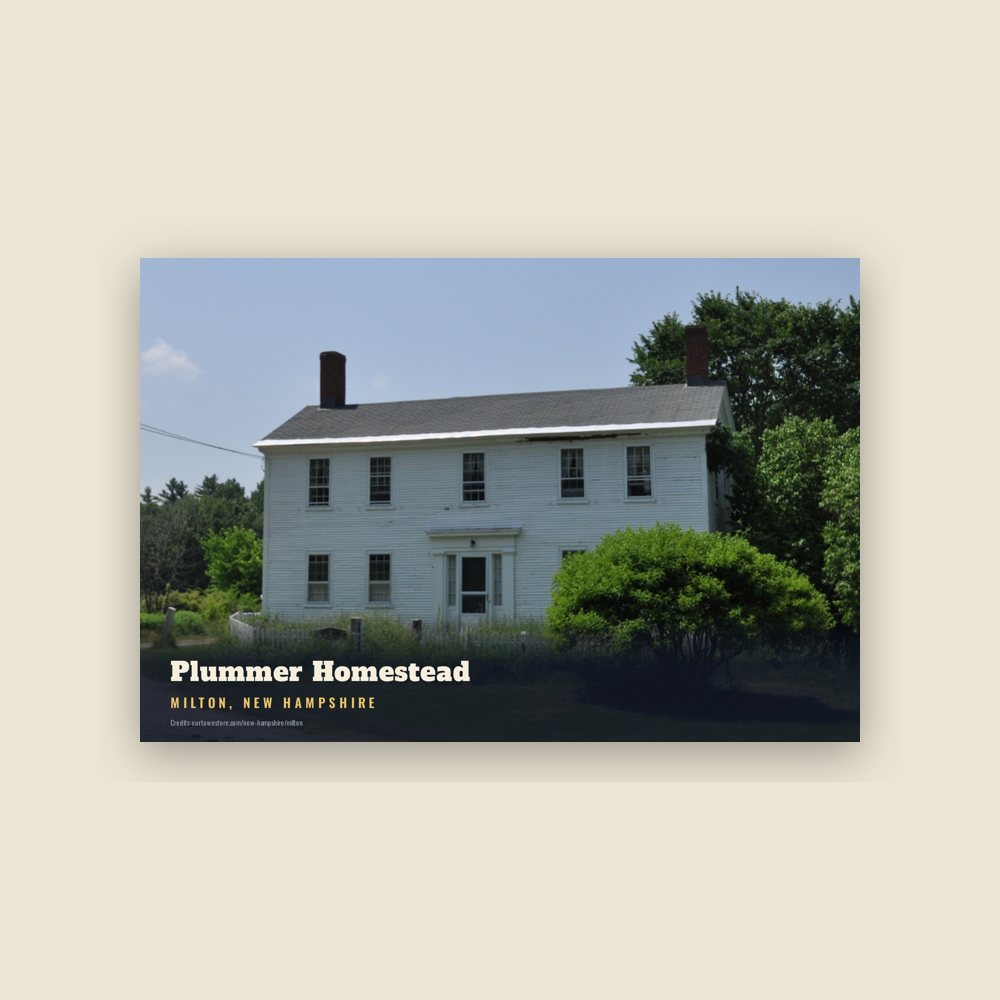
6″×4″ postcard, glossy front
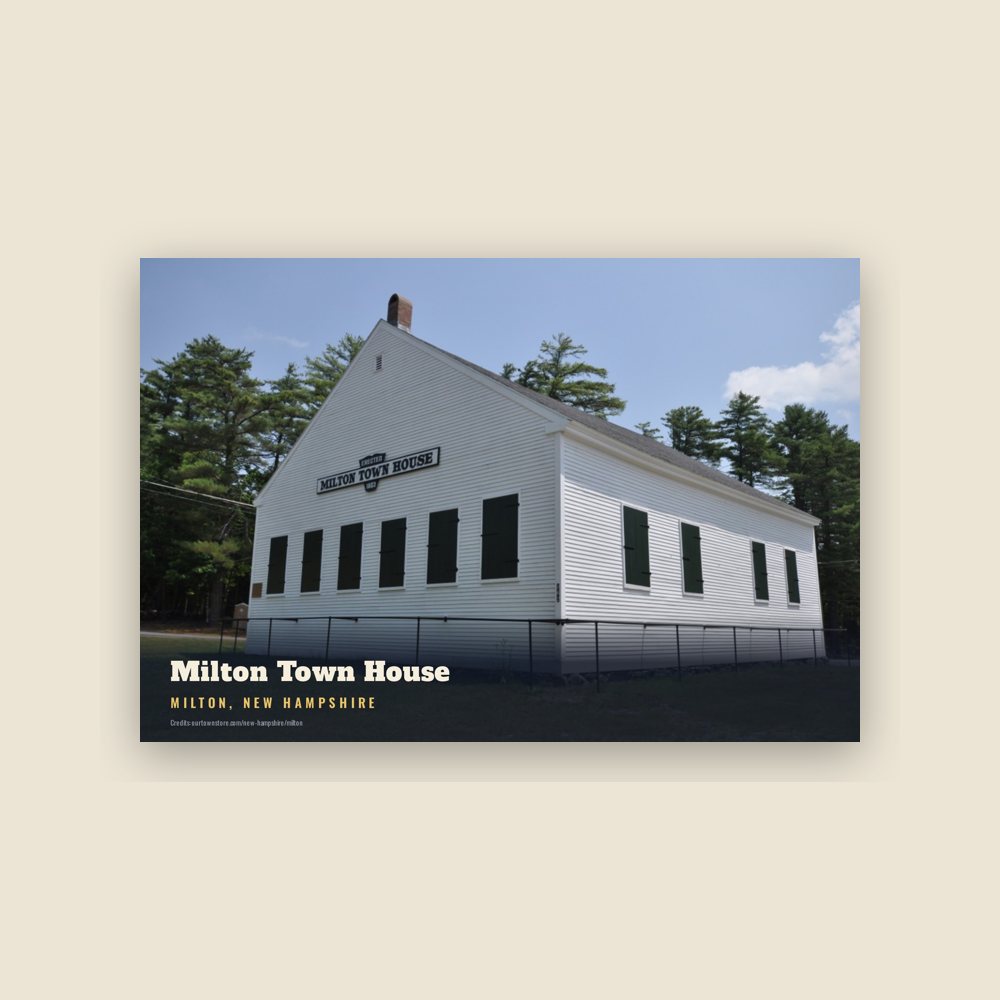
6″×4″ postcard, glossy front
Population 2010: 4,598 → 2020: 4,482
From Wikidata (CC0).
Originally a part of Rochester variously called the "Northeast Parish", "Three Ponds" or "Milton Mills", the town was settled in 1760. It was set off and incorporated in 1802 as "Milton", the name either a contraction of "mill town", or else derived from a relative of the Wentworth colonial governors—William Fitzwilliam, Earl Fitzwilliam and Viscount Milton. The town of Fitzwilliam also bears his name.
The high concentration of water-powered industries in Milton caused Ira W. Jones to found and operate an engineering firm from offices on Main Street in Milton. The company did business as I W Jones Engineers.
In 1893 Jonas Spaulding opened a leatherboard mill in Milton, organizing the business as J. Spaulding and Sons. His sons were Leon C., Huntley N. and Rolland H., of whom Huntley and Rolland would serve as governors of New Hampshire. Jonas and his sons would undertake the construction of another leatherboard mill in North Rochester around 1900. Jonas died before the North Rochester mill became operational. The brothers continued to run the business successfully and brought the Spaulding Brothers leatherboard mill in Townsend Harbor, Massachusetts, under the J. Spaulding and Sons banner in 1902. They were successful with a machine to manufacture shoe counters and with experiments to make vulcanized fiber. In 1912 they opened a purpose-built facility to make vulcanized fiber in Tonawanda, New York. In 1913 J. Spaulding and Sons opened a second leatherboard mill in Milton. They also acquired the Kennebunk Manufacturing Company (KEMACO), which made lunch boxes and violin cases using leatherboard and vulcanized fiber and at one time had facilities in Milton as well.
The town contains some distinctive architecture, particularly the Milton Town House, built in 1808, and the Milton Free Public Library, a Second Empire former schoolhouse built at Milton Mills in 1875.
Adapted (trimmed) from the Wikipedia article Milton, New Hampshire, revision 1377762714 by its contributors, licensed CC BY-SA 4.0.
We share a part of every Milton sale with local partners, and we'd love to print from your collection. Old photographs, maps and postcards make the best keepsakes.
Partner with us