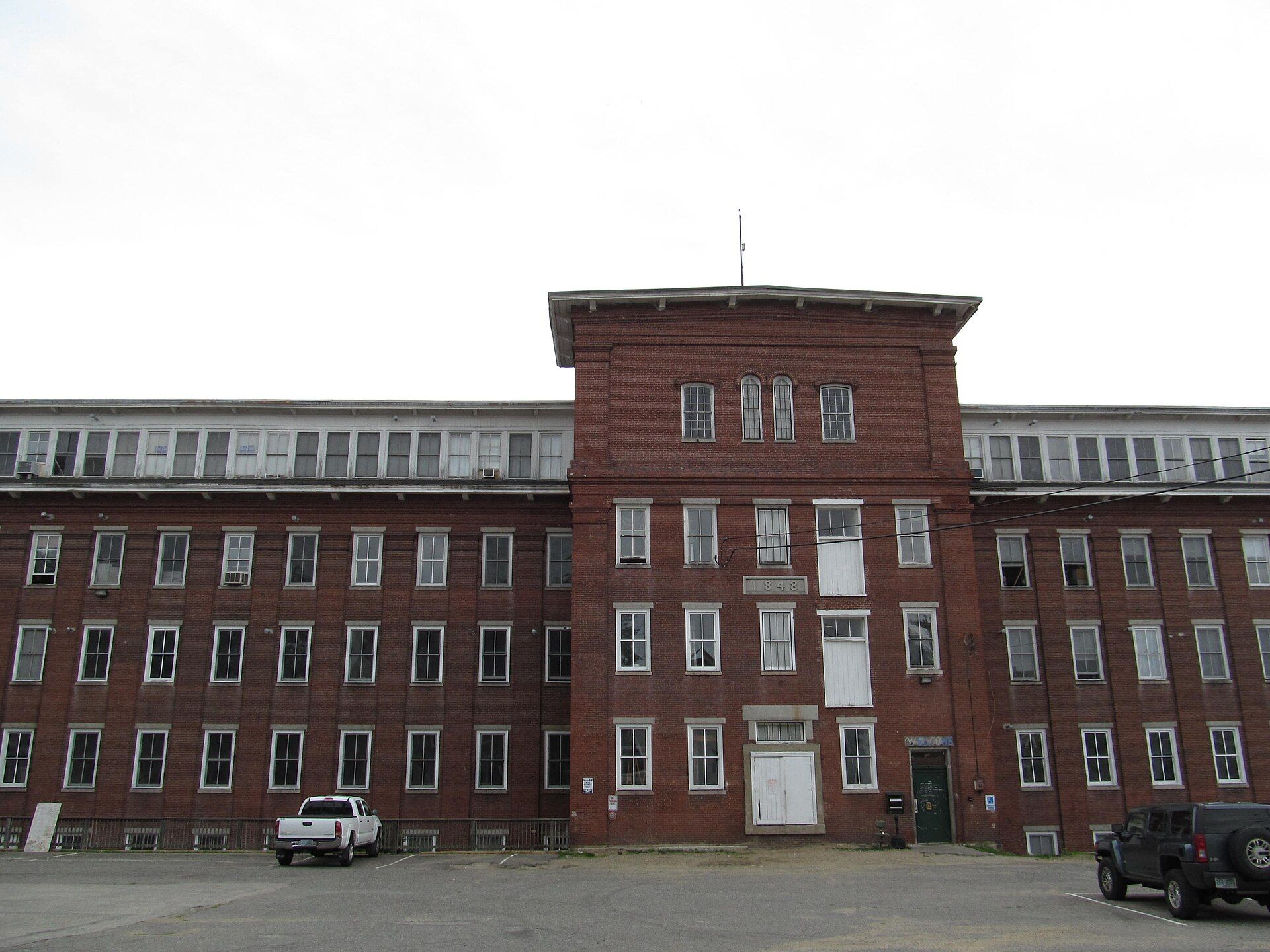
Their village was located at what later was known as Salmon Falls Village and is now Rollinsford. Landmarks include Hamilton House, Salmon Falls Mill Historic District and Rollinsford Grade School. Rollinsford is the birthplace of Rachel Hill, soccer player.
Every piece is drawn from Rollinsford's own map data and historic archives, then printed and shipped from the USA when you order. No two towns look alike.
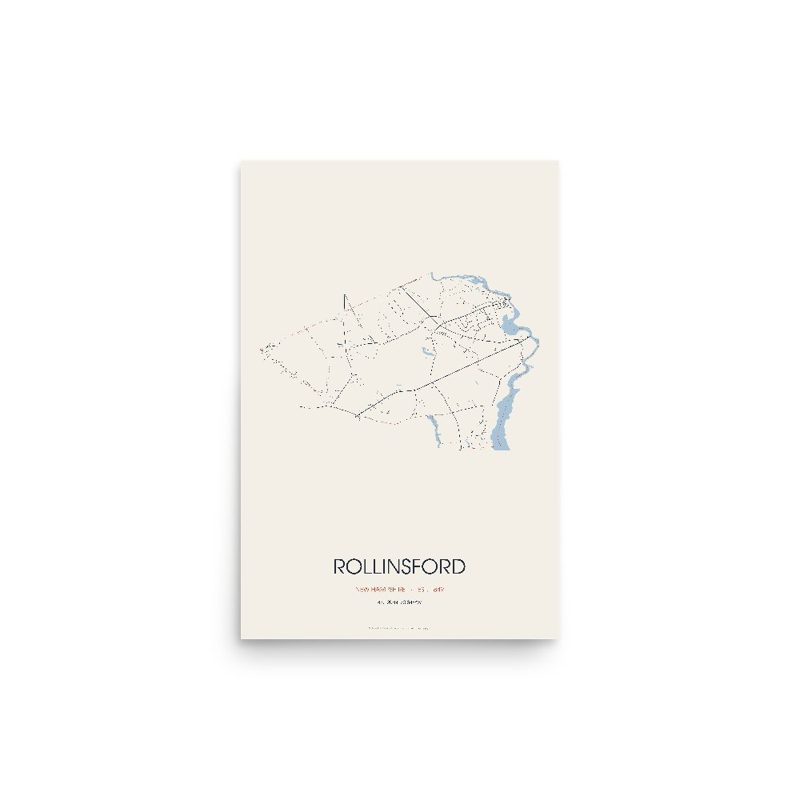
Every road in town, on archival matte paper
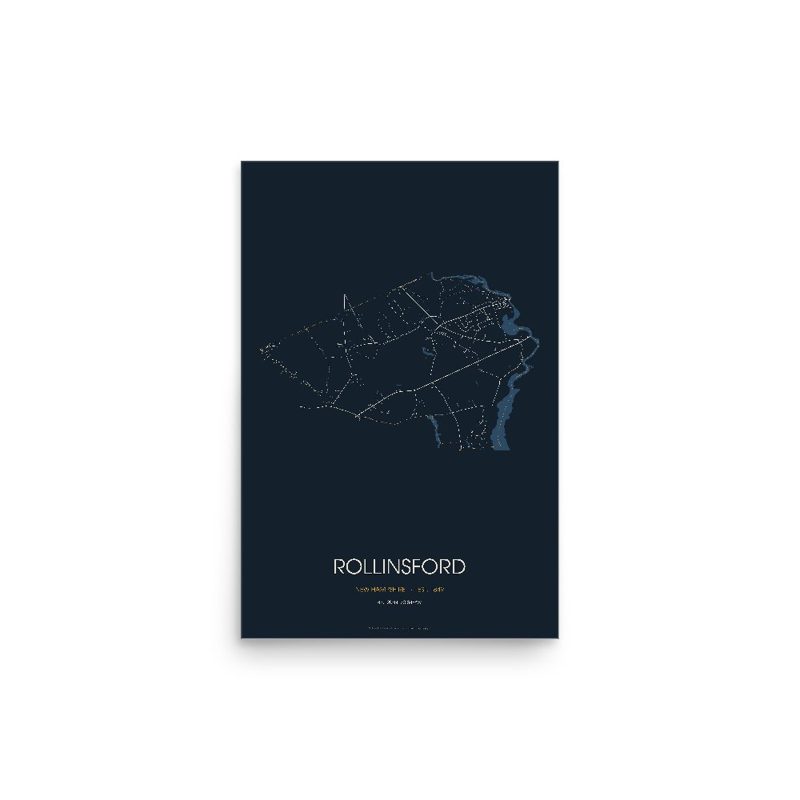
The same map, in navy and silver
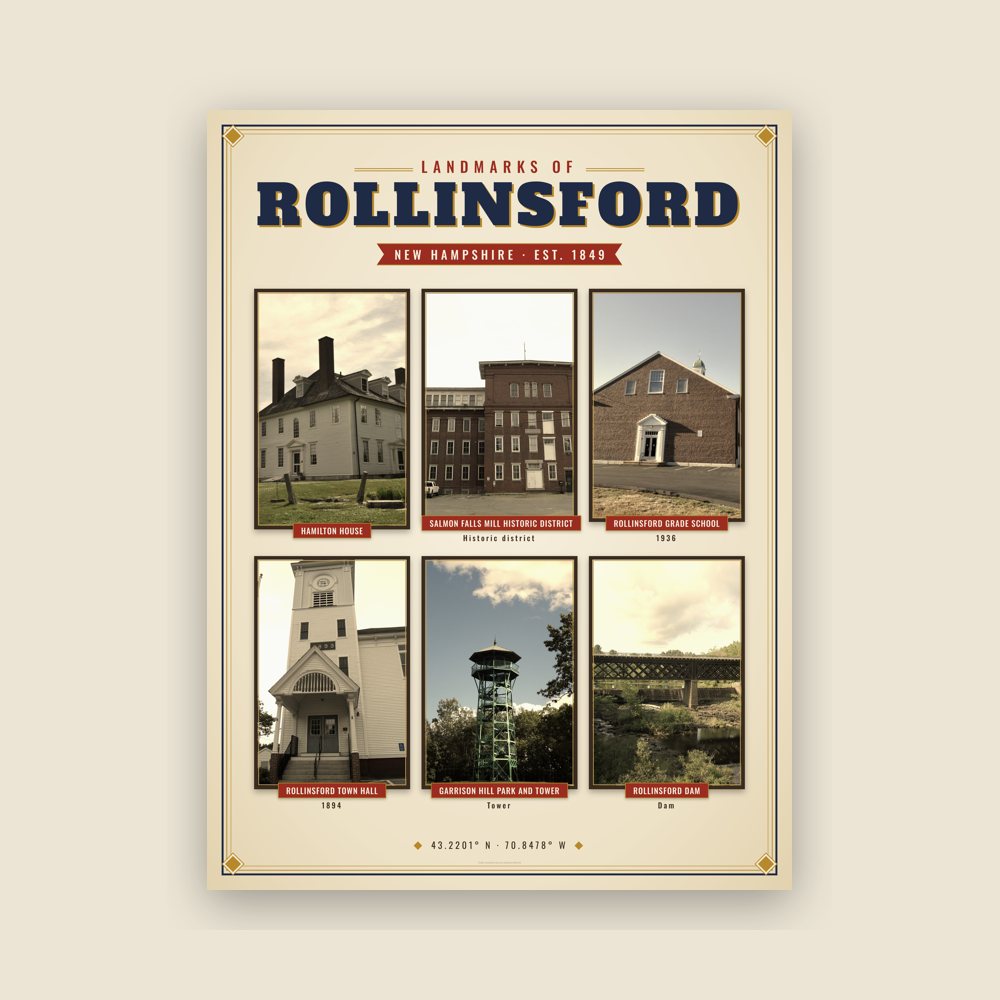
Nine local landmarks, archival matte
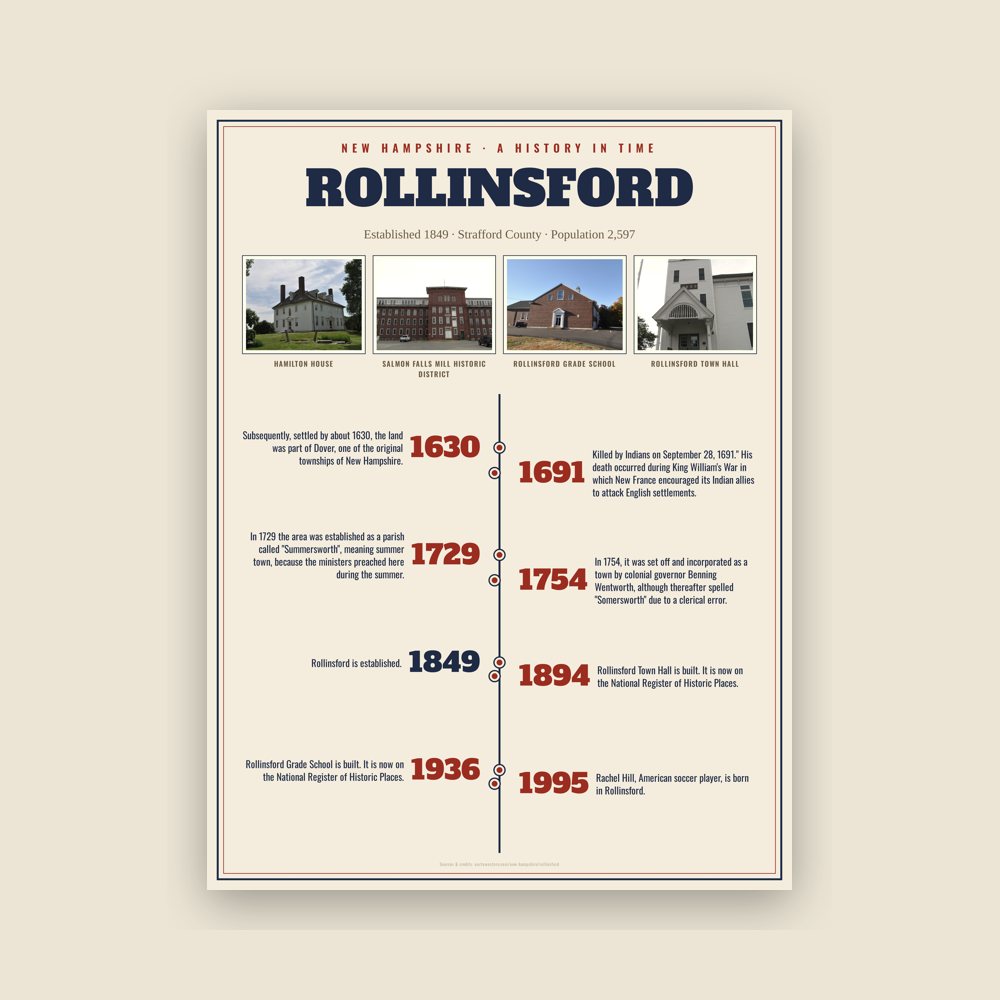
The town's story in dates, from its own records, for home or classroom
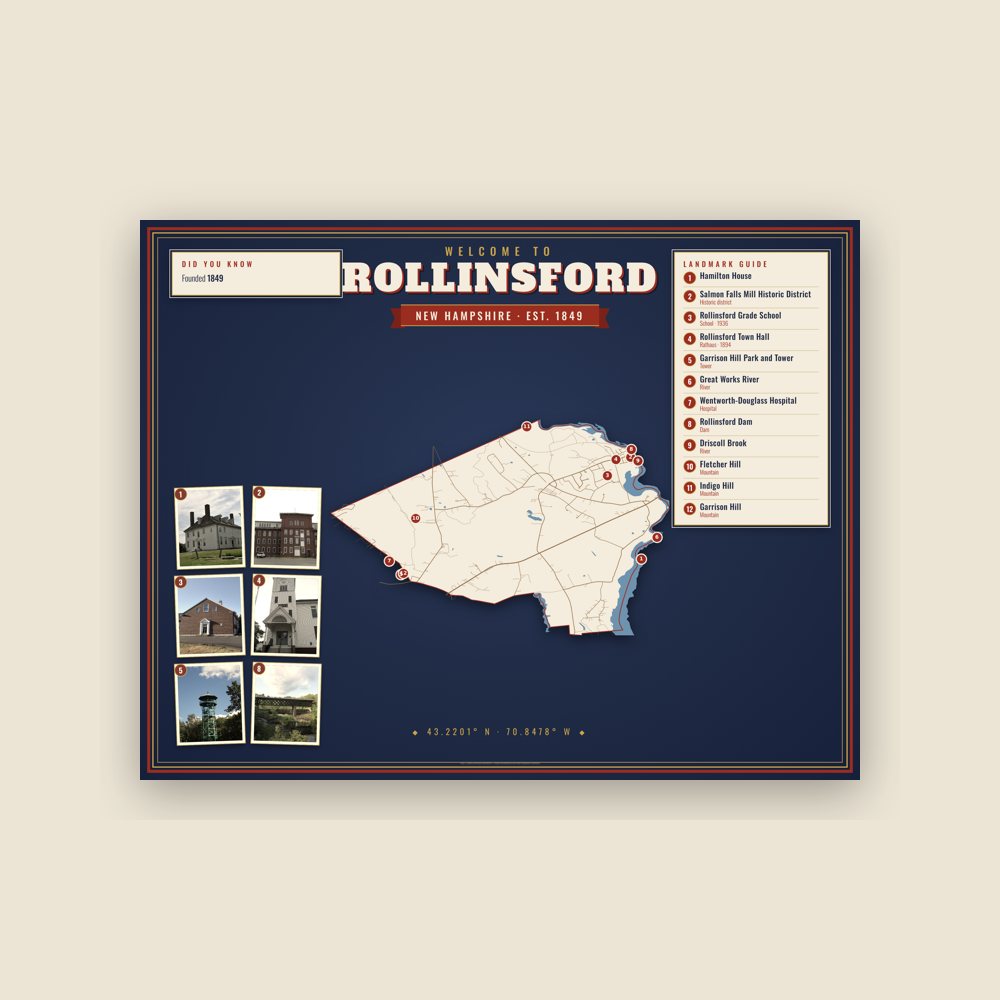
Map of local landmarks, washable fabric
Heavy-blend fleece, street map printed on the back
Soft Bella+Canvas jersey
Glossy ceramic, dishwasher safe
Ceramic keepsake, gold ribbon
Weatherproof, for the front walk
24″×16″, printed coir-look fibers, rubber back
12″×12″ printed wood, ready to hang
Soft-touch, zip cover
Sturdy all-over-print tote
Glossy top, cork back
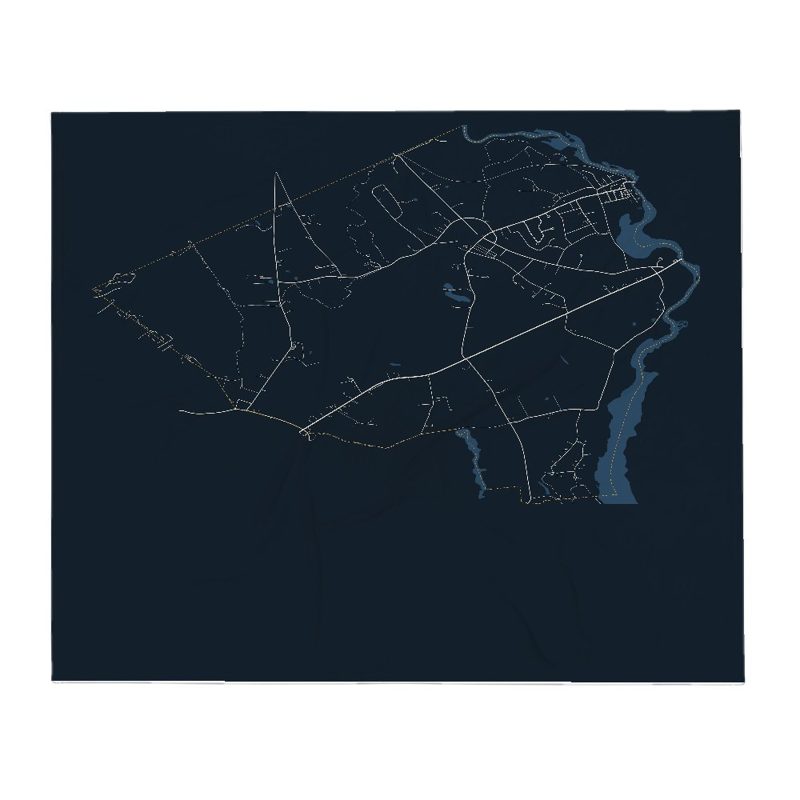
Soft fleece, 50″×60″
20 oz, double-wall stainless
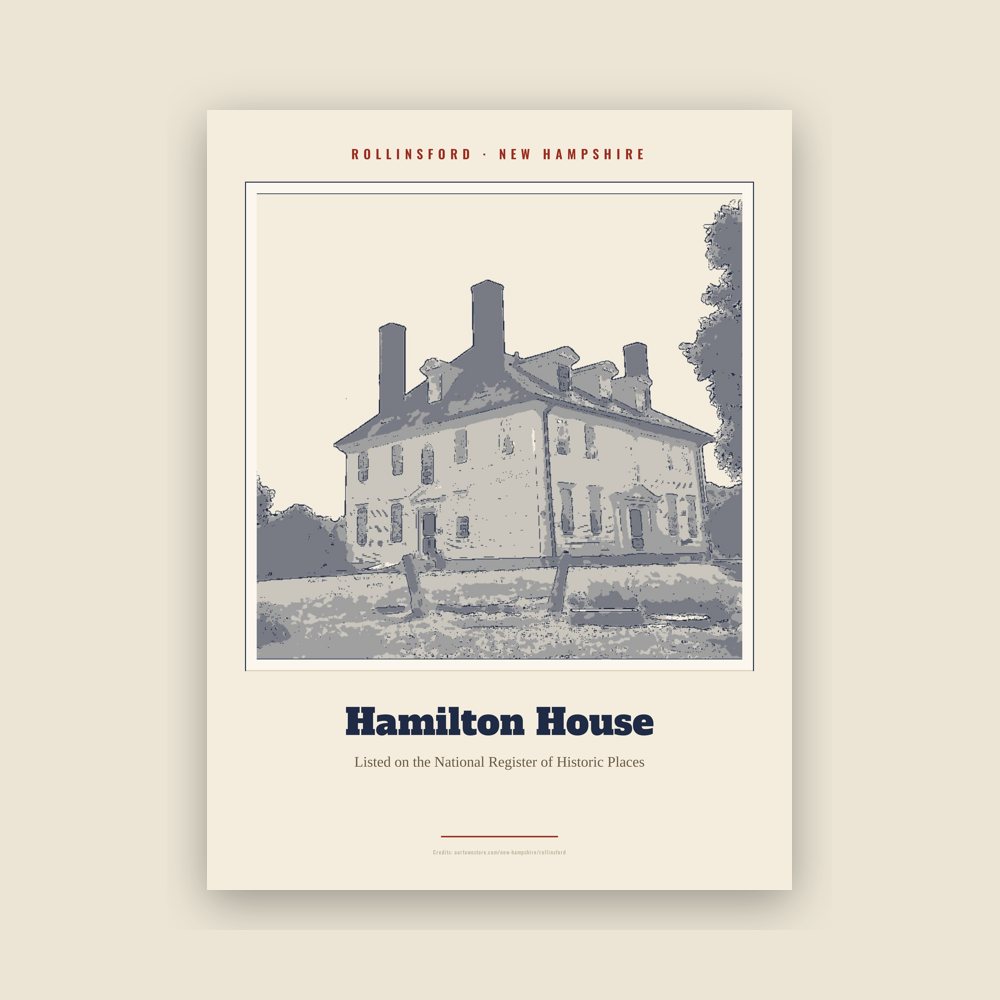
Archival matte print of a local landmark, credited to its photographer
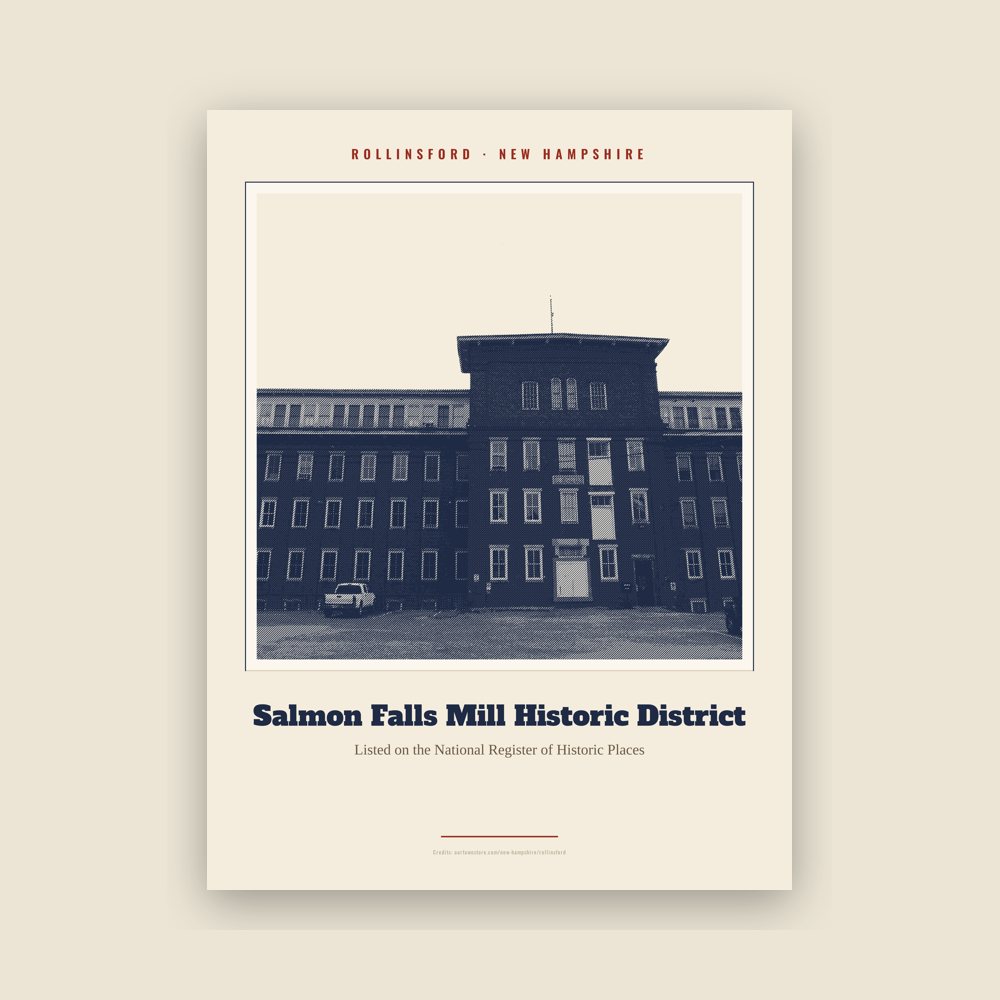
Archival matte print of a local landmark, credited to its photographer
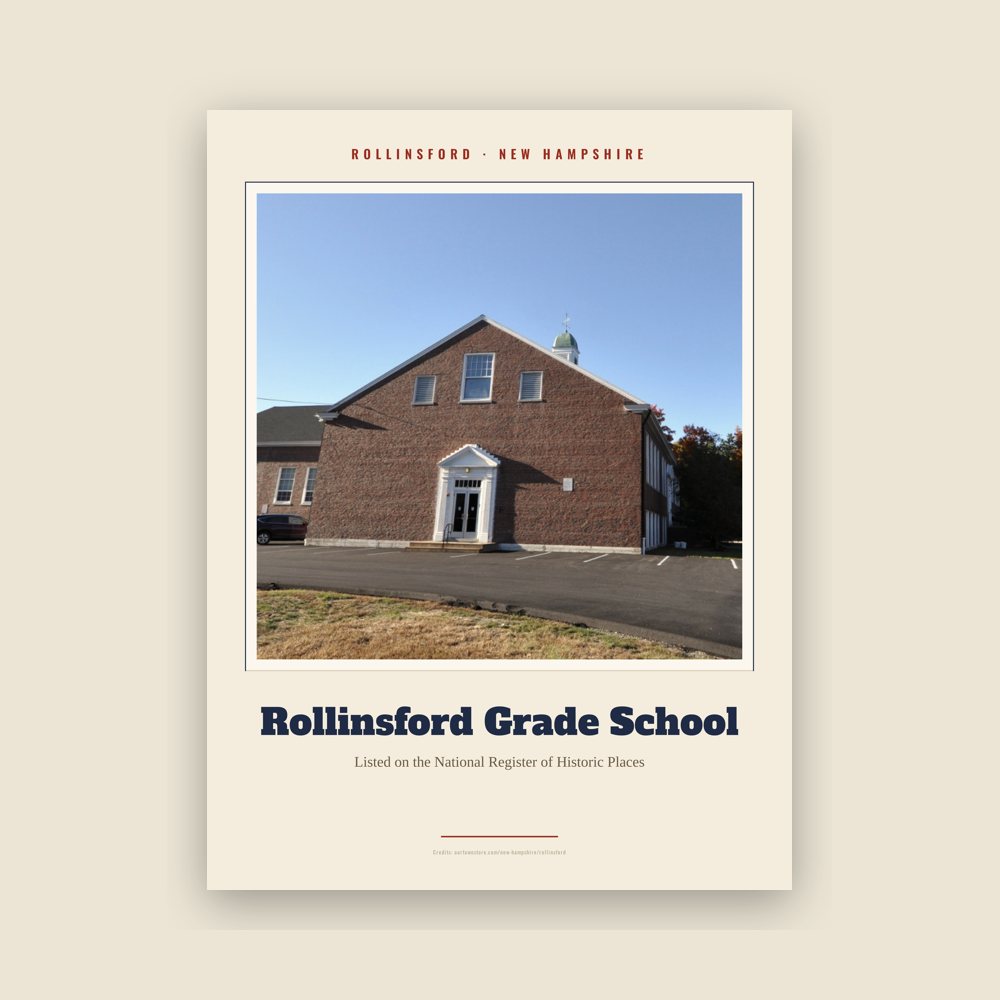
Archival matte print of a local landmark, credited to its photographer
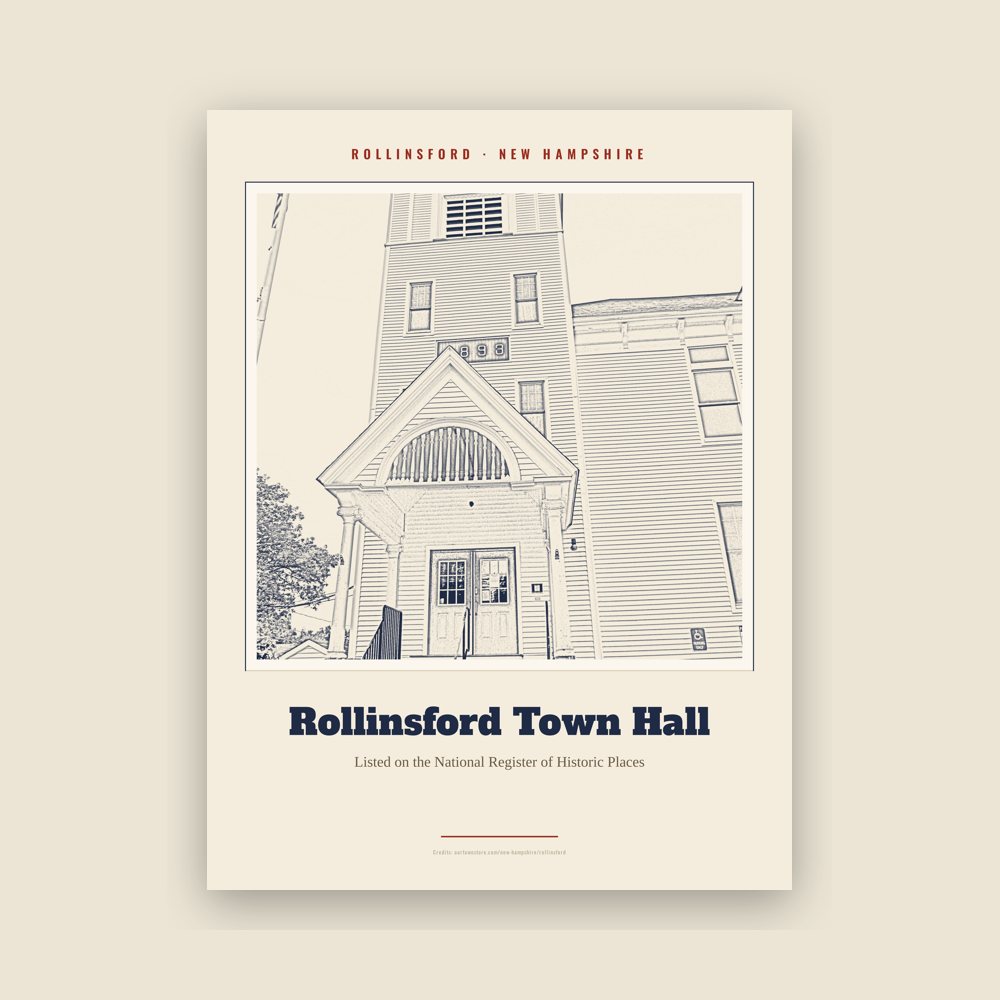
Archival matte print of a local landmark, credited to its photographer
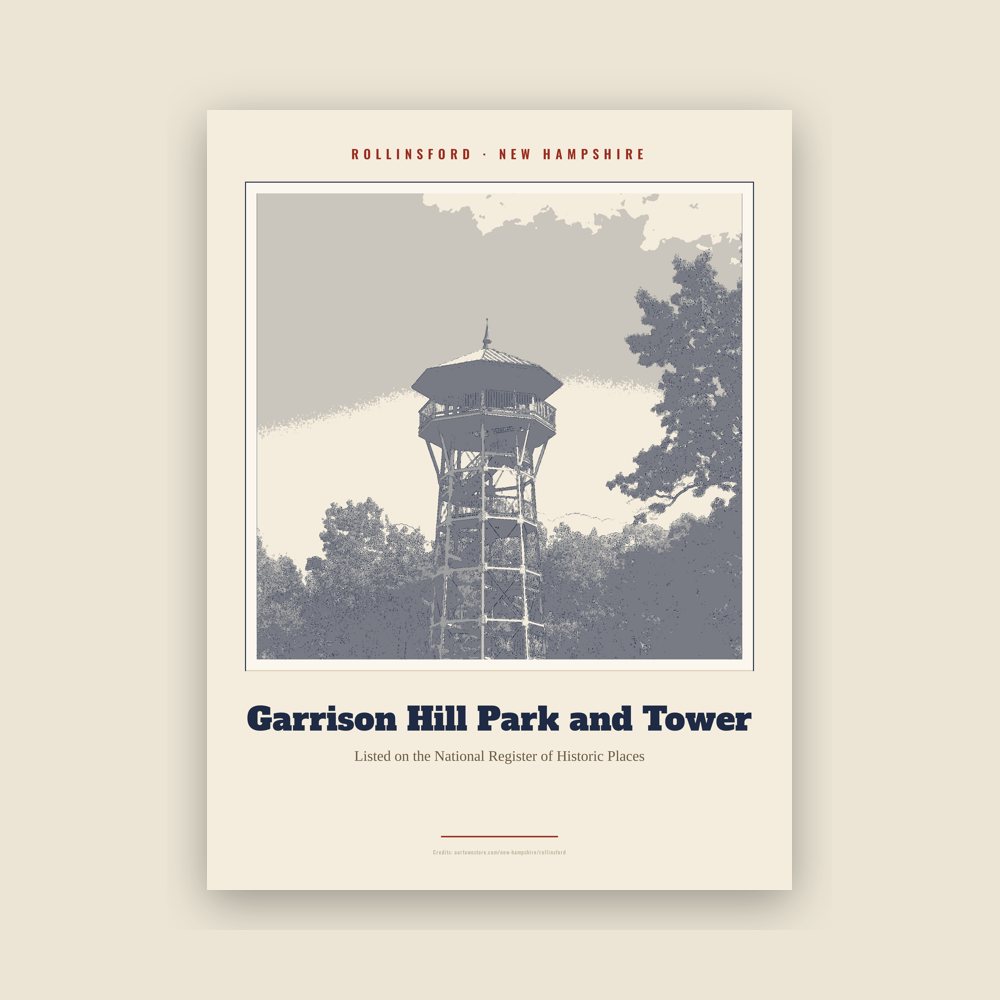
Archival matte print of a local landmark, credited to its photographer
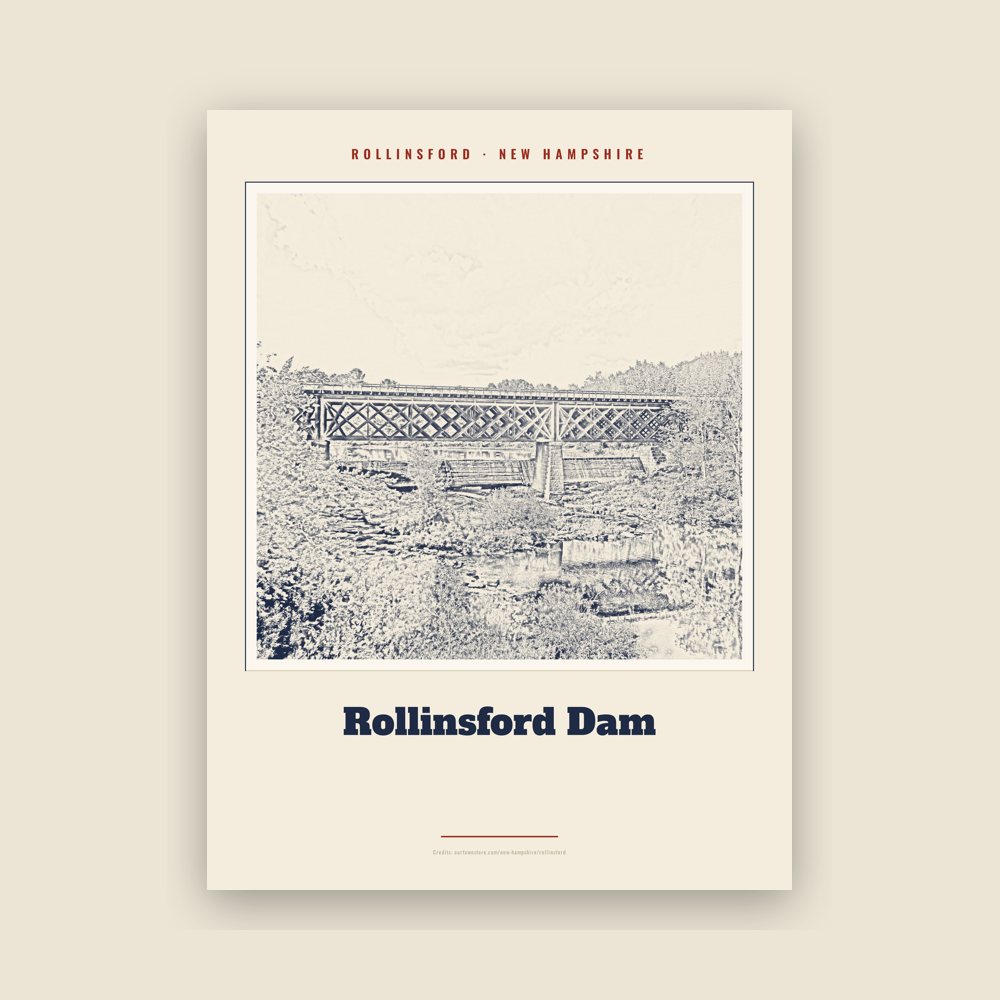
Archival matte print of a local landmark, credited to its photographer
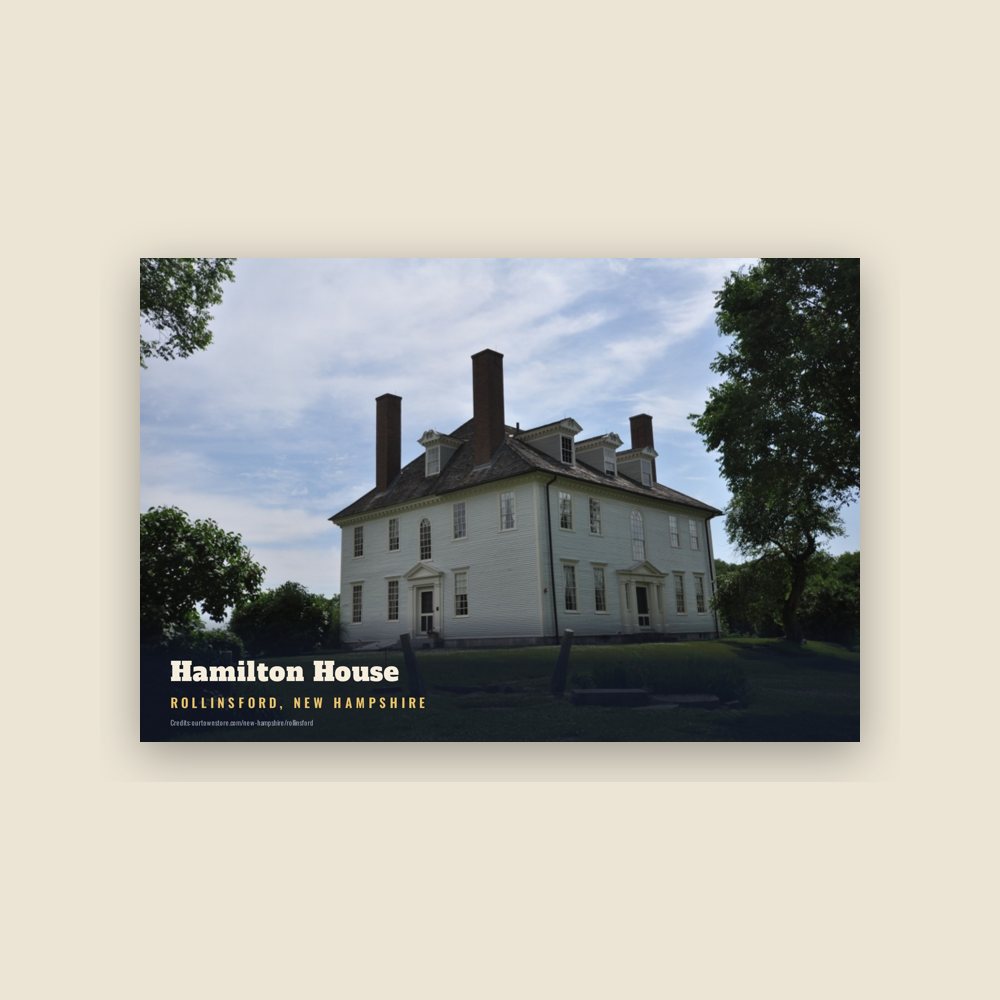
6″×4″ postcard, glossy front
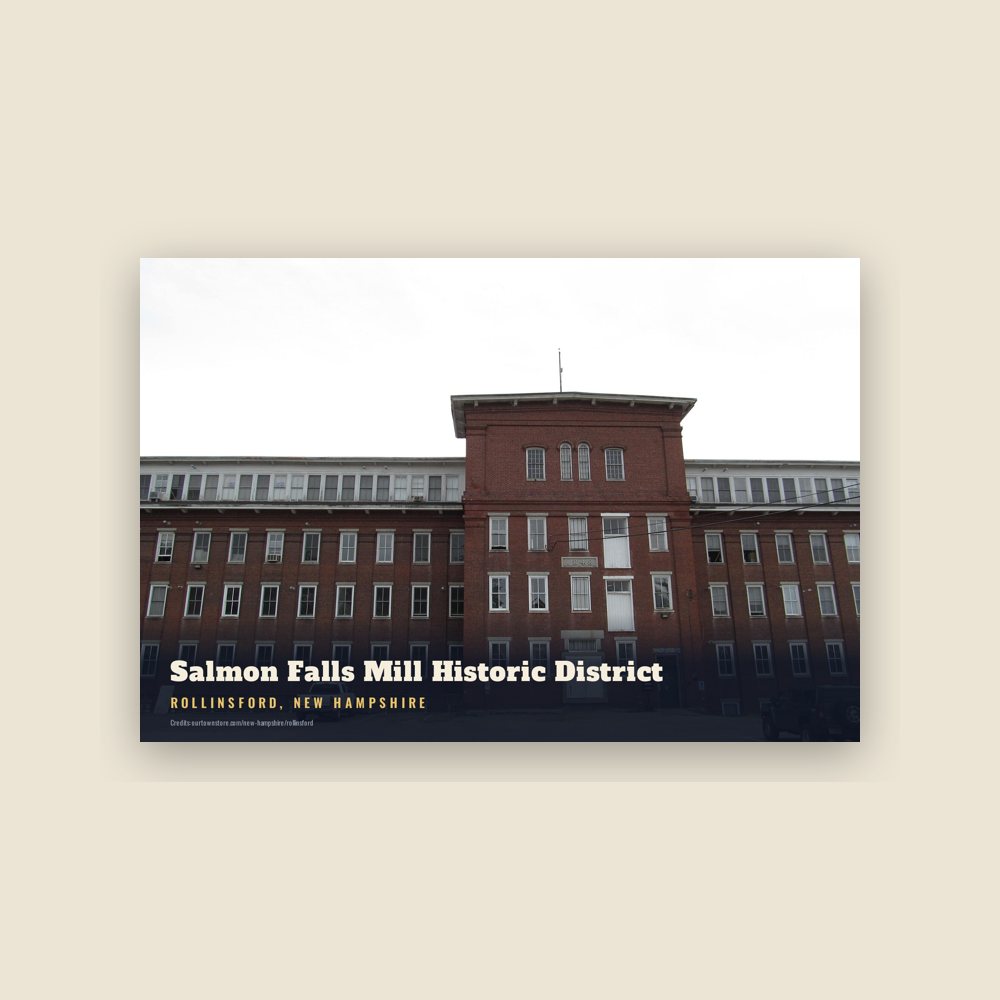
6″×4″ postcard, glossy front
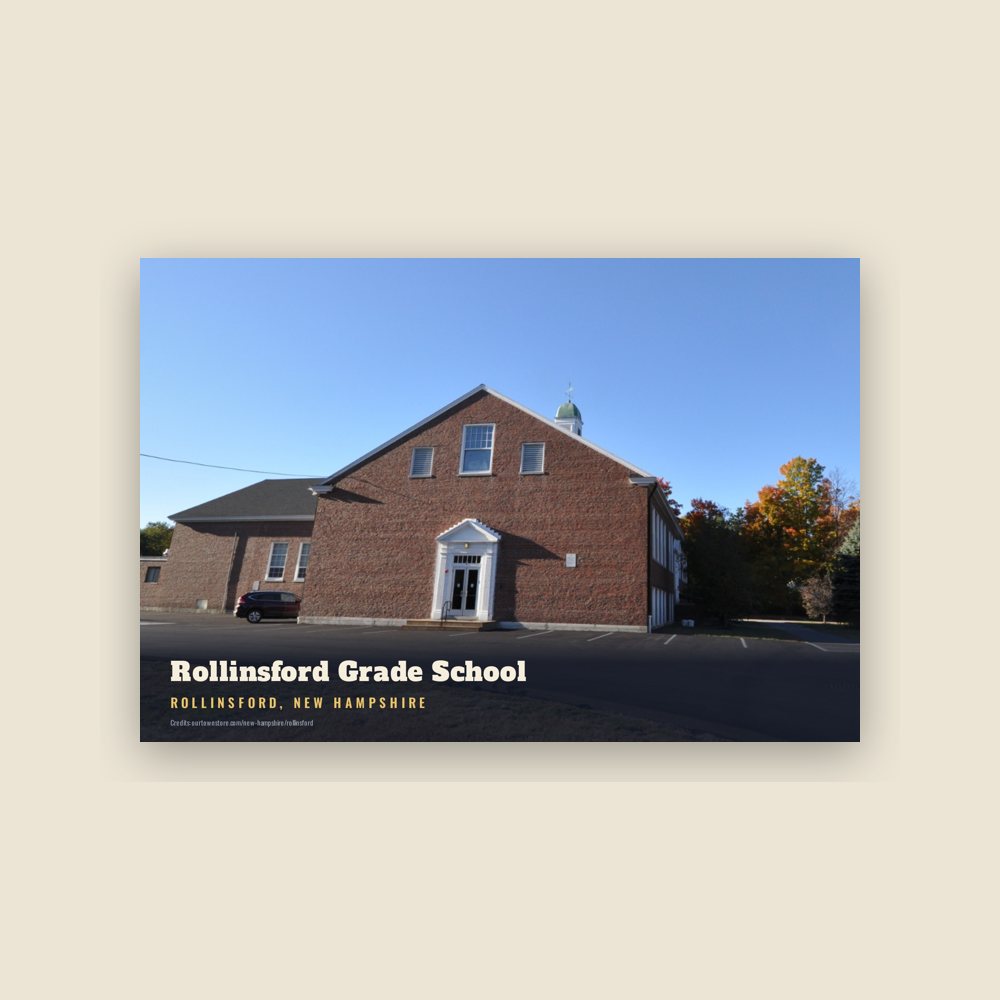
6″×4″ postcard, glossy front
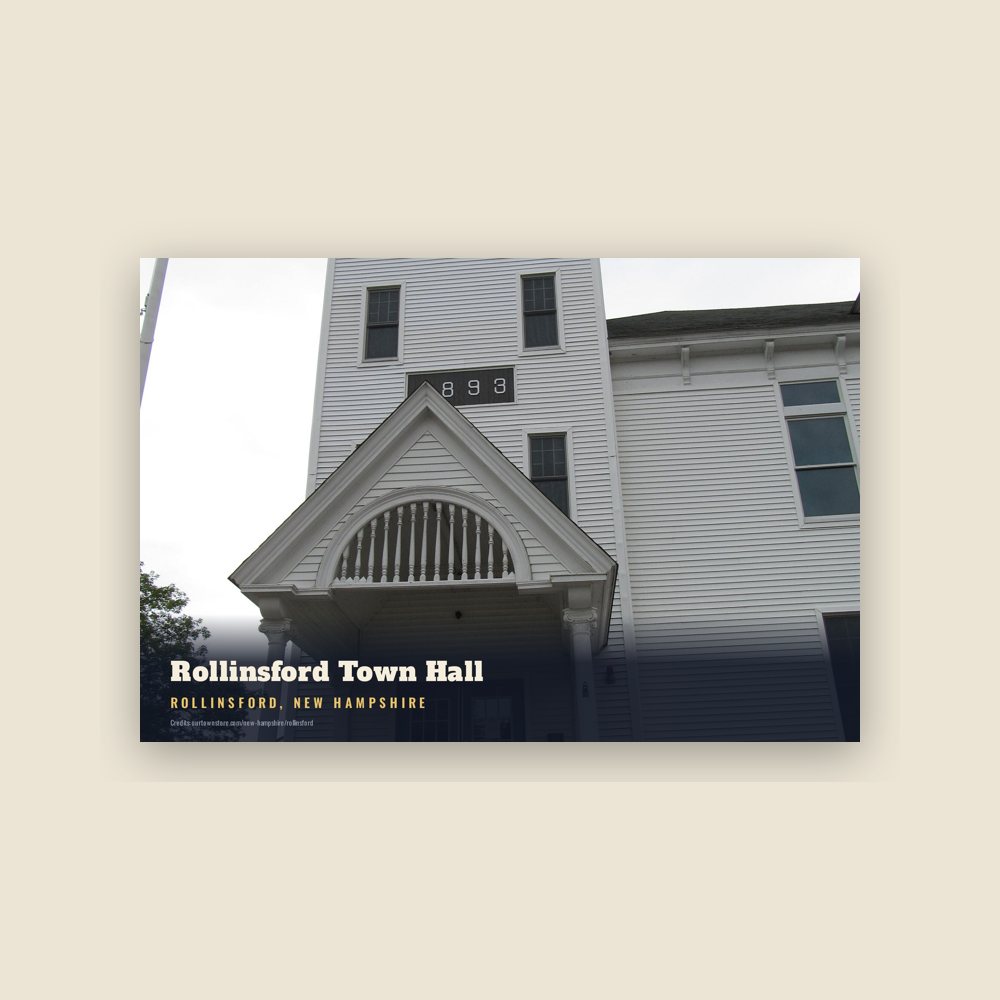
6″×4″ postcard, glossy front
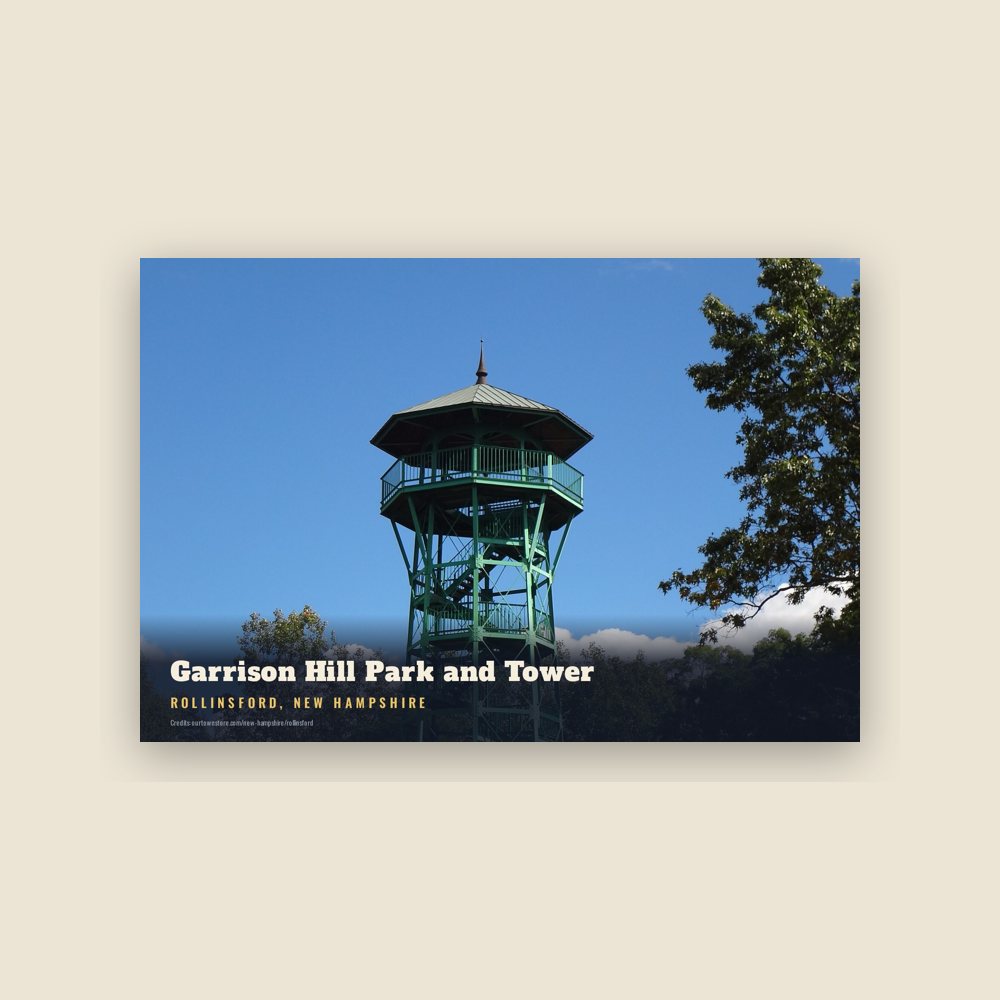
6″×4″ postcard, glossy front
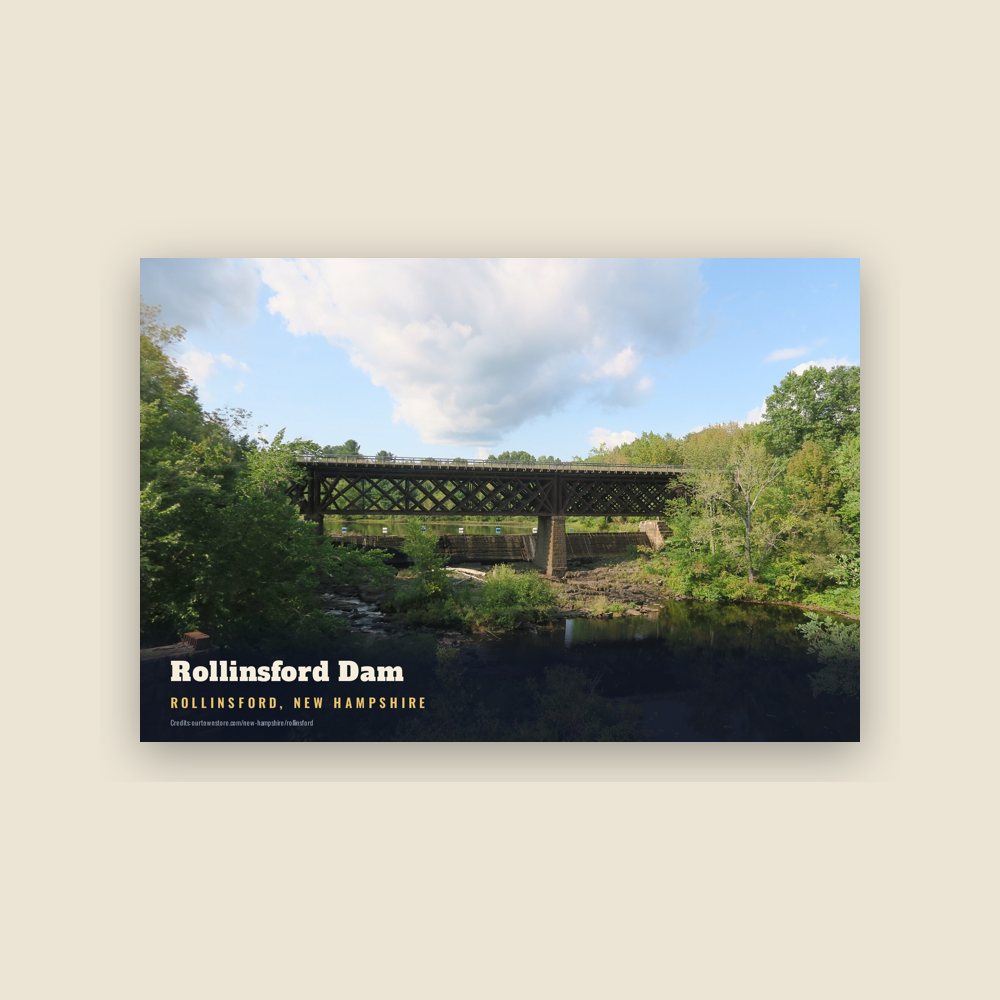
6″×4″ postcard, glossy front
Population 2010: 2,527 → 2020: 2,597
From Wikidata (CC0).
The area was once within the domain of the Newichawannock people, an Abenaki sub-tribe which took its name from the Newichawannock River, meaning "river with many falls", now the Salmon Falls River. Their village was located at what later was known as Salmon Falls Village and is now Rollinsford. They fished at the falls, stretching nets across the river to catch migrating salmon and other species swimming upriver to spawn. But war and disease, probably smallpox brought from abroad, decimated the native population.
Subsequently, settled by about 1630, the land was part of Dover, one of the original townships of New Hampshire. The area was first called "Sligo", likely after County Sligo in Ireland, and the name survives on a town road. An historical marker on Sligo Road reads, "Near this place lived David Hamilton of Westburn born in the parish of Cambuslang, Scotland in October 1620; captured by Oliver Cromwell at the Battle of Worcester, England, September 3, 1651; Brought to America as a prisoner in chains on the "John and Sarah" in the same year; settled near here and married Annah Jaxson of Lanark, Scotland. Killed by Indians on September 28, 1691." His death occurred during King William's War in which New France encouraged its Indian allies to attack English settlements.
In 1729 the area was established as a parish called "Summersworth", meaning summer town, because the ministers preached here during the summer. In 1754, it was set off and incorporated as a town by colonial governor Benning Wentworth, although thereafter spelled "Somersworth" due to a clerical error. Since the first settlers' arrival, small communities had developed near various sawmills and gristmills along the Salmon Falls River, but the center of "Summersworth" was located at Rollinsford Junction.
Beginning in the early 1820s, water powered textile mills were established at the larger falls, and the town was divided between them—Great Falls became Somersworth, and Salmon Falls became Rollinsford, incorporated in 1849. It was named in honor of the Rollins family, whose ancestor Judge Ichabod Rollins had settled there many generations before and had become the first probate judge for the state.
The village of Salmon Falls was founded in 1823 by a group of local investors led by James Rundlet of Portsmouth, who on June 17, 1822, incorporated the Salmon Falls Manufacturing Company to manufacture woolen cloth using the power of the Salmon Falls River, a Piscataqua River tributary. After an 1834 fire destroyed the first factory built there, the company's Portsmouth-based investors built a new factory for cotton manufacturing, eventually selling the corporation to their Boston-based cotton broker Mason and Lawrence in the 1840s. As part of their expansion, the town was laid out in an easy-to-navigate grid plan, with the three-story boarding houses and an adjoining mill building made of brick to withstand fires. Two-story brick double houses were also built to accommodate the families of the overseers. The town thrived into the first decades of the 20th century and eventually became home to many immigrant families whose forebears came to work in the mills. Although the town planners originally forbade the mill workers to drink alcohol and required that they attend church on Sunday, during Prohibition, its proximity to temperate Maine and the Boston & Maine Railroad line led to the establishment of numerous bars and a relatively short-lived but racy reputation for free-flowing liquor.
The New England cotton industry would fade in the early to mid-20th century, but would leave the brick town intact. Today, the mills have been reborn as low-cost studio space for more than 100 artists and artisans who use the converted studios for everything from painting, sculpting and crafting handmade furniture to teaching and practicing yoga and dance.
Adapted (trimmed) from the Wikipedia article Rollinsford, New Hampshire, revision 1379430642 by its contributors, licensed CC BY-SA 4.0.
We share a part of every Rollinsford sale with local partners, and we'd love to print from your collection. Old photographs, maps and postcards make the best keepsakes.
Partner with us