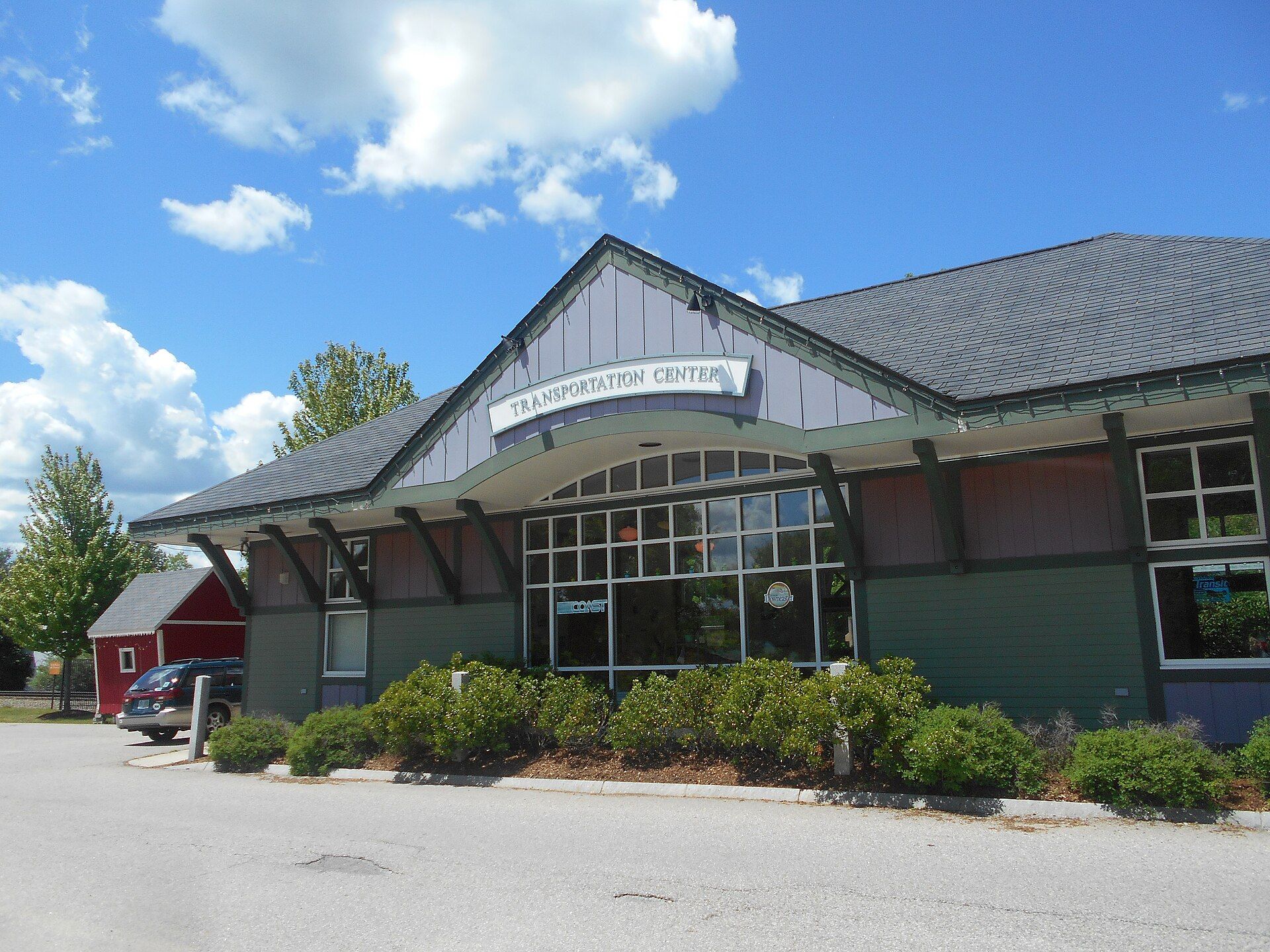
In 1623, brothers William and Edward Hilton settled at Pomeroy Cove on Dover Point, near the confluence of the Bellamy and Piscataqua rivers. Landmarks include Dover Transportation Center, Woodman Institute Museum and St. Thomas Episcopal Church. Dover is the birthplace of Conor Casey, soccer player and manager.
Every piece is drawn from Dover's own map data and historic archives, then printed and shipped from the USA when you order. No two towns look alike.
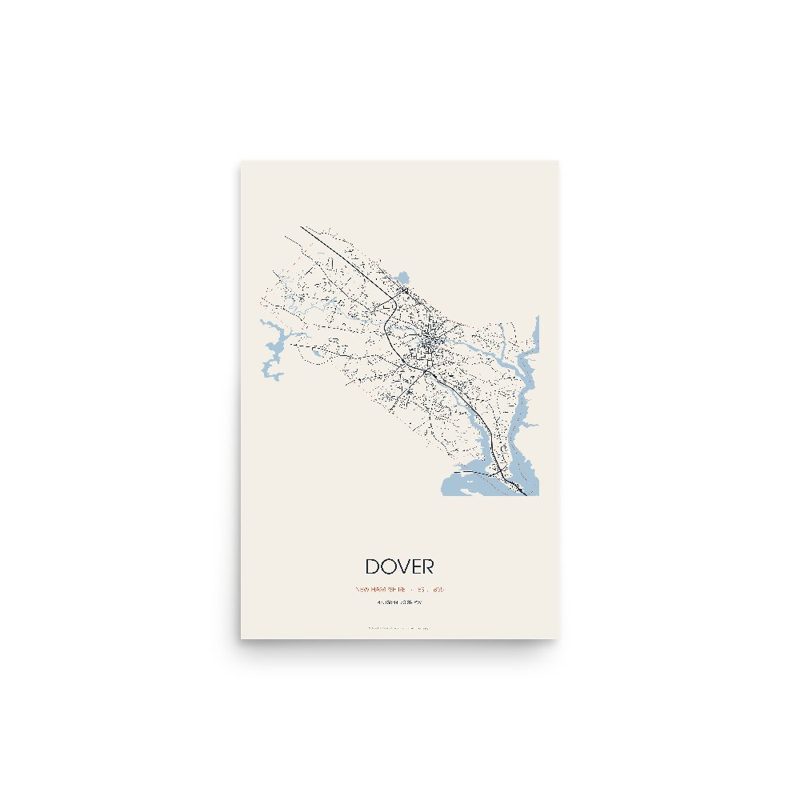
Every road in town, on archival matte paper
The same map, in navy and silver
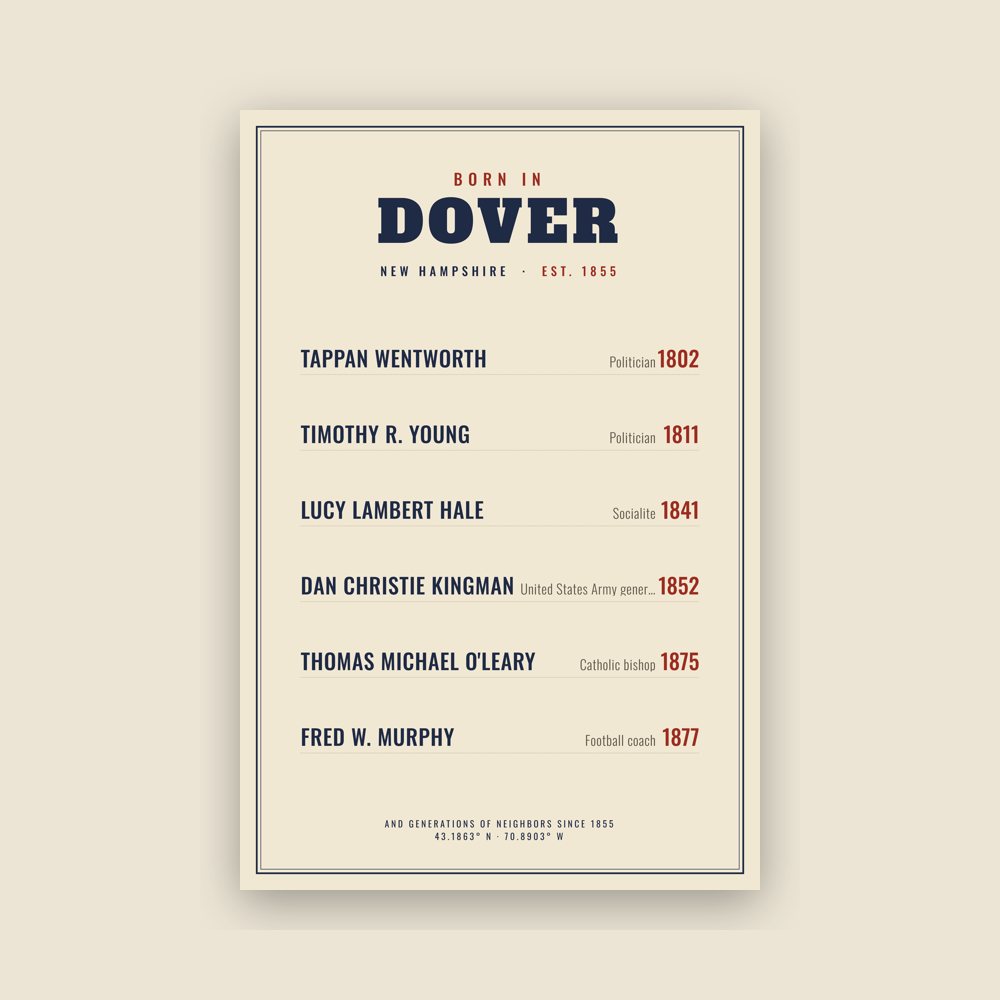
Famous natives, by birth year
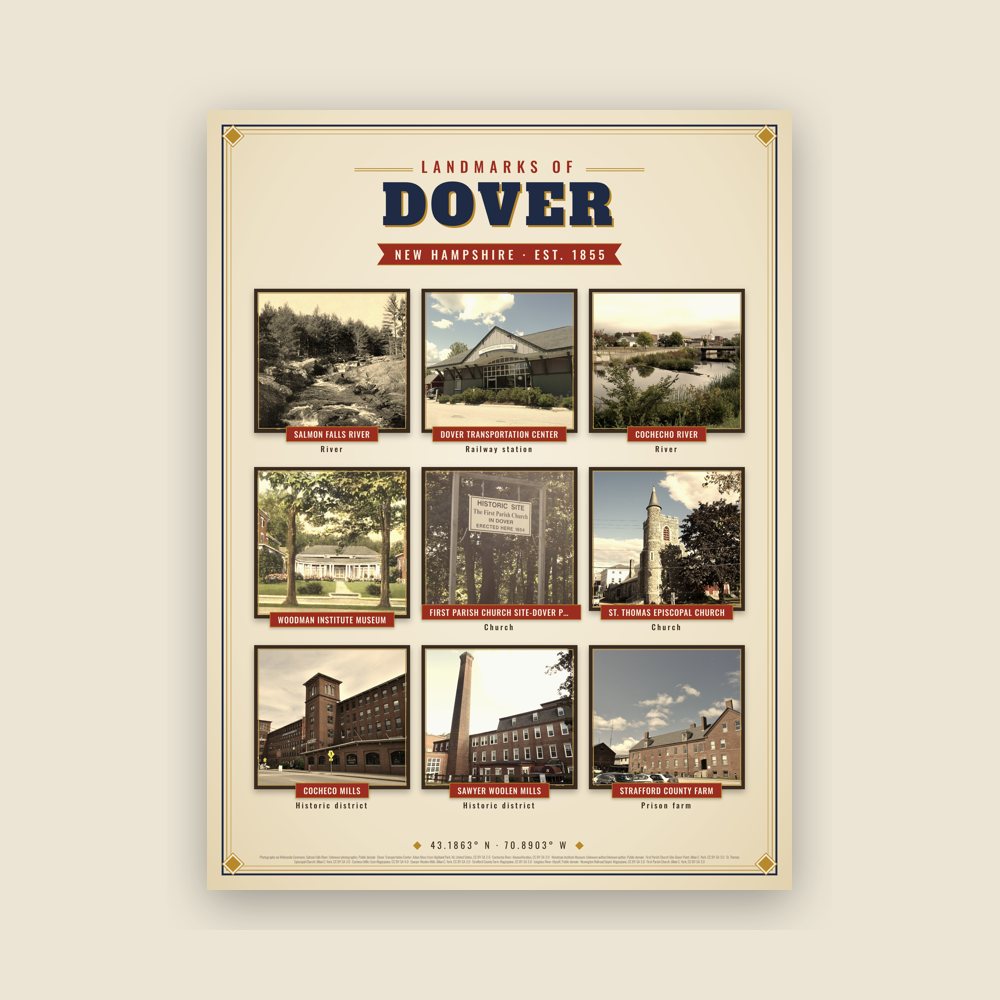
Nine local landmarks, archival matte
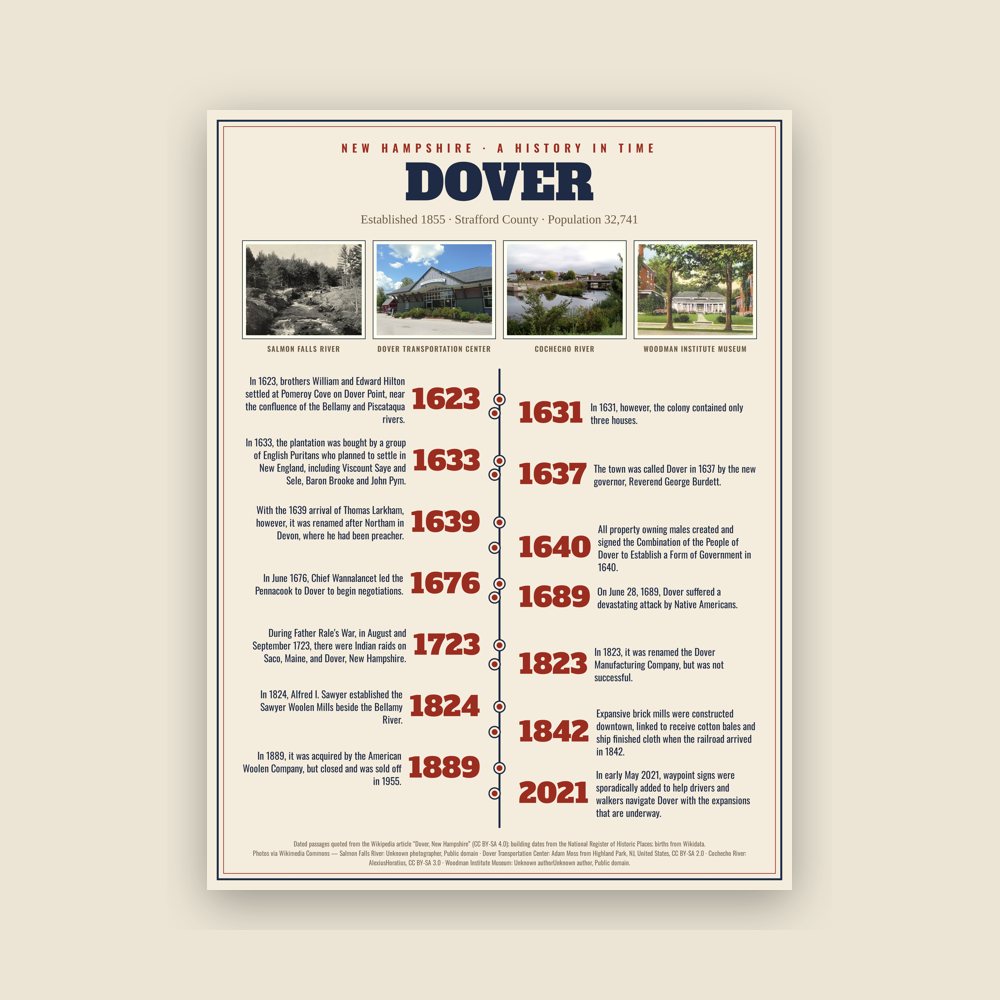
The town's story in dates, from its own records, for home or classroom
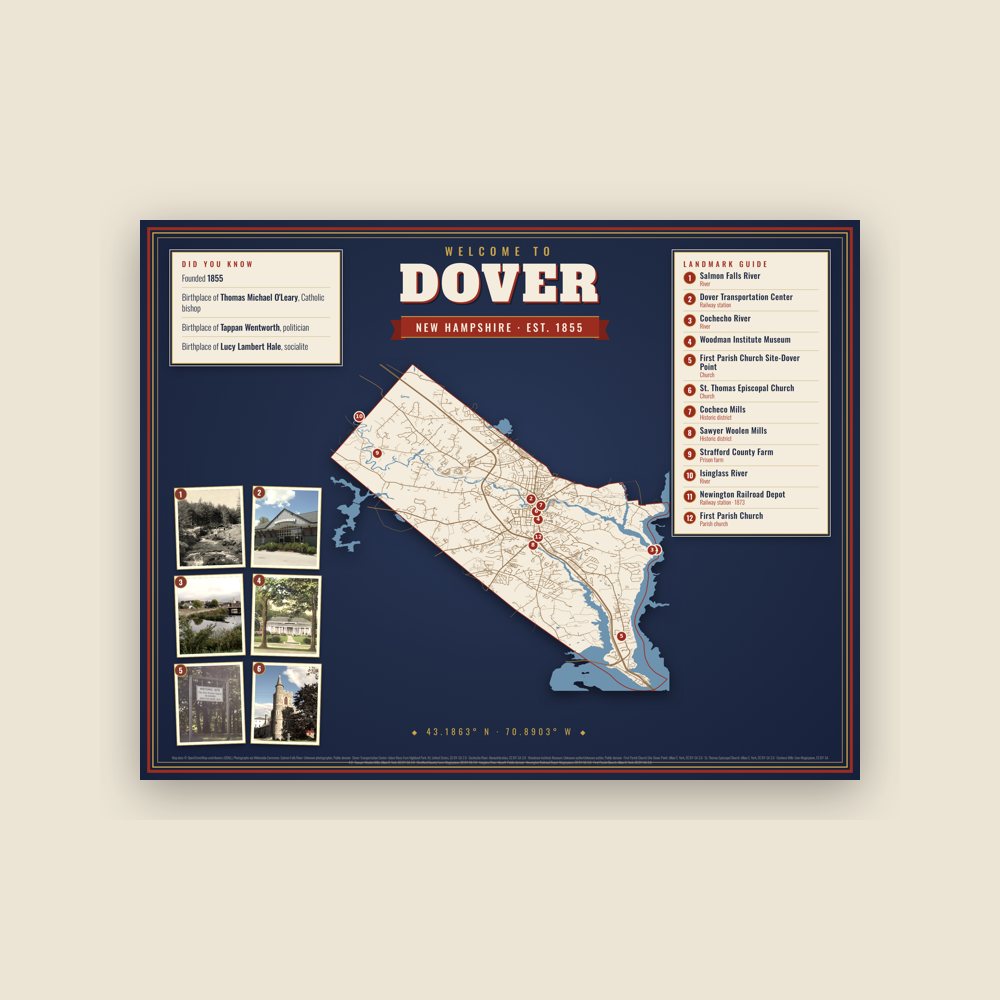
Map of local landmarks, washable fabric
Heavy-blend fleece, street map printed on the back
Soft Bella+Canvas jersey
Glossy ceramic, dishwasher safe
Ceramic keepsake, gold ribbon
Weatherproof, for the front walk
24″×16″, printed coir-look fibers, rubber back
12″×12″ printed wood, ready to hang
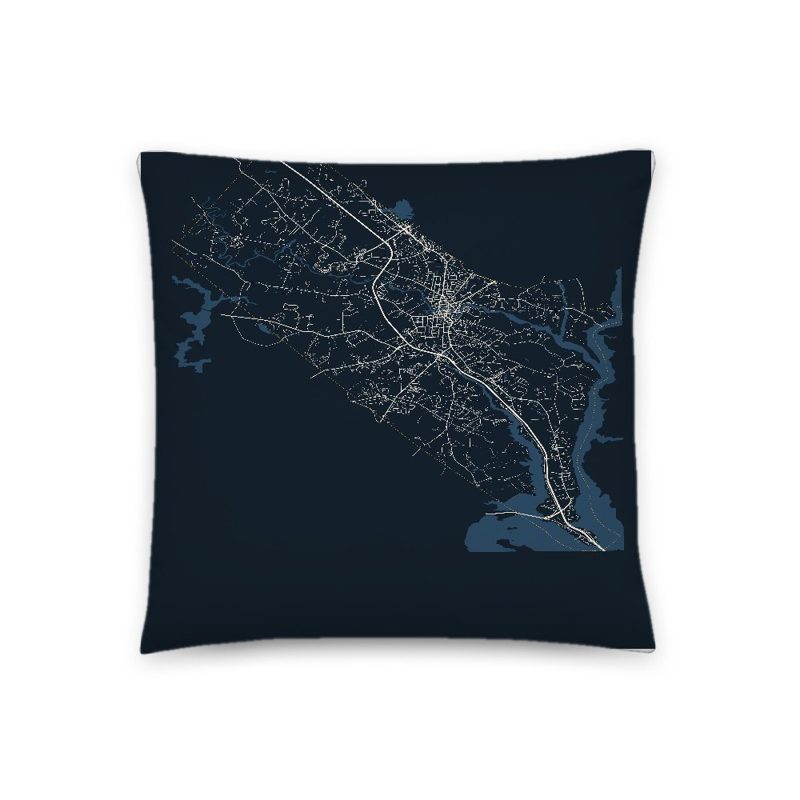
Soft-touch, zip cover
Sturdy all-over-print tote
Glossy top, cork back
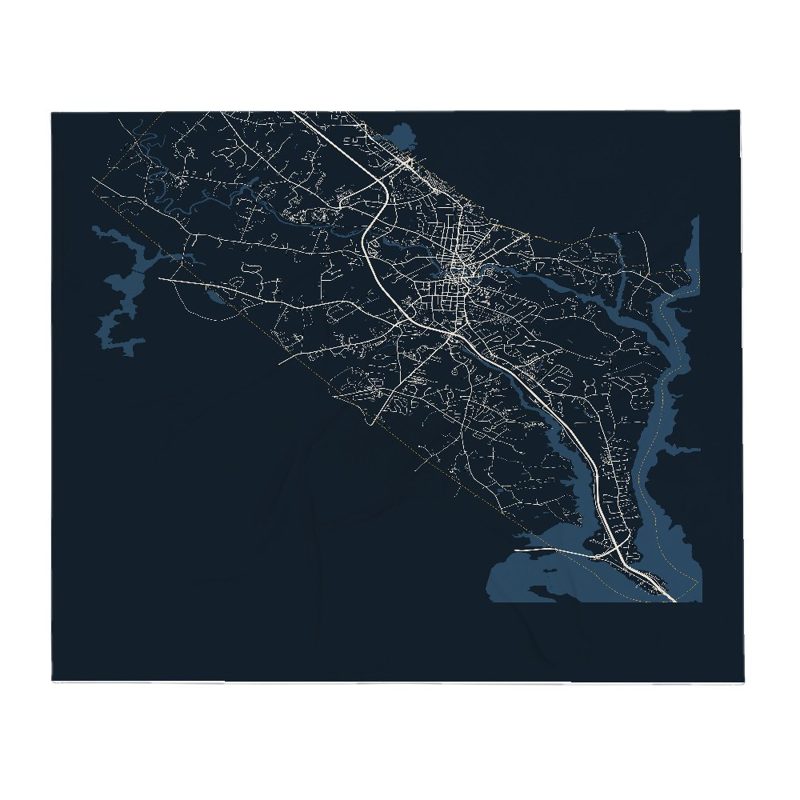
Soft fleece, 50″×60″
20 oz, double-wall stainless
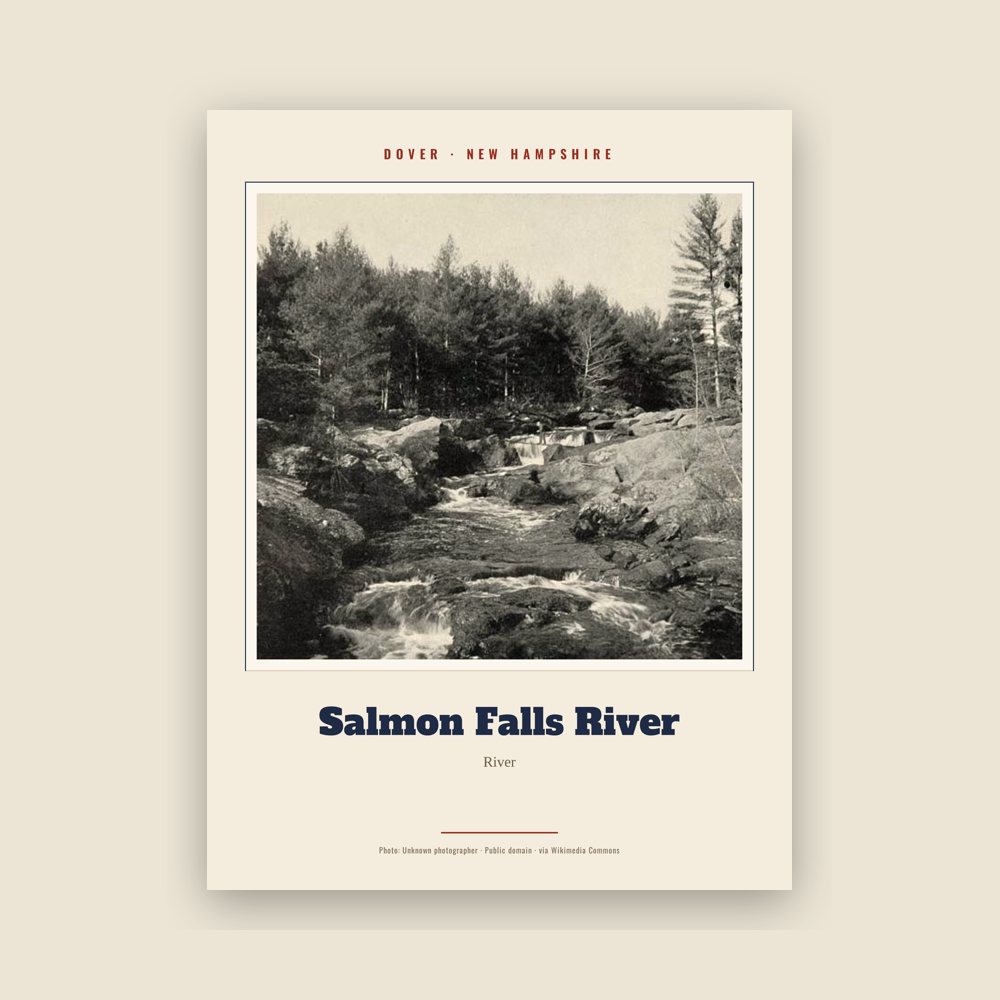
Archival matte print of a local landmark, credited to its photographer
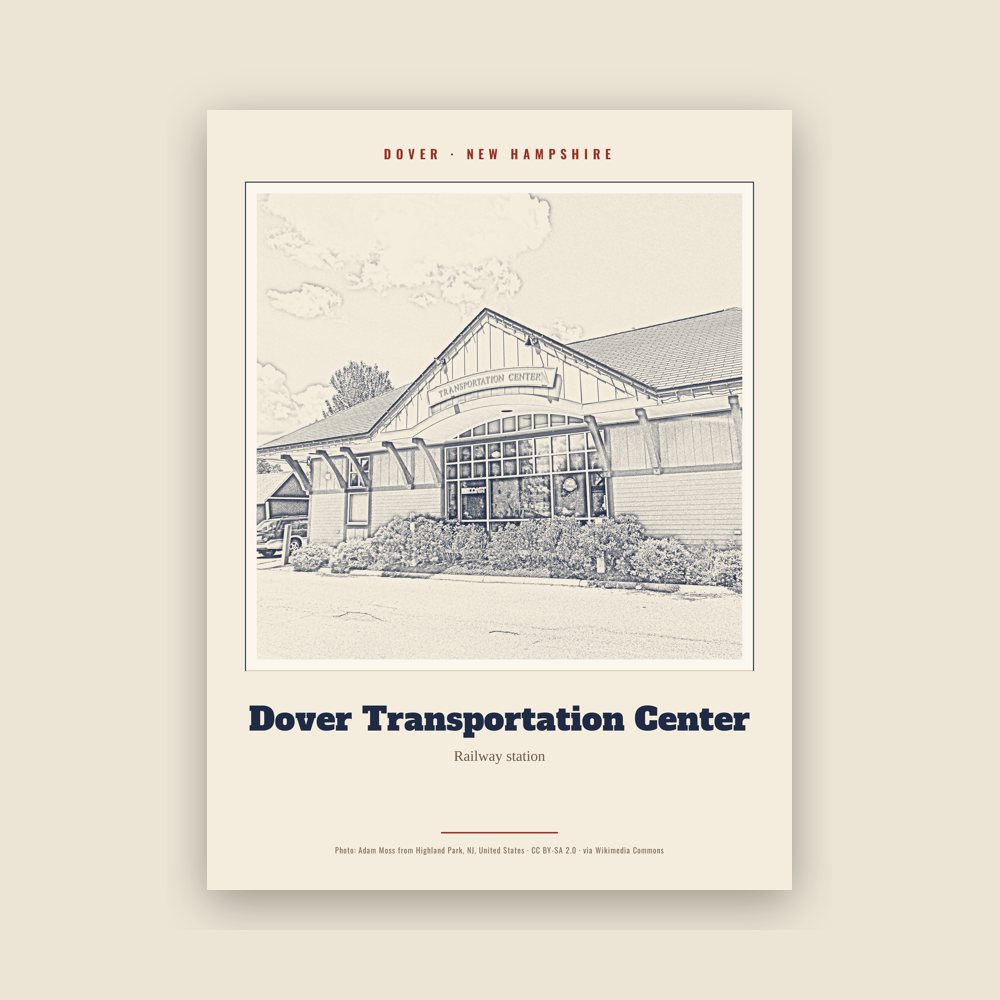
Archival matte print of a local landmark, credited to its photographer
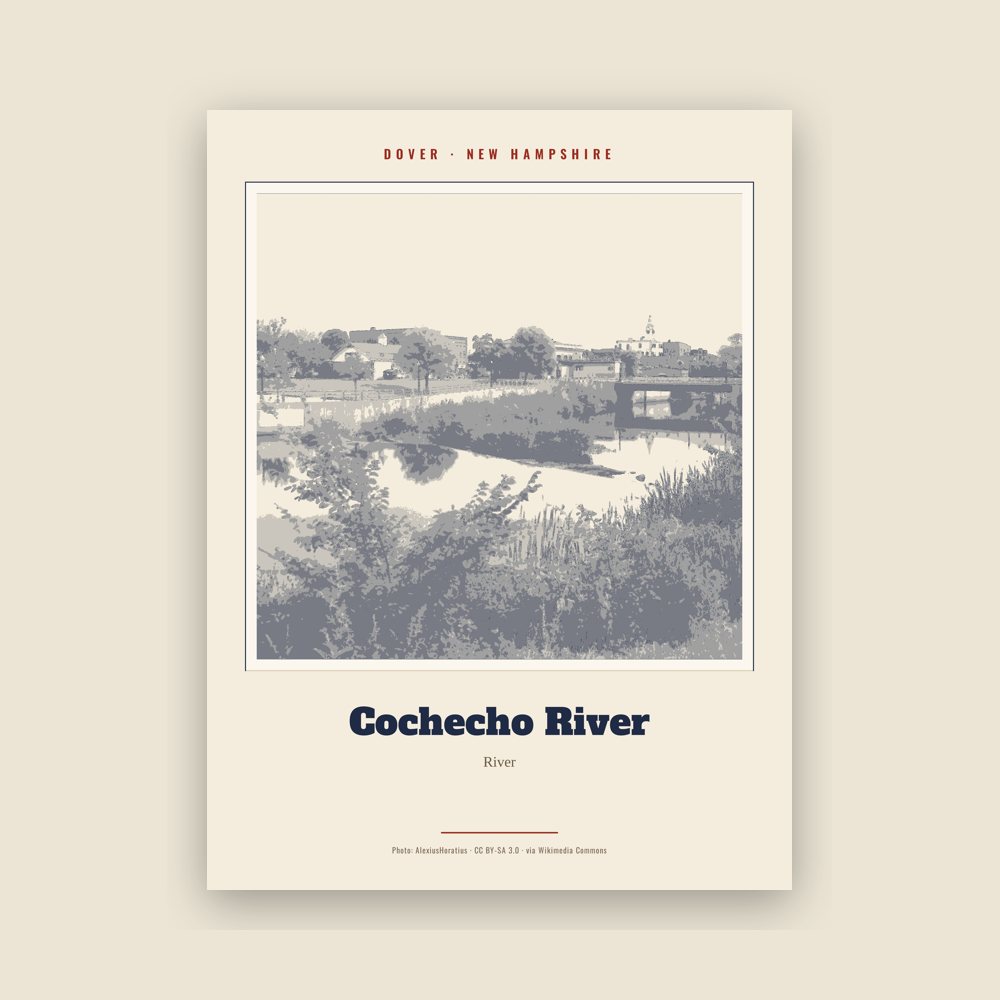
Archival matte print of a local landmark, credited to its photographer
Archival matte print of a local landmark, credited to its photographer
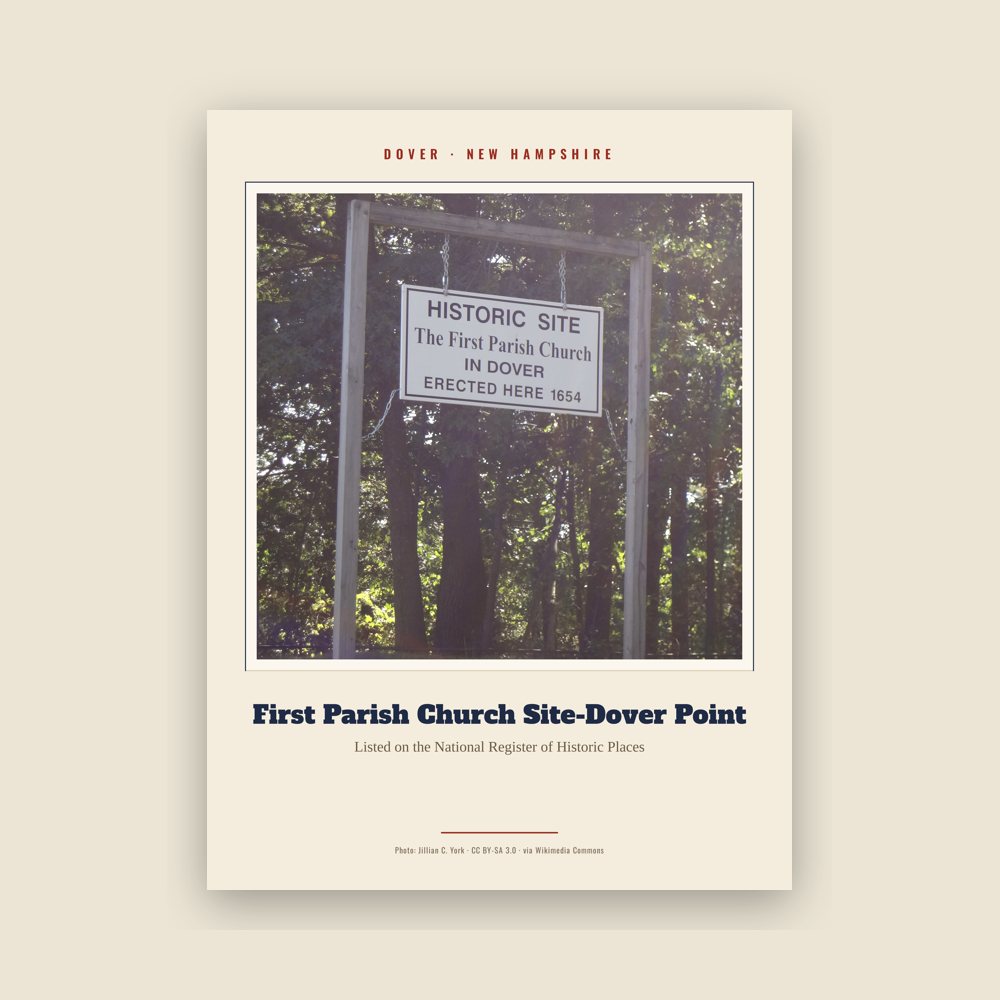
Archival matte print of a local landmark, credited to its photographer
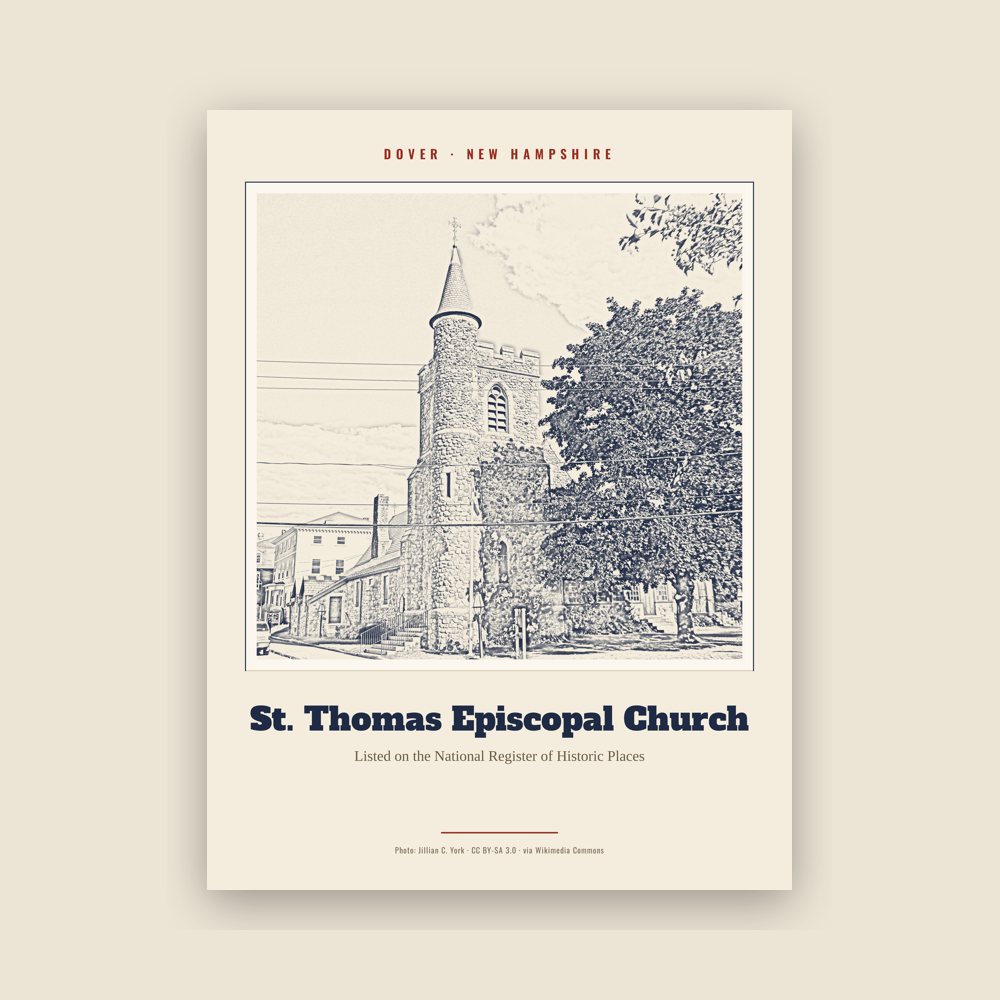
Archival matte print of a local landmark, credited to its photographer
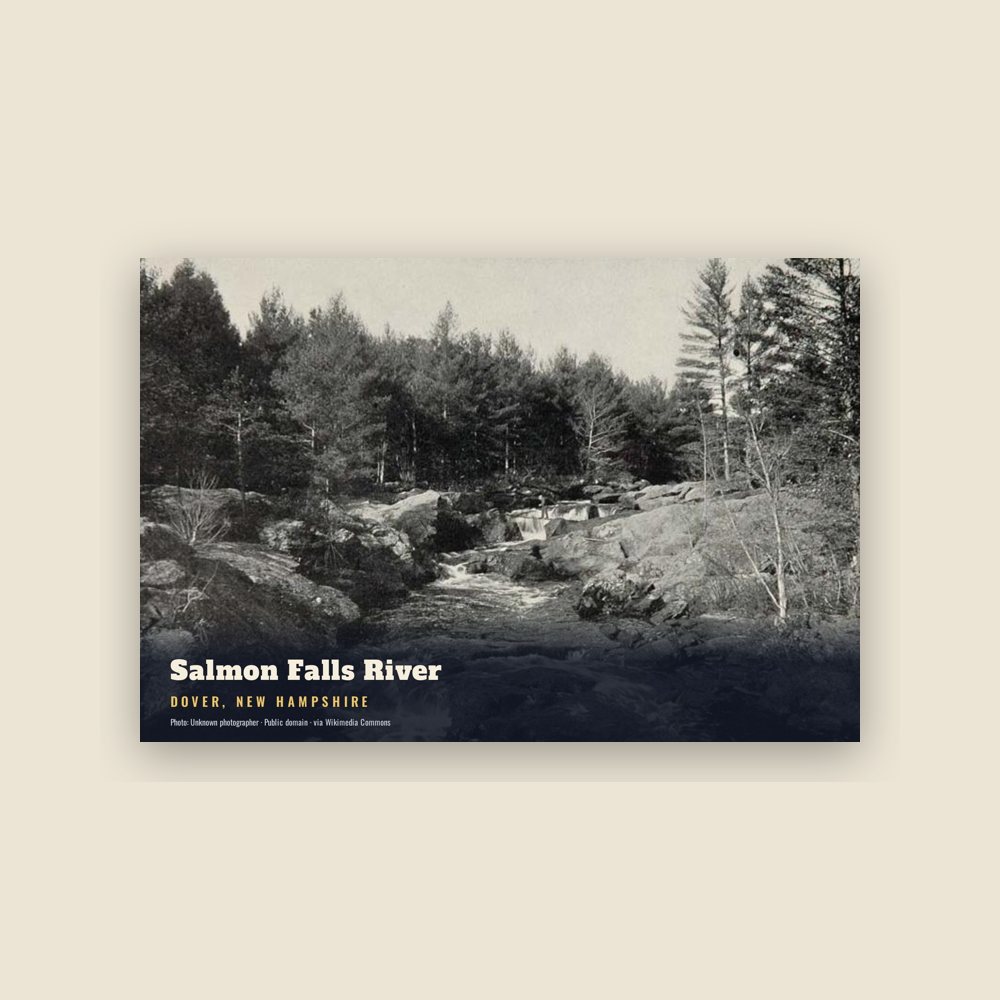
6″×4″ postcard, glossy front
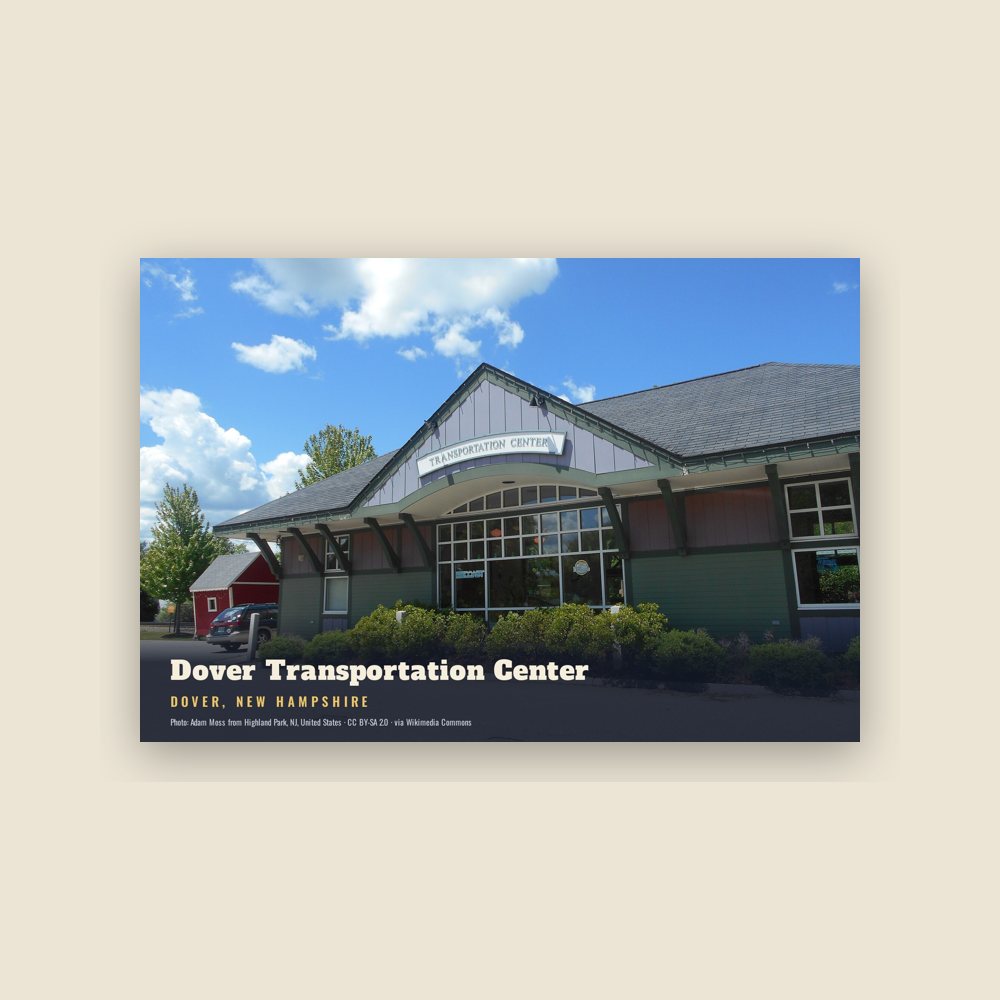
6″×4″ postcard, glossy front
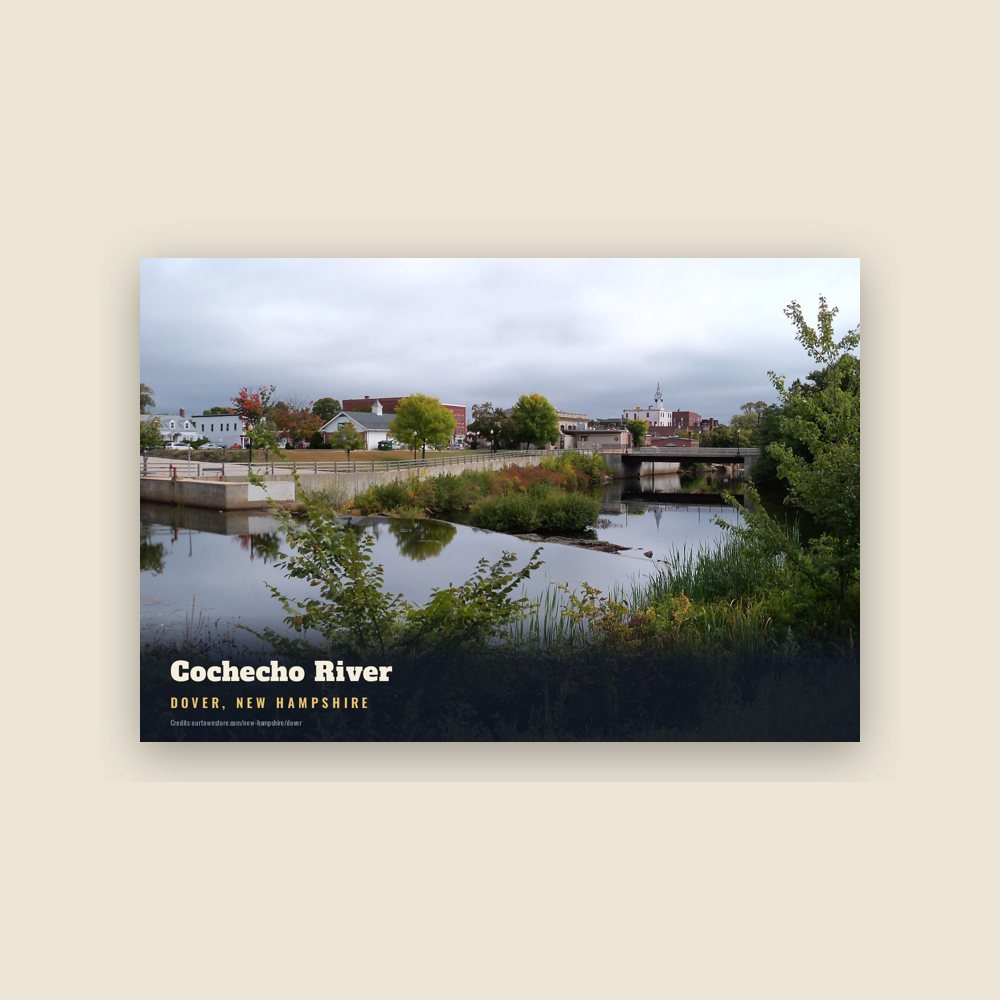
6″×4″ postcard, glossy front
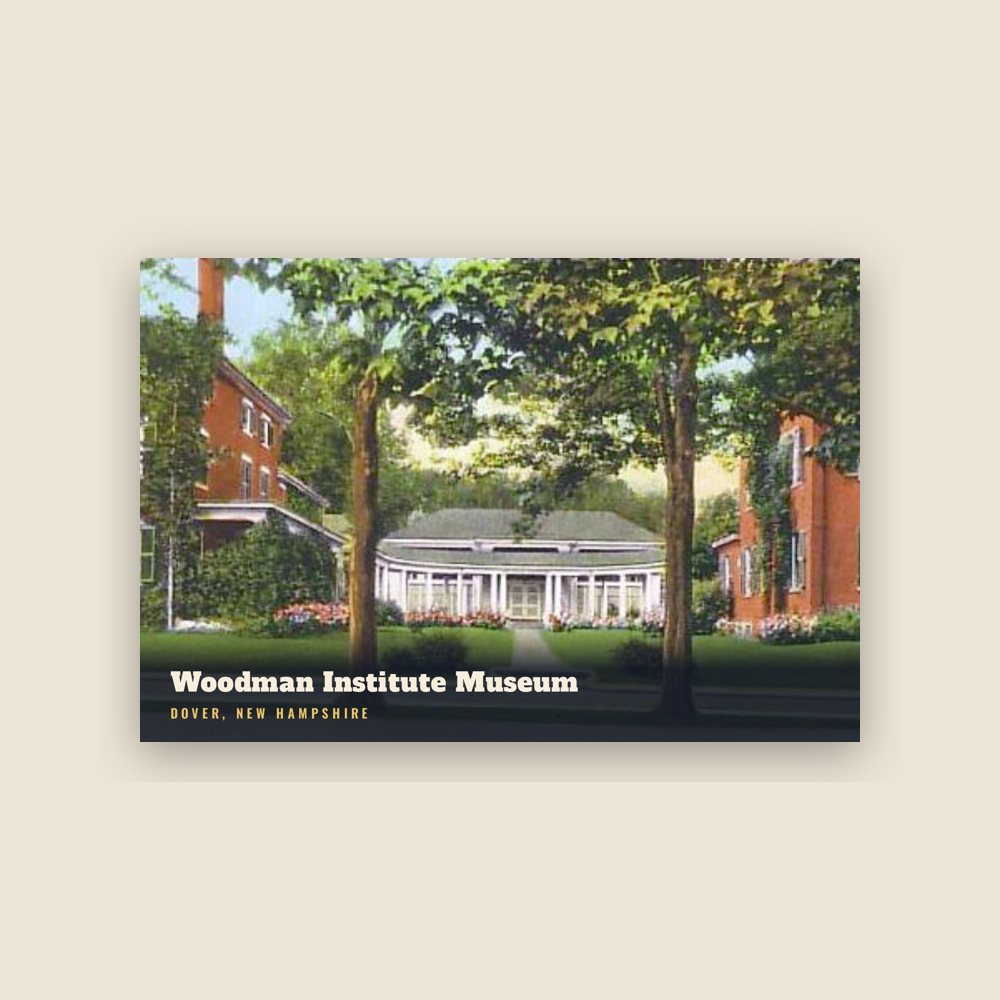
6″×4″ postcard, glossy front
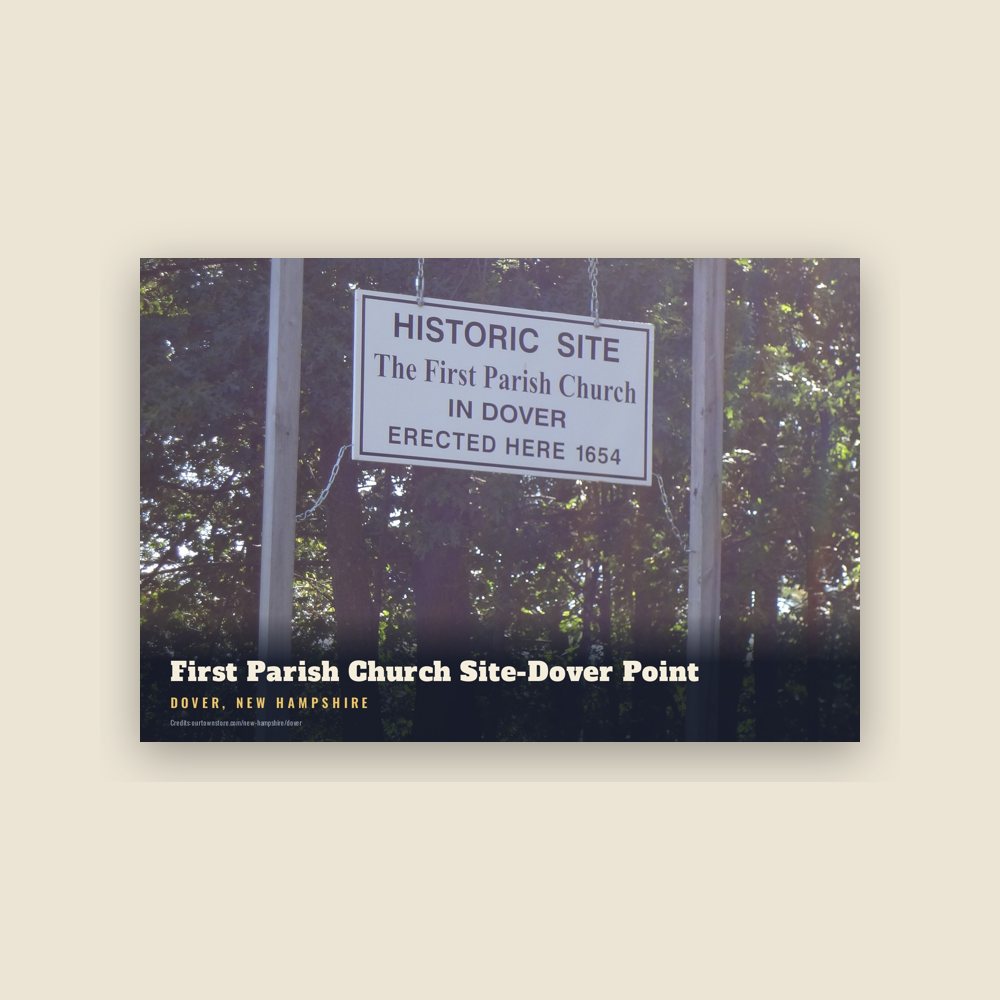
6″×4″ postcard, glossy front
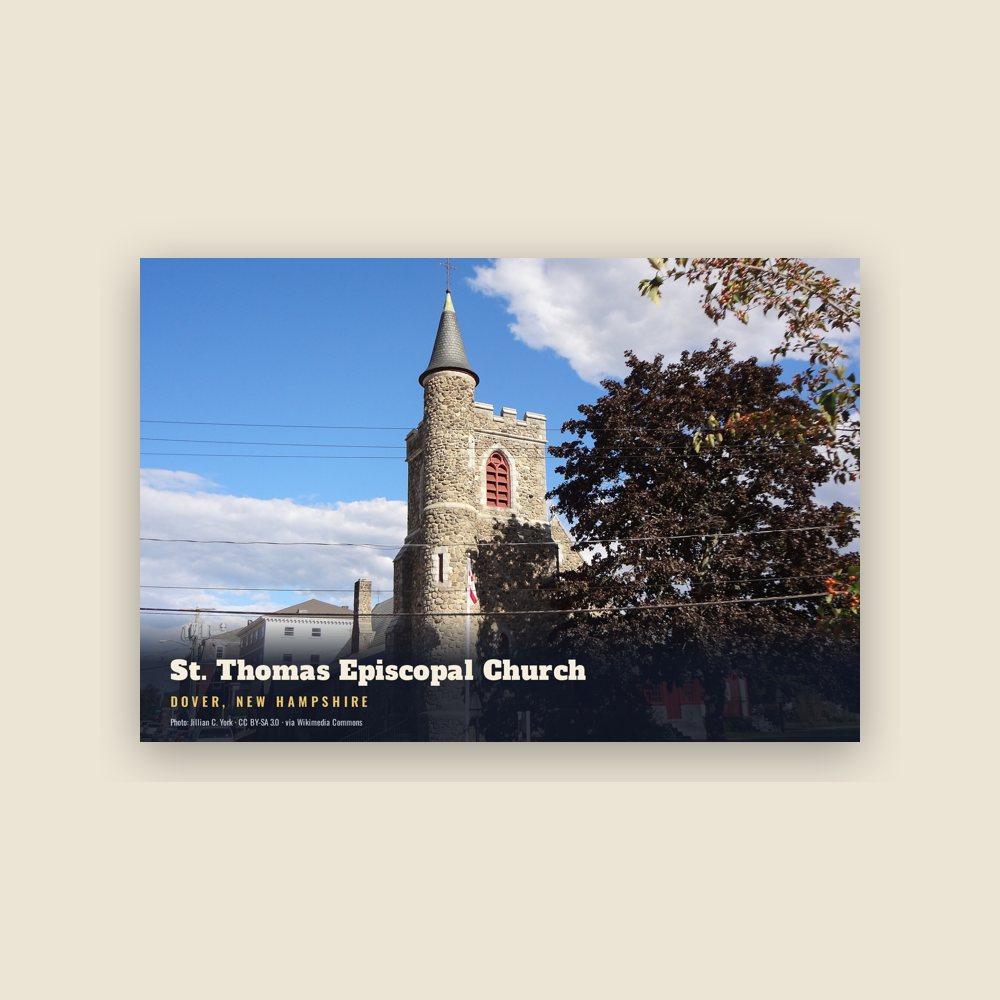
6″×4″ postcard, glossy front
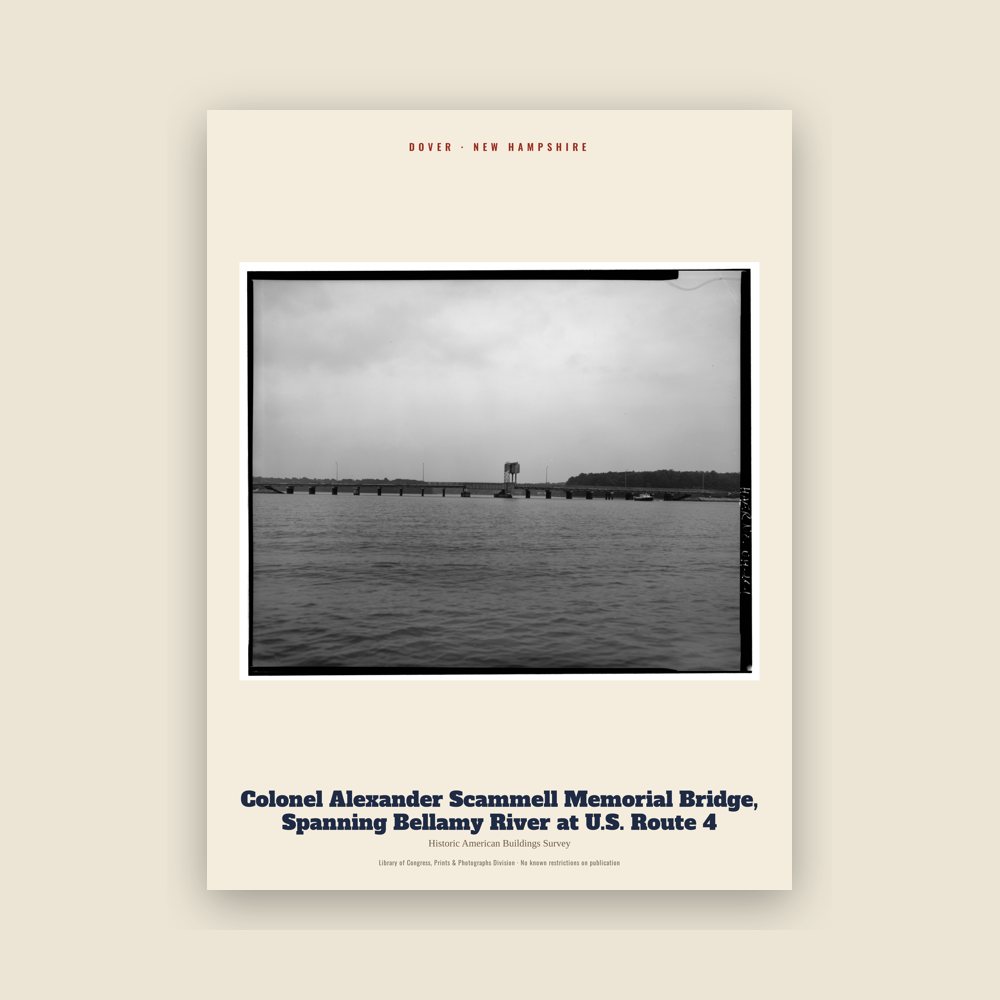
From the Library of Congress collections: a historic survey drawing or photograph of the town
Population 2010: 29,987 → 2014: 30,665 → 2020: 32,741
From Wikidata (CC0).
In 1623, brothers William and Edward Hilton settled at Pomeroy Cove on Dover Point, near the confluence of the Bellamy and Piscataqua rivers. This first settlement makes Dover the oldest permanent settlement in New Hampshire, and seventh in the United States.
The Hiltons were fishmongers sent from London by the Council for New England's Laconia Company to establish a colony and fishery on the Piscataqua. In 1631, however, the colony contained only three houses. William Hilton built a salt works on the property (salt-making was the principal industry in his hometown of Northwich, England). He also served as Deputy to the General Court (the colonial legislature). The Hiltons' name survives at Hilton Park on Dover Point (originally known as Hilton Point).
In 1633, the plantation was bought by a group of English Puritans who planned to settle in New England, including Viscount Saye and Sele, Baron Brooke and John Pym. They promoted colonization in America, and so that year Hilton's Point received numerous immigrants, many from Bristol. They renamed the settlement Bristol. Atop the nearby hill, they built a meetinghouse surrounded by an entrenchment, with a jail nearby.
The town was called Dover in 1637 by the new governor, Reverend George Burdett. It was possibly named after Robert Dover, an English lawyer who resisted Puritanism. With the 1639 arrival of Thomas Larkham, however, it was renamed after Northam in Devon, where he had been preacher. But Lord Saye and Sele's group lost interest in their settlements, both here and at Saybrook, Connecticut, when their plan to establish a hereditary aristocracy in the colonies met disfavor in New England. The abandonment of the colony by its benefactors led the settlers to form their own government. All property owning males created and signed the Combination of the People of Dover to Establish a Form of Government in 1640. One of the first actions was a vote to join Massachusetts. The Puritan faction won and Dover was annexed to the Massachusetts Bay Colony and formed Norfolk County.
Because it was an early settlement in Abenaki lands, settlers built fortified log houses called garrisons, inspiring Dover's nickname "The Garrison City." The population and business center shifted from Dover Point to Cochecho Falls on the Cochecho River, where its drop of 34 feet (10 m) provided water power for industry (Cochecho means "the rapid foaming water" in the Abenaki language). The water powered sawmills for Dover's timber industry. Settlers referred to what is now downtown Dover as Cochecho Village.
While King Philip's War was raging in the rest of New England (1675-1676), the settlers of Dover, led by Major Richard Waldron, invited the Pennacook Indians to Dover to sign a non-aggression pact. In June 1676, Chief Wannalancet led the Pennacook to Dover to begin negotiations. After a month of negotiations, Chief Wannalancet and Major Waldron signed the Treaty of Cocheco on July 3, 1676.
Likely due to the peaceful relations, the Dover area attracted Native American refugees who were affiliated with King Philip and his uprising.
On June 28, 1689, Dover suffered a devastating attack by Native Americans. It was revenge for an incident on September 7, 1676, when 400 Native Americans were tricked by Major Richard Waldron into performing a "mock battle" near Cochecho Falls. After discharging their weapons, the Native American warriors were captured. Half were sent to Massachusetts for predations committed during King Philip's War, and seven or eight were hanged, and others were sold into slavery. Local Native Americans deemed innocent were released, but considered the deception a dishonorable breach of hospitality. Thirteen years passed. When colonists thought the episode forgotten, they struck. Fifty-two colonists, a quarter of the population, were either captured or slain. This was the first attack of the Mournful Decade or King William's War.
Incursions against the frontier town would continue for the next half-century. During Father Rale's War, in August and September 1723, there were Indian raids on Saco, Maine, and Dover, New Hampshire. The following year Dover was raided again and Elizabeth Hanson wrote her captivity narrative.
Located at the head of navigation, Cochecho Falls brought the Industrial Revolution to 19th-century Dover in a big way. But cotton textile manufacturing actually began about two miles upstream with the Dover Cotton Factory, which was incorporated in 1812, its mill built in 1815. The business would move to Cochecho Falls when it acquired water privileges occupied since the 17th century by sawmills and gristmills. In 1823, it was renamed the Dover Manufacturing Company, but was not successful. So in 1827 the Cocheco Manufacturing Company was founded (the misspelling a clerical error at incorporation), and the next year, the mill was the site of the first women's strike in the United States. "The Strike of the Mill Girls" took place on December 30, 1828, when about half of the 800 women employed at the mill walked out over lower wages and longer hours that the new owners had implemented. Expansive brick mills were constructed downtown, linked to receive cotton bales and ship finished cloth when the railroad arrived in 1842. Incorporated as a city in 1855, Dover for a time became a leading national producer of textiles, the mill complex dominating the riverfront and employing 2,000 workers.
The mills were purchased in 1909 by the Pacific Mills of Lawrence, Massachusetts, which closed the printery in 1913 but continued spinning and weaving. The printery buildings were demolished in 1913; their site is now Henry Law Park.
In 1922, it was affected by the 1922 New England Textile Strike, shutting down the mills in the city over an attempted wage cut and hours increase.
During the Great Depression, however, textile mills no longer dependent on New England water power began moving to southern states in search of cheaper operating conditions, or simply went out of business. Dover's millyard shut in 1937, then was bought at auction in 1941 by the city itself for $54,000. There were no other bids. Now called the Cocheco Falls Millworks, its tenants include technology and government services companies, plus a restaurant, brewery and bar.
Textile manufacturing in Dover wasn't limited to cotton. In 1824, Alfred I. Sawyer established the Sawyer Woolen Mills beside the Bellamy River. It would expand to include 15 major buildings over 8.5 acres (3.4 ha), and by 1883 was the largest woolen manufacturer in the state. In 1889, it was acquired by the American Woolen Company, but closed and was sold off in 1955. The buildings have been repurposed into housing.
With the closing of the mills, the downtown area of Dover sat vacant and lifeless for a long time. With the turn of the century, the city government began to revitalize the area. The Children's Museum of New Hampshire was brought into a disused mill building with a lease of $1 a year. Henry Law Park, a grassy waterfront stretch of land, was given a brand new playground. Small businesses moved into the mills, such as restaurants, toy stores, real estate offices, and barber shops. Old buildings have been refurbished or outright rebuilt to provide new housing. An $87.5 million high school was built to handle the influx of new residents retreating from the high housing prices in Portsmouth. Recently, a plan to develop the waterfront on the other side of the river from the traditional downtown area was approved for $6 million. In early May 2021, waypoint signs were sporadically added to help drivers and walkers navigate Dover with the expansions that are underway.
Adapted (trimmed) from the Wikipedia article Dover, New Hampshire, revision 1373101383 by its contributors, licensed CC BY-SA 4.0.
We share a part of every Dover sale with local partners, and we'd love to print from your collection. Old photographs, maps and postcards make the best keepsakes.
Partner with us