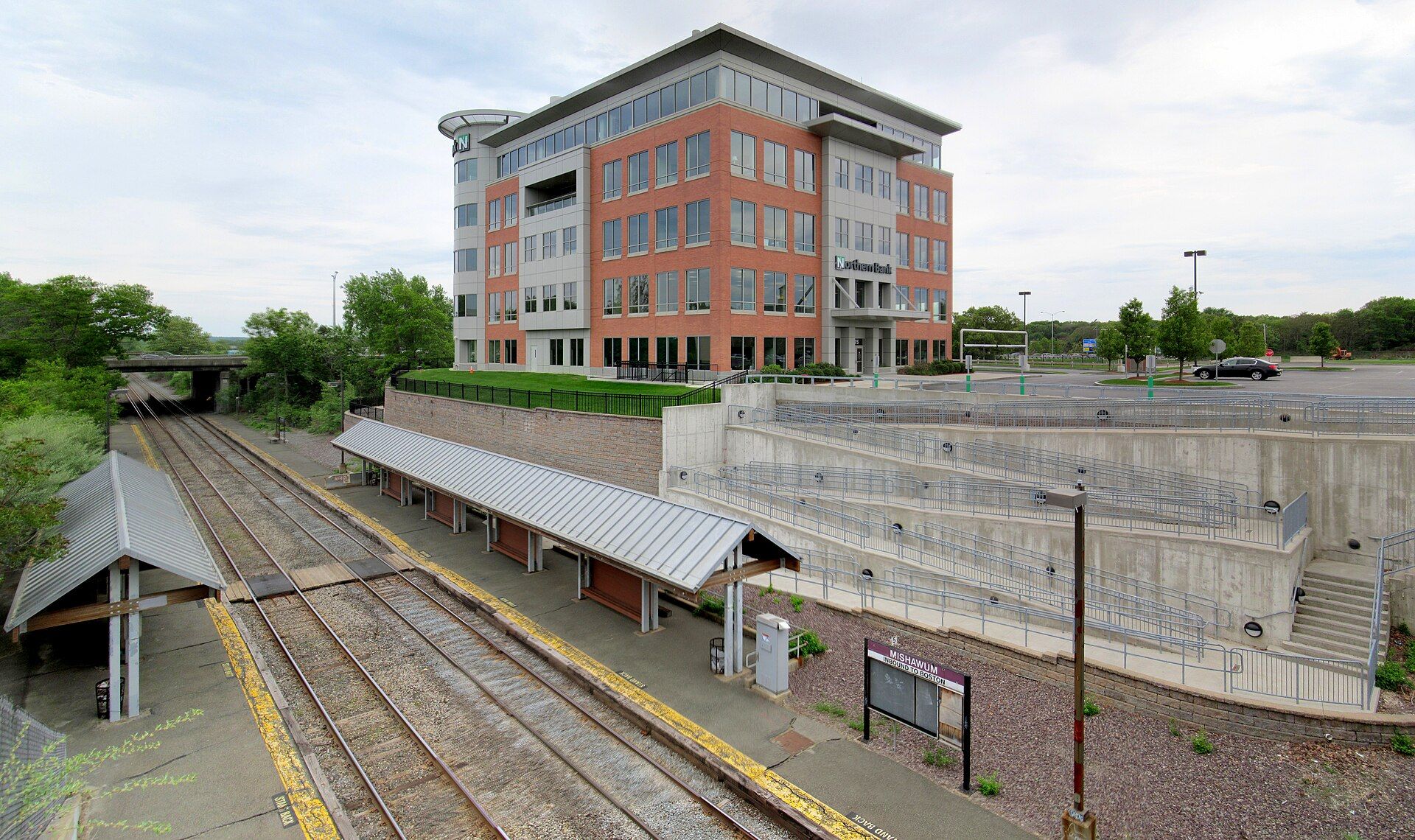
Woburn is located 9 miles north of Boston. Landmarks include Anderson Regional Transportation Center, Winn Memorial Library and Mishawum station. Woburn is the birthplace of Benjamin Thompson, american-born British physicist and inventor.
Every piece is drawn from Woburn's own map data and historic archives, then printed and shipped from the USA when you order. No two towns look alike.
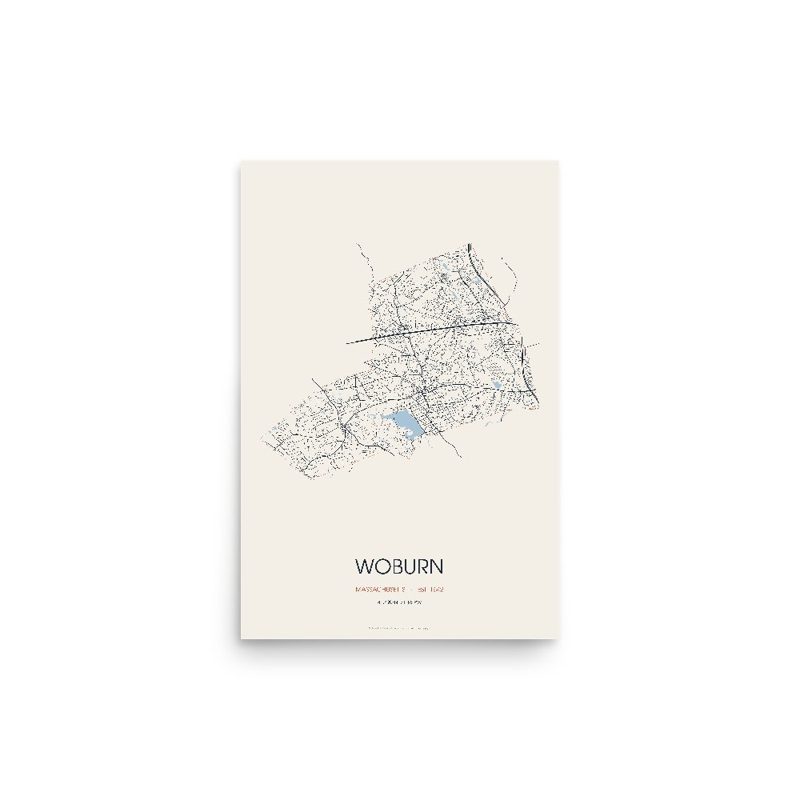
Every road in town, on archival matte paper
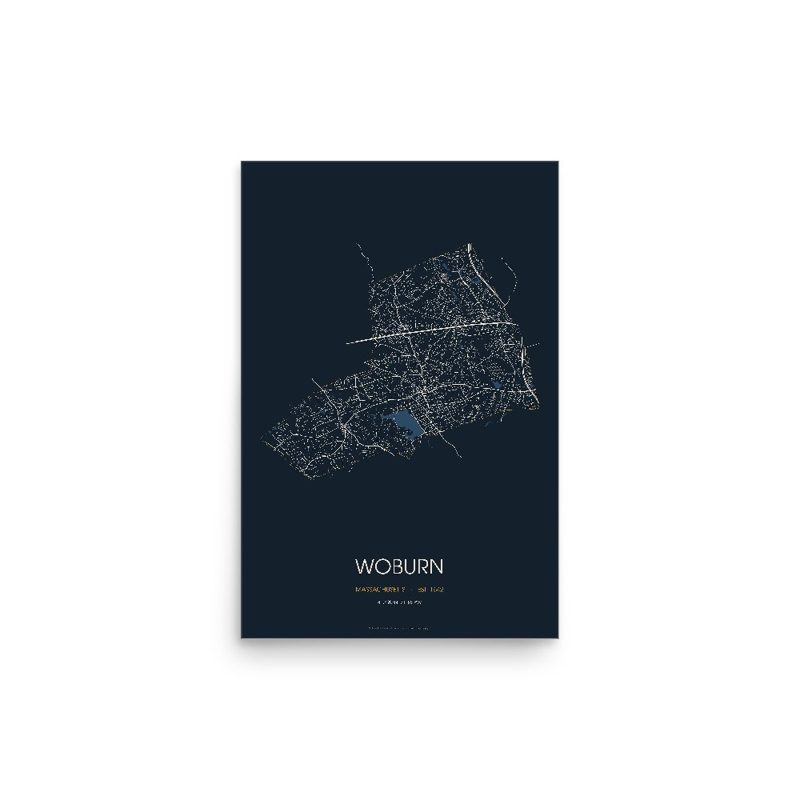
The same map, in navy and silver
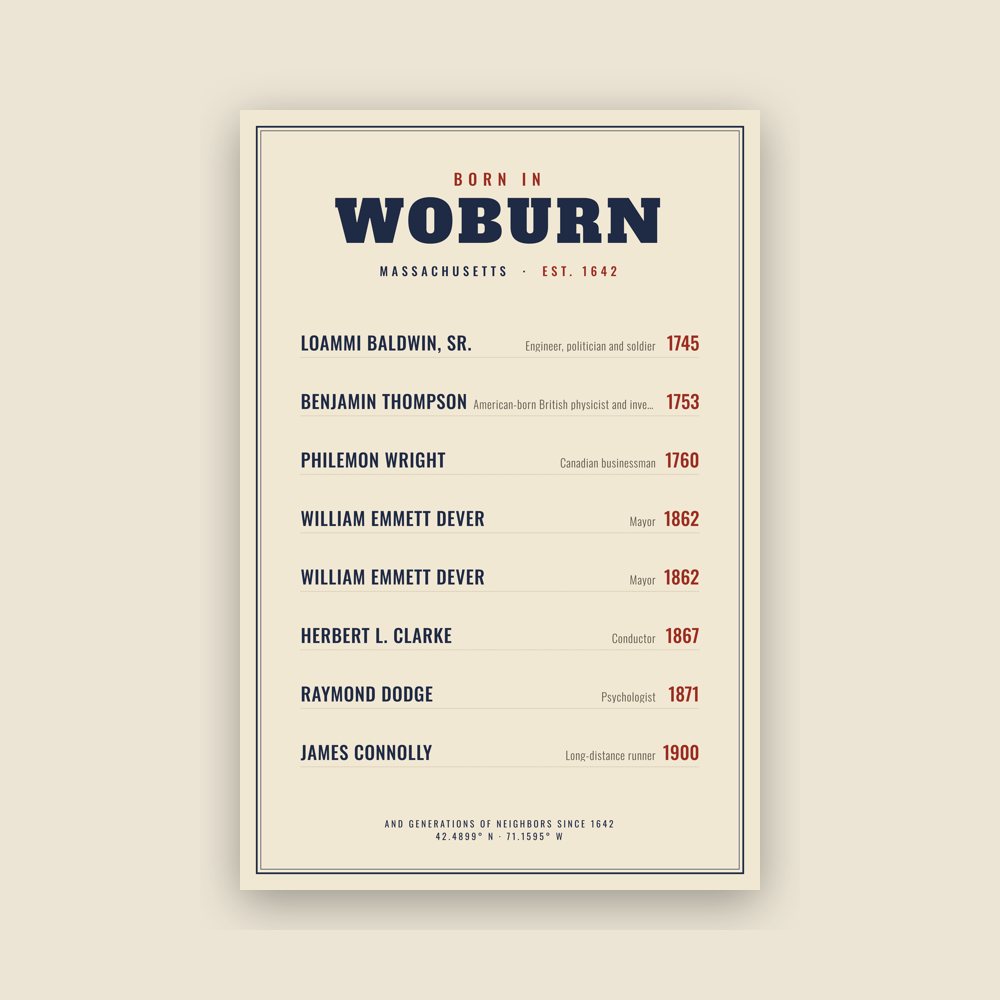
Famous natives, by birth year
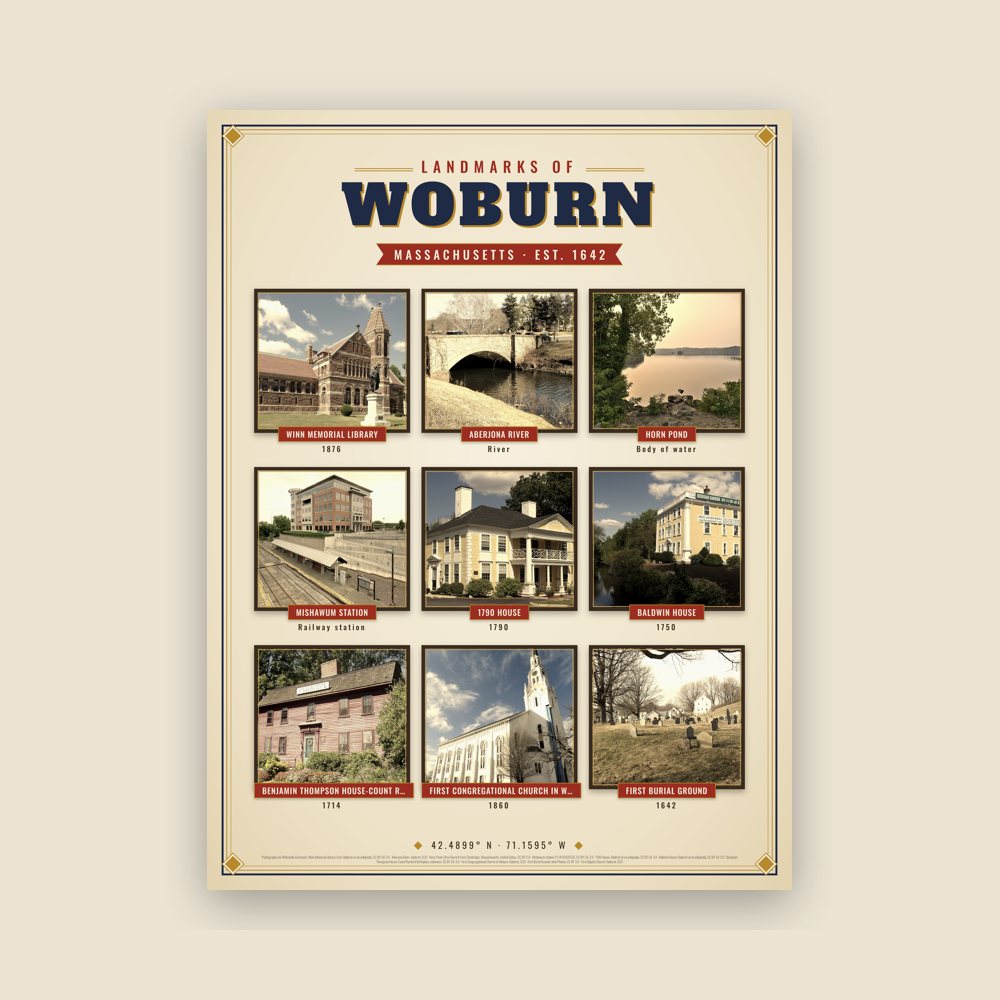
Nine local landmarks, archival matte
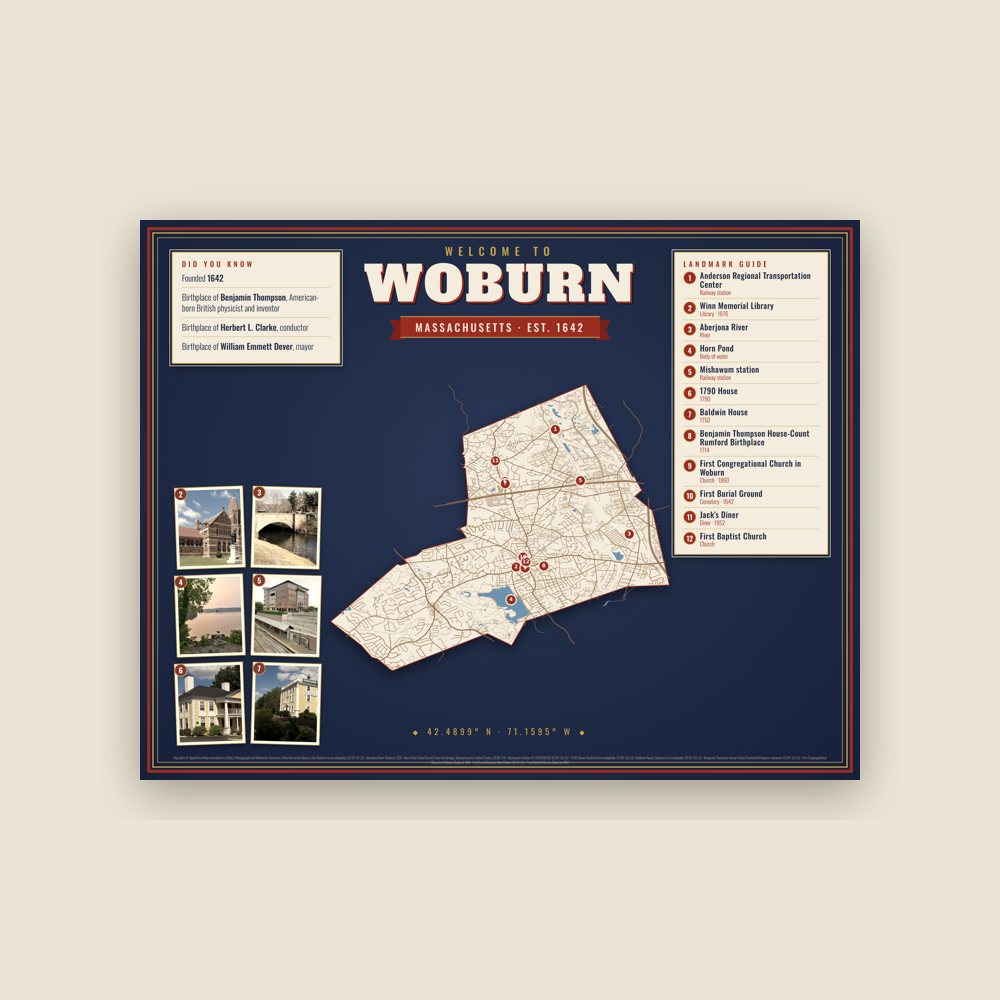
Map of local landmarks, washable fabric

Heavy-blend fleece, street map printed on the back

Soft Bella+Canvas jersey
Glossy ceramic, dishwasher safe
Ceramic keepsake, gold ribbon

Weatherproof, for the front walk

24″×16″, printed coir-look fibers, rubber back
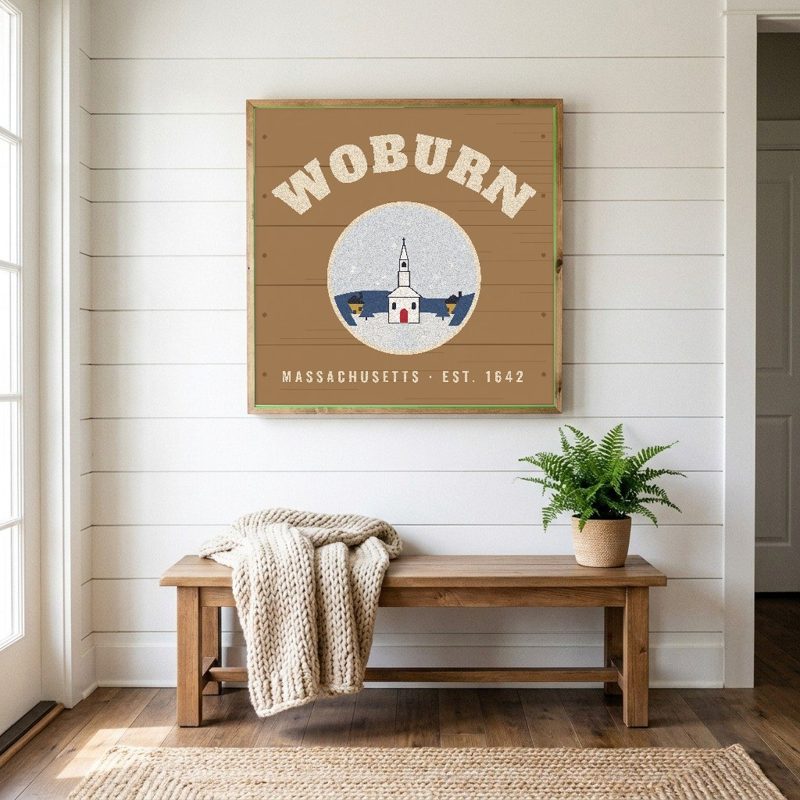
12″×12″ printed wood, ready to hang
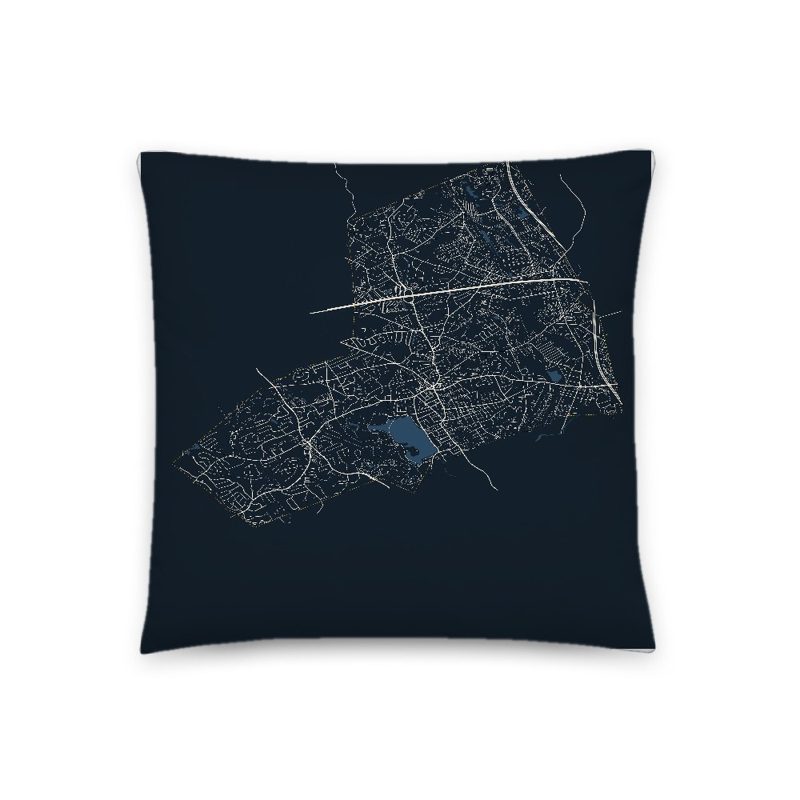
Soft-touch, zip cover

Sturdy all-over-print tote
Glossy top, cork back
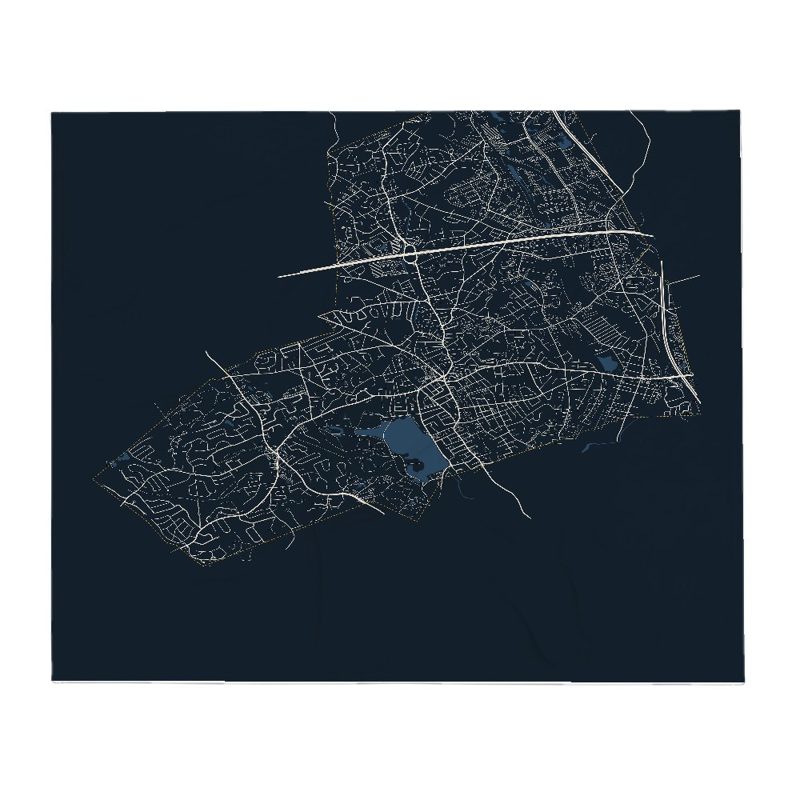
Soft fleece, 50″×60″
20 oz, double-wall stainless
Population 2010: 38,120 → 2020: 40,876
From Wikidata (CC0).
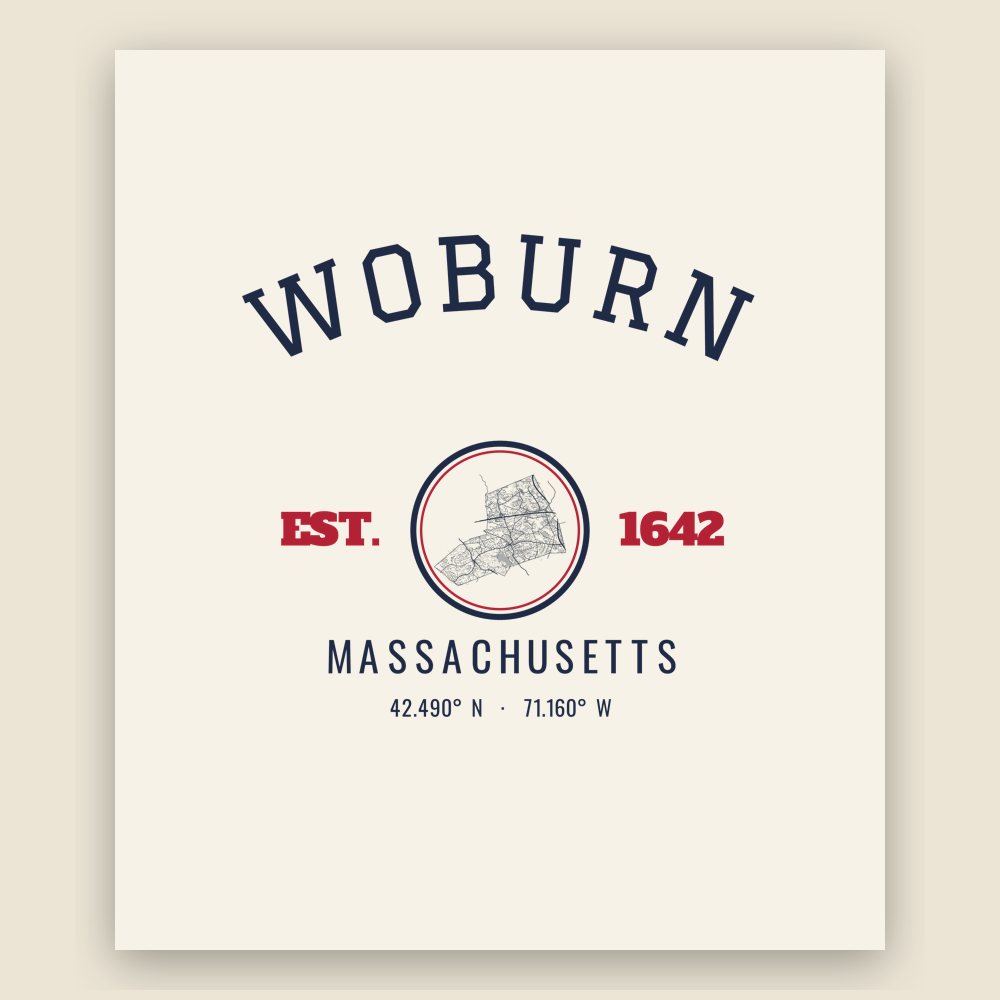
Woburn was first settled in 1640 near Horn Pond, a primary source of the Mystic River, and was officially incorporated in 1642. At that time the area included present day towns of Woburn, Winchester, Burlington, and parts of Stoneham and Wilmington. In 1730 Wilmington separated from Woburn. In 1799 Burlington separated from Woburn; in 1850 Winchester did so, too.
Woburn got its name from Woburn, Bedfordshire. Woburn played host to the first religious ordination in the Americas on November 22, 1642. Rev. Thomas Carter was sworn in by many of the most prominent men of New England including John Cotton, minister of the First Church of Boston, Richard Mather minister of the First Church of Dorchester, and Capt. Edward Johnson co-founder of the church and town of Woburn. Johnson is regarded as "the father of Woburn." He served as the first town clerk, represented the town in the Massachusetts General Court, made the first map of Massachusetts, and wrote the first history of the colony.
The first organizational Town Meeting was held on April 13, 1644, and the first town officers were chosen. Town Selectmen were Edward Johnson, Edward Convers, John Mousall, William Learned, Ezekiel Richardson, Samuel Richardson, and James Thompson. William Learned was also selected as Constable. Michael Bacon, Ralph Hill, Thomas Richardson were chosen as Surveyors of Highways. (The History of Woburn, 1868)
Deacon Edward Convers was also one of the founders of Woburn. He was one of its first selectmen, and built the first house and first mill in Woburn. He was very active in town affairs and was a large landowner, miller and surveyor.
"America's oldest active gun club," the Massachusetts Rifle Association, was founded in 1875 and moved to Woburn in 1876.
Cummings Foundation purchased the former Choate Memorial Hospital site and turned it into the New Horizons of Choate senior living community in 1990.
Community Weeklies Inc. was founded by William S. Cummings and began publishing Woburn Advocate in 1991. The firm was bought by a division of Fidelity Investments in 1994, and Woburn Advocate is now being published by GateHouse Media.
Woburn Police Officer John B. Maguire was killed in the line of duty while responding to an armed robbery on December 26, 2010.
Woburn was the scene of a high-profile water contamination crisis. During the mid to late 1970s, the local community became concerned over the high incidence of childhood leukemia and other illnesses, particularly in the Pine Street area of east Woburn. After high levels of chemical contamination were found in City of Woburn's Wells G and H in 1979, some members of the community suspected that the unusually high incidence of leukemia, cancer, and a wide variety of other health problems were linked to the possible exposure to volatile organic compounds in the groundwater pumped from wells G and H.
In May 1982, a number of citizens whose children had developed or died from leukemia filed a civil lawsuit against two corporations, W. R. Grace and Company and Beatrice Foods. Grace's subsidiary, Cryovac, and Beatrice were suspected of contaminating the groundwater by improperly disposing of trichloroethylene (TCE), perchloroethylene (perc or PCE) and other industrial solvents at their facilities in Woburn near wells G and H.
In a controversial decision, Judge Walter Jay Skinner ruled that the jurors should answer questions that they and many others considered confusing. Beatrice was acquitted and Grace only paid $8 million, a third of which went to the lawyers and lawyer fees. A United States Environmental Protection Agency report later found Beatrice and Grace responsible for the contamination.
A book titled A Civil Action was written about the case by Jonathan Harr. In 1998 the book was turned into a movie starring John Travolta and Robert Duvall, also titled A Civil Action. The film was largely filmed in nearby Bedford and Lexington, with only a few shots on location in Woburn.
Adapted (trimmed) from the Wikipedia article Woburn, Massachusetts, revision 1374910883 by its contributors, licensed CC BY-SA 4.0.
We share a part of every Woburn sale with local partners, and we'd love to print from your collection. Old photographs, maps and postcards make the best keepsakes.
Partner with us