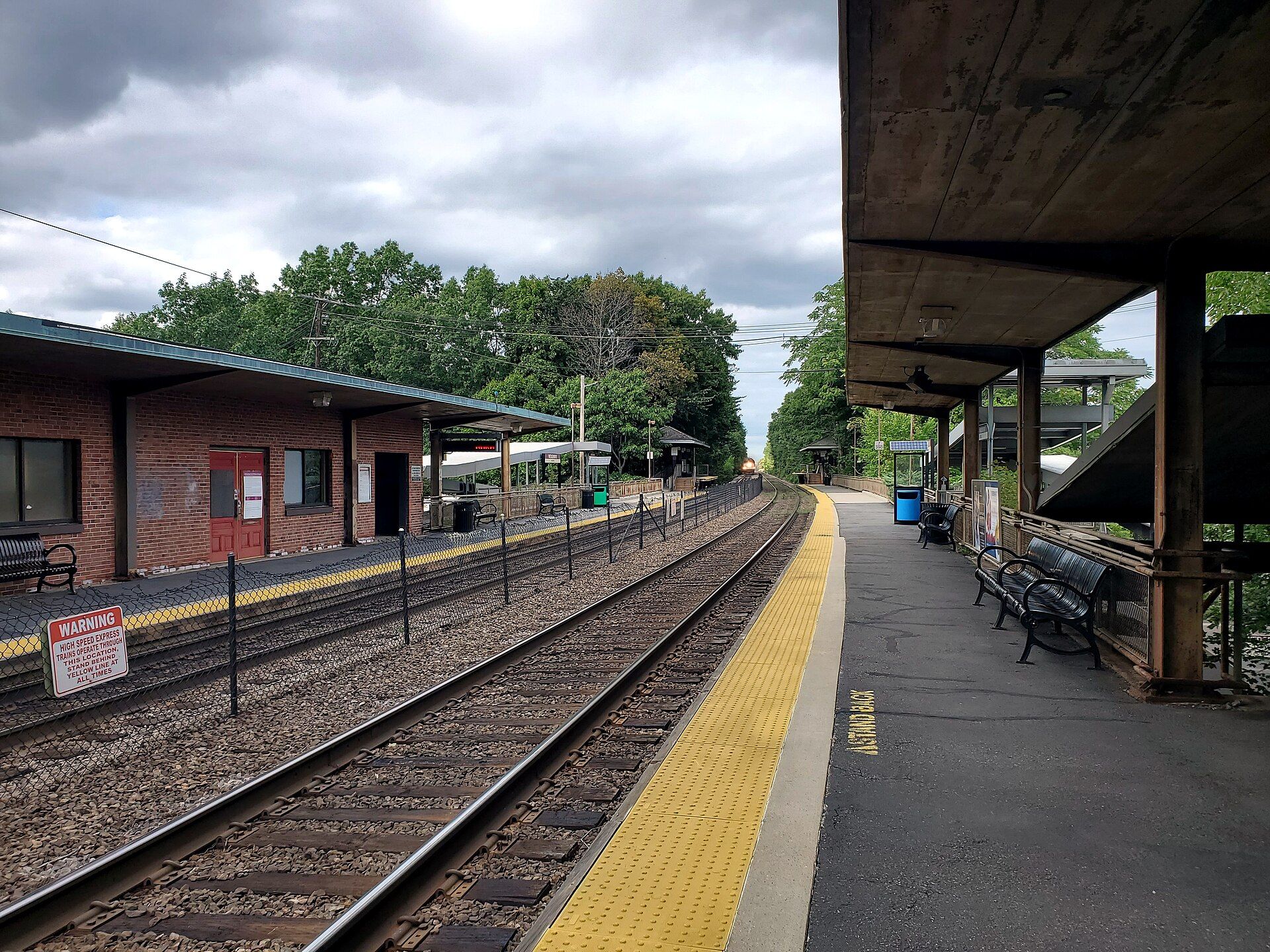
Native Americans inhabited the area that would become Winchester for thousands of years prior to European colonization of the Americas. Landmarks include United States Post Office–Winchester Main, Wedgemere station and Winchester Center station. Winchester is the birthplace of Mark A. Milley, military personnel.
Every piece is drawn from Winchester's own map data and historic archives, then printed and shipped from the USA when you order. No two towns look alike.
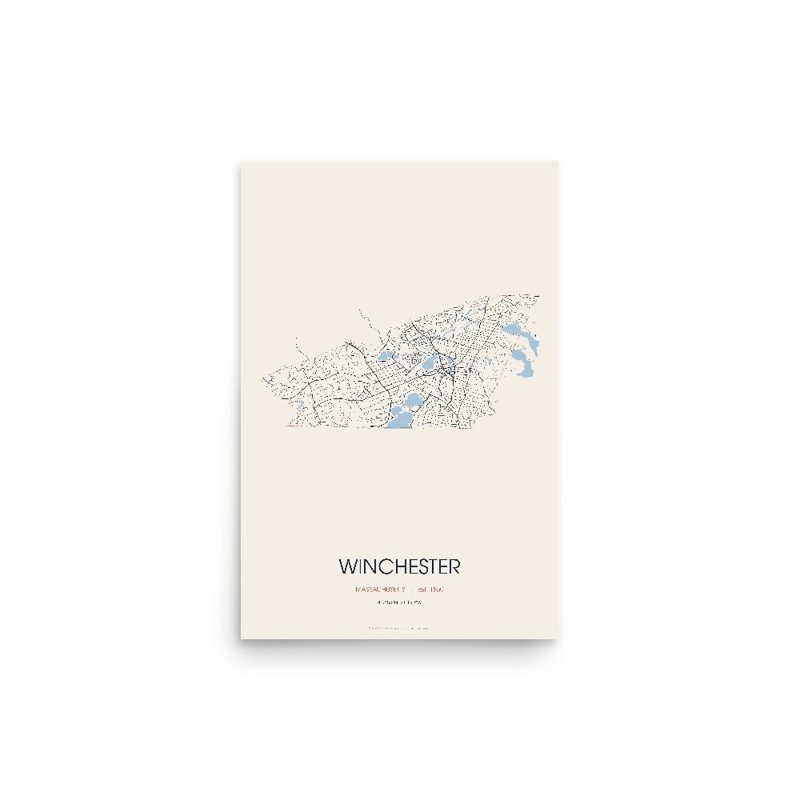
Every road in town, on archival matte paper
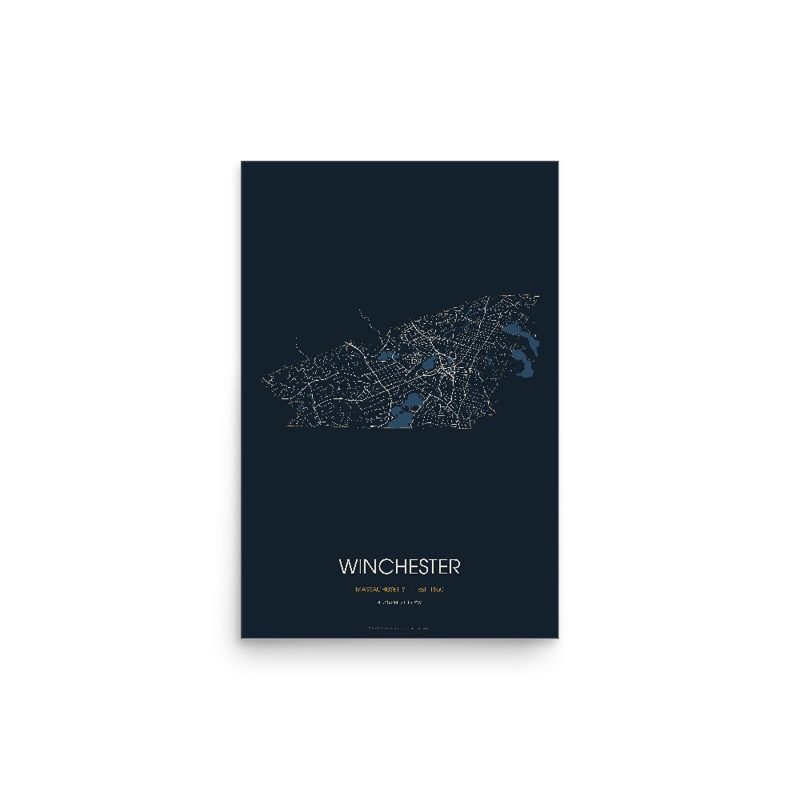
The same map, in navy and silver
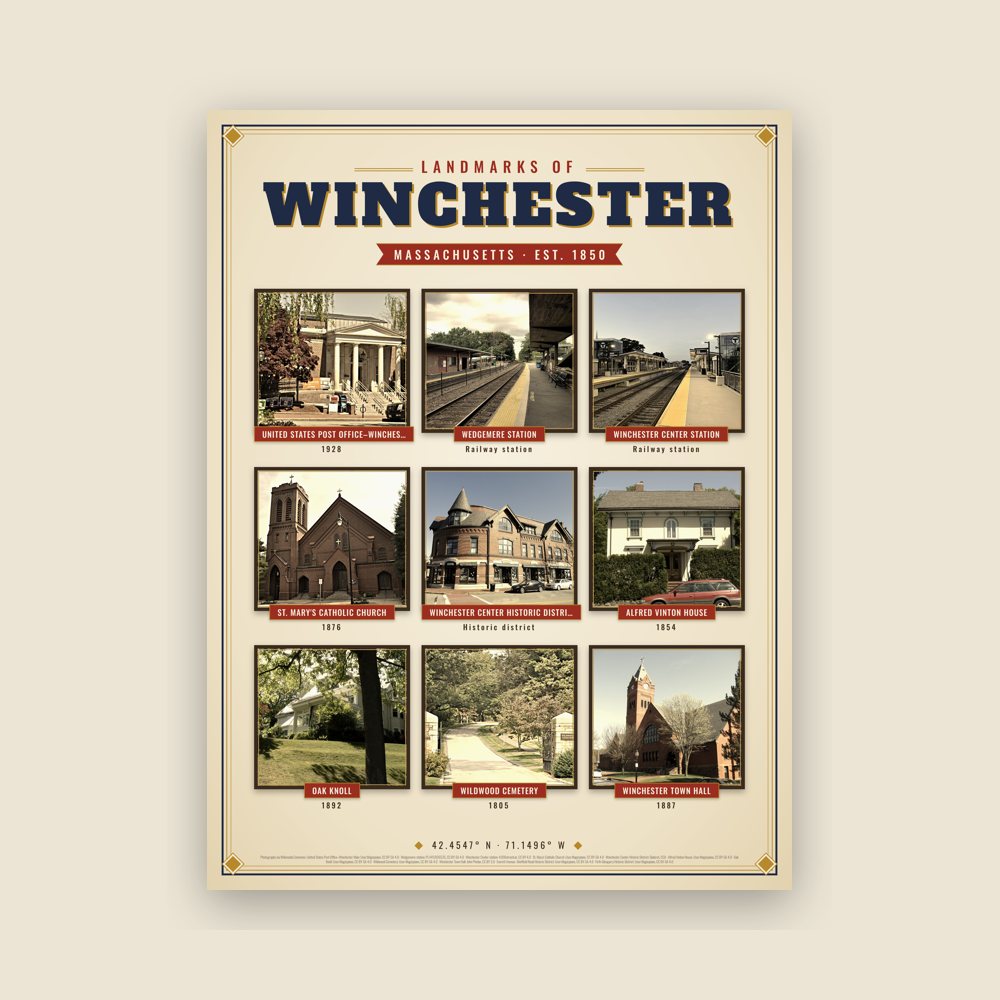
Nine local landmarks, archival matte
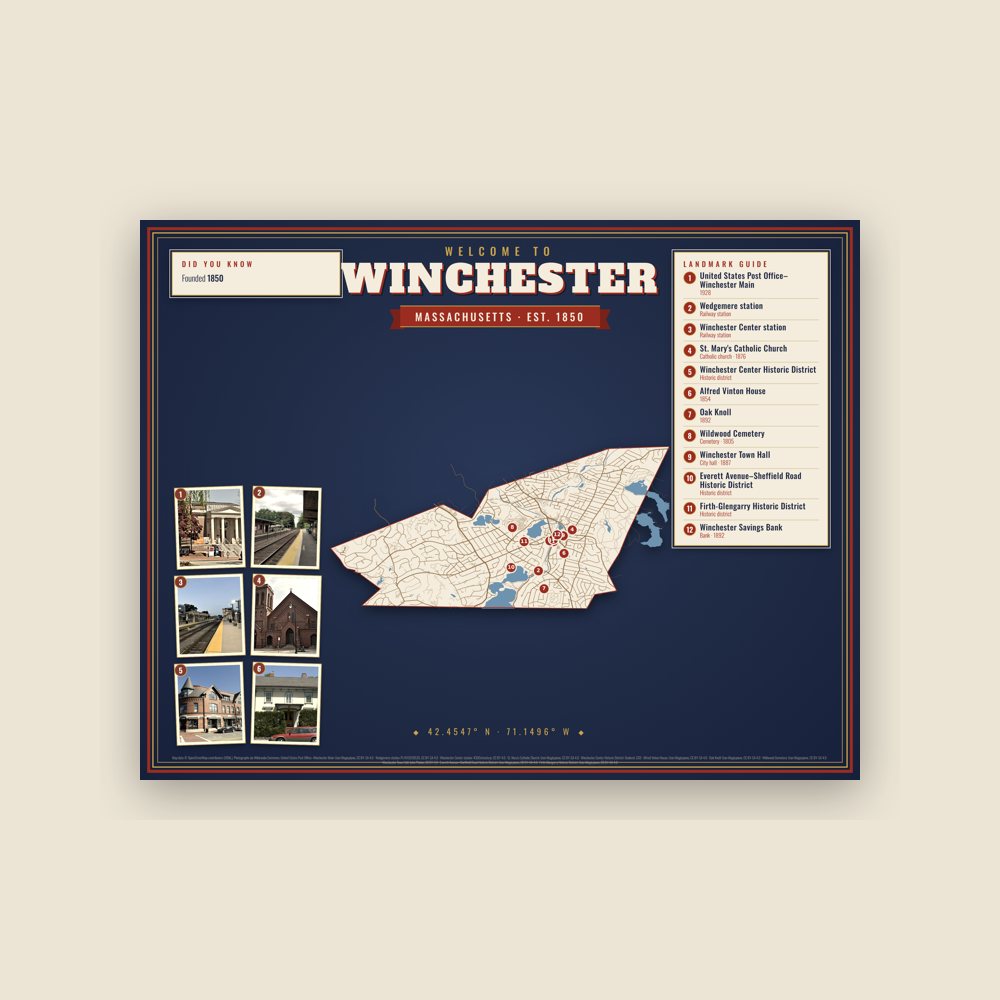
Map of local landmarks, washable fabric
Heavy-blend fleece, street map printed on the back
Soft Bella+Canvas jersey
Glossy ceramic, dishwasher safe
Ceramic keepsake, gold ribbon
Weatherproof, for the front walk
24″×16″, printed coir-look fibers, rubber back
12″×12″ printed wood, ready to hang
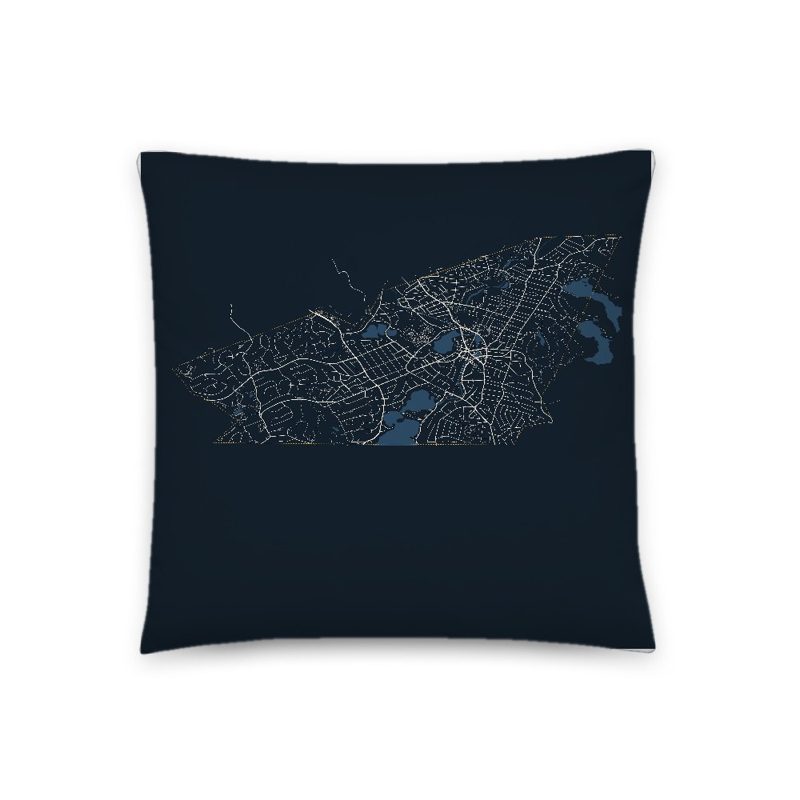
Soft-touch, zip cover
Sturdy all-over-print tote
Glossy top, cork back
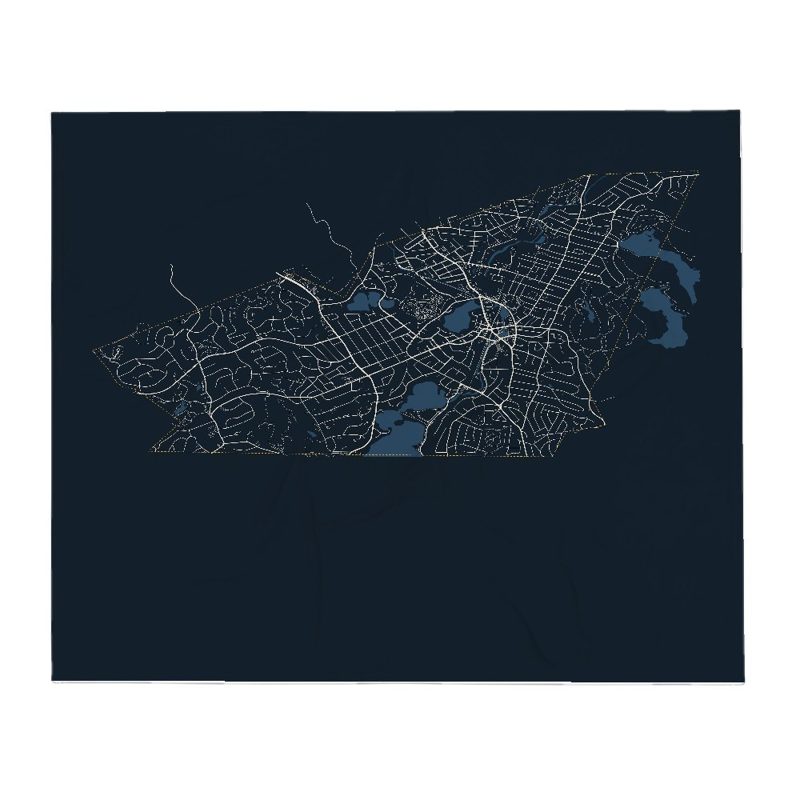
Soft fleece, 50″×60″
20 oz, double-wall stainless
Population 2010: 21,374 → 2020: 22,970
From Wikidata (CC0).
Native Americans inhabited the area that would become Winchester for thousands of years prior to European colonization of the Americas. At the time of contact, the area was inhabited by the Naumkeag people, from whom the land that would become Winchester was purchased for the settlement of Charlestown in 1639.
The town's early growth paralleled improvements in transportation. Prior to incorporation, the Middlesex Canal, linking the Merrimack River to Boston, was completed through what was then Waterfield. It flourished from 1803 to 1836, until the Boston and Lowell Railroad completed a line that neatly split the town and provided it with two stations. Able to deliver passengers as well as goods, the railroad soon superseded the canal and spurred more people to move to the area. The first church was built in 1840, the Post Office followed in 1841, and soon after incorporation town schools were started. Industries small and large followed, including the Beggs and Cobb tannery and the Winn Watch Hand factory, which would operate well into the 20th century.
By the time of the Civil War, to which Winchester lent many citizens, the need for a town water supply became apparent. Engineers convinced a skeptical public to fund a dam in the highlands to the east of town. The structure blocked the creek that flowed from the Middlesex Fells and produced the first of three reservoirs that continue to provide water today.
In the early 20th century, growth continued swiftly as Winchester evolved from its agrarian and industrial roots into the bedroom community it is today. A rich mix of immigrants—the Irish in the northern and eastern neighborhoods, small numbers of African-Americans who flocked to the New Hope Baptist Church in the highlands, and later Italians who came to work in the westside farms while living in the "Plains" to the east—complemented Winchester's Yankee forebears.
Adapted (trimmed) from the Wikipedia article Winchester, Massachusetts, revision 1378843443 by its contributors, licensed CC BY-SA 4.0.
We share a part of every Winchester sale with local partners, and we'd love to print from your collection. Old photographs, maps and postcards make the best keepsakes.
Partner with us