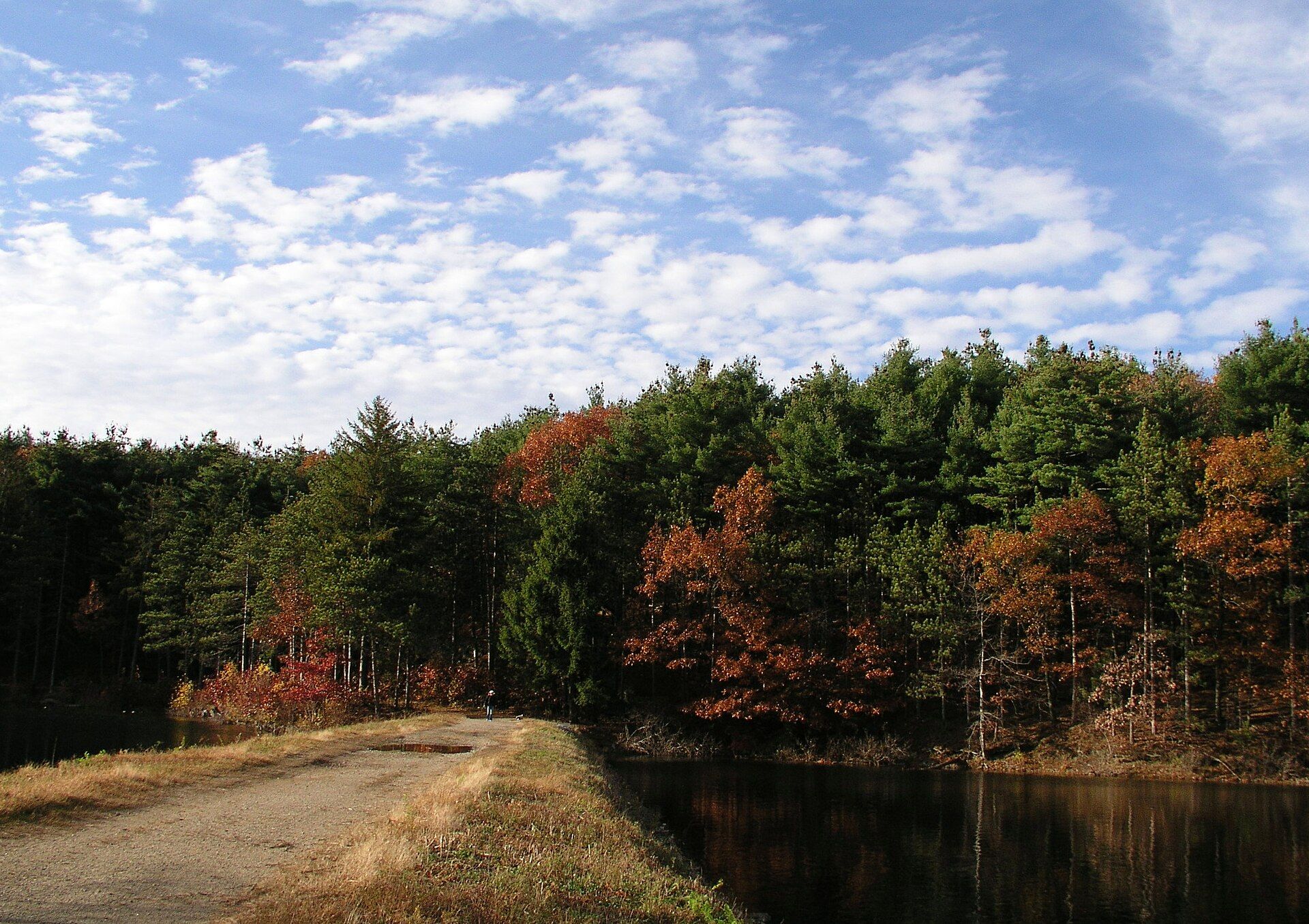
The earliest documented mention of the territory now called Stoneham dates to 1632 when, on February 7, Governor Winthrop and his party came upon this area. Landmarks include Stone Zoo, Charles Winship House and Middlesex Fells Reservation. Stoneham is the birthplace of Buffy Sainte-Marie, musician.
Every piece is drawn from Stoneham's own map data and historic archives, then printed and shipped from the USA when you order. No two towns look alike.
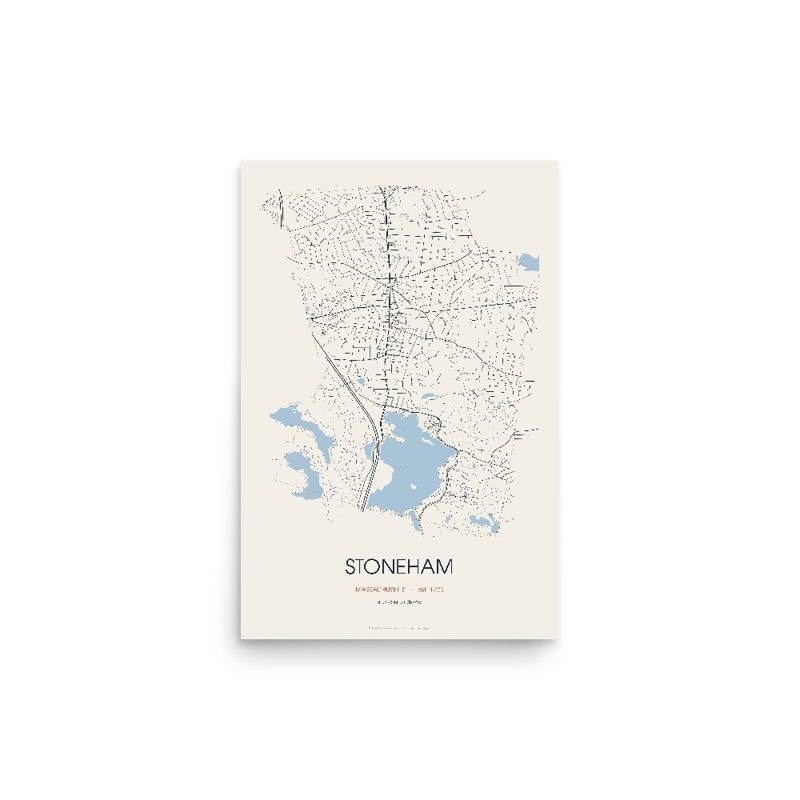
Every road in town, on archival matte paper
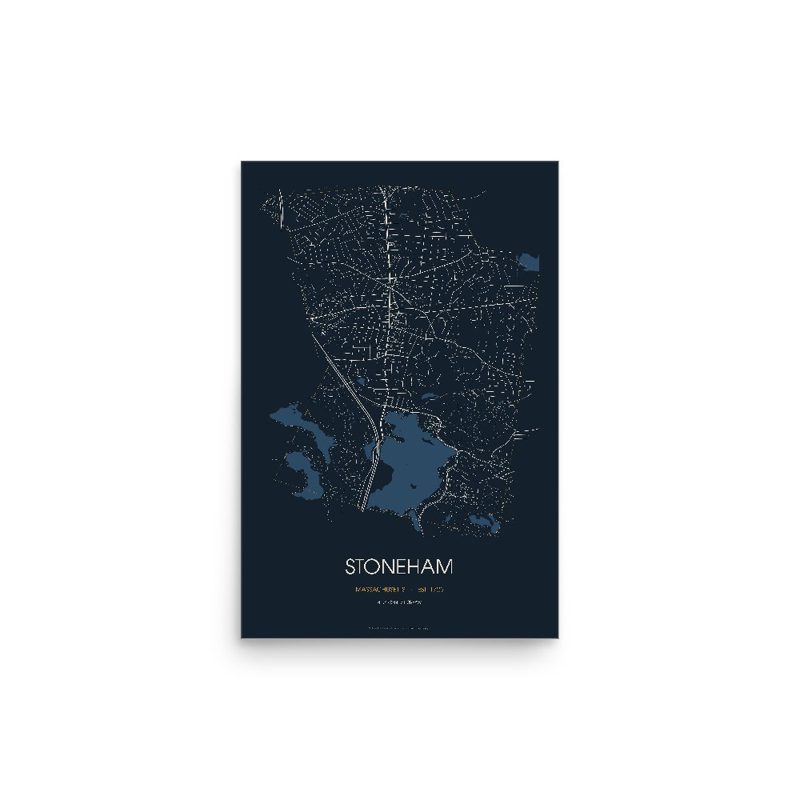
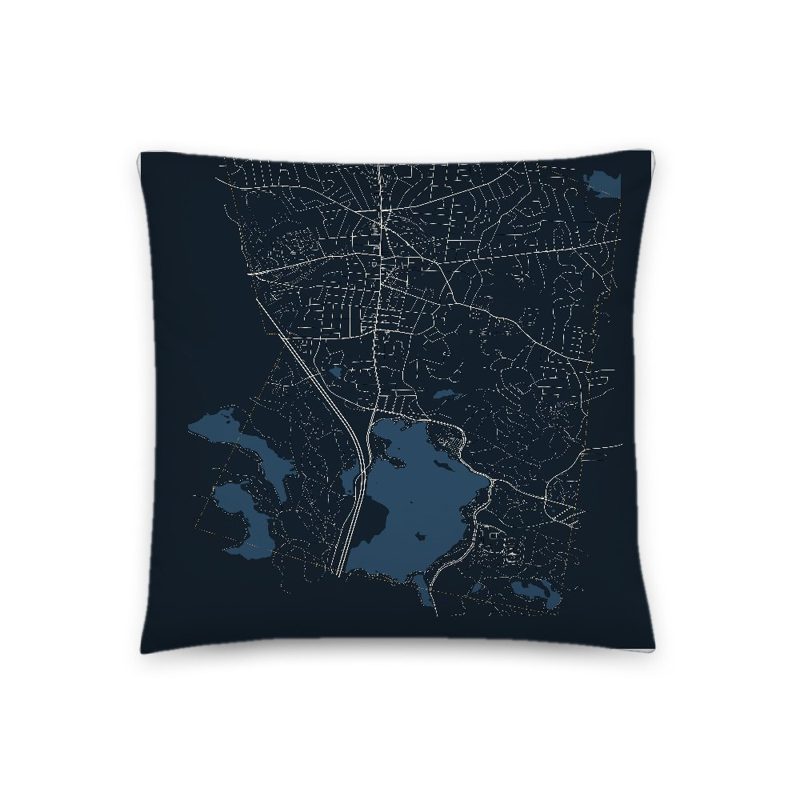
The same map, in navy and silver
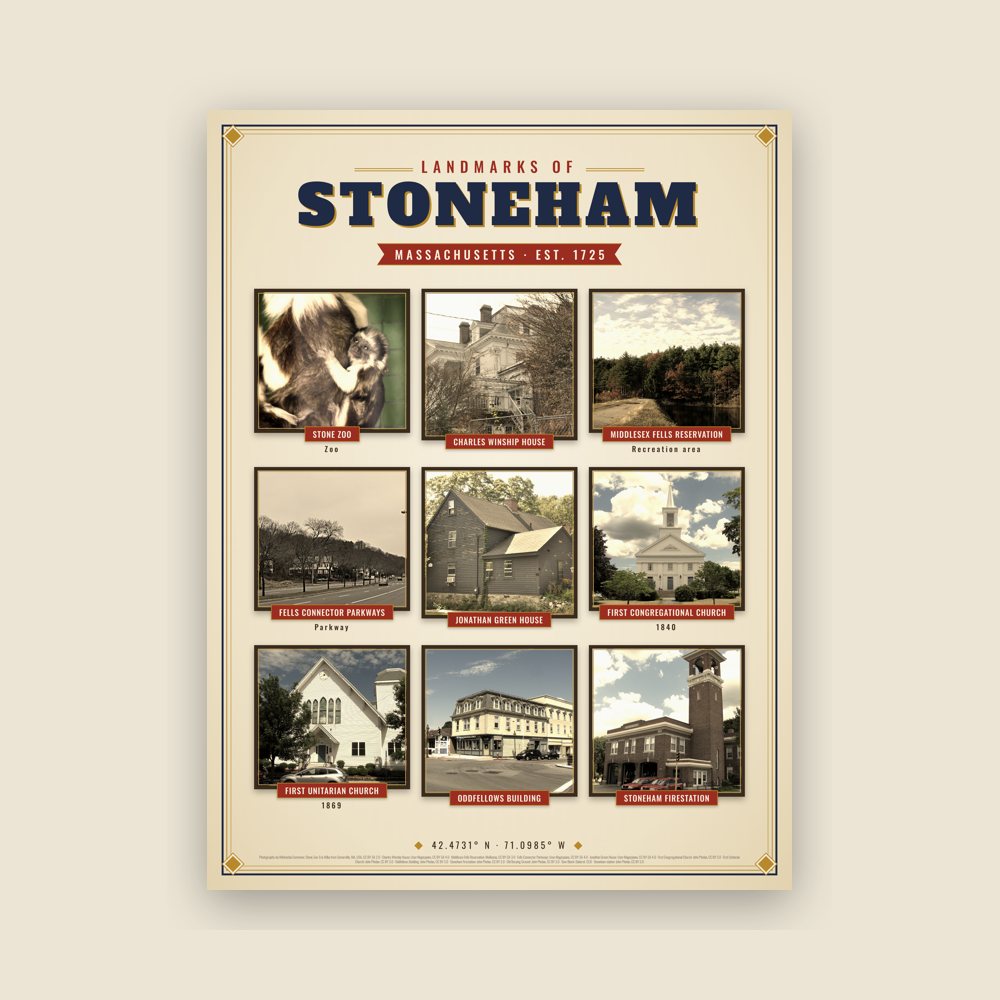
Nine local landmarks, archival matte
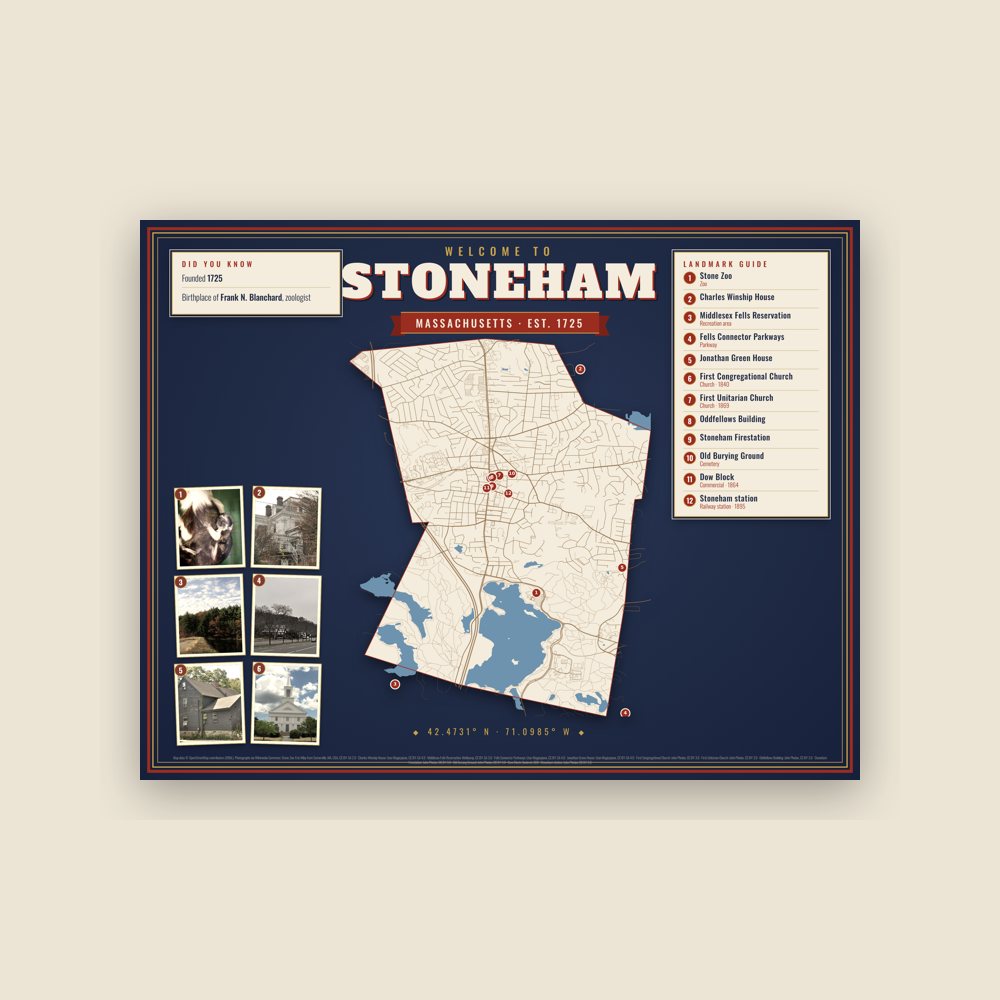
Map of local landmarks, washable fabric
Heavy-blend fleece, street map printed on the back
Soft Bella+Canvas jersey
Glossy ceramic, dishwasher safe
Ceramic keepsake, gold ribbon
Weatherproof, for the front walk
Soft-touch, zip cover
Sturdy all-over-print tote
Glossy top, cork back
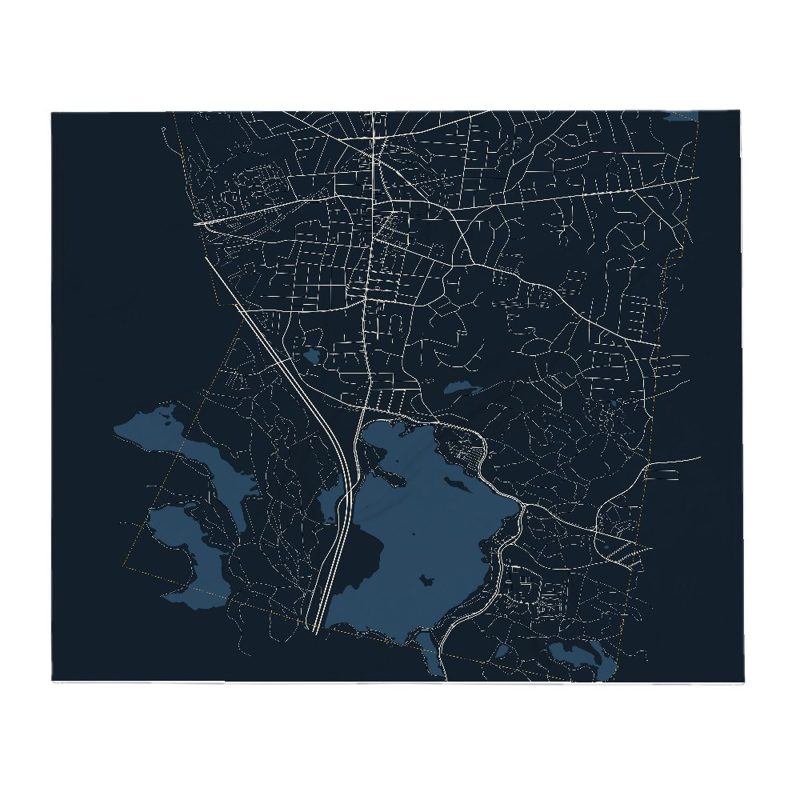
Soft fleece, 50″×60″
20 oz, double-wall stainless
Population 2010: 21,437 → 2020: 23,244
From Wikidata (CC0).
The earliest documented mention of the territory now called Stoneham dates to 1632 when, on February 7, Governor Winthrop and his party came upon this area. They found Spot Pond and ate their lunch on a place they called Cheese Rock, now known as Bear Hill. Stoneham is situated on the traditional territory of the Massachusett and Pawtucket peoples.
Stoneham was first settled by colonists in 1634 and was originally a part of Charlestown. In 1678, there were six colonists with their families, all in the northeast part of the town, probably because of its proximity to the settlement in Reading (now Wakefield).
By 1725, the population of the area, called "Charlestown End", had increased until there were 65 male inhabitants paying taxes; however, they were miles away from the settlement in Charlestown and could not conveniently reach its church or school. For this reason, Captain Benjamin Geary and 53 other residents of the area petitioned Charlestown to allow them to be separated. The town refused their petition at first, but on December 17, 1725, the General Court passed an act to establish the new township of Stoneham, separating it from Charlestown, and releasing its residents from the obligation to pay taxes to Charlestown, provided that within two years they would erect a suitable church and hire a minister and a schoolmaster.
The town's first meetinghouse was erected in 1726, as was its Burying Ground (now known as the Old Burying Ground and listed on the National Register of Historic Places in 1984). The first church was organized in 1729, with members being released from the congregations in Reading and Melrose to form it. In the same year, the town voted to raise £9 for the building of a school and chose a committee to hire a schoolmaster. Stoneham remained a small town during the colonial era. Traces of its colonial history are still to be seen in the Spot Pond Archeological District of the Middlesex Fells Reservation. During the Industrial Revolution, Stoneham prospered as a major shoe-manufacturing center.
Adapted (trimmed) from the Wikipedia article Stoneham, Massachusetts, revision 1377120203 by its contributors, licensed CC BY-SA 4.0.
We share a part of every Stoneham sale with local partners, and we'd love to print from your collection. Old photographs, maps and postcards make the best keepsakes.
Partner with us