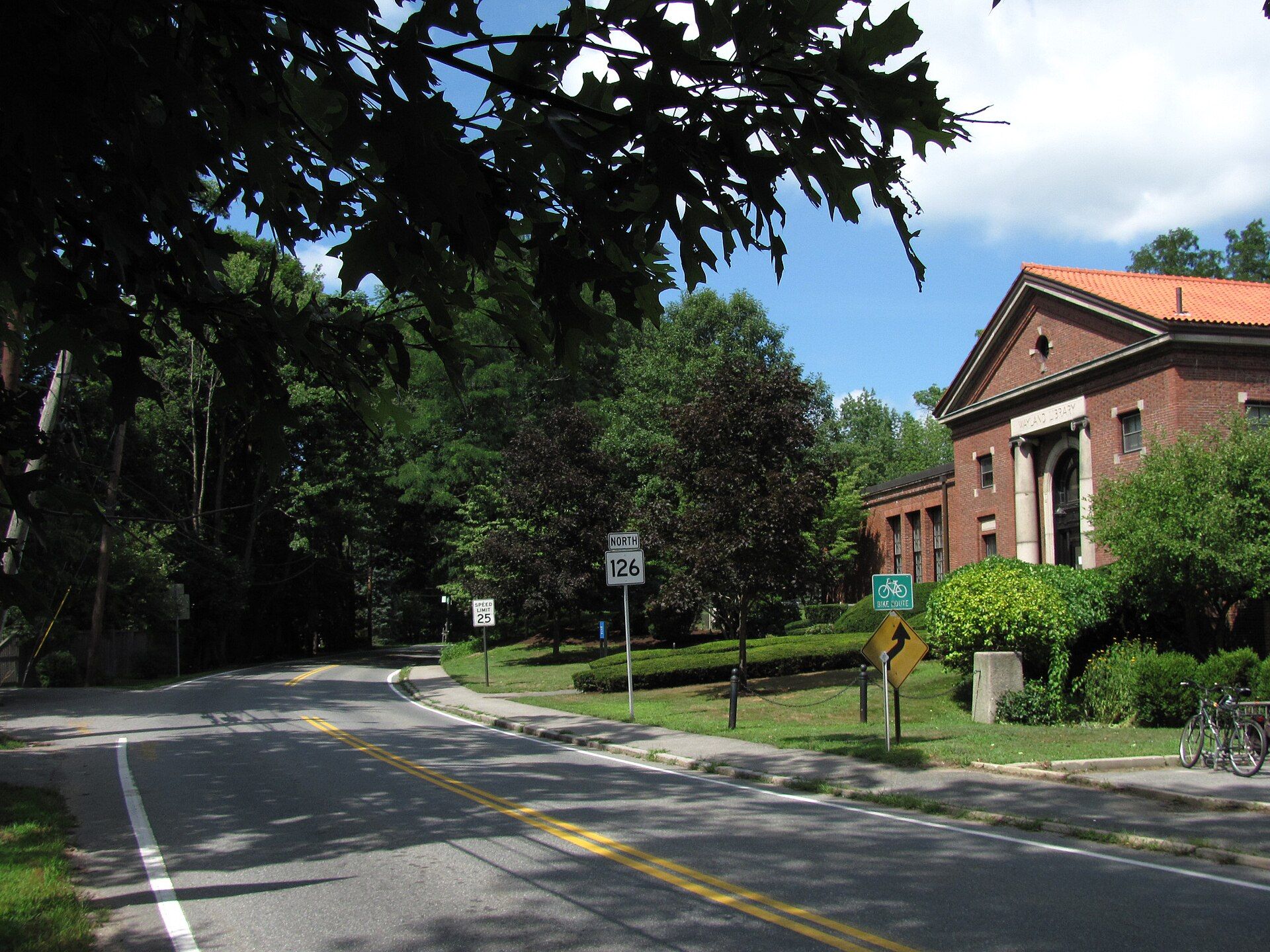
Wayland was the first settlement of Sudbury Plantation in 1638. Landmarks include Massachusetts Route 126, Great Meadows National Wildlife Refuge and Old Connecticut Path. Wayland is the birthplace of Josiah Johnson Hawes, photographer.
Every piece is drawn from Wayland's own map data and historic archives, then printed and shipped from the USA when you order. No two towns look alike.
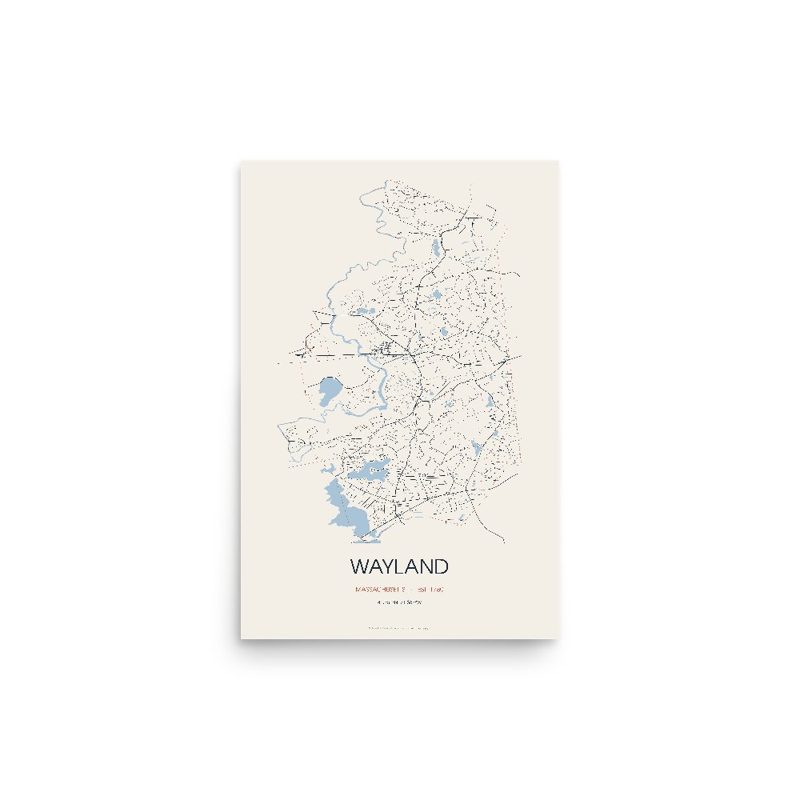
Every road in town, on archival matte paper
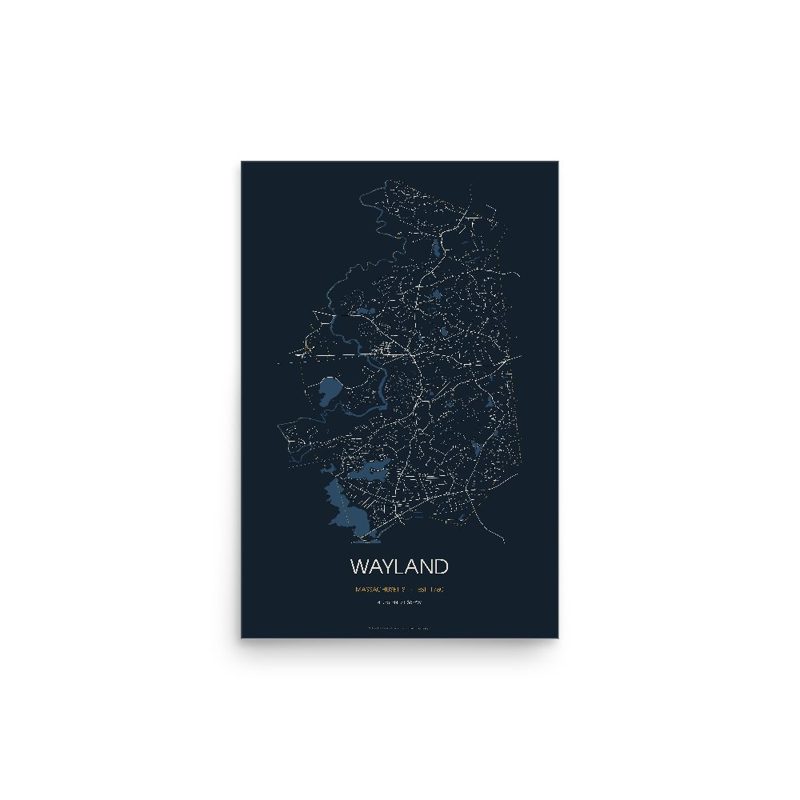
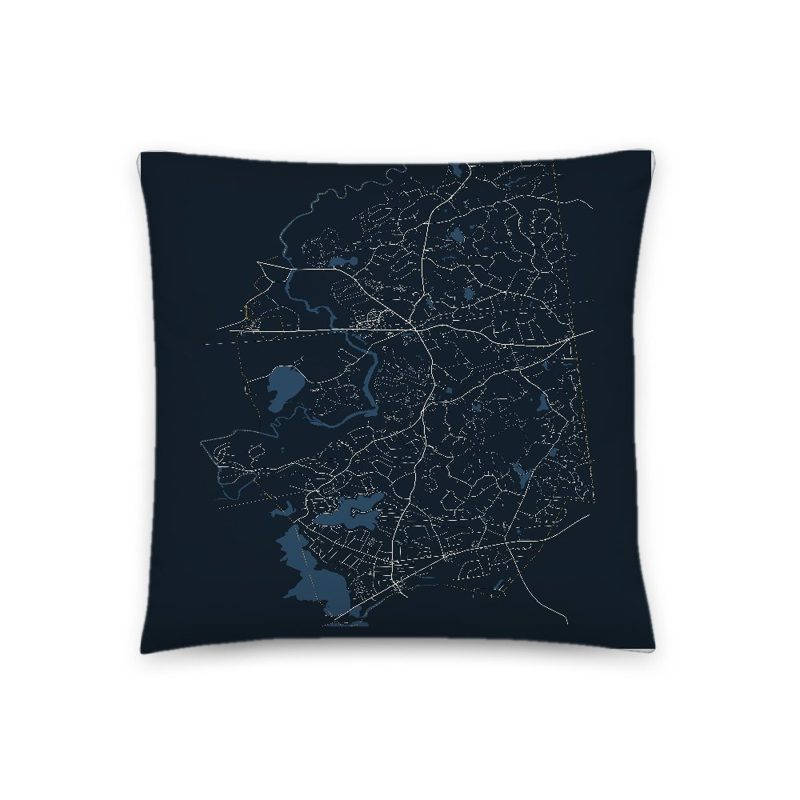
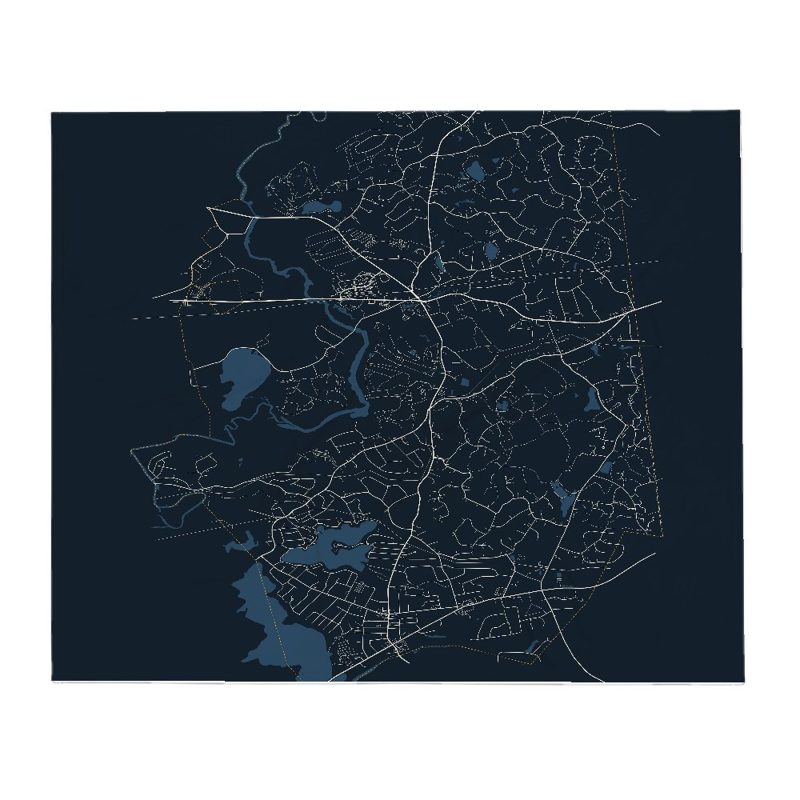
The same map, in navy and silver
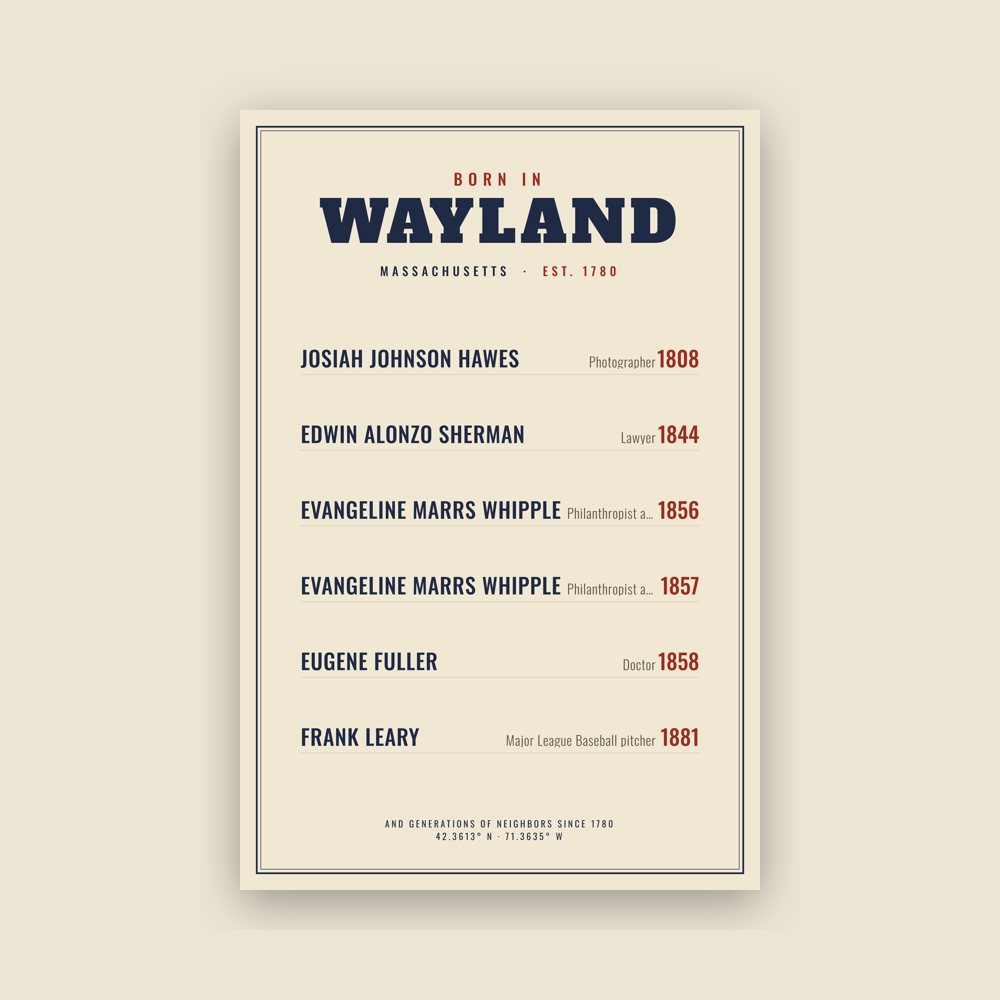
Famous natives, by birth year
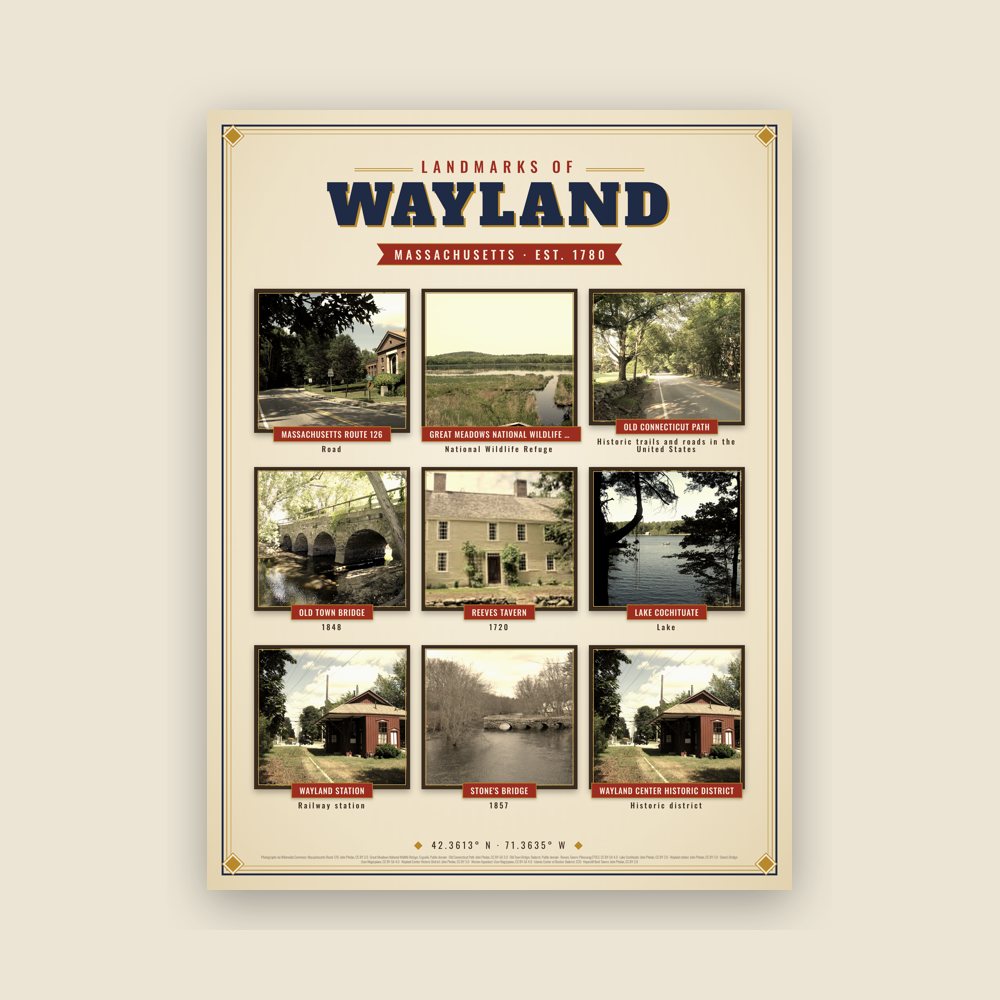
Nine local landmarks, archival matte
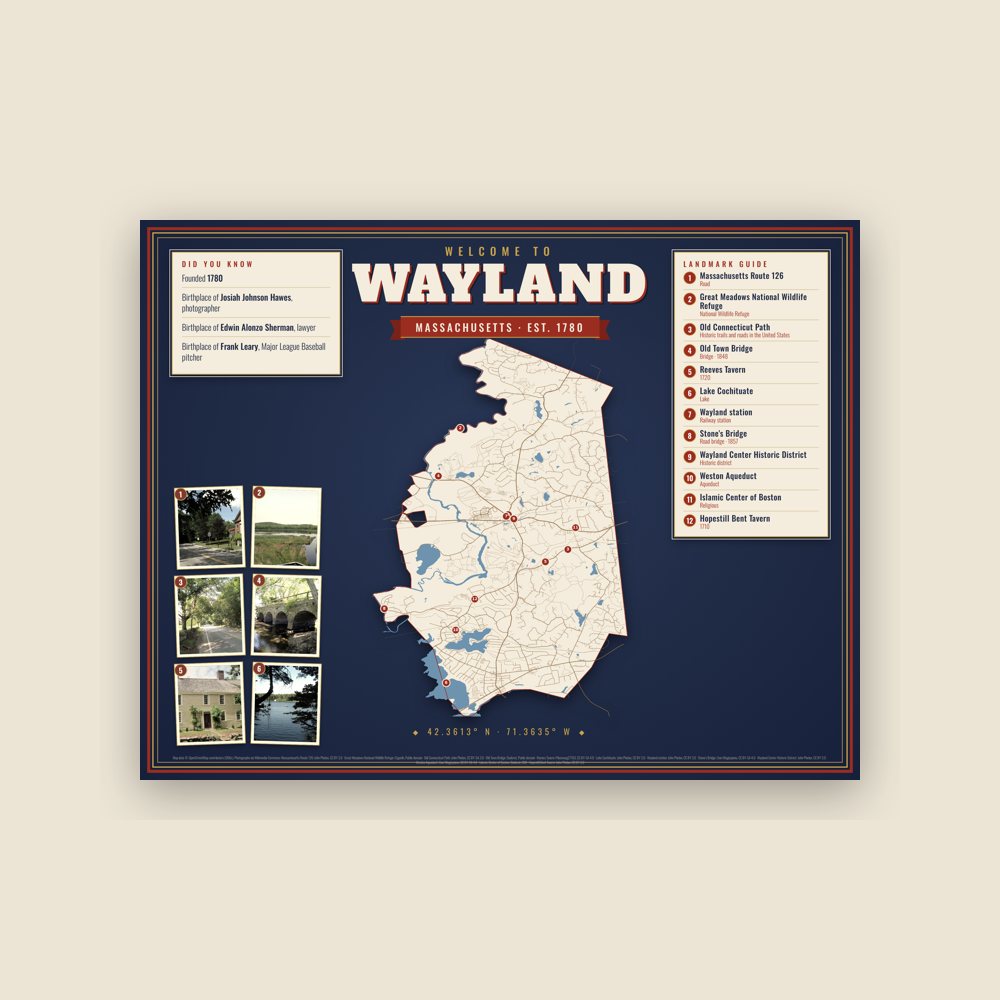
Map of local landmarks, washable fabric
Heavy-blend fleece, street map printed on the back
Soft Bella+Canvas jersey
Glossy ceramic, dishwasher safe
Ceramic keepsake, gold ribbon
Weatherproof, for the front walk
Soft-touch, zip cover
Sturdy all-over-print tote
Glossy top, cork back
Soft fleece, 50″×60″
20 oz, double-wall stainless
Population 2010: 12,994 → 2010: 13,444 → 2020: 13,943
From Wikidata (CC0).
Wayland was the first settlement of Sudbury Plantation in 1638. The residents of what is now Sudbury split away in 1722 and formed into the western parish, while residents of what is now Wayland formed into the eastern parish. Prior to the American Revolution Sudbury had one of the largest militias in Massachusetts, numbering about 400. During the Battles of Lexington and Concord on April 19, 1775, approximately 302 members of the Sudbury militia, including 115 from the eastern parish, marched to Concord.
The Town of East Sudbury split away from the western parish and was formally incorporated on April 10, 1780. "The higher average wealth level of the residents on the eastern side of the river and on Pelham Island caused the east side of Town to have a higher total assessment than the west side... the east-siders paid more than half of Town taxes even though more than half of the Town population (and the associated costs for Town services) was on the west side."
On March 11, 1835, members of town meeting voted to rename East Sudbury "Wayland" in honor of Dr. Francis Wayland, who was a temperance advocate, abolitionist, then president of Brown University, and a friend of local Judge Edward Mellen. Both Wayland and Mellen were strong advocates of public libraries, and donated money to fund the establishment of a public library for the town. When questions arose about the legality of taxing residents to establish a library, Representative Reverend John Burt Wight brought the question to the state legislature, which led to an 1851 Massachusetts state law enabling the establishment of free public libraries. This makes the Wayland Public library arguably the first free public library in the state and the second public library in the country. The current library building was built in 1900.
Famous residents of Wayland in the mid-19th century include abolitionist Rev. Edmund Sears, the minister of the First Parish Church, who wrote the 1849 poem and song "It Came Upon the Midnight Clear" and abolitionist, author, and suffragist Lydia Maria Child.
In 1954, during the Red Scare, elementary school teacher Anne Hale was fired in a 2–1 vote by the Wayland School Committee. She had been a member of the Communist Party from 1938 to 1950 and the committee members who voted to fire her stated her lack of "perception, understanding, and judgment necessary in one who is to be entrusted with the responsibility for teaching the children of the Town."
In 2010, Boston Duck Tours was asked to help transport flood victims in Wayland. Torrential rains had left the Pelham Island area of Wayland isolated and the Ducks were brought in to ferry people in and out of their neighborhood until the waters receded.
Adapted (trimmed) from the Wikipedia article Wayland, Massachusetts, revision 1377165891 by its contributors, licensed CC BY-SA 4.0.
We share a part of every Wayland sale with local partners, and we'd love to print from your collection. Old photographs, maps and postcards make the best keepsakes.
Partner with us