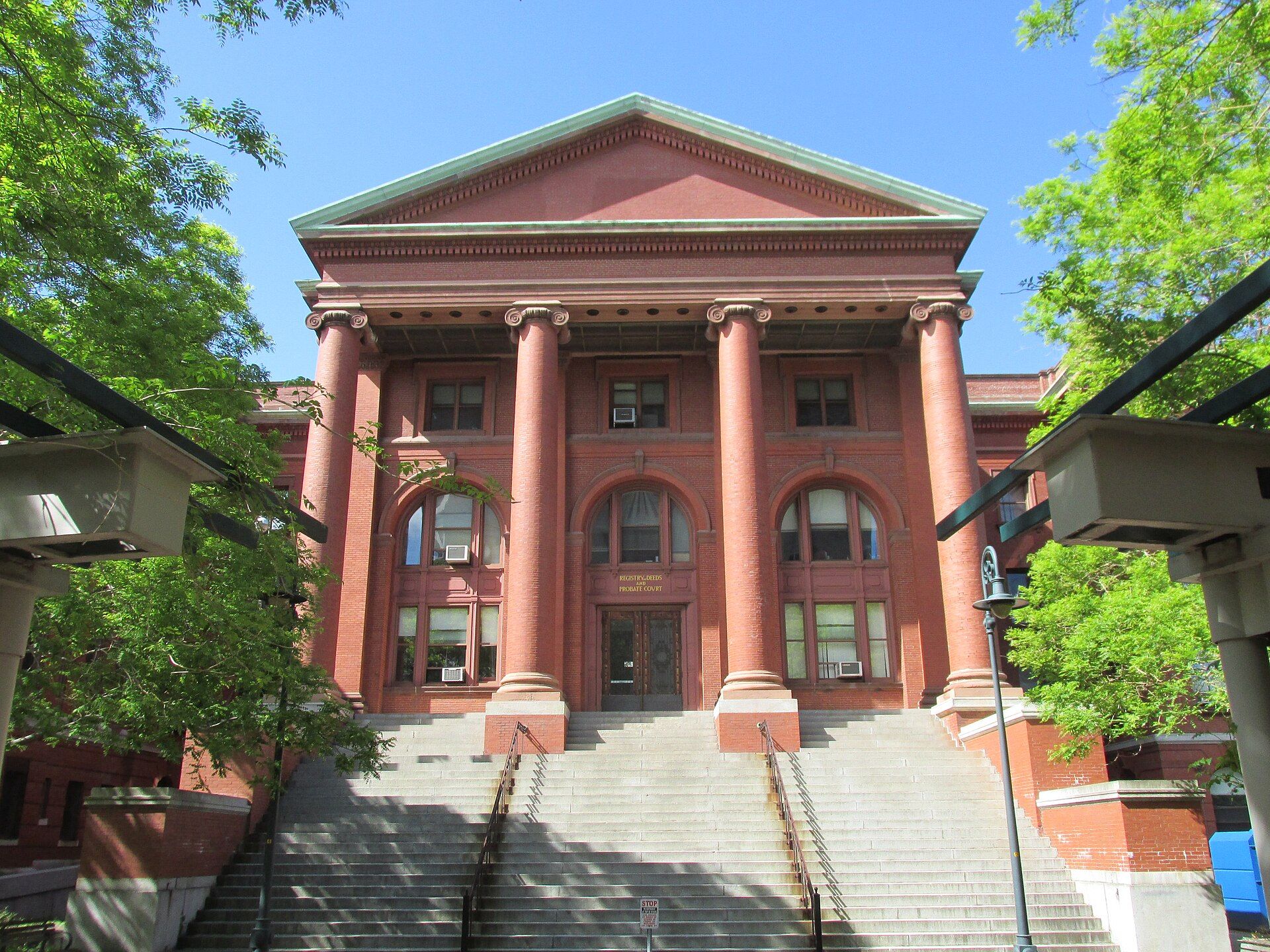
Lincoln was settled by Europeans in 1654, as a part of Concord. Landmarks include Middlesex County, Gropius House and Disappearance of Joan Risch. Lincoln is the birthplace of Frank Wood, actor b 1960.
Every piece is drawn from Lincoln's own map data and historic archives, then printed and shipped from the USA when you order. No two towns look alike.
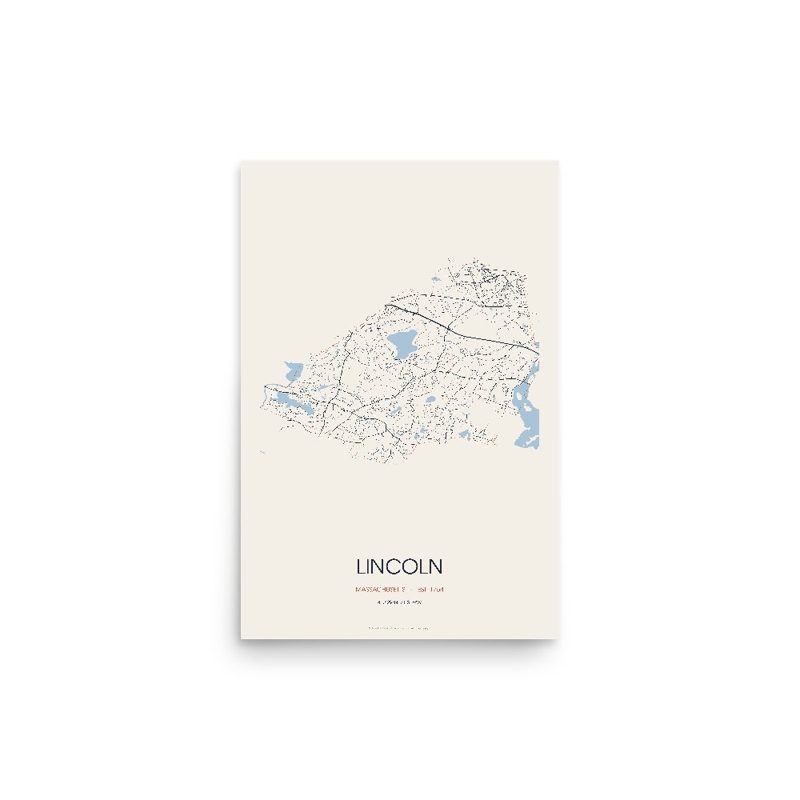
Every road in town, on archival matte paper
The same map, in navy and silver
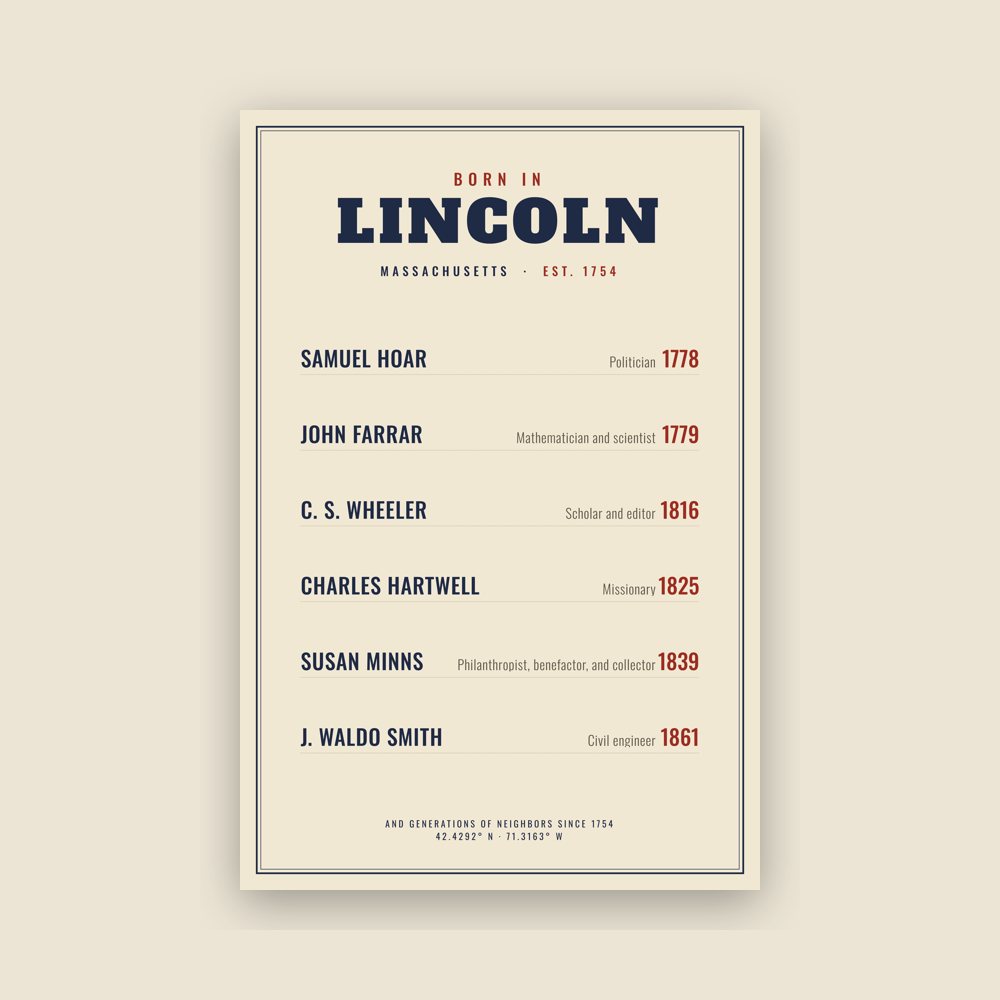
Famous natives, by birth year
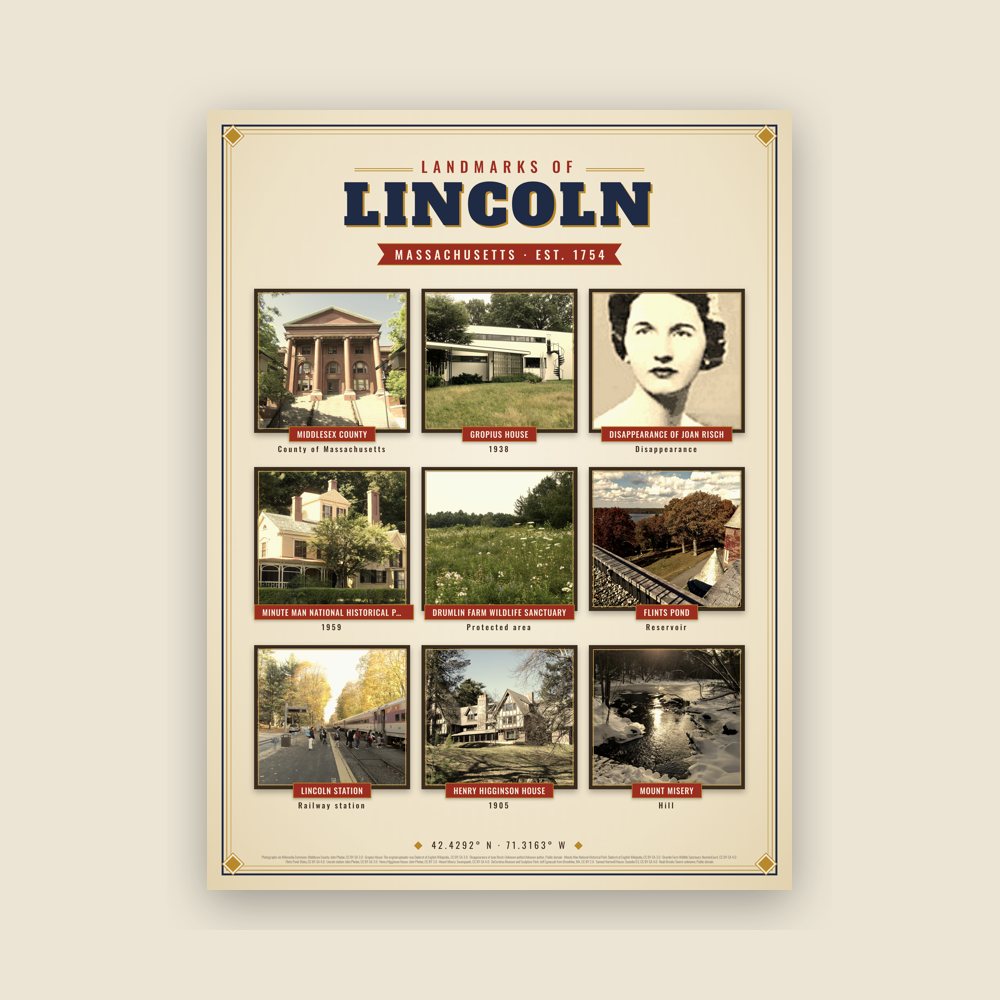
Nine local landmarks, archival matte
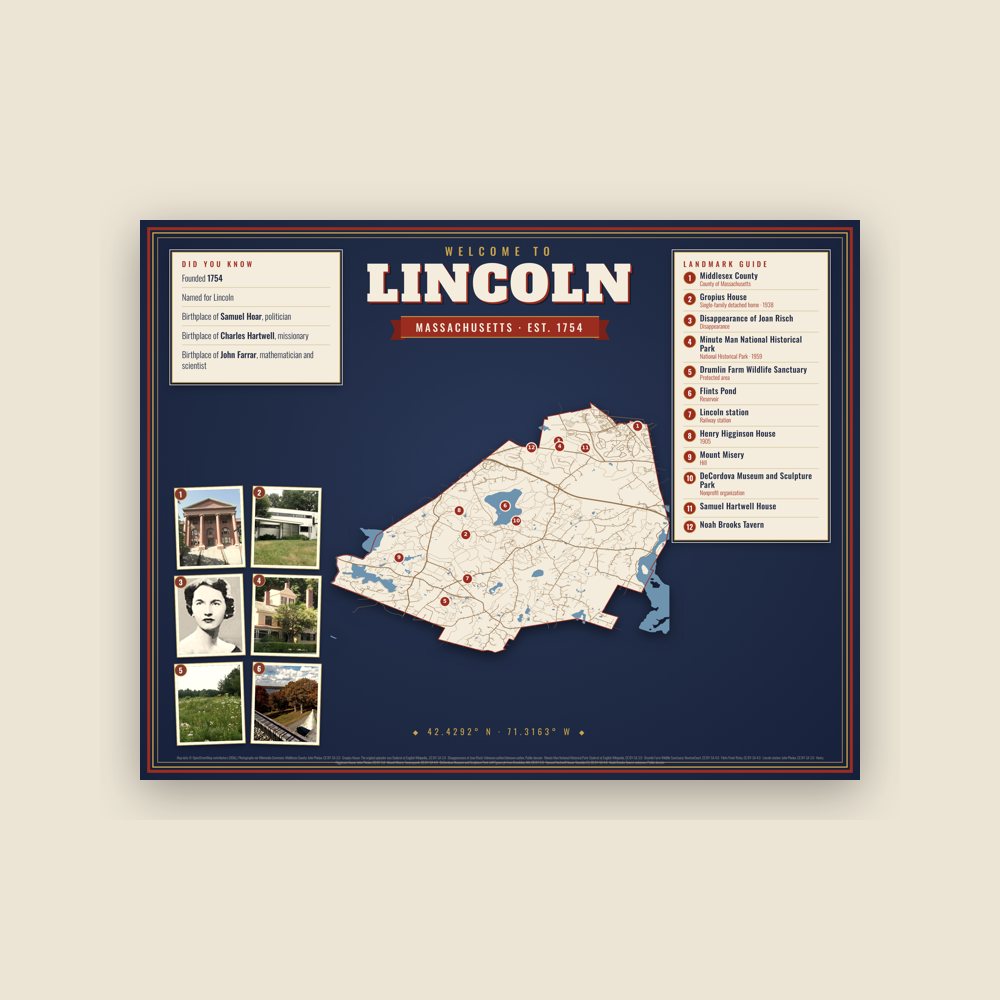
Map of local landmarks, washable fabric
Heavy-blend fleece, street map printed on the back
Soft Bella+Canvas jersey
Glossy ceramic, dishwasher safe
Ceramic keepsake, gold ribbon
Weatherproof, for the front walk
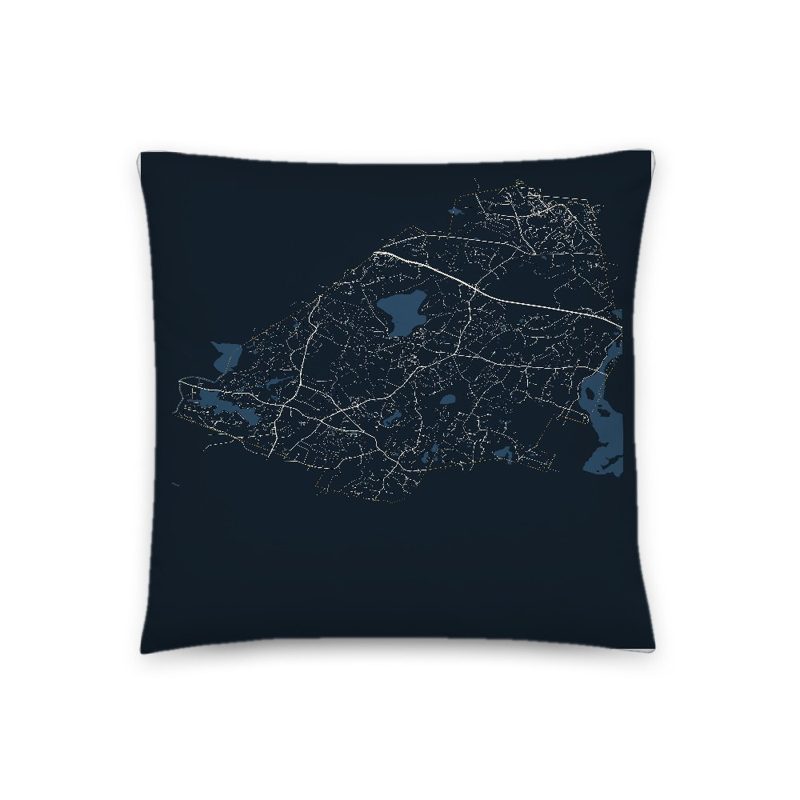
Soft-touch, zip cover
Sturdy all-over-print tote
Glossy top, cork back
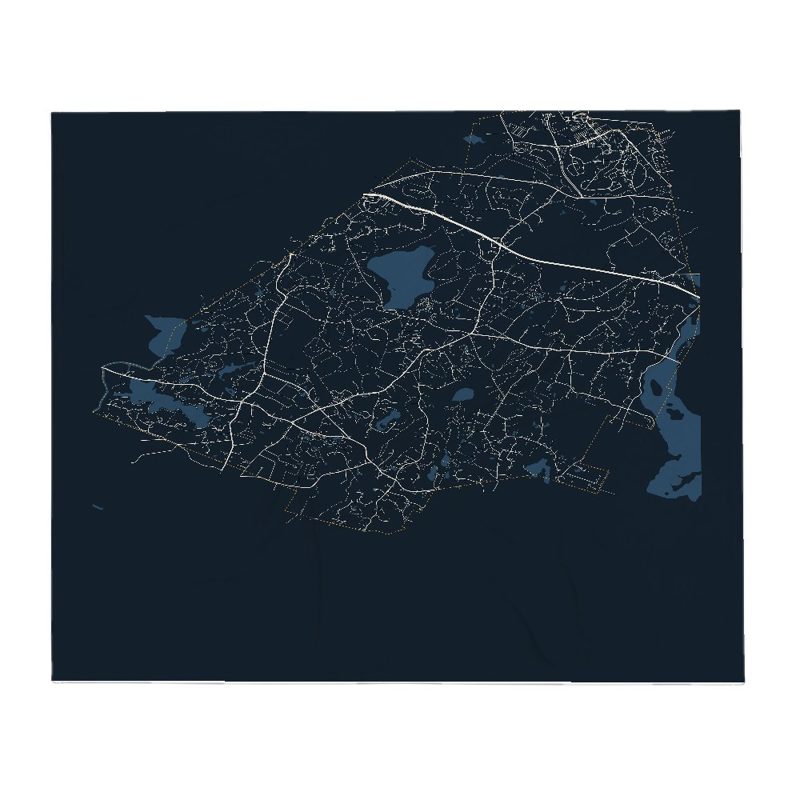
Soft fleece, 50″×60″
20 oz, double-wall stainless
Named for Lincoln (cathedral city and county town of Lincolnshire, England, UK).
Population 2010: 6,362 → 2020: 7,014
From Wikidata (CC0).
Lincoln was settled by Europeans in 1654, as a part of Concord. The majority of Lincoln was formed by splitting off a substantial piece of southeast Concord and incorporated as a separate town in 1754. Due to their "difficulties and inconveniences by reason of their distance from the places of Public Worship in their respective Towns," local inhabitants petitioned the General Court to be set apart as a separate town. Because the new town was composed of parts "nipped" off from the adjacent towns of Concord, Weston (which itself had been part of Watertown) and Lexington (which itself had been part of Cambridge), it was sometimes referred to as "Niptown."
Chambers Russell, a Representative in the Court in Boston, was influential in the town's creation. In gratitude, Russell was asked to name the new town. He chose Lincoln, after his family home in Lincolnshire, England. His homestead in Lincoln was later known as the Codman House property, which was occupied after his death by his relatives, the Codman family.
Lincoln is one of the few American towns named after the county of Lincolnshire, England, and not the Revolutionary War Major General Benjamin Lincoln or President Abraham Lincoln.
Paul Revere was captured by British soldiers in Lincoln on the night of April 18, 1775. Minutemen from Lincoln were the first to arrive to reinforce the colonists protecting American stores of ammunition and arms in Concord. Colonel Abijah Pierce of Lincoln led his troops, armed with a cane. He upgraded his weapon to a British musket after the battle. Five British soldiers who fell in Lincoln are buried in the town cemetery. A substantial portion of the first battle of the Revolutionary War, the battles of Lexington and Concord, was fought in Lincoln.
Reverend Charles Stearns, a Harvard-trained minister, served the Congregational Church in Lincoln from late 1781 until his death 45 years later.
Adapted (trimmed) from the Wikipedia article Lincoln, Massachusetts, revision 1379536637 by its contributors, licensed CC BY-SA 4.0.
We share a part of every Lincoln sale with local partners, and we'd love to print from your collection. Old photographs, maps and postcards make the best keepsakes.
Partner with us