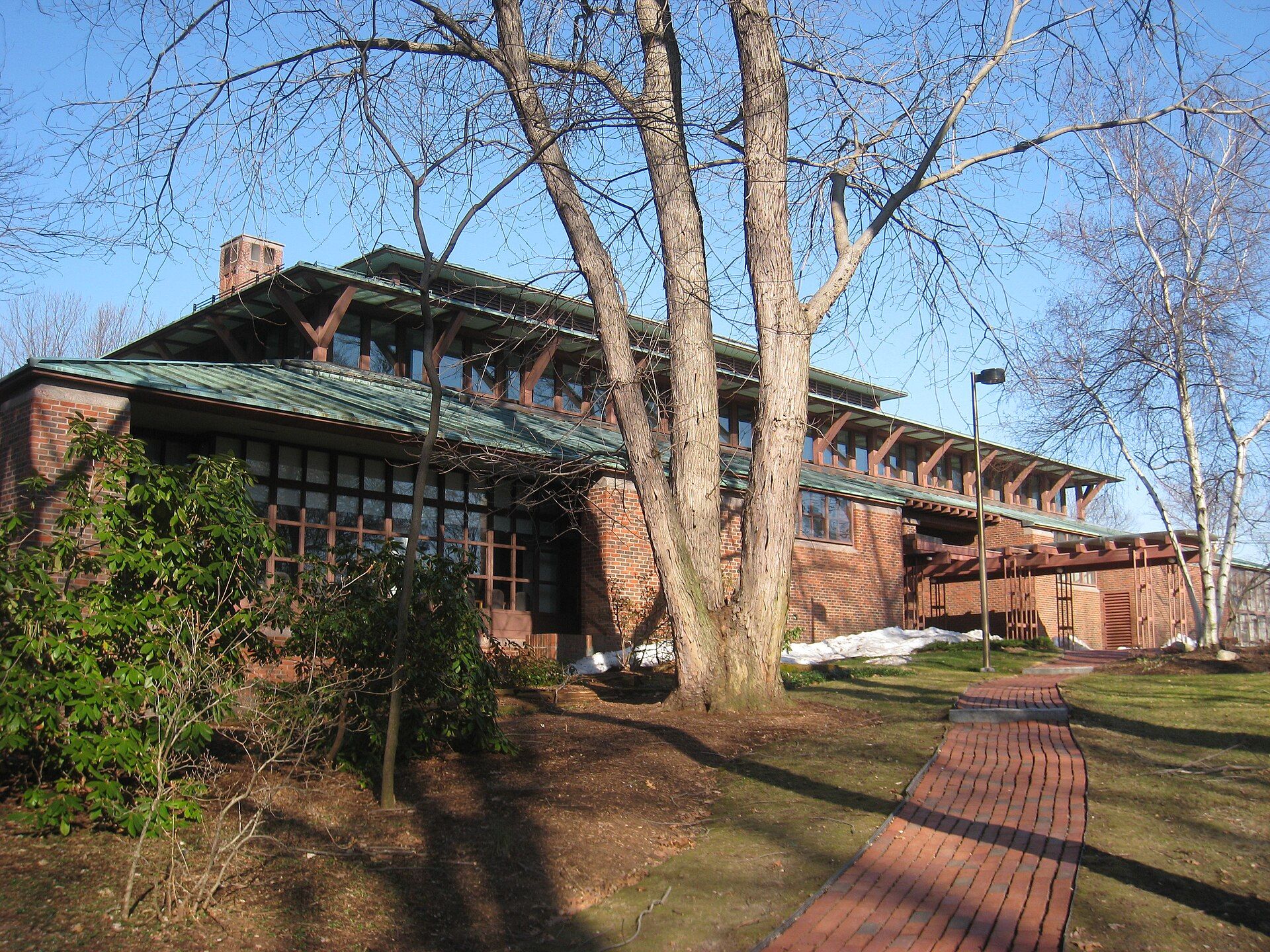
The city was named in honor of the University of Cambridge in Cambridge, England, which was an important center of the Puritan theology that was embraced by the town's founders. Landmarks include American Academy of Arts and Sciences, Harvard College Observatory and Akamai Technologies. Cambridge is the birthplace of Matt Damon, actor.
Every piece is drawn from Cambridge's own map data and historic archives, then printed and shipped from the USA when you order. No two towns look alike.
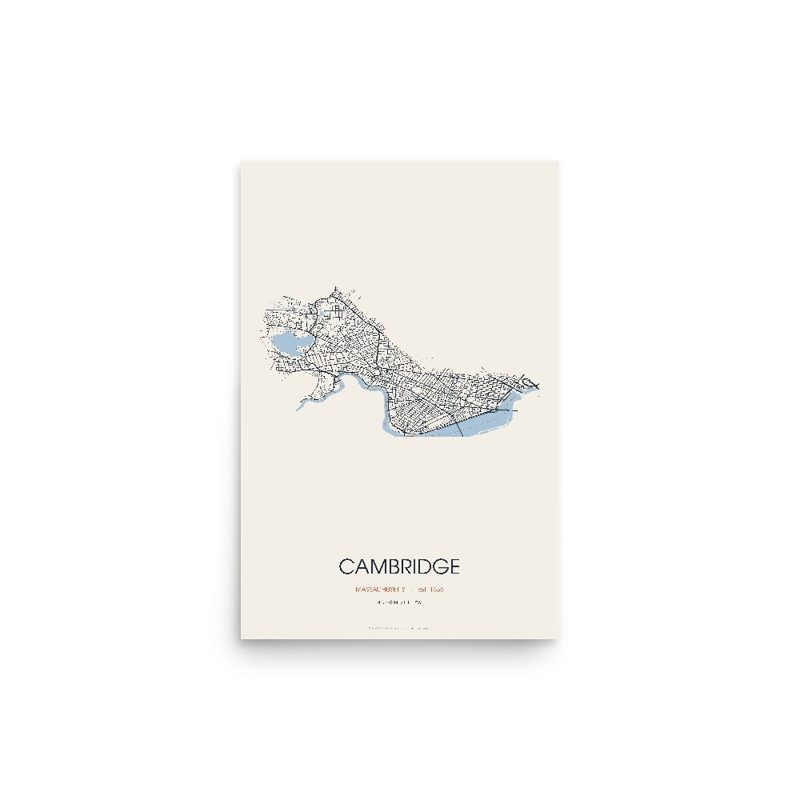
Every road in town, on archival matte paper
The same map, in navy and silver
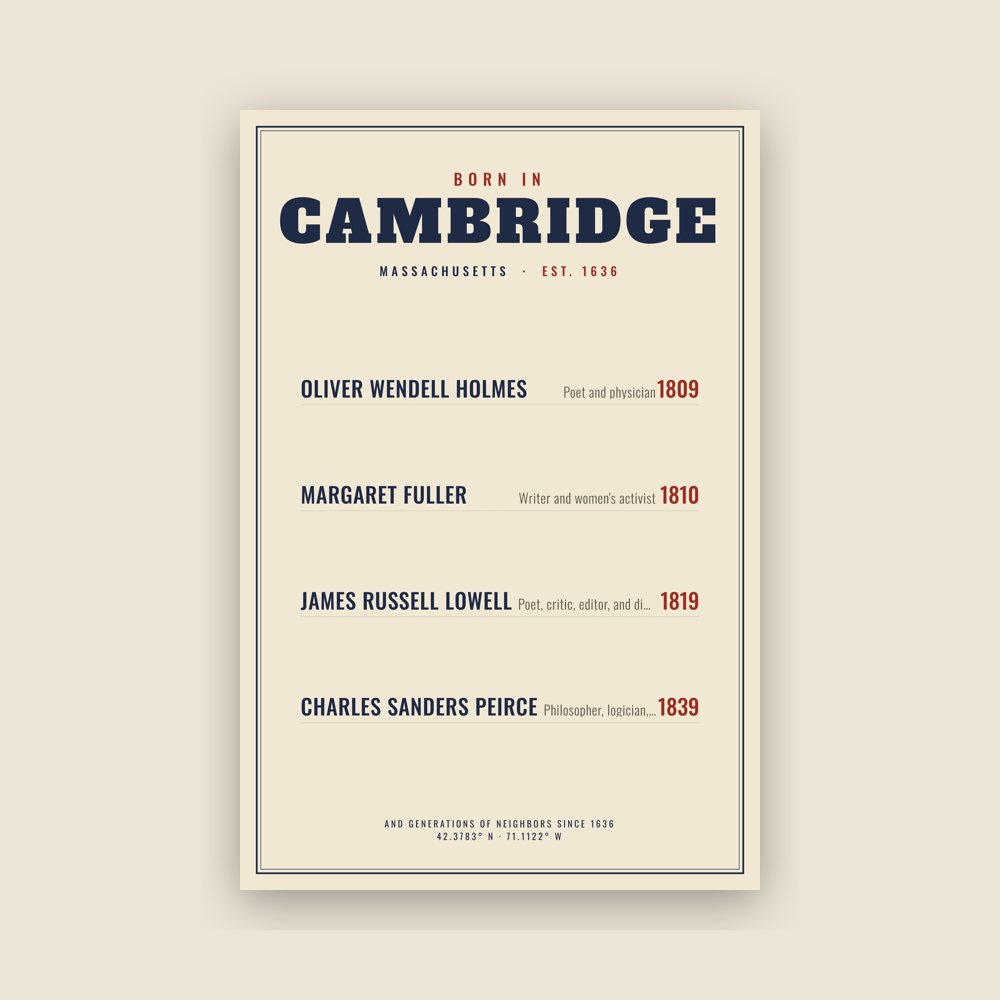
Famous natives, by birth year
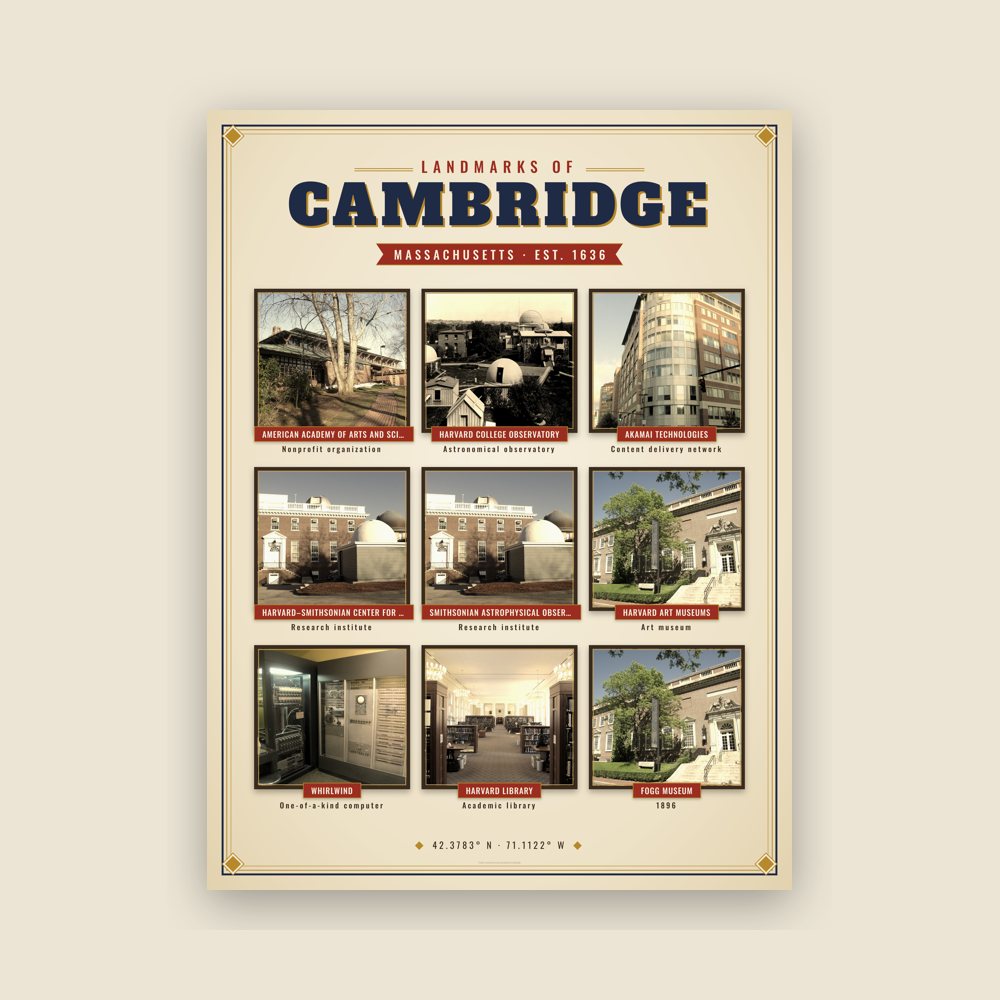
Nine local landmarks, archival matte
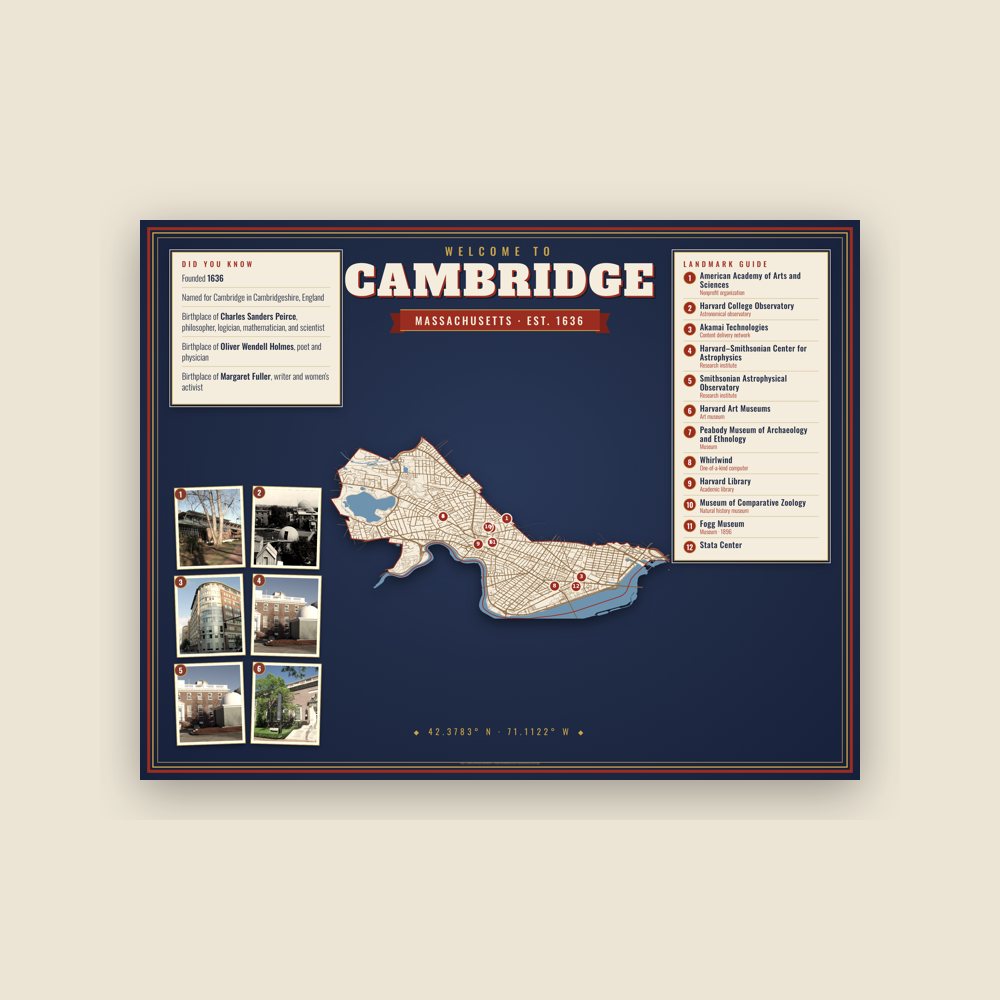
Map of local landmarks, washable fabric
Heavy-blend fleece, street map printed on the back
Soft Bella+Canvas jersey
Glossy ceramic, dishwasher safe
Ceramic keepsake, gold ribbon
Weatherproof, for the front walk
24″×16″, printed coir-look fibers, rubber back
12″×12″ printed wood, ready to hang
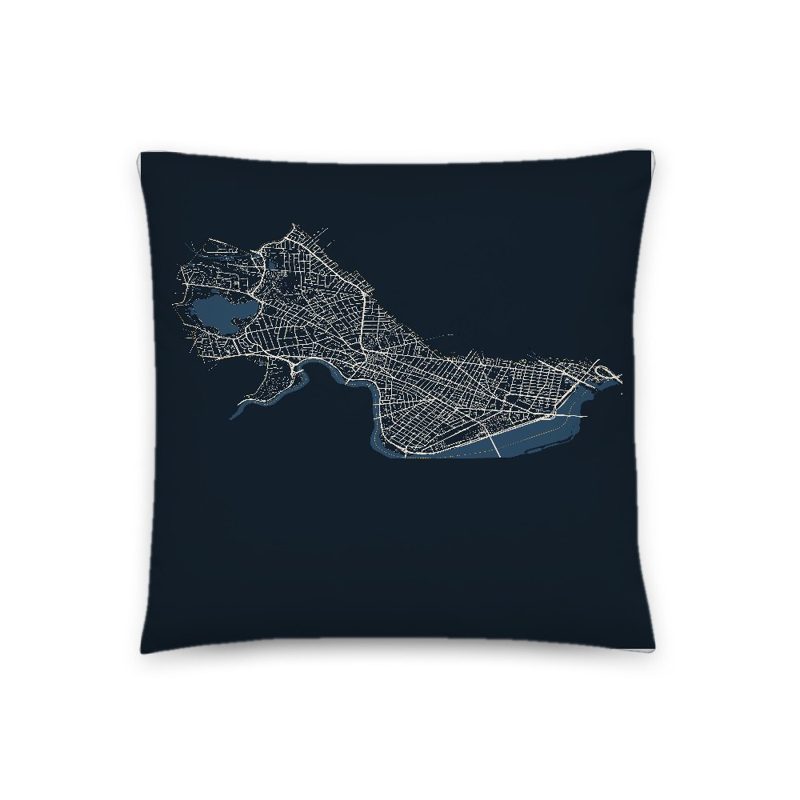
Soft-touch, zip cover
Sturdy all-over-print tote
Glossy top, cork back
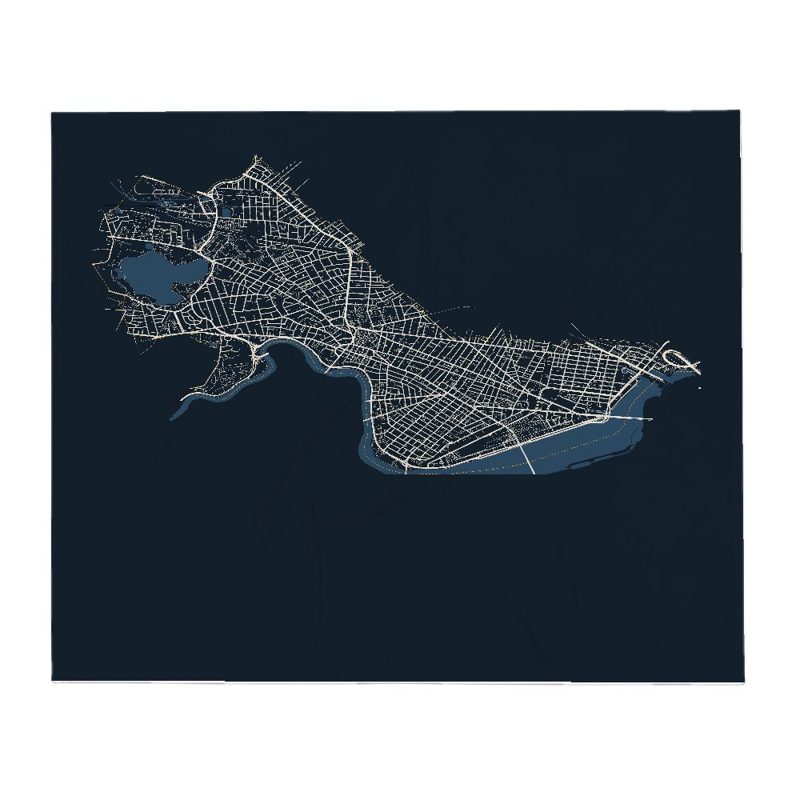
Soft fleece, 50″×60″
20 oz, double-wall stainless
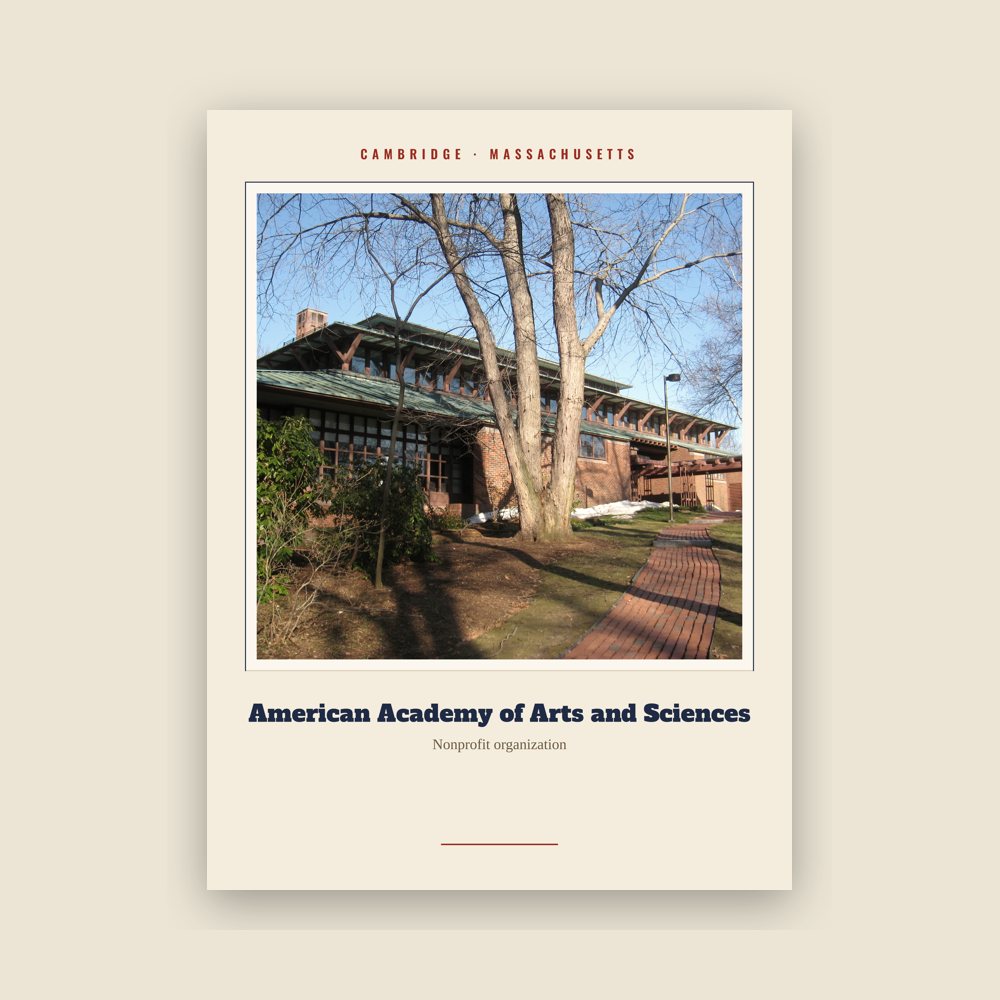
Archival matte print of a local landmark, credited to its photographer
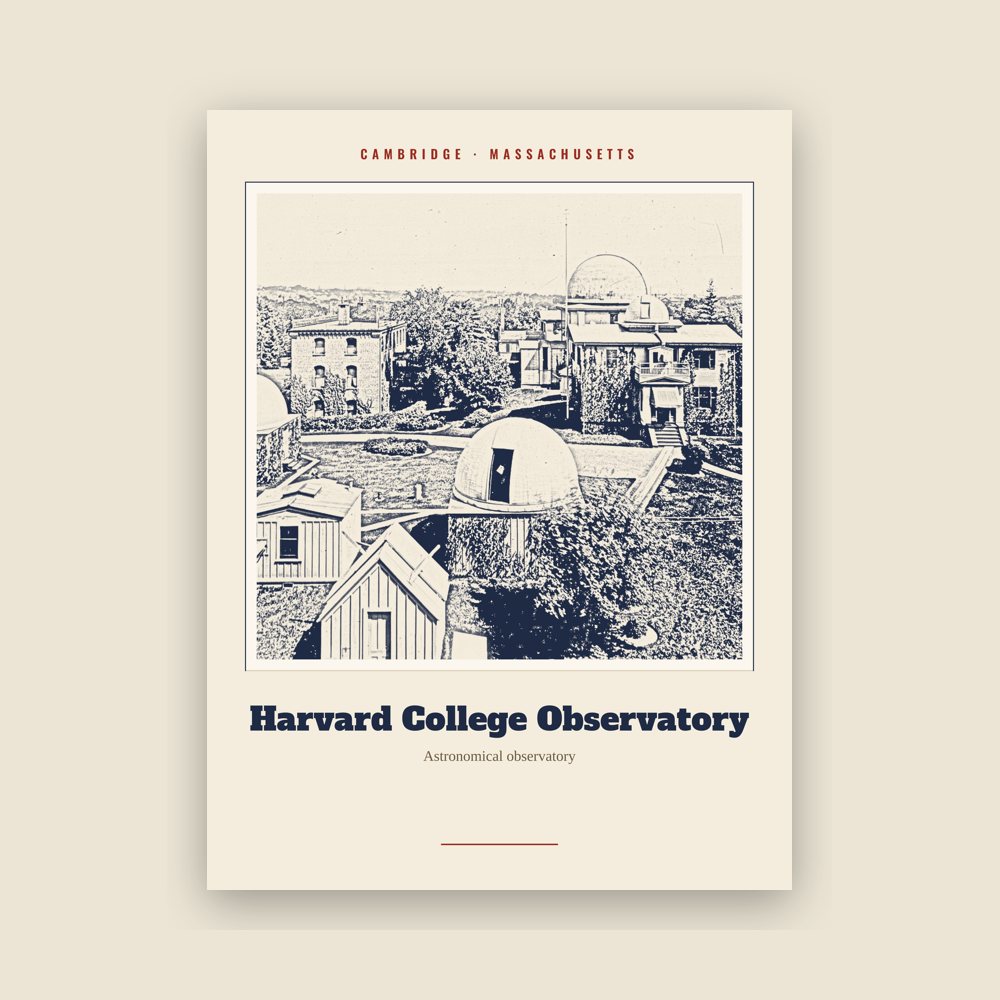
Archival matte print of a local landmark, credited to its photographer
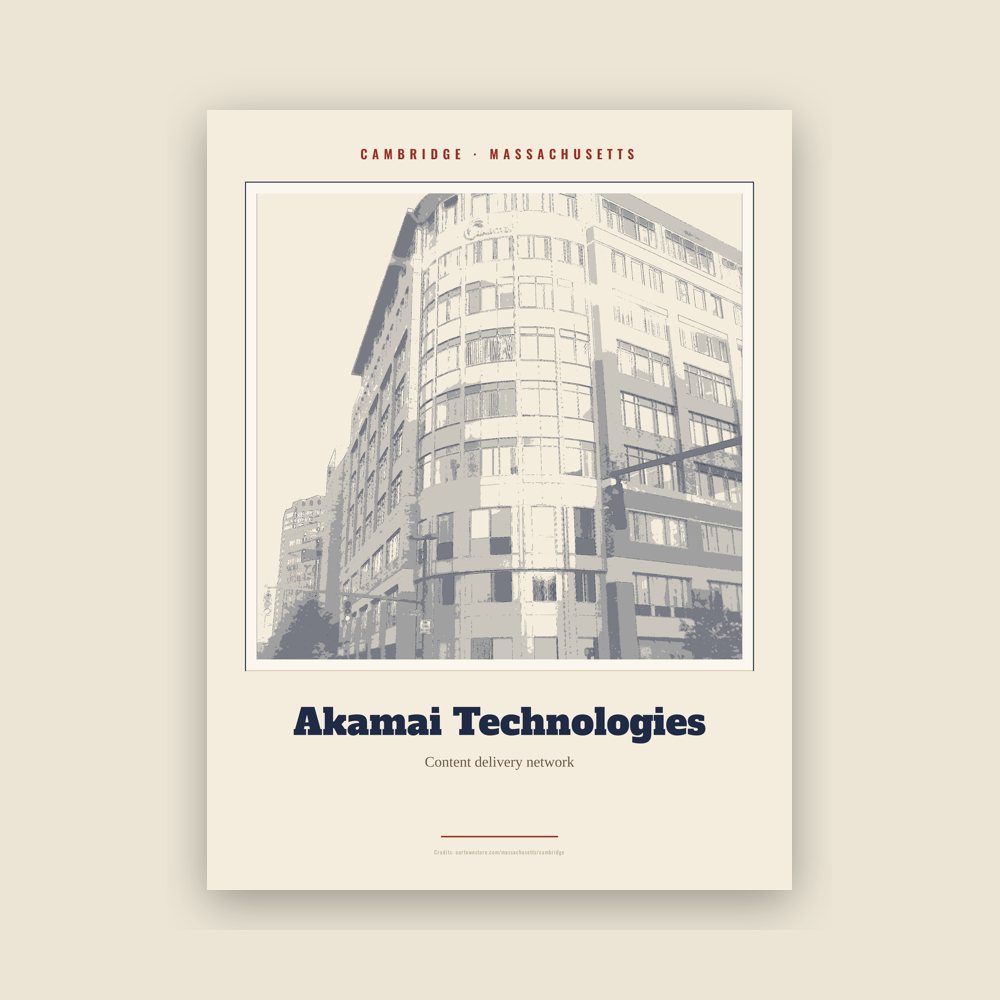
Archival matte print of a local landmark, credited to its photographer
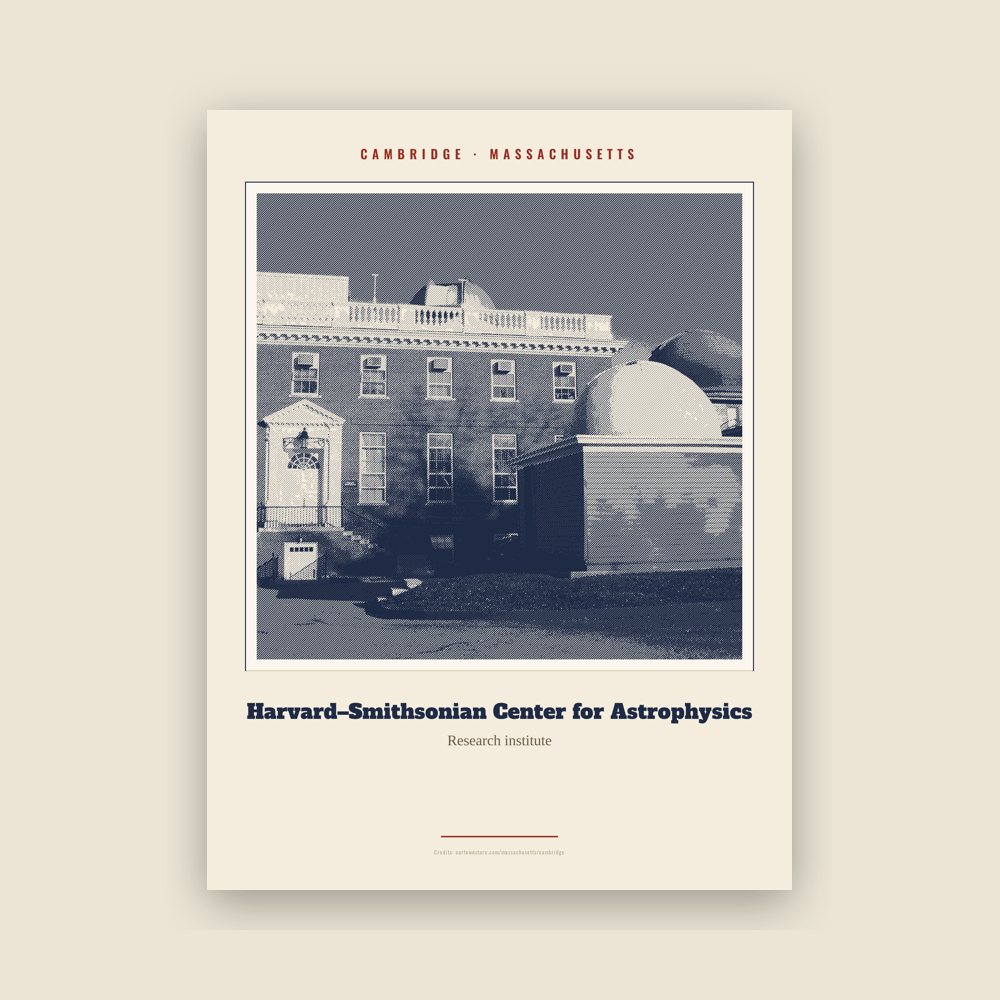
Archival matte print of a local landmark, credited to its photographer
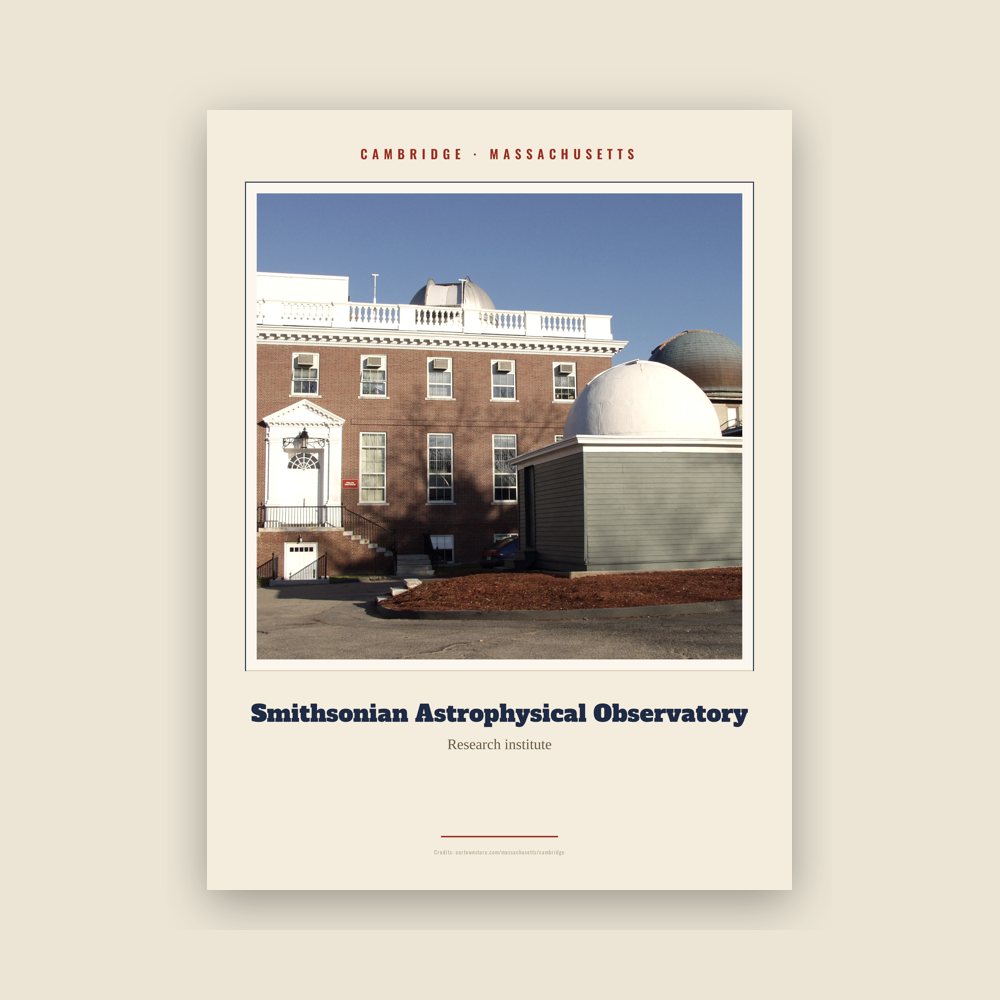
Archival matte print of a local landmark, credited to its photographer
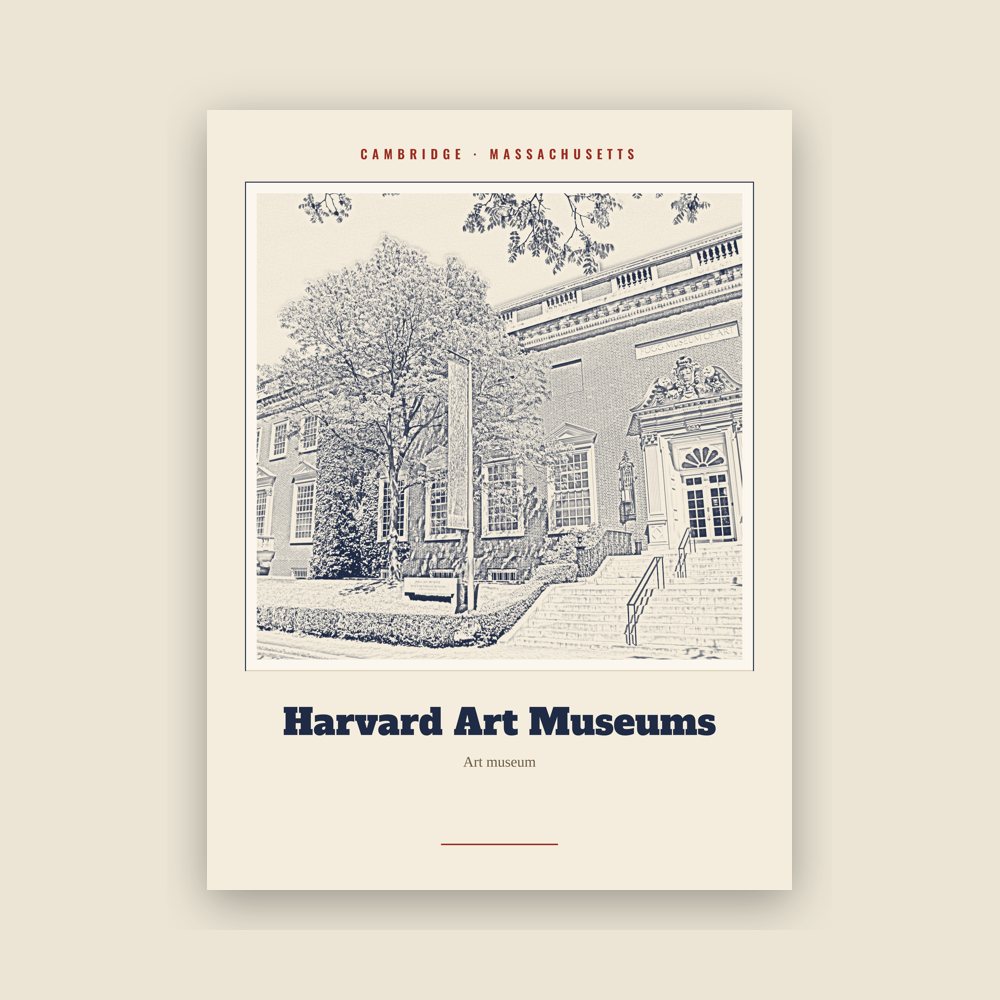
Archival matte print of a local landmark, credited to its photographer
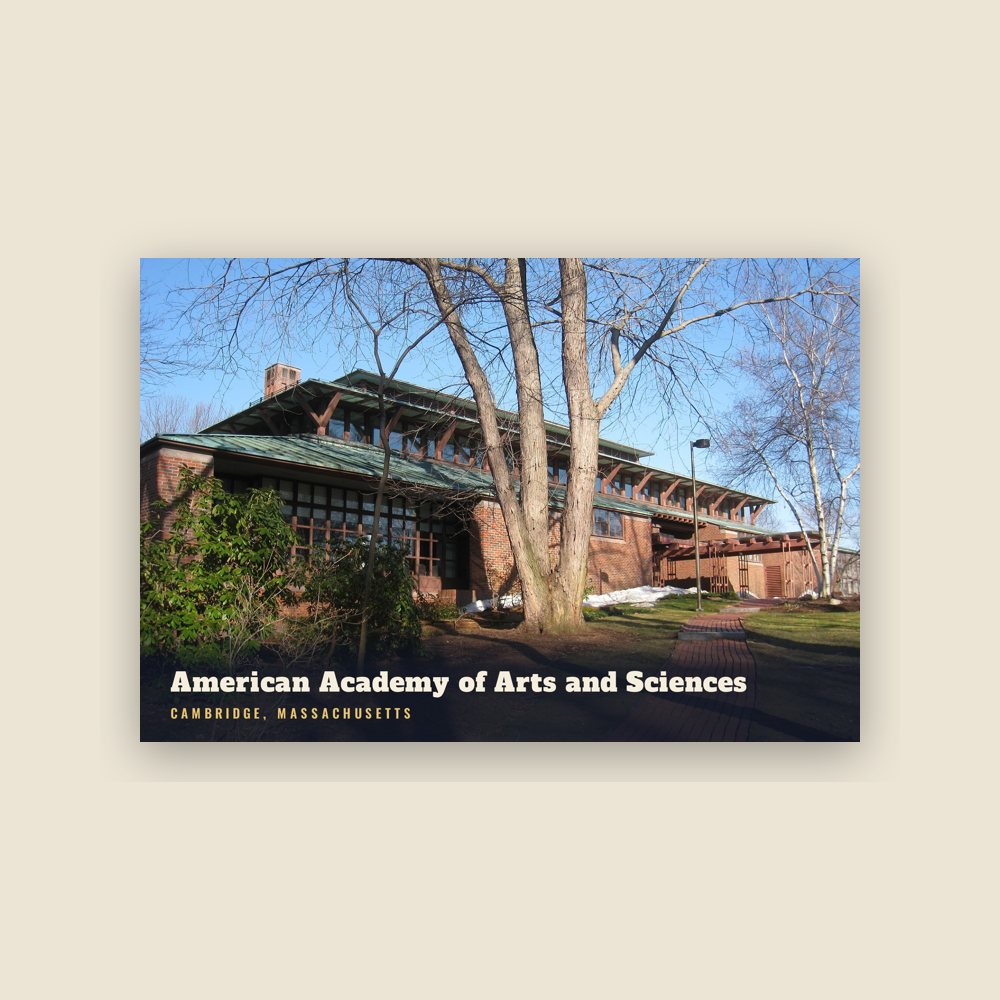
6″×4″ postcard, glossy front
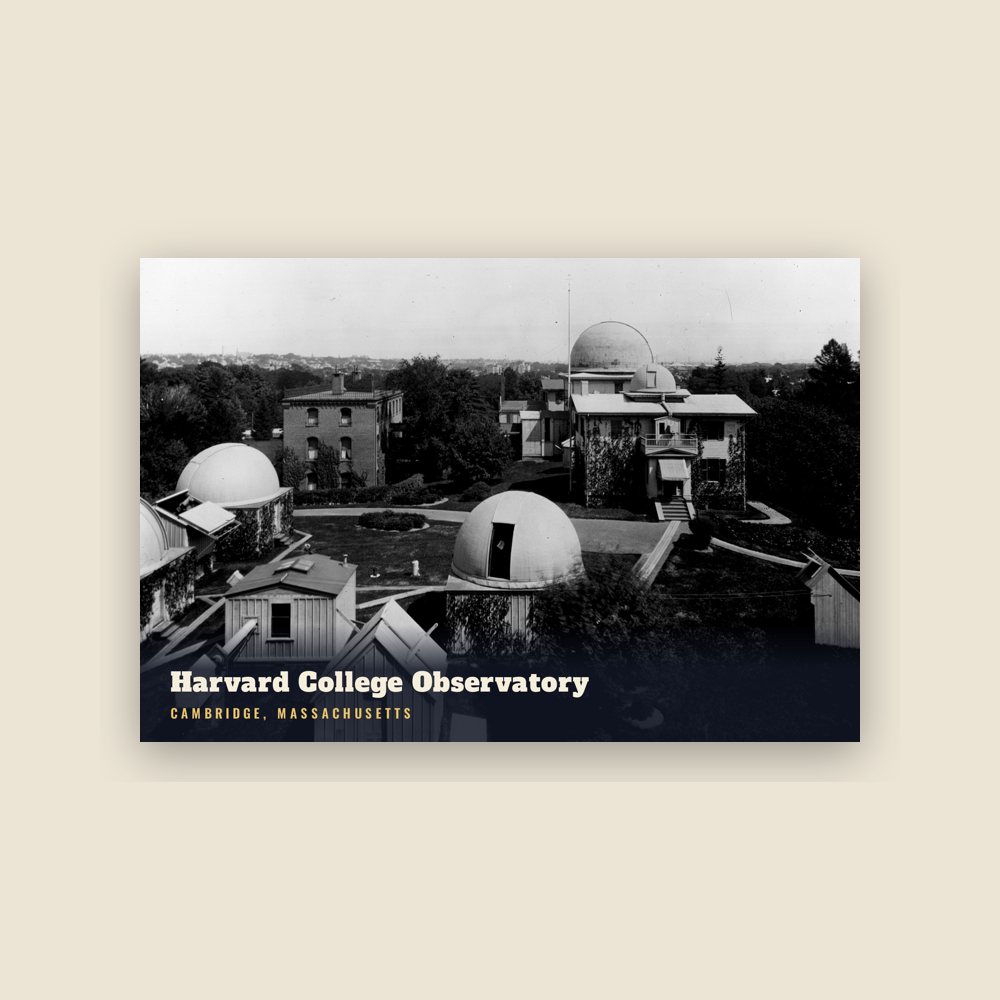
6″×4″ postcard, glossy front
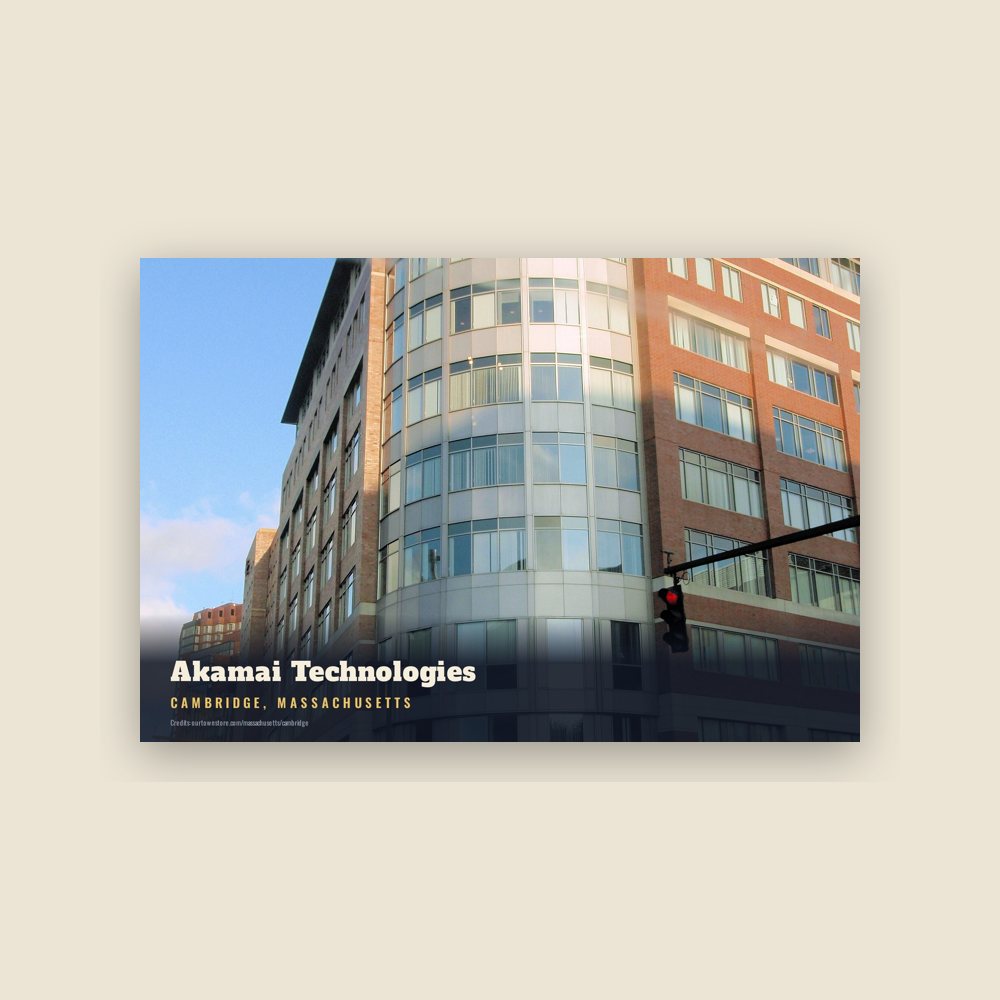
6″×4″ postcard, glossy front
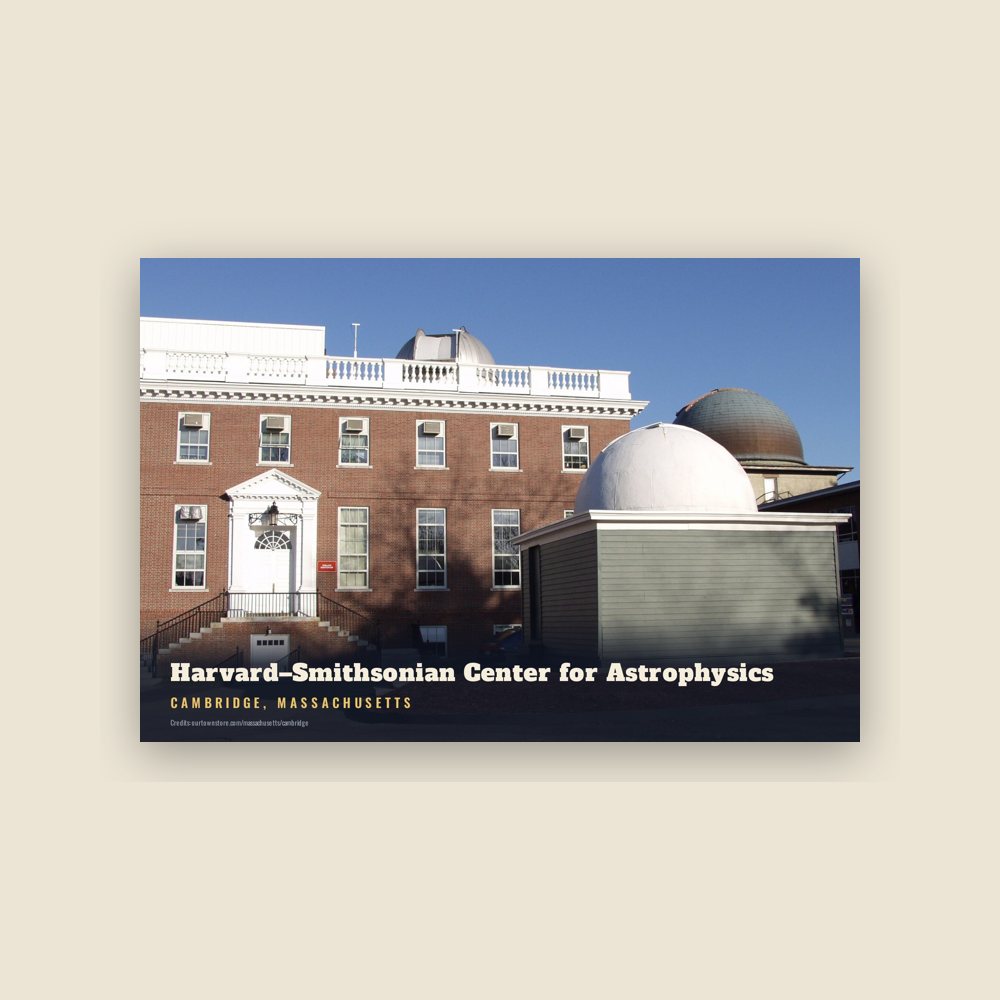
6″×4″ postcard, glossy front
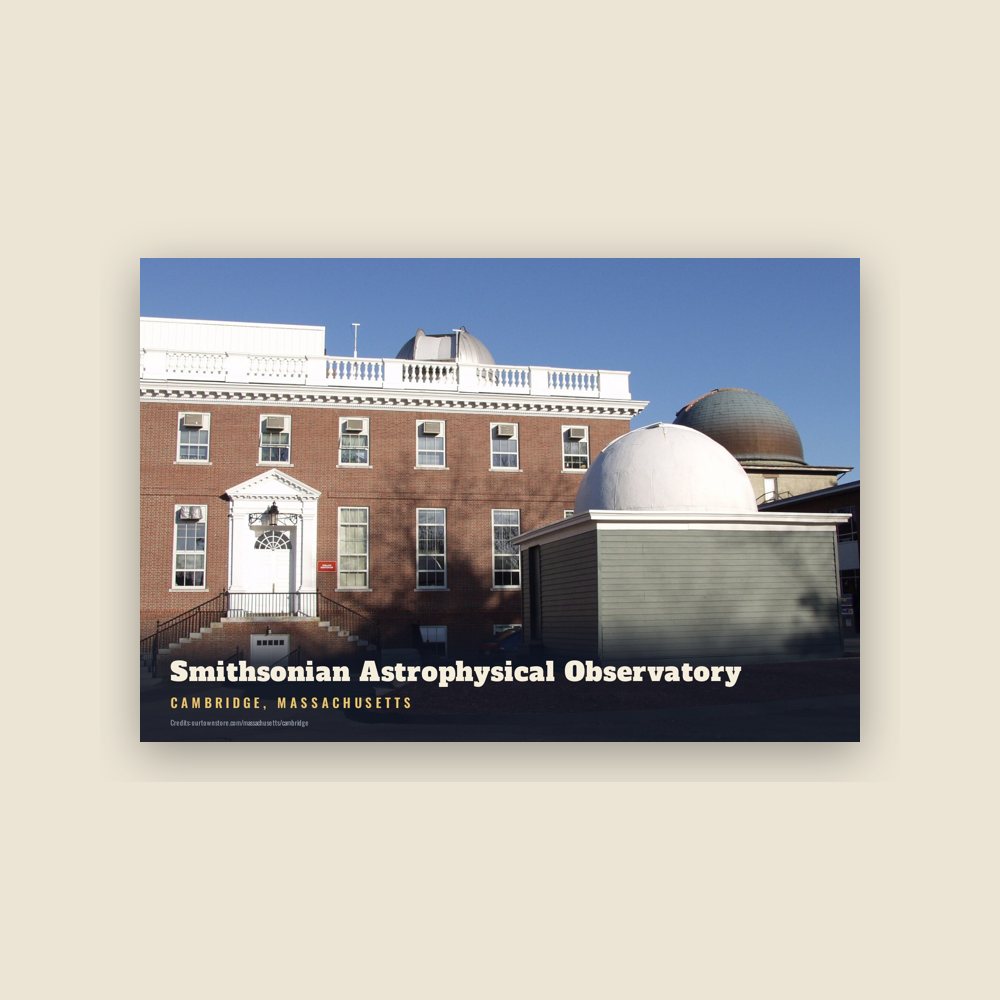
6″×4″ postcard, glossy front
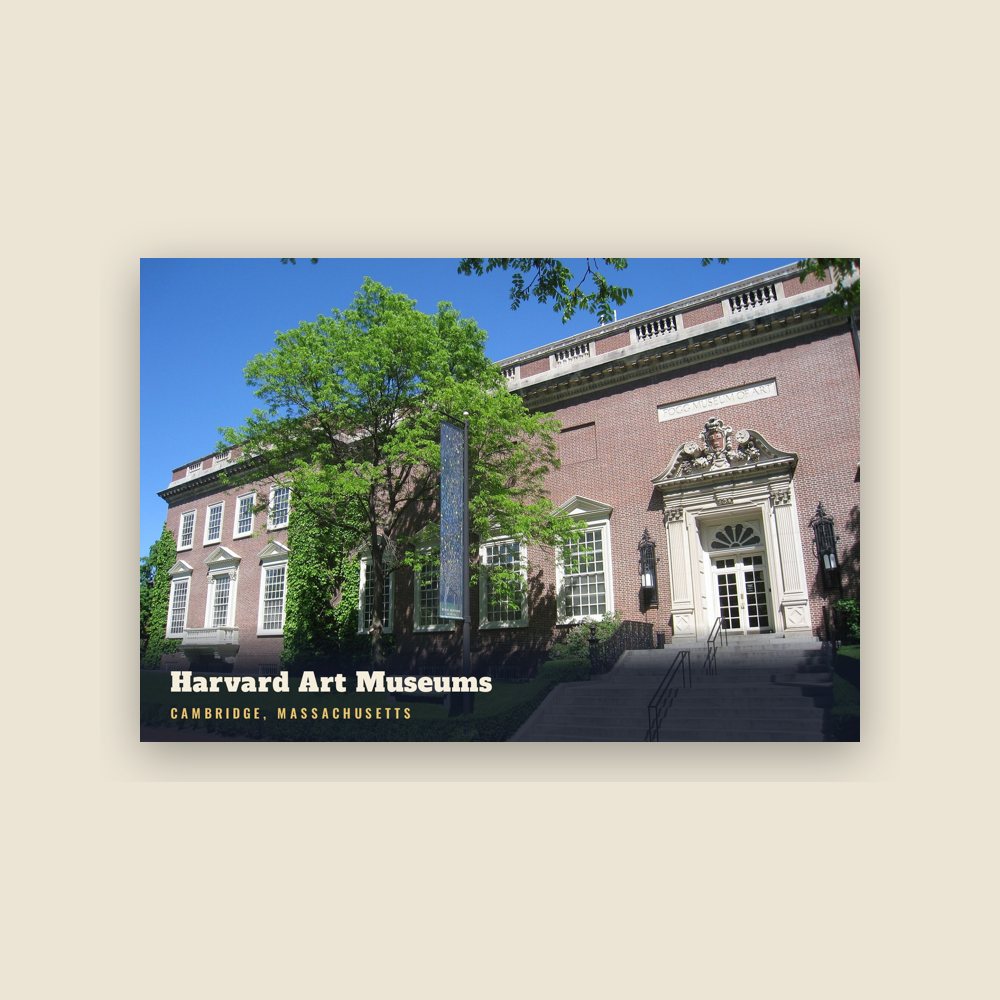
6″×4″ postcard, glossy front
Named for Cambridge (city in Cambridgeshire, England).
Population 1910: 104,839 → 2010: 105,162 → 2013: 107,289 → 2020: 118,403
From Wikidata (CC0).
Native Americans inhabited the Charles River basin for thousands of years prior to European colonization of the Americas, as confirmed by archaeological remains in neighboring Watertown and Boston. At the time of European contact, the area was inhabited by Naumkeag of the Pawtucket Confederacy to the north and Massachusett to the south.
The contact period introduced a number of European infectious diseases which would decimate native populations in virgin soil epidemics, significantly depopulating the Charles River basin upon the arrival of large groups of English settlers in the 1630s. A deed for the land that includes present-day Cambridge was ultimately obtained from the Naumkeag Squaw Sachem of Mistick in 1639, after a leptospirosis epidemic in 1616–1619 and a smallpox epidemic in 1633 killed large portions of her tribe, including two of her sons.
Some sources list Cambridge as the English toponym for Anmoughcawgen, meaning 'fishing weir' or 'beaver dam' in Natick, however this misconception arises from John Smith's 1617 Description of New England, in which Cambridge was one of several English place names arbitrarily applied by Smith and Prince Charles I of England, in this case to a location on the Kennebec River in Maine, far to the north of the later settlement of Cambridge, which was not so named until 1638. An indigenous place name for the present day location of Cambridge is not known, though other native place names along the Charles in the 1600s included Pequoset and Nonantum upstream and Mishawum and Shawmut downstream, while the Charles River (also named by Smith) was known as the Quinobequin.
The first settlement of the Massachusetts Bay Colony was established in Salem, in June 1626. That December, the site of present-day Cambridge was chosen for development because it was safely upriver from Boston Harbor, making it easily defensible from attacks by enemy ships. The city was founded by Thomas Dudley, his daughter Anne Bradstreet, and his son-in-law Simon Bradstreet. The first houses were built in the spring of 1631. The settlement was initially referred to as "the newe towne". Official Massachusetts records show the name rendered as Newe Towne by 1632, and as Newtowne by 1638.
Located at the first convenient Charles River crossing west of Boston, Newtowne was one of several towns, including Boston, Dorchester, Watertown, and Weymouth, founded by the 700 original Puritan colonists of the Massachusetts Bay Colony who arrived on the Winthrop Fleet. Its first preacher was Thomas Hooker, who led many of its original inhabitants west in 1636 to found Hartford and the Connecticut Colony; before leaving, they sold their plots to more recent immigrants from England. The original village site is now within Harvard Square. The marketplace where farmers sold crops from surrounding towns at the edge of a salt marsh (since filled) remains within a small park at the corner of John F. Kennedy and Winthrop Streets.
In 1636, Newe College, later renamed Harvard College after benefactor John Harvard, was founded as North America's first institution of higher learning. Its initial purpose was training ministers. According to Cotton Mather, Newtowne was chosen for the site of the college by the Great and General Court, then the legislature of the Massachusetts Bay Colony, primarily for its proximity to the popular and highly respected Puritan preacher Thomas Shepard. In May 1638, the settlement's name was changed to Cambridge in honor of the University of Cambridge in Cambridge, England.
In 1639, the Great and General Court purchased the land that became present-day Cambridge from the Naumkeag Squaw Sachem of Mistick.
The town comprised a much larger area than the present city, with various outlying parts becoming independent towns over the years: Cambridge Village (later Newtown and now Newton) in 1688, Cambridge Farms (now Lexington) in 1712 or 1713, and Little or South Cambridge (now Brighton) and Menotomy or West Cambridge (now Arlington) in 1807. In the late 19th century, various schemes for annexing Cambridge to Boston were pursued and rejected.
Newtowne's ministers, Hooker and Shepard, the college's first president, the college's major benefactor, and the first schoolmaster Nathaniel Eaton were all Cambridge alumni, as was the colony's governor John Winthrop. In 1629, Winthrop had led the signing of the founding document of the city of Boston, which was known as the Cambridge Agreement, after the university. In 1650, Governor Thomas Dudley signed the charter creating the corporation that still governs Harvard College.
Cambridge grew slowly as an agricultural village eight miles (13 km) by road from Boston, the colony's capital. By the American Revolution, most residents lived near the Common and Harvard College, with most of the town comprising farms and estates. Most inhabitants were descendants of the original Puritan colonists, but there was also a small elite of Anglican "worthies" who were not involved in village life, made their livings from estates, investments, and trade, and lived in mansions along "the Road to Watertown", present-day Brattle Street, which is still known as Tory Row.
Newly appointed commander-in-chief of the Continental Army General George Washington, dispatched from the Second Continental Congress in Philadelphia, arrived on July 3, 1775, and took command of the force of Patriot soldiers camped on Cambridge Common, today regarded as the birthplace of the American army.
On January 24, 1776, Henry Knox arrived with an artillery train captured from Fort Ticonderoga, which allowed Washington to force the British Army to evacuate Boston. Most of the Loyalist estates in Cambridge were confiscated after the Revolutionary War.
Between 1790 and 1840, Cambridge grew rapidly with the construction of West Boston Bridge in 1792 connecting Cambridge directly to Boston, making it no longer necessary to travel eight miles (13 km) through the Boston Neck, Roxbury, and Brookline to cross the Charles River. A second bridge, the Canal Bridge, opened in 1809 alongside the new Middlesex Canal. The new bridges and roads made what were formerly estates and marshland into prime industrial and residential districts.
In the mid-19th century, Cambridge was the center of a literary revolution. It was home to some of the famous Fireside poets, named because their poems would often be read aloud by families in front of their evening fires. The Fireside poets, including Henry Wadsworth Longfellow, James Russell Lowell, and Oliver Wendell Holmes, were highly popular and influential in this era.
Soon after, turnpikes were built: the Cambridge and Concord Turnpike (today's Broadway and Concord Ave.), the Middlesex Turnpike (Hampshire St. and Massachusetts Ave. northwest of Porter Square), and what are today's Cambridge, Main, and Harvard Streets connected various areas of Cambridge to the bridges. In addition, the town was connected to the Boston & Maine Railroad, leading to the development of Porter Square as well as the creation of neighboring Somerville from the formerly rural parts of Charlestown.
Cambridge was incorporated as a city in 1846. The city's commercial center began to shift from Harvard Square to Central Square, which became the city's downtown around that time.
Between 1850 and 1900, Cambridge took on much of its present character, featuring streetcar suburban development along the turnpikes and working class and industrial neighborhoods focused on East Cambridge, comfortable middle-class housing on the old Cambridgeport, and Mid-Cambridge estates and upper-class enclaves near Harvard University and on the minor hills. The arrival of the railroad in North Cambridge and Northwest Cambridge led to three changes: the development of massive brickyards and brickworks between Massachusetts Avenue, Concord Avenue, and Alewife Brook; the ice-cutting industry launched by Frederic Tudor on Fresh Pond; and the carving up of the last estates into residential subdivisions to house the thousands of immigrants who arrived to work in the new industries.
For much of the 19th and early 20th centuries, the city's largest employer was the New England Glass Company, founded in 1818. By the middle of the 19th century, it was the world's largest and most modern glassworks. In 1888, Edward Drummond Libbey moved all production to Toledo, Ohio, where it continues today under the name Owens-Illinois. The company's flint glassware with heavy lead content is prized by antique glass collectors, and the Toledo Museum of Art has a large collection. The Museum of Fine Arts in Boston and the Sandwich Glass Museum on Cape Cod also house several pieces.
By 1920, Cambridge was one of New England's main industrial cities, with nearly 120,000 residents. Among the largest businesses in Cambridge during the period of industrialization was Carter's Ink Company, whose neon sign long adorned the Charles River and which was for many years the world's largest ink manufacturer. Next door was the Athenaeum Press. Confectionery and snack manufacturers in the Cambridgeport-Area 4-Kendall corridor included Kennedy Biscuit Factory, later part of Nabisco and originator of the Fig Newton, Necco, Squirrel Brands, George Close Company (1861–1930s), Page & Shaw, Daggett Chocolate (1892–1960s, recipes bought by Necco), Fox Cross Company (1920–1980, originator of the Charleston Chew, and now part of Tootsie Roll Industries), Kendall Confectionery Company, and James O. Welch (1927–1963, originator of Junior Mints, Sugar Daddies, Sugar Mamas, and Sugar Babies, now part of Tootsie Roll Industries). Main Street was nicknamed "Confectioner's Row".
Only the Cambridge Brands subsidiary of Tootsie Roll Industries remains in town, still manufacturing Junior Mints in the old Welch factory on Main Street. The Blake and Knowles Steam Pump Company (1886), the Kendall Boiler and Tank Company (1880, now in Chelmsford, Massachusetts), and the New England Glass Company (1818–1878) were among the industrial manufacturers in what are now Kendall Square and East Cambridge.
In 1935, the Cambridge Housing Authority and the Public Works Administration demolished an integrated low-income tenement neighborhood with African Americans and European immigrants. In its place, it built the whites-only "Newtowne Court" public housing development and the adjoining, blacks-only "Washington Elms" project in 1940; the city required segregation in its other public housing projects as well.
As industry in New England began to decline during the Great Depression and after World War II, Cambridge lost much of its industrial base. It also began to become an intellectual, rather than an industrial, center. Harvard University, which had always been important as both a landowner and an institution, began to play a more dominant role in the city's life and culture. When Radcliffe College was established in 1879, the town became a mecca for some of the nation's most academically talented female students. MIT's move from Boston to Cambridge in 1916 reinforced Cambridge's status as an intellectual center of the United States.
After the 1950s, the city's population began to decline slowly as families tended to be replaced by single people and young couples. In Cambridge Highlands, the technology company Bolt, Beranek, & Newman produced the first network router in 1969 and hosted the invention of computer-to-computer email in 1971. The 1980s brought a wave of high technology startups. Those selling advanced minicomputers were overtaken by the microcomputer. Cambridge-based VisiCorp made the first spreadsheet software for personal computers, VisiCalc, and helped propel the Apple II to consumer success. It was overtaken and purchased by Cambridge-based Lotus Development, maker of Lotus 1-2-3 (which was, in turn, replaced in by Microsoft Excel).
The city continues to be home to many startups. Kendall Square was a software hub through the dot-com boom and today hosts offices of such technology companies as Google, Microsoft, and Amazon. The Square also now houses the headquarters of Akamai.
In 1976, Harvard's plans to start experiments with recombinant DNA led to a three-month moratorium and a citizen review panel. In the end, Cambridge decided to allow such experiments but passed safety regulations in 1977. This led to regulatory certainty and acceptance when Biogen opened a lab in 1982, in contrast to the hostility that caused the Genetic Institute, a Harvard spinoff, to abandon Somerville and Boston for Cambridge. The biotech and pharmaceutical industries have since thrived in Cambridge, which now includes headquarters for Biogen and Genzyme; laboratories for Novartis, Teva, Takeda, Alnylam, Ironwood, Moderna Therapeutics, Editas Medicine; support companies such as Cytel; and many smaller companies.
During the era of rent control in Massachusetts, at least 20 percent of all rent controlled apartments in Cambridge housed high-income earners, with the majority housing people with professional, technical, and managerial jobs. In an independent study conducted of 2/3 of the rent controlled apartments in Cambridge in 1988, 246 were households headed by doctors, 298 by lawyers, 265 by architects, 259 by professors, and 220 by engineers. There were 2,650 with students, including 1,503 with graduate students.
Kenneth Reeves, the mayor of Cambridge at the time rent control was repealed in Massachusetts, was living in the same rent controlled apartment he lived in as a Harvard student in 1973.
The end of rent control in 1994 had numerous effects on the city. Within four years of repealing the law, Cambridge, where "the city's form of rent control was unusually strict," saw new housing and construction increase by 50%, and the tax revenue from construction permits tripled. Property values in Cambridge increased by about $7.8 billion in the decade following the repeal. Roughly a quarter of this increase, $1.8 billion ($3 billion in 2024 dollars), was due to the repeal of rent control.
Close to 40% of all Cambridge properties were under rent control when it was repealed. Their property values appreciated faster than non-rent controlled properties, as did the properties around them. By the end of the 20th century, Cambridge had one of the most costly housing markets in the Northeastern United States.
Cambridge's mix of amenities and proximity to Boston kept housing prices relatively stable despite the bursting of the United States housing bubble in 2008 and 2009. Cambridge has been a sanctuary city since 1985 and reaffirmed its status as such in 2006.
Adapted (trimmed) from the Wikipedia article Cambridge, Massachusetts, revision 1379991800 by its contributors, licensed CC BY-SA 4.0.
We share a part of every Cambridge sale with local partners, and we'd love to print from your collection. Old photographs, maps and postcards make the best keepsakes.
Partner with us