English explorer Martin Pring from Bristol, England, explored the area in 1603 at age 23, commanding the ships Speedwell and Explorer in an expedition to assess the commercial potential of the northern Virginia territory. Pring named the islands "Fox Islands" after the indigenous silver-gray foxes he observed, a name that survives in the Fox Islands Thoroughfare, the strait separating North Haven and Vinalhaven that provides passage for boats crossing Penobscot Bay.
Read the full history
Town incorporation and early governance
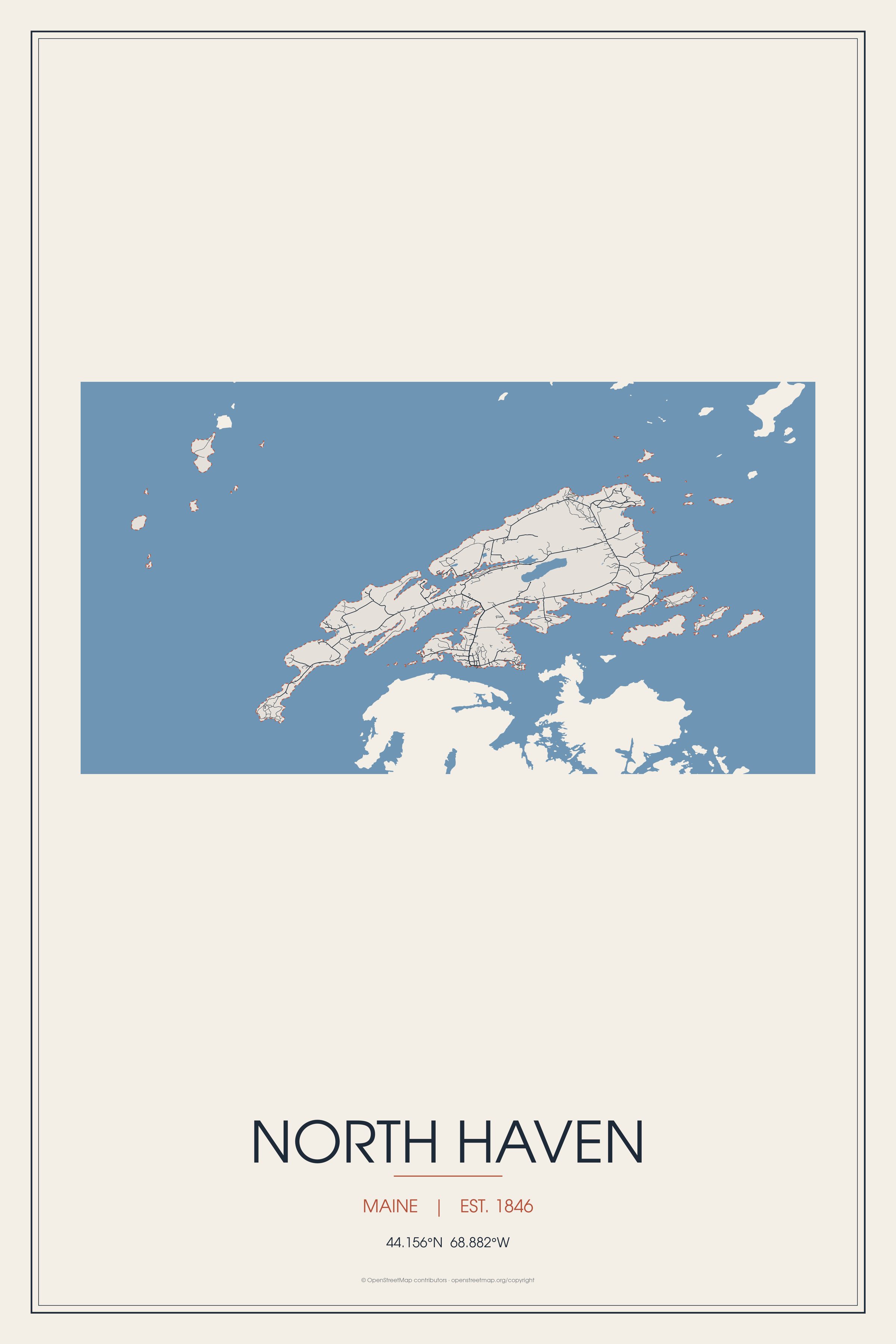
North Haven was originally the North Island of Vinalhaven, from which it was set off and incorporated on March 1, 1847, as the town of Fox Isle, with the name changed to North Haven on July 13 of the same year. In 1850, the state legislature passed an act that gave the majority of island inhabitants "the right to have such roads as they deemed fit." The majority thereupon decided to have no roads at all, or else roads obstructed with gates or bars at the discretion of landowners. Some residents petitioned to amend the act.
Economic development
Historically, North Haven was known as the farming island because of its flat and fertile ground, with hay being a staple crop for many years. In terms of trade, the island supplied Boston and other New England cities with produce and lamb via steamships. Fishing and farming became chief occupations. Boatbuilding became a prominent industry and to this day, there are two active boatyards on the island. But many inhabitants were fishermen who caught lobsters, scallops and oysters.
Summer colony
In the 1880s, summer "rusticators" discovered the island, arriving first from Boston and a decade later from New York and Philadelphia, building cottages on both sides of the Thoroughfare that separates North Haven and Vinalhaven and later establishing another summer colony at Pulpit Harbor. North Haven is best known today for its sizable summer colony of prominent north-easterners, particularly Boston Brahmins, drawn to the island for over a century to savor its simple way of life. Among the more notable summer residents was the impressionist painter Frank Weston Benson, who rented the Wooster Farm as a summer home and painted several notable canvases set on the island.
The southern side of the Fox Islands Thoroughfare is often informally considered part of North Haven, since Vinalhaven's north shore is nearly a dozen miles from that community's town center. In contrast to Vinalhaven, North Haven's economy relies less on the lobster industry and more on sustaining its summer resort community. Energy for the community is partially provided by the wind project in Vinalhaven through the Fox Island Electric Cooperative.
A small population of Mouflon sheep (native to Europe and western Asia) escaped from an animal enclosure owned by Thomas Watson, Jr. on the island in the 1990s and some of the original population survives today.
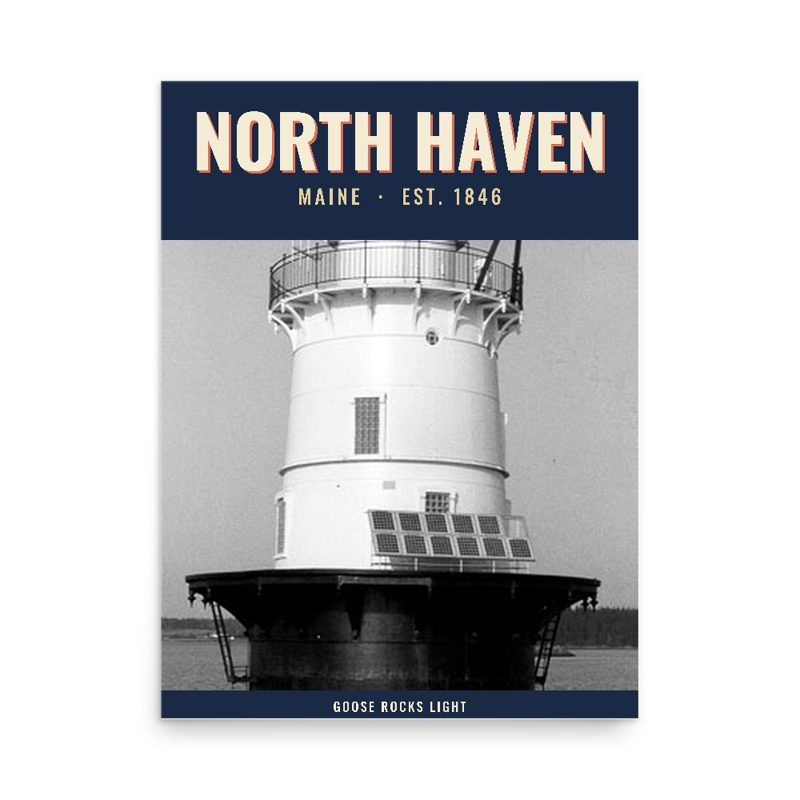
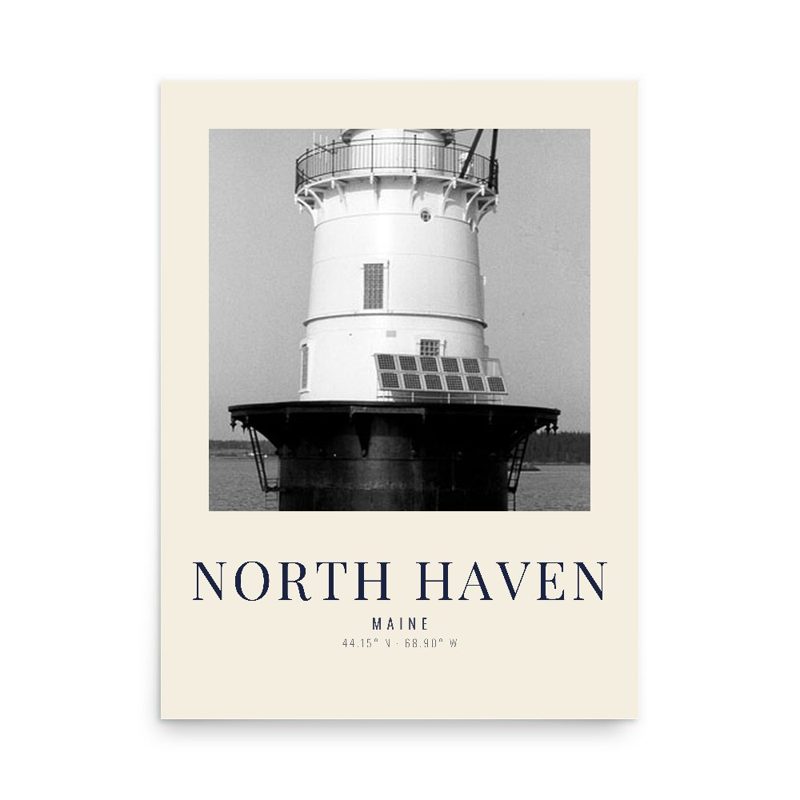
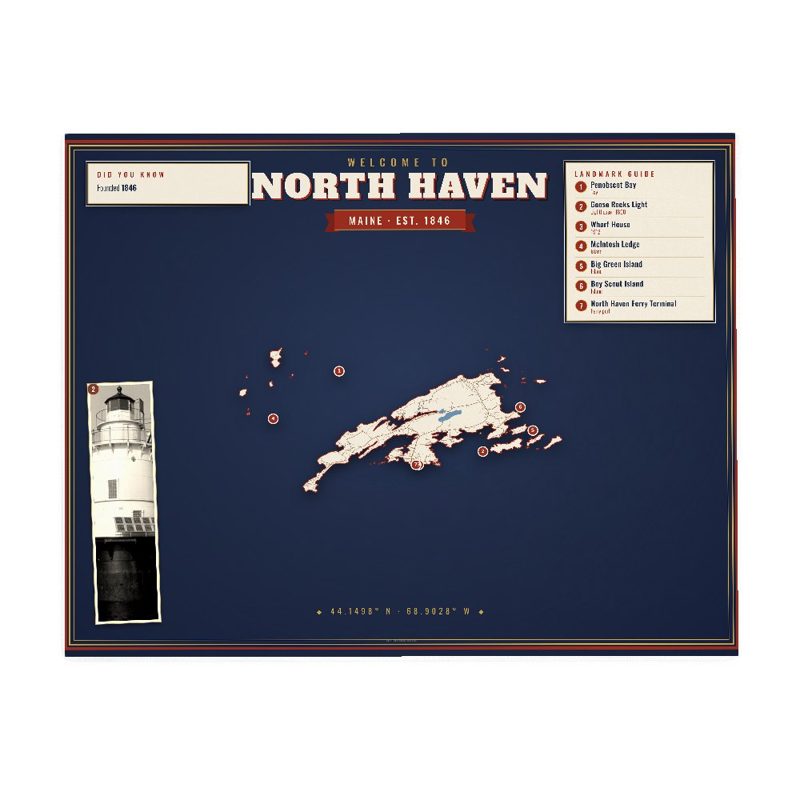
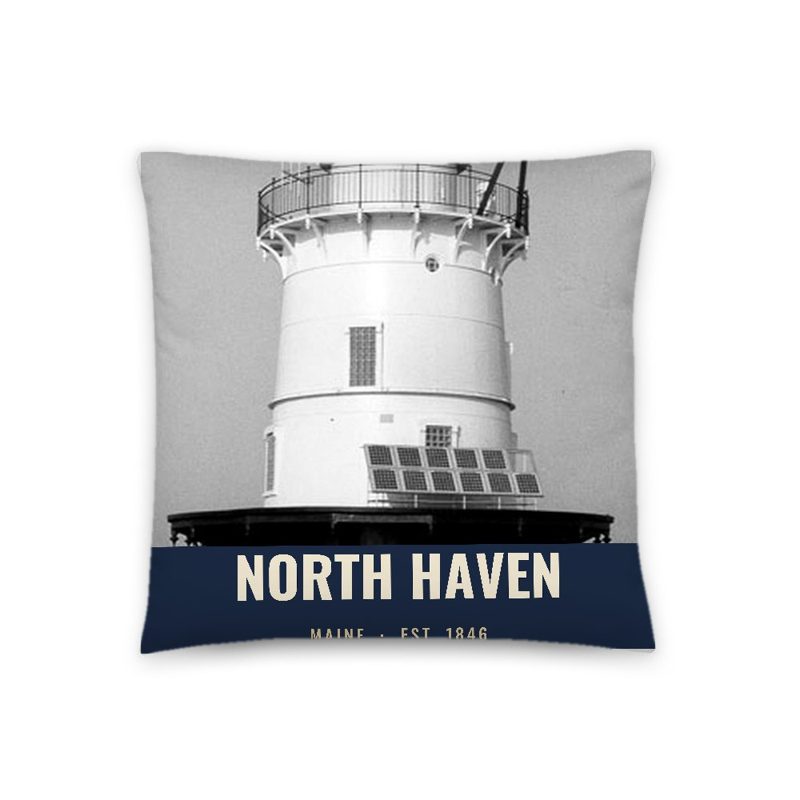
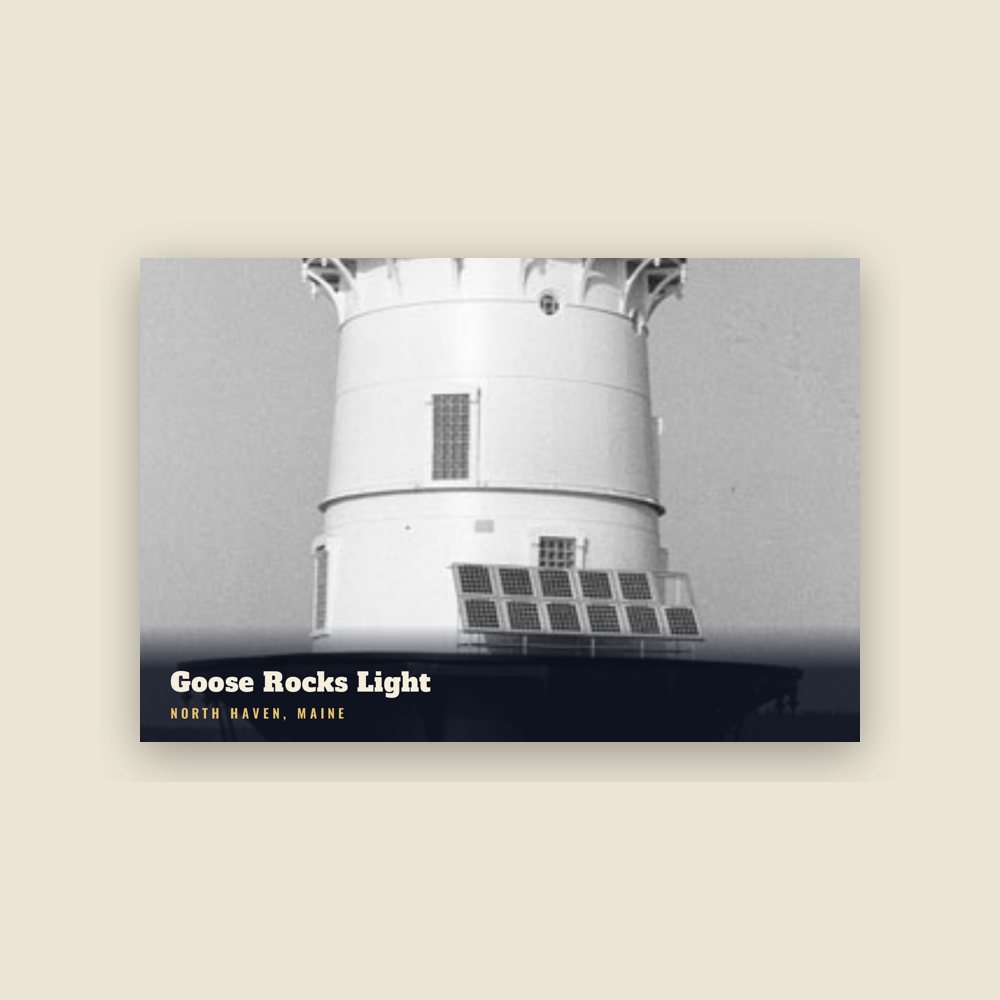
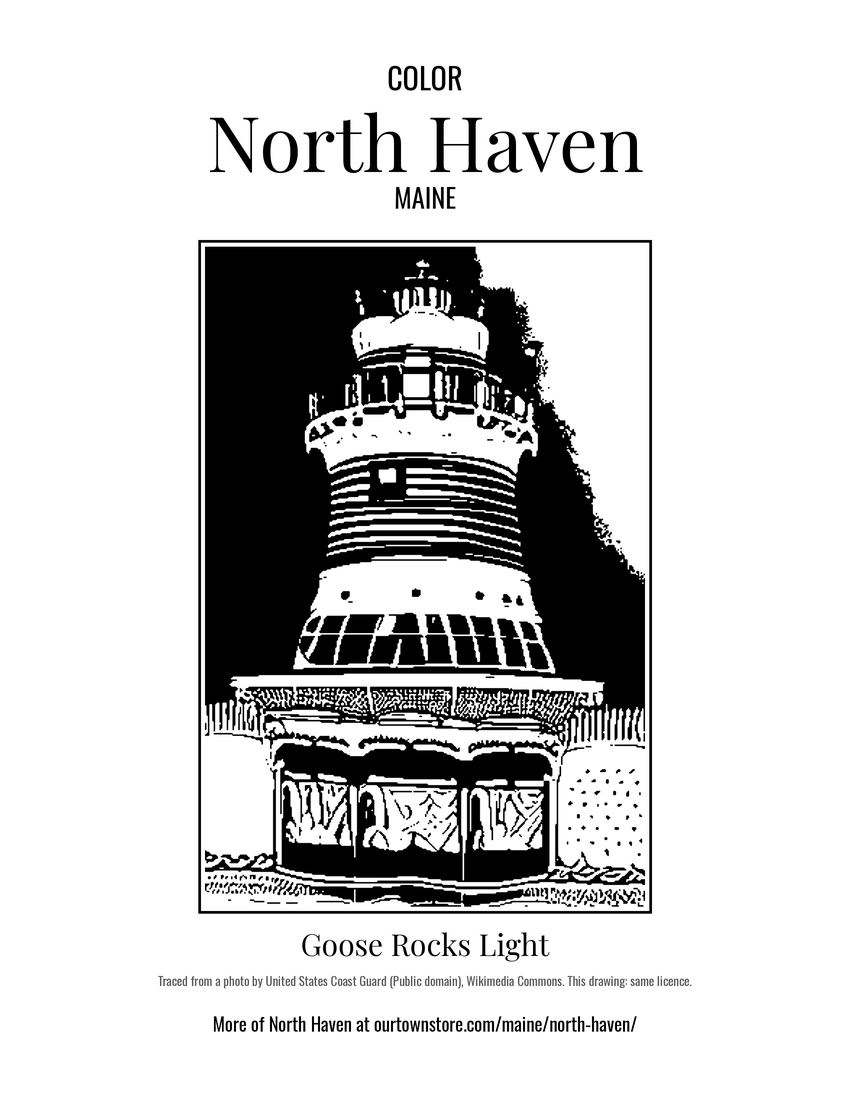 Goose Rocks Light