The coastal region of Camden, situated on Penobscot Bay, offered rich resources and excellent geography for a future maritime community. While various regional Native groups historically utilized the coastal and forest resources, the beginning of its organized history and development started with the arrival of the first European pioneers.
Read the full history
Early settlement
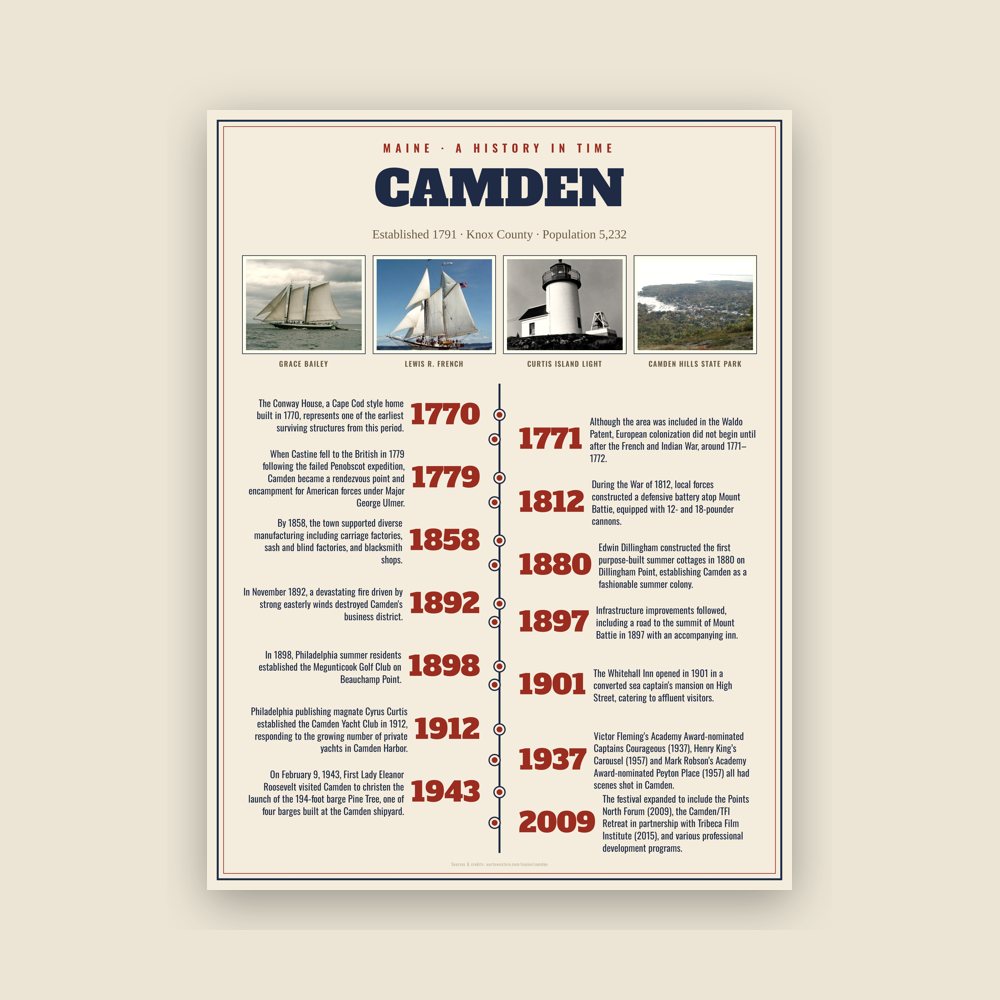
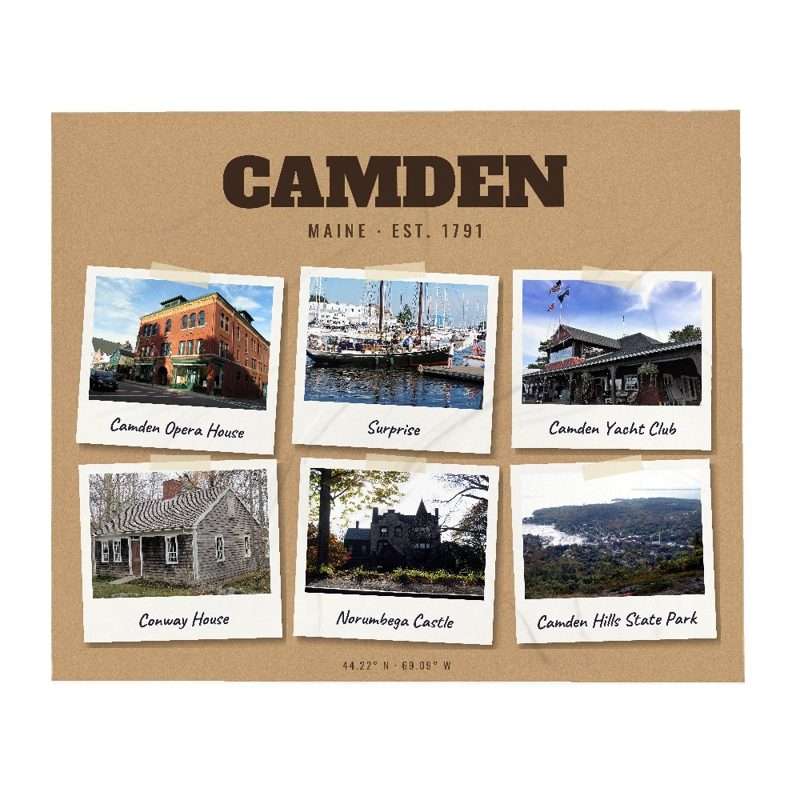
Although the area was included in the Waldo Patent, European colonization did not begin until after the French and Indian War, around 1771–1772. James Richards led the first settlement effort, building a home at the mouth of the Megunticook River. Other settlers followed, establishing farms on the challenging mountainous terrain. The Conway House, a Cape Cod style home built in 1770, represents one of the earliest surviving structures from this period. The building was converted into a history museum in 1962.
Revolutionary War period
During the American Revolutionary War, Camden served as a strategic location. When Castine fell to the British in 1779 following the failed Penobscot expedition, Camden became a rendezvous point and encampment for American forces under Major George Ulmer. British forces conducted raids in the area, burning a local sawmill.
Incorporation and early 19th century
On February 17, 1791, the Massachusetts General Court incorporated Megunticook Plantation as the town of Camden, named after Charles Pratt, 1st Earl Camden, a British Parliament member and advocate for civil liberties. During the War of 1812, local forces constructed a defensive battery atop Mount Battie, equipped with 12- and 18-pounder cannons. Despite lacking qualified gunners, the fortification's presence deterred British naval attacks.
Industrial development
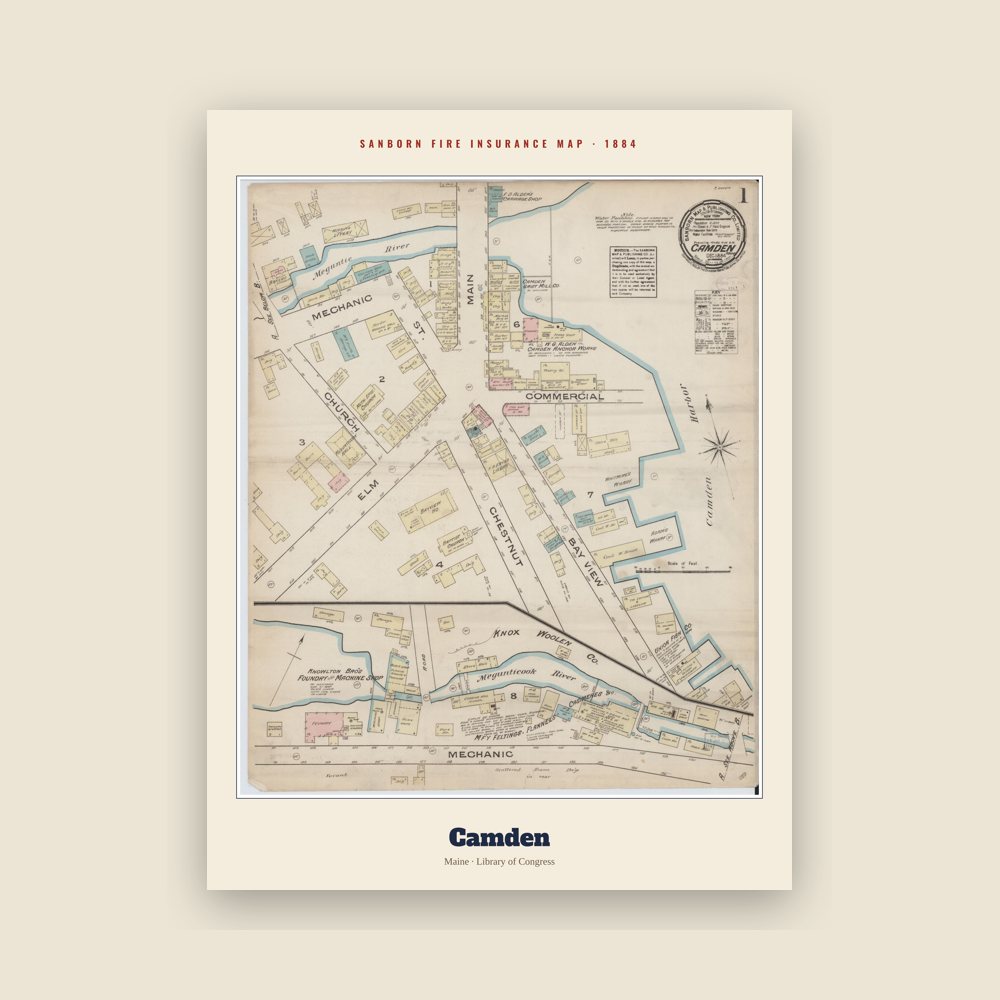
Following the War of 1812, Camden experienced rapid industrial growth. The Megunticook River provided abundant water power for various mills, including sawmills and gristmills. By 1858, the town supported diverse manufacturing including carriage factories, sash and blind factories, and blacksmith shops. Six active shipyards launched ten to twelve vessels annually.
The town's industrial base expanded significantly by 1886 to include foundry products, railroad cars, woolens, paper mill feltings, anchors, maritime hardware, planking, powder kegs, excelsior, mattresses, tinware, oakum, textiles, boots, shoes, leather goods, flour, meal, corn brooms, and barrels. Camden became the second-largest producer of lime in the region after Rockland, with limestone quarried locally and processed in kilns before shipment to ports throughout the United States. This lime industry continued until 1891, when Rockport separated as an independent town.
The town's shipbuilding industry reached its peak in the late 19th century. The H.M. Bean Yard launched notable vessels including the Charlotte A. Maxwell, the largest four-masted schooner of its time, and the George W. Wells, the first six-masted schooner ever constructed.
Summer colony era
Beginning in the 1880s, wealthy "rusticators" and sportsmen discovered Camden's natural beauty as a summer destination. Literary works by Sarah Orne Jewett and paintings by Fitz Hugh Lane, Frederick Church, and Childe Hassam romanticized Maine's coastal scenery, attracting visitors to local accommodations including the Bayview House Hotel, Ocean House, and Mrs. Hosmer's Boarding House.
Edwin Dillingham constructed the first purpose-built summer cottages in 1880 on Dillingham Point, establishing Camden as a fashionable summer colony. Wealthy families from Philadelphia, Boston, New York City, Washington, D.C., and Chicago built elaborate Shingle Style "cottages" along High Street, Bay View Street, and Beauchamp Point, rivaling similar developments in Bar Harbor. Summer residents typically arrived via Boston steamship lines or the Maine Central Railroad through Rockland. This seasonal influx transformed the local economy, as former mariners found employment as caretakers, gardeners, cooks, and carpenters serving the summer community.
20th century development
World War II and Eleanor Roosevelt's visit
During World War II, Camden contributed to the war effort through shipbuilding. The Camden Shipping & Marine Railway Company was formed to build wooden barges for the military. On February 9, 1943, First Lady Eleanor Roosevelt visited Camden to christen the launch of the 194-foot barge Pine Tree, one of four barges built at the Camden shipyard. The launch was a major event, drawing large crowds, press, and film crews. Mrs. Roosevelt broke the traditional champagne bottle across the bow and was splashed with champagne in the process. During her visit, she was presented with traditional Native American gifts by members of the Penobscot tribe, including a beaded headband and receiving the name "Ow-Du-Sees-Ul" (Princess of Many Trails).
Maritime recreation
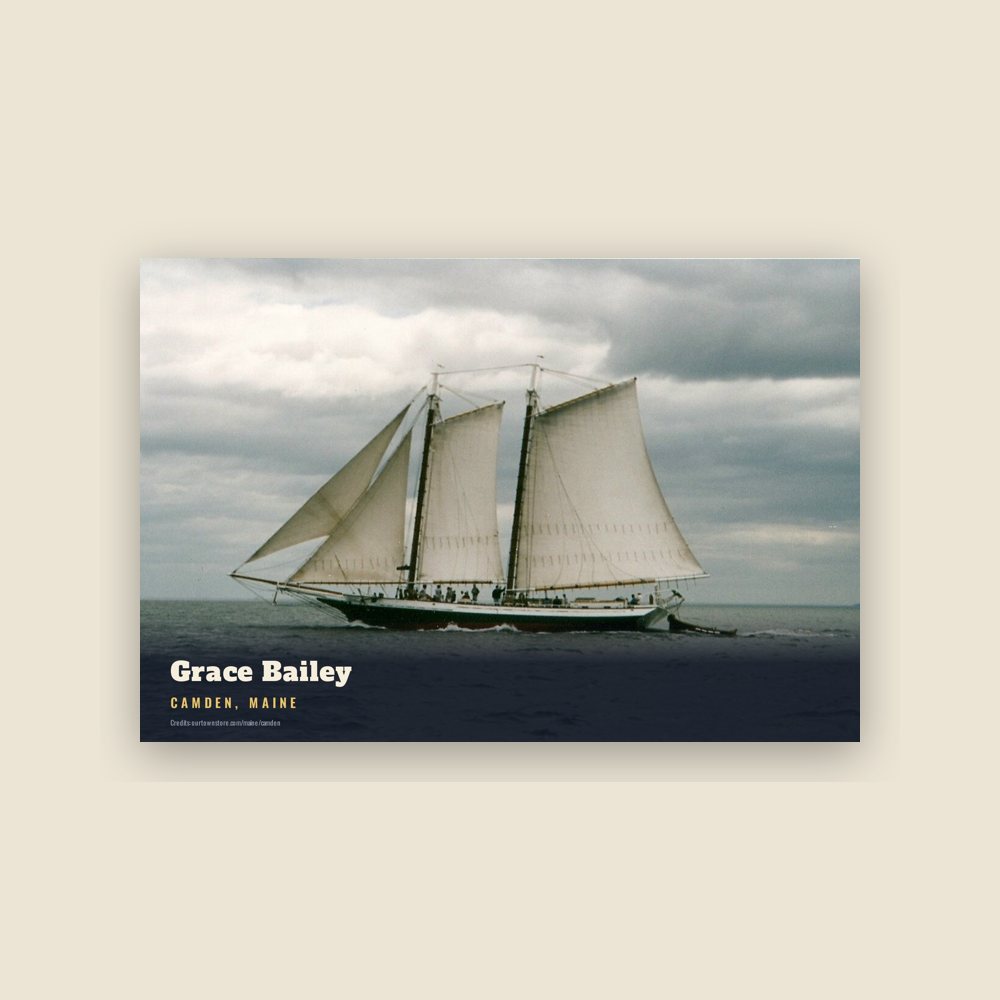
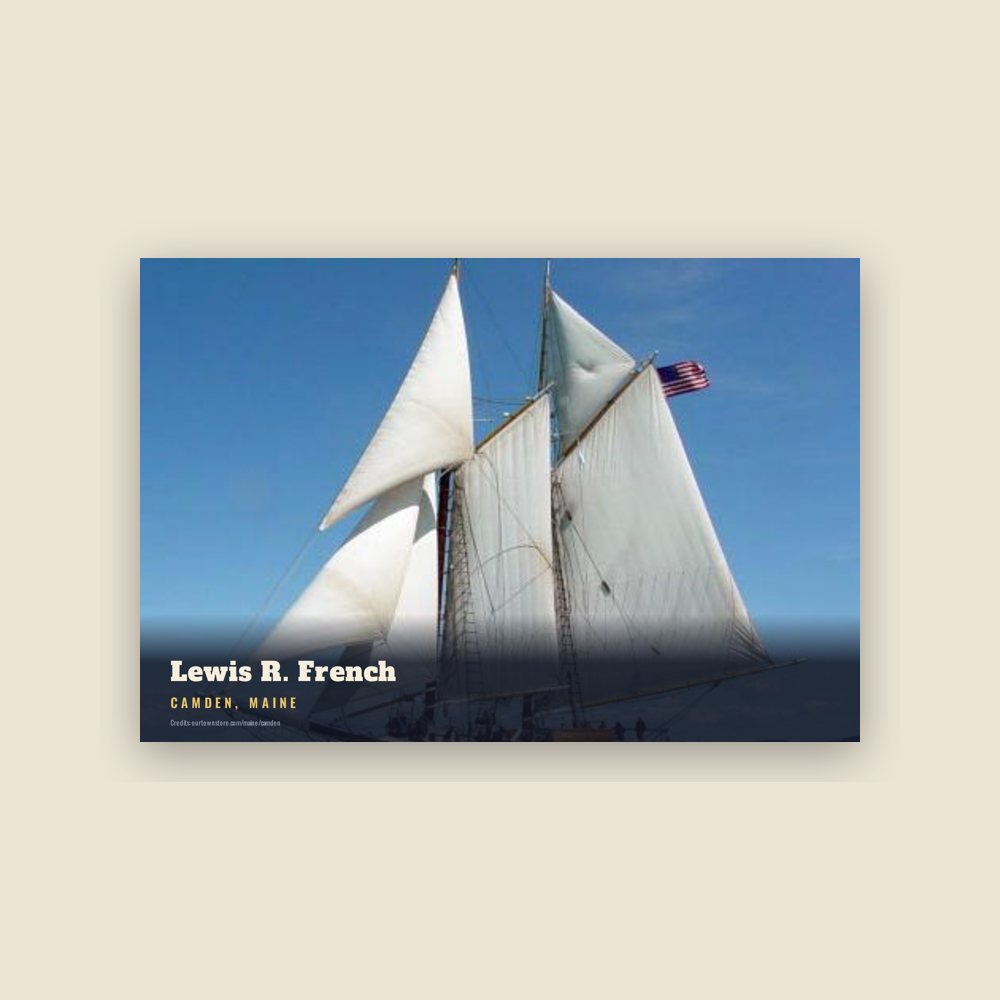
Philadelphia publishing magnate Cyrus Curtis established the Camden Yacht Club in 1912, responding to the growing number of private yachts in Camden Harbor. The club celebrated its centennial in 2006 with the publication of "From Steam to Sail: 100 Years of the Camden Yacht Club." Captain Frank Swift initiated Camden's cruise schooner industry in 1936, establishing the windjammer fleet that continues operating today.
Arts and literature
Camden's cultural reputation was enhanced in 1912 when Edna St. Vincent Millay first recited her poem "Renascence," written from atop Mount Battie, to guests at the Whitehall Inn. A patron's offer to fund her education at Vassar College launched her career as a Pulitzer Prize-winning poet and prominent figure of the Roaring Twenties.
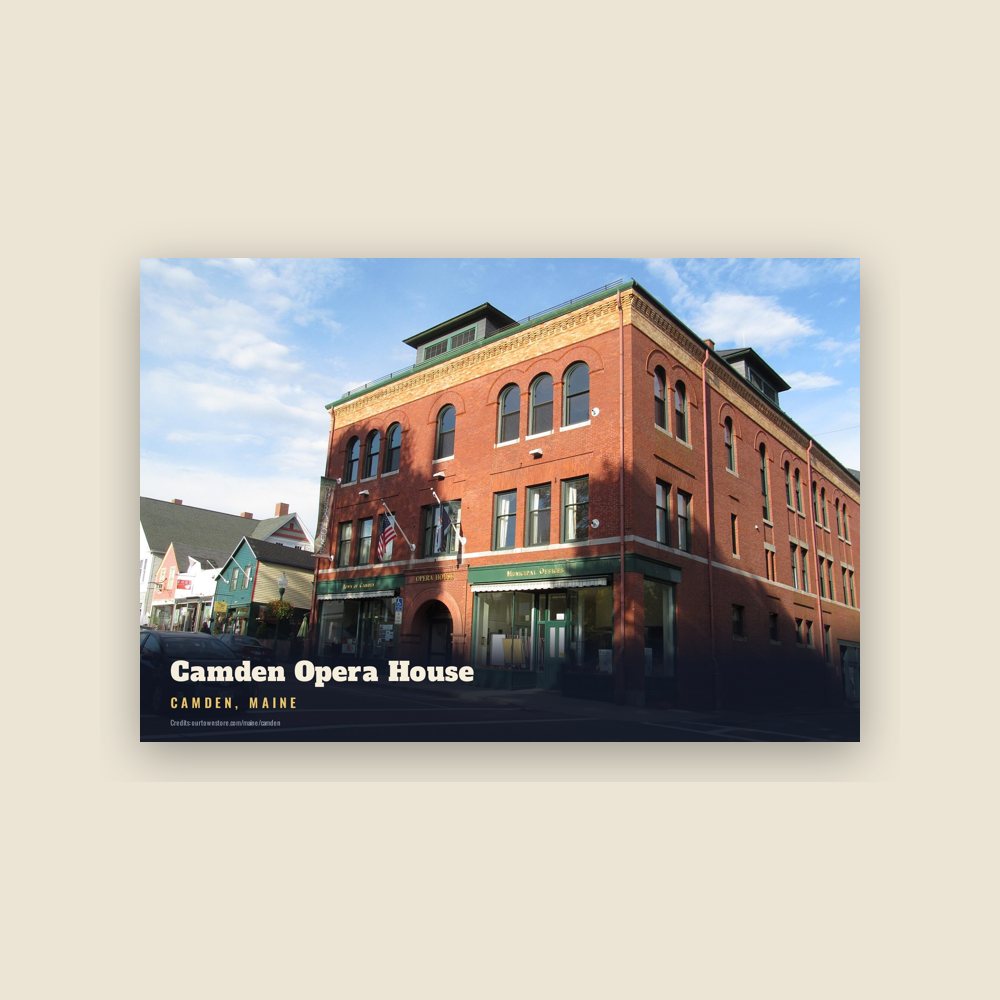
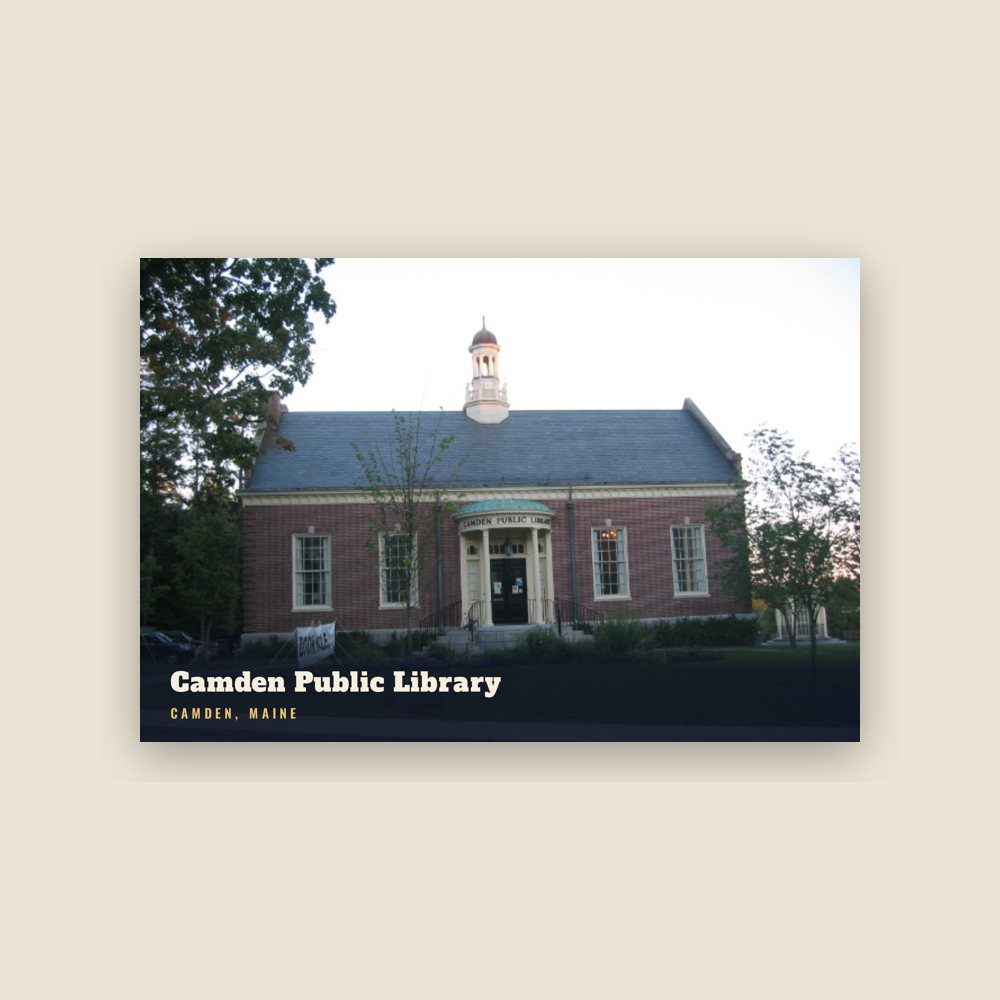
French harpist, composer, and conductor Carlos Salzedo founded the internationally recognized Salzedo Summer Harp Colony in Camden, hosting annual Harp Festivals in the library amphitheater. The town became home to Bay Chamber Concerts and regular theater productions at the Opera House and Shakespeare performances in the amphitheater.
During the 1950s, Camden attracted notable artists and writers, leading to the establishment of Maine Coast Artists in nearby Rockport. Wayne Doolittle launched Down East Magazine in 1954, further promoting Maine's cultural image.
Onscreen
Victor Fleming's Academy Award-nominated Captains Courageous (1937), Henry King’s Carousel (1957) and Mark Robson’s Academy Award-nominated Peyton Place (1957) all had scenes shot in Camden.
Todd Field's Academy Award-nominated In the Bedroom (2001) had settings that included the historic Camden/Rockport welcome arch, the bar where Tom Wilkinson's character goes looking for his son's friend, the Camden Harbor Park and Amphitheatre where Sissy Spacek's character directs the Balkan Girl's Chorus in an outdoor concert, the exterior of the bar where her son's killer is working, and the shots of the town at dawn from the summit of Mount Battie for the film's finale.
Modern cultural institutions
Contemporary Camden supports various cultural activities including the Camden Shakespeare Company's summer festival in the library amphitheater and the annual U.S. National Toboggan Championships at Camden Snow Bowl each February. The town served as the location for the 2001 HGTV Dream Home.
The Points North Institute, established in Camden and Rockport, founded the Camden International Film Festival in 2005, focusing on documentary filmmaking. The festival expanded to include the Points North Forum (2009), the Camden/TFI Retreat in partnership with Tribeca Film Institute (2015), and various professional development programs.
Christmas by the Sea
Since 1986, Camden has celebrated the multiple day Christmas by the Sea festival with Christmas tree lightings, parades, caroling, holiday markets, craft fairs, and performances. Santa arrives each year by boat at the Camden Public Landing. The festival is hosted by the Camden Area Business Group. Activities also take place in Rockport and Lincolnville.
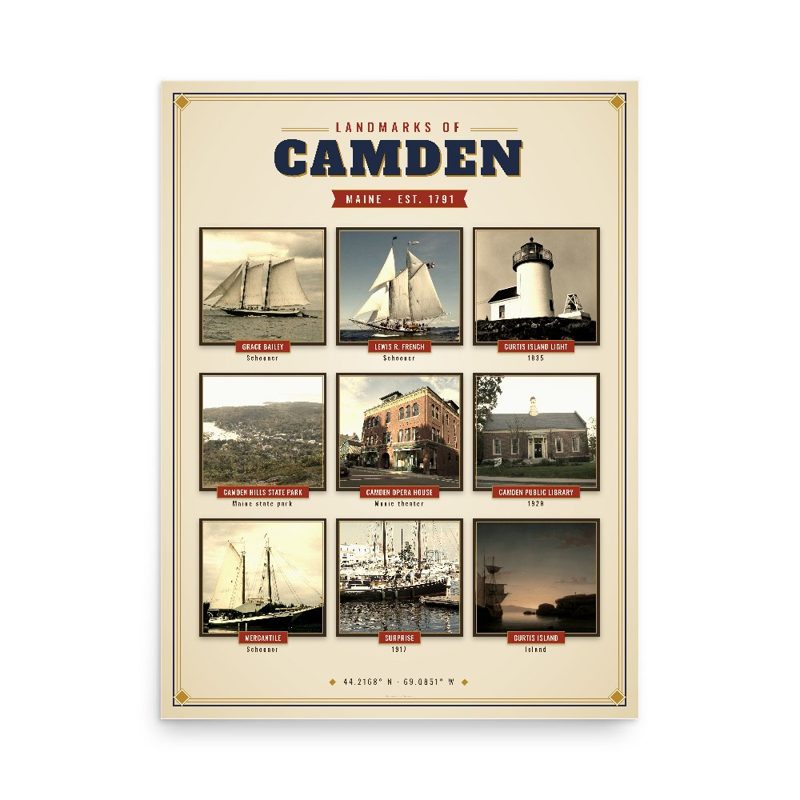












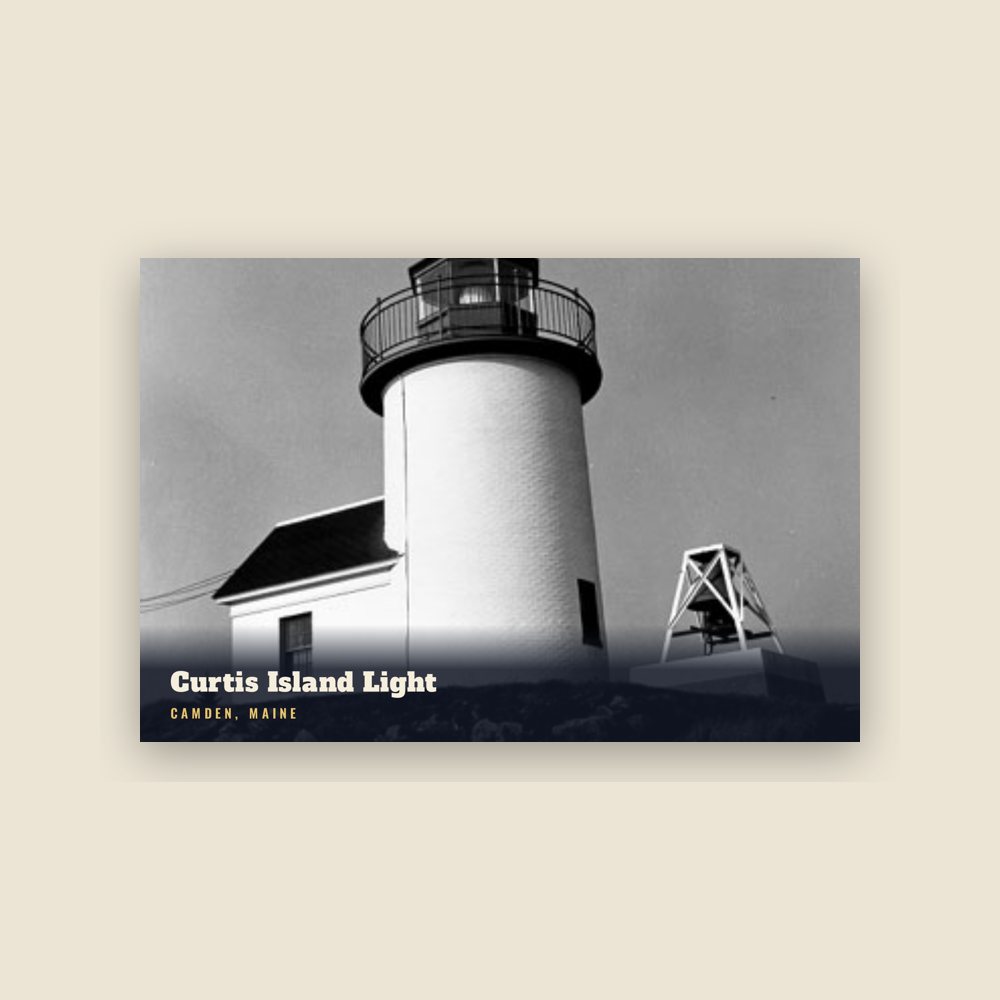
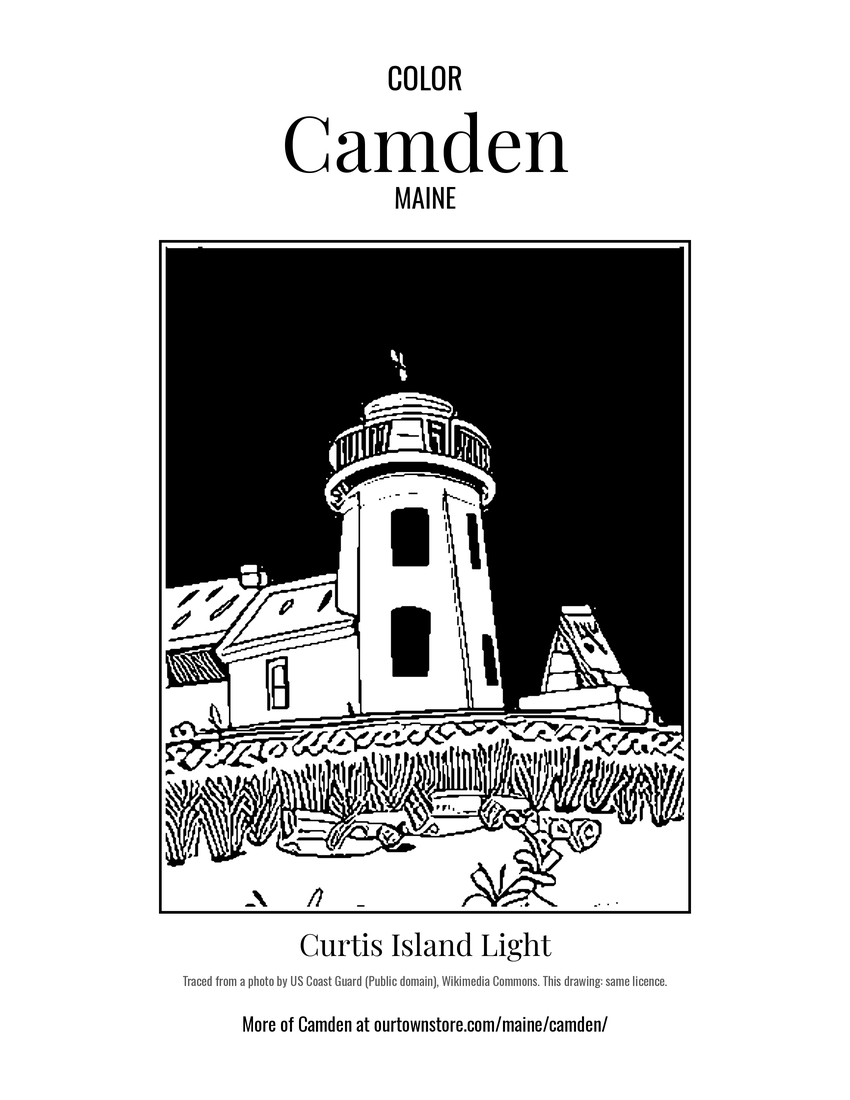 Curtis Island Light
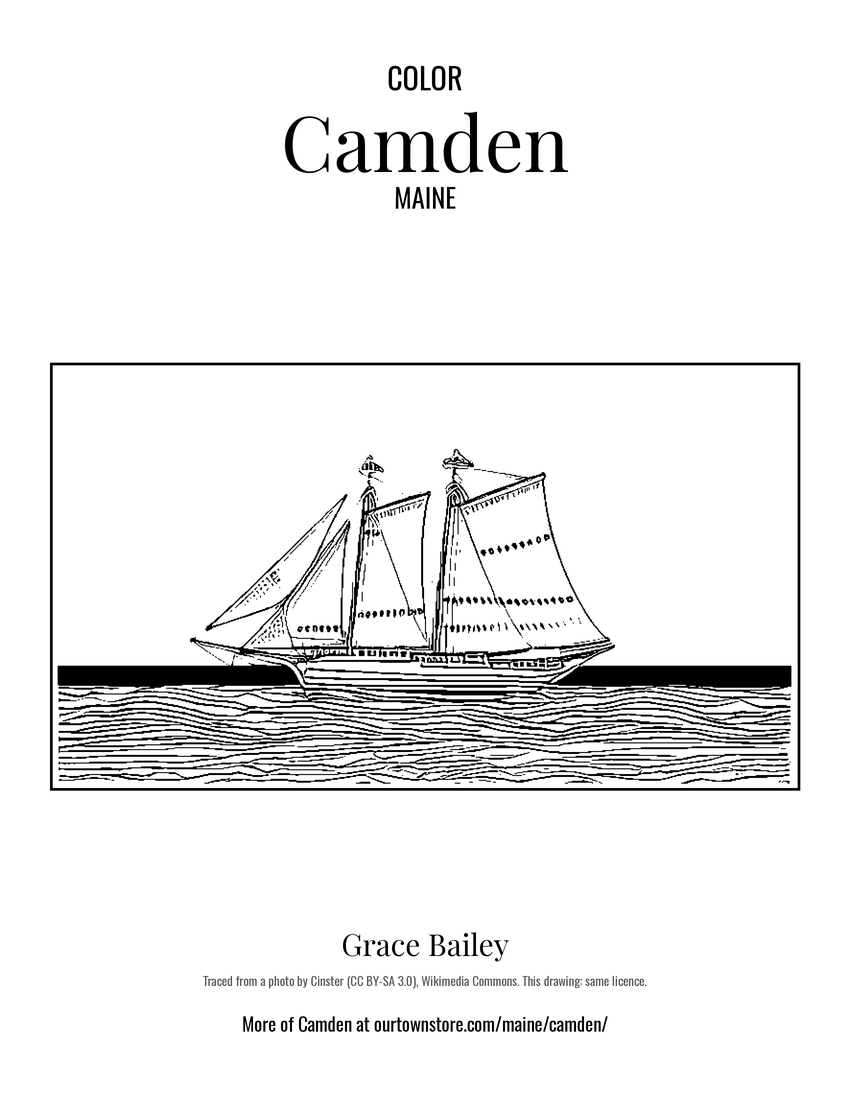 Grace Bailey
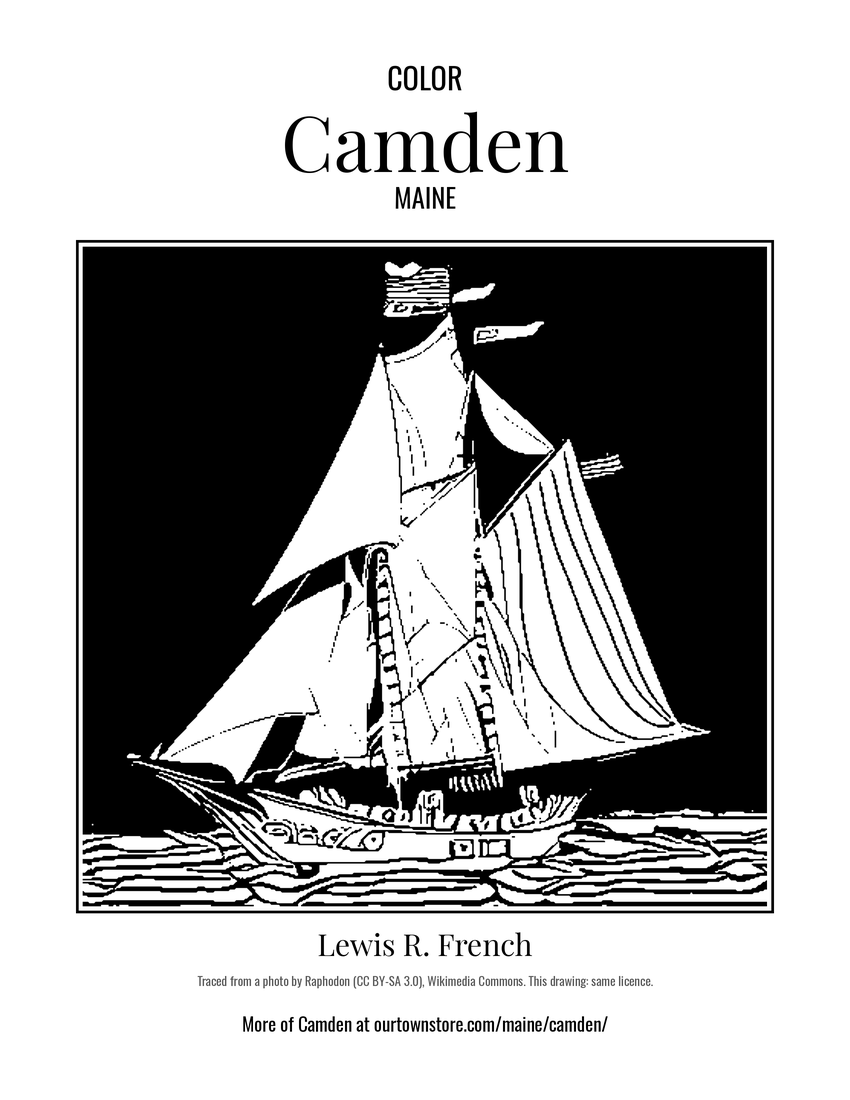 Lewis R. French
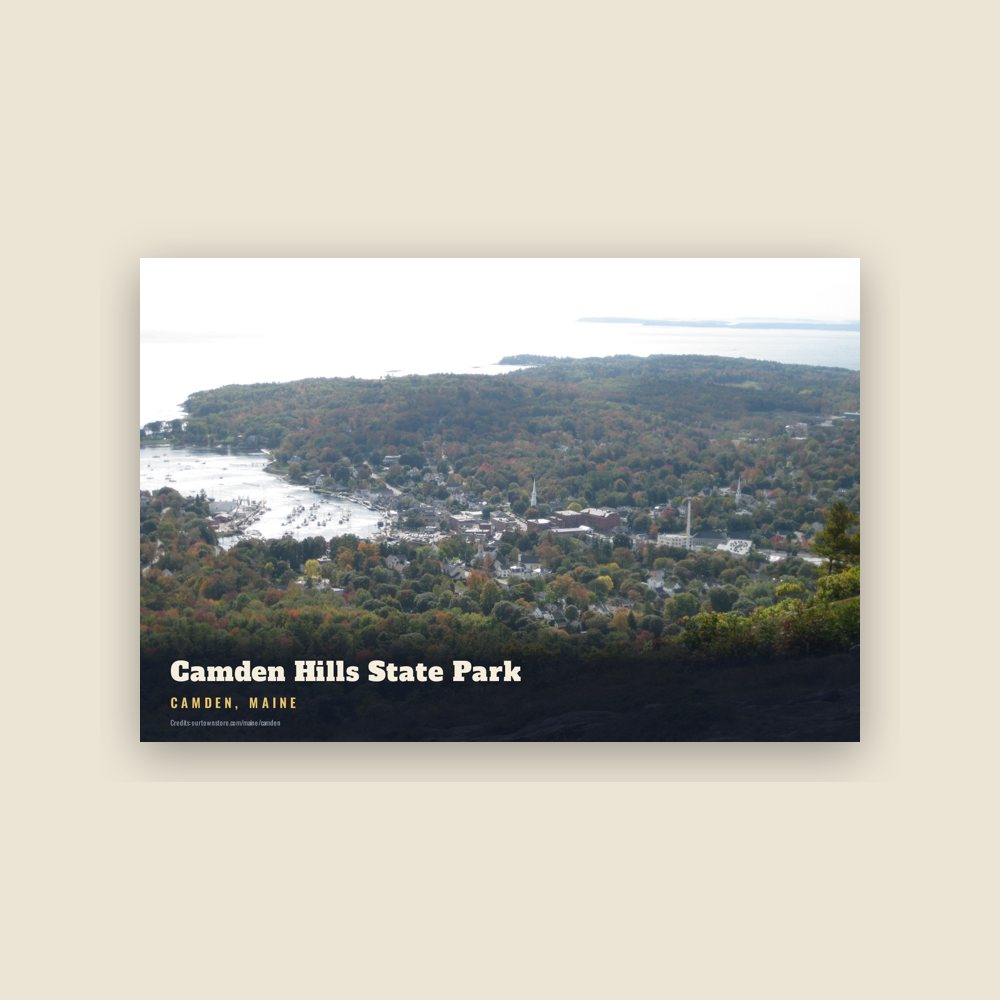
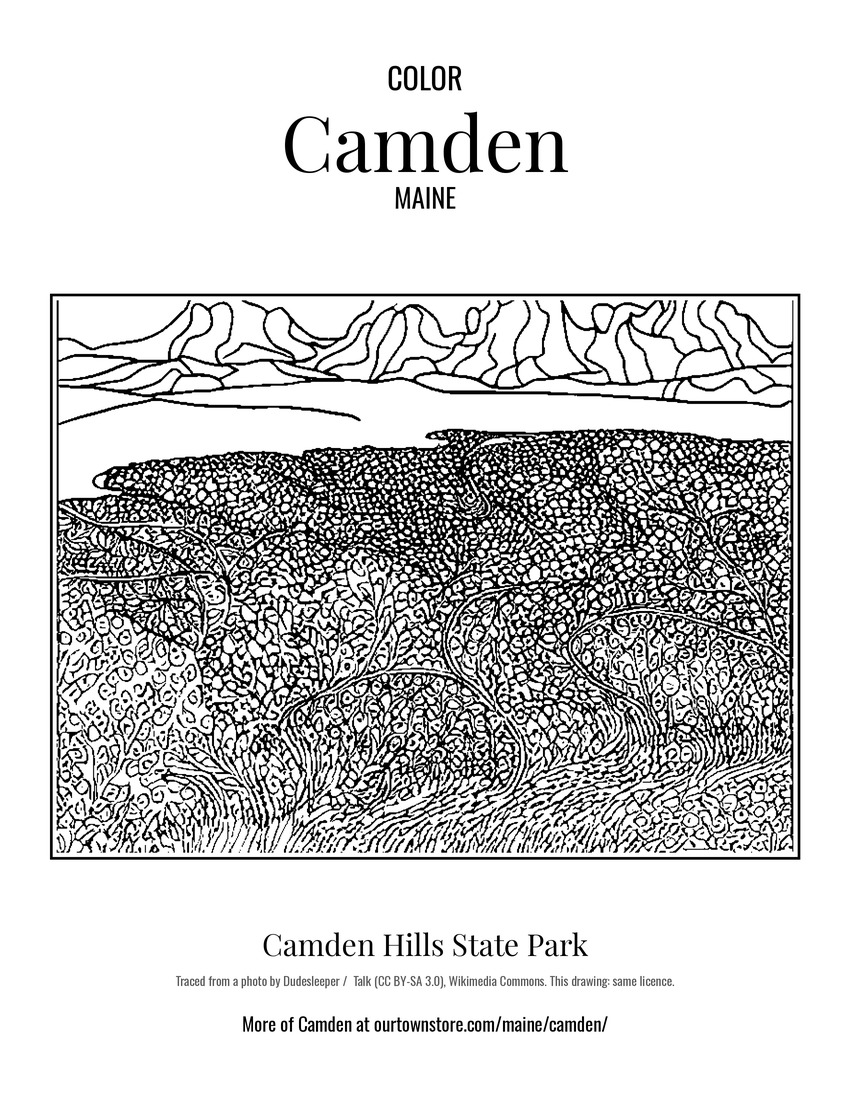 Camden Hills State Park