The village is on the site of Sleepy Hollow Farm, which was owned by the late J. H. McNabb, board chairman of Bell and Howell Company.
- CountyKane County
- Population3,214 (2020 U.S. Census)
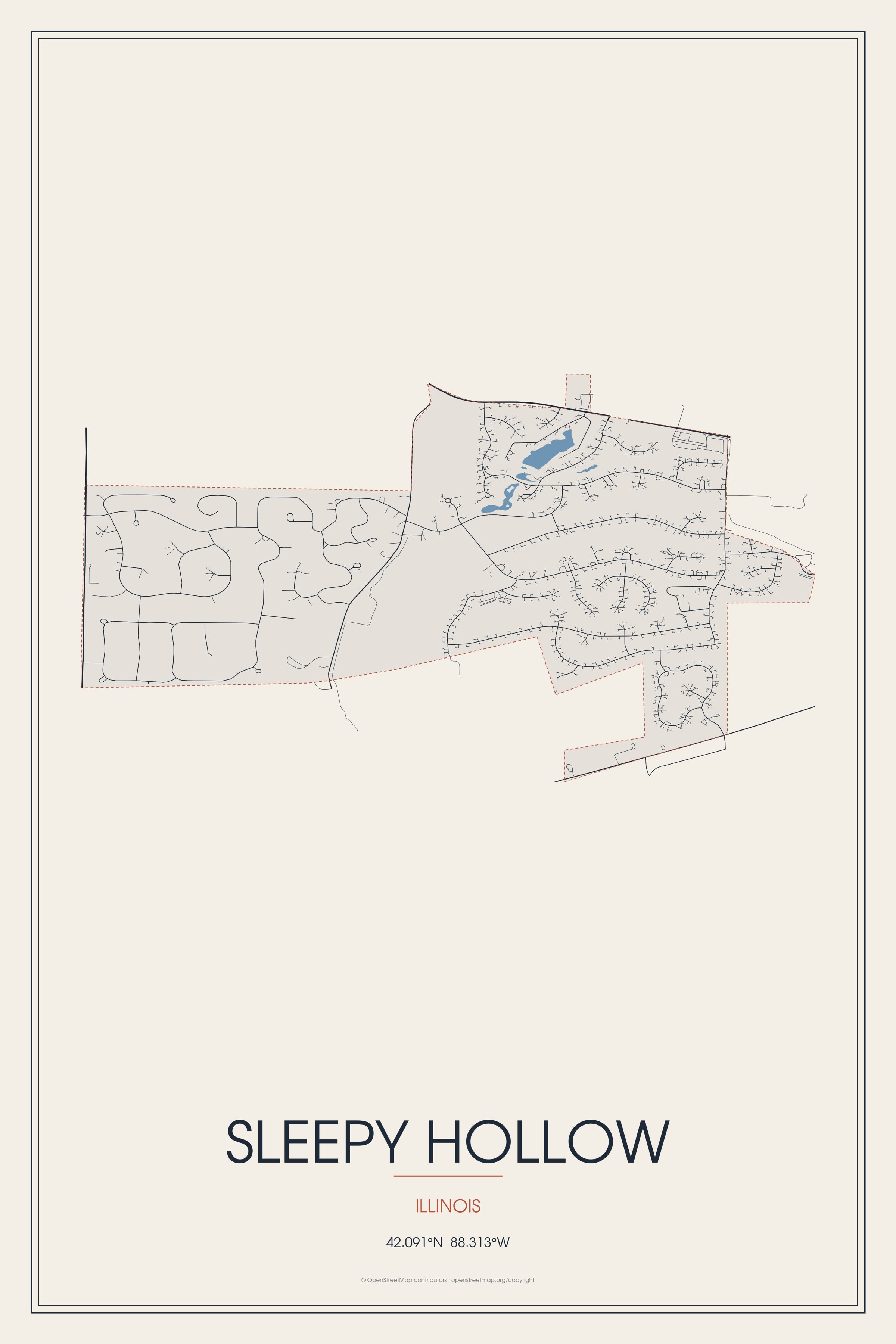
Sleepy Hollow, Illinois gifts and souvenirs: 16 designs made from Sleepy Hollow's own map, landmarks and history, from $16 to $95. Printed to order and shipped free in the USA.
| Popular | Price |
|---|---|
| Sleepy Hollow Hometown Ornament | $23 |
| Sleepy Hollow Varsity Crewneck | from $57 |
| Sleepy Hollow Est. Tee | from $33 |
| Sleepy Hollow Town Line Mug | from $26 |
| Sleepy Hollow Market Tote | $37 |
Ceramic keepsake, gold ribbon
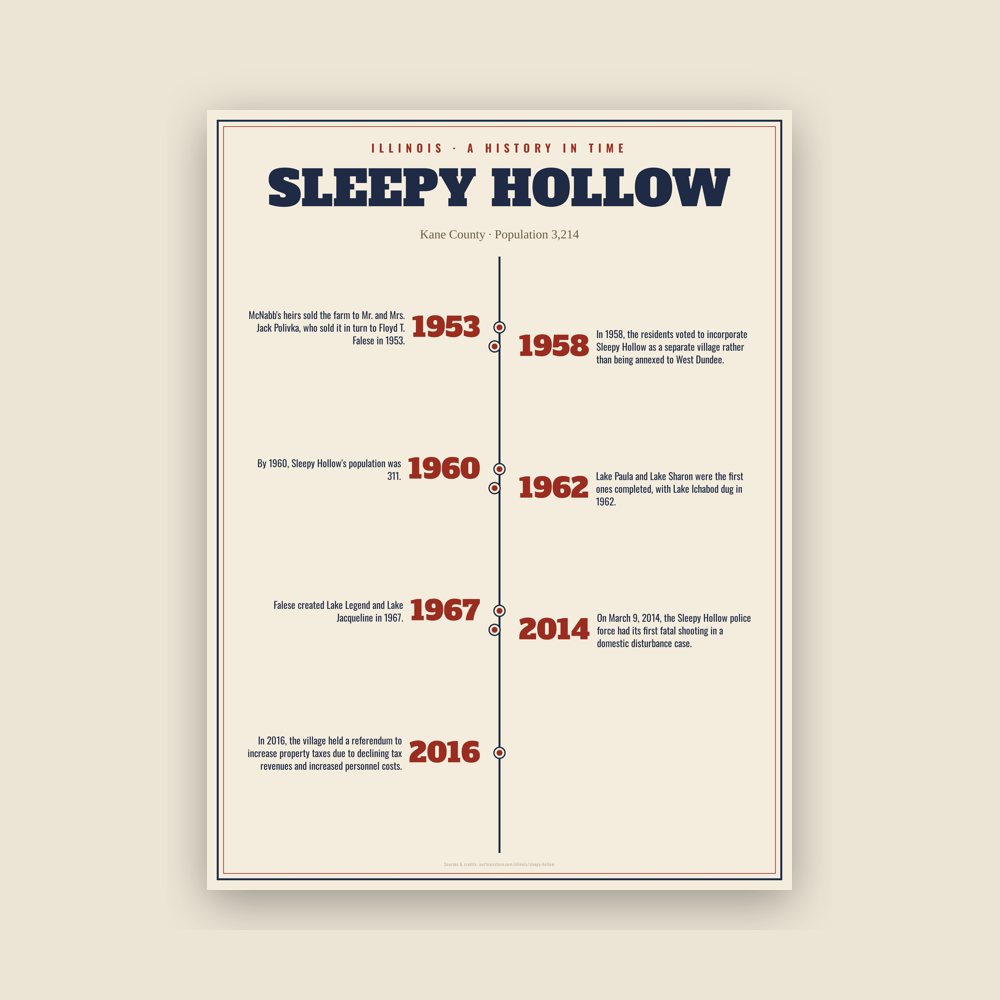
The town's story in dates, from its own records, for home or classroom
Heavy-blend fleece, street map printed on the back
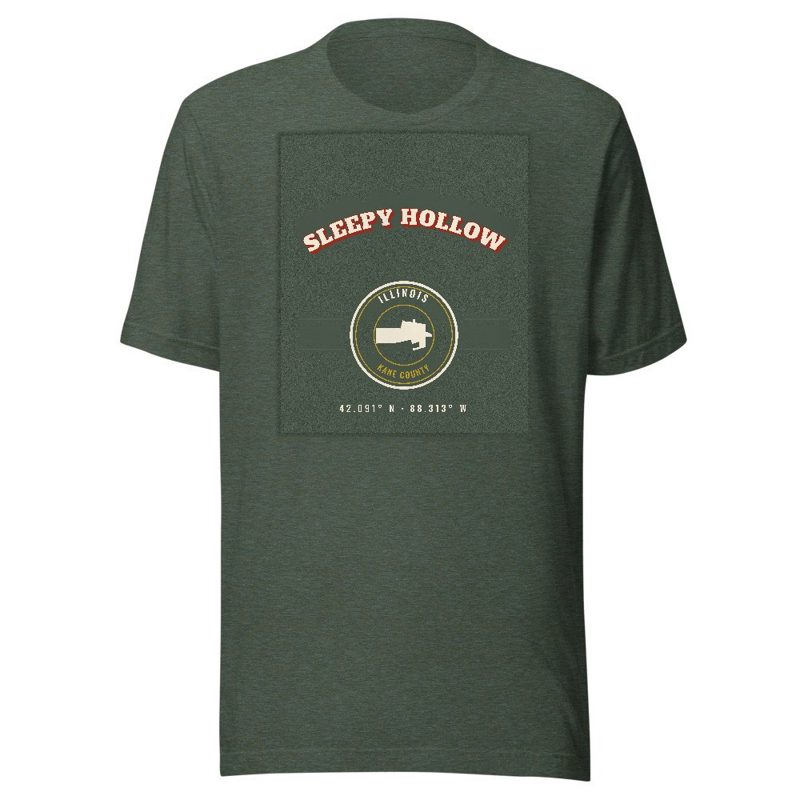
Soft Bella+Canvas jersey
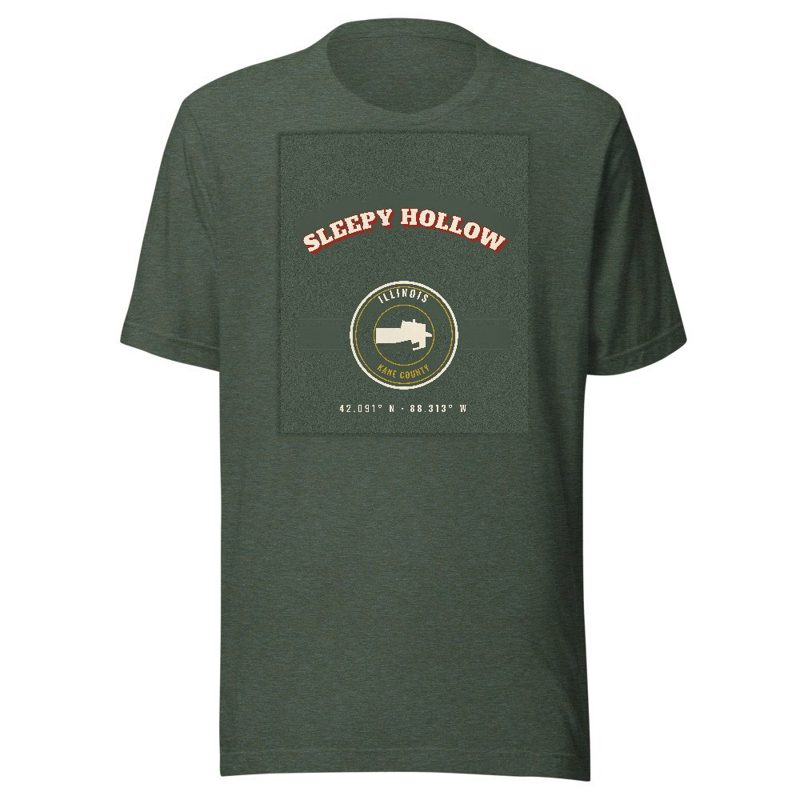
Kids' Bella+Canvas jersey, youth sizes
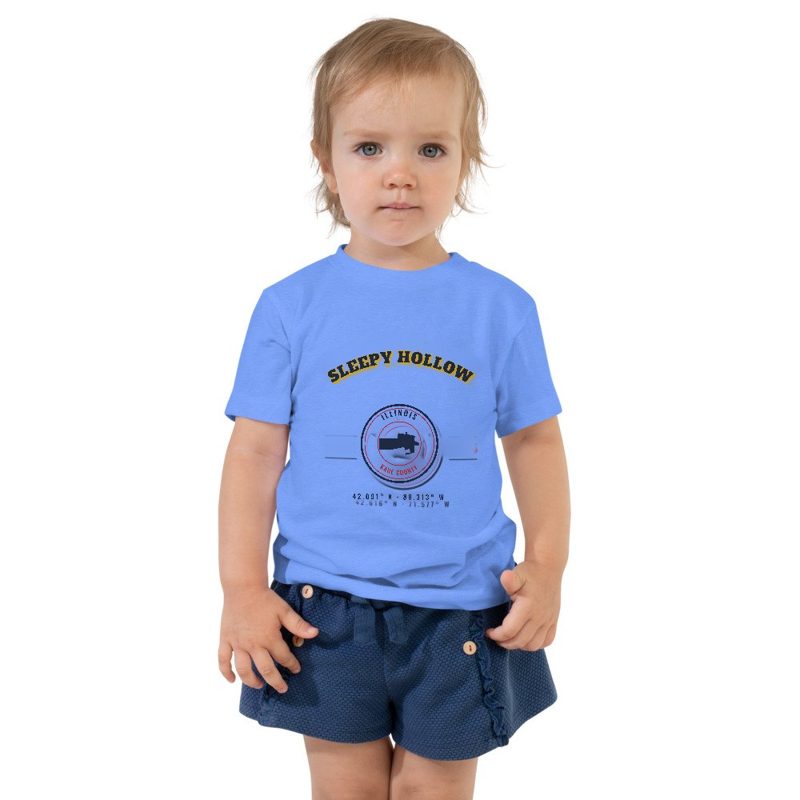
Bella+Canvas toddler jersey
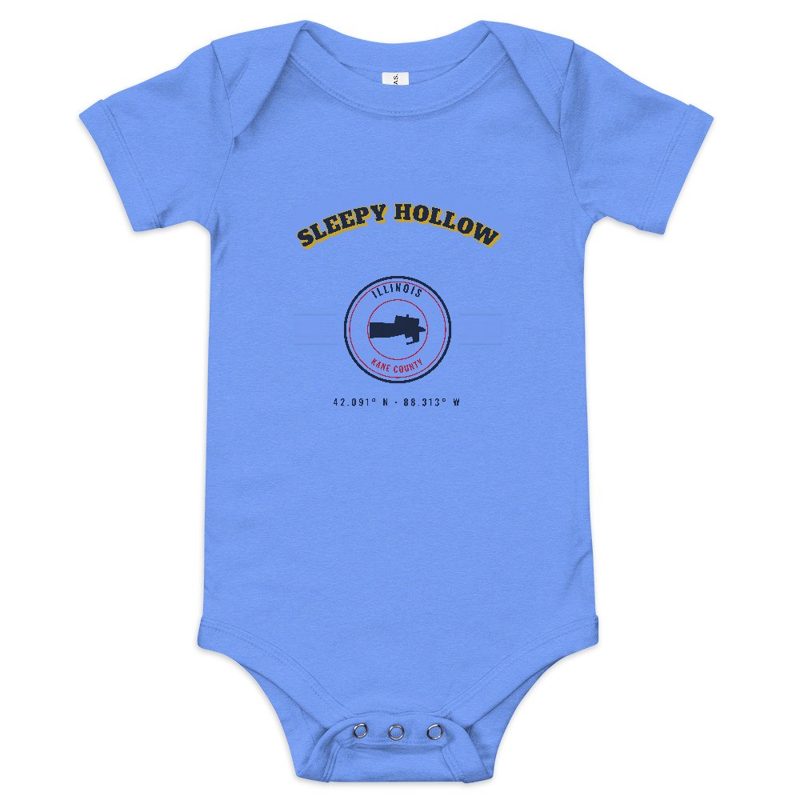
Bella+Canvas baby bodysuit
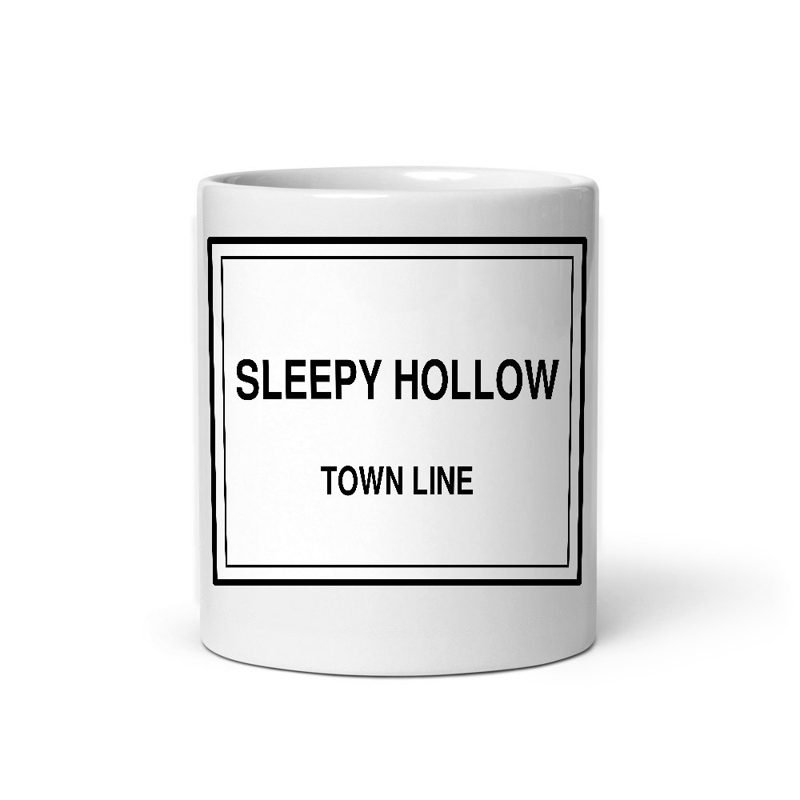
Glossy ceramic, dishwasher safe
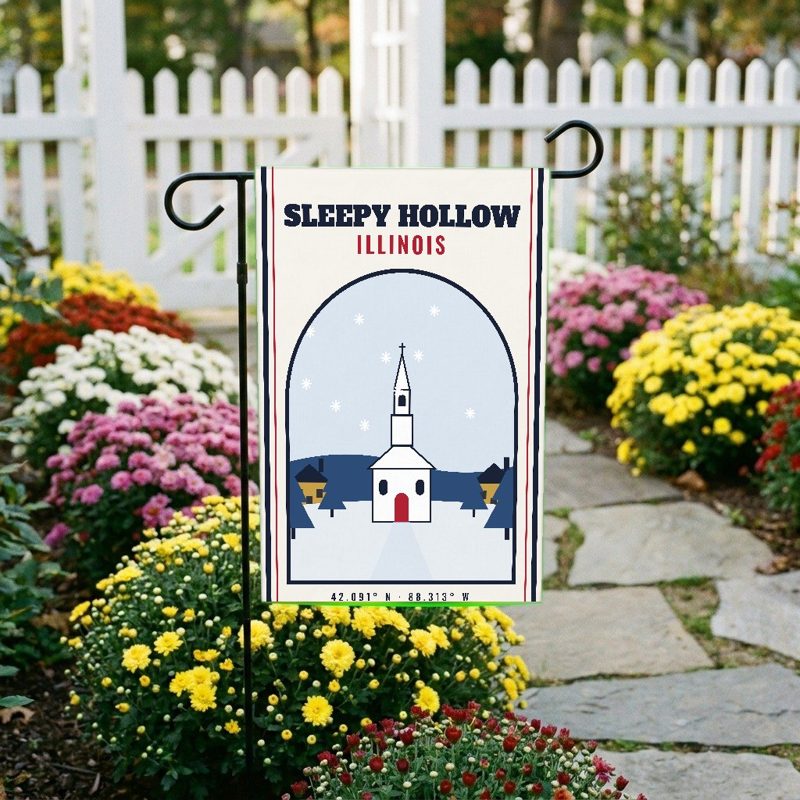
Weatherproof, for the front walk
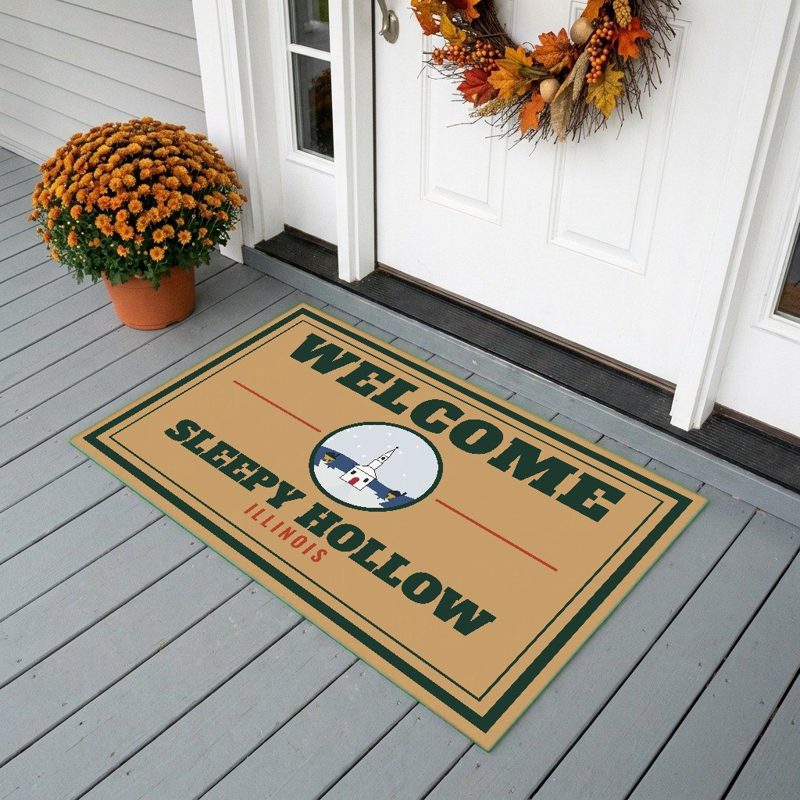
24″×16″, printed coir-look fibers, rubber back
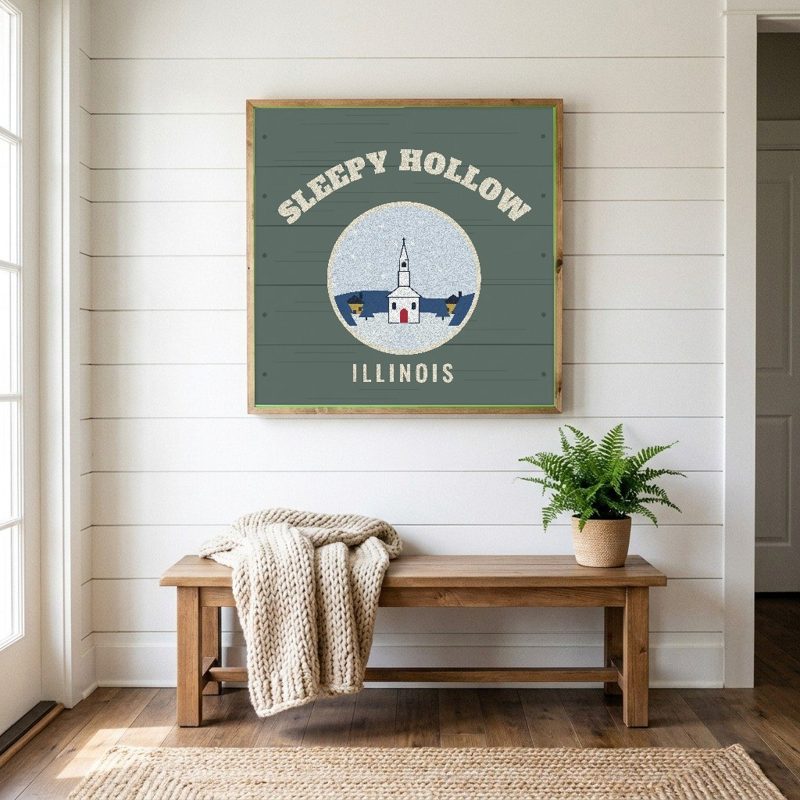
12″×12″ printed wood, ready to hang
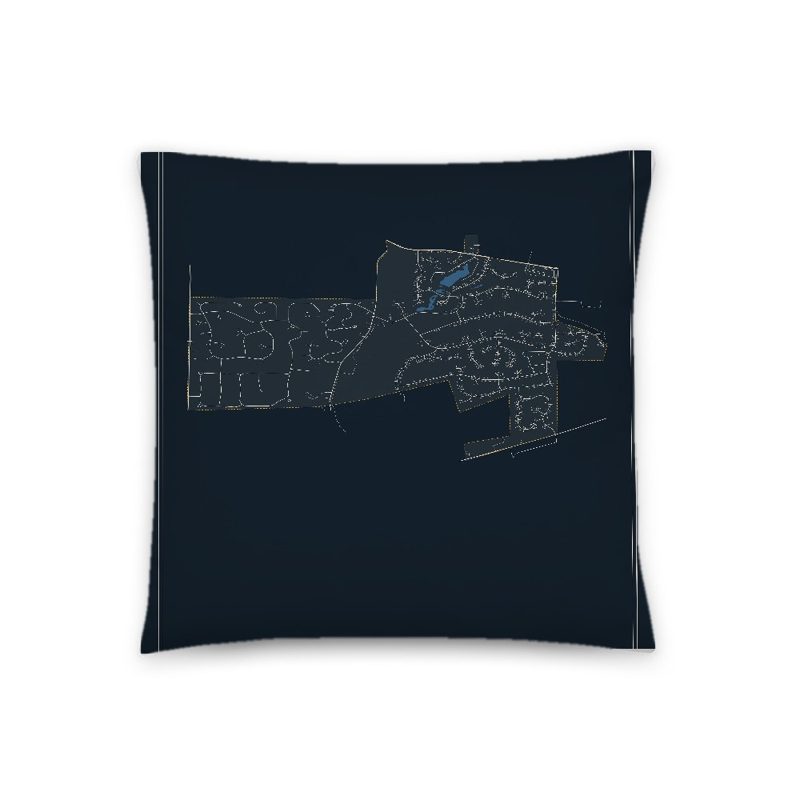
Soft-touch, zip cover
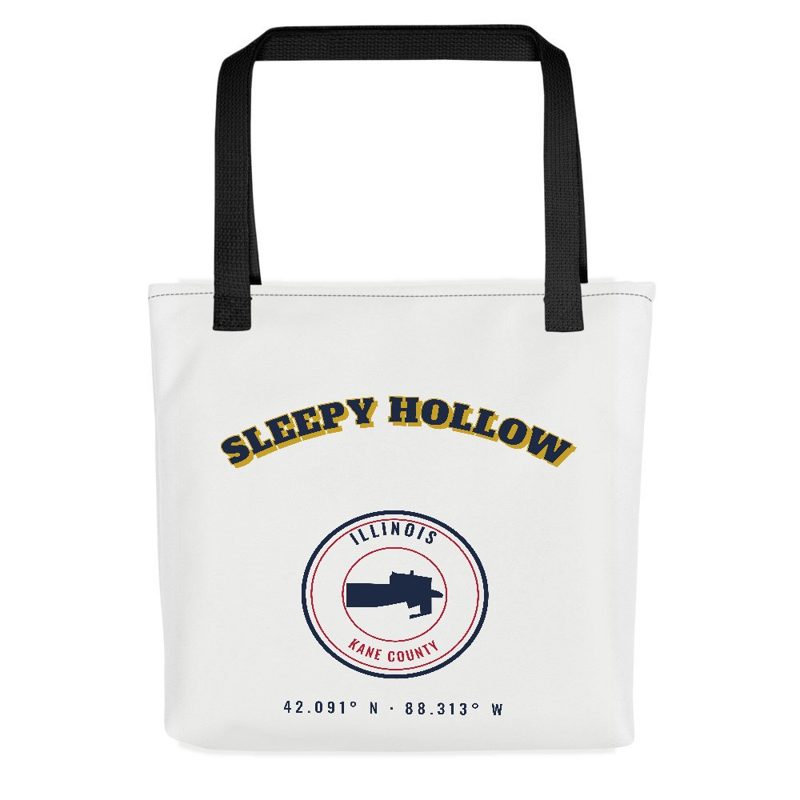
Sturdy all-over-print tote
Glossy top, cork back
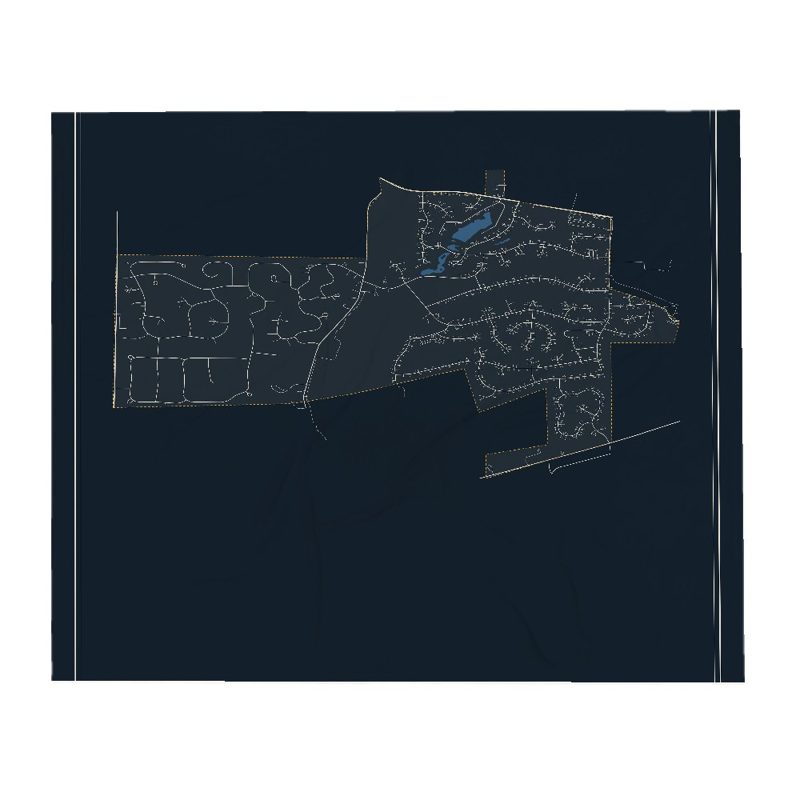
Soft fleece, 50″×60″
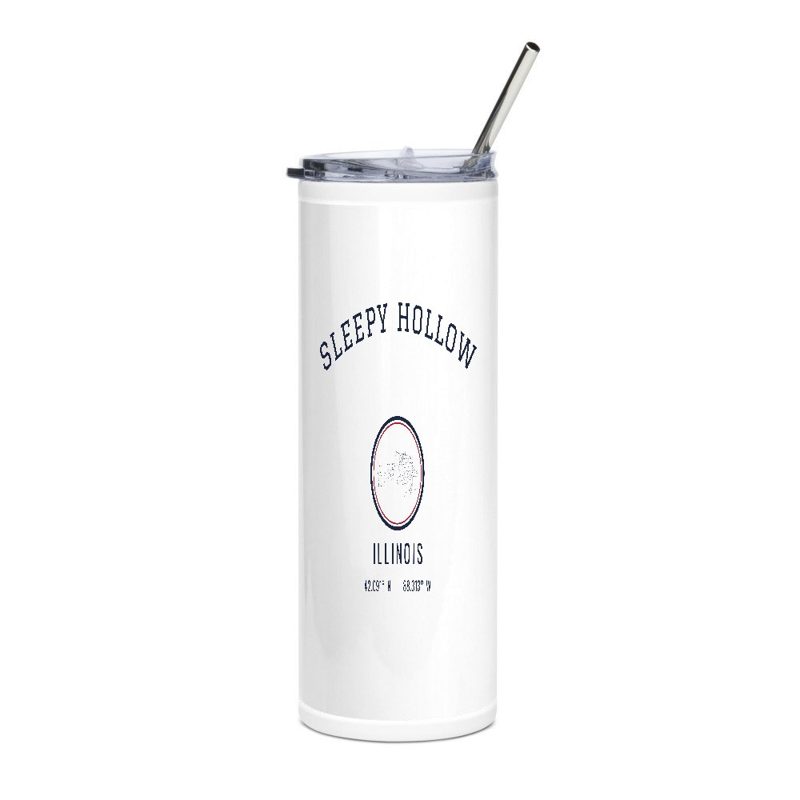
20 oz, double-wall stainless
The village is on the site of Sleepy Hollow Farm, which was owned by the late J. H. McNabb, board chairman of Bell and Howell Company.
The village is on the site of Sleepy Hollow Farm, which was owned by the late J. H. McNabb, board chairman of Bell and Howell Company. McNabb's heirs sold the farm to Mr. and Mrs. Jack Polivka, who sold it in turn to Floyd T. Falese in 1953. Falese retained the services of a prominent planner and landscape architect, Raymond W. Hazekamp, who laid out a pattern of meandering roads, without curbs or sidewalks, that wound into curvilinear cul-de-sacs, avoiding the destruction of a single tree. This design retained the rural charm and natural contours of the farm and avoided taking down any existing trees.
Falese developed lakes in Sleepy Hollow from existing springs and stocked them with fish. Lake Paula and Lake Sharon were the first ones completed, with Lake Ichabod dug in 1962. Falese created Lake Legend and Lake Jacqueline in 1967. The village now owns and maintains several of the lakes. Early residents of the village could keep horses on their property, with outlots used as bridle paths.
The designs were carefully selected to enhance what Falese called "the Sleepy Hollow concept of good living". Falese encouraged multiple builders and custom-built homes within the community. In the 1960s many of the homes were prefabricated Scholz Design Homes constructed by the Mark 60 Corporation.
Falese marketed lots in the unincorporated subdivision called "Sleepy Hollow Manor". In 1958, the residents voted to incorporate Sleepy Hollow as a separate village rather than being annexed to West Dundee. In 1958, the Faleses purchased the Petitti farm, and in 1961 the Winmoor and Whitney farms added to the family holdings. By 1960, Sleepy Hollow's population was 311. By 1970, it had grown to 1,729. The only commercial activity was the Sleepy Hollow Resort Motel (later renamed the Chateau Louise) and Crichton's Super Mart. In 1966, the Glen Oak Country Club was opened as a member-supported outdoor pool facility (which was later transferred to the Dundee Township Park District.) Later, the Sleepy Hollow Elementary School was opened adjacent to the pool.
The Sleepy Hollow population continued to increase through the 1980s and 1990s as the remaining lots in Falese's original subdivision were developed and as three other adjacent subdivisions were annexed: Saddle Club Estates, and Surrey Ridge and the Bluffs. Sleepy Hollow's ability to annex additional land to the west and south is limited by an agreement with the city of Elgin, which also provides for the city to supply water to the village.
Sleepy Hollow has had its own police force since the 1960s. For years, it was a one-man force: Larry Sabatino Jr., the second police chief. The village named a park in his memory. On March 9, 2014, the Sleepy Hollow police force had its first fatal shooting in a domestic disturbance case.
In 2016, the village held a referendum to increase property taxes due to declining tax revenues and increased personnel costs. Officials urged voters to approve the tax increase or the village government could be dissolved. Voters approved a 33 percent property tax increase on March 15, 2016.
Adapted (trimmed) from the Wikipedia article Sleepy Hollow, Illinois, revision 1383386908 by its contributors, licensed CC BY-SA 4.0.
We share a part of every Sleepy Hollow sale with local partners, and we'd love to print from your collection. Old photographs, maps and postcards make the best keepsakes.
Partner with usA favorite landmark, your street, a school or team, an anniversary gift, a different product. Tell us and we'll get back to you by email.
Sleepy Hollow's population was 3,214 in the 2020 U.S. Census, down from 3,304 in 2010.