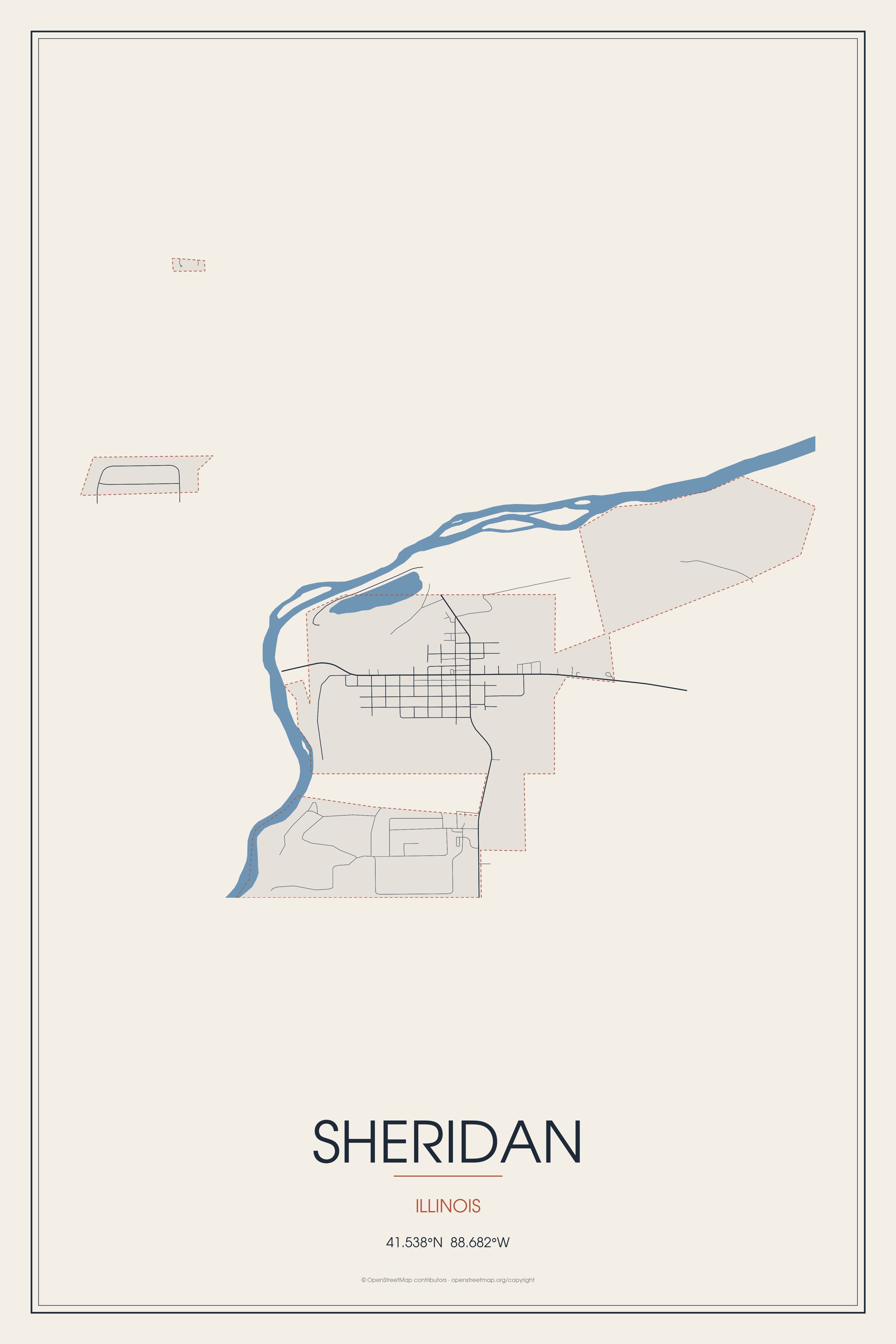
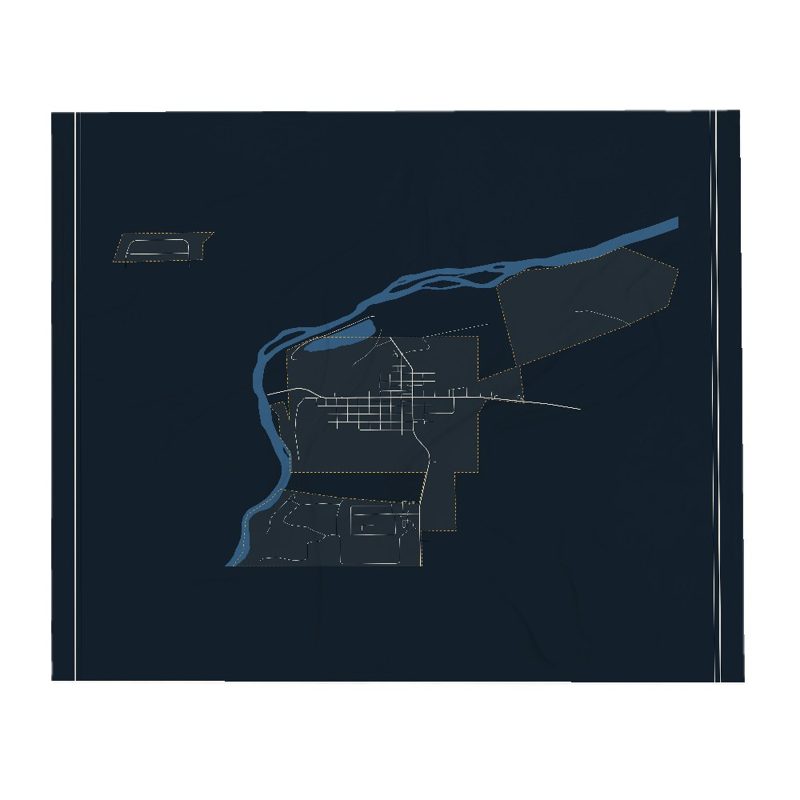
A short history of Sheridan
The Village of Sheridan, Incorporated 1872
The Village of Sheridan was settled as early as 1833 when Robert Rowe and his wife settled on Section 5 and 8 in what is now Mission Township. Prior to this, in 1826 Jesse Walker established a mission at the head of Mission Creek, just three miles from the present town of Sheridan. He became the first white settler in what is now Mission Township. In 1834, a Cholera Epidemic swept through the community, with a cemetery South of town near the present day prison as proof of this event. In 1844 Mission Point was established with the vote for a President and vice-president. Mission Point became known as Rowes Station in 1863, the Rowe farm consisted of three houses. Finally, in the summer of 1869 the village was platted and named Sheridan after General Phillip Sheridan. On June 24, 1872, the town of Sheridan voted forty-five to one to incorporate under the Old Statute of the State of Illinois. On June 29 of that same year, the first election of the board of trustees was held. The following seal was adopted: "Town Seal, Sheridan, Illinois. Incorporated, June 29, 1872". The township's first post office building actually resided on the property of a farm, located a mile east of town, off of E 2650th Road. The post office served the community until a Post Office was constructed in Sheridan, and the rest of the township was served either by the communities of Millington, Newark, Sheridan, Sandwich, or by rural routes.
As time progressed, the community grew, and the latter half of the 20th century saw expansive growth of local businesses, as there were a hardware store, two banks, a grocery store, two barber shops, two gas stations, three restaurants, and a tire center. However, over the subsequent years from 1995 to the present, many of the local businesses had either relocated or closed. Competition from nearby Ottawa, Sandwich, and Plano closed or diminished the ability to draw local residents to buying locally, resulting in local businesses having a hard time keeping business.
Read the full history
Flooding
In 1996, a flood occurred after a heavy rain storm drenched the valley, from Aurora down to Dayton, resulting in the low-lying area of Sheridan to flood, and most notably, Sheridan's "Old Mill Inn" became a popular spot for people to canoe from the bridge which came from town, to the Old Mill during the flood. In February 1998, the river flooded again after a rain storm failed to drain into the frozen ground. In 2008, the remnants of Hurricane Ike flooded the valley yet again. During the April 17–18, 2013 rain event, which flooded many bodies of water in the Chicago metropolitan area, the river and Somonauk Creek flooded, with much of the water level considerably diminished after it crested later that weekend. The river valley both north and west of Sheridan is somewhat confined by sandstone bluffs on either side, which forces the river to rise, resulting in higher river levels. The village itself is largely untouched, as a half-mile gap between the main area of town and the valley, coupled with two abandoned gravel quarry pits sitting within the gap, protects the town. The village also sits approximately 30 feet above the river.
Adapted (trimmed) from the Wikipedia article Sheridan, Illinois, revision 1379124102 by its contributors, licensed CC BY-SA 4.0.