Since 1836
A short history of Holly Springs
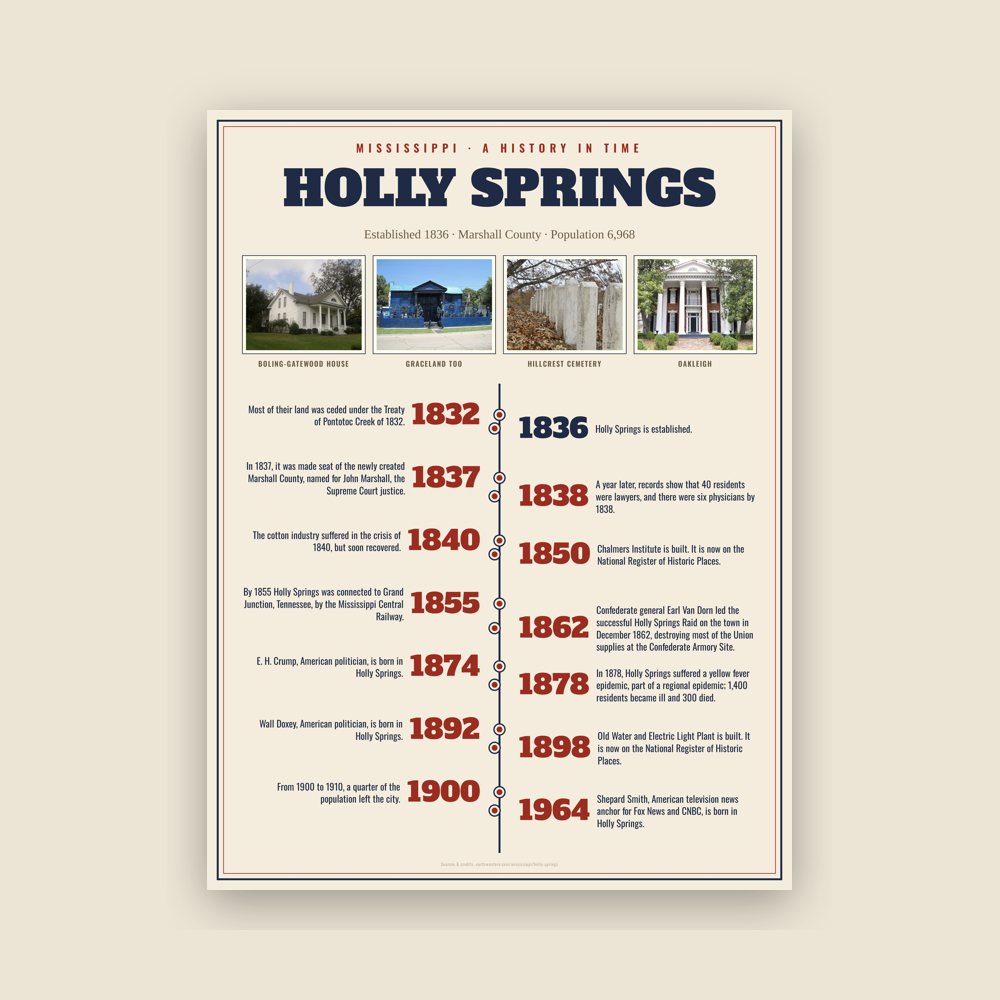
European Americans founded Holly Springs in 1836 on territory occupied by the Chickasaw people for centuries before Indian Removal. Most of their land was ceded under the Treaty of Pontotoc Creek of 1832. Many early U.S. migrants were from Virginia, supplemented by migrants from Georgia and the Carolinas.
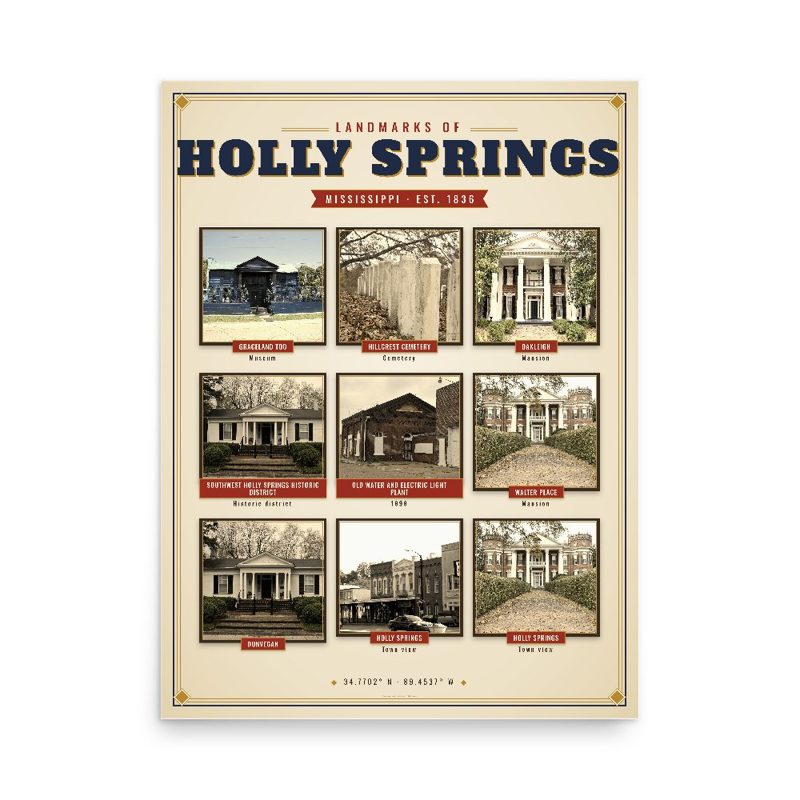
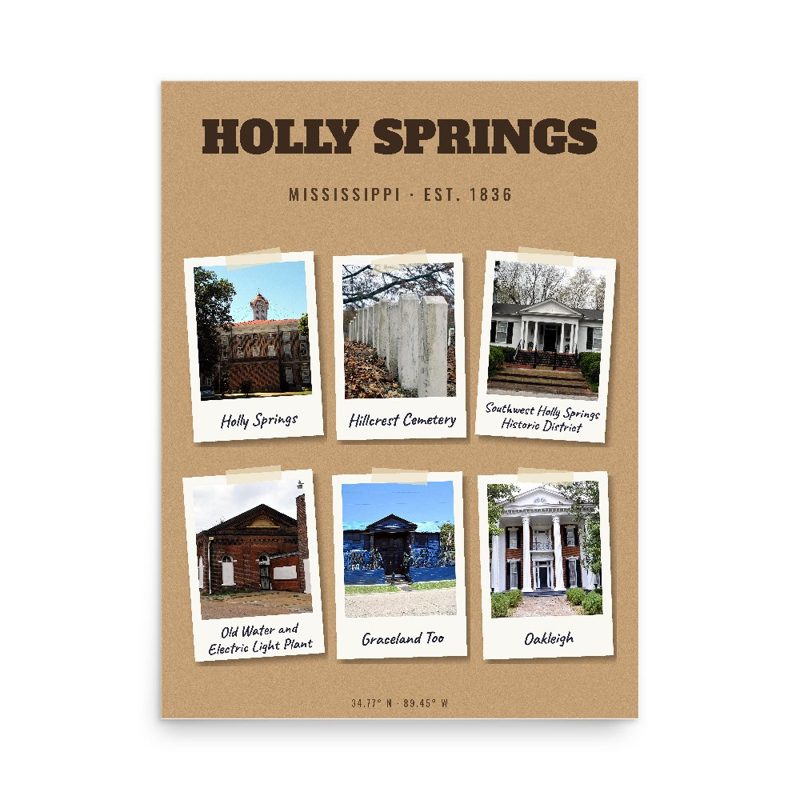
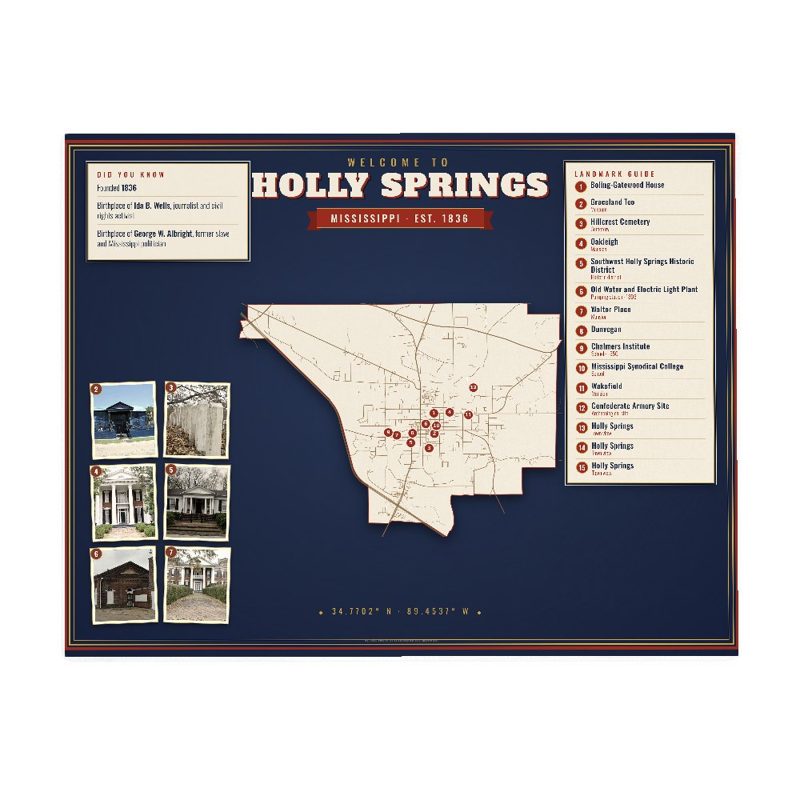
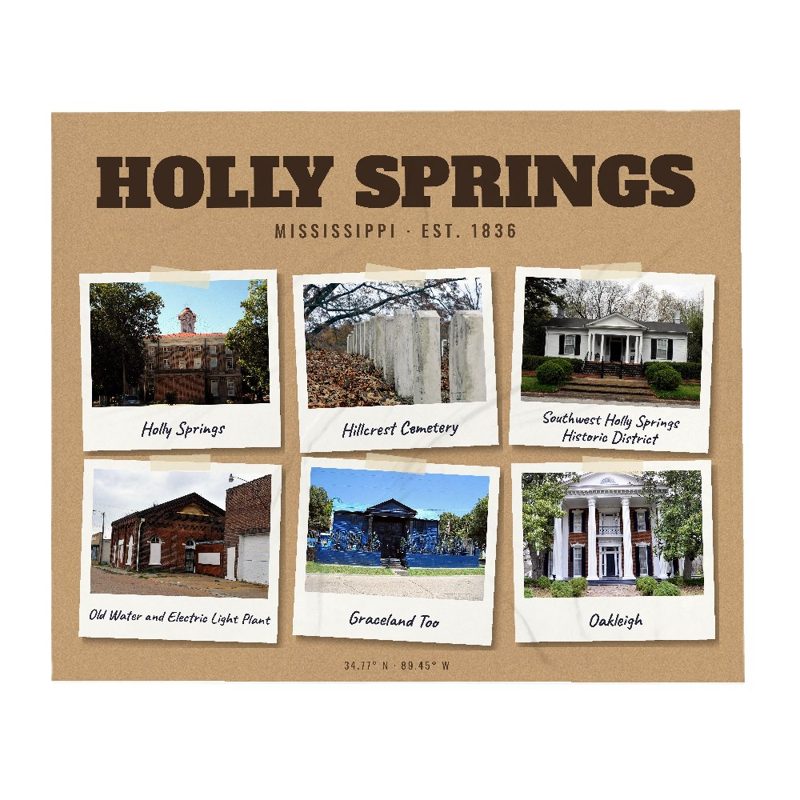
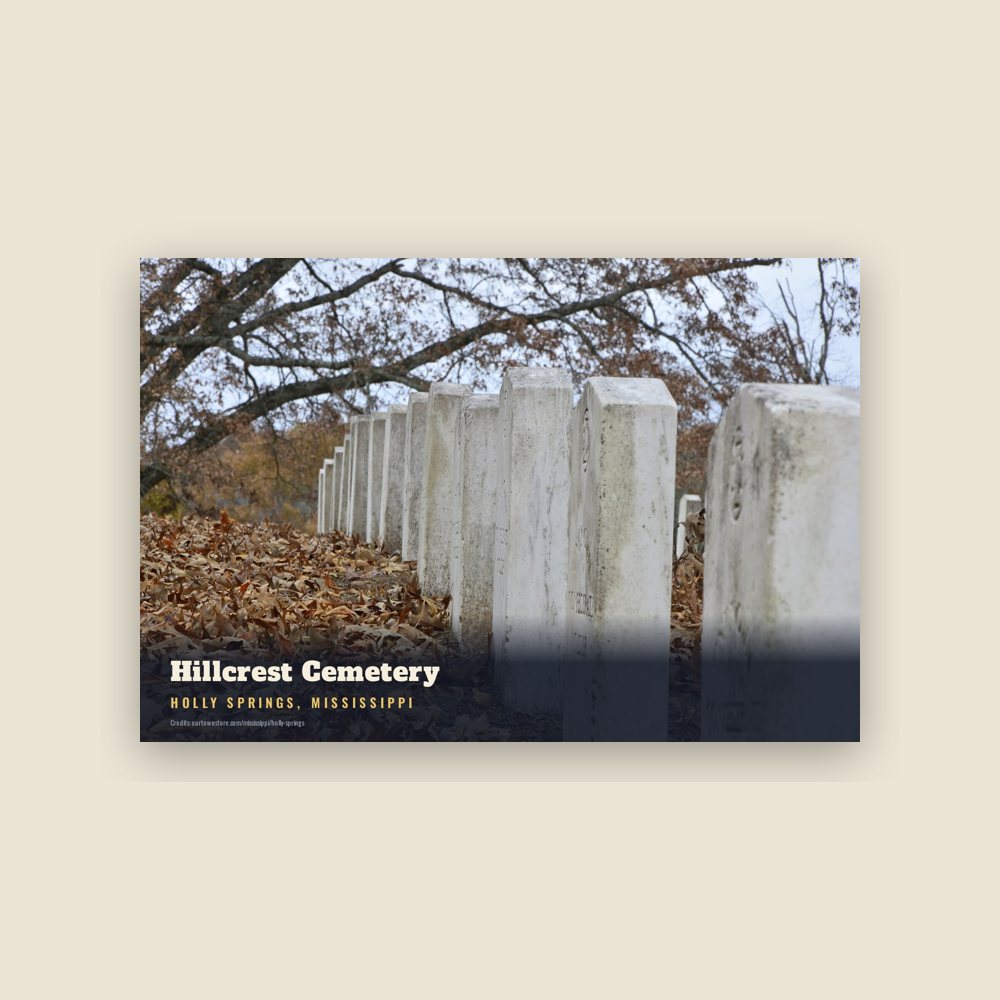
In 1836, the city had 4,000 European-American residents. A year later, records show that 40 residents were lawyers, and there were six physicians by 1838. By 1837, the town already had "twenty dry goods stores, two drugstores, three banks, several hotels, and over ten saloons." Hillcrest Cemetery was built on land settler William S. Randolph gave the city in 1837.
Newcomers established the Chalmers Institute, later known as the University of Holly Springs, Mississippi's oldest university.
The area was developed with extensive cotton plantations dependent on the labor of enslaved African Americans. Many had been transported from the Upper South in the domestic slave trade, breaking up families. Holly Springs served as a trading center for the neighboring cotton plantations. In 1837, it was made seat of the newly created Marshall County, named for John Marshall, the Supreme Court justice. The town developed a variety of merchants and businesses to support the plantations. Its population into the early twentieth century included a community of Jewish merchants, whose ancestors were immigrants from eastern Europe in the 19th century. The cotton industry suffered in the crisis of 1840, but soon recovered.
By 1855 Holly Springs was connected to Grand Junction, Tennessee, by the Mississippi Central Railway. In ensuing years, the line was completed to the south of Hill Springs. Toward the end of the 19th century, the Kansas City, Memphis and Birmingham Railroad was constructed to intersect this line in Holly Springs.
During the Civil War, Union general Ulysses S. Grant temporarily used Holly Springs as a supply depot and headquarters while mounting an effort to take the city of Vicksburg. Confederate general Earl Van Dorn led the successful Holly Springs Raid on the town in December 1862, destroying most of the Union supplies at the Confederate Armory Site. The campus of the Holly Springs Female Institute, which had been open since 1836, was also burned, forcing it to permanently close. Grant eventually succeeded in ending the siege of Vicksburg with a Union victory.
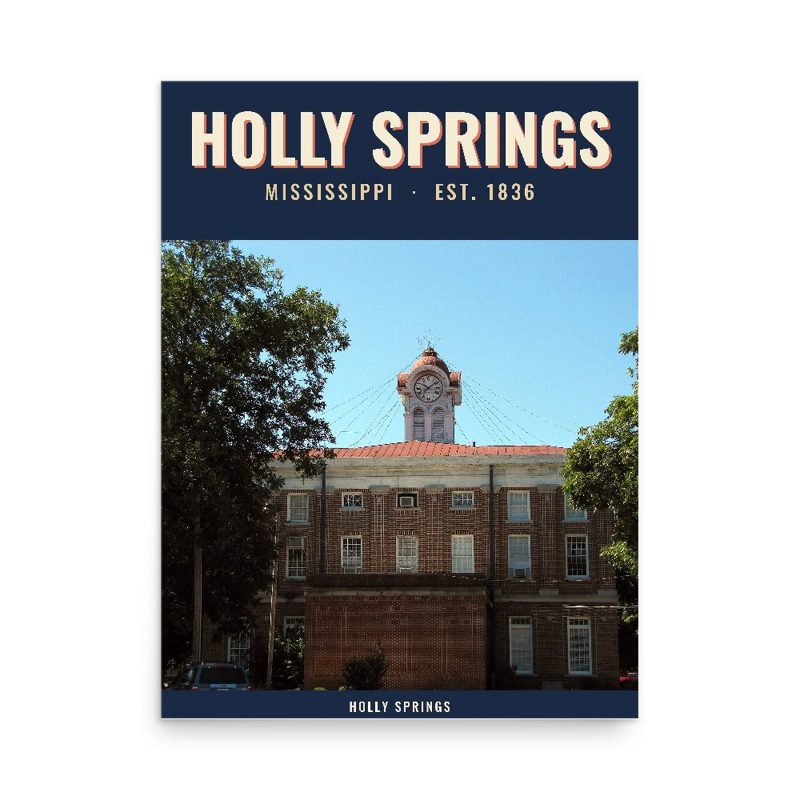
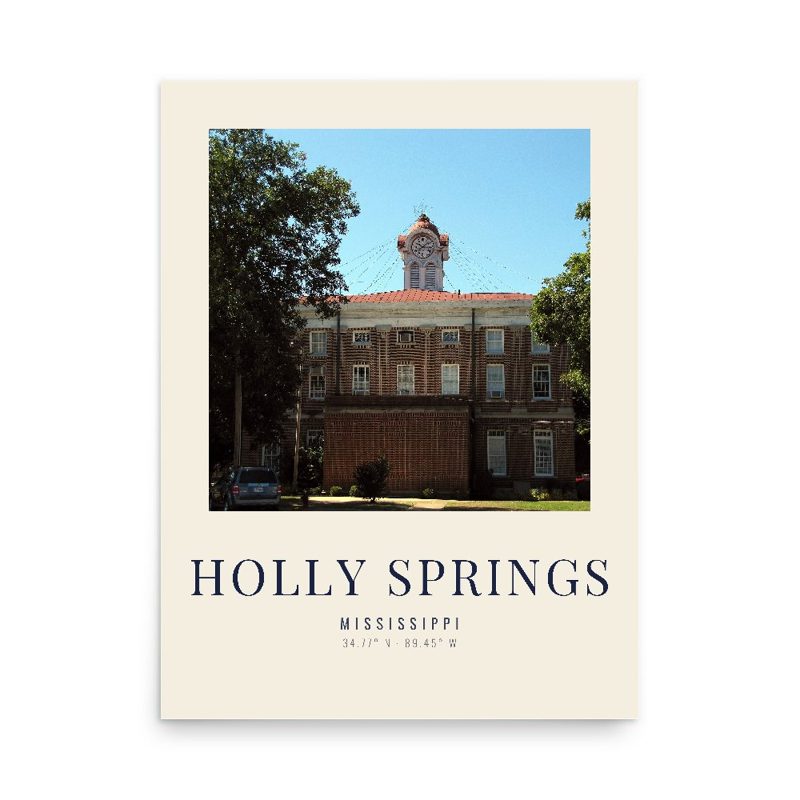
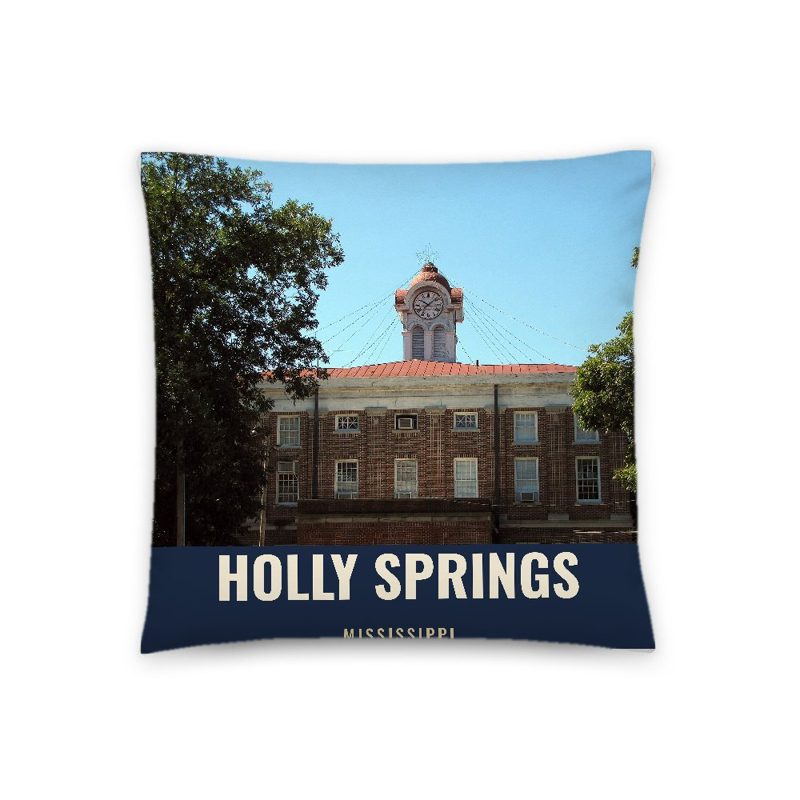
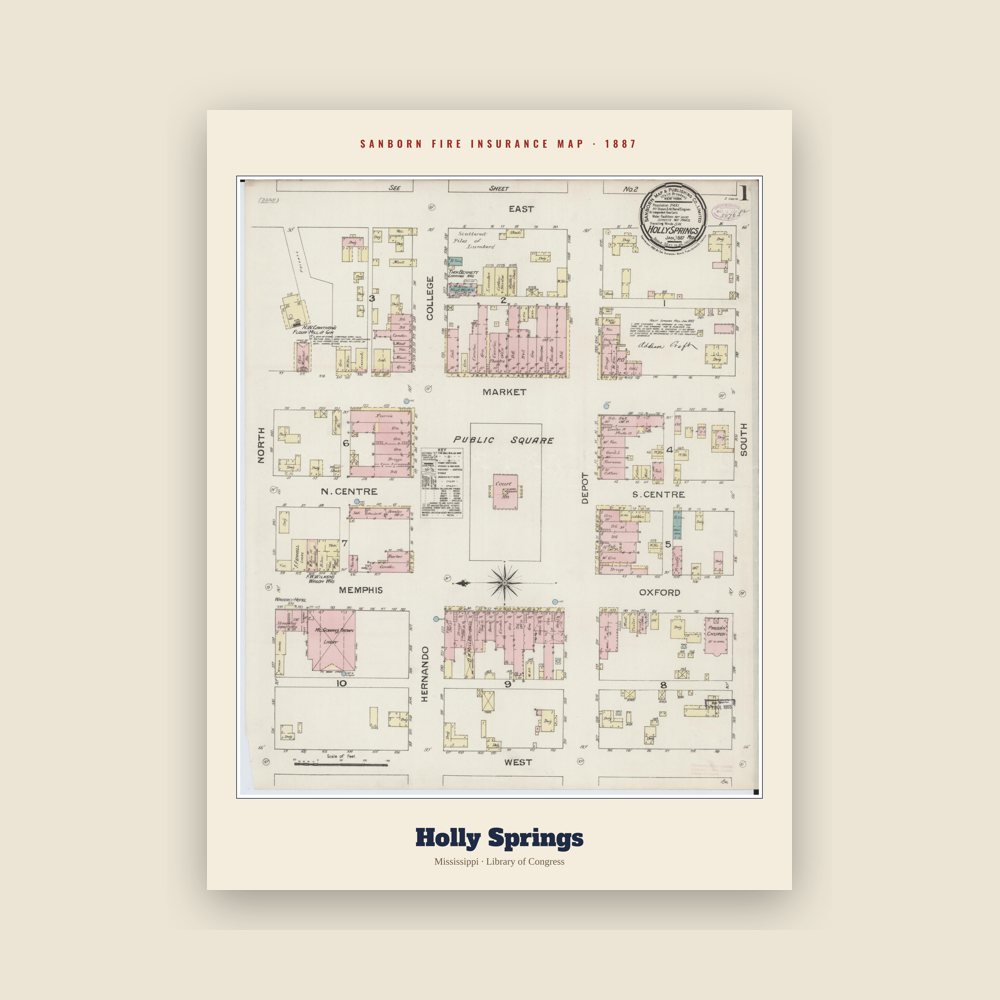
In 1878, Holly Springs suffered a yellow fever epidemic, part of a regional epidemic; 1,400 residents became ill and 300 died. The Marshall County courthouse, at the center of Holly Springs's square, was used as a hospital during the epidemic.
After the war and emancipation, many freedmen stayed in the area, working as sharecroppers on former plantations. There were tensions after the war.
As agriculture was mechanized in the early 20th century, there were fewer farm labor jobs. From 1900 to 1910, a quarter of the population left the city. Many blacks moved to the North in the Great Migration to escape southern oppression and seek employment in northern factories. The invasion of boll weevils in the 1920s and 1930s, which occurred across the South, destroyed the cotton crops and caused economic problems on top of the Great Depression. Some light industry developed in the area. After World War II, most industries moved to the major cities of Memphis, Tennessee, and Birmingham, Alabama.
Adapted (trimmed) from the Wikipedia article Holly Springs, Mississippi, revision 1374431403 by its contributors, licensed CC BY-SA 4.0.