A short history of Austin
Austin, Travis County and Williamson County have been the site of human habitation since at least 9200 BC. The area's earliest known inhabitants lived during the late Pleistocene (Ice Age) and are linked to the Clovis culture around 9200 BC (over 11,200 years ago), based on evidence found throughout the area and documented at the much-studied Gault Site, midway between Georgetown and Fort Hood. Excavations at the French Legation in downtown Austin revealed a site utilized during the Archaic period of North America, about 5,000 years ago. Artifacts dating to the Paleo-Indians period show possible use as early as 9,000 years ago.
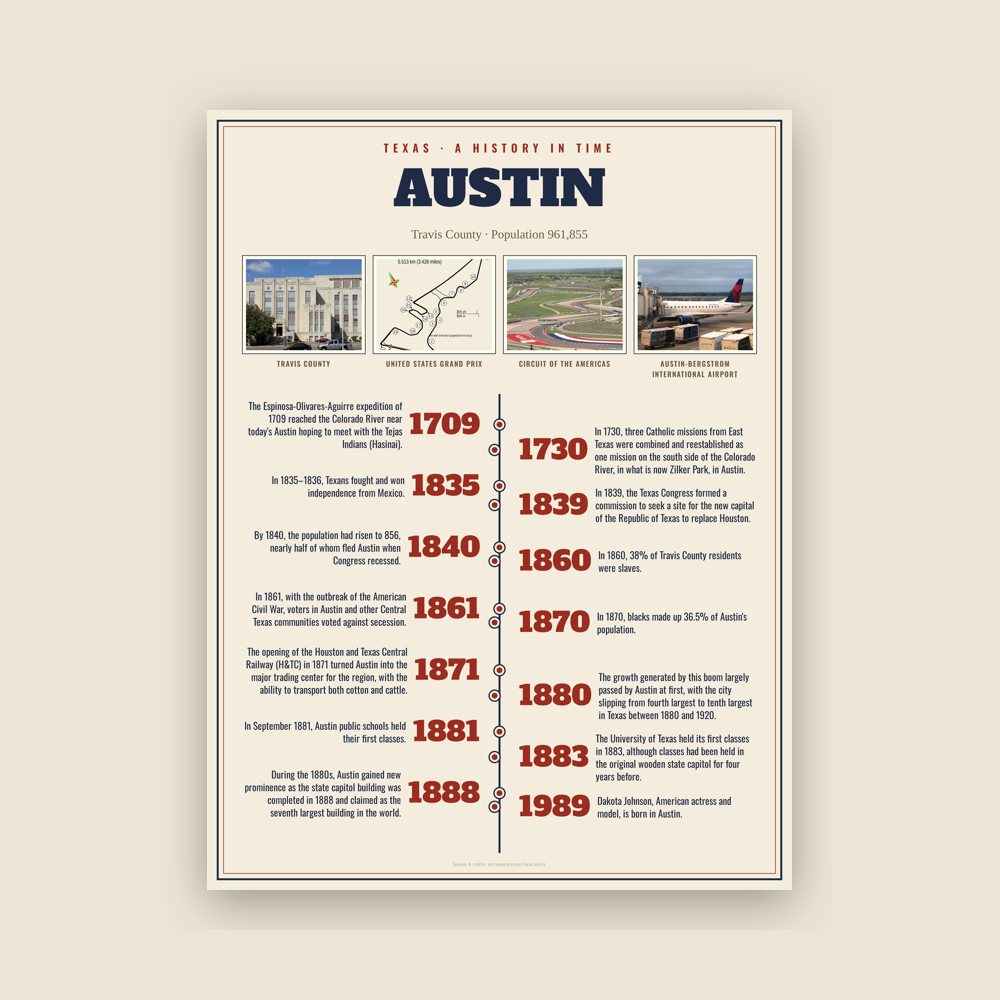
Spanish colonists traveled through the area, though few permanent settlements were created for some time. The Espinosa-Olivares-Aguirre expedition of 1709 reached the Colorado River near today's Austin hoping to meet with the Tejas Indians (Hasinai). It was met by members of a number of Indigenous Peoples: Yojuan (AKA Yojuane), Simomo, and Tusonibi. Guides for the expedition included Indigenous Peoples they had encountered just previously living near San Pedro Springs: Chaularame, Payaya, Sana, Sijame, and Siupan. With orders not to cross the Colorado the expedition returned to Mexico.
In 1730, three Catholic missions from East Texas were combined and reestablished as one mission on the south side of the Colorado River, in what is now Zilker Park, in Austin. The mission was in this area for only about seven months, then was moved to San Antonio de Béxar and split into three missions.
Many of the Indigenous Peoples the Spanish met on early expeditions, for example the Payaya, are classified as Coahuiltecan. Today Coahuiltecan descendants include Austin's Barton Springs among the four springs part of their creation story dating to prehistoric times; these springs are Comal Springs, Barton Springs, San Marcos Springs and San Antonio Springs. While there are many other tribes associated with Austin, Central Texas, of which Austin is a part, was not the long-term ancestral homeland of the ethnographically well-known Comanche, Kiowa, Lipan Apache, Waco (a branch of the Wichita) or even the Tonkawa, all having arrived in Central Texas just before or during the early European contact period.
During the 1830s, pioneers began to settle the area in central Austin along the Colorado River. Spanish forts were established in what are now Bastrop and San Marcos. Following Mexico's independence, new settlements were established in Central Texas.
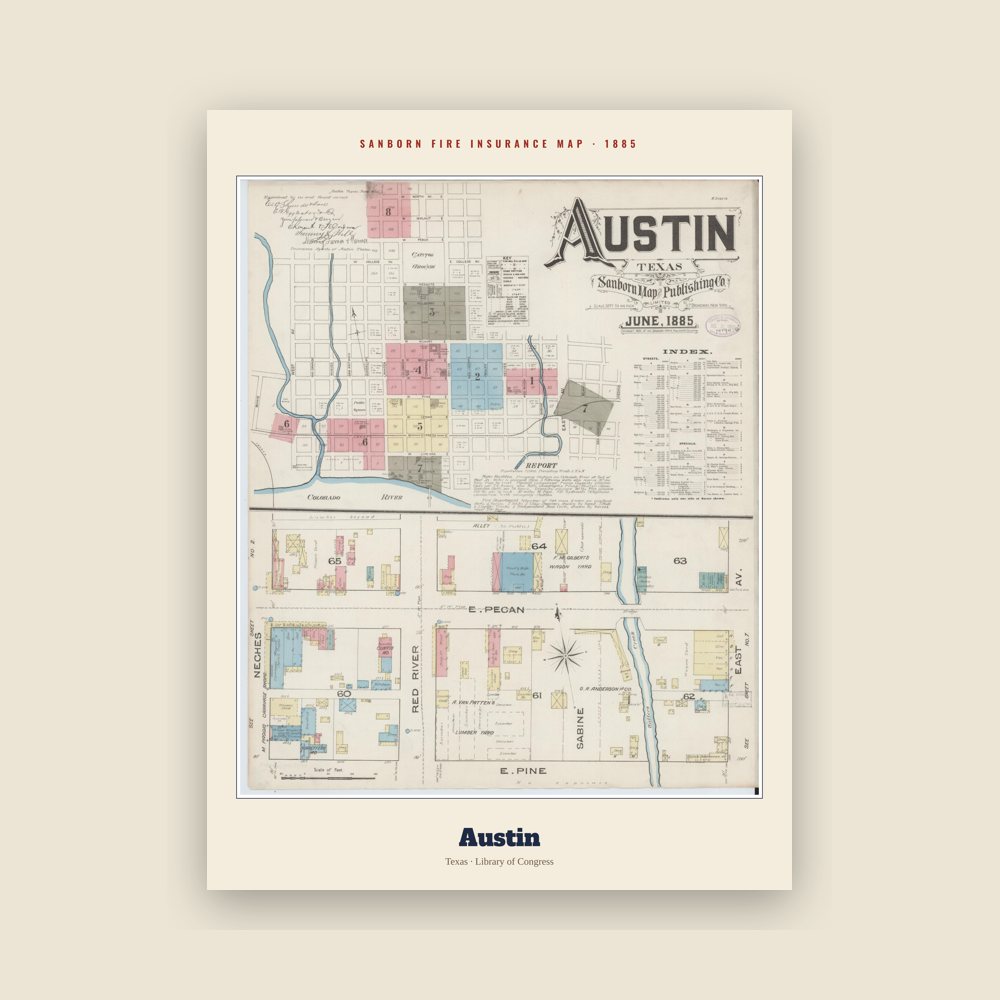
In 1835–1836, Texans fought and won independence from Mexico. Texas thus became an independent country with its own president, congress, and monetary system. In 1839, the Texas Congress formed a commission to seek a site for the new capital of the Republic of Texas to replace Houston. When he was Vice President of Texas, Mirabeau B. Lamar had visited the area during a buffalo-hunting expedition between 1837 and 1838. He advised the commissioners to consider the area on the north bank of the Colorado River (near the present-day Congress Avenue Bridge), noting the area's hills, waterways, and pleasant surroundings. It was seen as a convenient crossroads for trade routes between Santa Fe and Galveston Bay, as well as routes between Northern Mexico and the Red River. In 1839, the site was chosen, and briefly incorporated under the name "Waterloo". Shortly afterward, the name was changed to Austin in honor of Stephen F. Austin, the "Father of Texas" and the republic's first secretary of state.
The city grew throughout the 19th century and became a center for government and education with the construction of the Texas State Capitol and the University of Texas at Austin.
Edwin Waller was picked by Lamar to survey the village and draft a plan laying out the new capital. The original site was narrowed to 640 acres (260 ha) that fronted the Colorado River between two creeks, Shoal Creek and Waller Creek, which was later named in his honor. Waller and a team of surveyors developed Austin's first city plan, commonly known as the Waller Plan, dividing the site into a 14-block grid plan bisected by a broad north–south thoroughfare, Congress Avenue, running up from the river to Capital Square, where the new Texas State Capitol was to be constructed. A temporary one-story capitol was erected on the corner of Colorado and 8th Streets. On August 1, 1839, the first auction of 217 out of 306 lots total was held. The Waller Plan designed and surveyed now forms the basis of downtown Austin.
Initially, the new capital thrived but Lamar's political enemy, Sam Houston, used two Mexican army incursions to San Antonio as an excuse to move the government. Sam Houston fought bitterly against Lamar's decision to establish the capital in such a remote wilderness. The men and women who traveled mainly from Houston to conduct government business were intensely disappointed as well. By 1840, the population had risen to 856, nearly half of whom fled Austin when Congress recessed. The resident African American population listed in January of this same year was 176. The fear of Austin's proximity to the Indians and Mexico, which still considered Texas a part of their land, created an immense motive for Sam Houston, the first and third President of the Republic of Texas, to relocate the capital once again in 1841. Upon threats of Mexican troops in Texas, Houston raided the Land Office to transfer all official documents to Houston for safe keeping in what was later known as the Archive War, but the people of Austin would not allow this unaccompanied decision to be executed. The documents stayed, but the capital would temporarily move from Austin to Houston to Washington-on-the-Brazos. Without the governmental body, Austin's population declined to a low of only a few hundred people throughout the early 1840s. The voting by the fourth President of the Republic, Anson Jones, and Congress, who reconvened in Austin in 1845, settled the issue to keep Austin the seat of government, as well as annex the Republic of Texas into the United States.
In 1860, 38% of Travis County residents were slaves. In 1861, with the outbreak of the American Civil War, voters in Austin and other Central Texas communities voted against secession. However, as the war progressed and fears of attack by Union forces increased, Austin contributed hundreds of men to the Confederate forces, albeit often via Confederate conscription laws, not popular with many Texans. Some Austinites, like prominent lawyer and businessman, Josiah Fisk, namesake of Fiskville, left Texas when threatened with conscription. Some opted trying to avoid conscription by hiding in remote locations such as Hamilton Pool. Others mounted armed resistance to the Confederacy.
The African American population of Austin swelled dramatically after the enforcement of the Emancipation Proclamation in Texas by Union General Gordon Granger at Galveston, in an event commemorated as Juneteenth. Black communities such as Wheatville, Pleasant Hill, and Clarksville were established, with Clarksville being the oldest surviving freedomtown ‒ the original post-Civil War settlements founded by former African-American slaves ‒ west of the Mississippi River. In 1870, blacks made up 36.5% of Austin's population.
The postwar period saw dramatic population and economic growth. The opening of the Houston and Texas Central Railway (H&TC) in 1871 turned Austin into the major trading center for the region, with the ability to transport both cotton and cattle. The Missouri, Kansas & Texas (MKT) line followed close behind. By the mid-1870s, Austin also had a small Chinese community; the city’s 1875 census recorded 20 Chinese men, many of whom had previously worked on railroad construction in California and Mexico.Austin was also the terminus of the southernmost leg of the Chisholm Trail, and "drovers" pushed cattle north to the railroad. Cotton was one of the few crops produced locally for export, and a cotton gin engine was located downtown near the trains for "ginning" cotton of its seeds and turning the product into bales for shipment. However, as other new railroads were built through the region in the 1870s, Austin began to lose its primacy in trade to the surrounding communities. In addition, the areas east of Austin took over cattle and cotton production from Austin, especially in towns like Hutto and Taylor that sit over the blackland prairie, with its deep, rich soils for producing cotton and hay.
In September 1881, Austin public schools held their first classes. The same year, Tillotson Collegiate and Normal Institute (now part of Huston–Tillotson University) opened its doors. The University of Texas held its first classes in 1883, although classes had been held in the original wooden state capitol for four years before.
During the 1880s, Austin gained new prominence as the state capitol building was completed in 1888 and claimed as the seventh largest building in the world. In the late 19th century, Austin expanded its city limits to more than three times its former area, and the first granite dam was built on the Colorado River to power a new street car line and the new "moon towers". The first dam washed away in a flood on April 7, 1900.
In the late 1920s and 1930s, Austin implemented the 1928 Austin city plan through a series of civic development and beautification projects that created much of the city's infrastructure and many of its parks. In addition, the state legislature established the Lower Colorado River Authority (LCRA) that, along with the city of Austin, created the system of dams along the Colorado River to form the Highland Lakes. These projects were enabled in large part because the Public Works Administration provided Austin with greater funding for municipal construction projects than other Texas cities.
During the early 20th century, a three-way system of social segregation emerged in Austin, with Anglos, African Americans and Mexicans being separated by custom or law in most aspects of life, including housing, health care, and education. Deed restrictions also played an important role in residential segregation. After 1935 most housing deeds prohibited African Americans (and sometimes other nonwhite groups) from using land. Combined with the system of segregated public services, racial segregation increased in Austin during the first half of the twentieth century, with African Americans and Mexicans experiencing high levels of discrimination and social marginalization.
In 1940, the destroyed granite dam on the Colorado River was finally replaced by a hollow concrete dam that formed Lake McDonald (now called Lake Austin) and which has withstood all floods since. In addition, the much larger Mansfield Dam was built by the LCRA upstream of Austin to form Lake Travis, a flood-control reservoir.
In the early 20th century, the Texas Oil Boom took hold, creating tremendous economic opportunities in Southeast Texas and North Texas. The growth generated by this boom largely passed by Austin at first, with the city slipping from fourth largest to tenth largest in Texas between 1880 and 1920.
After a severe lull in economic growth from the Great Depression, Austin resumed its steady development. Following the mid-20th century, Austin became established as one of Texas' major metropolitan centers. In 1970, the U.S. Census Bureau reported Austin's population as 14.5% Hispanic, 11.9% black, and 73.4% non-Hispanic white. In the late 20th century, Austin emerged as an important high tech center for semiconductors and software. The University of Texas at Austin emerged as a major university.
The 1970s saw Austin's emergence in the national music scene, with local artists such as Willie Nelson, Asleep at the Wheel, Eric Johnson and Stevie Ray Vaughan and iconic music venues such as the Armadillo World Headquarters. Over time, the long-running television program Austin City Limits, its namesake Austin City Limits Festival, and the South by Southwest music festival solidified the city's place in the music industry.
Adapted (trimmed) from the Wikipedia article Austin, Texas, revision 1386036567 by its contributors, licensed CC BY-SA 4.0.
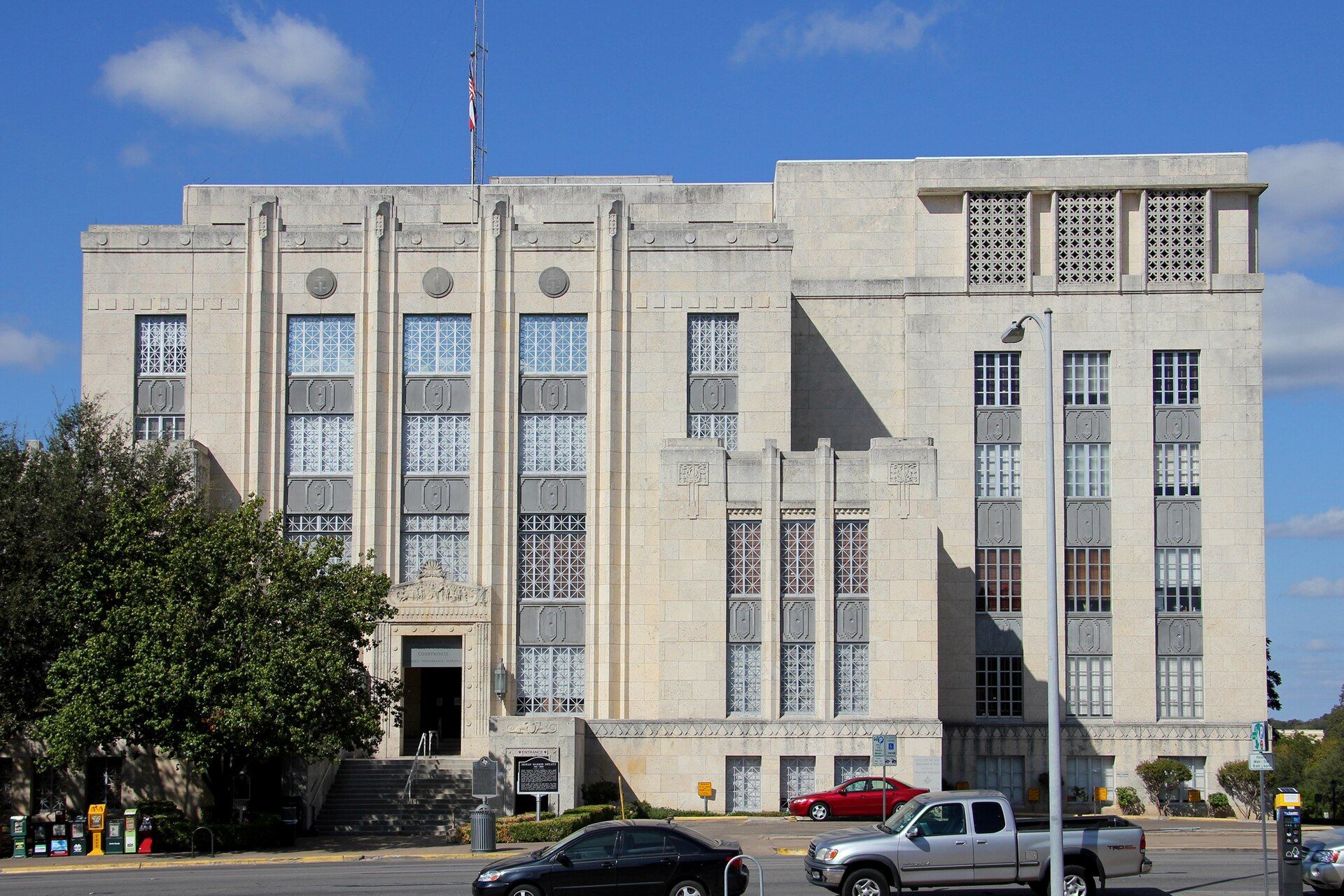

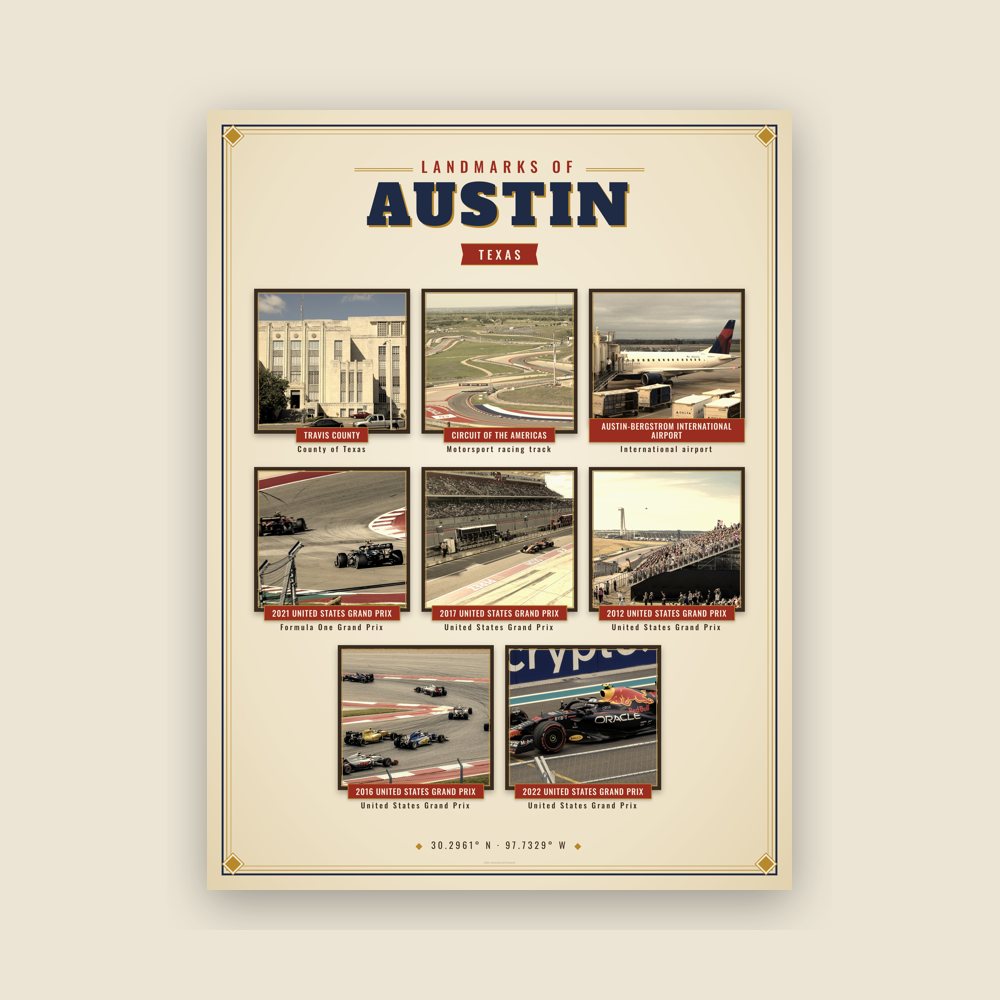
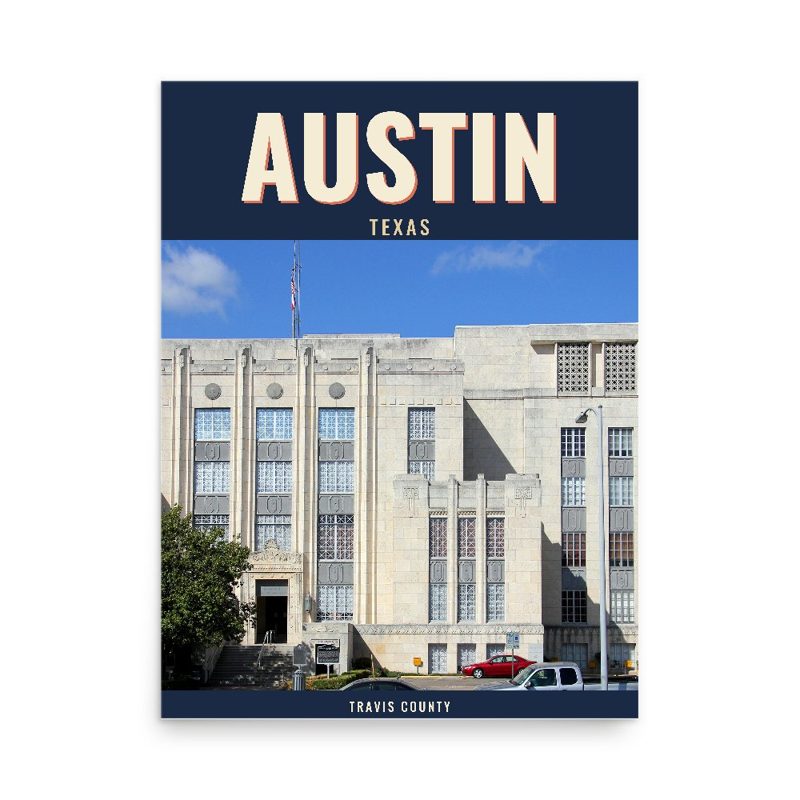
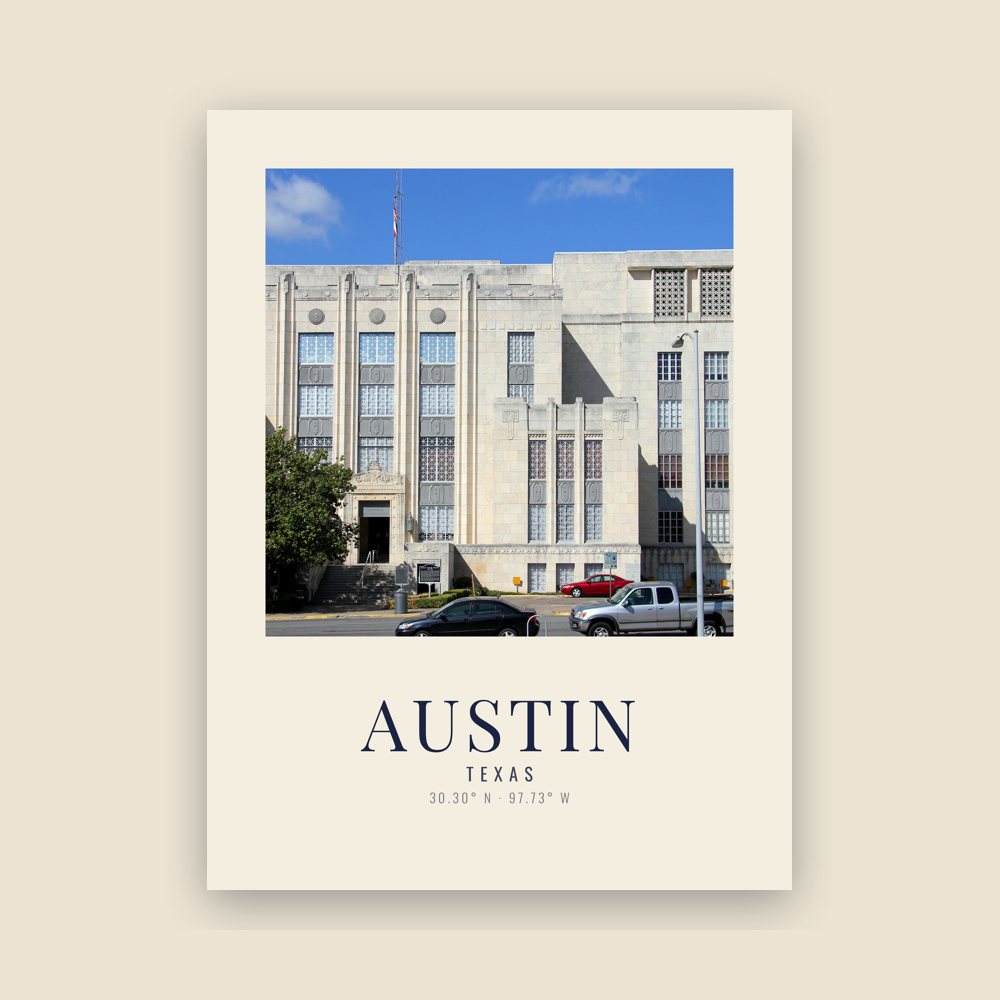
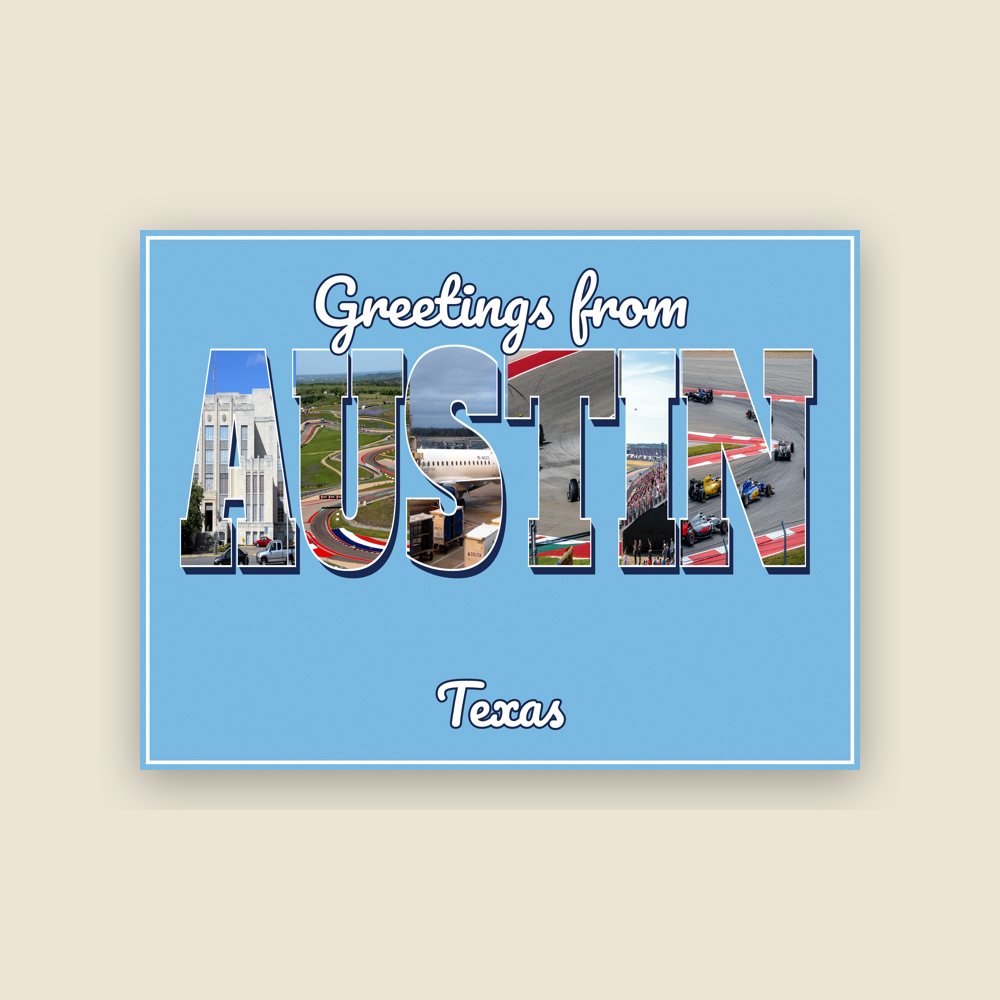
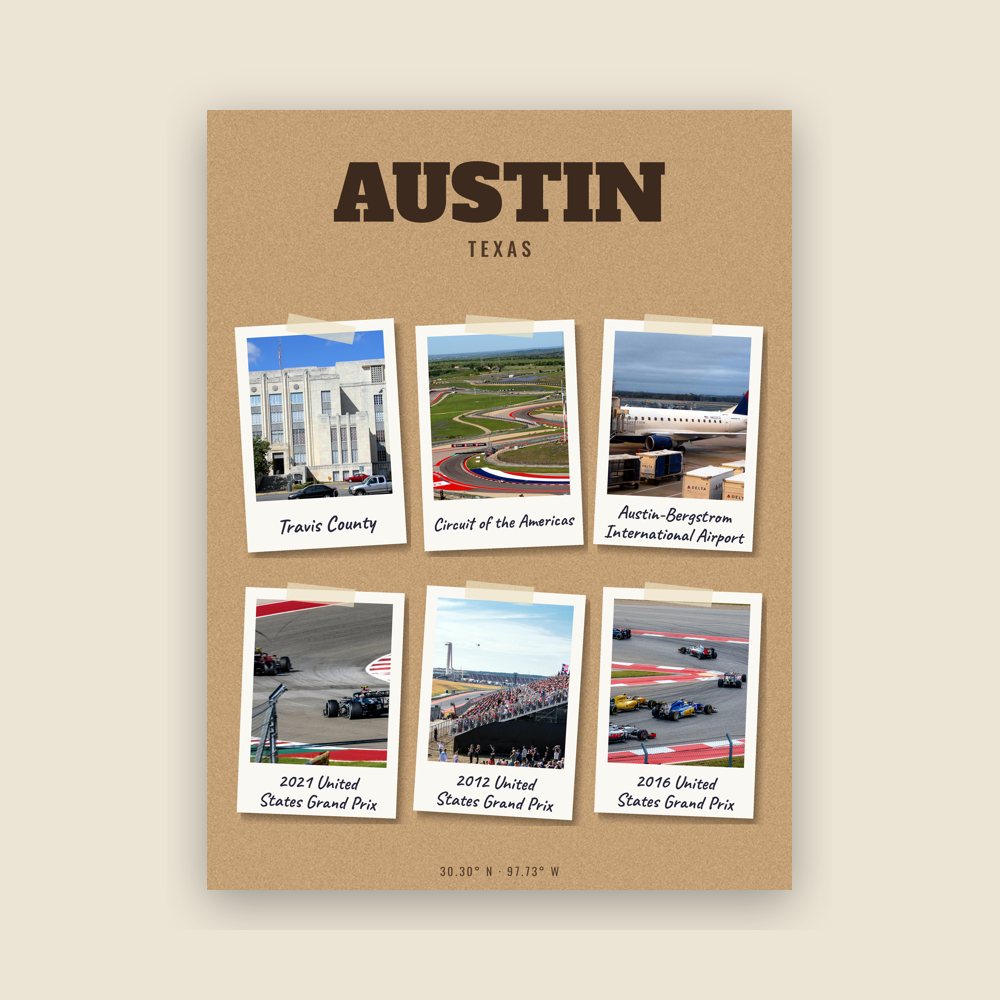
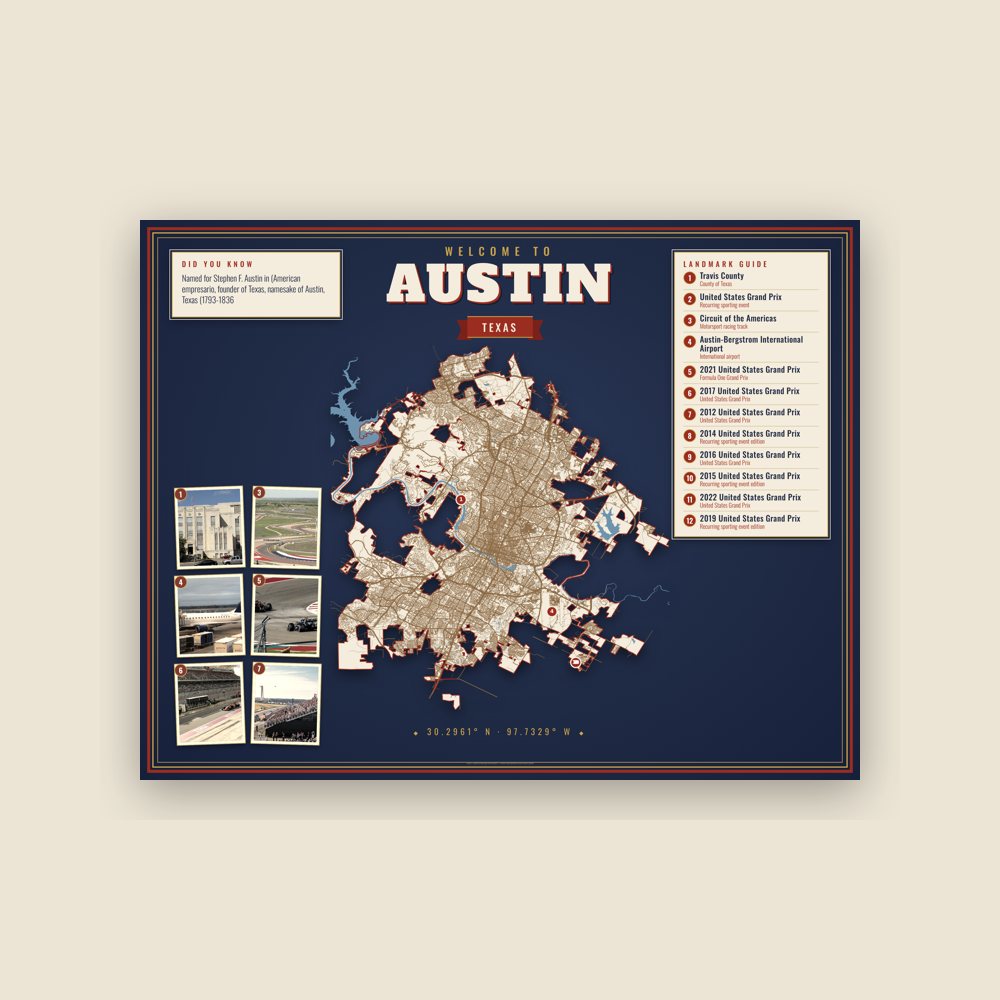






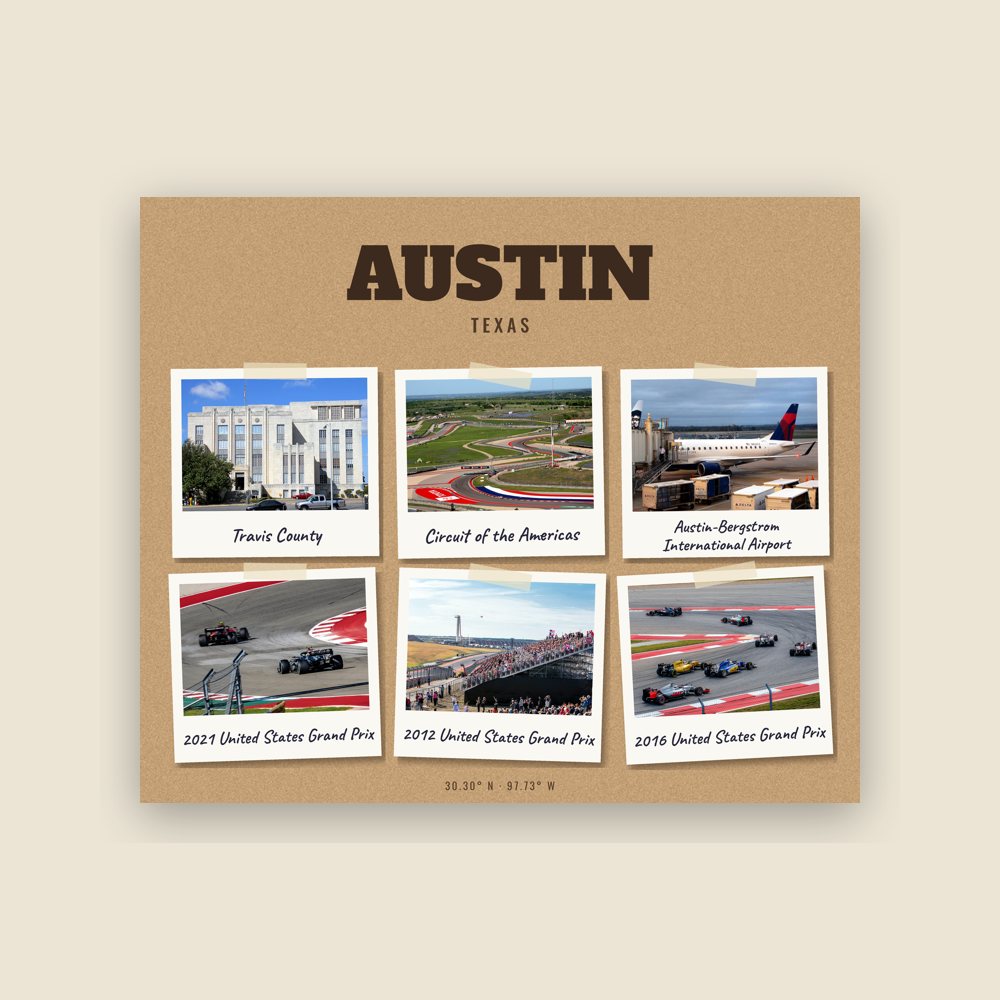
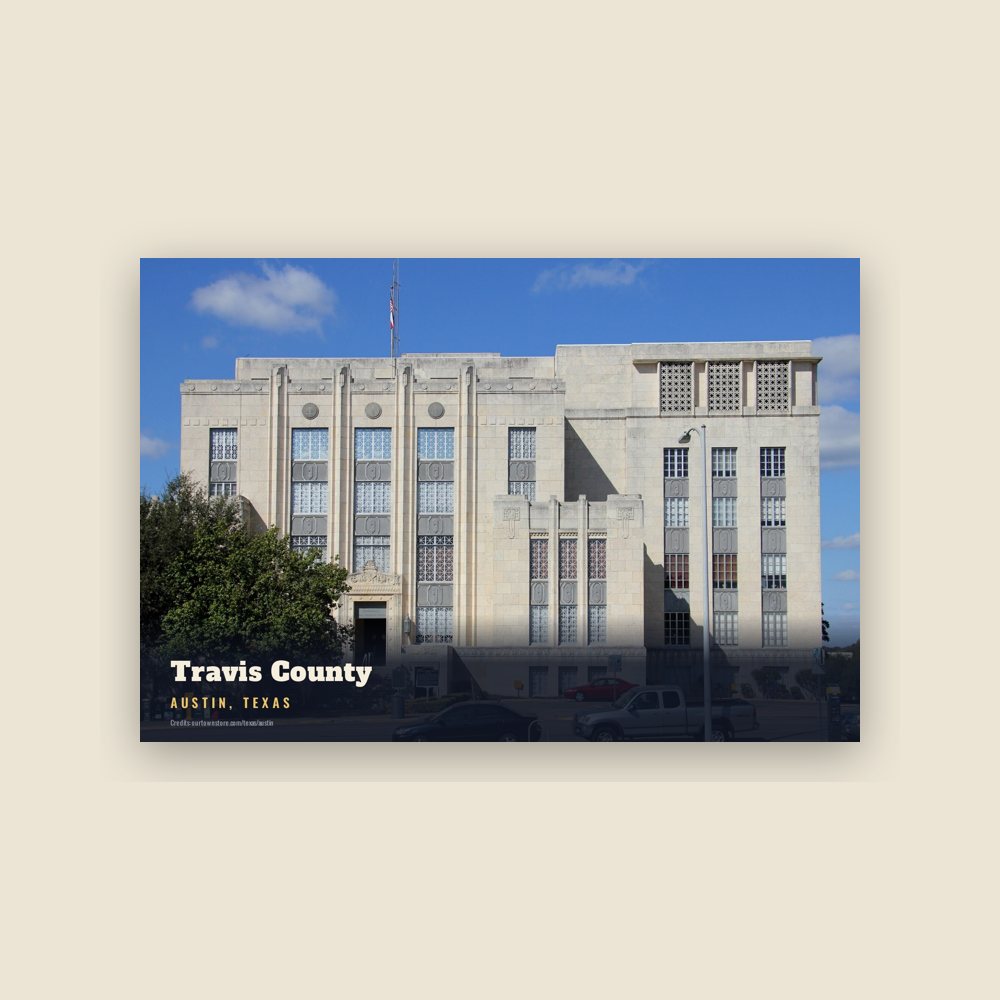
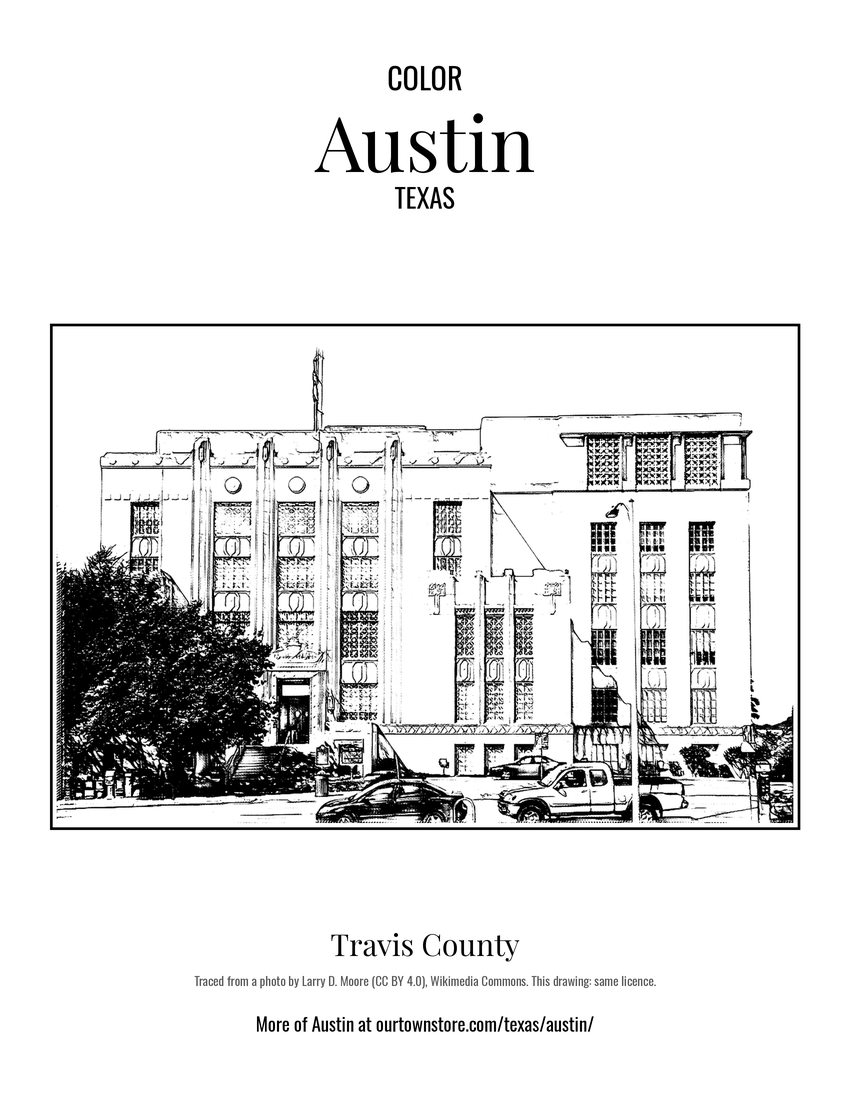 Travis County
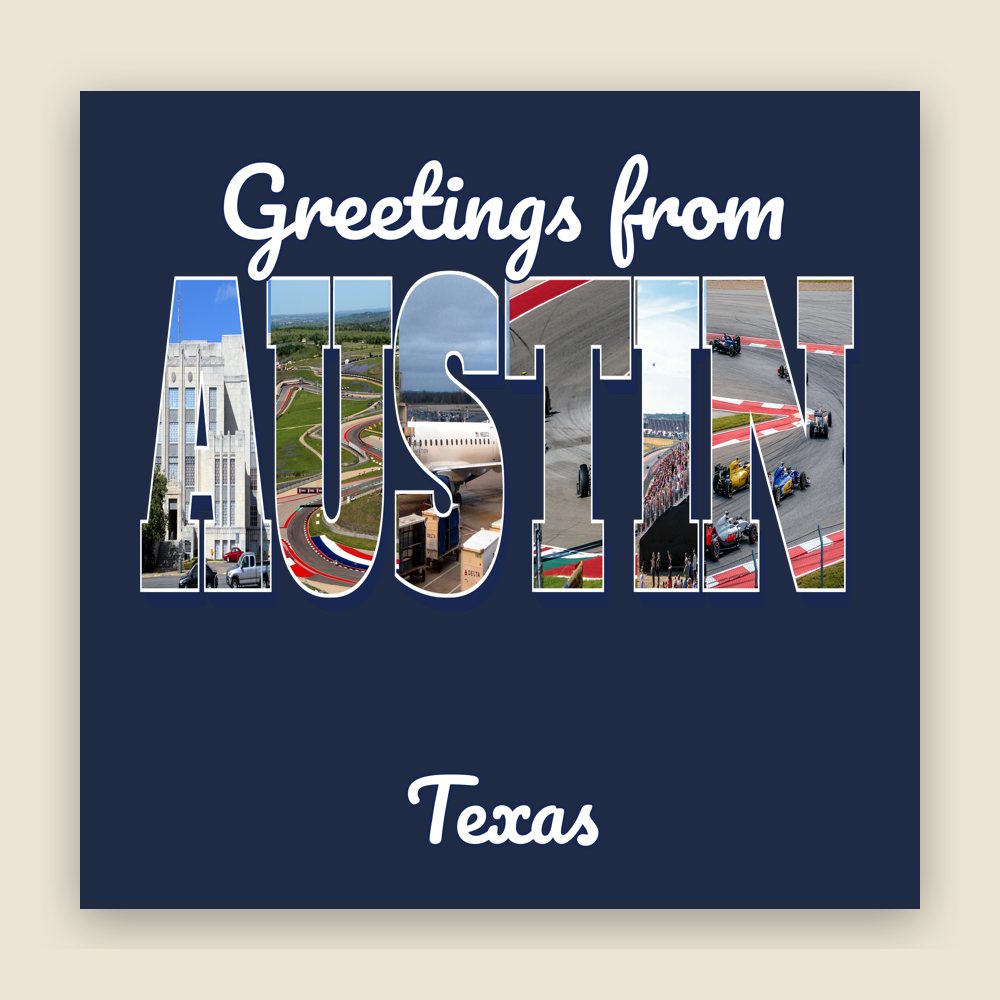
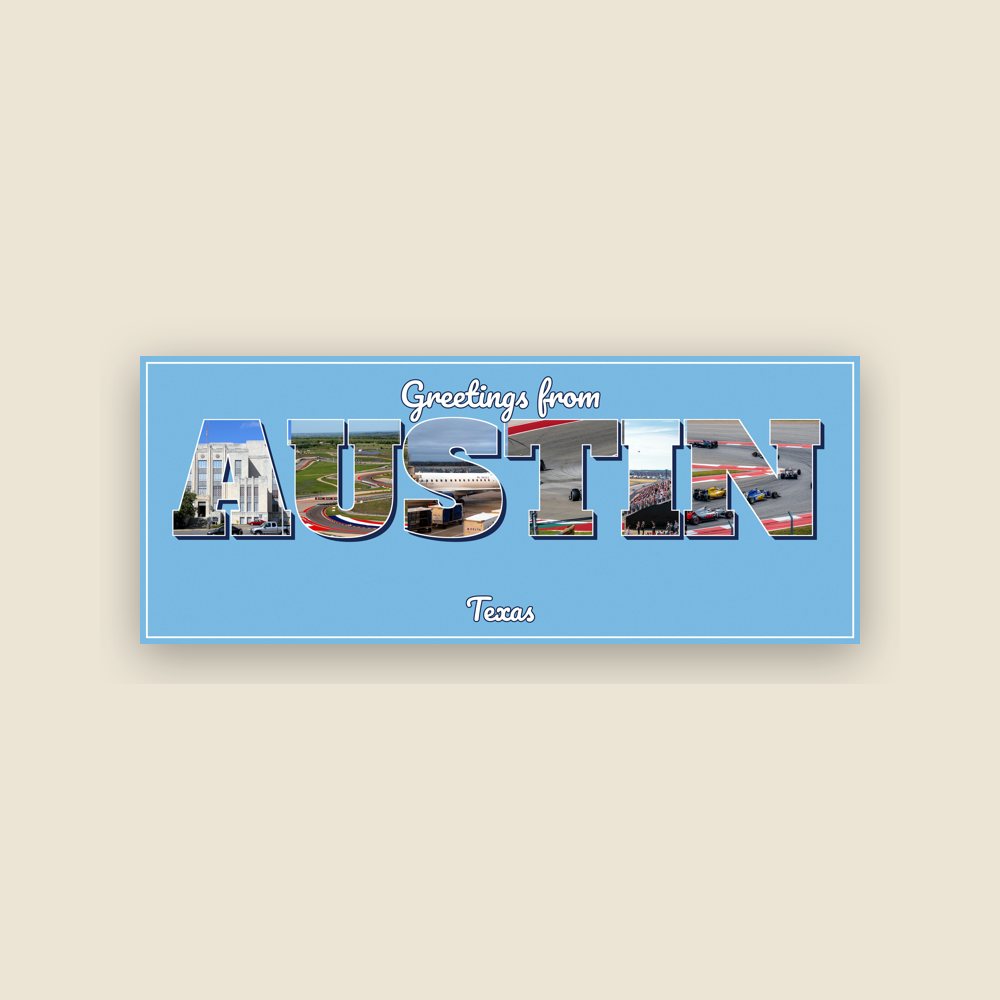
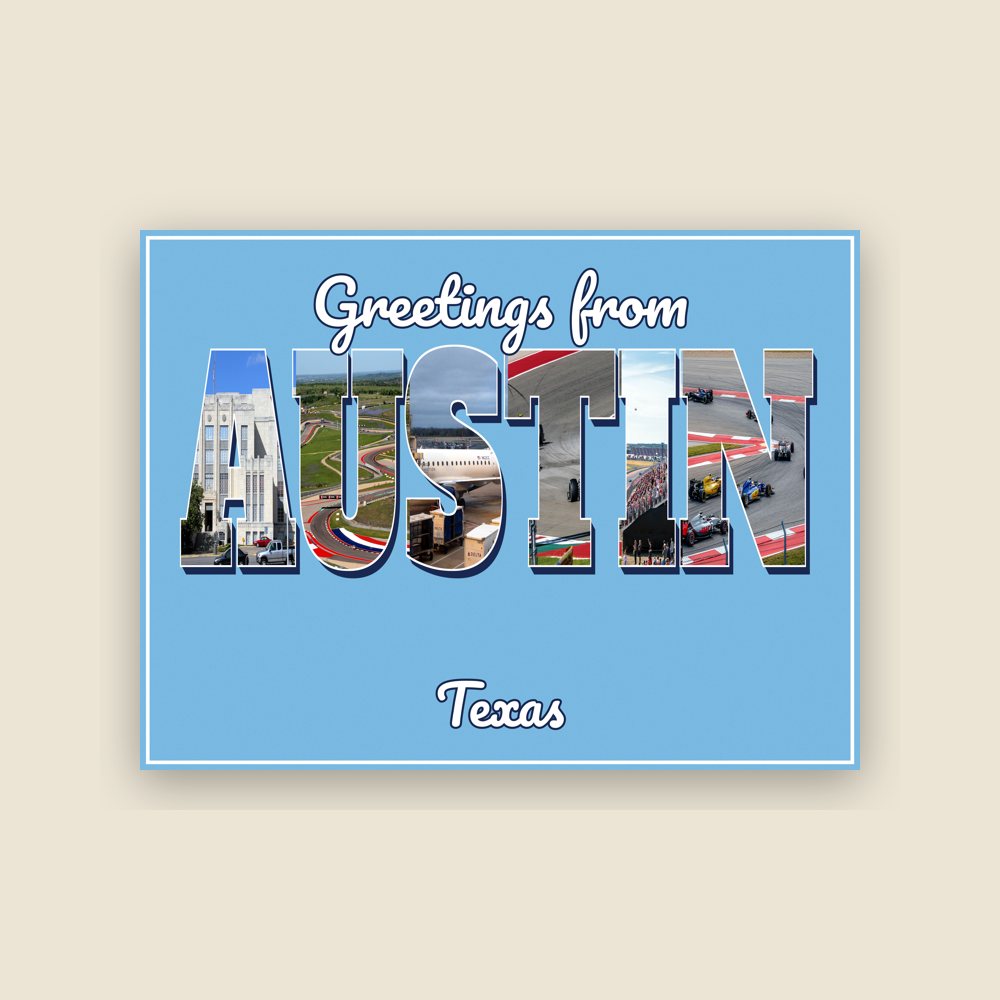
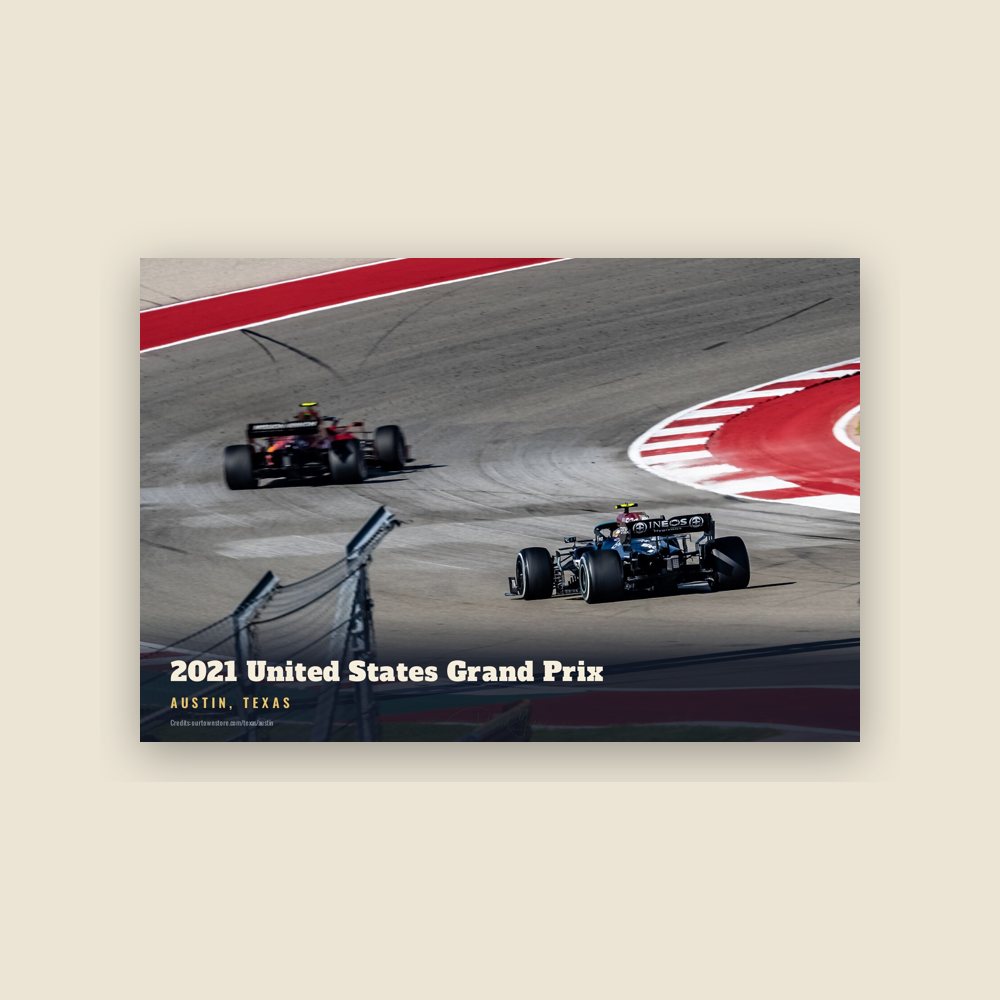
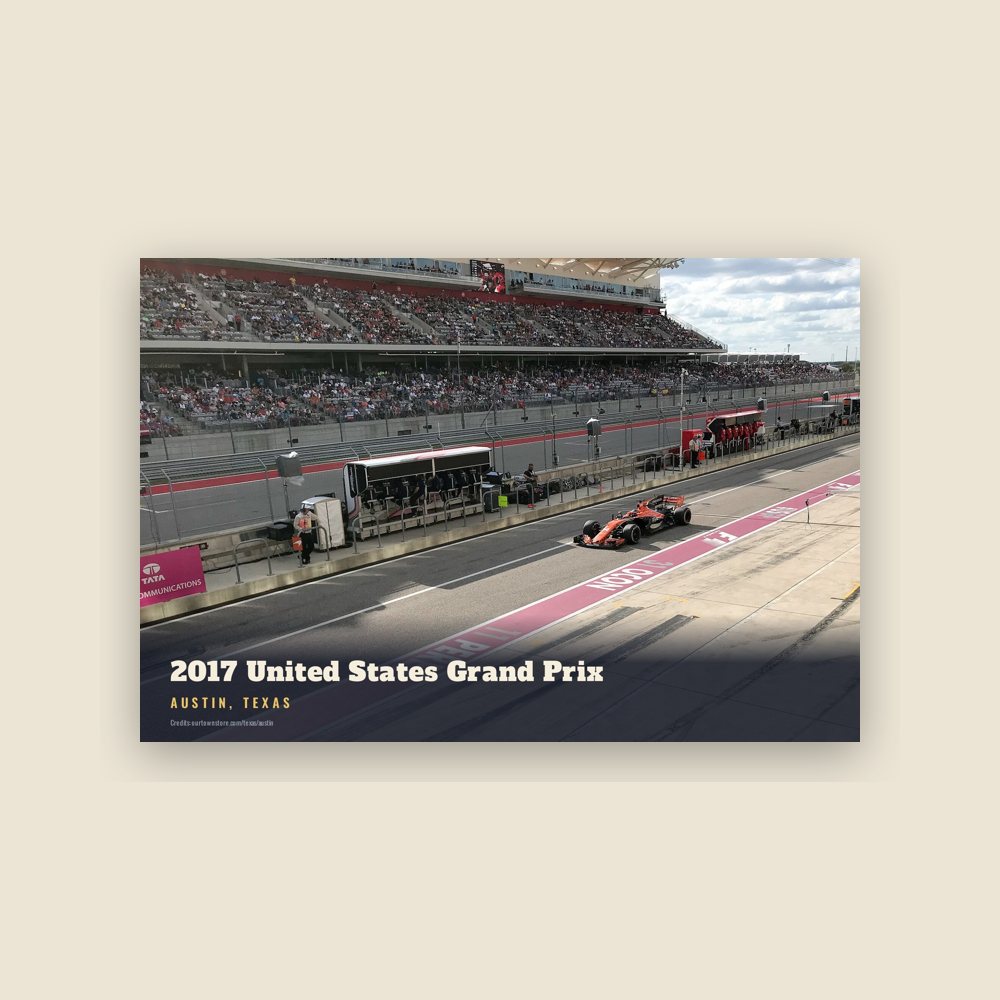
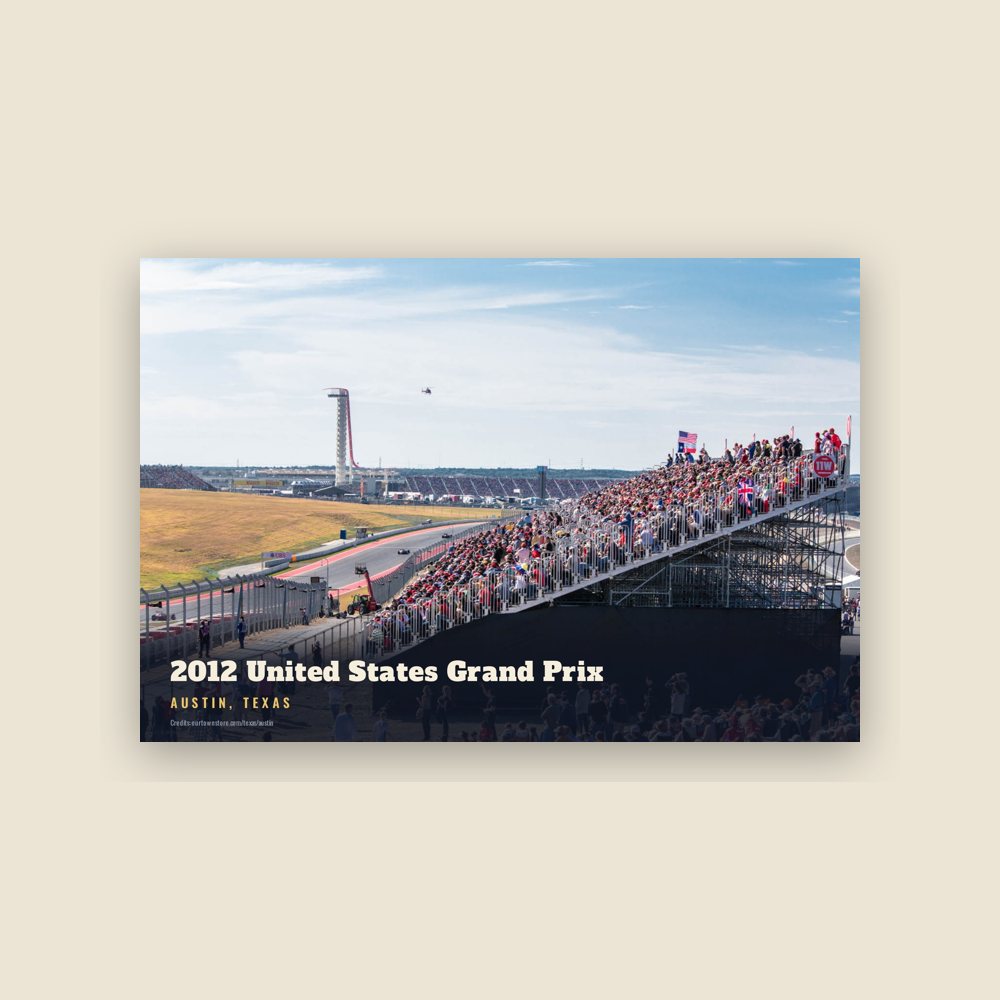
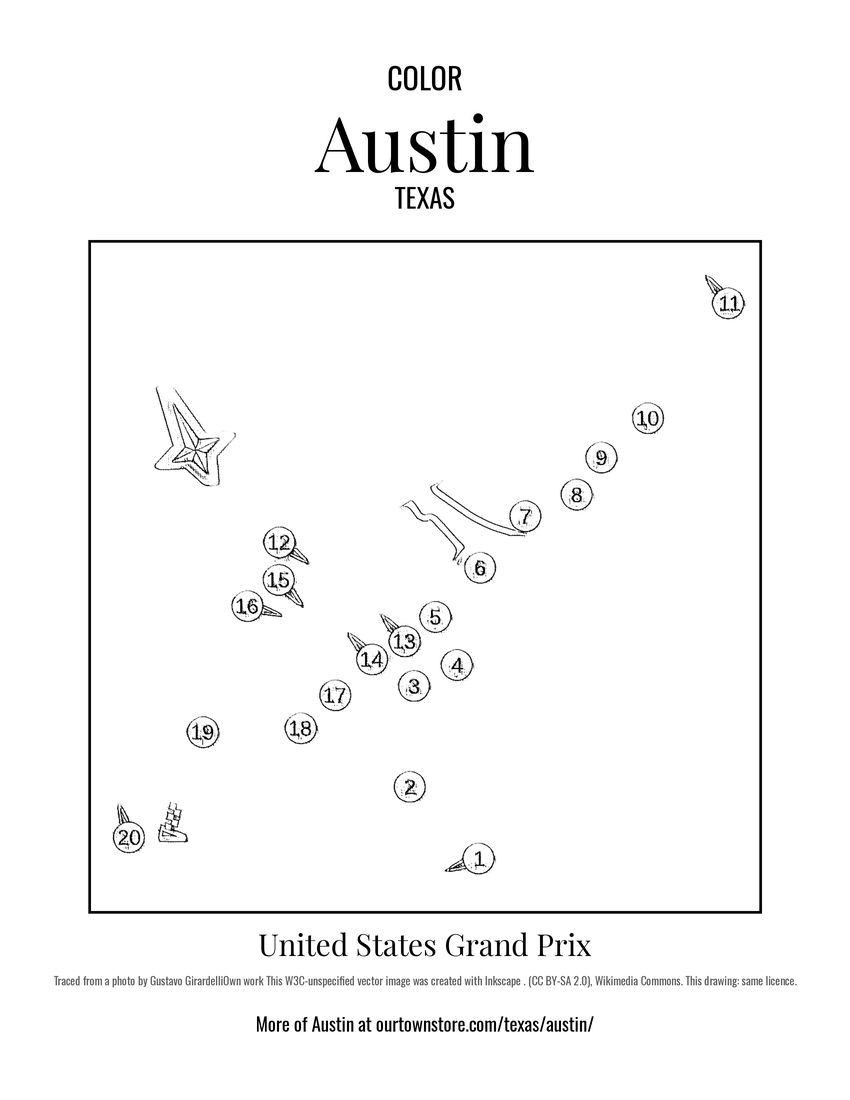 United States Grand Prix
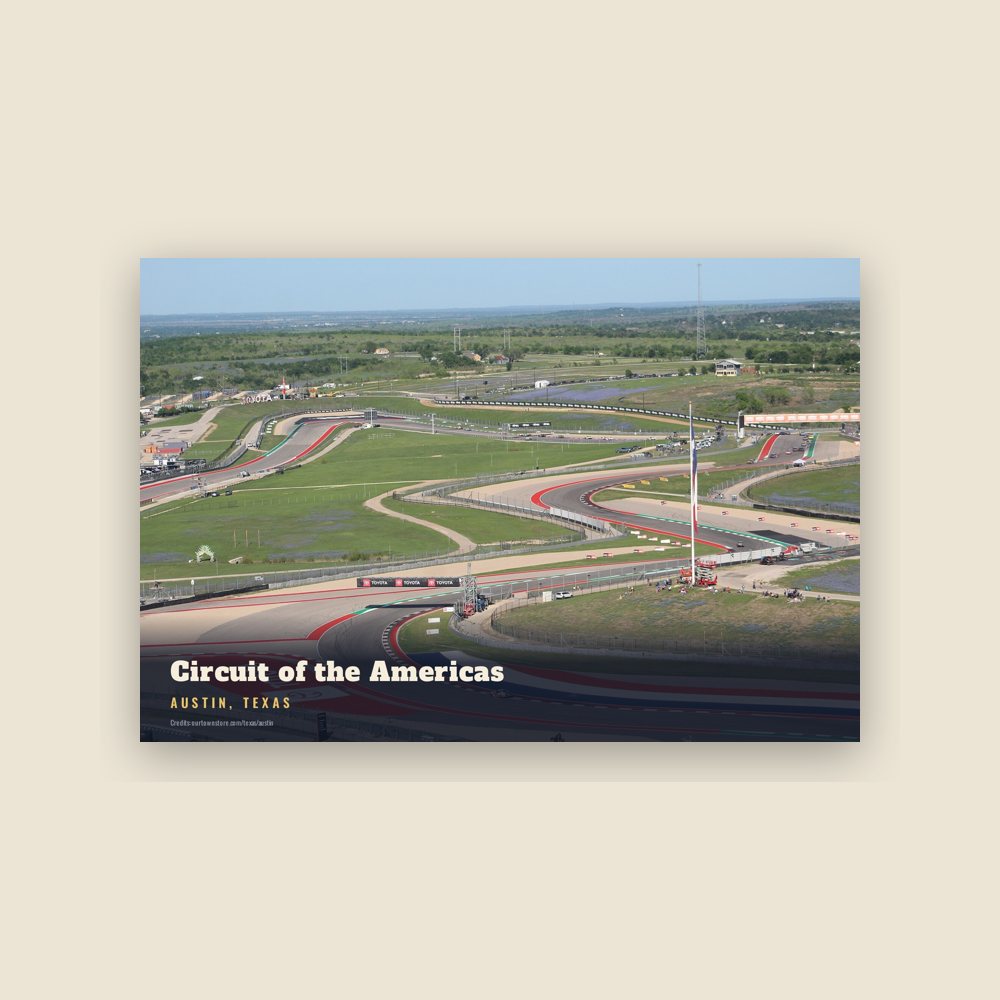
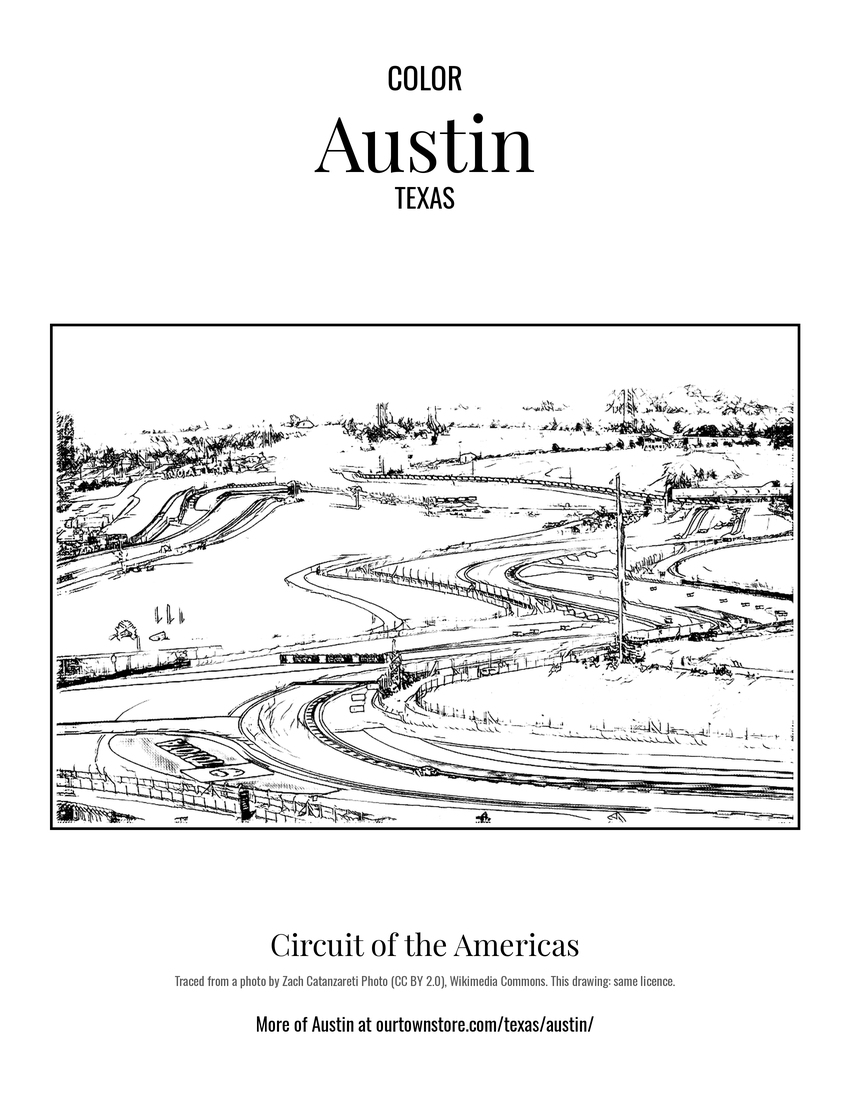 Circuit of the Americas
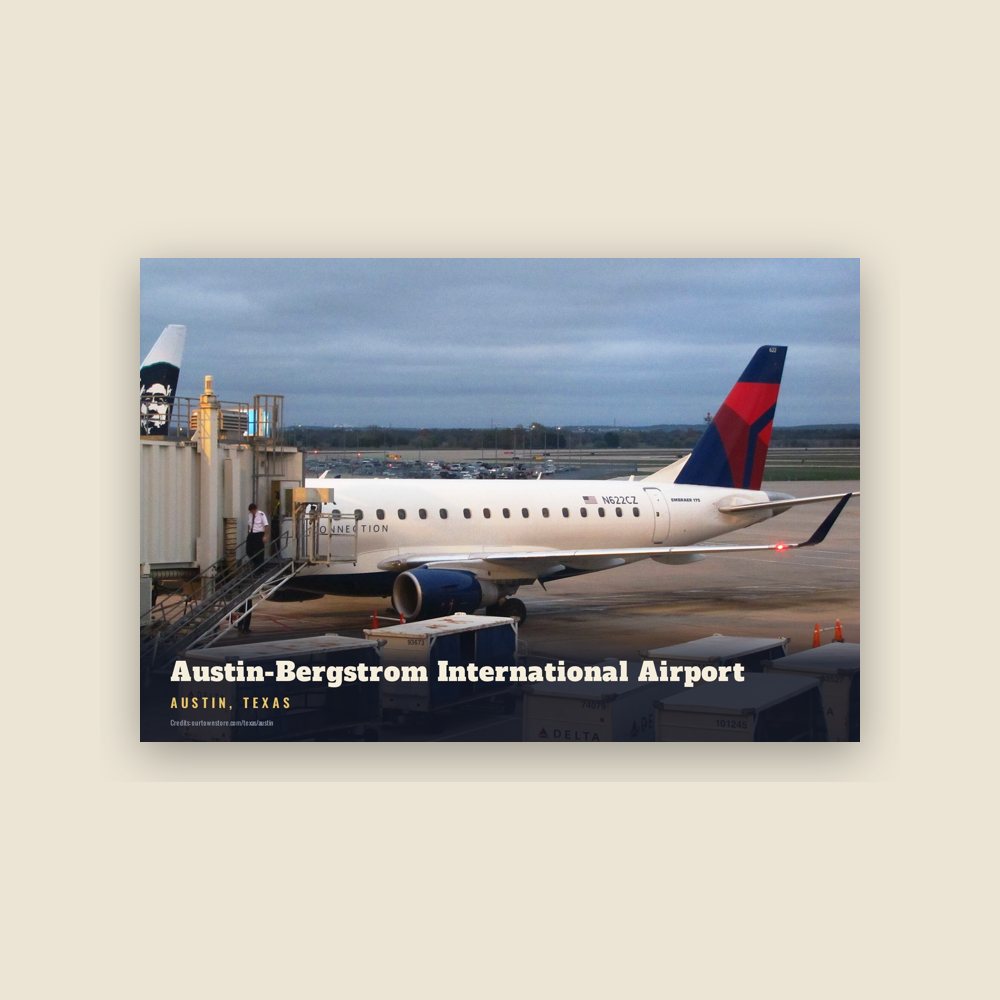
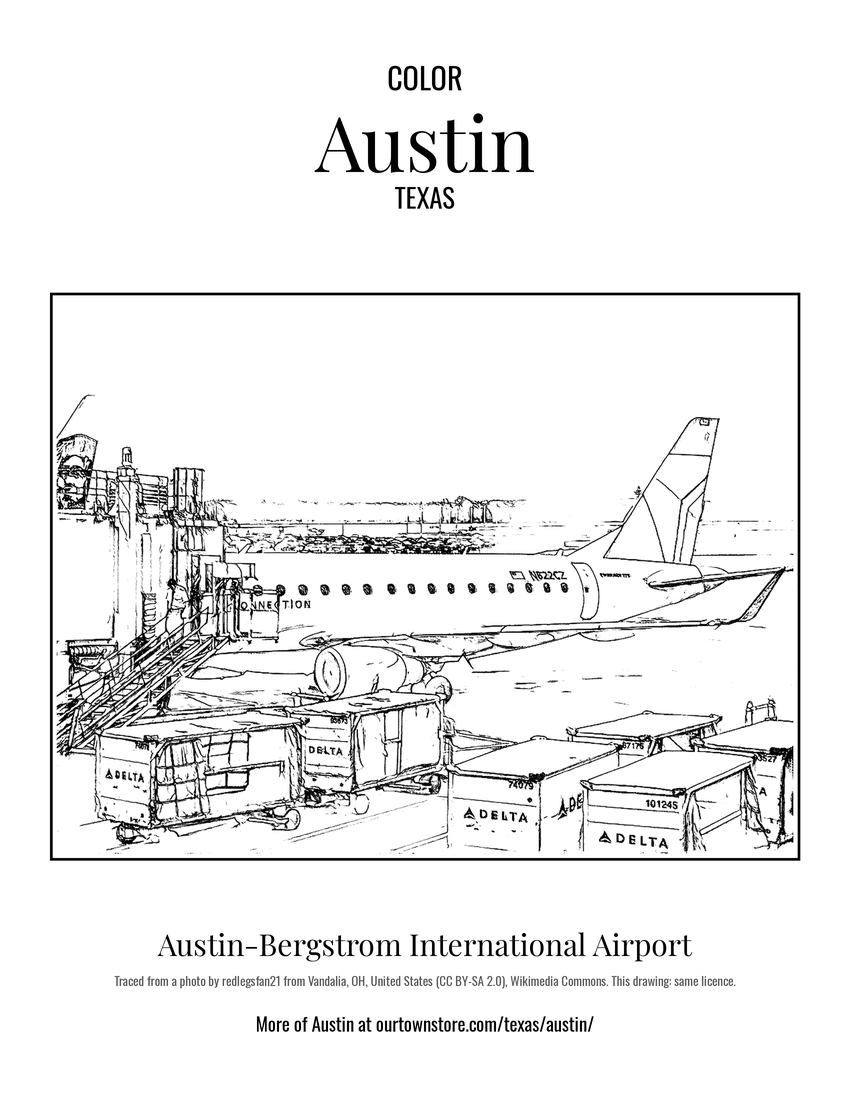 Austin-Bergstrom International Airport