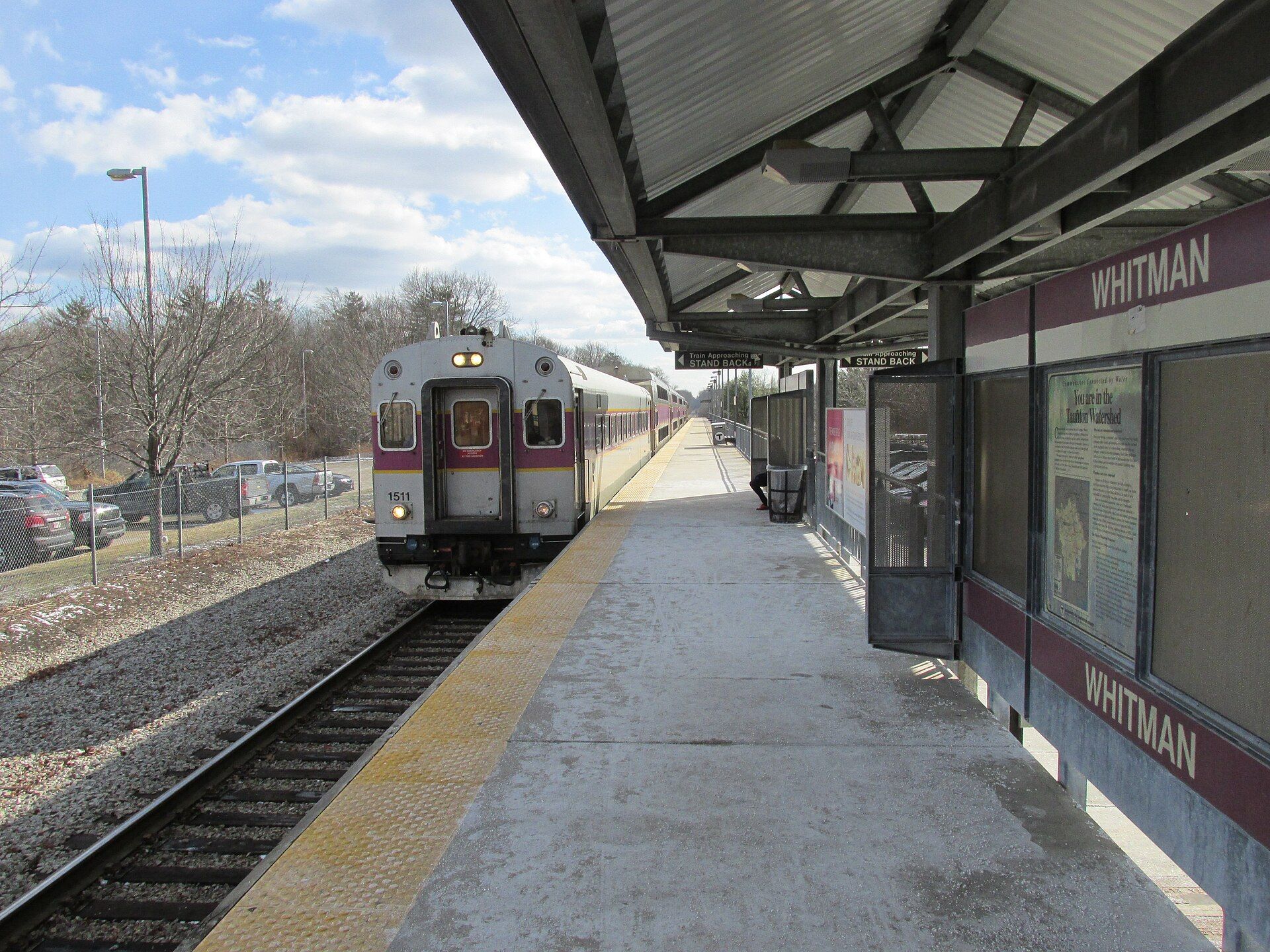
The chocolate chip cookie was invented in Whitman by Ruth Graves Wakefield at the Toll House Inn. Landmarks include Toll House Inn, Whitman station and Commonwealth Shoe and Leather Co.. Whitman is the birthplace of Francis Spellman, roman Catholic cardinal.
Every piece is drawn from Whitman's own map data and historic archives, then printed and shipped from the USA when you order. No two towns look alike.
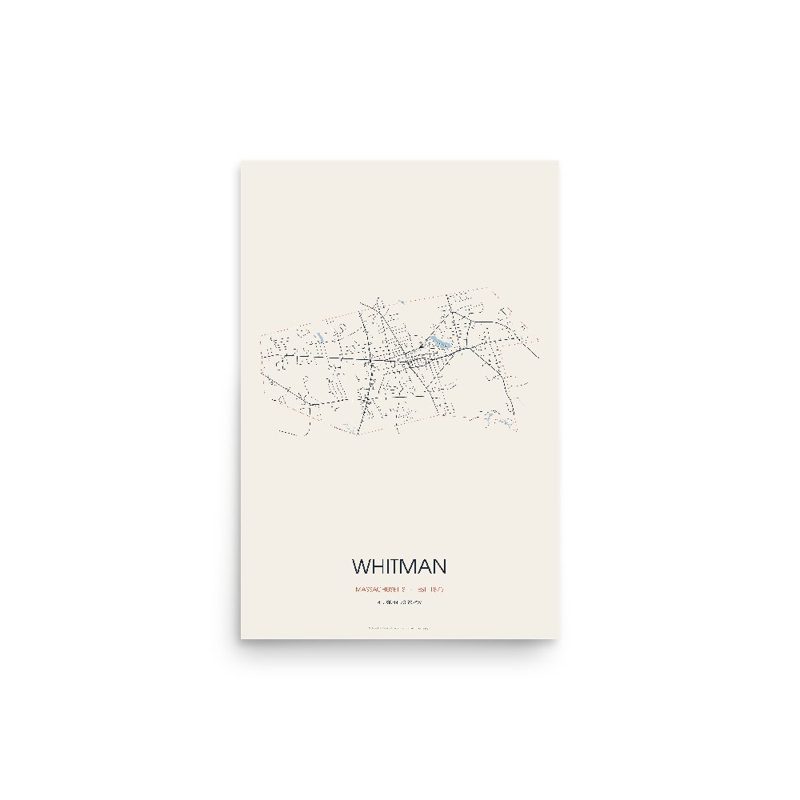
Every road in town, on archival matte paper
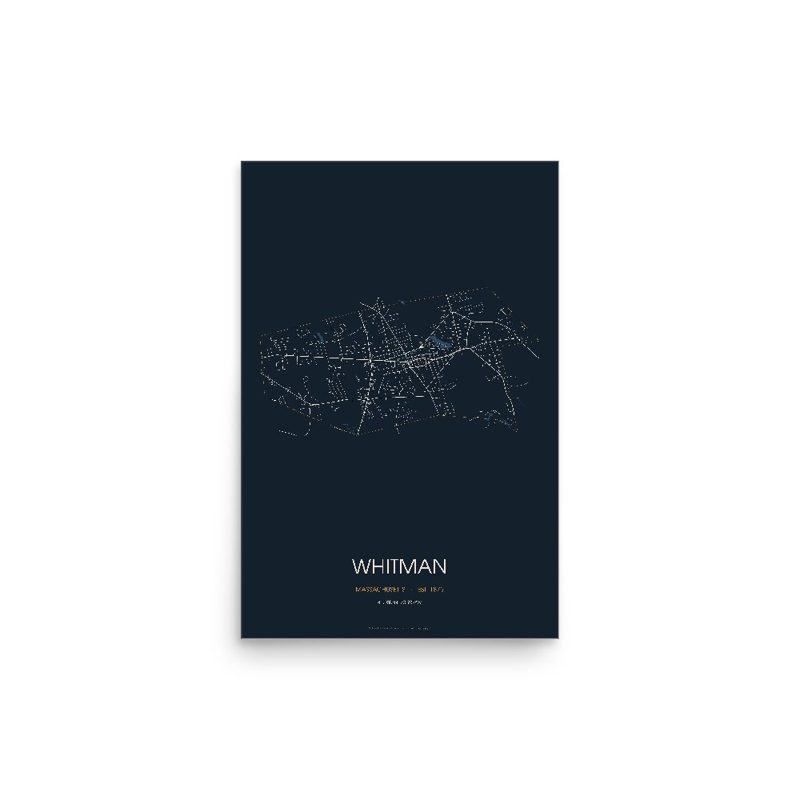
The same map, in navy and silver
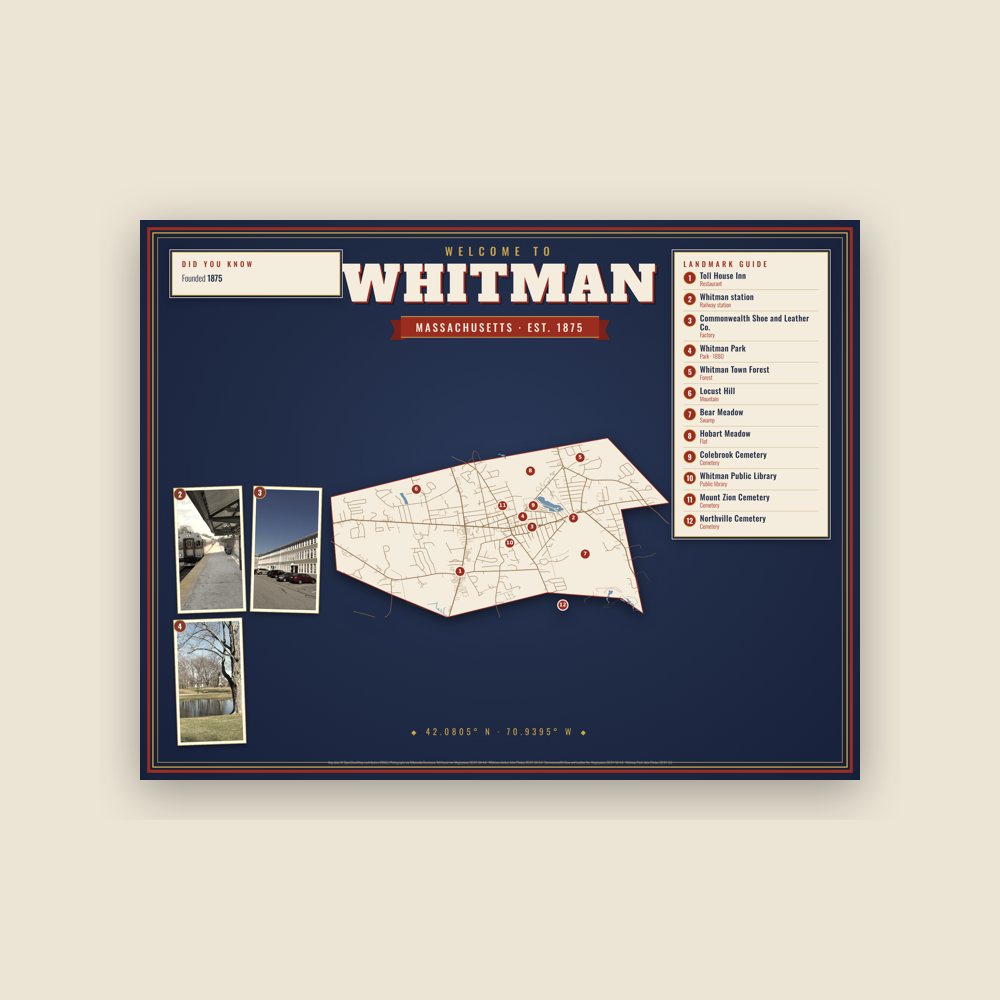
Map of local landmarks, washable fabric
Heavy-blend fleece, street map printed on the back
Soft Bella+Canvas jersey
Glossy ceramic, dishwasher safe
Ceramic keepsake, gold ribbon
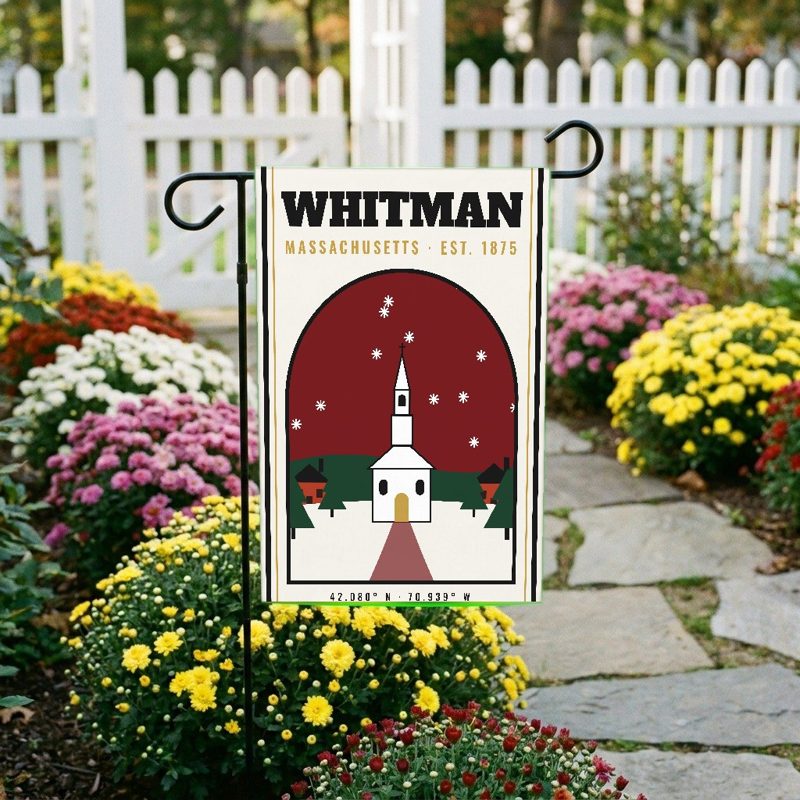
Weatherproof, for the front walk
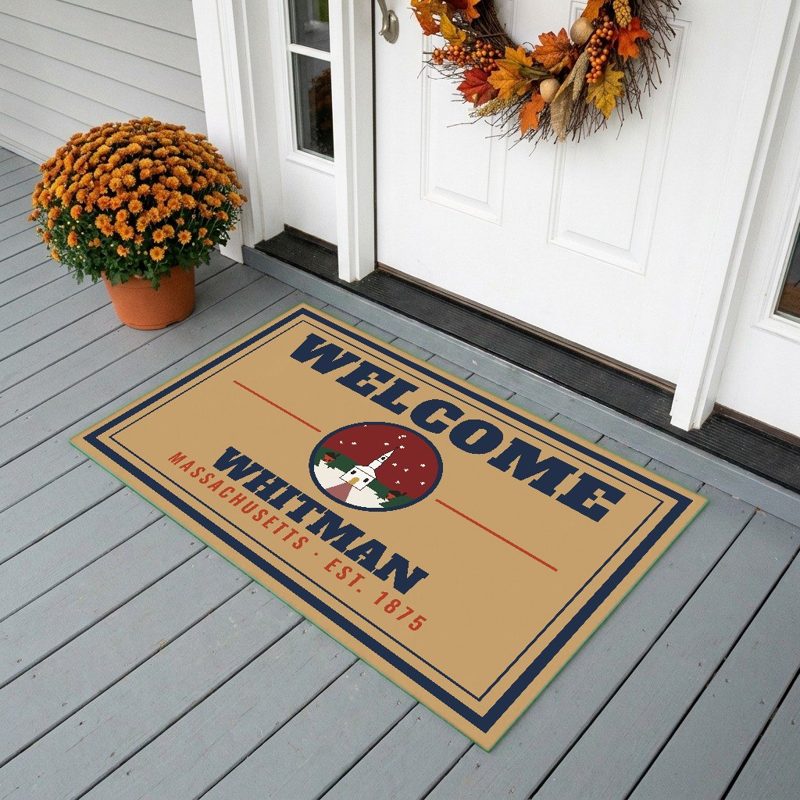
24″×16″, printed coir-look fibers, rubber back
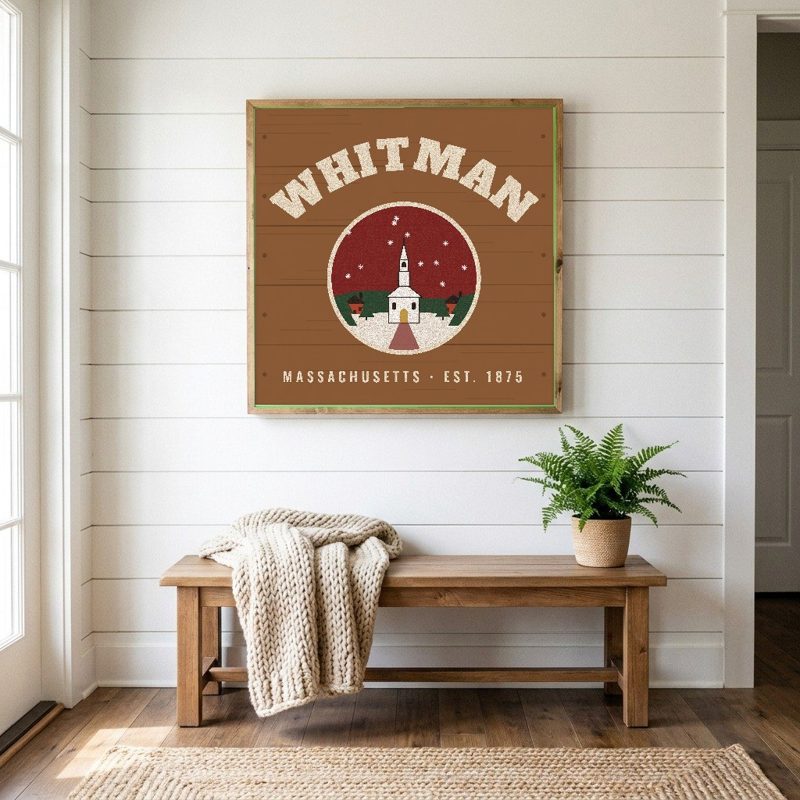
12″×12″ printed wood, ready to hang
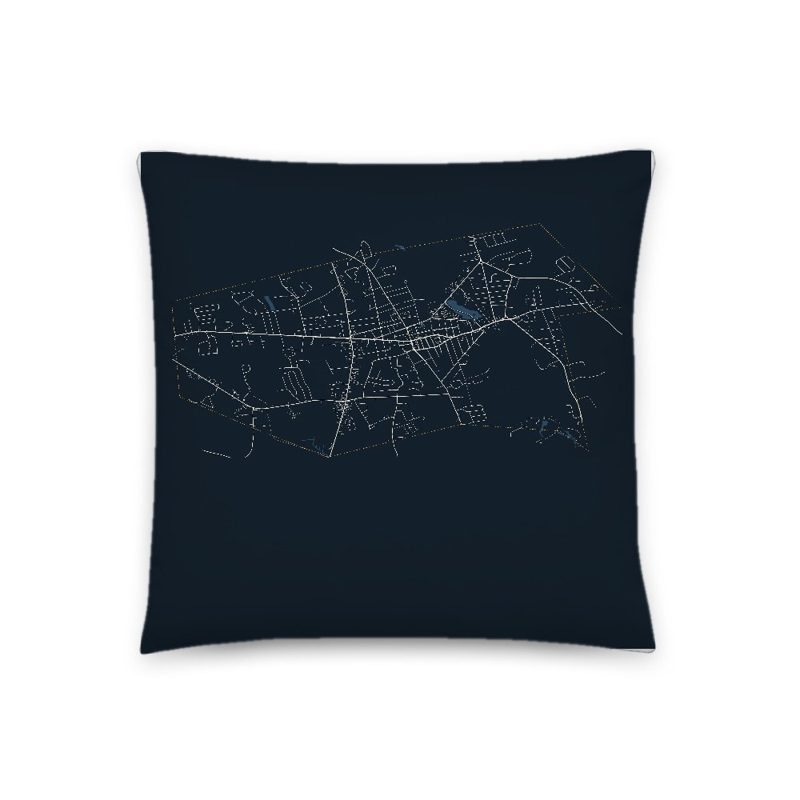
Soft-touch, zip cover
Sturdy all-over-print tote
Glossy top, cork back
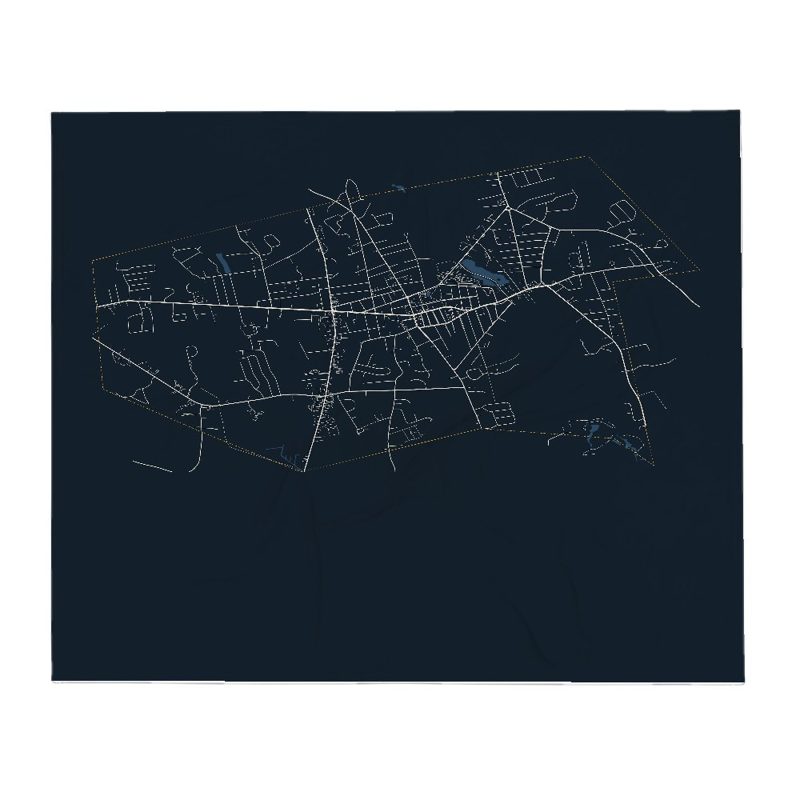
Soft fleece, 50″×60″
20 oz, double-wall stainless
Population 2010: 14,489 → 2020: 15,121
From Wikidata (CC0).
Little Comfort, then part of Bridgewater was first settled by Europeans beginning around 1675. Abington (including Little Comfort) separated from Bridgewater in 1712. South Abington was established as a separate parish in the 19th century. It was incorporated as a separate town on March 4, 1875. It was renamed Whitman by town vote on May 3, 1886. The name was in honor of Jared Whitman, a local lawyer who served in the 1839 and 1840 state legislatures. Whitman's early industry included shoemaking.
In the late 1930s, Ruth Graves Wakefield invented chocolate chip cookies in Whitman at the Toll House Inn on Bedford Street. The Toll House burned completely on New Year's Eve 1984, in a fire that originated in the kitchen. The inn was not rebuilt. The site is marked with a historical marker, and that land is now home to a Wendy's restaurant and Walgreens pharmacy, with the Toll House sign still in existence.
The former Whitman Savings Bank was the first in the country to offer savings bank life insurance (SBLI). From 1968 to 1994, Whitman was also home to King's Castle Land, a children's amusement park owned by the Whitney family and located near the intersection of Routes 18 and 14.
In the 1970s, Whitman was home to a then-secret National Security Agency classified materials disposal facility built on Essex Street by American Thermogen Inc. It was code named "White Elephant No. 1" and it was to be the prototype for the government's premier "classified waste destructor". Reaching temperatures up to 3,400 degrees, the three-story incinerator did not work up to expectations—only operating a limited number of hours and not always fully destroying the material—and after spending $1.2 million to build the unit it was abandoned. It was one time used as a club house by children in the area, and later dismantled. The office section, and some of the warehouse area, still remain in use by new owners.
Adapted (trimmed) from the Wikipedia article Whitman, Massachusetts, revision 1377171850 by its contributors, licensed CC BY-SA 4.0.
We share a part of every Whitman sale with local partners, and we'd love to print from your collection. Old photographs, maps and postcards make the best keepsakes.
Partner with us