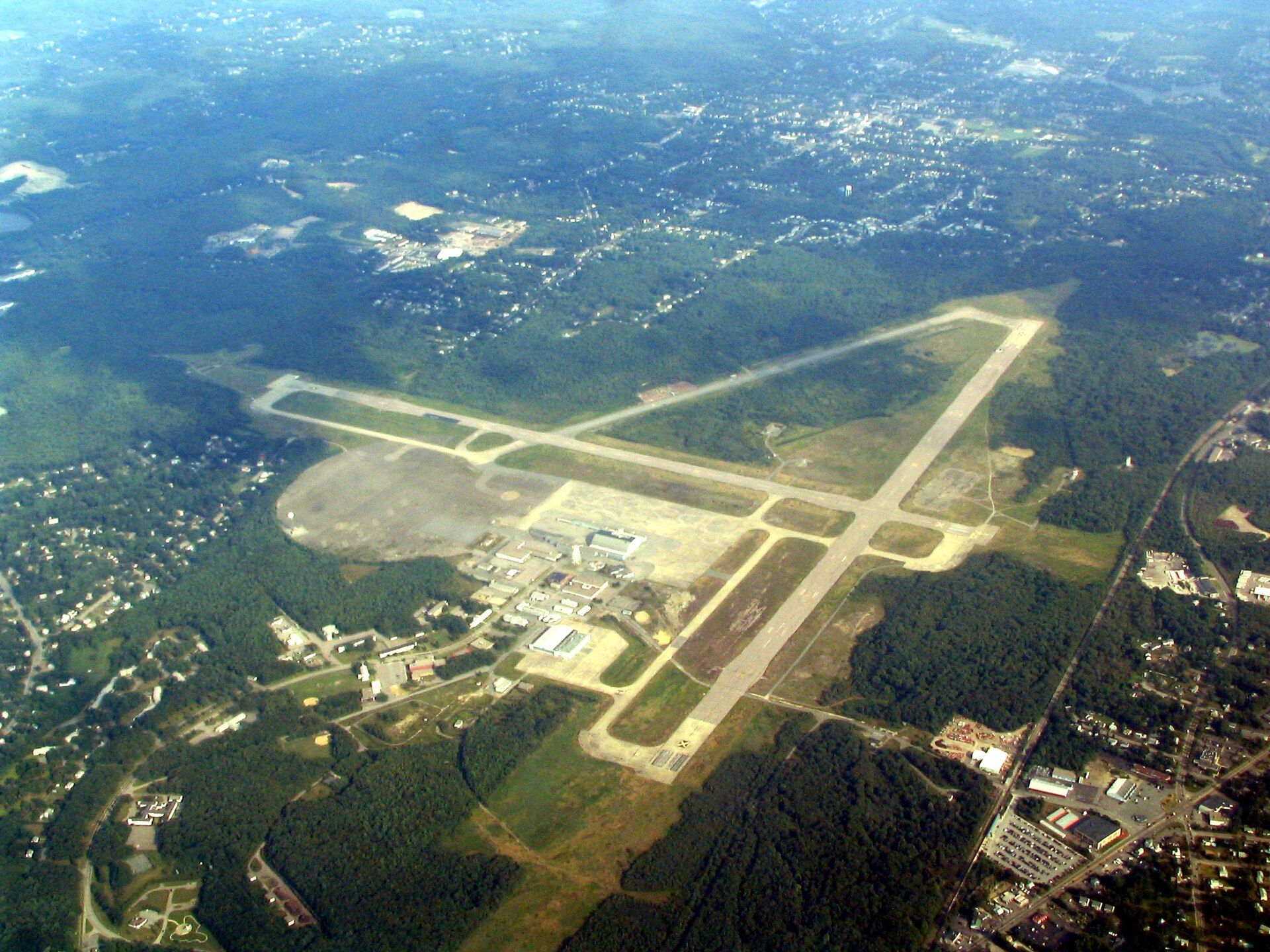
Abington was first settled by European settlers in 1668. Landmarks include Naval Air Station South Weymouth, Abington station and North Abington station. Abington is the birthplace of Charles Franklin Dunbar, economist.
Every piece is drawn from Abington's own map data and historic archives, then printed and shipped from the USA when you order. No two towns look alike.
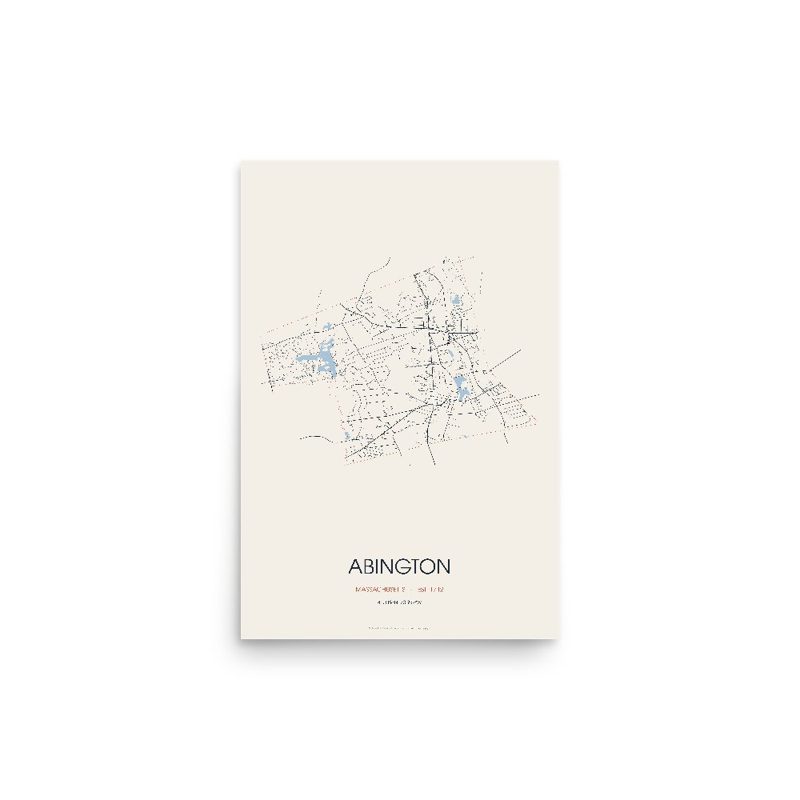
Every road in town, on archival matte paper
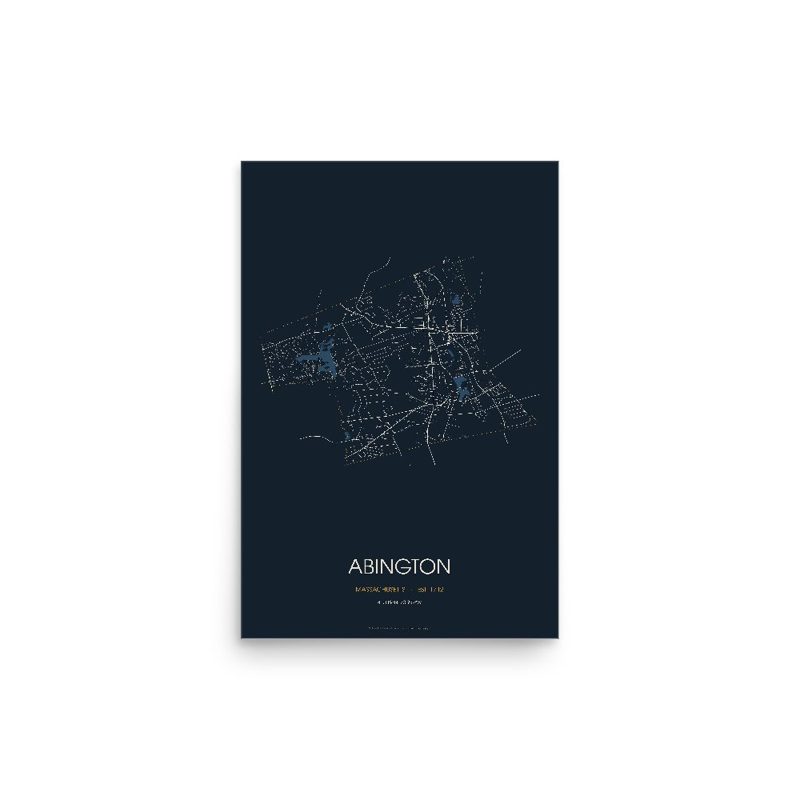
The same map, in navy and silver
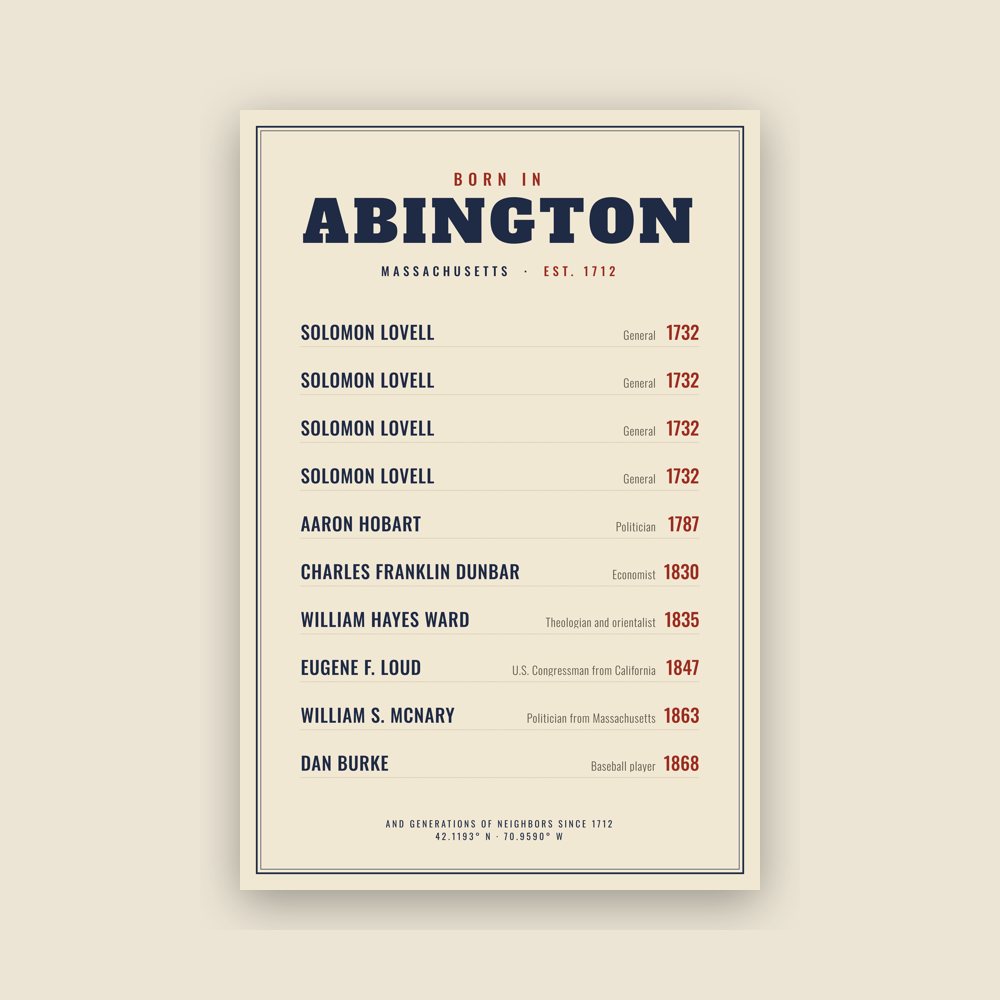
Famous natives, by birth year
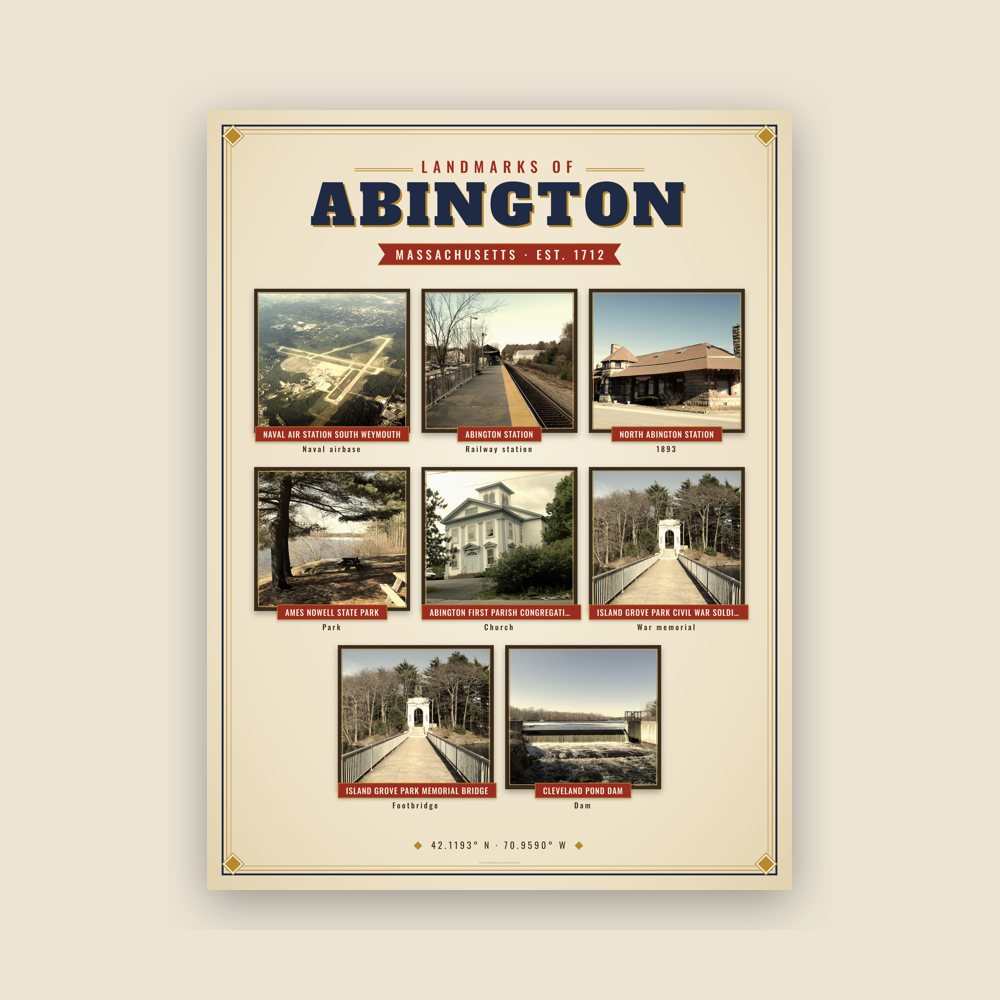
Nine local landmarks, archival matte
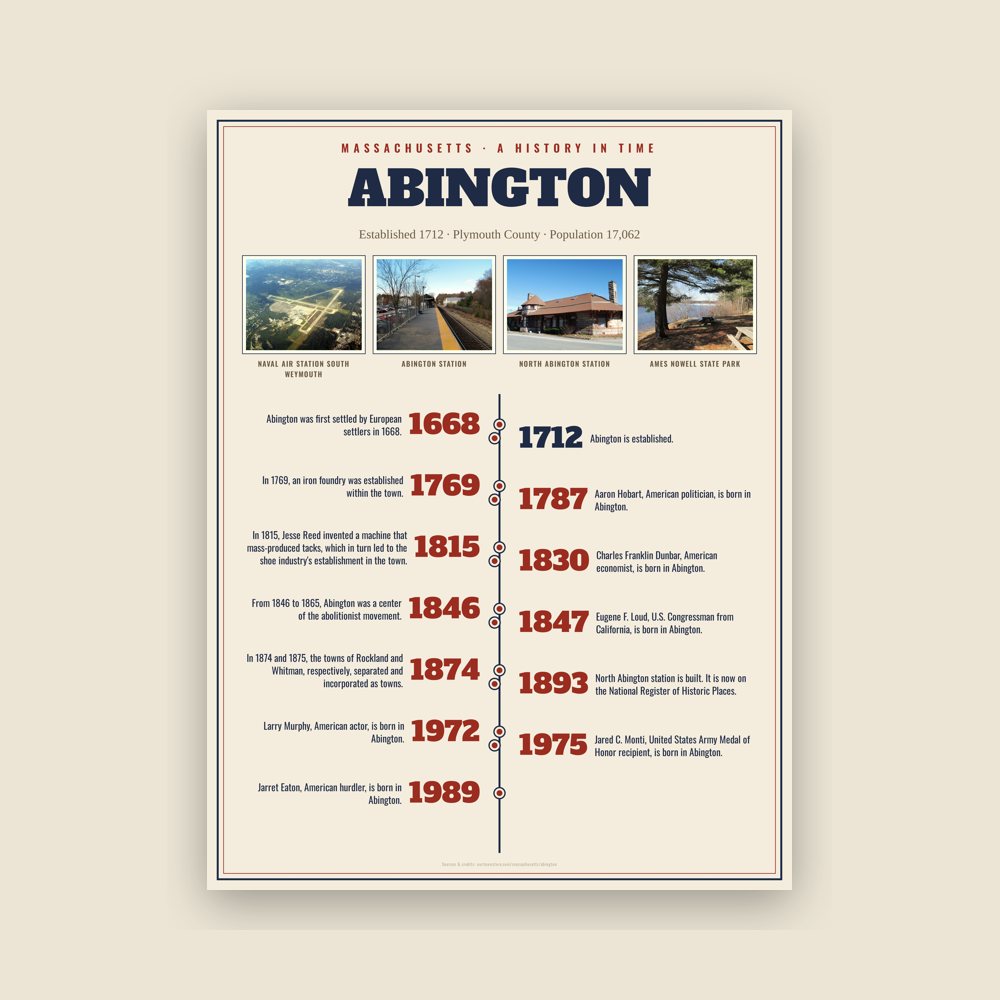
The town's story in dates, from its own records, for home or classroom
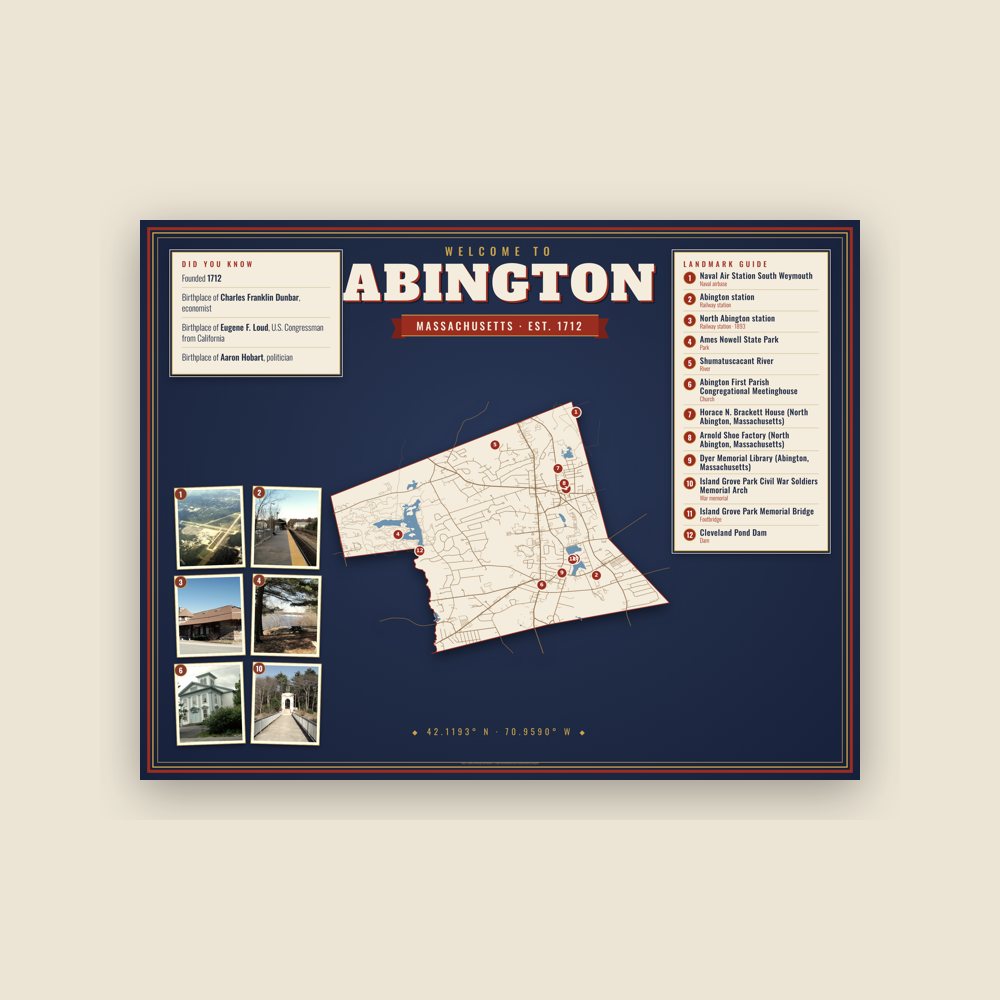
Map of local landmarks, washable fabric
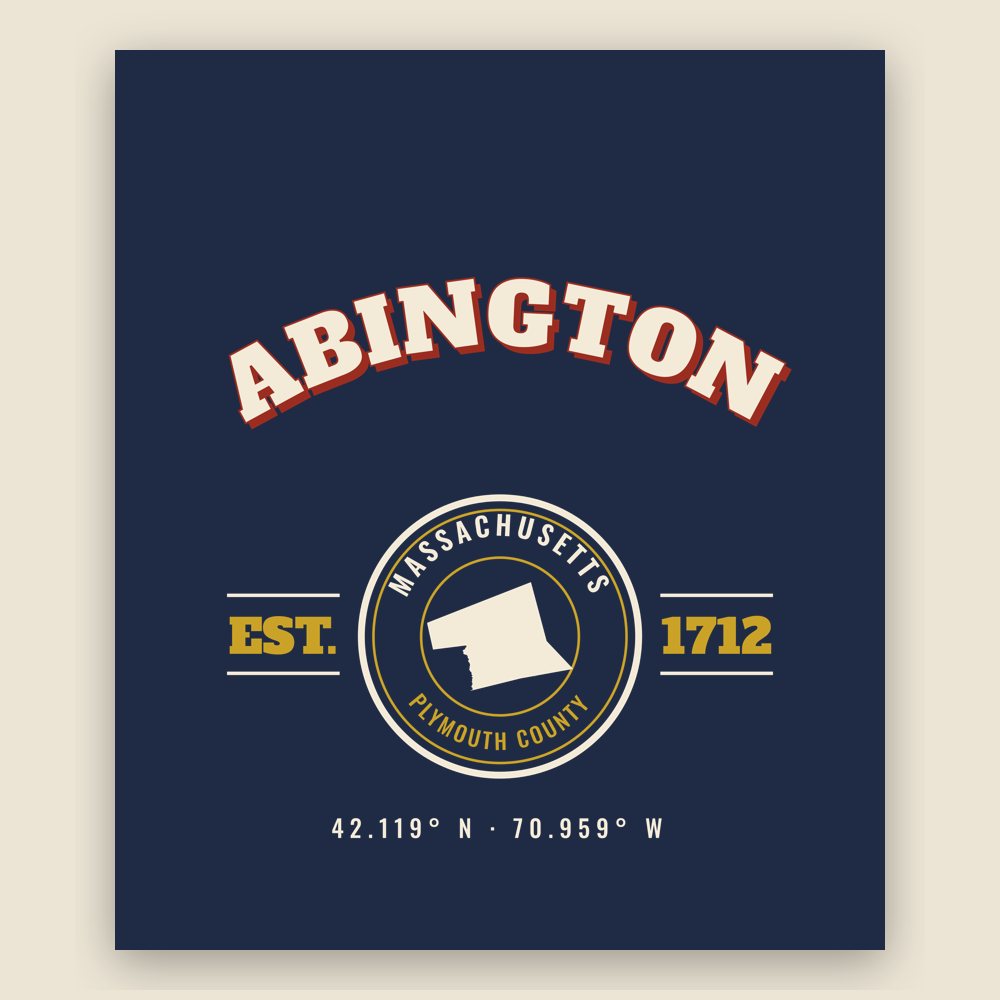
Heavy-blend fleece, street map printed on the back
Soft Bella+Canvas jersey
Glossy ceramic, dishwasher safe
Ceramic keepsake, gold ribbon
Weatherproof, for the front walk
24″×16″, printed coir-look fibers, rubber back
12″×12″ printed wood, ready to hang
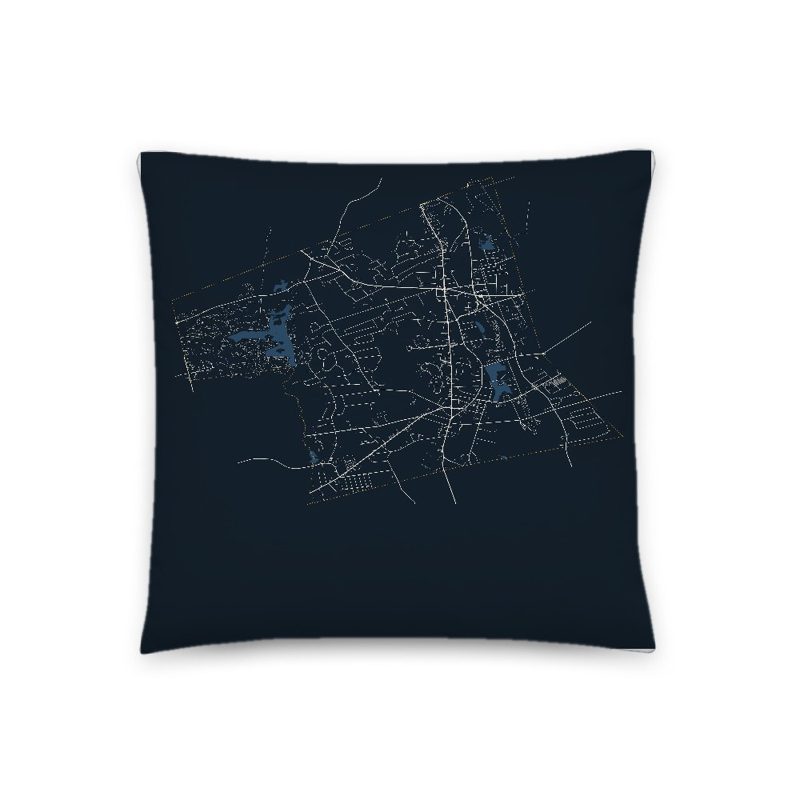
Soft-touch, zip cover
Sturdy all-over-print tote
Glossy top, cork back
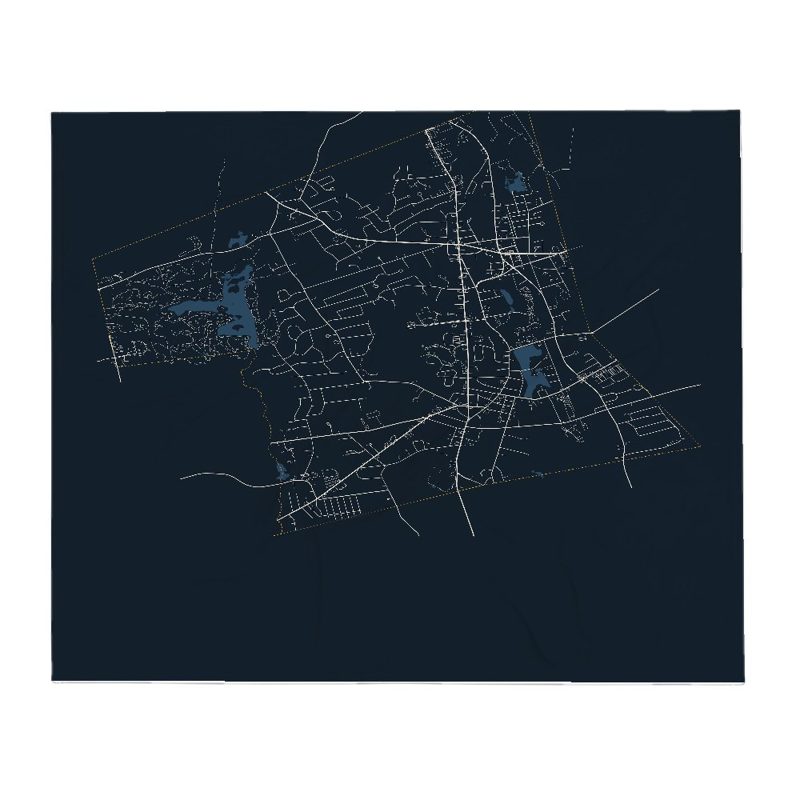
Soft fleece, 50″×60″
20 oz, double-wall stainless
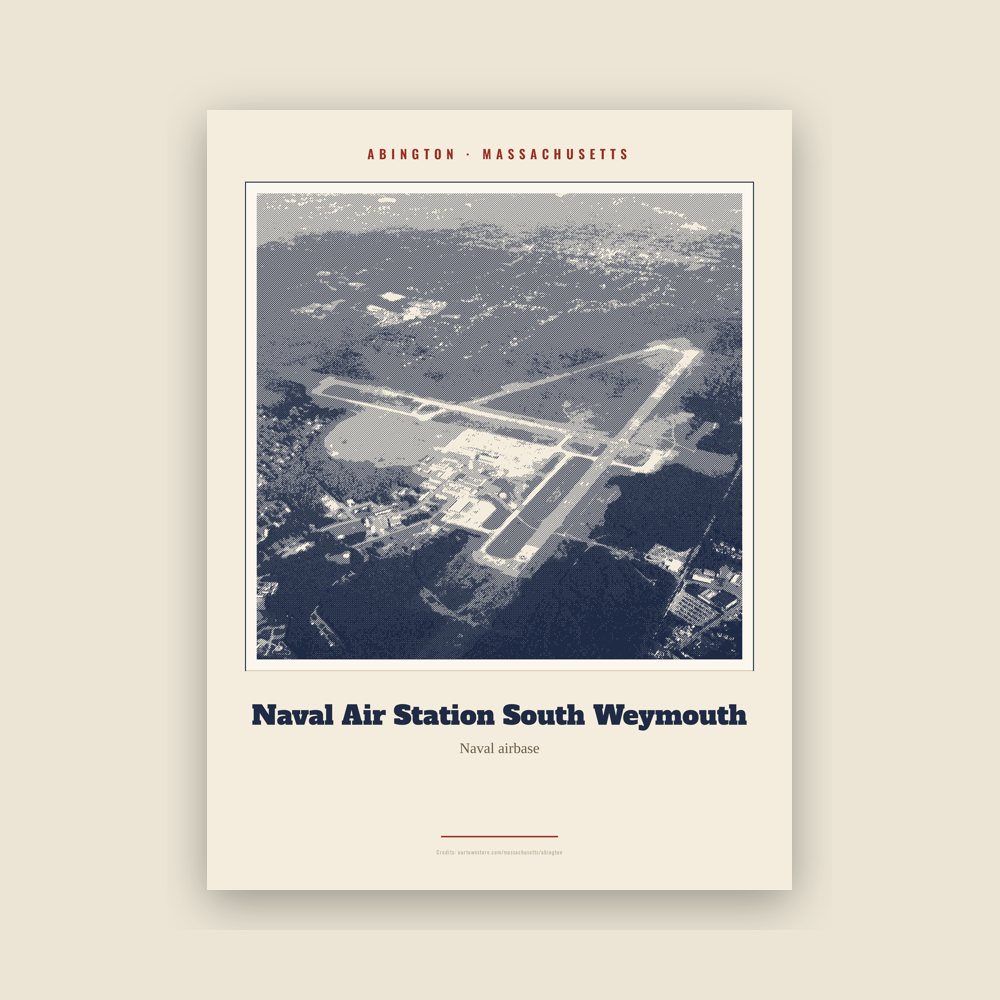
Archival matte print of a local landmark, credited to its photographer
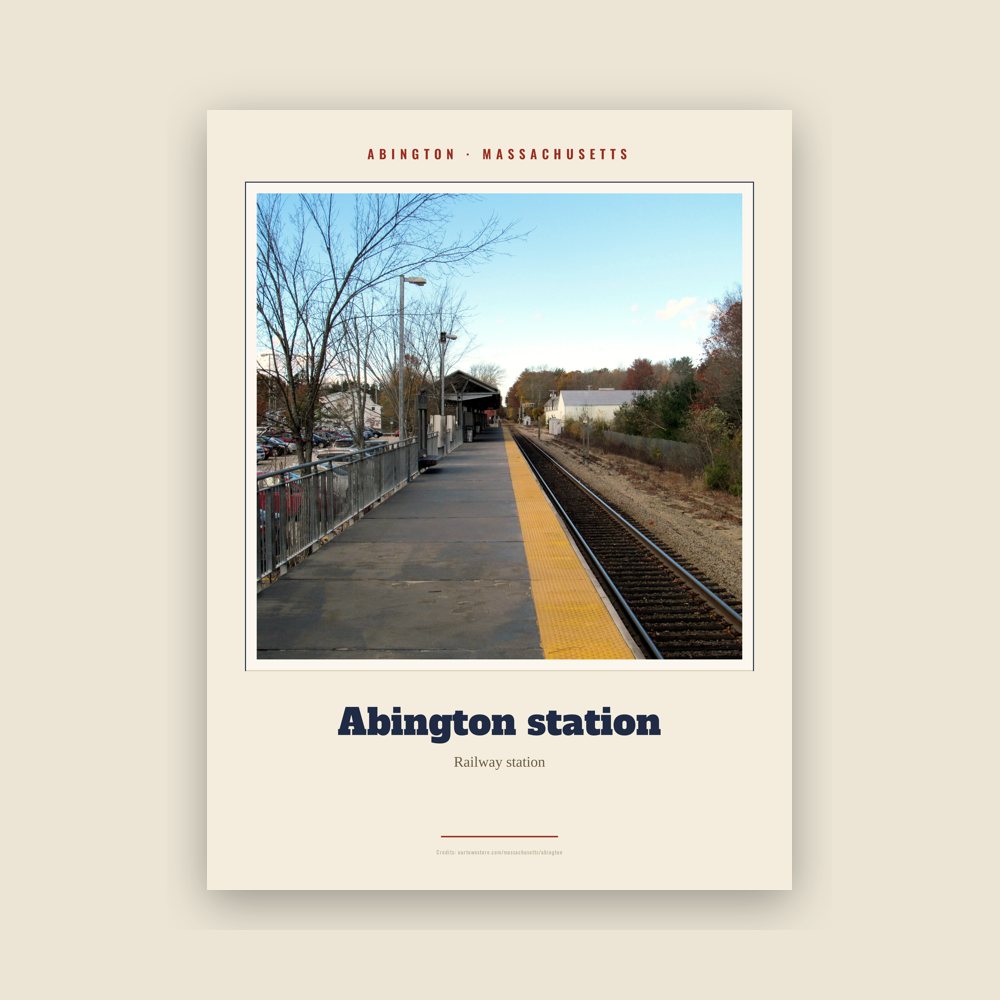
Archival matte print of a local landmark, credited to its photographer
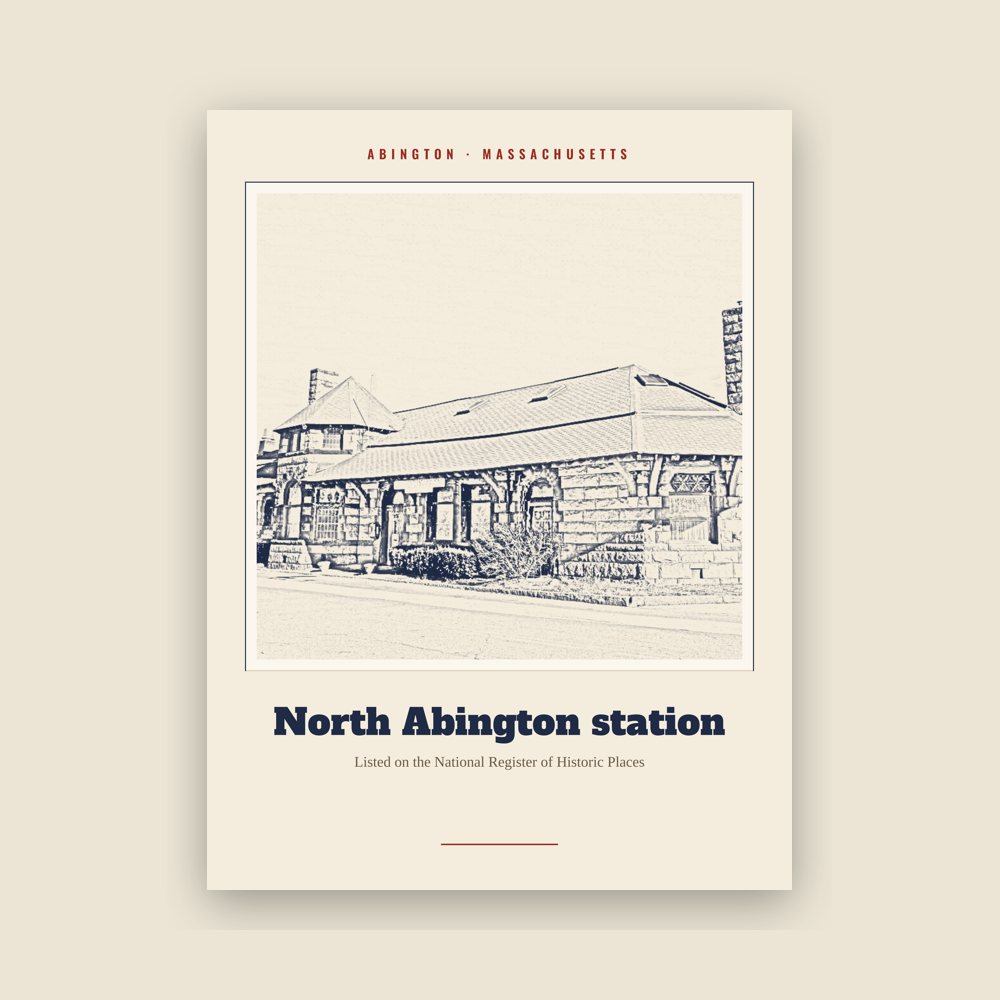
Archival matte print of a local landmark, credited to its photographer
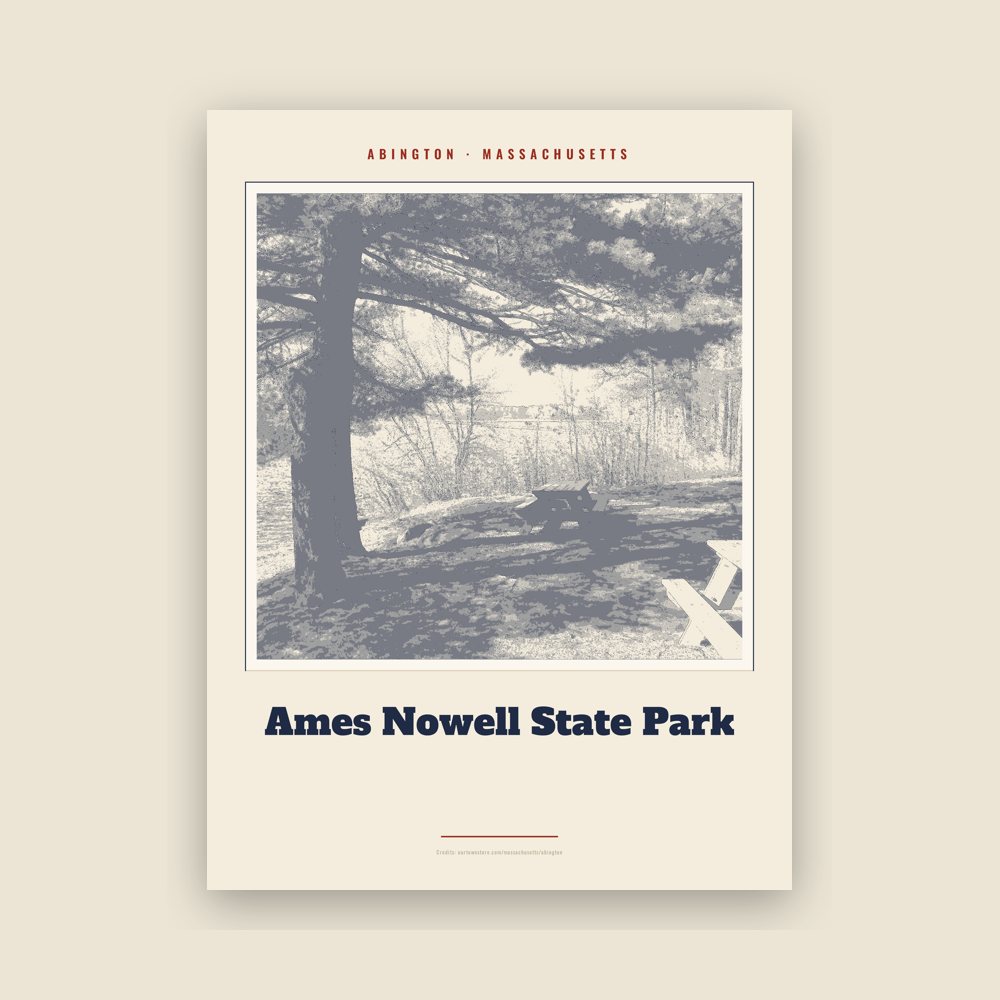
Archival matte print of a local landmark, credited to its photographer
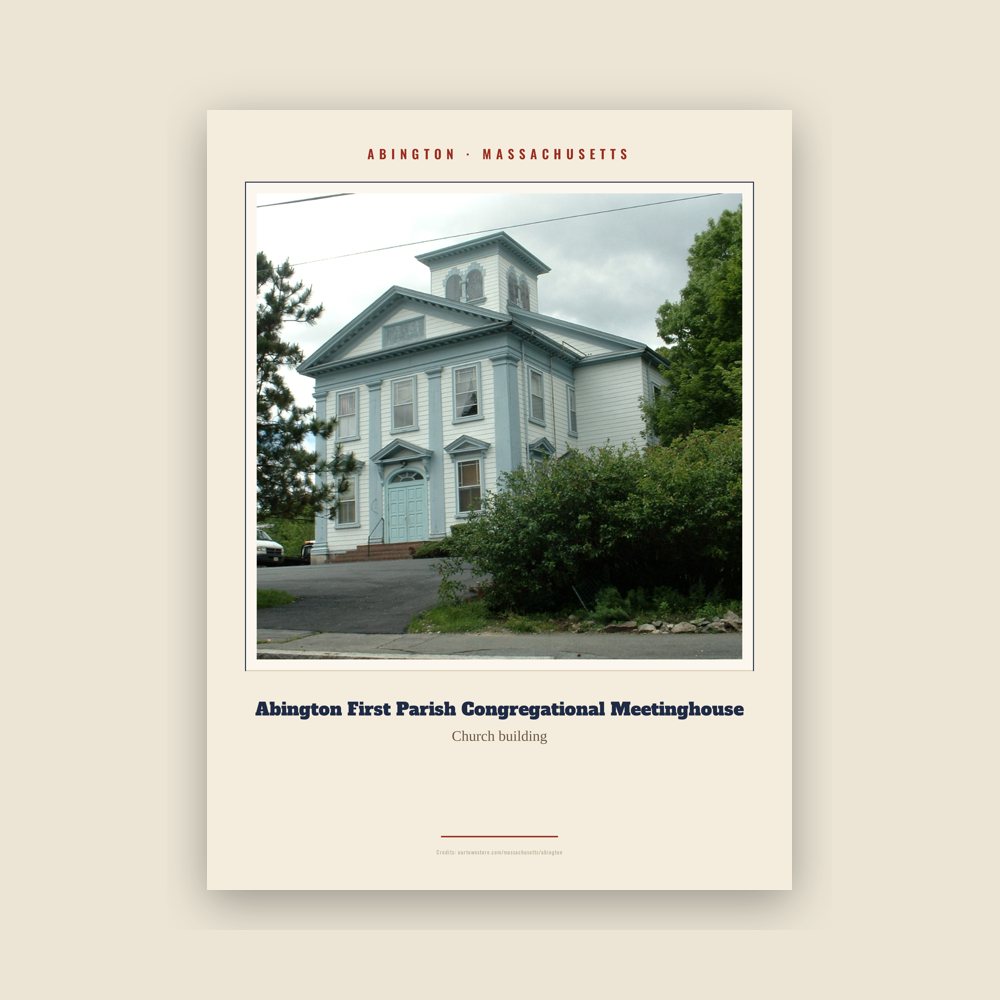
Archival matte print of a local landmark, credited to its photographer
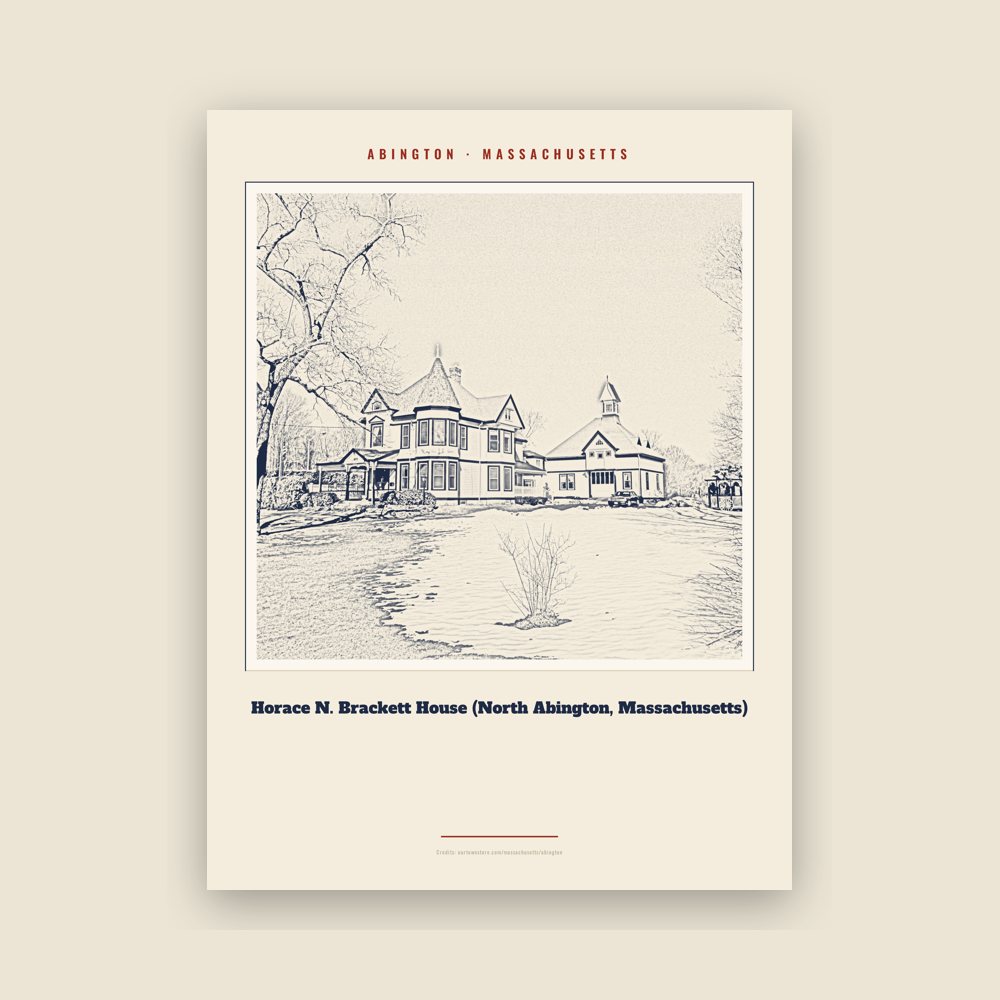
Archival matte print of a local landmark, credited to its photographer
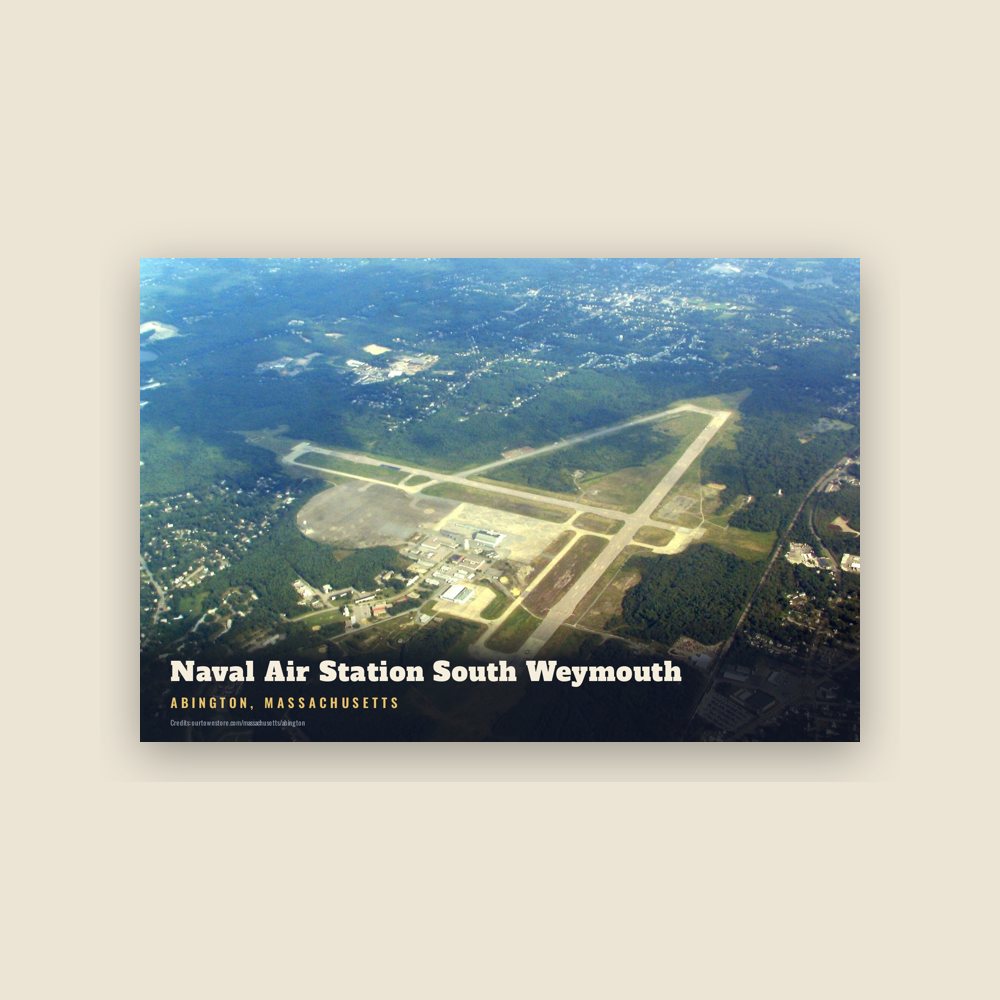
6″×4″ postcard, glossy front
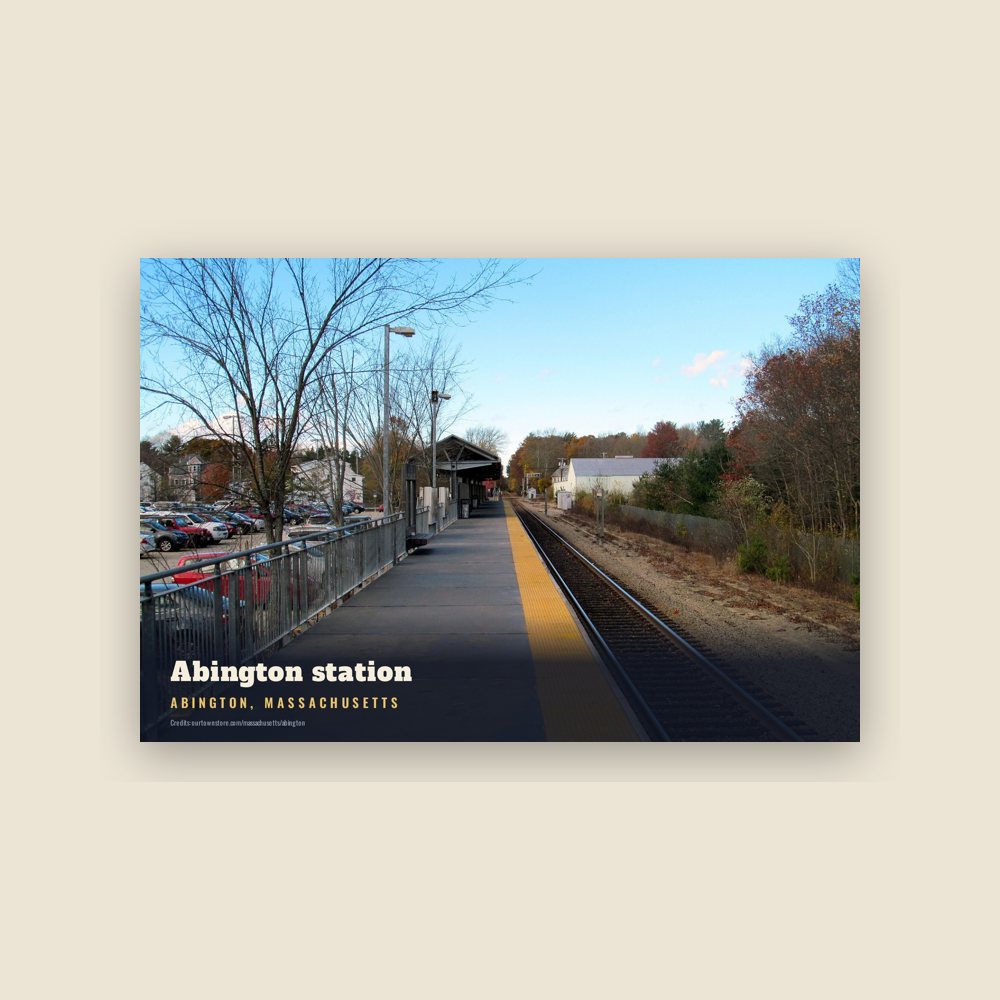
6″×4″ postcard, glossy front
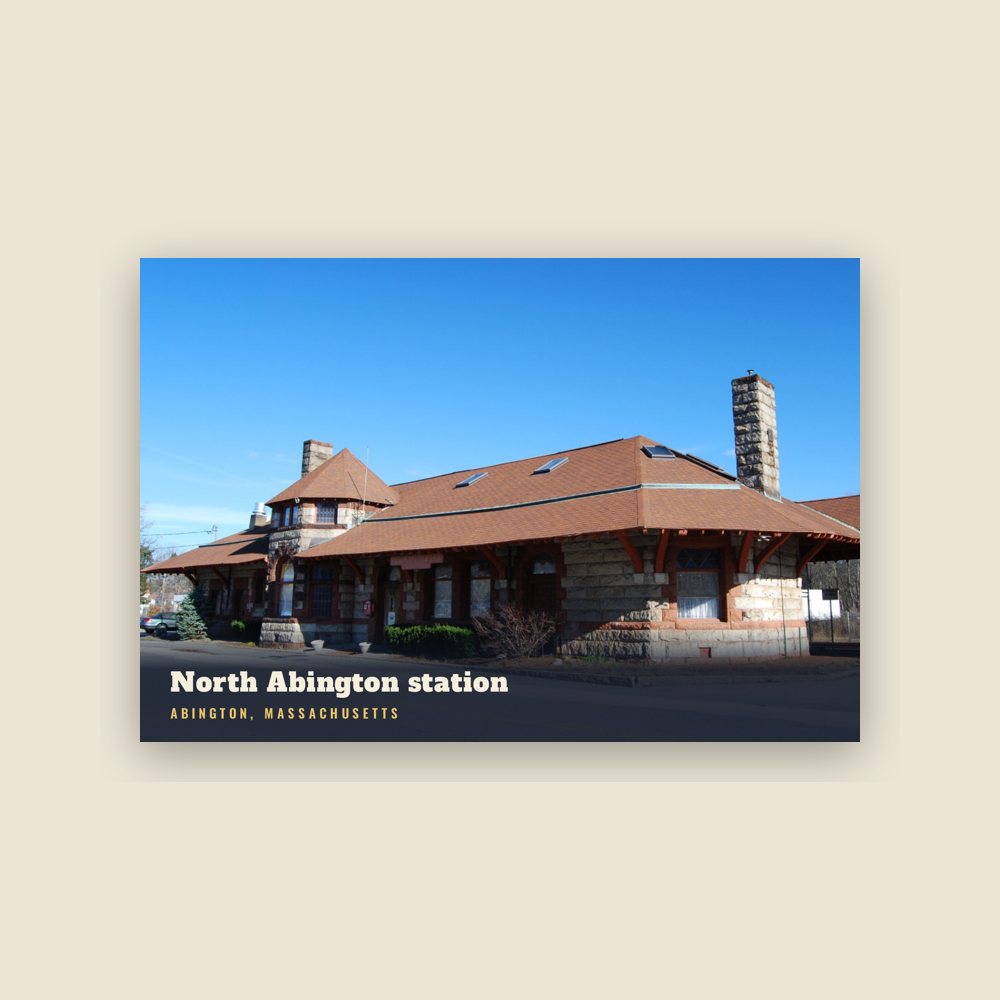
6″×4″ postcard, glossy front
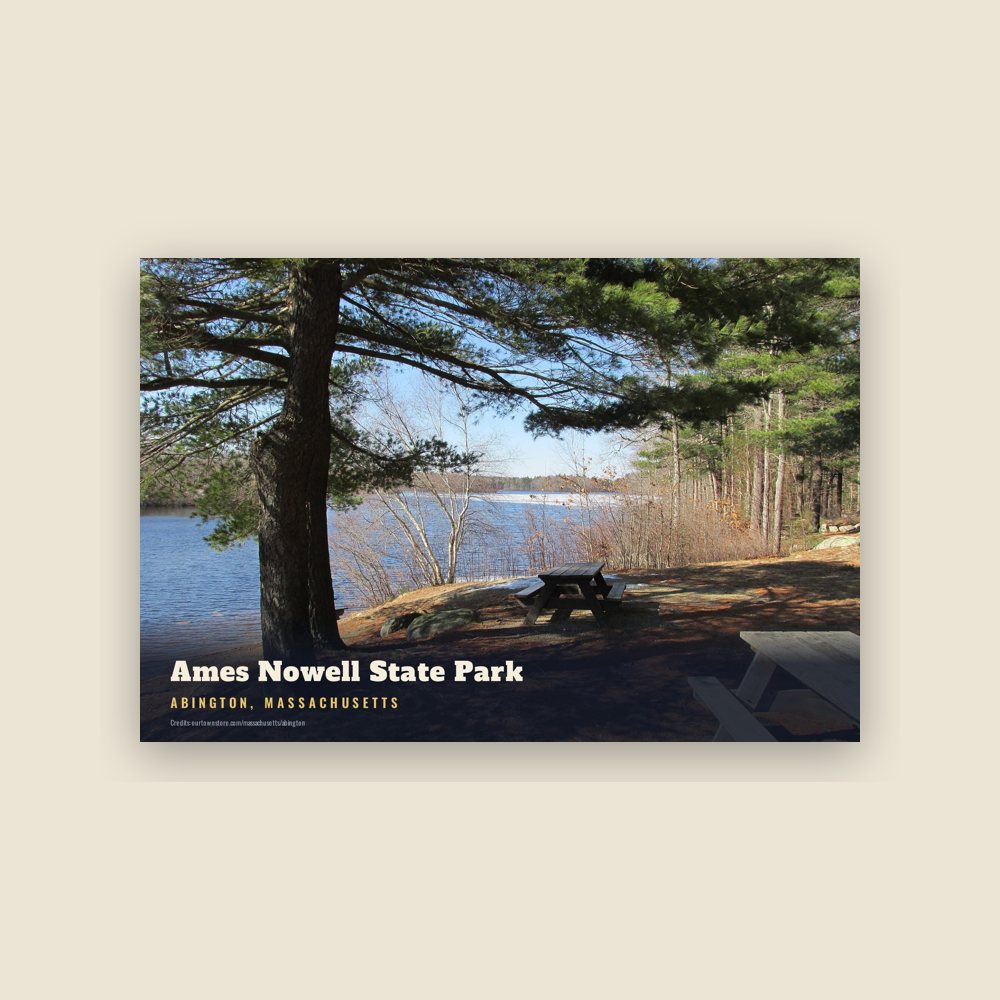
6″×4″ postcard, glossy front
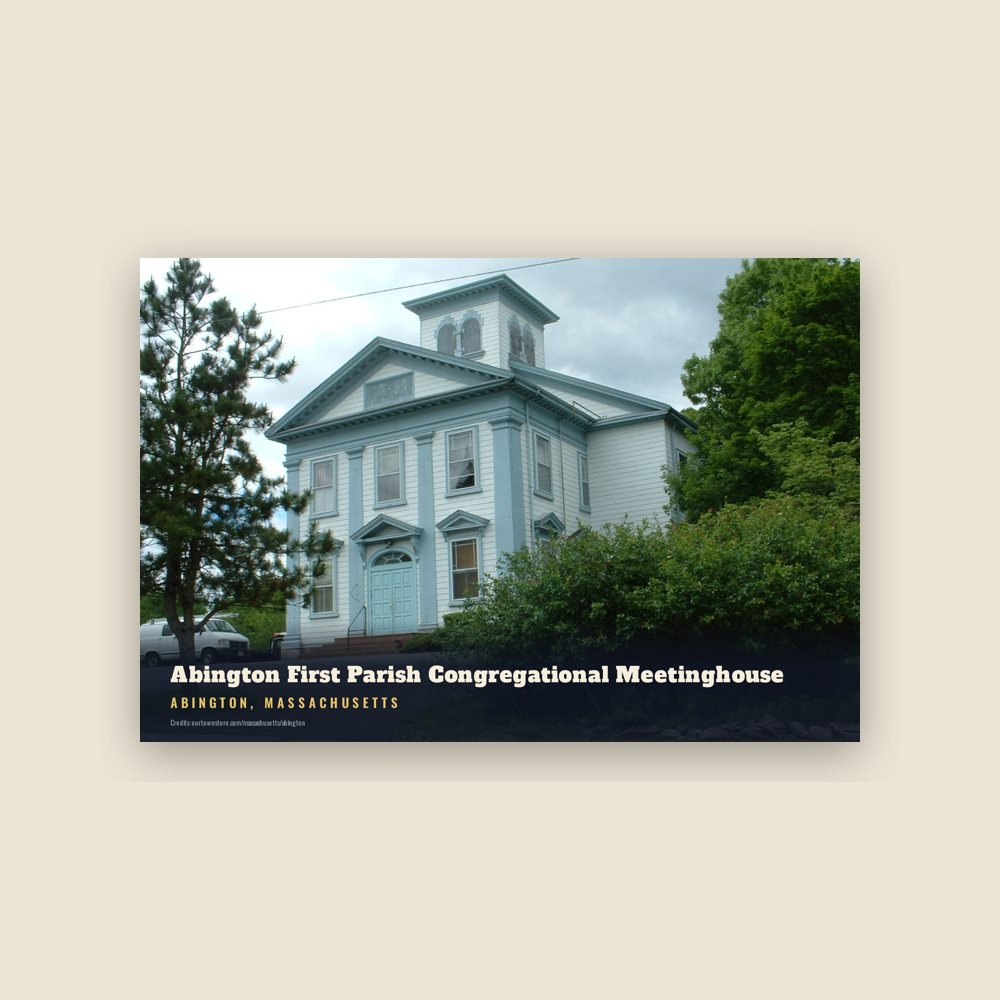
6″×4″ postcard, glossy front
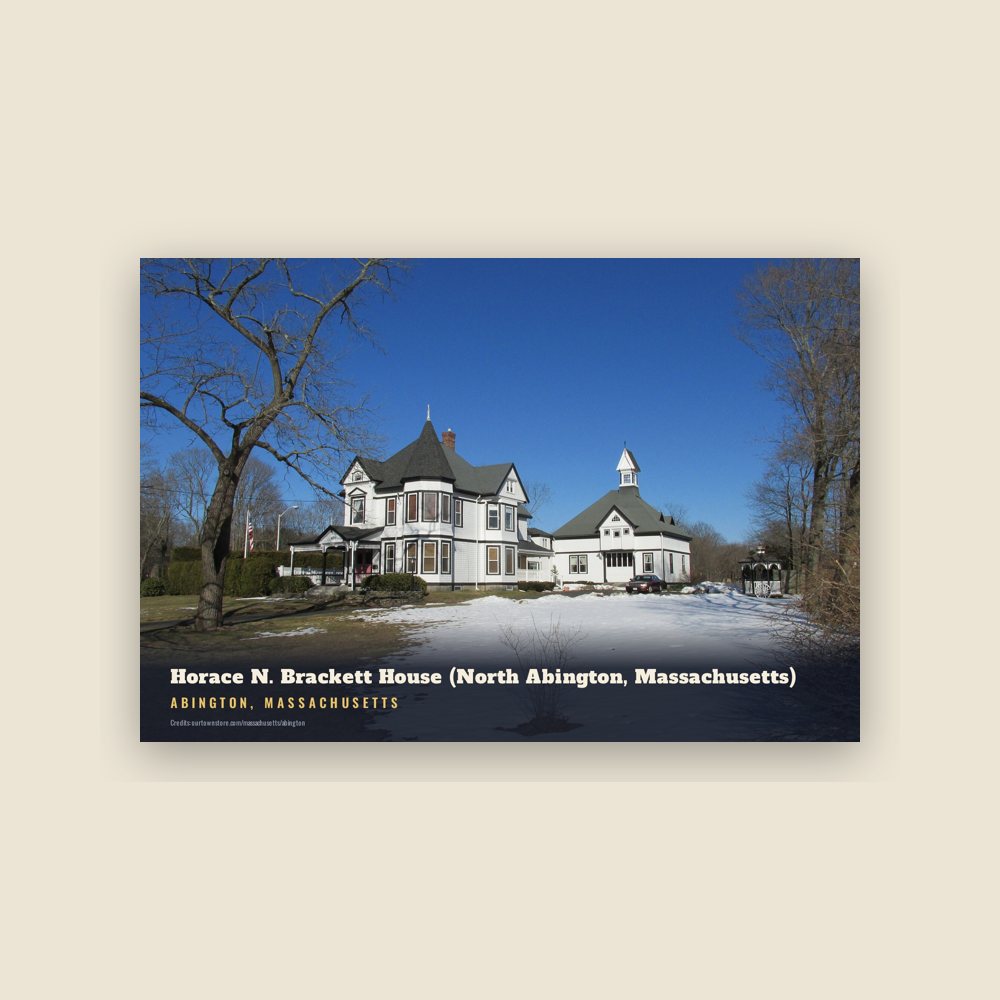
6″×4″ postcard, glossy front
Population 2010: 15,985 → 2020: 17,062
From Wikidata (CC0).
Before the Europeans made their claim to the area, the local Native Americans referred to the area as Manamooskeagin, meaning "great green place of shaking grass". Two streams in the area were named for the large beaver population: Schumacastacut or "upper beaver brook" and Schumacastuscacant or "lower beaver brook".
Abington was first settled by European settlers in 1668. The lands included the current towns of Bridgewater, Rockland, Whitman, and parts of Hanover. The town was officially incorporated in 1712, having been named six years earlier by Governor Joseph Dudley as a tribute to Anne Venables-Bertie, Countess of Abingdon, wife of the second Earl of Abingdon, who helped him secure the governorship of the colony from Queen Anne. The Earl of Abingdon is named from Abingdon-on-Thames in Oxfordshire (then Berkshire), UK. Indeed, the original petition from Governor Dudley ordered that "the Town be named Abingdon". A marginal note on the document gave the spelling as "Abington" as it has been known ever since.
In 1769, an iron foundry was established within the town. In 1815, Jesse Reed invented a machine that mass-produced tacks, which in turn led to the shoe industry's establishment in the town. During the nineteenth and early twentieth century, the manufacture of boots and shoes was its primary industry, with nearly half of the footwear provided for the Union Army during the Civil War being provided by Abington factories. From 1846 to 1865, Abington was a center of the abolitionist movement. In 1874 and 1875, the towns of Rockland and Whitman, respectively, separated and incorporated as towns.
In 1893, the town was the site of a riot between town constables and workers from the New York, New Haven & Hartford Railroad, over the town's rights to build a streetcar line that crossed the railroad's tracks. The town eventually built the line, and as a "peace offering", the railroad built the North Abington Depot building, which was built in the style of H. H. Richardson.
Adapted (trimmed) from the Wikipedia article Abington, Massachusetts, revision 1374079512 by its contributors, licensed CC BY-SA 4.0.
We share a part of every Abington sale with local partners, and we'd love to print from your collection. Old photographs, maps and postcards make the best keepsakes.
Partner with us