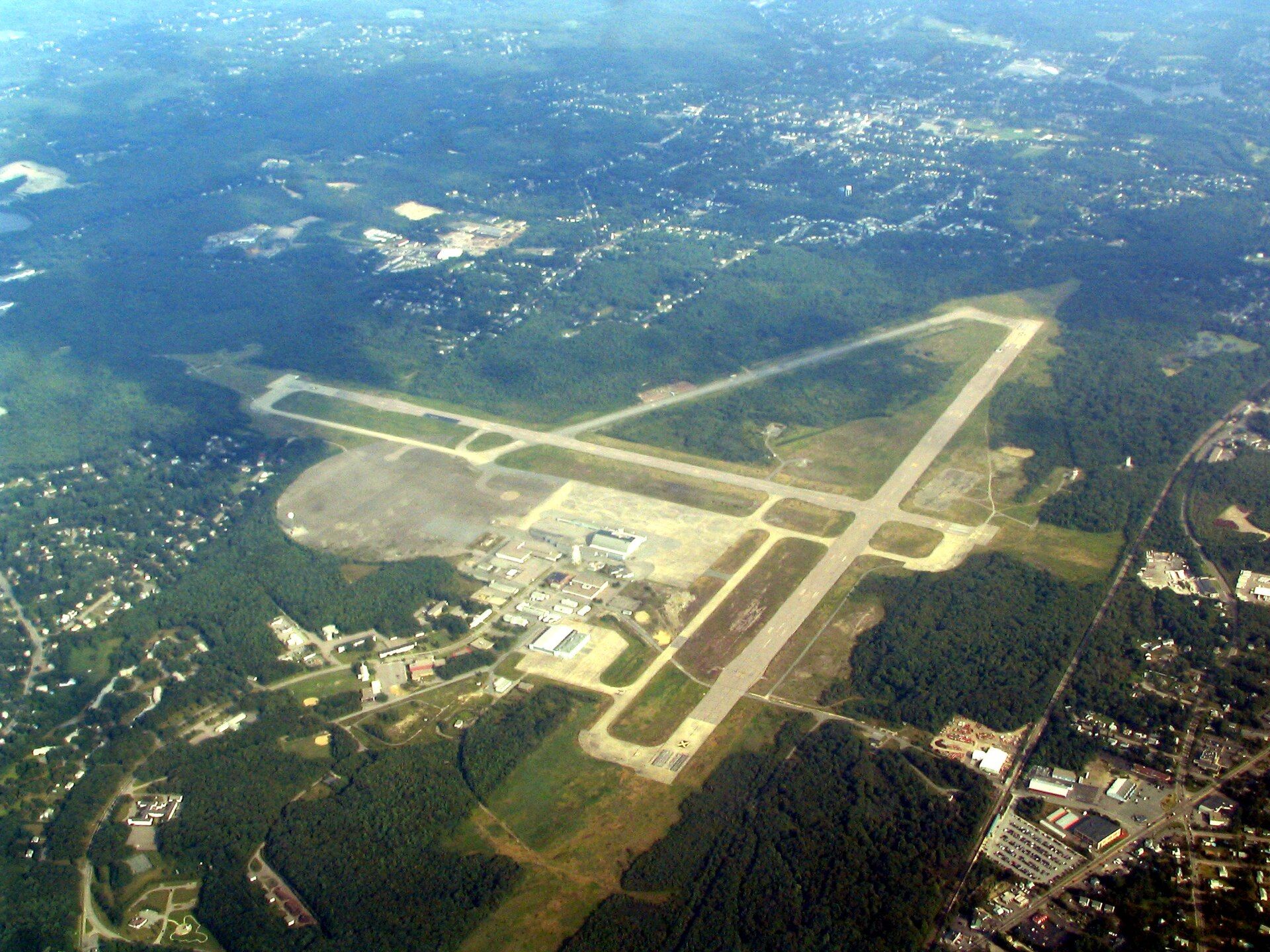
Rockland was a part of territory given to one Timothy Hatherly in a land grant, later known as the Hatherly Grant, in 1654. Landmarks include Naval Air Station South Weymouth, Rockland Almshouse and Lower Union Street Historic District. Rockland is the birthplace of Jonathan Togo, actor.
Every piece is drawn from Rockland's own map data and historic archives, then printed and shipped from the USA when you order. No two towns look alike.
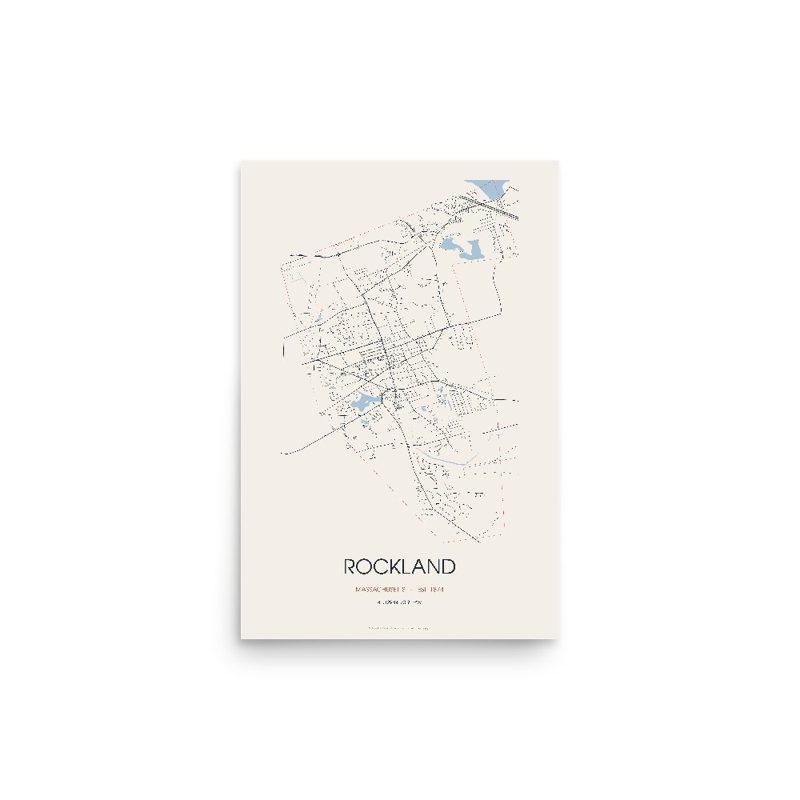
Every road in town, on archival matte paper
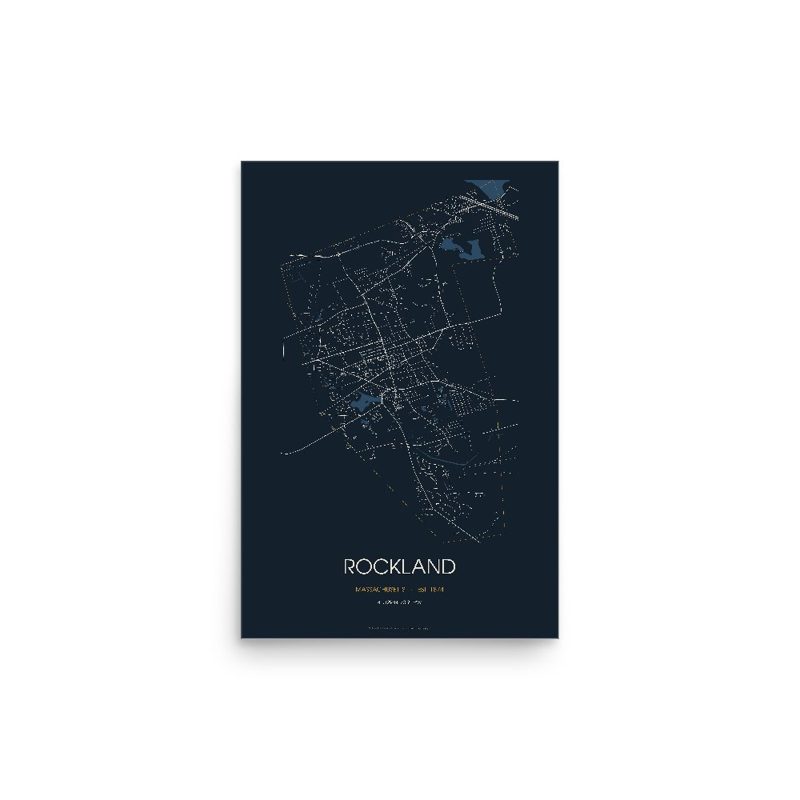
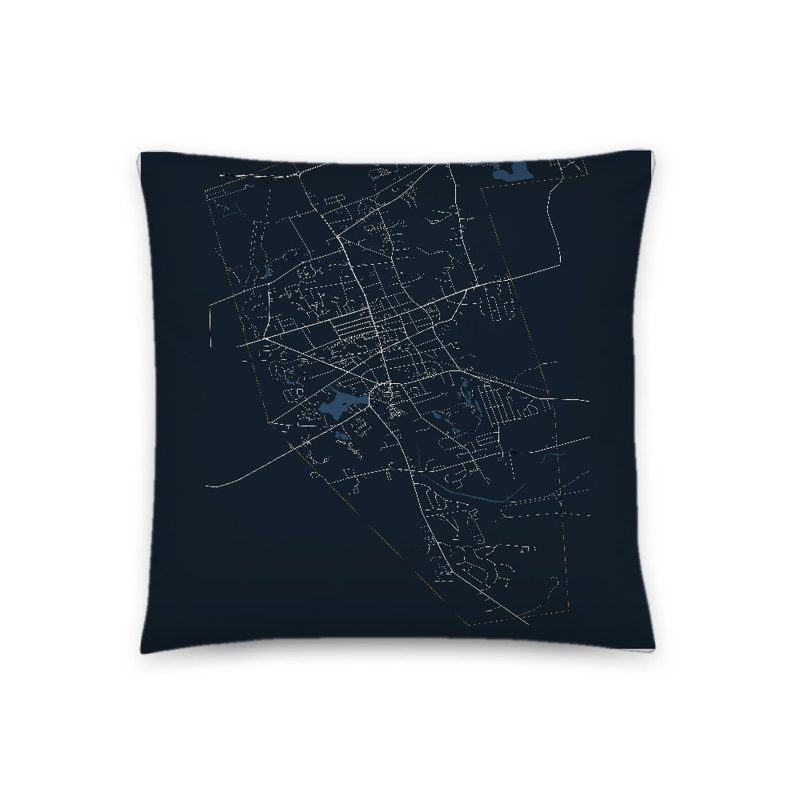
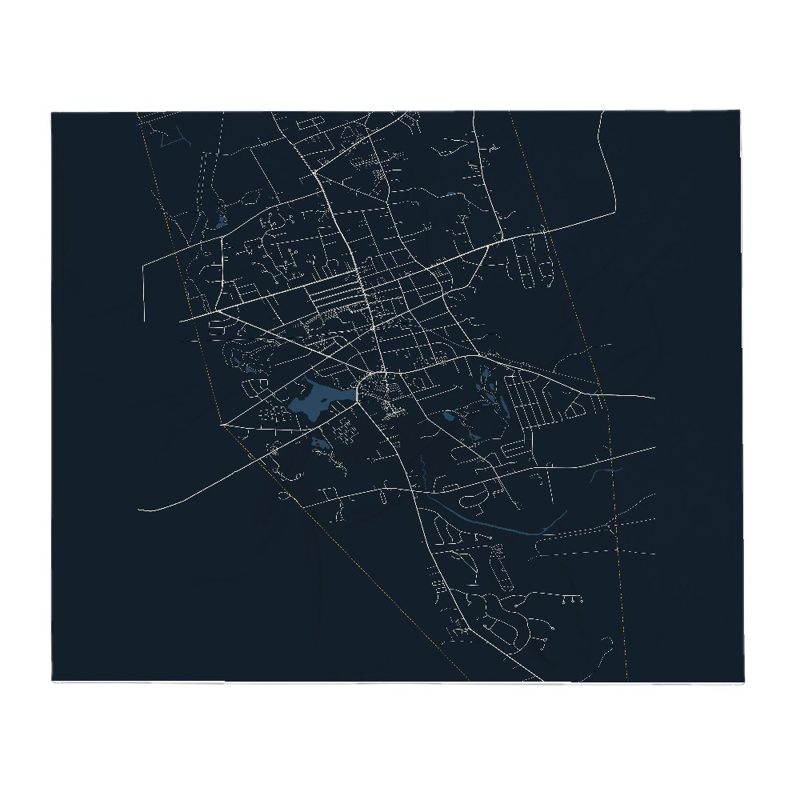
The same map, in navy and silver
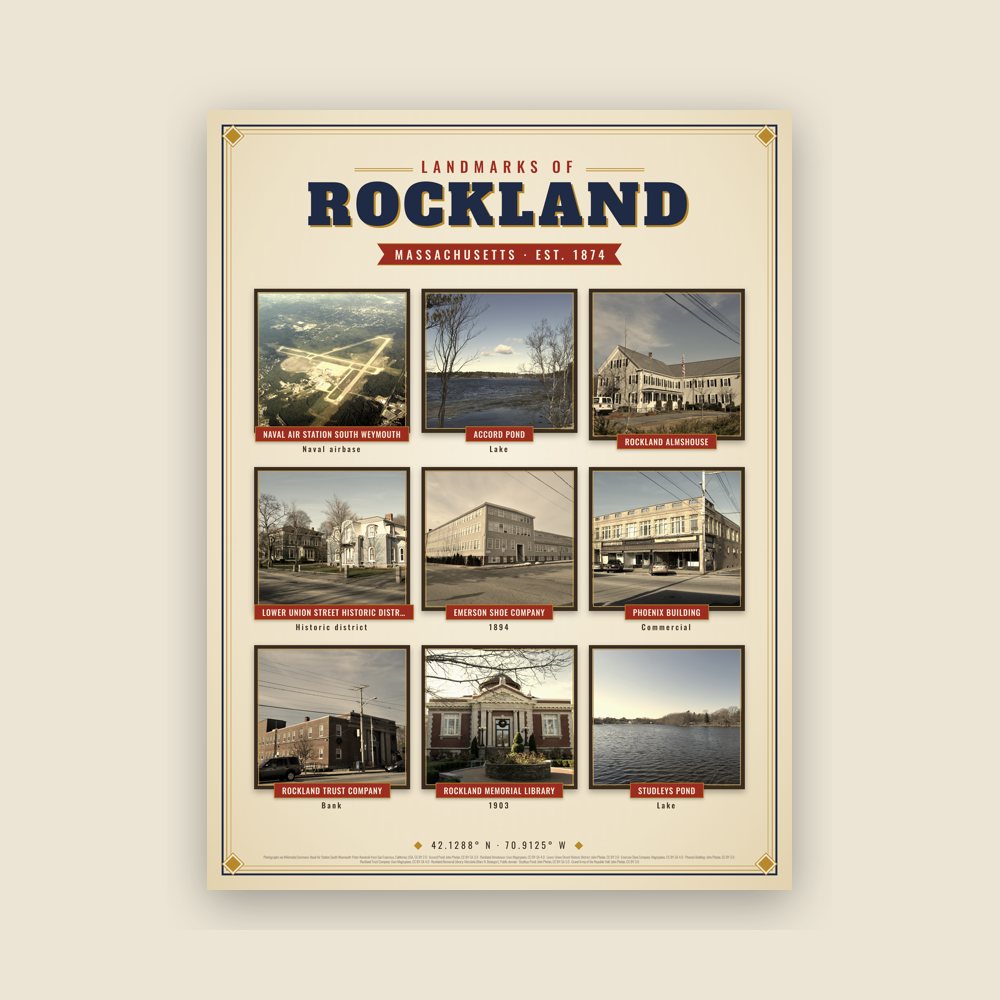
Nine local landmarks, archival matte
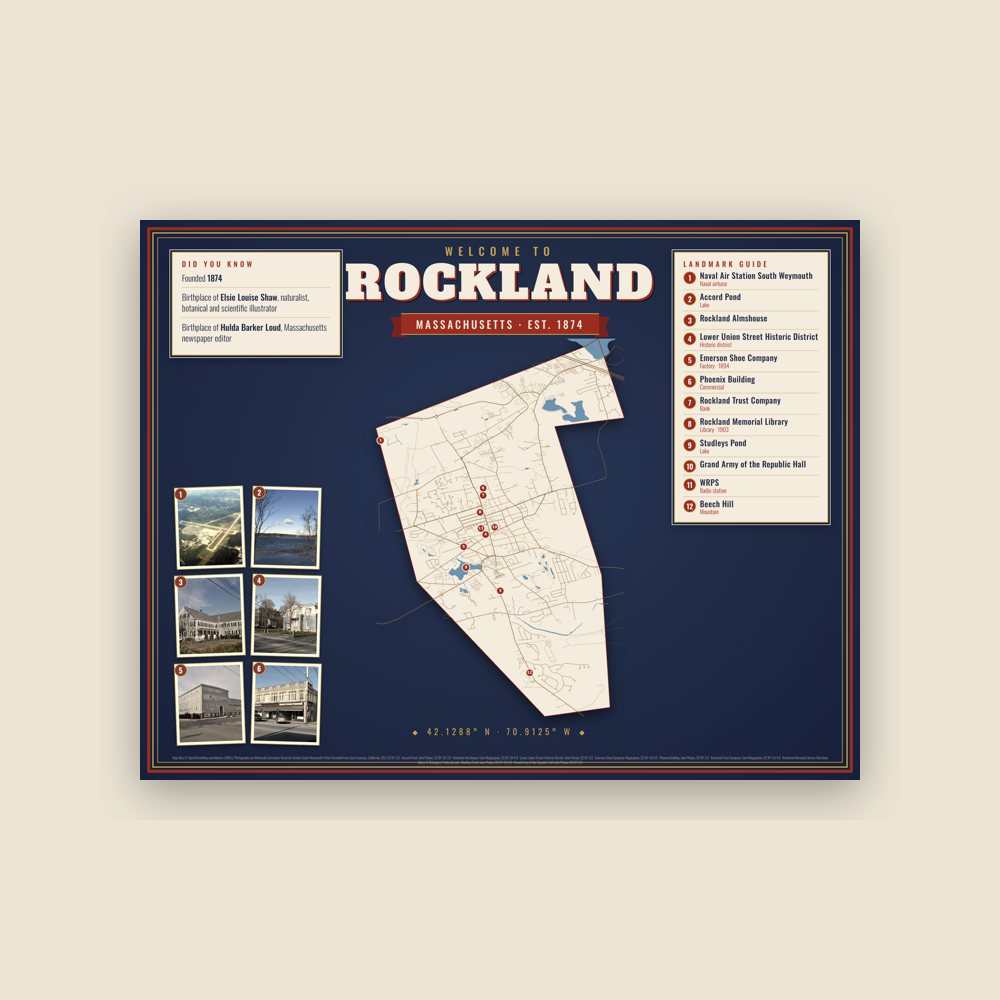
Map of local landmarks, washable fabric
Heavy-blend fleece, street map printed on the back
Soft Bella+Canvas jersey
Glossy ceramic, dishwasher safe
Ceramic keepsake, gold ribbon
Weatherproof, for the front walk
Soft-touch, zip cover
Sturdy all-over-print tote
Glossy top, cork back
Soft fleece, 50″×60″
20 oz, double-wall stainless
Population 2010: 17,489 → 2020: 17,803
From Wikidata (CC0).
Rockland was a part of territory given to one Timothy Hatherly in a land grant, later known as the Hatherly Grant, in 1654. It was then populated by European settlers as a northeastern region of the neighboring town Abington in 1673. The town separated and incorporated as Rockland on March 9, 1874. It is named for the town's rocky nature, which was better suited for mills and industry than for farming. During King Philip's War, the town was the site of an encampment during his raids on the town of Scituate.
Before the Civil War, Rockland was known as a major lumber producer for the shipyards in Hanover and Scituate. The town industry boomed during the 19th century and during the civil war due to its shoe factories, its timber export, and its sawmills but production declined after the Great Depression. Rockland experienced new business growth in the decades after World War II with suburban development along the Routes 123 & 139.
During the twentieth century, the town was the site of a portion of the landing strips of the South Weymouth Naval Air Station. The airstrip closed in 1996 as a part of the fourth round of closures under the Base Realignment and Closure Act.
In recent years, a growing number of artists have moved into the community, attracted by former factory buildings as a place to work and meet. These buildings are not designated for artist use as they are just commercial and storage spaces but they are popularly used by creatives. Buildings include the E.T. Wright Building and the Sandpaper Factory. There was once a third artist community known as the Codman Building, formerly the Emerson Shoe Company, but it was rezoned as residential in 2007 allowing developers to displace 30 to 40 artists in the community and build the luxury apartment building known as the Emerson Shoe Lofts. The building is the largest wood structure in Rockland and is on the national register of historic places.
Adapted (trimmed) from the Wikipedia article Rockland, Massachusetts, revision 1378584700 by its contributors, licensed CC BY-SA 4.0.
We share a part of every Rockland sale with local partners, and we'd love to print from your collection. Old photographs, maps and postcards make the best keepsakes.
Partner with us