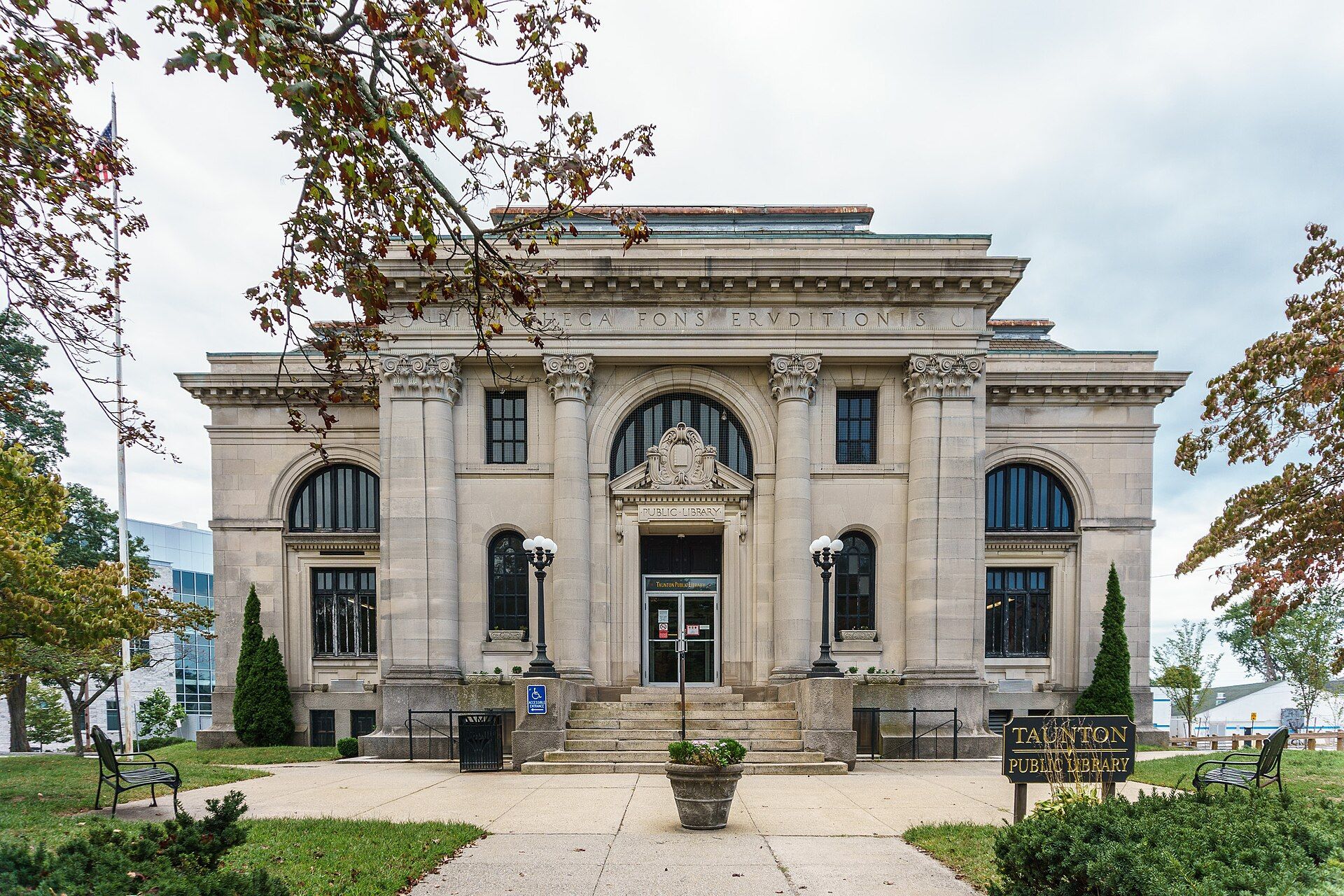
Taunton is situated on the Taunton River, which winds its way through the city on its way to Mount Hope Bay, 10 miles to the south. Landmarks include Taunton Public Library, Dean Street station and Taunton Green Historic District. Taunton is the birthplace of William Standish Knowles, chemist.
Every piece is drawn from Taunton's own map data and historic archives, then printed and shipped from the USA when you order. No two towns look alike.

Every road in town, on archival matte paper

The same map, in navy and silver
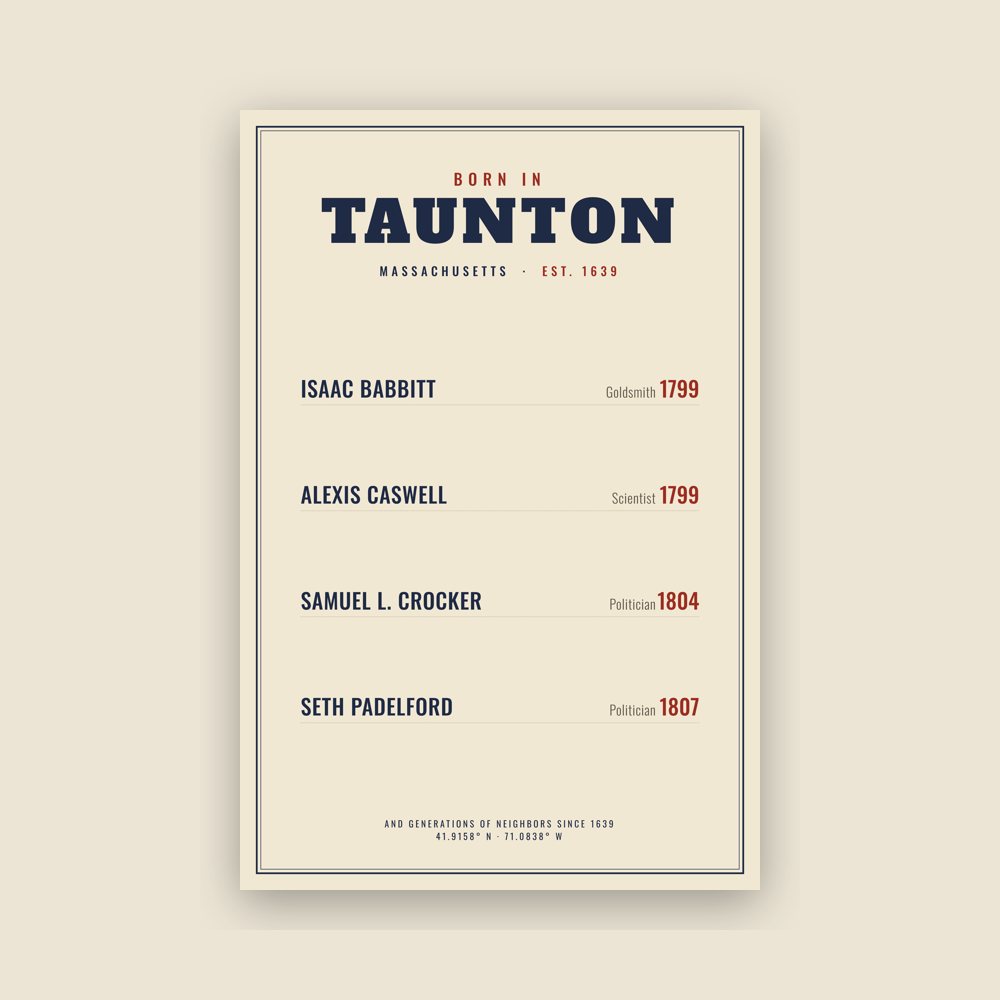
Famous natives, by birth year
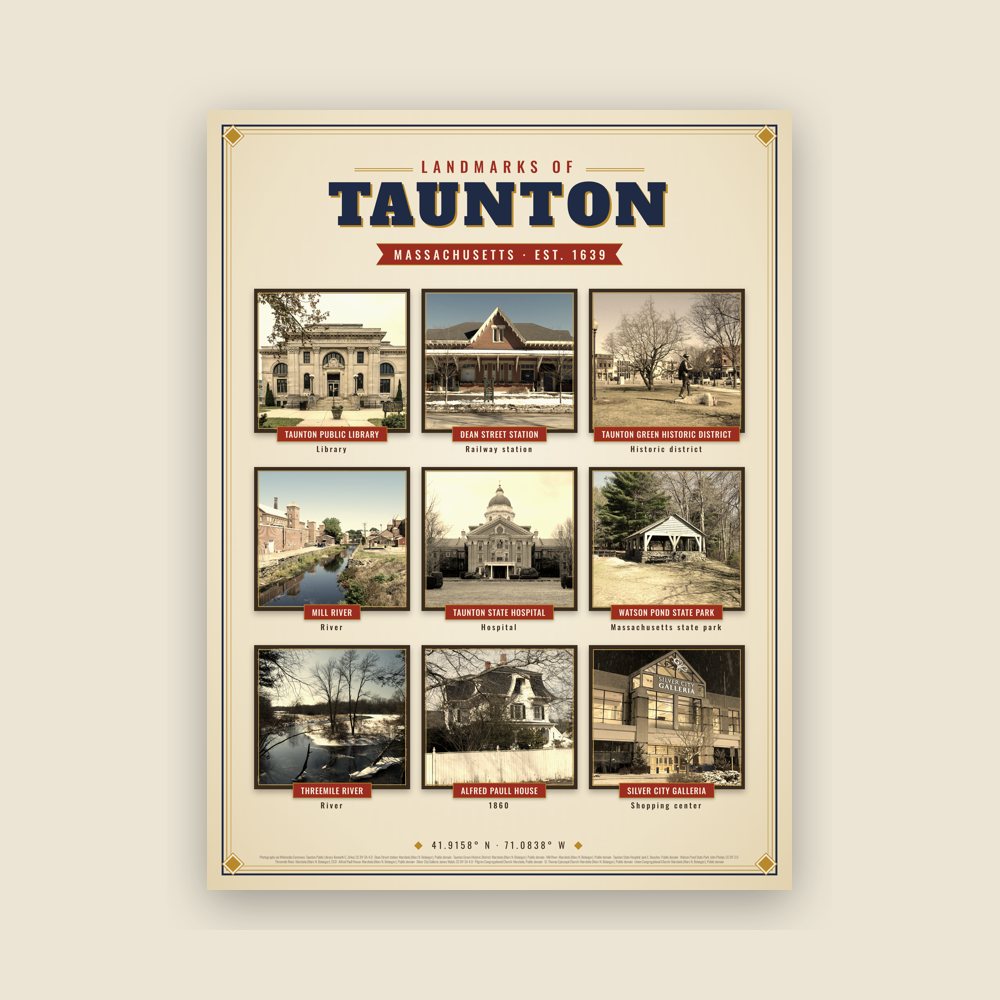
Nine local landmarks, archival matte
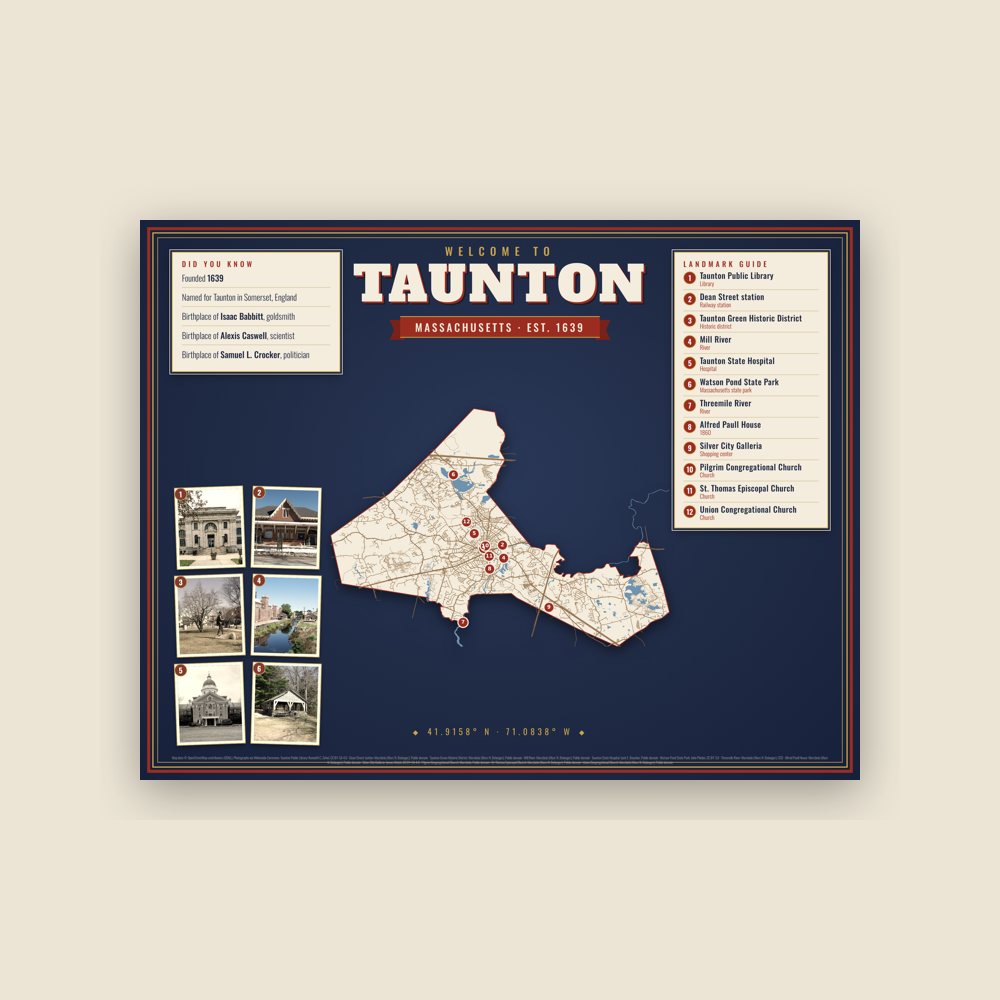
Map of local landmarks, washable fabric
Heavy-blend fleece, street map printed on the back
Soft Bella+Canvas jersey

Glossy ceramic, dishwasher safe
Ceramic keepsake, gold ribbon

Weatherproof, for the front walk
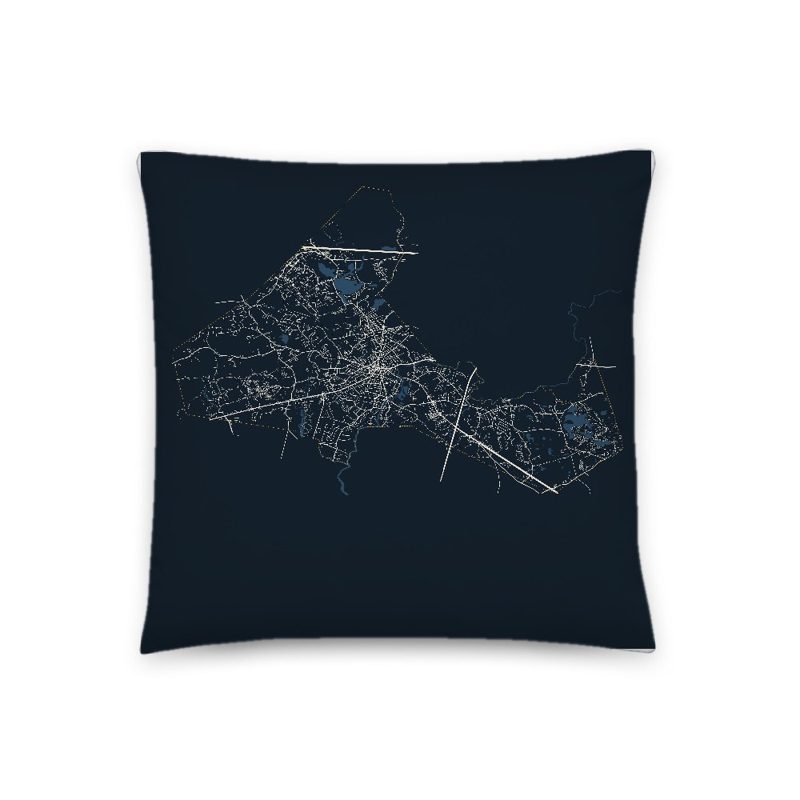
Soft-touch, zip cover
Sturdy all-over-print tote

Glossy top, cork back
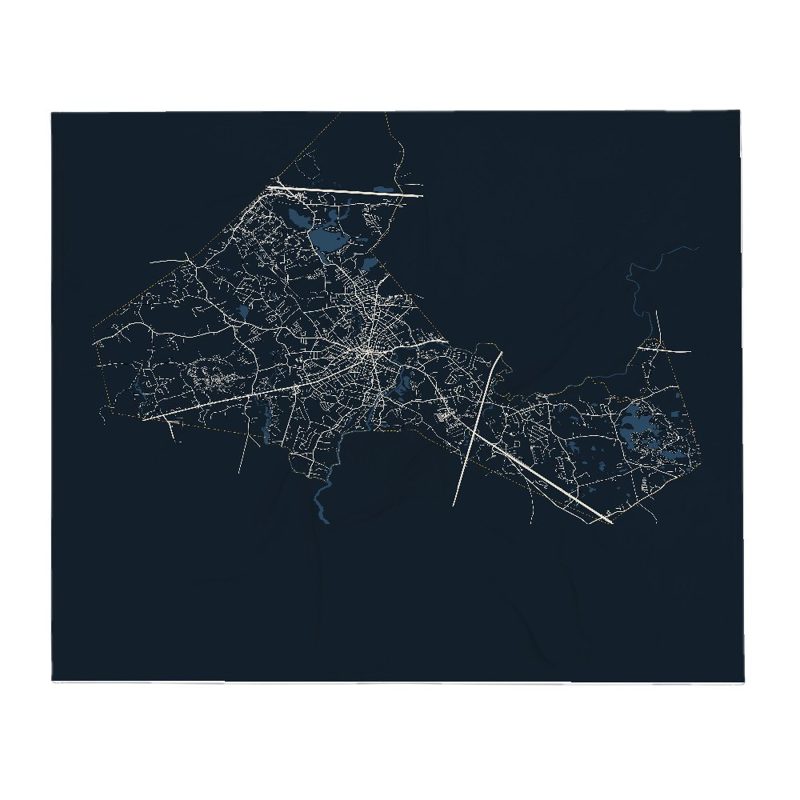
Soft fleece, 50″×60″
20 oz, double-wall stainless
Named for Taunton (town and civil parish in Somerset, England).
Population 2010: 55,874 → 2020: 59,408
From Wikidata (CC0).
Taunton was founded by settlers from England and officially incorporated as a town on September 3, 1639. Most of the town's settlers were originally from Taunton in Somerset, England, which led early settlers to name the settlement after that town. At the time of Taunton's incorporation, they explained their choice of name as being "in honor and love to our dear native country." Prior to 1640, the Taunton area was called Cohannet, Tetiquet, or Titiquet.
The English founders of Taunton purchased the land from the Wampanoag Natives in 1637 as part of the Tetiquet Purchase and the remaining native families were relocated to the praying town of Ponkapoag in present-day Canton, Massachusetts. Elizabeth Poole, contrary to local folklore, did not take part in the town purchase but was among its greatest benefactors and played a significant role in the founding of its church. Described as "the foundress of Taunton" and its matriarch, Poole "was accorded equality of rights, whether in the purchase of lands, [or] in the sharing of iron works holdings," having been a financier of the settlement's first dam and mill built for the manufacture of bar iron. Plymouth Colony was formally divided into counties on June 2, 1685, with Taunton becoming the shire town of Bristol County. The counties of Plymouth Colony were transferred to the Province of Massachusetts Bay on the arrival of its charter and governor on May 14, 1692. The Taunton area has been the site of skirmishes and battles during various conflicts, including King Philip's War and the American Revolution. Taunton was re-incorporated as a city on May 11, 1864.
In 1656, the first successful iron works in Plymouth Colony was established on the Two Mile River, in what is now part of Raynham. The Taunton Iron Works operated for over 200 years until 1876. It was the first of many iron industries in Taunton.
During the 19th century, Taunton became known as the "Silver City", as it was home to many silversmithing operations, including Reed & Barton, F.B. Rogers, the Poole Silver Company, and the Taunton Silverplate Company.
In the 19th century, Taunton was also the center of an important iron-making industry, utilizing much bog iron from the numerous swamps in the surrounding area. The iron industry in Taunton produced a variety of goods including stoves (Weir Stove Company/Glenwood), tacks (Field Tack Company) and machinery. One of the more successful companies during this period was the Mason Machine Works, founded by William Mason, which produced machinery for the textile industry, as well as steam locomotives. The Taunton Locomotive Works (begun in 1846) also operated in the city during this time.
Taunton was also home to several textile mills (Whittenton Mills) and other industries, such as felt (Bacon Felt) and brick making.
During the 19th century, Taunton was a major shipping point for grain from the inland, rural farm areas of Massachusetts to the rest of the nation via Weir Village and the Taunton River. With the advent of the railroad, Taunton would also become an important transportation hub due to its central location.
The city formed the Taunton Municipal Light Plant (TMLP) in 1897, when it decided to purchase the floundering Taunton Electric Lighting Company, making it a publicly owned electric utility. Today, TMLP provides electric service to 34,000 customers in Taunton, Berkley, Raynham; and sections of Dighton, Lakeville, and Bridgewater. TMLP is governed by a three-member Board of Commissioners, which is elected by the citizens of Taunton.
In the late 19th century, Taunton was a stop on the national bicycle racing circuit. In 1897, the one-mile (1.6 km) open event made news when third-place finisher W. E. Becker brutally attacked second-place winner Major Taylor, knocking him unconscious for fifteen minutes.
Built in 1942, U.S. Army Camp Myles Standish was a departure point for over a million U.S. and allied military personnel bound for Europe during World War II. It also functioned as a prisoner of war camp housing German and Italian soldiers. While Camp Myles Standish was later closed in 1946, it was re-purposed as the Paul A. Dever School which was a facility that housed mentally disabled persons. The school site of 220 acres (89 ha) was shut down in 1982. This portion was turned into an expansion scheme for the existing the Myles Standish Industrial Park, Taunton's north end, which is currently one of the largest in New England, covering an area over 800 acres (320 ha). It services manufacturing, offices, high tech, and distribution centers.
In October 2005, the Whittenton Pond Dam north of the downtown area threatened to fail following a week that brought 9 inches (230 mm) of rain to the city. Over 2,000 city residents were evacuated, all downtown businesses were ordered closed, and Mayor Robert Nunes issued a state of emergency. It is estimated that if the dam had failed, the Mill River would have inundated the downtown area with up to 6 feet (1.8 m) of water. In response, Massachusetts Governor Mitt Romney ordered an immediate inspection of high-risk dams throughout the Commonwealth.
In 2010, the historic Taunton City Hall was severely damaged in an arson fire. City government operated out of the former Lowell M. Maxham School on Oak Street for ten years, until the building was renovated and re-opened in September 2020.
In 2012 Taunton became the target location for a Wampanoag casino complex which was embroiled in conflict by competing regional bands of the Wampanoag over territory claims. The proposed location for the casino-resort complex is adjacent to a local elementary school and the regional technical high school, generating protests by parent and teacher groups.
Adapted (trimmed) from the Wikipedia article Taunton, Massachusetts, revision 1376995178 by its contributors, licensed CC BY-SA 4.0.
We share a part of every Taunton sale with local partners, and we'd love to print from your collection. Old photographs, maps and postcards make the best keepsakes.
Partner with us