
South Hadley was an unsettled area of Hadley from 1659 until 1721, when English settlers moved in from Hadley. Landmarks include South Hadley Canal, Holyoke Range and United States Post Office–South Hadley Main. South Hadley is the birthplace of George Herbert Mead, philosopher, sociologist, and psychologist.
Every piece is drawn from South Hadley's own map data and historic archives, then printed and shipped from the USA when you order. No two towns look alike.
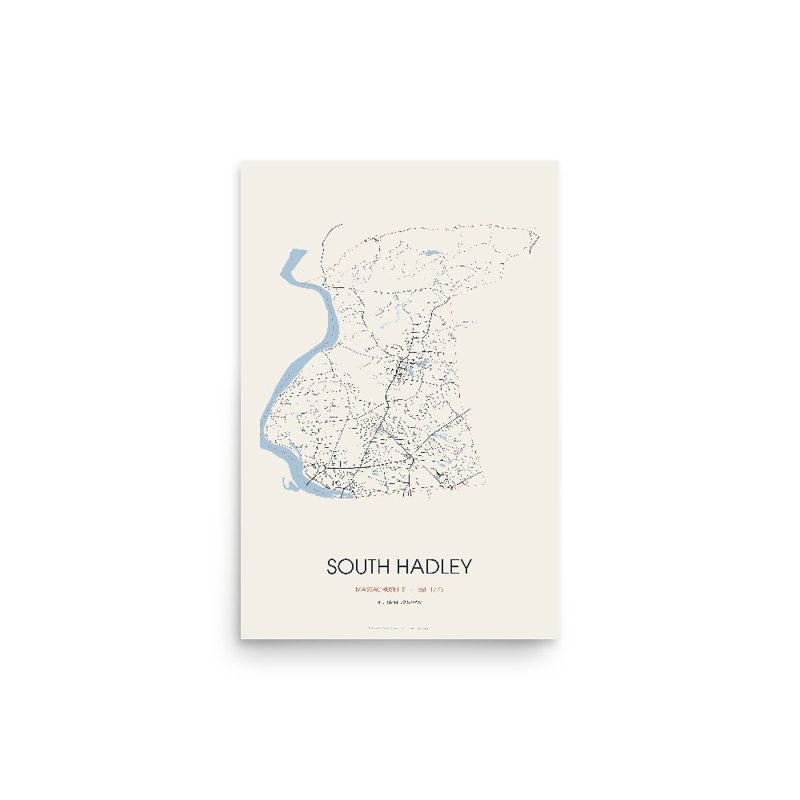
Every road in town, on archival matte paper
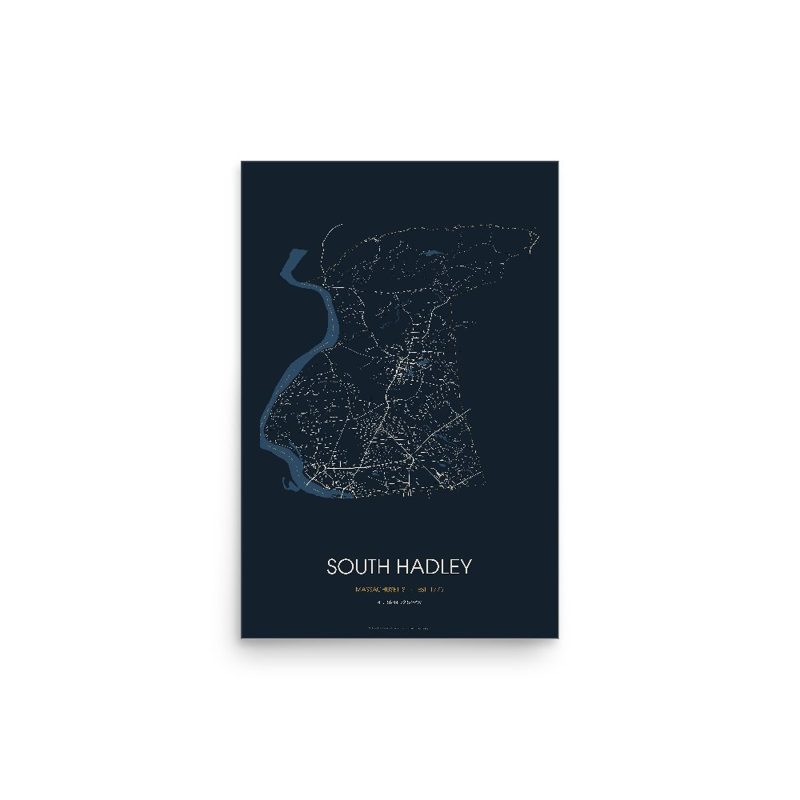
The same map, in navy and silver
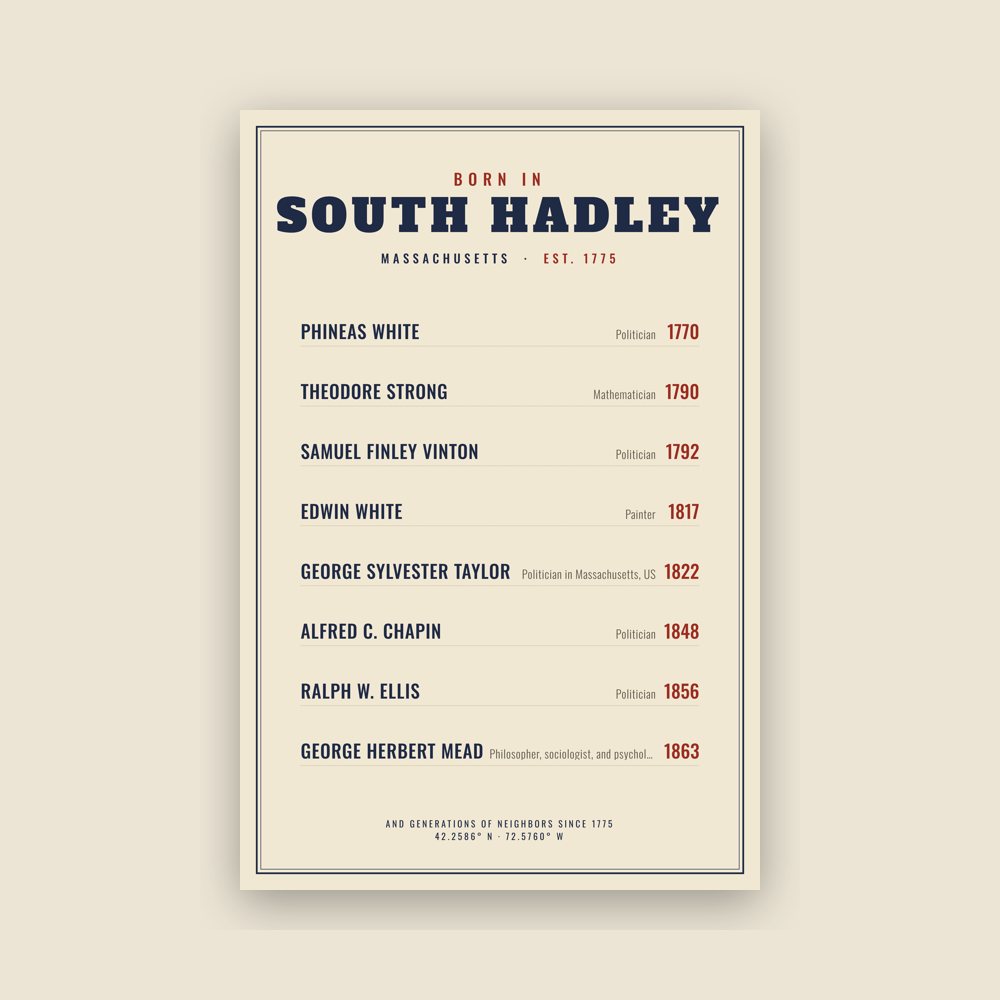
Famous natives, by birth year
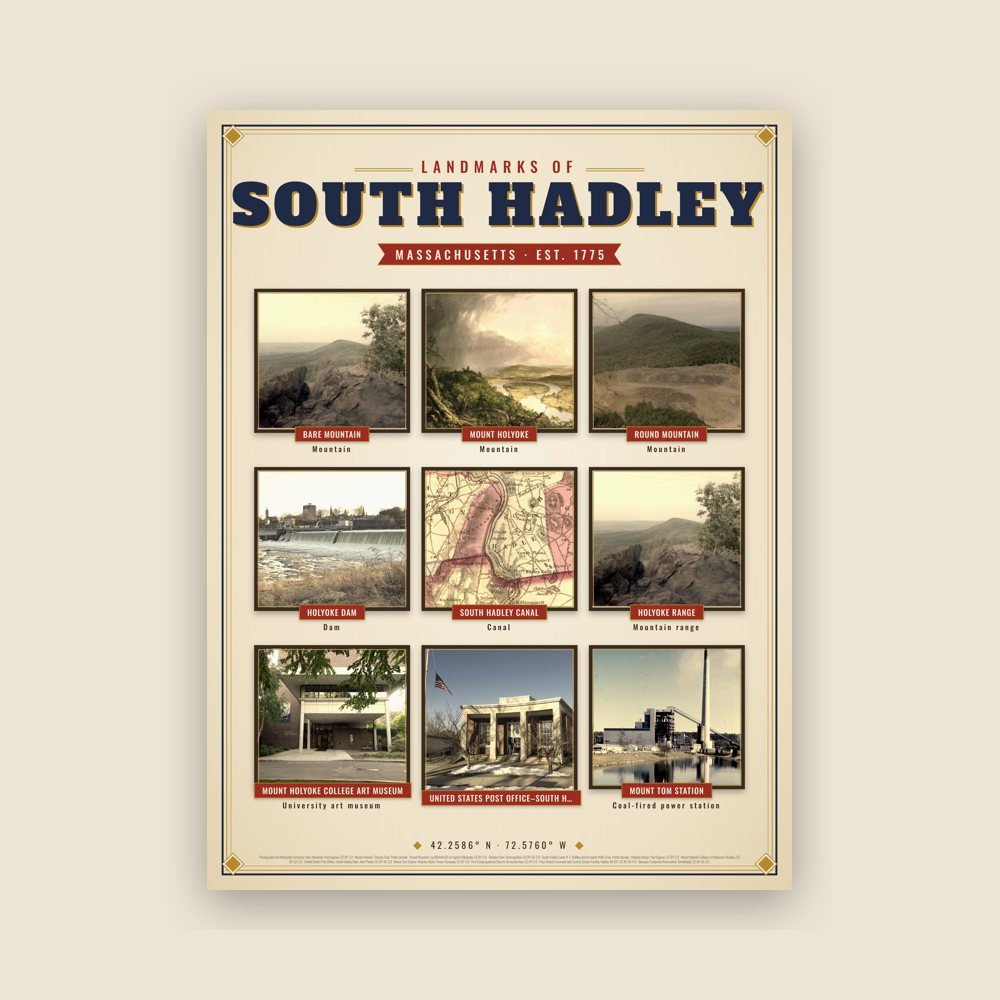
Nine local landmarks, archival matte
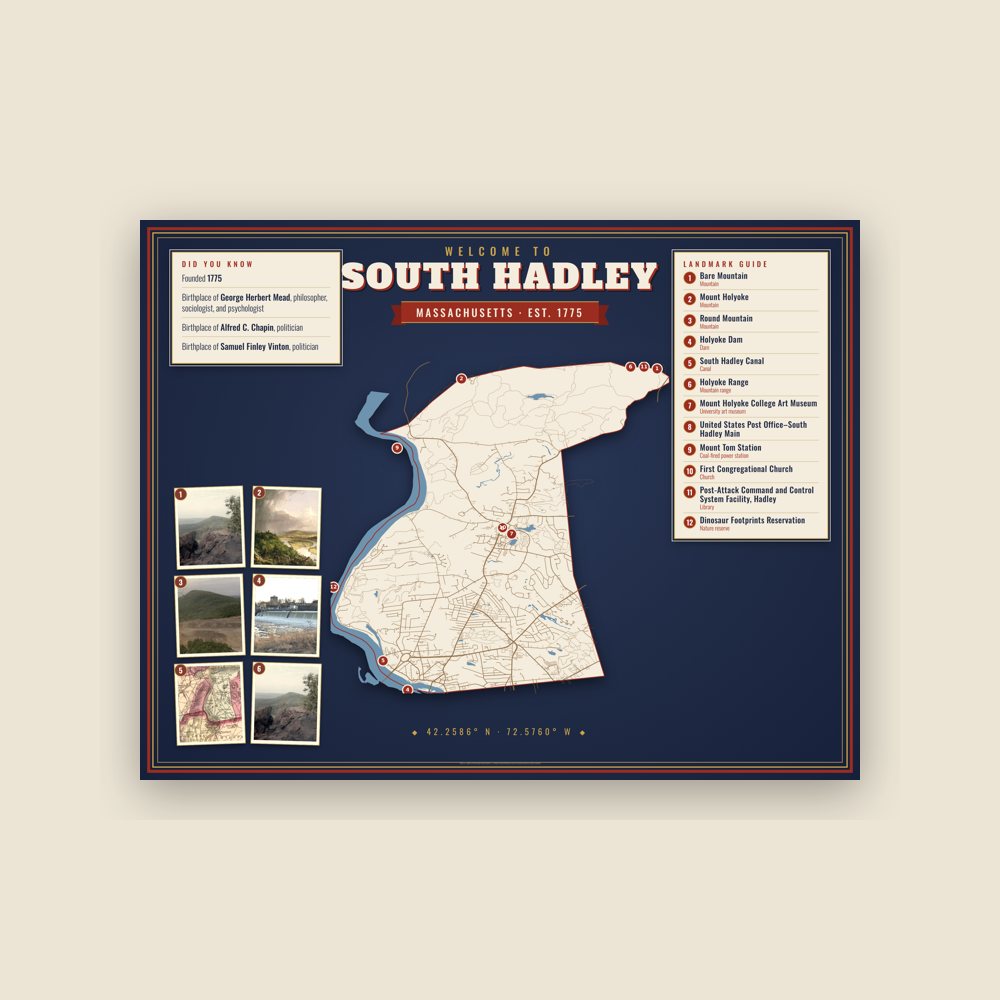
Map of local landmarks, washable fabric
Heavy-blend fleece, street map printed on the back
Soft Bella+Canvas jersey
Glossy ceramic, dishwasher safe
Ceramic keepsake, gold ribbon
Weatherproof, for the front walk
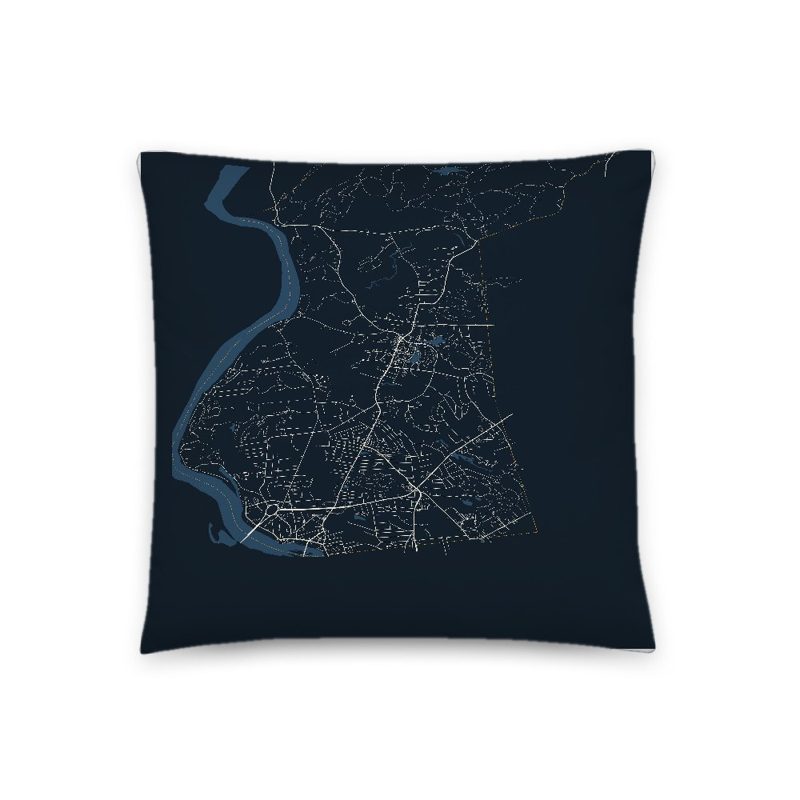
Soft-touch, zip cover
Sturdy all-over-print tote
Glossy top, cork back
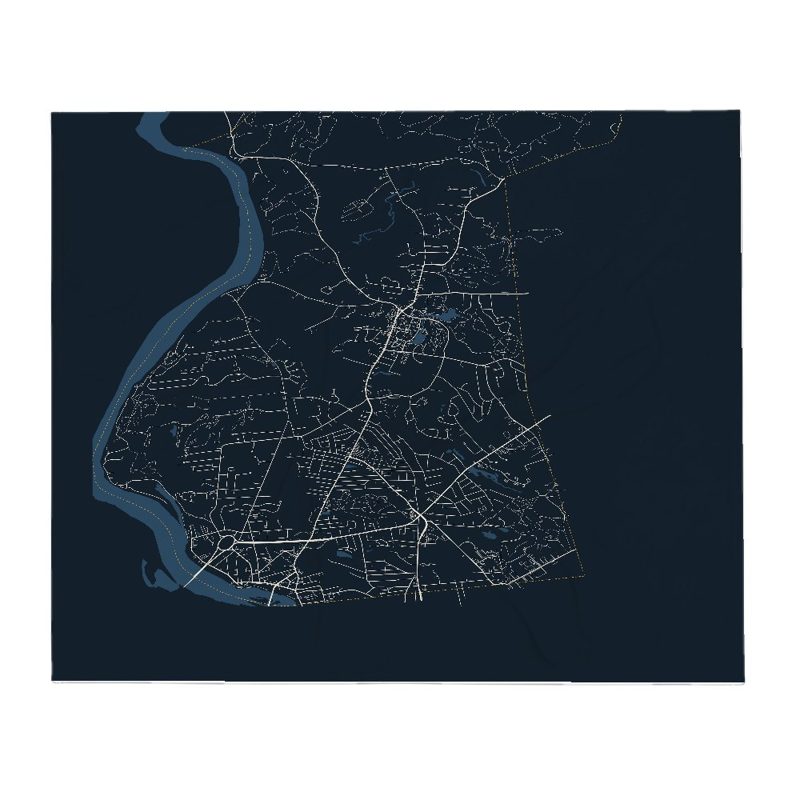
Soft fleece, 50″×60″
20 oz, double-wall stainless
Population 2010: 17,514 → 2020: 18,150
From Wikidata (CC0).
South Hadley was an unsettled area of Hadley from 1659 until 1721, when English settlers moved in from Hadley. A separate town meeting was held in 1753, and the town was officially split and incorporated in 1775.
The town is the home of the nation's first successful navigable canal as well as the oldest continuing institution of higher education for women (Mount Holyoke College).
The Civil War Monument (believed to be by Jerome Connor) in the center of the Commons was given to South Hadley by William H. Gaylord in the 1900s. The Gaylords also donated the Gaylord Memorial Library, located near the center of town, along with a grant of 67,000 dollars to Mount Holyoke College.
Adapted (trimmed) from the Wikipedia article South Hadley, Massachusetts, revision 1380484331 by its contributors, licensed CC BY-SA 4.0.
We share a part of every South Hadley sale with local partners, and we'd love to print from your collection. Old photographs, maps and postcards make the best keepsakes.
Partner with us