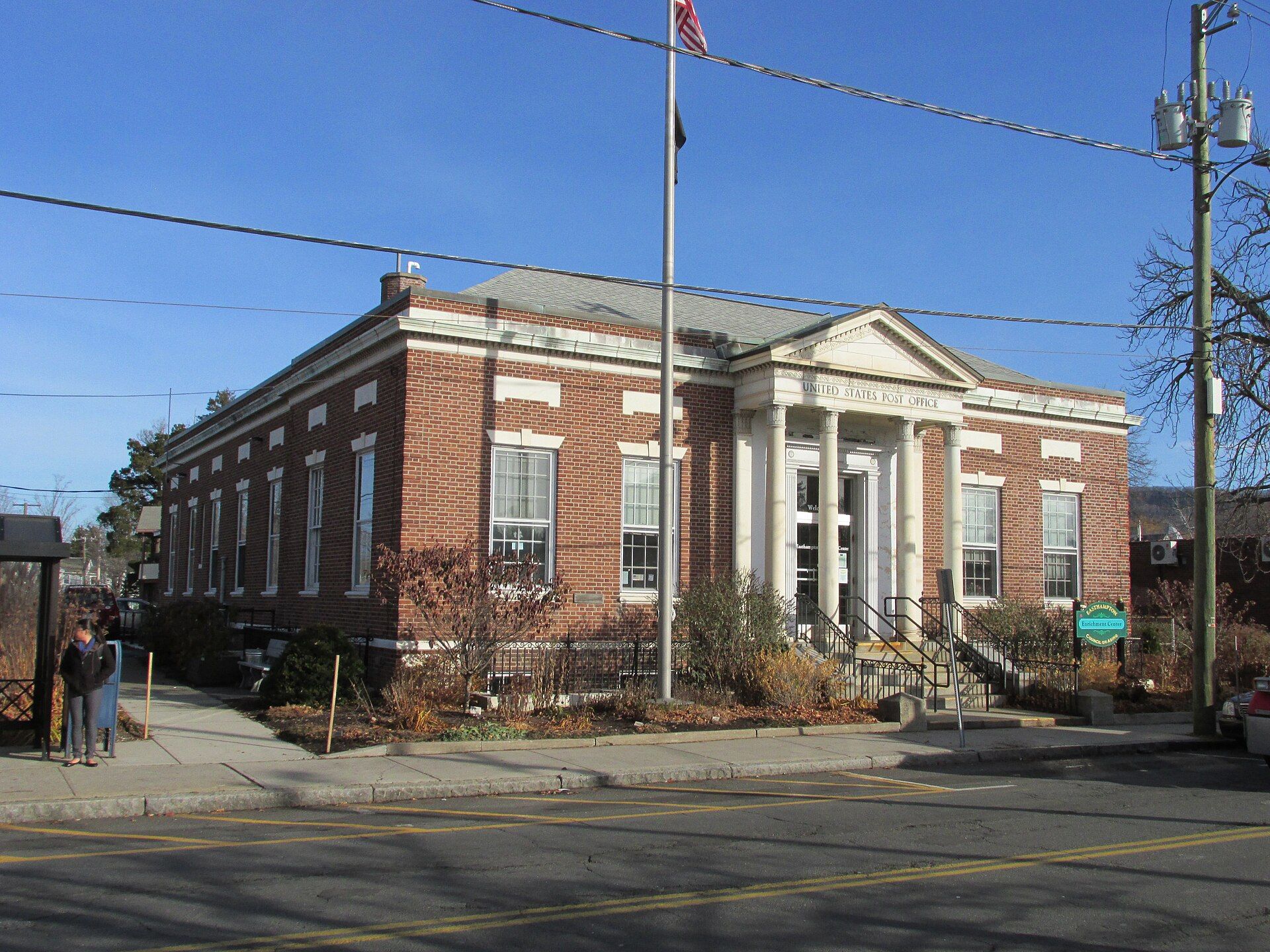
Easthampton was first settled by European immigrants beginning in 1664 as the village of Pascommuck and was originally part of Northampton. Landmarks include United States Post Office–Easthampton Main, Manhan Rail Trail and Sacred Heart of Jesus Parish. Easthampton is the birthplace of Horatio G. Knight, politician.
Every piece is drawn from Easthampton's own map data and historic archives, then printed and shipped from the USA when you order. No two towns look alike.
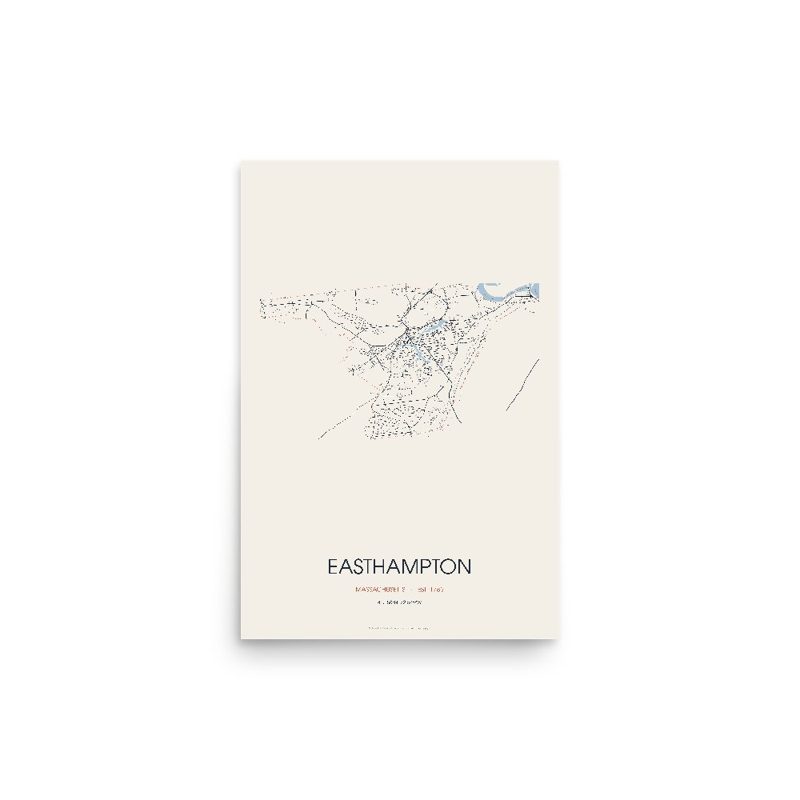
Every road in town, on archival matte paper
The same map, in navy and silver
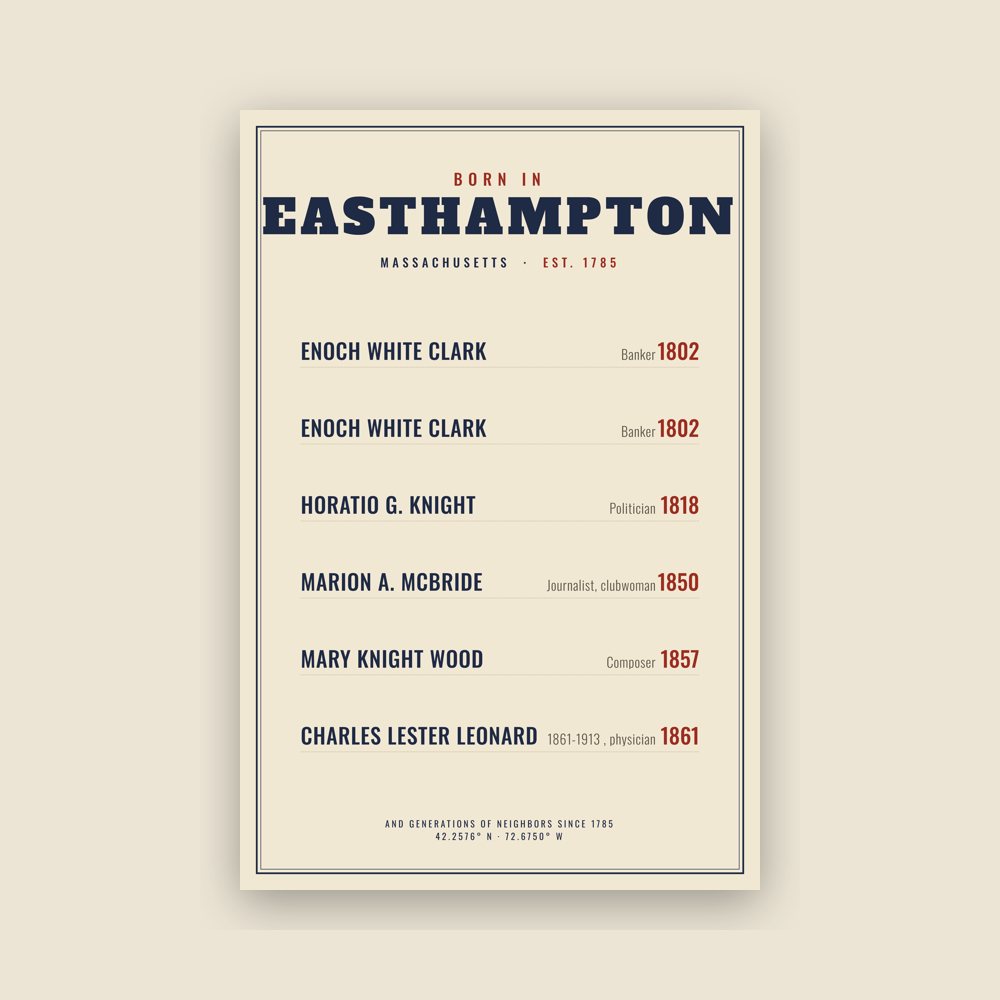
Famous natives, by birth year
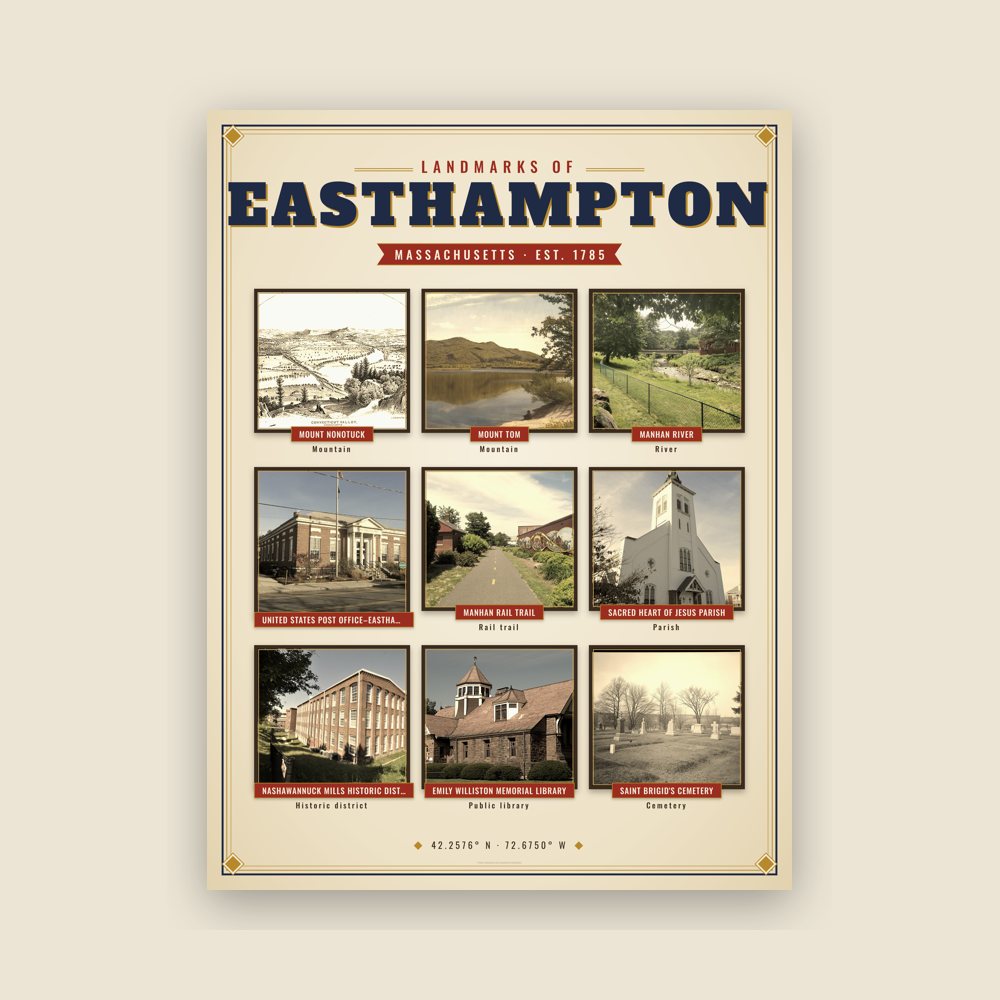
Nine local landmarks, archival matte
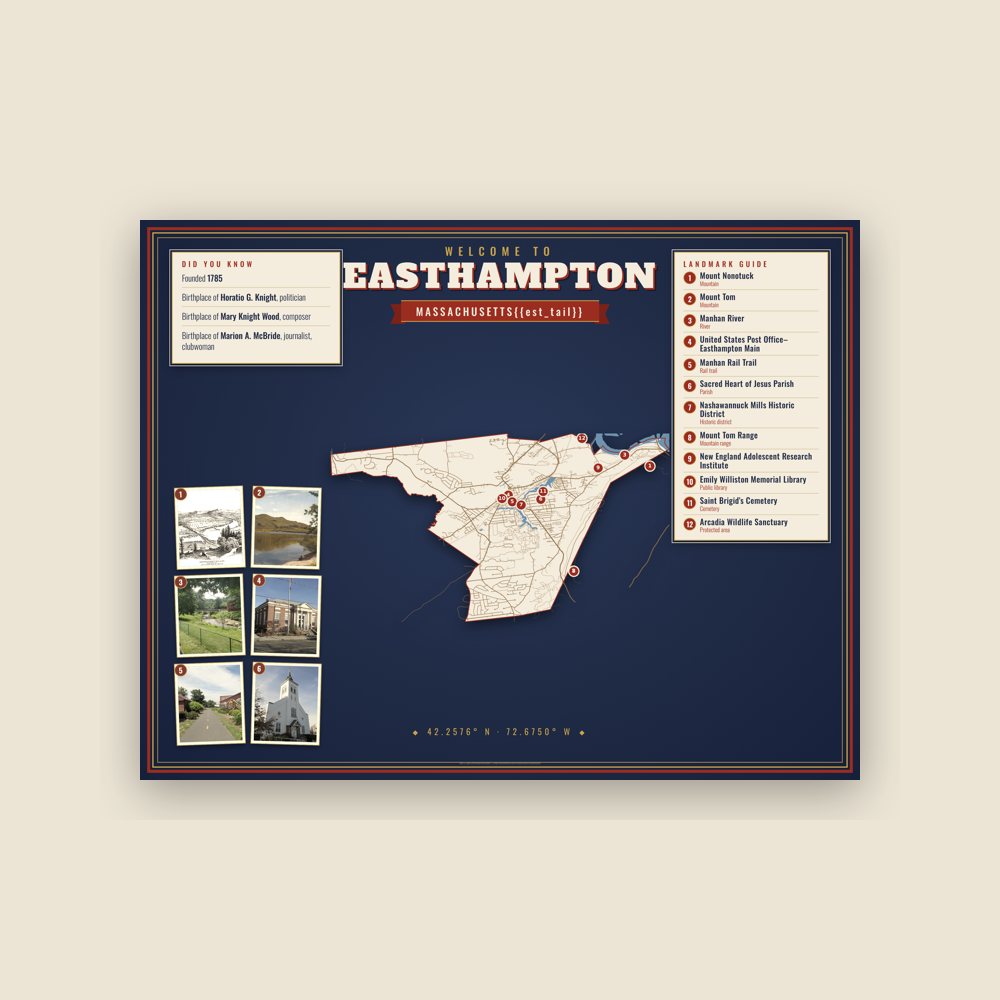
Map of local landmarks, washable fabric
Heavy-blend fleece, street map printed on the back
Soft Bella+Canvas jersey
Glossy ceramic, dishwasher safe
Ceramic keepsake, gold ribbon
Weatherproof, for the front walk
24″×16″, printed coir-look fibers, rubber back
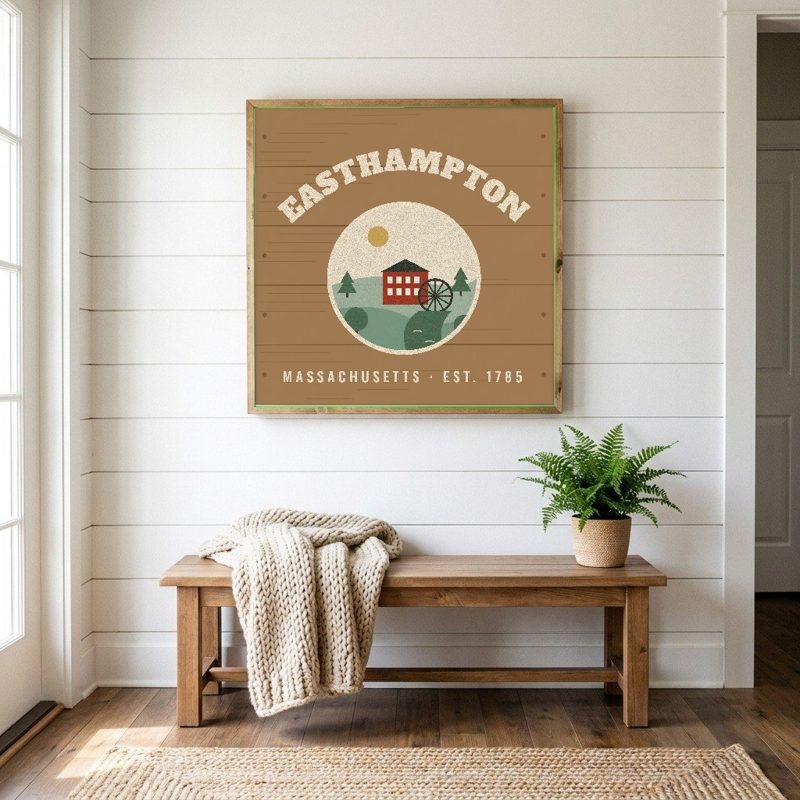
12″×12″ printed wood, ready to hang
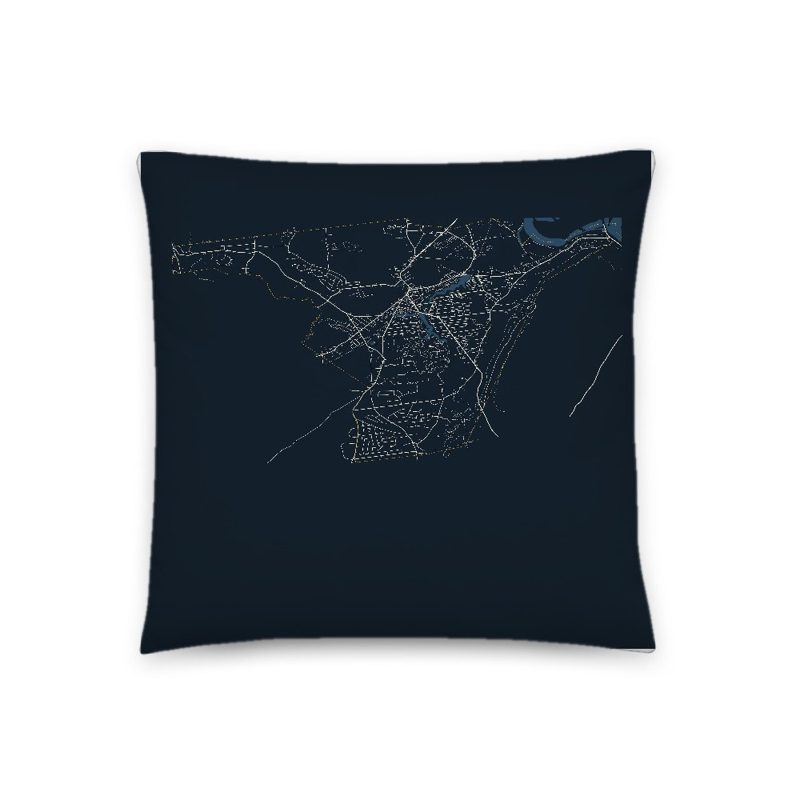
Soft-touch, zip cover
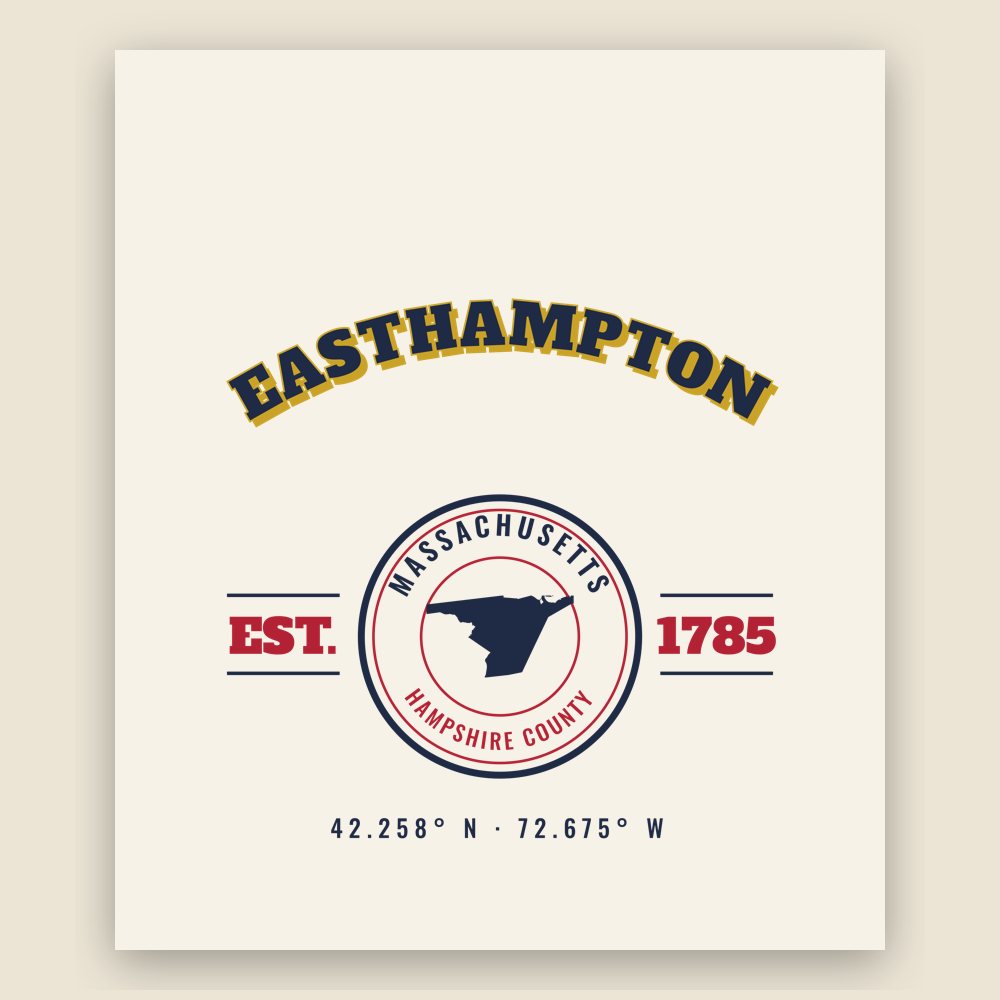
Sturdy all-over-print tote
Glossy top, cork back
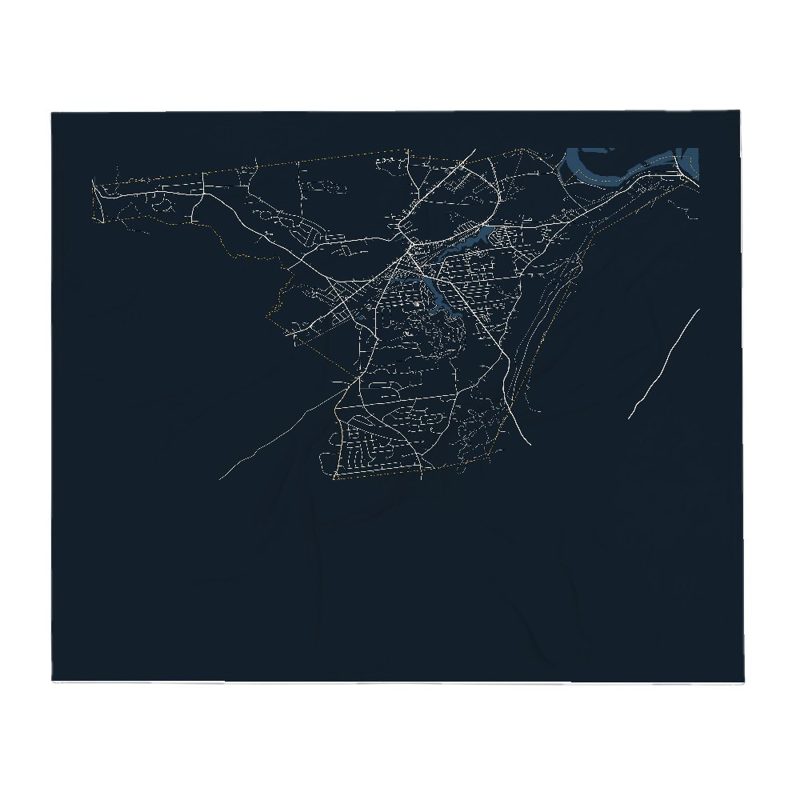
Soft fleece, 50″×60″
20 oz, double-wall stainless
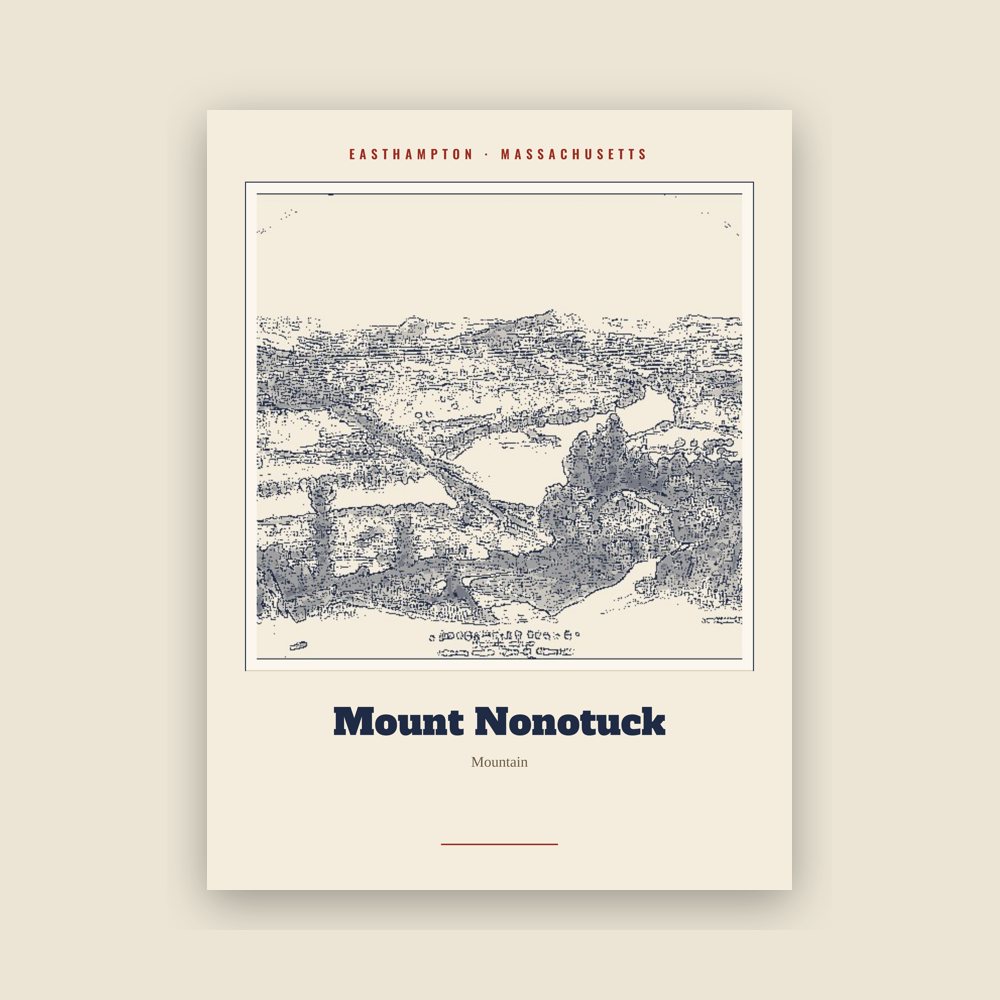
Archival matte print of a local landmark, credited to its photographer
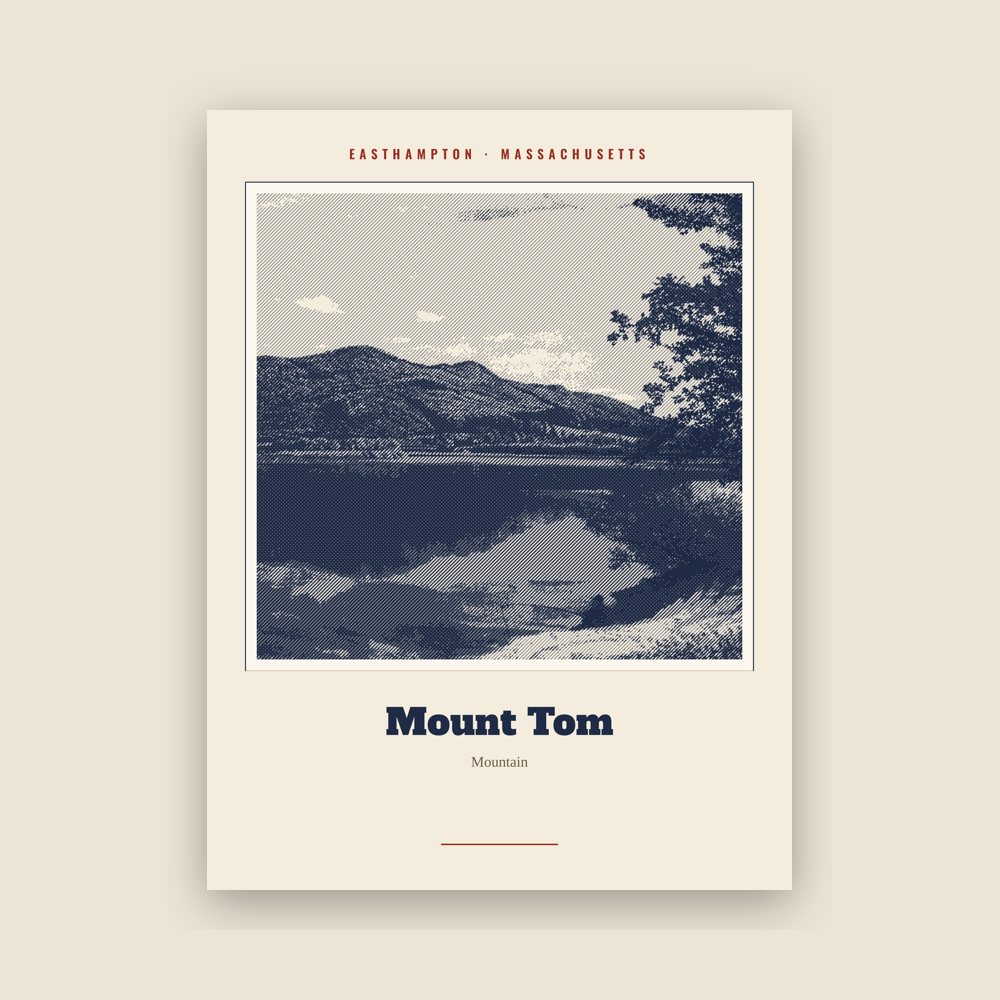
Archival matte print of a local landmark, credited to its photographer
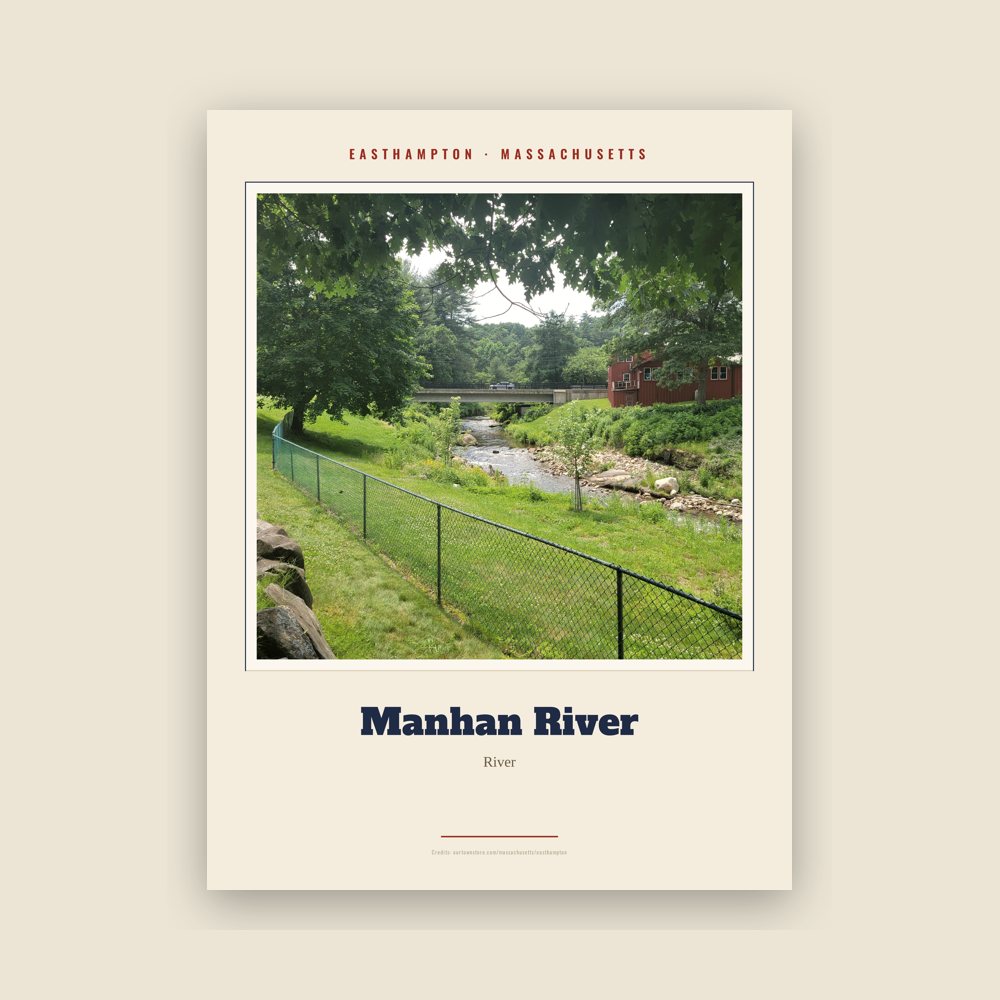
Archival matte print of a local landmark, credited to its photographer
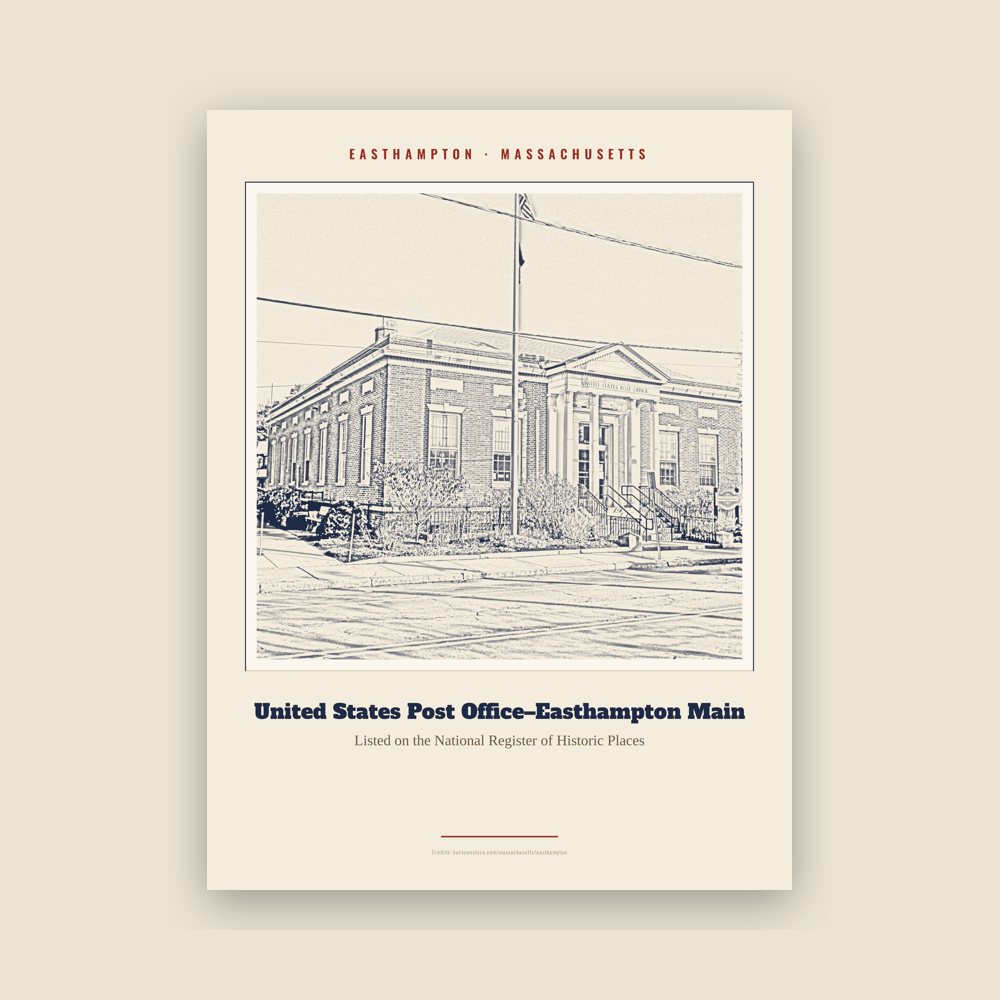
Archival matte print of a local landmark, credited to its photographer
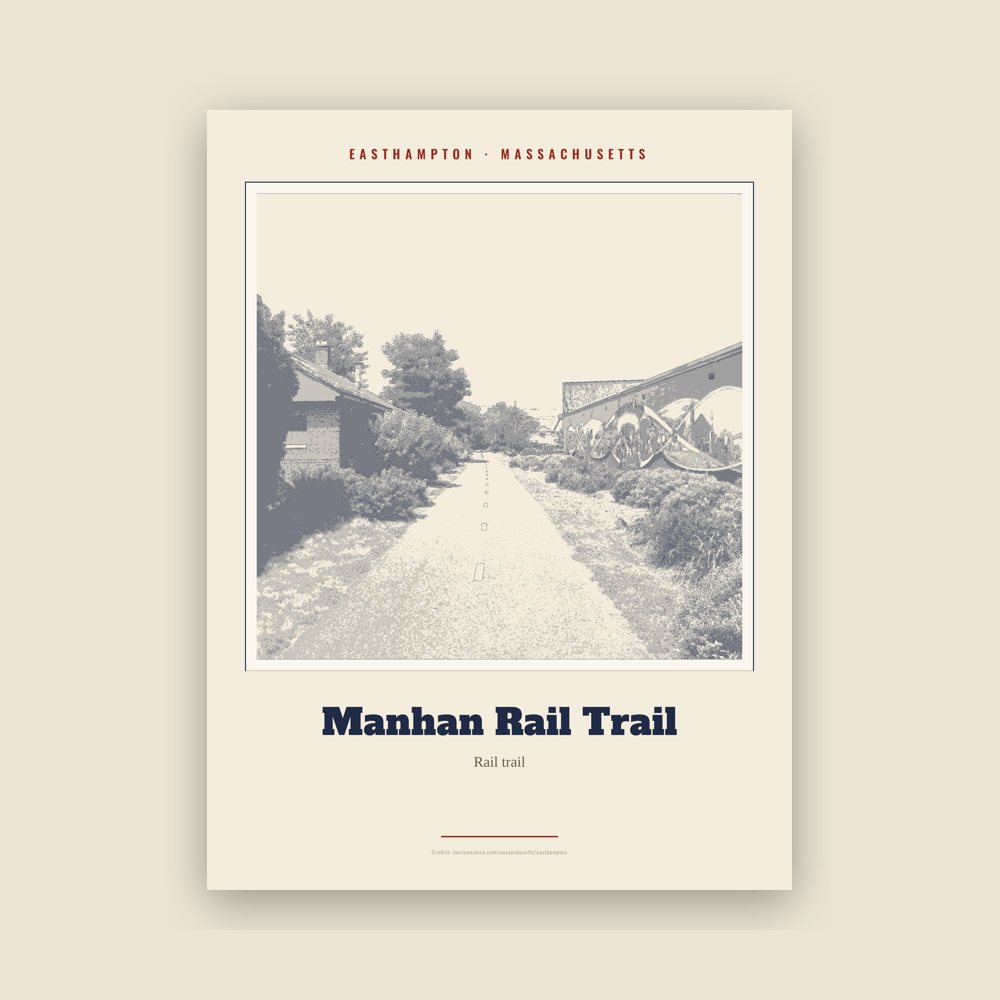
Archival matte print of a local landmark, credited to its photographer
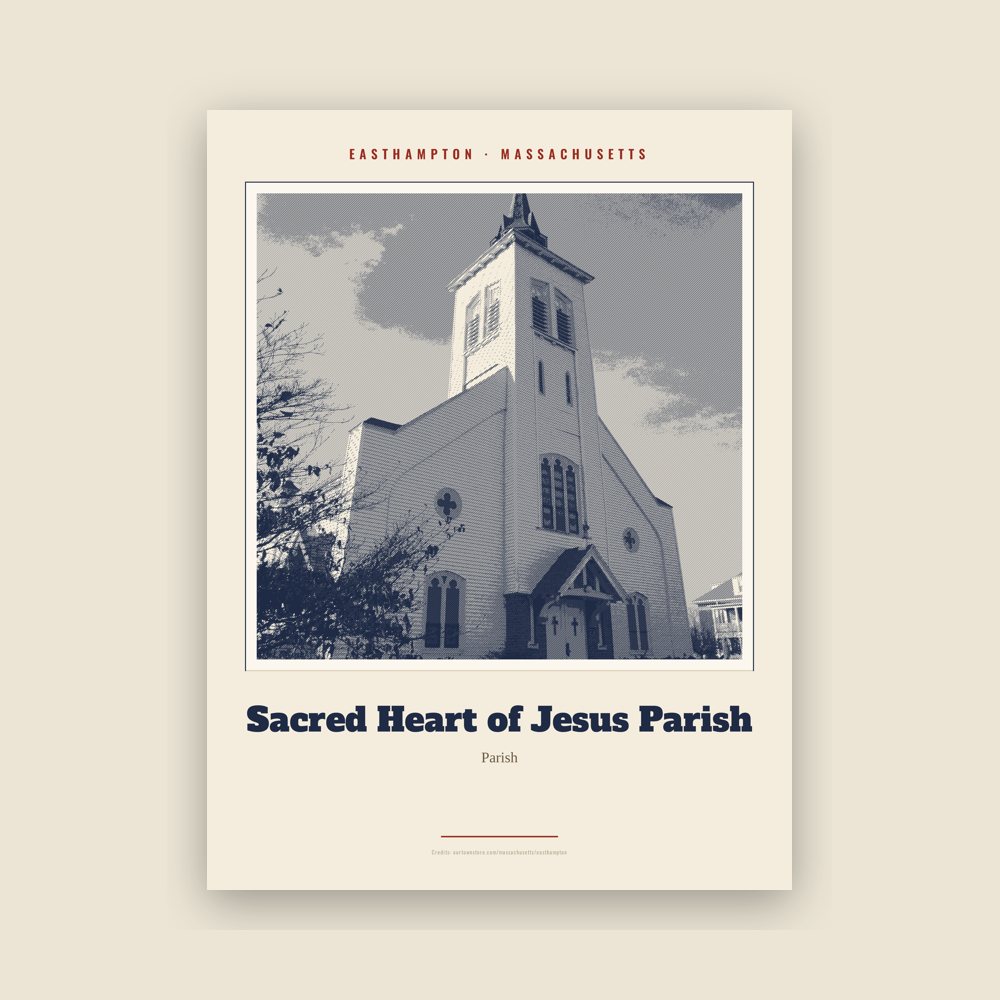
Archival matte print of a local landmark, credited to its photographer
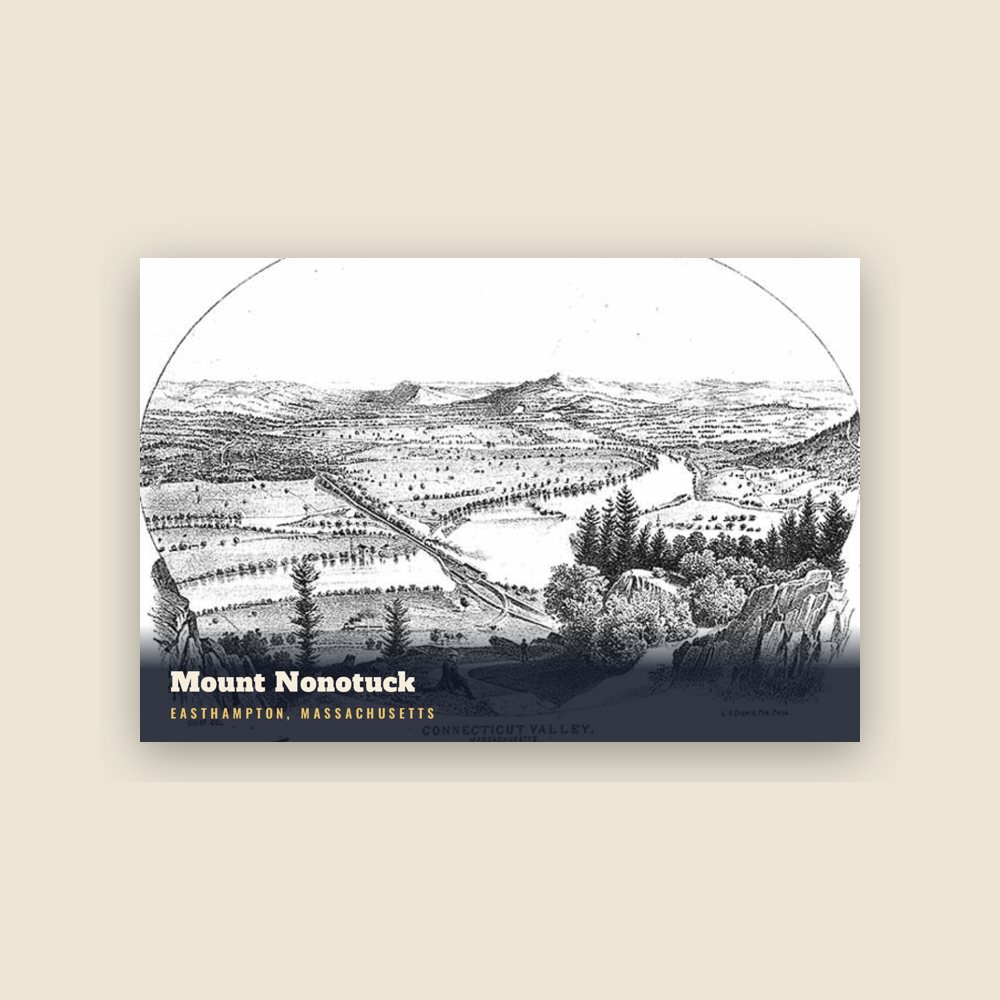
6″×4″ postcard, glossy front
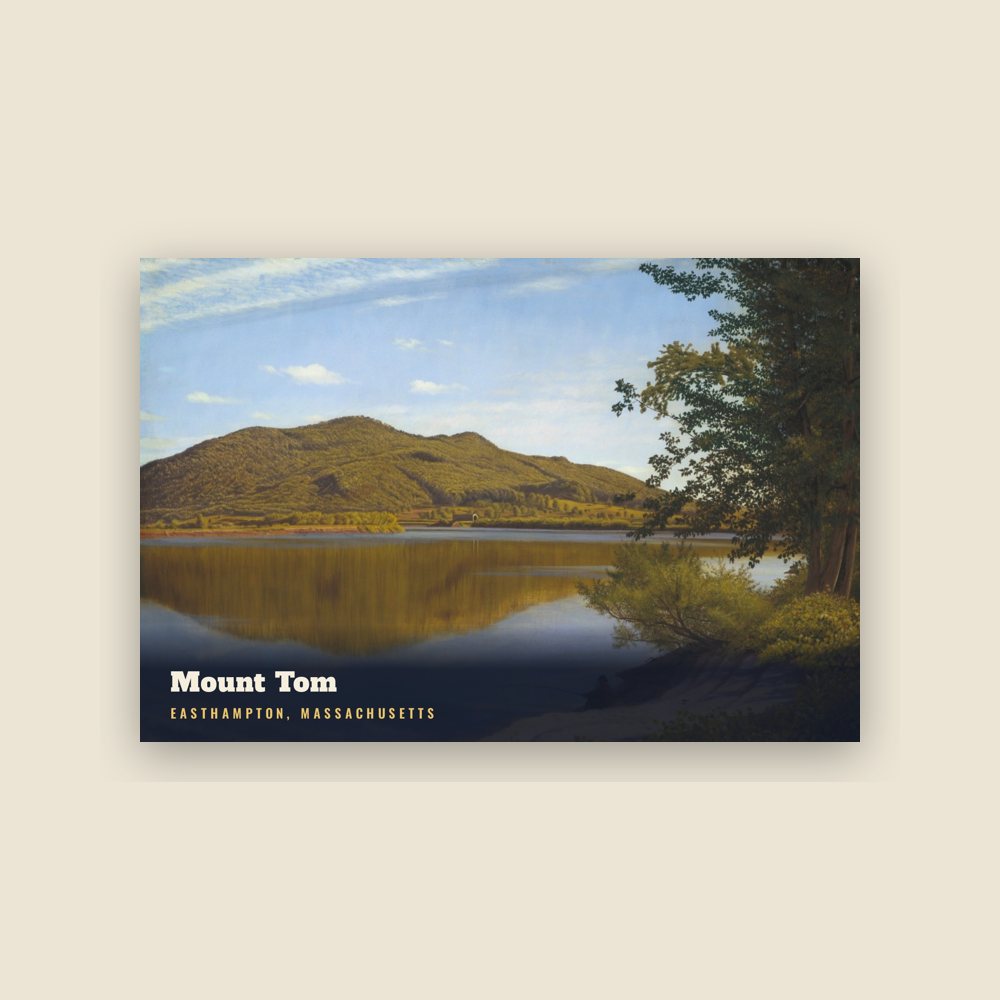
6″×4″ postcard, glossy front
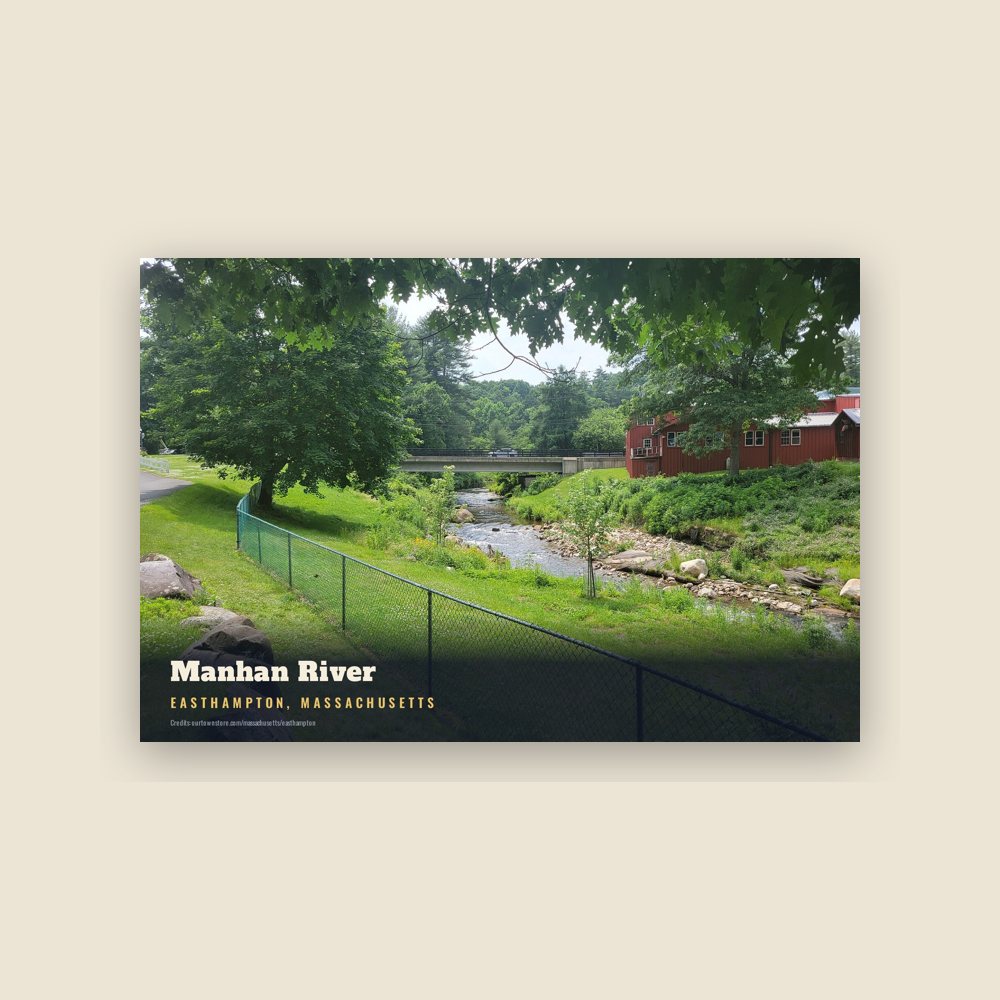
6″×4″ postcard, glossy front
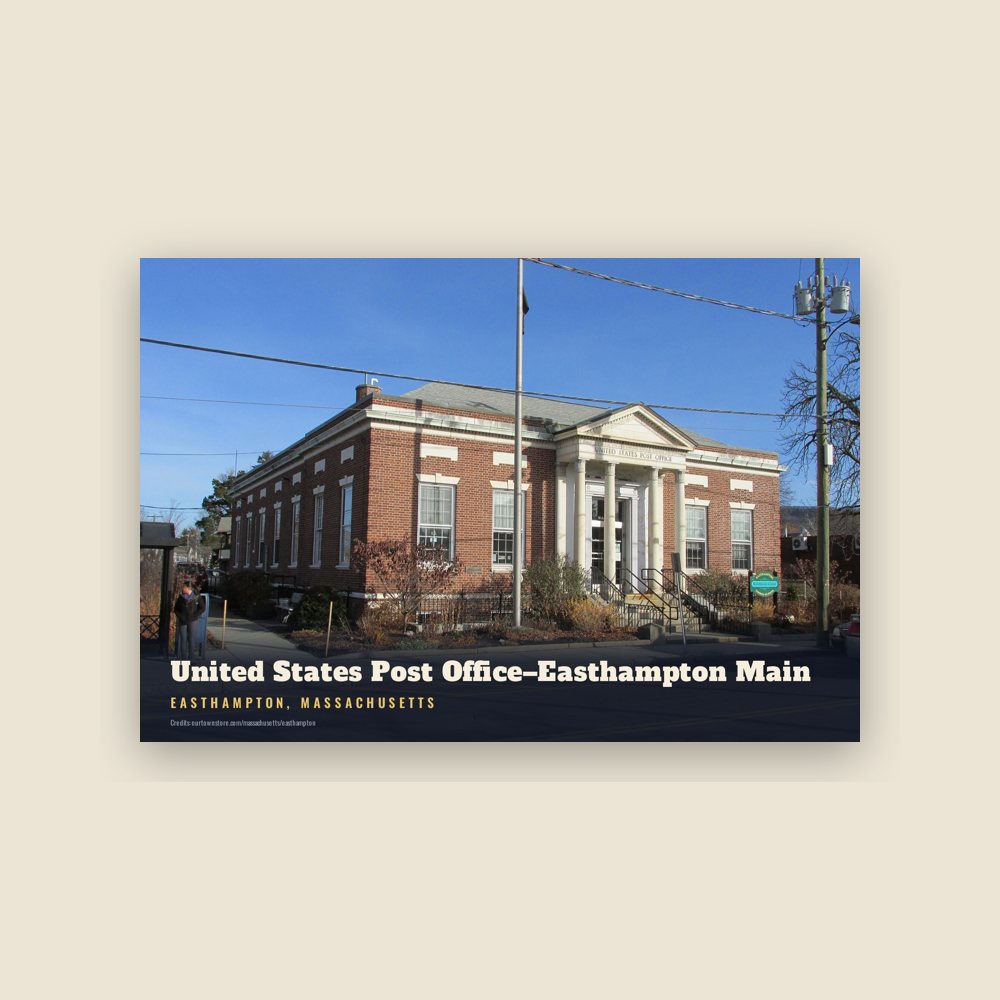
6″×4″ postcard, glossy front
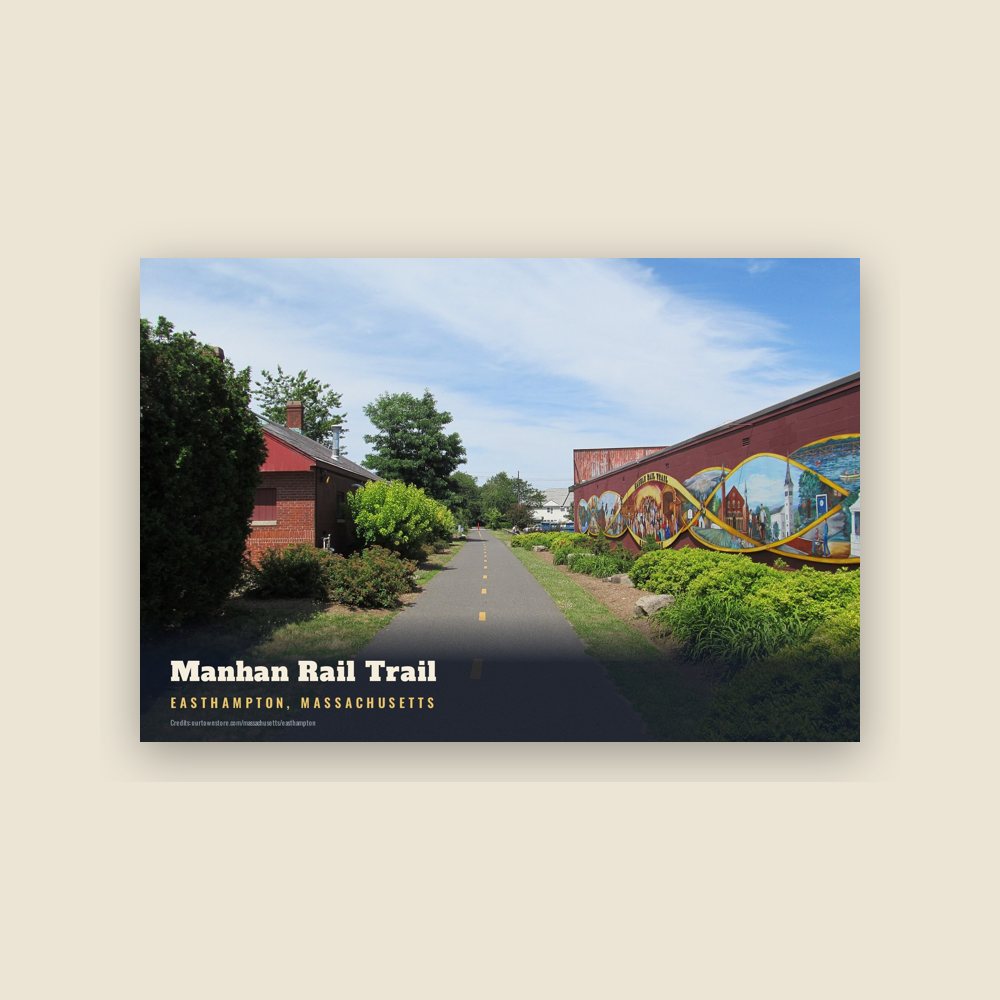
6″×4″ postcard, glossy front
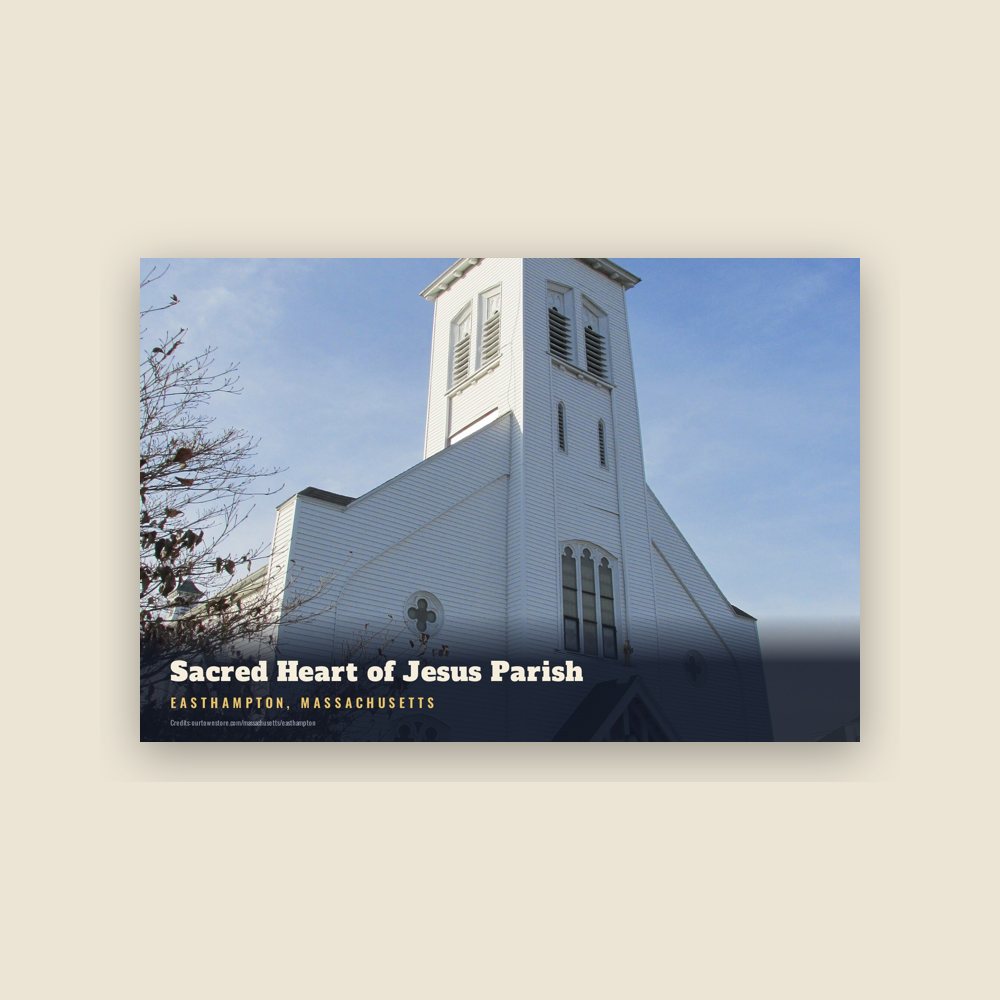
6″×4″ postcard, glossy front
Population 2010: 16,053 → 2020: 16,211
From Wikidata (CC0).
Easthampton was first settled by European immigrants beginning in 1664 as the village of Pascommuck and was originally part of Northampton. On 24 May 1704 during Queen Anne's War, a party of 72 Native Americans attacked the village, killing 19 of 38 residents. The village was soon resettled, and by 1785, Easthampton was established as a "district" by Massachusetts (a former type of political entity with less independence than a town), and in 1809, it was incorporated as a town. Easthampton is the youngest municipality in Hampshire County by date of incorporation. (It was not, however, the last incorporated; two of the three disincorporated towns of the Quabbin Reservoir in Hampshire County, Enfield and Prescott, were incorporated afterwards.)
The town grew primarily around the Manhan River, both through its phase as a strictly agricultural community and later, through the Industrial Revolution, when mills and factories were first built in Easthampton, mainly in connection with textile manufacturing and its offshoots. The first of these, the Williston-Knight Button Company, was established in 1847 by Samuel Williston, son of the town's first minister, a Congregationalist named Payson Williston. The company specialized in cloth-covered buttons—a coveted item at the time—and to facilitate the operation of the machinery, a local brook was dammed, creating Nashawannuck Pond. Other mills soon opened nearby, a number of them specializing in elastic and rubber thread manufacturing.
Following this spurt of industrial development, the town's first high school and first national bank opened in 1864, and a town hall was built in 1869. Constables were replaced by the town's first police officer in 1871, the same year that Easthampton became a regular stop on the railroad. The town's public library opened in 1881, and fourteen years later in 1895 the community was introduced to two new innovations, telephones and streetcars. With the influx of new residents came a number of new churches, founded for Catholic, Episcopalian, Lutheran, and Methodist parishioners, as well as a second Congregational church. In 1899, the West Boylston Manufacturing Company and the Hampton Company, both specializing in cloth production, moved to Easthampton, recruiting a larger immigrant labor force, particularly from Poland and Canada.
During World War I, the town's mills all obtained federal wartime contracts and did well financially, but long before the Great Depression hit, many factories owners were already laying off employees, seeking mergers with other companies, or looking for buyers for their facilities. One of the few successes during this time was the American Character Doll Company, also known as Paragon Rubber, whose cofounder, Edward Schaeffer, was credited with inventing the first rubber doll mass-marketed in the United States.
World War II provided some relief for the Easthampton economy, as several of the older textile companies as well as newer heavy manufacturing corporations received another round of federal contracts. However, beginning in the early 1960s a number of critical closures hit the town hard. Revitalization attempts began with the opening of a new industrial park and continued with a joint government-private industrial mall which has failed to solve significantly higher rates of unemployment and poverty compared to Hampshire County as a whole.
Small farms and well-established small businesses remain the economic core of Easthampton. Easthampton changed its charter in 1996 to become a city. Since 1996 the downtown area has attracted a small community of artists and young people migrating due to Easthampton's lower cost of living compared to nearby Northampton, a hub of the bohemian community regionally. Small stores around Main Street, Union Street, and Cottage Street have changed business due to the influx of this new demographic. This growth has produced new arts and cultural events such as the monthly Art Walk Easthampton in which visual, music and performance artists showcase their talents at venues around the city. In November 2018, the administration of Massachusetts Governor Charlie Baker announced a $3.5 million grant through the MassWorks program to the Ferry Street Mill redevelopment project in the city.
Adapted (trimmed) from the Wikipedia article Easthampton, Massachusetts, revision 1378774490 by its contributors, licensed CC BY-SA 4.0.
We share a part of every Easthampton sale with local partners, and we'd love to print from your collection. Old photographs, maps and postcards make the best keepsakes.
Partner with us