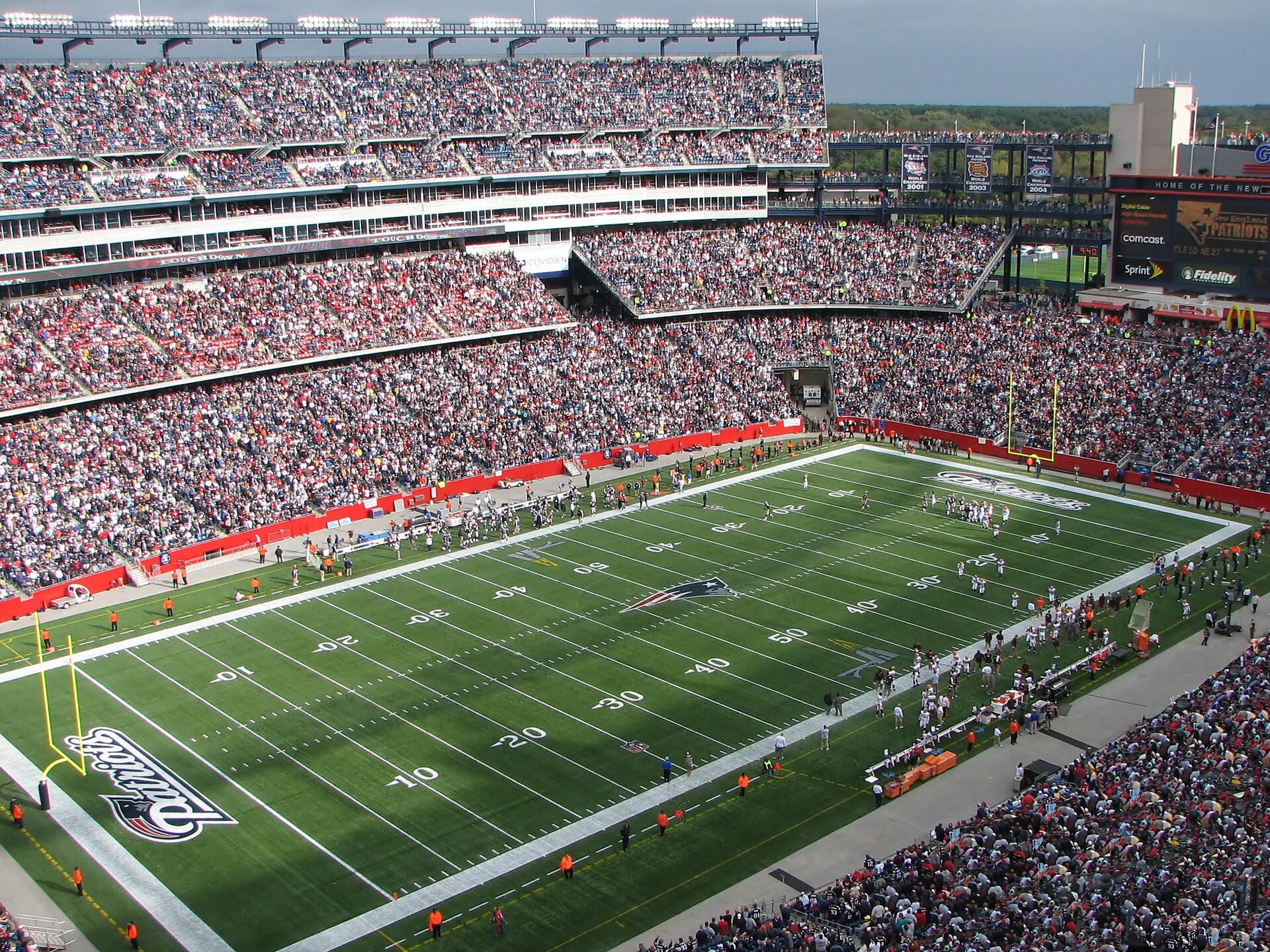
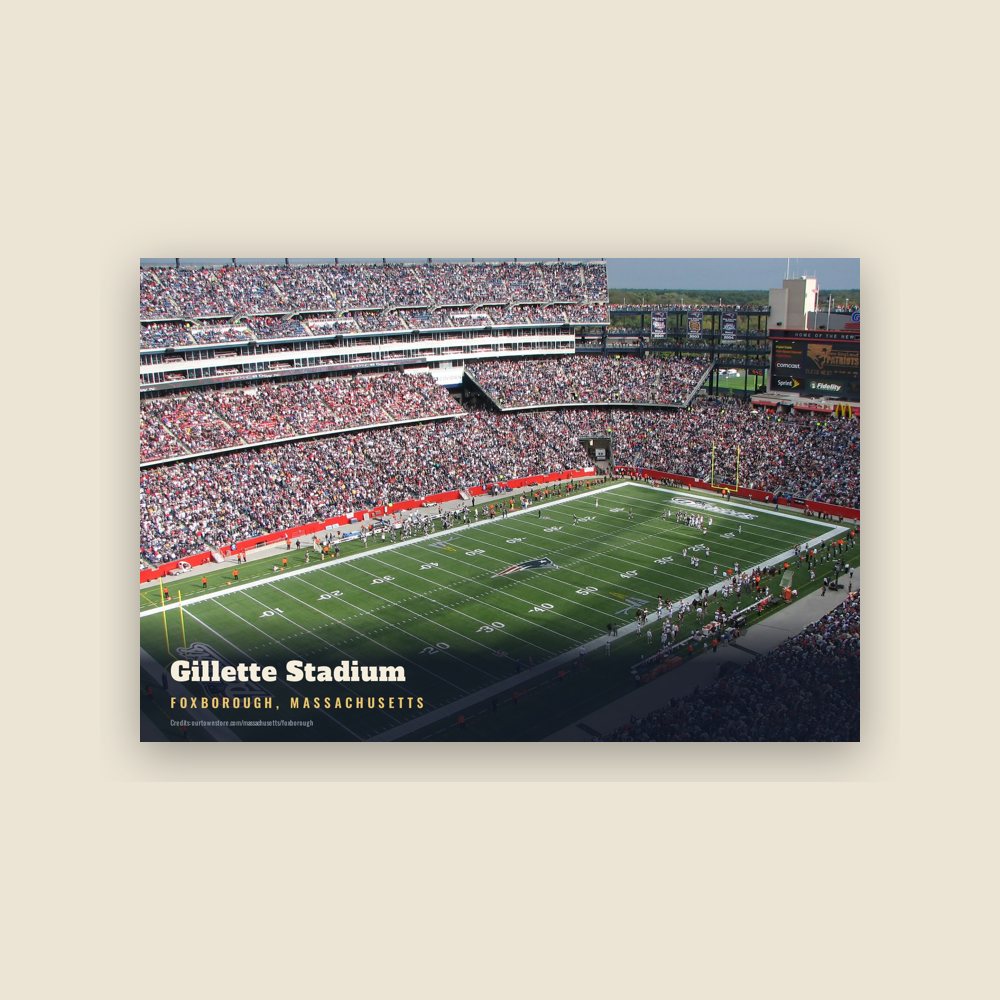
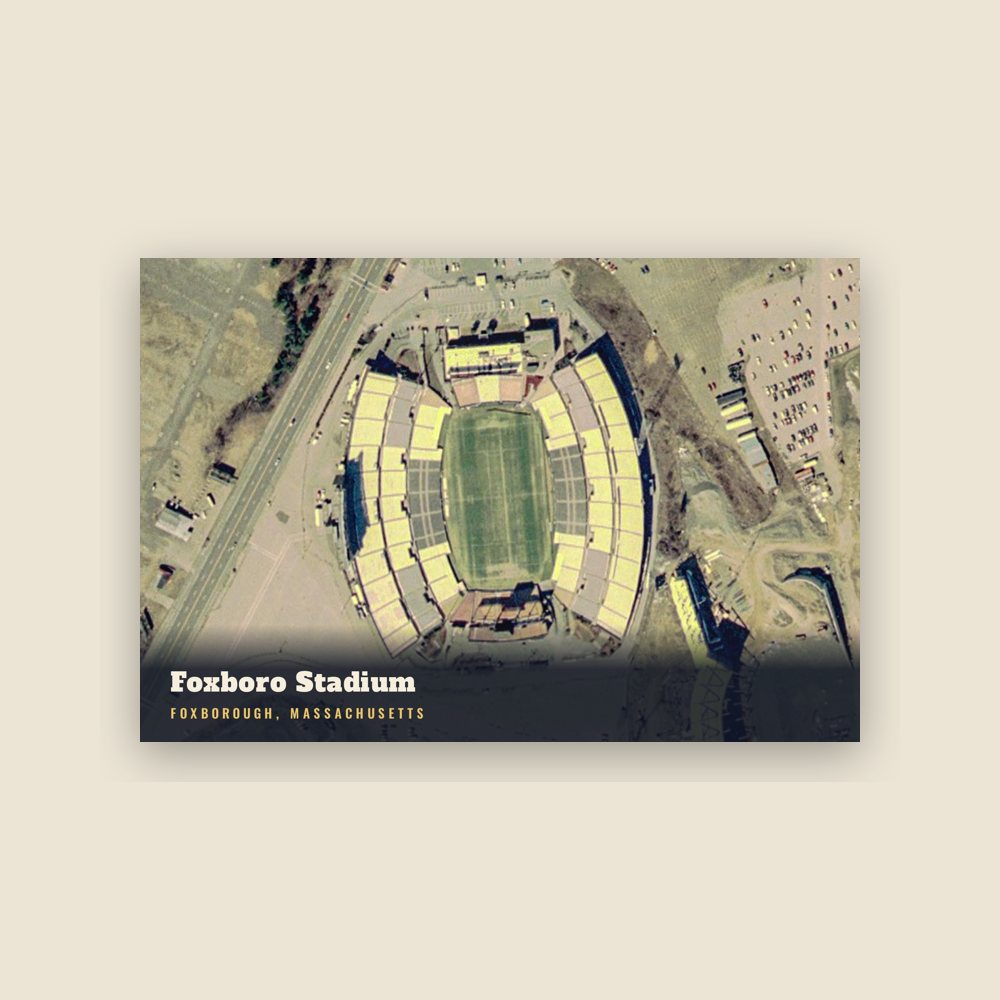
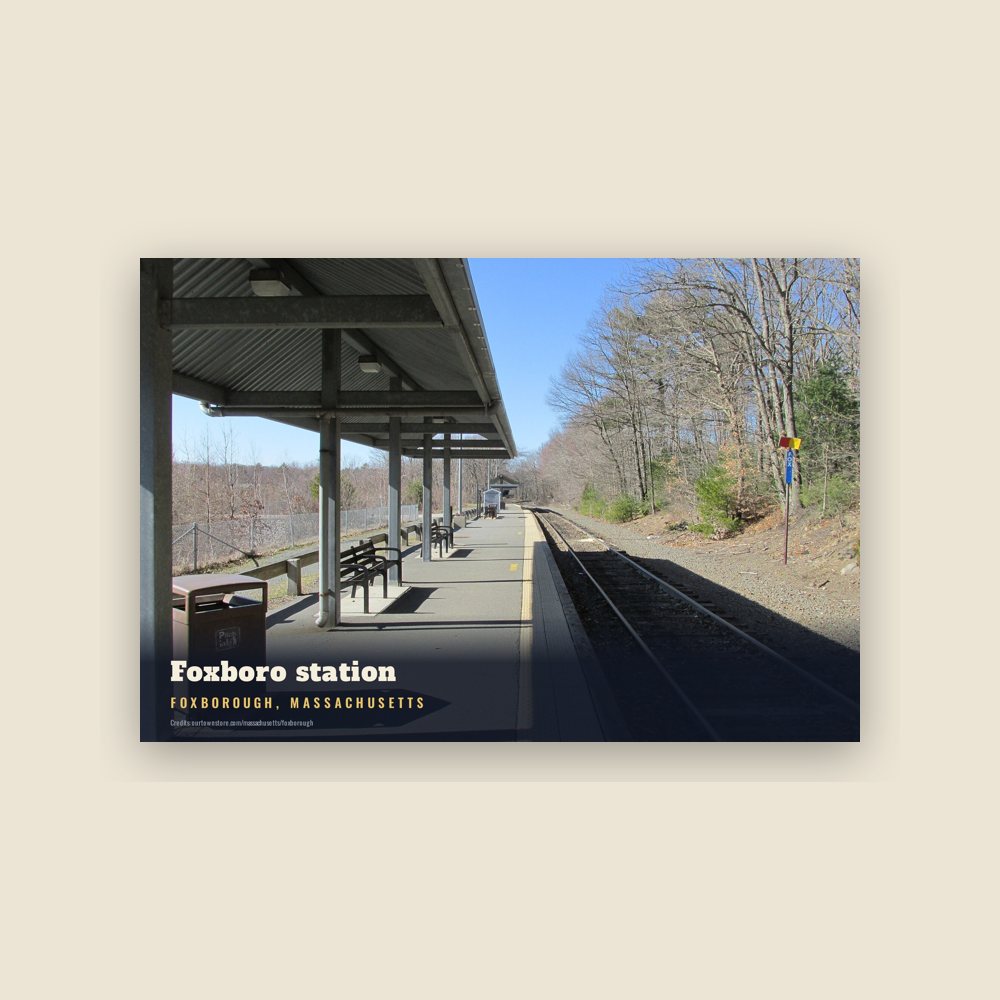
Settled in 1704 and incorporated in 1778, the town of Foxborough was named for Charles James Fox, a Whig member of Parliament and a staunch supporter of the Colonies in the years leading up to the American Revolution. Landmarks include Gillette Stadium, Foxboro Stadium and Foxboro station. Foxborough is the birthplace of Nothing,Nowhere, rapper and singer.
Every piece is drawn from Foxborough's own map data and historic archives, then printed and shipped from the USA when you order. No two towns look alike.
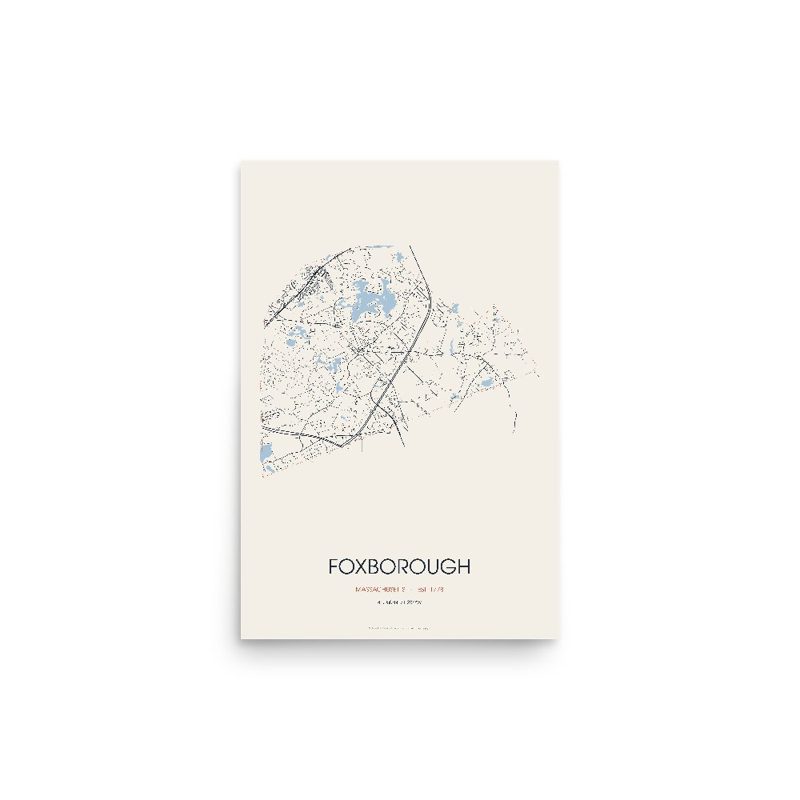
Every road in town, on archival matte paper
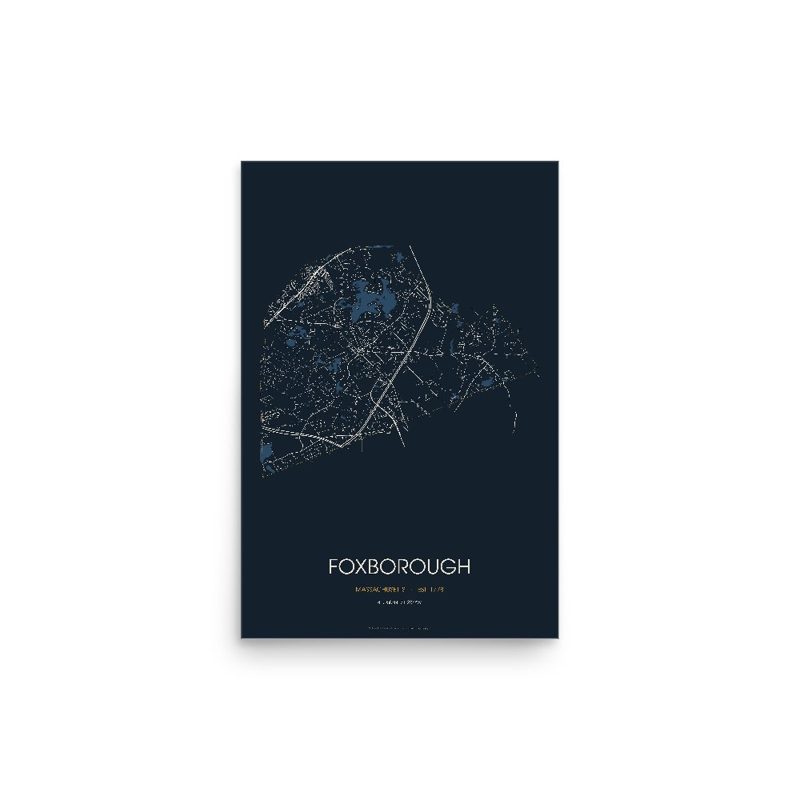
The same map, in navy and silver
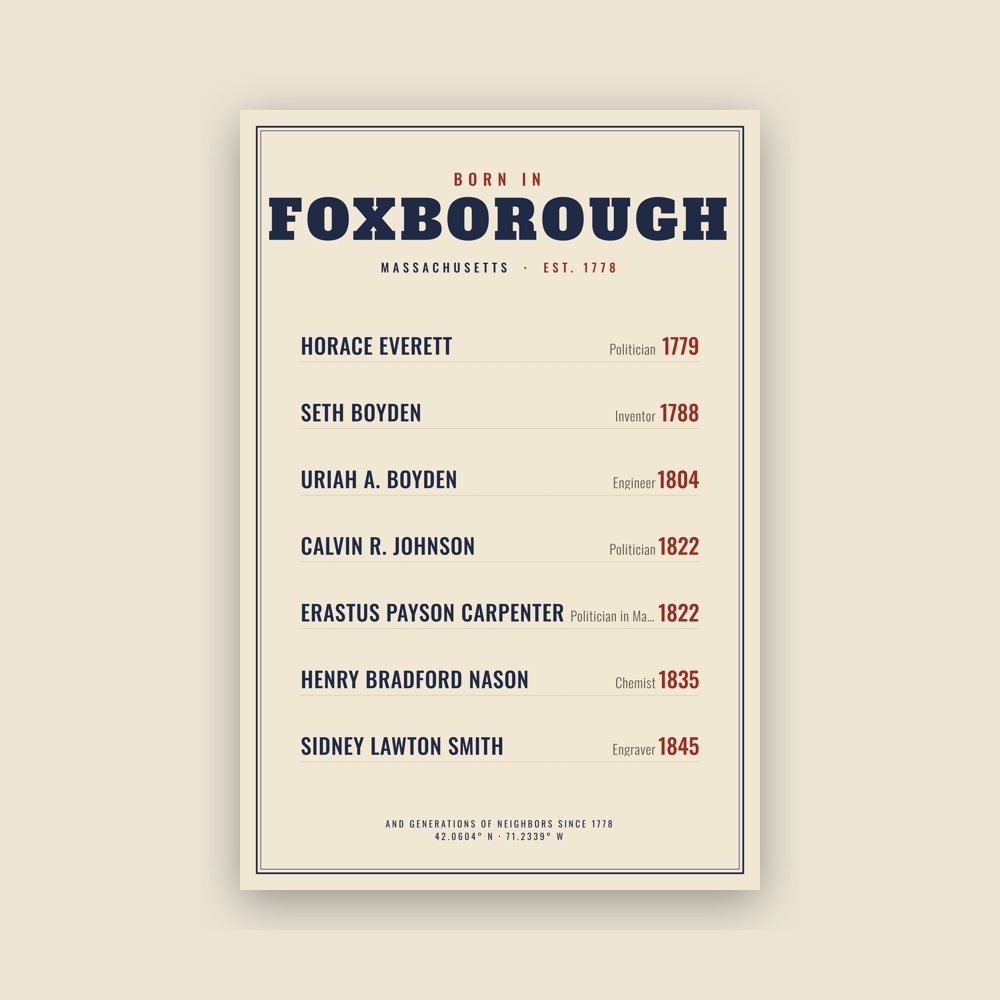
Famous natives, by birth year
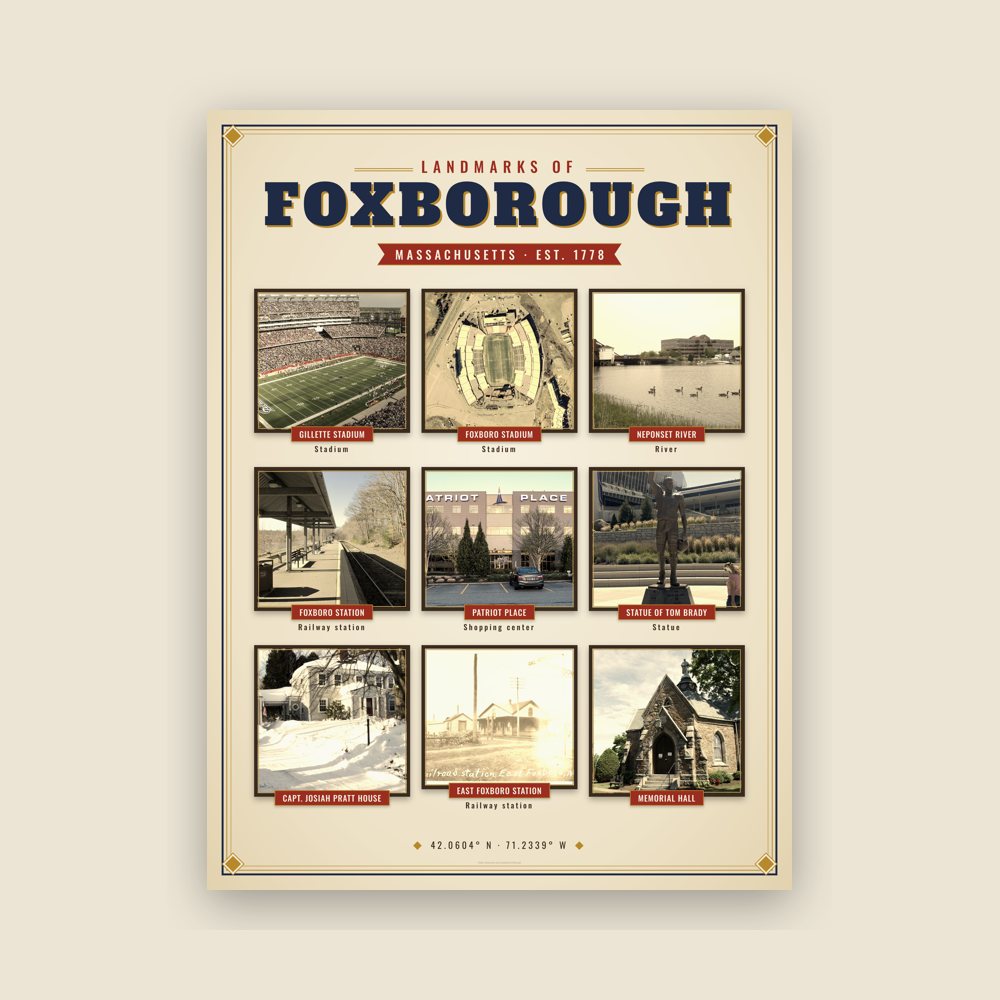
Nine local landmarks, archival matte
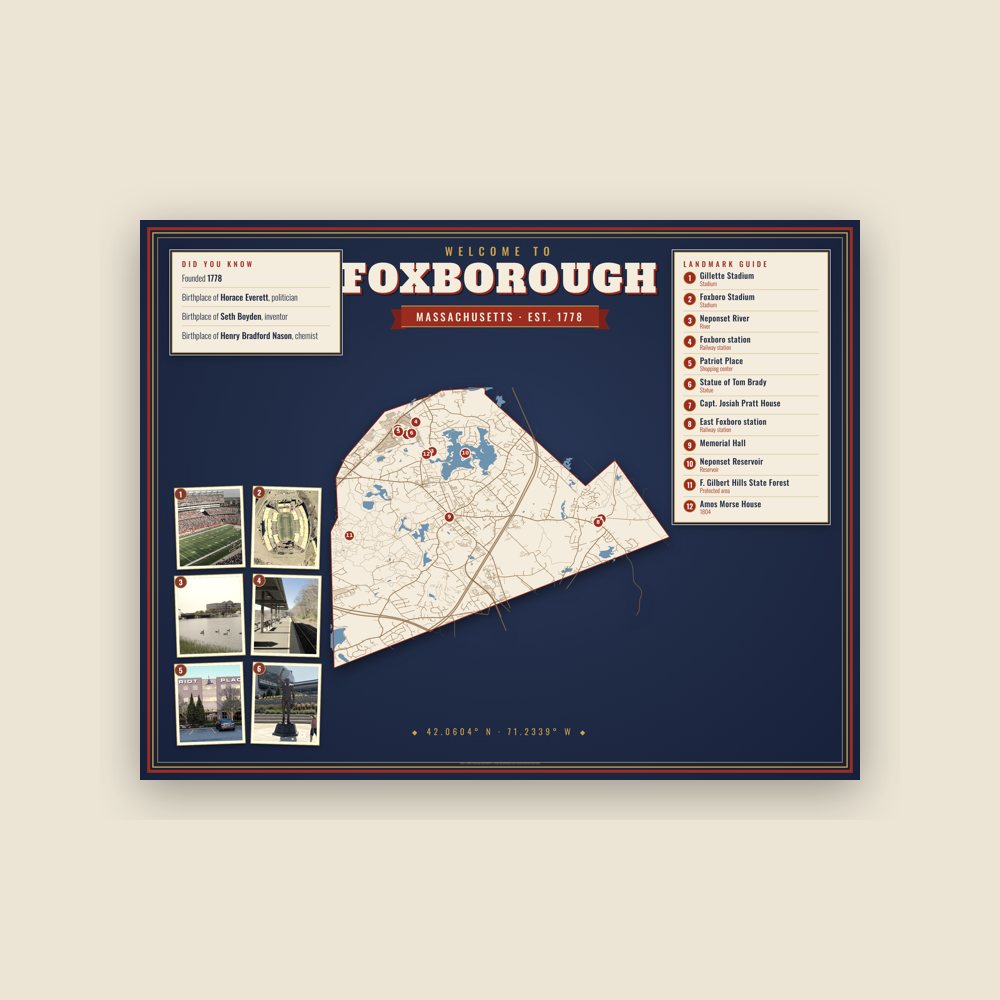
Map of local landmarks, washable fabric
Heavy-blend fleece, street map printed on the back
Soft Bella+Canvas jersey
Glossy ceramic, dishwasher safe
Ceramic keepsake, gold ribbon
Weatherproof, for the front walk
24″×16″, printed coir-look fibers, rubber back
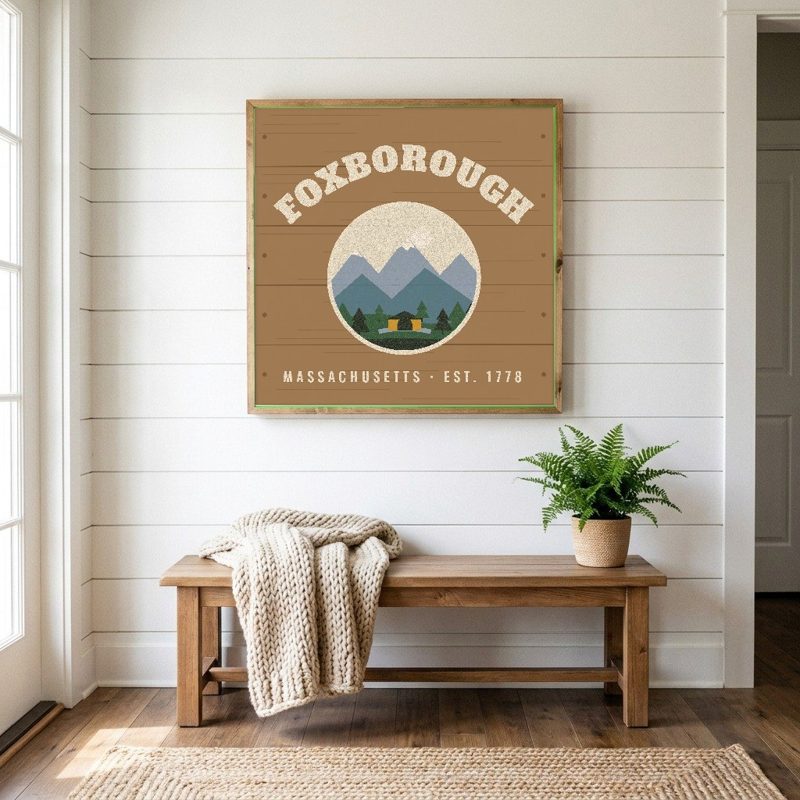
12″×12″ printed wood, ready to hang
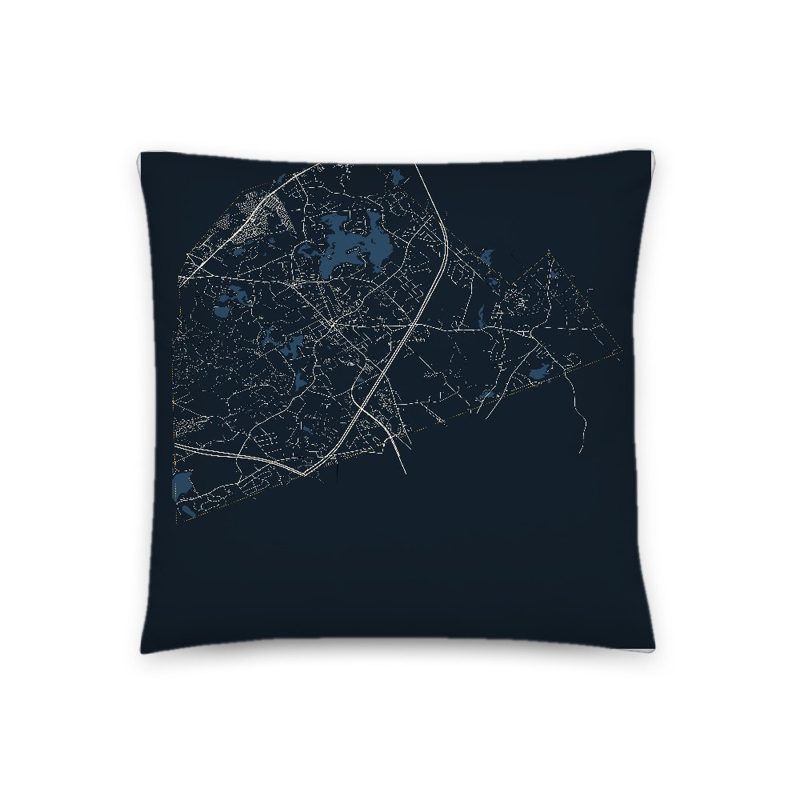
Soft-touch, zip cover
Sturdy all-over-print tote
Glossy top, cork back
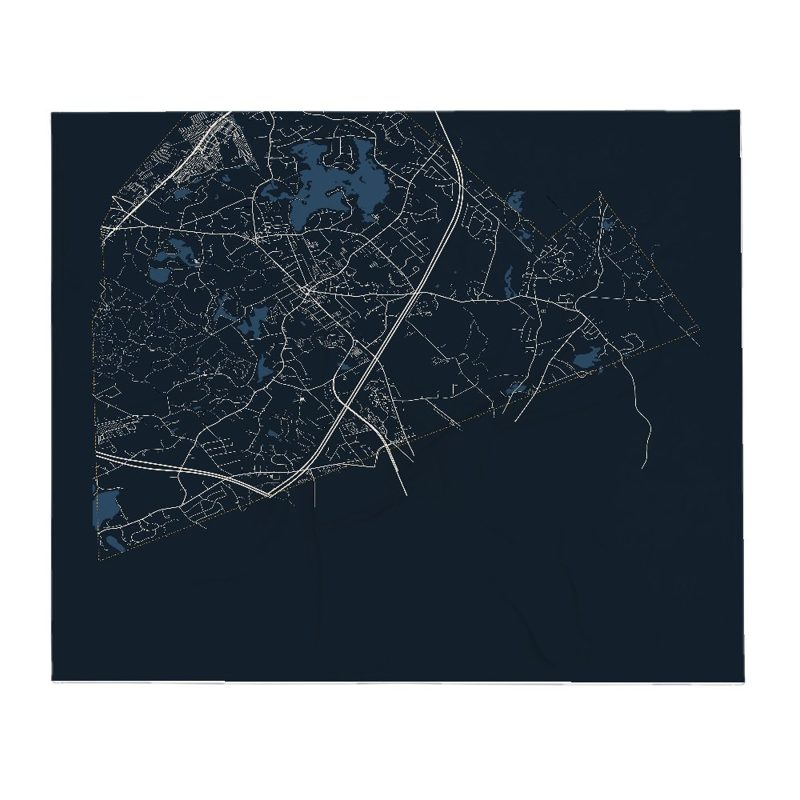
Soft fleece, 50″×60″
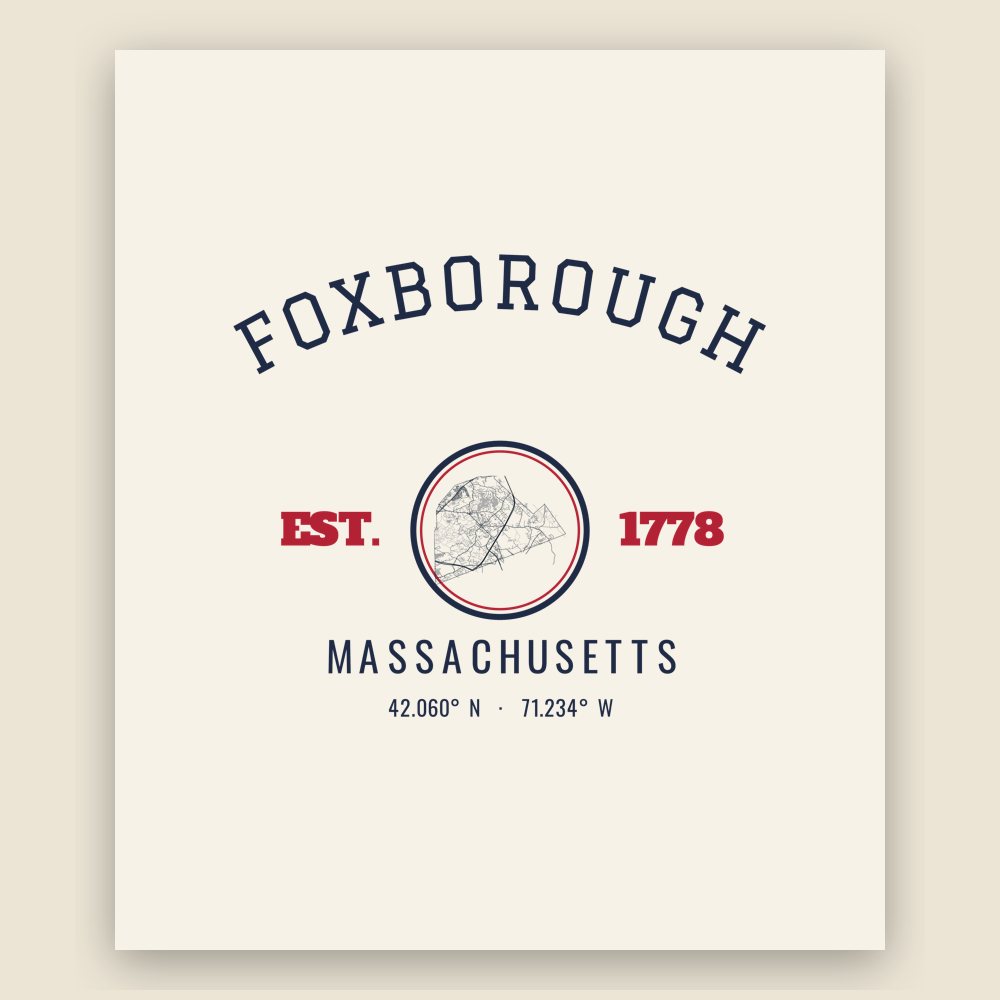
20 oz, double-wall stainless
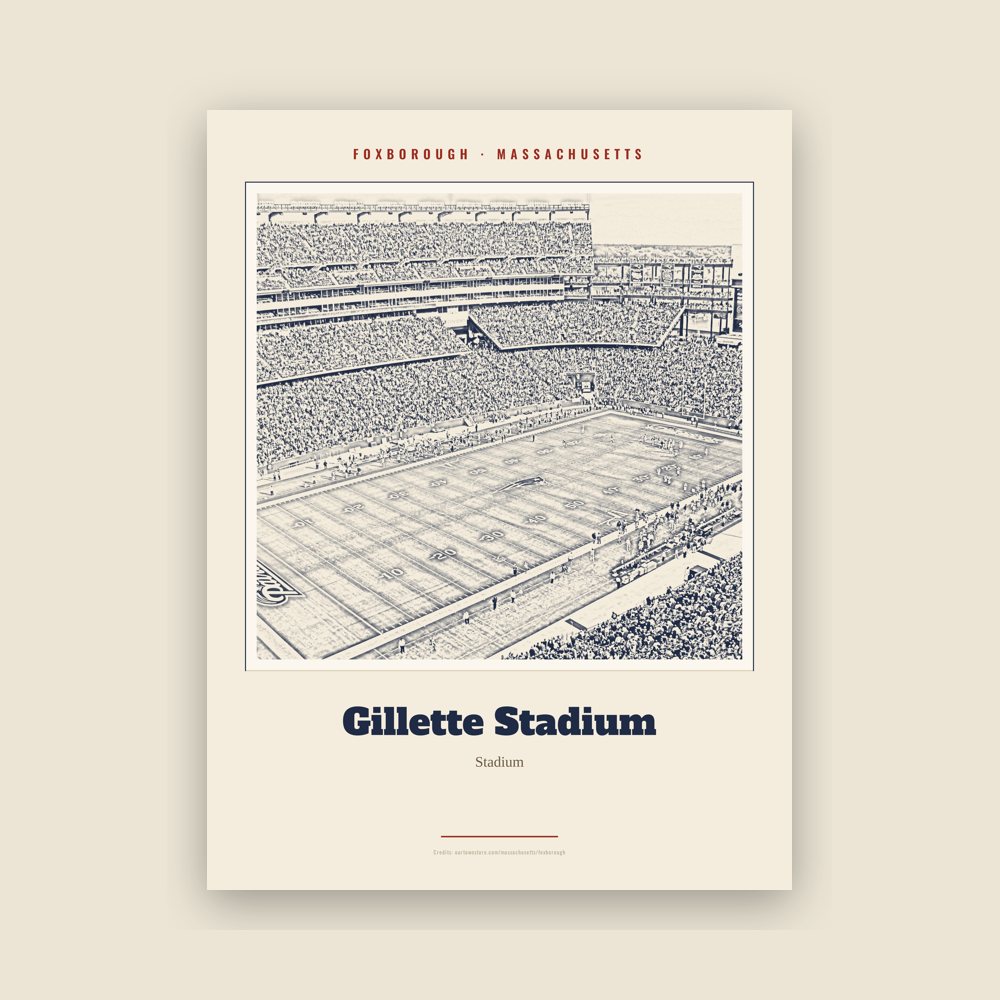
Archival matte print of a local landmark, credited to its photographer
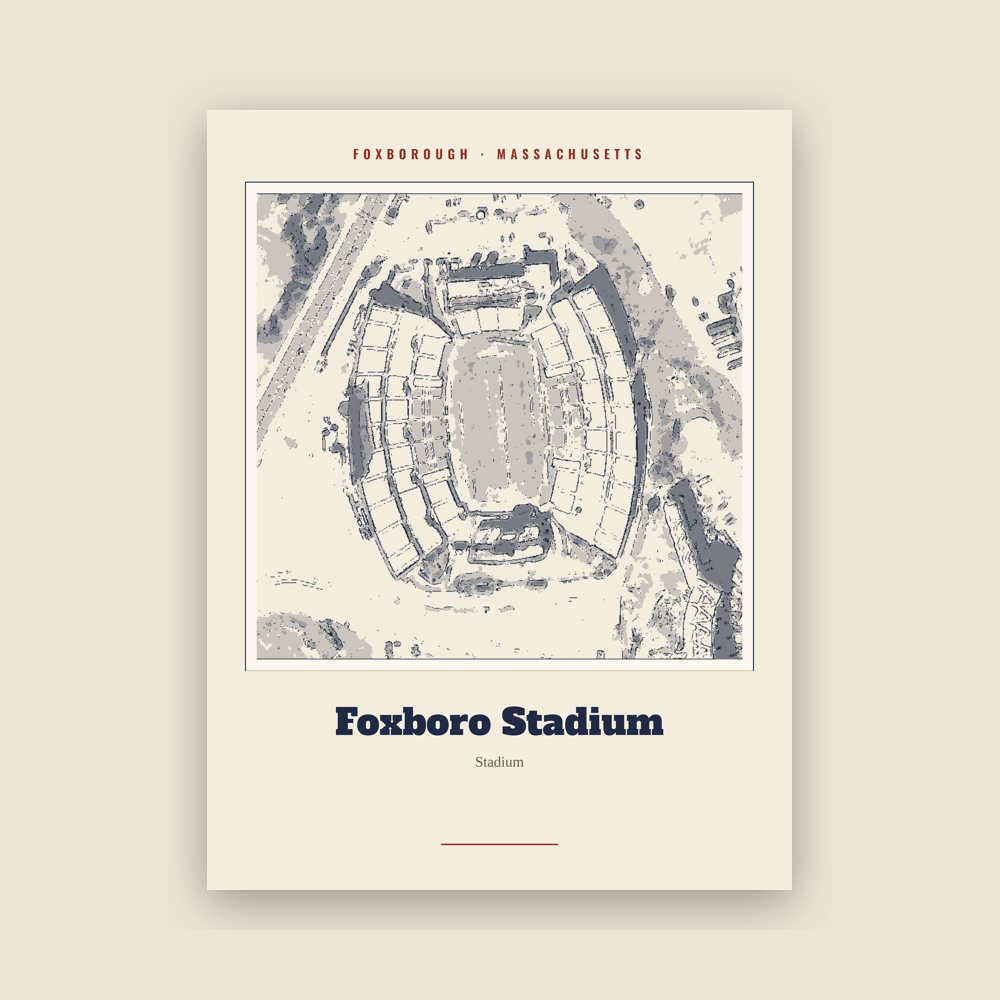
Archival matte print of a local landmark, credited to its photographer
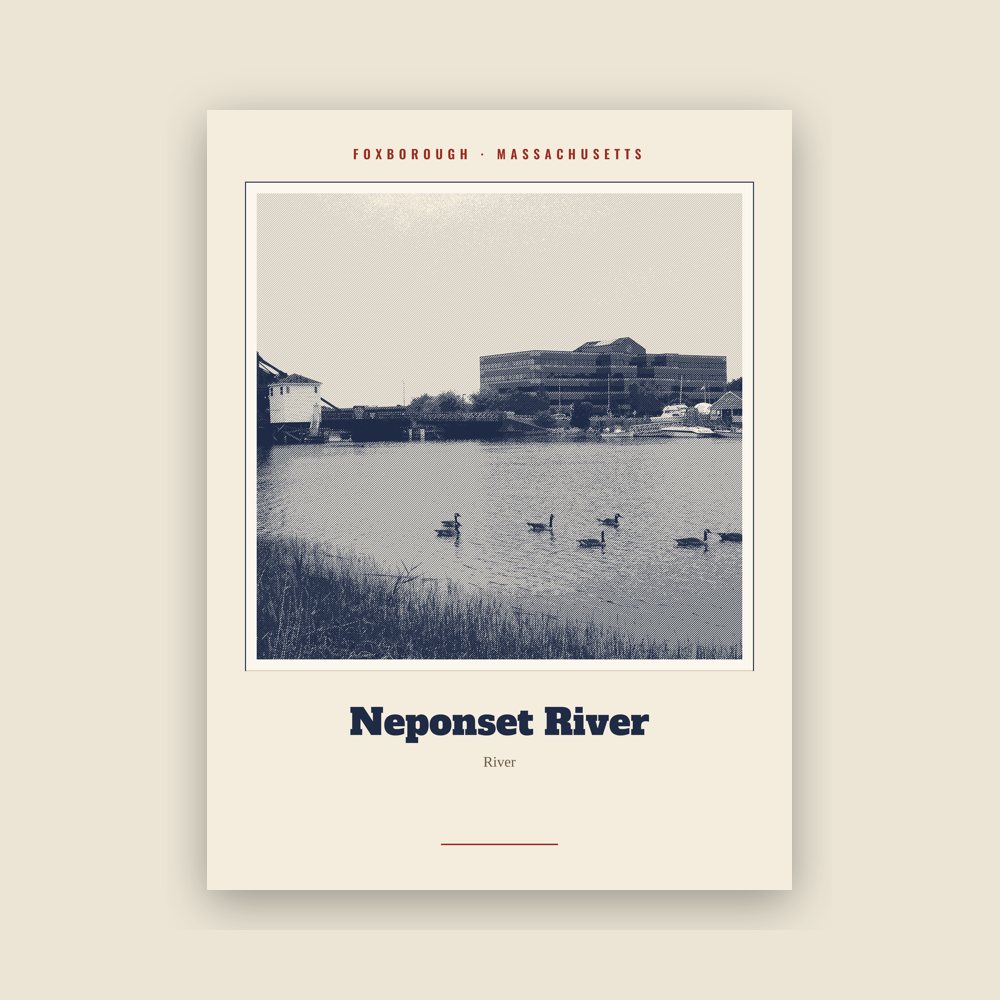
Archival matte print of a local landmark, credited to its photographer
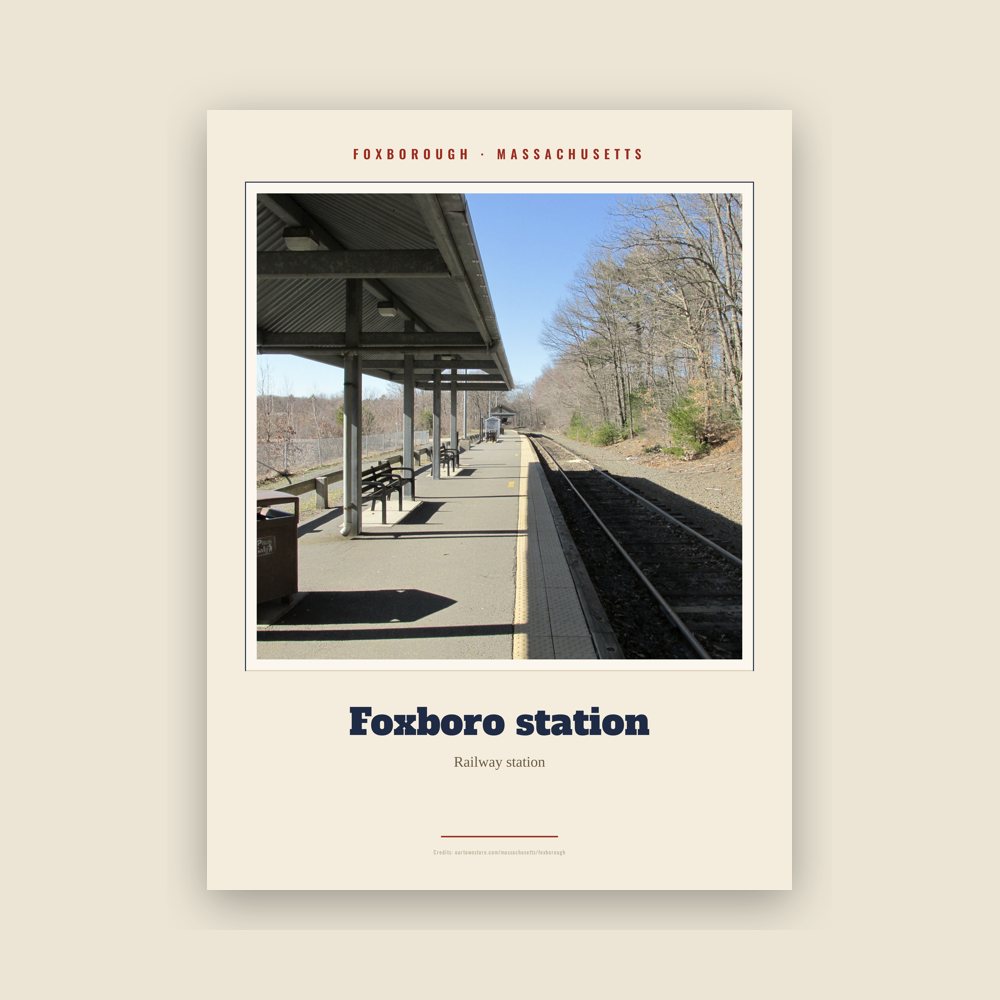
Archival matte print of a local landmark, credited to its photographer
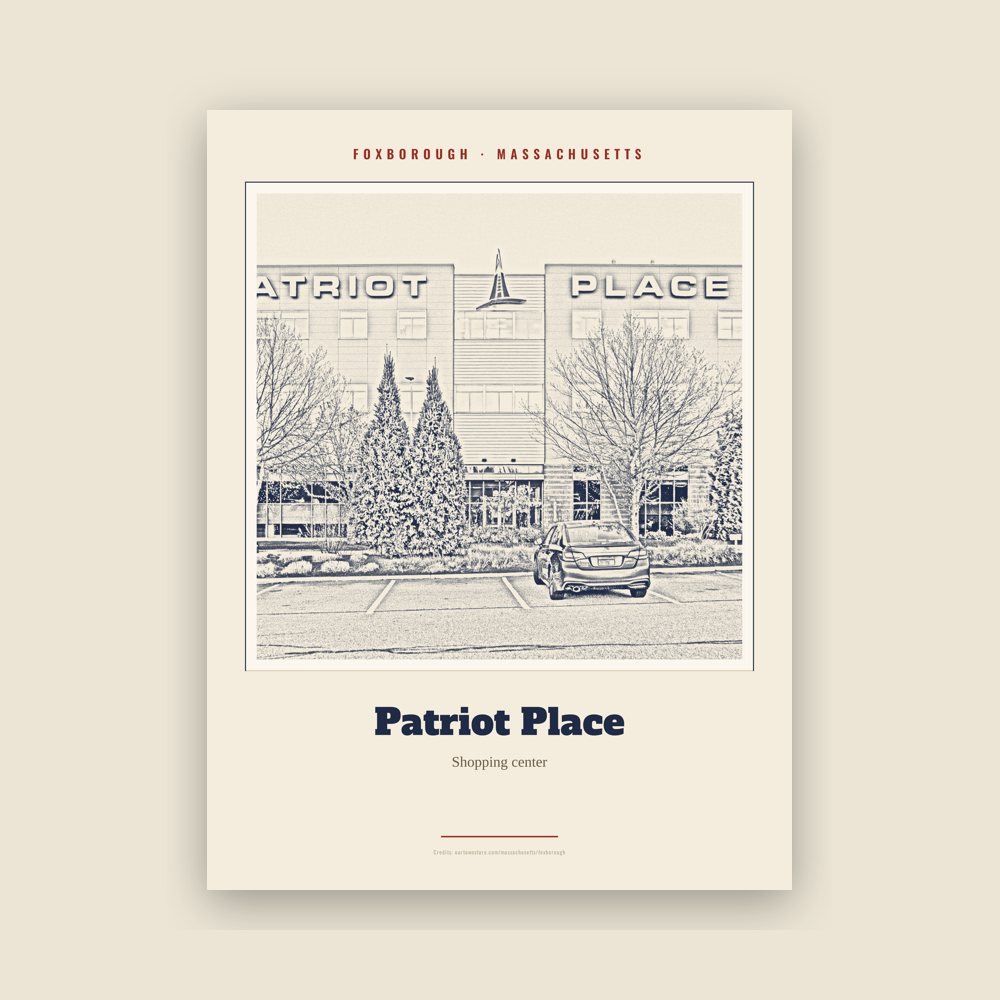
Archival matte print of a local landmark, credited to its photographer
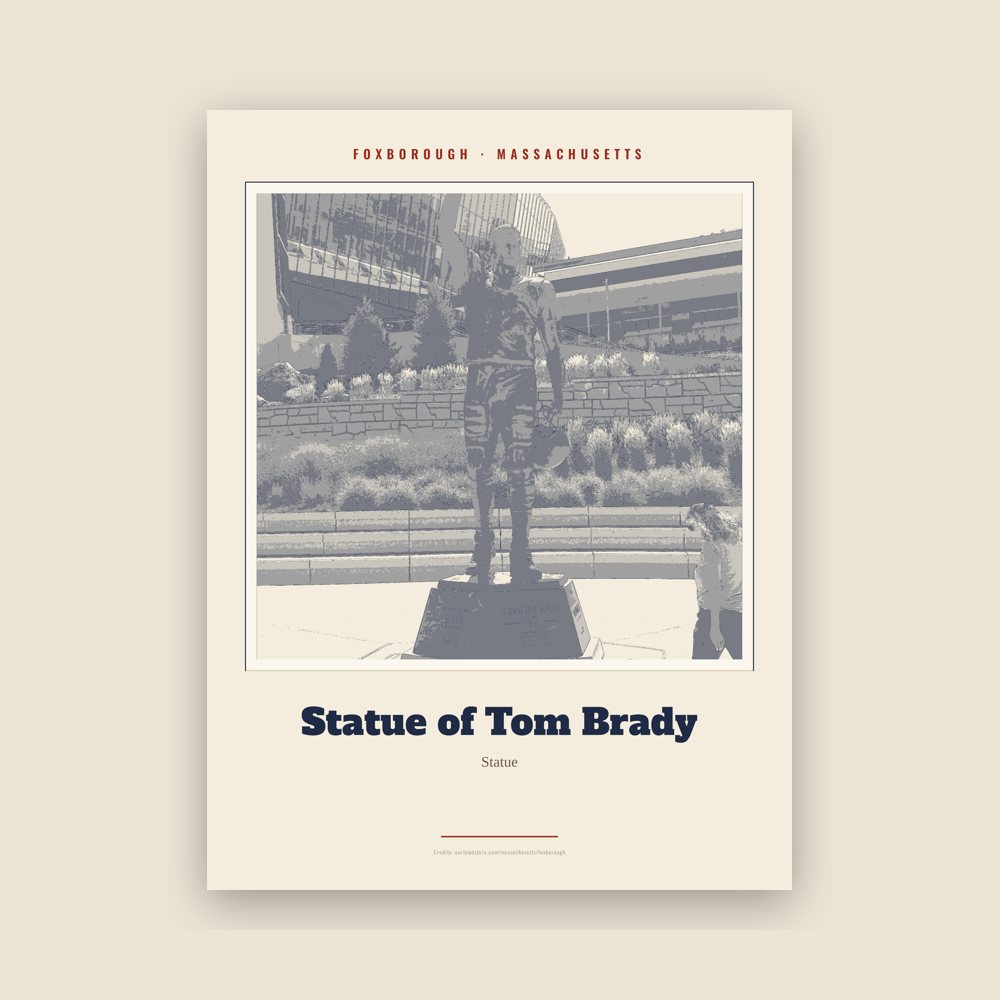
Archival matte print of a local landmark, credited to its photographer
6″×4″ postcard, glossy front
6″×4″ postcard, glossy front
6″×4″ postcard, glossy front
6″×4″ postcard, glossy front
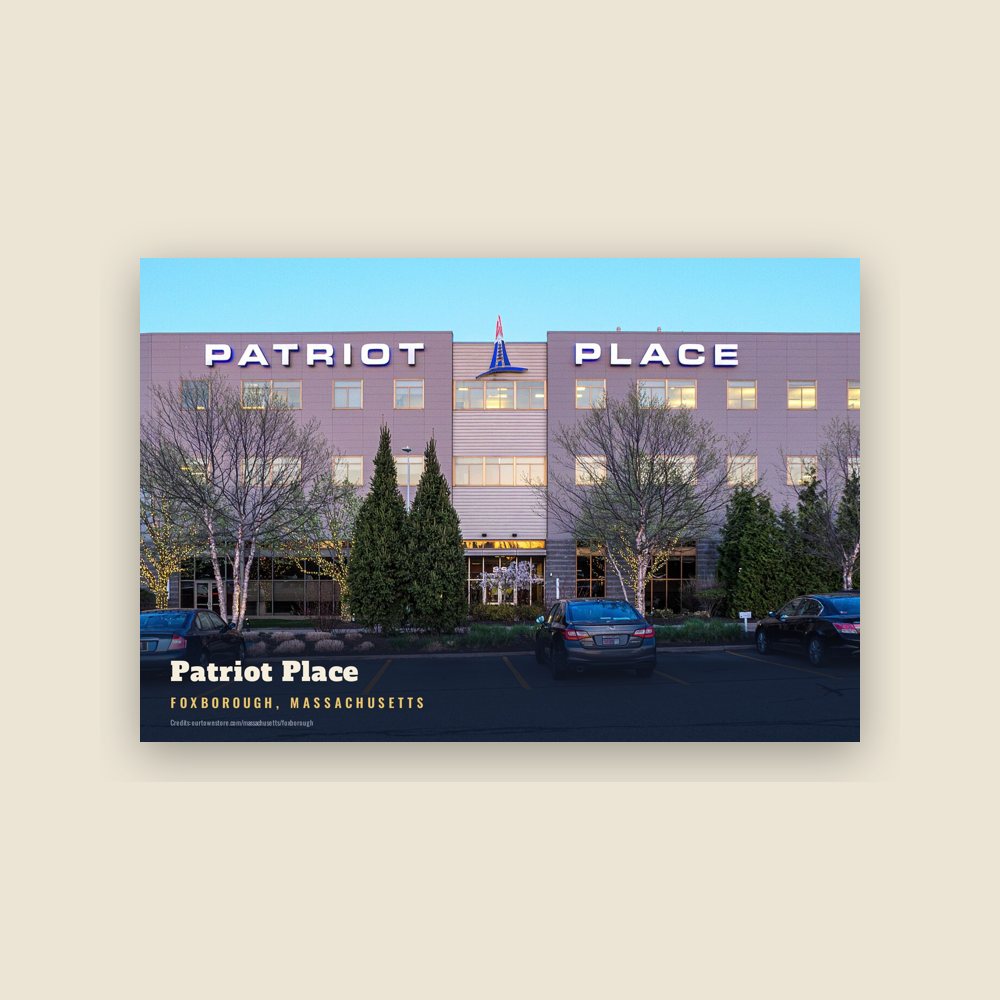
6″×4″ postcard, glossy front
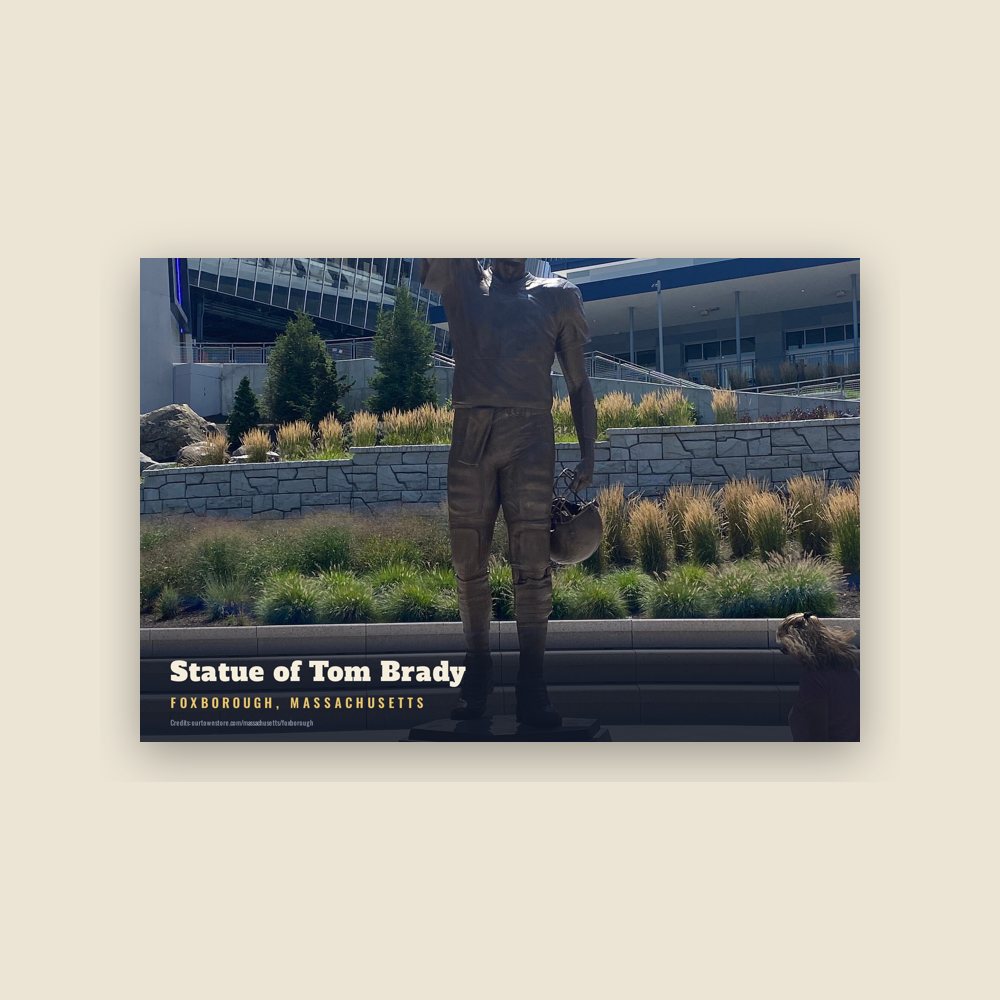
6″×4″ postcard, glossy front
Population 2000: 16,246 → 2010: 16,865 → 2020: 18,618
From Wikidata (CC0).
Settled in 1704 and incorporated in 1778, the town of Foxborough was named for Charles James Fox, a Whig member of Parliament and a staunch supporter of the Colonies in the years leading up to the American Revolution.
The town was once home to the world's largest straw hat factory, erected in 1886. The building became the Bay State Boot and Shoe Company which closed in 1891. In 1894, the building became the Inman and Kimball hat factory. It burned to the ground during a spectacular mid-day fire in 1936. The Foxborough Post Office now stands on the site.
Foxborough was composed of small neighborhood communities until the early 1900s. These included Foxvale/Paineburgh, which remained semi-independent until the early twentieth century; Quaker Hill in South Foxborough; and Lakeview/Donkeyville in West Foxborough.
Schaefer Stadium (later known as Sullivan Stadium, then Foxboro Stadium) opened in 1971 as the home of the New England Patriots, after the football team spent its first eleven seasons playing at various stadiums in Boston. The family of Billy Sullivan owned both the Patriots and the stadium until they sold the team in 1988. The stadium, however, lapsed into bankruptcy and was then bought by paper magnate Robert Kraft. With Kraft in control of Foxboro Stadium, he prevented the Patriots from relocating to St. Louis in 1994 by refusing to let the team break their lease, then bought the Patriots outright. Kraft then founded the New England Revolution, one of the charter clubs of Major League Soccer, in 1996.
Gillette Stadium opened in 2002 as a replacement for Foxboro Stadium. The Patriot Place shopping plaza, built on land surrounding the stadium bought by Kraft, completed construction in 2009. The plaza includes a variety of restaurants, clothing stores, and other retailers.
Foxborough hosted multiple matches during the 1994 FIFA World Cup at Foxboro Stadium. Thirty-two years later, Foxborough hosted the 2026 FIFA World Cup at Gillette Stadium.
Adapted (trimmed) from the Wikipedia article Foxborough, Massachusetts, revision 1379443404 by its contributors, licensed CC BY-SA 4.0.
We share a part of every Foxborough sale with local partners, and we'd love to print from your collection. Old photographs, maps and postcards make the best keepsakes.
Partner with us