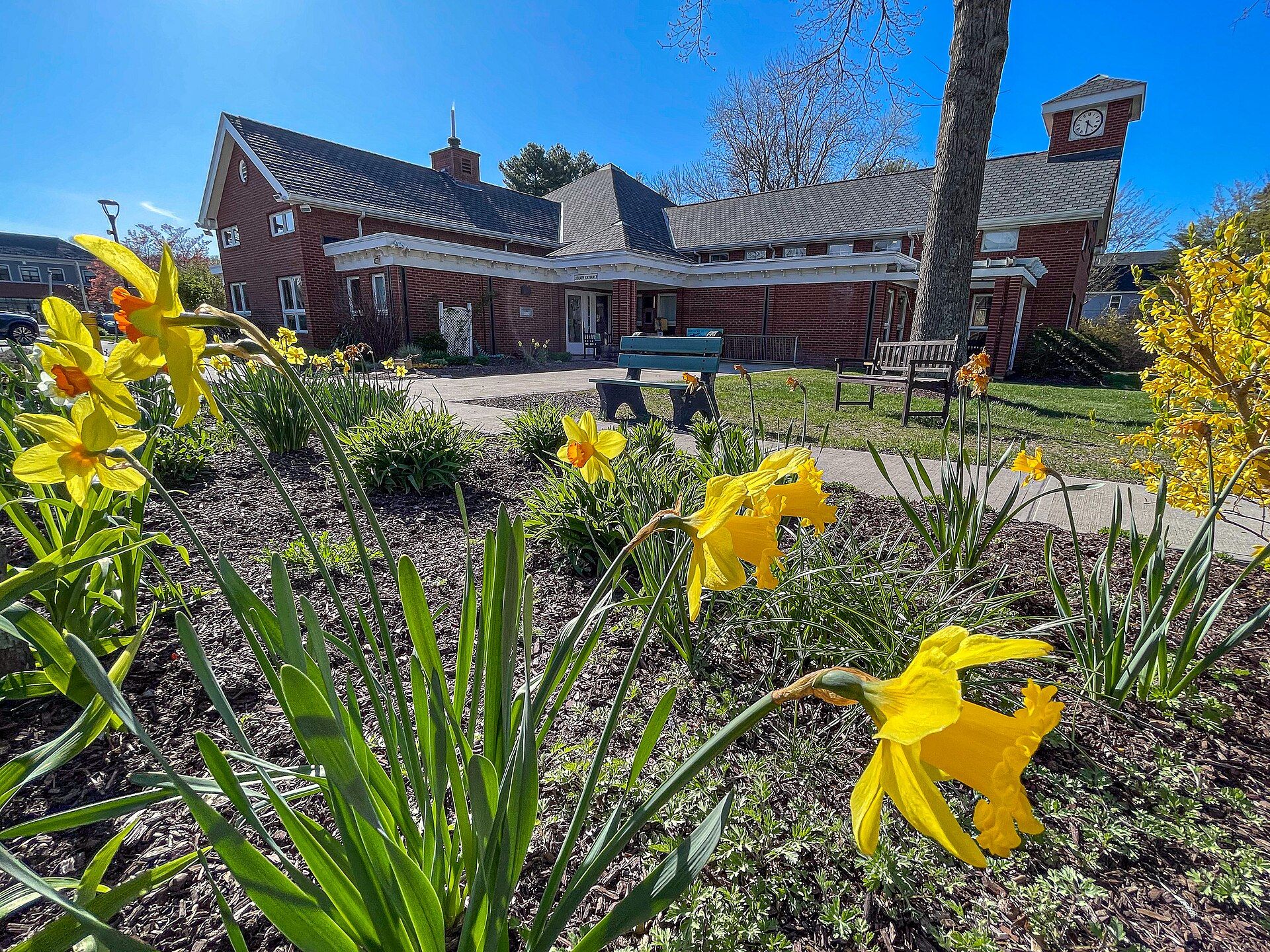
Originally included in a 1635 grant of land for Dedham, Massachusetts, the area was later deemed the Plantation of Wollomonuppoag and then later becoming Wrentham, Massachusetts before Plainville branched out as a separate community. Landmarks include Angle Tree Stone, Plainridge Racecourse and Plainville Public Library.
Every piece is drawn from Plainville's own map data and historic archives, then printed and shipped from the USA when you order. No two towns look alike.
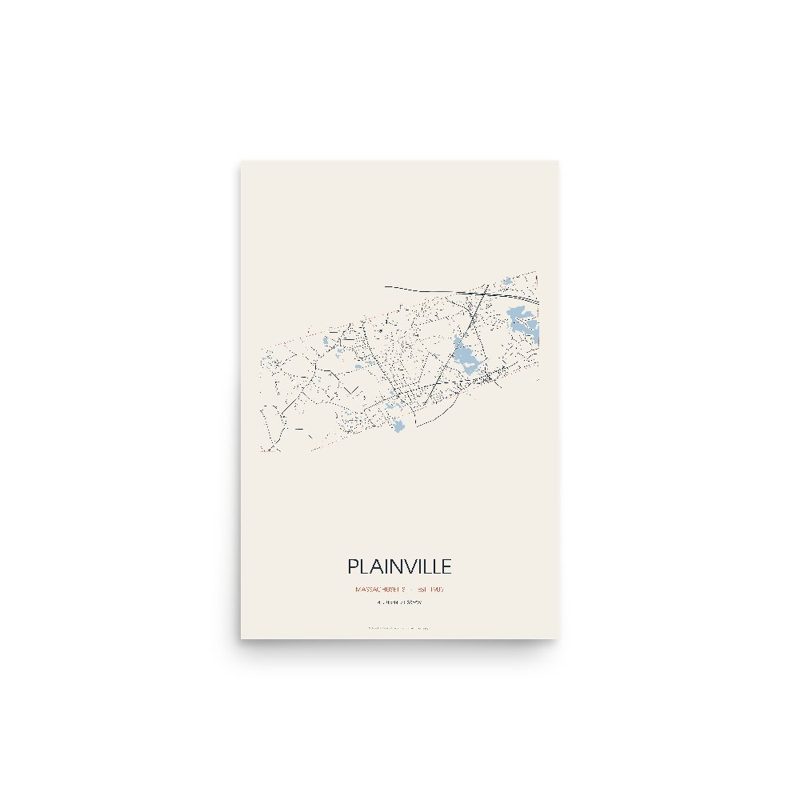
Every road in town, on archival matte paper

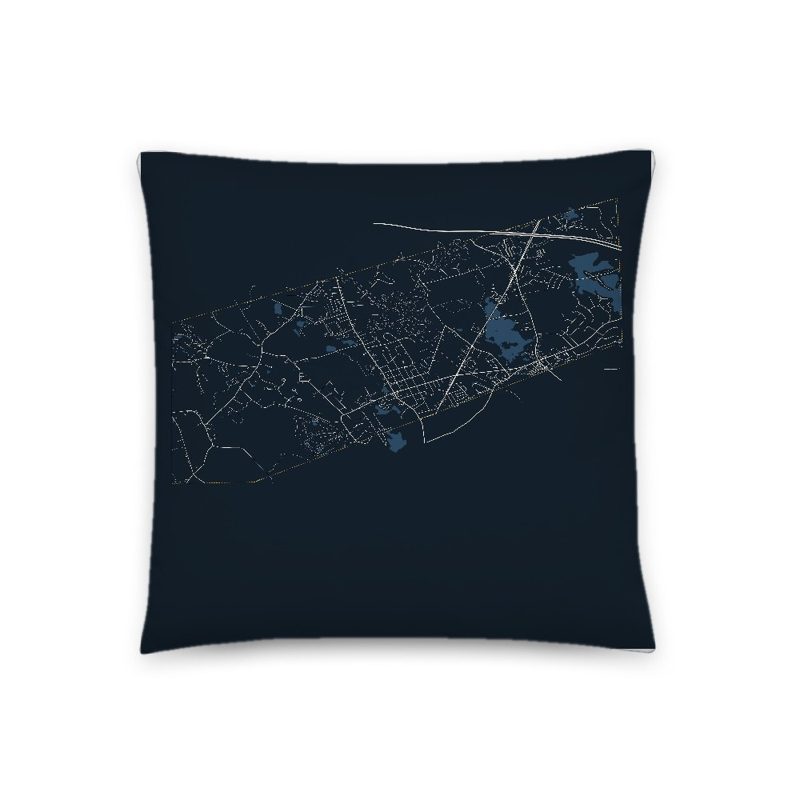
The same map, in navy and silver
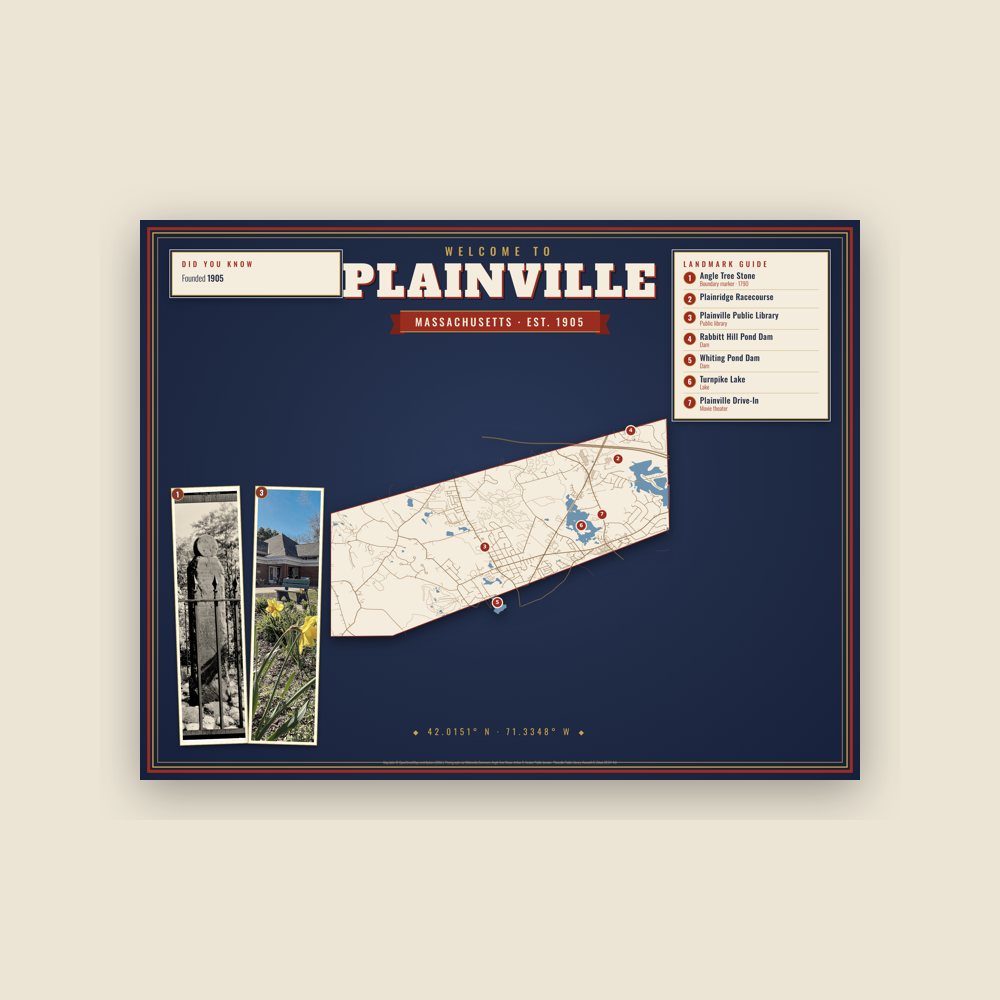
Map of local landmarks, washable fabric

Heavy-blend fleece, street map printed on the back

Soft Bella+Canvas jersey
Glossy ceramic, dishwasher safe
Ceramic keepsake, gold ribbon
Weatherproof, for the front walk
Soft-touch, zip cover

Sturdy all-over-print tote
Glossy top, cork back
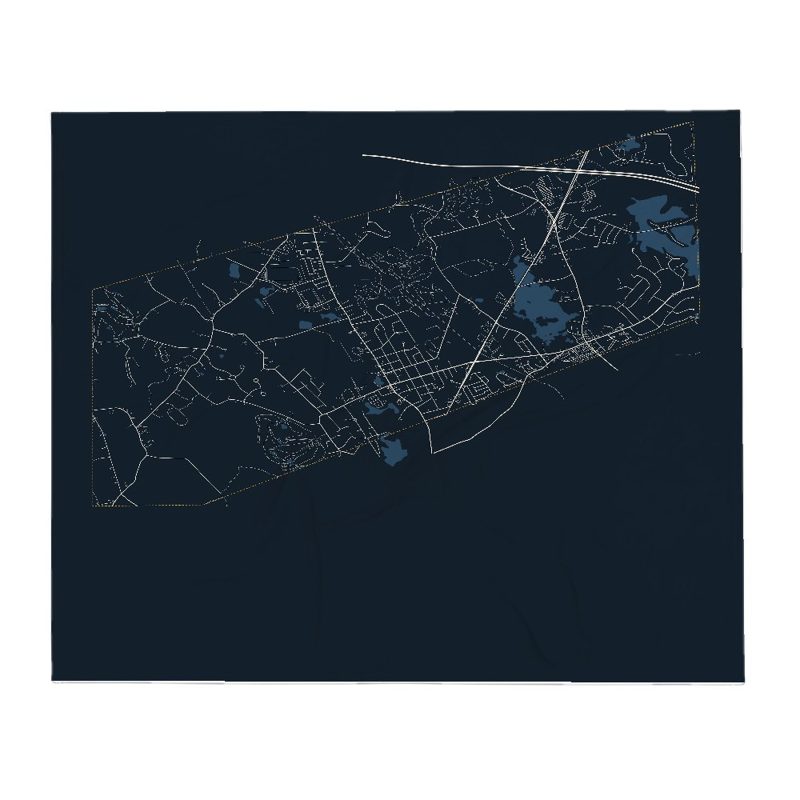
Soft fleece, 50″×60″
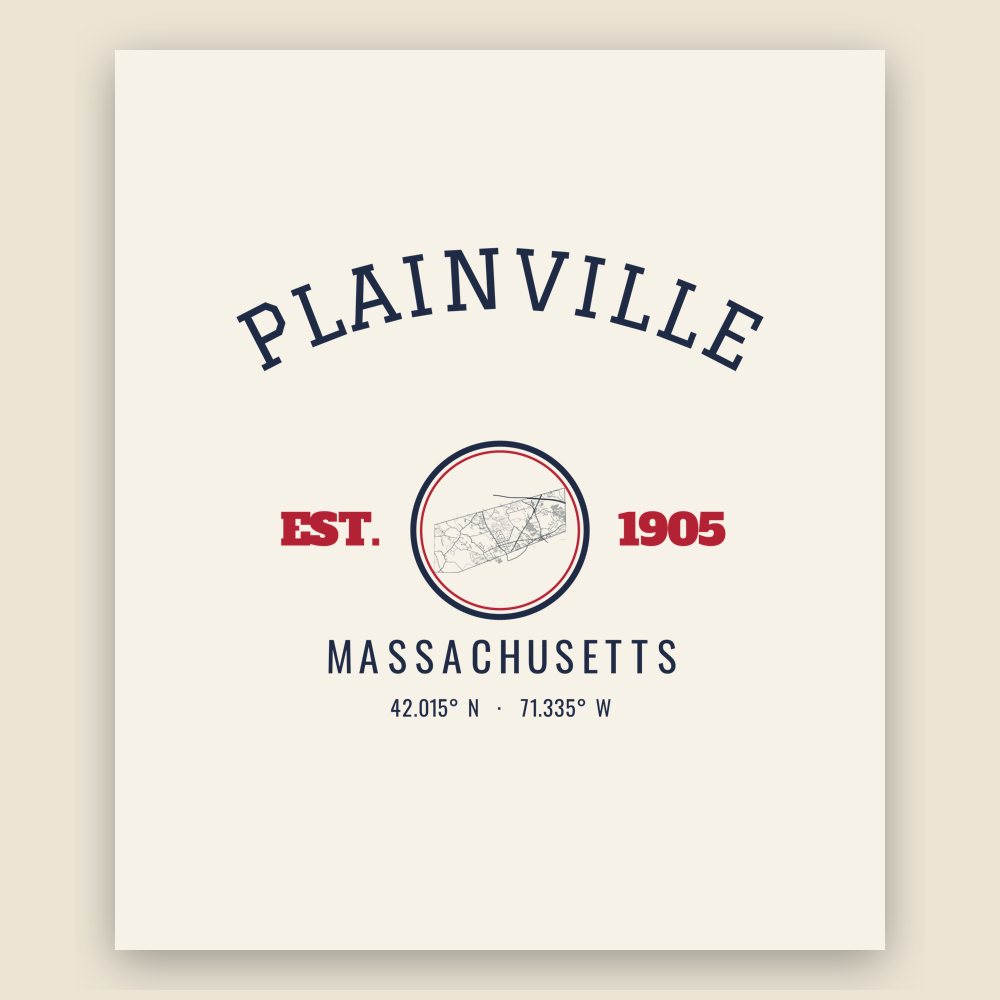
20 oz, double-wall stainless
Population 2010: 8,264 → 2020: 9,945
From Wikidata (CC0).
Originally included in a 1635 grant of land for Dedham, Massachusetts, the area was later deemed the Plantation of Wollomonuppoag and then later becoming Wrentham, Massachusetts before Plainville branched out as a separate community. Plainville became an officially recognized town on April 4, 1905, making it the third youngest town in the state, behind Millville (1916) and East Brookfield (1920).
One of the earliest documentations of Plainville being settled is from 1674, when a Wampanoag man by the name of Matchinamook petitioned and received a few acres of land at the head of the Ten Mile River, at present day Fuller's Dam. As Matchinamook was a native warrior under Wampanoag chieftain Metacomet, or more commonly known in the area as King Philip, he most likely fought during King Philip's War. In its early days, Plainville was nicknamed Slackville after Benjamin Slack, an affluent landowner at the time. After the establishment of a post office in 1856, Plainville became the town name after the abundance of geographical plains in the area. In 1905, Plainville officially separated from Wrentham and became its own town.
Along with bordering North Attleboro, Massachusetts, Plainville shares the Angle Tree Stone, a historic marker dividing the boundaries between the old Massachusetts Bay Colony and Plymouth Bay Colony. This is why the Angle Tree Stone is in the official town seal. Along with many notable veterans, Plainville was the home to George Robert Twelves Hewes, a Revolutionary War veteran who also partook in the Boston Tea Party as well as the Battle of Rhode Island.
Adapted (trimmed) from the Wikipedia article Plainville, Massachusetts, revision 1376856474 by its contributors, licensed CC BY-SA 4.0.
We share a part of every Plainville sale with local partners, and we'd love to print from your collection. Old photographs, maps and postcards make the best keepsakes.
Partner with us