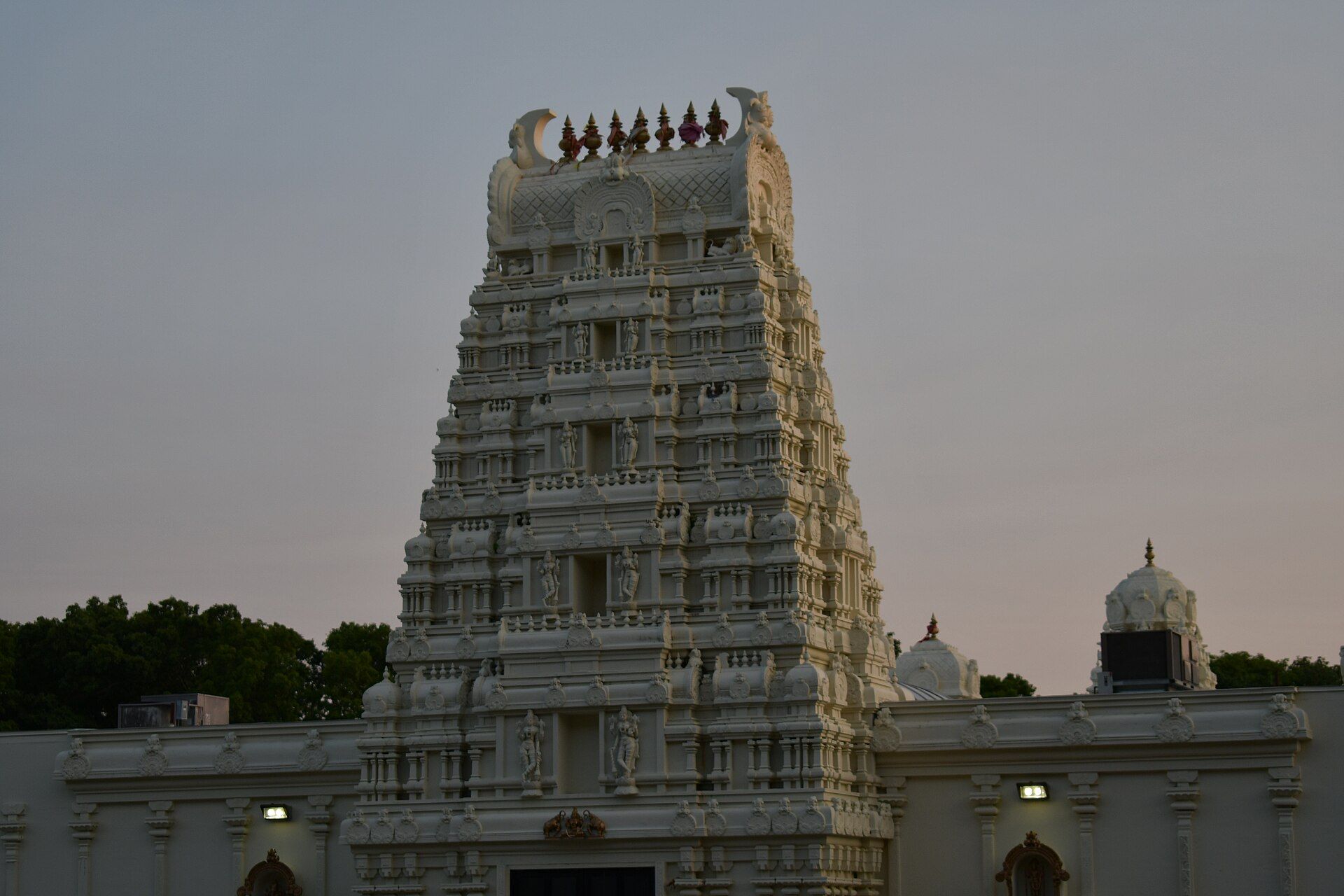
The area now known as Ashland was settled in the early 18th century and inhabited prior to that by the Megunko Native Americans, to which Megunko Hill owes its name. Landmarks include Sri Lakshmi Temple, Ashland station and Southborough station. Ashland is the birthplace of Frank Nelson Cole, mathematician.
Every piece is drawn from Ashland's own map data and historic archives, then printed and shipped from the USA when you order. No two towns look alike.
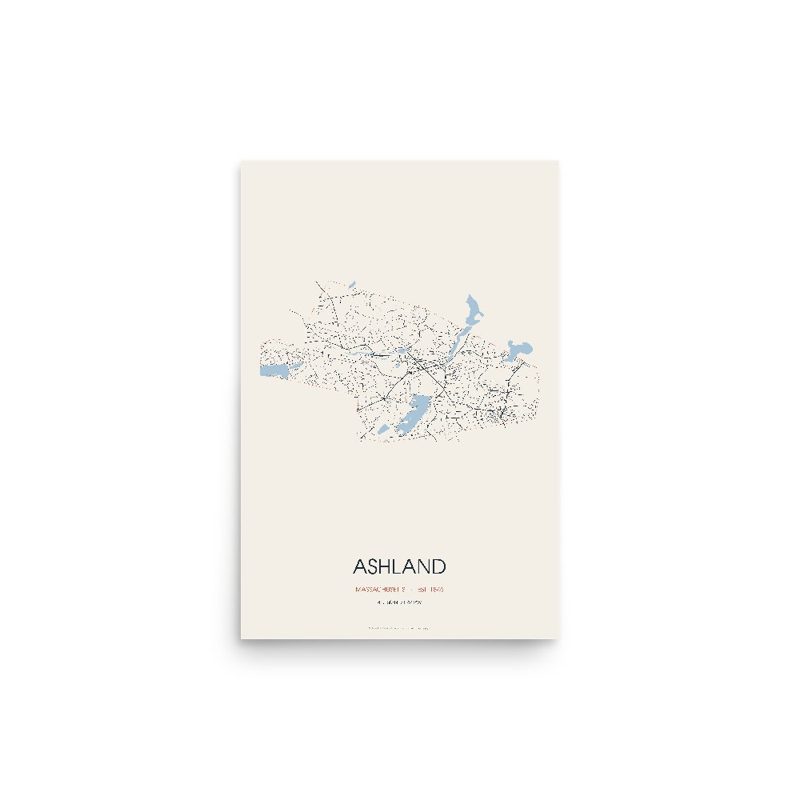
Every road in town, on archival matte paper

The same map, in navy and silver
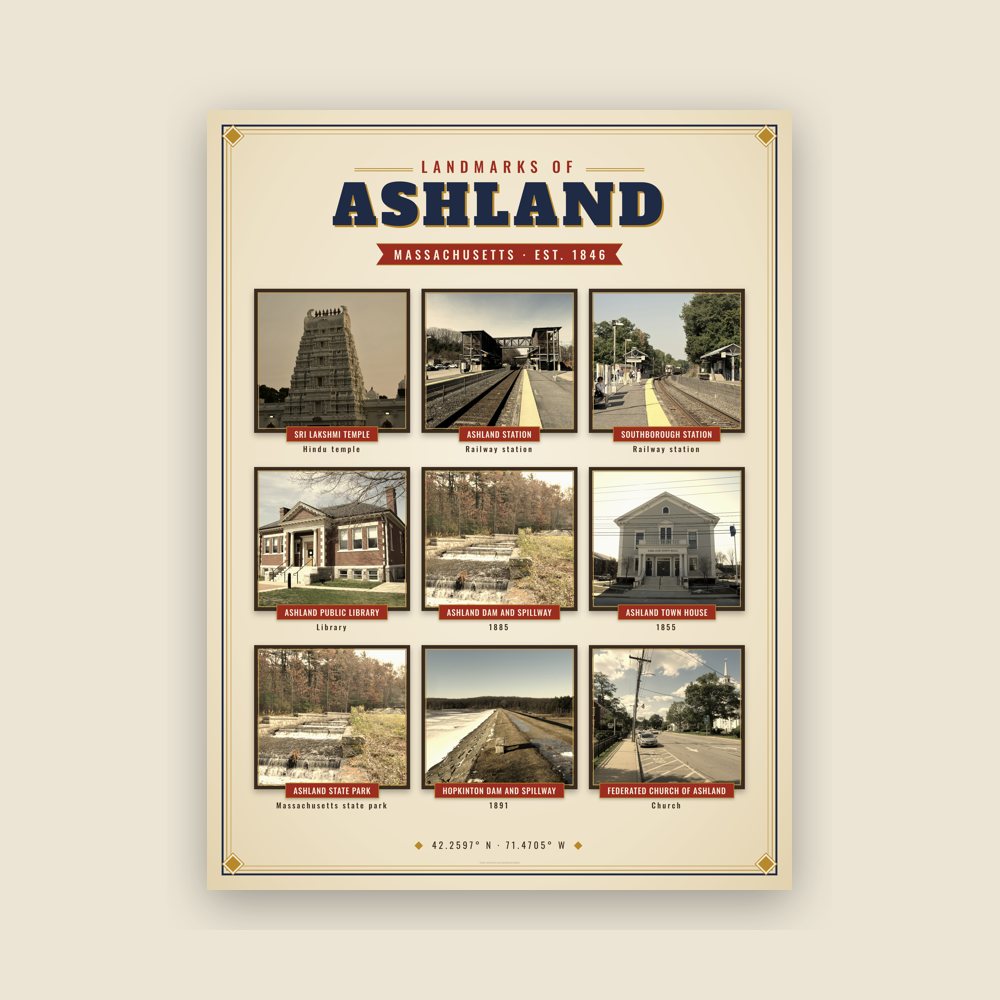
Nine local landmarks, archival matte
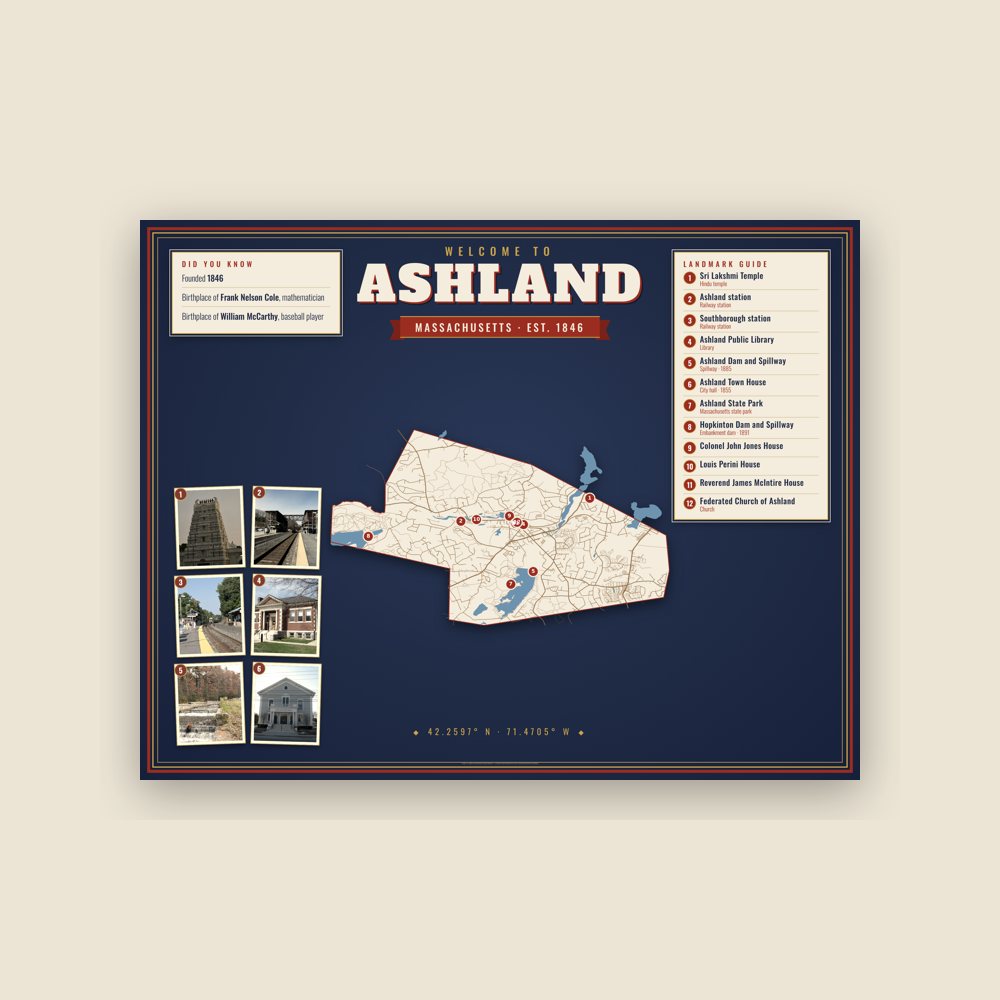
Map of local landmarks, washable fabric

Heavy-blend fleece, street map printed on the back

Soft Bella+Canvas jersey
Glossy ceramic, dishwasher safe
Ceramic keepsake, gold ribbon
Weatherproof, for the front walk
24″×16″, printed coir-look fibers, rubber back
12″×12″ printed wood, ready to hang
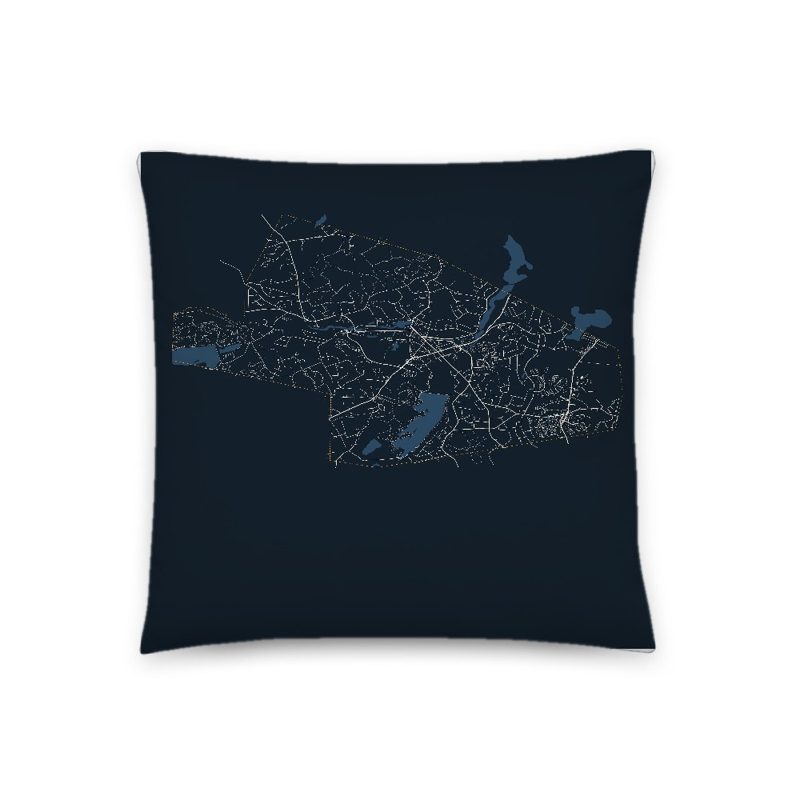
Soft-touch, zip cover

Sturdy all-over-print tote
Glossy top, cork back
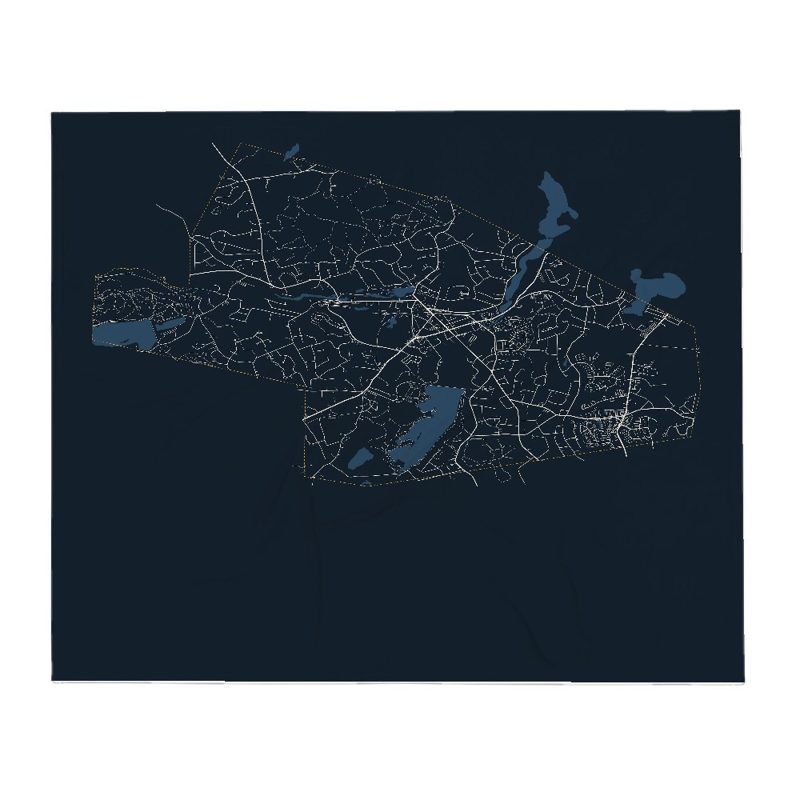
Soft fleece, 50″×60″
20 oz, double-wall stainless

Archival matte print of a local landmark, credited to its photographer
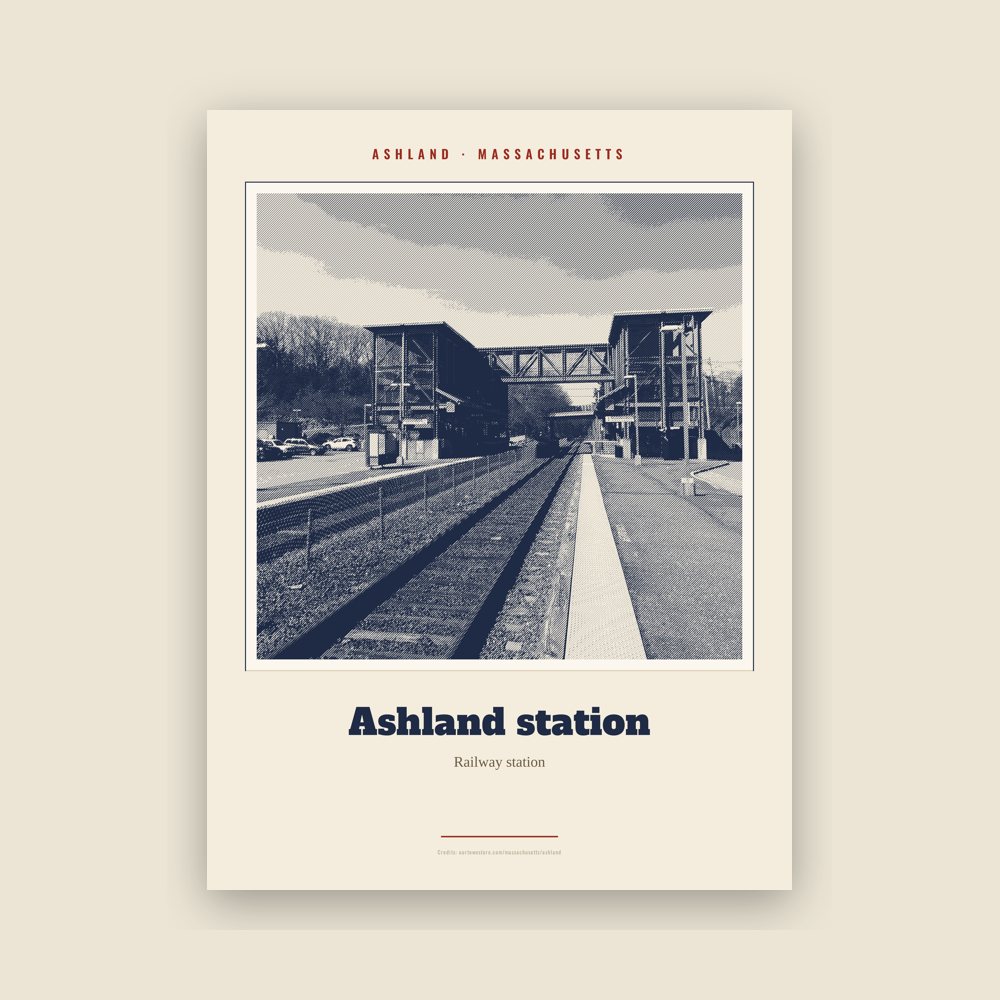
Archival matte print of a local landmark, credited to its photographer
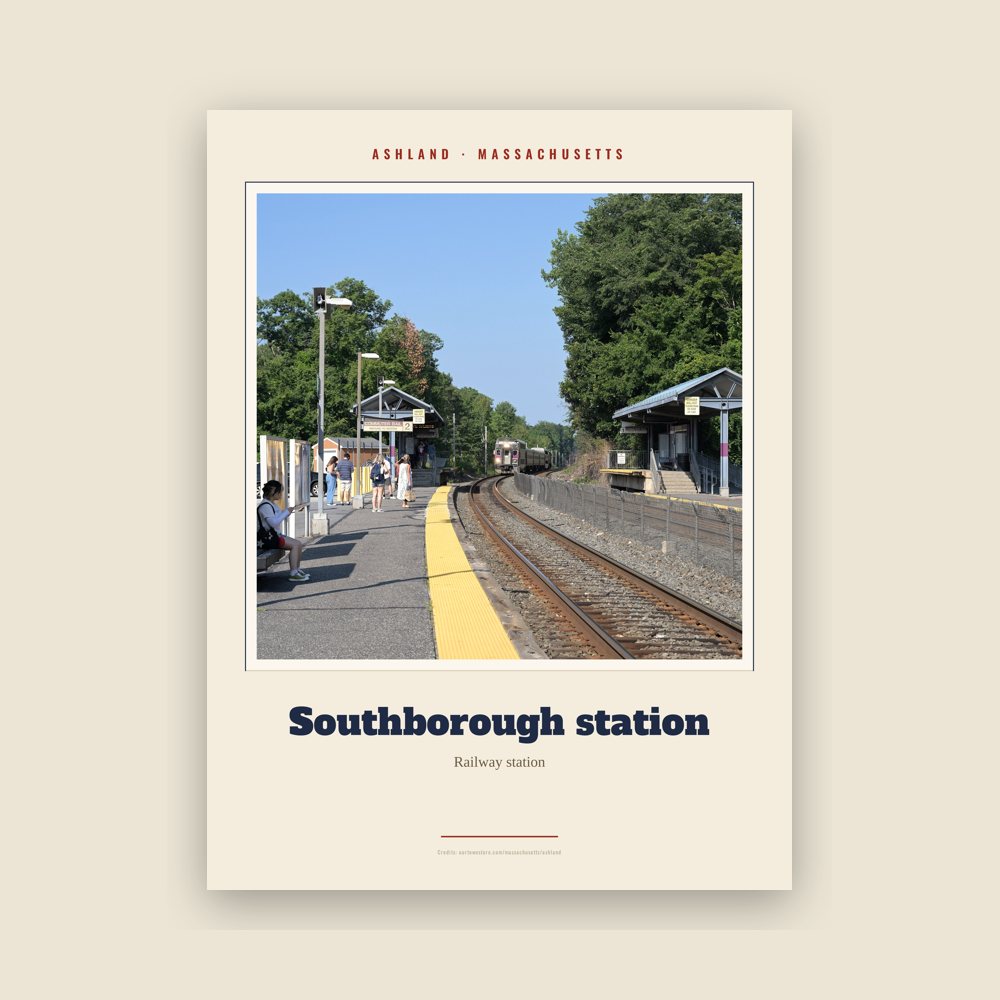
Archival matte print of a local landmark, credited to its photographer

Archival matte print of a local landmark, credited to its photographer
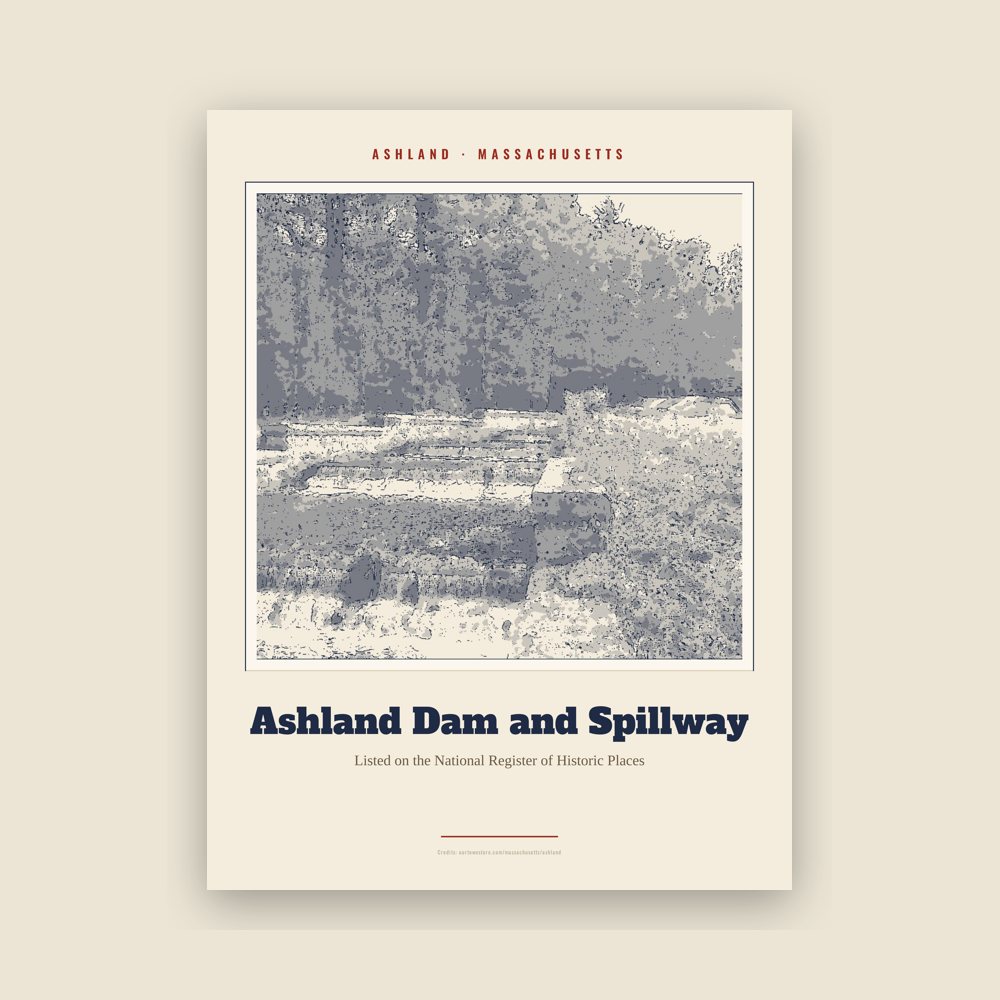
Archival matte print of a local landmark, credited to its photographer
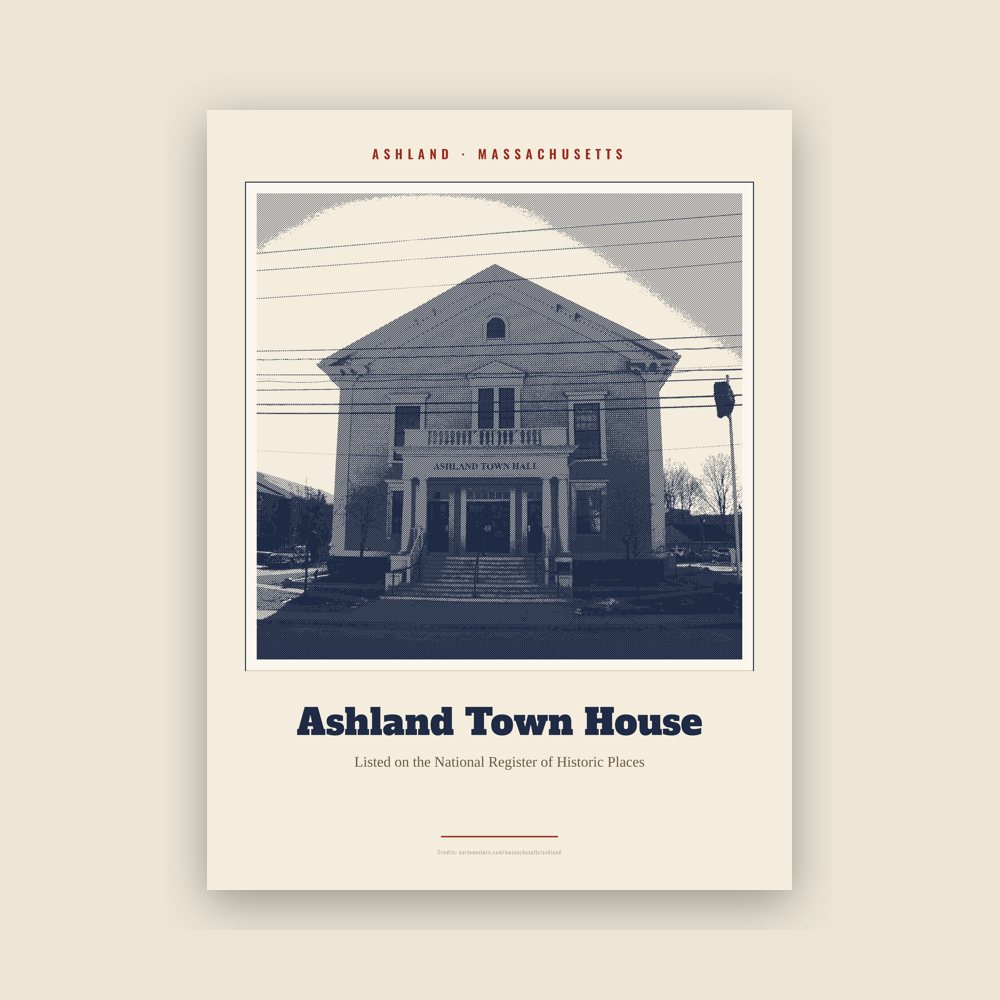
Archival matte print of a local landmark, credited to its photographer

6″×4″ postcard, glossy front
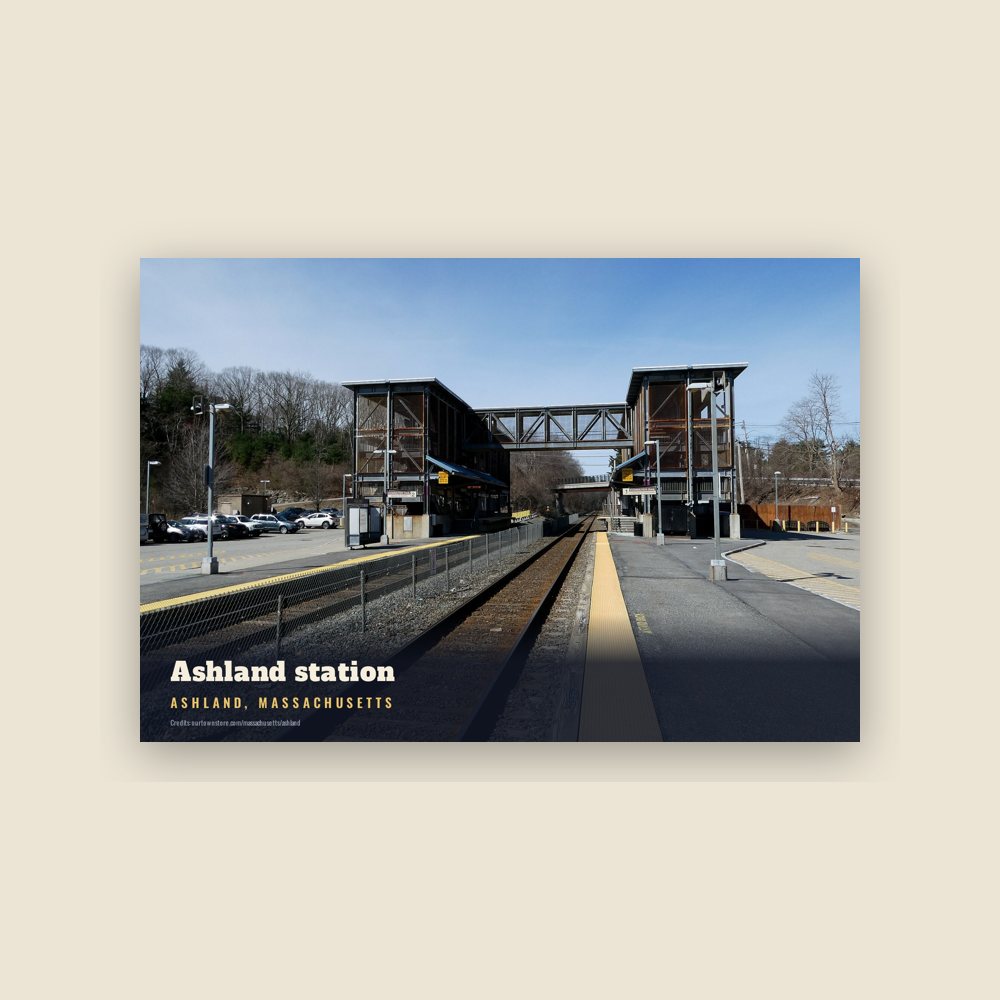
6″×4″ postcard, glossy front
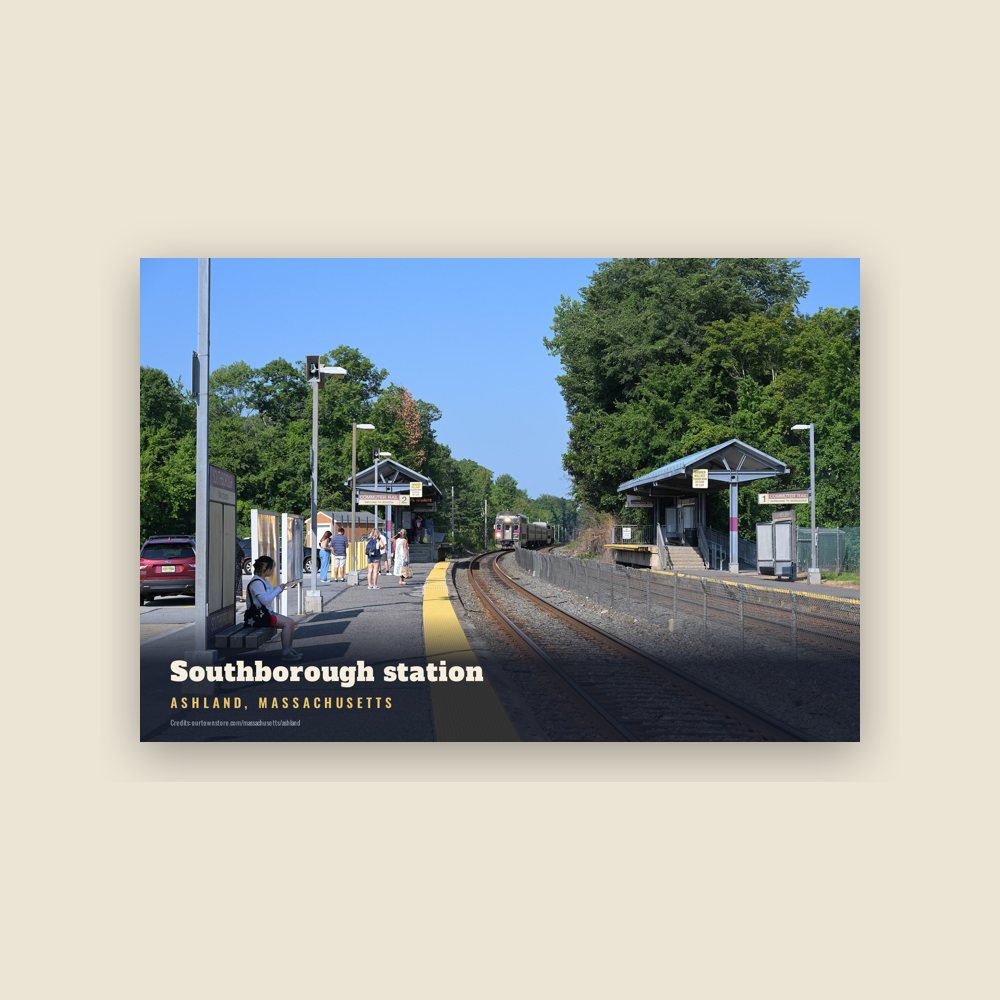
6″×4″ postcard, glossy front
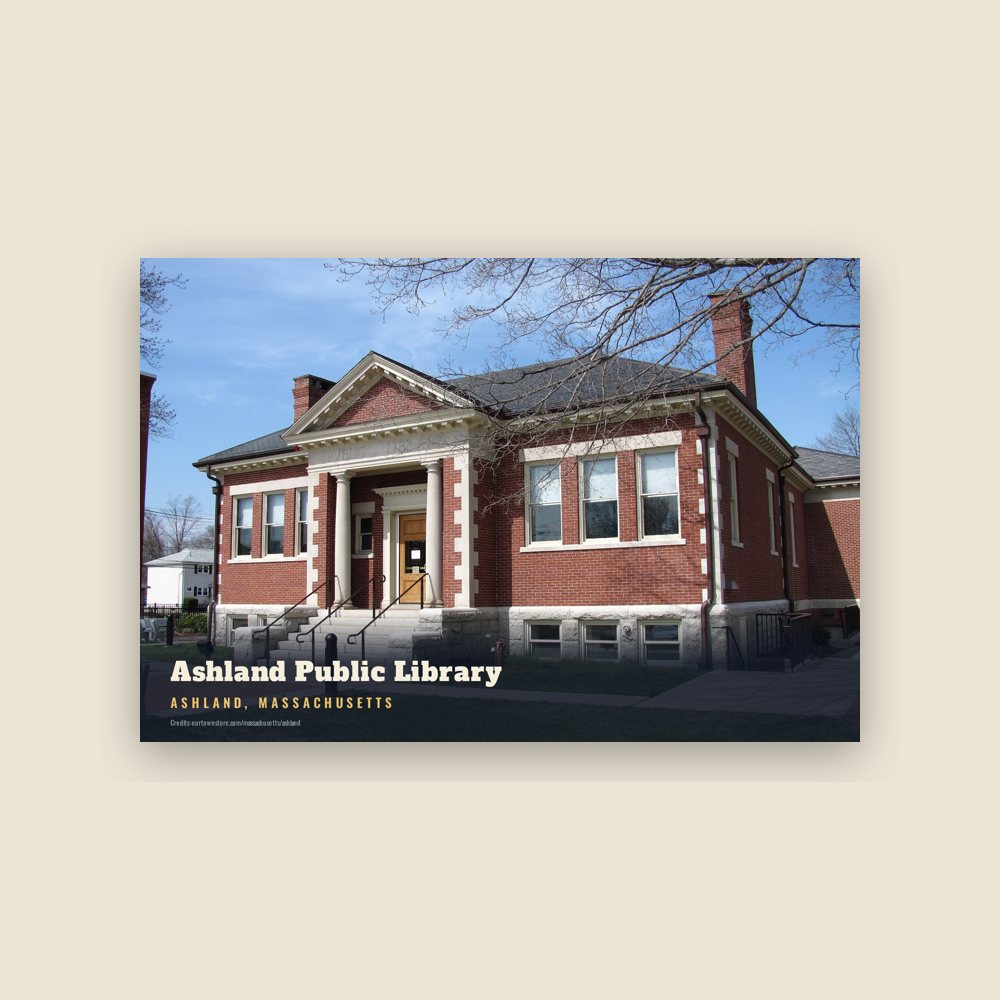
6″×4″ postcard, glossy front
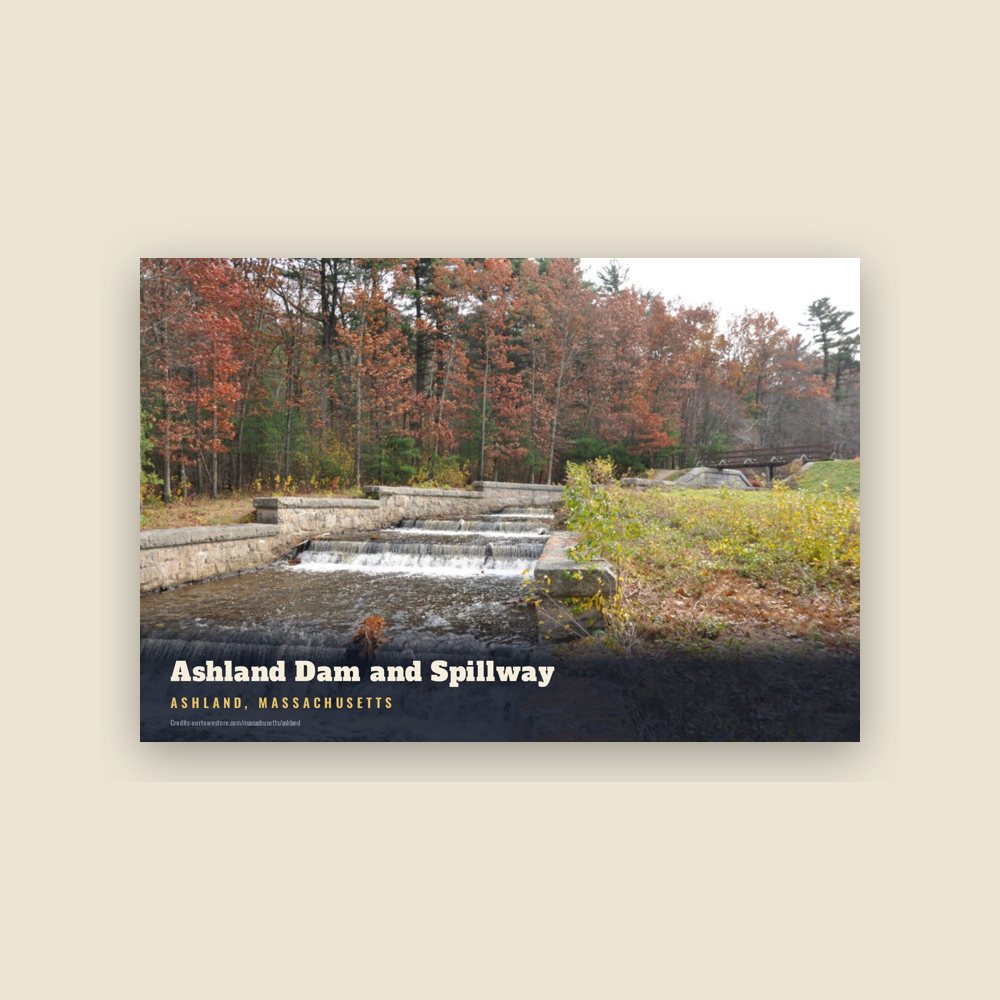
6″×4″ postcard, glossy front
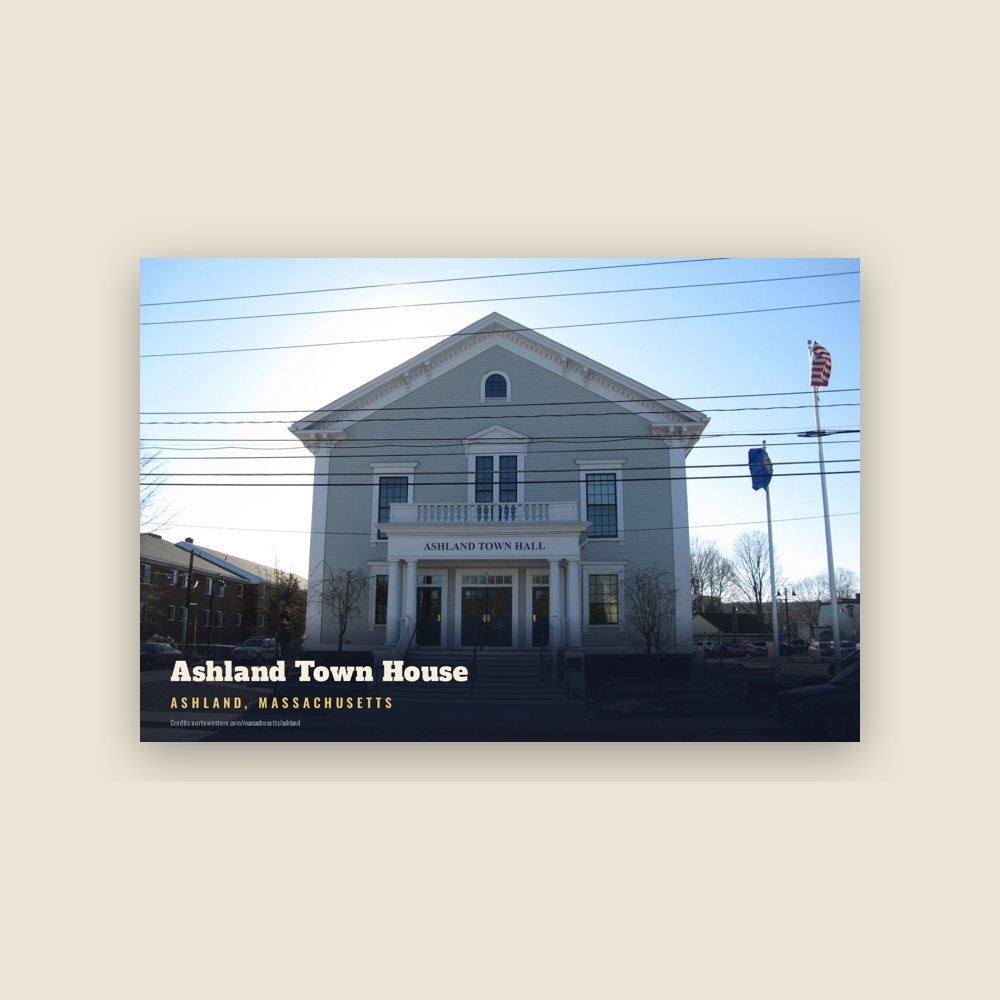
6″×4″ postcard, glossy front
Population 2008: 16,593 → 2010: 16,593 → 2020: 18,832
From Wikidata (CC0).
The area now known as Ashland was settled in the early 18th century and inhabited prior to that by the Megunko Native Americans, to which Megunko Hill owes its name. Previously known as "Unionville", Ashland was incorporated in 1846, bearing the name of statesman Henry Clay's Kentucky estate. It is considerably younger than many of the surrounding towns, as Ashland's territory was taken in near-equal parts from the previously established towns of Hopkinton, Holliston (previously of colonial era Sherborn's territory), and Framingham.
The construction of the Boston & Worcester Railroad, later the Boston & Albany, in the 1830s was key to the early development of the town. Decades later, two other rail lines opened stations in Ashland. Along with the Sudbury River, the railroad helped to attract numerous mills to develop a bustling boot and shoe industry. However, by constructing three reservoirs along the river in 1878, the Boston Water Board inadvertently stymied further growth, most notably by halting the construction of the Dwight Printing Company's granite mills. Although the mills closed, starting in the 1890s the Hopkinton Railroad Company, providing a connection to Milford, and the Natick Street Railway, which operated streetcars between the towns of Sherborn, Framingham, and Natick, offered service in Ashland. These rail lines were gone by the 1920s, rendered obsolete by automobiles.
Around the same time that the local rail lines were in decline, the inventor Henry E. Warren developed the Warren Synchronizing Timer in 1916, which made synchronous electric clocks possible by keeping alternating current flowing from power plants at a consistent sixty cycles per second. Warren founded Telechron, which, in partnership with General Electric. At its height in the 1950s, Telechron employed 2,000 people, or roughly one-third of Ashland. GE manufactured electric clocks in Ashland until 1979, when it sold to Timex. Thirteen years later, the Telechron plant was closed for good. A Warren Synchronizing Timer is on display at the Smithsonian's Museum of American History in Washington D.C., and the high school sports teams are called "The Clockers".
For most of the 20th century, Ashland's population remained slow in growth, until the post-war boom beginning in the 1950s. During that period, Ashland grew from a far-removed rural town 22 miles (35 km) west of Boston to a primarily residential suburb by the 1980s. Over time, many farms and open spaces have given way to housing, although some untouched land still remains, including the Ashland Town Forest, Ashland State Park, Warren Woods, and land comprising the beach and dam portions of Hopkinton State Park.
Two members of the Ashland Police Department have died in the line of duty. Patrolman Louis Duncan Phipps died on June 10, 1942, four days after he was injured attempting to subdue an intoxicated man at a dinner dance. Patrolman Charles E. Cadorette died on September 11, 1967, from a gunshot wound suffered when he attempted to disarm a person who had stolen a car. Cadorette's partner, Robert Gonfrade, was also shot during the incident, but managed to return fire, resulting in the death of the man who had shot Cadorette. Gonfrade recovered from his injuries and later served as Ashland's chief of police from 1973 to 1994.
Four members of the Ashland Fire Department have died in the line of duty. On August 21, 1963, three members of the department—Chief Charles Moran, Lt. Norman E. Barry, and Firefighter John Rebenacker—were killed when a fuel tank exploded while they were providing mutual aid at a fire in neighboring Framingham. Firefighter Edward J. Bessey was killed on February 23, 1966, when his car was struck by a train as he was driving to the fire station to respond to a call.
Massachusetts Route 135 and Massachusetts Route 126 pass through Ashland. Route 135 is dominated by older residential development of varying density and is also part of the route for the Boston Marathon, which began in Ashland on Pleasant Street until the start was moved to Hopkinton's Main Street in 1924. Route 126 has developed rapidly since the 1980s, as farms have given way to shopping centers and condominiums. A part of the draw of Ashland, and one that has been publicized in recent years, is its "ideal" location about halfway between the cities of Boston and Worcester. The town has its own stop on the Framingham/Worcester Line of the MBTA Commuter Rail and also has nearby access to both I-90 and I-495. I-90 briefly passes through the northernmost part of Ashland, but there is no interchange there.
Ashland is considered part of MetroWest, which also includes the nearby towns of Framingham, Holliston, and Hopkinton. Hopkinton is Ashland's longstanding rival in a traditional Thanksgiving Day football game, a rivalry with roots in the formation of the town and the resulting 1846 dispute concerning Ashland's fire engine Megunko 1.
The US Color and Chemical Company, later named New England Aniline Works, Inc., and finally The Nyanza Color and Chemical Company, had a dye-manufacturing plant in Ashland. The plant opened in 1917 when American entry into World War I cut off the supply of dyes from Germany, then the world's principal source. In 1971, the factory was identified as a hazard when pollution was discovered in the nearby Sudbury River. The site was placed on the Superfund National Priority List in 1982 when heavy metals and organochlorides were discovered in the soil and water near the site. It was also deemed probable that particles of mercuric sulfate were blown into the air. In 1998, Trustees settled natural resource damages (NRD) claims with the responsible parties at the Nyanza Chemical Waste Dump Superfund Site for $3 million. $230,769 of the settlement was allocated for groundwater resources.
In 2006, the Massachusetts State Department of Public Health released a study that found that people who grew up in Ashland between the late 1960s and early 1980s and swam in the waters near Nyanza had a 200–300% higher incidence of cancer than those who were not exposed to the chemicals. In 2011, the Massachusetts Department of Environmental Protection's Bureau of Waste Site Cleanup's NRD program settled with the slowly-going-bankrupt Nyanza for $3 million, which with interest has grown to almost $4 million. The Nyanza case had previously been at the NRD program of the Massachusetts Executive Office of Energy and Environmental Affairs. In 2016, proposed housing near Nyanza site raised alarm in Ashland. In 2020, the EPA proposed a remedy to clean up groundwater near the site, the final operable unit (phase) of the site cleanup.
Adapted (trimmed) from the Wikipedia article Ashland, Massachusetts, revision 1377084162 by its contributors, licensed CC BY-SA 4.0.
We share a part of every Ashland sale with local partners, and we'd love to print from your collection. Old photographs, maps and postcards make the best keepsakes.
Partner with us