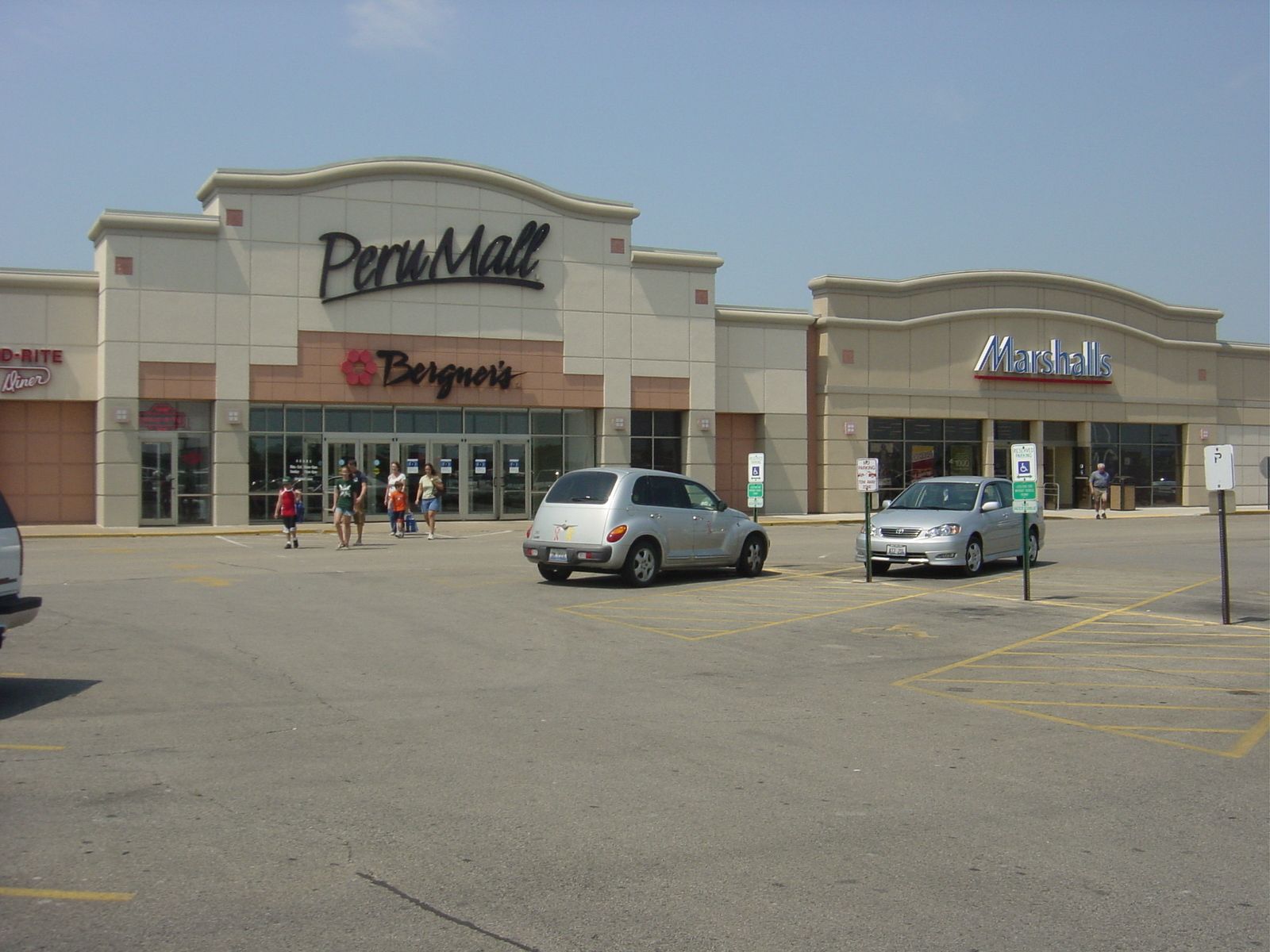
Peru and its twin city, LaSalle, make up the core of Illinois Valley. Landmarks include Illinois Valley Regional Airport and Peru Mall. Peru is the birthplace of Zez Confrey, composer and pianist.
- Population9,896 (2020 U.S. Census)
Peru, Illinois gifts and souvenirs: 26 designs made from Peru's own map, landmarks and history, from $16 to $95. Printed to order and shipped free in the USA.
| Popular | Price |
|---|---|
| Peru Hometown Ornament | $23 |
| Peru Vintage Travel Poster | from $40 |
| Peru Varsity Crewneck | from $57 |
| Peru Est. Tee | from $33 |
| Peru Town Line Mug | from $26 |
| Peru Market Tote | $37 |
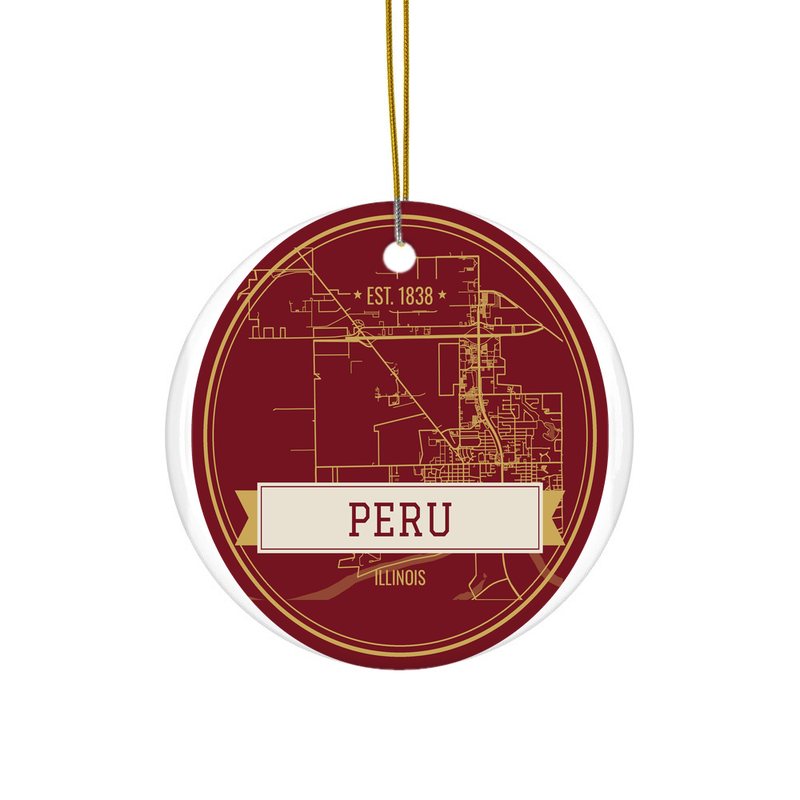
Ceramic keepsake, gold ribbon
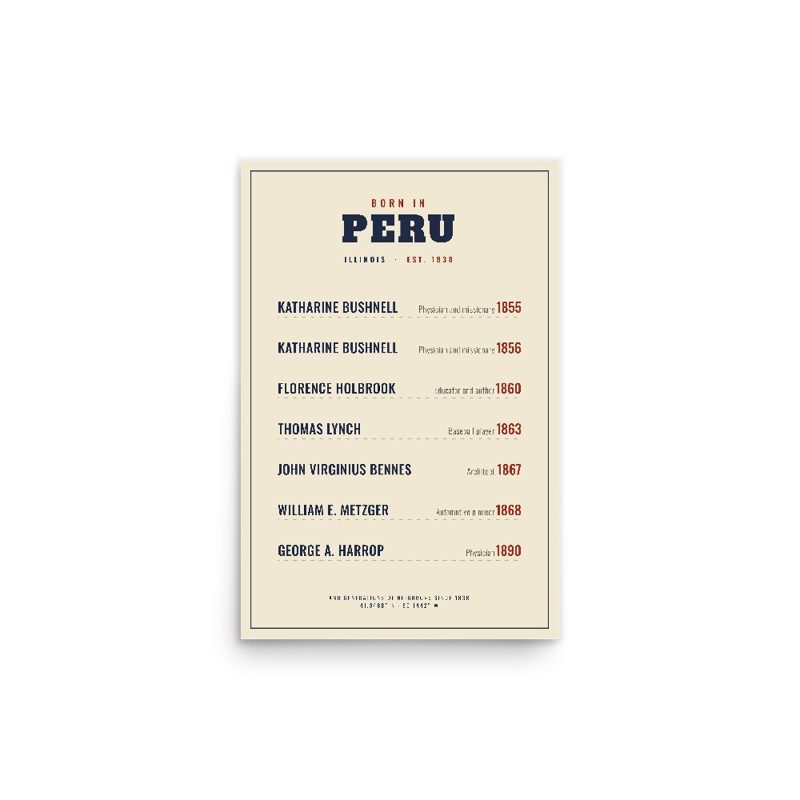
Famous natives, by birth year
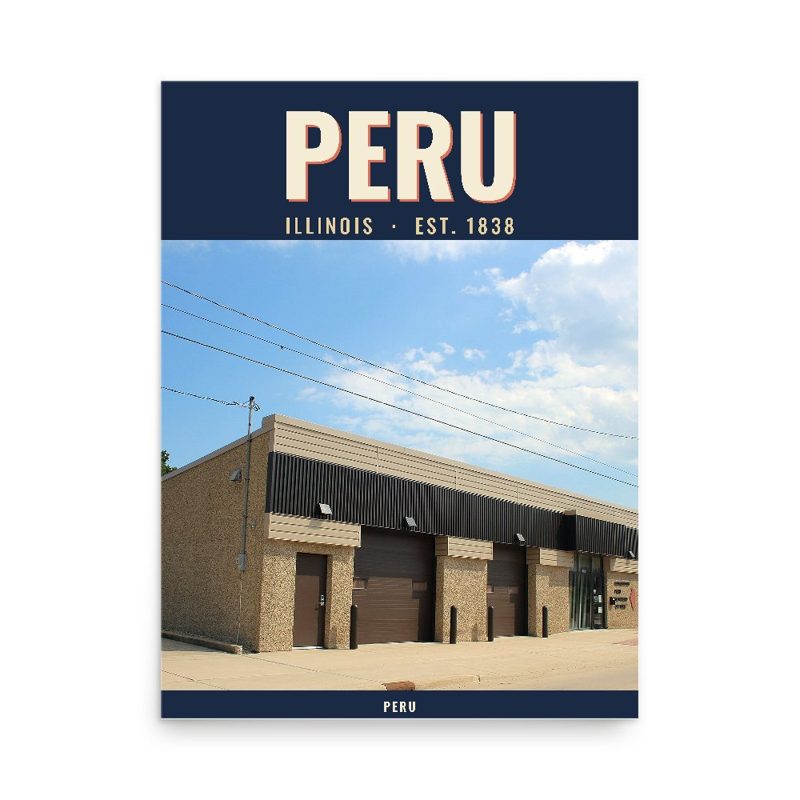
Its landmark photo in a classic travel-poster layout
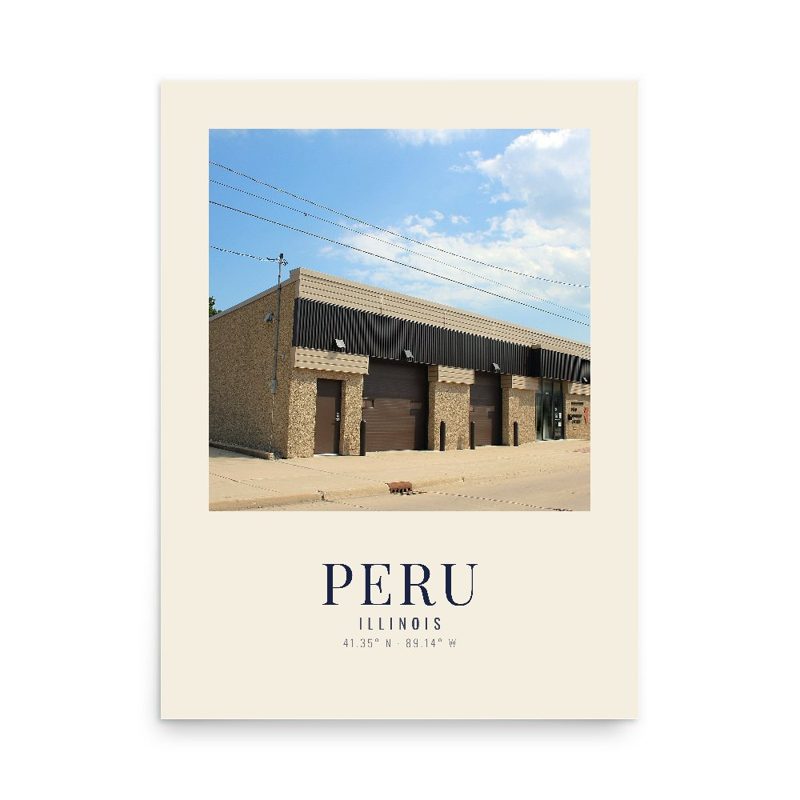
A local landmark photo as a gallery print
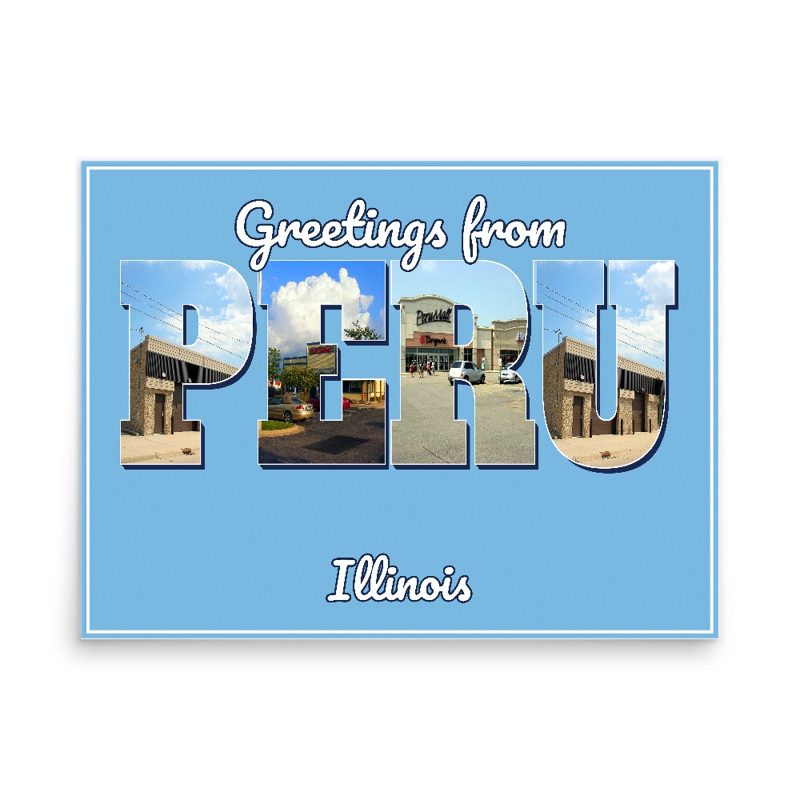
Classic large-letter postcard art, filled with local photos
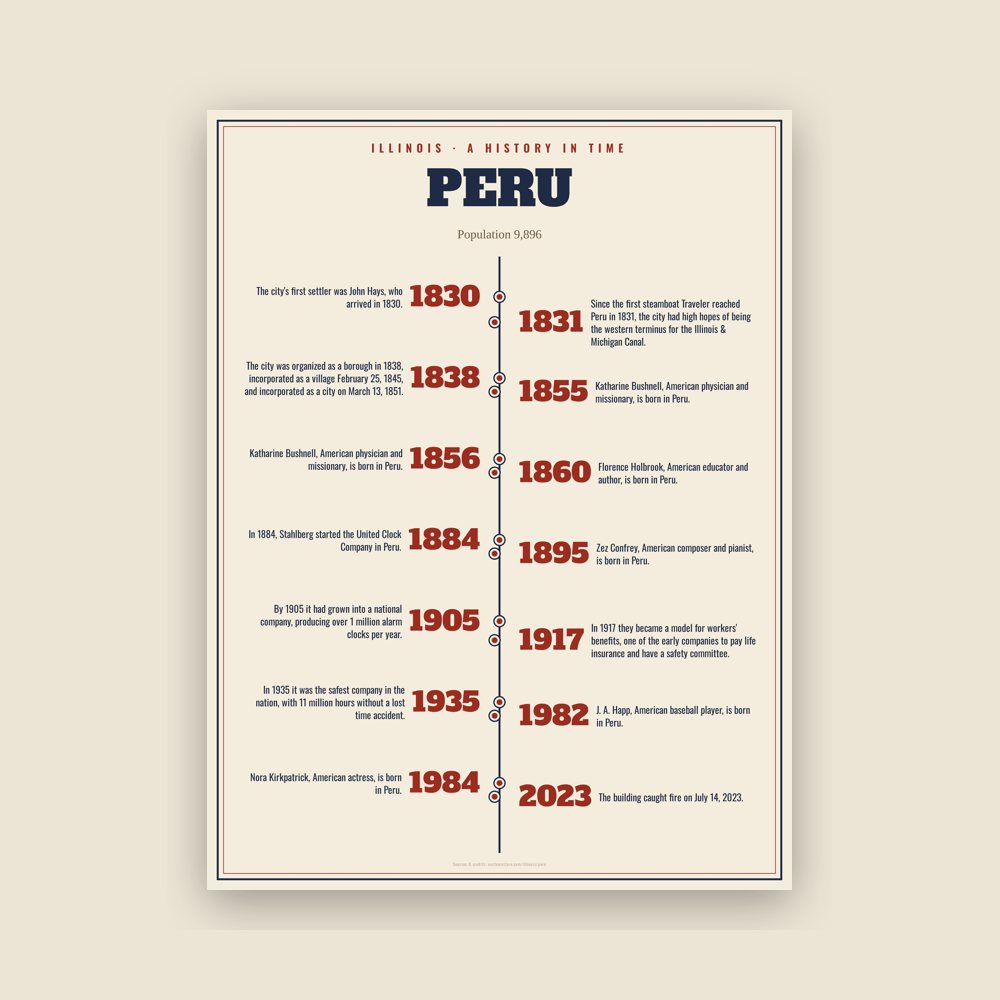
The town's story in dates, from its own records, for home or classroom
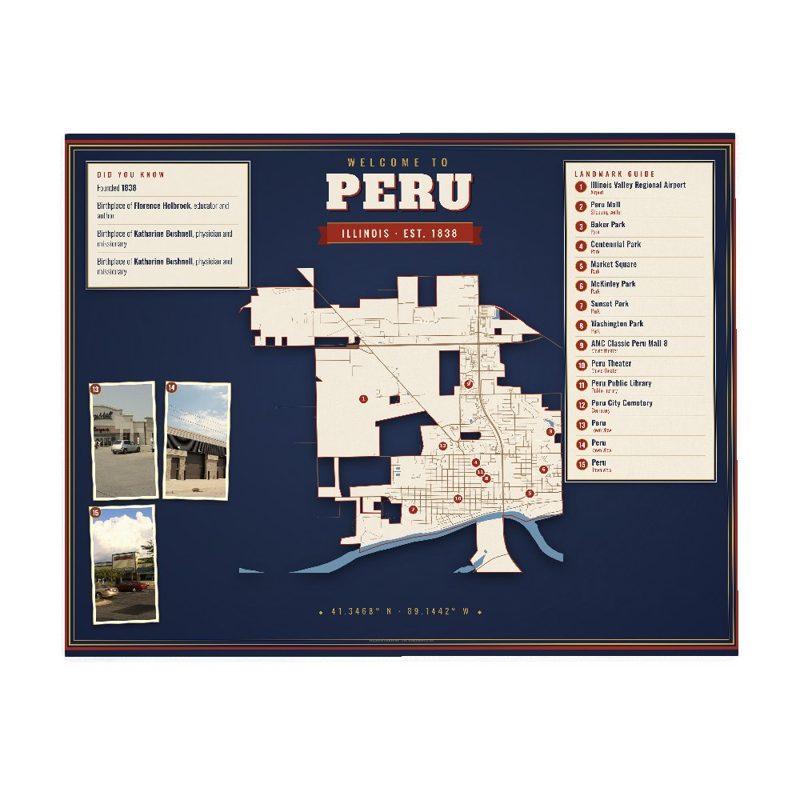
Map of local landmarks, washable fabric
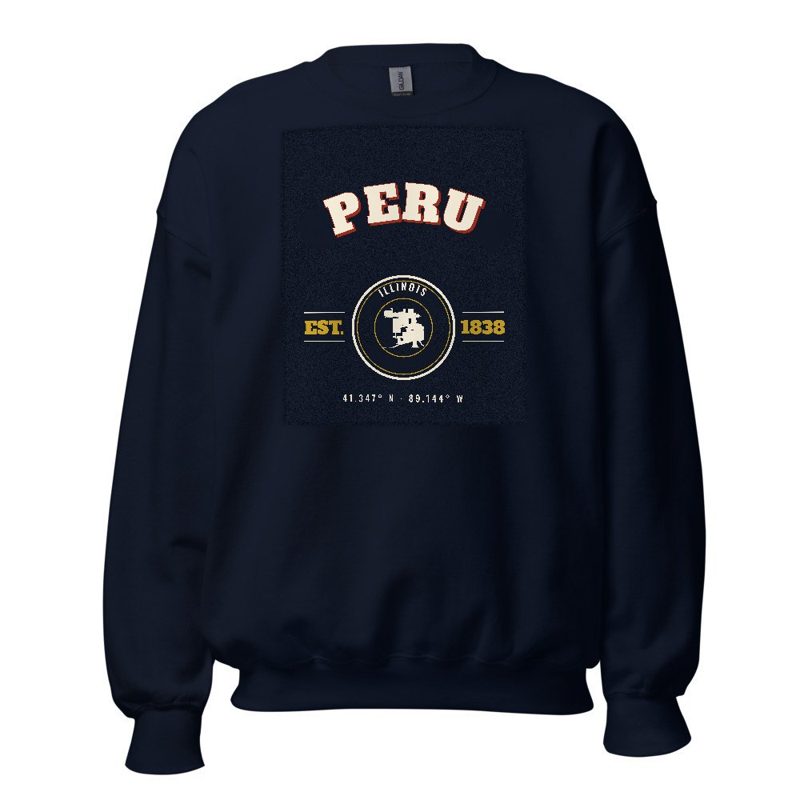
Heavy-blend fleece, street map printed on the back
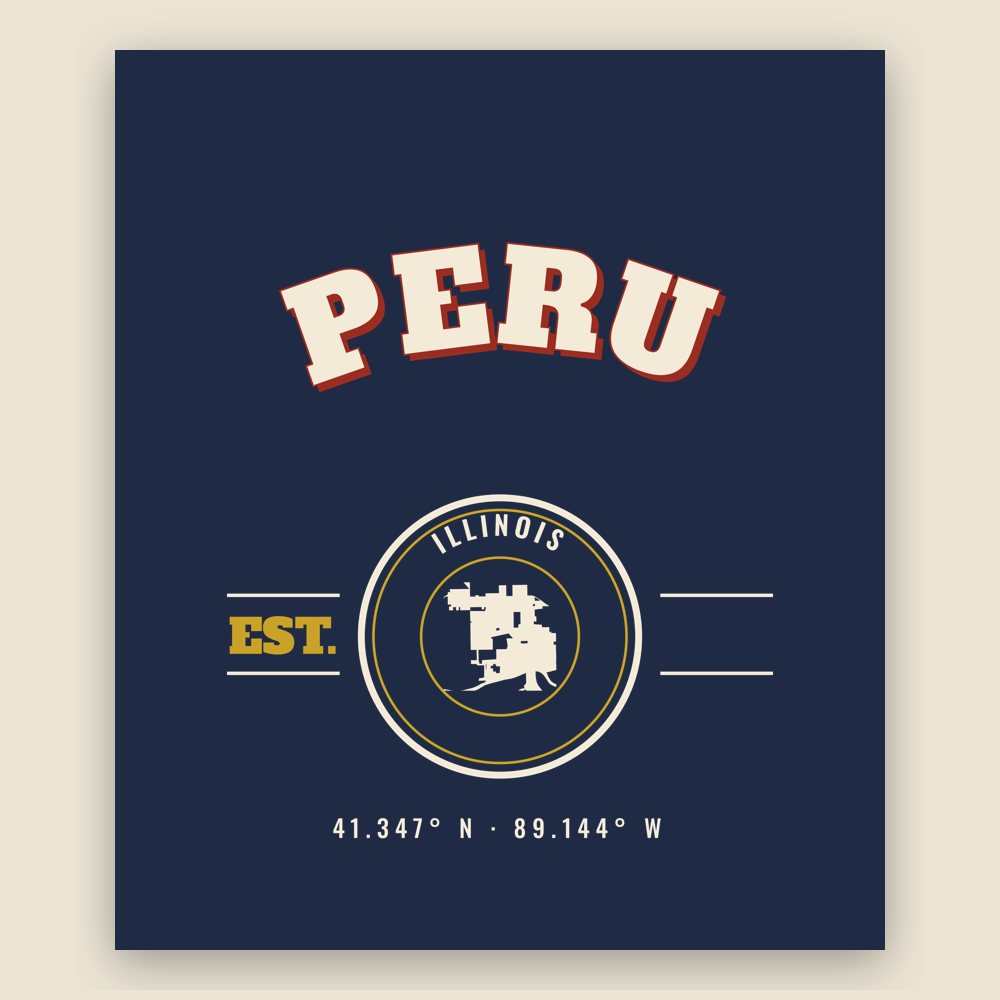
Soft Bella+Canvas jersey
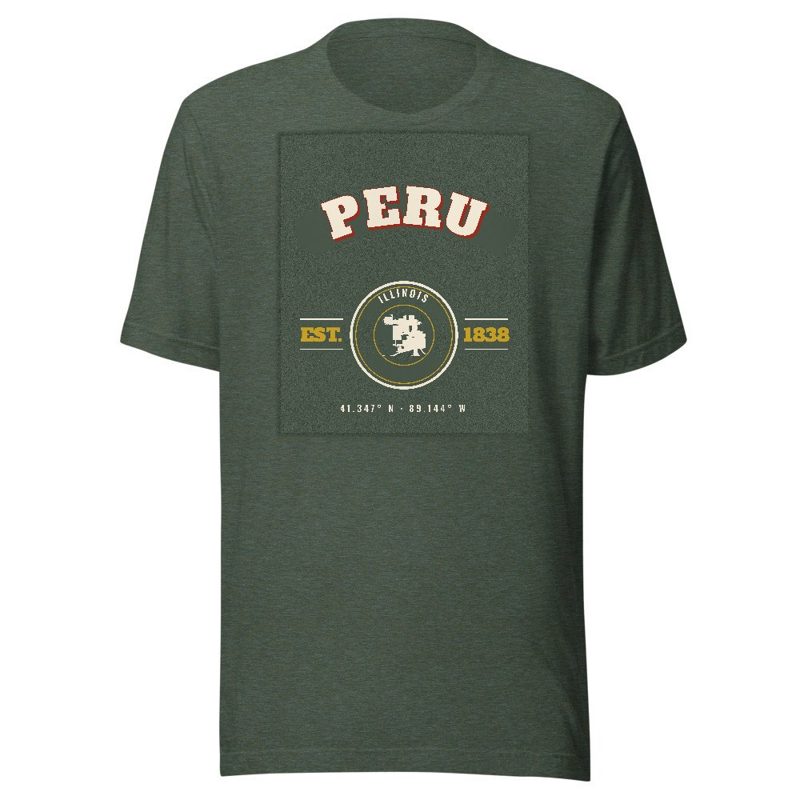
Kids' Bella+Canvas jersey, youth sizes
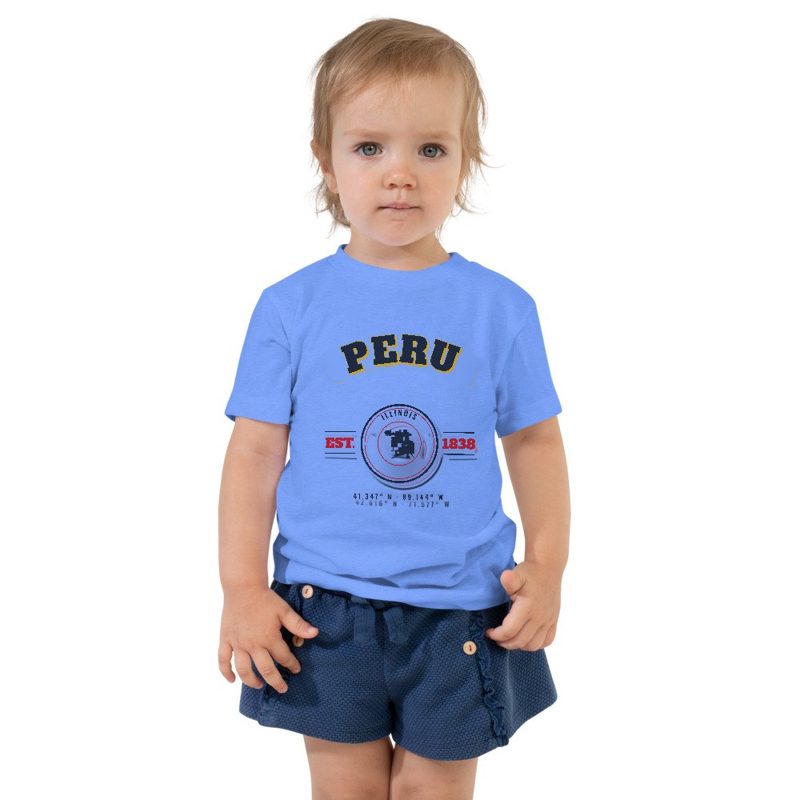
Bella+Canvas toddler jersey
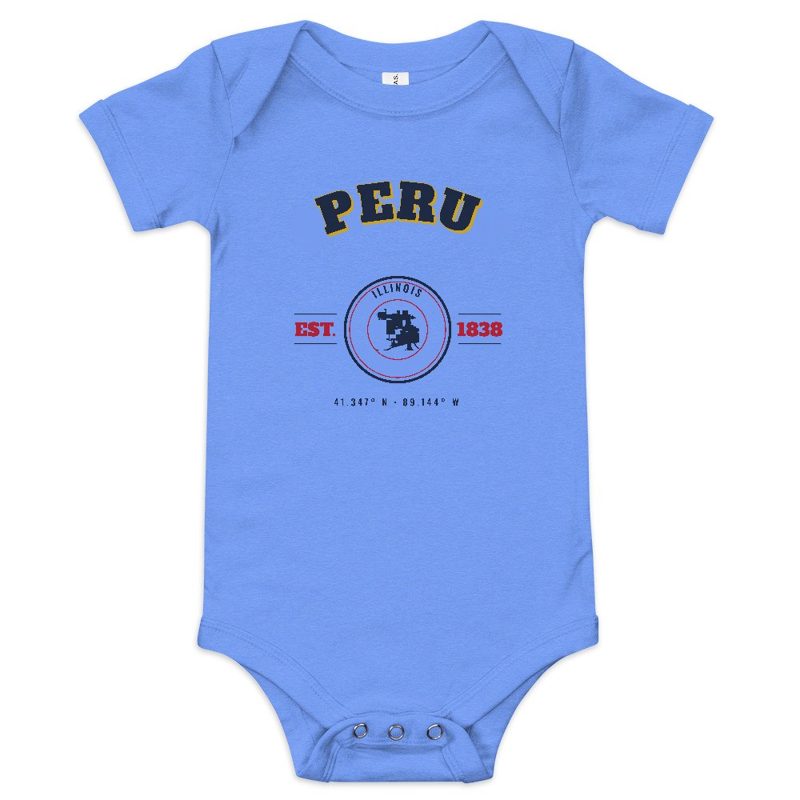
Bella+Canvas baby bodysuit
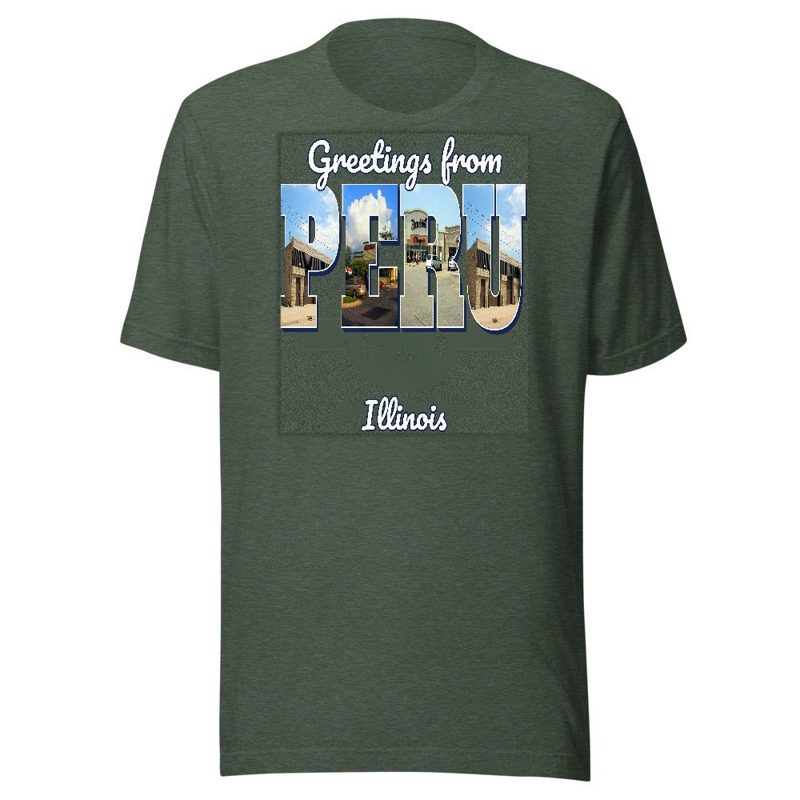
Large-letter postcard art filled with local photos
Glossy ceramic, dishwasher safe

Large-letter postcard art filled with local photos, 11 oz ceramic
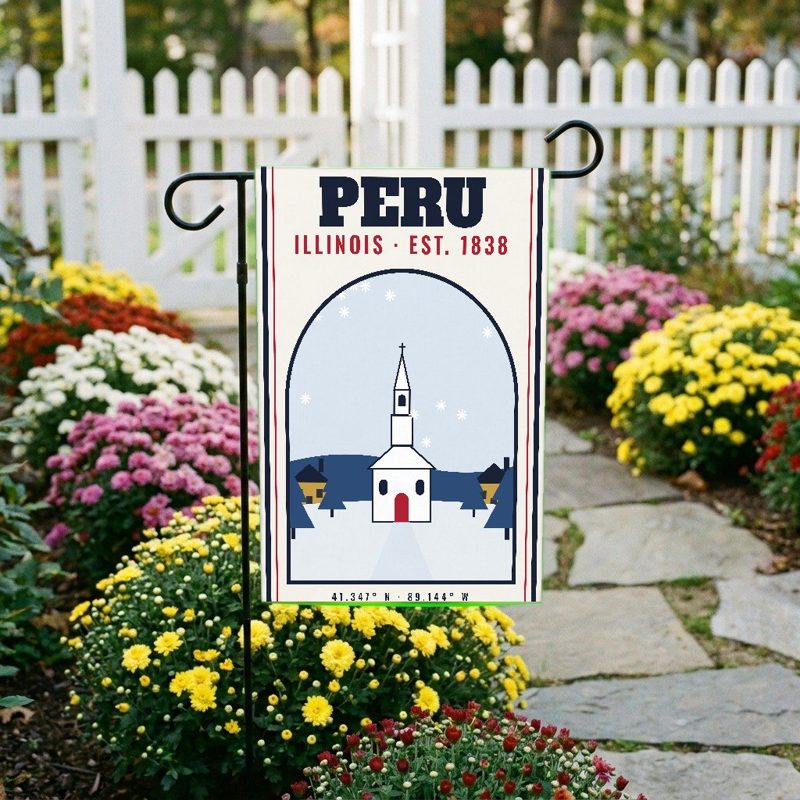
Weatherproof, for the front walk
24″×16″, printed coir-look fibers, rubber back
12″×12″ printed wood, ready to hang
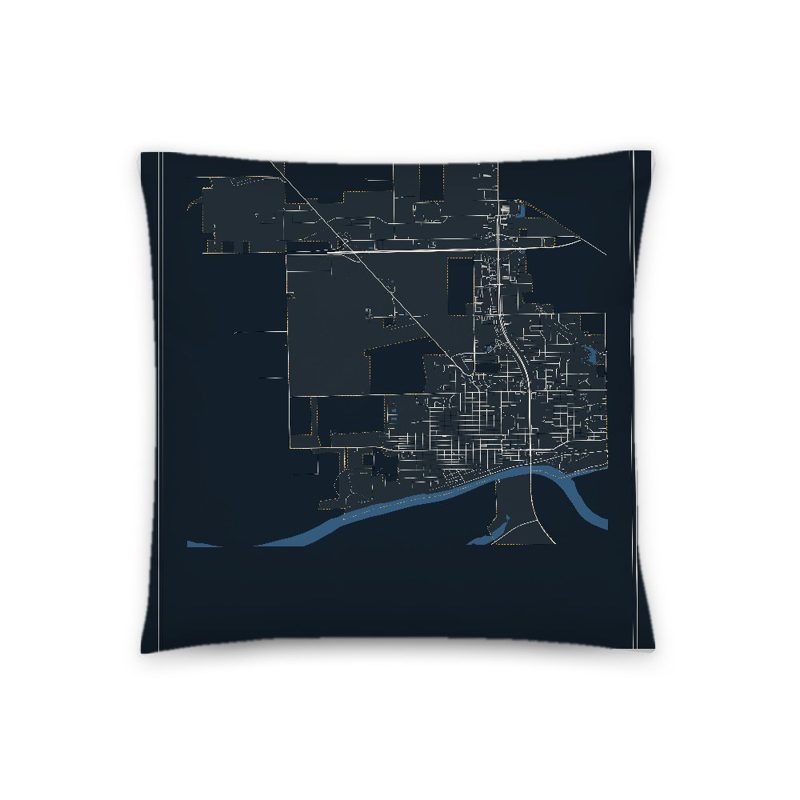
Soft-touch, zip cover
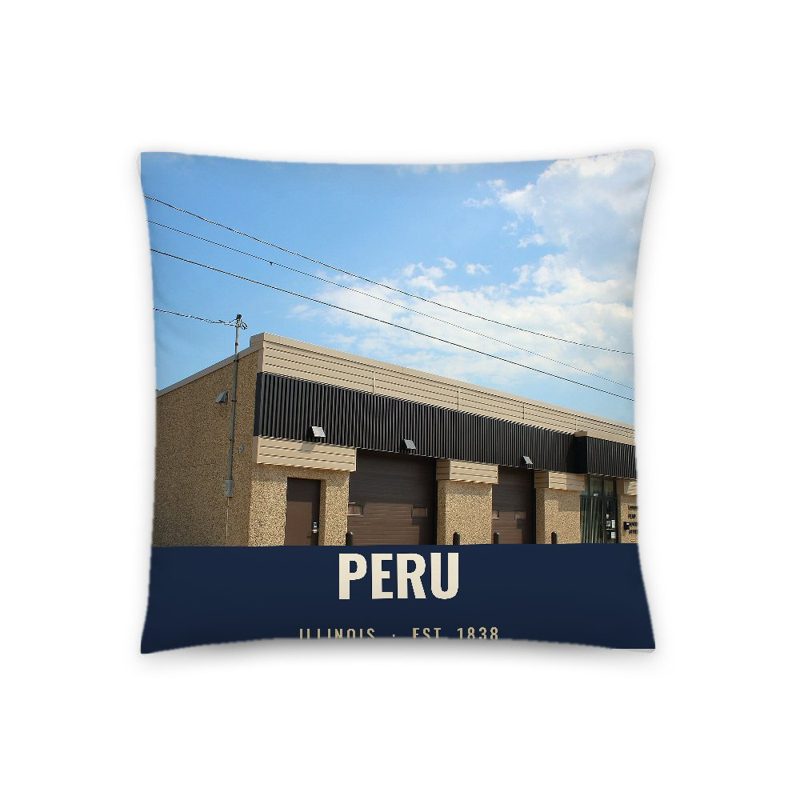
A local landmark photo with the town name, 18″×18″
Sturdy all-over-print tote
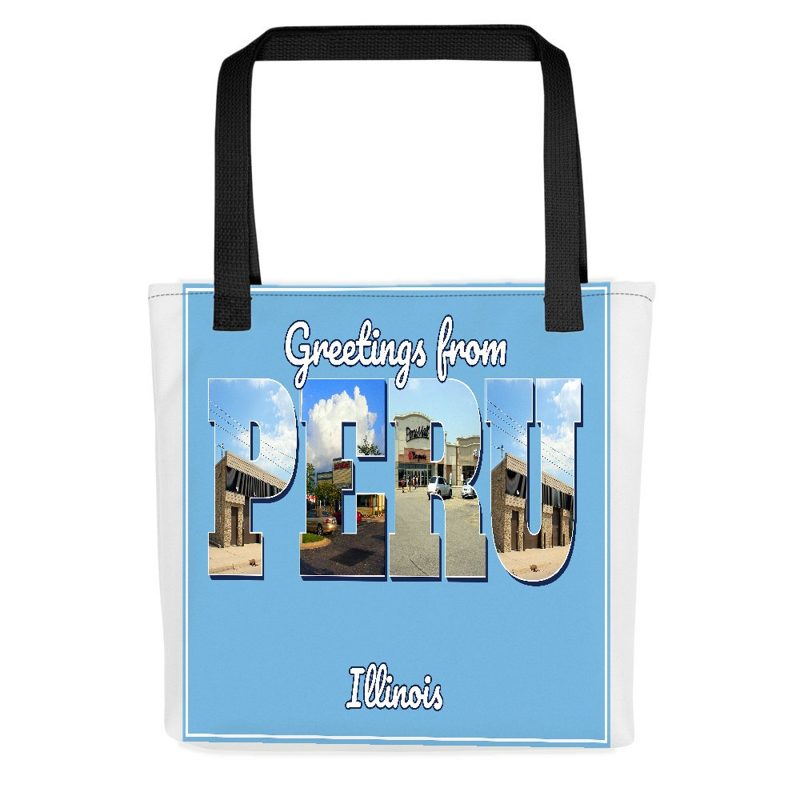
Large-letter postcard art on a sturdy tote
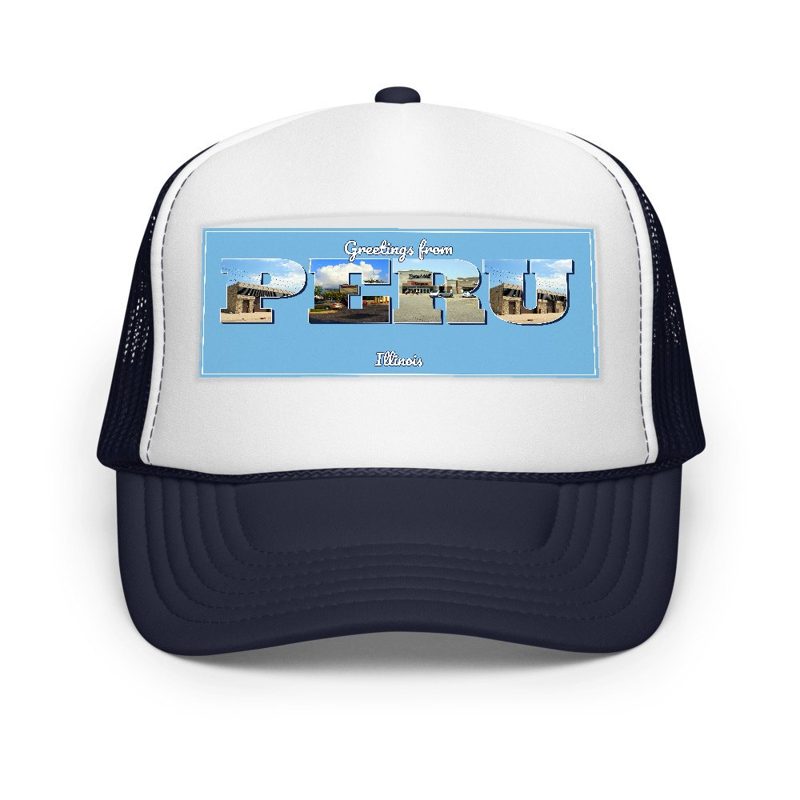
Foam-front trucker, printed (not embroidered) with local photos
Glossy top, cork back
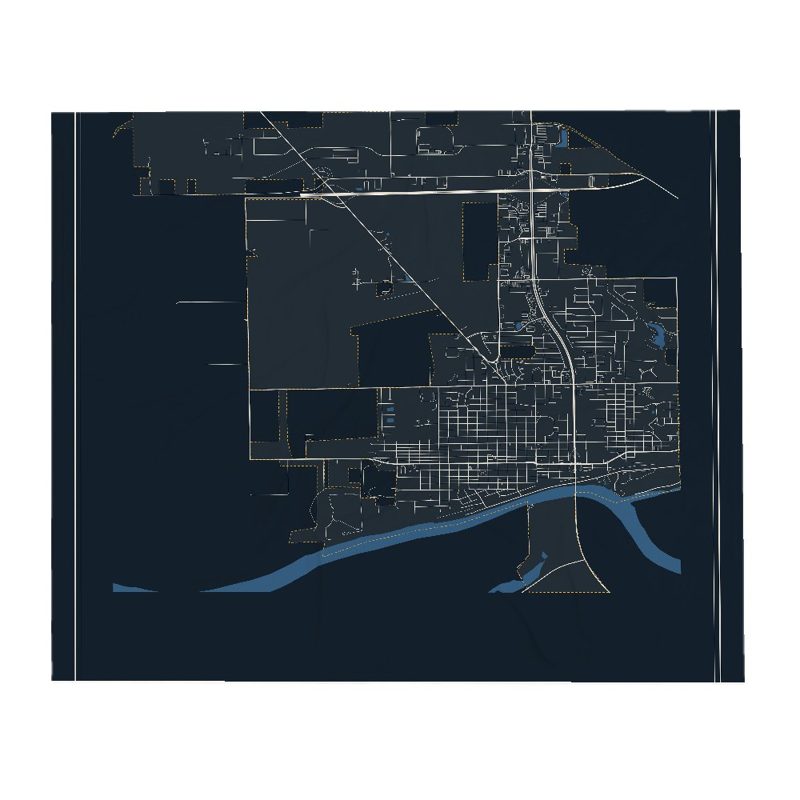
Soft fleece, 50″×60″
20 oz, double-wall stainless
Peru and its twin city, LaSalle, make up the core of Illinois Valley. Landmarks include Illinois Valley Regional Airport and Peru Mall. Peru is the birthplace of Zez Confrey, composer and pianist.
Population 2010: 10,295 → 2020: 9,896
From Wikidata (CC0).
The city's first settler was John Hays, who arrived in 1830. The city was organized as a borough in 1838, incorporated as a village February 25, 1845, and incorporated as a city on March 13, 1851. The original plat was between West Street, 4th Street, and East Street (now Pine Street).
Since the first steamboat Traveler reached Peru in 1831, the city had high hopes of being the western terminus for the Illinois & Michigan Canal. LaSalle won that designation, but Peru became a busy steamboat port at the head of navigation on the Illinois River. Captain McCormick was involved in the Five Day Line, making record fast trips between Peru and St. Louis, Missouri. Senator Gilson reported to land surveyor, Grenville Dodge, that the town would soon outstrip Chicago due to its favorable location along the river and railroads.
Water Street was a thin ribbon pressed between the bluff and the river, leading to the growth eastward of a large industrial district. Developed along the river and the canal, it was served by the Rock Island Railroad and Chicago Burlington and Quincy. These important transportation routes, along with coal mining in at least four mines lasting from 1857 until 1949, were the basis for Peru's rise to an industrial center. Many entrepreneurs grew into prominent businessmen and advanced the interests of Peru and the region. Prominent companies from that time included Maze Lumber, Maze Nails, Peru Plow and Wheel Works, Huse and Loomis Ice Co, Brunner Foundry, Star Union Brewery, Hebel Brewery, Illinois Zinc (Peru and LaSalle were sometimes referred to as "Zinc City"), and many others. Peru's citizens were intent on improving their town, so far as constructing a plank road, northwest of town, a toll road meant to reach Dixon, Illinois.
Peru's story became a story of two levels. The story of Water Street and the bottoms, and the town growing above the bluff. Peru tried hard to link the two. For example, the Peru Horse and Dummy Railroad was driven to dissolution by the city's impossible mandate that it create a loop from Water Street to the upper bluff.
In 1884, Stahlberg started the United Clock Company in Peru. Shortly afterward, it went bankrupt and was reorganized with the help of Frederick William Matthiessen as the Western Clock Company. By 1905 it had grown into a national company, producing over 1 million alarm clocks per year. In 1909, they trademarked "Westclox". In 1917 they became a model for workers' benefits, one of the early companies to pay life insurance and have a safety committee. Later on, they limited the work week, constructed a company park with a tennis court and horseshoe courts, developed workers' housing, and established a school for watchmakers with provision for scholarships. In 1935 it was the safest company in the nation, with 11 million hours without a lost time accident.
During World War II the company made mechanical fuses for the government and had more than 600 of its employees enter the armed forces. At its height, it manufactured nearly 2 million clocks and watches annually and employed over 4,000 persons. It closed the Peru factory in 1980; the loss of jobs caused a rapid decline in population in LaSalle and Peru.
Today the old Westclox Administration Building is now the headquarter for the Carus Corporation and the rest of the Westclox complex is being redeveloped into a commercial center. The building is also home to the Westclox Museum. The building caught fire on July 14, 2023.
Adapted (trimmed) from the Wikipedia article Peru, Illinois, revision 1371882414 by its contributors, licensed CC BY-SA 4.0.
We share a part of every Peru sale with local partners, and we'd love to print from your collection. Old photographs, maps and postcards make the best keepsakes.
Partner with usA favorite landmark, your street, a school or team, an anniversary gift, a different product. Tell us and we'll get back to you by email.
Peru's population was 9,896 in the 2020 U.S. Census, down from 10,295 in 2010.