A short history of Paw Paw
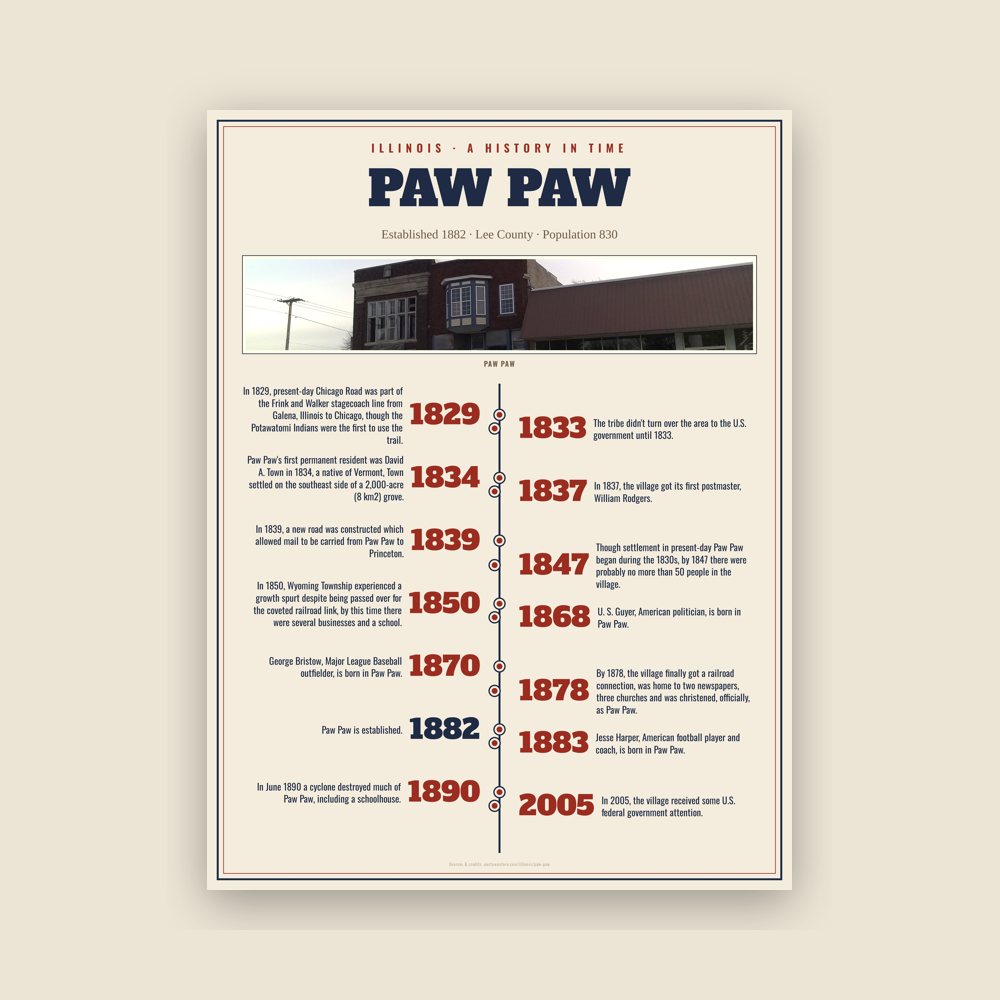
In 1829, present-day Chicago Road was part of the Frink and Walker stagecoach line from Galena, Illinois to Chicago, though the Potawatomi Indians were the first to use the trail. The tribe didn't turn over the area to the U.S. government until 1833. Frink and Walker also held the mail contract for the area's settlers. The route became popular and garnered a mention in the work of writer Margaret Fuller.
Paw Paw's first permanent resident was David A. Town in 1834, a native of Vermont, Town settled on the southeast side of a 2,000-acre (8 km2) grove. The first cabin was built the next spring by Edward Butterfield on the site of Paw Paw. This first house also held the village's first store and would eventually become the first structure in town to burn. During its earliest days, the town was sectioned off into East, West, and South Paw Paw, all of which became known as simply Paw Paw. In 1837, the village got its first postmaster, William Rodgers. Before, the nearest post office was 20 miles away in Somonauk. In 1839, a new road was constructed which allowed mail to be carried from Paw Paw to Princeton. The first stagecoach station (known as a "Tavern") was built along Chicago Road and operated by Isaac Balding. Balding operated the station until the railroad came to town several years later.
Though settlement in present-day Paw Paw began during the 1830s, by 1847 there were probably no more than 50 people in the village. The name Paw Paw was derived from a nearby grove of Pawpaw trees on the edge of a 2,000-acre (8 km2) forest. American general Winfield Scott is credited with being the first person of European ancestry to discover the area. The area that Paw Paw is located in was home to more than one stand of Paw Paw trees, thus more than one settlement took the name Paw Paw. To avoid confusion the townspeople renamed the village Wyoming Township. The new name came from the Wyoming Valley in Pennsylvania, where many of Paw Paw's earliest settlers originated. The Wyoming Valley was the scene of a massacre during the American Revolution in which over 300 American settlers were killed by Native Americans allied with the British. Many of Paw Paw's early settlers shared surnames with those who are listed as having been involved in the fighting and massacre.
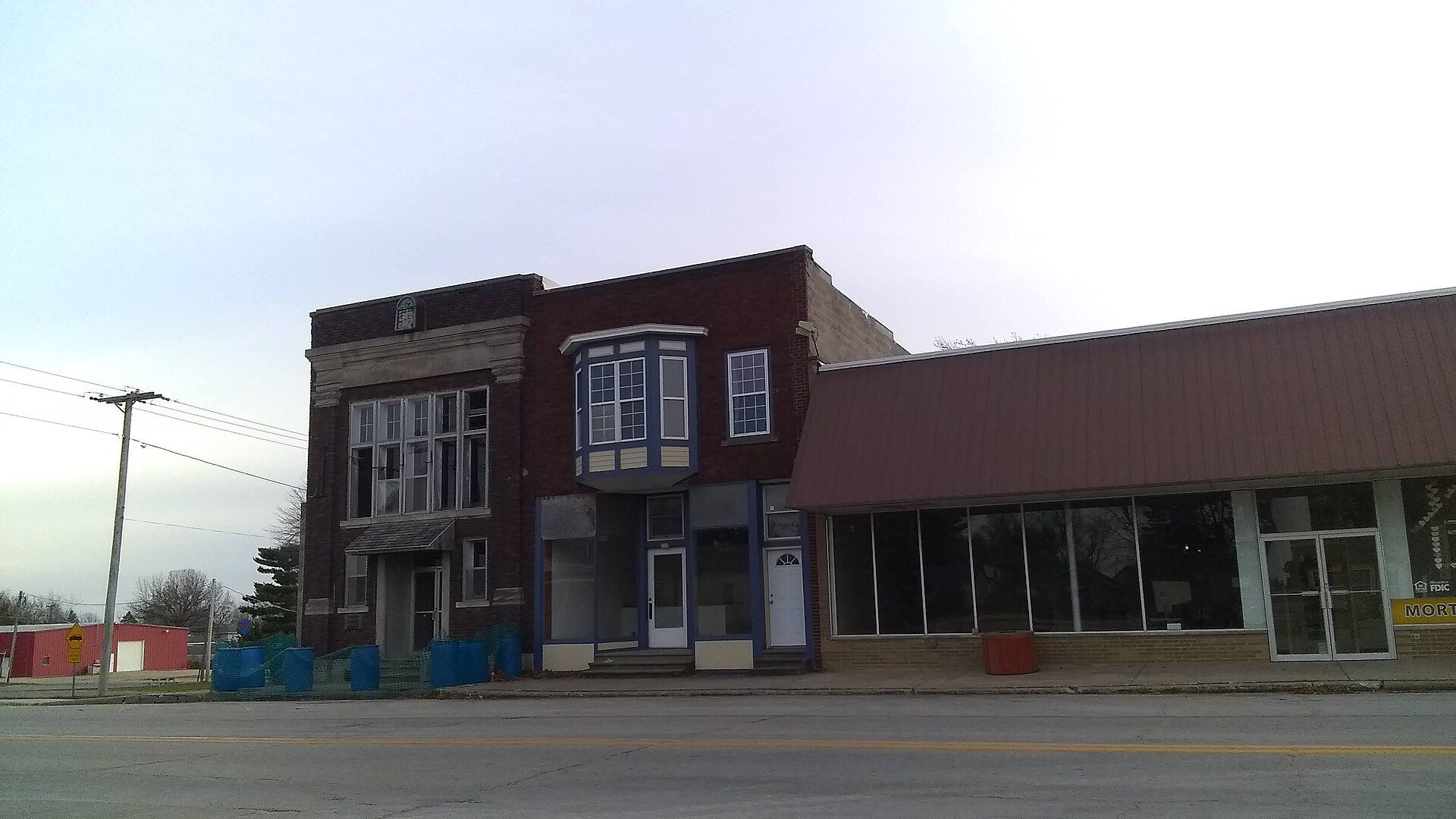
In 1850, Wyoming Township experienced a growth spurt despite being passed over for the coveted railroad link, by this time there were several businesses and a school. By 1878, the village finally got a railroad connection, was home to two newspapers, three churches and was christened, officially, as Paw Paw. The village was officially established in 1882 and is celebrating its 125th anniversary in 2007.
In June 1890 a cyclone destroyed much of Paw Paw, including a schoolhouse. Fourteen people were killed, including 7 in the school.
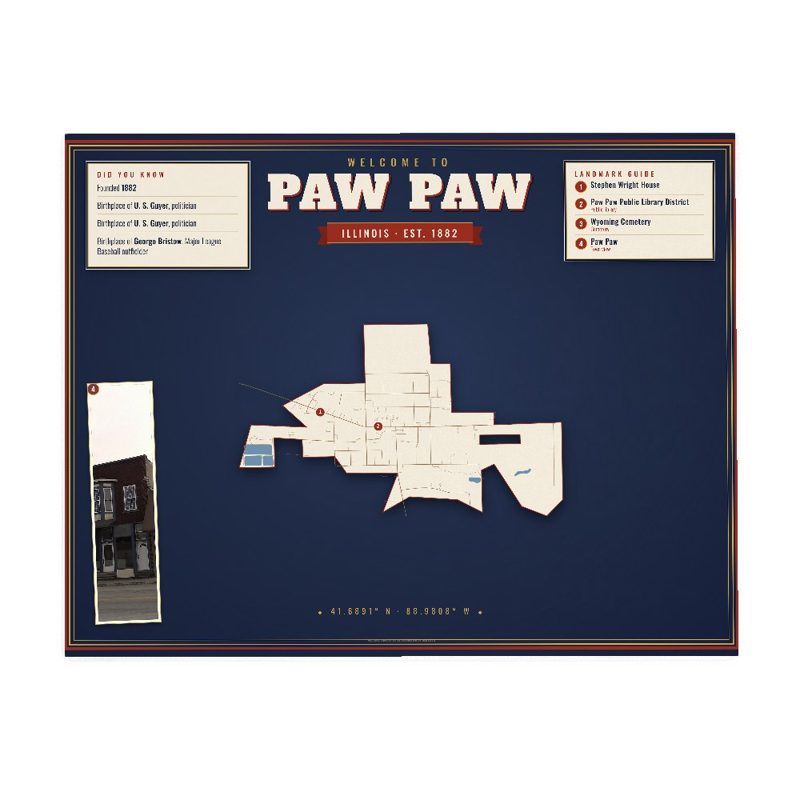
In 2005, the village received some U.S. federal government attention. On May 22 of that year, a local Queen Anne style house, the Stephen Wright House was listed in the U.S. National Register of Historic Places, it is the only property with that designation in Paw Paw. The same year the village was the recipient of a US$192,000 United States Environmental Protection Agency earmark to construct an elevated water tower.
Adapted (trimmed) from the Wikipedia article Paw Paw, Illinois, revision 1384680614 by its contributors, licensed CC BY-SA 4.0.