Farmer Jonathan Tharp, who came from Ohio, was the first non-native American resident of what would become Pekin, building a log cabin in 1824 on a ridge above the Illinois River at a site near the present foot of Broadway Drive. Franklin School was later erected near this site. Other settlers soon joined him, including his father Jacob Tharp who arrived from Ohio in 1825. They lived near Chief Shabbona's large Indian village of about 100 wigwams, populated primarily by Potawatomi, which was situated along Gravel Ridge, on the eastern shore of what is today Pekin Lake in northwest Pekin.
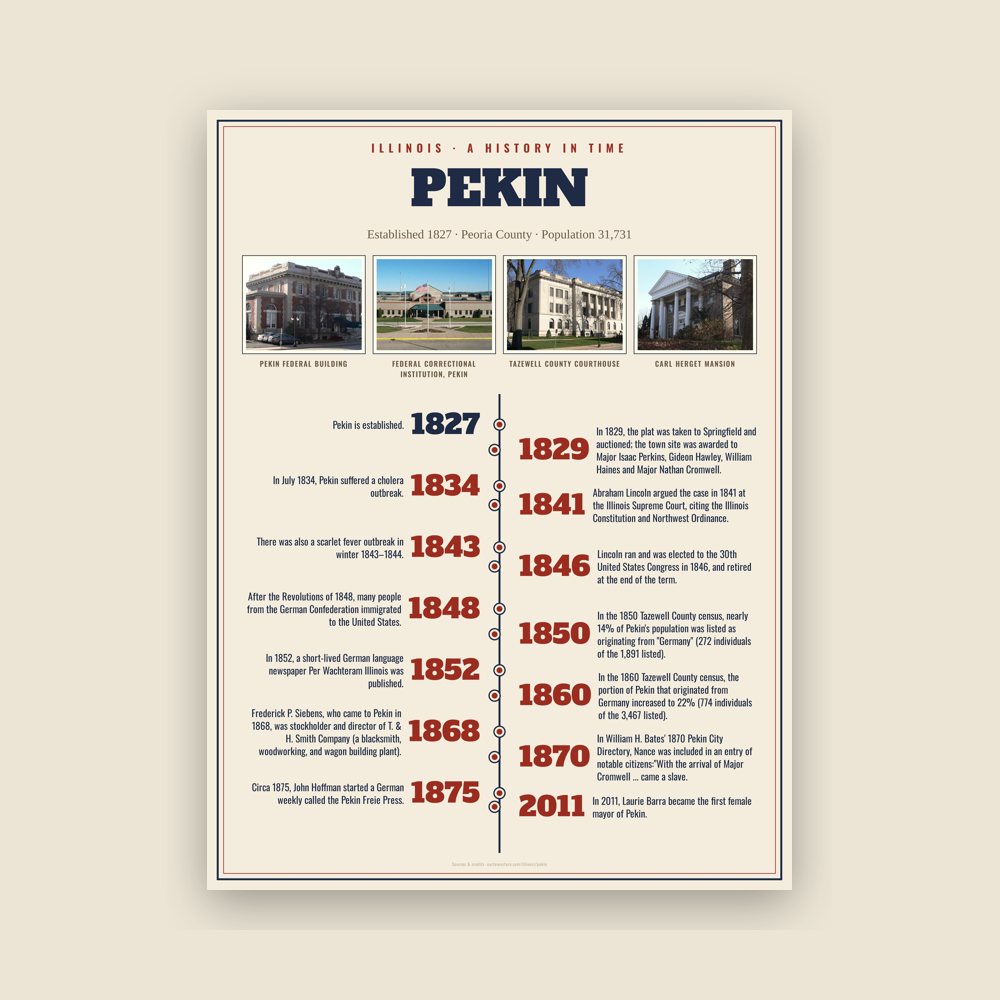
The county surveyor, William Hodge, measured and laid out a "town site" in 1827. In 1829, the plat was taken to Springfield and auctioned; the town site was awarded to Major Isaac Perkins, Gideon Hawley, William Haines and Major Nathan Cromwell. Major Cromwell's wife, Mrs. Ann Eliza Cromwell, selected the name of Pekin. It has been stated that Mrs. Cromwell named the town "Pekin" because she thought Peking was on the exact opposite side of the world from the town she founded. In the 1800s, China and the United States were thought to be antipodes, or locations that were exactly opposite of each other on the globe. As such, towns were sometimes named after their supposedly antipodal locations. Another example is nearby Canton, Illinois. "Peking" was often romanized as "Pekin", as in other towns founded during the 1800s (such as Pekin, Ohio).
Nathan Cromwell named many of the city streets after the wives and daughters of early Pekin settlers. It was long held, as first expressed by W.H. Bates in the 1870 Pekin City Directory, that Cromwell was assisted by his wife Ann Eliza in the naming of the streets.
Read the full history
19th century
In July 1834, Pekin suffered a cholera outbreak. Several early settlers died in the outbreak and were buried in the old Tharp cemetery. There was also a scarlet fever outbreak in winter 1843–1844.
Pre-Civil War
Pekin was the residence of Nance Costley, known to history as the first enslaved person to be freed with the help of Abraham Lincoln. She was auctioned off to Nathan Cromwell in 1827 and brought to Pekin. Her original case was part of a Probate Court hearing regarding the estate when he died in 1836. David Bailey, a local merchant of abolitionist leanings, sought the help of an attorney friend after he (and Nance) lost the case. Abraham Lincoln argued the case in 1841 at the Illinois Supreme Court, citing the Illinois Constitution and Northwest Ordinance. Justice Breese determined that Nance was a free person and reversed the Circuit Court ruling, stating that "it is a presumption of law, in the State of Illinois, that every person is free, without regard to color," and "the sale of a free person is illegal". After her freedom was legally secured, she remained in Pekin with her husband and children. In William H. Bates' 1870 Pekin City Directory, Nance was included in an entry of notable citizens:"With the arrival of Major Cromwell ... came a slave. That slave still lives in Pekin and is now known, as she has been known for nearly half a century ... (as) 'Black Nancy.' She came here a chattel. ... But she has outlived the age of barbarism, and now, in her still vigorous old age, she sees her race disenthralled; the chains that bound them forever broken, their equality before the law everywhere recognized and her children enjoying the elective franchise."Lincoln attended the Whig Convention that was held in Pekin on May 1, 1843. He was among several local Whig politicians who wanted to serve in the U.S. Congress. To keep from splitting the Whig vote, the competitors agreed to support each other for one term each in Congress. Lincoln ran and was elected to the 30th United States Congress in 1846, and retired at the end of the term. This single term in Congress was Lincoln's only experience in Washington before he was elected president.
"Pekin was a pro-slave city for years. Some of the original settlers had been slave-owners themselves, and the overwhelming sentiment in Pekin was Democratic. Stephen A. Douglas, not Abraham Lincoln, was the local hero, although Lincoln was well-liked, and had some German following."
Nonetheless, there was abolitionist sentiment in Pekin. Among Pekin's abolitionist leaders was Dr. Daniel Cheever, who performed Underground Railroad activities in his office at the corner of Capitol and Court streets (in addition to his property in Delavan which was an Underground Railroad depot) and the brothers Samuel and Hugh Woodrow. (Catherine Street in Pekin is named for Samuel's wife, and Amanda Street is named for Hugh's wife). The sentiment was bolstered by the German immigrants that arrived in the area after the Revolutions of 1848; while there were small groups that supported slavery, finding them would prove difficult as the German community disapproved of the idea.
Civil War
During the Civil War, the inhabitants of Pekin were divided between the pro-slavery element, who favored the Confederacy, and the abolitionist and pro-Union element. Early in the war, the secessionist "Knights of the Golden Circle" openly supported secession and slavery in Pekin. The 1949 Pekin Centenary, p. 15, says the Knights were "aggressive and unprincipled," and "those who believed in the Union spoke often in whispers in Pekin streets and were wary and often afraid." As a response to the Knights' influence, Dr. Cheever and 10 other men gathered at 331 Court Street in Pekin on June 25, 1862, to establish the first council of the Union League of America. The goal of the League was to promote patriotism and loyalty to the Union in the Civil War and the abolition of slavery. Its members hoped to counter Northern disillusionment with President Lincoln's military policies after early Union defeats in the American Civil War. Although closely allied with the Republican Party, the League sought to enroll all Union supporters, regardless of party. The anti-slavery Germans of Pekin took an active role in the Union League in their city.
Immigration and railroads
After the Revolutions of 1848, many people from the German Confederation immigrated to the United States. During the decade of the 1850s, a 118.6% increase in the German-born population was observed. In the 1850 Tazewell County census, nearly 14% of Pekin's population was listed as originating from "Germany" (272 individuals of the 1,891 listed). In the 1860 Tazewell County census, the portion of Pekin that originated from Germany increased to 22% (774 individuals of the 3,467 listed). The 1860 census also changed the designation from "Germany" to the various states of the German Confederation- revealing that 31% of the German immigrants came from Hanover, with Darmstadt trailing behind at 22% of the population.
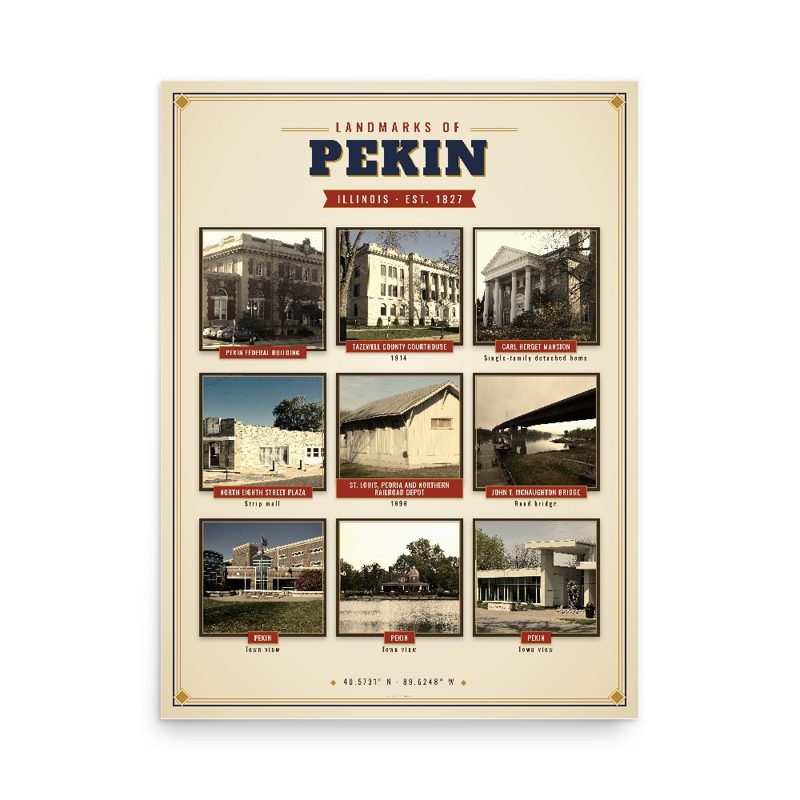
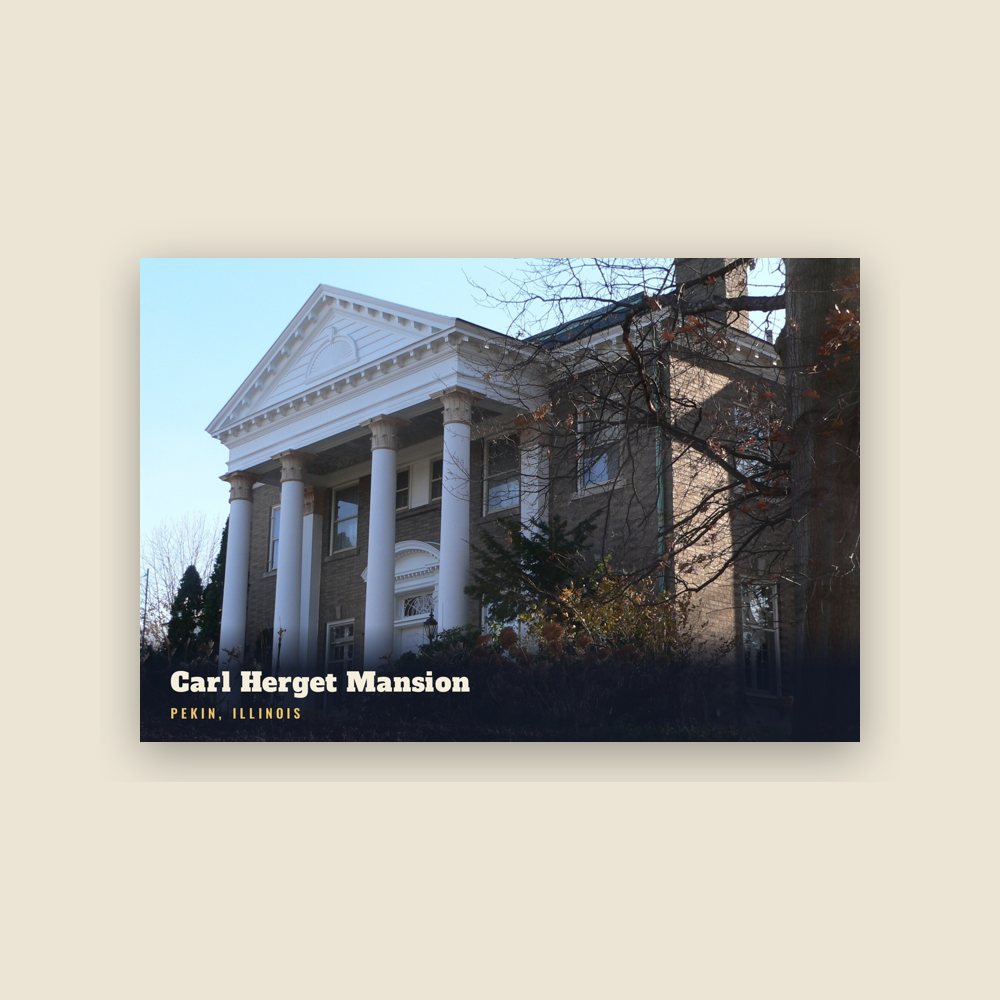
Several German citizens of Pekin held status in the town. Frederick P. Siebens, who came to Pekin in 1868, was stockholder and director of T. & H. Smith Company (a blacksmith, woodworking, and wagon building plant). He was also listed as a foreman blacksmith in the 1887 Pekin City Directory. John Herget moved to the United States from Hesse-Darmstadt, then returned to Germany and brought his family back with him to Pekin in 1869. He became a stockholder in Farmers National Bank and was Mayor of Pekin in 1873 and 1874. John's younger brother, George Herget, was the President of the Globe Distilling Company, the Pekin Electric Light Company, and the Pekin Steam Coopering Company. He settled in Pekin in 1853 after traveling from Gettysburg, Pennsylvania. The historic Carl Herget mansion was listed on the National Register of Historic Places. Habbe Vander Velde, one of the original founders of T. & H. Smith Company, served several terms on Pekin's city council, was Chairman of the Finance Committee, and a member of the Committee on Bridges and Licenses. He moved to Pekin in 1851. Aeilt Van Boening was the city's representative for the Anheuser-Busch Brewing Company of St. Louis. He moved to Pekin in 1867 to be with his brothers, who had settled there in 1866. Van Boening was also listed as a proprietor for City Truck Line in the 1887 Pekin City Directory.
George Herget and Habbe Vander Velde were among those on the "Roll of Honor" in the 1908 Pekin City Directory. Those who were listed were in the 1861 Pekin City Directory and lived continuously or retained citizenship in Pekin since. The list describes those listed to "represent all the varied trades and professions which were essential to the building up of our beautiful city".
In 1852, a short-lived German language newspaper Per Wachteram Illinois was published. Circa 1875, John Hoffman started a German weekly called the Pekin Freie Press. This publication was sold to Albert Weiss, then to Jacob Schmidt in 1914. During World War I, this newspaper was changed to English language and renamed it Free Press; it was published until 1934.
The northern part of town was known as "Bean Town". Before World War I, German was a second language in Pekin, some stores had signs indicating "German Spoken Here", and some churches offered German services. Sacred Heart Roman Catholic Church conducted some services in German for the older members in this section of town.
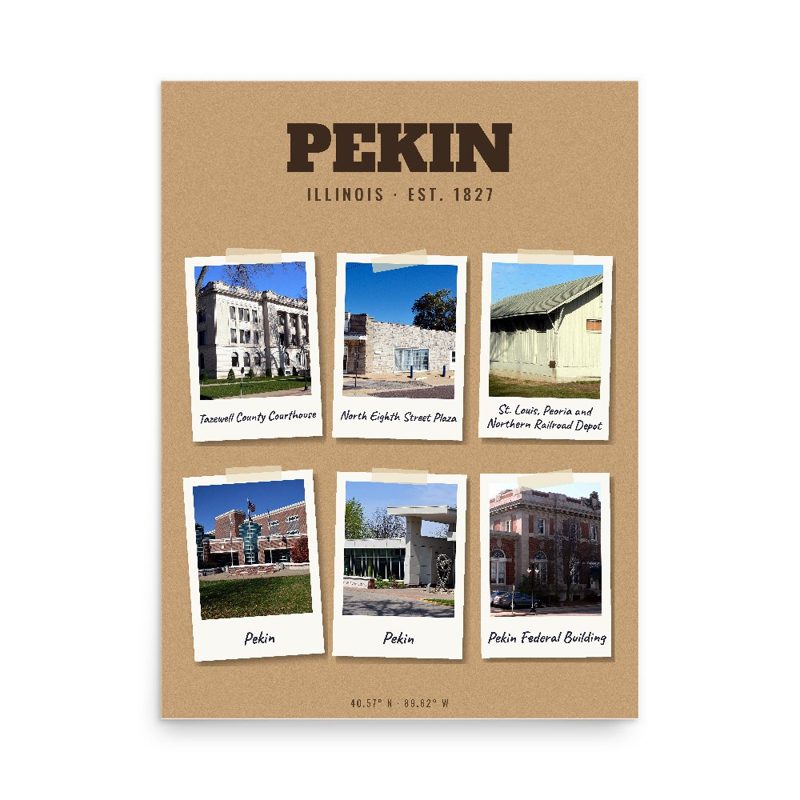
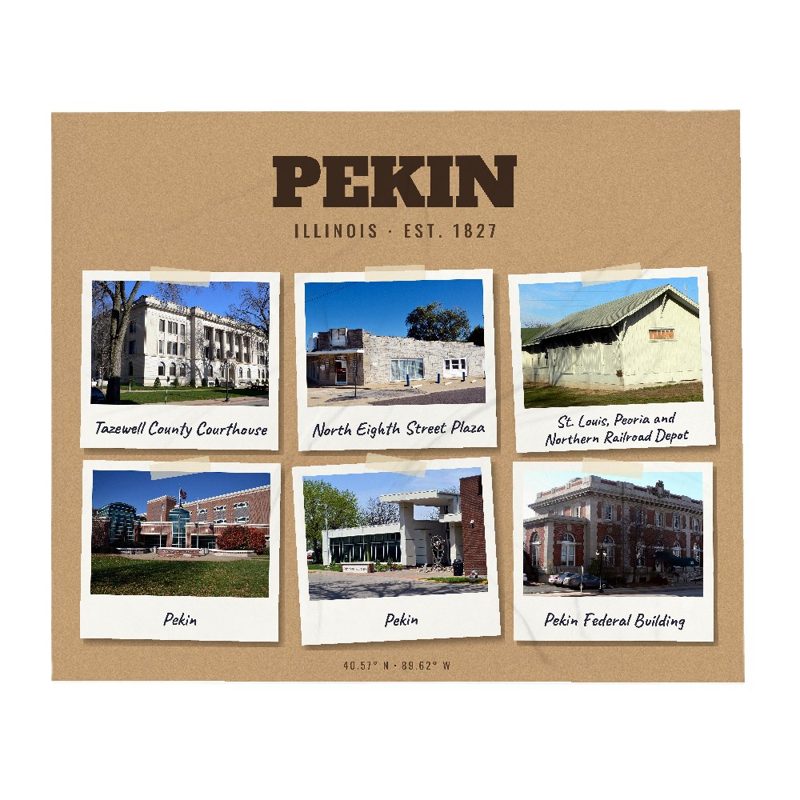
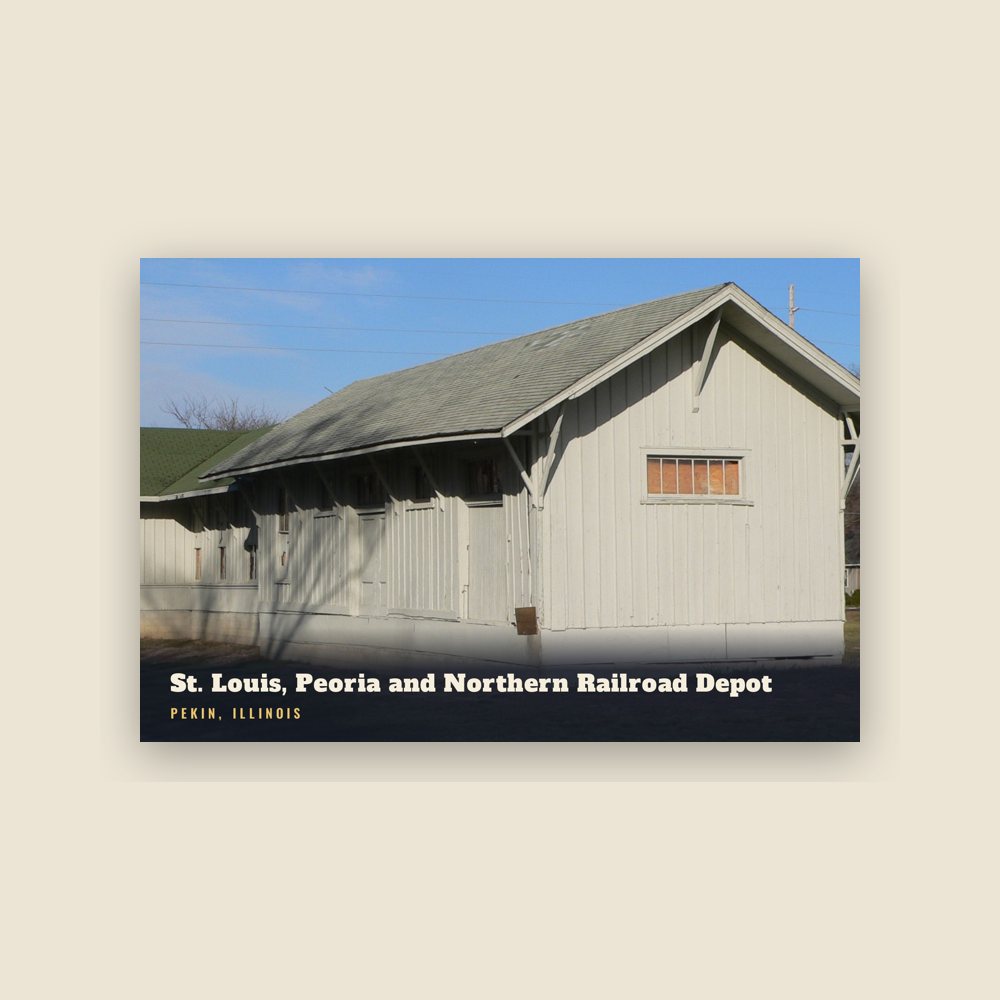
The St. Louis, Peoria and Northern Railway (St. L. P. & N.) built a line into Pekin in 1898, constructing the Pekin Depot.
20th century
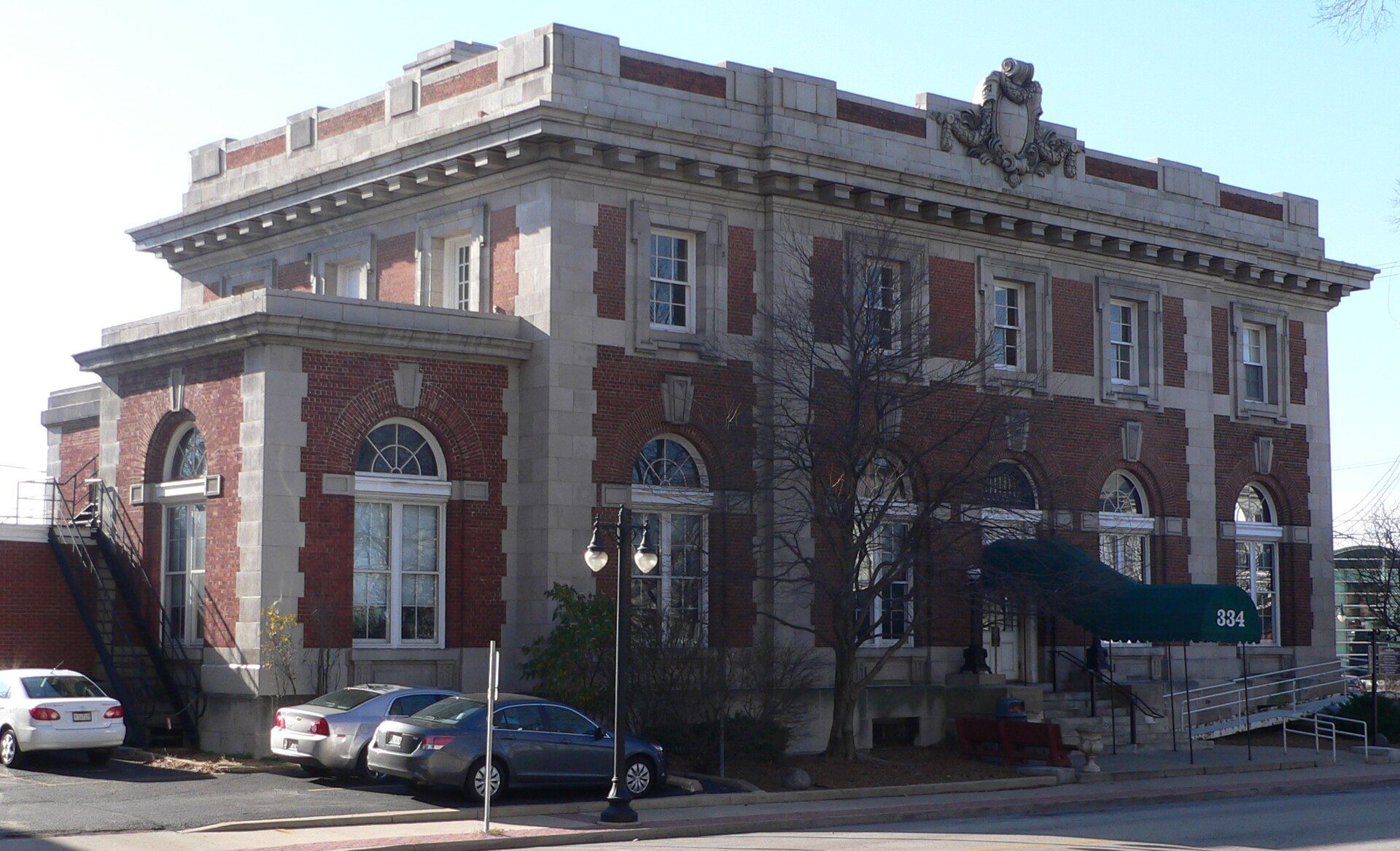
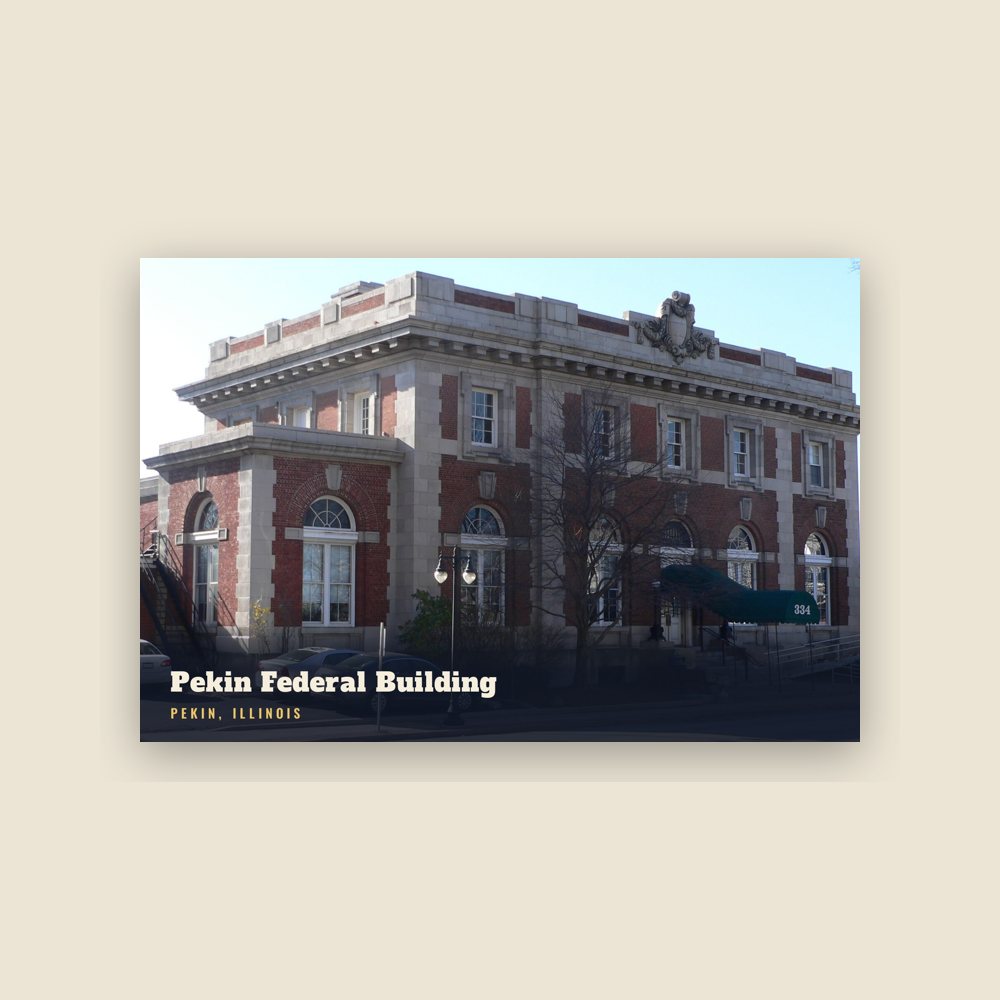
The Pekin Federal Building was built in 1906 to house government offices, including the post office on the first floor. The post office moved in 1966.
In an early 20th-century revival, the Ku Klux Klan recruited new members as a fraternal organization, opposing new immigrants from southern and eastern Europe, and becoming influential in rapidly industrializing urban areas in the Midwest and West, as well as in the South. It had numerous members in Pekin and other Illinois cities. In August 1924, the Pekin Klan hosted one of the largest "monster rallies" ever held in Illinois, with an estimated attendance of 25,000 to 45,000. It was during this period that leading Klansmen took over ownership of the city newspaper, the Pekin Daily Times; they used it as an organ of Klan viewpoints. The Klan owned the paper from September 1923 to June 1925; they sold off the paper within a few years, coinciding with their decline in membership.
The city had an identity and reputation as a sundown town; it was known to be hostile to black residents and few settled there. On the other hand, some Pekin church pastors participated in the civil rights marches of the 1960s, and U.S. Senator Everett Dirksen from Pekin was integral to achieving passage of the Civil Rights Act of 1964. The Effingham Daily News published an article on Peoria attorney Joe Billy McDade on December 16, 1967, that addressed the sundown town policy, in which McDade alleged that Pekin posted a sign its border that read, "Nigger, don't let the sun set on you in Pekin." The article further states, "There must be a thousand Negroes in Peoria who could have known that is NOT true."
21st century
In 1995, Pekin became the first city in Illinois to develop an overlay zoning ordinance to protect groundwater. In 2011, Laurie Barra became the first female mayor of Pekin.