The area began as part of the homelands of the Tongva, who lived in the area for thousands of years before any contact was made with Europeans. The Tongva established extensive routes for travel and trade between Tongva villages as well as with neighboring Indigenous nations. The closest known village site to the city of Brea today is Hutuknga.
Read the full history
Spanish era
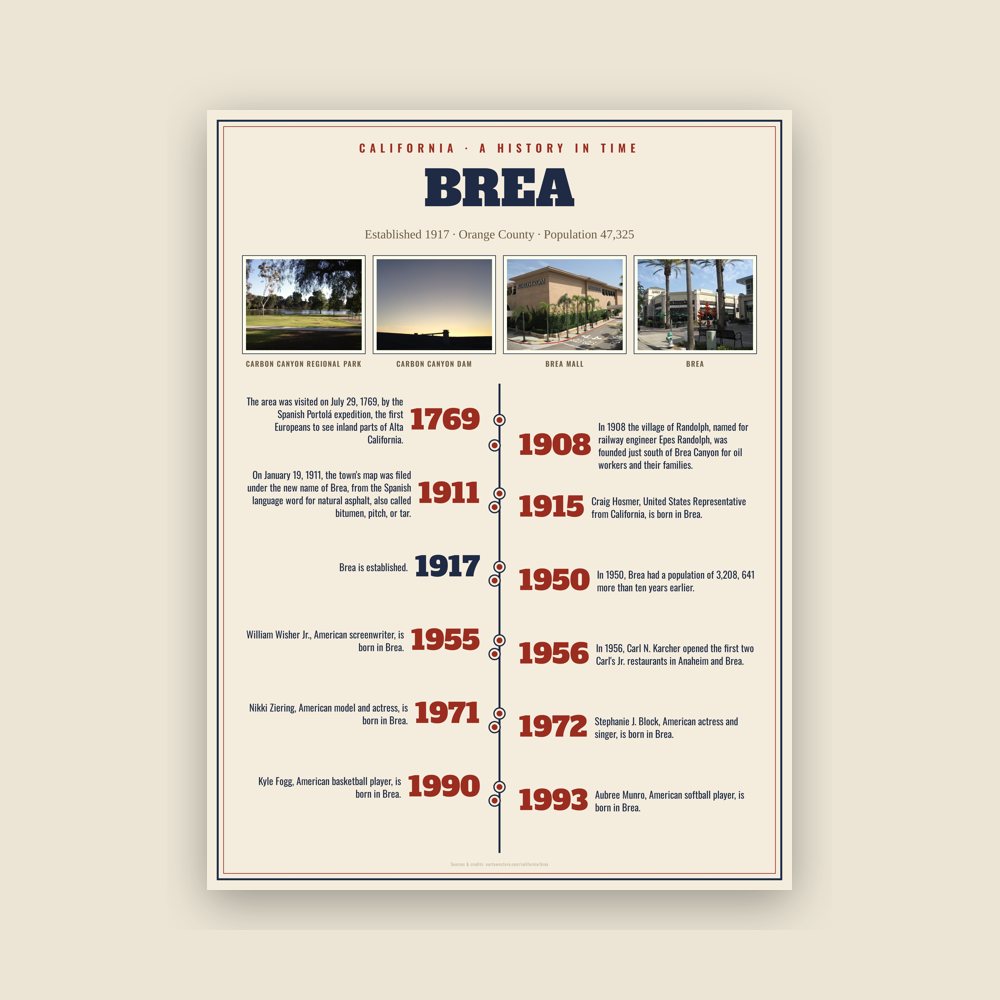
The area was visited on July 29, 1769, by the Spanish Portolá expedition, the first Europeans to see inland parts of Alta California. The party camped in Brea Canyon, near a large native village and a small pool of clean water.
The village of Olinda was founded in present-day Carbon Canyon at the beginning of the 19th century. Many entrepreneurs came to the area searching for "black gold" (petroleum).
Mexican era
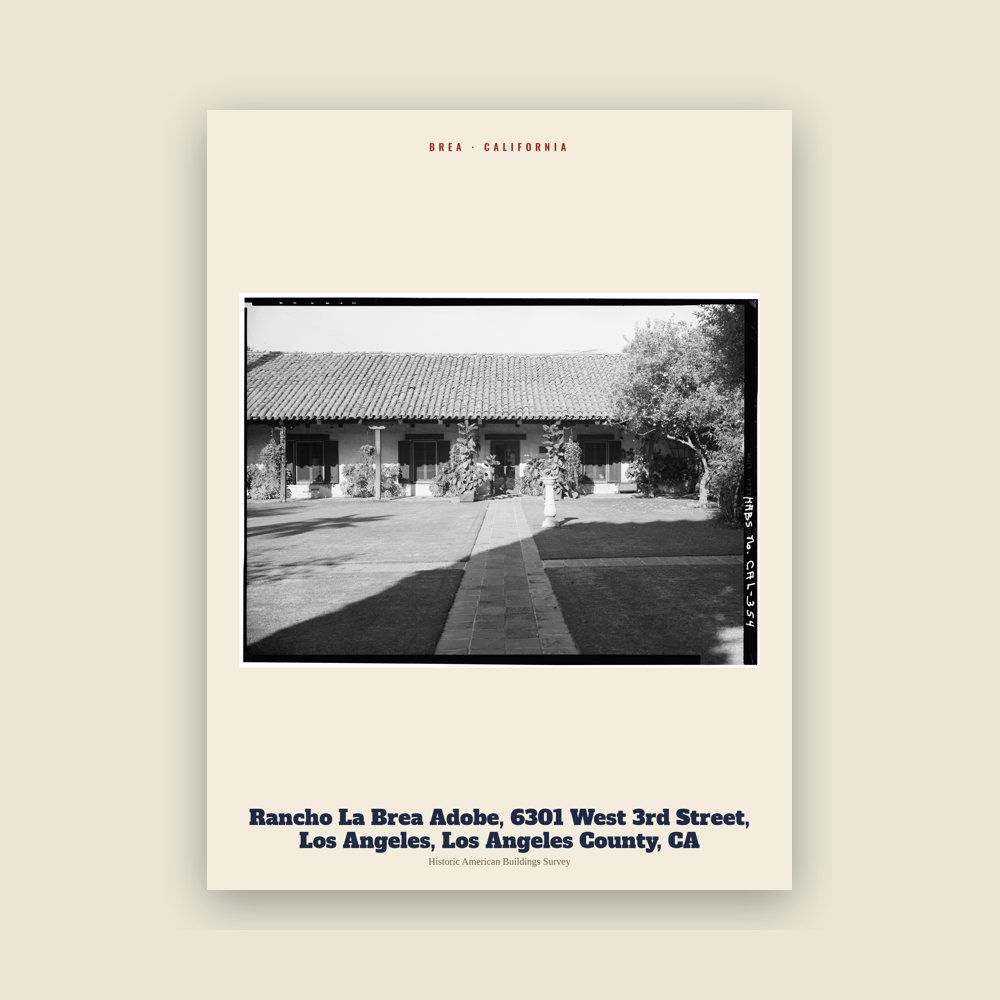
The majority of the current city borders of Brea were within the Rancho San Juan Cajon de Santa Ana. The cessation of territory to the United States in 1848 ushered in a new era of decline for the ranchos as rigorous title-proving processes enacted in 1851 and drought in 1860 caused most owners to sell their land.
American era
The 1880s saw the development of agriculture in northern Orange County, particularly in the form of Valencia Oranges after it was found that the crop grew better in the cool foothills. Additionally, the construction of the Santa Fe Railroad as well as the discovery of oil in the area created an environment that kept winter frost from damaging the plant. Nearby oil fields provided supply for a process called "smudging", subsequently causing a grimy fog to settle over the area which reportedly caused health issues for the workers.
In 1894, the owner of the land, Abel Stearns, sold 1,200 acres (4.9 km2) west of Olinda to the newly created Union Oil Company of California, and by 1898 many nearby hills began sporting wooden oil drilling towers on the newly discovered Brea-Olinda Oil Field. In 1908 the village of Randolph, named for railway engineer Epes Randolph, was founded just south of Brea Canyon for oil workers and their families. Baseball legend Walter Johnson grew up in Olinda at the start of the 20th century, working in the surrounding oil fields.
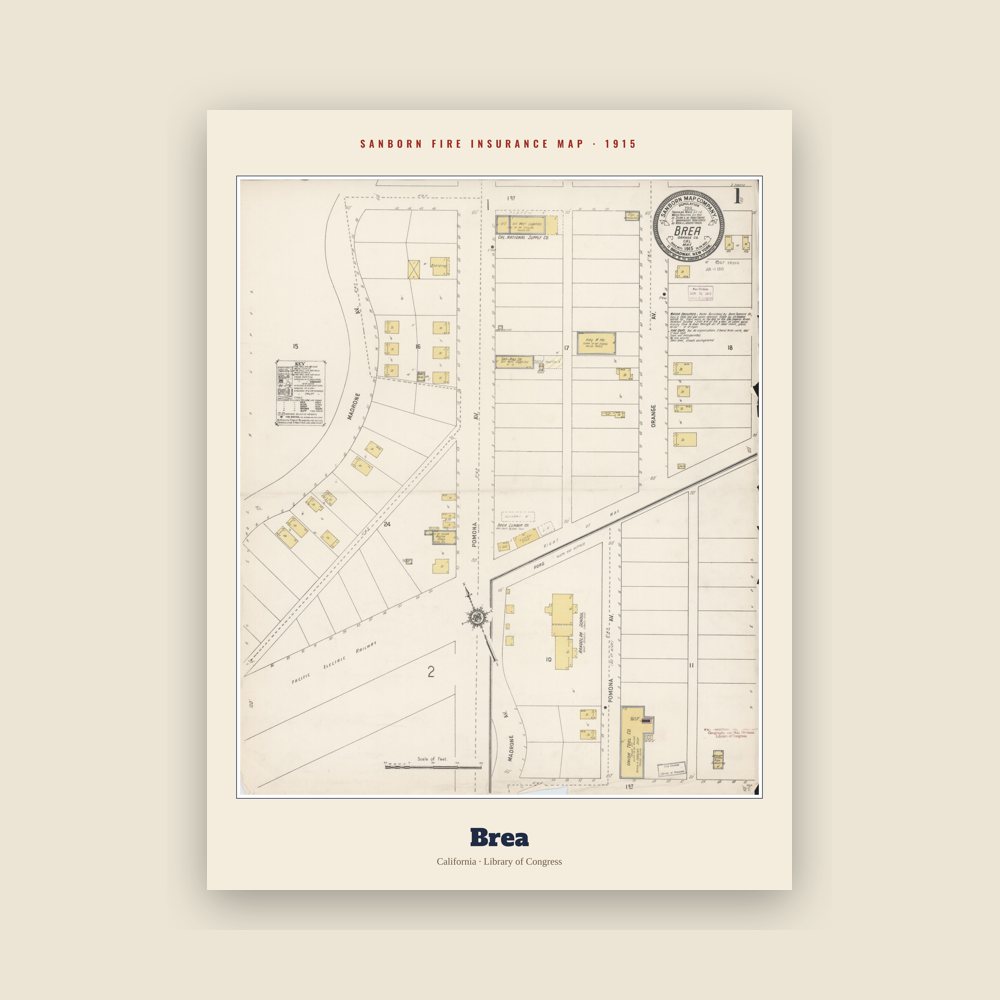
Olinda and Randolph grew and merged as the economy boomed. On January 19, 1911, the town's map was filed under the new name of Brea, from the Spanish language word for natural asphalt, also called bitumen, pitch, or tar. With a population of 752, Brea was incorporated on February 23, 1917, as the eighth official city of Orange County.
As oil production declined, some agricultural development took place, especially lemon and orange groves. In the 1920s, the Brea Chamber of Commerce promoted the city with the slogan “Oil, Oranges, and Opportunity.”
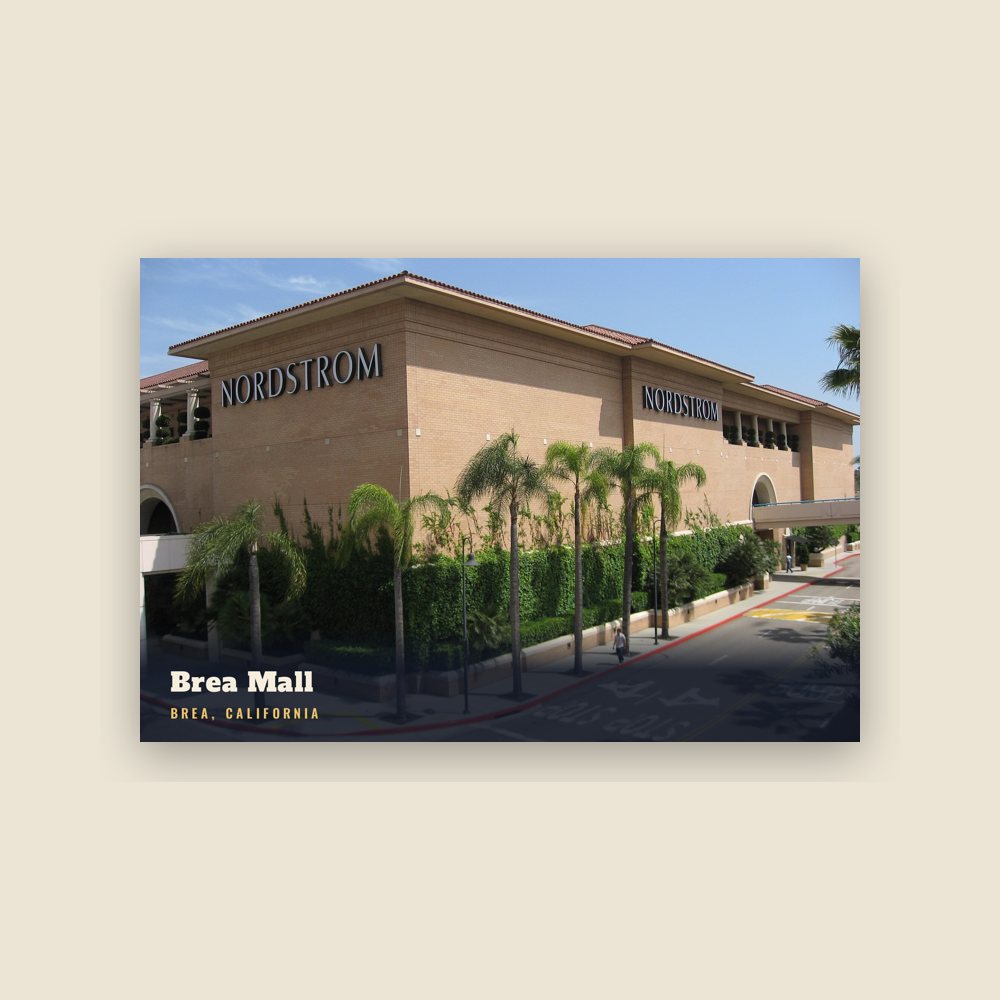
In 1950, Brea had a population of 3,208, 641 more than ten years earlier. The citrus groves gave way gradually to industrial parks and residential development. In 1956, Carl N. Karcher opened the first two Carl's Jr. restaurants in Anaheim and Brea. The opening of the Orange Freeway (57) and the Brea Mall in the 1970s spurred further residential growth, including large planned developments east of the 57 Freeway in the 1980s, 1990s, and 2000s.
In the late 1990s, a 50-acre (200,000 m2) swath of downtown Brea centered on Brea Boulevard and Birch Street was redeveloped into a shopping and entertainment area with movie theaters, sidewalk cafes, a live comedy club from The Improv chain, numerous shops and restaurants, and a weekly farmer's market. It is locally known and signed as Downtown Brea. The downtown area opened in 2000.


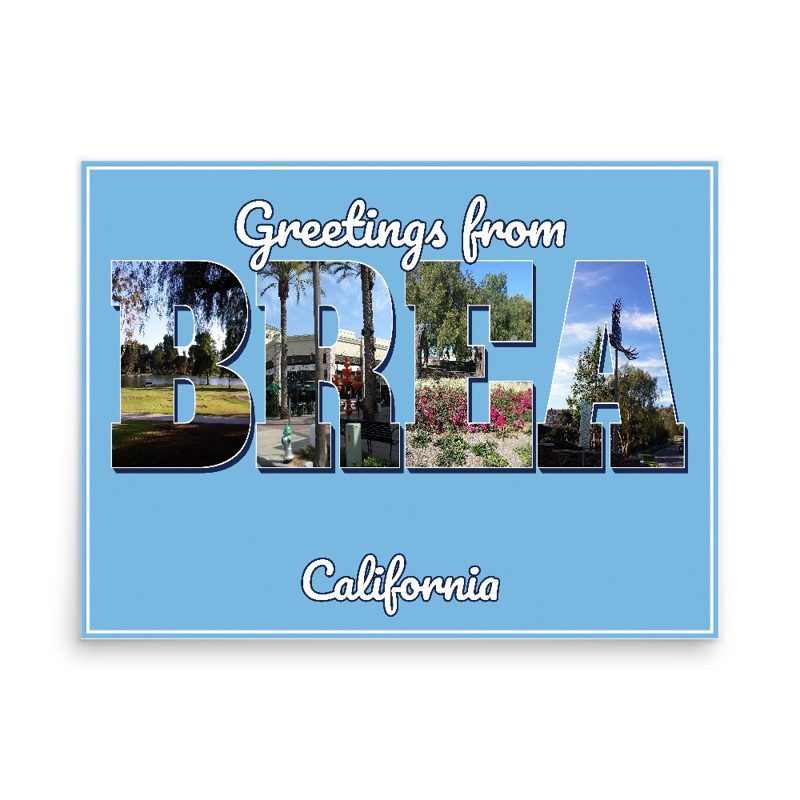
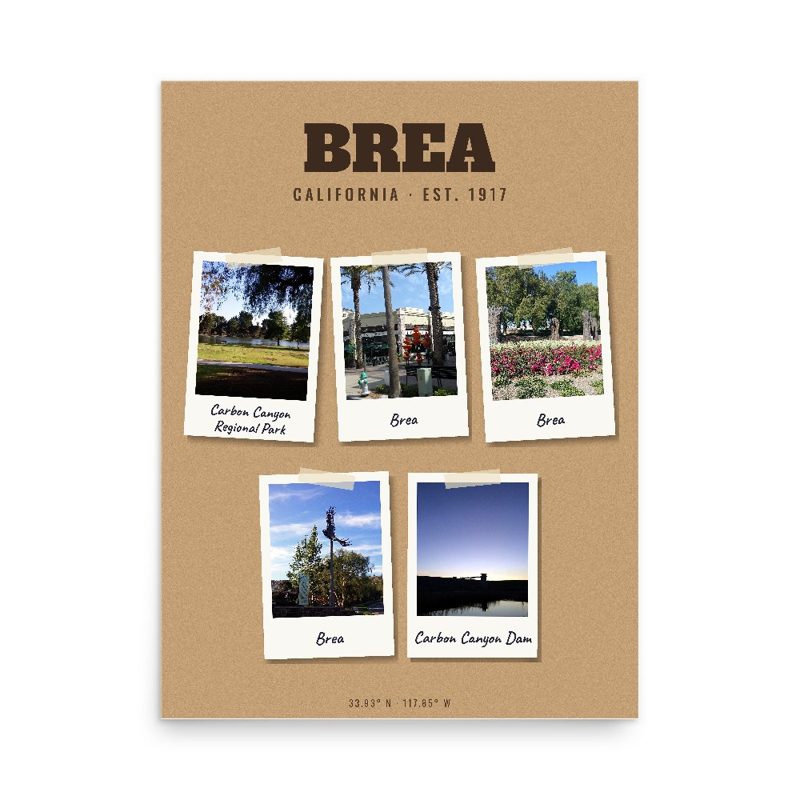
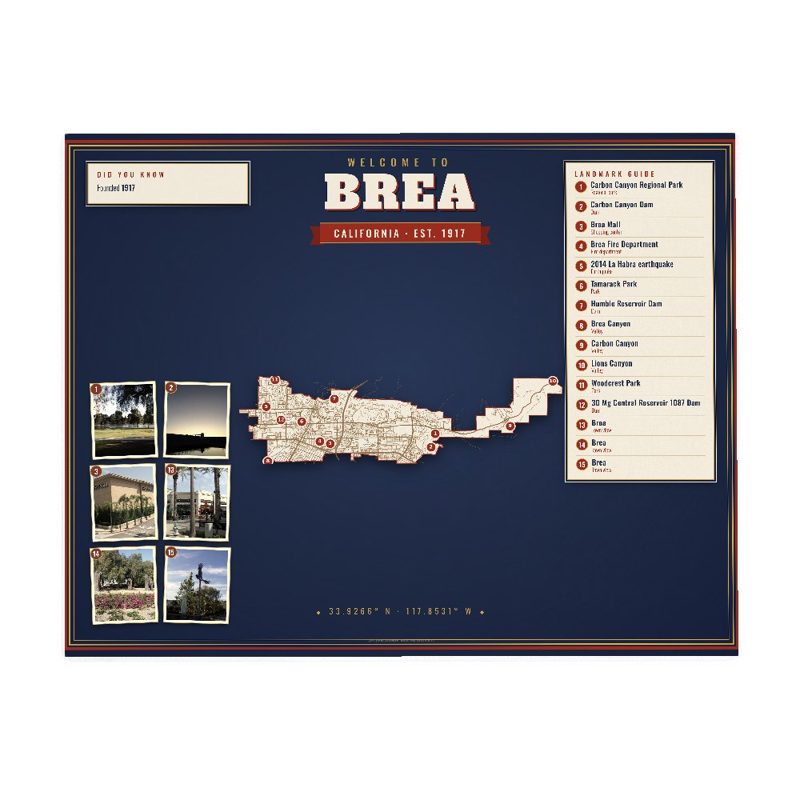












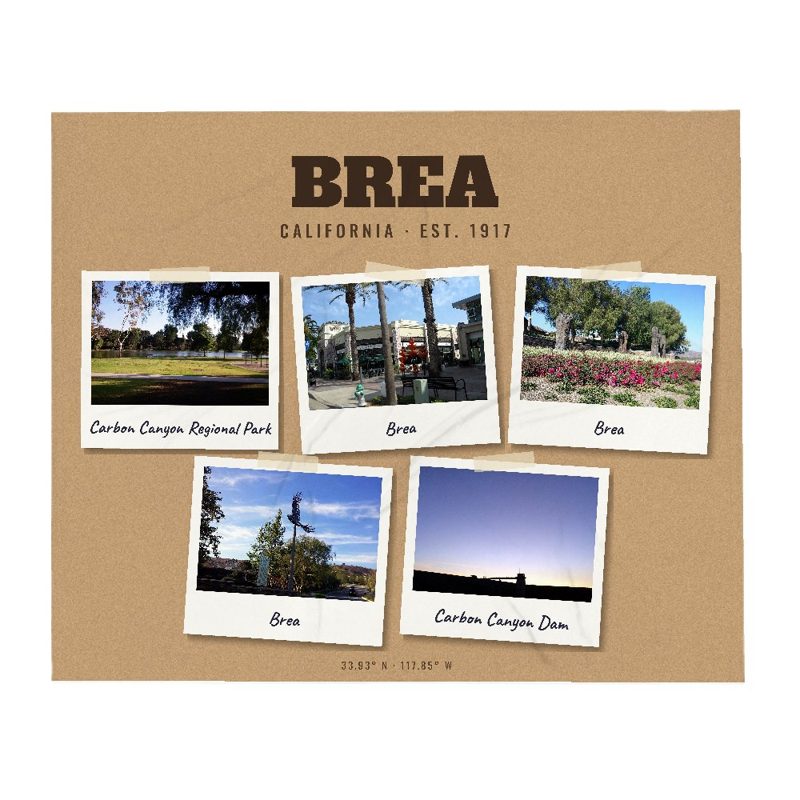
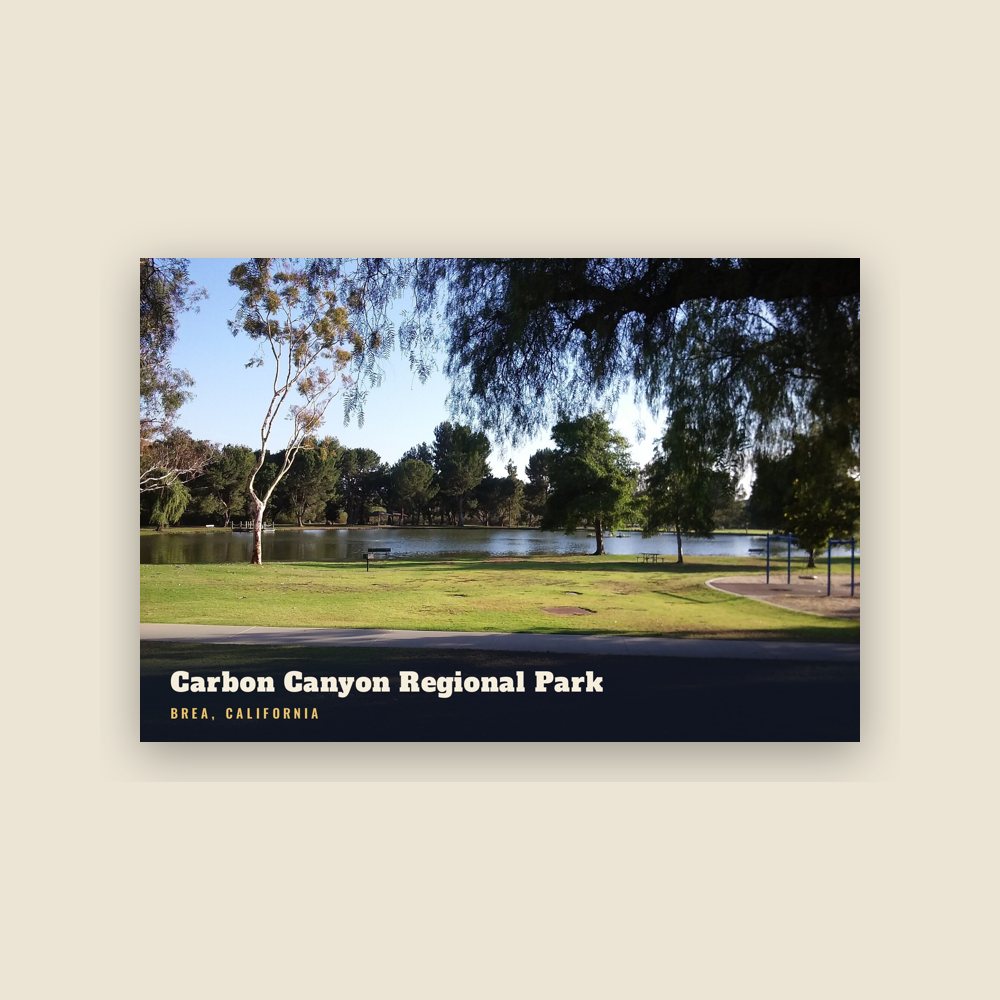

 Carbon Canyon Regional Park
 Carbon Canyon Dam
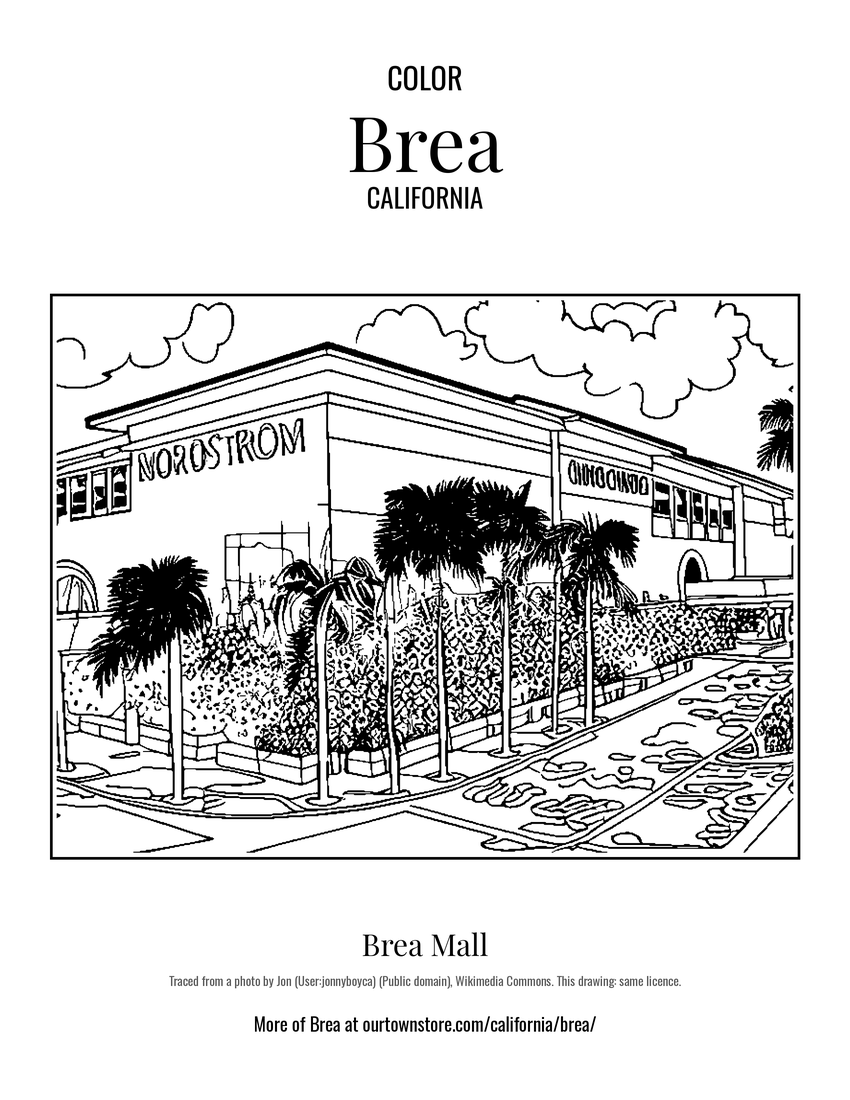 Brea Mall
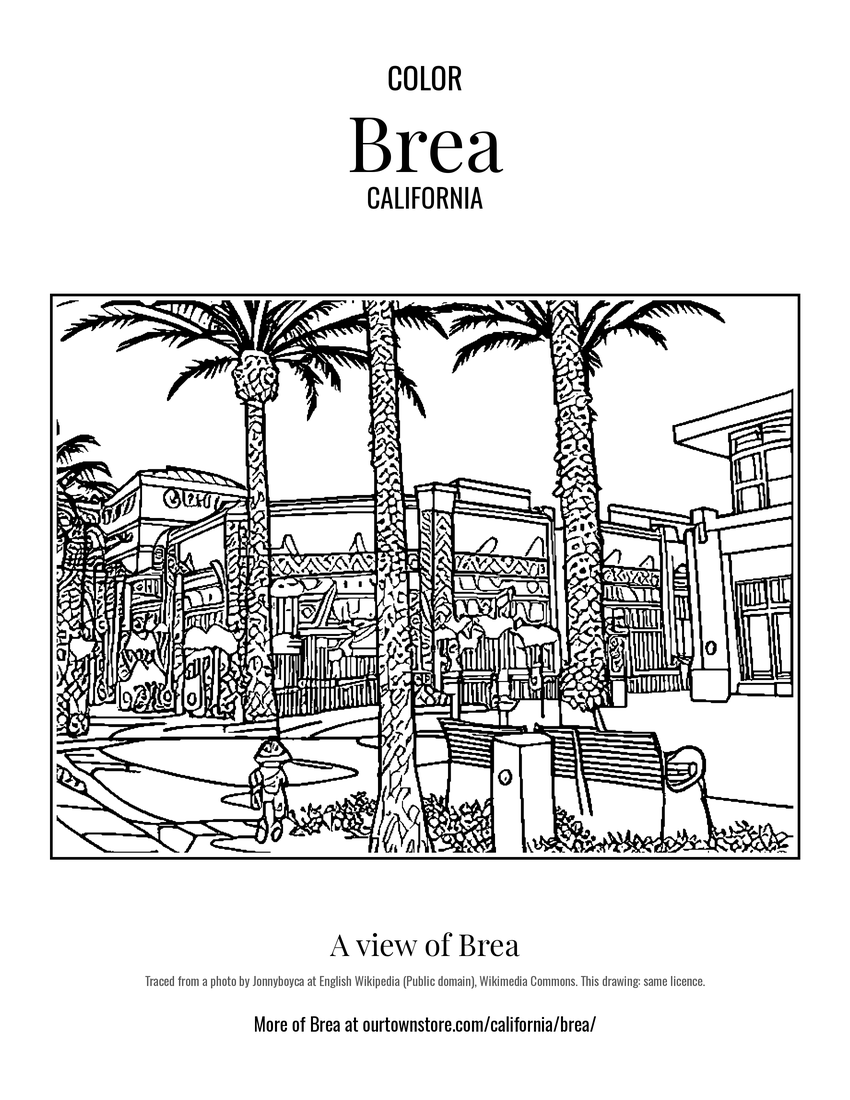 A view of Brea