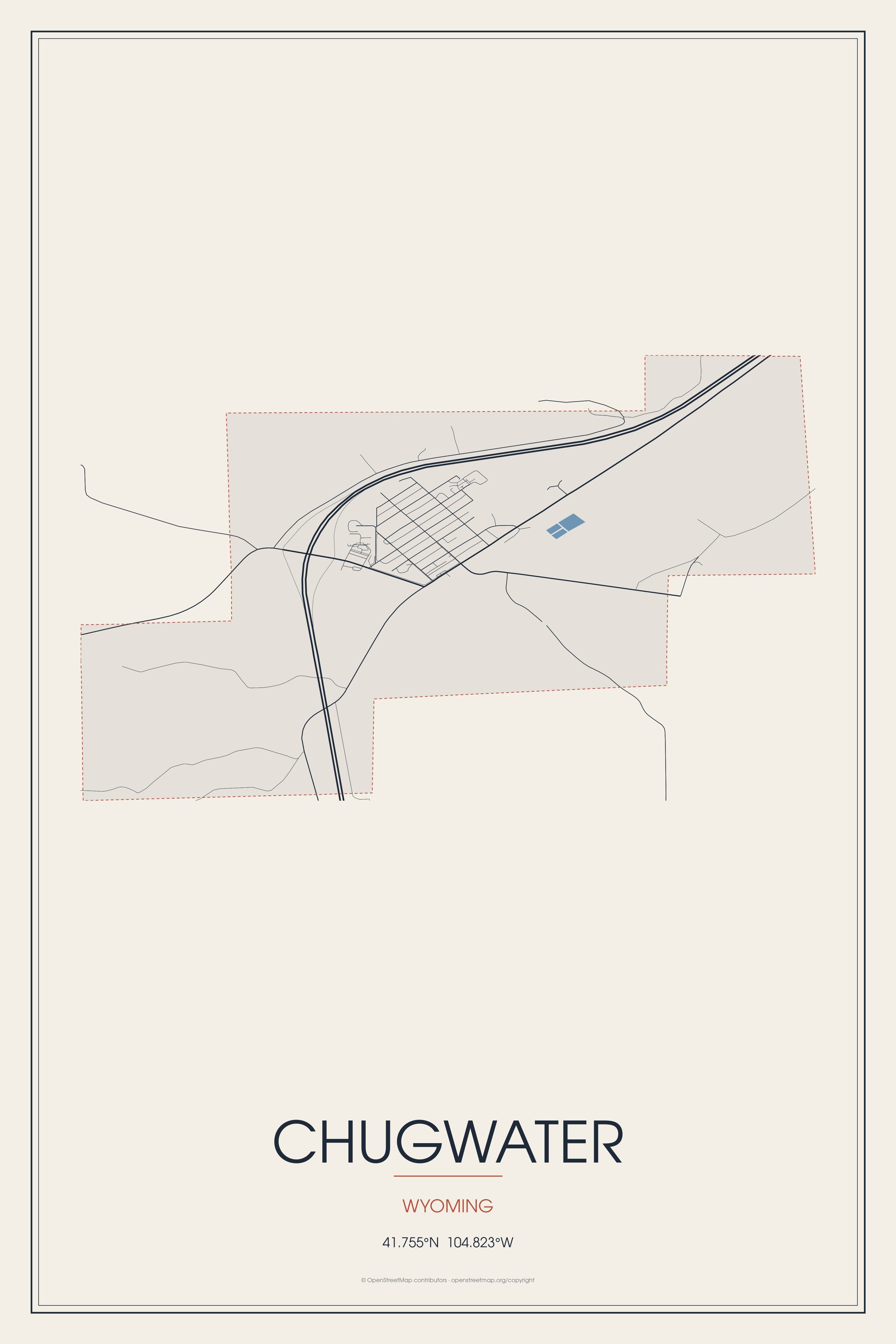
The Chugwater area, with its proximity to Fort Laramie, was visited by some of the earliest Western expeditions, including that of Stephen Watts Kearny in 1845, and cattle were first wintered in the valley as early as 1859. Landmarks include Swan Land and Cattle Company Headquarters.
Every piece is drawn from Chugwater's own map data and historic archives, then printed and shipped from the USA when you order. No two towns look alike.
Every road in town, on archival matte paper
The same map, in navy and silver
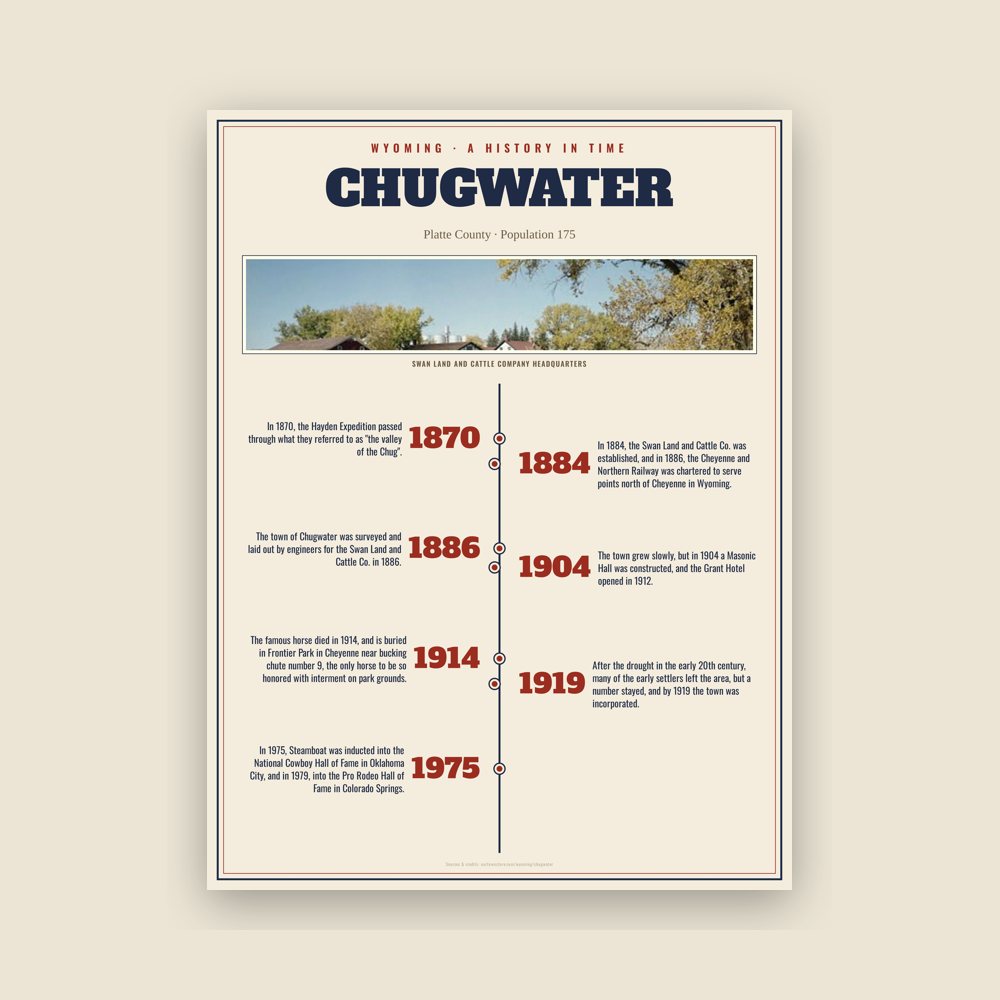
The town's story in dates, from its own records, for home or classroom
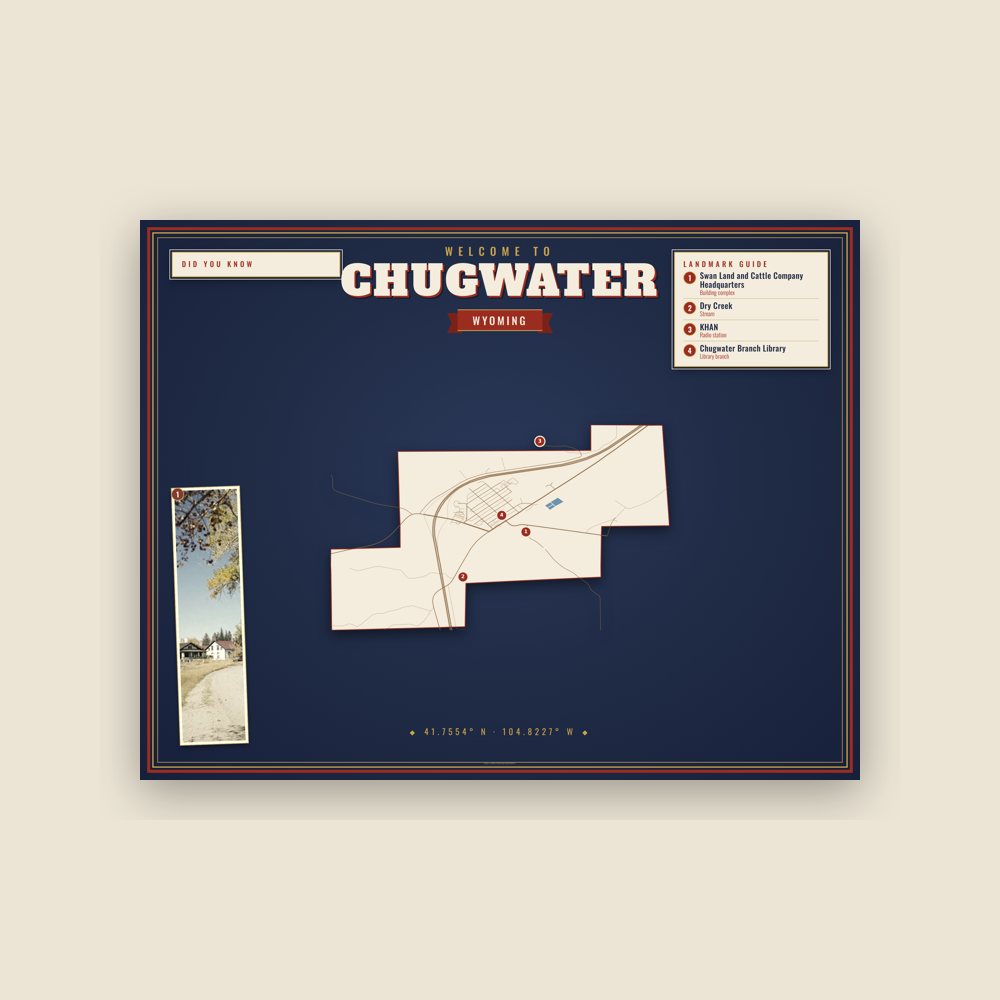
Map of local landmarks, washable fabric
Heavy-blend fleece, street map printed on the back
Soft Bella+Canvas jersey
Glossy ceramic, dishwasher safe
Ceramic keepsake, gold ribbon
Weatherproof, for the front walk
24″×16″, printed coir-look fibers, rubber back
12″×12″ printed wood, ready to hang
Soft-touch, zip cover
Sturdy all-over-print tote
Glossy top, cork back
Soft fleece, 50″×60″
20 oz, double-wall stainless
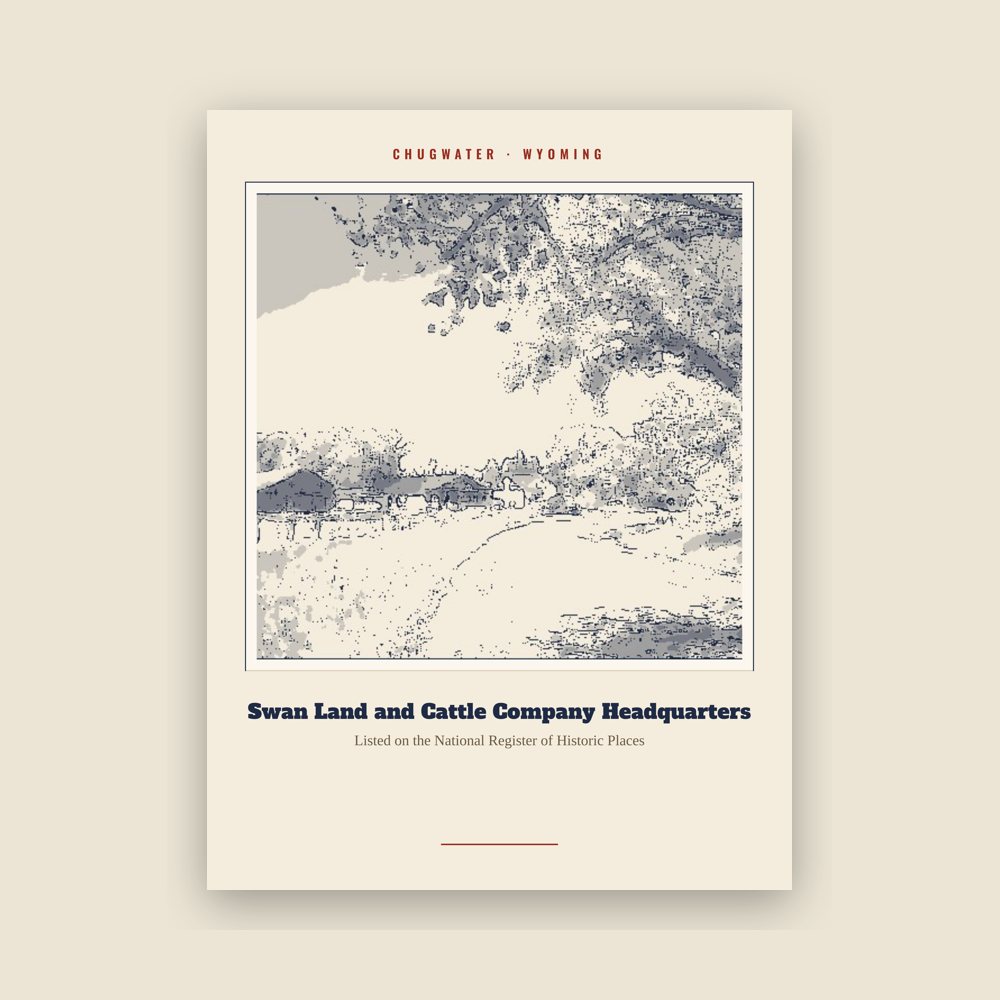
Archival matte print of a local landmark, credited to its photographer
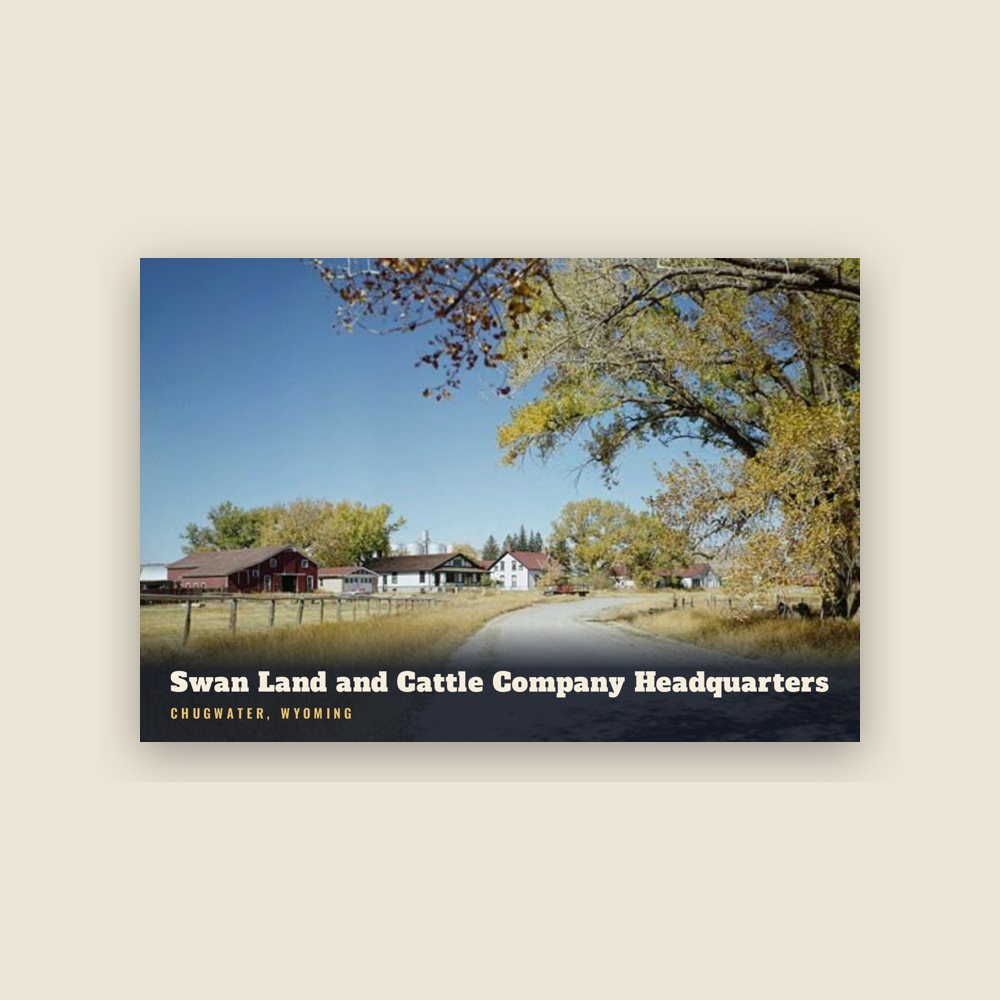
6″×4″ postcard, glossy front
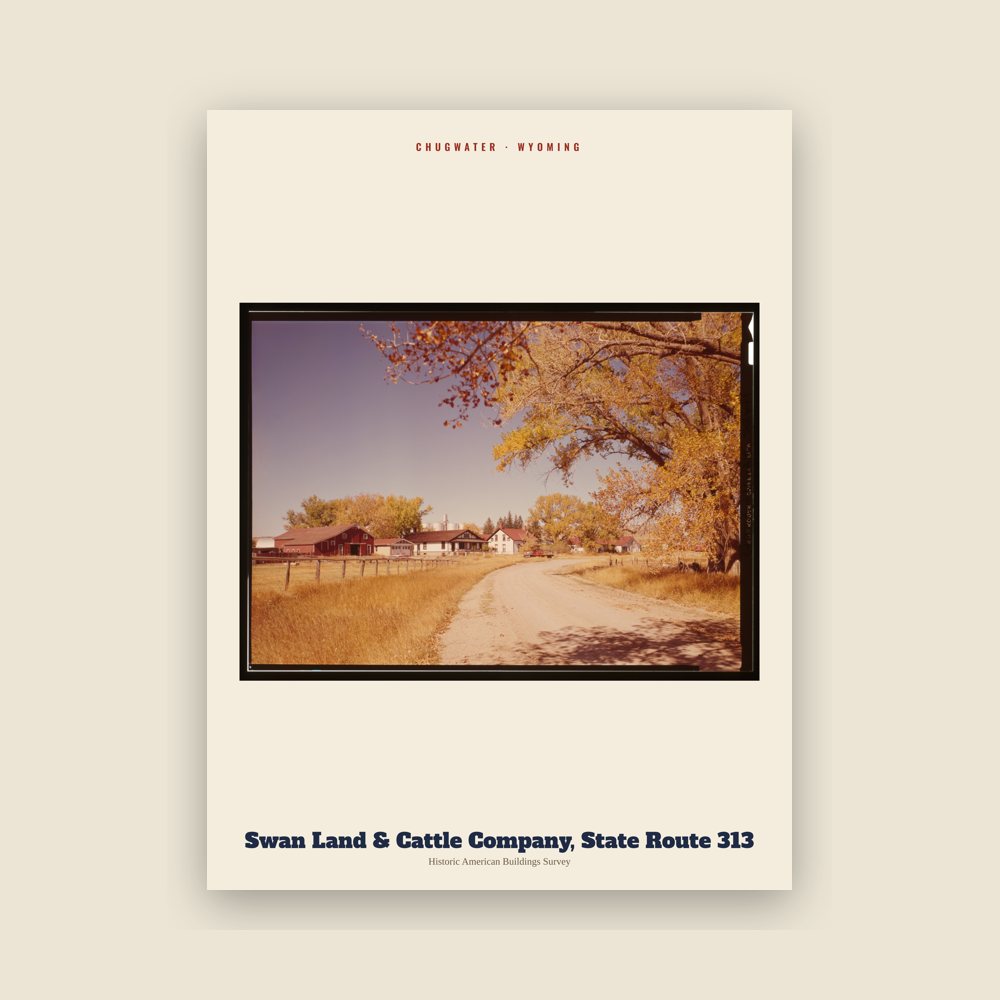
From the Library of Congress collections: a historic survey drawing or photograph of the town
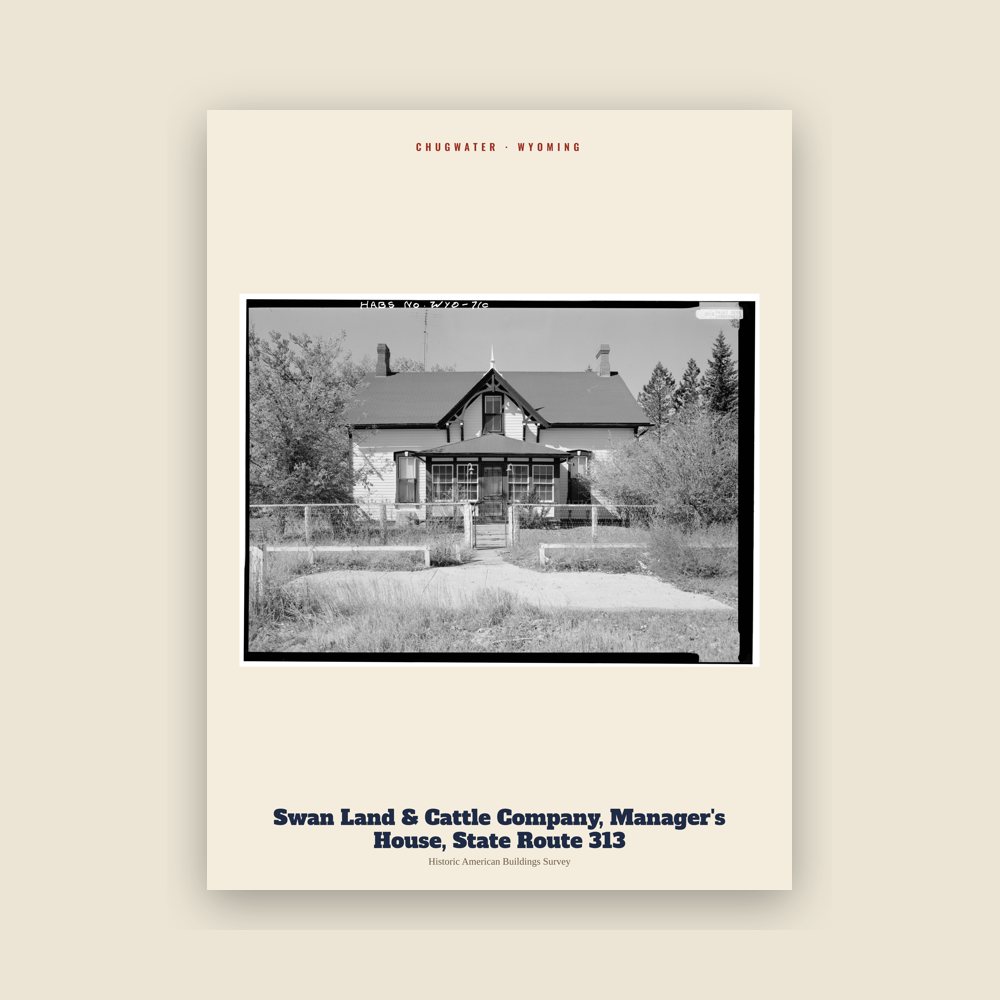
From the Library of Congress collections: a historic survey drawing or photograph of the town
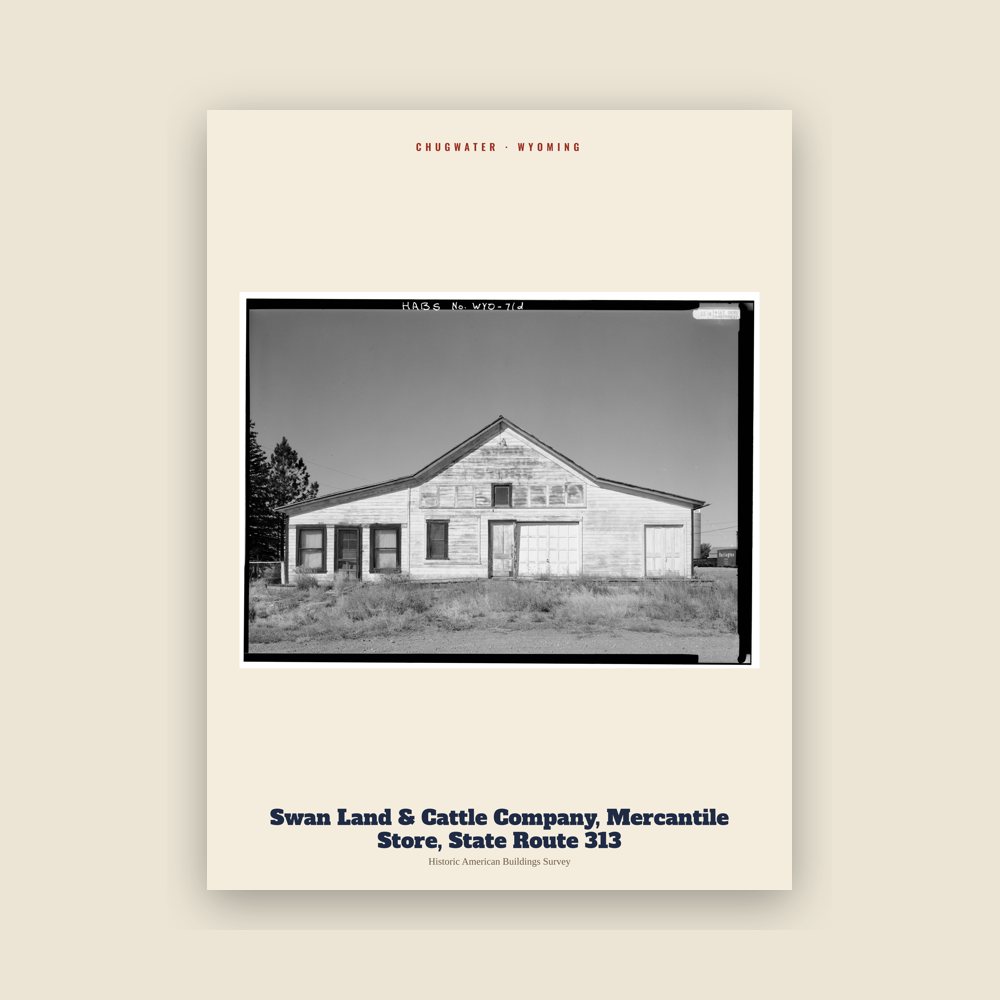
From the Library of Congress collections: a historic survey drawing or photograph of the town
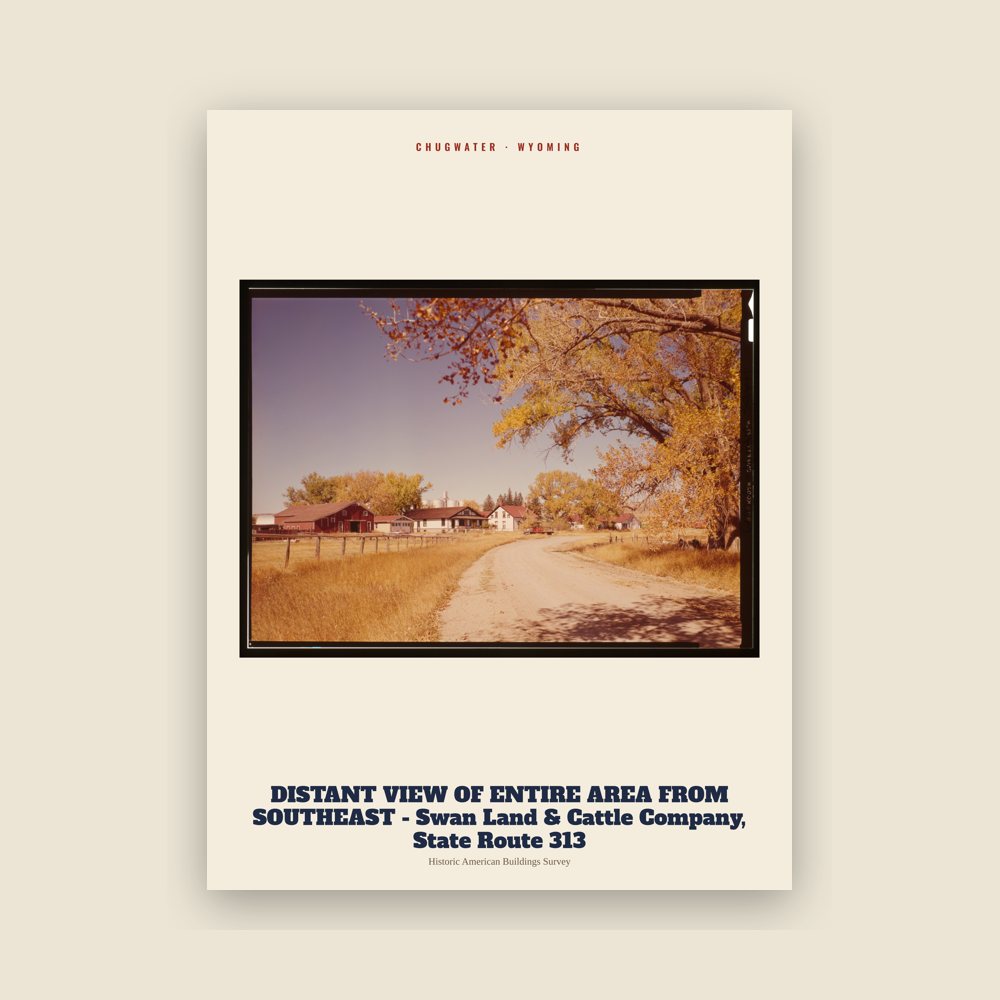
From the Library of Congress collections: a historic survey drawing or photograph of the town
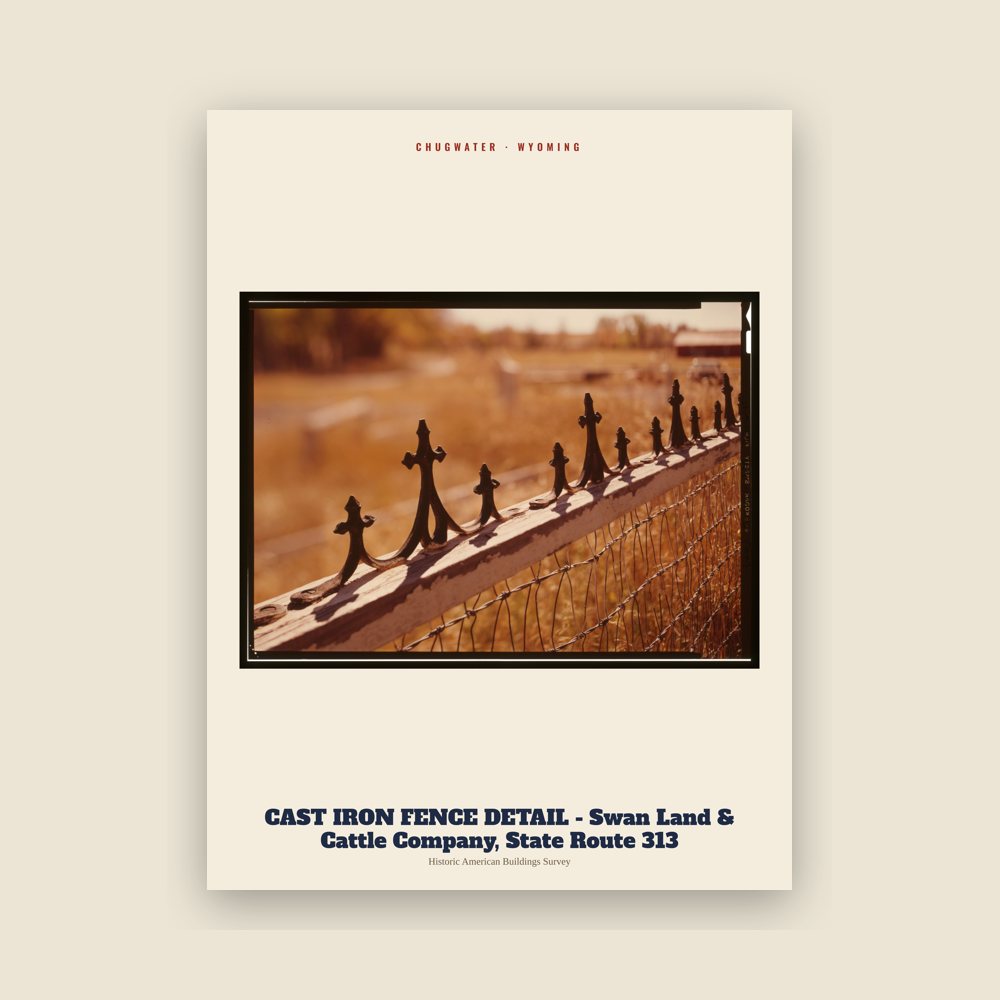
From the Library of Congress collections: a historic survey drawing or photograph of the town
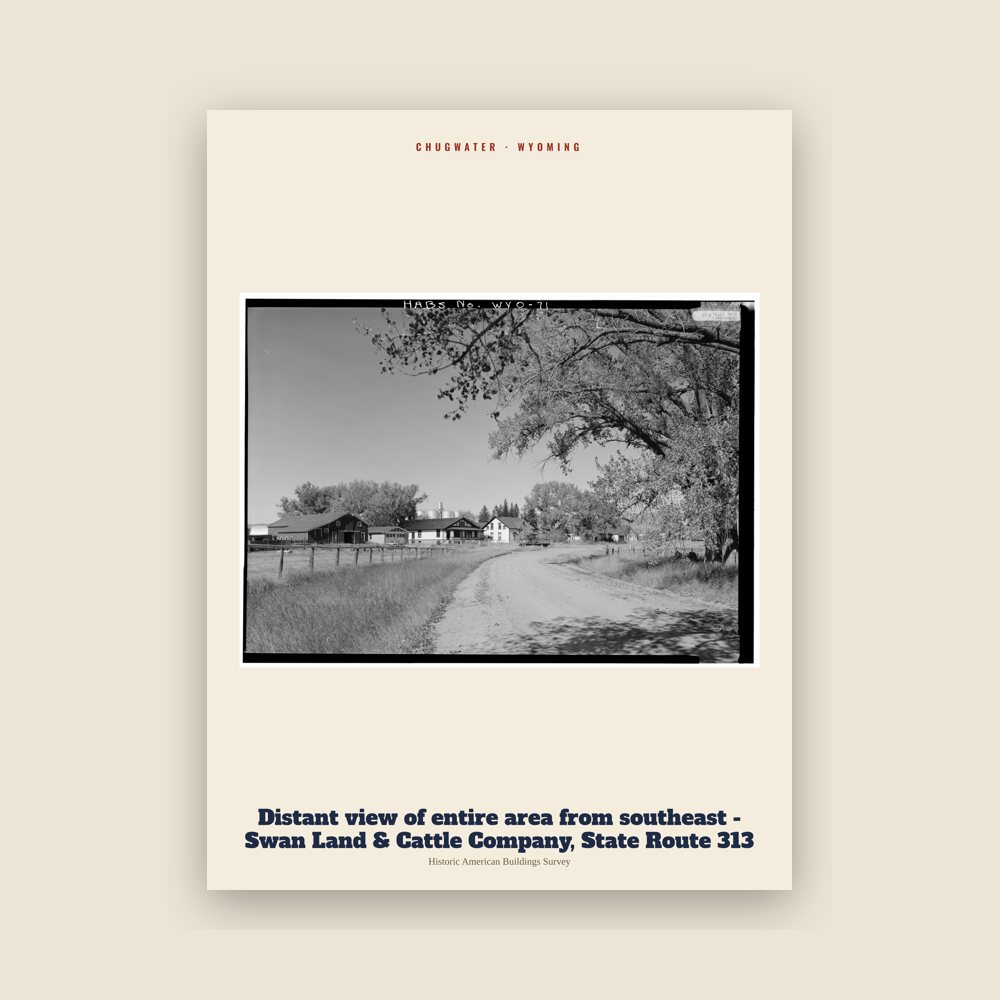
From the Library of Congress collections: a historic survey drawing or photograph of the town
Population 2010: 212 → 2020: 175
From Wikidata (CC0).
The Chugwater area, with its proximity to Fort Laramie, was visited by some of the earliest Western expeditions, including that of Stephen Watts Kearny in 1845, and cattle were first wintered in the valley as early as 1859.
In 1870, the Hayden Expedition passed through what they referred to as "the valley of the Chug". Along on the expedition was famed Hudson River School painter, Sanford Robinson Gifford (1823-1880), who sketched Chugwater Bluff, and later completed a large painting of it entitled "Valley of the Chugwater". Hayden's photographer, William Henry Jackson, noted in his journal that the Chugwater area was a wintering area for cattle: "A very conspicuous feature which we notice in descending the valley of the Chug is the high bluff of Lower Cretaceous sandstone, which stretches away toward the northeast like a hugh wall. the jointage is so regular that it presents the appearance of massive mason-work gradually falling to decay. The sides of these sandstone walls are from 40 to 60 feet perpendicular, sometimes overhanging, large masses of which have broken off and fallen to the base. Their most striking feature, however is to weather into most picturesque castlllated forms. The valley of the Chug is 100 miles long, and is a favorite place to winter stock."
The first settler in the valley is reported to have been James Bordeaux (1814-1878), who opened a general store in 1868, located at the crossroads where the road from Cheyenne forks into the roads leading to Fort Fetterman and to Fort Laramie. In 1884, the Swan Land and Cattle Co. was established, and in 1886, the Cheyenne and Northern Railway was chartered to serve points north of Cheyenne in Wyoming. It was as a result primarily of the Swan Land and Cattle Co., and the railroad, that the town of Chugwater grew up.
The town of Chugwater was surveyed and laid out by engineers for the Swan Land and Cattle Co. in 1886. The town grew slowly, but in 1904 a Masonic Hall was constructed, and the Grant Hotel opened in 1912. After the drought in the early 20th century, many of the early settlers left the area, but a number stayed, and by 1919 the town was incorporated.
As late as the 1940s, Chugwater was still a railroad stop where cattle were loaded for shipment east to the Union Stockyards in Omaha, Nebraska.
Clayton Danks, the model for the rider on the Wyoming Bucking Horse and Rider state symbol, worked on the 2-Bar Ranch near Chugwater early in the 20th century. The bucking horse on the logo, that he rode at the Cheyenne Frontier Days rodeo in 1909, was Steamboat, who was foaled at Chugwater in 1896.
The former Speaker of the Wyoming House of Representatives, Harold Hellbaum, farmed and ranched in Chugwater. He served in the state legislature from 1963 to 1977, with his last term as Speaker.
Some historians hold that the name "Chugwater" is derived from a Mandan account of a bison hunt. According to this narrative, a chief was disabled during the hunt and his son took charge of the hunt or "buffalo jump". Under his direction, hunters drove the bison over nearby cliffs; when the animals reached the ground below, a sound of "chugging" was heard by the hunters. The story concludes with an etymology: since a stream was near the base of the cliffs, the site of the stampede has been called "the place" or "water at the place where the buffalo chug."
The iconic black horse named "Steamboat", who was the model for the bucking horse and rider motif on Wyoming license plates, came from the Tyrrell ranch located near Chugwater, and was given to the Cheyenne Frontier Days organization by the ranch's general chairman, Ace V. Tyrrell. As a young horse, Steamboat sustained a nose injury, requiring removal of a bone fragment from a nostril, and as a result, developed a sound resembling the whistling of a steamboat whenever he bucked.
Steamboat was first ridden at a Frontier Days rodeo in 1909, by Clayton Danks (1879 – 1970) who was then working as a ranch hand in the Chugwater area, and was stabled for many years south of Chugwater near Cheyenne, in an historic barn owned and maintained by Mike and Linda Holst. The Wyoming license plate logo, showing Steamboat being ridden by Danks, is the longest-running license plate motif in the world.
The famous horse died in 1914, and is buried in Frontier Park in Cheyenne near bucking chute number 9, the only horse to be so honored with interment on park grounds. In 1975, Steamboat was inducted into the National Cowboy Hall of Fame in Oklahoma City, and in 1979, into the Pro Rodeo Hall of Fame in Colorado Springs. Steamboat and Danks are also on the logo for the University of Wyoming, and on the Wyoming state quarter.
Adapted (trimmed) from the Wikipedia article Chugwater, Wyoming, revision 1379783605 by its contributors, licensed CC BY-SA 4.0.
We share a part of every Chugwater sale with local partners, and we'd love to print from your collection. Old photographs, maps and postcards make the best keepsakes.
Partner with us