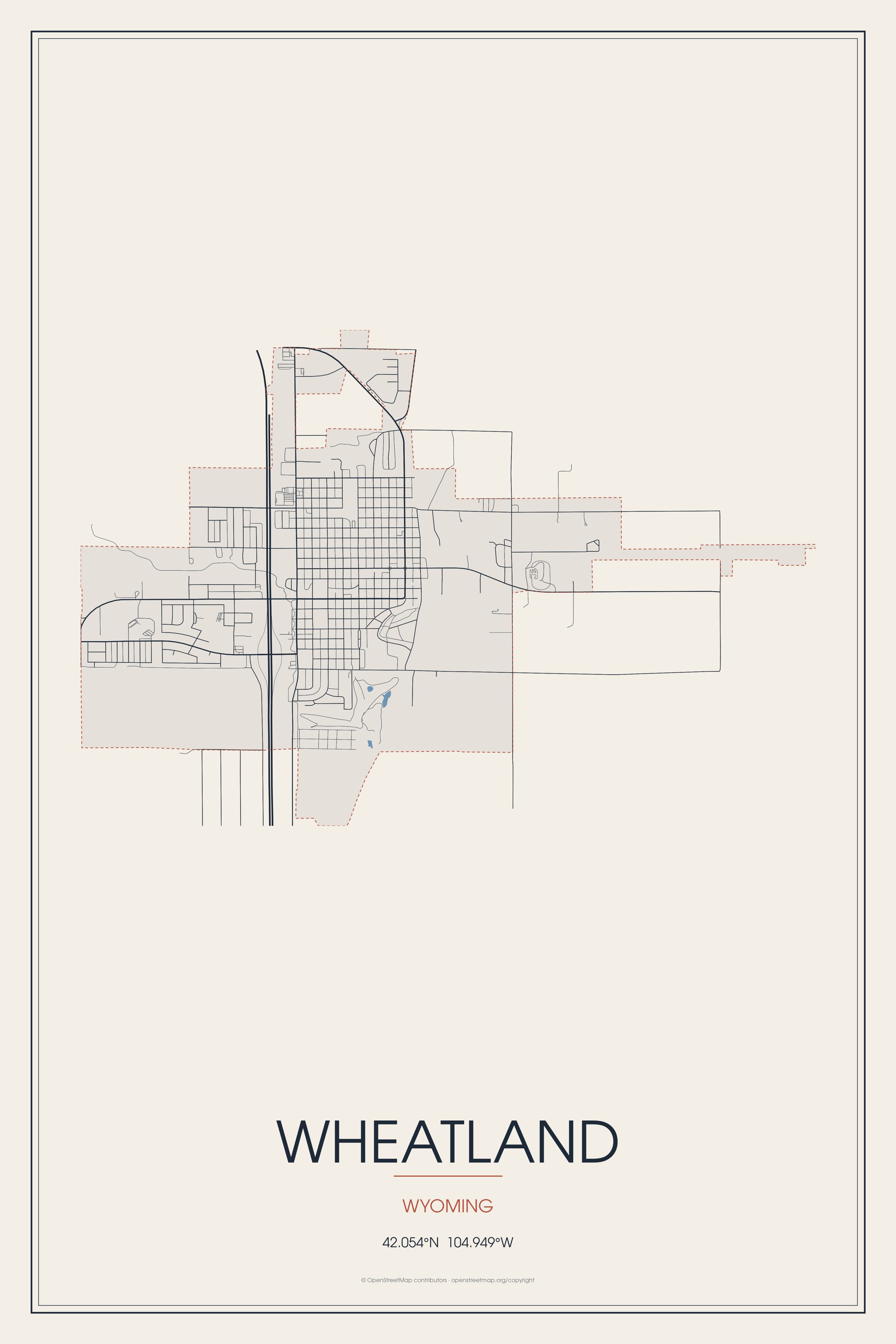
Before the late 19th century, the area around the future site of Wheatland was a flat, arid landscape with desert-like vegetation. Landmarks include Platte County Courthouse, Wheatland Railroad Depot and KYCN. Wheatland is the birthplace of Jim Geringer, politician.
Every piece is drawn from Wheatland's own map data and historic archives, then printed and shipped from the USA when you order. No two towns look alike.
Every road in town, on archival matte paper
The same map, in navy and silver
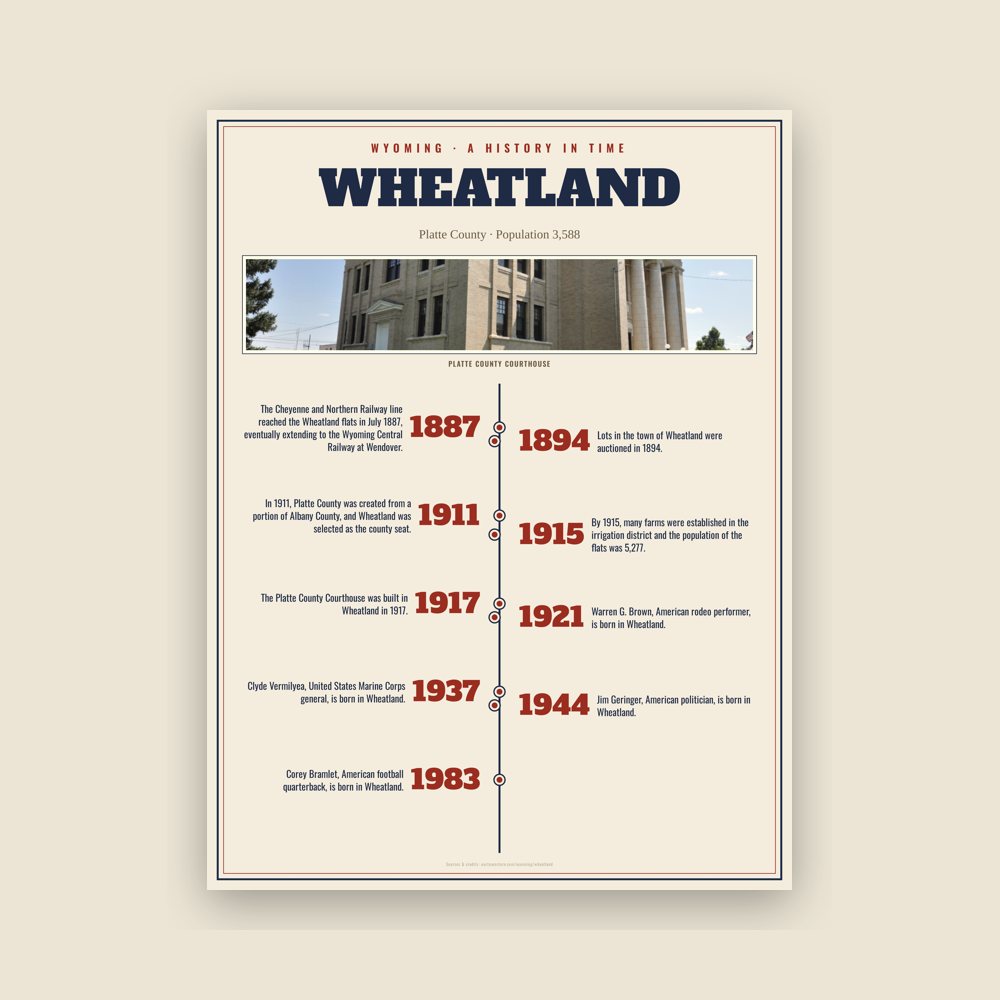
The town's story in dates, from its own records, for home or classroom
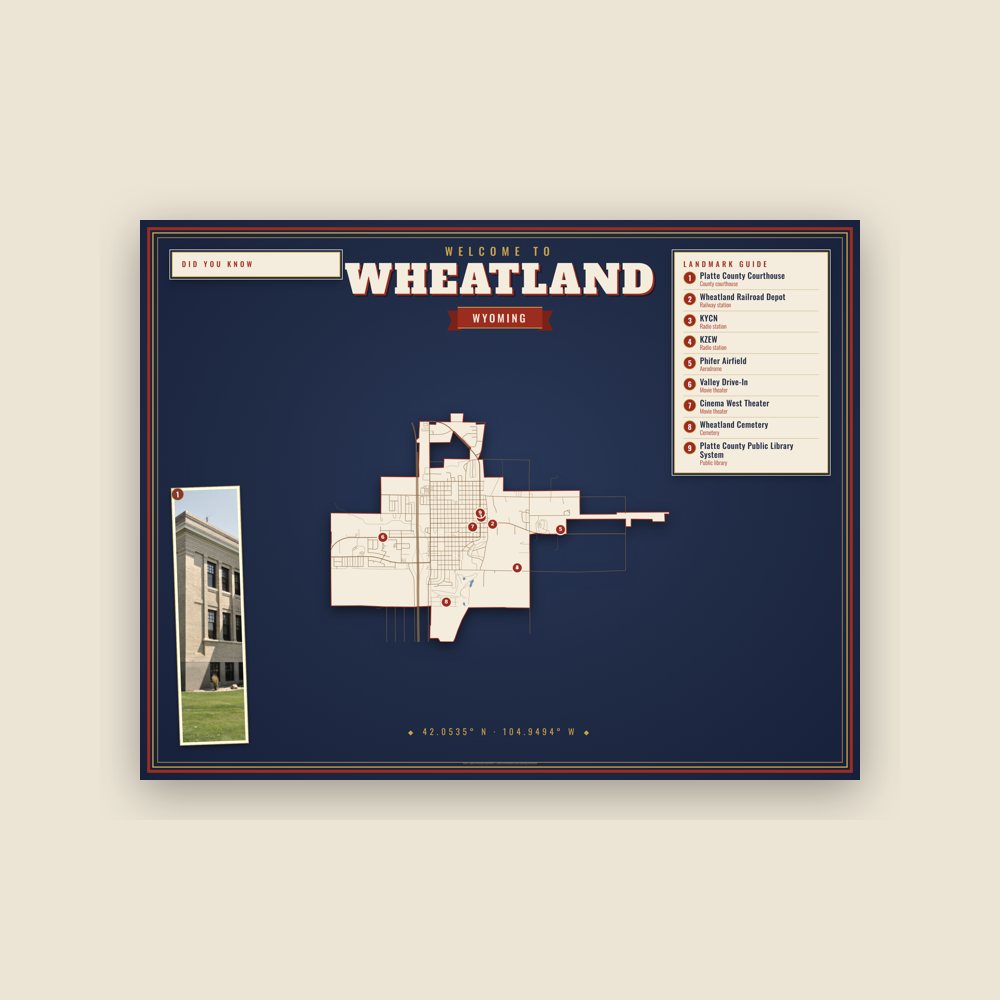
Map of local landmarks, washable fabric
Heavy-blend fleece, street map printed on the back
Soft Bella+Canvas jersey
Glossy ceramic, dishwasher safe
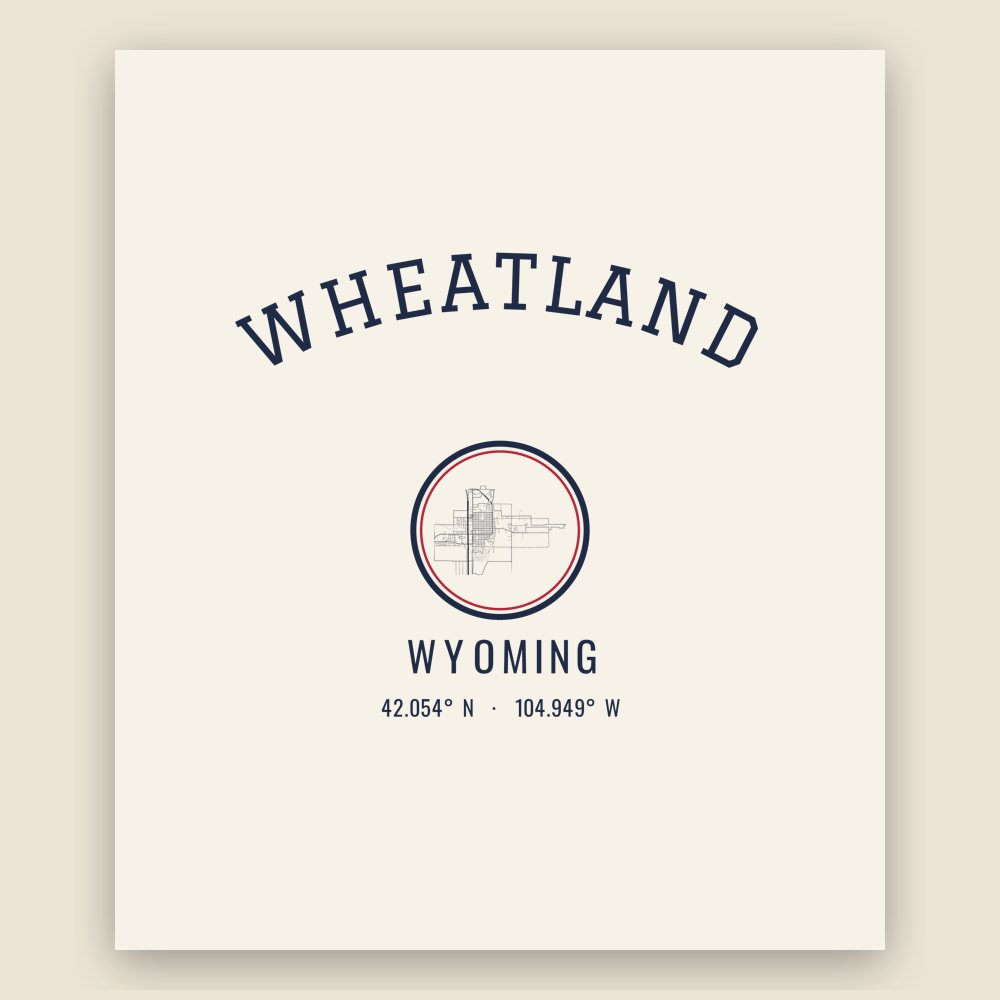
Ceramic keepsake, gold ribbon
Weatherproof, for the front walk
24″×16″, printed coir-look fibers, rubber back
12″×12″ printed wood, ready to hang
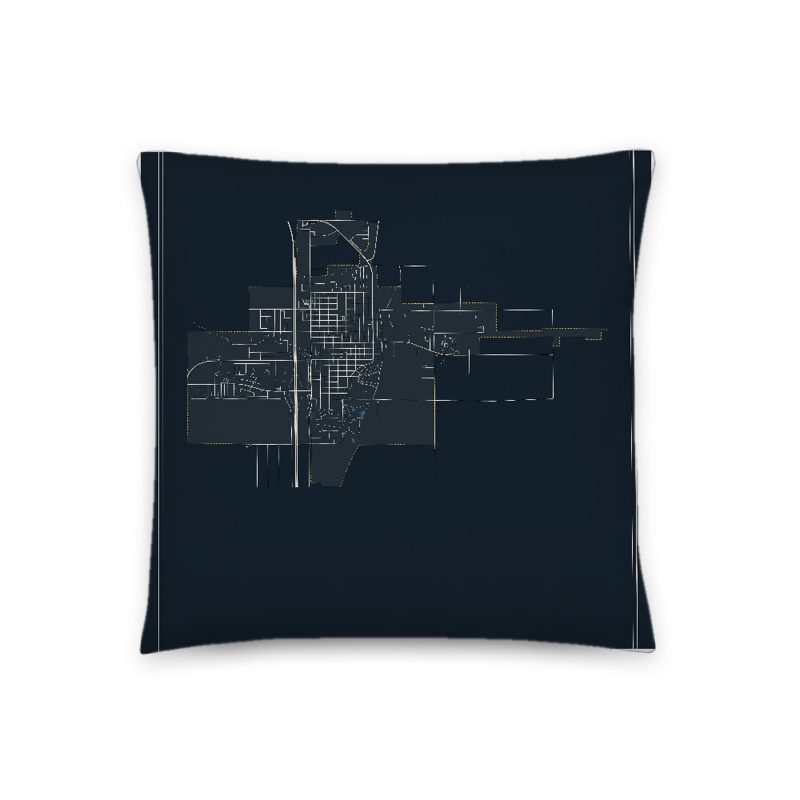
Soft-touch, zip cover
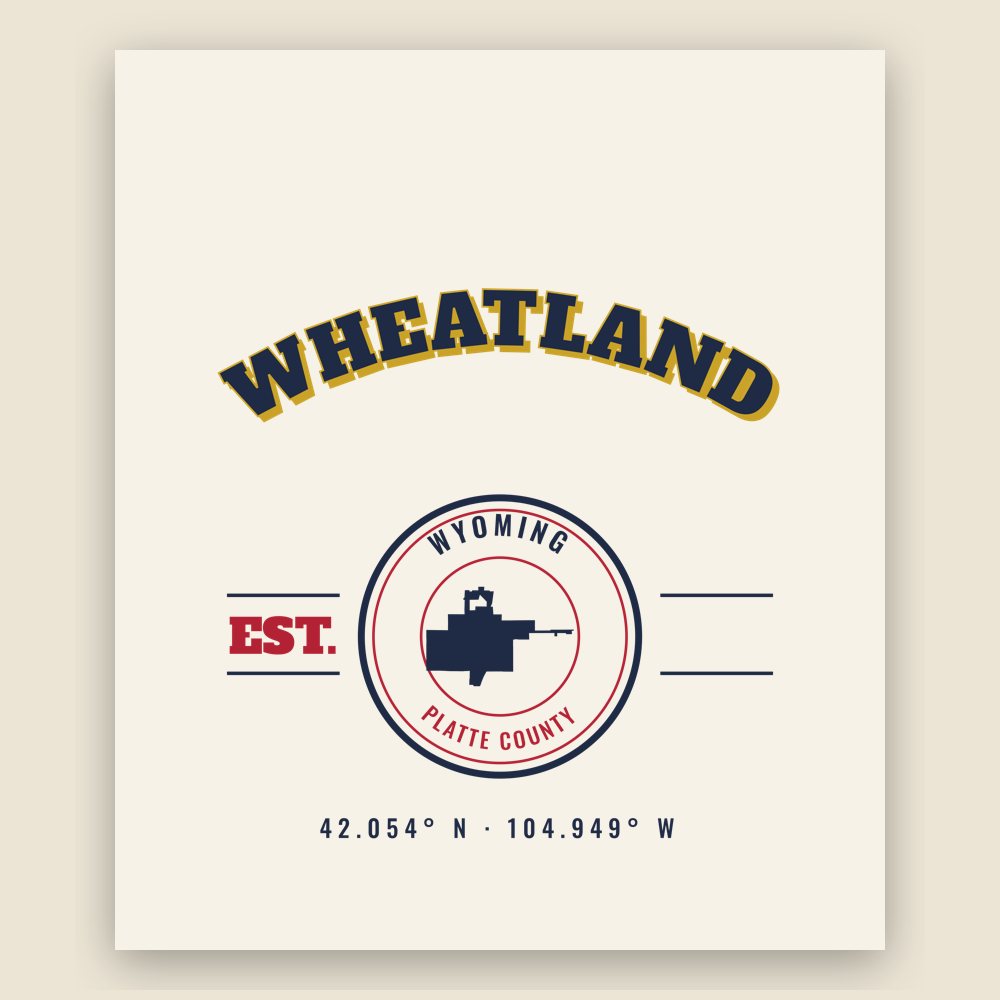
Sturdy all-over-print tote
Glossy top, cork back
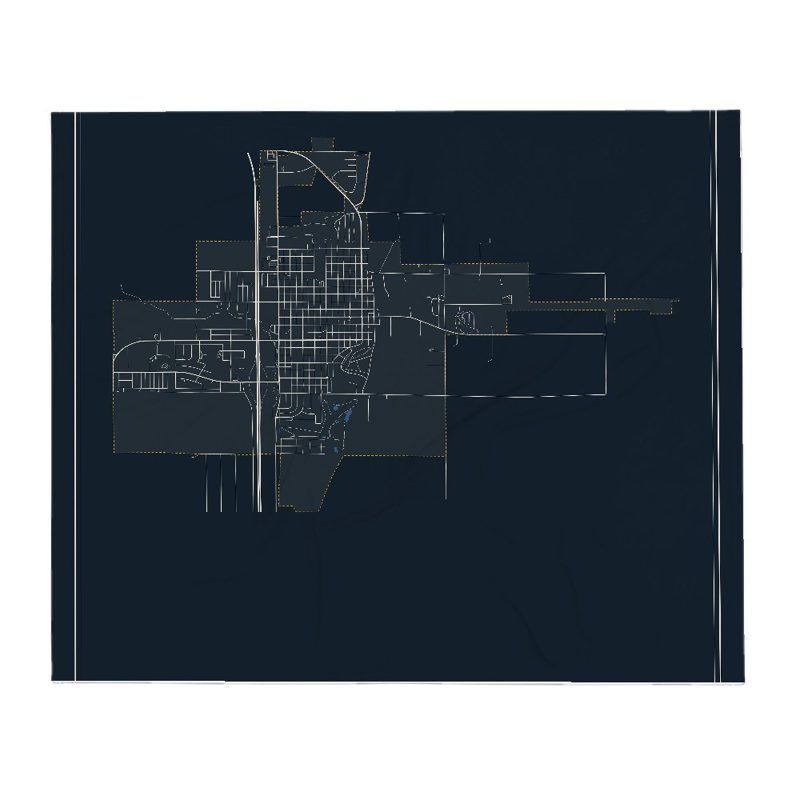
Soft fleece, 50″×60″
20 oz, double-wall stainless
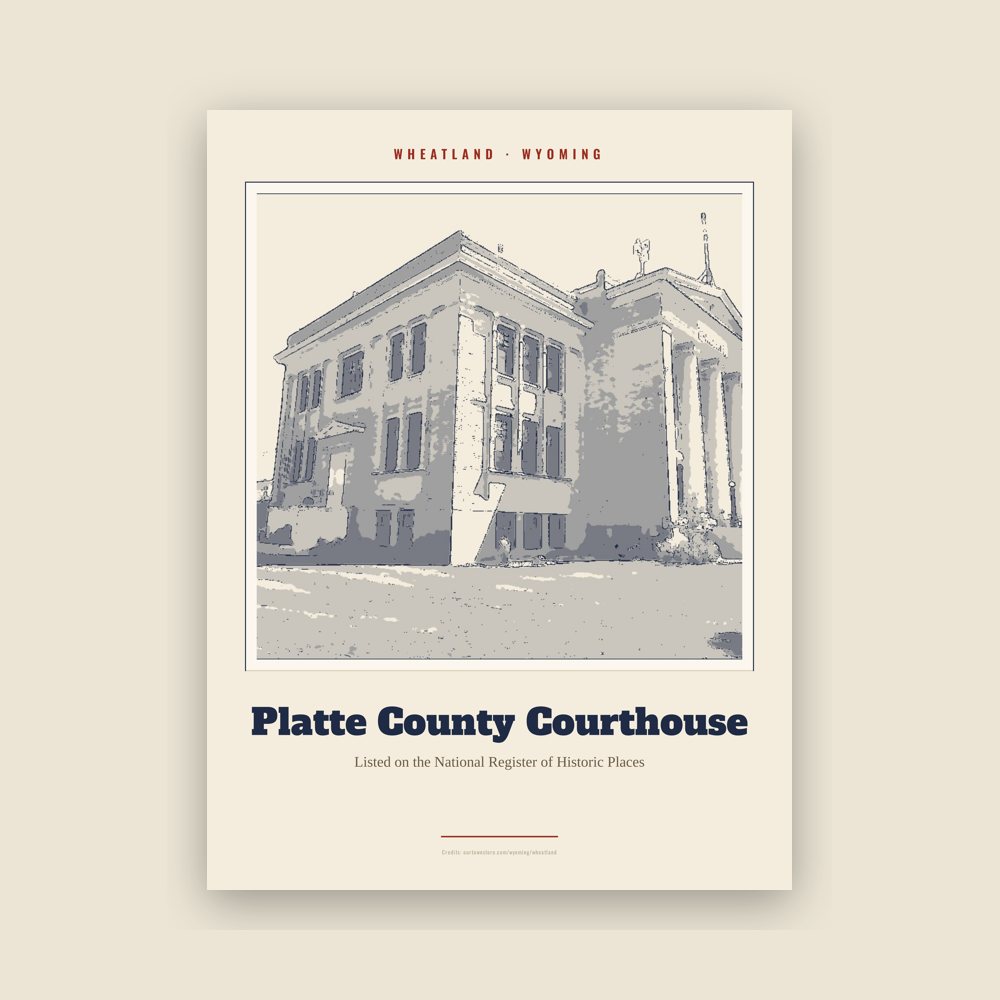
Archival matte print of a local landmark, credited to its photographer
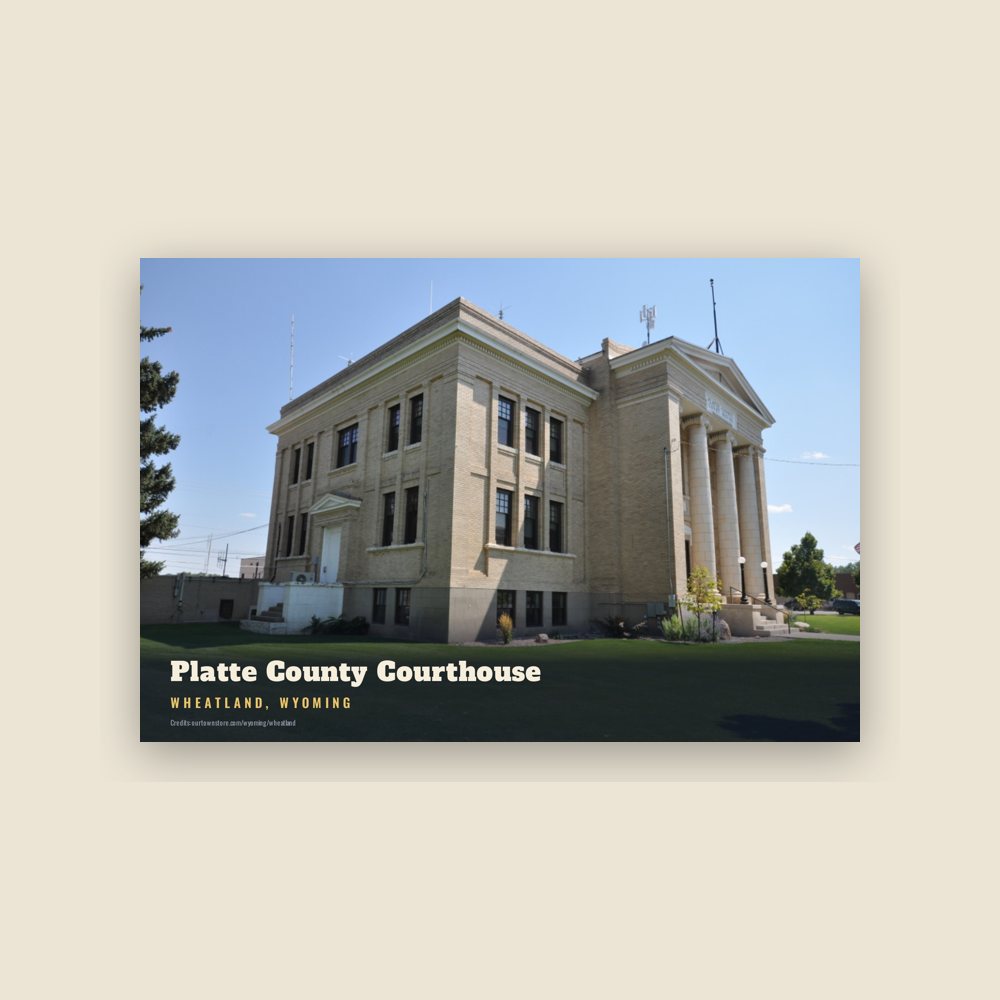
6″×4″ postcard, glossy front
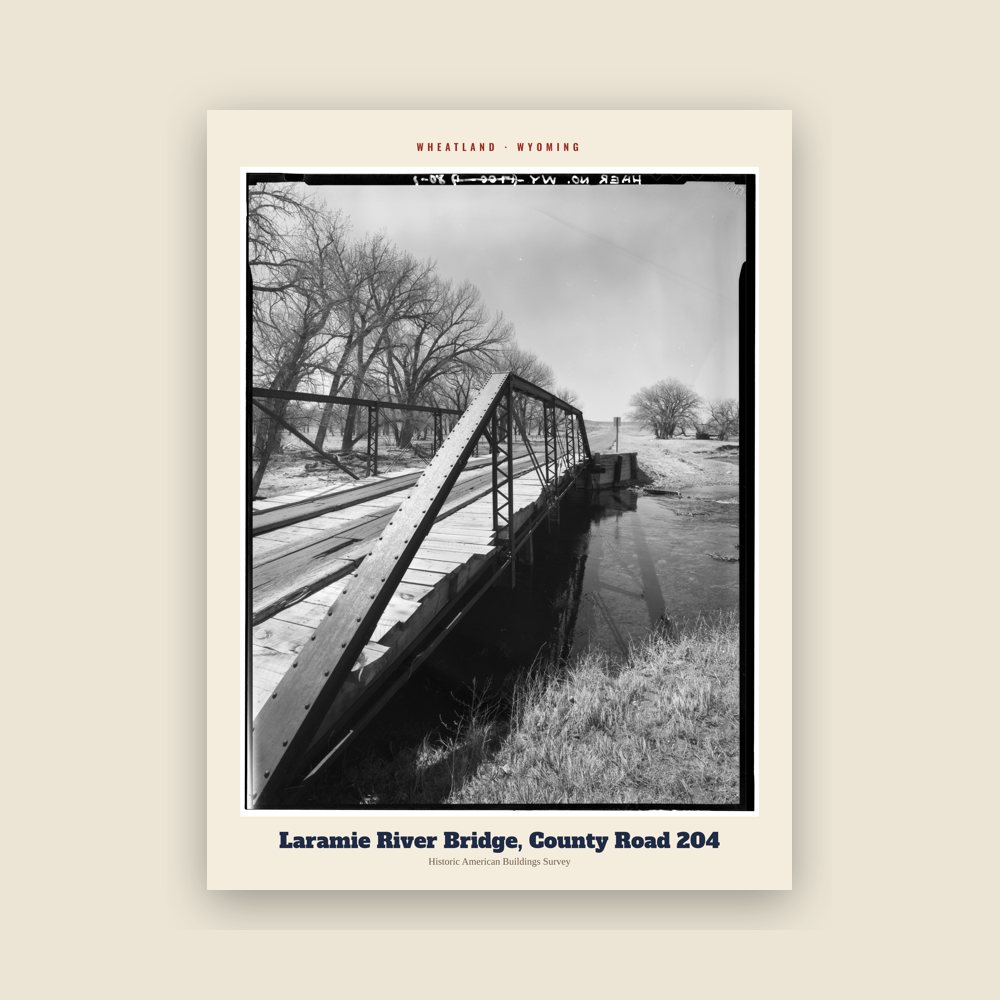
From the Library of Congress collections: a historic survey drawing or photograph of the town
Population 2010: 3,627 → 2020: 3,588
From Wikidata (CC0).
Before the late 19th century, the area around the future site of Wheatland was a flat, arid landscape with desert-like vegetation. In 1883, local rancher and judge Joseph M. Carey, along with Horace Plunkett, John Hoyt, Morton Post, Francis E. Warren, William Irvine, and Andrew Gilchrist, established the Wyoming Development Company. The company hoped to irrigate in the Wheatland Flats and profit from new development.
By the fall of 1883, an irrigation system was constructed on the Wheatland flats including a 2,380 foot long tunnel to divert water for irrigation into Bluegrass Creek and the first two of the system's canals. The Cheyenne and Northern Railway line reached the Wheatland flats in July 1887, eventually extending to the Wyoming Central Railway at Wendover. The line was eventually sold to the Colorado and Southern Railway, controlled by the Chicago, Burlington, and Quincy Railroad, and operated at Wheatland station. Lots in the town of Wheatland were auctioned in 1894. By 1915, many farms were established in the irrigation district and the population of the flats was 5,277.
In 1911, Platte County was created from a portion of Albany County, and Wheatland was selected as the county seat. The Platte County Courthouse was built in Wheatland in 1917.
Adapted (trimmed) from the Wikipedia article Wheatland, Wyoming, revision 1379647032 by its contributors, licensed CC BY-SA 4.0.
We share a part of every Wheatland sale with local partners, and we'd love to print from your collection. Old photographs, maps and postcards make the best keepsakes.
Partner with us