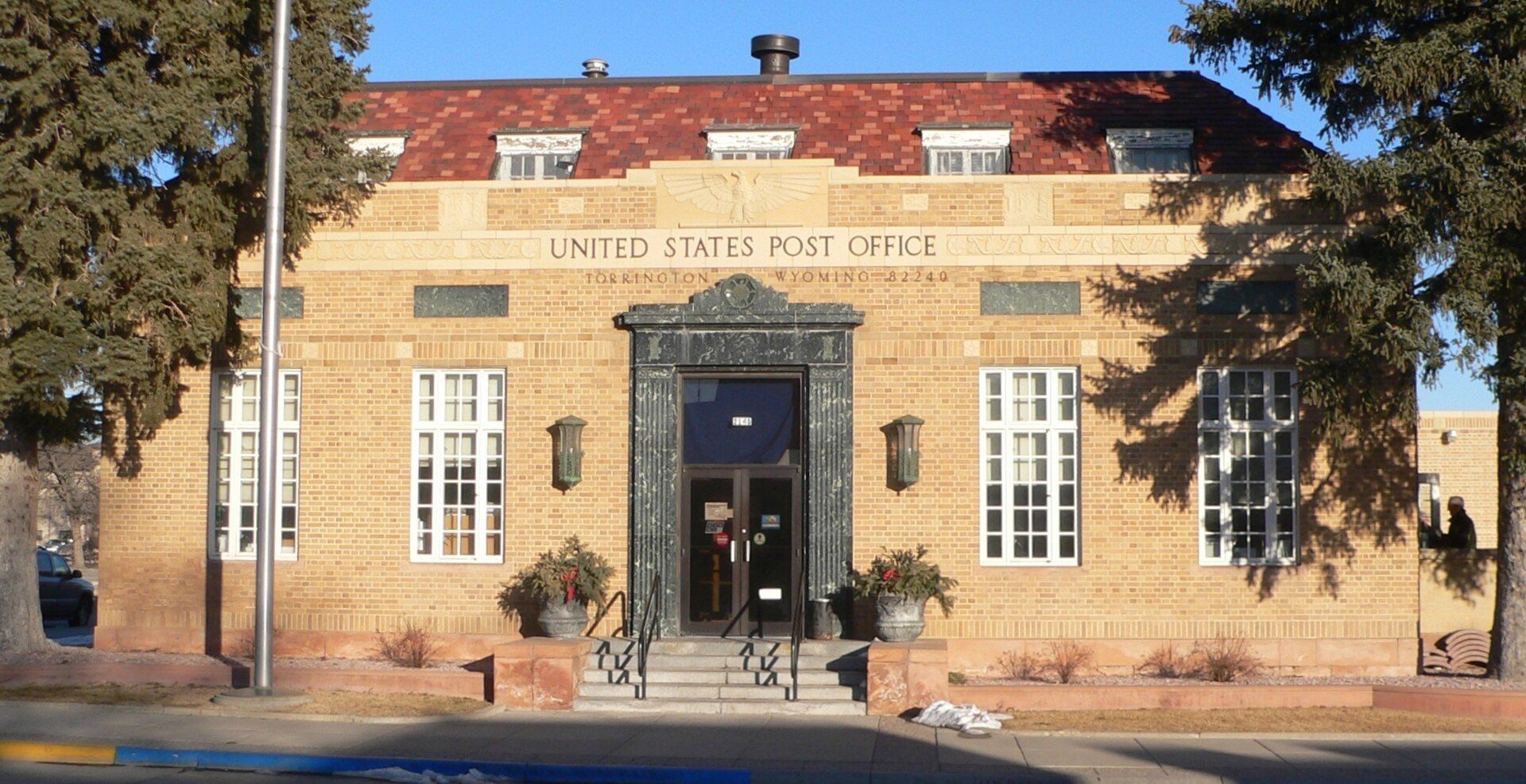
Situated on the historic Mormon Trail and near the Oregon and California trails along the banks of the North Platte River, Torrington was founded in 1900 by W. Landmarks include United States Post Office, South Torrington Union Pacific Depot and Torrington Municipal Airport. Torrington is the birthplace of William Kent Krueger, author and novelist.
Every piece is drawn from Torrington's own map data and historic archives, then printed and shipped from the USA when you order. No two towns look alike.
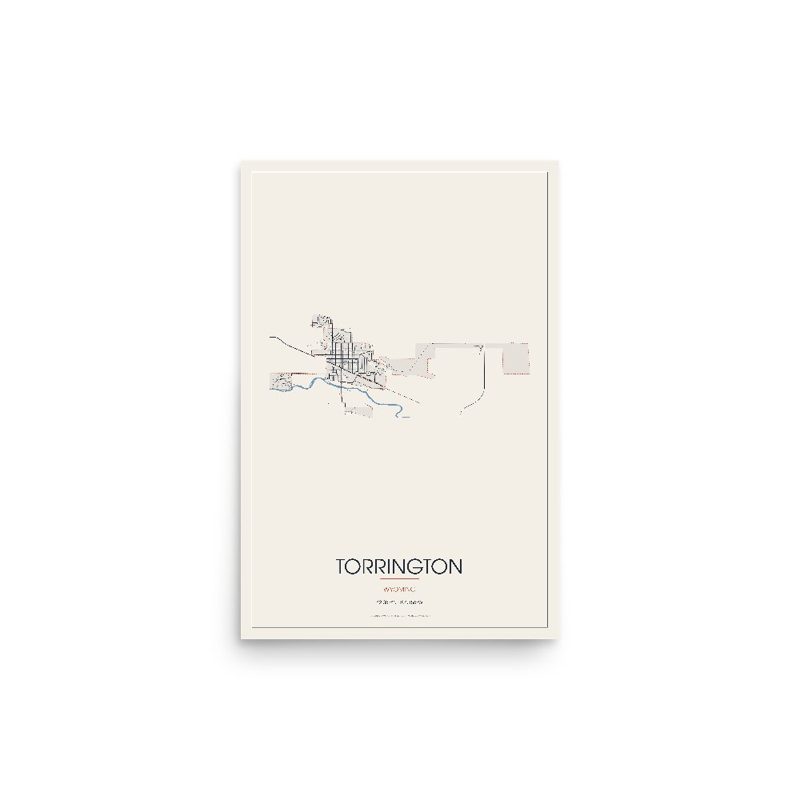
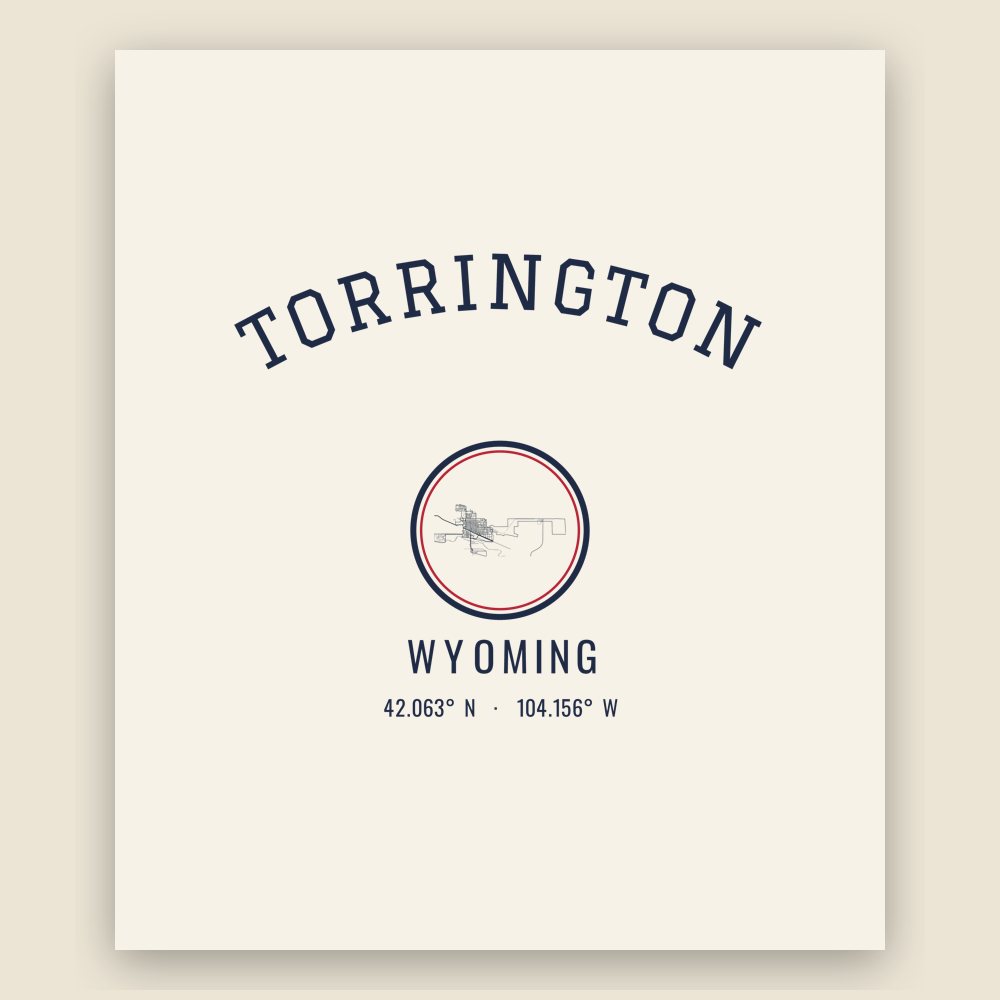
Every road in town, on archival matte paper
The same map, in navy and silver
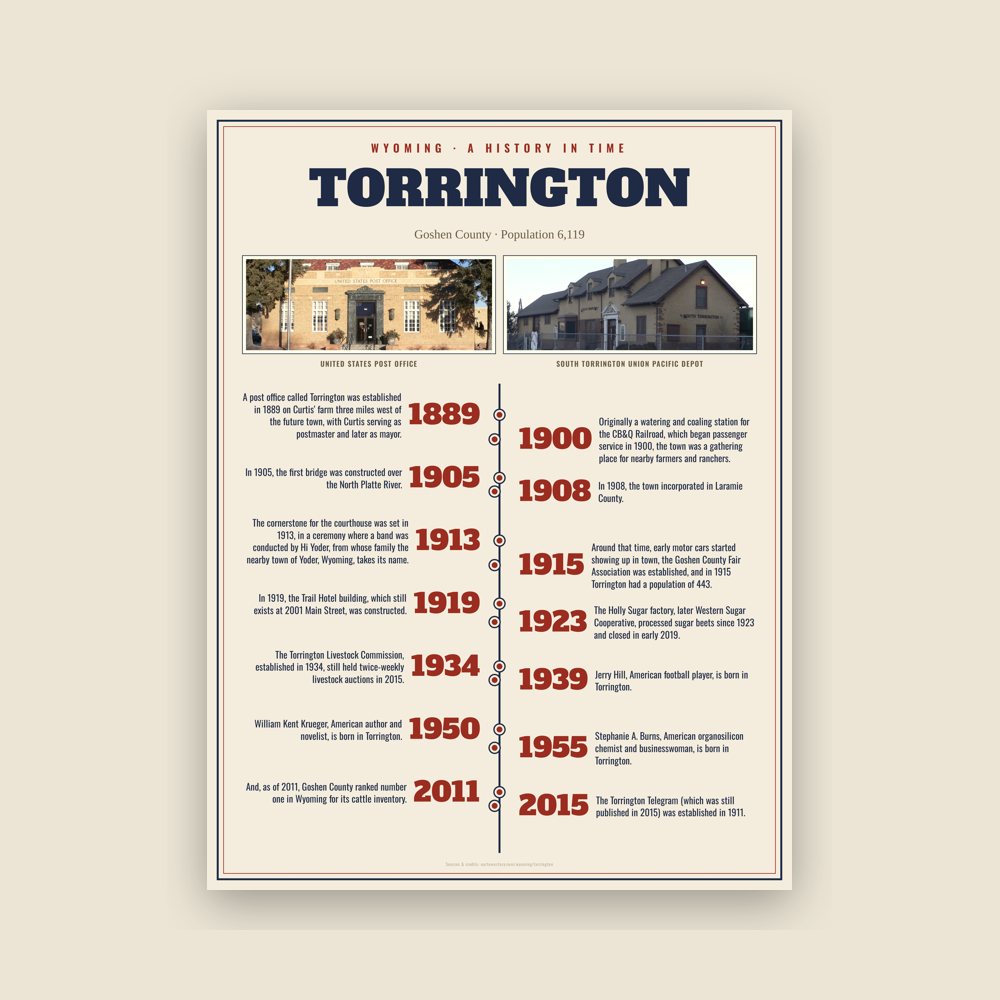
The town's story in dates, from its own records, for home or classroom
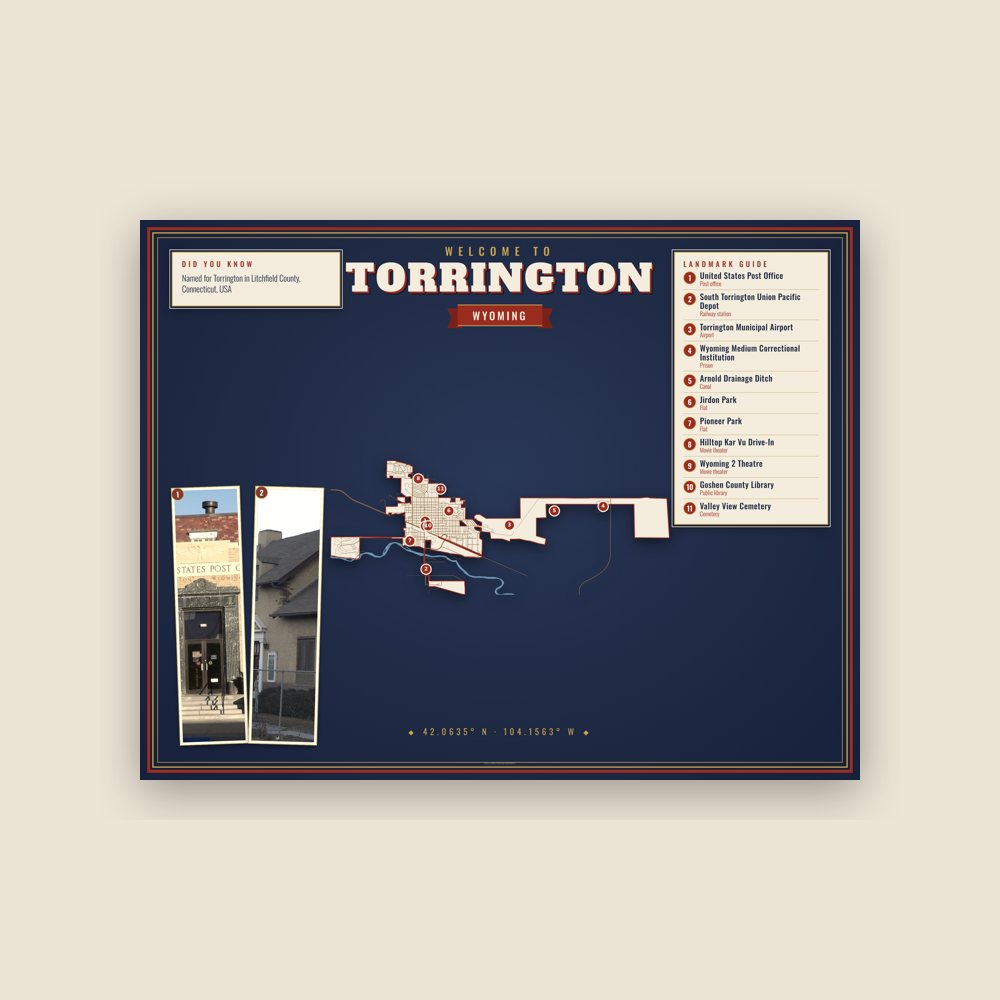
Map of local landmarks, washable fabric
Heavy-blend fleece, street map printed on the back
Soft Bella+Canvas jersey
Glossy ceramic, dishwasher safe
Ceramic keepsake, gold ribbon
Weatherproof, for the front walk
24″×16″, printed coir-look fibers, rubber back
12″×12″ printed wood, ready to hang
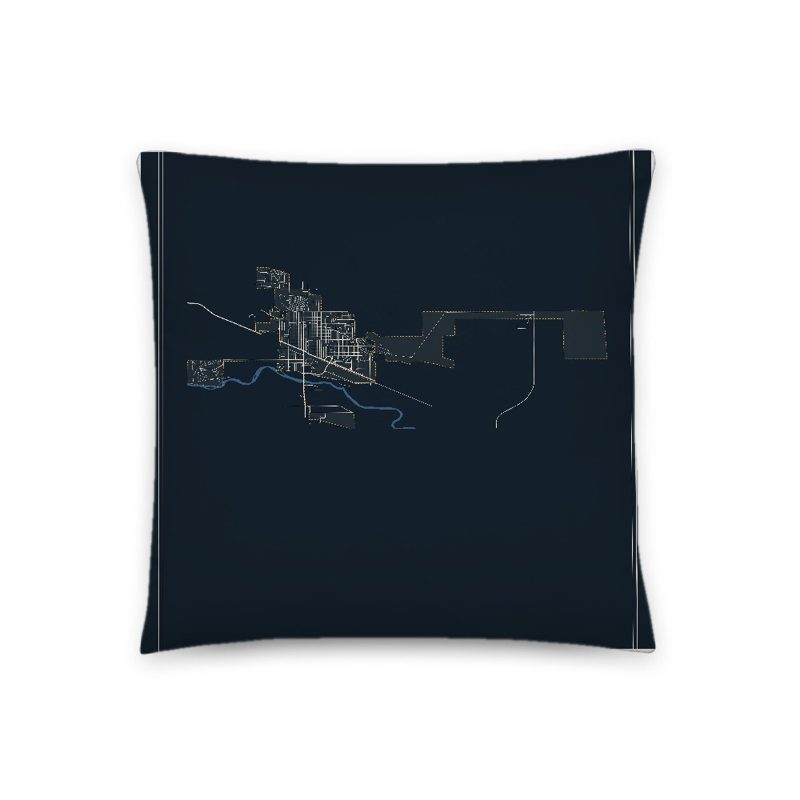
Soft-touch, zip cover
Sturdy all-over-print tote
Glossy top, cork back
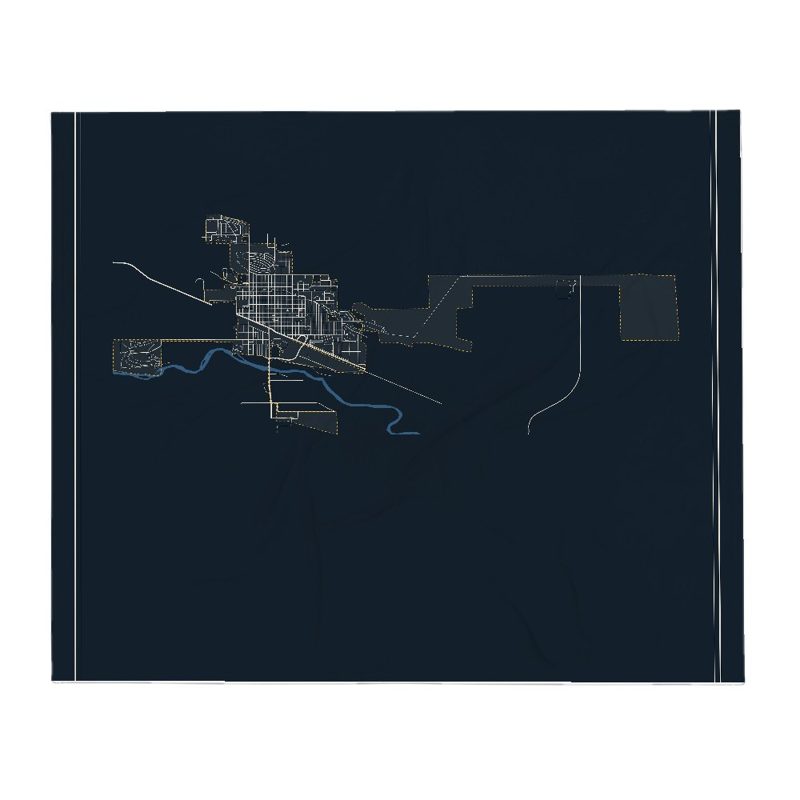
Soft fleece, 50″×60″
20 oz, double-wall stainless
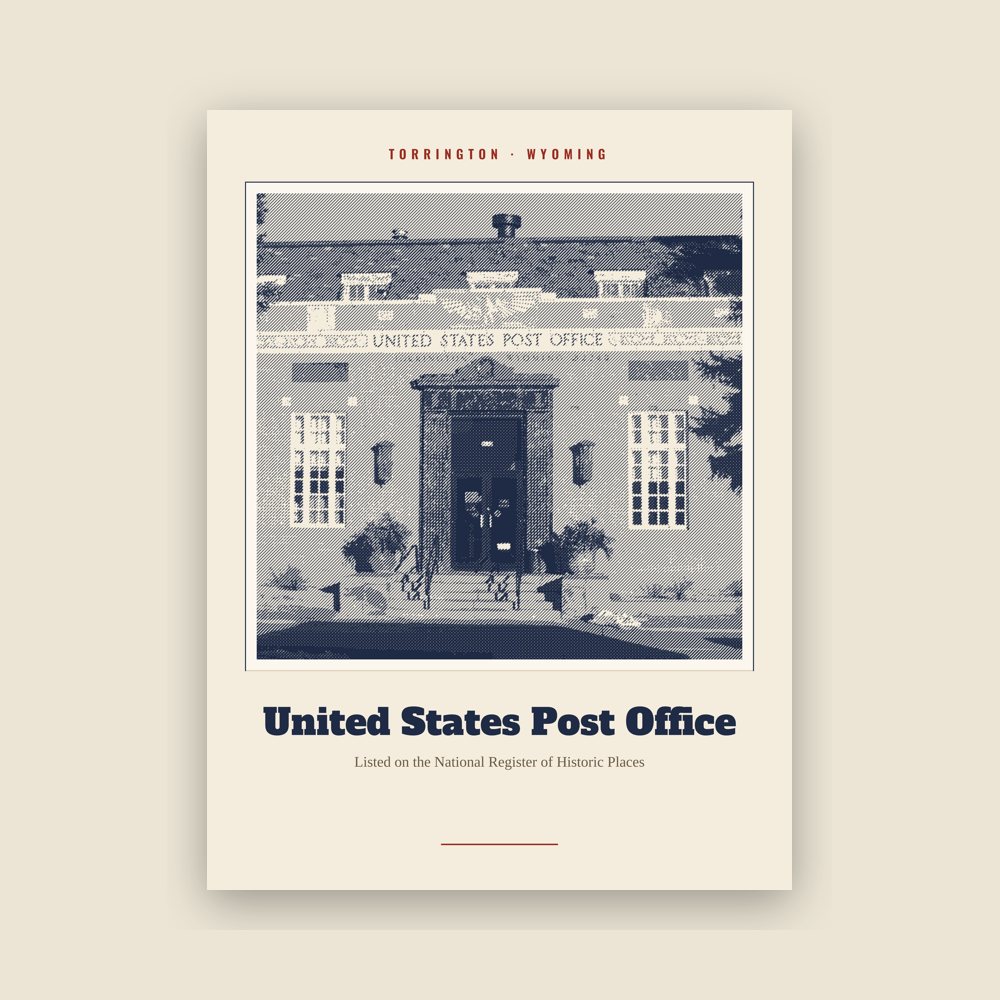
Archival matte print of a local landmark, credited to its photographer
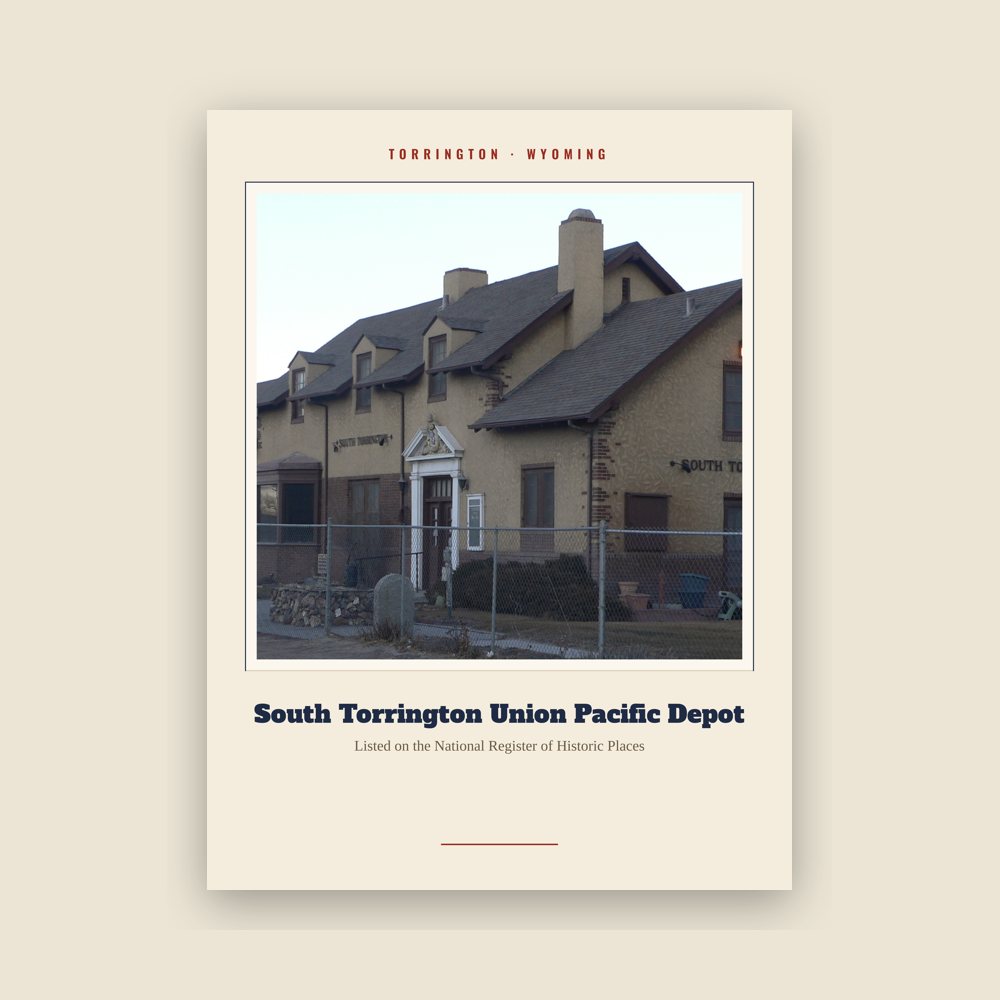
Archival matte print of a local landmark, credited to its photographer
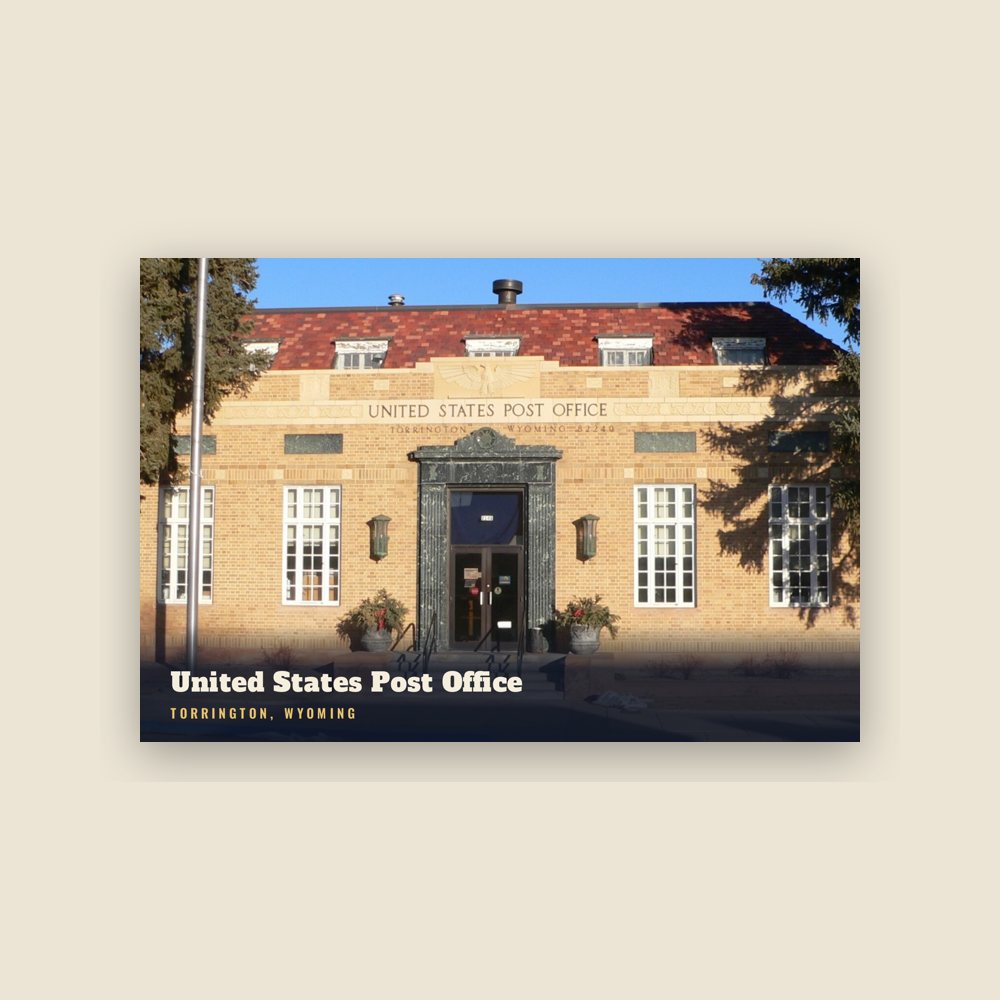
6″×4″ postcard, glossy front
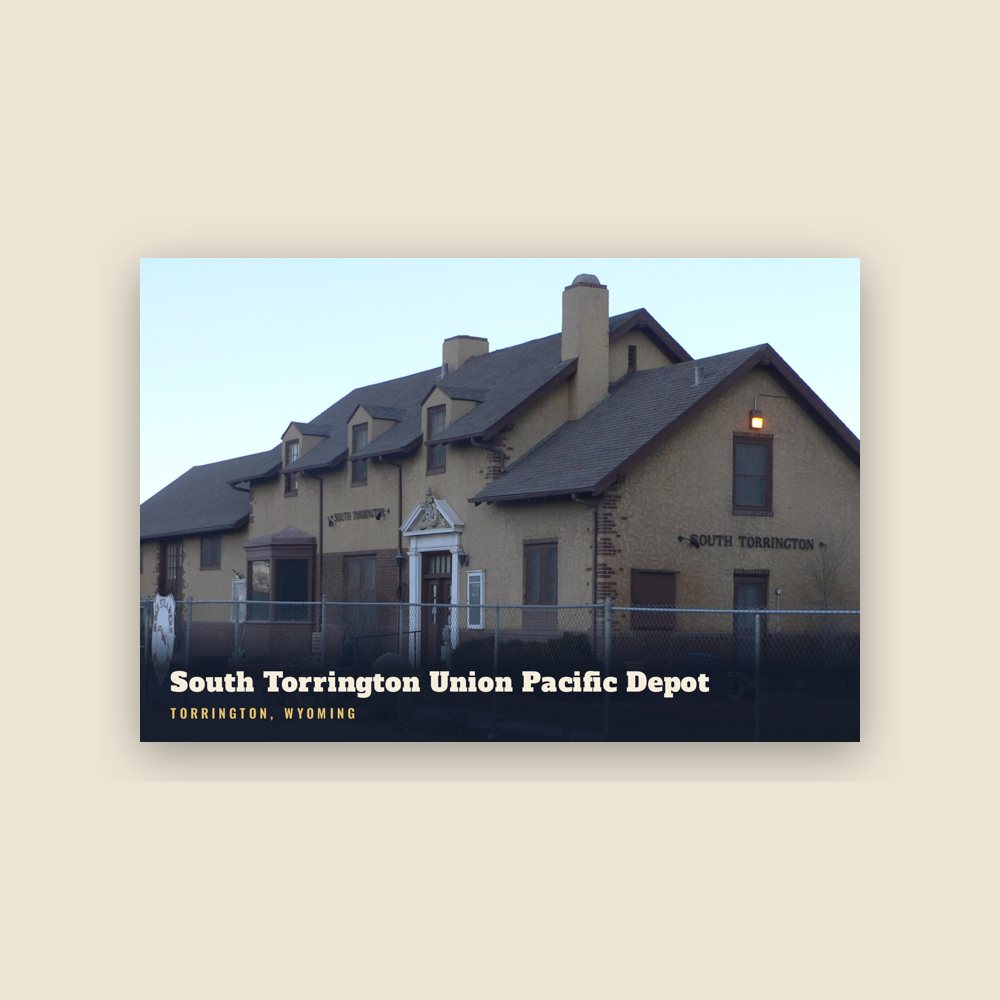
6″×4″ postcard, glossy front
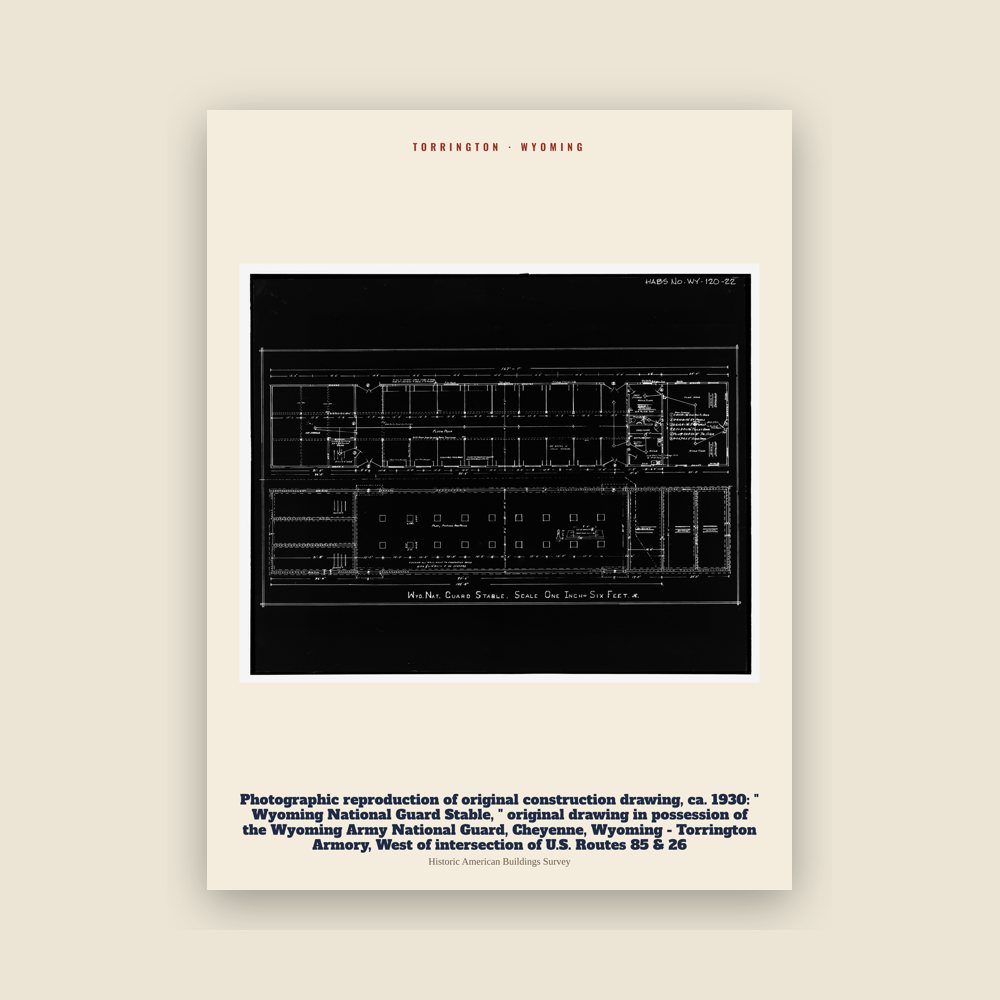
From the Library of Congress collections: a historic survey drawing or photograph of the town
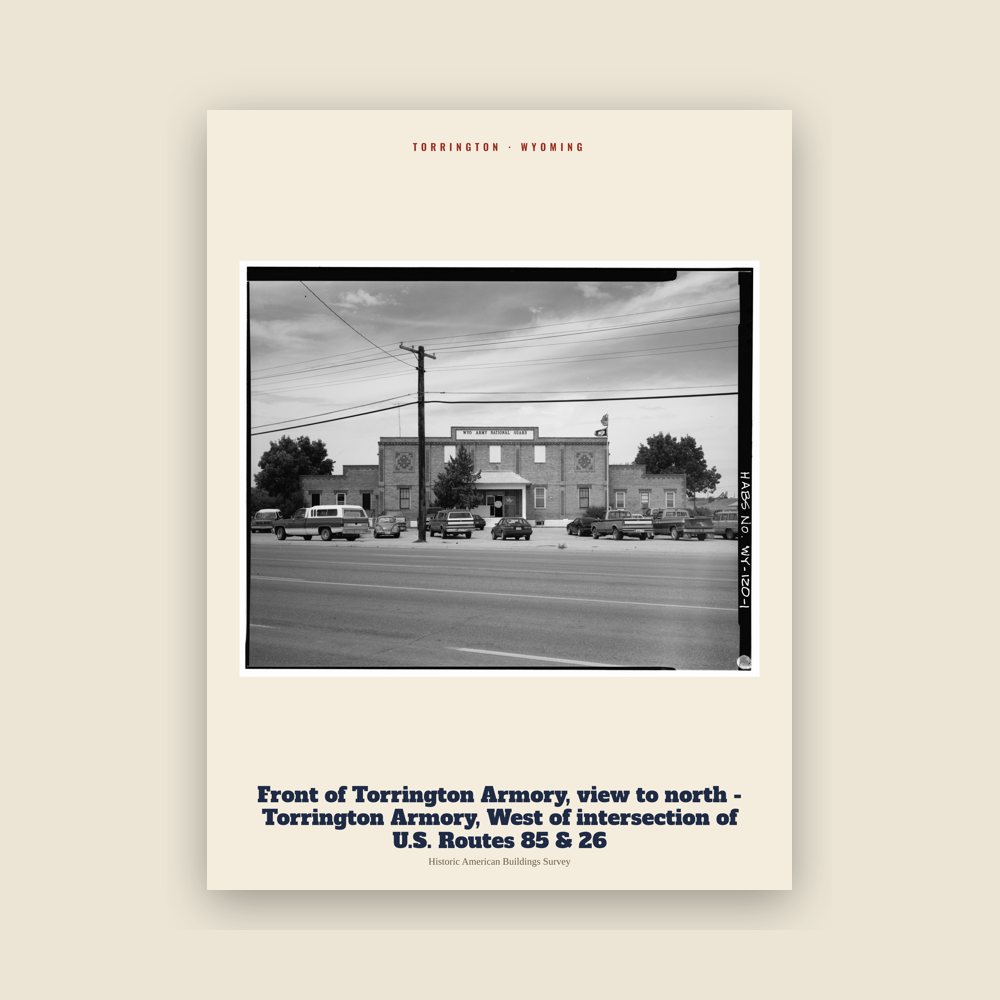
From the Library of Congress collections: a historic survey drawing or photograph of the town
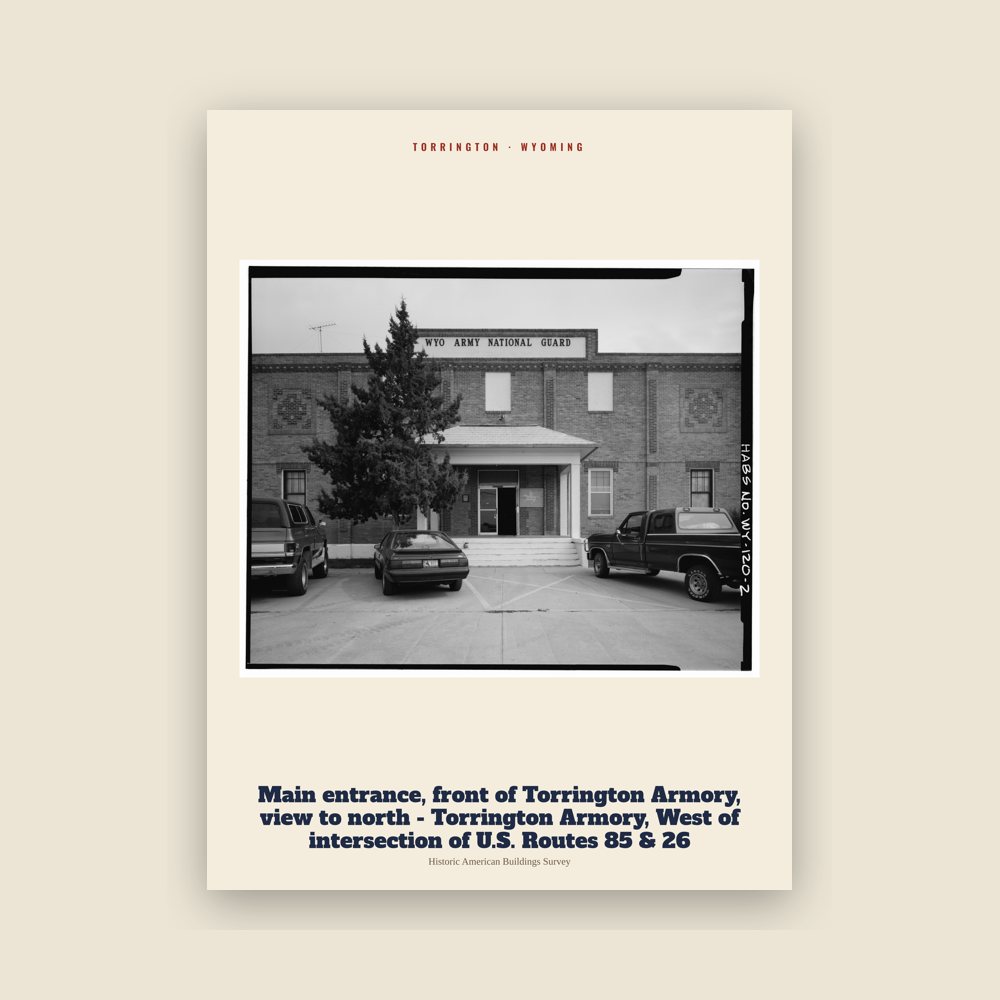
From the Library of Congress collections: a historic survey drawing or photograph of the town
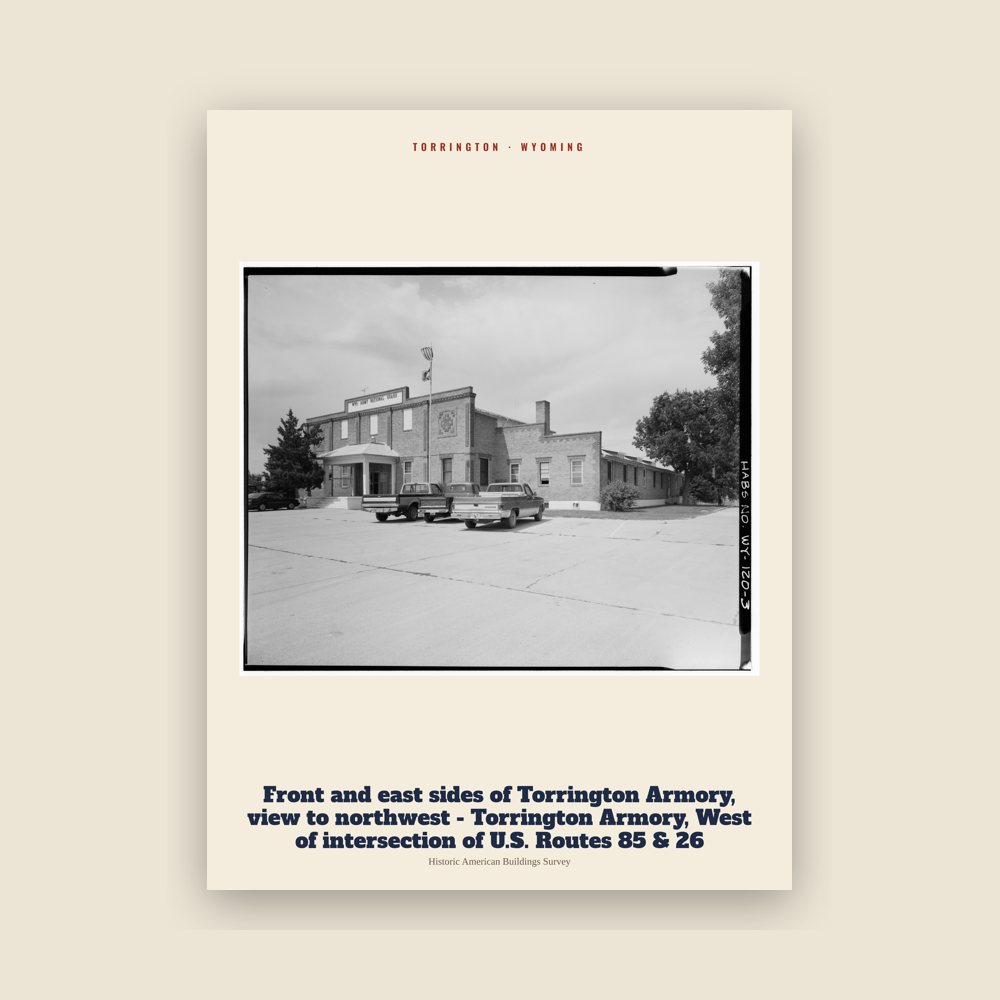
From the Library of Congress collections: a historic survey drawing or photograph of the town
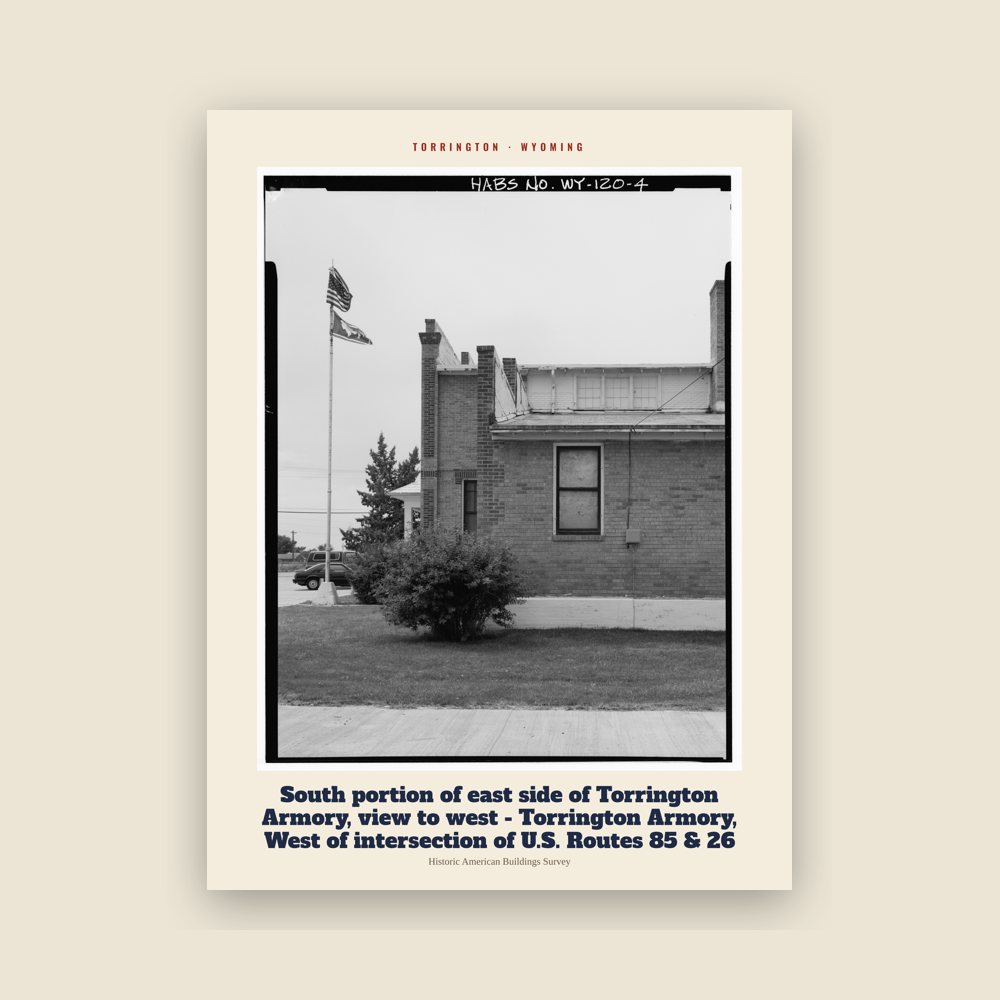
From the Library of Congress collections: a historic survey drawing or photograph of the town
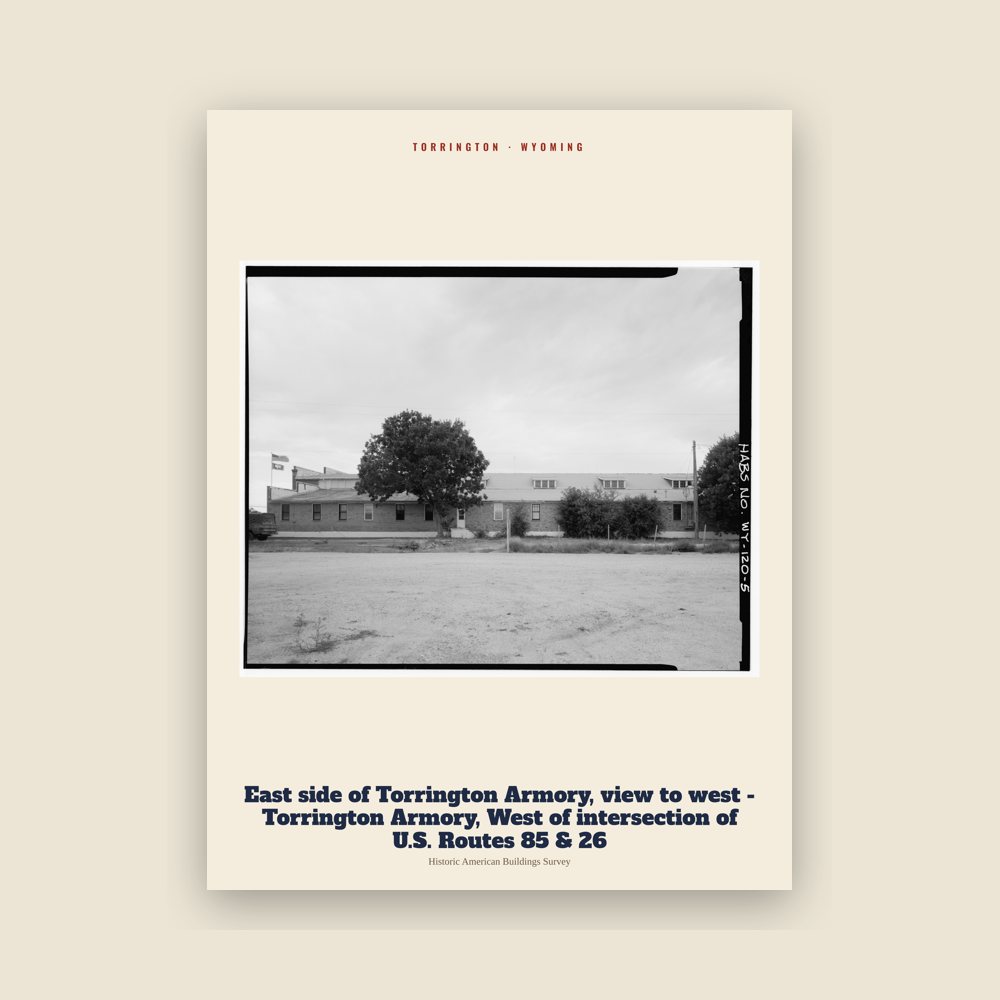
From the Library of Congress collections: a historic survey drawing or photograph of the town
Named for Torrington (city in Litchfield County, Connecticut, USA).
Population 2010: 6,501 → 2020: 6,119
From Wikidata (CC0).
Situated on the historic Mormon Trail and near the Oregon and California trails along the banks of the North Platte River, Torrington was founded in 1900 by W. G. Curtis (1857–1913), and named by him for his home town of Torrington, Connecticut. Originally a watering and coaling station for the CB&Q Railroad, which began passenger service in 1900, the town was a gathering place for nearby farmers and ranchers. In 1905, the first bridge was constructed over the North Platte River.
A post office called Torrington was established in 1889 on Curtis' farm three miles west of the future town, with Curtis serving as postmaster and later as mayor. In 1908, the town incorporated in Laramie County. It had a bank, three general stores, a pharmacy with a soda fountain, a land office, and two hotels (for one of which the building, although modified, still exists at 1841 Main Street.) It soon became a central place of trade for Goshen County, and for surrounding areas in eastern Wyoming and western Nebraska.
The town's site survey began in April 1900, by Ashland B. Smith of the Lincoln Land Company of Nebraska. The survey and plating was recorded in Cheyenne on June 22, 1900, and individual plots of the land sold to residents for one dollar each by Charles Henry Morrill, President of the Lincoln Land Company. The Torrington Telegram (which was still published in 2015) was established in 1911. The 1900 United States Census lists only 71 inhabitants in the Torrington Precinct and does not list it as a town. All residents were stock growers, ranch laborers, cowboys or at school, except for one listed as a hardware clerk.
Also in 1911, Goshen County was organized. The County was created from a portion of the northern end of Laramie County. The towns of Torrington and nearby Lingle—some 10 miles (16 km) away—competed for designation as the county seat. Torrington prevailed after Torrington residents raised sufficient funds for a courthouse. The cornerstone for the courthouse was set in 1913, in a ceremony where a band was conducted by Hi Yoder, from whose family the nearby town of Yoder, Wyoming, takes its name.
Around that time, early motor cars started showing up in town, the Goshen County Fair Association was established, and in 1915 Torrington had a population of 443. In 1919, the Trail Hotel building, which still exists at 2001 Main Street, was constructed. In 1925, the Union Pacific Railroad based in Omaha constructed a spur line from Cheyenne to South Torrington, to serve the proposed Holly Sugar Corporation plant, which began operations in 1926.
The Holly Sugar factory, later Western Sugar Cooperative, processed sugar beets since 1923 and closed in early 2019. It was once a major employer for the Torrington area. The preserved historic Union Pacific Depot building now houses the Goshen County Homesteaders Museum.
The Torrington Livestock Commission, established in 1934, still held twice-weekly livestock auctions in 2015. It is the largest livestock auction operation and barn in Wyoming, and ranks as the third to fifth largest livestock auction in the United States. Drawing cattle from a nine-state region (Nebraska, Colorado, Arizona, Nevada, Utah, Idaho, South Dakota, Montana and the bulk of Wyoming) the Torrington livestock auction barn attracts buyers from all over the nation. And, as of 2011, Goshen County ranked number one in Wyoming for its cattle inventory.
Today, when traveling between Torrington and Guernsey, Wyoming, motorists will be following the path of the historic Oregon and Mormon Trail as they make their way along the banks of the North Platte River past the site of the 1854 Grattan Massacre near Lingle, and past the historic western 19th-Century U.S. Army Cavalry outpost, Fort Laramie National Historic Site.
Adapted (trimmed) from the Wikipedia article Torrington, Wyoming, revision 1379352102 by its contributors, licensed CC BY-SA 4.0.
We share a part of every Torrington sale with local partners, and we'd love to print from your collection. Old photographs, maps and postcards make the best keepsakes.
Partner with us