Cart 0
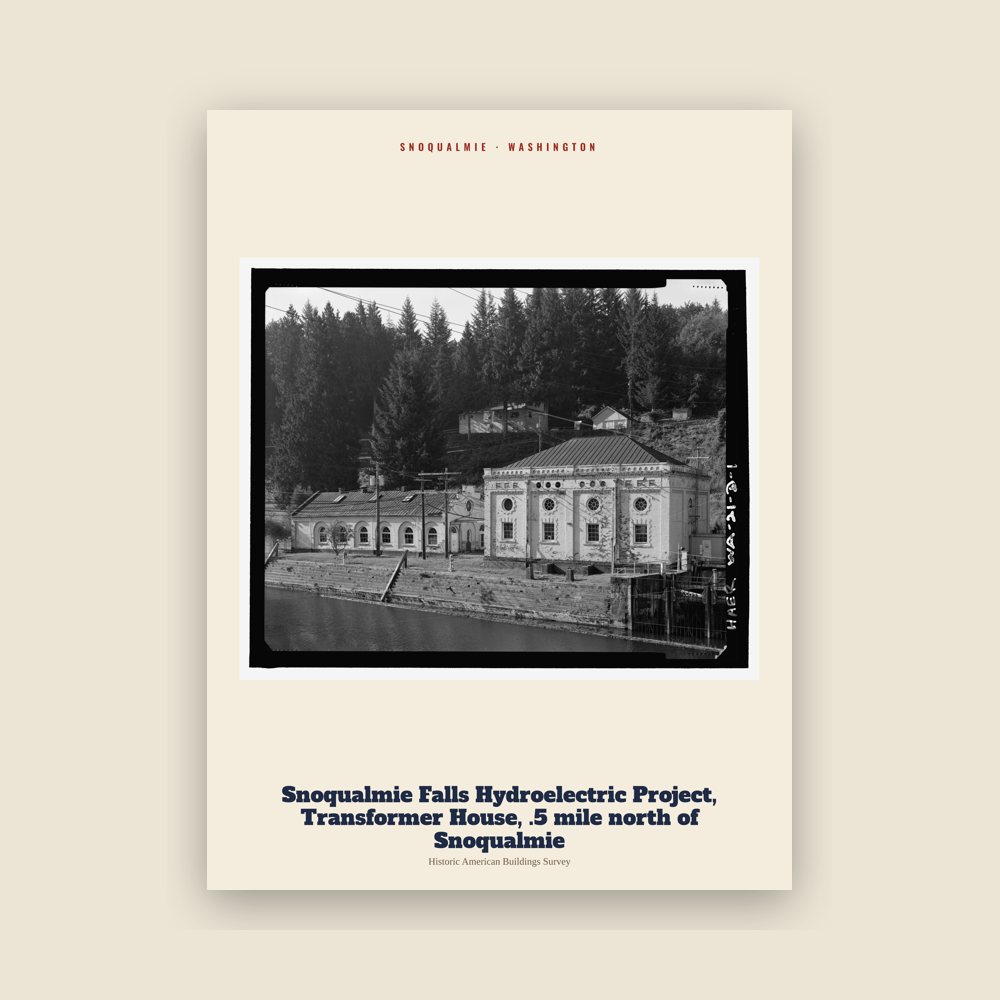
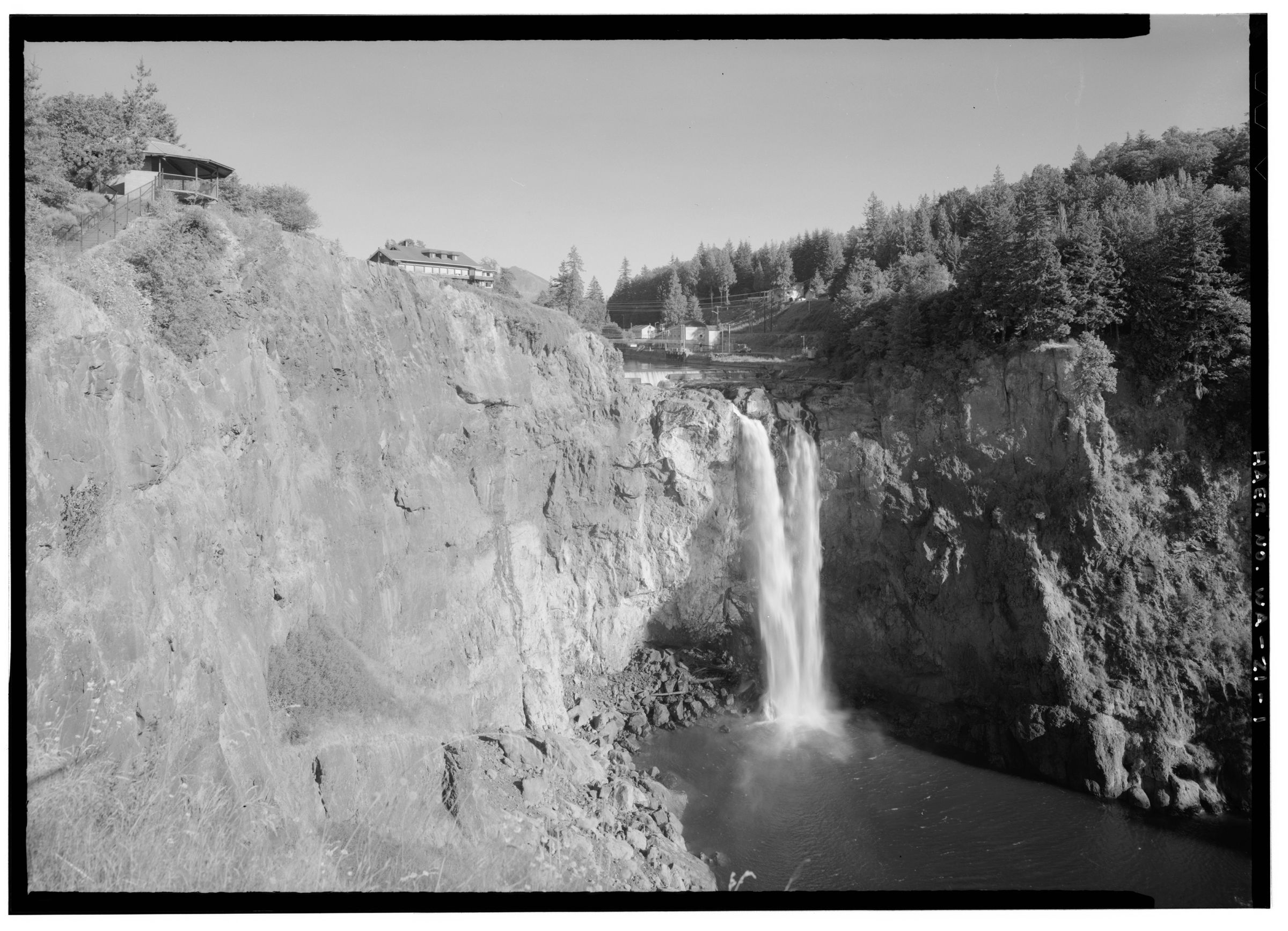
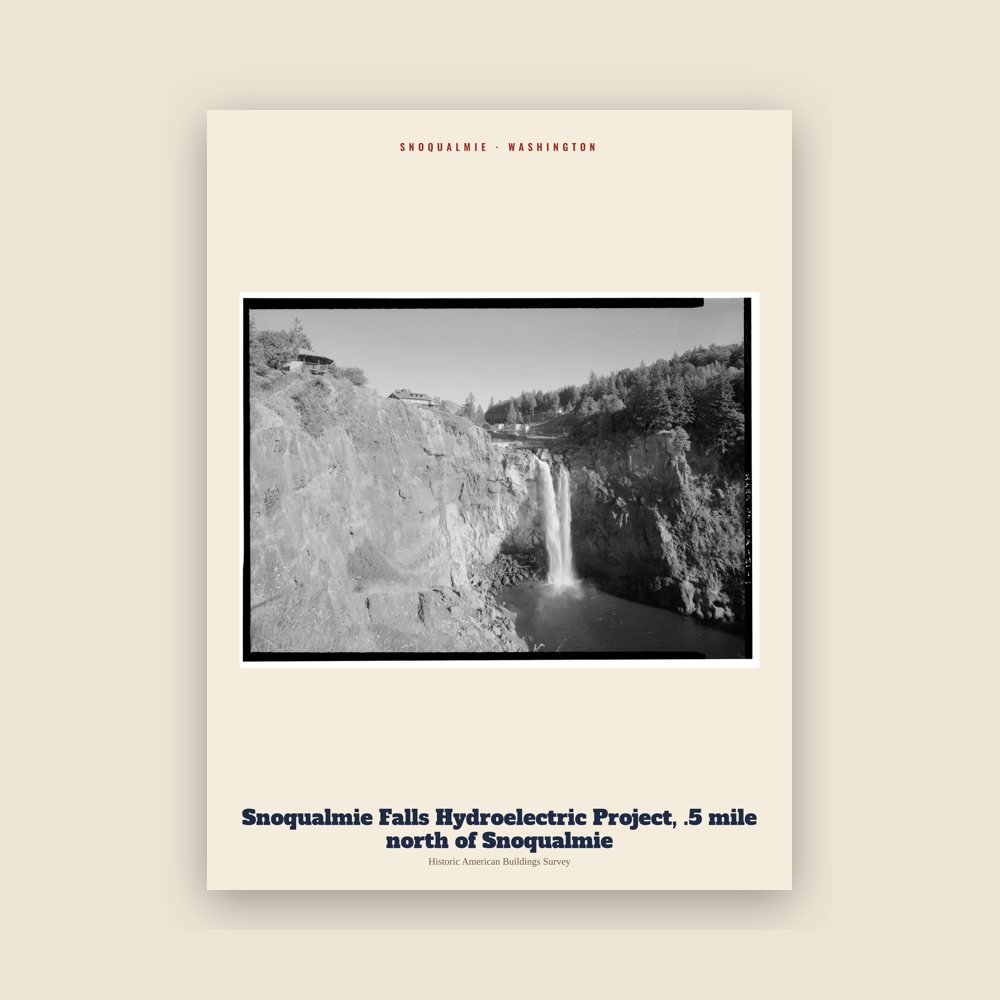
Snoqualmie Falls Hydroelectric Project, .5 mile north of Snoqualmie, Snoqualmie, Washington, Historic American Buildings Survey photograph

SNOQUALMIE

Washington
Shop the collection

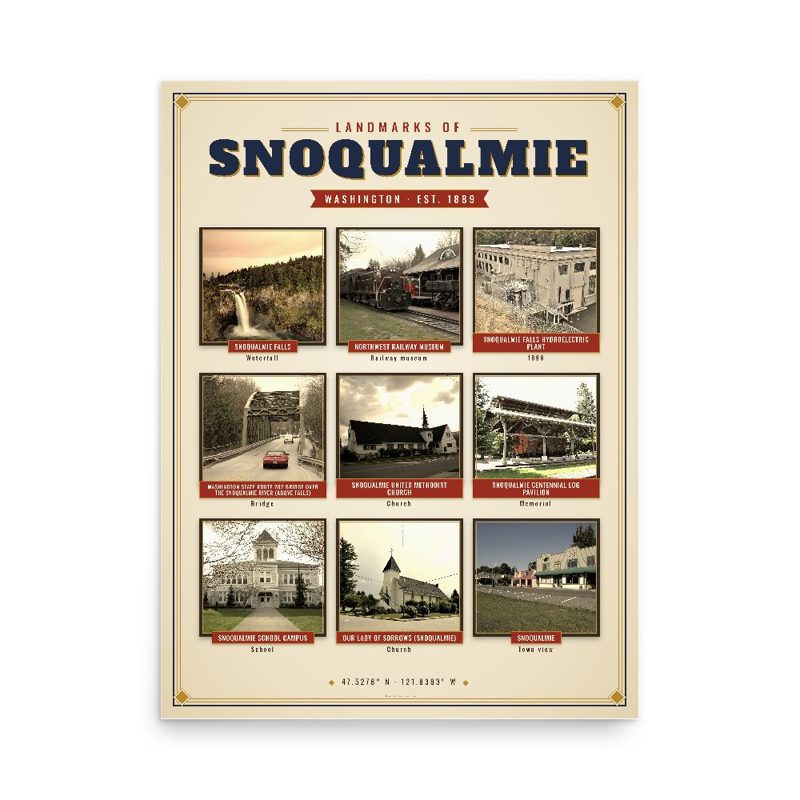
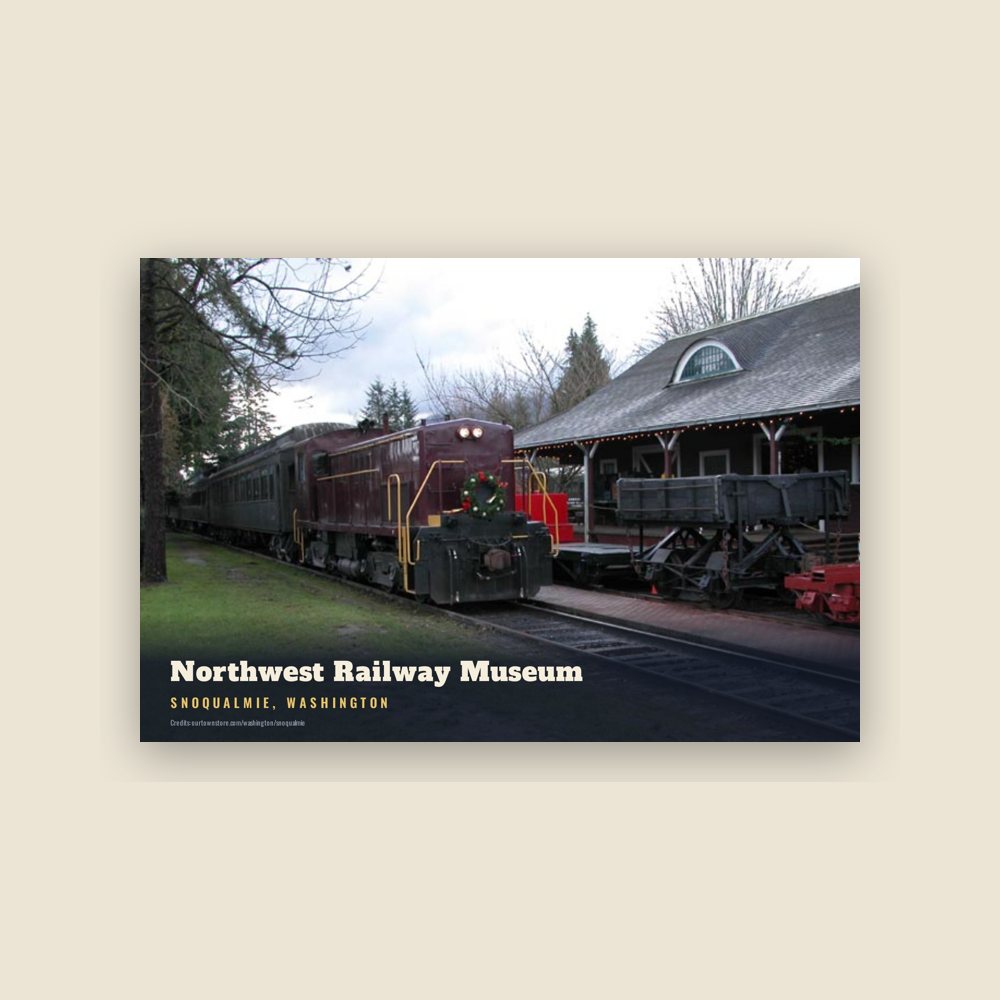
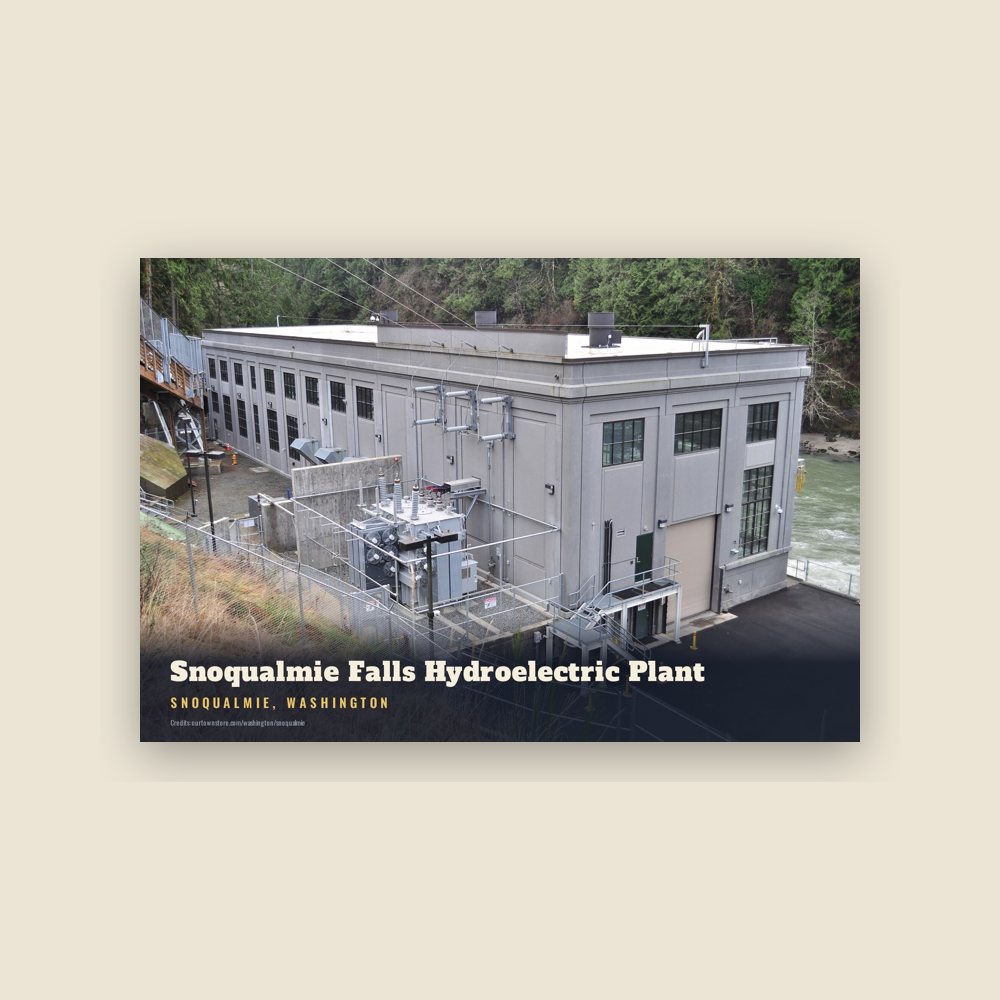
Snoqualmie is home to the Northwest Railway Museum. Landmarks include Snoqualmie Falls, Northwest Railway Museum and Snoqualmie Falls Hydroelectric Plant. Snoqualmie is the birthplace of Clark Connors, professional wrestler.

The Snoqualmie Collection

Made for Snoqualmie. Printed to order.

Snoqualmie, Washington gifts and souvenirs: 42 designs made from Snoqualmie's own map, landmarks and history, from $10 to $99. Printed to order and shipped free in the USA.

PopularPrice
Snoqualmie Hometown Ornament$23
Snoqualmie Landmarks Photo Posterfrom $40
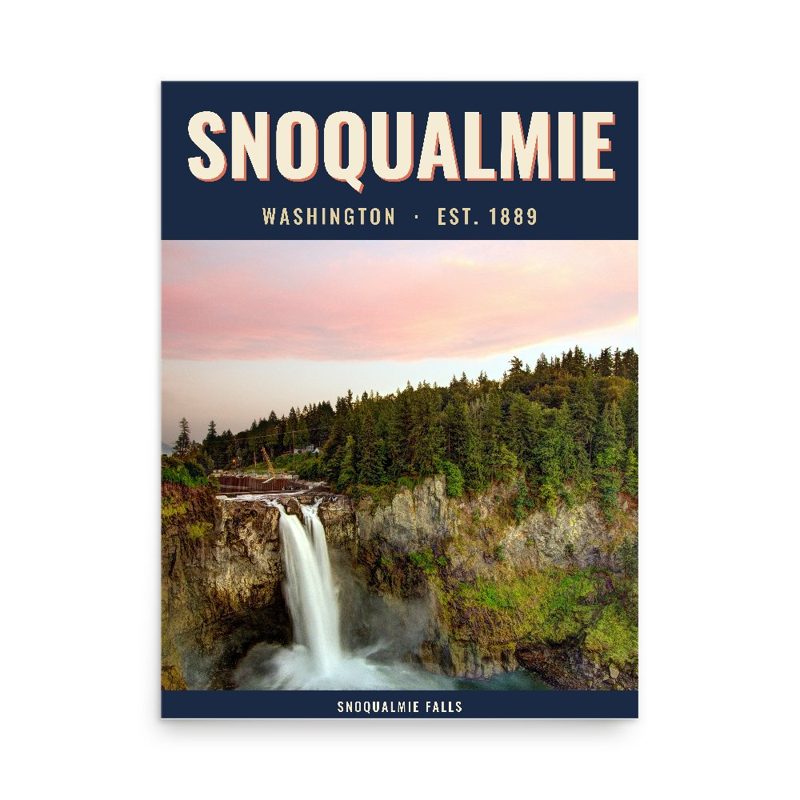
Snoqualmie Vintage Travel Posterfrom $40
Snoqualmie Varsity Crewneckfrom $57
Snoqualmie Est. Teefrom $33
Snoqualmie Town Line Mugfrom $26
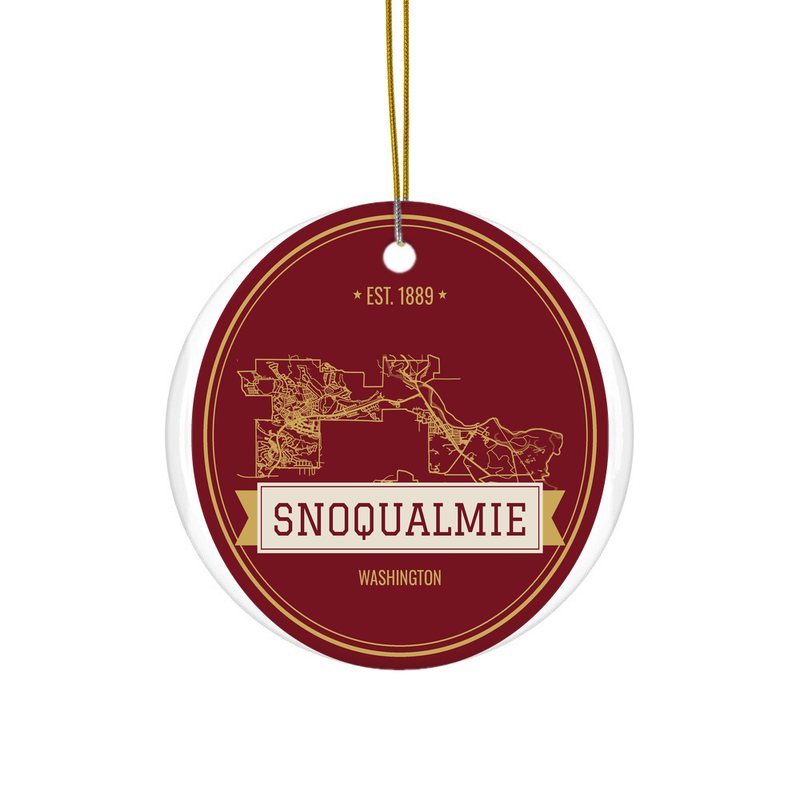
Snoqualmie Hometown Ornament

Snoqualmie Hometown Ornament

Ceramic keepsake, gold ribbon

$23
Snoqualmie Landmarks Photo Poster

Snoqualmie Landmarks Photo Poster

Nine local landmarks, archival matte

from $40
Snoqualmie Vintage Travel Poster

Snoqualmie Vintage Travel Poster

Its landmark photo in a classic travel-poster layout

from $40
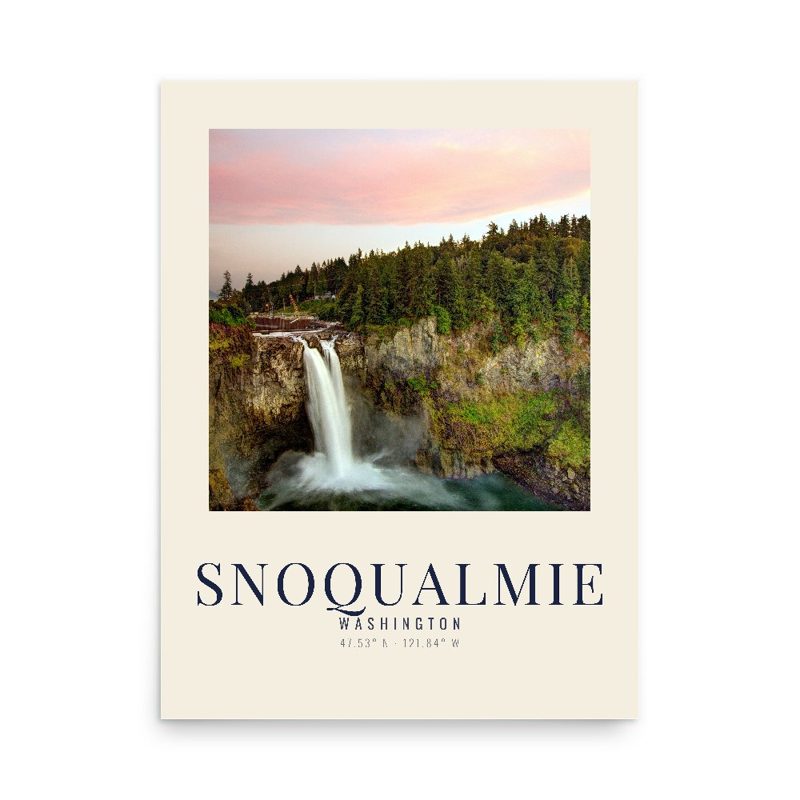
Snoqualmie Photo Art Print

Snoqualmie Photo Art Print

A local landmark photo as a gallery print

from $40
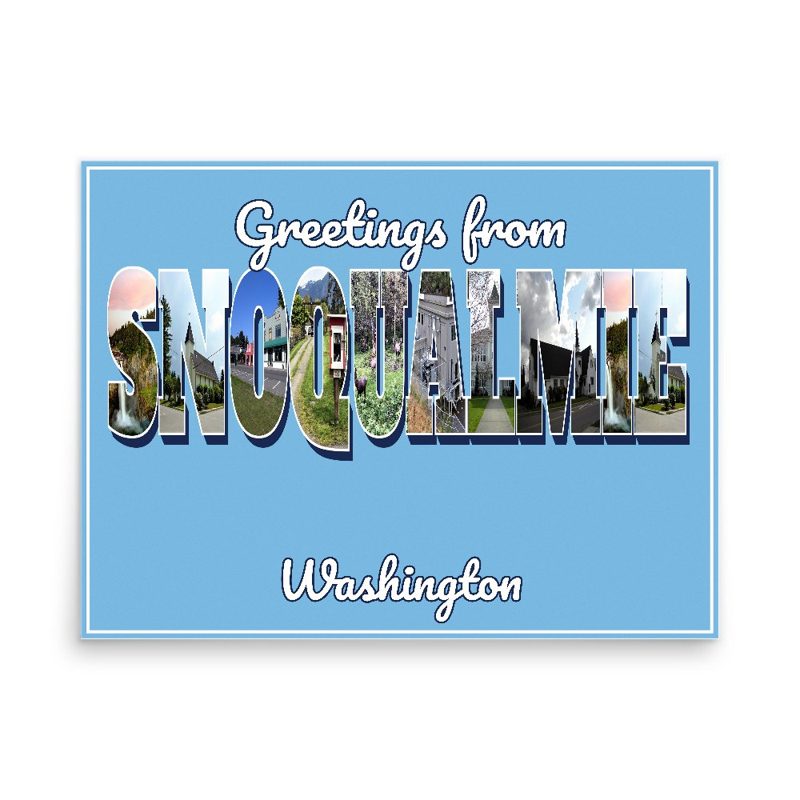
Snoqualmie “Greetings From” Poster

Snoqualmie “Greetings From” Poster

Classic large-letter postcard art, filled with local photos

from $40
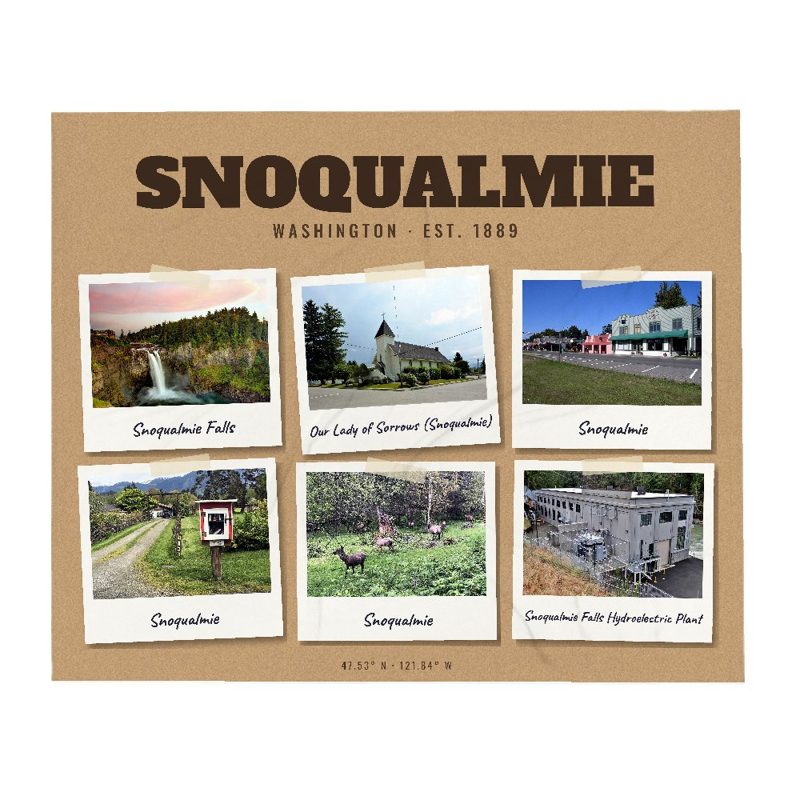
Snoqualmie Snapshot Collage Poster

Snoqualmie Snapshot Collage Poster

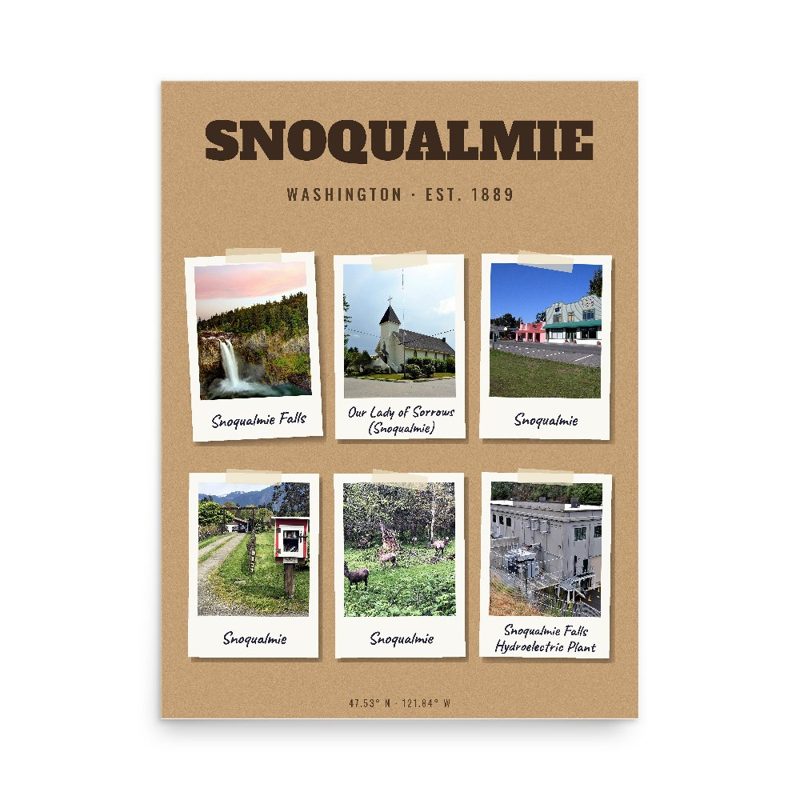
Six local landmarks as instant photos on kraft paper

from $40
Snoqualmie History Timeline Poster

Snoqualmie History Timeline Poster

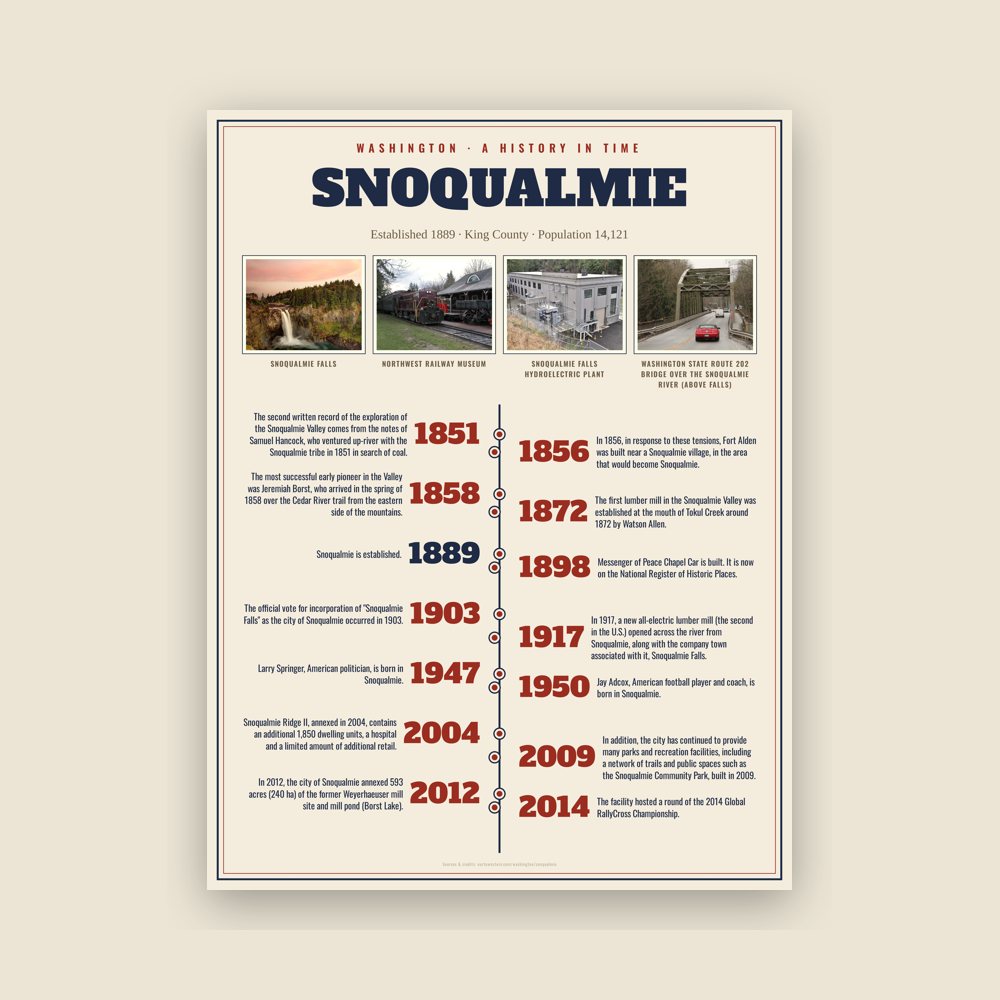
The town's story in dates, from its own records, for home or classroom

from $44
Snoqualmie Map Placemat

Snoqualmie Map Placemat

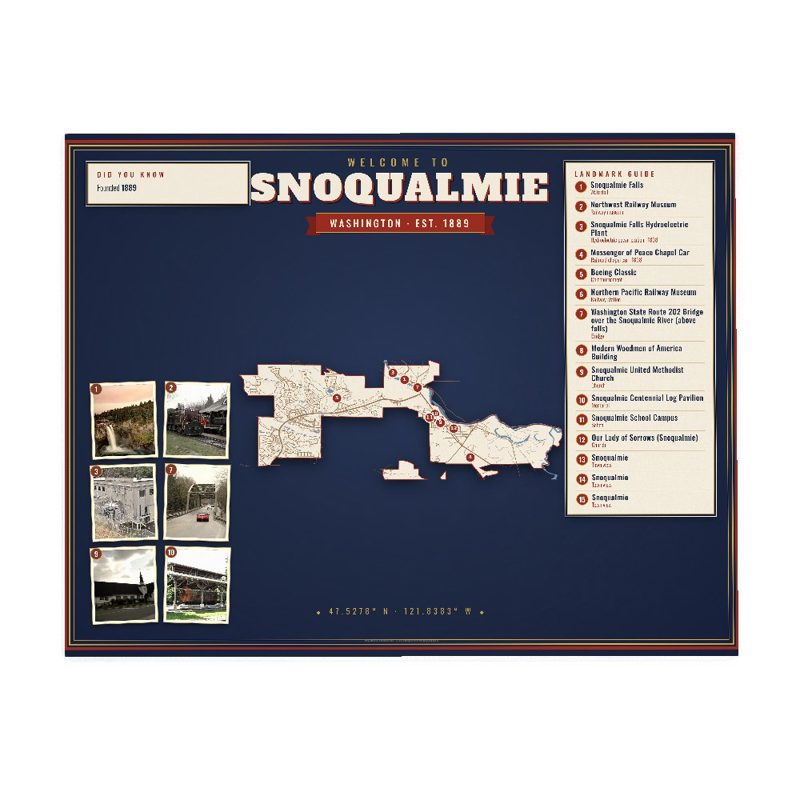
Map of local landmarks, washable fabric

$31
Snoqualmie Varsity Crewneck

Snoqualmie Varsity Crewneck

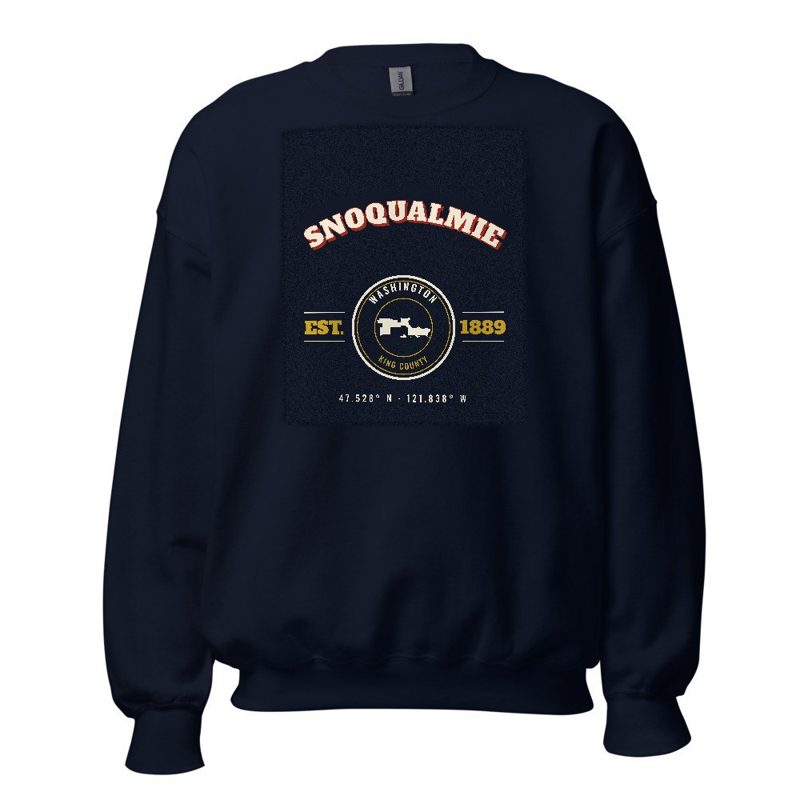
Heavy-blend fleece, street map printed on the back

from $57
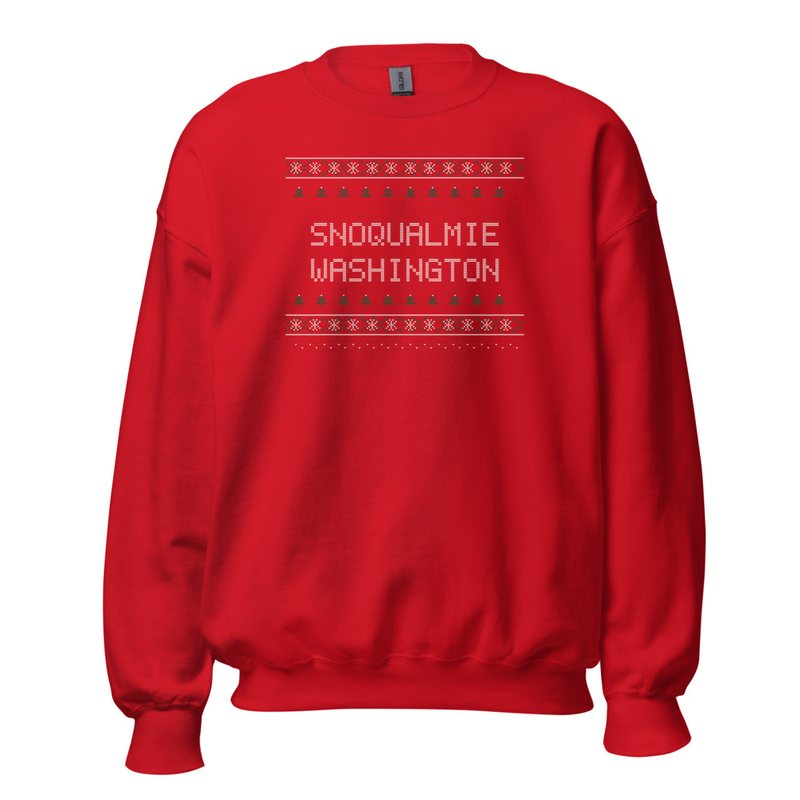
Snoqualmie Hometown Knit Sweater

Snoqualmie Hometown Knit Sweater

Red heavy-blend crewneck, knit-stitch town print

from $57
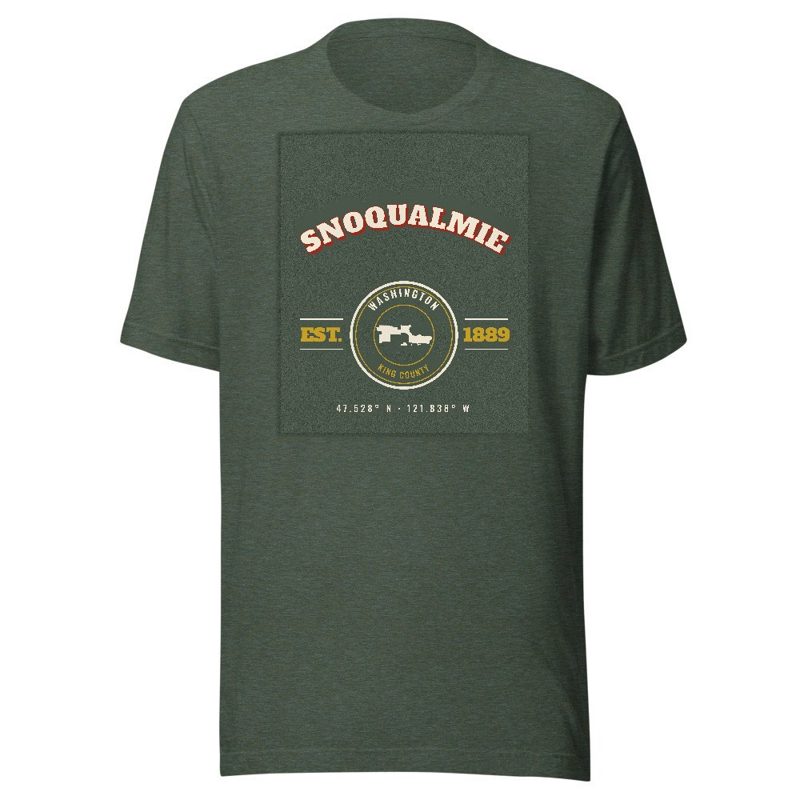
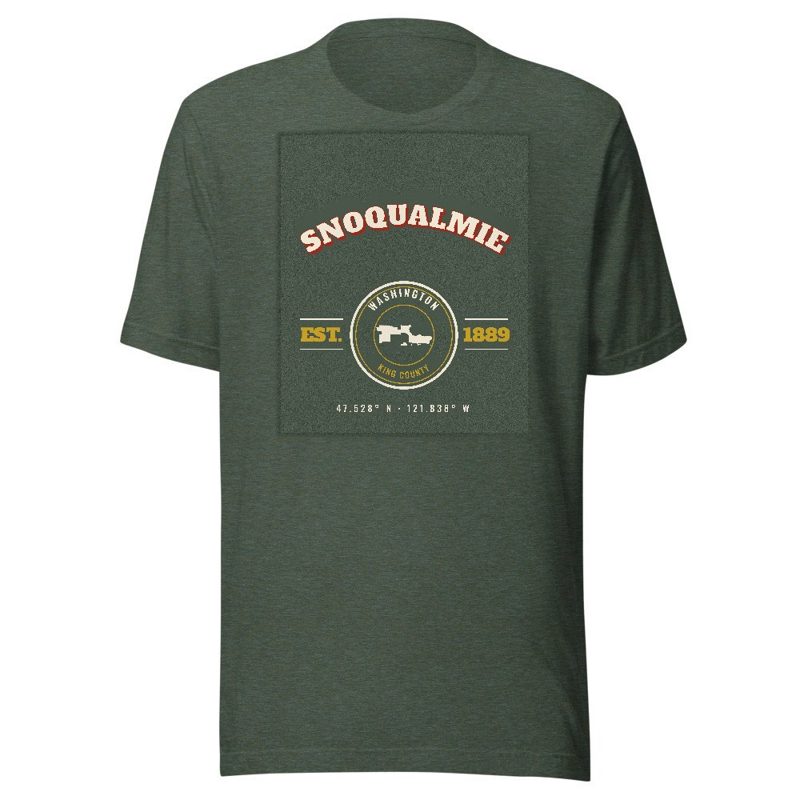
Snoqualmie Est. Tee

Snoqualmie Est. Tee

Soft Bella+Canvas jersey

from $33
Snoqualmie Est. Youth Tee

Snoqualmie Est. Youth Tee

Kids' Bella+Canvas jersey, youth sizes

$30
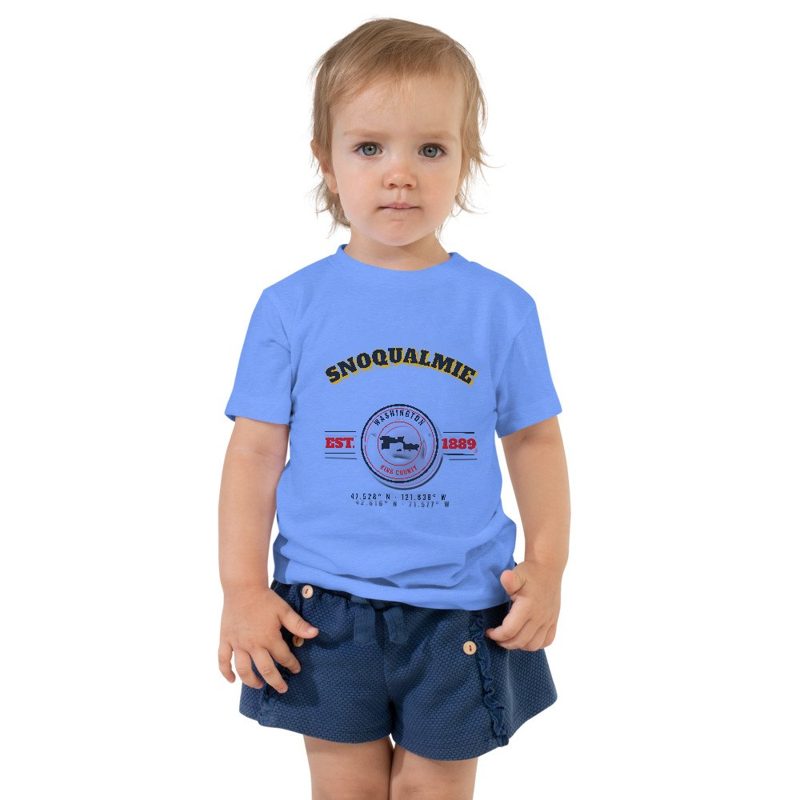
Snoqualmie Est. Toddler Tee

Snoqualmie Est. Toddler Tee

Bella+Canvas toddler jersey

$29
Snoqualmie Est. Baby One Piece

Snoqualmie Est. Baby One Piece

Bella+Canvas baby bodysuit

$30
Snoqualmie “Greetings From” Tee

Snoqualmie “Greetings From” Tee

Large-letter postcard art filled with local photos

from $35
Snoqualmie Town Line Mug

Snoqualmie Town Line Mug

Glossy ceramic, dishwasher safe

from $26
Snoqualmie “Greetings From” Mug

Snoqualmie “Greetings From” Mug

Large-letter postcard art filled with local photos, 11 oz ceramic

from $29
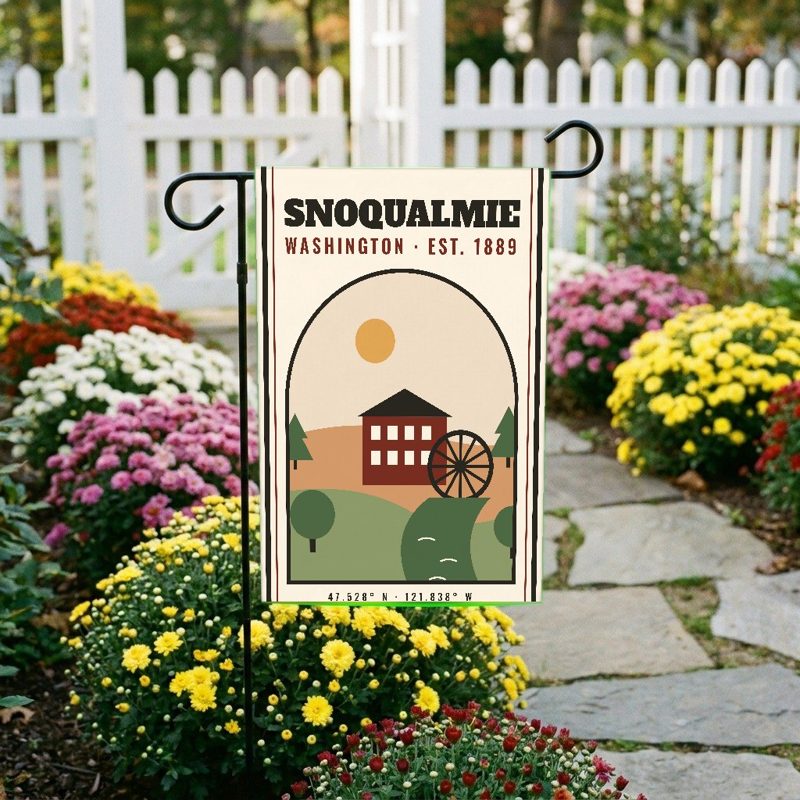
Snoqualmie Garden Flag

Snoqualmie Garden Flag

Weatherproof, for the front walk

$31
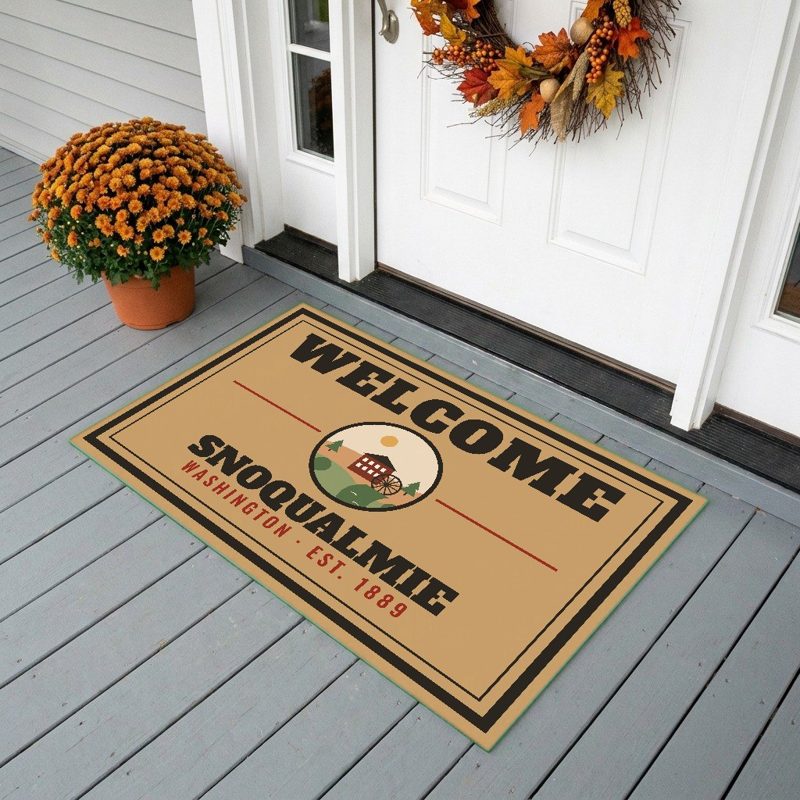
Snoqualmie Welcome Doormat

Snoqualmie Welcome Doormat

24″×16″, printed coir-look fibers, rubber back

$66
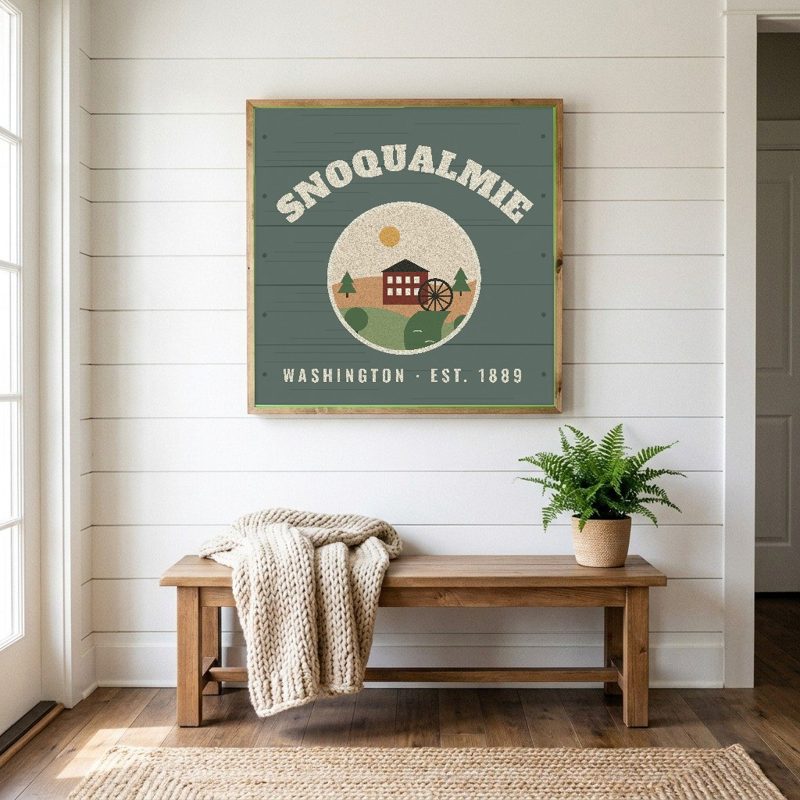
Snoqualmie Hometown Wood Sign

Snoqualmie Hometown Wood Sign

12″×12″ printed wood, ready to hang

$48
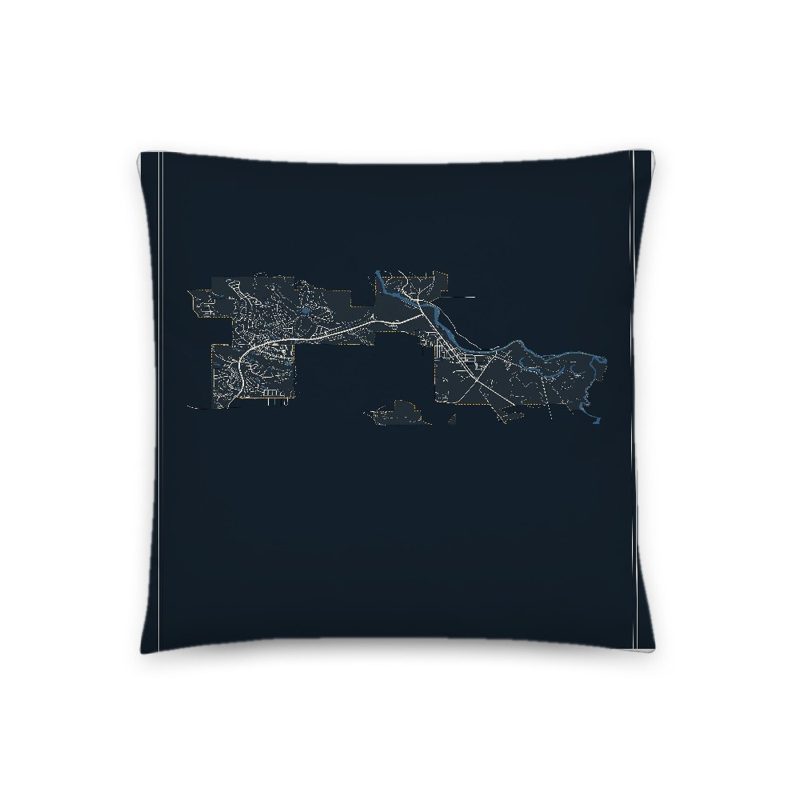
Snoqualmie Map Throw Pillow

Snoqualmie Map Throw Pillow

Soft-touch, zip cover

$47
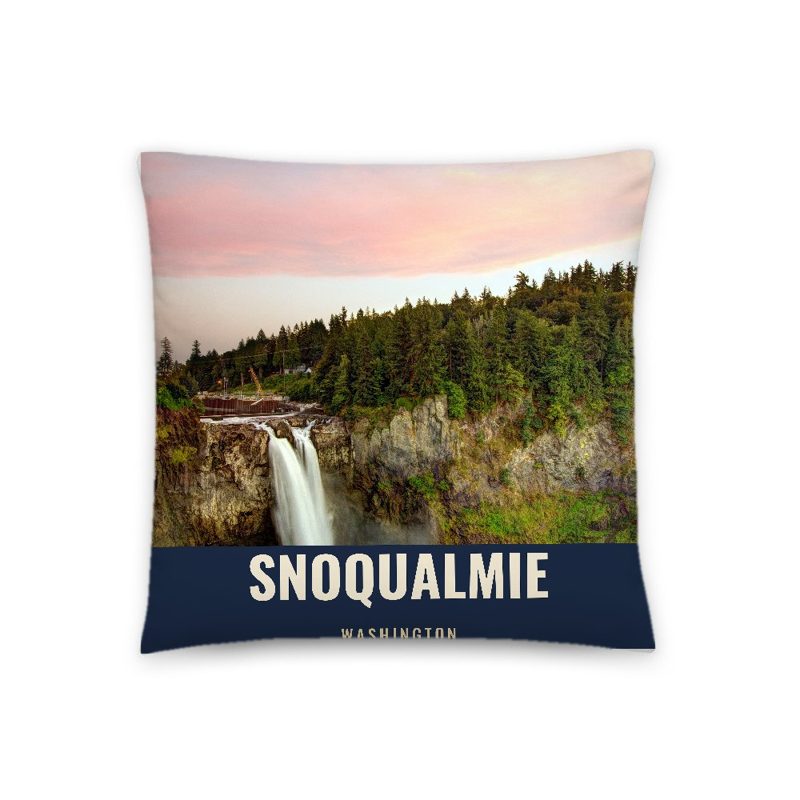
Snoqualmie Landmark Photo Pillow

Snoqualmie Landmark Photo Pillow

A local landmark photo with the town name, 18″×18″

$49
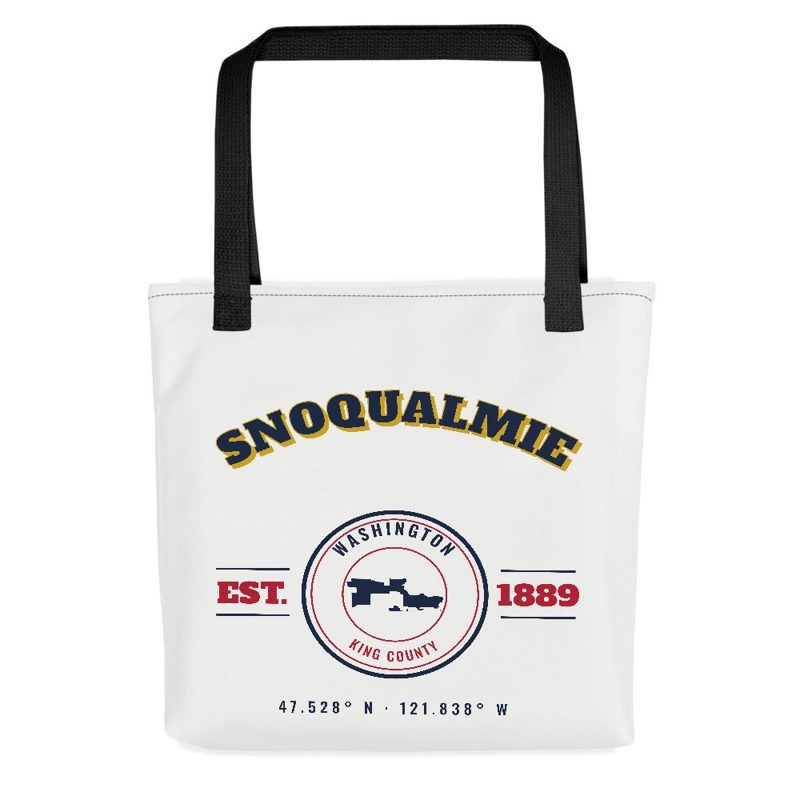
Snoqualmie Market Tote

Snoqualmie Market Tote

Sturdy all-over-print tote

$37
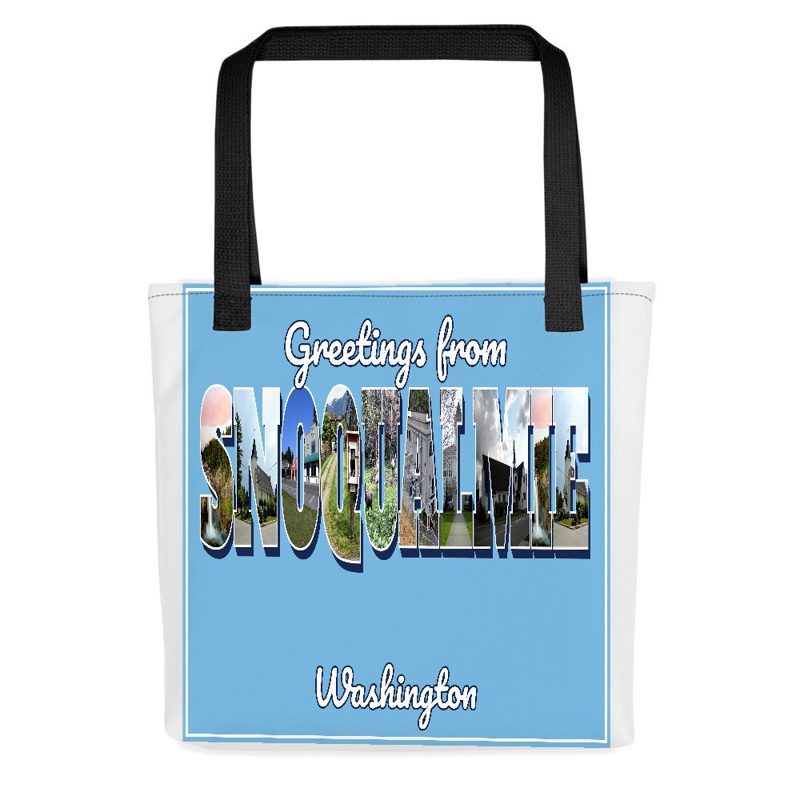
Snoqualmie “Greetings From” Tote

Snoqualmie “Greetings From” Tote

Large-letter postcard art on a sturdy tote

$37
Snoqualmie “Greetings From” Trucker Cap

Snoqualmie “Greetings From” Trucker Cap

Foam-front trucker, printed (not embroidered) with local photos

$33
Snoqualmie Cork Coaster

Snoqualmie Cork Coaster

Glossy top, cork back

$16
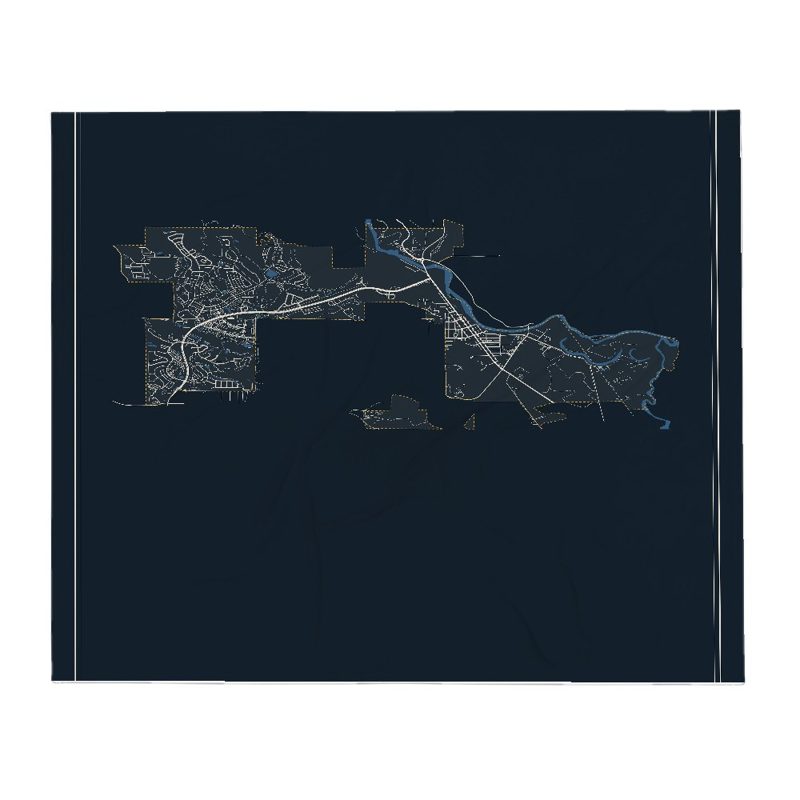
Snoqualmie Street Map Throw Blanket

Snoqualmie Street Map Throw Blanket

Soft fleece, 50″×60″

from $72
Snoqualmie Snapshot Collage Blanket

Snoqualmie Snapshot Collage Blanket

Six local landmarks as instant photos, soft fleece 50″×60″

from $76
Snoqualmie Est. Tumbler

Snoqualmie Est. Tumbler

20 oz, double-wall stainless

$51
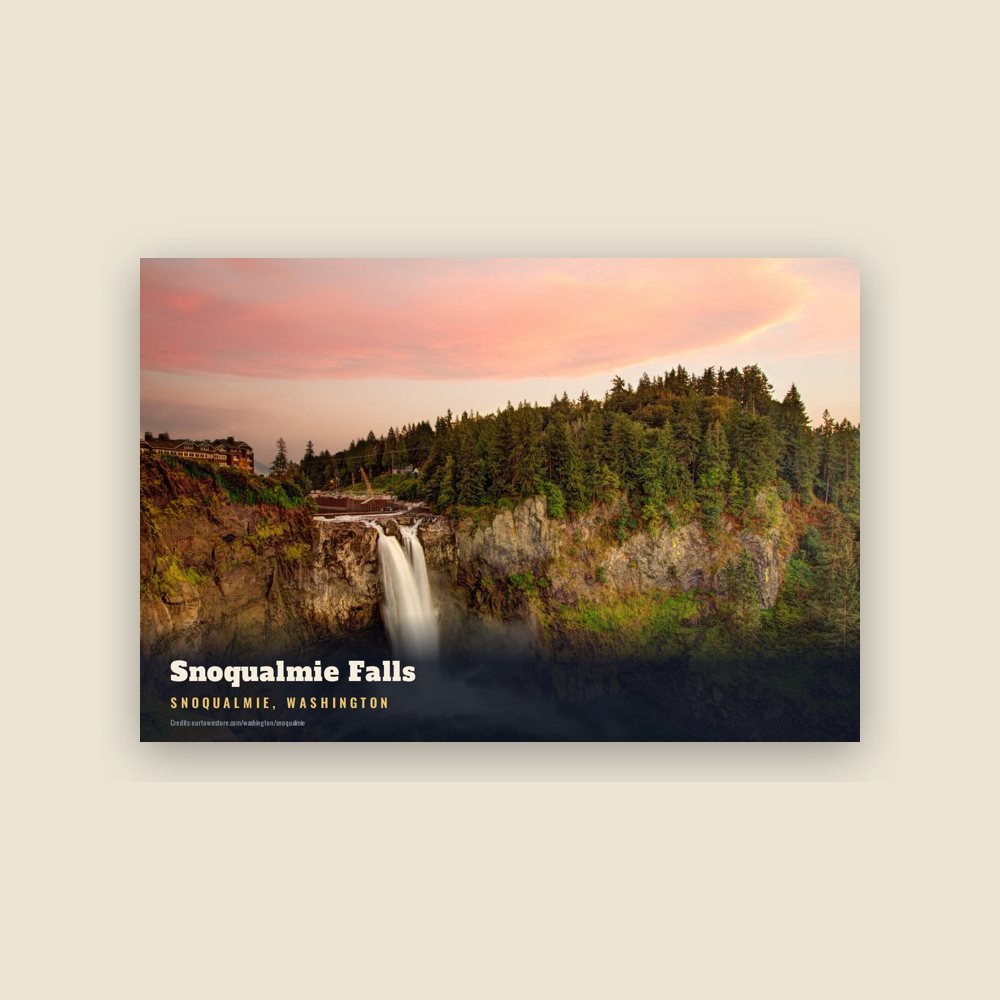
Snoqualmie Snoqualmie Falls Postcard

Snoqualmie Snoqualmie Falls Postcard

6″×4″ postcard, glossy front

$10
Snoqualmie Northwest Railway Museum Postcard

Snoqualmie Northwest Railway Museum Postcard

6″×4″ postcard, glossy front

$10
Snoqualmie Snoqualmie Falls Hydroelectric Plant Postcard

Snoqualmie Snoqualmie Falls Hydroelectric Plant Postcard

6″×4″ postcard, glossy front

$10
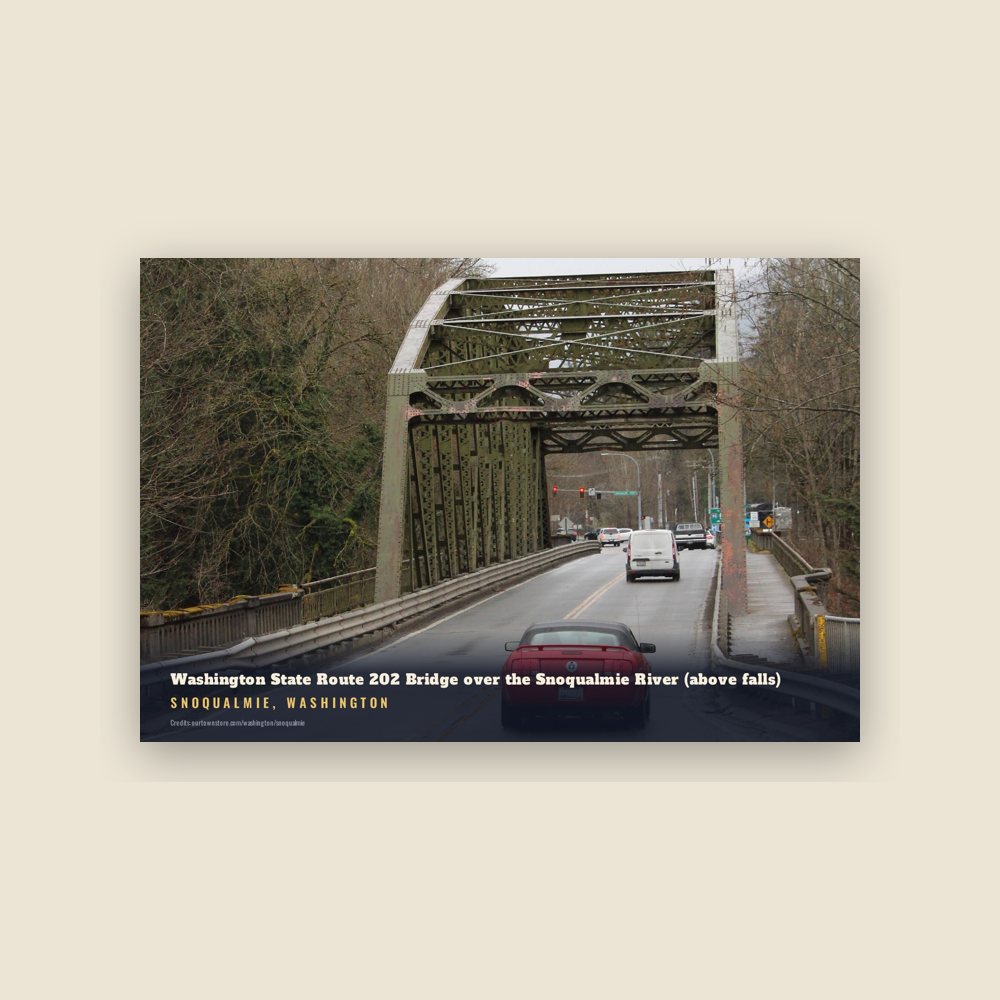
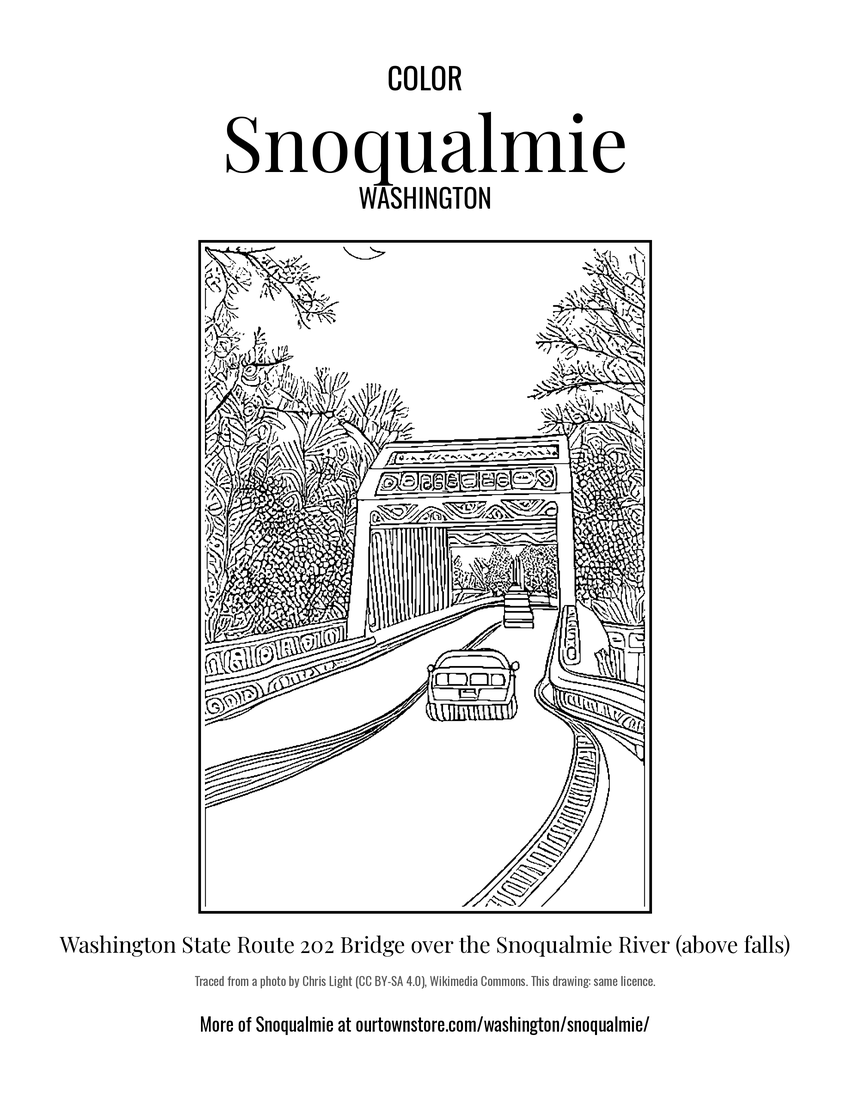
Snoqualmie Washington State Route 202 Bridge over the Snoqualmie River (above falls) Postcard

Snoqualmie Washington State Route 202 Bridge over the Snoqualmie River (above falls) Postcard

6″×4″ postcard, glossy front

$10
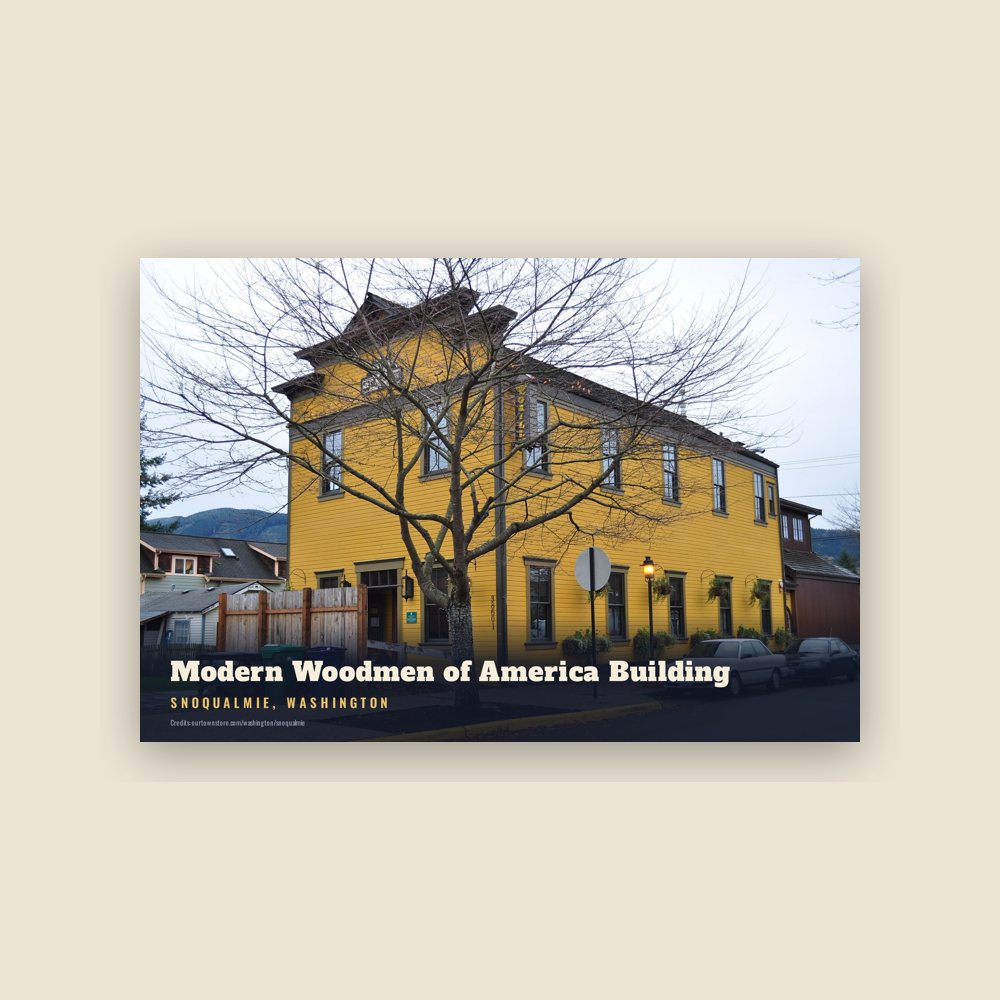
Snoqualmie Modern Woodmen of America Building Postcard

Snoqualmie Modern Woodmen of America Building Postcard

6″×4″ postcard, glossy front

$10
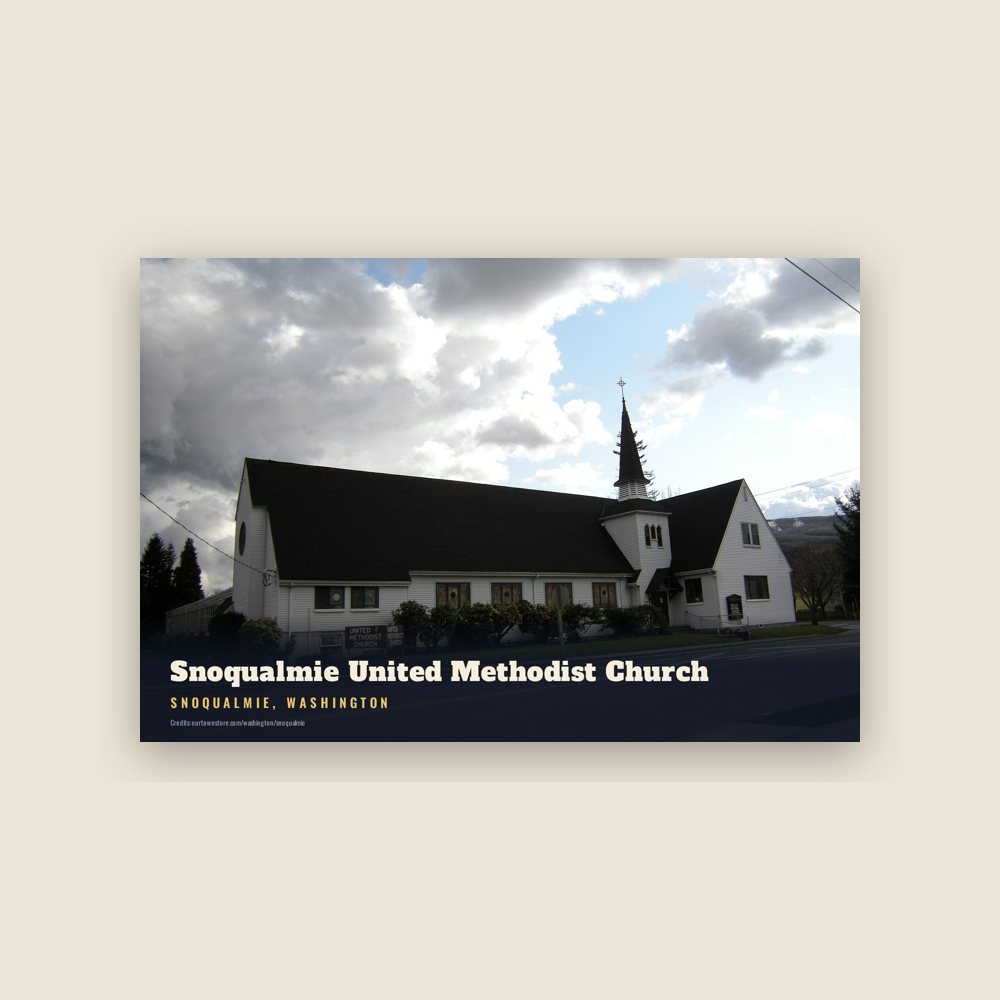
Snoqualmie Snoqualmie United Methodist Church Postcard

Snoqualmie Snoqualmie United Methodist Church Postcard

6″×4″ postcard, glossy front

$10
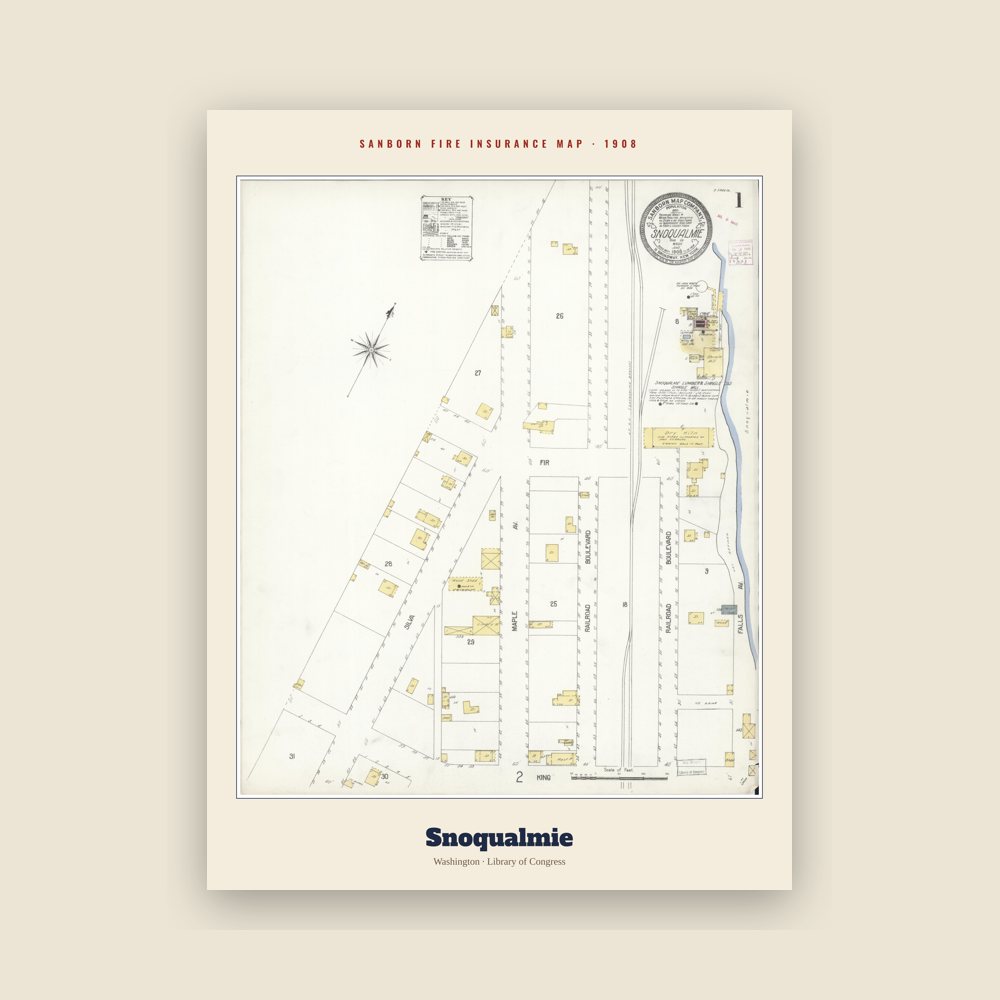
Snoqualmie Sanborn Map Print

Snoqualmie Sanborn Map Print

The town's earliest Sanborn fire-insurance map, drawn building by building and hand-coloured, from the Library of Congress

from $44
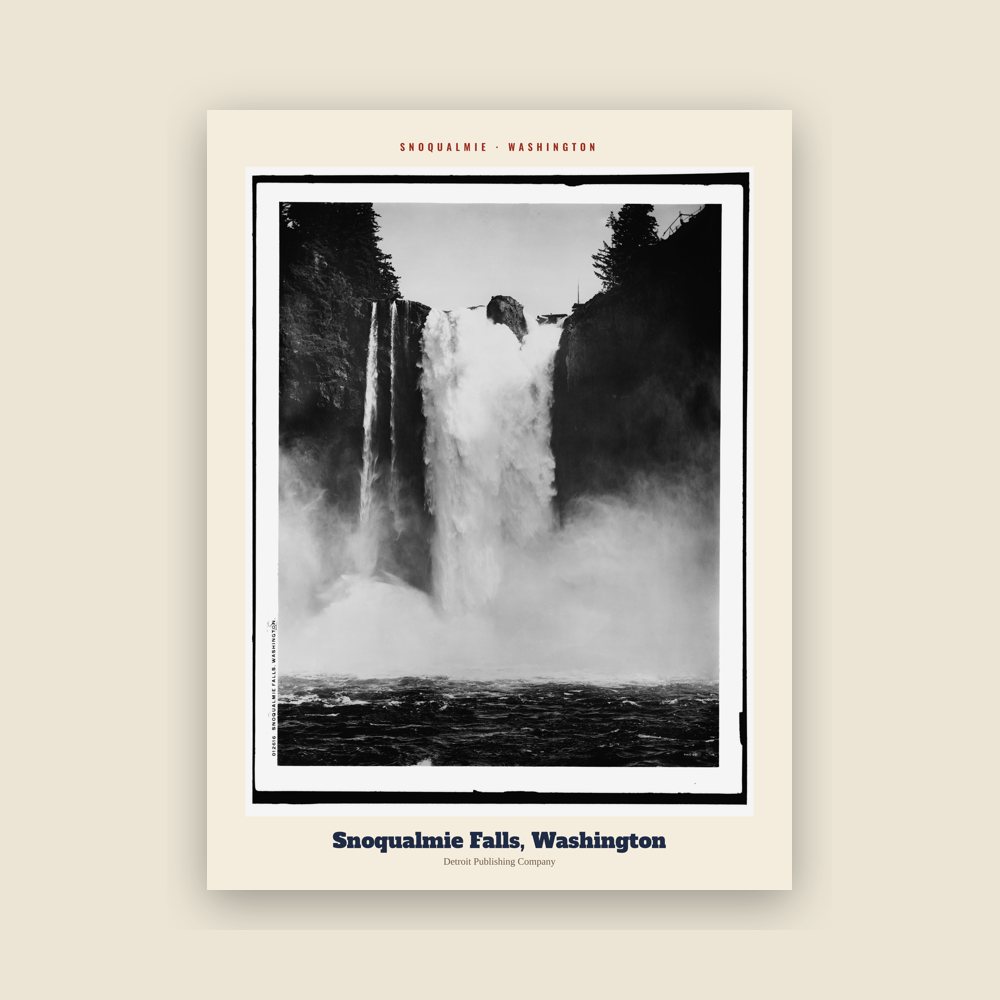
Snoqualmie Snoqualmie Falls, Washington Archive Print

Snoqualmie Snoqualmie Falls, Washington Archive Print

From the Library of Congress collections: a historic survey drawing or photograph of the town

from $44
Snoqualmie Snoqualmie Falls Hydroelectric Project, .5 mile north of Snoqualmie Archive Print

Snoqualmie Snoqualmie Falls Hydroelectric Project, .5 mile north of Snoqualmie Archive Print

From the Library of Congress collections: a historic survey drawing or photograph of the town

from $44
Snoqualmie Snoqualmie Falls Hydroelectric Project, Transformer House, .5 mile north of Snoqualmie Archive Print

Snoqualmie Snoqualmie Falls Hydroelectric Project, Transformer House, .5 mile north of Snoqualmie Archive Print

From the Library of Congress collections: a historic survey drawing or photograph of the town

from $44
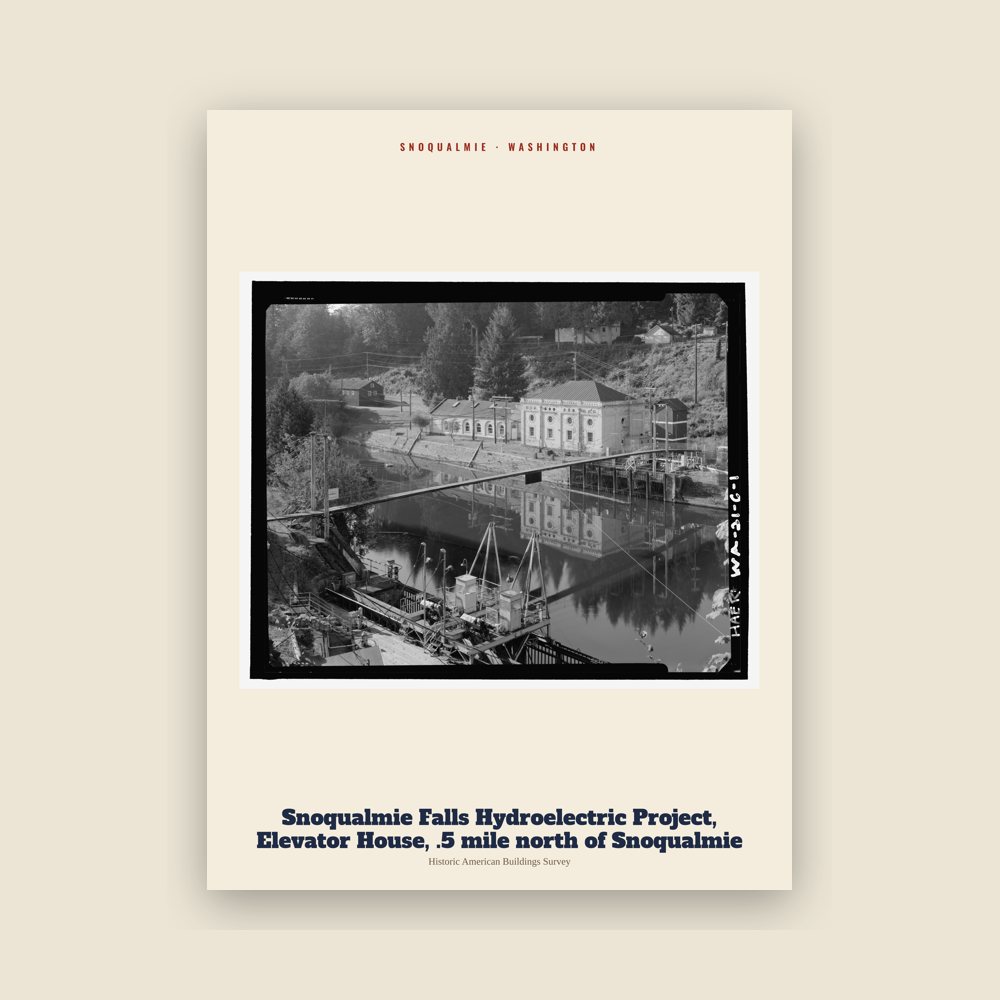
Snoqualmie Snoqualmie Falls Hydroelectric Project, Elevator House, .5 mile north of Snoqualmie Archive Print

Snoqualmie Snoqualmie Falls Hydroelectric Project, Elevator House, .5 mile north of Snoqualmie Archive Print

From the Library of Congress collections: a historic survey drawing or photograph of the town

from $44
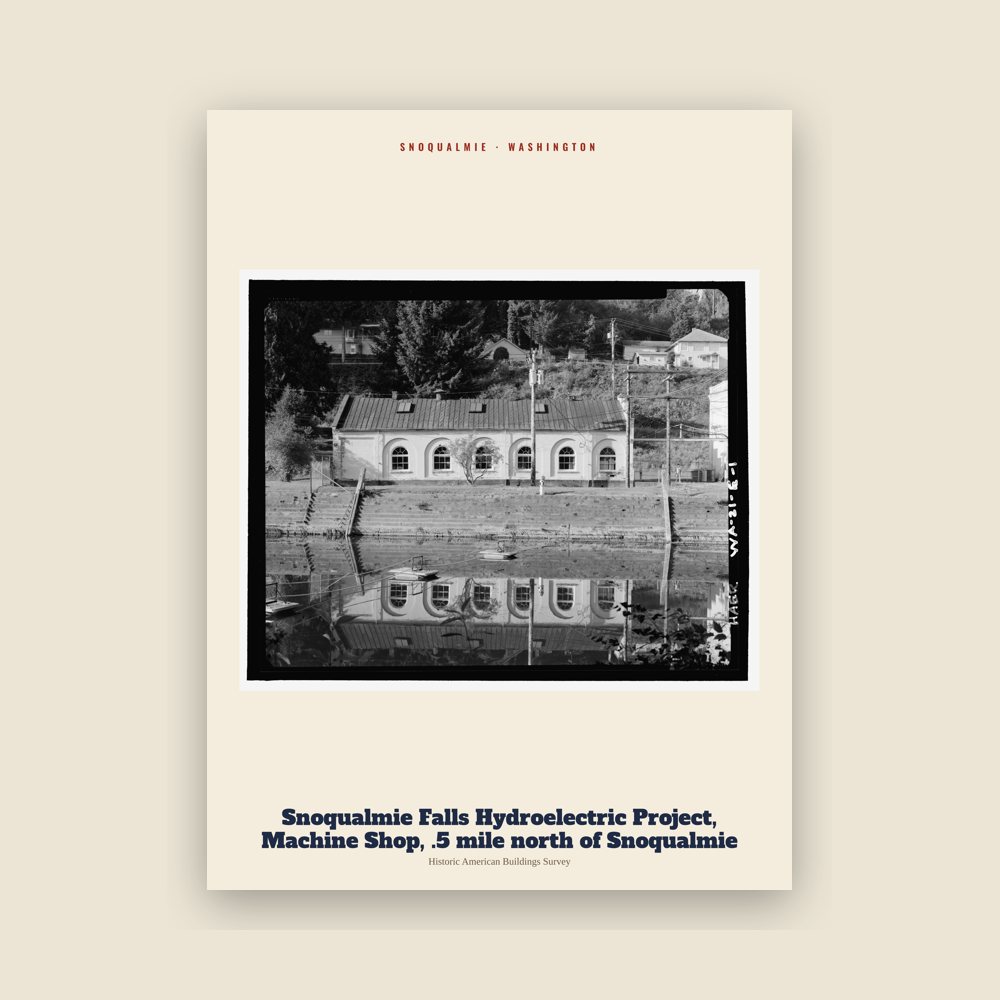
Snoqualmie Snoqualmie Falls Hydroelectric Project, Machine Shop, .5 mile north of Snoqualmie Archive Print

Snoqualmie Snoqualmie Falls Hydroelectric Project, Machine Shop, .5 mile north of Snoqualmie Archive Print

From the Library of Congress collections: a historic survey drawing or photograph of the town

from $44
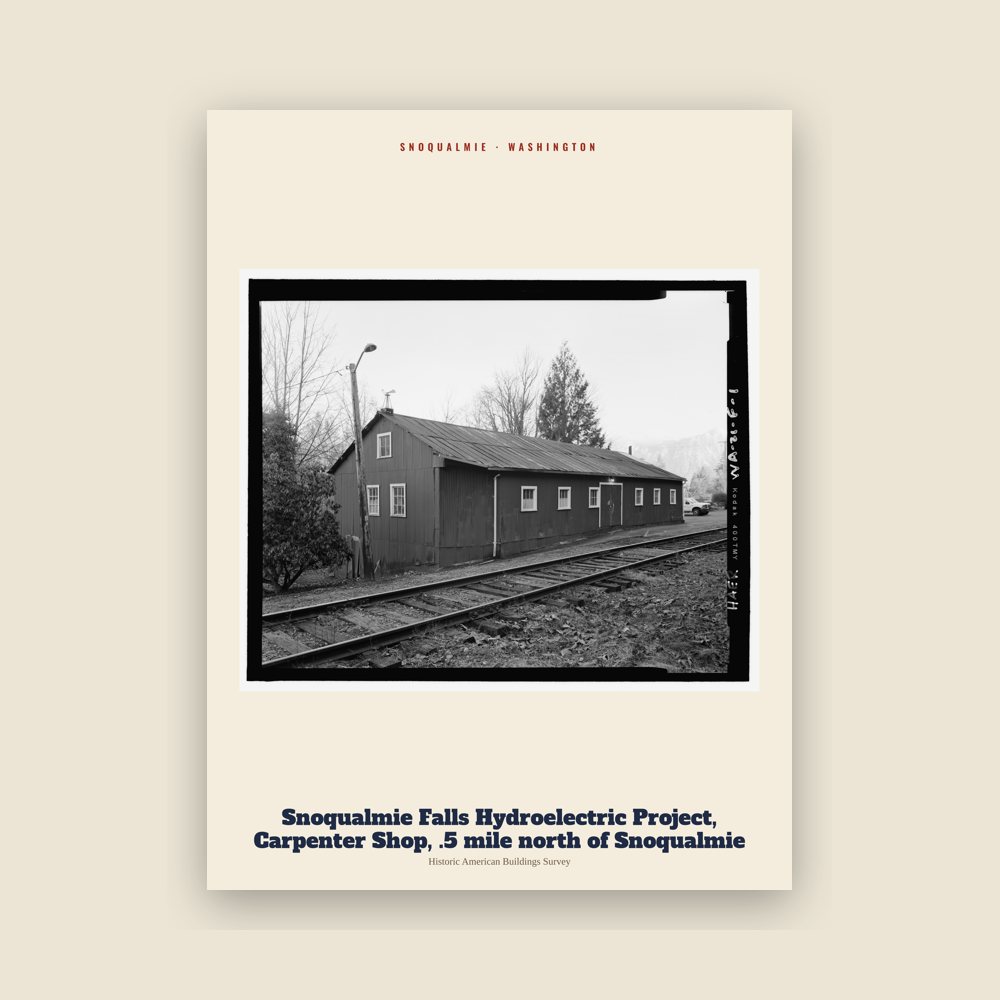
Snoqualmie Snoqualmie Falls Hydroelectric Project, Carpenter Shop, .5 mile north of Snoqualmie Archive Print

Snoqualmie Snoqualmie Falls Hydroelectric Project, Carpenter Shop, .5 mile north of Snoqualmie Archive Print

From the Library of Congress collections: a historic survey drawing or photograph of the town

from $44
Hometown roll

Born in Snoqualmie

On the National Register

Historic places

Population 2010: 10,670 → 2020: 14,121

From Wikidata (CC0).

A short history of Snoqualmie

The second written record of the exploration of the Snoqualmie Valley comes from the notes of Samuel Hancock, who ventured up-river with the Snoqualmie tribe in 1851 in search of coal. Near the current location of Meadowbrook Bridge, Hancock was told by his guides that the land was known as Hyas Kloshe Illahee, or "good/productive land". Hancock took this useful information back with him to the area now known as Tacoma. The area that is now Snoqualmie had been continuously occupied by members of the Snoqualmie Tribe and their ancestors for at least 13,000 years.

During the 1850s, tensions were very high between the native populations and the new settlers claiming the land as their own. In 1856, in response to these tensions, Fort Alden was built near a Snoqualmie village, in the area that would become Snoqualmie. After the Treaty War ended, Fort Alden was abandoned (along with other forts built around this time).

The most successful early pioneer in the Valley was Jeremiah Borst, who arrived in the spring of 1858 over the Cedar River trail from the eastern side of the mountains. He settled in the area that formerly held Fort Alden, and used his sales of pigs and apples in Seattle to buy out much of the surrounding land from other settlers.

As successful as farming was, other settlers had different methods of working the land. The first lumber mill in the Snoqualmie Valley was established at the mouth of Tokul Creek around 1872 by Watson Allen. Within five years, there were 12 logging operations on the Snoqualmie River, providing lumber to the entire Seattle region. Within 15 years, logging and mill work was employing 140 men and sending millions of board feet of logs down the river.

In 1882, the Hop Growers Association was founded by three Puget Sound partners, who used land purchased on Snoqualmie Prairie from Jeremiah Borst to create a farm that would eventually cover 1,500 acres (6.1 km2), 900 acres (3.6 km2) of which was devoted solely to hops. This extremely successful venture (billed as "The Largest Hop Ranch in the World") would fall prey to a combination of market and pest factors, and fell into relative obscurity by the end of the 1890s.

By the late 19th century, the Puget Sound region was growing, but bypassed by the major railways. In response, a group of Seattle entrepreneurs funded and built their own railway in an attempt to cross the Cascade Range. The Seattle, Lake Shore and Eastern Railway opened up the natural resources of the Snoqualmie Valley to the markets of the world, and brought in tourists to enjoy the natural beauty of the area and to marvel at the Falls.

The increased interest in the area led to a marked increase in speculation. Originally, the area that would become North Bend was platted as "Snoqualmie" in February 1889 by Will Taylor but later changed to "North Bend" by pressure from Seattle, Lake Shore and Eastern Railway & U.S. Post Office Department to avoid confusion. The area that is currently Snoqualmie was platted in August of that same year as "Snoqualmie Falls" by investors from Seattle. The oral history of the area places the first residents of Snoqualmie as Edmund and Louisa Kinsey, who established the first hotel, livery, general store, dance hall, post office, and meat market – in addition to helping build the first church in the town. Two of their sons (out of six children) are most famous for their photography documenting the early timber works in the region.

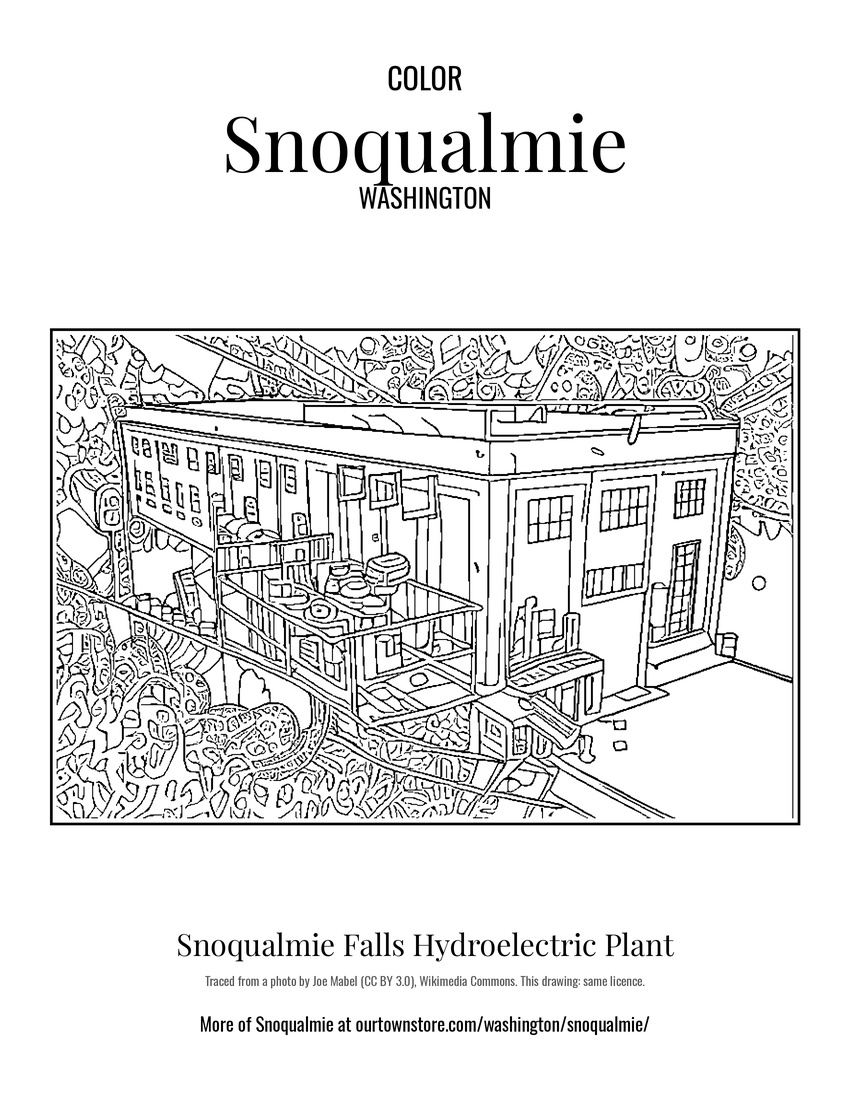
The Snoqualmie Falls Hydroelectric Plant, the first power plant at the Falls, was built in the late 1890s by Charles Baker, an investor from Seattle who had assisted in the platting of the city. This development provided both power and jobs to the region, and a small company town grew up near the falls to house the workers. More than 100 years later, Baker's original generators are still in use by Puget Sound Energy.

The official vote for incorporation of "Snoqualmie Falls" as the city of Snoqualmie occurred in 1903. At the time, land prices had not decreased since initially set in 1889 — prices that did not reflect the financial reality of the region. In response to these high prices, people had created a large "squatting" community, building where they wanted regardless of land ownership or interests. The first challenge that the city council faced was lowering lot prices and migrating these buildings off the public right-of way, establishing the basic layout of the town that exists to this day.

In 1917, a new all-electric lumber mill (the second in the U.S.) opened across the river from Snoqualmie, along with the company town associated with it, Snoqualmie Falls. For the first half of the century, the timber industry provided the city and valley with a stable source of income and employment, even as World War I drew away workers and the Great Depression took its toll across the nation.

This prosperity was moderated during the Depression, and with the changes in culture and mobility in the latter half of the century, Snoqualmie and the majority of the valley stagnated. The city was bypassed when US-10 was built across the Cascades (now Interstate 90), and this led to a shift in commerce to the east (into North Bend) and west (into the Bellevue/Issaquah areas).

By the 1960s, the homes that had made up the company town of Snoqualmie Falls had been moved to other locations within the valley, and the city's population had stabilized to a growth rate of roughly 11 people per year over the next 30 years (from 1,216 in 1960 to 1,546 in 1990).

This slow growth cycle continued until the mid-1990s, when the city annexed 1,300 acres (5.3 km2) of undeveloped land that became the site of the current "master-planned" community of Snoqualmie Ridge, now referred to as Snoqualmie Ridge I. Snoqualmie Ridge I includes 2,250 dwelling units, a business park, a neighborhood center retail area and The Club at Snoqualmie Ridge, a private, PGA Tour-sanctioned golf course. Snoqualmie Ridge II, annexed in 2004, contains an additional 1,850 dwelling units, a hospital and a limited amount of additional retail.

The city council has continued to balance the desire to retain the rural and historical feel of Snoqualmie with the needs of a growing population. The city's historic downtown underwent a major renovation to improve its infrastructure and make the area more attractive to visitors to the valley's many natural attractions. As of 2023, Snoqualmie has continued to experience growth and development, with new residential and commercial projects being completed, including the Snoqualmie Hospital in 2015, the Snoqualmie Inn, new restaurants, and more townhomes. In addition, the city has continued to provide many parks and recreation facilities, including a network of trails and public spaces such as the Snoqualmie Community Park, built in 2009.

In 2012, the city of Snoqualmie annexed 593 acres (240 ha) of the former Weyerhaeuser mill site and mill pond (Borst Lake). The former mill office now hosts Dirtfish, an advanced rally car driver training school. The site is one of the largest undeveloped industrial zoned sites in King County, although significant planning and environmental review for potential future use remains to be done. The facility hosted a round of the 2014 Global RallyCross Championship.

Adapted (trimmed) from the Wikipedia article Snoqualmie, Washington, revision 1379399053 by its contributors, licensed CC BY-SA 4.0.
For local organizations

Are you with a Snoqualmie historical society?

We share a part of every Snoqualmie sale with local partners, and we'd love to print from your collection. Old photographs, maps and postcards make the best keepsakes.
Partner with us
Custom orders

Want something Snoqualmie we don't make yet?

A favorite landmark, your street, a school or team, an anniversary gift, a different product. Tell us and we'll get back to you by email.

Free printables

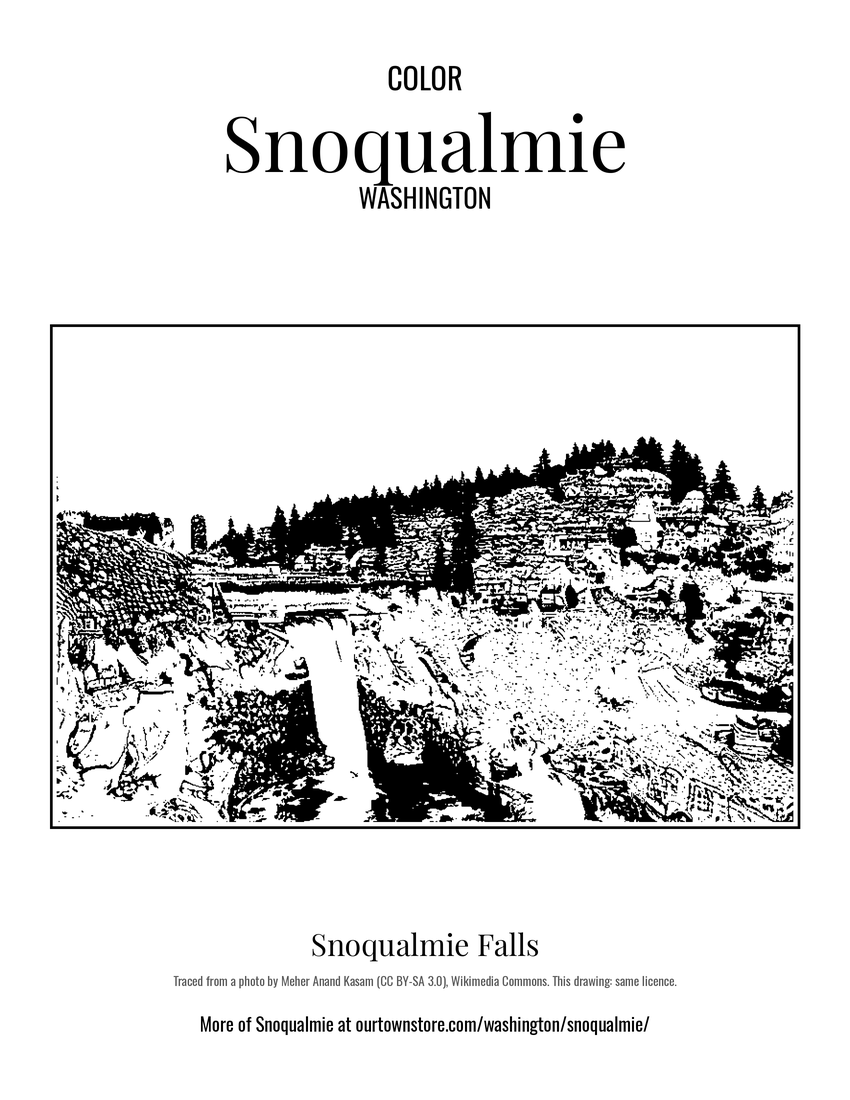
Color Snoqualmie

12 free coloring pages of Snoqualmie, each traced from a photo of a local landmark. Print them at home, at school or for story hour.

Nearby

Neighboring towns

Sources

Snoqualmie's population was 14,121 in the 2020 U.S. Census, up from 10,670 in 2010.