A short history of Ridgefield
Cathlapotle
Ridgefield is located near the site of Cathlapotle, a Chinookan village that had been occupied since 1450. It was potentially the latest version of a town that had existed there for over 2000 years. Cathlapotle participated in the fur trade since 1792, when villagers embarked on canoes to meet the Vancouver Expedition. The area has important ties to the Lewis and Clark Expedition of 1804–1806, which visited the town and described its layout in journals. By then, it was a settlement of 700–800 people, with at least 14 substantial plank houses. Malaria epidemics killed many of its residents during the 1800s, and most people left the village in the early 1830s. Some surviving Chinookan, Cowlitz and Klickitat people used the village until the 1850s, when white settlers began to establish themselves nearby. Use of the village ended when the U.S. forced local tribes to move onto reservations. The community's ties to the Chinookan people was commemorated by the construction of a replica of a Cathlapotle plank house at the nearby Ridgefield National Wildlife Refuge, which was dedicated on March 29, 2005.
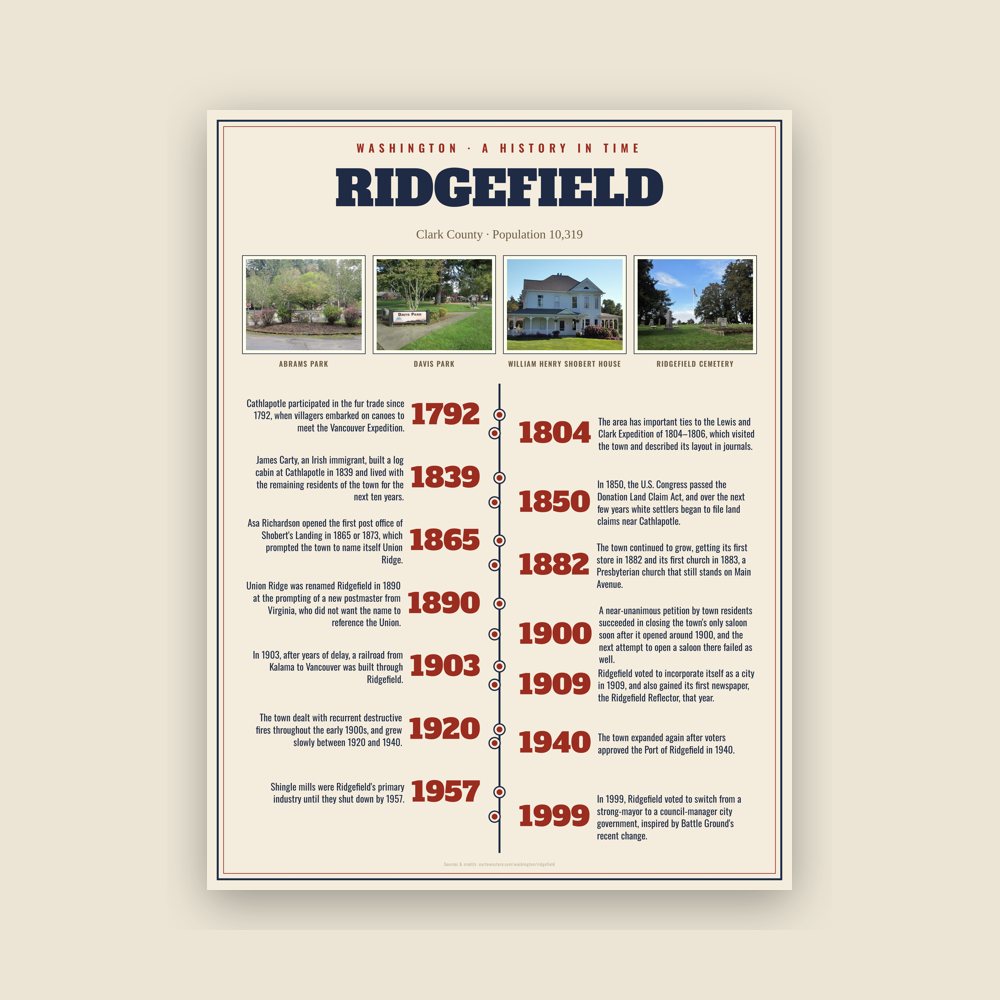
James Carty, an Irish immigrant, built a log cabin at Cathlapotle in 1839 and lived with the remaining residents of the town for the next ten years. Three other men settled on a Lake River island nearby, which is now called Bachelor Island after them. In 1850, the U.S. Congress passed the Donation Land Claim Act, and over the next few years white settlers began to file land claims near Cathlapotle. Carty began a ferry over Lake River in 1851, and Arthur Quigley and Frederick Shobert created mud landings for passing steamboats to stop at the town, which became known as Shobert's Landing.
Read the full history
Shobert's Landing and Union Ridge
The community was an important trading center as early as the 1860s with its key location near the mouth of the Columbia River. Asa Richardson opened the first post office of Shobert's Landing in 1865 or 1873, which prompted the town to name itself Union Ridge. It was either named to reflect the town's overwhelmingly pro-Union sentiments during the Civil War or to honor the wave of Union veterans who moved there in the war's last year. This name is preserved in the current name of Union Ridge Elementary School. The town continued to grow, getting its first store in 1882 and its first church in 1883, a Presbyterian church that still stands on Main Avenue.
Ridgefield and city growth
Union Ridge was renamed Ridgefield in 1890 at the prompting of a new postmaster from Virginia, who did not want the name to reference the Union. A school, more industry, and an inter-town telephone line were added during the 1890s. A near-unanimous petition by town residents succeeded in closing the town's only saloon soon after it opened around 1900, and the next attempt to open a saloon there failed as well. In 1903, after years of delay, a railroad from Kalama to Vancouver was built through Ridgefield. Ridgefield voted to incorporate itself as a city in 1909, and also gained its first newspaper, the Ridgefield Reflector, that year.
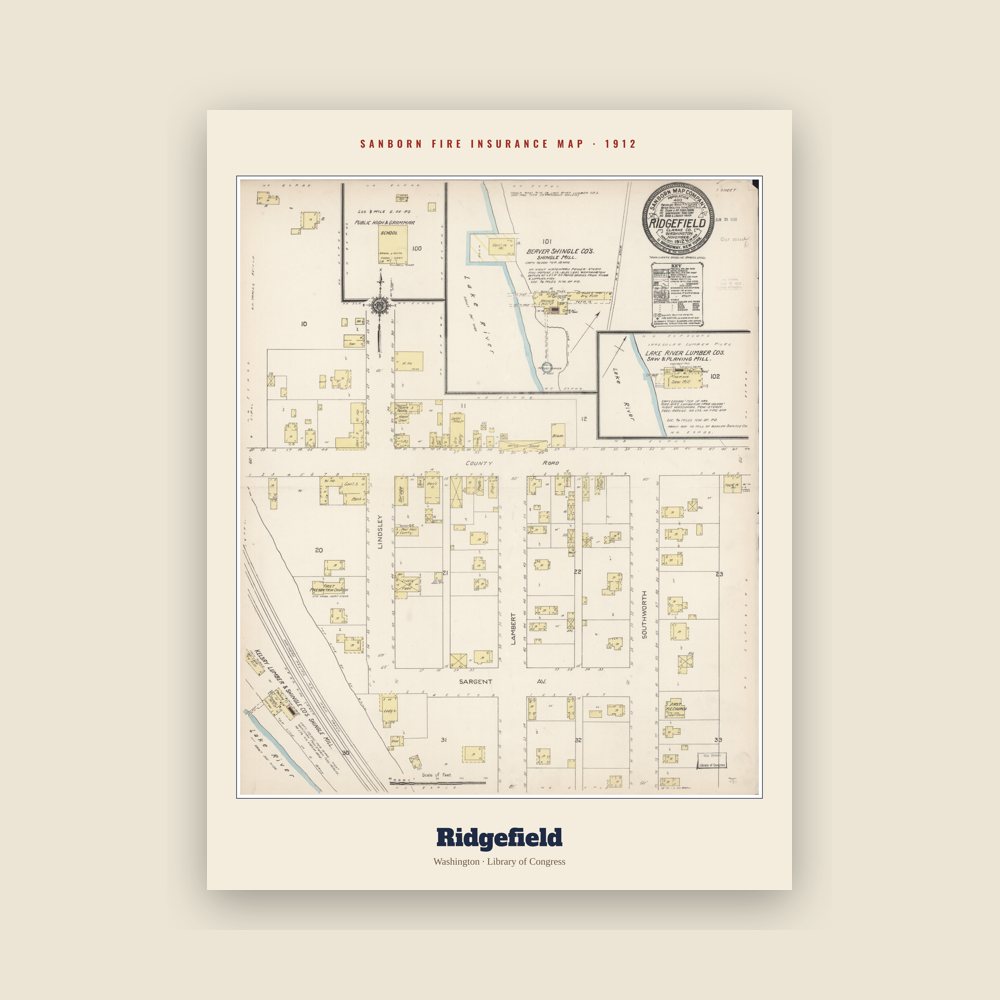
Shingle mills were Ridgefield's primary industry until they shut down by 1957. The town dealt with recurrent destructive fires throughout the early 1900s, and grew slowly between 1920 and 1940. During the Great Depression, the town let people live on its Poor Farm and grow their own food. The town expanded again after voters approved the Port of Ridgefield in 1940. The arrival of I-5 in the 1960s increased access to Ridgefield further. In 1965, the land between Ridgefield and the Columbia River was turned into the Ridgefield National Wildlife Refuge by the U.S. Congress to protect the nesting grounds of Canada geese.
Ridgefield grew in population and land annexation during the 1990s. Excavation of Cathlapotle began in 1991, conducted by the U.S. Fish and Wildlife Service and Portland State University archaeologists. The city began a two-decade cleanup of the waterfront site of the Pacific Wood Treating plant after the company went bankrupt in 1993. In 1999, Ridgefield voted to switch from a strong-mayor to a council-manager city government, inspired by Battle Ground's recent change.
Adapted (trimmed) from the Wikipedia article Ridgefield, Washington, revision 1378582428 by its contributors, licensed CC BY-SA 4.0.
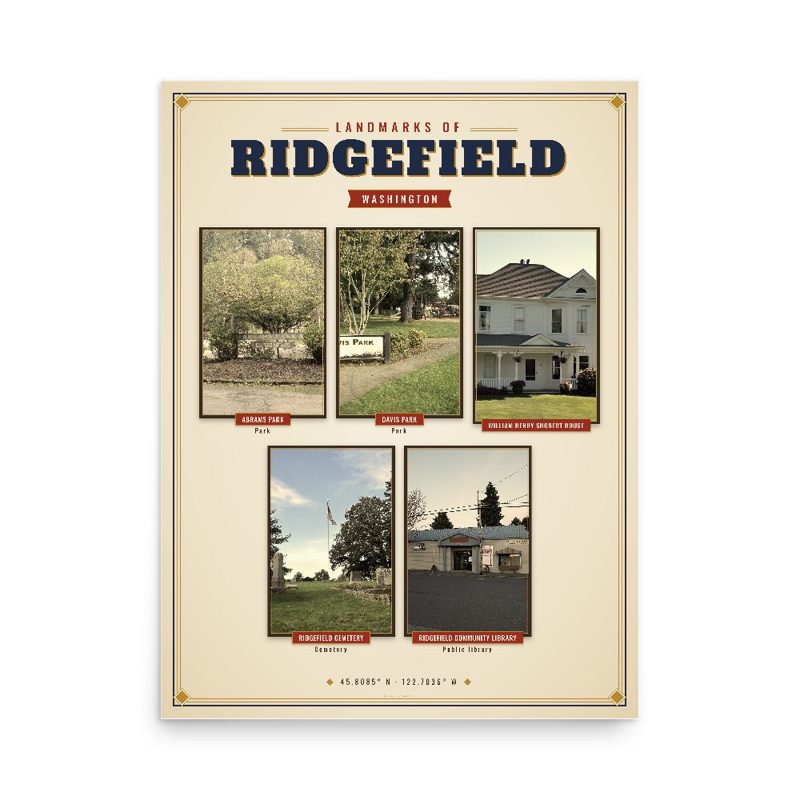
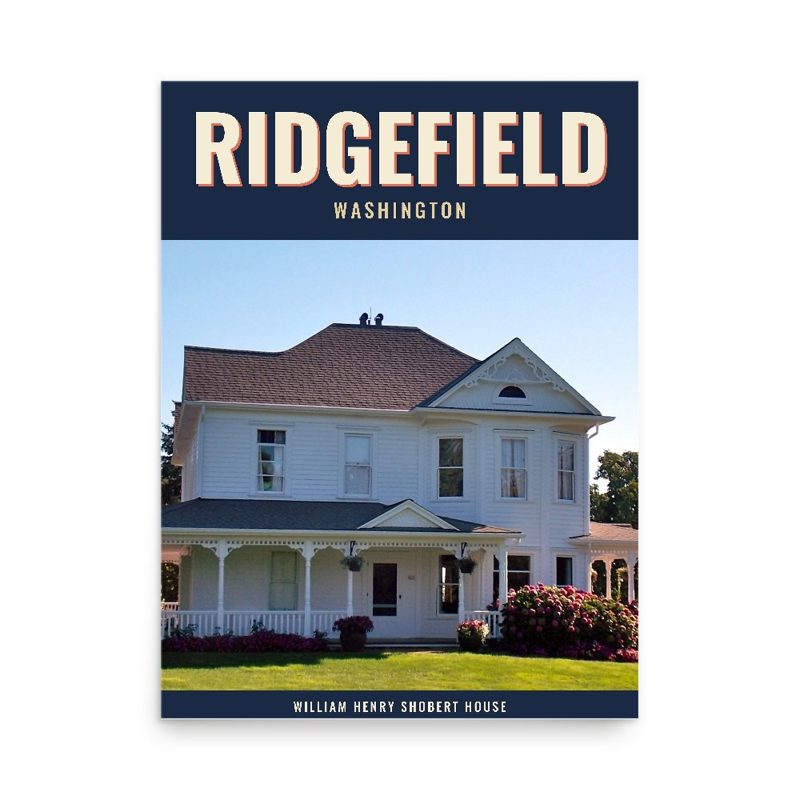
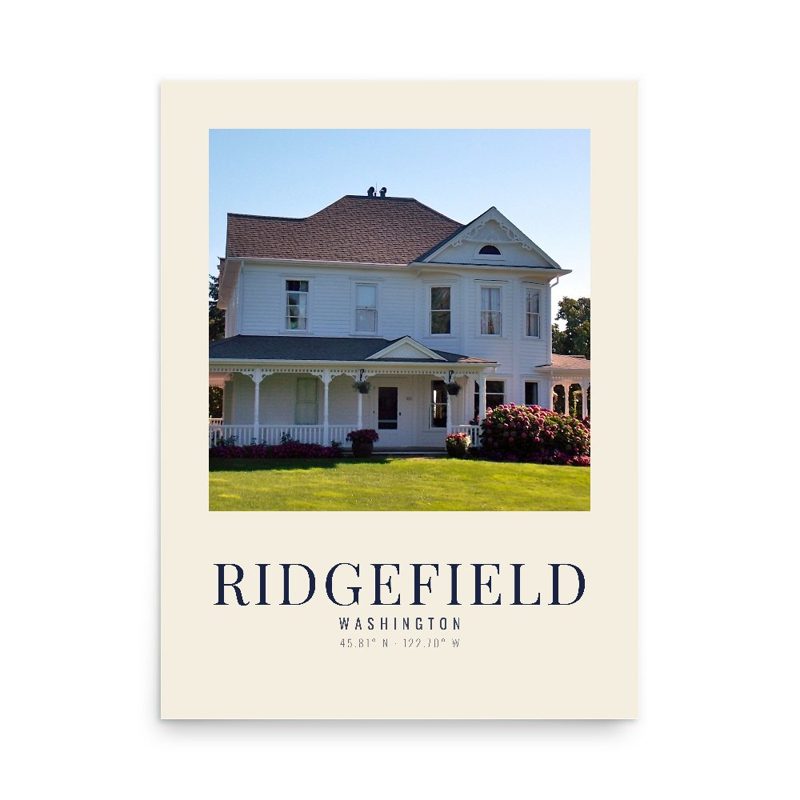
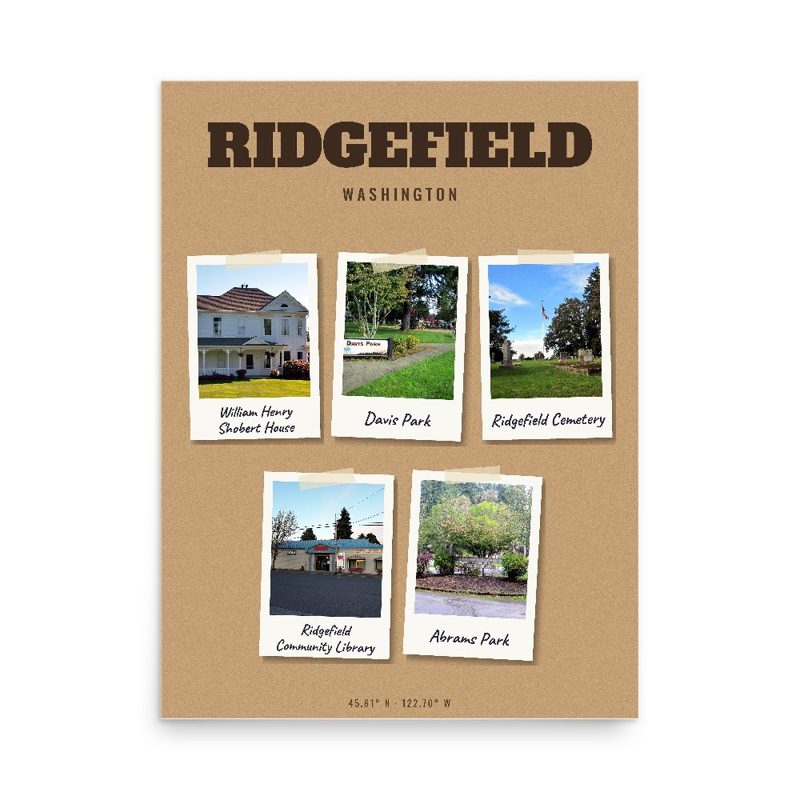
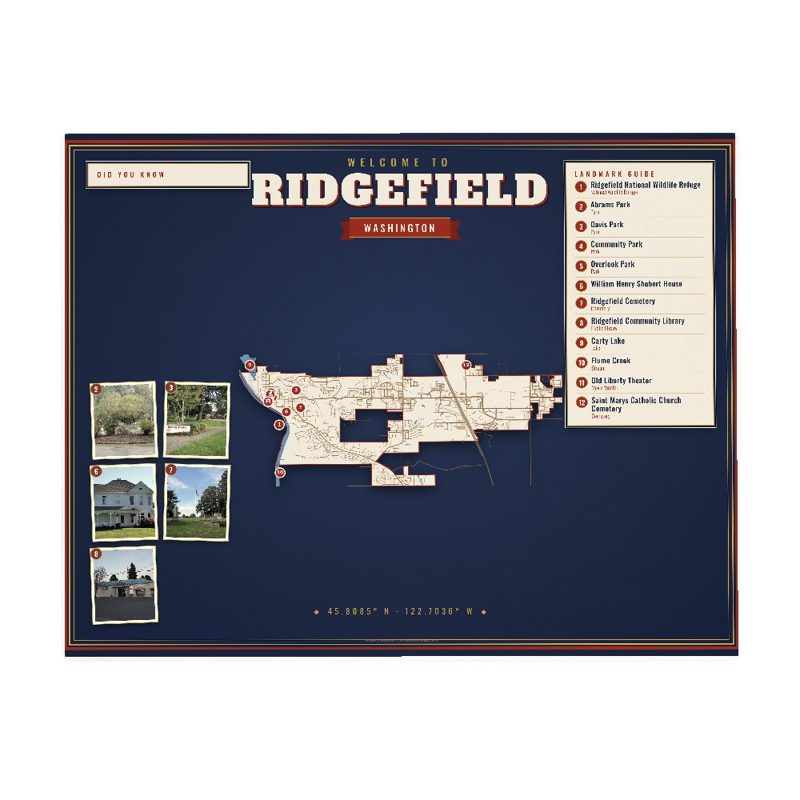
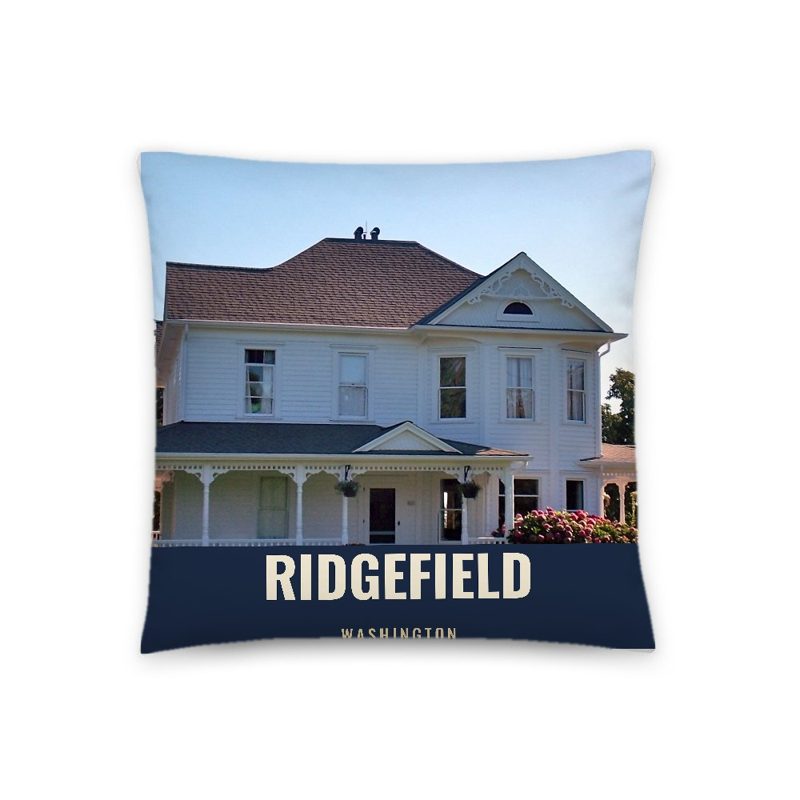

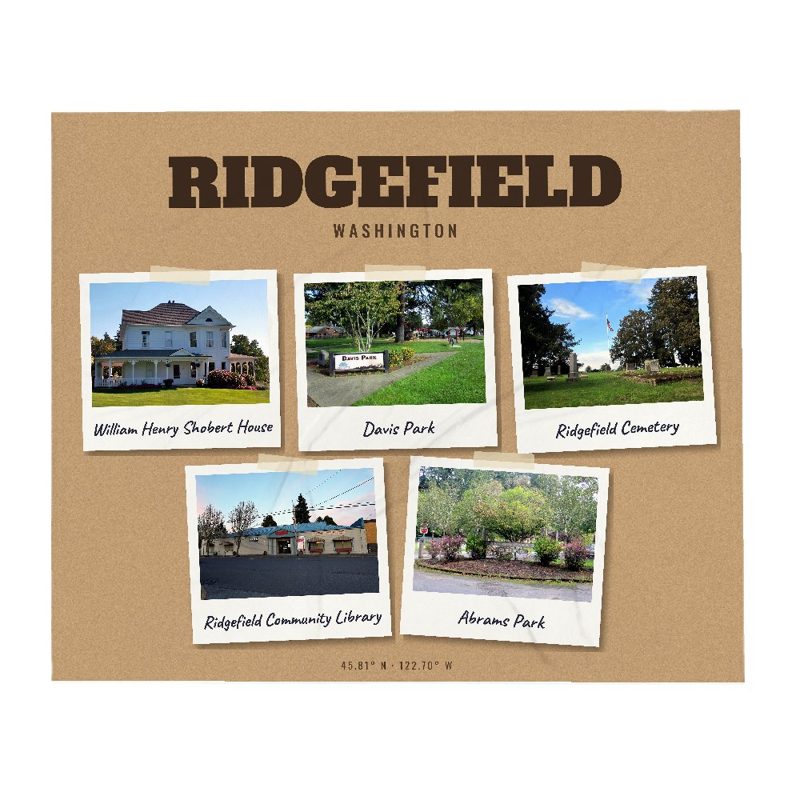
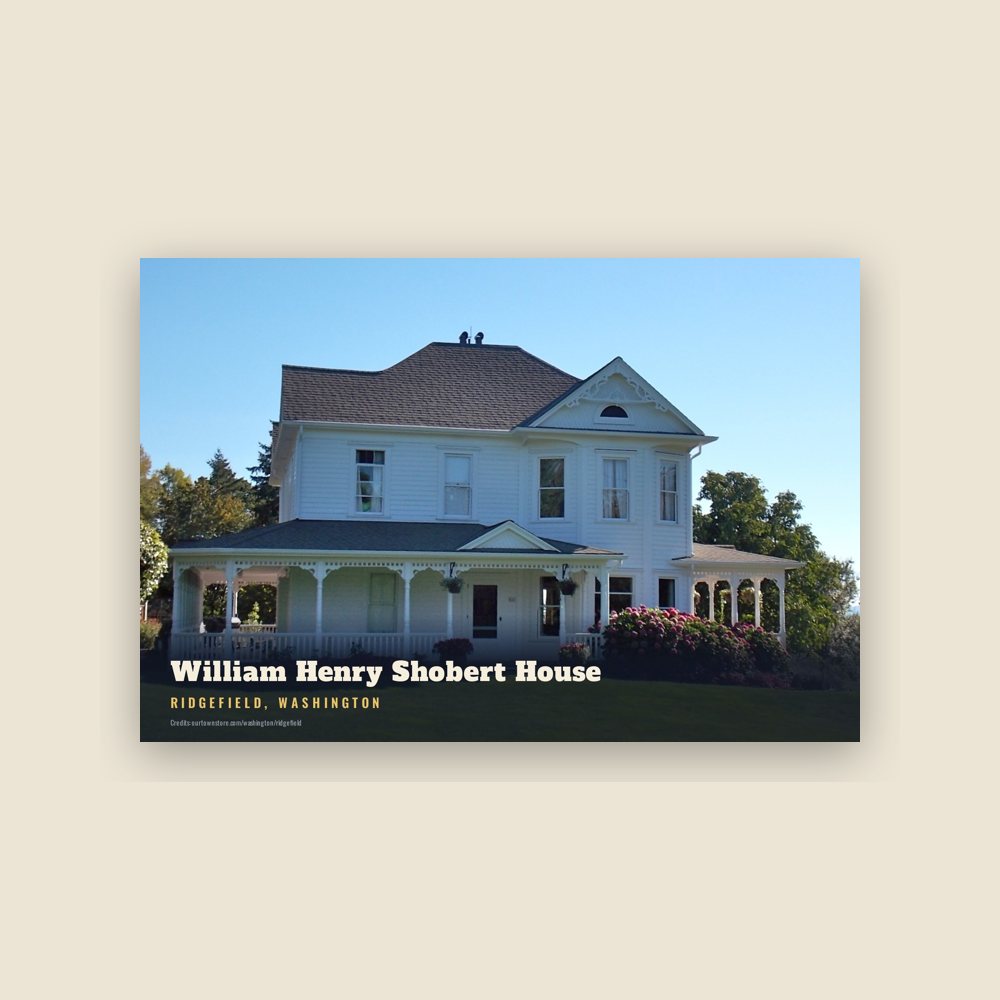
 William Henry Shobert House
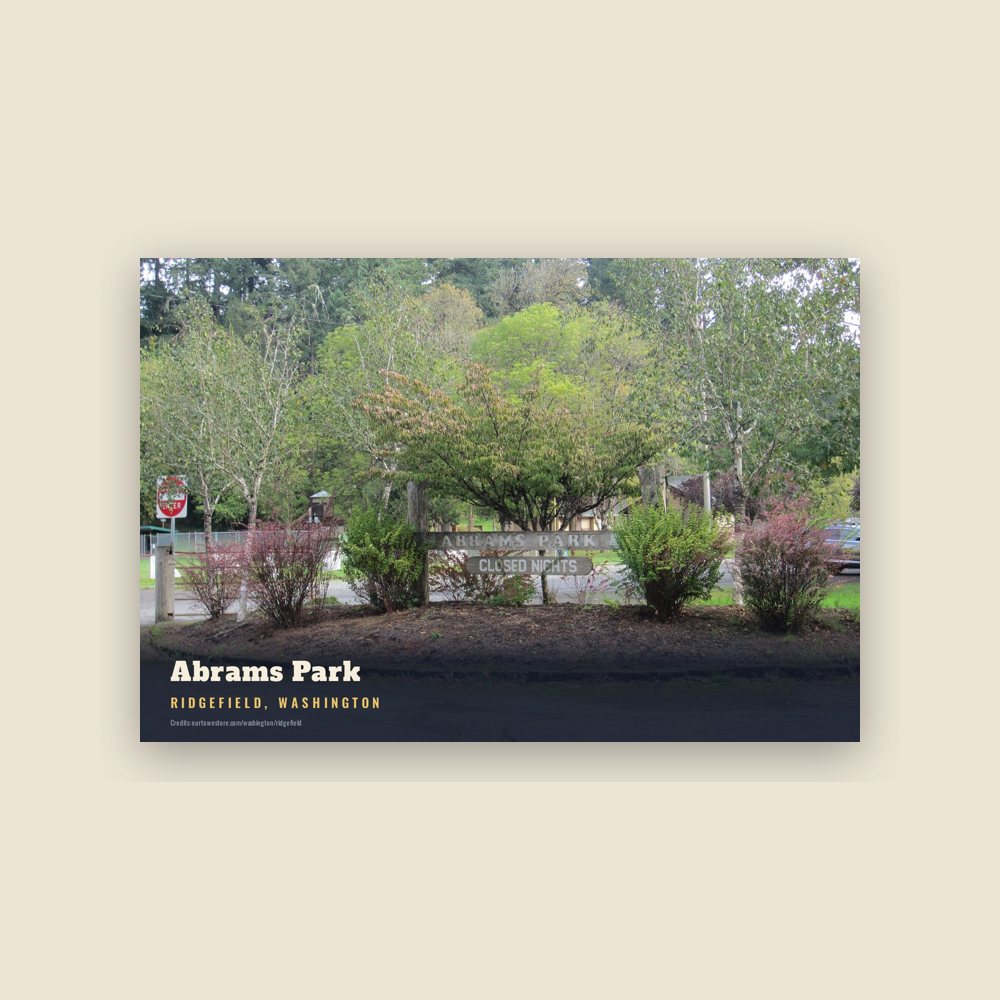
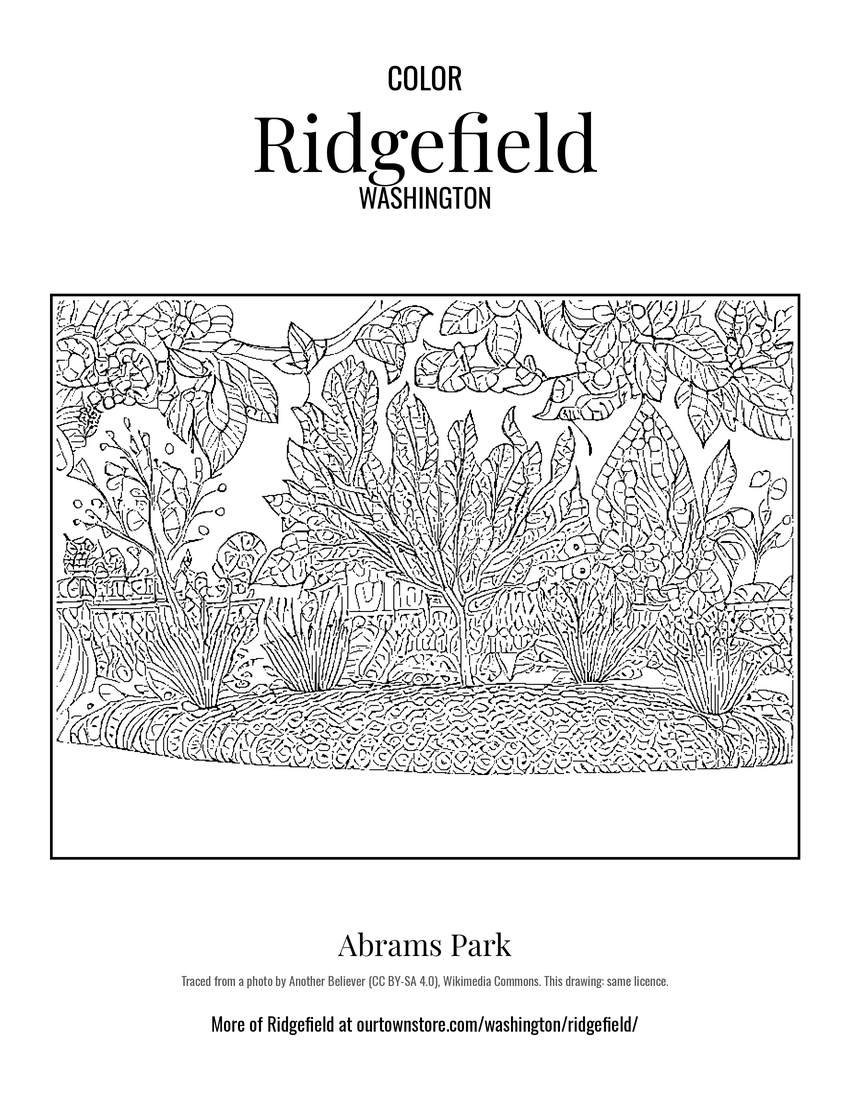 Abrams Park
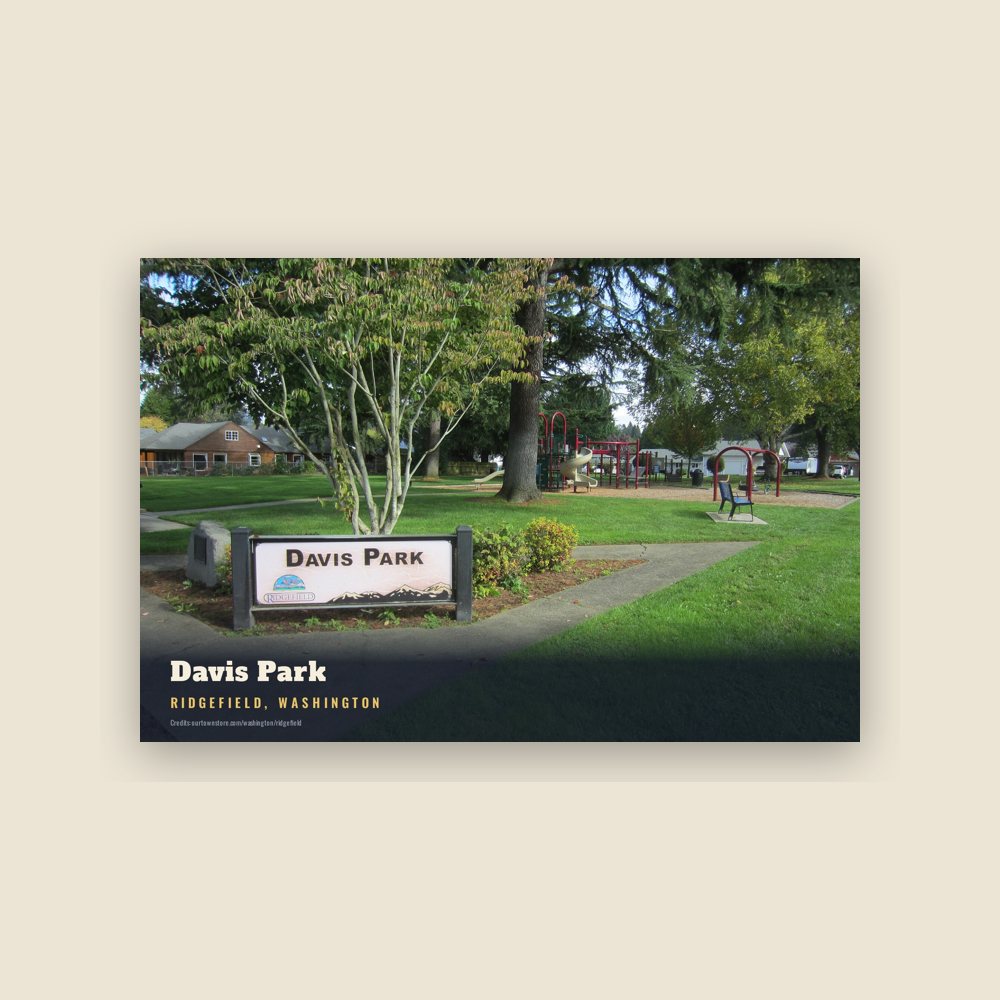
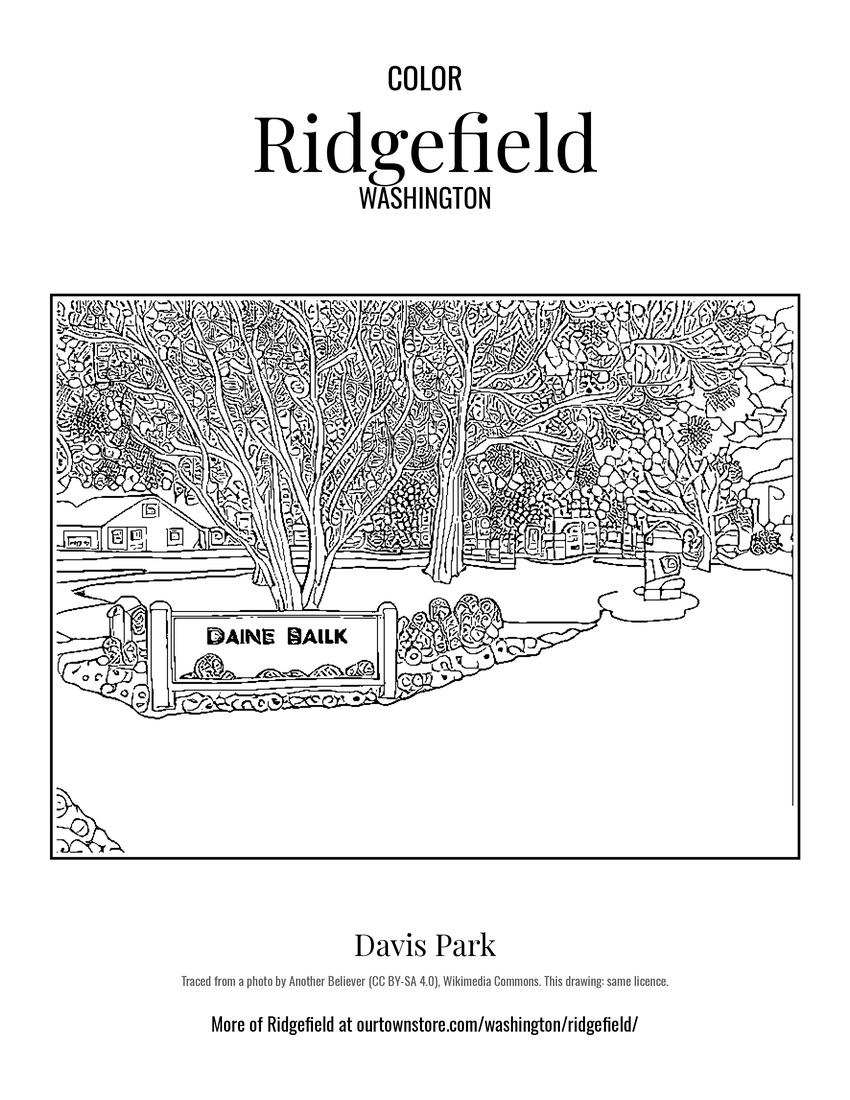 Davis Park
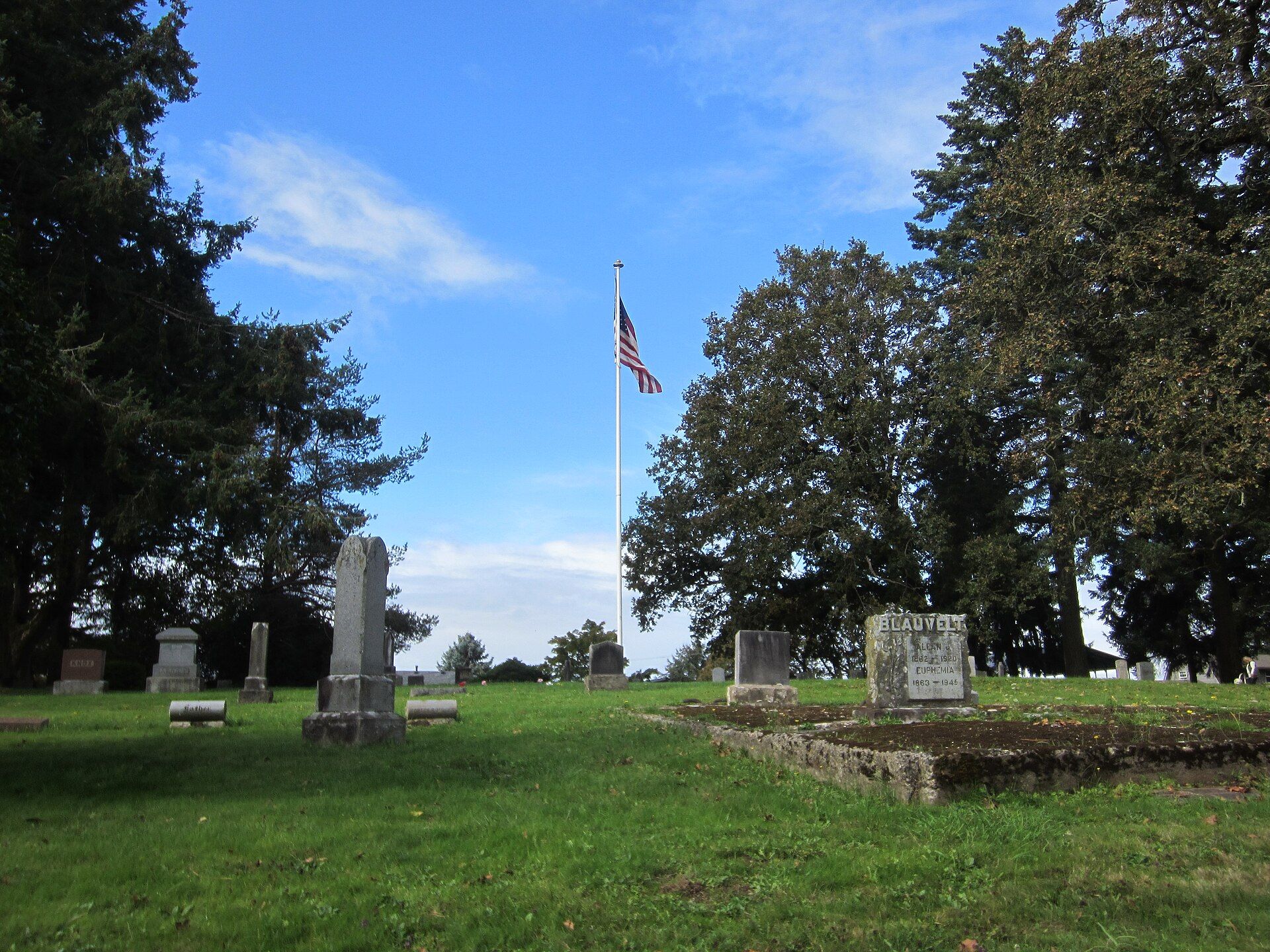
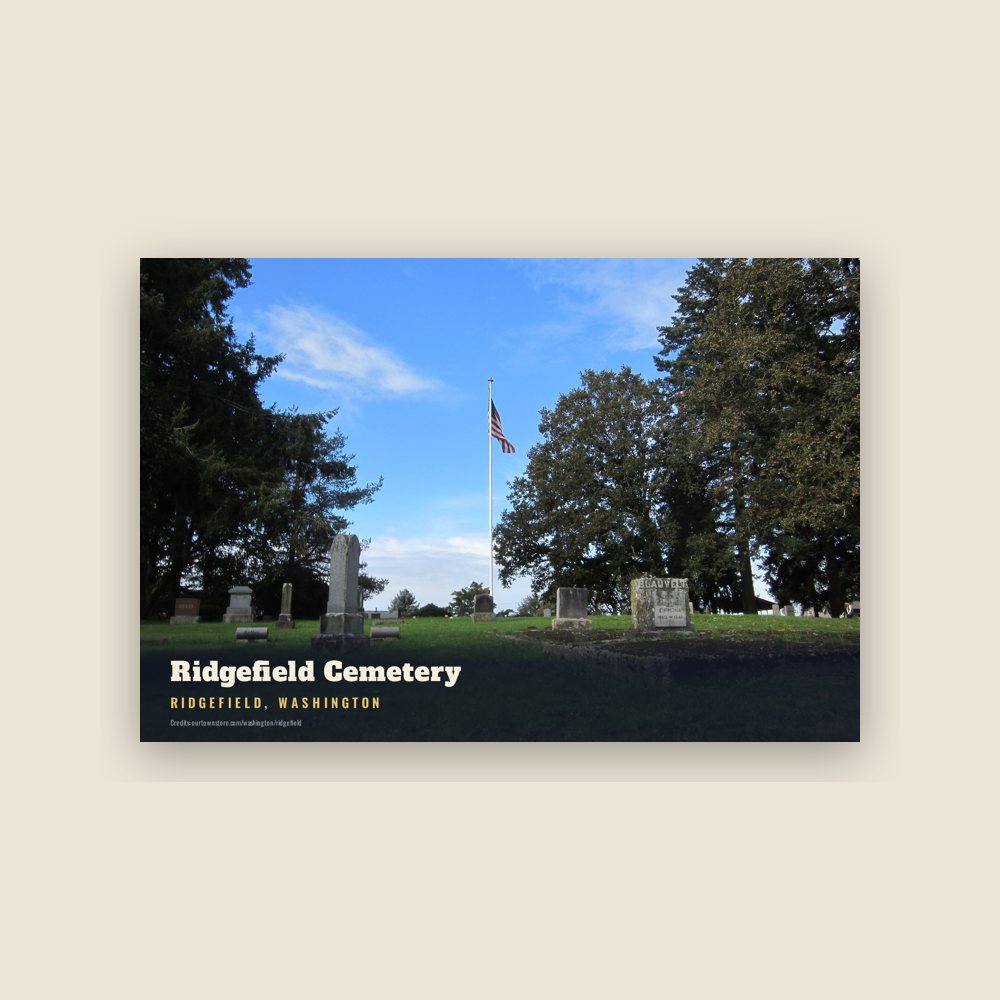
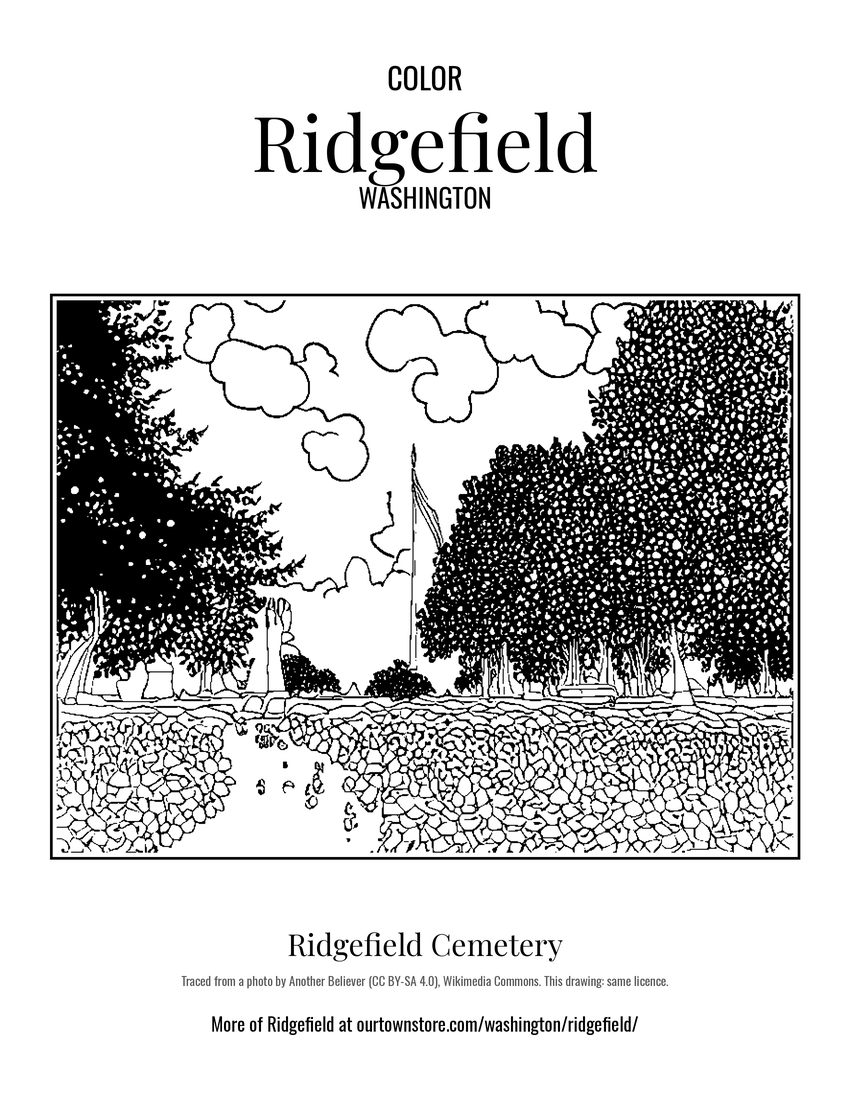 Ridgefield Cemetery