Kalama was entirely a Northern Pacific railroad creation. Landmarks include Montgomery House Bed and Breakfast. Kalama is the birthplace of Jackson Gillis, screenwriter.
- CountyCowlitz County
- Population2,959 (2020 U.S. Census)
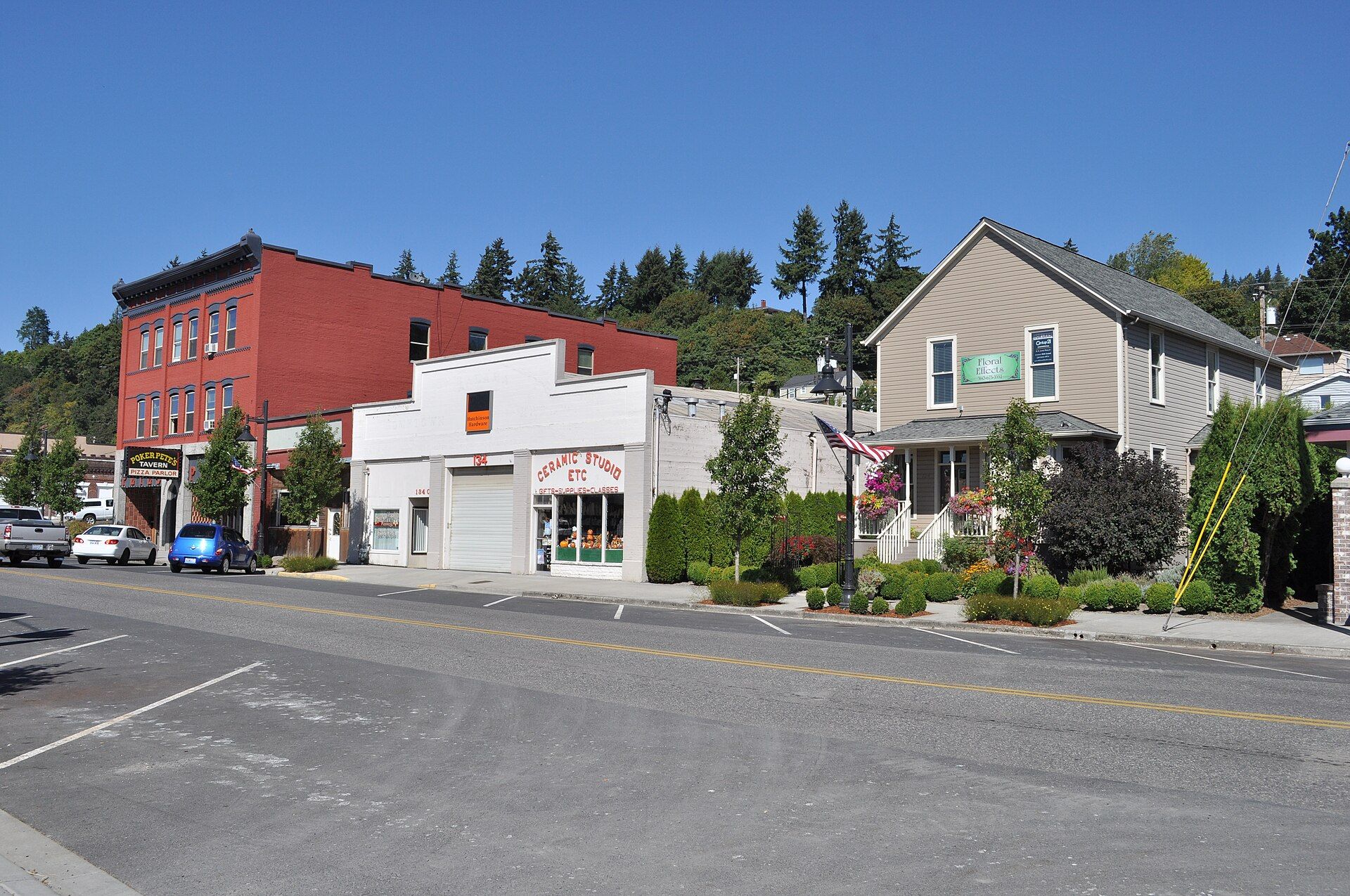
Kalama was entirely a Northern Pacific railroad creation. Landmarks include Montgomery House Bed and Breakfast. Kalama is the birthplace of Jackson Gillis, screenwriter.
Kalama, Washington gifts and souvenirs: 22 designs made from Kalama's own map, landmarks and history, from $16 to $95. Printed to order and shipped free in the USA.
| Popular | Price |
|---|---|
| Kalama Hometown Ornament | $23 |
| Kalama Vintage Travel Poster | from $40 |
| Kalama Varsity Crewneck | from $57 |
| Kalama Est. Tee | from $33 |
| Kalama Town Line Mug | from $26 |
| Kalama Market Tote | $37 |
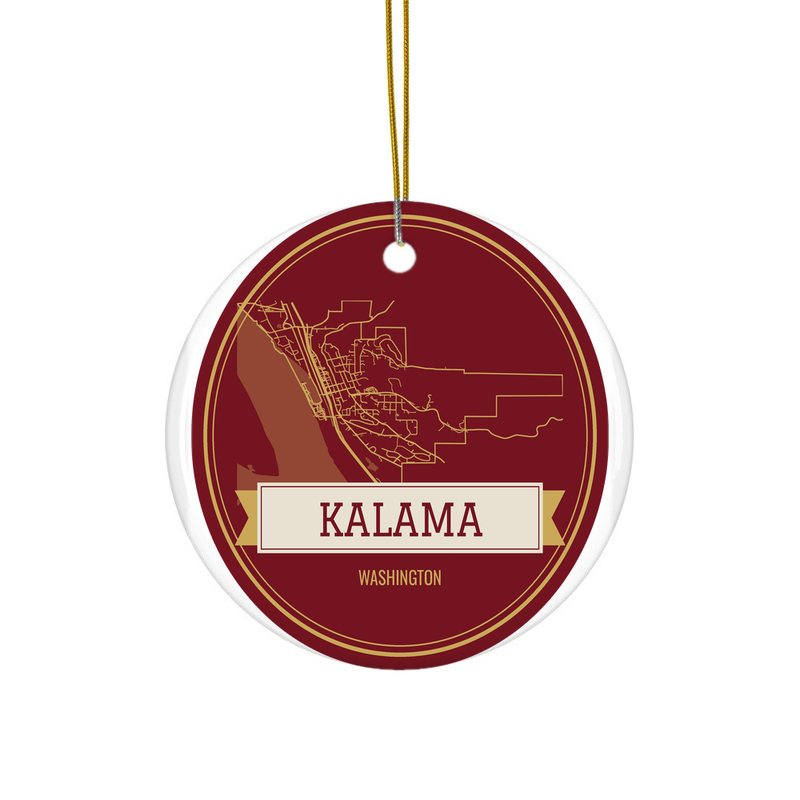
Ceramic keepsake, gold ribbon, in 3 styles
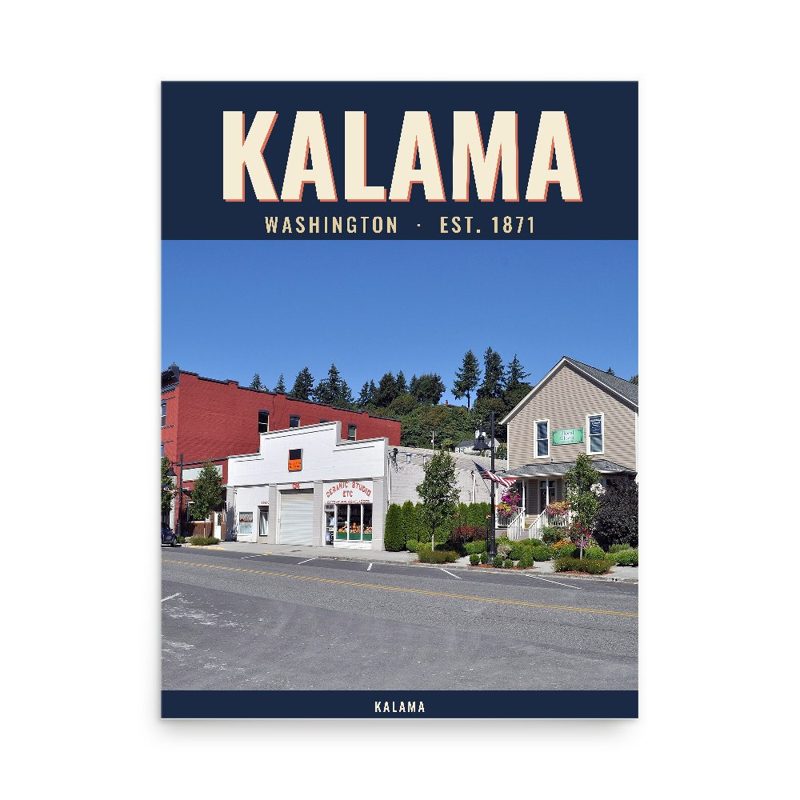
Its landmark photo in a classic travel-poster layout
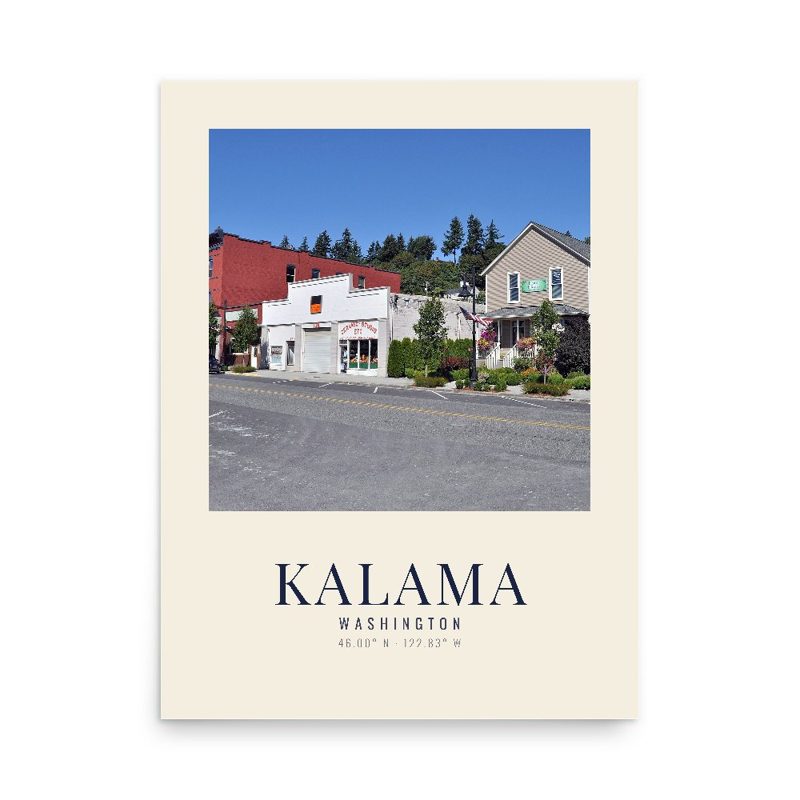
A local landmark photo as a gallery print
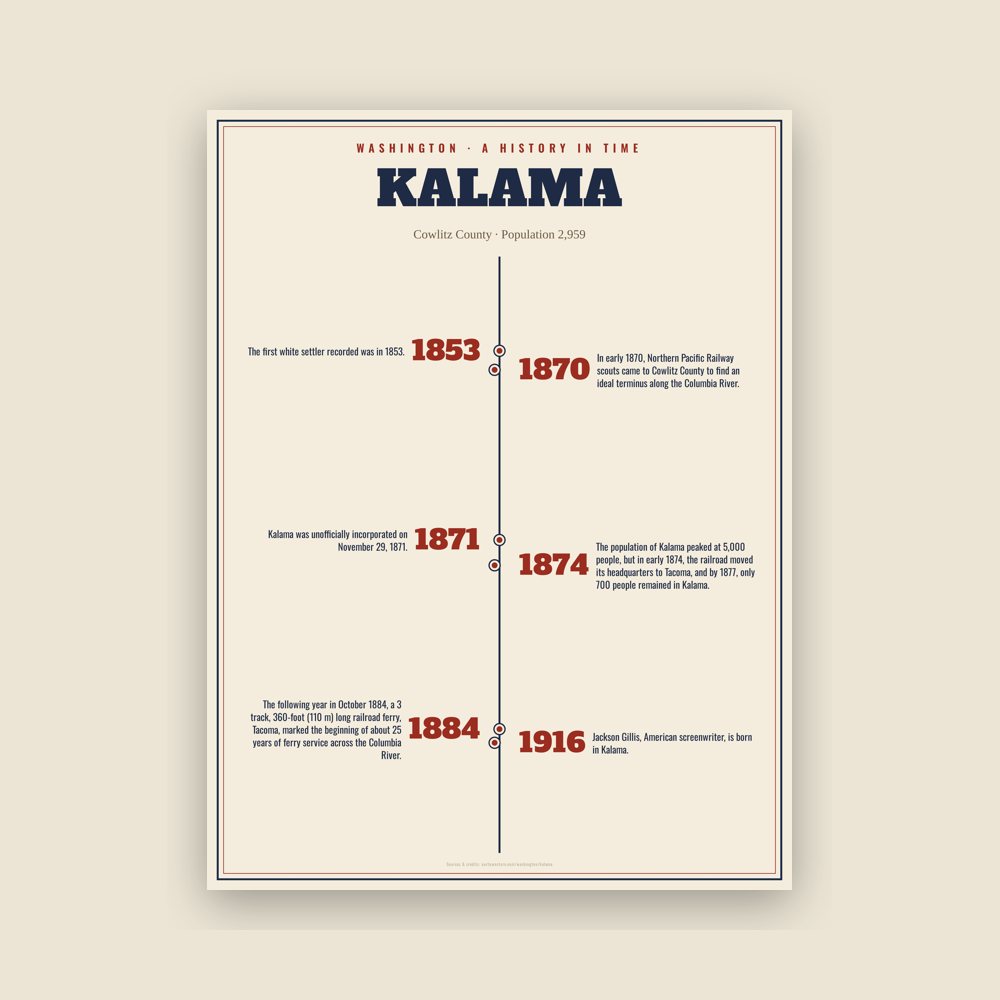
The town's story in dates, from its own records, for home or classroom
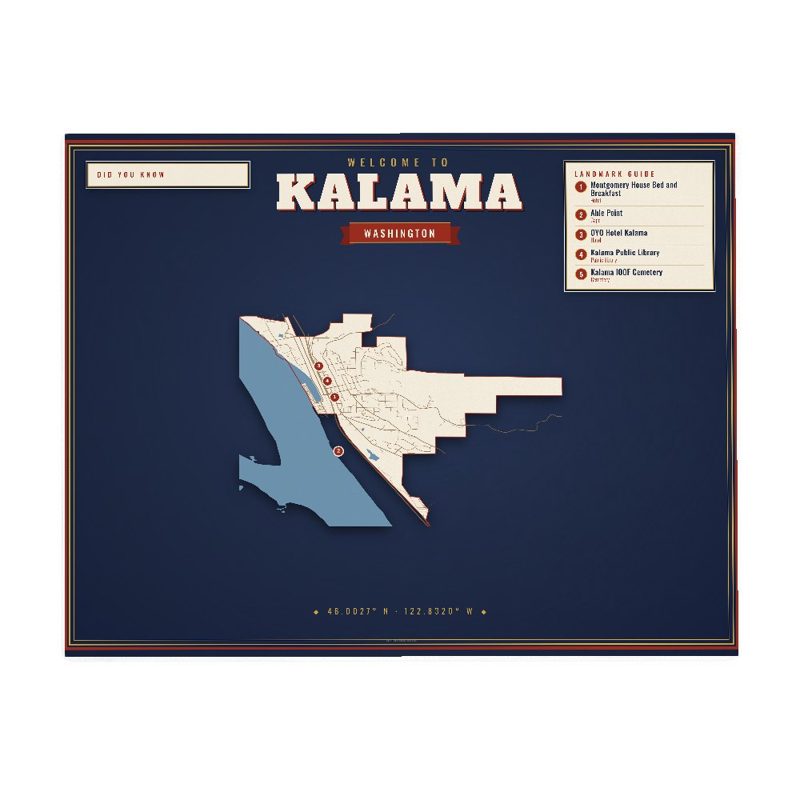
Map of local landmarks, washable fabric

Heavy-blend fleece, street map printed on the back

Red heavy-blend crewneck, knit-stitch town print
Soft Bella+Canvas jersey
Kids' Bella+Canvas jersey, youth sizes
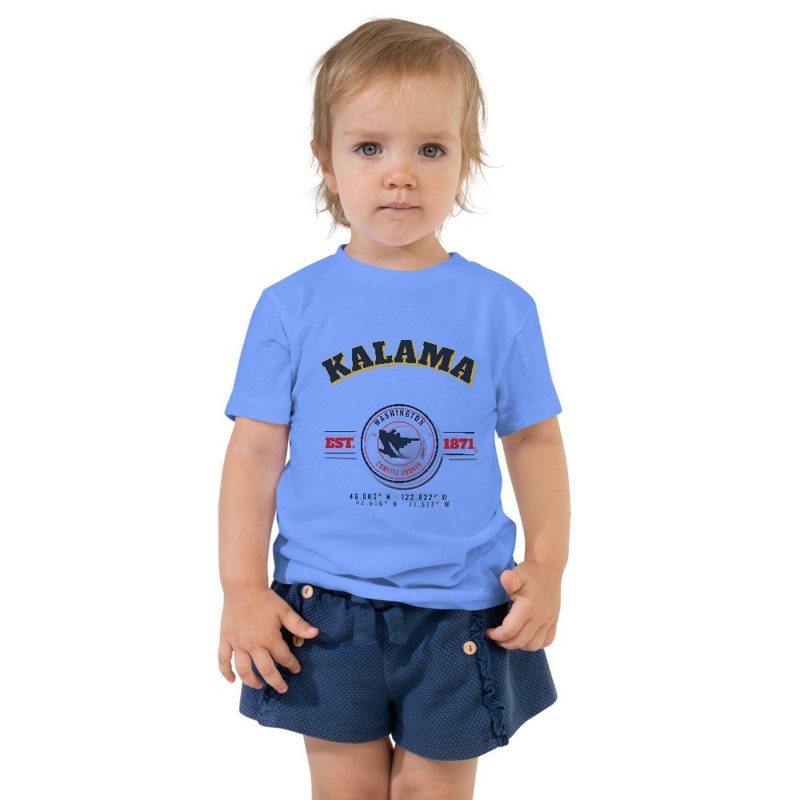
Bella+Canvas toddler jersey
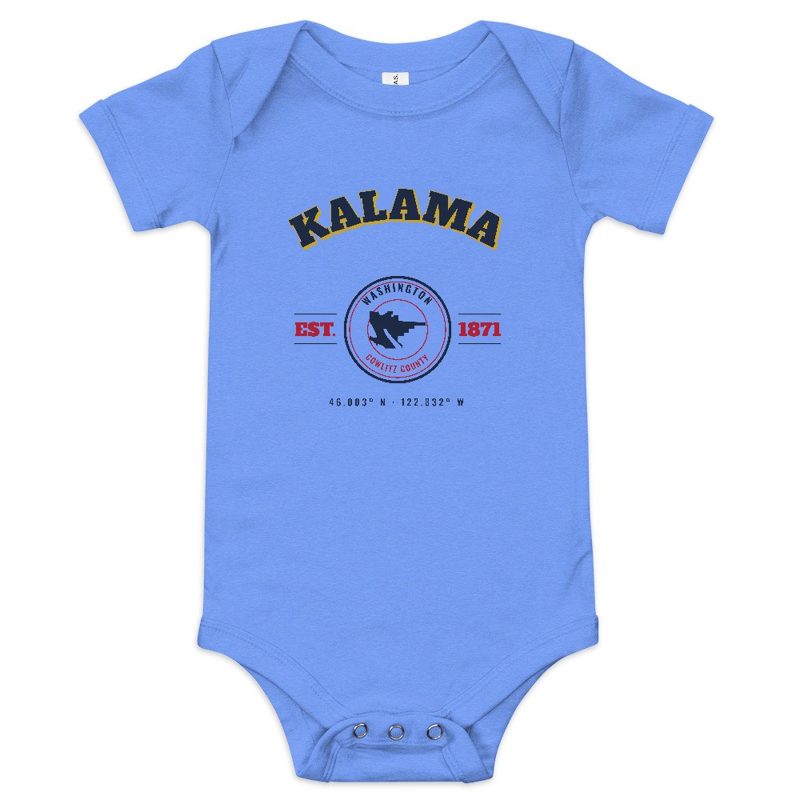
Bella+Canvas baby bodysuit
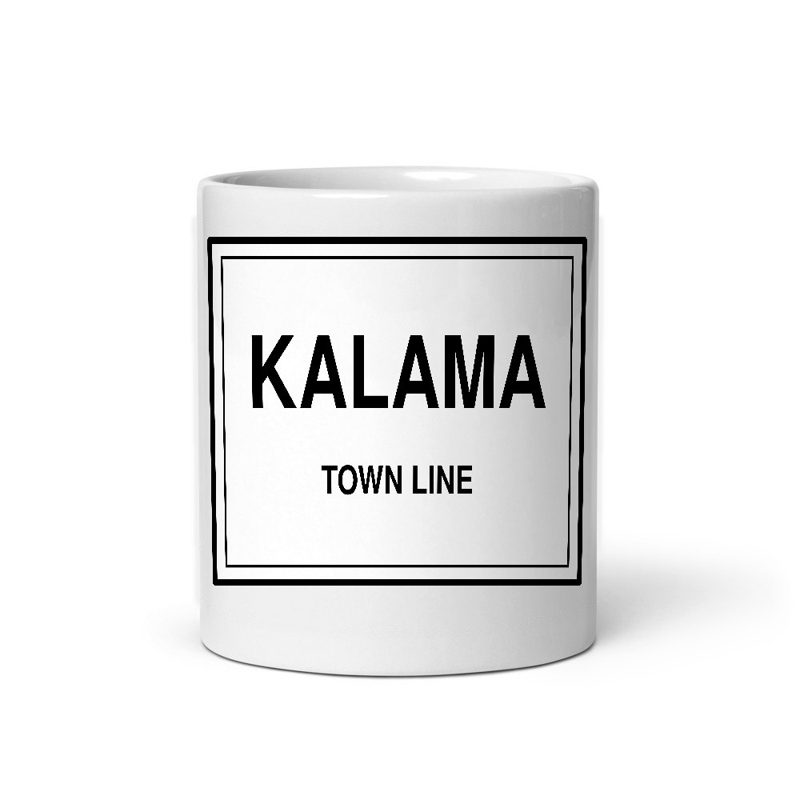
Glossy ceramic, dishwasher safe

Weatherproof, for the front walk
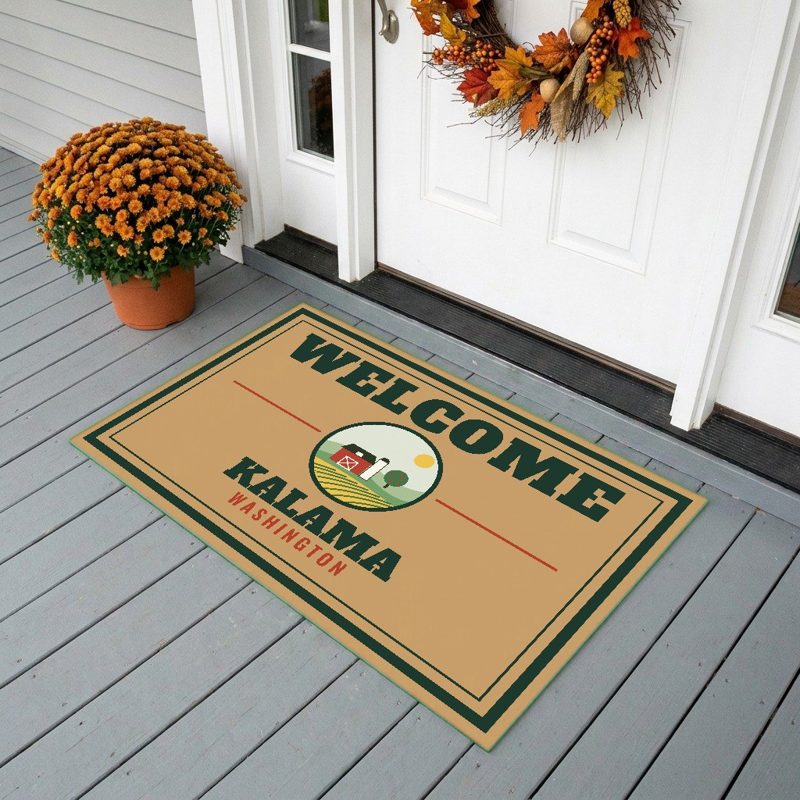
24″×16″, printed coir-look fibers, rubber back
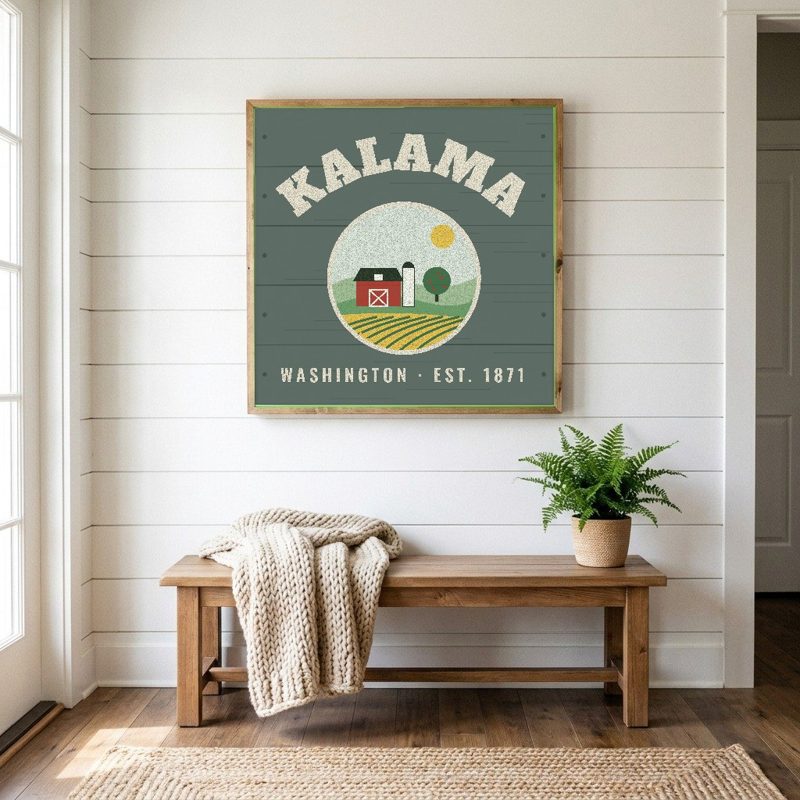
12″×12″ printed wood, ready to hang
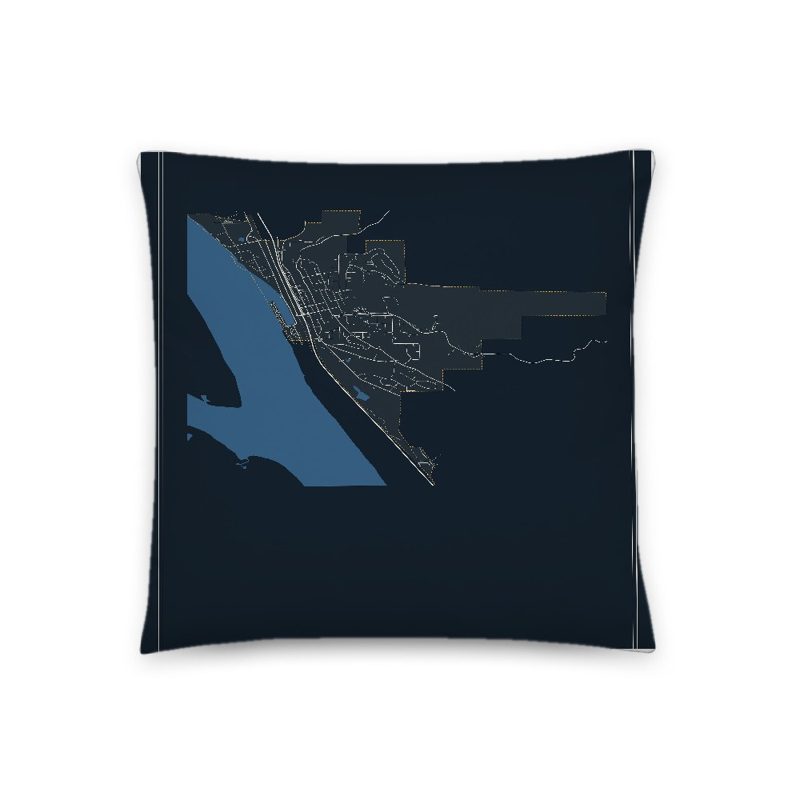
Soft-touch, zip cover
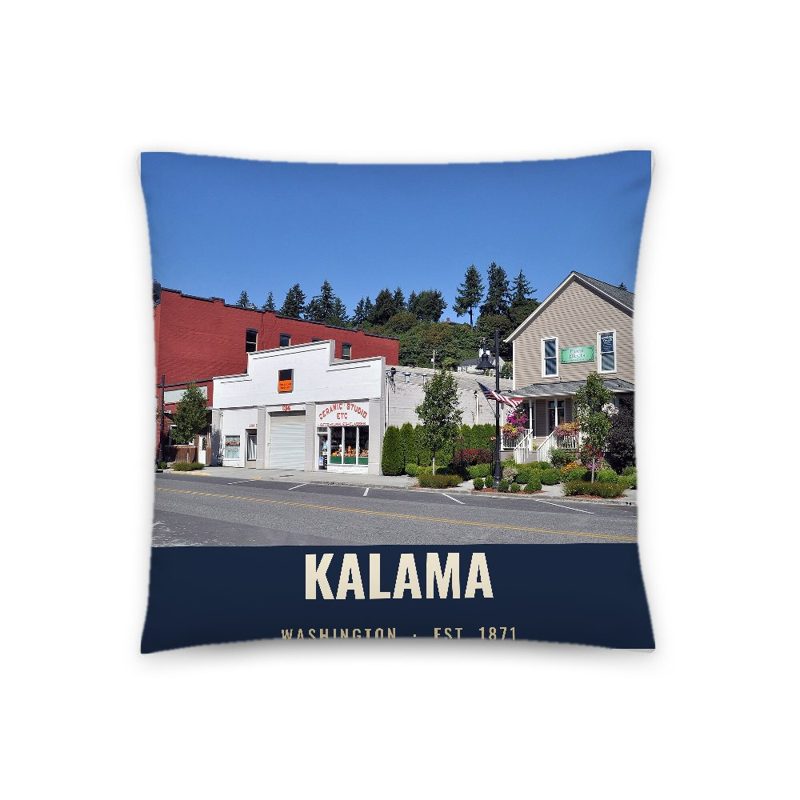
A local landmark photo with the town name, 18″×18″
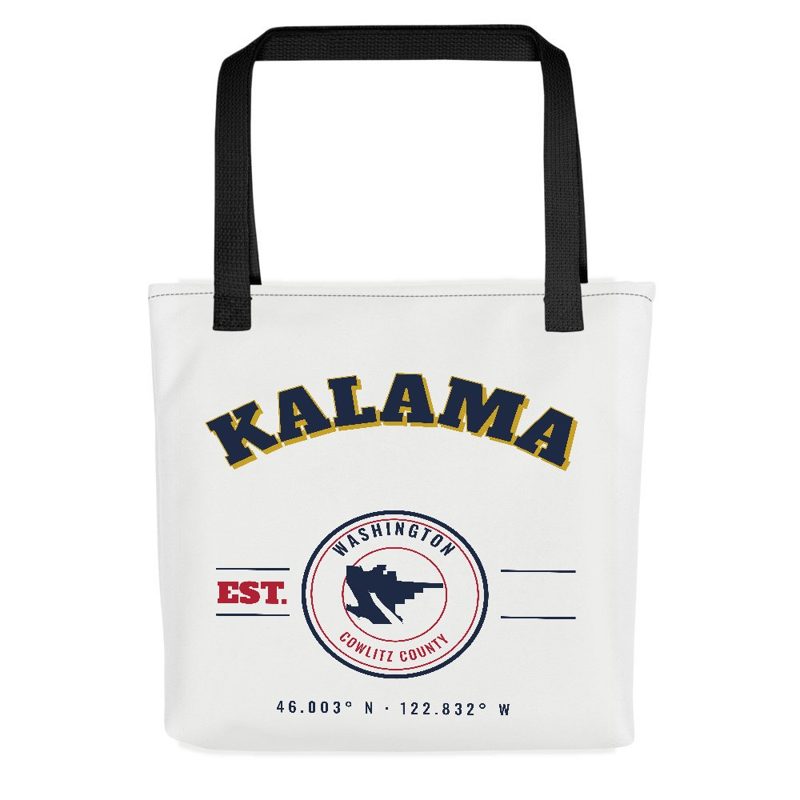
Sturdy all-over-print tote
Glossy top, cork back
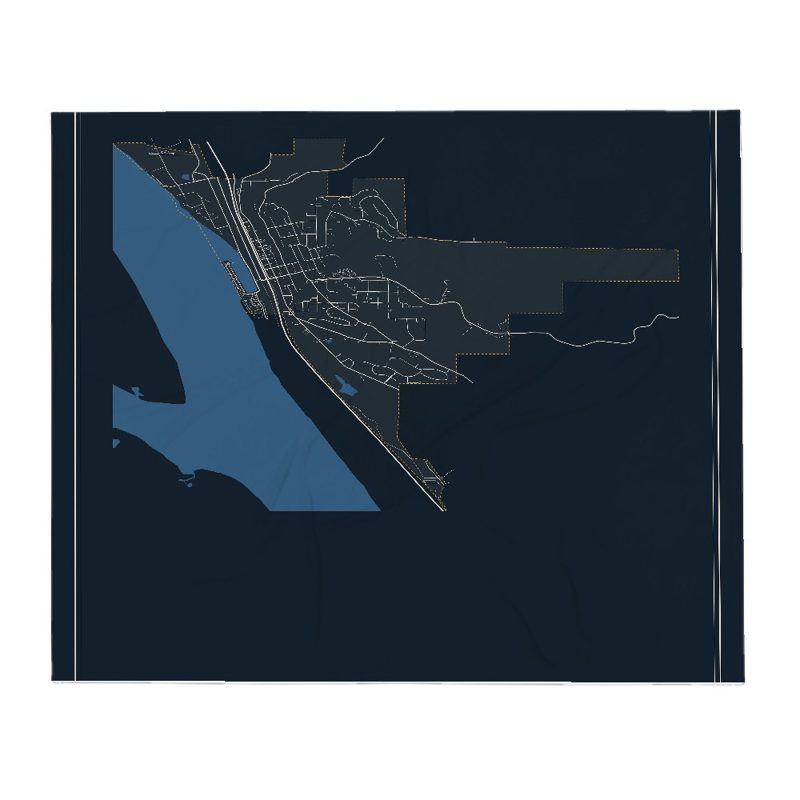
Soft fleece, 50″×60″
20 oz, double-wall stainless
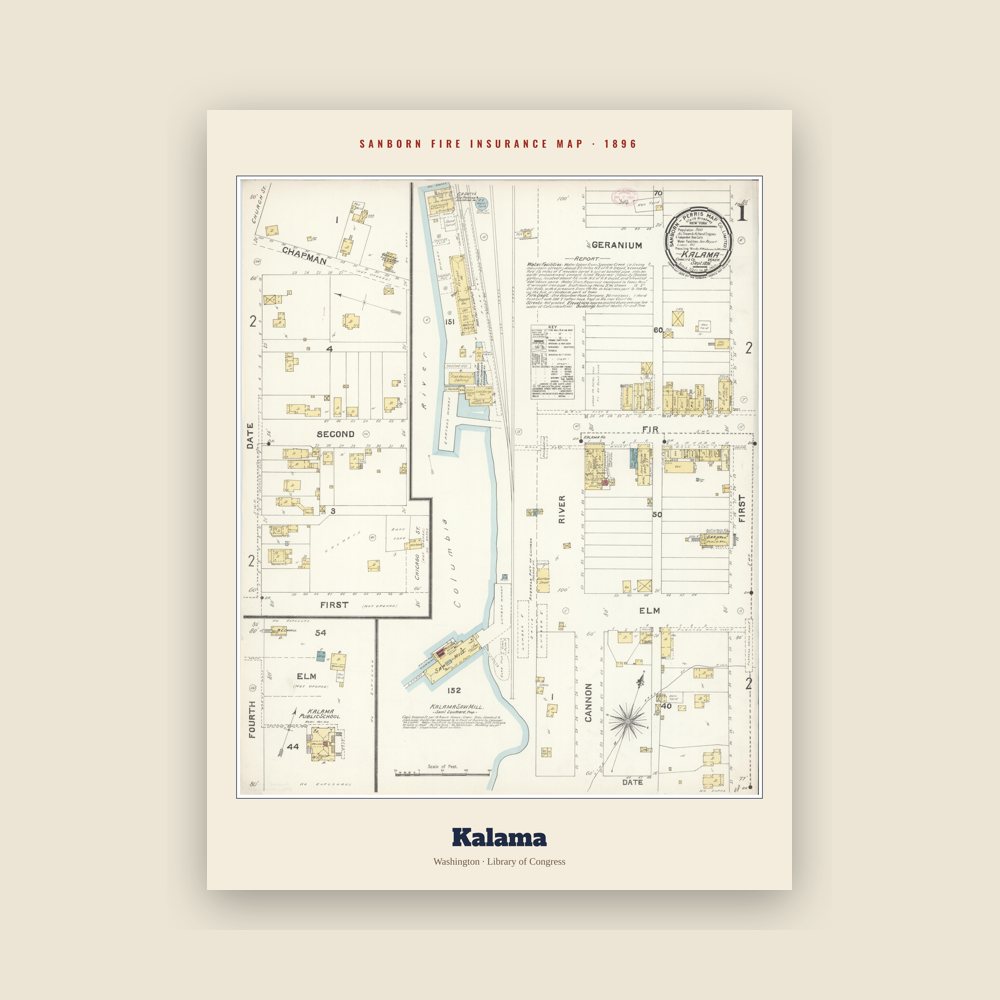
The town's earliest Sanborn fire-insurance map, drawn building by building and hand-coloured, from the Library of Congress
The first white settler recorded was in 1853. That first settler was Ezra Meeker and his family. Only one year later, Meeker moved to north Puyallup, Washington, but he sold his Donation Land Claim to a Mr. John Davenport, who, with a few others, permanently settled in the Kalama area. In early 1870, Northern Pacific Railway scouts came to Cowlitz County to find an ideal terminus along the Columbia River. After a failed negotiation for a Donation Land Claim in Martin's Bluff, 4 miles (6.4 km) south of Kalama, Northern Pacific officials purchased 700 acres (280 ha) in Kalama for the terminus of the new railroad as well as a new headquarters. The population swelled with employees of the Northern Pacific Railway. The town also received many Hawaiians who worked under the service of the Hudson's Bay Company and also intermarried with local indigenous peoples like the Nisqually during this time; descendants of such unions still living on Nisqually Reservation to this day.
Kalama was entirely a Northern Pacific railroad creation. It was unofficially born in May 1870 when the Northern Pacific railroad turned the first shovel of dirt. Northern Pacific built a dock, a sawmill, a car shop, a roundhouse, a turntable, hotels, a hospital, stores, homes. In just a few months in 1870, the working population skyrocketed to approximately 3,500 and the town had added tents, saloons, a brewery, and a gambling hall. Soon the town had a motto: "Rail Meets Sail". Recruiters went to San Francisco and recruited Chinese labor, who moved to their own Chinatown in a part of Kalama now called China Gardens. The population of Kalama peaked at 5,000 people, but in early 1874, the railroad moved its headquarters to Tacoma, and by 1877, only 700 people remained in Kalama.
Kalama was unofficially incorporated on November 29, 1871. It served as the county seat of Cowlitz County from 1872 to 1922. Kalama was the northern terminus of a railroad ferry operated by the Northern Pacific Railway from Goble, Oregon. This was a critical link in rail service between 1883 when the service began until 1909 when the major rail bridges near Portland across the Columbia and Willamette rivers were completed.
Kalama originated with a stake driven by Gen. John W. Sprague of the Northern Pacific Railway who in March 1870 selected a spot near the mouth of the Kalama river to mark the beginning point of Northern Pacific's Pacific Division. From that stake, the Northern Pacific began building north to Puget Sound, ultimately reaching Commencement Bay at what was to become Tacoma before going bankrupt. Construction began in April 1871 with a crew of 800 men, with the official 'first spike' being driven in May 1871 Scheduled service from Tacoma to Kalama began on January 5, 1874. The Portland-Hunters rail line in Oregon across the Columbia River from Kalama was completed in 1883 by Northern Pacific, about the same time that the ceremonial spike was driven at a site west of Helena, Montana to mark the completion of the transcontinental Northern Pacific Railroad in the fall of 1883. The following year in October 1884, a 3 track, 360-foot (110 m) long railroad ferry, Tacoma, marked the beginning of about 25 years of ferry service across the Columbia River.
Hunters was located near the south end of Sandy Island about a mile south of Goble. However the crossing times were excessive when the Tacoma had to work against the tide, and the ferry slip was soon moved to Goble at the north end of Sandy Island and directly across from Kalama. The ferry could handle 12 passenger cars or 27 freight cars.
St. Joseph's Catholic Parish was built in 1874, around the same time the railroad between Kalama and Tacoma first became operational. This was the first and only Catholic parish in Kalama.
Adapted (trimmed) from the Wikipedia article Kalama, Washington, revision 1379835714 by its contributors, licensed CC BY-SA 4.0.
We share a part of every Kalama sale with local partners, and we'd love to print from your collection. Old photographs, maps and postcards make the best keepsakes.
Partner with usA favorite landmark, your street, a school or team, an anniversary gift, a different product. Tell us and we'll get back to you by email.
1 free coloring page of Kalama, each traced from a photo of a local landmark. Print them at home, at school or for story hour.
Kalama's population was 2,959 in the 2020 U.S. Census, up from 2,344 in 2010.
 A view of Kalama