A short history of Wardsboro
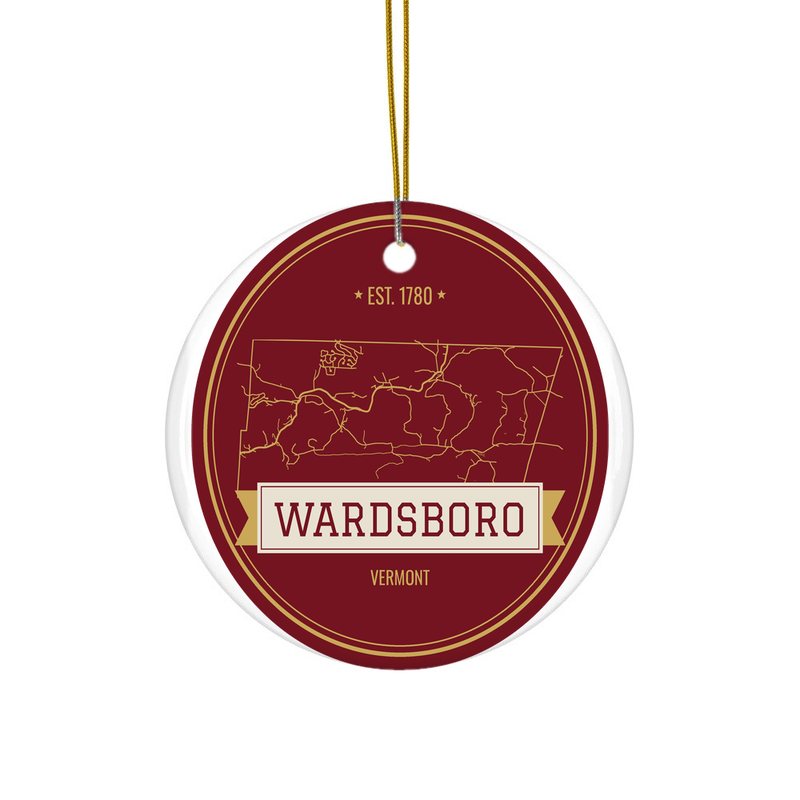
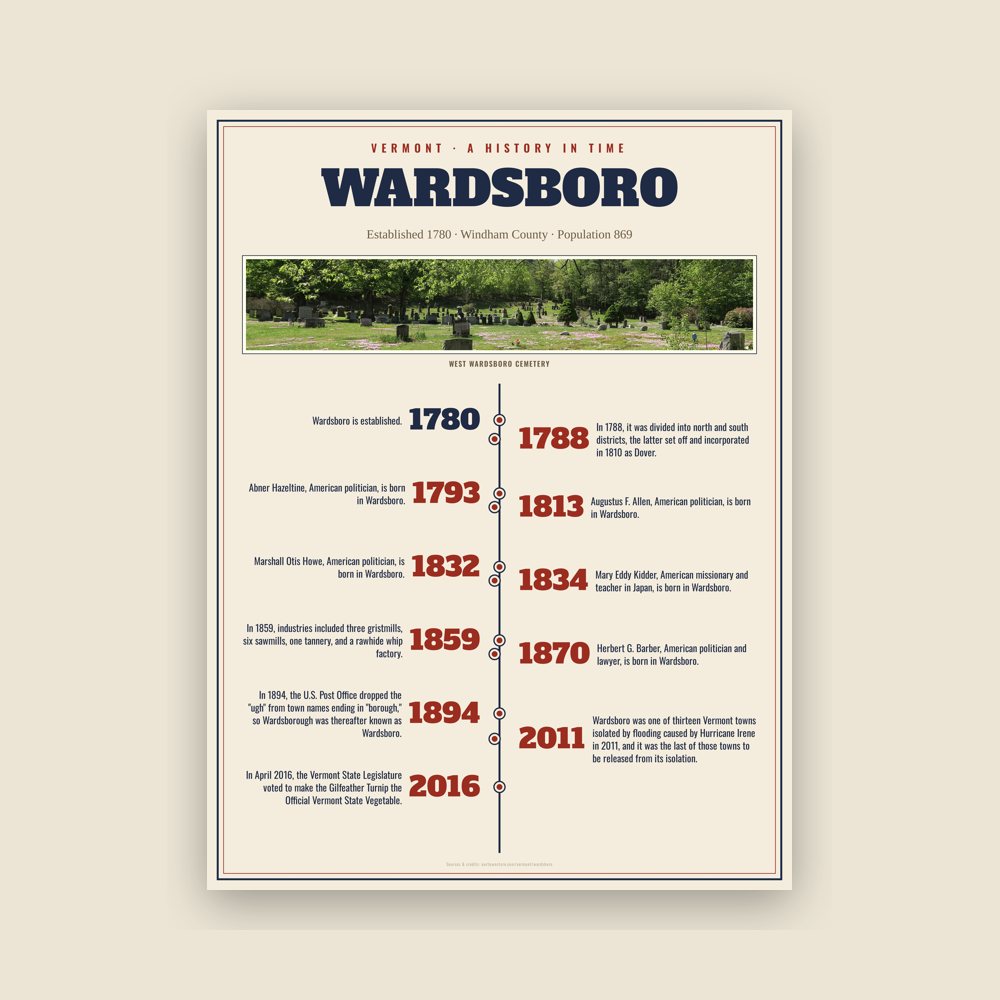
The town was settled circa 1779 by Samuel Davis and his wife from Milford, Massachusetts. It was granted and chartered on November 7, 1780, to William Ward of Newfane, for whom the town was named Wardsborough, together with 62 others. In 1788, it was divided into north and south districts, the latter set off and incorporated in 1810 as Dover. Although the terrain is very uneven and in parts rocky, farmers worked the soil into productivity.
Mills were built along the brook, a tributary of the West River. In 1859, industries included three gristmills, six sawmills, one tannery, and a rawhide whip factory. During the Civil War, Wardsborough Center was called Unionville because of its strong Federal sentiment. In the 1880s, Jebediah Estabrook's tub, bucket and pail factory at Wardsborough Center was the area's principal employer. In 1894, the U.S. Post Office dropped the "ugh" from town names ending in "borough," so Wardsborough was thereafter known as Wardsboro.
Wardsboro was one of thirteen Vermont towns isolated by flooding caused by Hurricane Irene in 2011, and it was the last of those towns to be released from its isolation.
In April 2016, the Vermont State Legislature voted to make the Gilfeather Turnip the Official Vermont State Vegetable. This unusual hybrid, dating back to the early 1900s, is credited to Farmer John Gilfeather of the Gilfeather Farm in Wardsboro.
Adapted (trimmed) from the Wikipedia article Wardsboro, Vermont, revision 1375488852 by its contributors, licensed CC BY-SA 4.0.
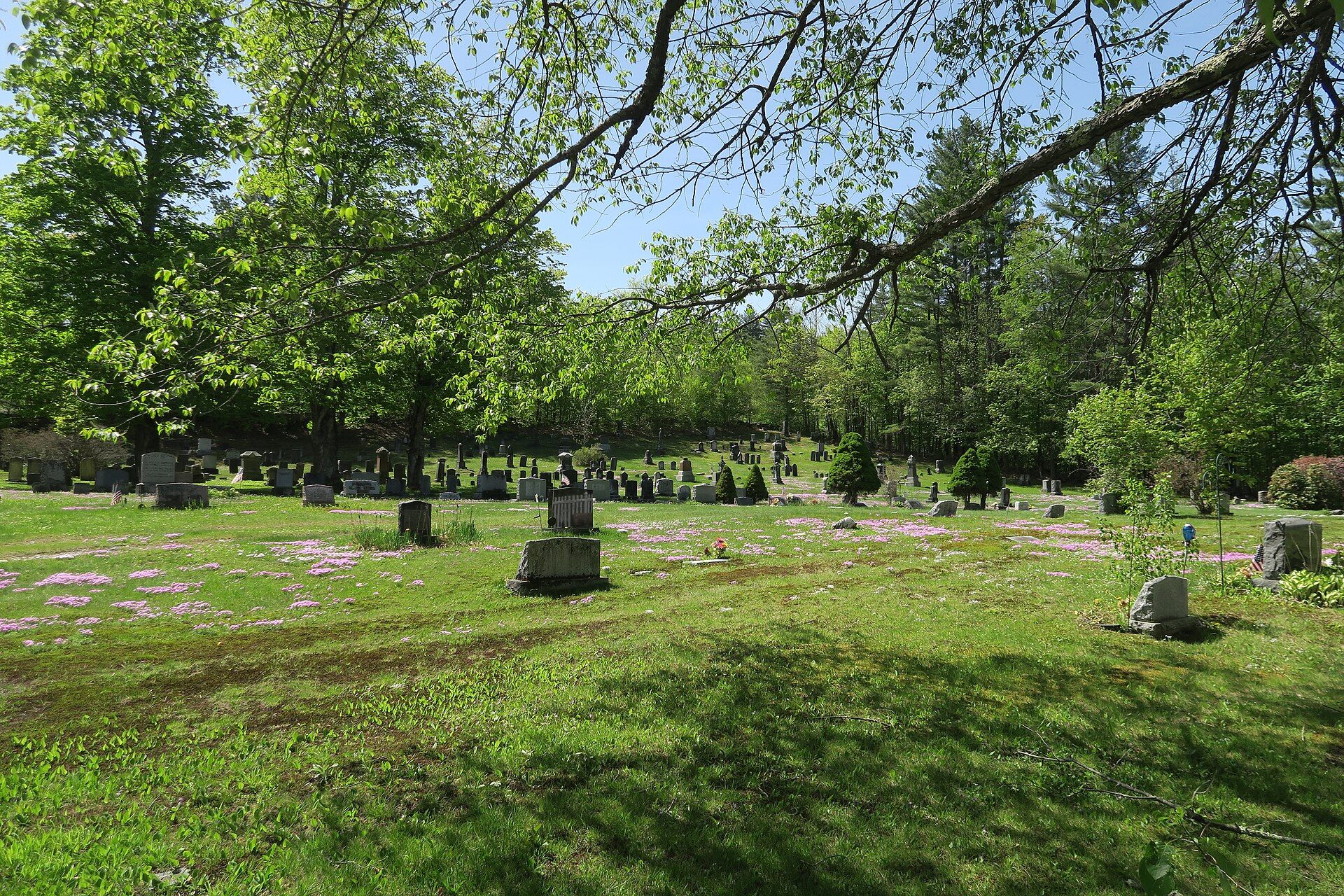
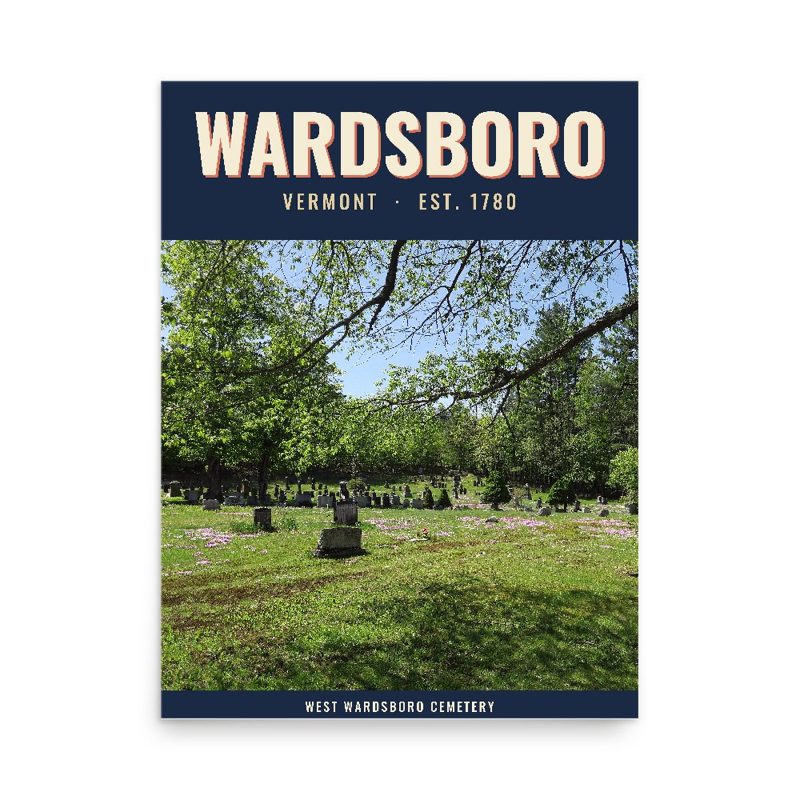
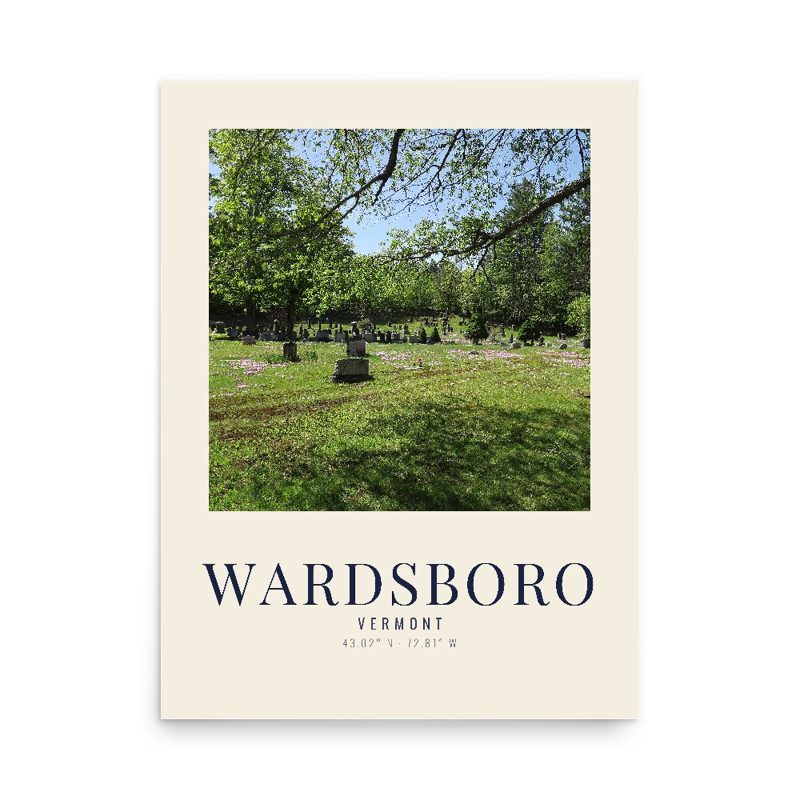
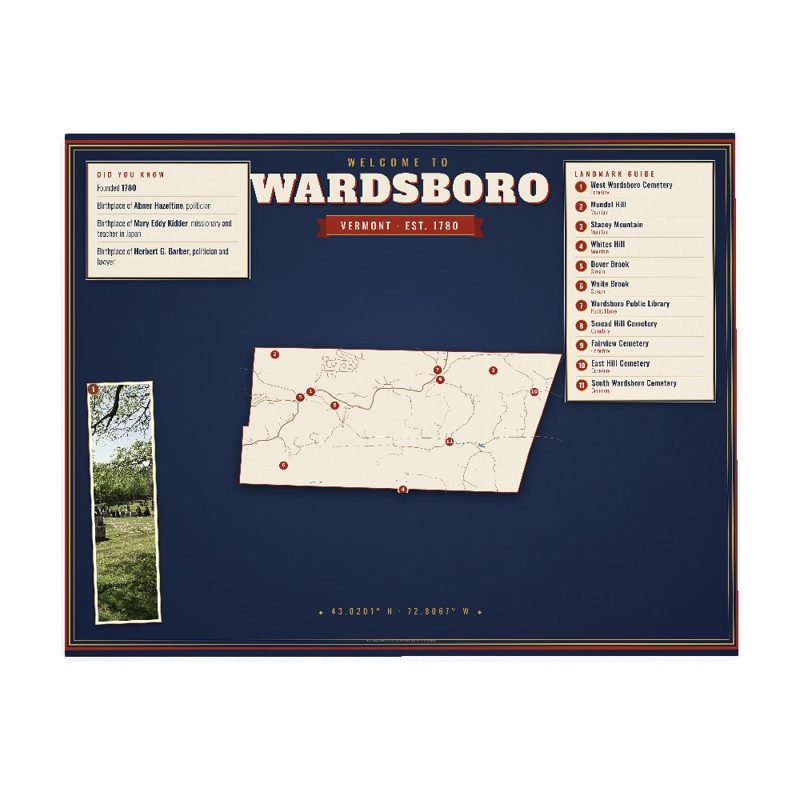
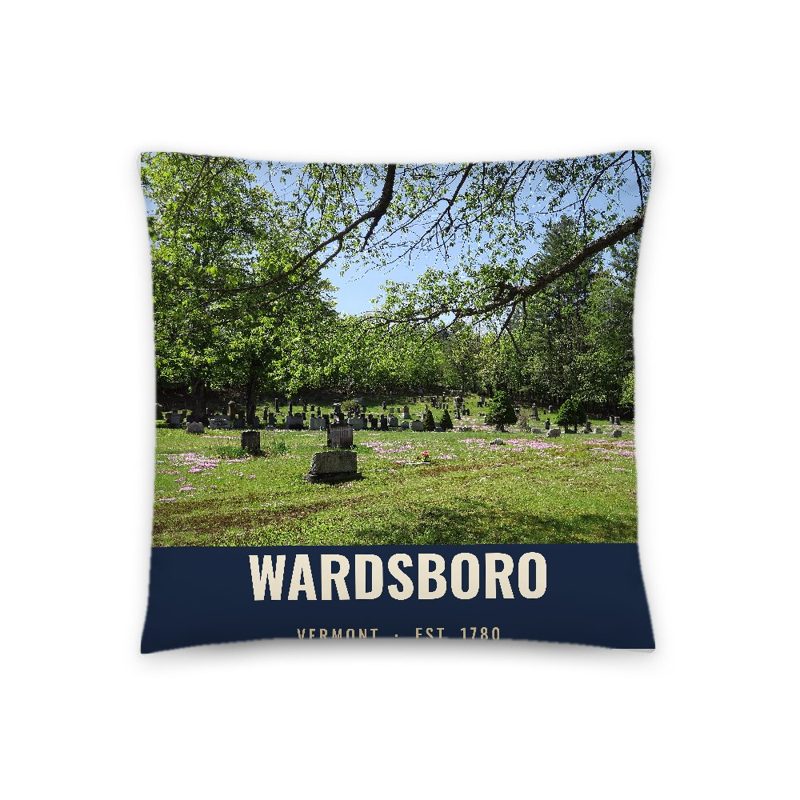
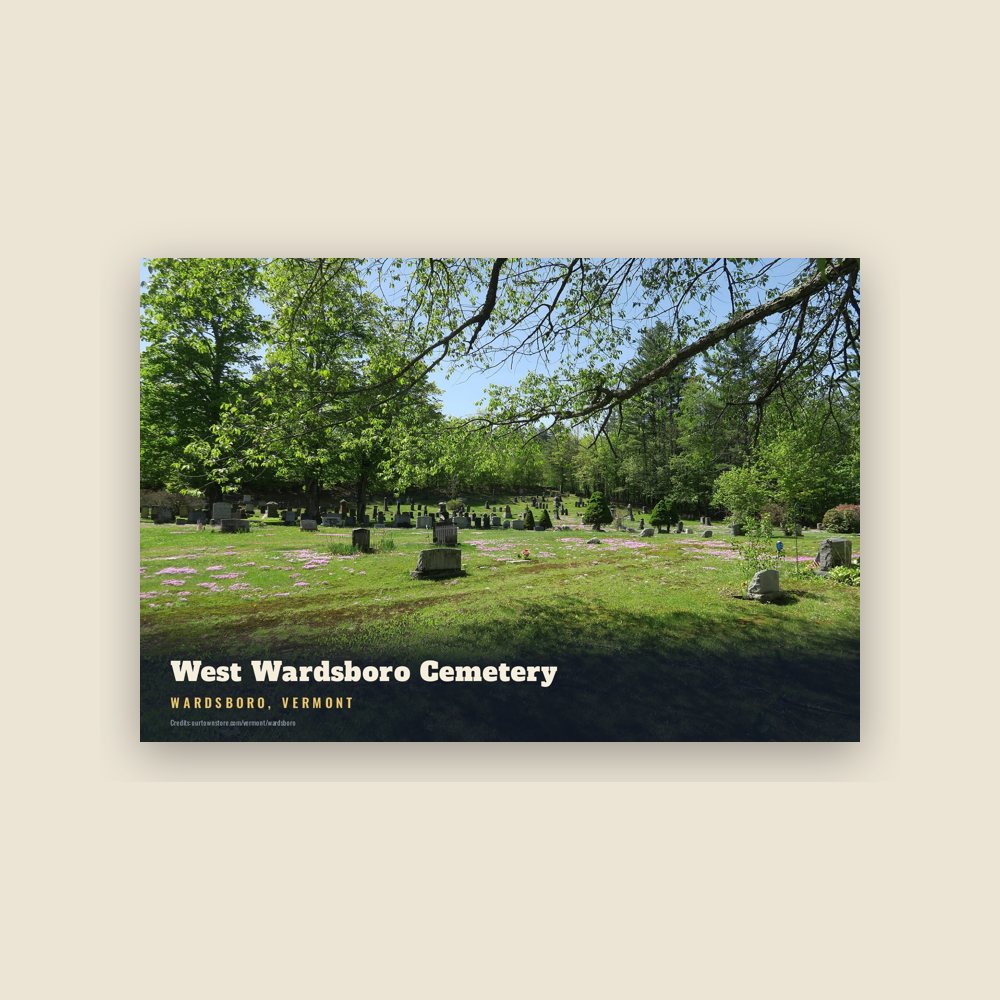
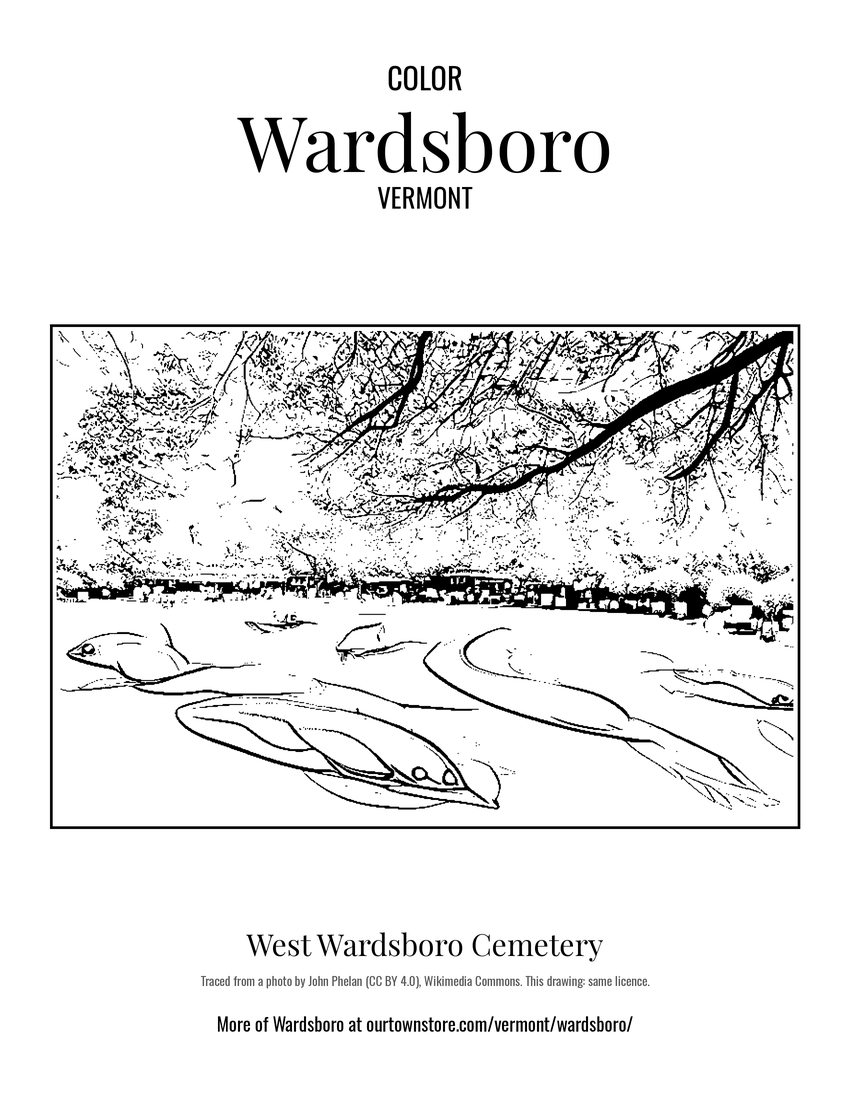 West Wardsboro Cemetery