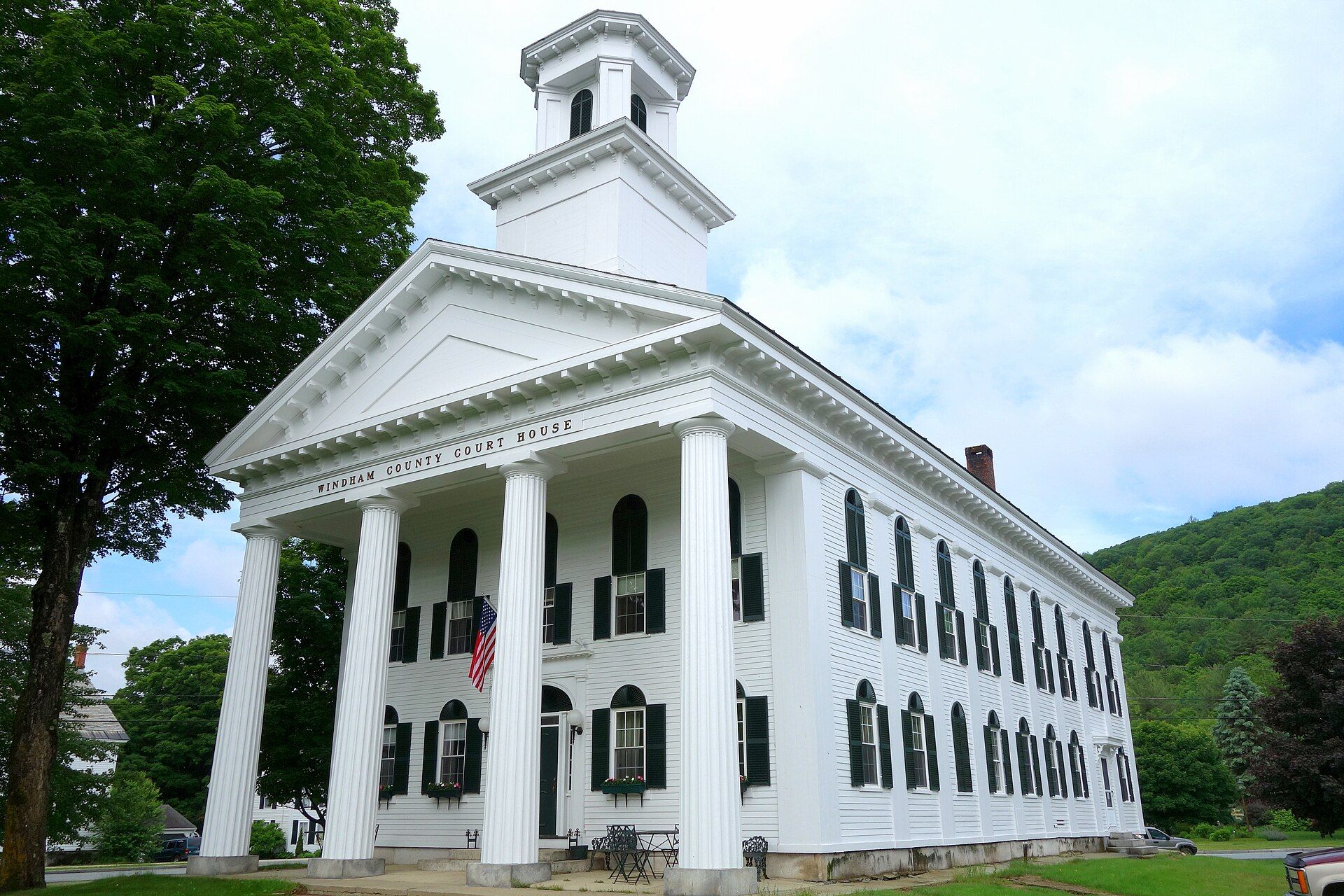
Newfane is the shire town of Windham County, Vermont, United States. Landmarks include Windham County, Williamsville Covered Bridge and Historical Society of Windham County. Newfane is the birthplace of Marshall Avery Howe, curator and botanist.
Every piece is drawn from Newfane's own map data and historic archives, then printed and shipped from the USA when you order. No two towns look alike.
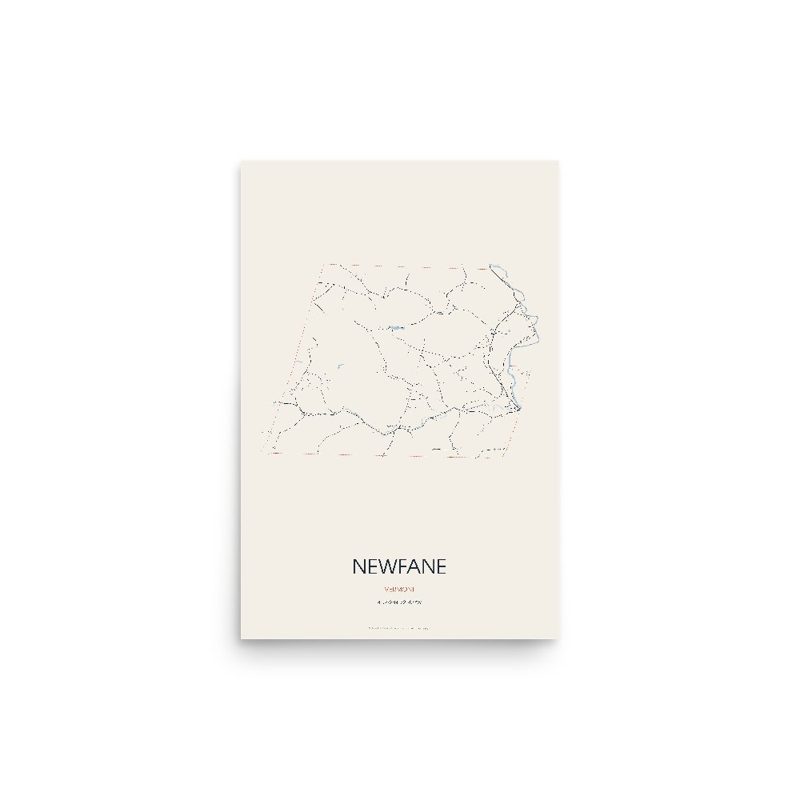
Every road in town, on archival matte paper
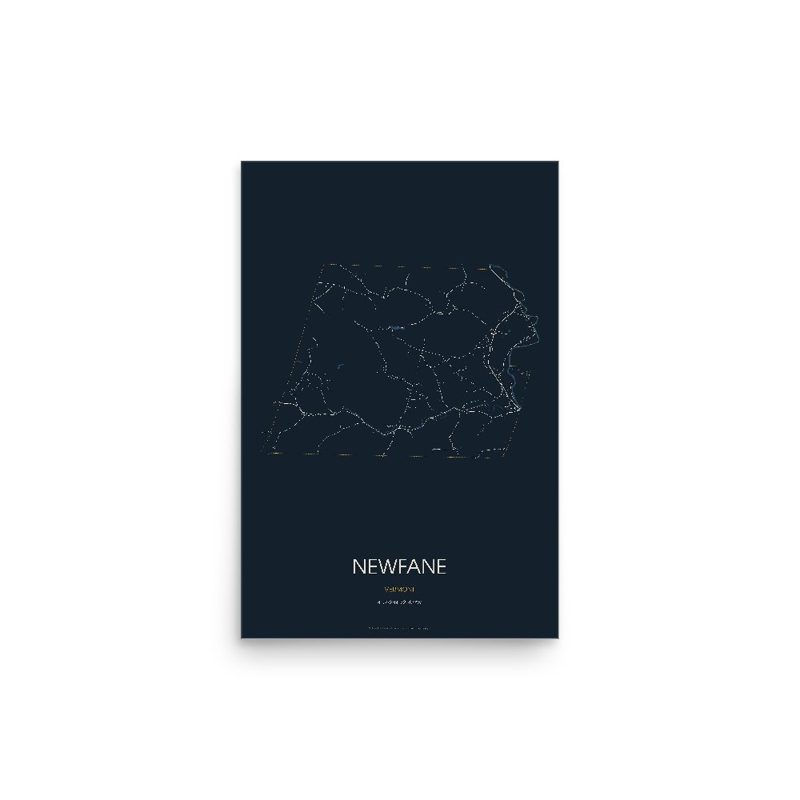
The same map, in navy and silver
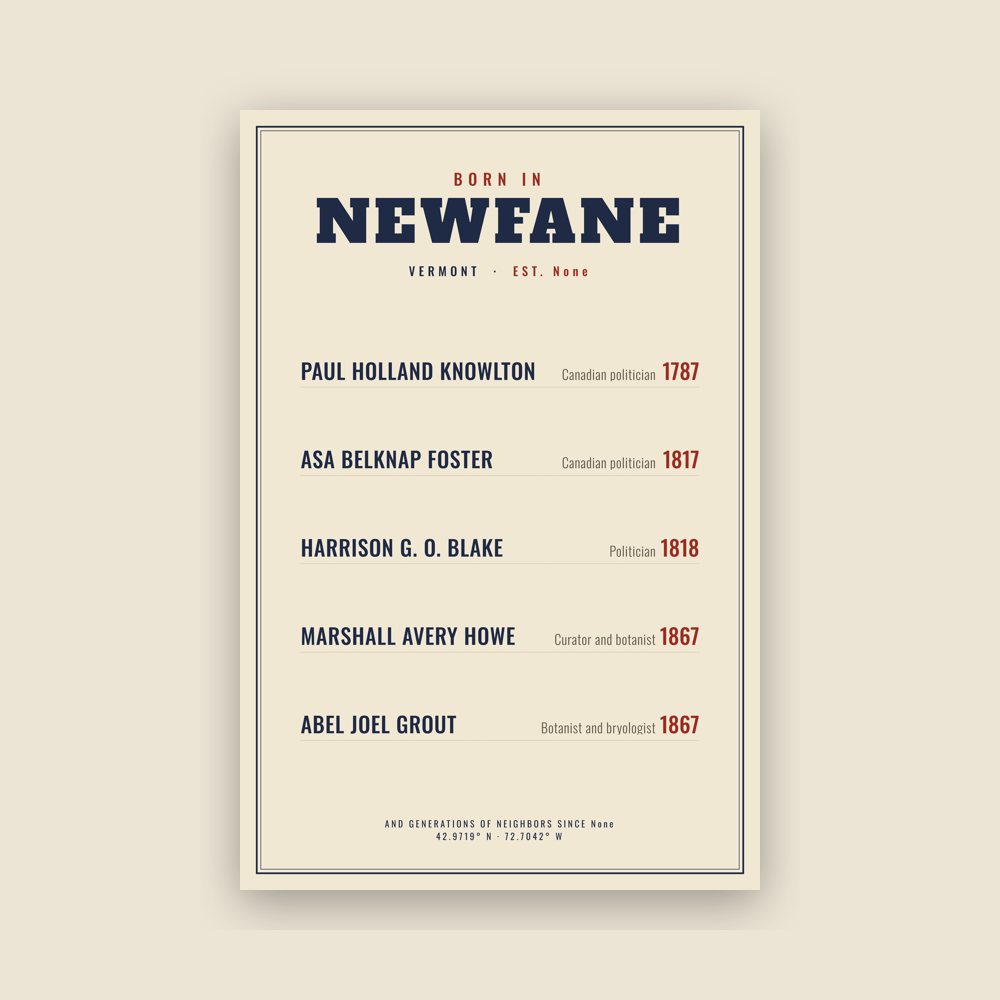
Famous natives, by birth year
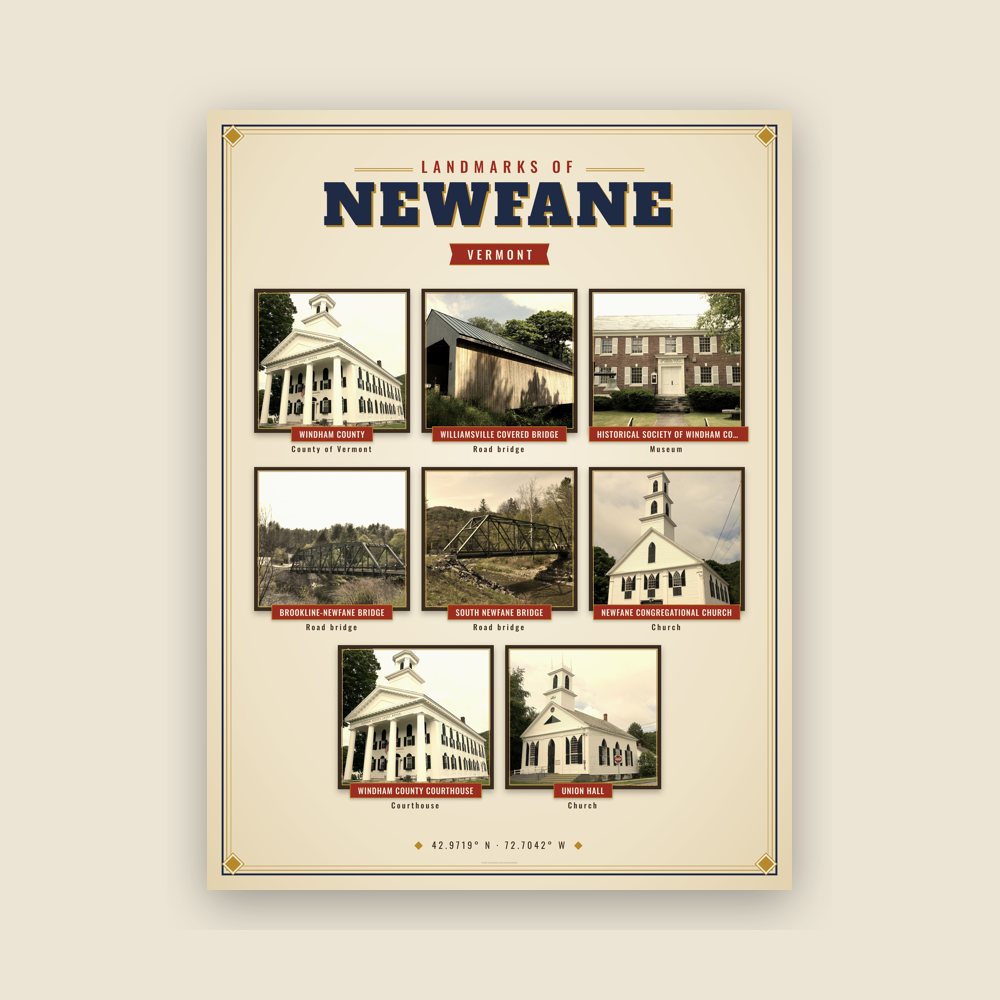
Nine local landmarks, archival matte
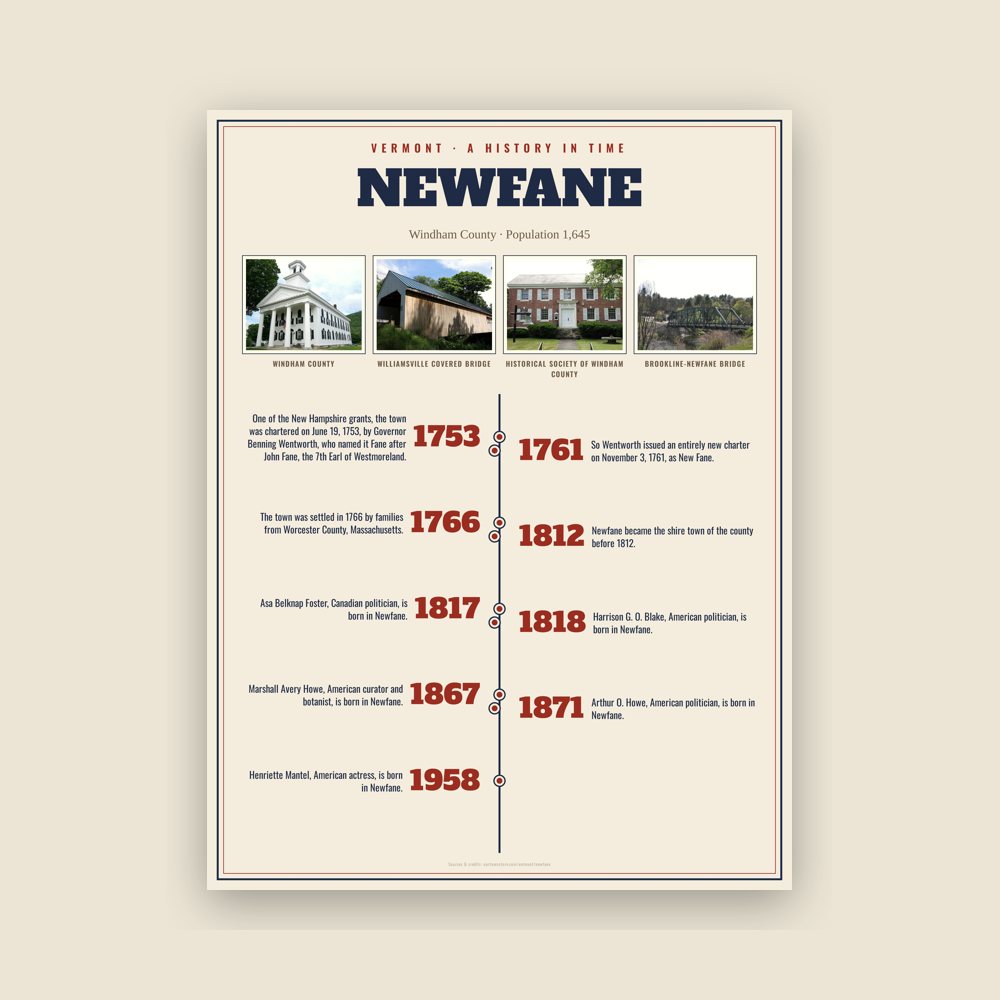
The town's story in dates, from its own records, for home or classroom
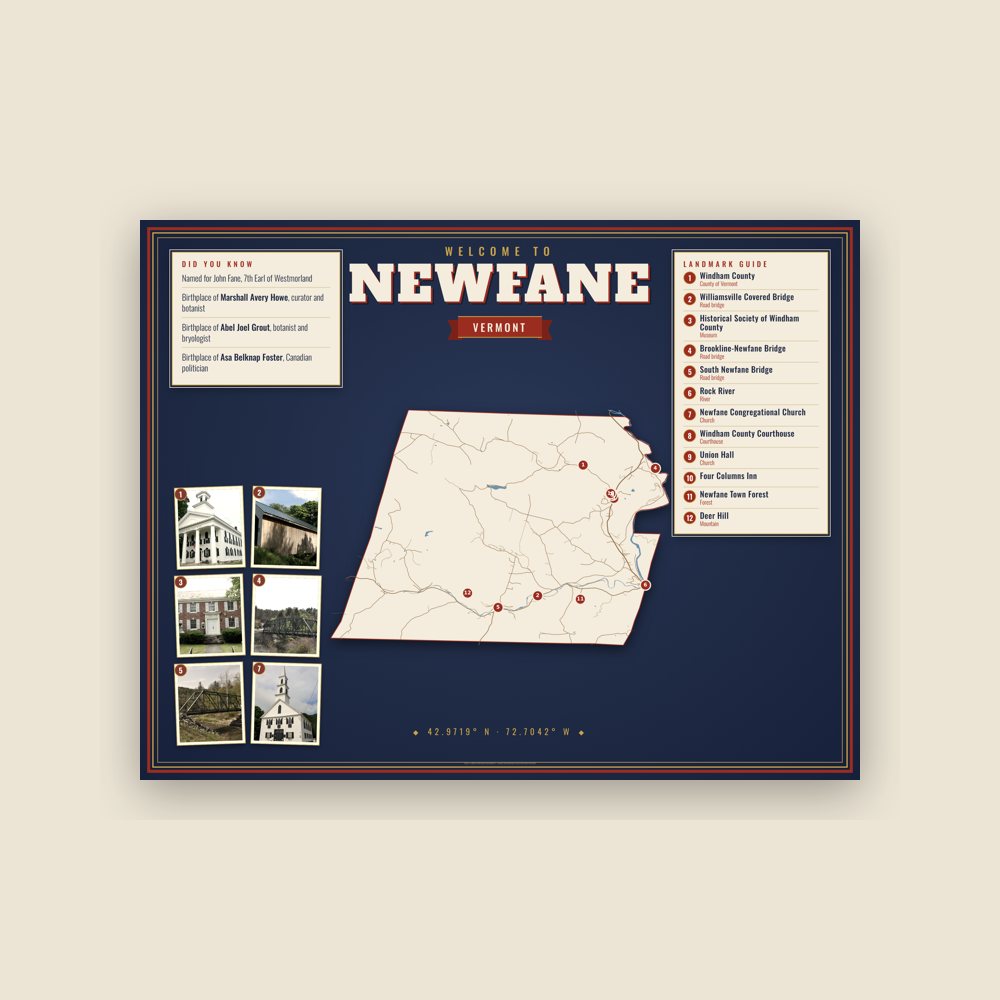
Map of local landmarks, washable fabric
Heavy-blend fleece, street map printed on the back
Soft Bella+Canvas jersey
Glossy ceramic, dishwasher safe
Ceramic keepsake, gold ribbon
Weatherproof, for the front walk
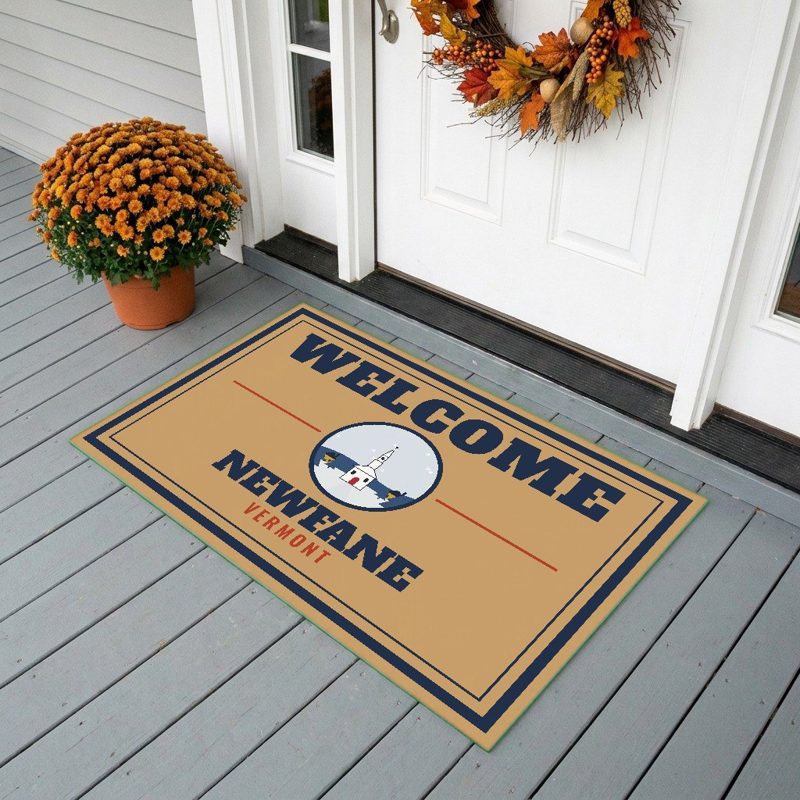
24″×16″, printed coir-look fibers, rubber back
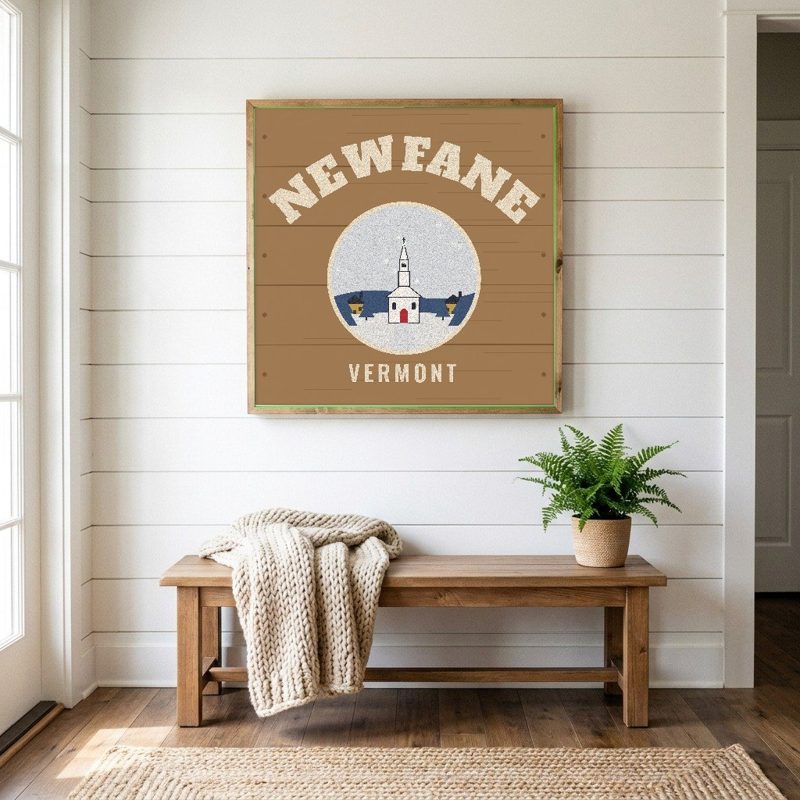
12″×12″ printed wood, ready to hang
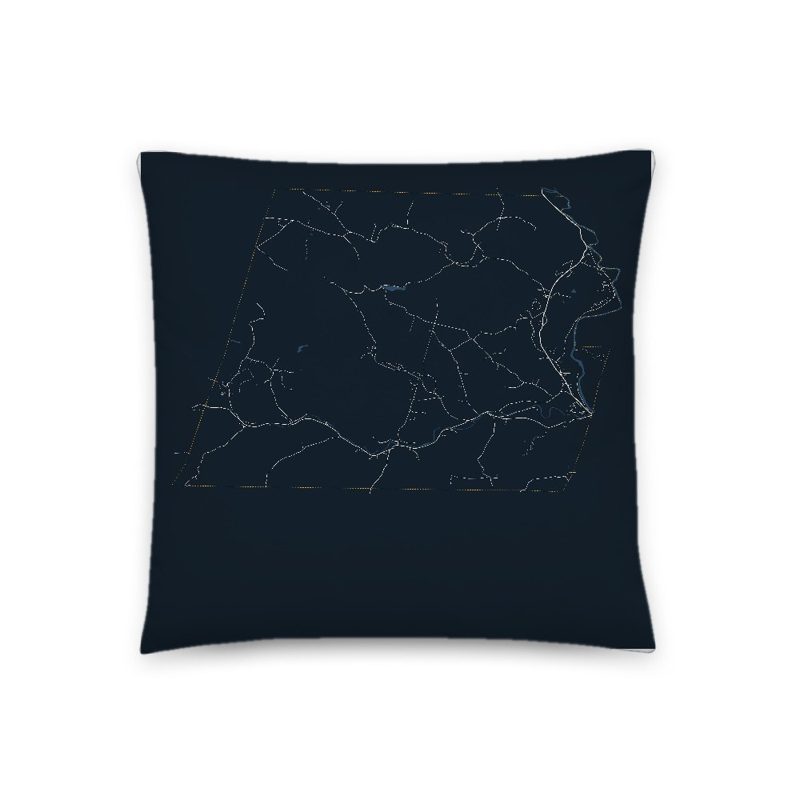
Soft-touch, zip cover
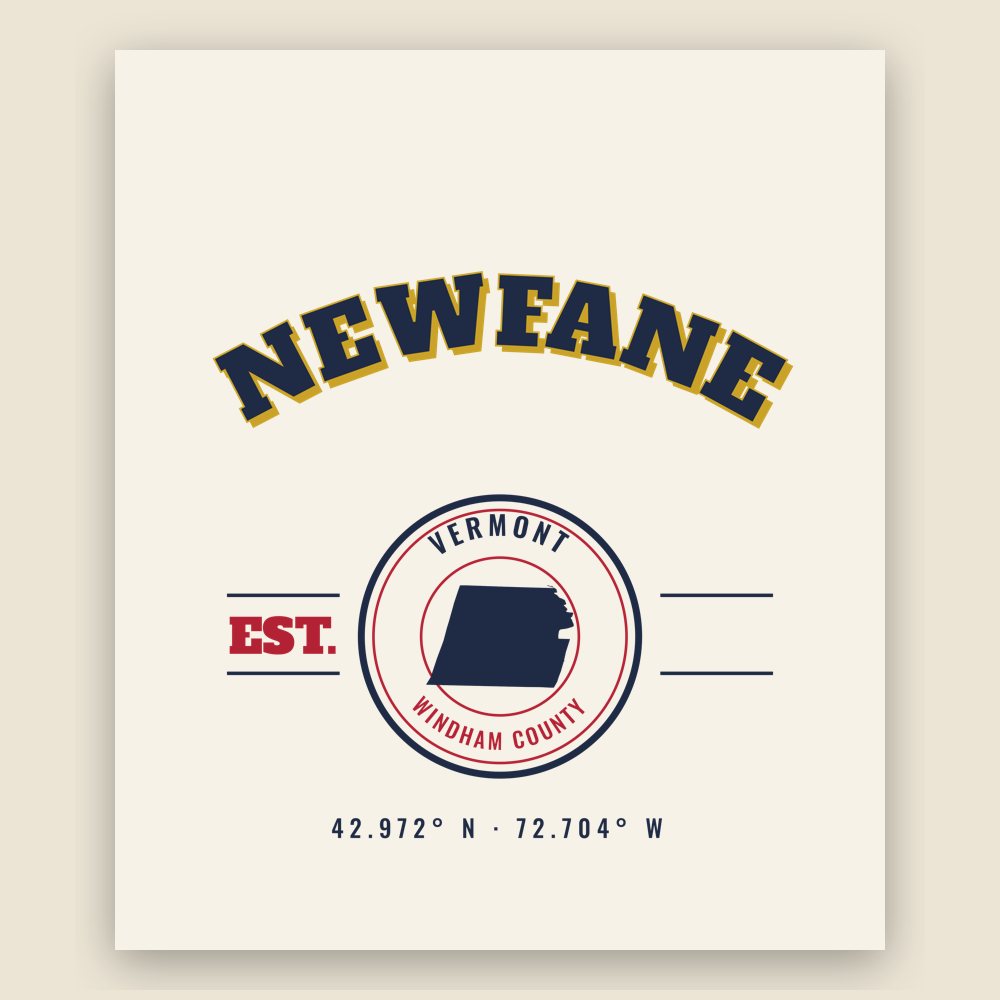
Sturdy all-over-print tote
Glossy top, cork back
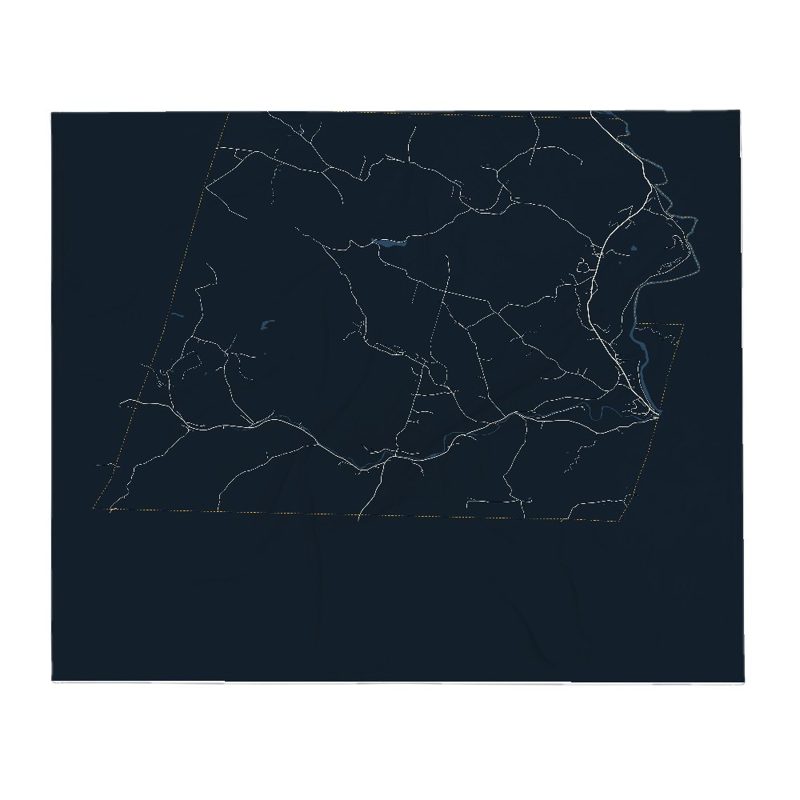
Soft fleece, 50″×60″
20 oz, double-wall stainless
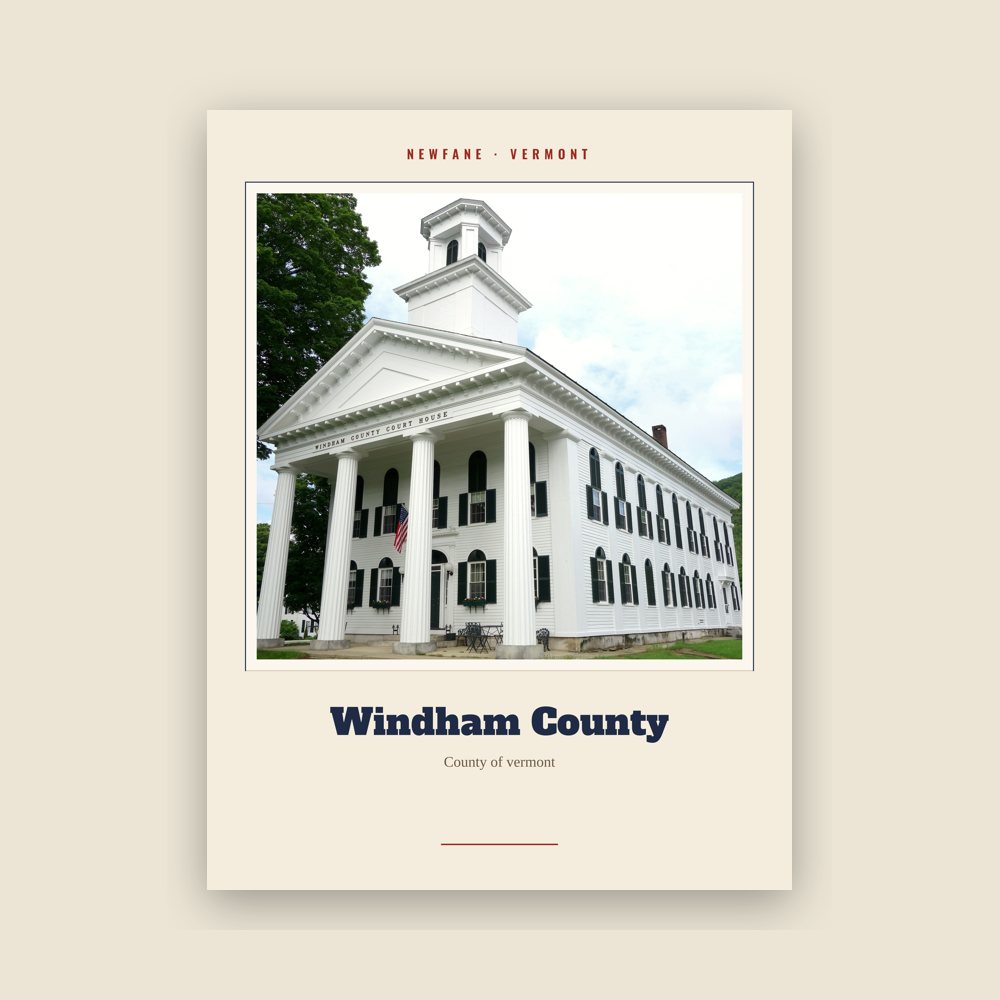
Archival matte print of a local landmark, credited to its photographer
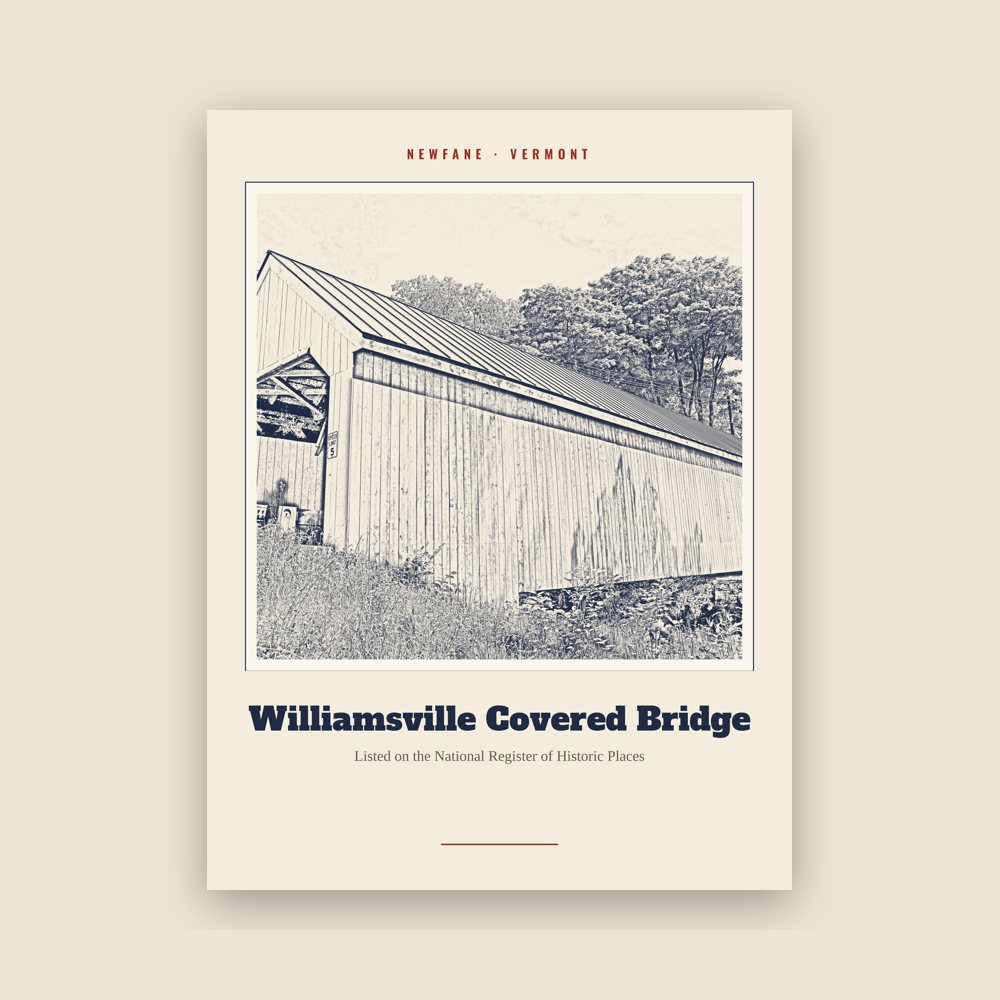
Archival matte print of a local landmark, credited to its photographer
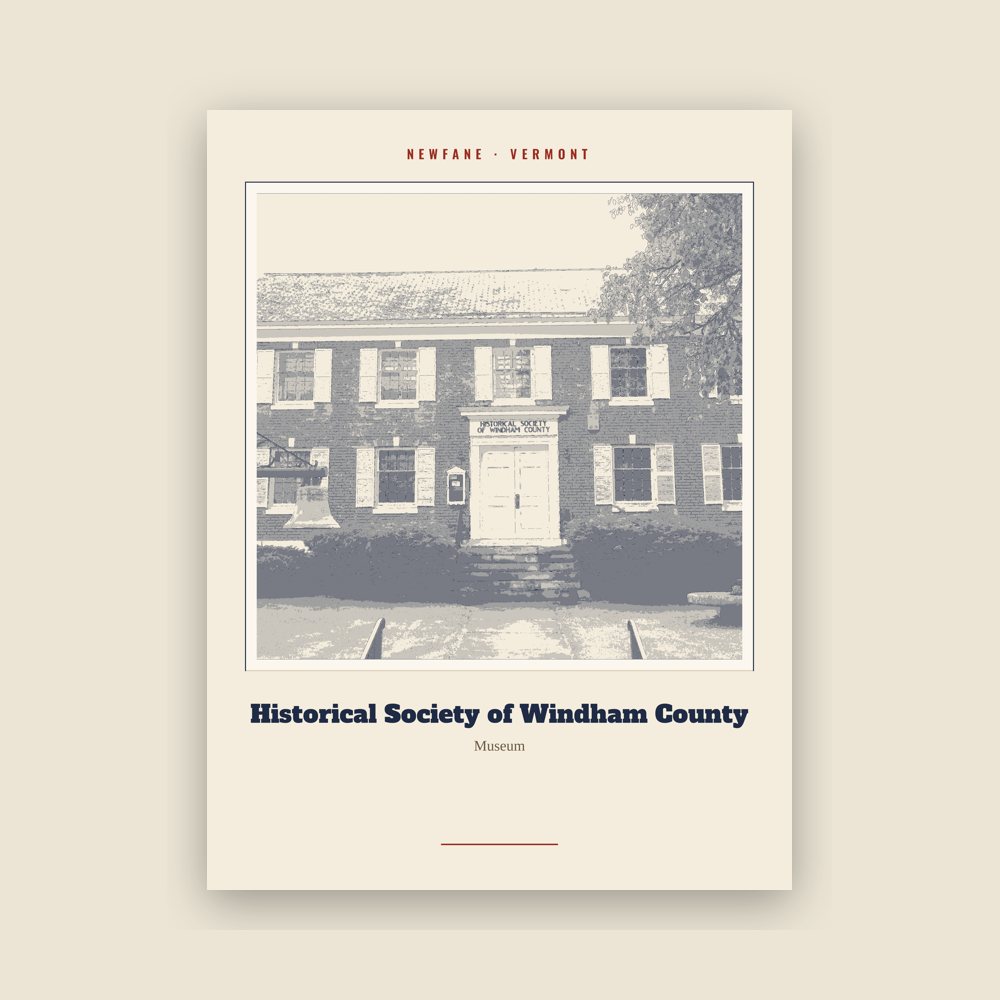
Archival matte print of a local landmark, credited to its photographer
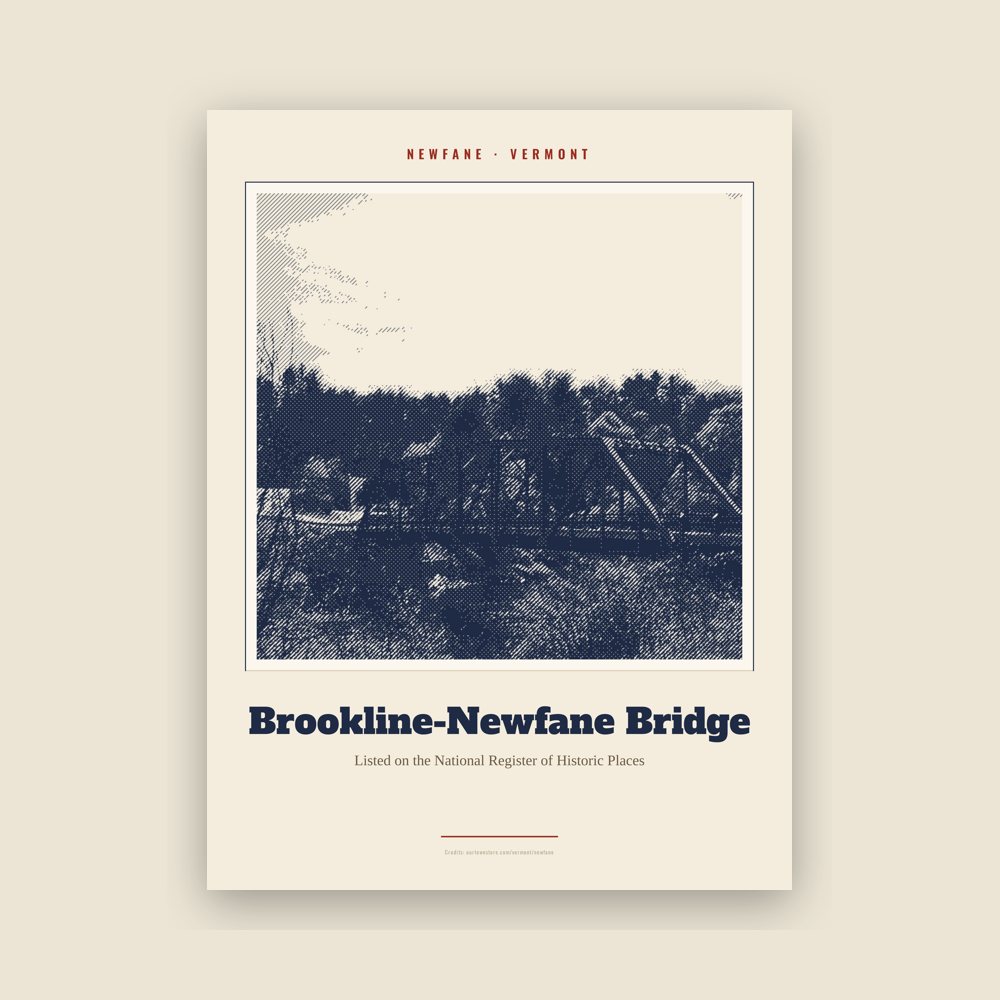
Archival matte print of a local landmark, credited to its photographer
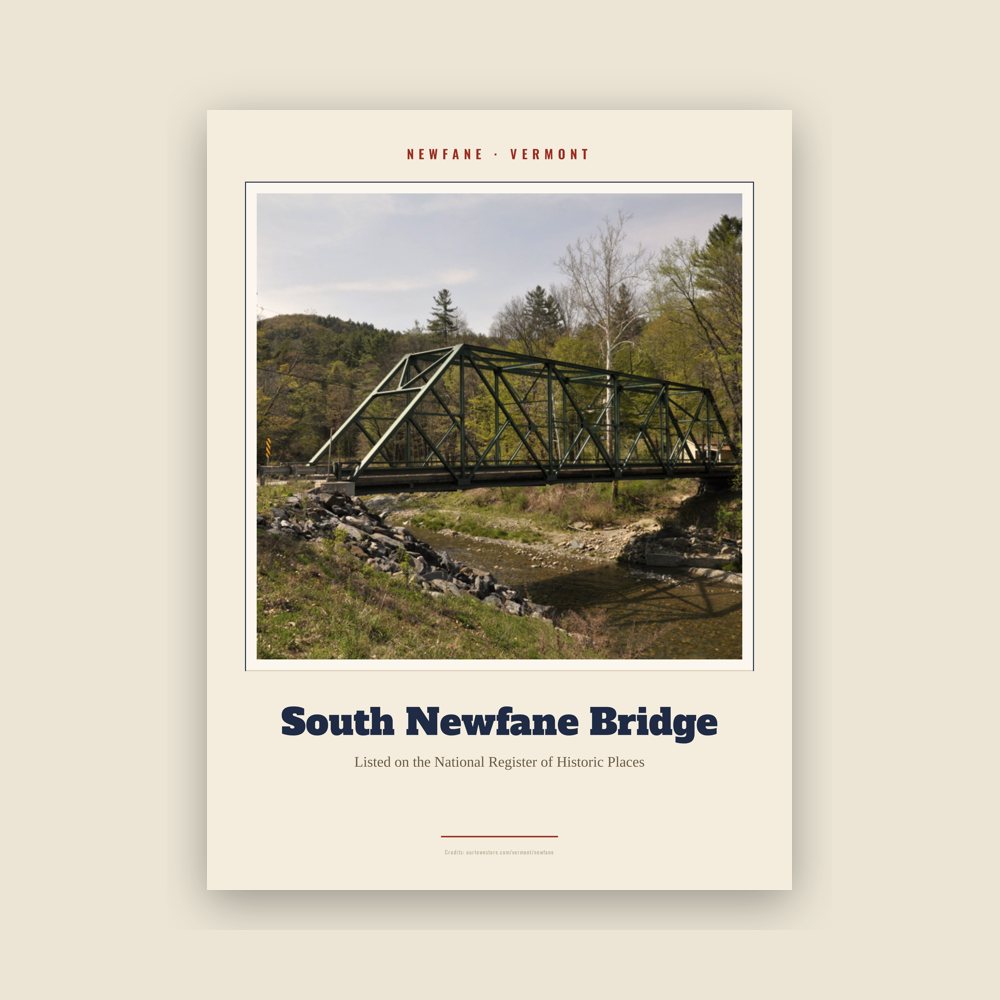
Archival matte print of a local landmark, credited to its photographer
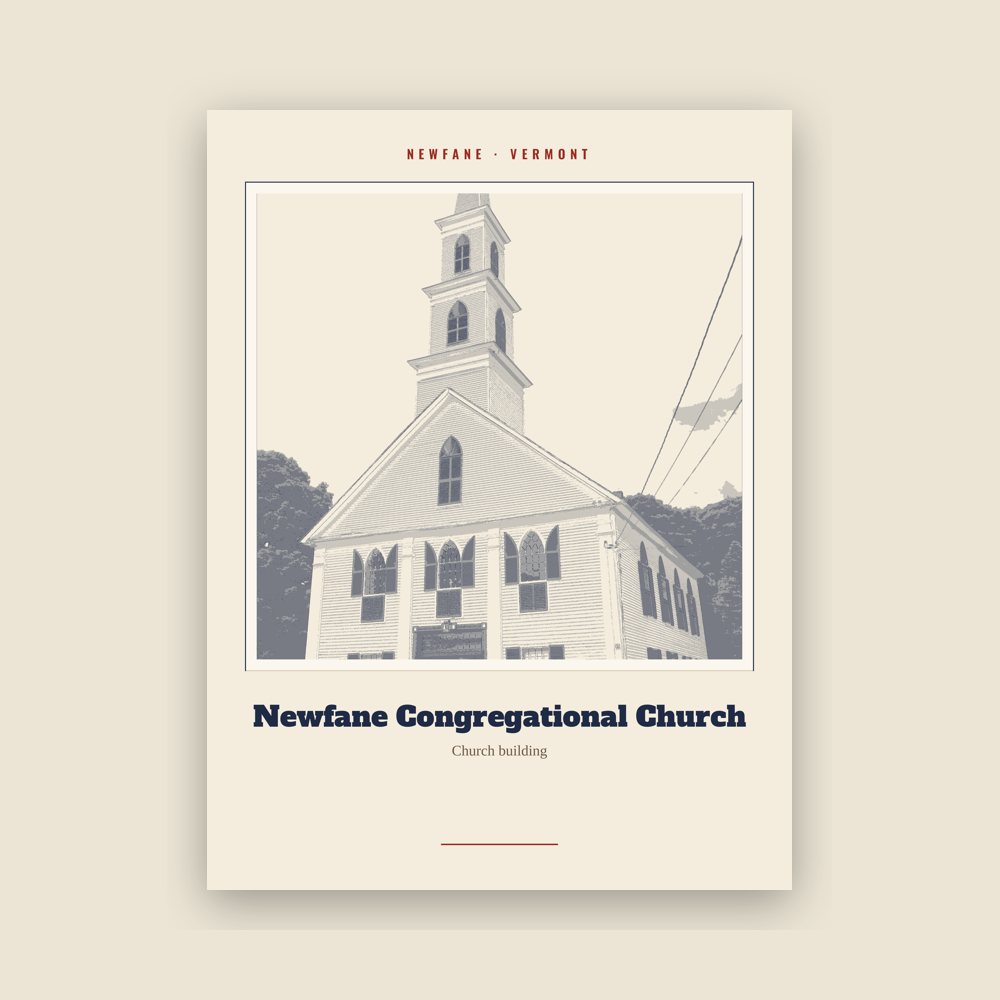
Archival matte print of a local landmark, credited to its photographer
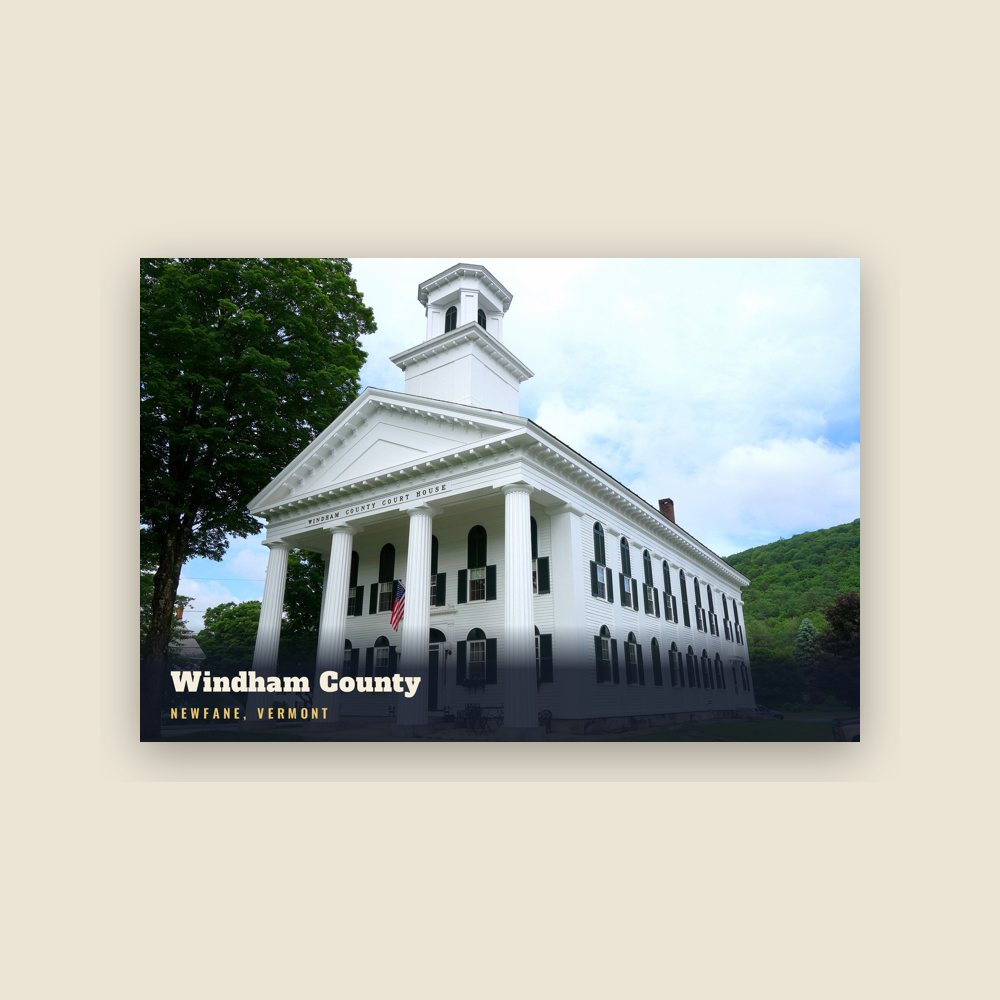
6″×4″ postcard, glossy front
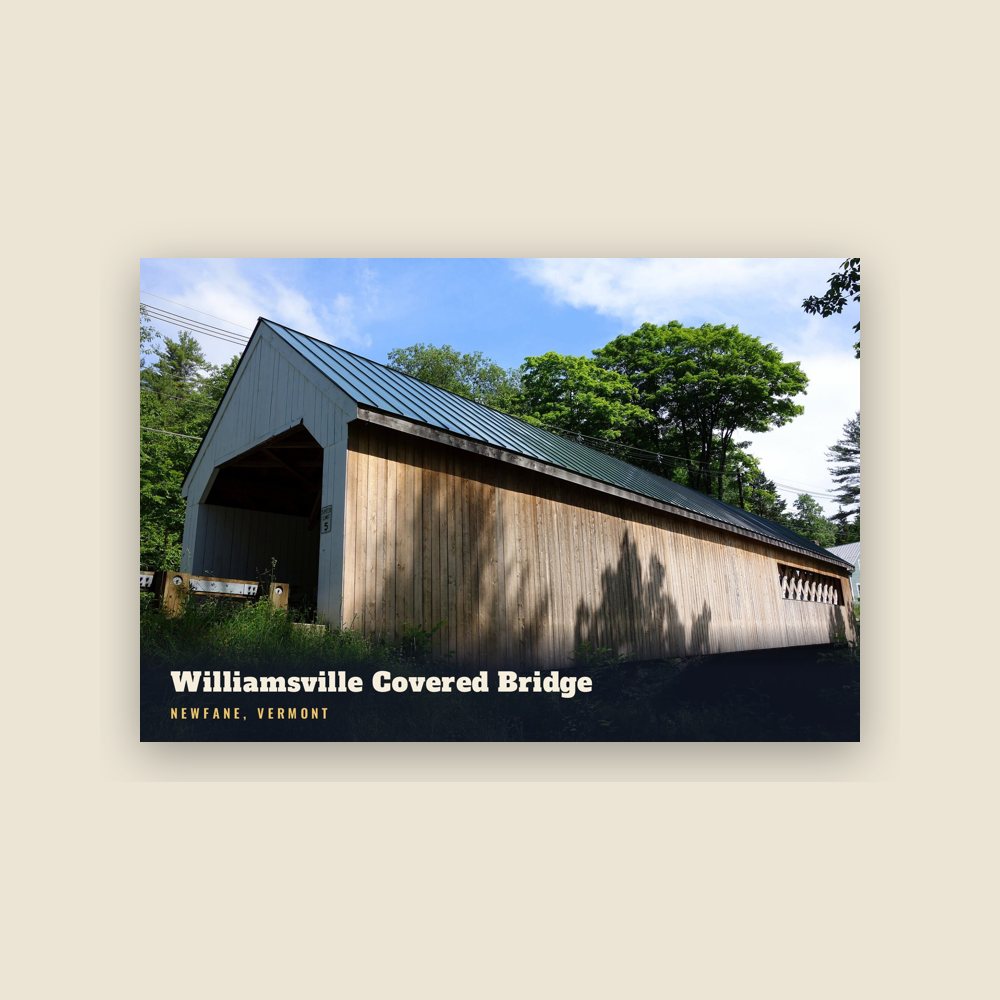
6″×4″ postcard, glossy front
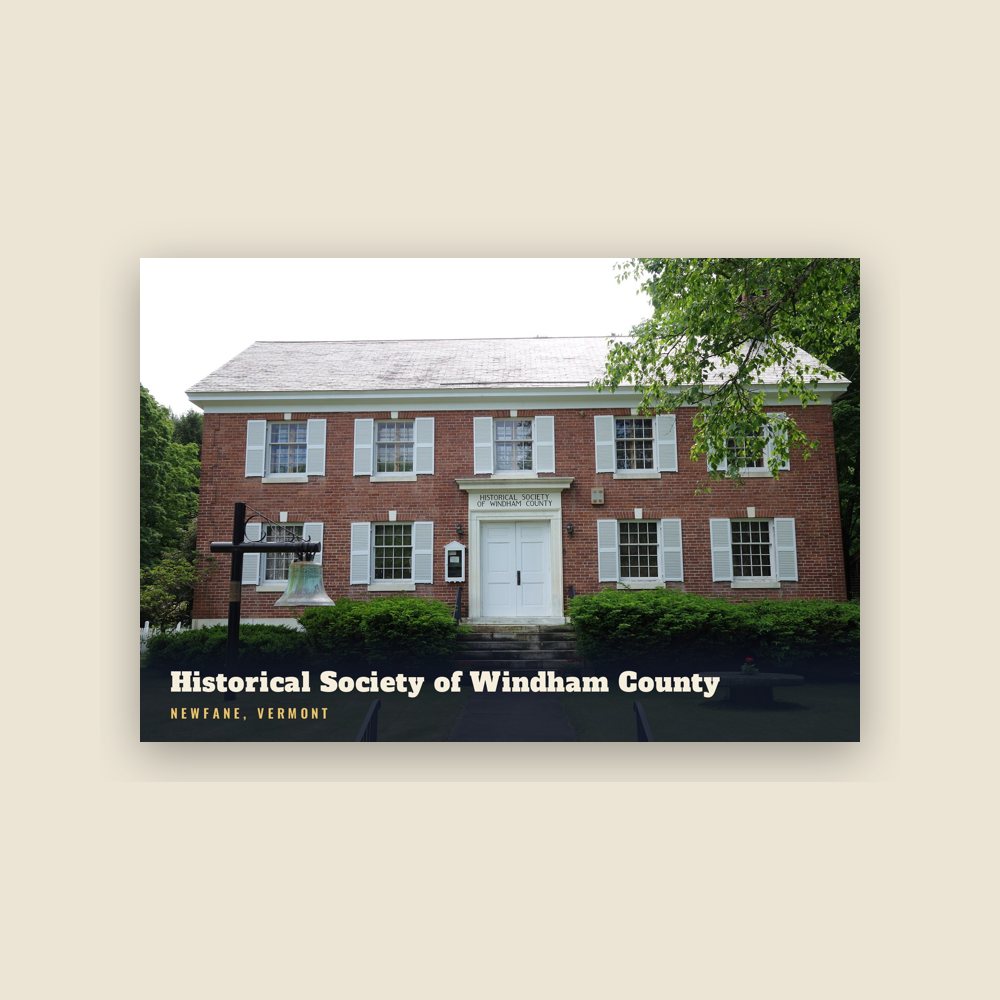
6″×4″ postcard, glossy front
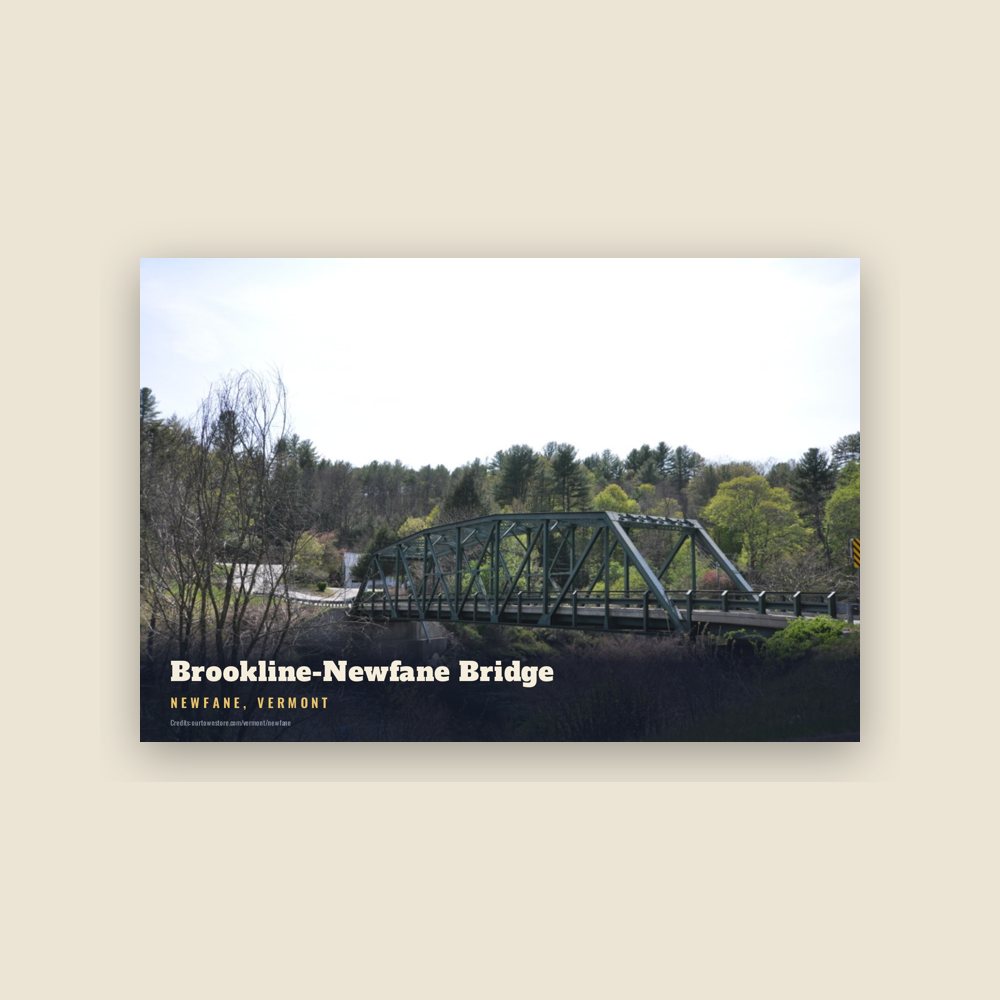
6″×4″ postcard, glossy front
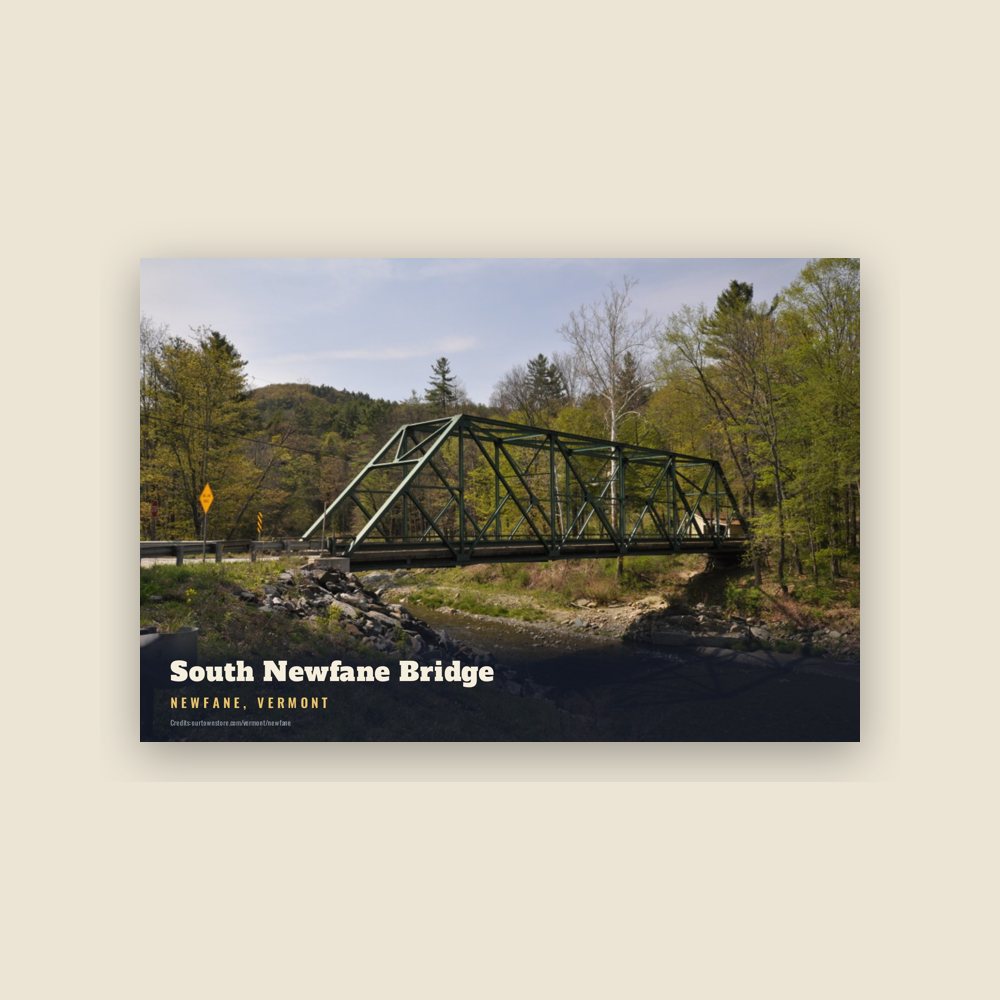
6″×4″ postcard, glossy front
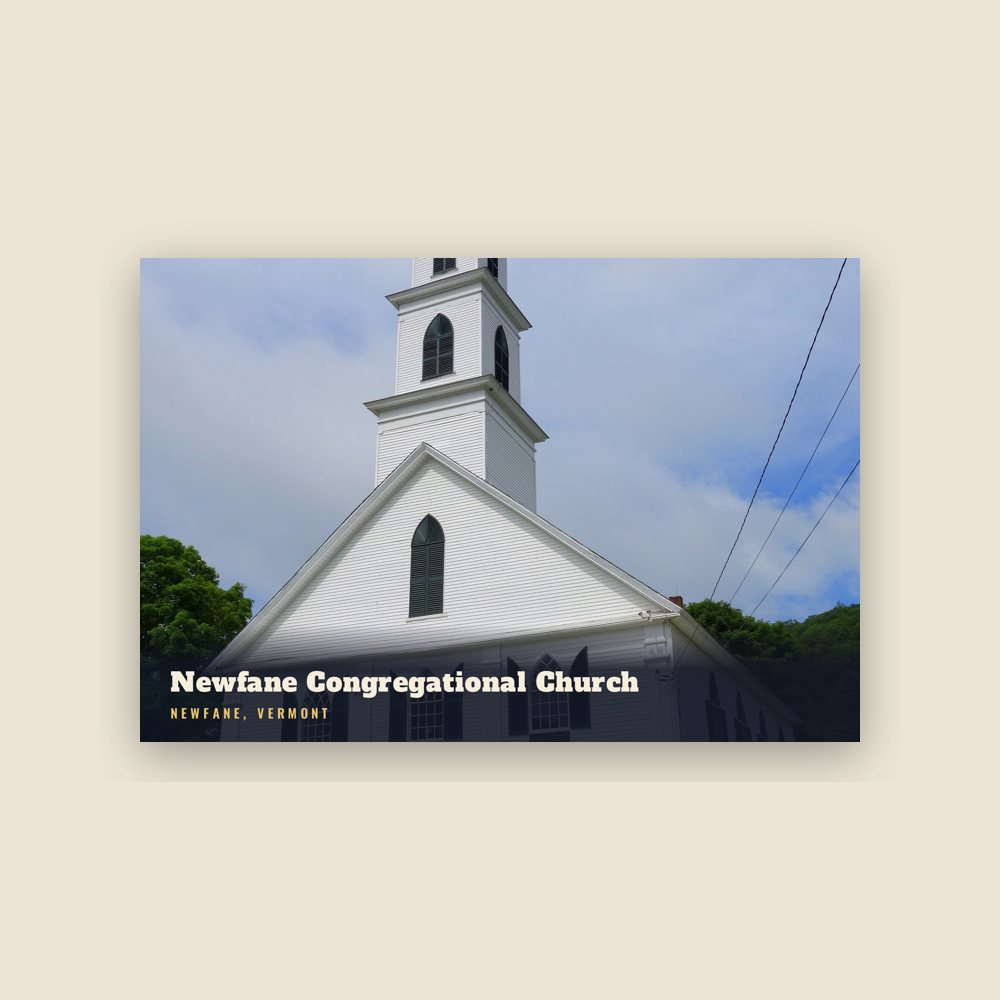
6″×4″ postcard, glossy front
Named for John Fane, 7th Earl of Westmorland (British politician (1685-1762)).
Population 2010: 1,726 → 2020: 1,645
From Wikidata (CC0).
One of the New Hampshire grants, the town was chartered on June 19, 1753, by Governor Benning Wentworth, who named it Fane after John Fane, the 7th Earl of Westmoreland. But hostilities during the French and Indian War prevented its settlement. Because a first town meeting was not held within the required five years, the charter was deemed null and void. So Wentworth issued an entirely new charter on November 3, 1761, as New Fane. The town was settled in 1766 by families from Worcester County, Massachusetts. Newfane became the shire town of the county before 1812. A village was built atop Newfane Hill, including the county buildings. But because of winter travel difficulties, it was relocated to the flatland below in 1825, until 1882 called Fayetteville after the Marquis de Lafayette.
The town has a diversified terrain, with both high hills and deep valleys. Farmers found good soil for cultivation on the intervales, and for grazing livestock on the uplands. Various streams provided water power for mills, and by 1859 industries included manufacturers of both leather and linseed oil, two flour mills, two lumber mills, and a large carriage factory. As a result, Newfane became prosperous during the 19th century, when it built the Federal, Greek Revival and Victorian architecture that today makes it a tourist destination.
Adapted (trimmed) from the Wikipedia article Newfane, Vermont, revision 1378593205 by its contributors, licensed CC BY-SA 4.0.
We share a part of every Newfane sale with local partners, and we'd love to print from your collection. Old photographs, maps and postcards make the best keepsakes.
Partner with us