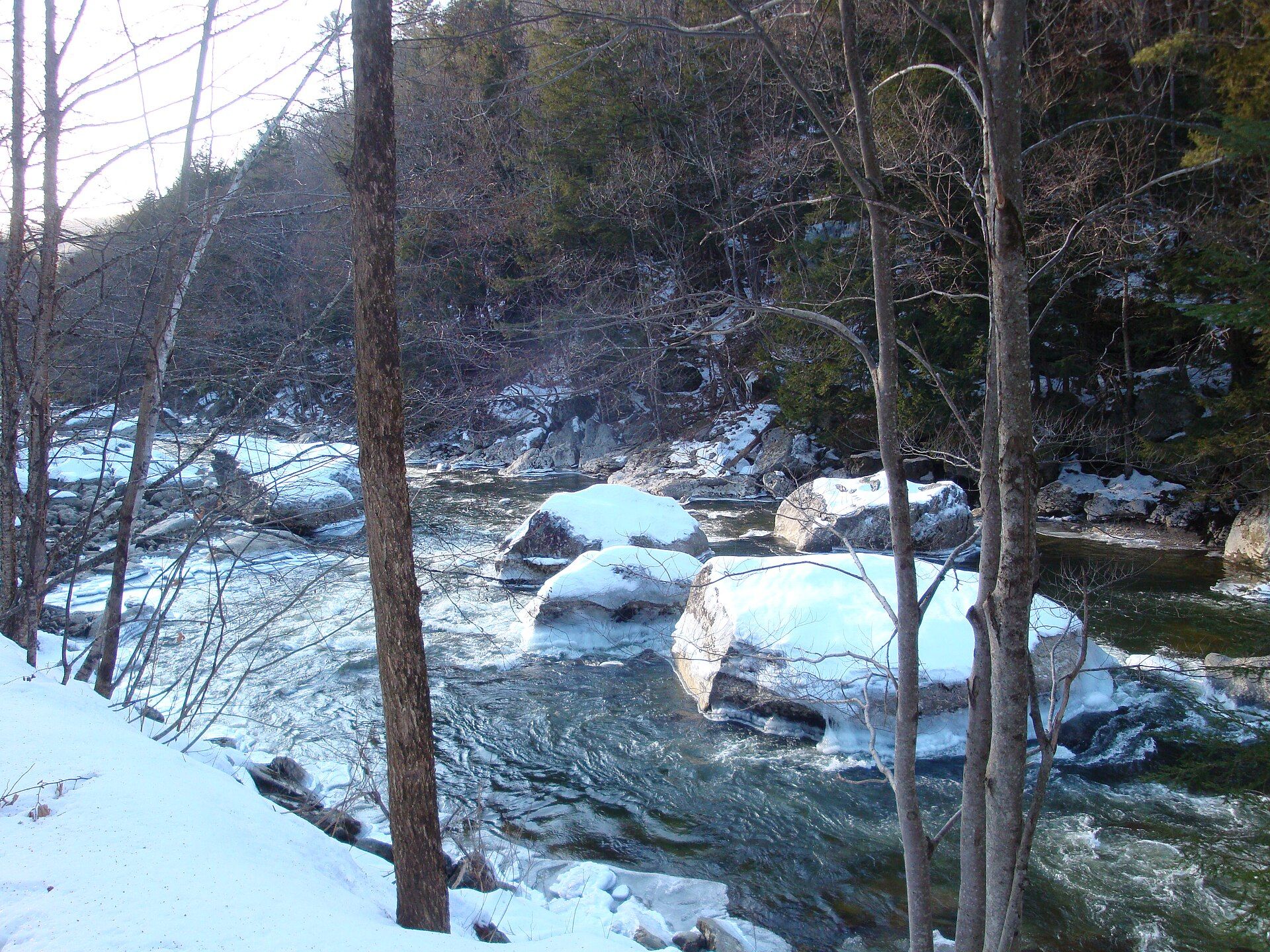
The town includes the villages of Jamaica, East Jamaica and Rawsonville. Landmarks include Jamaica State Park, South Windham Village Historic District and Hamilton Falls. Jamaica is the birthplace of Florence Lee, actress.
Every piece is drawn from Jamaica's own map data and historic archives, then printed and shipped from the USA when you order. No two towns look alike.
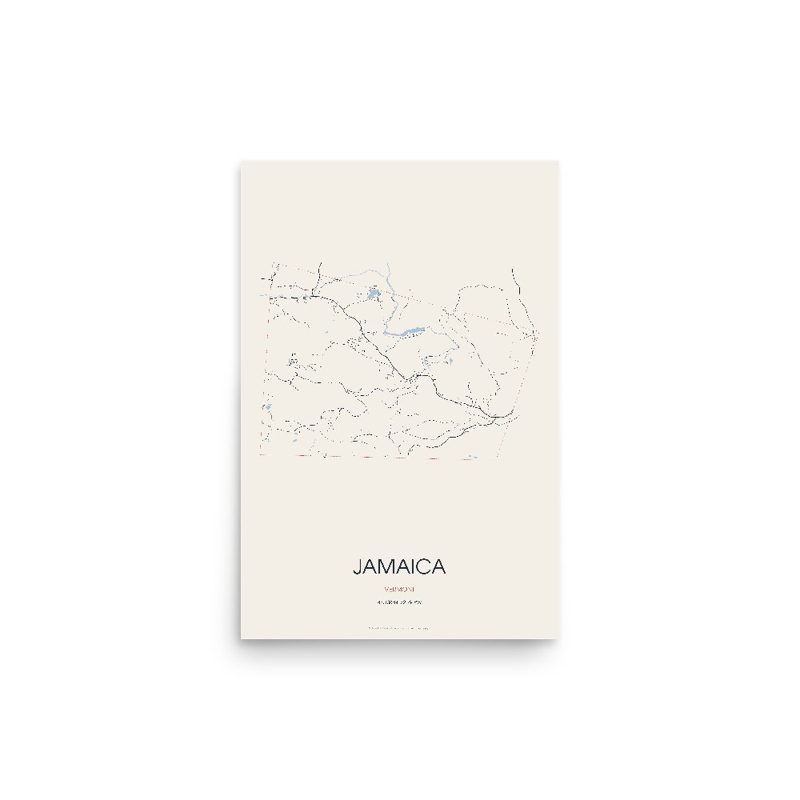
Every road in town, on archival matte paper
The same map, in navy and silver
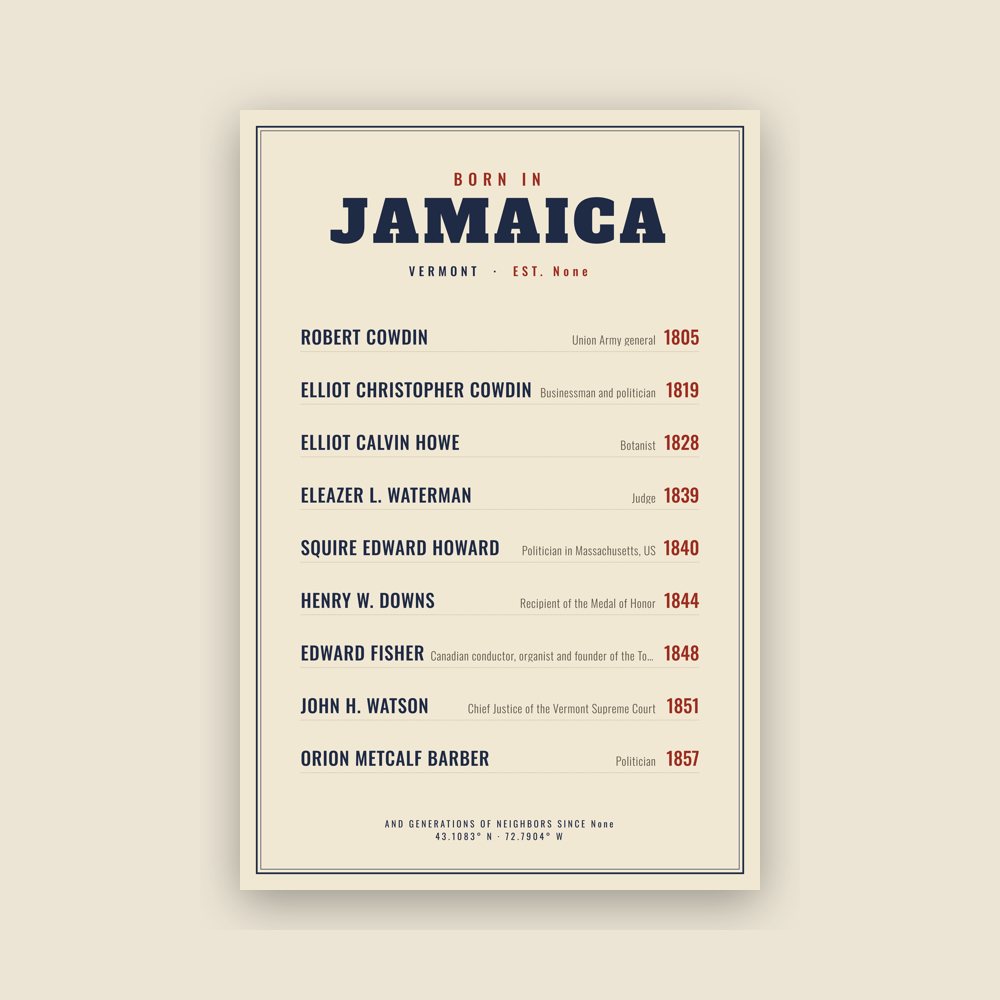
Famous natives, by birth year
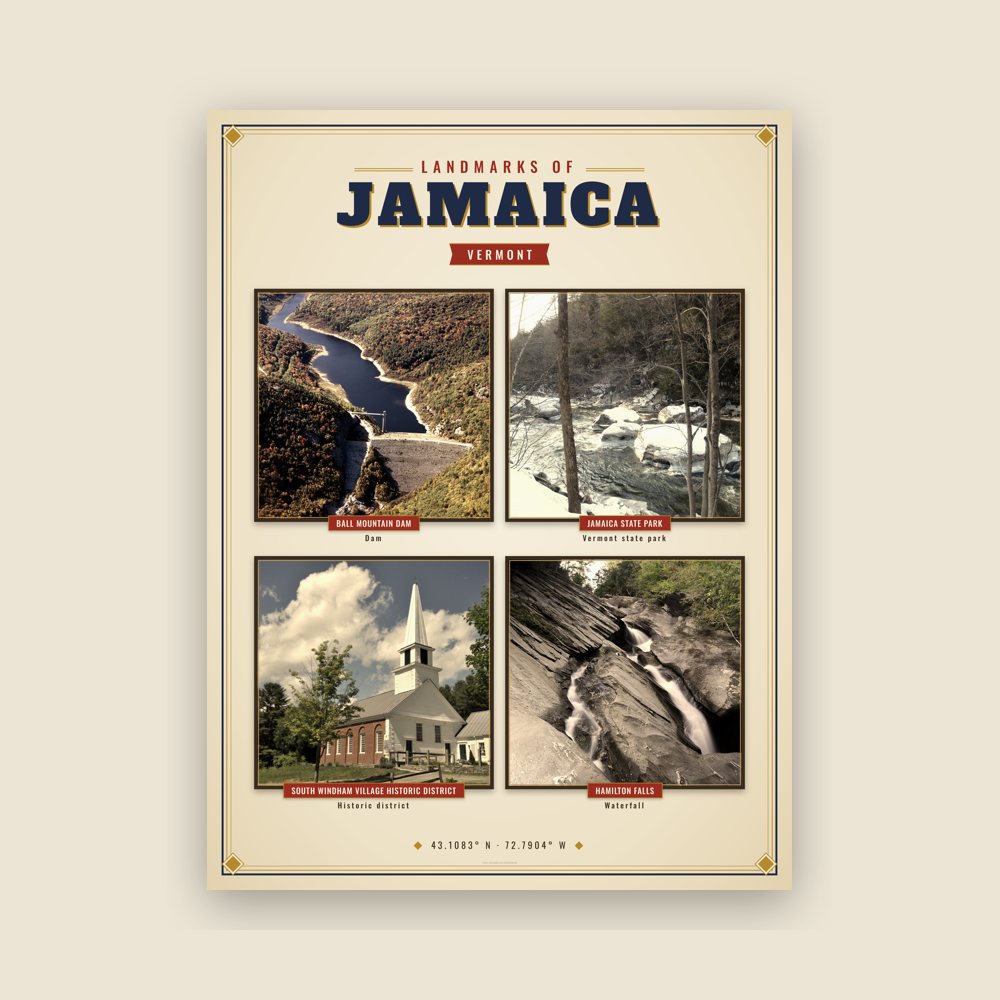
Nine local landmarks, archival matte
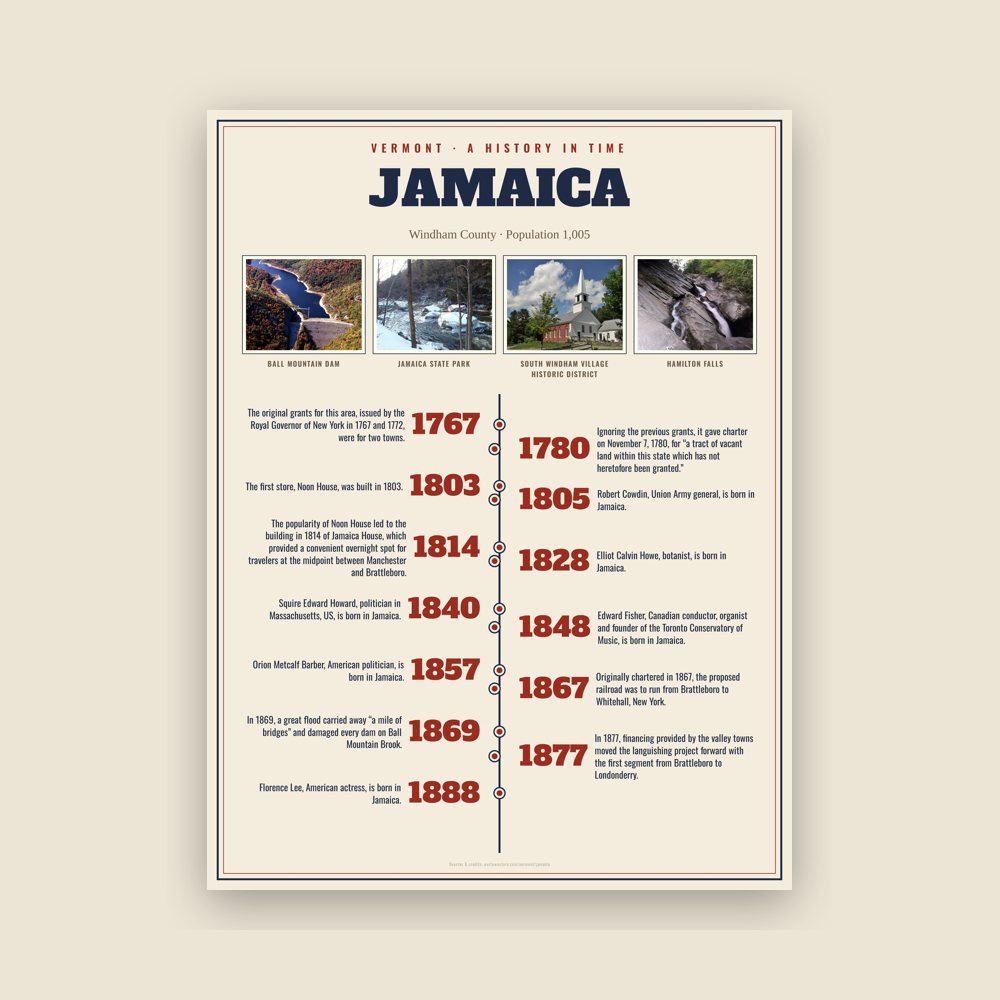
The town's story in dates, from its own records, for home or classroom
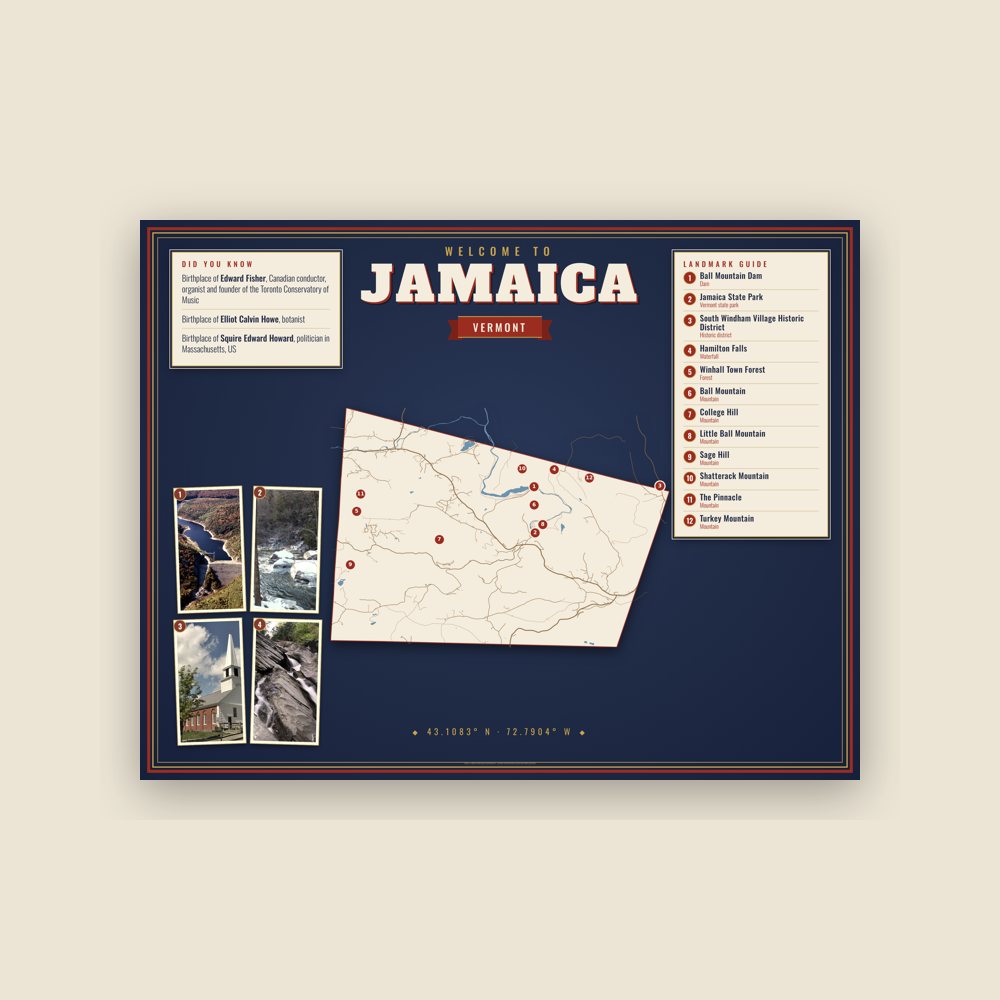
Map of local landmarks, washable fabric
Heavy-blend fleece, street map printed on the back
Soft Bella+Canvas jersey
Glossy ceramic, dishwasher safe
Ceramic keepsake, gold ribbon
Weatherproof, for the front walk
24″×16″, printed coir-look fibers, rubber back
12″×12″ printed wood, ready to hang
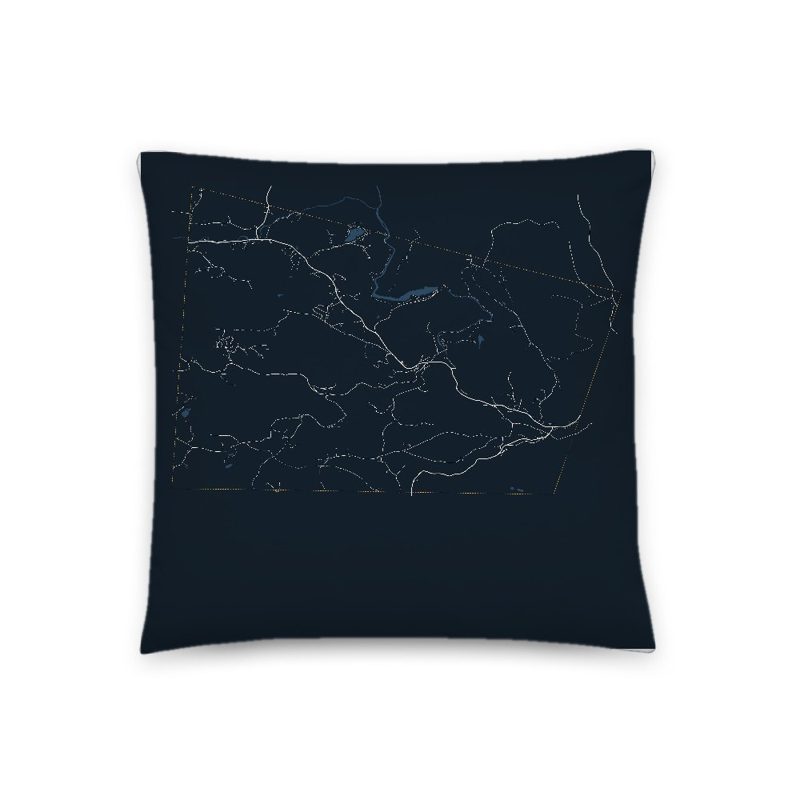
Soft-touch, zip cover
Sturdy all-over-print tote
Glossy top, cork back
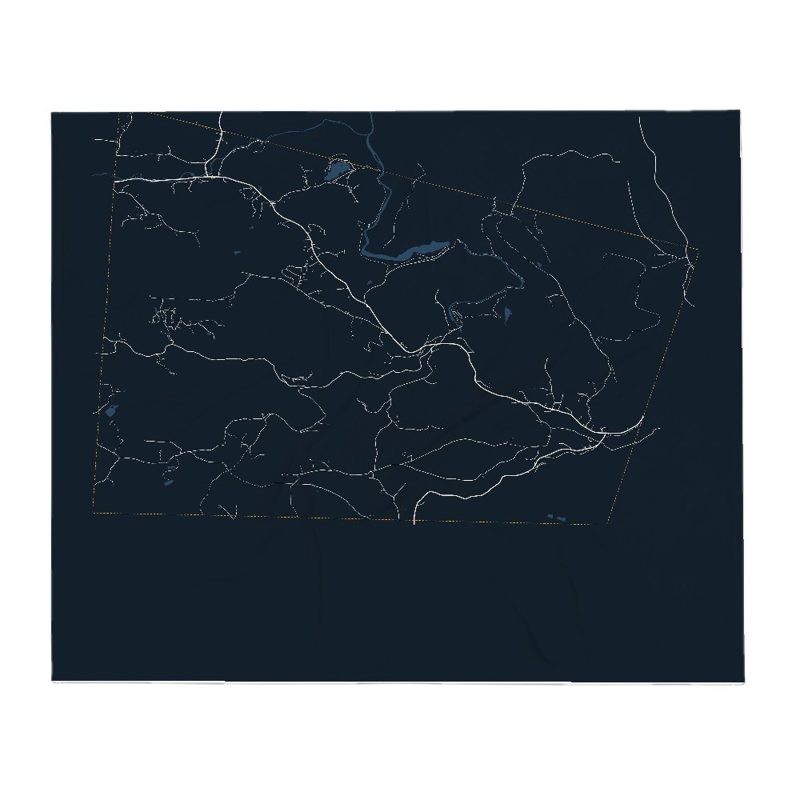
Soft fleece, 50″×60″
20 oz, double-wall stainless
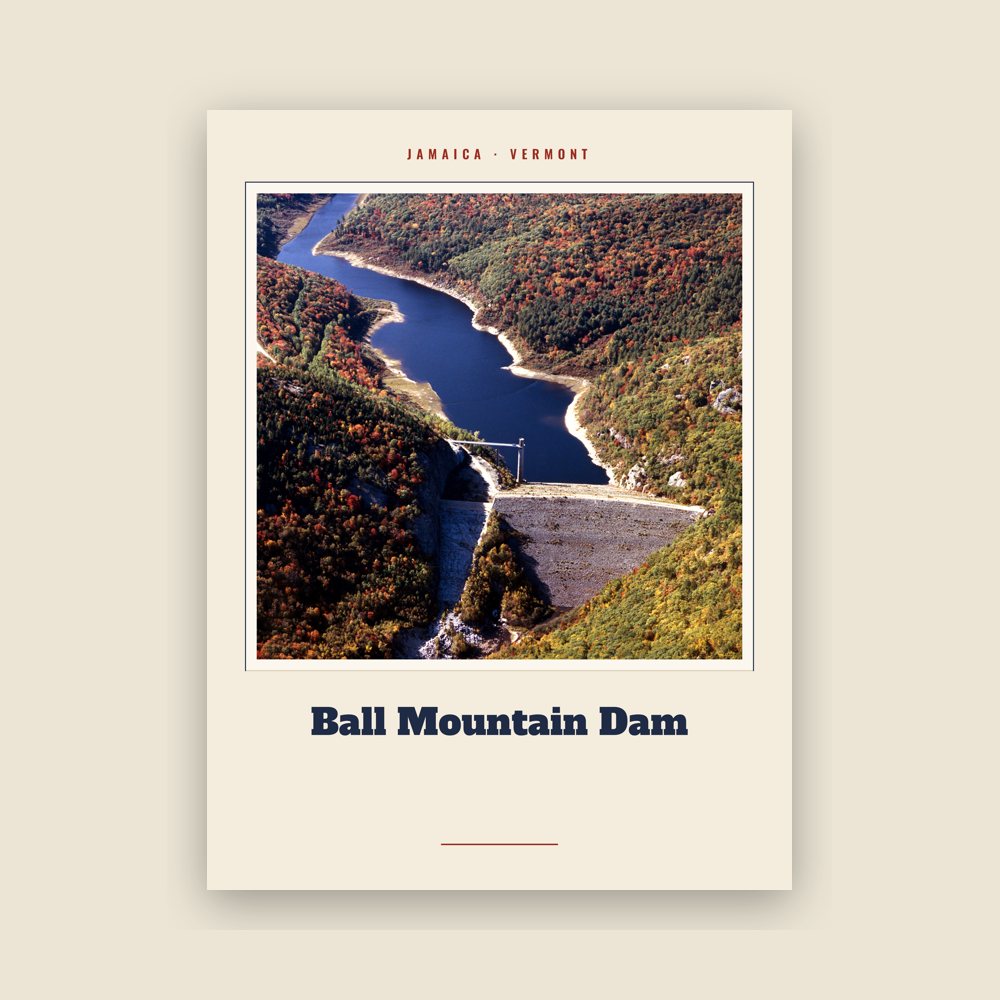
Archival matte print of a local landmark, credited to its photographer
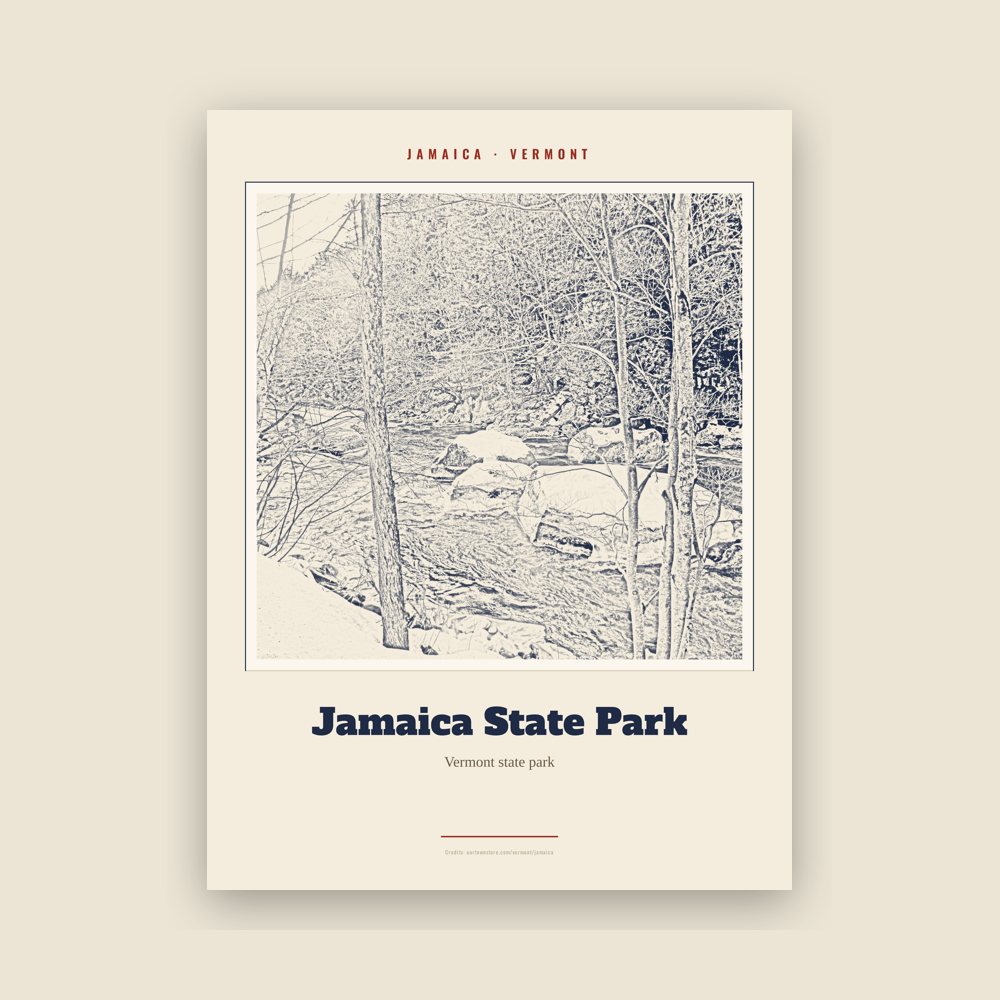
Archival matte print of a local landmark, credited to its photographer
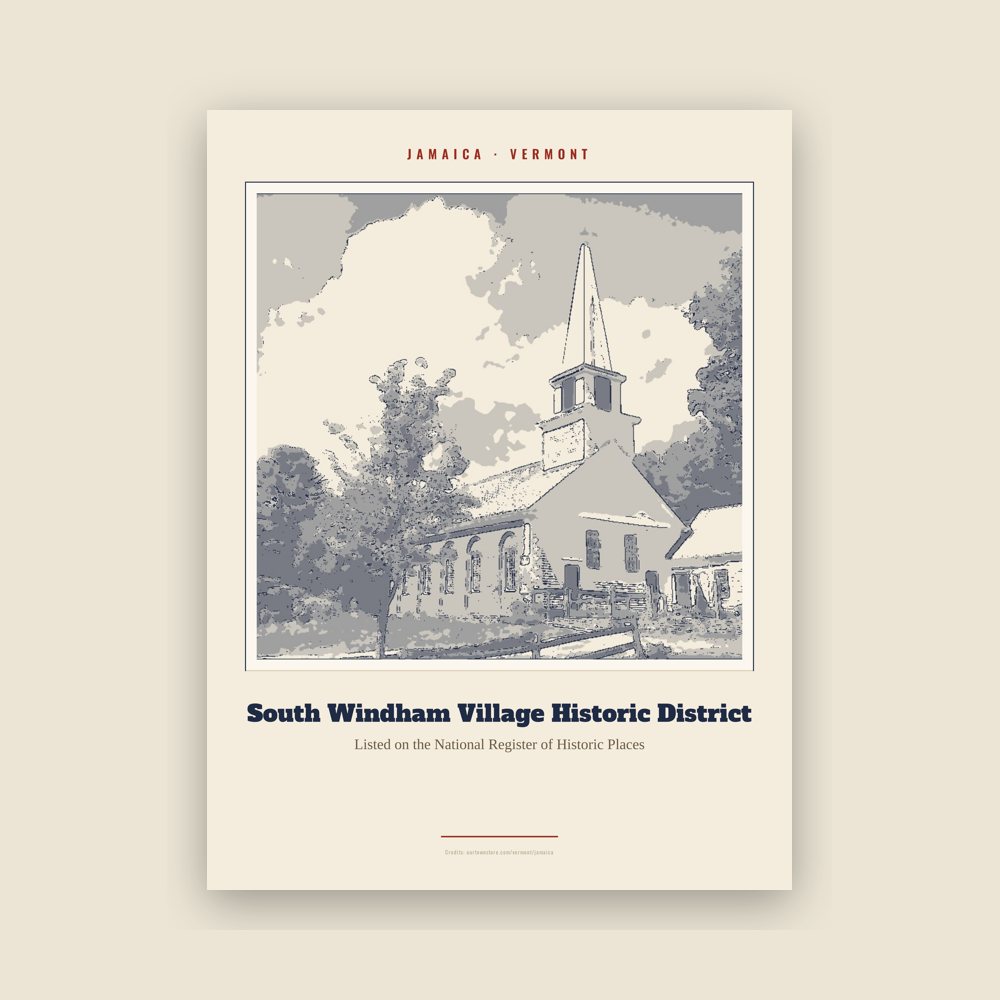
Archival matte print of a local landmark, credited to its photographer
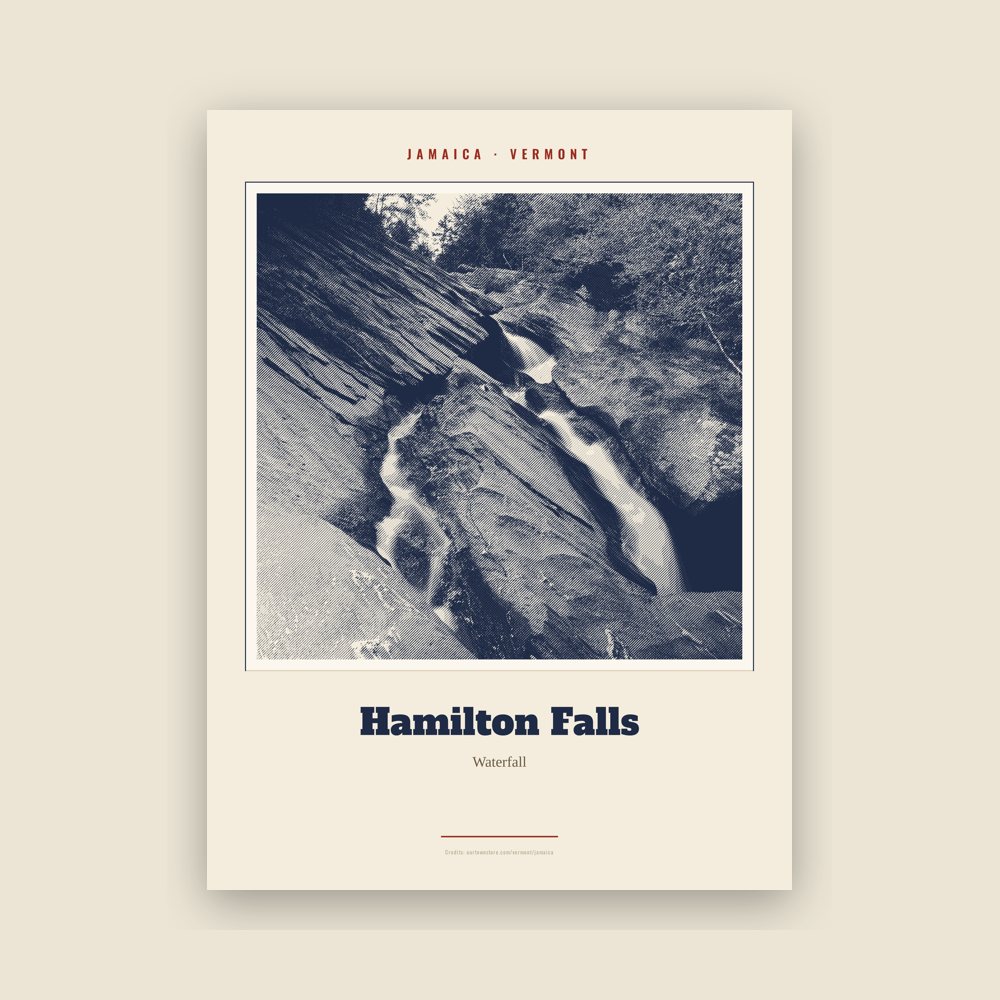
Archival matte print of a local landmark, credited to its photographer
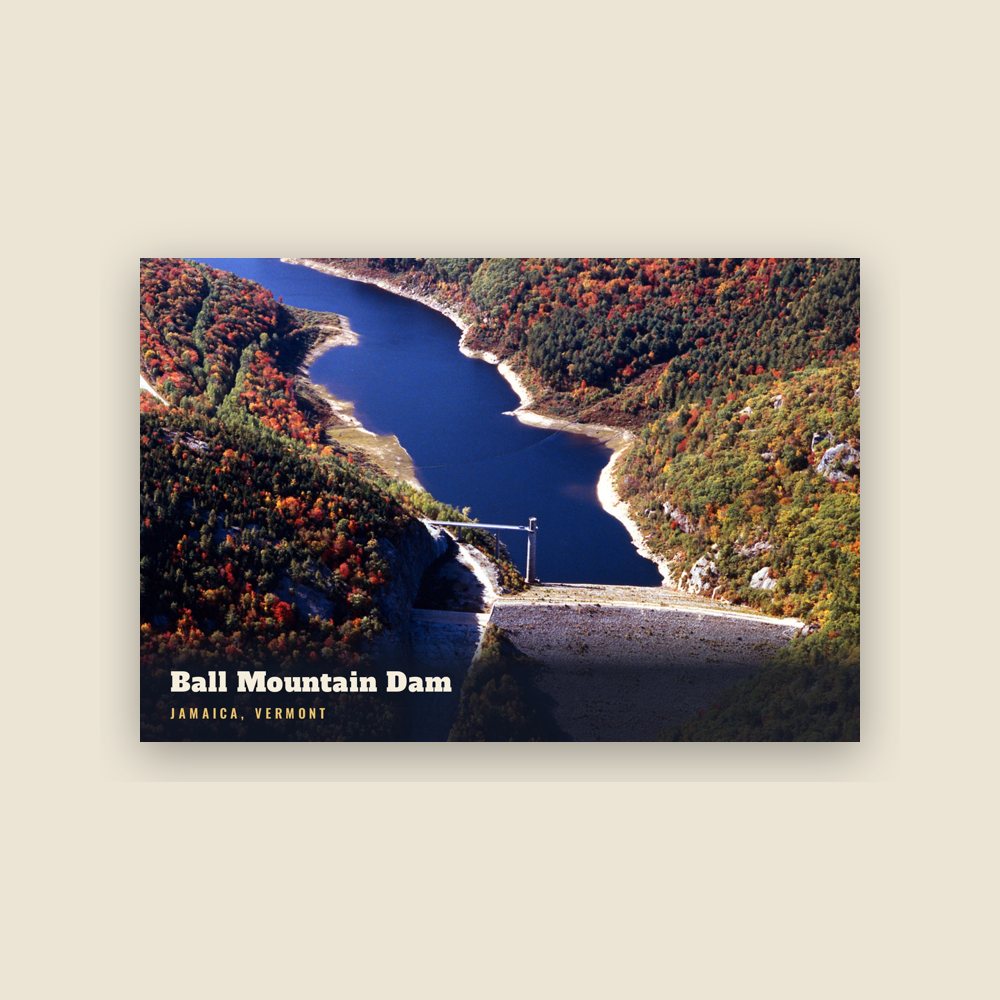
6″×4″ postcard, glossy front
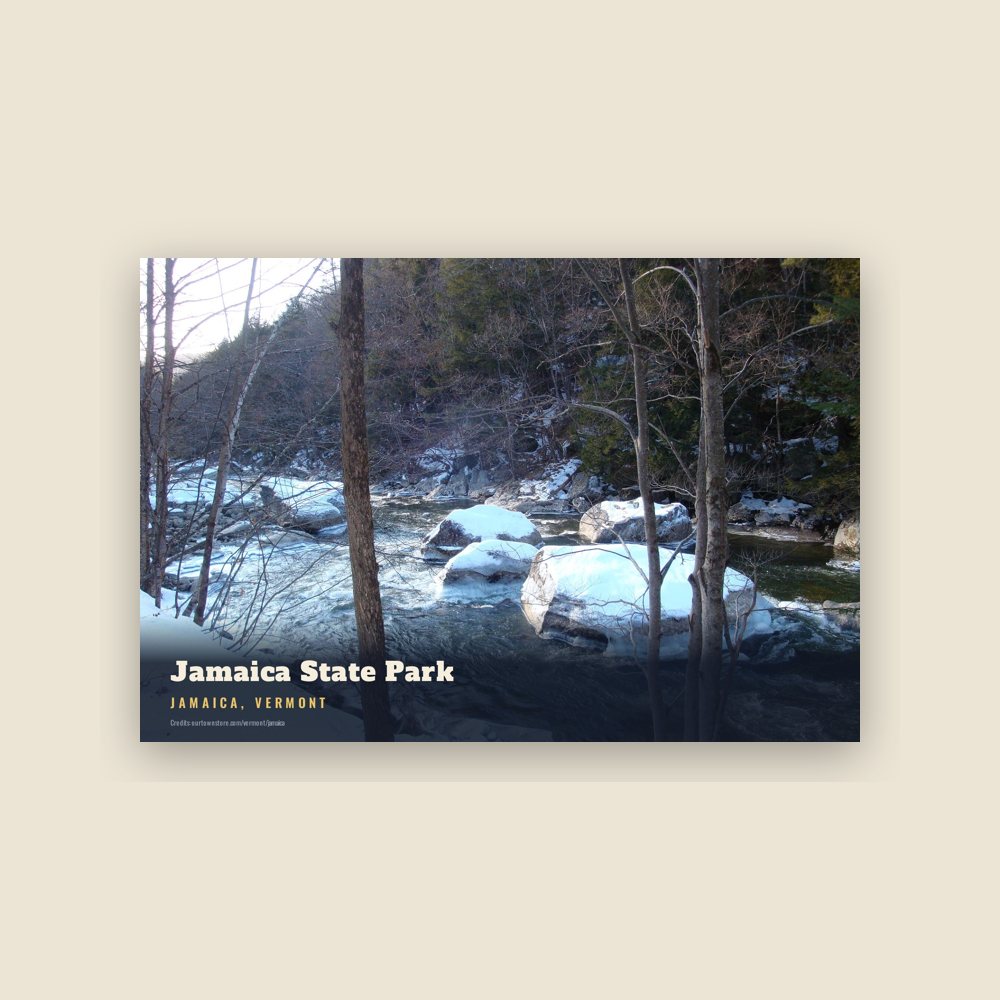
6″×4″ postcard, glossy front
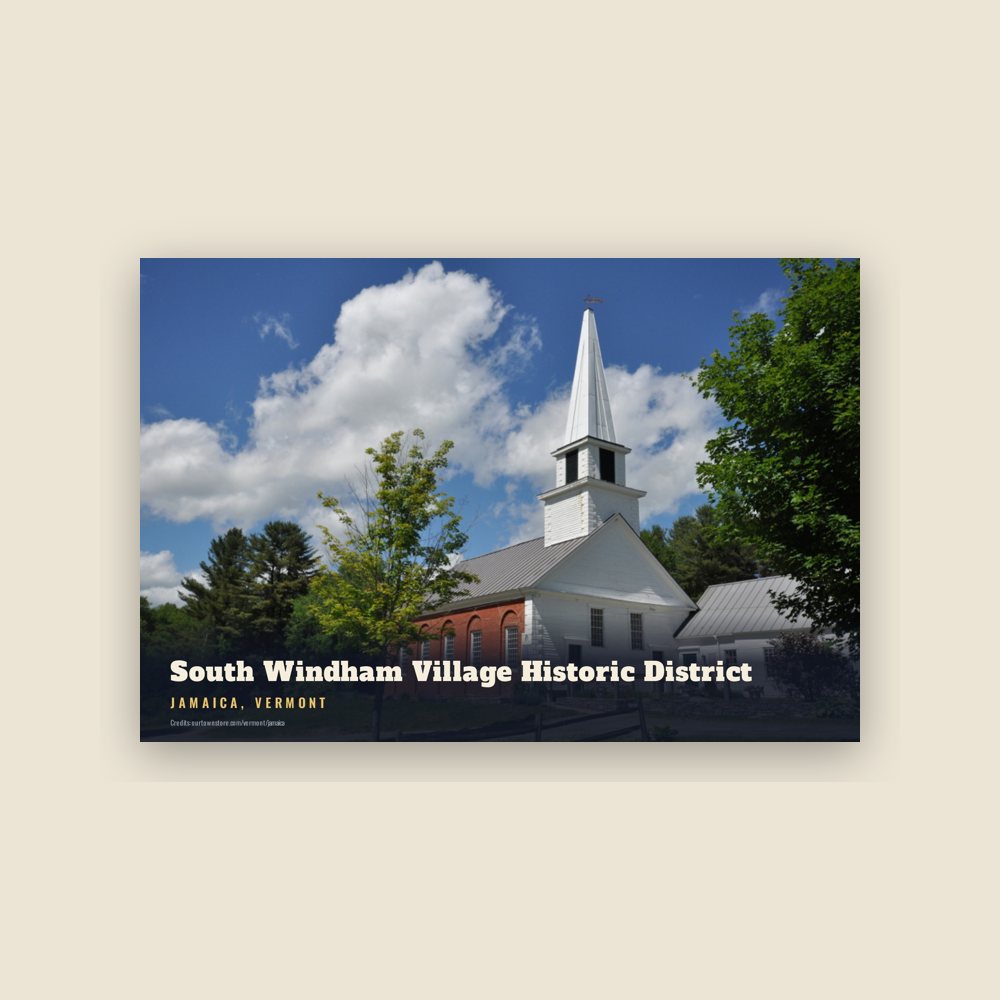
6″×4″ postcard, glossy front
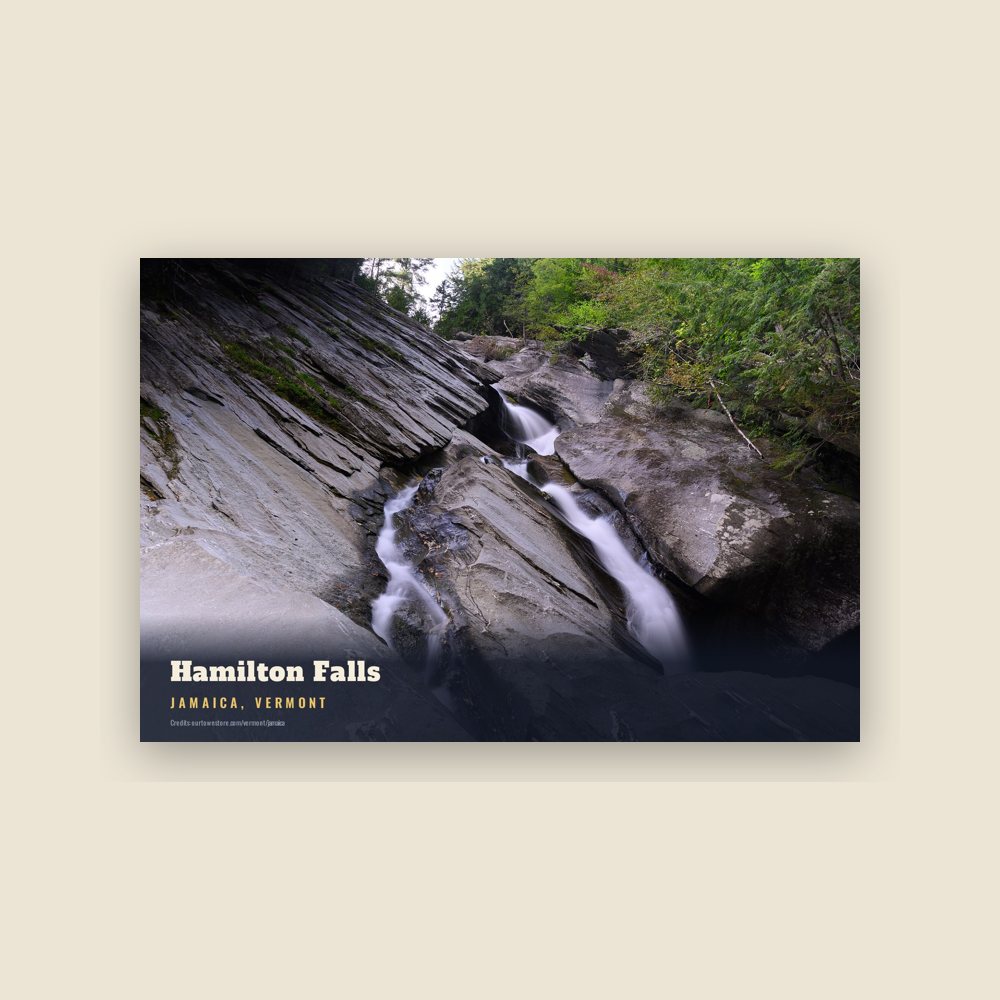
6″×4″ postcard, glossy front
Population 2010: 1,035 → 2020: 1,005
From Wikidata (CC0).
In the colonial period, what is now Vermont was disputed territory, with land claims from both New York and New Hampshire. The original grants for this area, issued by the Royal Governor of New York in 1767 and 1772, were for two towns. But in 1777, the Republic of Vermont was established. Ignoring the previous grants, it gave charter on November 7, 1780, for “a tract of vacant land within this state which has not heretofore been granted.”
The charter goes on to say “that the same be and is hereby Incorporated into a Township by the name of Jamaica”—its name from the Natick word for beaver and not the Caribbean island. The grant encompassed forty-two square miles, at an altitude ranging from 688 feet (210 m) above sea level along the West River to 2,542 feet (775 m) on The Pinnacle. On the charter were listed sixty-seven grantees, many of whose surnames can be found among residents today.
Earliest settlement of the town was along the West River near the Wardsboro Bridge, now called East Jamaica, where the first school was established in 1791; however, the building of new roads and bridges towards Manchester advanced settlement westward, so that by 1800 the town center was shifting to Jamaica Village. Within the entire forty-two square-mile township developed as many as ten separate hamlets, each surrounded by outlying farms and linked to Jamaica Village by a network of roads. Eventually there were as many as fourteen one-room schools which served the families in the outlying areas.
In the first quarter of the nineteenth century, Jamaica Village also assumed increasing importance as a manufacturing center, largely for topographical reasons. Located near the confluence of the West River and Ball Mountain Brook, the area offered a strategic location for bridges, dams and mills. Along Ball Mountain Brook alone there were numerous dams, each providing power for at least one mill. The first store, Noon House, was built in 1803. The popularity of Noon House led to the building in 1814 of Jamaica House, which provided a convenient overnight spot for travelers at the midpoint between Manchester and Brattleboro.
Like many Vermont communities, the town's economy prospered with the introduction of Merino sheep in the early nineteenth century. The sheep flourished on rocky hillsides, and as their numbers increased, bare land replaced forests, but this prosperity did not last. The depression that followed the Civil War, and the decline in the wool market, took their toll on the economy.
Many sons of Jamaica served with the Union Army during the Civil War. Windham County contributed heavily to manning the 4th Vermont Infantry and nearly all of Jamaica's men joined Company I of that regiment. This regiment saw heavy combat throughout the war but the Battle of the Wilderness took the greatest toll on those from the village of Jamaica. One of Jamaica's soldiers, Sergeant Henry W. Downs of Company I, 8th Vermont Infantry, won the Medal of Honor for bravery under fire.
In 1869, a great flood carried away “a mile of bridges” and damaged every dam on Ball Mountain Brook. Because of its setting near the river and the region's heavy snows, Jamaica has suffered through many damaging floods in the more than two hundred years since its founding.
During this period, Jamaica and other towns in the West River Valley bonded together in a venture that was seen as the salvation of the area’s economic woes, the West River Railroad. Originally chartered in 1867, the proposed railroad was to run from Brattleboro to Whitehall, New York. In 1877, financing provided by the valley towns moved the languishing project forward with the first segment from Brattleboro to Londonderry. Although it was never extended farther, the railroad provided valuable public transportation for the lower West River Valley until the 1930s, by which time automobile ownership had become almost universal.
Adapted (trimmed) from the Wikipedia article Jamaica, Vermont, revision 1374445387 by its contributors, licensed CC BY-SA 4.0.
We share a part of every Jamaica sale with local partners, and we'd love to print from your collection. Old photographs, maps and postcards make the best keepsakes.
Partner with us