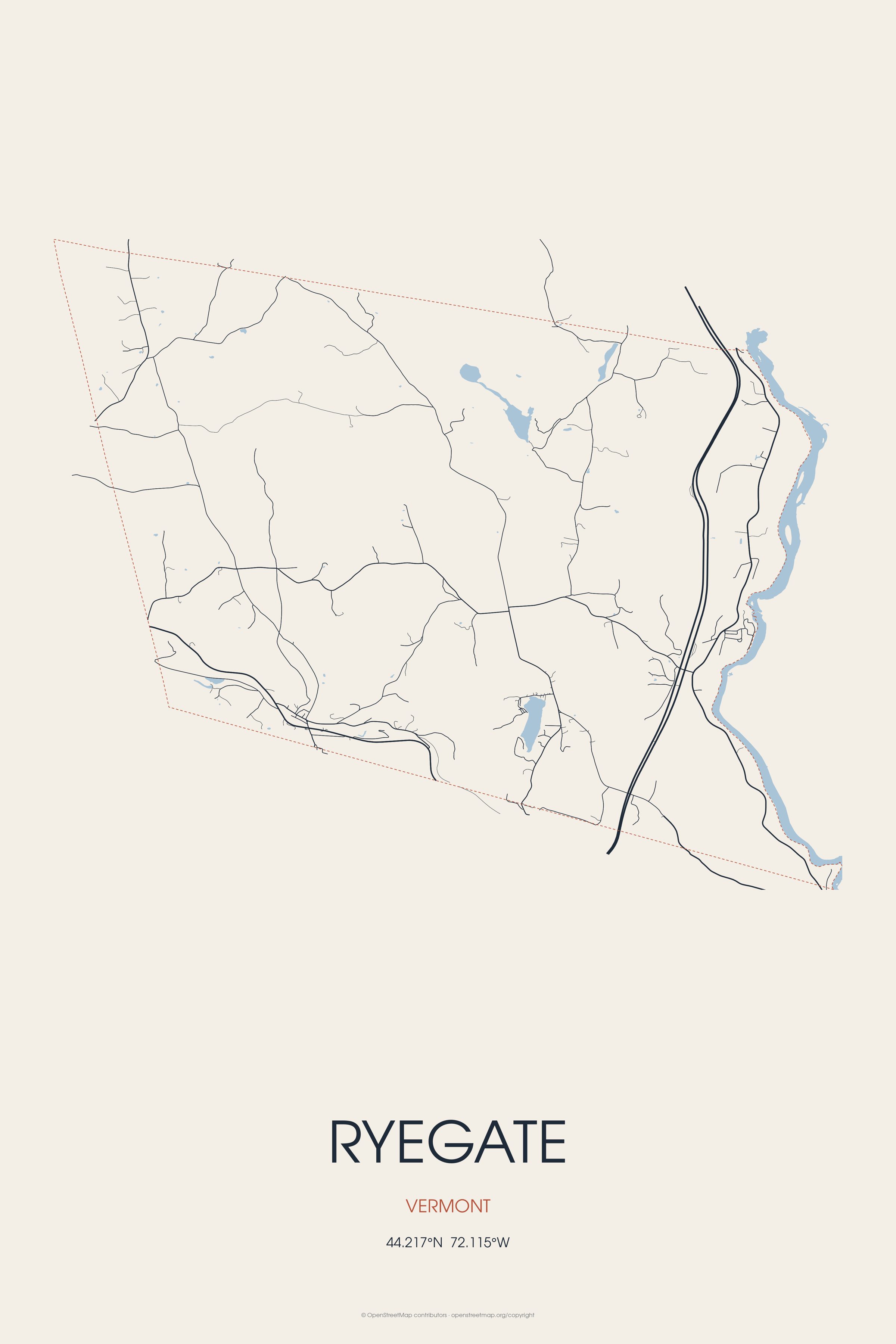
The town contains the villages of South Ryegate, East Ryegate, and Ryegate Corner. Landmarks include Lind Houses. Ryegate is the birthplace of Alexander M. Beatty, medal of Honor recipient.
Every piece is drawn from Ryegate's own map data and historic archives, then printed and shipped from the USA when you order. No two towns look alike.
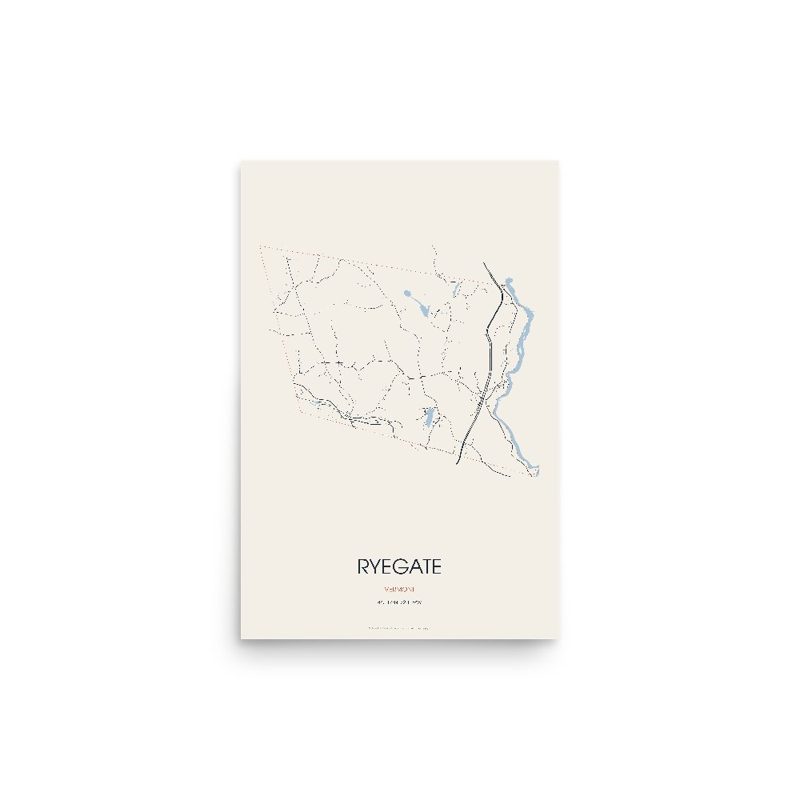
Every road in town, on archival matte paper
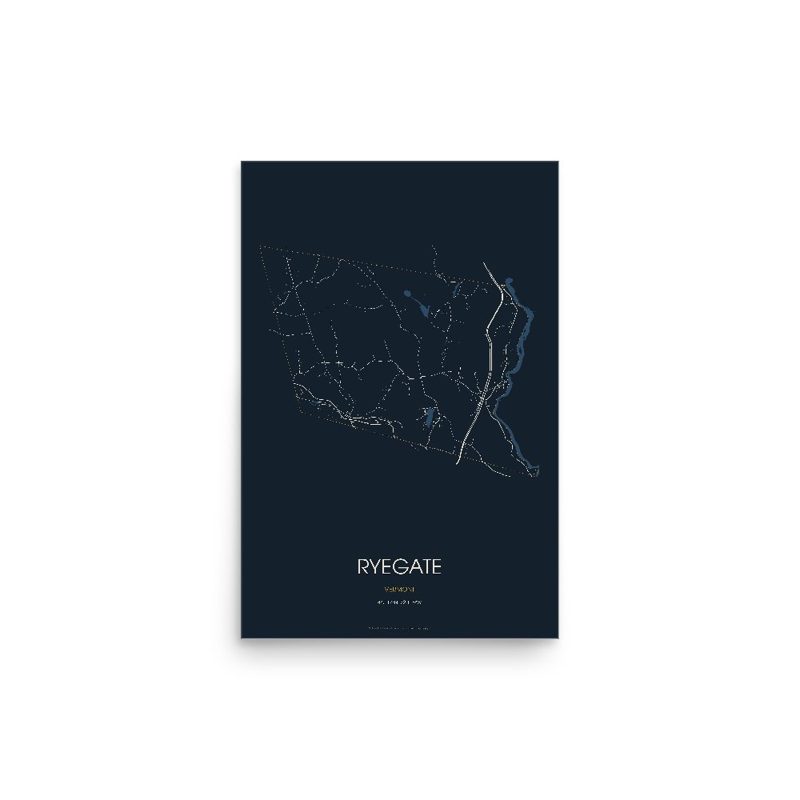
The same map, in navy and silver
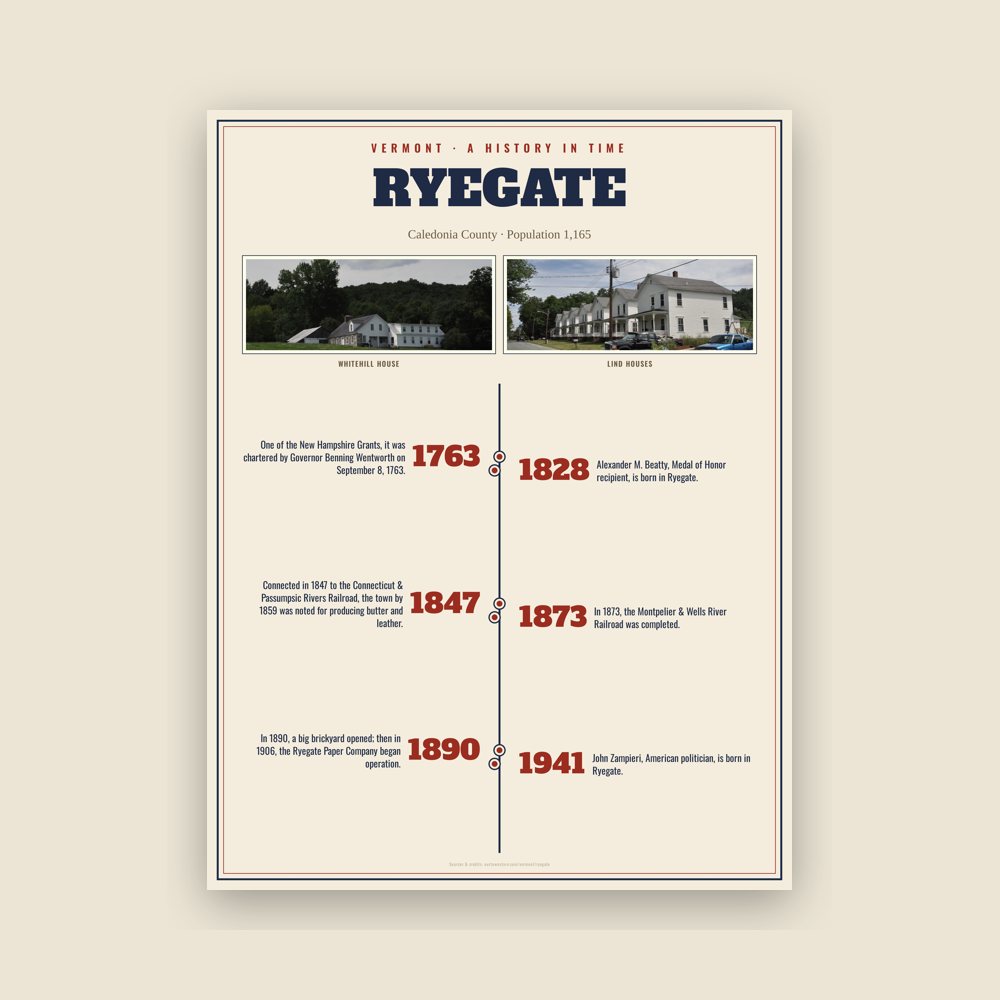
The town's story in dates, from its own records, for home or classroom
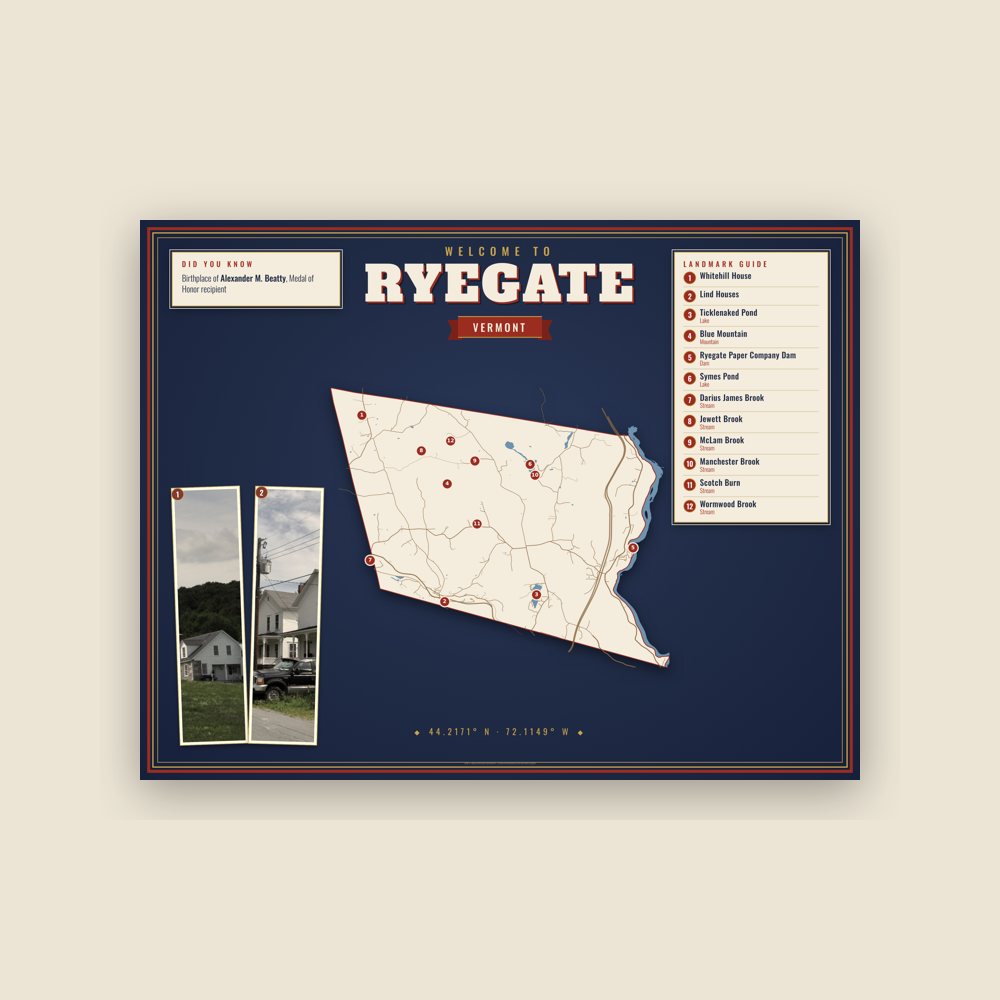
Map of local landmarks, washable fabric
Heavy-blend fleece, street map printed on the back
Soft Bella+Canvas jersey
Glossy ceramic, dishwasher safe
Ceramic keepsake, gold ribbon
Weatherproof, for the front walk
24″×16″, printed coir-look fibers, rubber back
12″×12″ printed wood, ready to hang
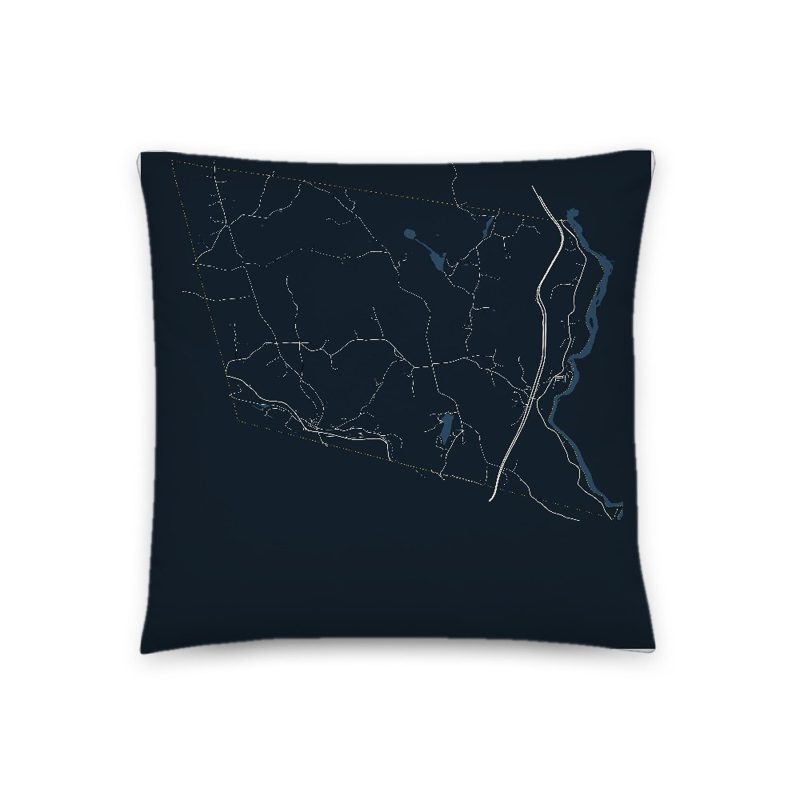
Soft-touch, zip cover
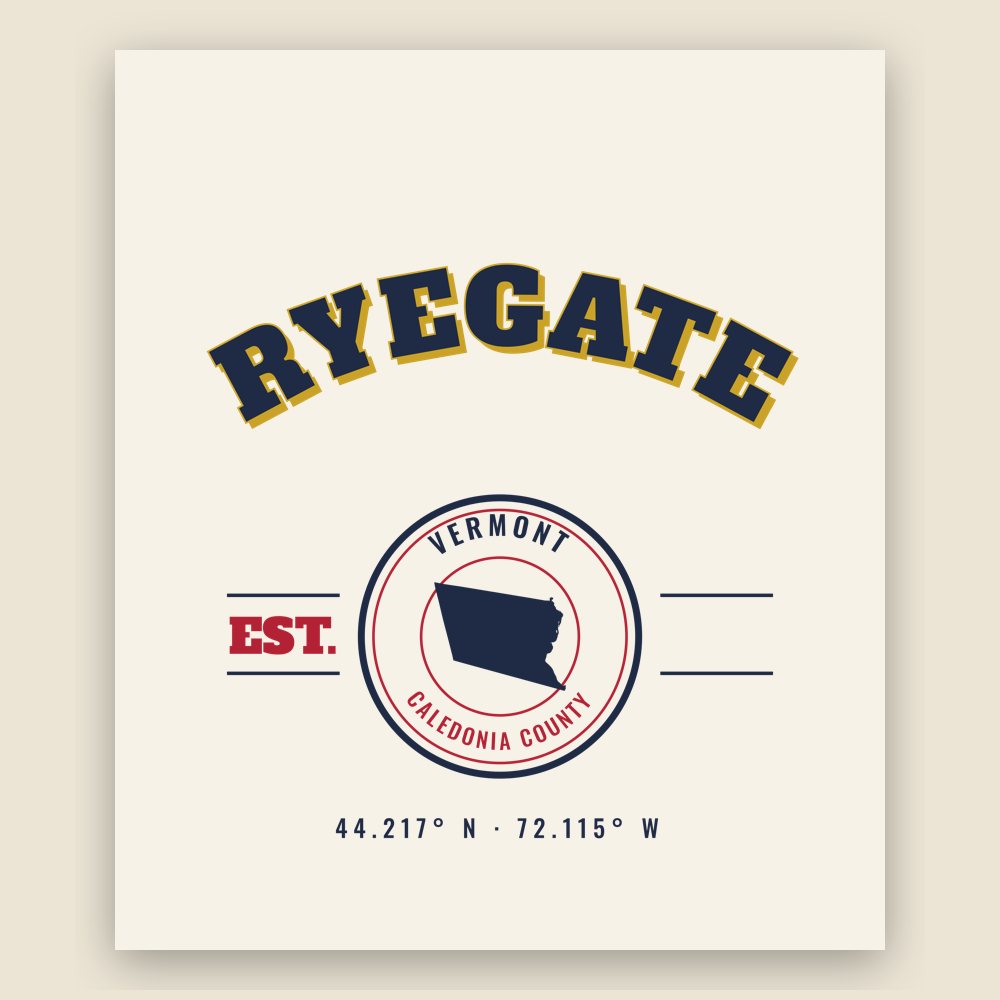
Sturdy all-over-print tote
Glossy top, cork back
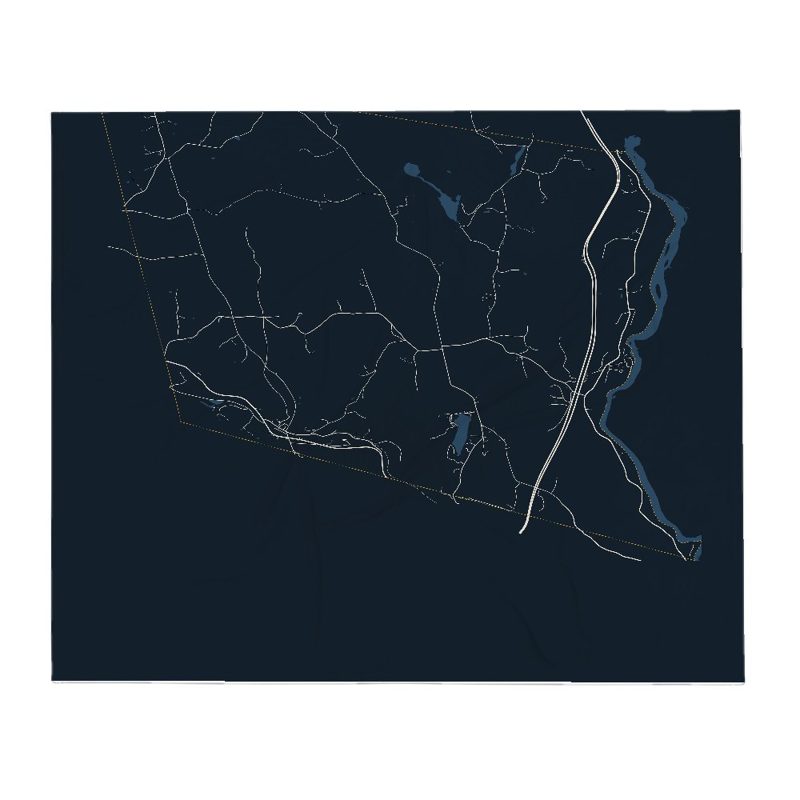
Soft fleece, 50″×60″
20 oz, double-wall stainless
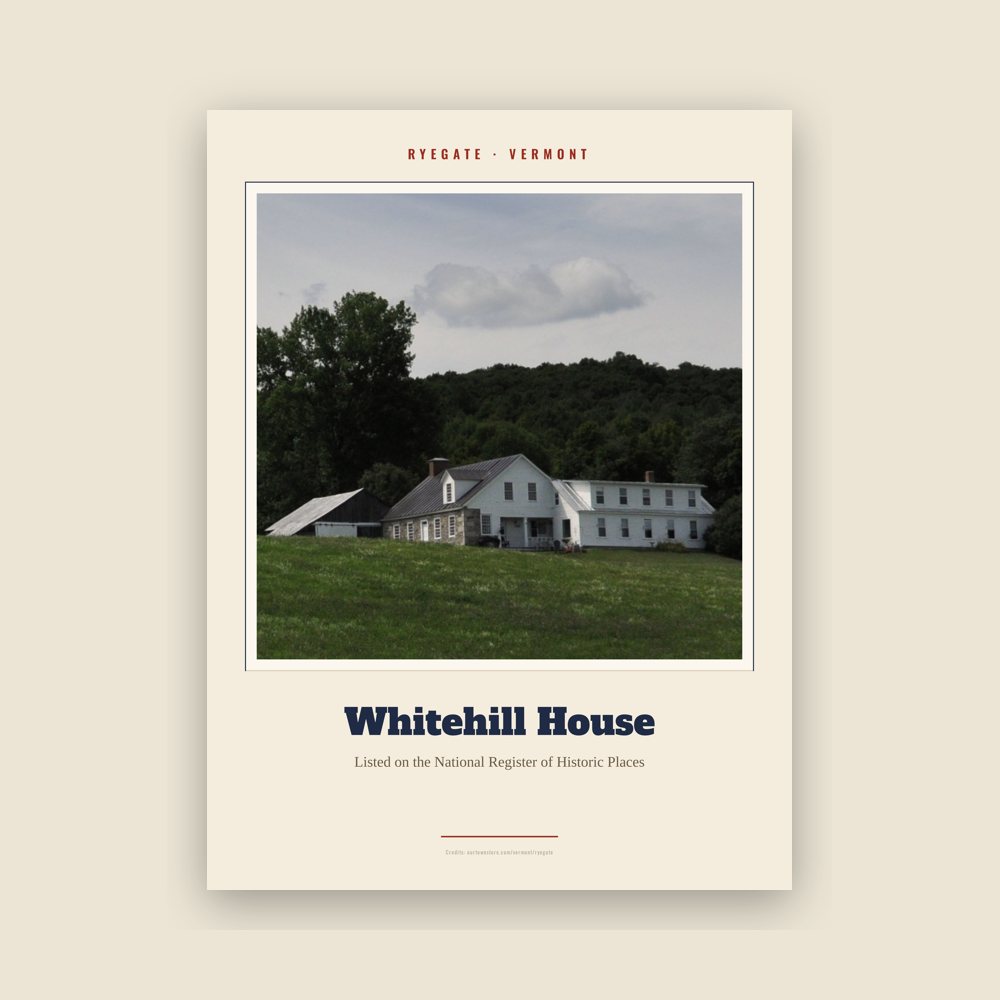
Archival matte print of a local landmark, credited to its photographer
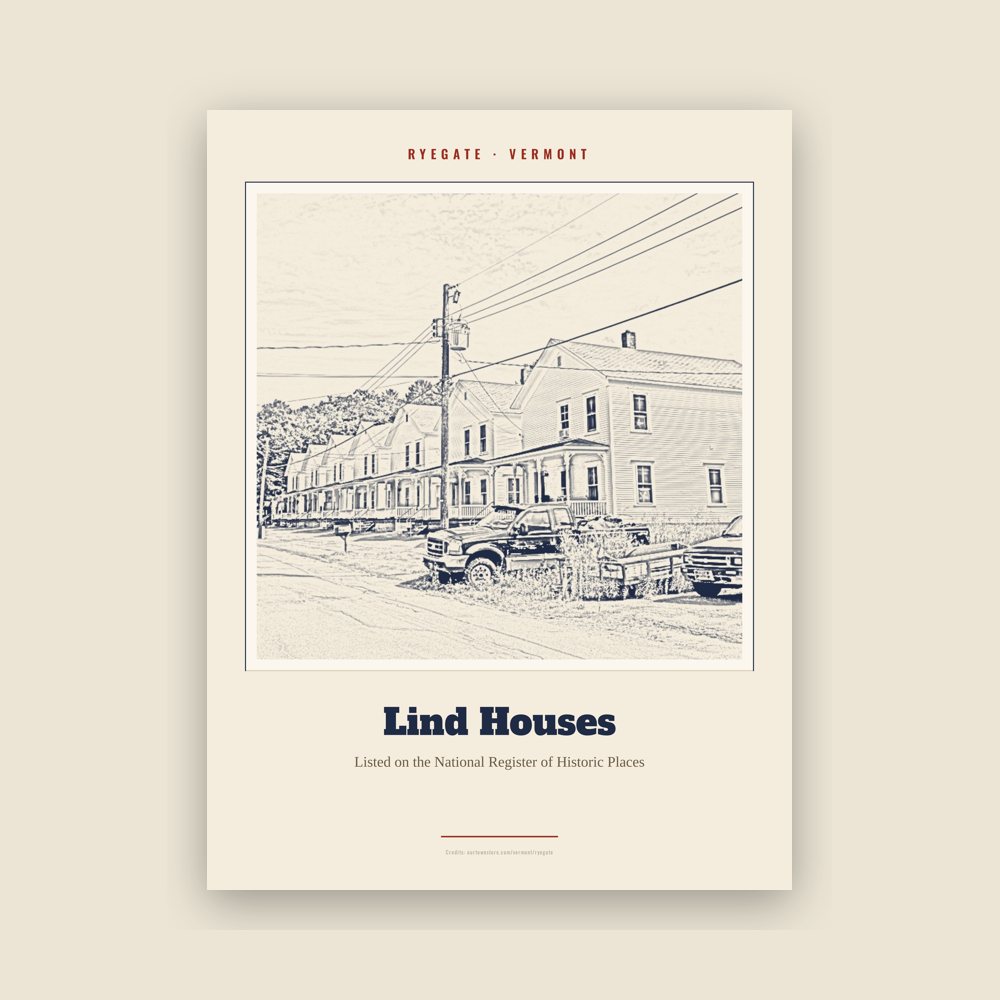
Archival matte print of a local landmark, credited to its photographer
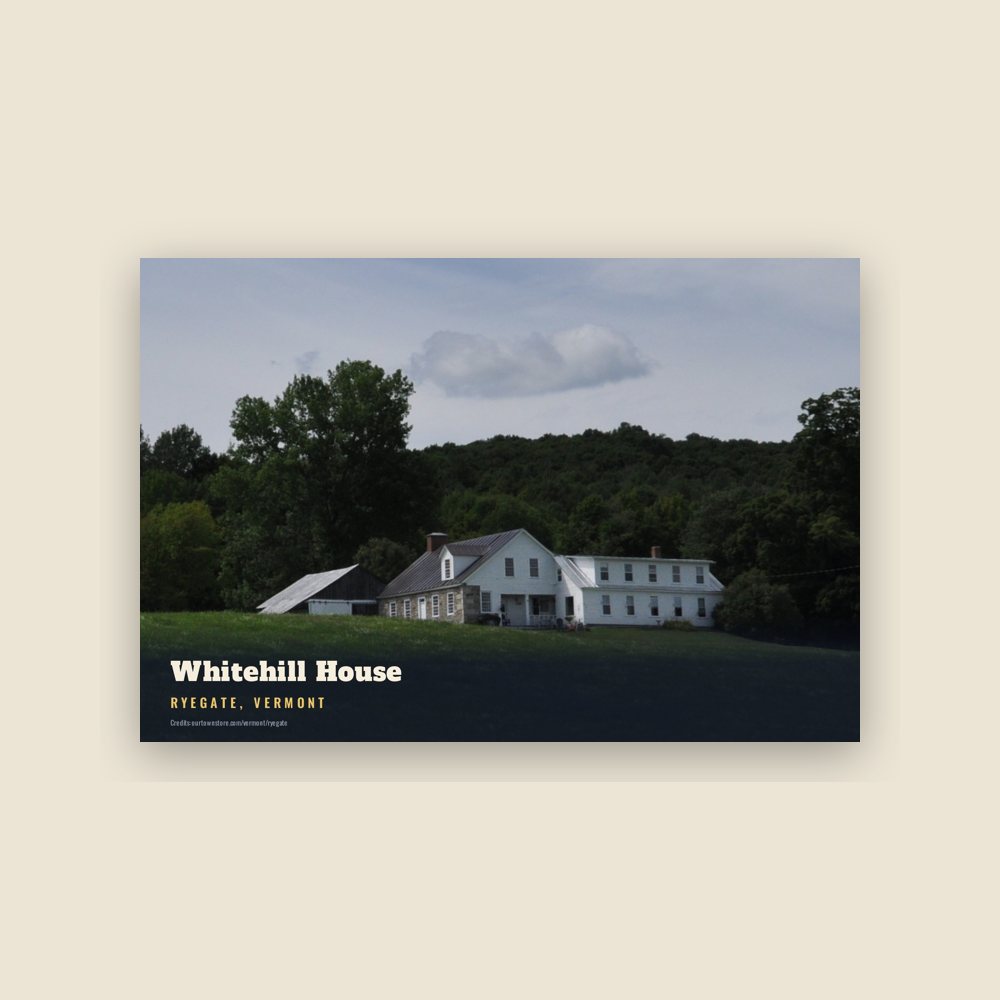
6″×4″ postcard, glossy front
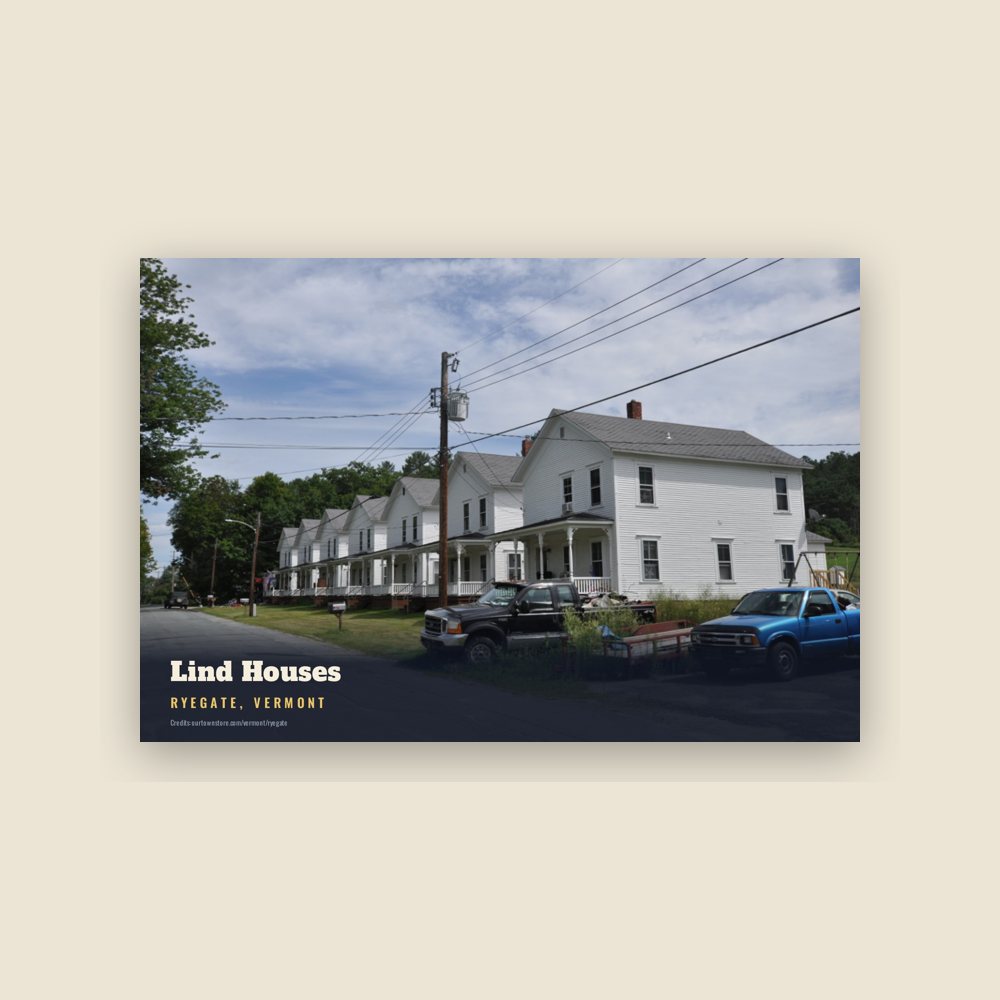
6″×4″ postcard, glossy front
Population 2010: 1,174 → 2020: 1,165
From Wikidata (CC0).
One of the New Hampshire Grants, it was chartered by Governor Benning Wentworth on September 8, 1763. Granted to Richard Jenness and 93 others, it was named Ryegate, a variant spelling of Reigate in Surrey, England. The first settlers were Aaron Hosmer and his family. Sold to John Witherspoon and others, the southern half of town was purchased in 1773 by two agents for the Scotch American Company of Farmers from Renfrew and Lanark, Scotland, whose members began settlement in 1774.
The town had excellent soil for the cultivation of grains, vegetables and orchards. Streams teemed with salmon and trout. Hills and valleys provided pasturage for grazing sheep and cattle. Connected in 1847 to the Connecticut & Passumpsic Rivers Railroad, the town by 1859 was noted for producing butter and leather. The Wells River supplied water power for one gristmill and five sawmills. In 1873, the Montpelier & Wells River Railroad was completed. In 1890, a big brickyard opened; then in 1906, the Ryegate Paper Company began operation. But the town's dominant industry was six granite quarries at Blue Mountain.
Adapted (trimmed) from the Wikipedia article Ryegate, Vermont, revision 1374802810 by its contributors, licensed CC BY-SA 4.0.
We share a part of every Ryegate sale with local partners, and we'd love to print from your collection. Old photographs, maps and postcards make the best keepsakes.
Partner with us