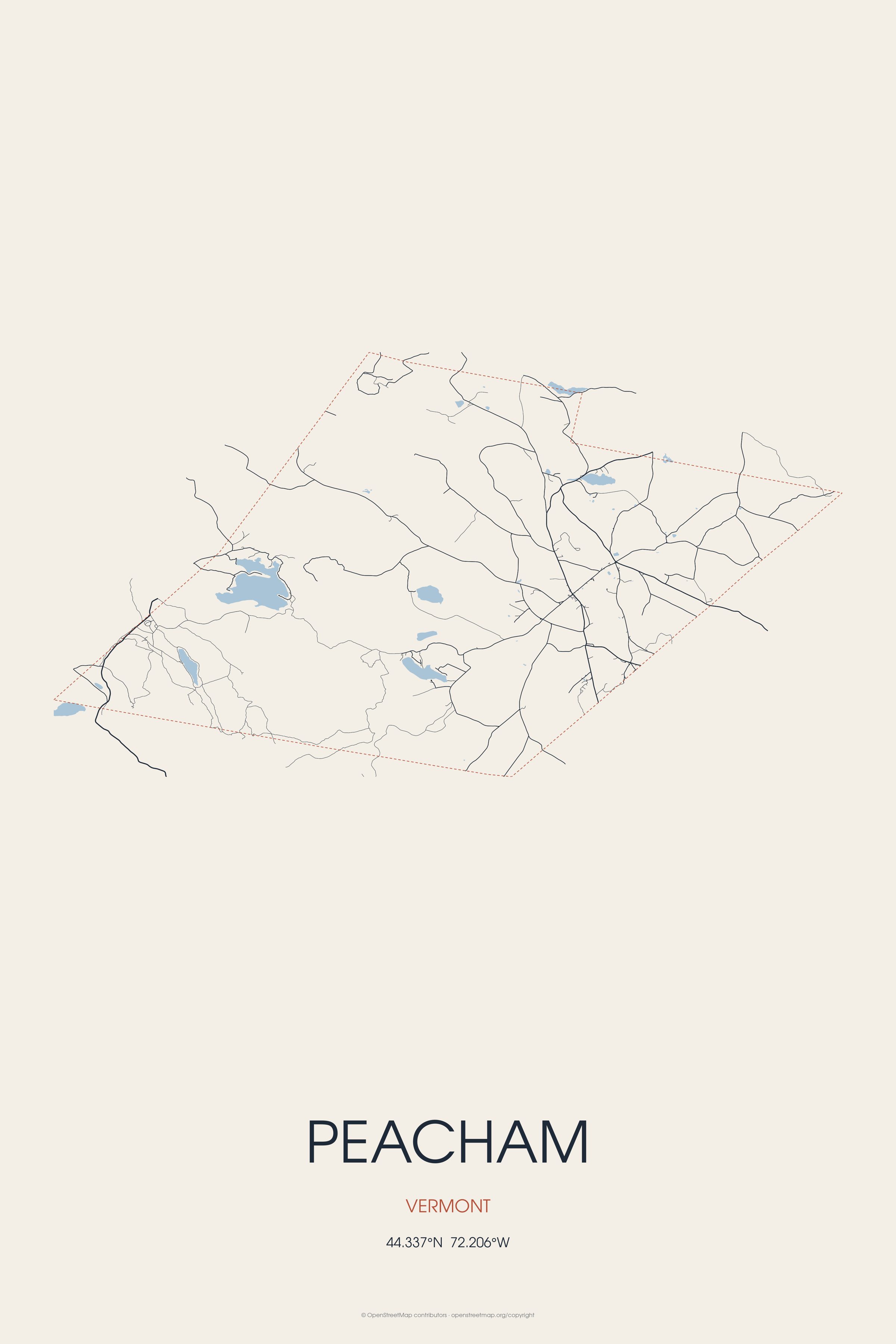
In 1763, Governor Benning Wentworth of New Hampshire gave a charter for the region to a group of proprietors, and the town was given the name Peacham (the etymology of the name is unclear). Landmarks include Peacham Corner Historic District, New Discovery State Park and Josiah and Lydia Shedd Farmstead. Peacham is the birthplace of George Brinton McClellan Harvey, journalist and diplomat.
Every piece is drawn from Peacham's own map data and historic archives, then printed and shipped from the USA when you order. No two towns look alike.
Every road in town, on archival matte paper

The same map, in navy and silver
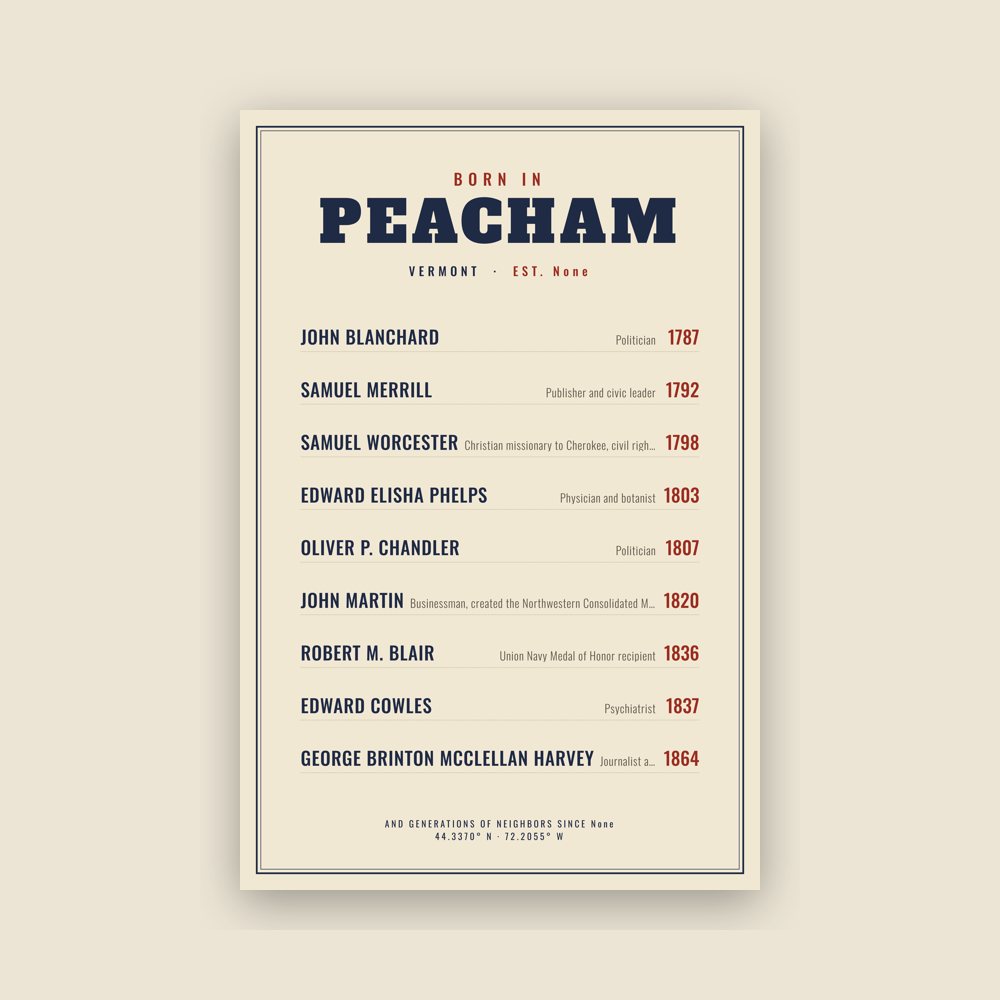
Famous natives, by birth year
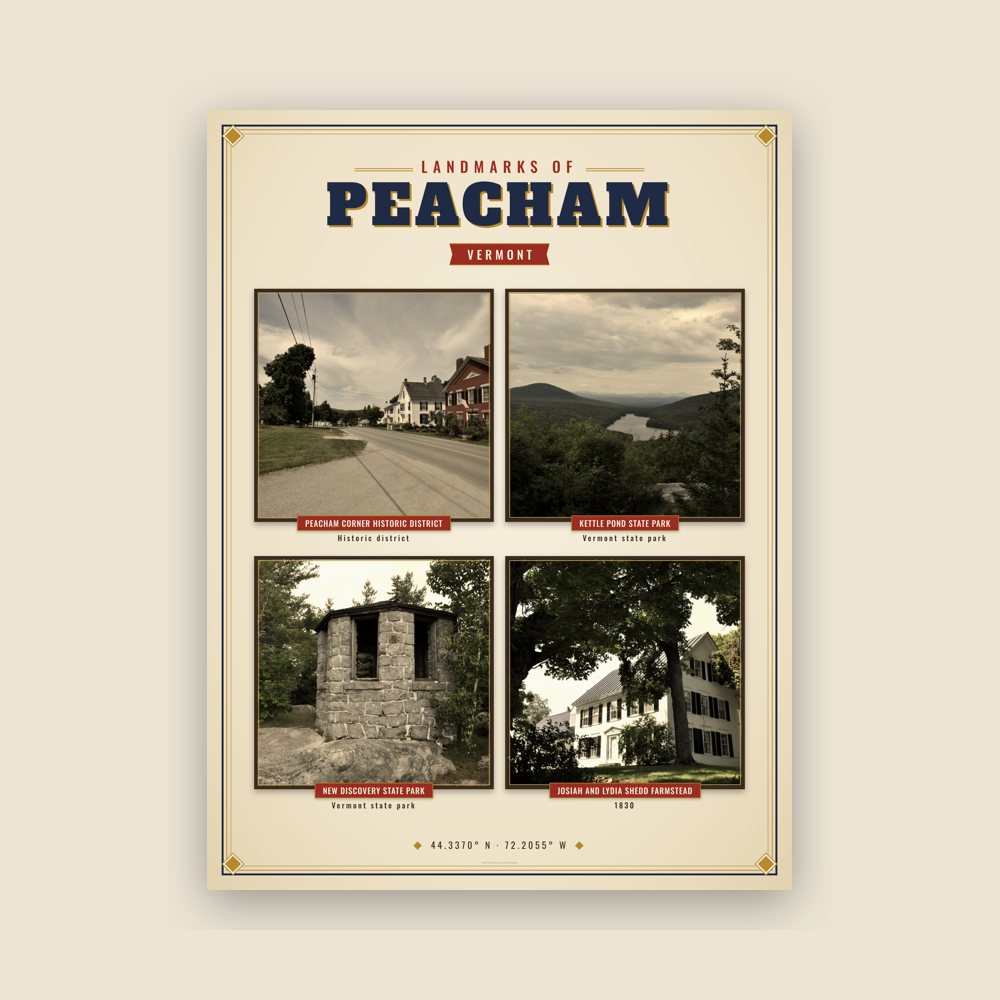
Nine local landmarks, archival matte
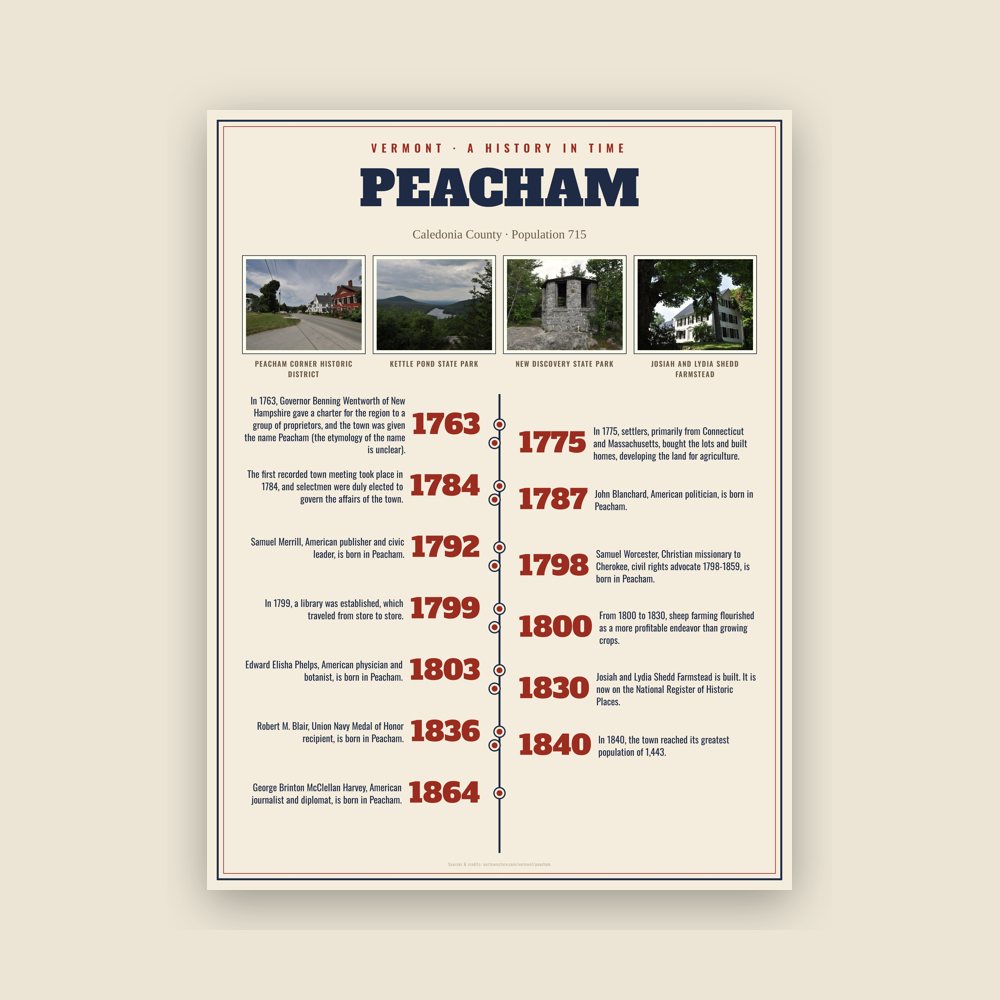
The town's story in dates, from its own records, for home or classroom
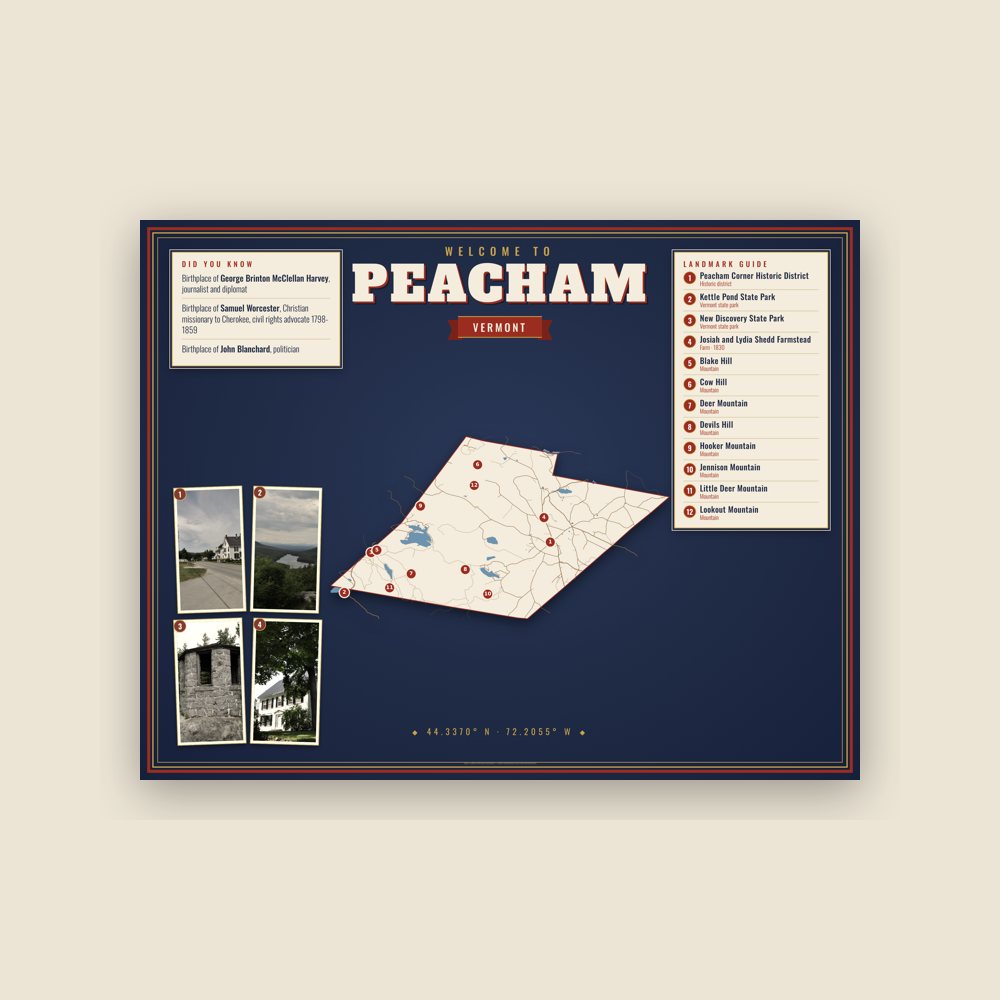
Map of local landmarks, washable fabric

Heavy-blend fleece, street map printed on the back

Soft Bella+Canvas jersey
Glossy ceramic, dishwasher safe
Ceramic keepsake, gold ribbon
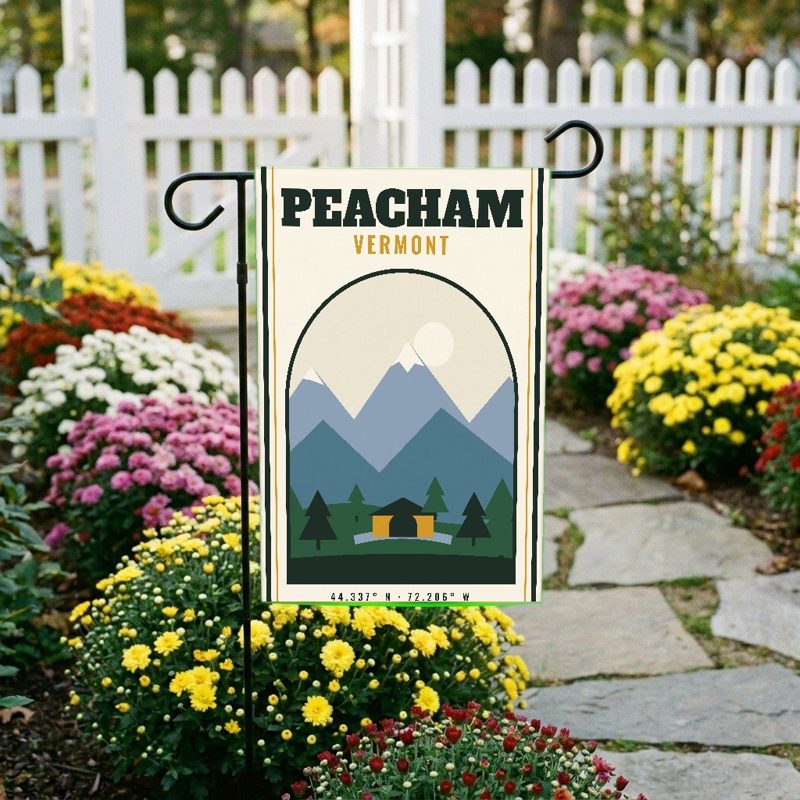
Weatherproof, for the front walk
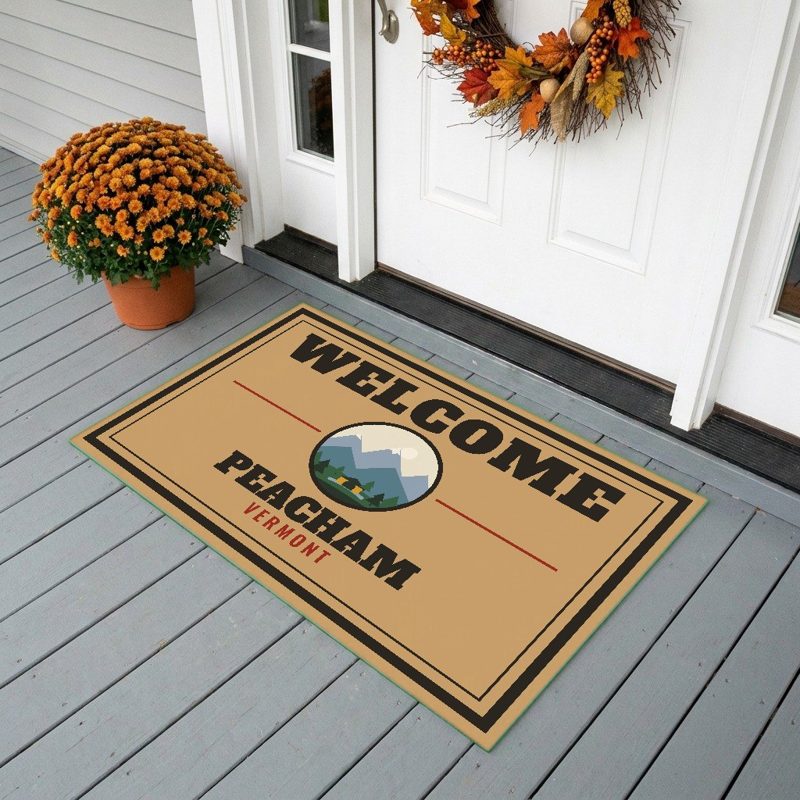
24″×16″, printed coir-look fibers, rubber back
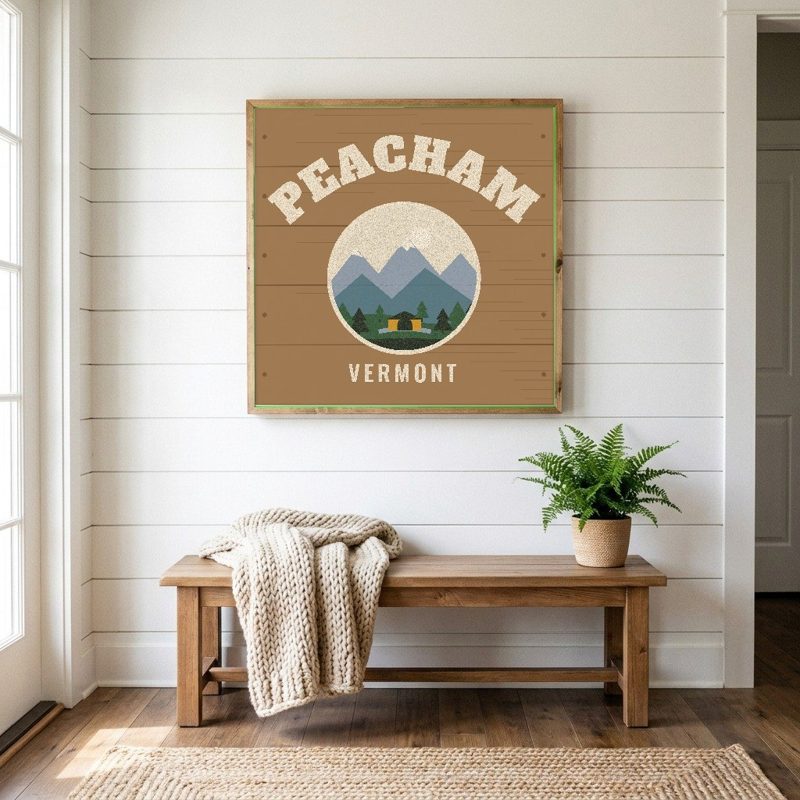
12″×12″ printed wood, ready to hang
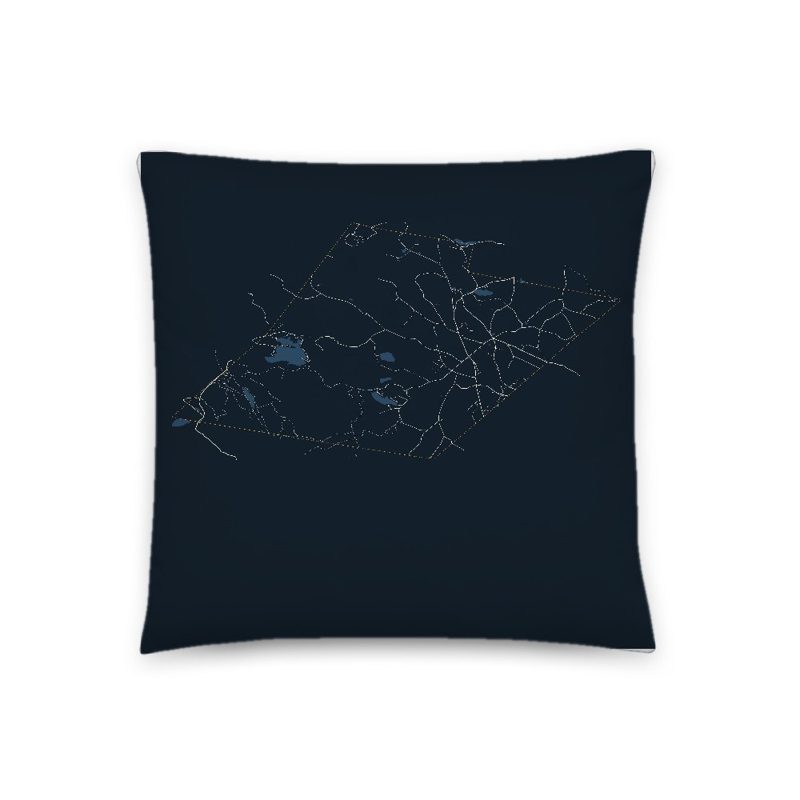
Soft-touch, zip cover

Sturdy all-over-print tote
Glossy top, cork back
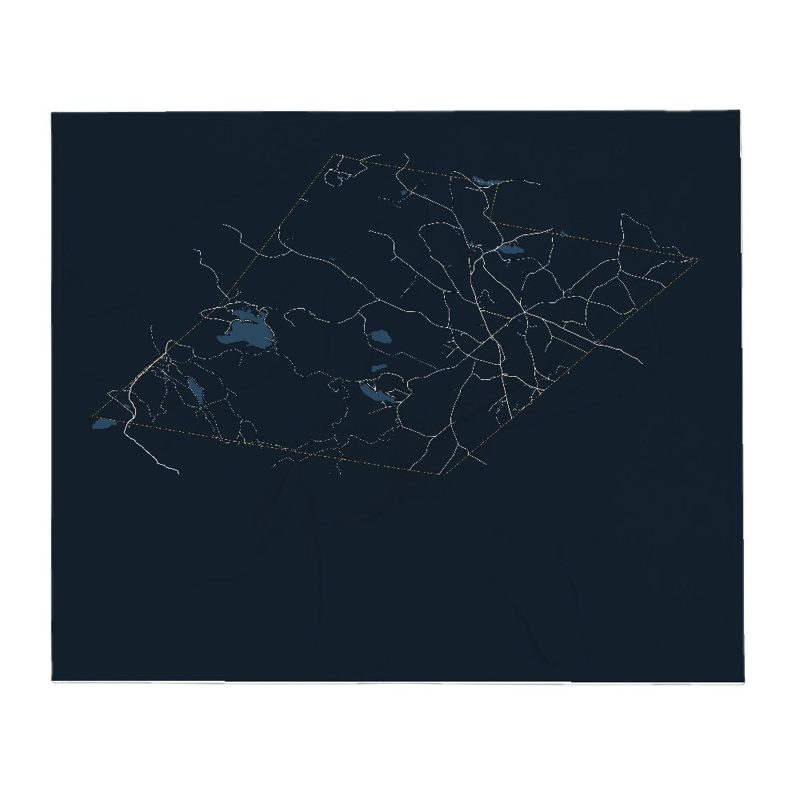
Soft fleece, 50″×60″
20 oz, double-wall stainless
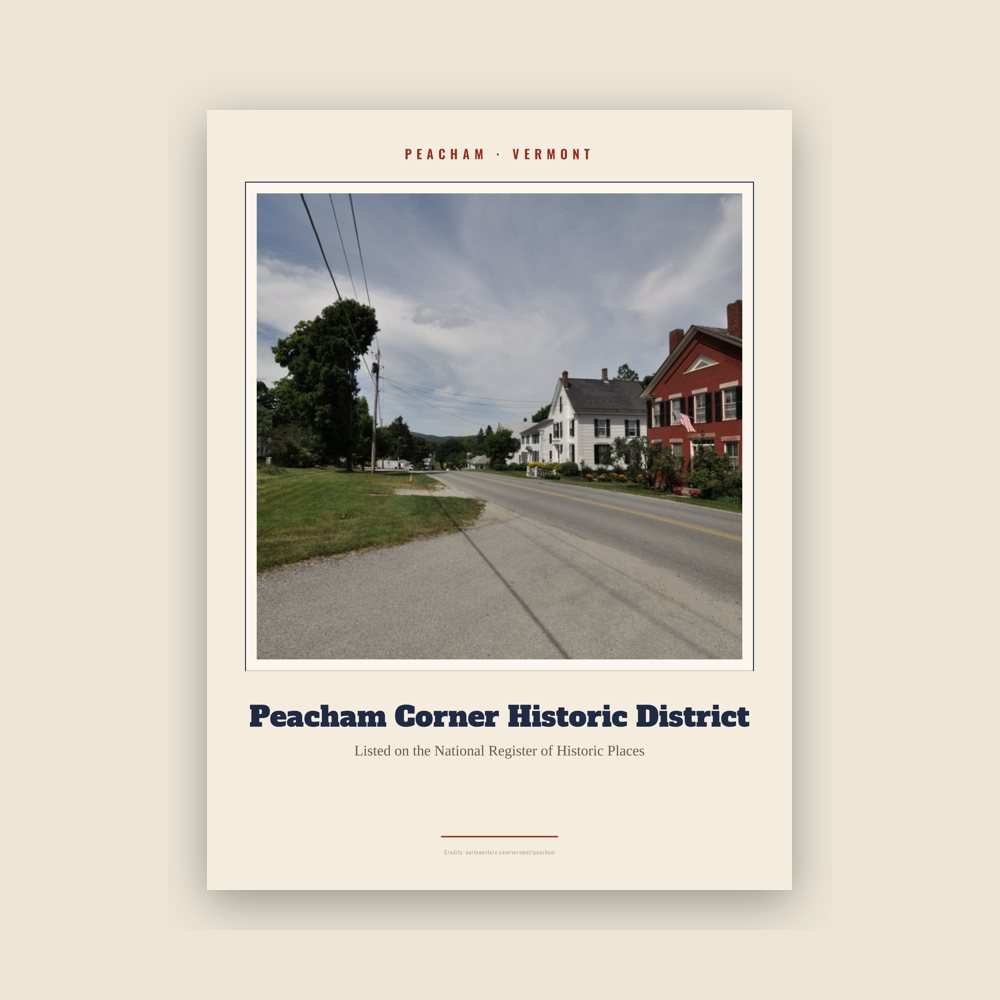
Archival matte print of a local landmark, credited to its photographer
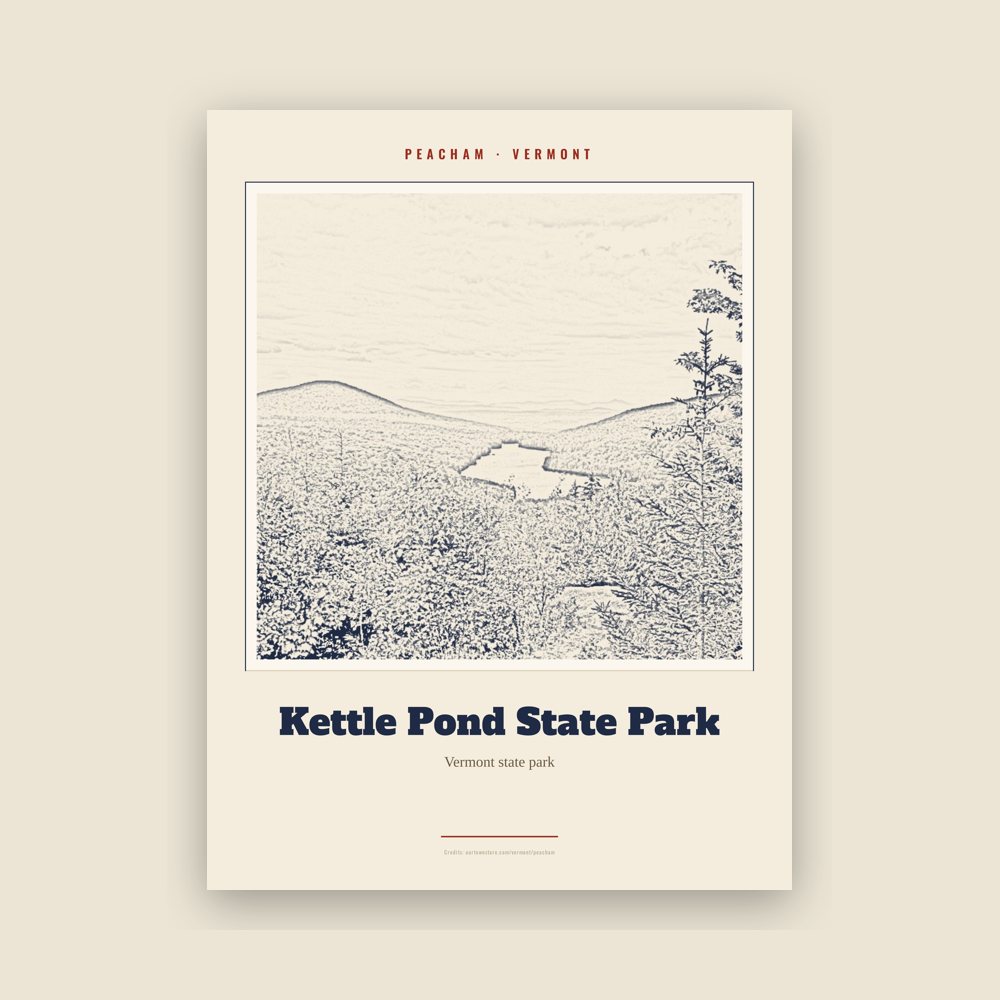
Archival matte print of a local landmark, credited to its photographer
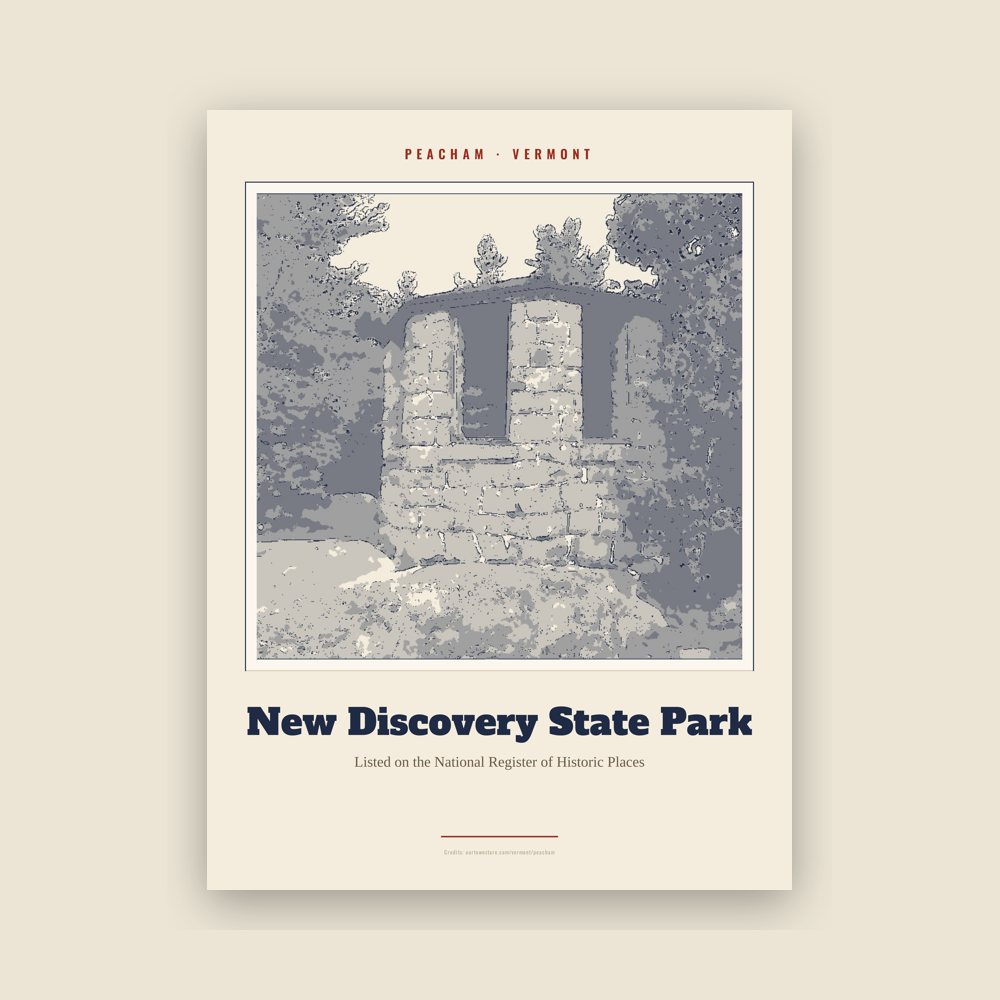
Archival matte print of a local landmark, credited to its photographer
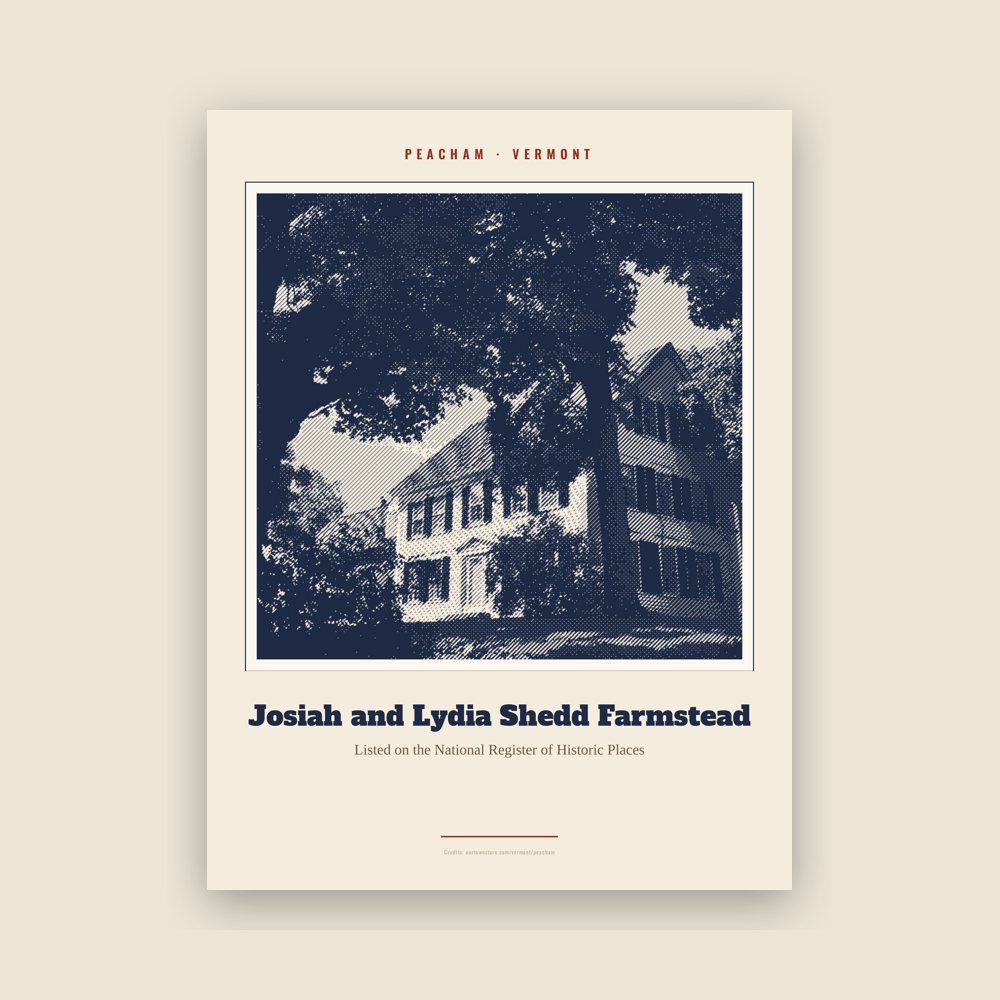
Archival matte print of a local landmark, credited to its photographer
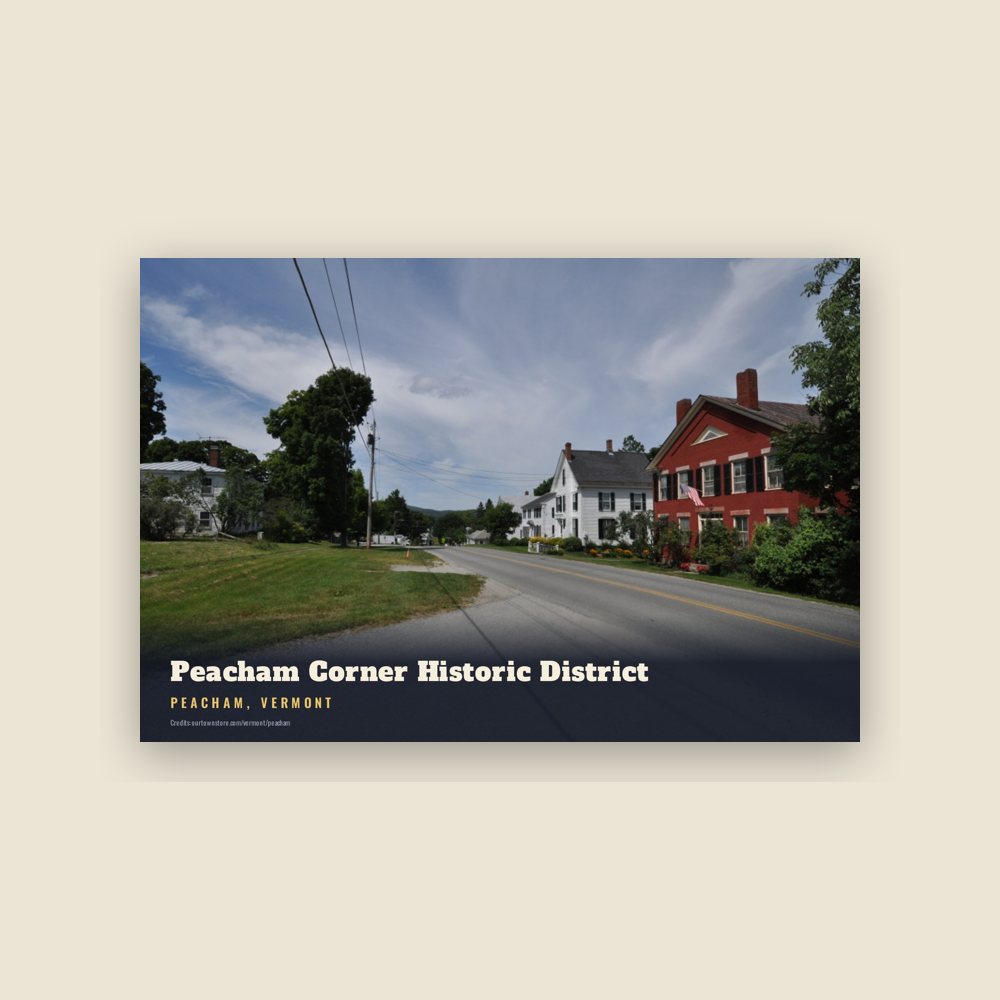
6″×4″ postcard, glossy front
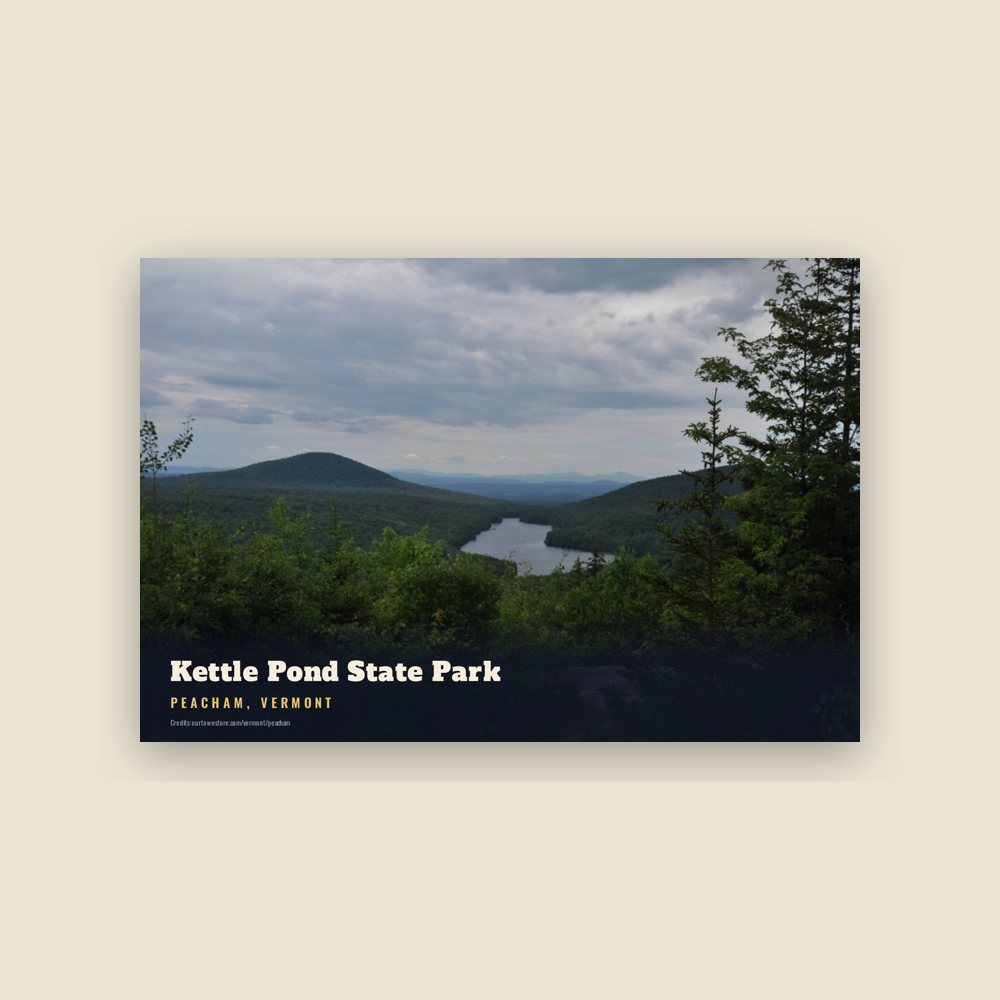
6″×4″ postcard, glossy front
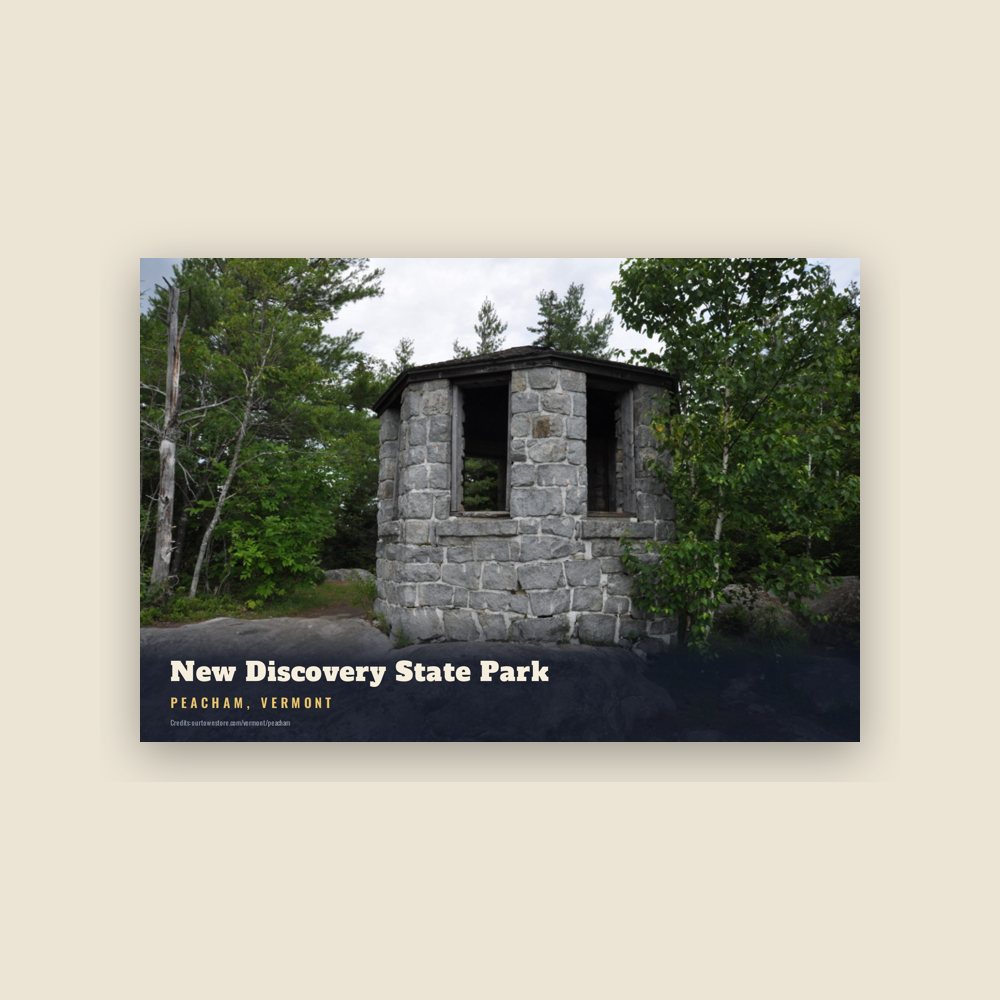
6″×4″ postcard, glossy front
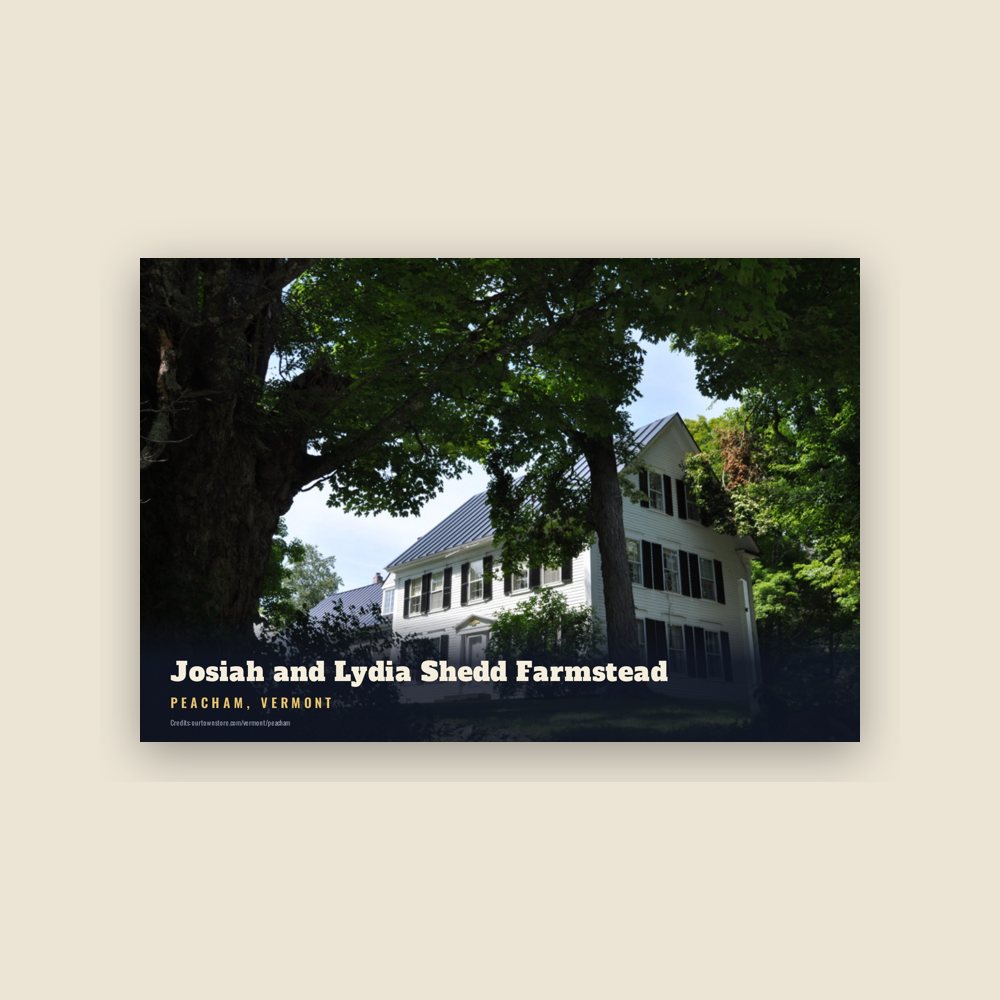
6″×4″ postcard, glossy front
Population 2010: 732 → 2020: 715
From Wikidata (CC0).
In 1763, Governor Benning Wentworth of New Hampshire gave a charter for the region to a group of proprietors, and the town was given the name Peacham (the etymology of the name is unclear). The original proprietors were speculators who surveyed the town, laid a few rudimentary roads, and divided it into lots, though the territory remained unsettled for some time.
In 1775, settlers, primarily from Connecticut and Massachusetts, bought the lots and built homes, developing the land for agriculture. The original settlers survived almost entirely through subsistence farming despite the long winters, hilly terrain, and rocky soil. Nine years later, records show a population of approximately 200 people. The first recorded town meeting took place in 1784, and selectmen were duly elected to govern the affairs of the town. Peacham was early on presented with a choice of having either the county courthouse or the county school, and the residents voted for the school. In 1795 the Caledonia County Grammar School received its charter, and the first school was established in a log structure on the Bayley Hazen Road, halfway between Peacham Corner and South Peacham.
In 1799, a library was established, which traveled from store to store. A congregational church was founded in 1794—the first pastor, Leonard Worcester, was well known for his fiery sermons. His son Samuel went on to be an important missionary to the Cherokee people, creating the first typeface for the Cherokee alphabet and gaining lasting fame as the plaintiff in the supreme court case Worcester v. Georgia.
Early residents, who came to be known as Peachamites, traded butter, eggs, and wheat for goods which they could not make at home, and also relied on the production and sale of items such as whiskey and potash to help augment the relatively poor harvests. Almost from the beginning, various trades and industries—as many as 30–35 at a given time—flourished. Lumbering, coopering, milling, butter making, tin ware, tanneries and leather goods provided goods for local consumption. From 1800 to 1830, sheep farming flourished as a more profitable endeavor than growing crops. In 1840, the town reached its greatest population of 1,443. From that date on, census numbers steadily declined. Farming methods changed, and dairy farming came to replace sheep. The larger, more industrially advanced farms of the late 19th century could not support large families, and youth began to leave home.
In the 20th century, the population continued to decline to a low in the mid-600s. Farming also became less common due to competition with larger dairy farms in the West, and many farms either consolidated or went under. Tourism became important during the 20th century as people opened their homes to visitors from the cities of the Atlantic seaboard, often derisively referred to as "flatlanders". With the advent of the railroad in Barnet and then motor vehicles, Peacham became a popular location for summer residents, some of whom were educators from Boston and New York City. In the second half of the 20th century, Peacham became a popular vacation spot and retirement home for prominent intellectuals and liberal thinkers—individuals such as David Dellinger, William Lederer, Roman Jakobson, and the historian Shepard Clough all owned houses in town. Their interests and stimulation enhanced the cultural interests of the town.
Adapted (trimmed) from the Wikipedia article Peacham, Vermont, revision 1379047156 by its contributors, licensed CC BY-SA 4.0.
We share a part of every Peacham sale with local partners, and we'd love to print from your collection. Old photographs, maps and postcards make the best keepsakes.
Partner with us