Since 1847
A short history of Summerville
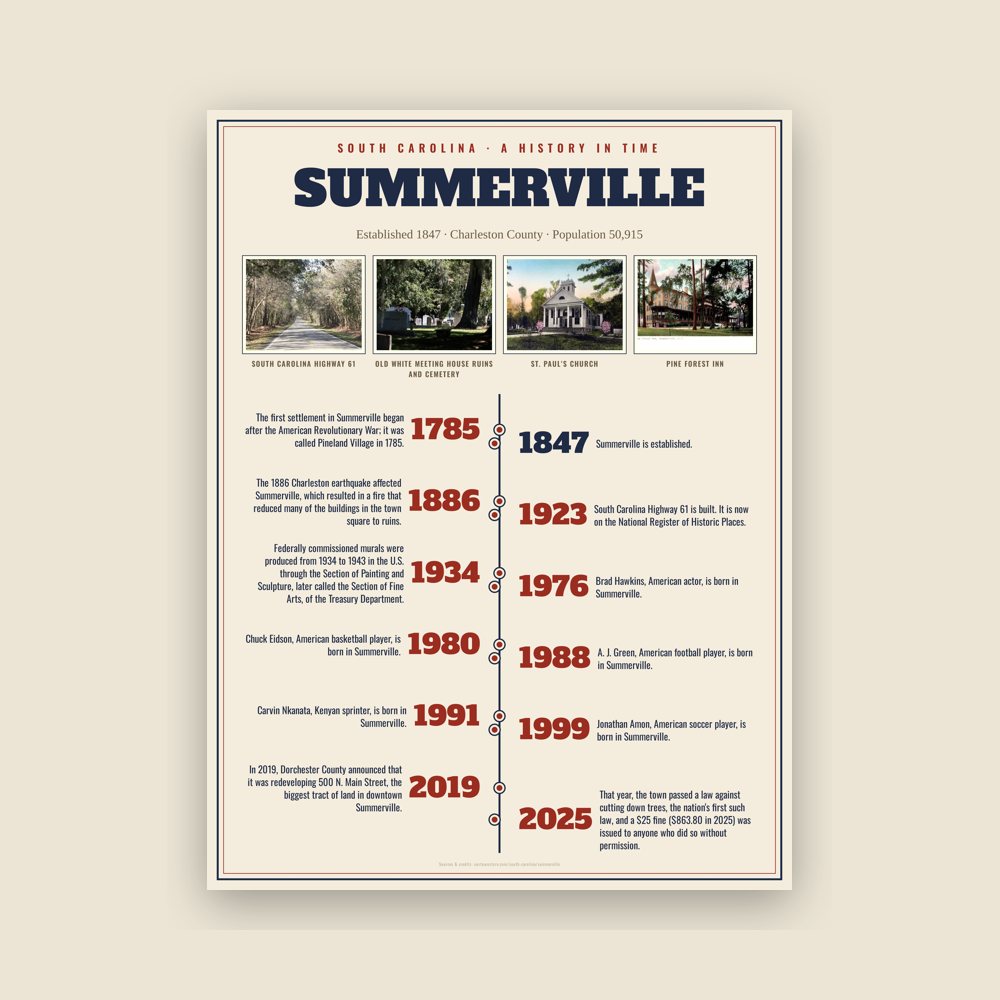
The first settlement in Summerville began after the American Revolutionary War; it was called Pineland Village in 1785. Development in the area resulted from plantation owners who resided in the Charleston area and came to Summerville to escape seasonal insects and their attendant swamp fever. The founder, John Micheal Guy, was born in Charleston and decided to establish the town based on the aforementioned reasons.
Summerville became an official town on December 17, 1847. That year, the town passed a law against cutting down trees, the nation's first such law, and a $25 fine ($863.80 in 2025) was issued to anyone who did so without permission. The town's official seal reads "Sacra Pinus Esto (The Pine is Sacred)".
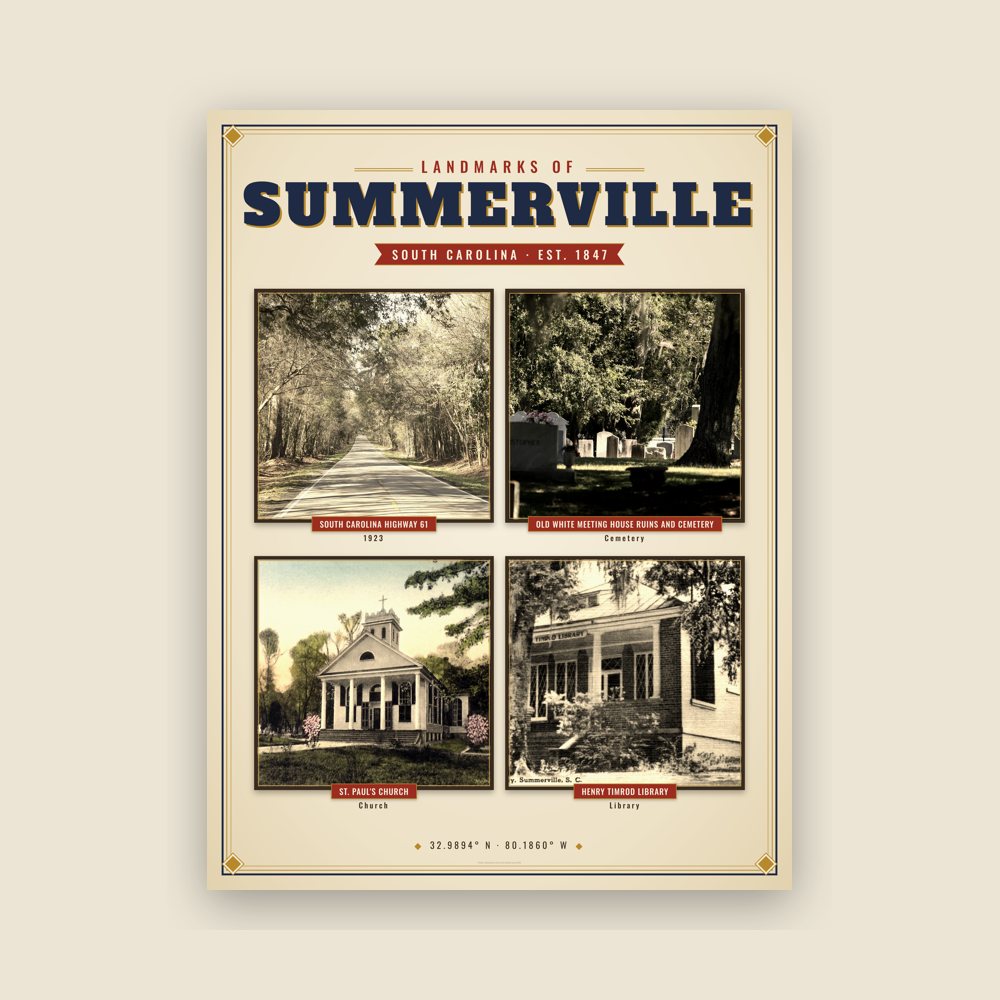
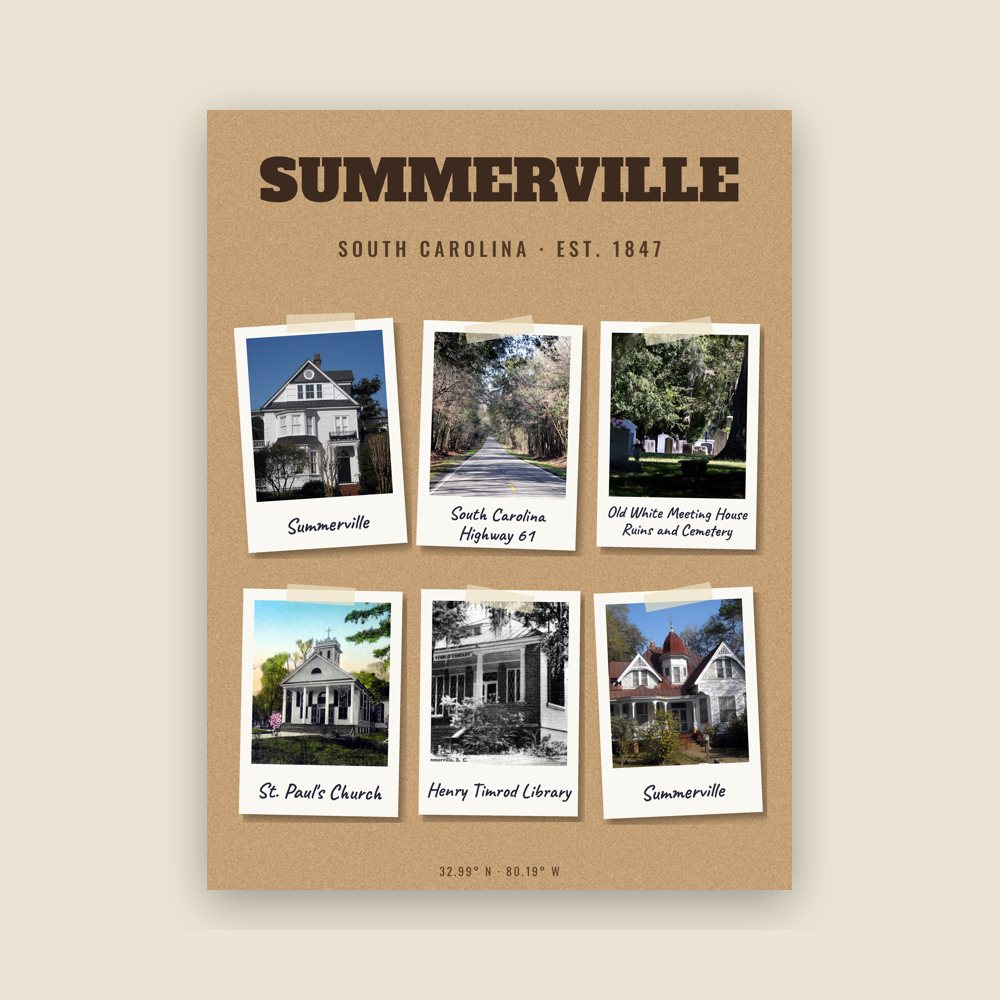
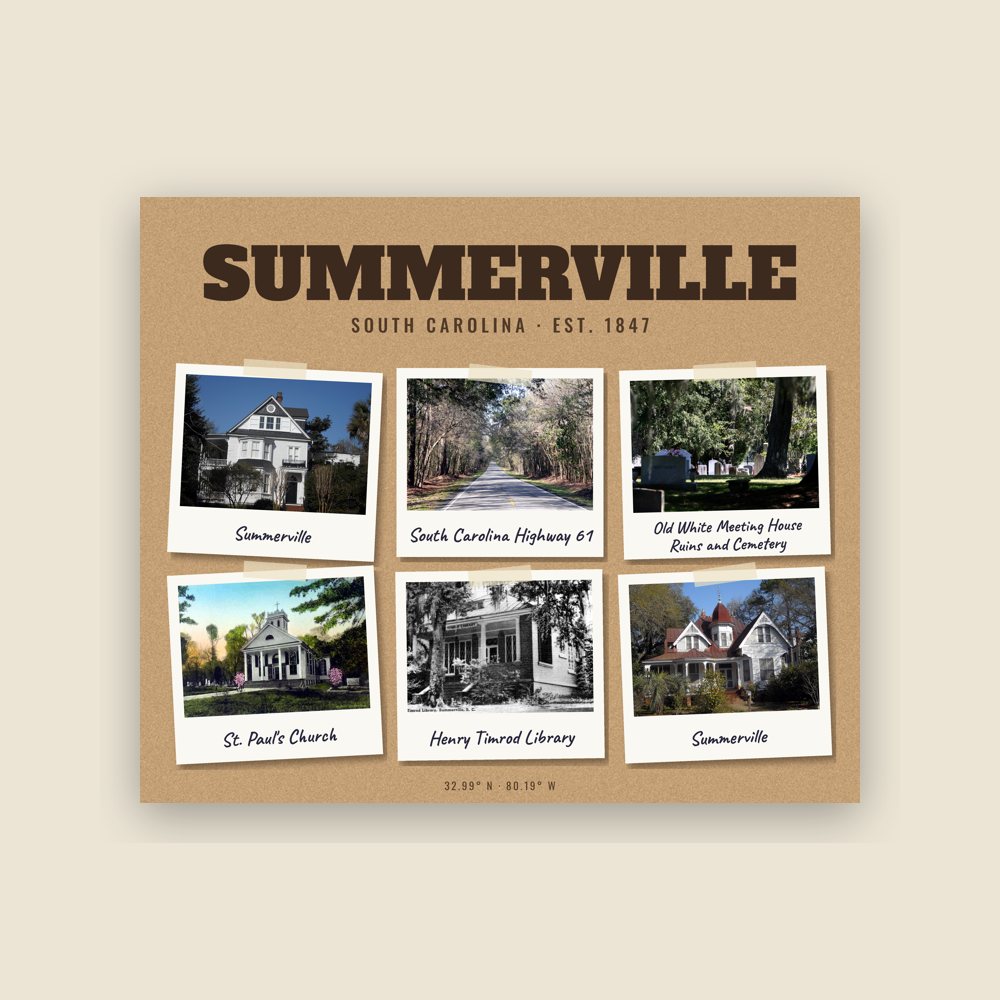
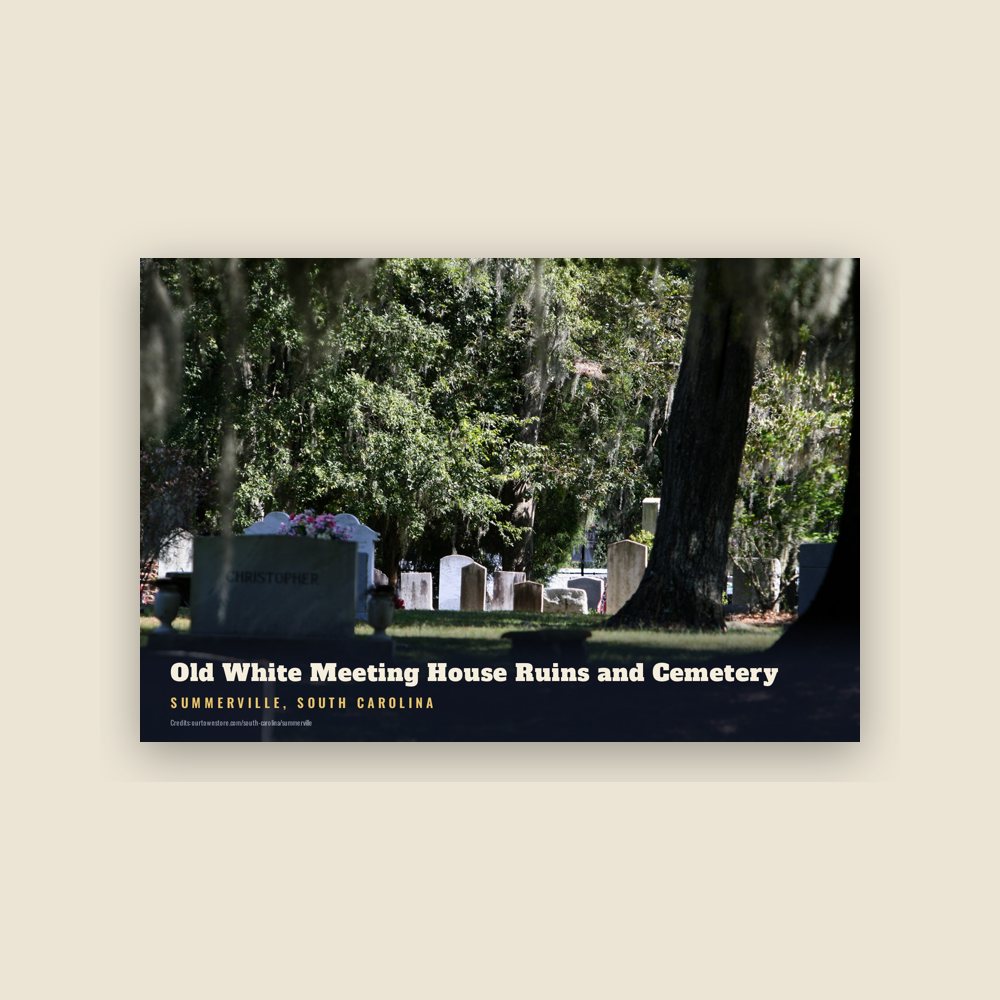
The 1886 Charleston earthquake affected Summerville, which resulted in a fire that reduced many of the buildings in the town square to ruins. During this earthquake, the Old White Meeting House Ruins and Cemetery, located near Summerville, was also destroyed. Today, Summerville is located within the Middleton Place-Summerville seismic zone, which is the most active seismic zone in South Carolina.
In 1899, the International Congress of Physicians (or "Tuberculosis Congress") listed Summerville as one of the world's two best areas for treatment of and recovery from lung and throat disorders, due to its dry and sandy location and the many pine trees that release turpentine derivatives into the air. This notation is credited with aiding Summerville's commercial and residential development.
The former Summerville post office built in 1938 contains a mural, Train Time – Summerville, painted by Bernadine Custer in 1939. Federally commissioned murals were produced from 1934 to 1943 in the U.S. through the Section of Painting and Sculpture, later called the Section of Fine Arts, of the Treasury Department.
In 2019, Dorchester County announced that it was redeveloping 500 N. Main Street, the biggest tract of land in downtown Summerville.
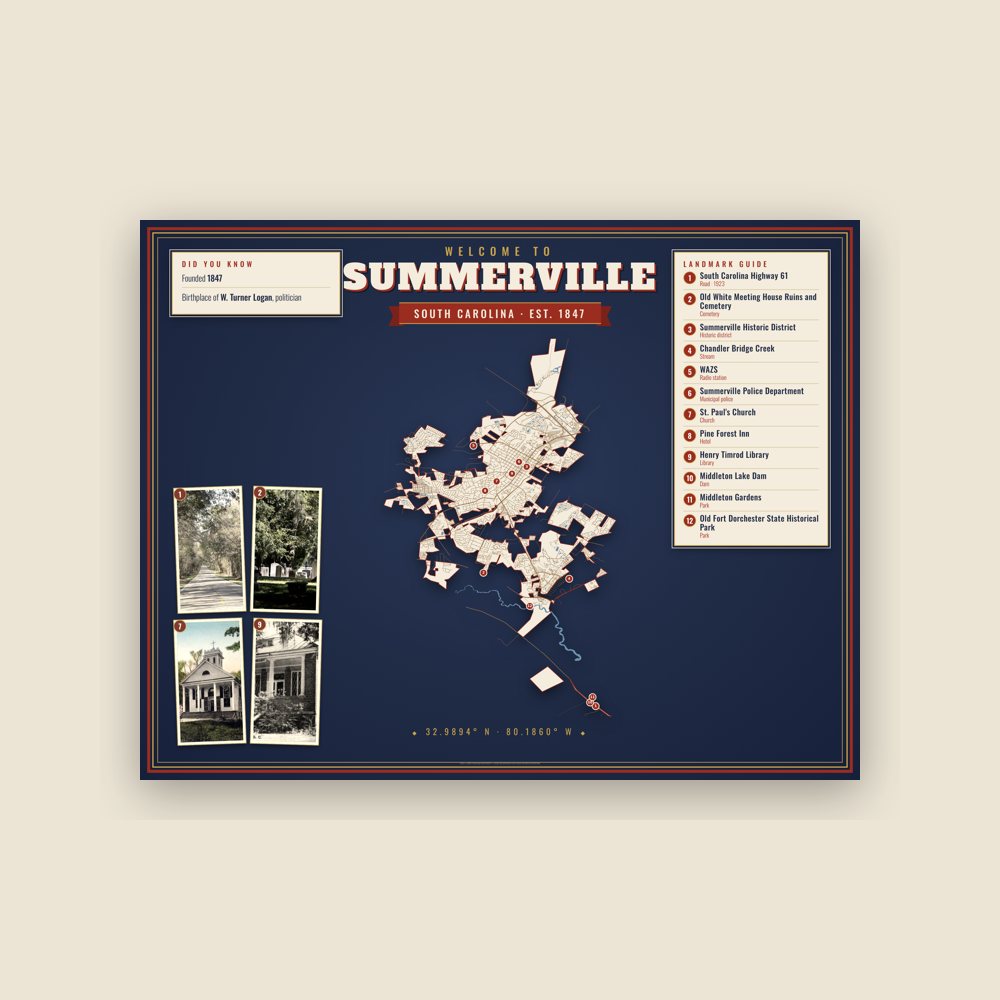
The Ashley River Road, Middleton Place, Colonial Dorchester State Historic Site, Old White Meeting House Ruins and Cemetery, and the Summerville Historic District are listed on the National Register of Historic Places.
Adapted (trimmed) from the Wikipedia article Summerville, South Carolina, revision 1385166036 by its contributors, licensed CC BY-SA 4.0.