Since 1845
A short history of Sumter
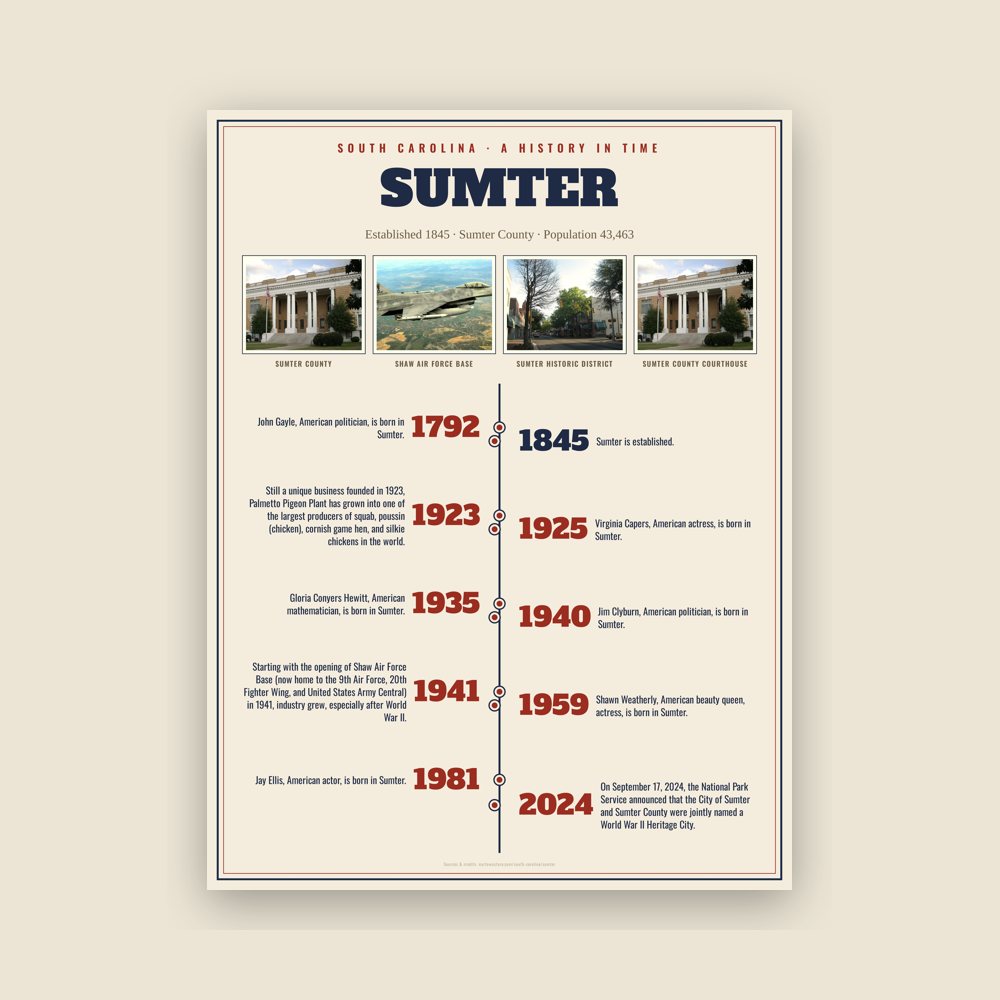
Incorporated as Sumterville in 1845, the city's name was shortened to Sumter in 1855. It has grown and prospered from its early beginnings as a plantation settlement. The city and county of Sumter bear the name of General Thomas Sumter, the "Fighting Gamecock" of the American Revolutionary War.
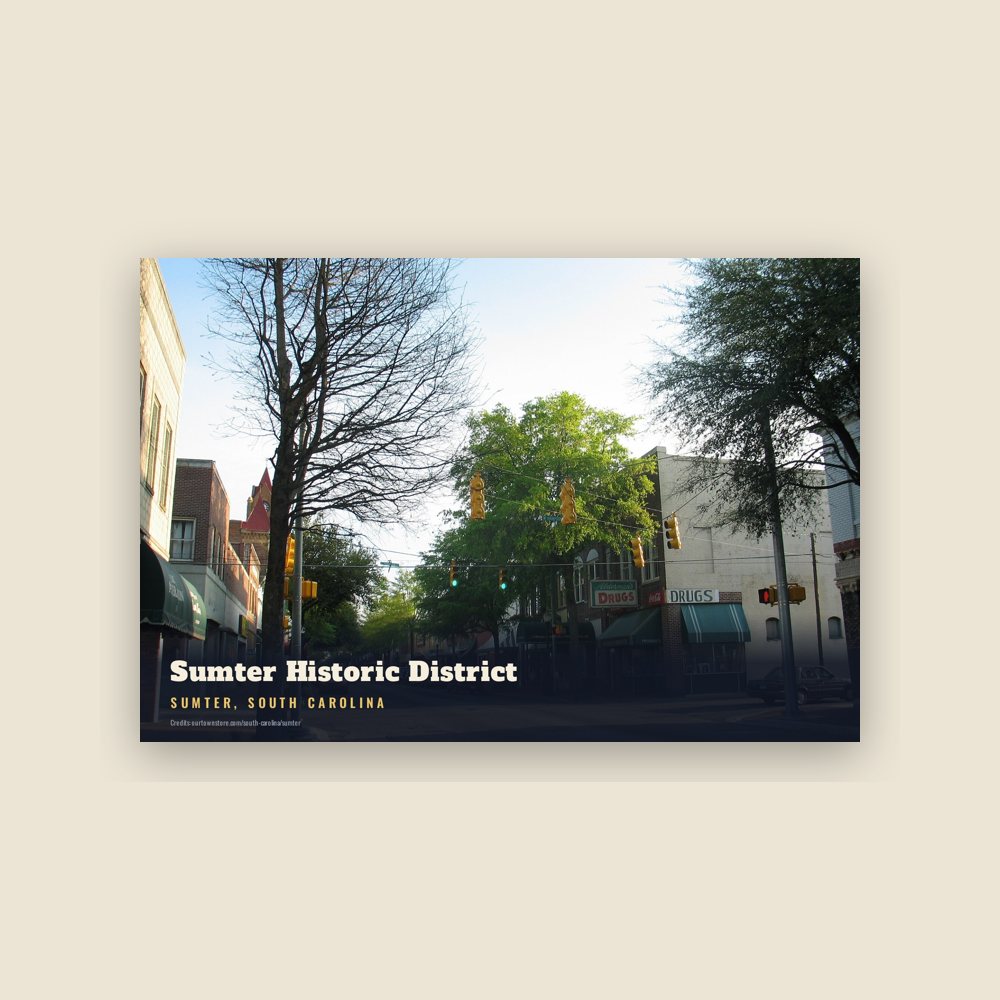
During the Civil War, the town was an important supply and railroad repair center for the Confederacy. After the war, Sumter grew and prospered, using its large railroad network to supply cotton, timber, and by the start of the 20th century, tobacco to the region.
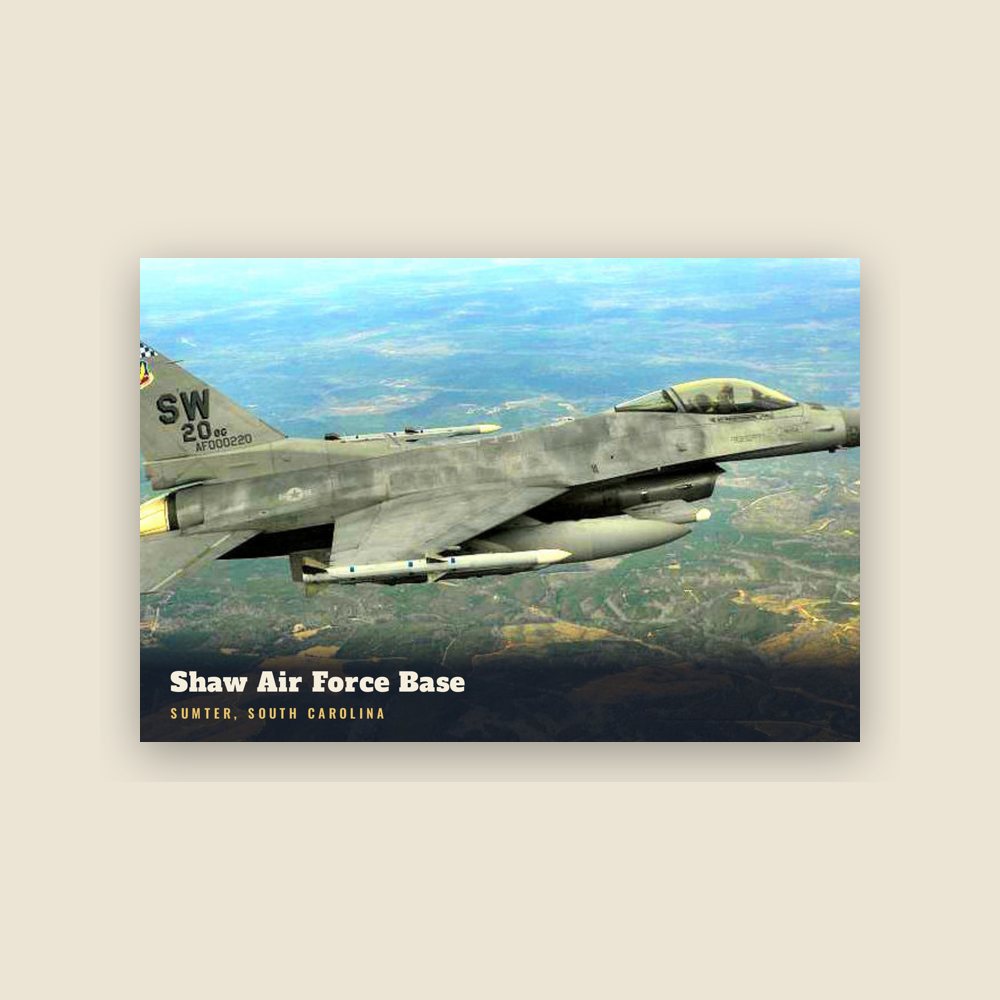
During the 20th century, Sumter grew into a major industrial center. Still a unique business founded in 1923, Palmetto Pigeon Plant has grown into one of the largest producers of squab, poussin (chicken), cornish game hen, and silkie chickens in the world. Starting with the opening of Shaw Air Force Base (now home to the 9th Air Force, 20th Fighter Wing, and United States Army Central) in 1941, industry grew, especially after World War II. Sumter became increasingly known for textiles, manufacturing, biotech industries, special chemistry (Branch of Swiss-based Ems-Chemie), thriving retail environment, and medical center of its region in addition to agricultural products, which makes it a hub for business in the east-central portion of South Carolina.
On September 17, 2024, the National Park Service announced that the City of Sumter and Sumter County were jointly named a World War II Heritage City.
Adapted (trimmed) from the Wikipedia article Sumter, South Carolina, revision 1385172811 by its contributors, licensed CC BY-SA 4.0.