Since 1731
A short history of Smithfield
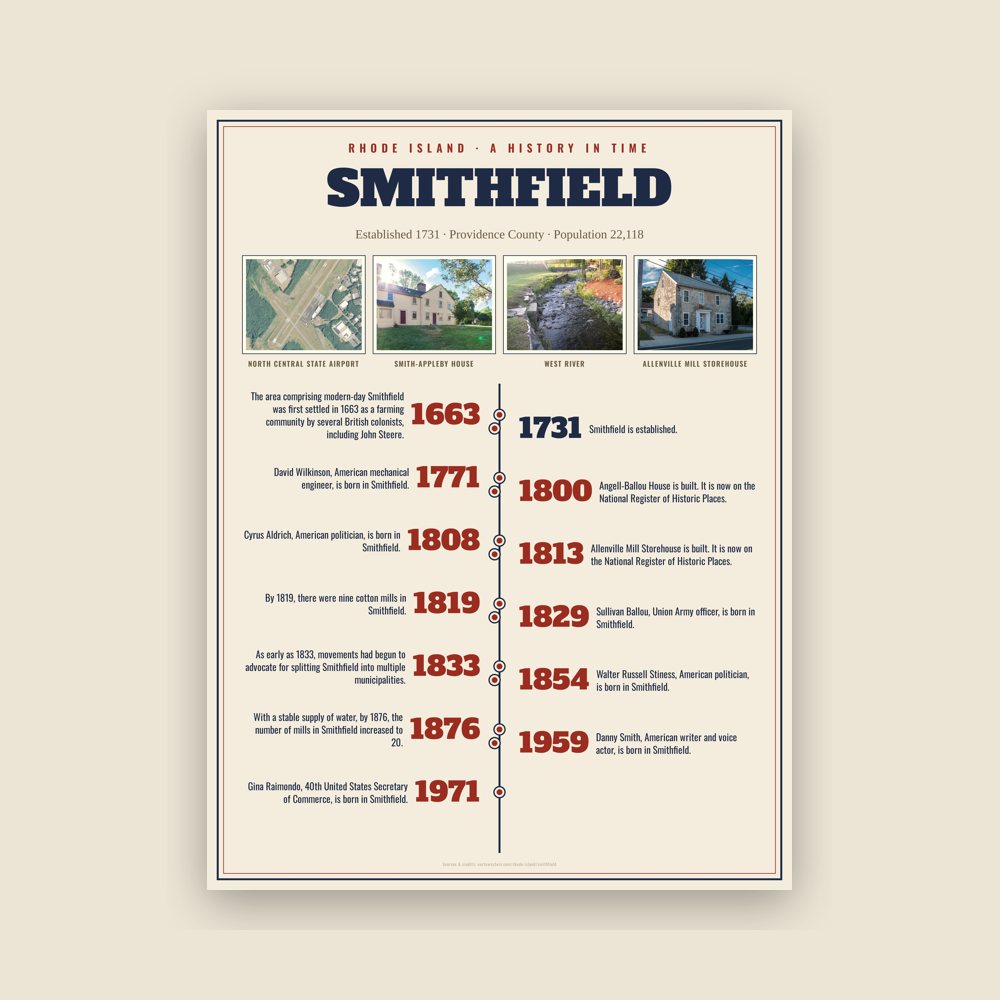
The area comprising modern-day Smithfield was first settled in 1663 as a farming community by several British colonists, including John Steere. The area was originally within the boundaries of Providence until it was incorporated as a separate municipality by the General Assembly in February 1731. The first town meeting was held on March 17, 1731 at the home of Captain Richard Whitman located in modern-day Lincoln. Richard Sayles was elected as the first town clerk. John Arnold, Captain Joseph Mowry, Thomas Steere, John Mowry, Sam Aldrich and Benjamin Smith were elected as the first members of the town council. According to the town's official website, Smithfield was named after John Smith, a first settler of Providence, who was granted land by Roger Williams and was one of the original party of six men that formed original settlement of Providence Plantations.
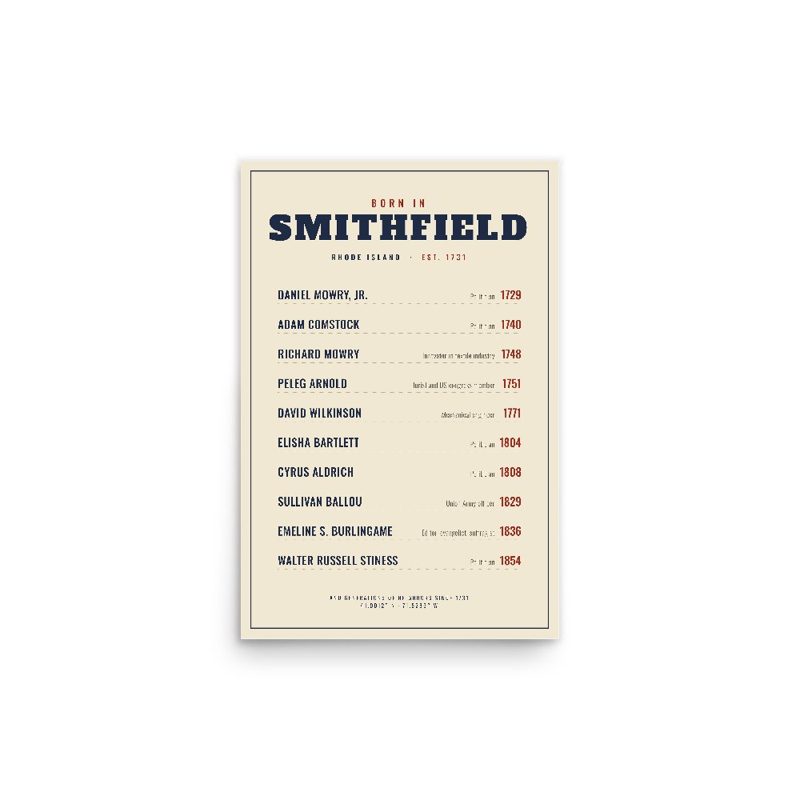
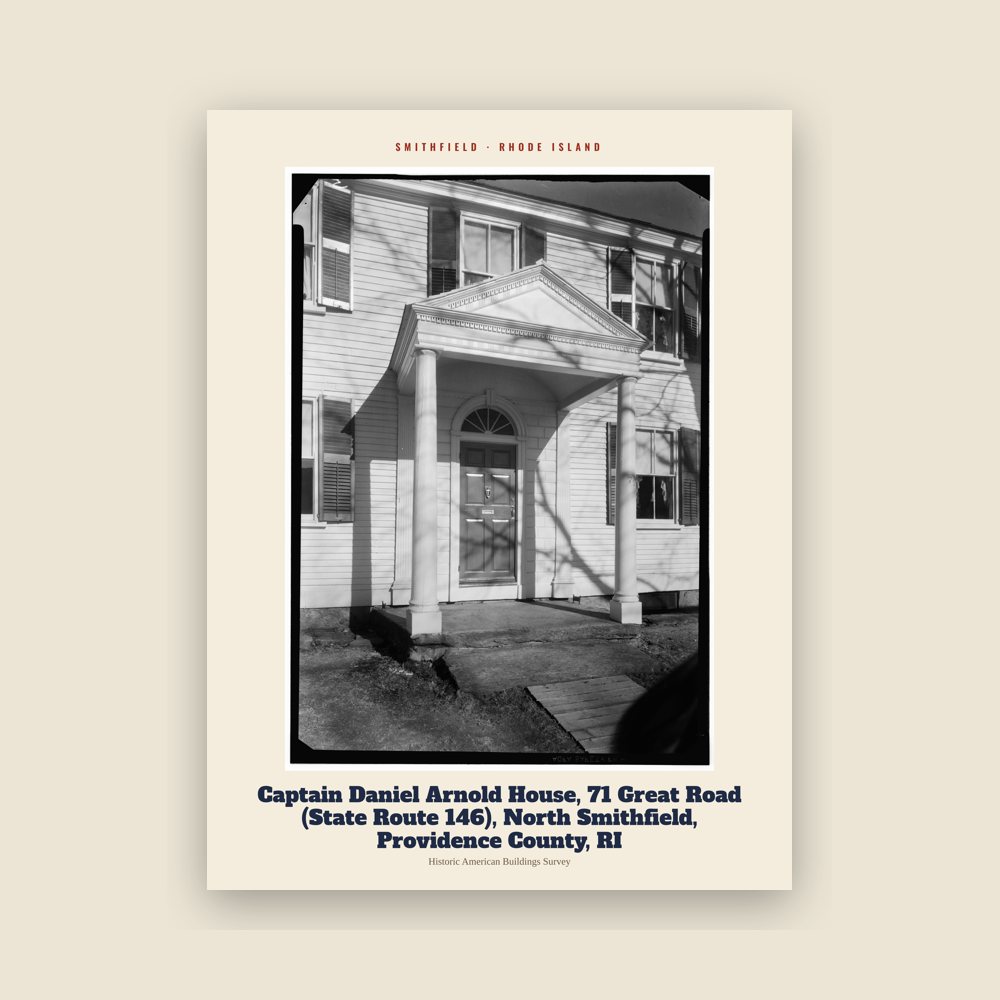
Chief Justice Peleg Arnold lived in early Smithfield, and his 1690 home still stands today. Through the early 18th century, Smithfield was home to an active Quaker community that extended along Great Road, from what is today Woonsocket, north into Uxbridge, Massachusetts. This Quaker community became influential in the abolition movement, with members such as Effingham Capron and Abby Kelley Foster, and also gave rise to other Quaker settlements including one at Adams, Massachusetts, where Susan B. Anthony was born as an early member. Elizabeth Buffum Chace, an abolitionist and figure in the women's rights movement, was born in Smithfield.
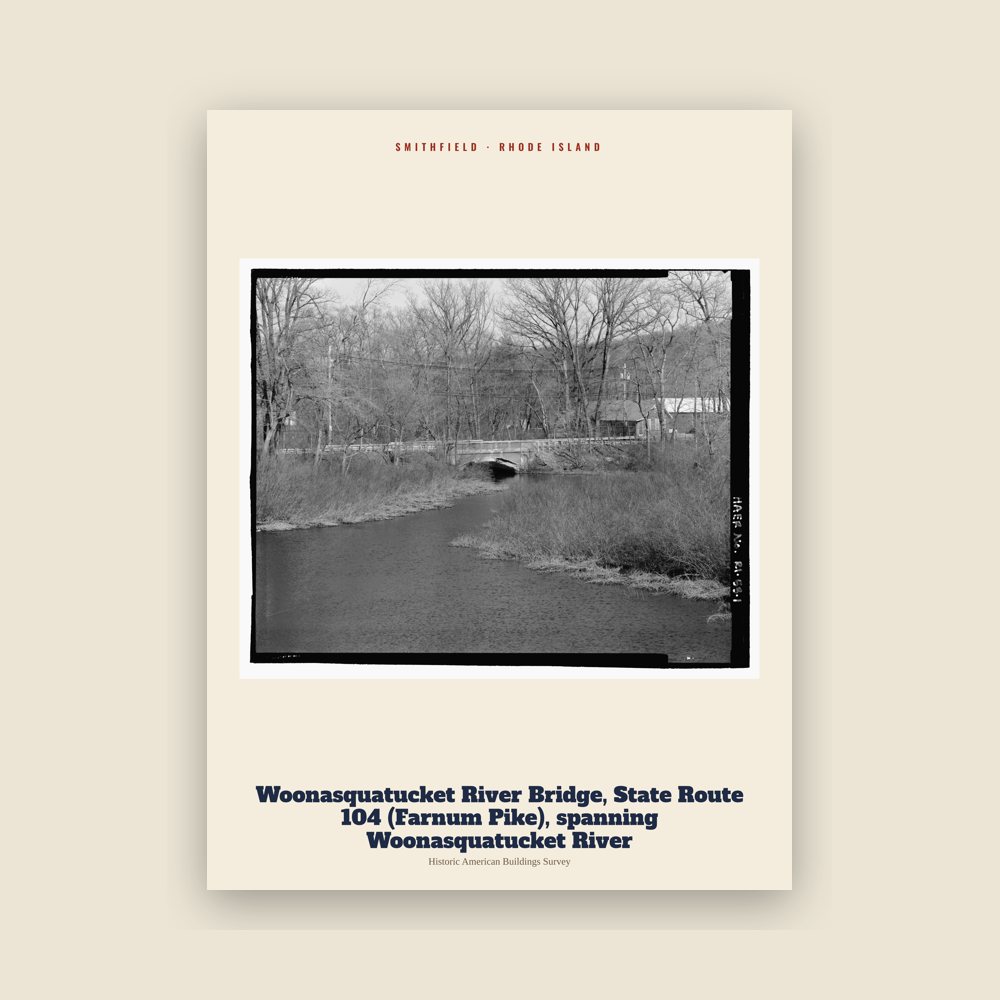
During the Industrial Revolution, Smithfield transformed from an agrarian community to a manufacturing center, with several textiles mills being founded along the Woonasquatucket River. By 1819, there were nine cotton mills in Smithfield. To alleviate difficulties with the mills' water supplies, the Woonasquatucket River Company was granted a charter to construct three reservoirs in town: Slack Reservoir, Upper and Lower Sprague Reservoir, and Waterman Reservoir. With a stable supply of water, by 1876, the number of mills in Smithfield increased to 20.
As early as 1833, movements had begun to advocate for splitting Smithfield into multiple municipalities. In 1871, the towns of North Smithfield and Lincoln were granted charters by the General Assembly to become separate municipalities, and the city of Central Falls later split from Lincoln in 1895. The colonial ghost town of Hanton City is located within the boundaries of present-day Smithfield.
Adapted (trimmed) from the Wikipedia article Smithfield, Rhode Island, revision 1374934852 by its contributors, licensed CC BY-SA 4.0.
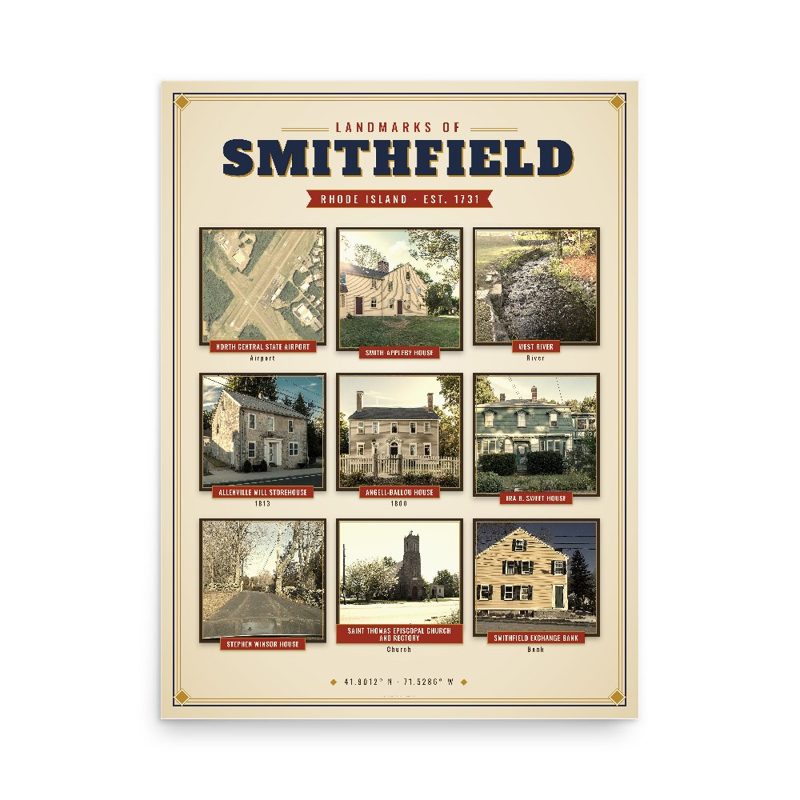
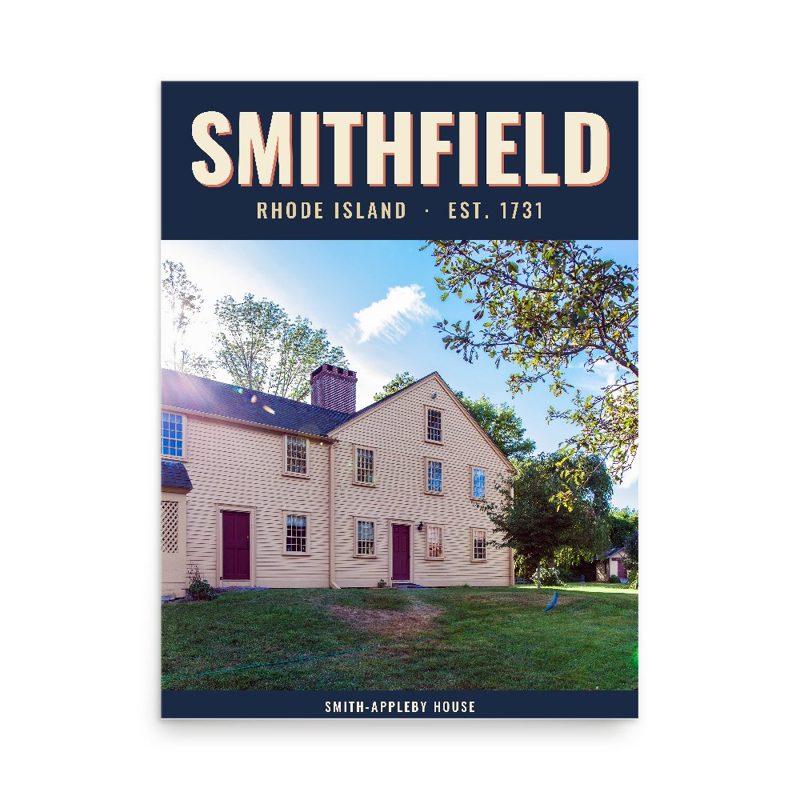
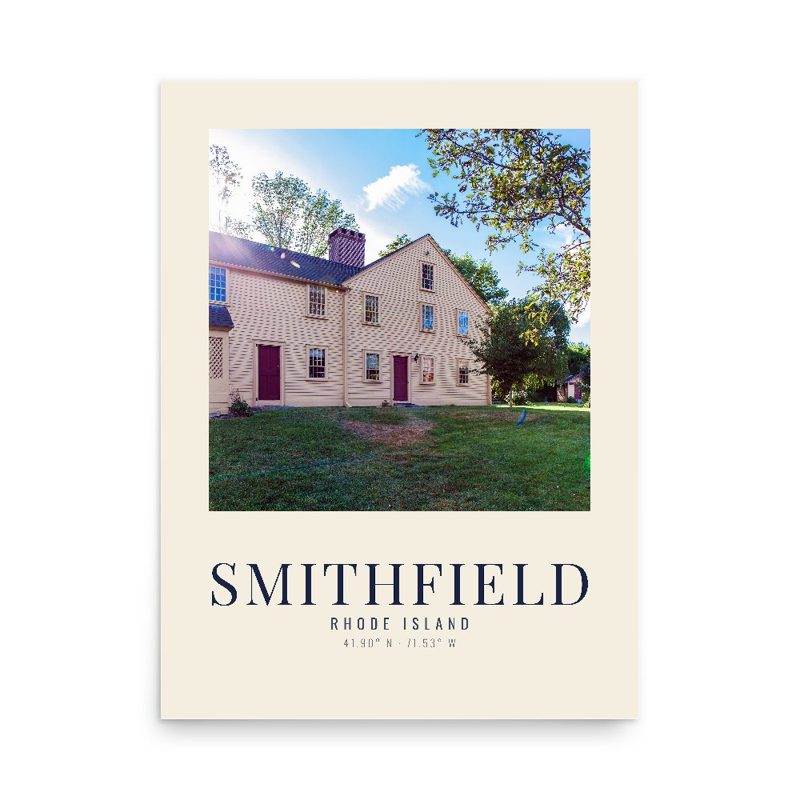
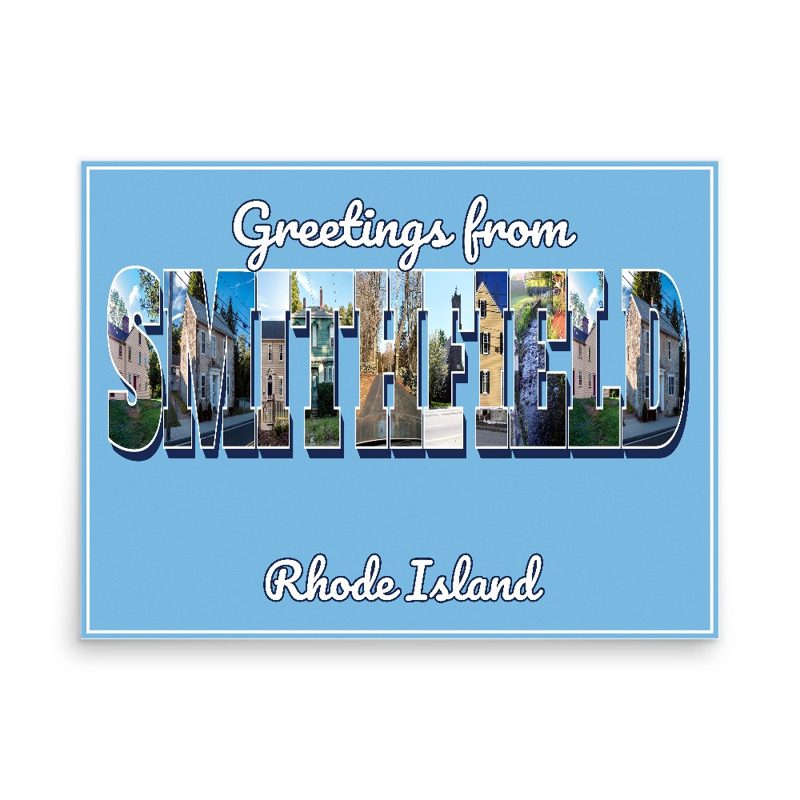
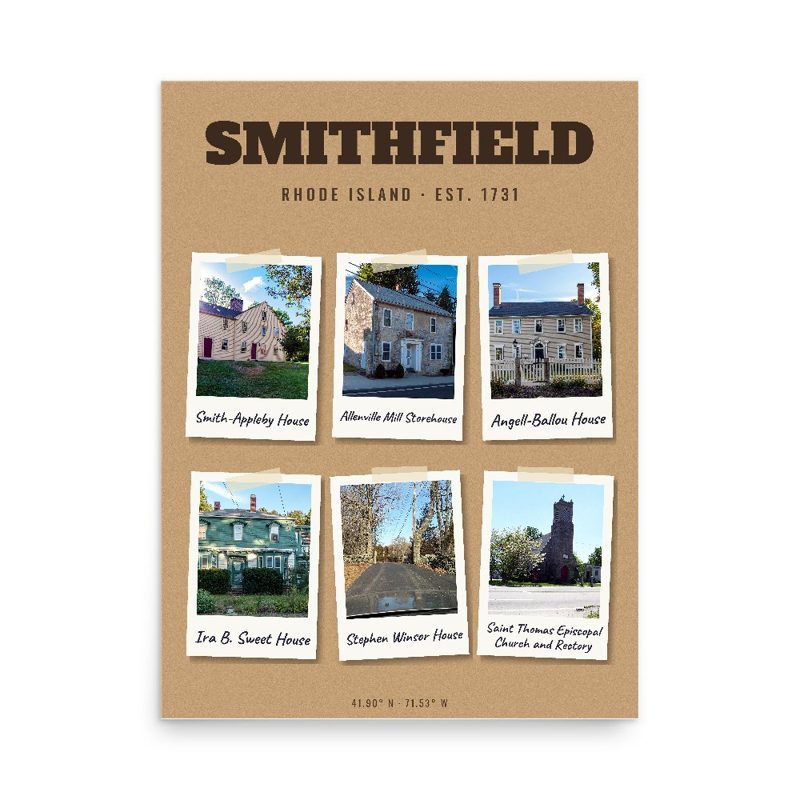
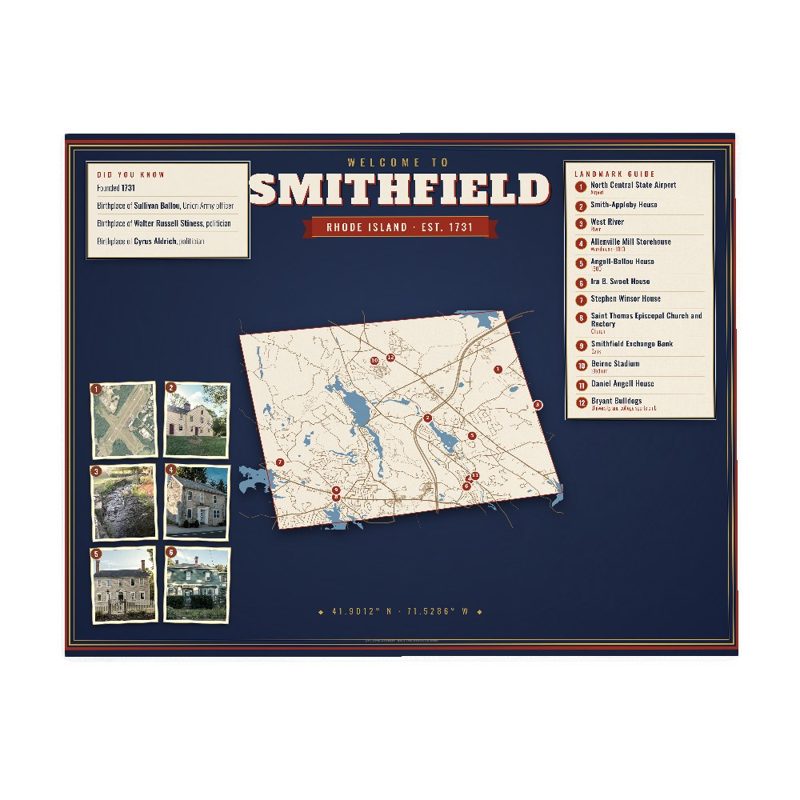




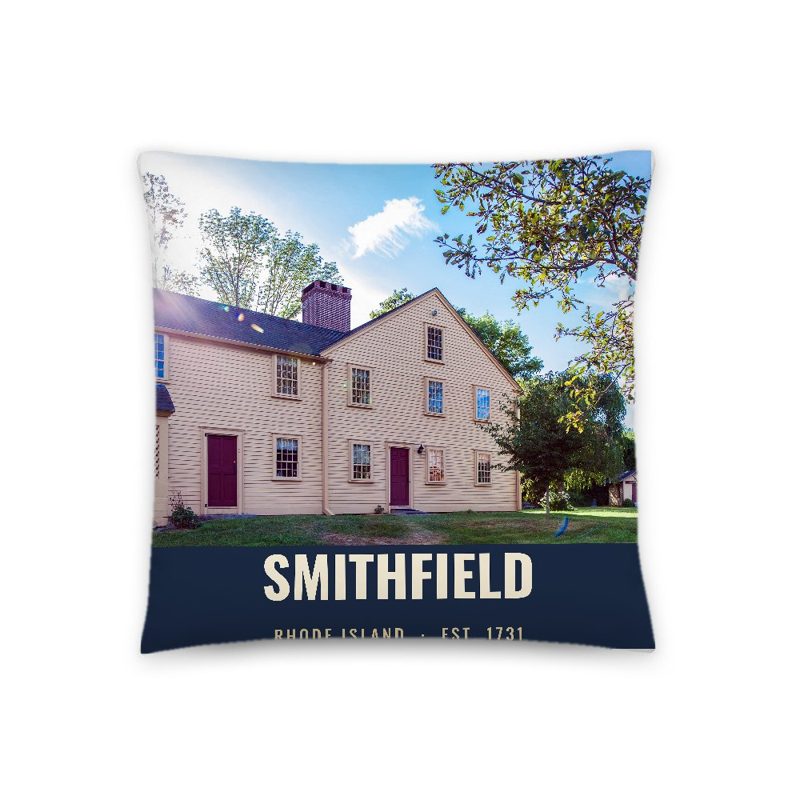



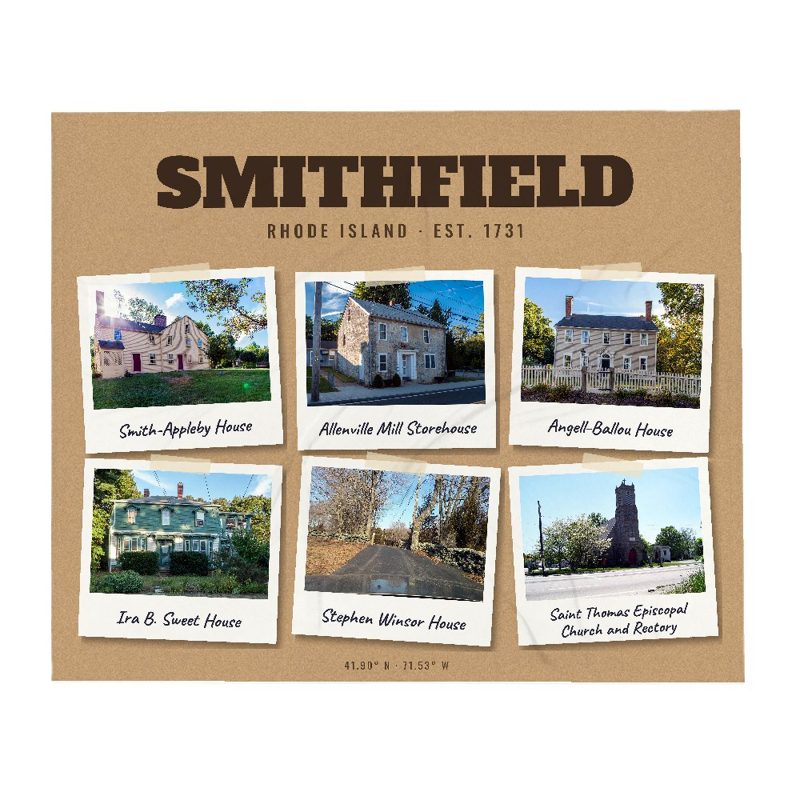
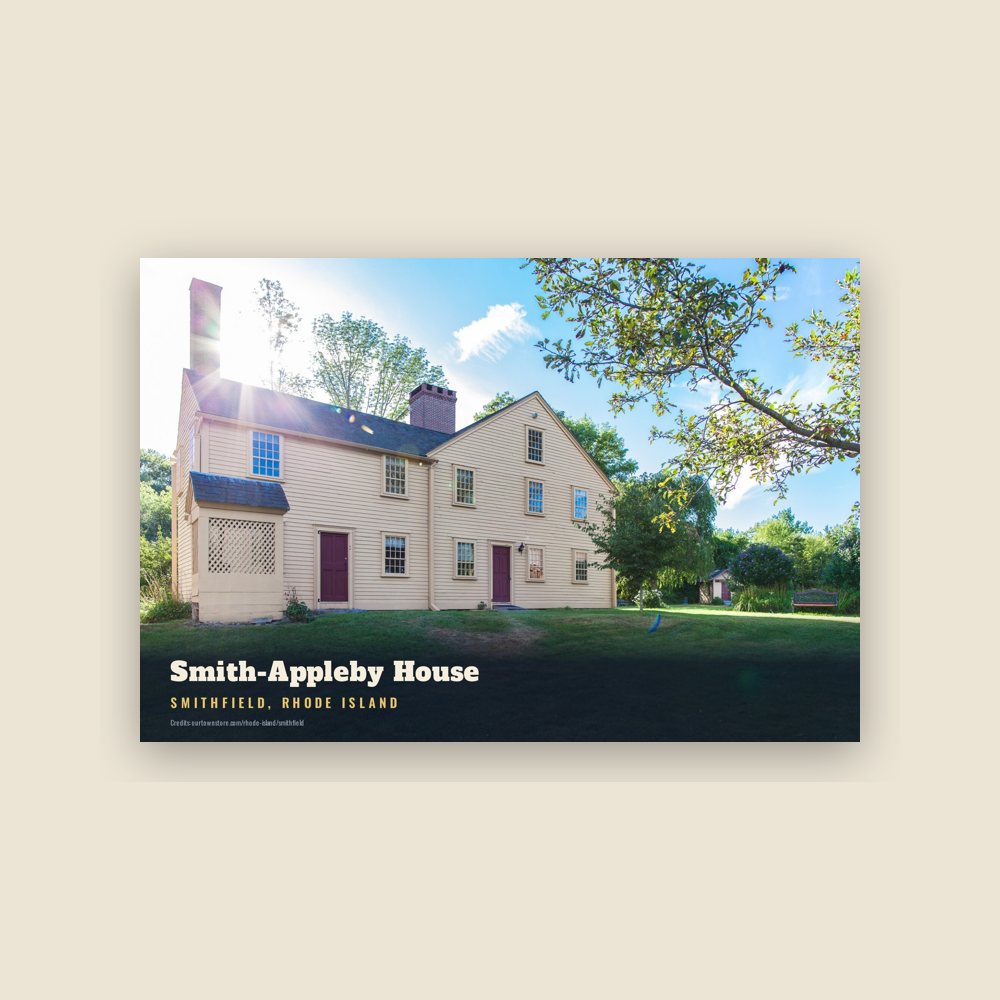
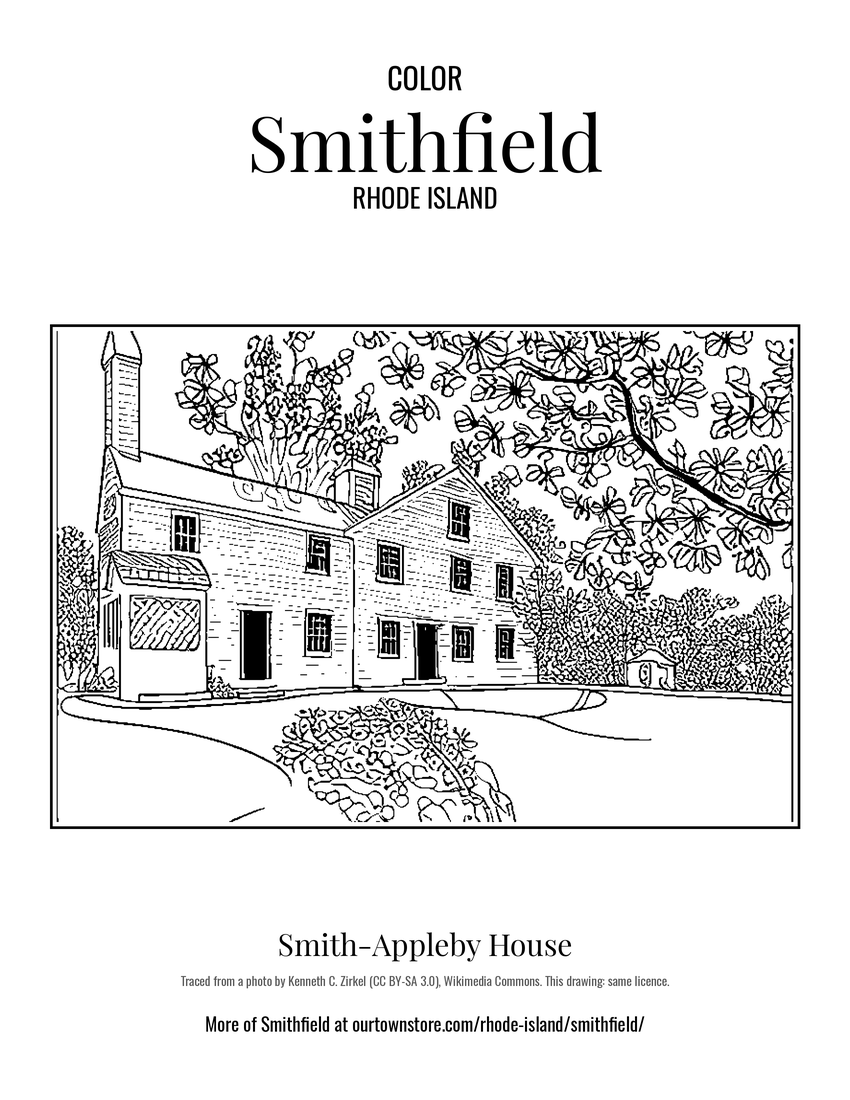 Smith-Appleby House
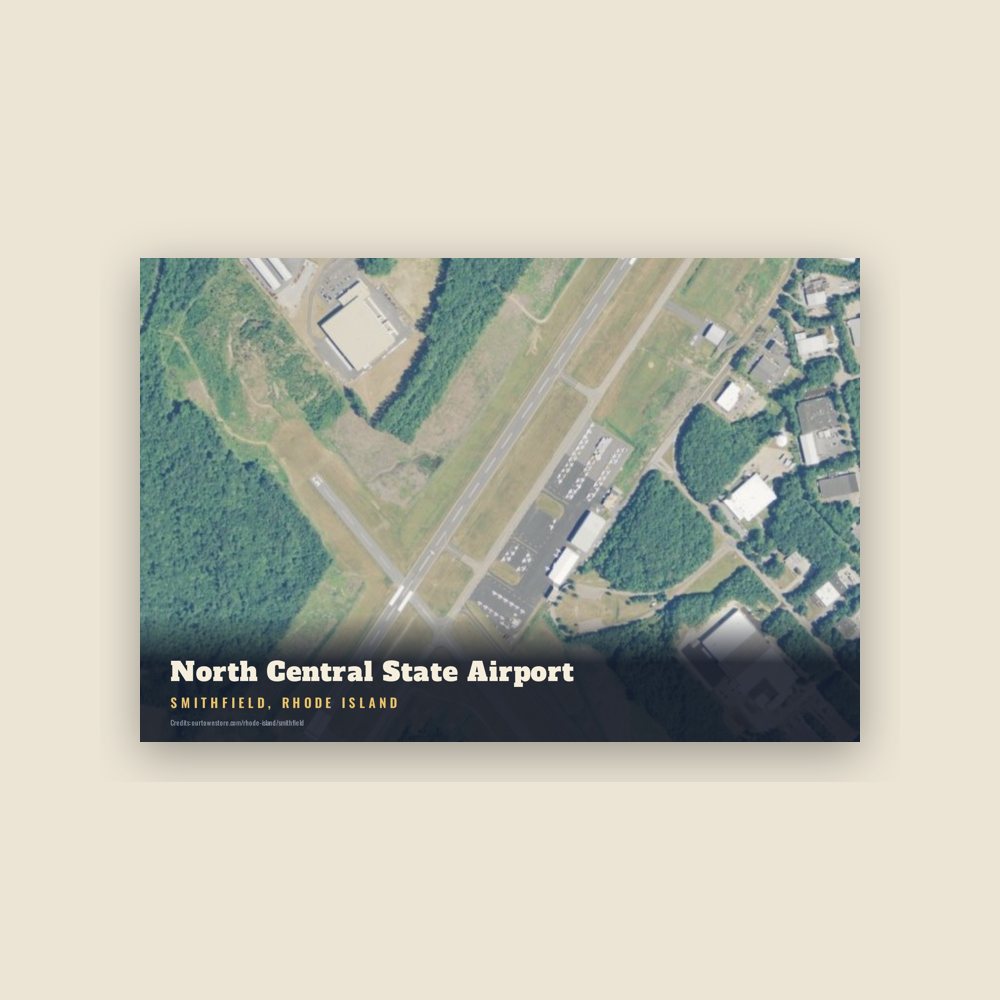
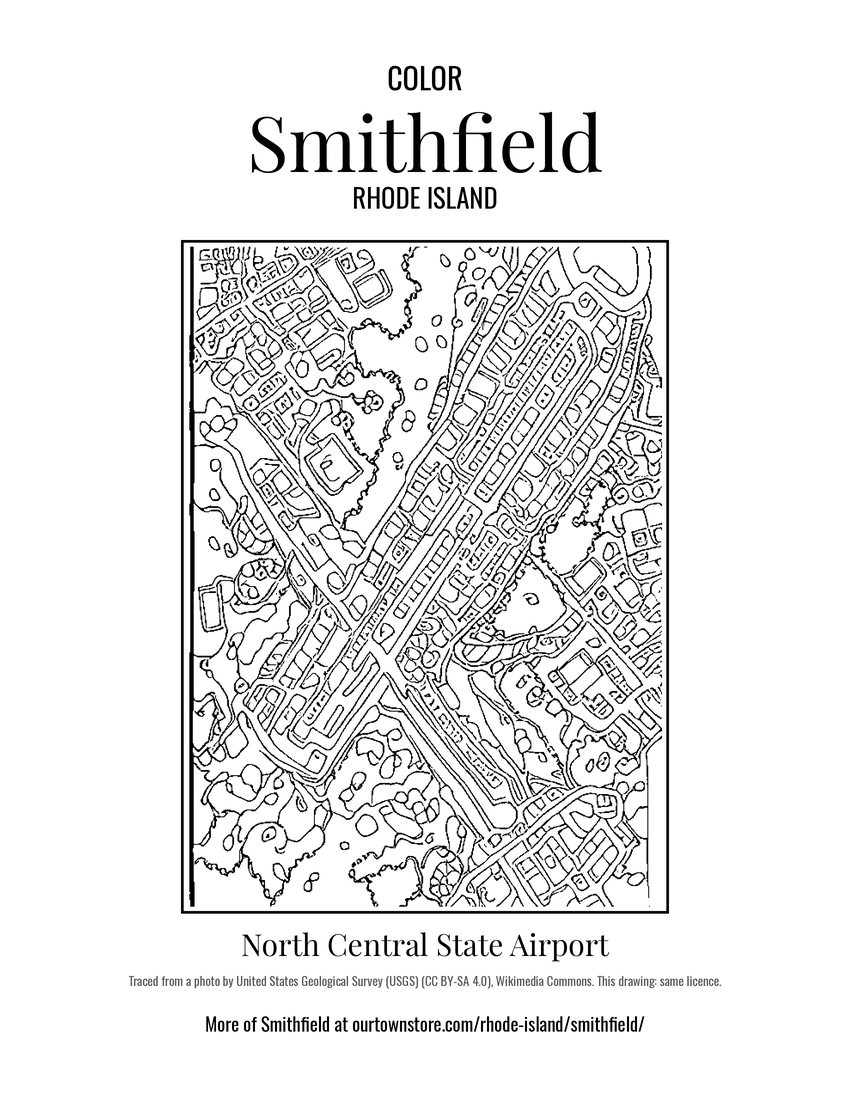 North Central State Airport
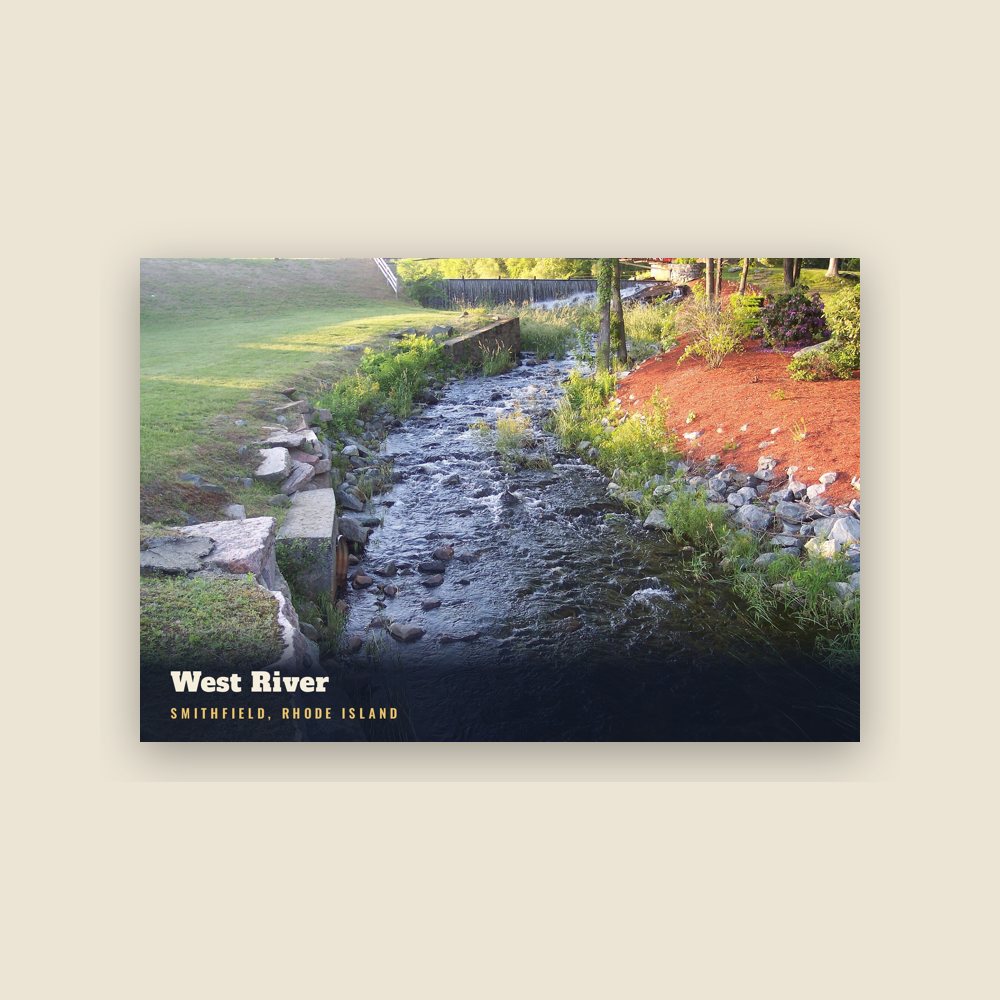
 West River
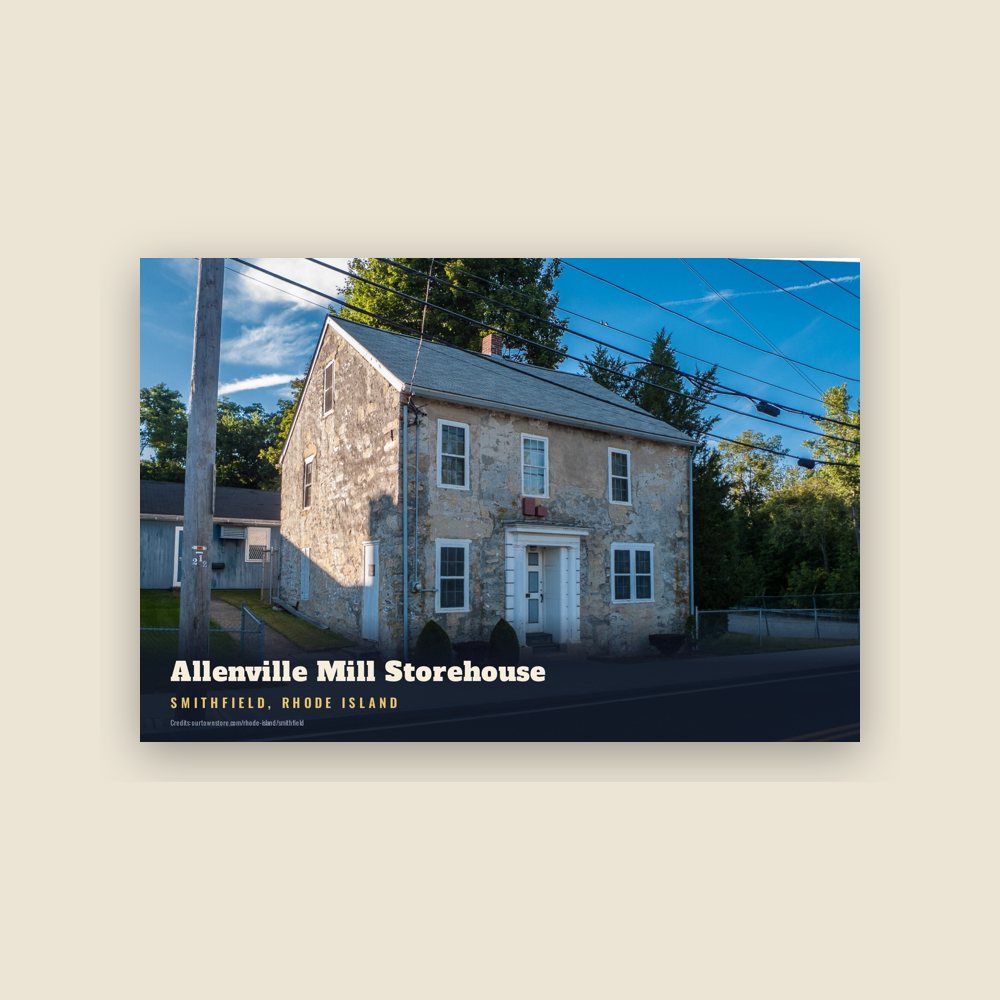
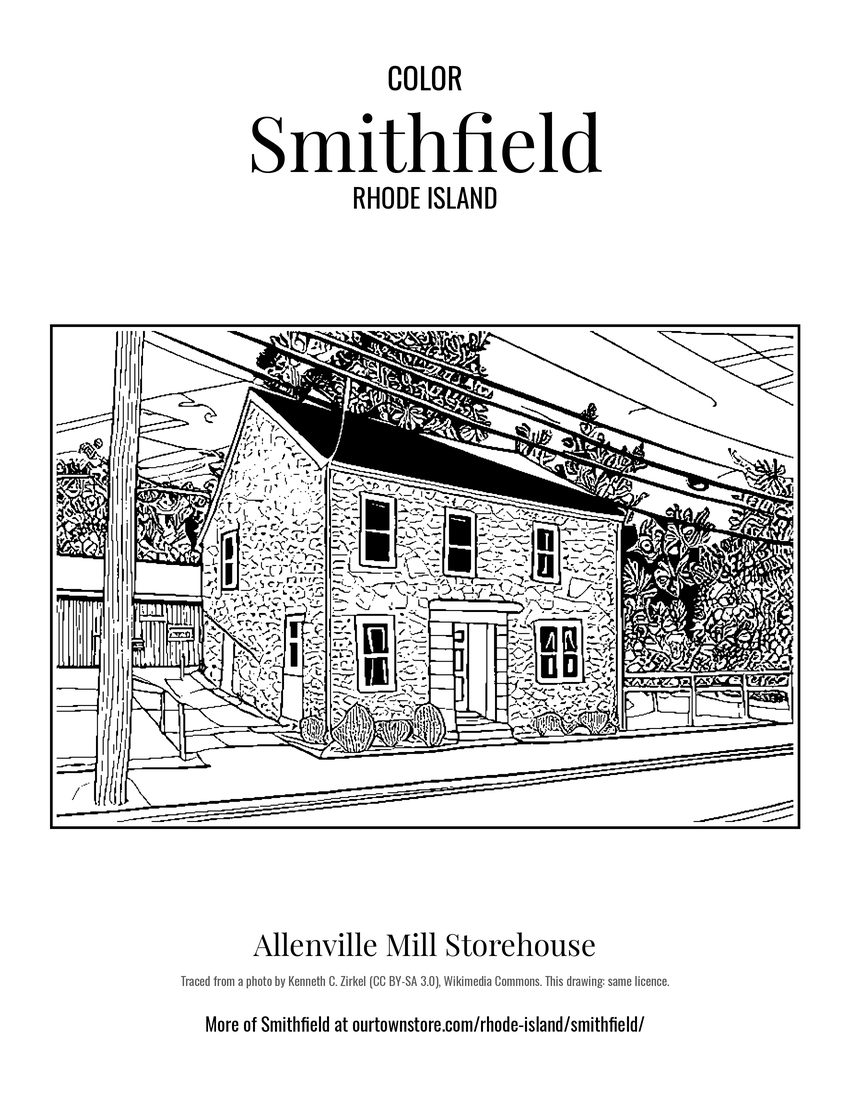 Allenville Mill Storehouse