A short history of Reading
18th century
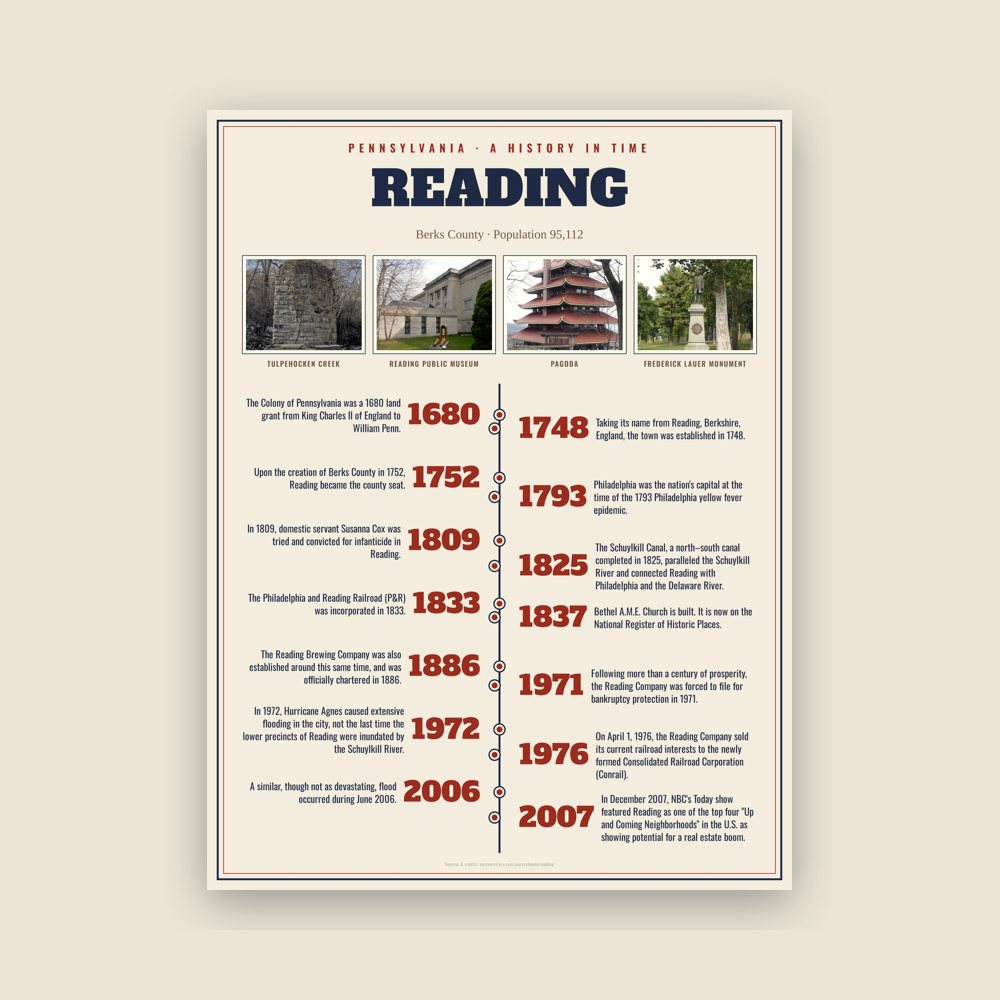
Lenape people, also known as Delaware Indians, inhabited the Reading area prior to European settlement of the region in the 17th century. The Colony of Pennsylvania was a 1680 land grant from King Charles II of England to William Penn. Comprising more than 45,000 square miles (120,000 km2), it was named for his father, William Penn.
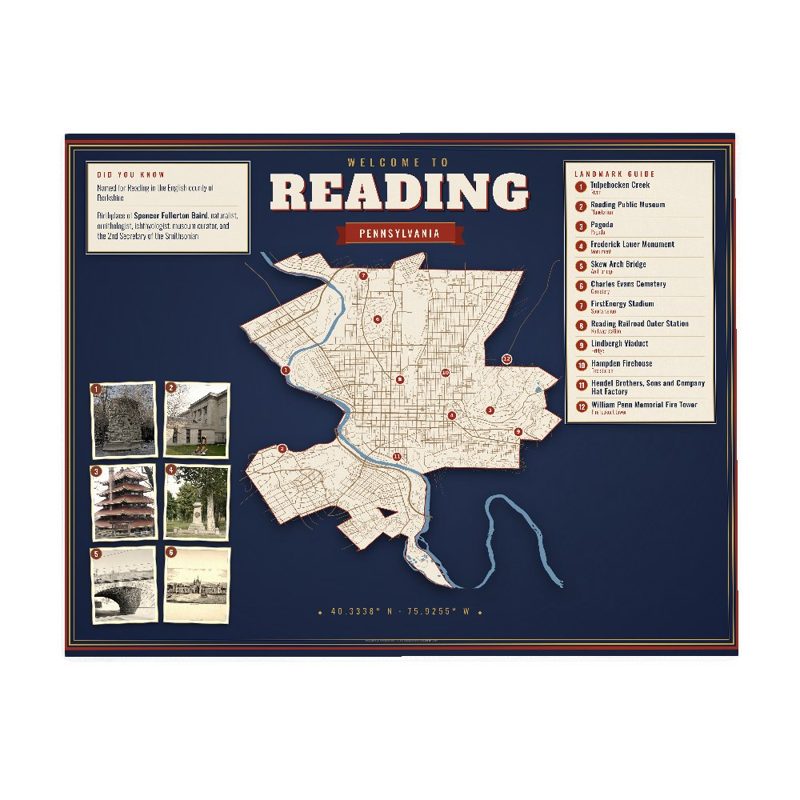
pioneer Conrad Weiser. Taking its name from Reading, Berkshire, England, the town was established in 1748. Upon the creation of Berks County in 1752, Reading became the county seat. The region was settled by emigrants from southern and western Germany, who bought land from the Penns. The first Amish community in the New World was established in Greater Reading, Berks County. The Pennsylvanian German dialect Pennsylvania Dutch was spoken in the area well into the 1950s.
By the time of the American Revolution, the area's iron industry had a total production exceeding England's. There were several prominent Ironmasters like Samuel Van Leer who helped supply George Washington's troops with cannons, rifles, and ammunition in the Revolutionary War. During the early period of the conflict, Reading was again a depot for military supply. Hessian prisoners from the Battle of Trenton were also detained here.
Philadelphia was the nation's capital at the time of the 1793 Philadelphia yellow fever epidemic. President George Washington traveled to Reading, and considered making it the emergency national capital, but chose Germantown nearer Philadelphia instead.
Read the full history
19th century
In 1809, domestic servant Susanna Cox was tried and convicted for infanticide in Reading. Her case attracted tremendous sympathy; 20,000 spectators came to view her hanging, swamping the 3,000 inhabitants.
The Schuylkill Canal, a north–south canal completed in 1825, paralleled the Schuylkill River and connected Reading with Philadelphia and the Delaware River. The Union Canal, an east–west canal completed in 1828, connected the Schuylkill and Susquehanna Rivers, and ran from Reading to Middletown, Pennsylvania, a few miles south of Harrisburg, the state capital. Railroads forced the abandonment of the canals by the 1880s.
The Philadelphia and Reading Railroad (P&R) was incorporated in 1833. During the Long Depression following the Panic of 1873, a statewide railroad strike in 1877 over delayed wages led to a violent protest and clash with the National Guard in which six Reading men were killed. The Reading Brewing Company was also established around this same time, and was officially chartered in 1886.
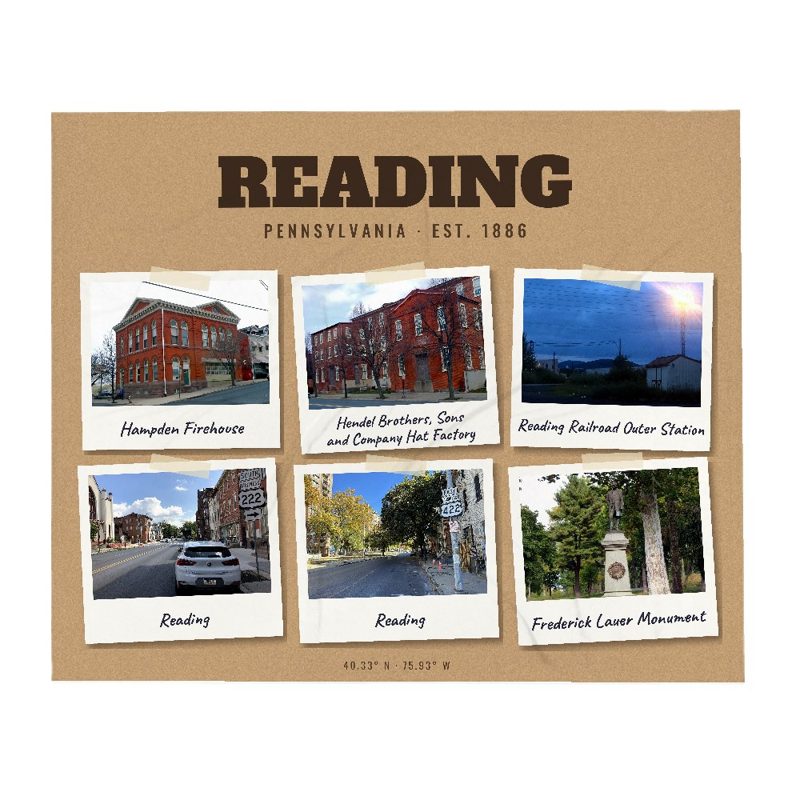
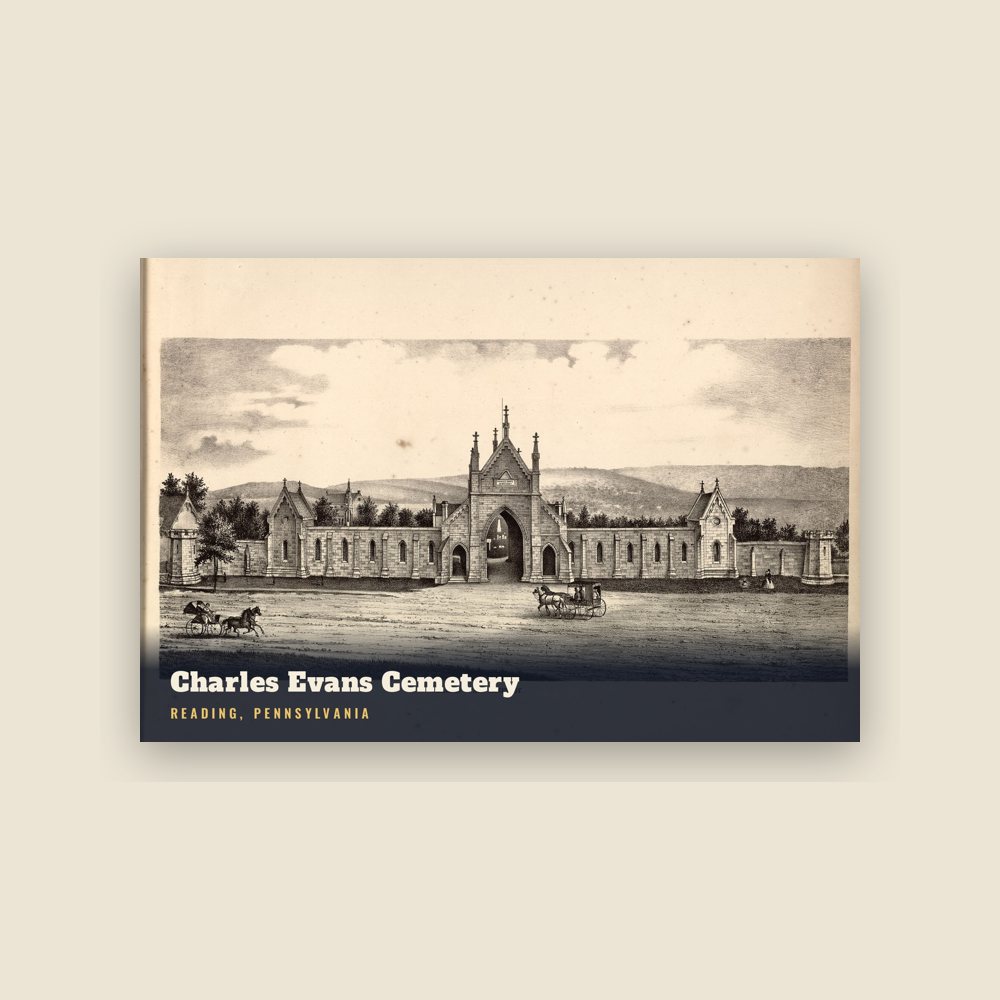
The Charles Evans Cemetery is the non-sectarian cemetery where many of the city's prominent business and community leaders have been buried since the cemetery's opening in the 1840s. Established through the donation of land by Reading attorney and philanthropist Charles Evans and a subsequent financial endowment upon his death in 1847, which provided for future improvements to the grounds, the cemetery became a primary gathering point for annual Memorial Day activities from the late 19th through the late 20th centuries due to the presence of the Grand Army of the Republic monument, which was dedicated there in 1887.
20th century
In the early 20th century, the city participated in the burgeoning automobile and motorcycle industry as home to the pioneer "Brass Era" companies, Daniels Motor Company, Duryea Motor Wagon Company, and Reading-Standard Company.
Reading experienced continuous growth until the 1930s, when its population reached nearly 120,000. From the 1940s to the 1970s, however, the city saw a sharp downturn in prosperity, largely owing to the decline of the heavy industry and railroads, on which Reading had been built, and a national trend of urban decline.
Following more than a century of prosperity, the Reading Company was forced to file for bankruptcy protection in 1971. The bankruptcy was a result of dwindling coal shipping revenues and strict government regulations that denied railroads the ability to set competitive prices, required high taxes, and forced the railroads to continue to operate money-losing passenger service lines. On April 1, 1976, the Reading Company sold its current railroad interests to the newly formed Consolidated Railroad Corporation (Conrail). That same month, the Reading Brewing Company closed.
In 1972, Hurricane Agnes caused extensive flooding in the city, not the last time the lower precincts of Reading were inundated by the Schuylkill River. A similar, though not as devastating, flood occurred during June 2006.
21st century
In December 2007, NBC's Today show featured Reading as one of the top four "Up and Coming Neighborhoods" in the U.S. as showing potential for a real estate boom. The interviewee, Barbara Corcoran, chose the city by looking for areas of big change, renovations, cleanups of parks, waterfronts, and warehouses. Corcoran also noted Reading's proximity to Philadelphia, New York City, and other cities.
Adapted (trimmed) from the Wikipedia article Reading, Pennsylvania, revision 1378816772 by its contributors, licensed CC BY-SA 4.0.