The borough is named for the Biblical town of Nazareth, where Jesus spent his youth. The names of a number of other places in the Lehigh Valley area of Pennsylvania are similarly inspired, including Bethlehem, Emmaus, Egypt, and Allentown's Jordan Creek.
Read the full history
18th and 19th centuries
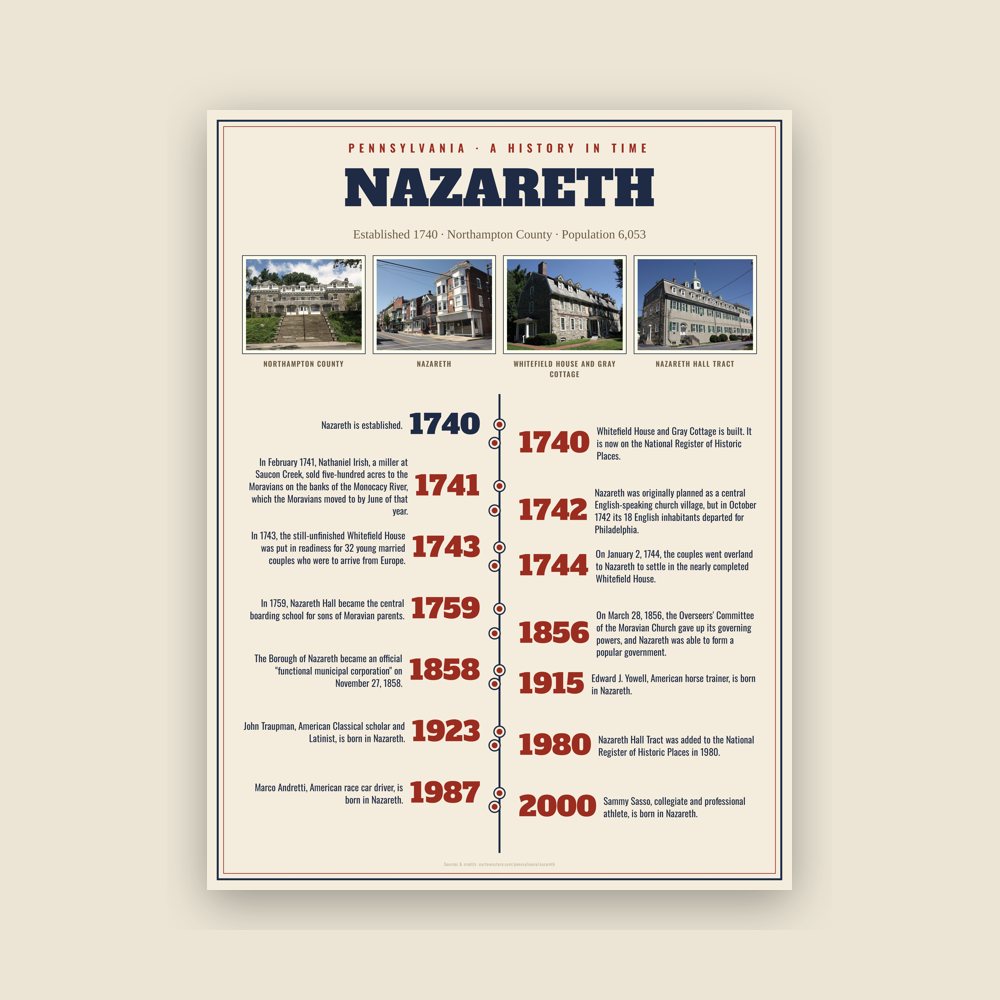
Nazareth was founded in 1740 by ethnically German Moravian immigrants, who came from Georgia as "working guests" of Methodist evangelist and British cleric George Whitefield.
A "doctrinal dispute" led to Whitefield insisting the Moravians leave his land. In February 1741, Nathaniel Irish, a miller at Saucon Creek, sold five-hundred acres to the Moravians on the banks of the Monocacy River, which the Moravians moved to by June of that year.
When Whitefield's business manager died, Whitefield discovered that his finances were in such a poor state that he could not retain ownership of the Nazareth estate, and he was forced to sell the whole tract. On July 16, 1741, it officially became Moravian property.
Nazareth was originally planned as a central English-speaking church village, but in October 1742 its 18 English inhabitants departed for Philadelphia. They left Nazareth largely in the hands of Captain John, a Lenape chieftain, and his followers, who refused to leave. In December 1742, Count Nicolaus Zinzendorf, the Moravian benefactor and organizer, negotiated a settlement with Captain John, and his tribe moved back into the hinterland.
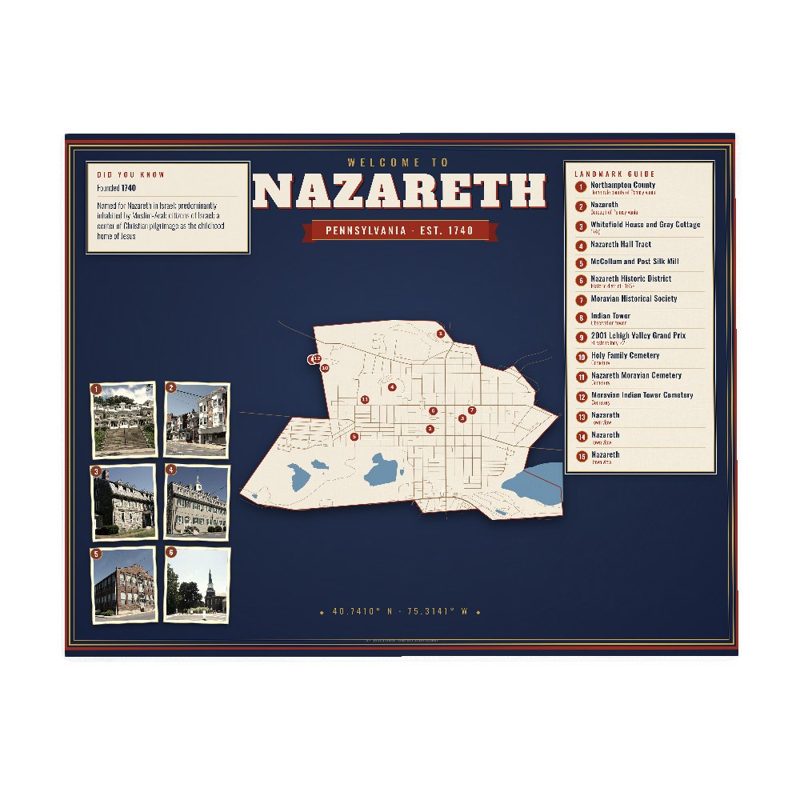
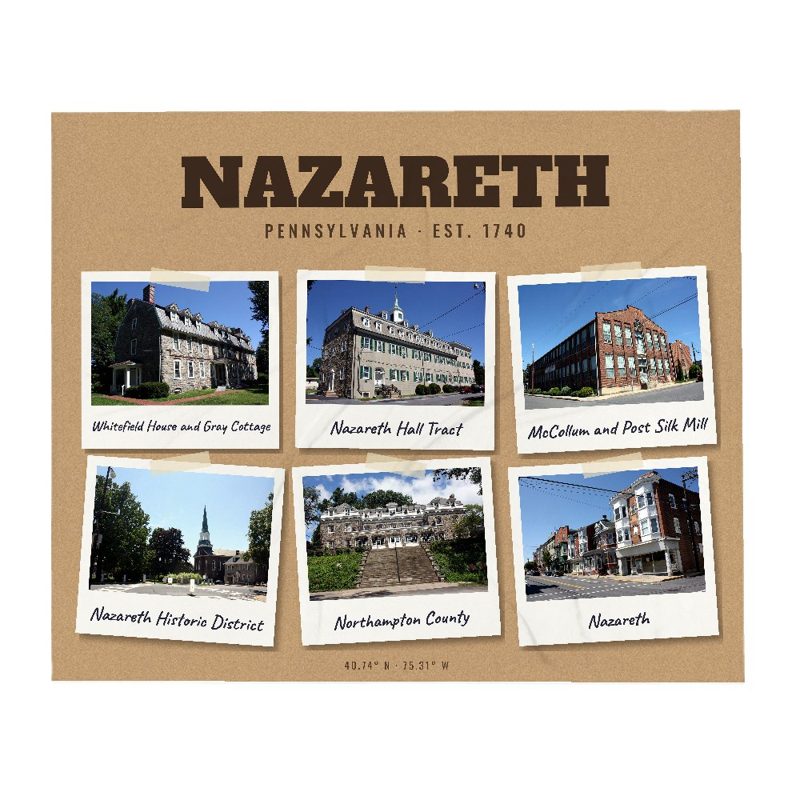
In 1743, the still-unfinished Whitefield House was put in readiness for 32 young married couples who were to arrive from Europe. On January 2, 1744, the couples went overland to Nazareth to settle in the nearly completed Whitefield House. Whitefield House and adjacent Gray Cottage now belong to the Moravian Historical Society.
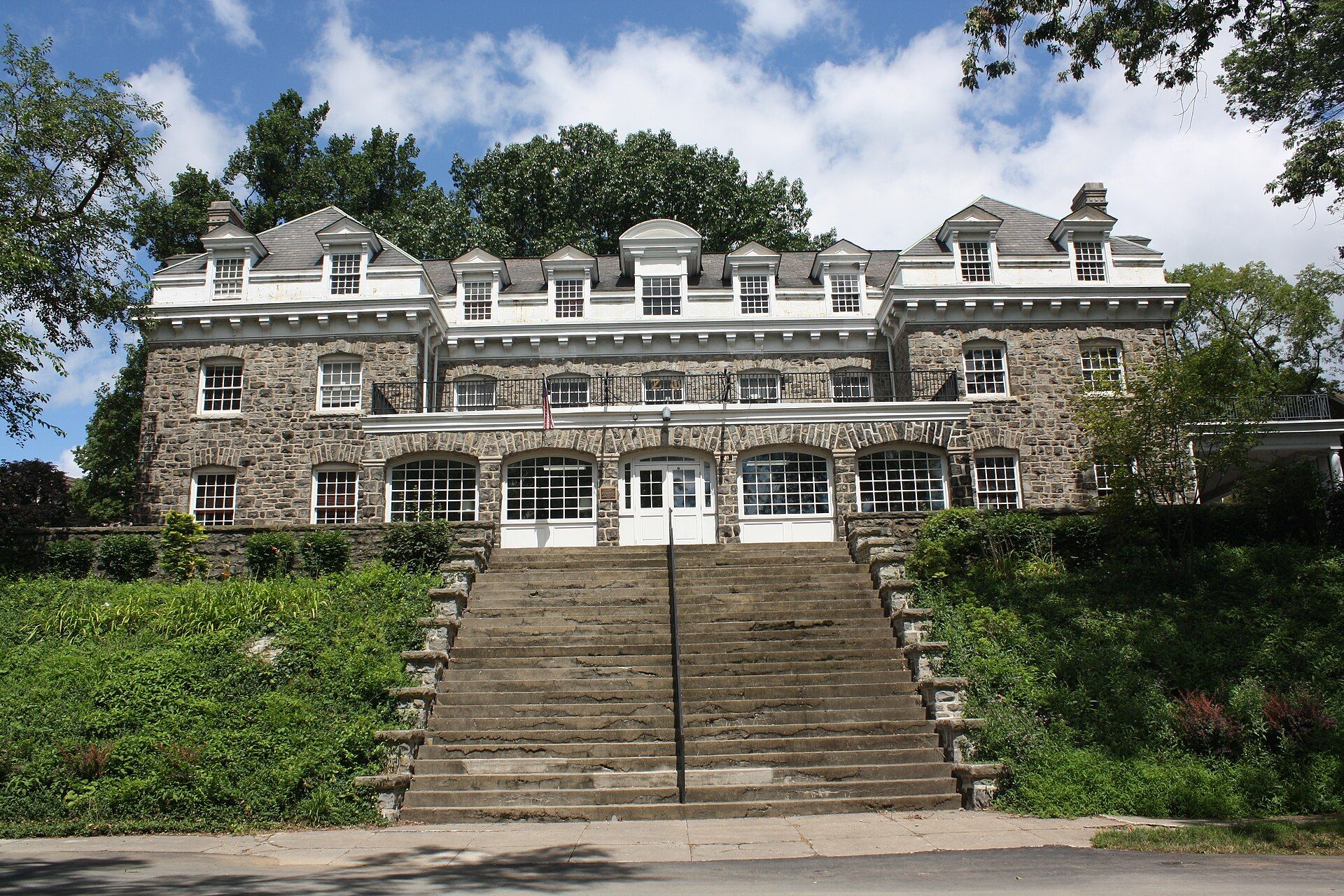
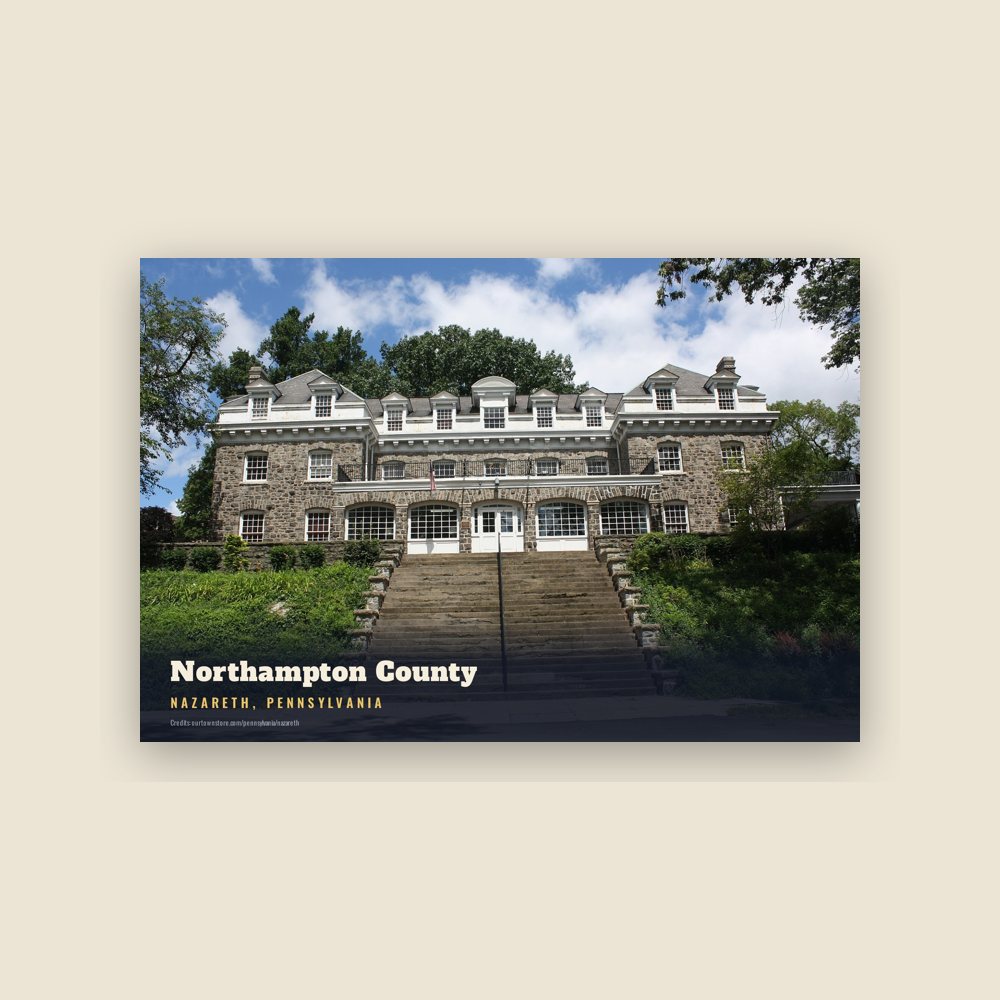
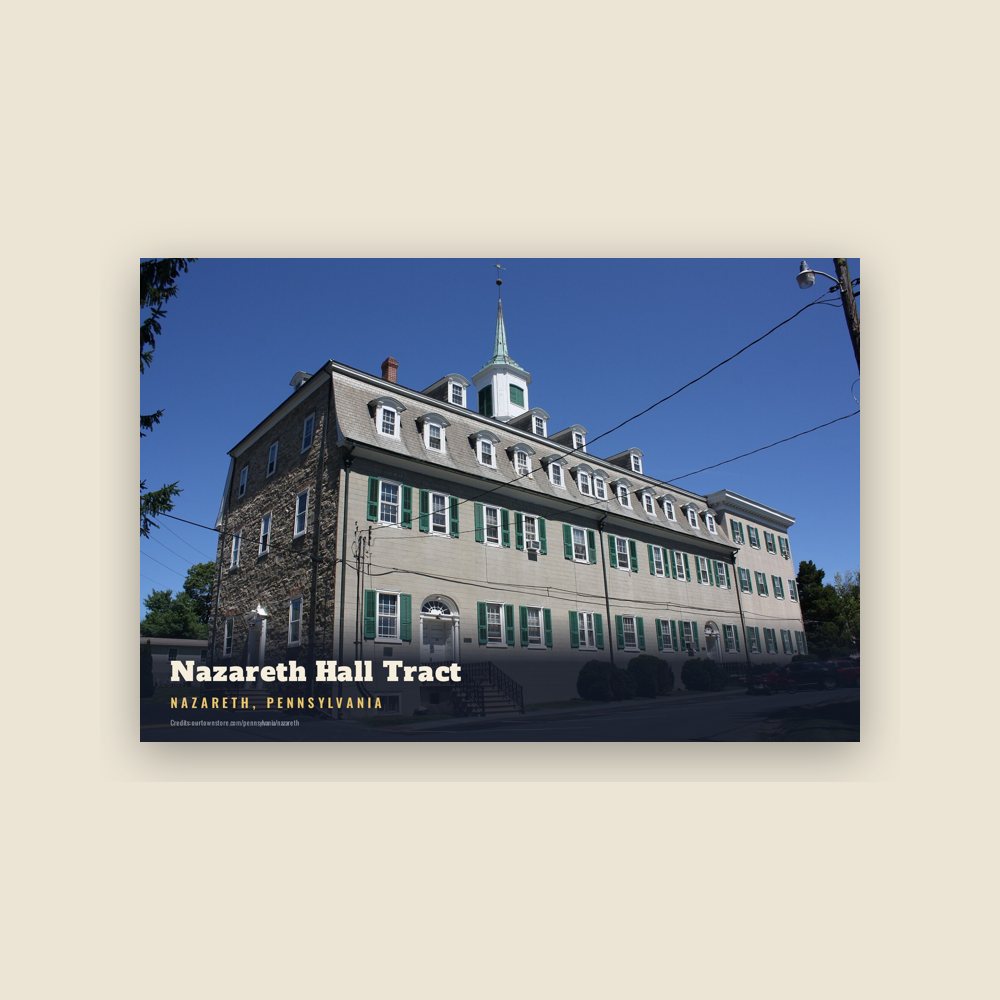
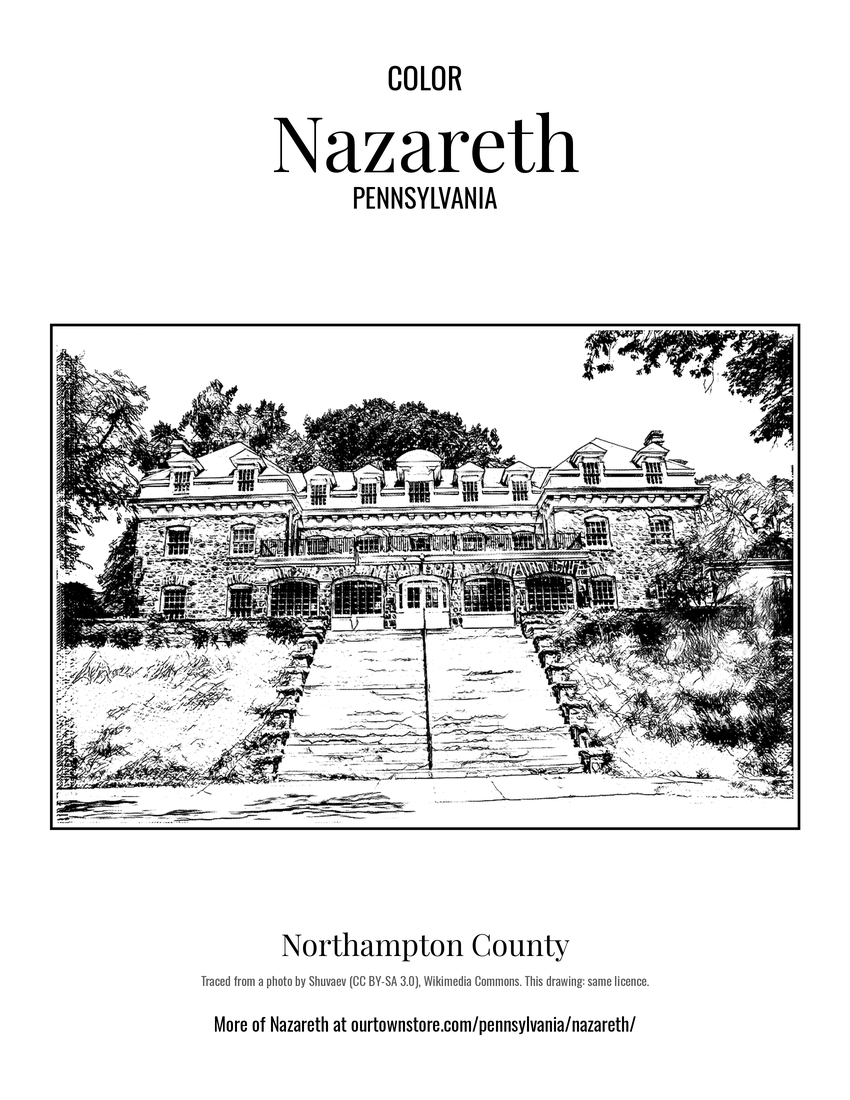
In 1759, Nazareth Hall became the central boarding school for sons of Moravian parents. It later attained wide fame as a "classical academy", which led to the founding, in 1807, of Moravian College and Theological Seminary, now located in Bethlehem. Nazareth Hall Tract was added to the National Register of Historic Places in 1980.
Nazareth had been an exclusively Monrovian community, but by an 1820 meeting of the "Overseers Committee," the Moravians has become more liberal and allowed the admission of non-Moravians to live in the village. Christian minorities, at the time, included Evangelicals, Lutherans, and the Reformed Church.
On March 28, 1856, the Overseers' Committee of the Moravian Church gave up its governing powers, and Nazareth was able to form a popular government. The Borough of Nazareth became an official "functional municipal corporation" on November 27, 1858.
20th and 21st centuries
Up until the mid-1900s, a large part of Nazareth's population was Pennsylvania Dutch. The Pennsylvania Dutch were spread throughout many counties of southern and central Pennsylvania. Many Pennsylvania Dutch came from Switzerland and Alsace in addition to what would become modern Germany.
Nazareth residents' religion reflected a largely German background in evangelical churches of fairly large sizes for such a small town, divided among the Moravian, Lutheran, German Reformed (now part of the United Church of Christ), and Roman Catholic worship centers of the town. The town also hosted a sizable Italian and Polish population, which largely attended Holy Family Catholic Church.
Amidst extensive migration to eastern Pennsylvania counties from New Jersey and New York in the late 20th century, the population expanded significantly. Developers from New Jersey were responding to tighter controls and regulations on new construction in the state of New Jersey by moving their enterprises to Pennsylvania. This new expansion and housing boom was enabled by the local completion of the Interstate Highway System, first begun by former U.S. President Dwight Eisenhower in the 1950s. In the Nazareth area, this was caused by the completion of the nearby Pennsylvania Route 33, which ran north and south, thereby connecting Interstate 78, U.S. Route 22, and Interstate 80, all of which ran east–west, and the completion of the Interstate 78 southern Lehigh Valley corridor high speed interstate, which connected the Lehigh Valley to New Jersey and New York City to the east and Harrisburg and Pittsburgh to the west.
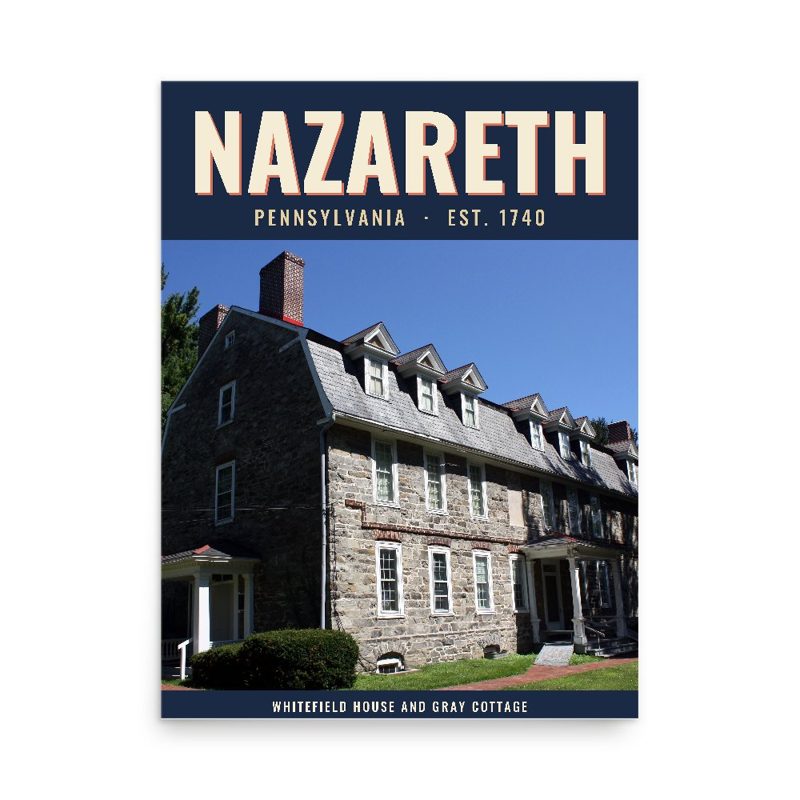
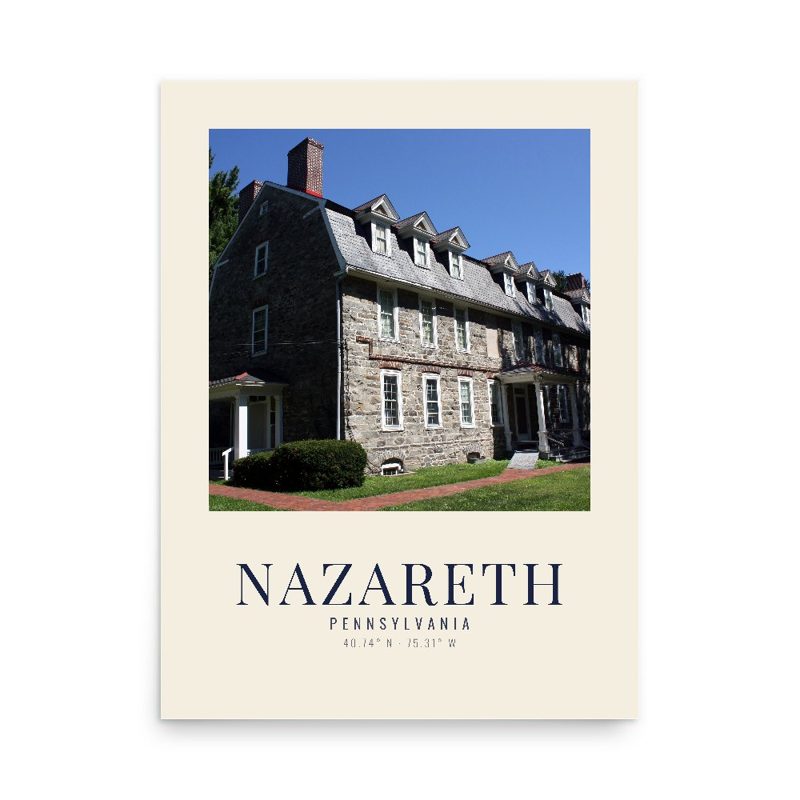
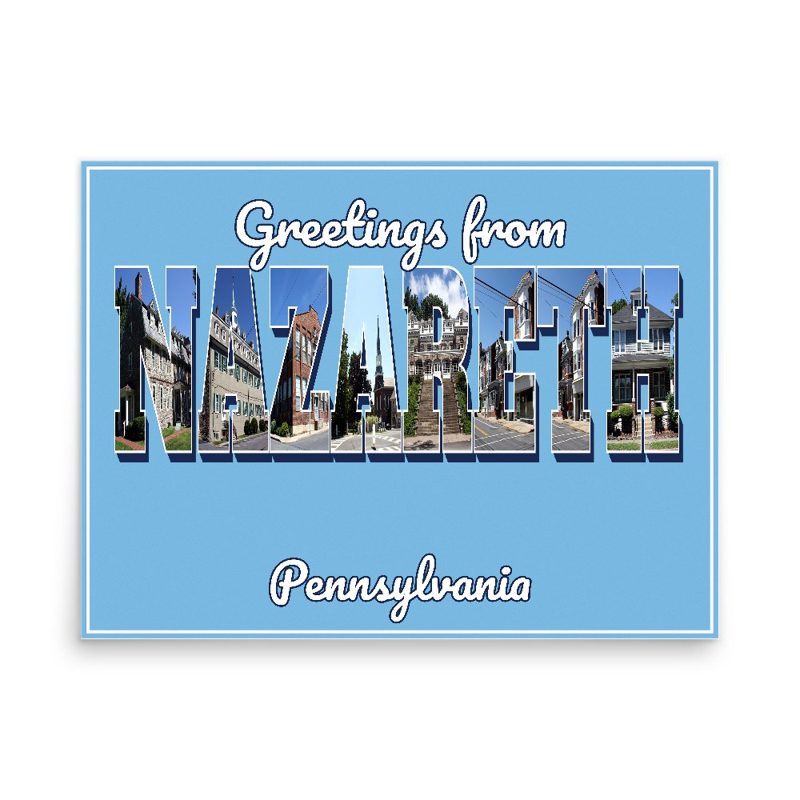
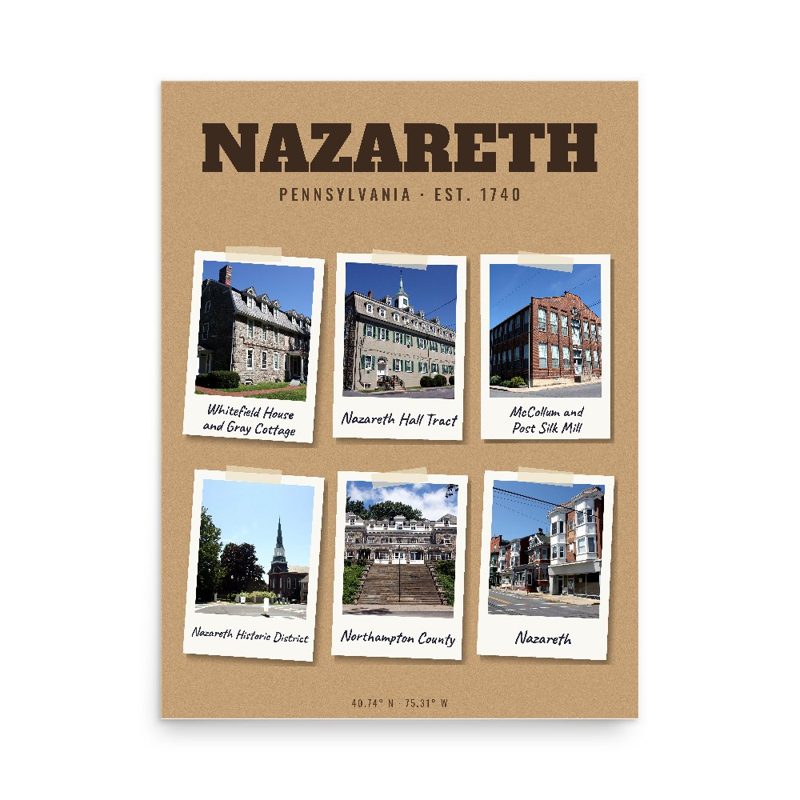

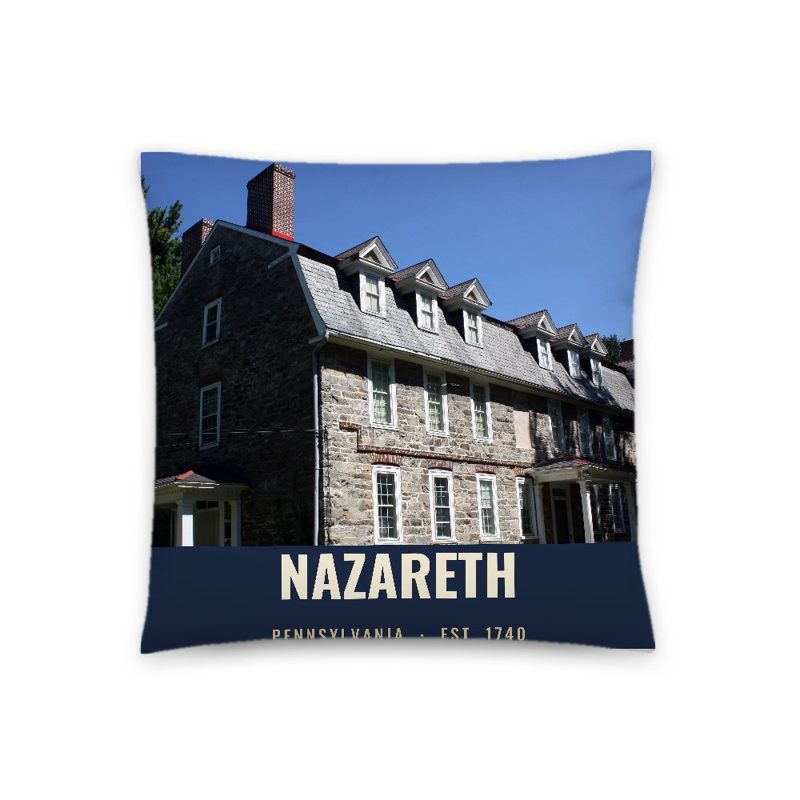

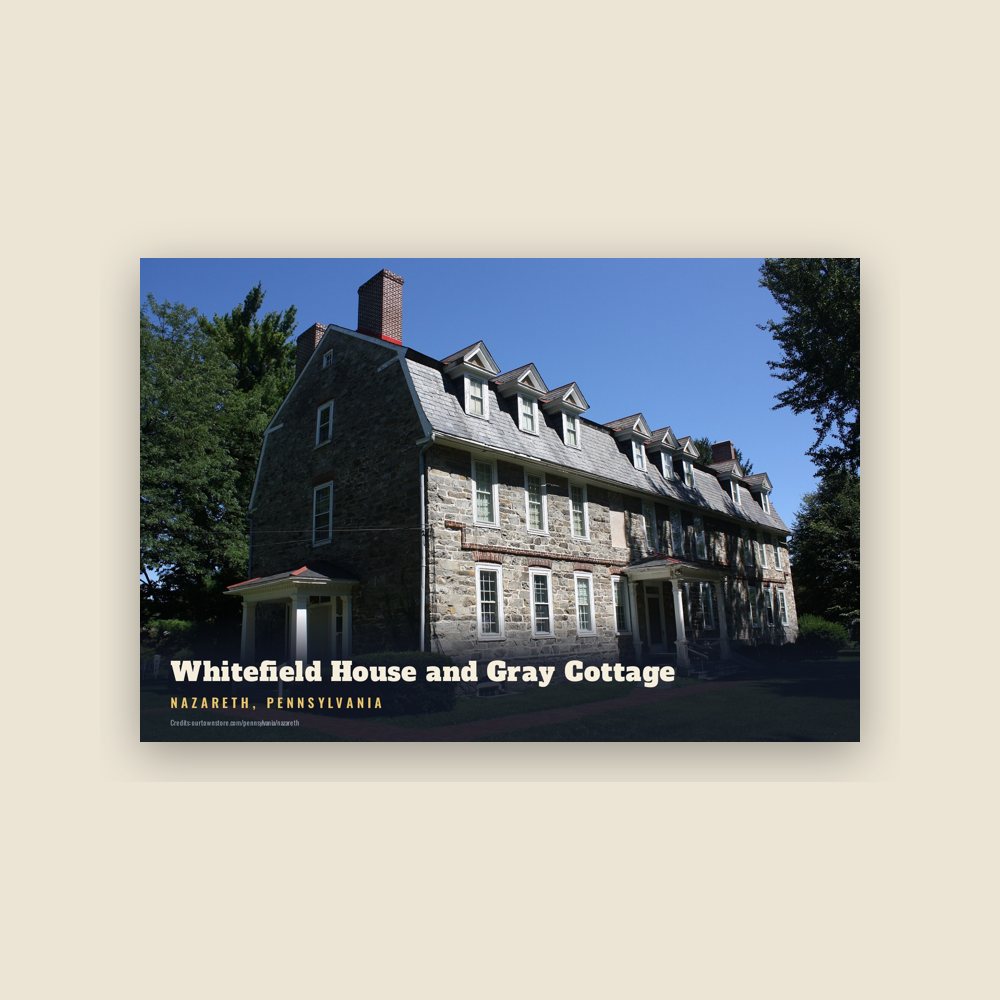
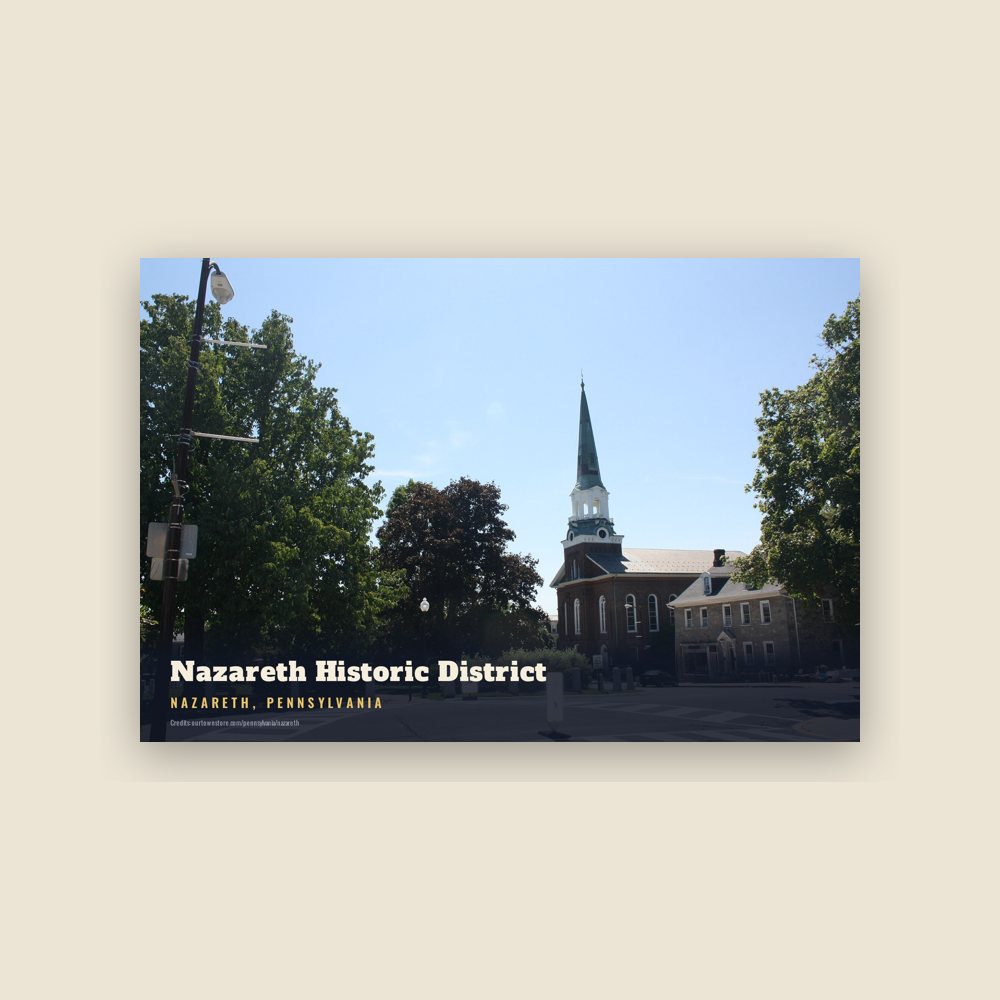
 Whitefield House and Gray Cottage
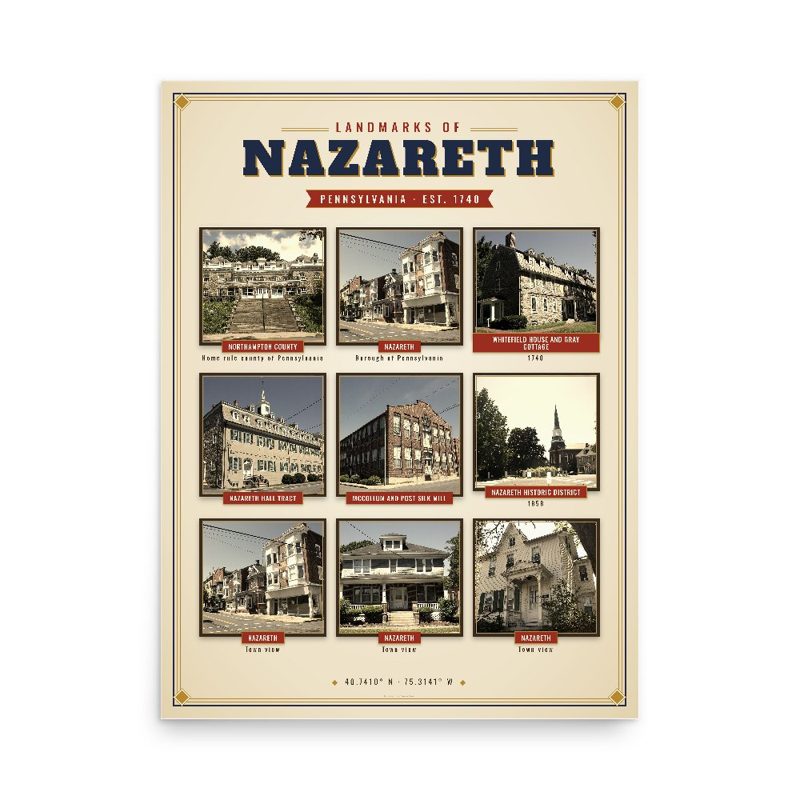
 Northampton County
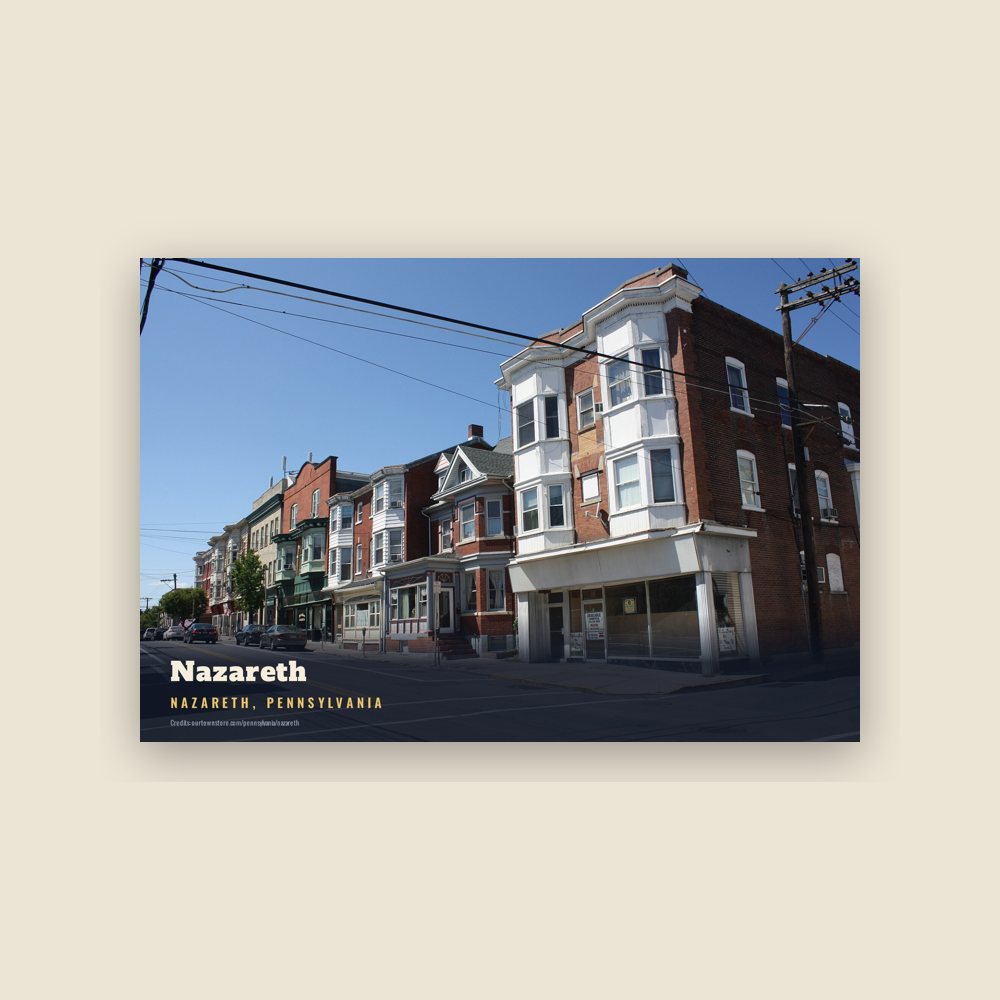
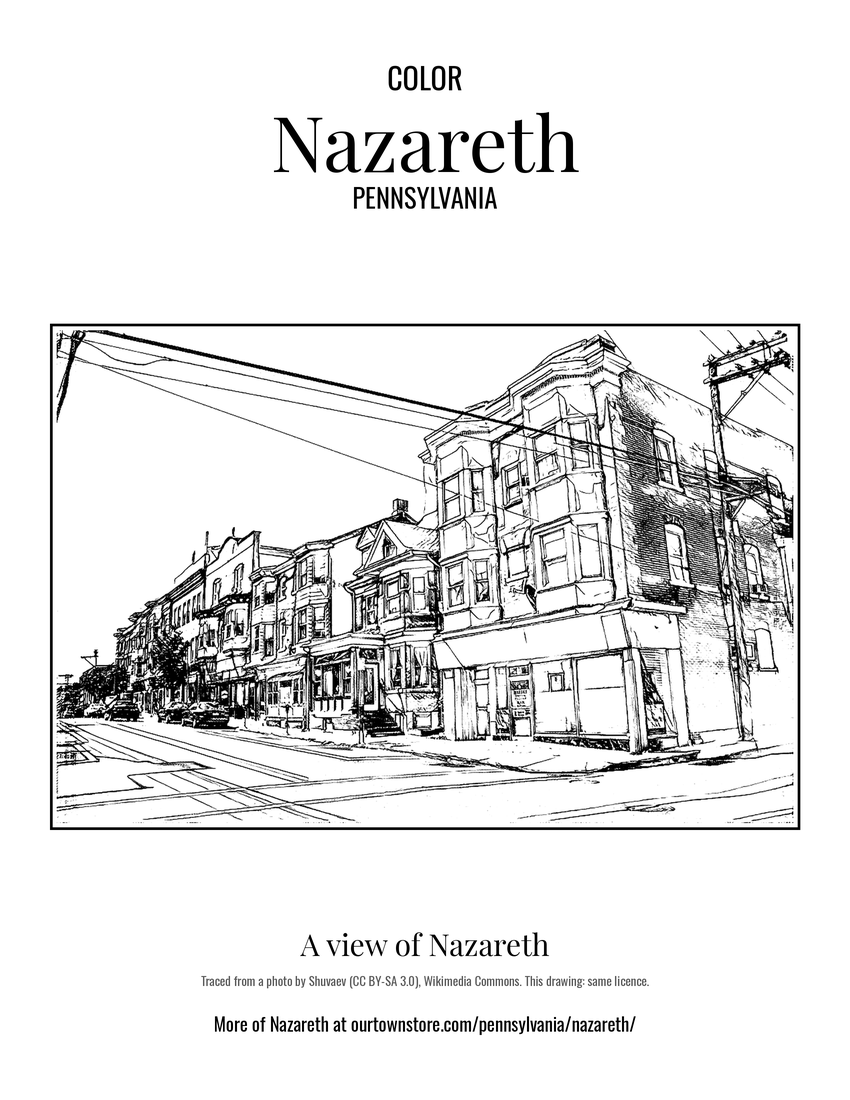 A view of Nazareth
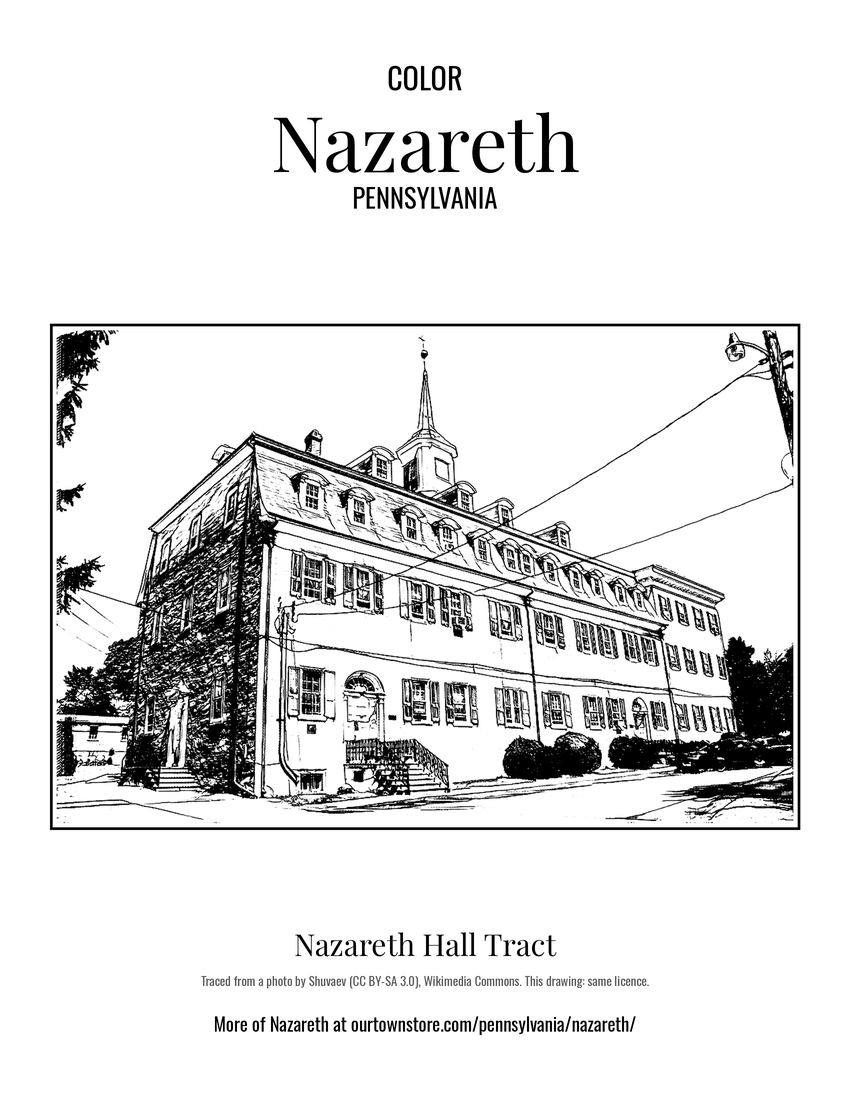 Nazareth Hall Tract